Latest News

Commentary, Opinion

New Year, same (institutional) burnout

January, colloquially known as the month of new beginnings. Planners for the calendar year fill the bookshelves, wellness advice on how to ‘improve’ flood TikTok and Instagram For-You-Pages, and even McGill sends out communications encouraging students to return to campus with better habits and a renewed zest for academia and discipline. 

New Year’s resolutions are often framed as an introspective exercise that positions personal change as both the source and solution to any issue. Nevertheless, self-improvement culture encourages students to internalize burnout as a personal failure, allowing institutions to avoid accountability for the structural conditions that make exhaustion inevitable. In this understanding, stress and fatigue become problems to be corrected individually rather than predictable responses to the collective institutional pressures students are expected to navigate. 

Responsibility for burnout is increasingly individualized within academic environments that normalize constant productivity and self-regulation. Studies consistently show high levels of stress and burnout amongst post-secondary students: Nearly 90 per cent report feeling overwhelmed by their responsibilities, and 66 per cent report overwhelming anxiety—numbers far above what one would expect if stress were simply a ‘personal weakness.’ Research also consistently associates academic stress with diminished well-being, as students who report higher academic pressure also report declining mental health outcomes. 

Although there is a plethora of reputable research proving burnout to be structurally and contextually driven, institutional responses disproportionately emphasize individual behaviour change. A 2023 World Health Organization report identifies burnout as an occupational phenomenon driven by chronic workplace stress, explicitly rejecting framings that solely describe it as a personal medical condition. Despite this, universities respond to stress-related risks by promoting time-management strategies and resilience training, effectively evading their institutional responsibilities to provide support and accessibility to students and staff alike. 

In Canada, one in three students report that mental health resources do not meet their needs due to long wait times and limited availability. Academia on mental health in higher education shows that students are far more likely to be offered coping tools than material accommodations, which further reinforces the idea that distress reflects insufficient self-management. In this, burnout is framed as a failure to adapt to neoliberal demands of efficiency, rather than the manifestation of systemic pressure compounded by inadequate institutional support. 

The institutional benefit of framing burnout as an individual issue is also well documented. A 2022 survey by the American College Health Association found that although over three-quarters of college students reported moderate to high levels of stress, few campuses have made corresponding investments in material support services such as reduced course caps or expanded academic leave. Instead, many institutions offer limited counselling and wellness programs while broader comprehensive structural support remains absent. At McGill, this gap is apparent in the limited accessibility of mental health care: Student reporting shows that appointments at the Wellness Hub can require weeks-long wait times during peak periods such as midterms and final exams. Official university responses continue to emphasize self-help guides and stress-management resources. 

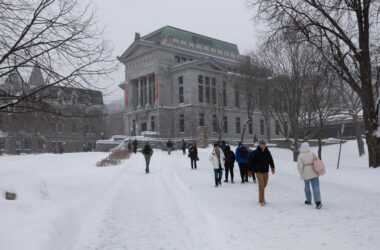
The aforementioned framing is intensified by the timing of the New Year itself. January marks the start of the winter semester, which is characterized by limited daylight and the lingering exhaustion of the fall term and exam period; yet students are expected to return to full productivity almost immediately. While practices of self-discipline and routine can be genuinely supportive at the individual level, they cannot compensate for structural conditions that remain unchanged. Without corresponding reductions in workload or expanded institutional support, self-care risks becoming a means of endurance rather than relief, asking students to adapt indefinitely to environments that continue to demand more than they can reasonably sustain. 
So this January, before reaching for another productivity planner or doom-scrolling through content promising personal transformation, it is worth considering that the problem may not just lie in individual habits, but in a system designed to make them appear as the only thing that can change.

Hockey, Sports

Chilled rivalry: Martlets Hockey fall to Italian National Team in pre-Olympic exhibition

The Martlets finished the first half of their season ranked fourth in the Réseau du sport étudiant du Québec (RSEQ), with six of their games going to overtime. On Jan. 8, McGill’s Martlets Hockey returned to McConnell Arena for their first game since Nov. 30. The team’s homecoming was marked by stiff competition against the Italian National Team, who are wrapping up their final weeks of pre-Olympic training in Montreal.

Goalie Megane Pilon, U1 Science, told The Tribune that the game was an important opportunity for the Martlets to measure themselves against an Olympic-level team and challenge themselves to play hard and give their best effort.

“It was a great game to get back after Christmas,” Pilon said. “I think we were quite scared because they are much older than us, and we are quite a young team. So we were a little bit apprehensive, but I do think we came out really strong in the first period.”

The Martlets put up a strong fight in the first period, fending off offensive plays from the Italian national team. The team’s persistence paid off, allowing them to keep the score tied 0-0 until the last two minutes and seven seconds of the first period, when Italy’s Justine Reyes scored the first goal of the match, giving Italy a 1-0 lead. The stadium erupted in chants of, “Let’s Go Martlets,” as McGill fans attempted to recentre their players.

The game was more physical than what the Martlets are used to, Pilon explained. It pushed them to respond to the other team’s physicality and battle for every opportunity. 

Forward Anika Cormier, U3 Education, further reinforced Pilon’s beliefs about the team’s strong mentality. 

“We’re a very gritty team, and I think we approach it the exact same way, just work hard, play fast, and play our games. Trust the system,” Cormier said.

While the second and third periods were less favourable for the Martlets, they continued to give their all on the ice. The start of the second period was accompanied by more aggressive offensive plays from the Italian team, forcing the Martlets to play defensively. 

Impressively, the Italian team was able to score even while being shorthanded just six minutes and 41 seconds into the second period. The second goal of the game had fans of both teams excited and hopeful, with fans of the national team waving their Italian flags proudly, while McGill fans continued to cheer on their home team.

The period finished with Italy leading 3-0; it was not just eventful offensively, but also in terms of penalties. The period included two power plays, giving the Martlets a hopeful advantage over the Italians. However, their offensive efforts fell short. The third and final period was the most successful for the Italian team, as they scored four goals in just under 11 minutes, showing their experience over the home favourite. 

The Italian national team remained dominant over the young Martlets; the exhibition also served as a valuable measuring stick for the team. Facing an Olympic-bound team pushed them to match a higher level of speed, strength, and discipline, while reinforcing their grit and resilience. As the Martlets turn their focus back to their regular season games, they will face the Concordia Stingers on Jan. 16. The experience of competing against elite international talent offers new perspectives for the program’s future.


Quotable

“We are just looking to get better every single game, and we had some really good moments in the game. It was just about us lacking a bit of experience. So we’re looking at it from a growth perspective and taking away the positives, learning from the areas that we need to improve on.” –Head Coach Alyssa Cecere on the team’s takeaways and their goals going forward for the season.

Stat Corner

The game had six penalties, two against the Martlets and four against the Italian team. All six penalties were served in the first two periods.  

Moment of the Game

The Martlets faced off against new opponents with some familiar faces. The Italian National Team included former Martlets assistant coach Kayla Tutino and was coached by McGill Redbirds Hockey alumnus, Alexandre Tremblay

Science & Technology

A diabetes peer mentorship program launches for First Nations youth

Diabetes is often framed as a purely medical condition, managed through medications, blood sugar monitoring, and lifestyle changes. For many Indigenous youth in Canada, however, history and culture shape how they experience the condition. The enduring impacts of colonialism, intergenerational trauma, and the healthcare system’s failure to provide culturally sensitive and adequate care have contributed to diabetes being disproportionately prevalent in Indigenous communities across Canada.

These realities have influenced Jonathan Linton—a First Nations young adult living with diabetes in the Eeyou 1st-chee (EI) territory in Quebec, home to nine separate Cree communities—to develop a peer mentorship program to address the diabetes epidemic specifically in this region.

“Even before the [peer mentor program], I wanted to help my fellow Crees with their diabetes, because diabetes is a big thing around here, and a lot of people [used to think] it was the end when they were first diagnosed,” Linton said in an interview with The Tribune.

The program employs a community-based approach, featuring activities based on promoting wellness practices, maintaining a healthy lifestyle, and reconnecting with the land to improve health and psychosocial outcomes for individuals with diabetes. Linton chose this approach because clinical environments often create barriers, including long wait times, feelings of stigma, and challenges navigating medical information that is delivered in ways that do not align with Indigenous values and beliefs.

“When I, myself, as a diabetic, went to the clinic, it was hard to understand [the medical professionals] […] and the [clients] would go through the same thing I went through. By the time I left the doctor’s office, I would forget most of the things that they told me,” Linton said. “But then, I started asking my clients if they wanted to go out on the land because it is our medicine and freedom […] and so [the program] took off.”

‘Going out onto the land’ refers to engaging in land-based activities, such as hunting, fishing, and preparing traditional foods. Linton explains that participation in these activities promotes physical exercise, which supports diabetes management, while also benefiting mental health.

Romina Pace, an assistant professor in McGill’s Department of Medicine, also shared her experiences working alongside Cree communities to improve healthcare delivery and outcomes in an interview with The Tribune.

“As a physician working with people with diabetes, and especially within the Cree community, I think that the lifestyle changes and the reconnecting with the land aspects [of the program] help with a lot of stuff besides diabetes,” Pace said. “Having those lifestyle changes for mental health, or the self-esteem that the program actually builds for people […] helps to deal with drugs, alcohol, and other stressors that are going on a lot with the youth and young adults in the community.”

Pace also emphasized the recurring complications First Nations youth with diabetes continue to endure, explaining that many people in the community are on dialysis from kidney failure. However, she is hopeful that negative health outcomes can be prevented through the implementation of peer-mentorship programs such as Linton’s.

“Stepping into the [regular] clinic has a negative stigma, particularly for Cree youth and young adults, who are at higher risk of having renal complications from diabetes,” Pace said.

Finally, Sahar Fazeli, a postdoctoral fellow at the McGill University Health Centre, highlighted some specialized methods used in the peer mentorship program to approach difficult discussions regarding individuals’ health.

“When people are talking about their lived experiences, it is usually very hard and challenging, especially for the youth,” Fazeli said in an interview with The Tribune. “So that’s why we try to [approach discussions] through arts-based methods, which have deep roots in the Indigenous culture.”

The project uses a decolonizing approach by working alongside EI young adults and the Cree Board of Health and Social Services of James Bay, fostering respect, reciprocity, and peer mentorship to optimize psychosocial support for diabetes care.Given the high prevalence of diabetes in Indigenous populations, with specifically one in five adults in Cree communities living with diabetes, expanding programs like Linton’s to other Indigenous communities across Canada is essential to reconciliation and progression towards health equity.

McGill, Montreal, News, Recap

Recap: Quebec increases proof-of-funds requirement for international students

On Jan. 1, the Quebec government changed the financial requirements for international students to be eligible to study in the province. Quebec now requires international students to show at least $24,617 CAD in available funds to qualify for a Certificat d’acceptation du Québec (CAQ) and study permit. This new requirement, which applies to individuals both over and under 18 years of age, is a significant increase from the previous $15,508 CAD requirement for adults and more than triple the $7,756 CAD requirement for those under 18.

The proof-of-funds requirement is intended to ensure students are able to cover living expenses incurred during their studies in Quebec, such as rent, food, and transportation. The funds do not need to be entirely held in the student’s bank account and may include parental support, scholarships, or loans. Nonetheless, the drastic increase could limit access to studying in the province for lower-income international applicants.

In an interview with The Tribune, international student Kai Bosniak, U3 Sciences, criticized the new requirements for reducing accessibility for otherwise qualified students to study in Quebec. 

“It seems like a shocking and unreasonable amount [….] It would have been triple for me. I’m against it personally, because it would have very negatively affected me [….] I don’t think I had $24,000 [CAD] in the bank account anywhere” Bosniak said. “I think a lot of people who would be qualified and eager to learn would just be completely unable to enter the country or the province.” 

McGill hosts thousands of international students each year, many of whom already face high housing and tuition costs when living in Montreal. As tuition fees for international students are already more than triple the cost for Canadian citizens, the increased proof-of-funds requirement adds another financial barrier for prospective students.

“I don’t think international students are prioritized at all. I feel like it is pretty explicit that they want to prioritize the Quebecois and other Canadians, but not [international students],” Bosniak added.

Montreal, News

PAJU hosts vigil in solidarity with Palestine at Station Bonaventure

On Jan. 8, Palestinian and Jewish Unity (PAJU) hosted a vigil in solidarity with Palestine against Israel’s broken ceasefire and ongoing genocide. At 4:00 p.m., around 10 members of PAJU stationed themselves outside the turnstiles at Station Bonaventure, distributing flyers to commuters and pedestrians.

In an interview with The Tribune, PAJU representative Bill Sloan, informally known as Captain Boycott, highlighted Israel’s history of breaking ceasefires, and PAJU’s commitment to protesting Israel’s actions amid adverse political situations.

“Since 1948, Israel has never respected a truce or a ceasefire, never once,” Sloan said. “They have been and they continue to be permanently in a state of war, officially and legally [….] We will continue to be a pain in the neck […] [even when] cops tell [us] that [we’re] not allowed to [protest] here.”

He continued to mention how some pro-Israel citizens in Montreal have repeatedly attempted to shut down PAJU’s demonstrations.

Another attendee who wished to remain unnamed, who is a part of a trio of activists that protest alongside PAJU each week, explained to The Tribune that Canada and Quebec are just as complicit as the United States in Israel’s genocide of Palestinians. 

“People assume that Canada, which is far, far away, and it’s not America, [is] not involved, but we are highly involved with our tax dollars,” they said. “People simply refuse to make the connection [….] If people are out on the streets in large numbers, which they’re not, maybe something would happen, but as long as there’s this general indifference and sort of sleepwalkingness, it’s not going to get better.”

They also mentioned the urgency of advocating for Bill C-233 and the No More Loopholes Campaign. Currently, many Canadian-made weapons cross into the United States unchecked, where they are then integrated into larger weapon systems and exported to Israel. Bill C-233, sponsored by Member of Parliament Jenny Kwan in November 2025, aims to end Canada’s complicity in Israel’s genocide by requiring permits and human rights assessments for all Canadian exports of military goods, effectively closing the loopholes and gaps in Canadian arms export laws.

“To get rid of this loophole in Parliament [means Canada] would not be allowed to under the table, or even over the table, send weapons to Israel,” they said. “And that’s what we want. We want Canada to have nothing to do with this war on Gaza and not fund it in any way.”

Another member of the trio, who also wished to remain anonymous, explained in an interview with The Tribune that they have been protesting in solidarity with Palestine since 2024.

“We started to protest in front of Roddick Gates, and then a bunch of other people came, a wonderful group of people who just kept it alive with music and dancing and talking about Palestine,” they said. “We had lots and lots of computations, but we did it throughout the summer of 2024 and we continued into the fall, and then when it got cold [we started to] look for metro stations.”

They also talked about an apathy among the public that continues to overlook the lived realities in Palestine.

“We’re working against a very powerful culture, and people are encouraged by the culture to focus on themselves, their families, their homes, their clothes, and their job,” They said. “Their circle of consciousness doesn’t include Palestine or even Venezuela, now that they’ve been attacked. To break into that [circle] is very difficult, and we must be gentle too, because we don’t want to hurt people [in the process of protesting].”

Captain Boycott highlighted certain strategies to engage the general public.

“You try to make it, first of all, visually appealing,” Sloan said. “The first place you’re gonna catch [people] is with the visual [….] Try to smile, not shove it in their face, but offer it to them in their hands [.…] Once one person takes them […] all the people after him, or most of them, would take one, because when somebody’s taking one, why not?”

Behind the Bench, Sports

NHL players are back at the Olympics after a 12-year ban

The Milano Cortina 2026 Winter Olympic Games are just under a month away. Featuring approximately 2,900 athletes across 116 events, the Winter Games is one of the biggest sporting events in the world. Despite its importance and popularity, the National Hockey League (NHL) has denied its players the opportunity to participate in the tournament for over a decade. The Milano Cortina Games will end a 12-year hiatus of NHL players’ participation in the Olympics, the last involvement having been in Sochi 2014

The men’s hockey event was featured in the first-ever Winter Olympics in 1924. According to Olympics founder Baron Pierre de Coubertin, the Olympics were intended for amateurs; therefore,  NHL players’ professional status prohibited them from competition. In 1992, however, the International Olympic Committee (IOC) abolished the amateur rule. Still, it was not until the 1998 Nagano Games that NHL players were allowed to compete. 

After sending their players to five straight Olympics, from 1998 to 2014, the NHL banned its players again in the 2018 and 2022 Winter Games. The NHL and IOC struggled to reach an agreement due to cost coverage issues and the timing of the games. In 2017, the IOC announced it would no longer cover NHL players’ accommodations, insurance, or travel expenses, citing that it does not provide similar funding for athletes from other major professional leagues, such as the National Basketball Association (NBA). The International Ice Hockey Federation (IIHF) offered $20 million USD to cover the costs; nevertheless, the efforts to convince the NHL were unsuccessful. 

146 players from the league will compete in Milan this year, with at least one player from each of the 32 NHL teams. Widely considered the largest hockey league in the world, the ban negatively impacted the viewership and entertainment value of the Winter Games, as some of the world’s best hockey players are unable to compete. For example, the Team USA roster for Milan is made up solely of 25 NHL players. For Beijing 2022, the ban from the NHL forced the U.S. to resort to a team of mostly college students from the National Collegiate Athletic Association (NCAA), mounting a short run to the quarterfinals.

This 12-year ban fueled growing frustration among NHL players eager to represent their respective countries. In July 2025, an agreement was reached among the IOC, IIHF, NHL, and the National Hockey League Players’ Association (NHLPA), allowing players to compete in 2026 and 2030. However, controversies remain due to the delayed construction schedule and the size of Milan’s Olympic ice rink.

Despite being less than a month away from the first puck drop, the rinks are scheduled to be ready on Feb. 2, just three days before the women’s tournament and nine days before the men’s. The primary issue, however, is the dimension of the rink. The initial agreement between the four parties was that the ice rink would be built to NHL specifications: 200 feet long and 85 feet wide. However, the Olympic rink has been constructed as 196.85 feet long and 85.3 feet wide, more than three feet shorter and a few inches wider than promised. 

A shorter ice rink means a shorter neutral zone, hindering players’ ability to gain speed in offence, which can increase physicality and encourage aggressive defensive strategies. NHL Commissioner Bill Daly said in an interview with The Athletic  that the players will not participate if the conditions are deemed unsafe. Daly’s comments also highlight the significant power the NHL holds within Olympic hockey. Because the league controls access to the world’s top players, it can negotiate or withhold participation based on safety conditions. This leverage allows the NHL to advocate for safer playing environments, benefiting not only NHL athletes but all players participating in the event. 

Despite this, there have been no official reports of safety concerns, and the stadium is set to finish on time. Although players expressed that the smaller rink size would change the game, reactions about NHL players’ participation have been overwhelmingly positive. After more than a decade away from Olympic competition, many athletes are eager for the opportunity to represent their countries on the world’s biggest stage.

Science & Technology

SciLearn: Learning how to learn

Starting a science degree at McGill can feel overwhelming. Between heavy course loads, fast-paced lectures, and the pressure to perform, many students struggle to find study strategies that work for them. SciLearn, a program run by McGill’s Office of Science Education (OSE), aims to change this.

Grounded in neuroscience, SciLearn supports the growth, well-being, and academic success of undergraduate students by helping them study more effectively.  

“We try to provide [first-year undergraduates] with some skills that can enable them to feel well and to be successful in their first year,” Cyrille Mvomo, a PhD student and Science Education fellow at OSE, said in an interview with The Tribune.

The program’s innovative approach has gained international recognition, earning a bronze QS Reimagine Education Award for its application of neuroscience learning.

One of SciLearn’s central initiatives, SciLearn Peer Collaboration, operates a collaborative learning space on weekdays from 3:00 p.m. to 5:00 p.m. in the Burnside Hall basement, room 1B23. There, teaching assistants and undergraduate peer mentors assist students as they study together. The workspace hosts course-specific study sessions for a selection of 100 and 200-level science courses. Students can work on assignments, prepare for exams, ask questions, or simply take a break in between study sessions. Although SciLearn is housed within the Faculty of Science, students from other faculties enrolled in first-year science courses are also welcome.

“We want everyone to come,” Kira Smith, Student Engagement and Learning manager at OSE, told The Tribune. “Part of the network that we establish between students means that the students who […] understand the concept can support their fellow peers in developing that same understanding and learn as they are teaching their peers [….] It is [a program] that builds on everyone’s strengths.”

According to a survey conducted by OSE researchers, between 85 and 90 per cent of students reported that SciLearn Peer Collaboration prepared them for their assessments, improved their understanding of class material, and provided a centralized space to study multiple courses.

Beyond SciLearn Peer Collaboration, SciLearn organizes events, such as workshops that explore the neuroscience of learning, memory, attention, and motivation. Through a combination of guest lectures, study groups and other events, SciLearn helps students understand how the brain retains information and applies the knowledge to improve their study practices.

SciLearn also collaborates with instructors in select science courses to deliver guest lectures which introduce students to neuroscience-informed learning strategies.

“In our events, we realized that some of the students had some misconceptions about the neuroscience of learning that could prevent them from optimizing their learning performance,” Mvomo said. “For example, [people think] they are a visual learner, they are an auditory learner, and they cannot learn in any other way [….] After attending our events, these kinds of misconceptions are decreasing.”

As advice to first-year students, Mvomo cautions against cramming before exams, noting that it does not support long-term retention of information. He also encourages students to remain open-minded about academic support programs and workshops, even those that may initially seem unnecessary.

Smith echoed this message and also emphasized the importance of self-compassion.

“Remember that you are a person first, then you are a student, and then you are a club member or executive, etc.,” Smith said. “[Be] gentle with yourself and [lean] on the supports that exist for you [.…] Once you have identified these community members who […] want to help, lean on them, because it makes us feel good to help you, too.”

The SciLearn program will continue to evolve, with upcoming initiatives including discussions on artificial intelligence in learning, an expansion of guest lectures, independent study group sessions, and plans to secure a larger space to broaden services.

Altogether, SciLearn aims to provide science students with practical tools, evidence-based learning strategies, and supportive spaces designed to help them thrive at McGill and beyond.

“It is a program that just wants students to succeed, and we are doing everything that we can to do that, including giving them free snacks,” Smith said.

Arts & Entertainment, Film and TV, Private

‘Heated Rivalry’ reminds everyone to be brave enough to pursue love 

Warning: This piece contains spoilers.

Love is dichotomously the simplest and most complicated thing that befalls us; both your first breath of fresh air and a crushing weight on your lungs form its delicate balance. Heated Rivalry has done a wonderful job in revealing all of love’s shifting forms: The heartbreak, the yearning, and the comfort. Beyond hockey, Montreal, and Boston, the show tells the story of two men learning to love each other. 

You’ve likely encountered the Crave series that’s been taking the Internet by storm, whether through your love of the sport, nationalistic pride for our snowy country, or the viral McGill namedrop. With only six episodes filmed across Ontario and Quebec in, reportedly, only 37 days, the show has rivalled the much-anticipated Season 5 of Stranger Things in popularity.

So why is Heated Rivalry such a sensation? Perhaps because every character reaches into your chest and settles there, leaving you no choice but to become an active companion in their journey. The characters are so disastrously human, burdened with messy choices and regrets, fumbling their way to happiness, that you find yourself both heartbroken for their struggles and rooting for their success. This is not a show you watch passively: You become complicit in every embrace and argument. This effect is only made possible thanks to the sheer quality of the acting. 

Canadian actor Hudson Williams (who plays Shane Hollander) cultivates a hesitant yet earnest image of the Montreal Metros star through his delivery and body language. He deliberately represents Shane’s autism without stereotypicality, conveying authenticity and sincerity of heart, turning him into a fan-favourite for viewers who each find a shred of relatability in his story.  

Williams’ acting is rivalled only by Connor Storrie’s portrayal of Boston Raiders player Ilya Rozanov, which he delivers with such lamenting grace that I still remain stunned. Storrie mastered both the Russian language and accent, leaving viewers flabbergasted at his natural American lilt. Ilya’s character is one imbued with torment as he struggles to reconcile his growing affections for Shane with the rigidity of his Russian family, while Shane seeks love curiously and openly. Storrie’s facial control completely transforms Ilya from scene to scene, his eyes filling with gentle adoration at one moment and hardening into daggers at the next. This fluidity of character enables a tumultuous relationship with both Shane and the audience. 

The chemistry between Storrie and Williams is undeniable, displayed both through physical intimacy and the brief glances exchanged between them. Observing the actors in interviews makes it crystal clear that they have forged a beautiful warmth for one another. 

Not to be overlooked is the work of Canadian actors François Arnaud (Scott Hunter) and Robbie Graham-Kuntz (Kip Grady). Scott and Kip emerge as a secondary romantic entanglement in episode 3, the resulting hour becoming a masterpiece all on its own. They navigate their own struggle of “right person, wrong time,” straining their relationship. Everything is right, but Scott isn’t ready to come out publicly, and Kip can’t keep being pulled back into the closet. Both actors work synergistically to create a memorable relationship that enamours viewers, making their hardship all the more devastating. Their chemistry skyrockets in episode 5 with a globally public coming-out kiss that inspires the main protagonists. 

The true magic of Heated Rivalry lies in its impact on audiences. In an interview with SiriusXM, Williams revealed that numerous closeted athletes have anonymously reached out to him, expressing their gratitude for the show. 

“This is a fun show, and it’s celebratory, but also sometimes it’s just hitting people right in the nerve,” Williams said. 

This show is a moment of representation, a hand reaching out to anyone who might feel alone or afraid. It encourages everyone, regardless of who you are or who you love, to never stop reaching for connection. 

Montreal, News

Quebec introduces new standardized formula for calculating rent increases

The Quebec government introduced a new method for calculating rent on Jan. 1. The new method relies on the average consumer price index (CPI) over the past three years to calculate rent, rather than landlords’ individual operating costs. As part of the new system, the government also introduced a fixed five per cent threshold to allow landlords to recover money spent on major operations. 

Under the prior system, rent increases were calculated based on a landlord’s expenses, such as maintenance, taxes, and insurance. Landlords had to justify these costs when proposing a rent increase. Tenants could request to see the calculation, and if they disagreed, dispute the increase with the Tribunal administratif du logement (TAL). Under the new system, rent increases are calculated using a standardized formula tied to inflation, measured by the CPI, a government statistic that tracks changes in the costs of goods and services over time. 

The changes were implemented with the goal of making rent increases more transparent and predictable for tenants and landlords. However, tenant advocates have criticized the new rules as unfair to renters, as rent increases are now harder to challenge. Since the calculation no longer relies on itemized operating costs specific to each building, tenants have fewer concrete figures to dispute when challenging an increase before the TAL. 

In an interview with The Tribune, Milton Park Citizens’ Committee President and McGill Course Lecturer Garrfield Du Couturier-Nichol criticized the new rent system for reinforcing an unequal power imbalance between landlords and tenants.

“Landlords now have reached a point where if you don’t accept what they offer, what they want, they immediately say, ‘Okay, I’m taking you to the rent board.’ That scares students, it scares seniors, and it scares low-income people,” Du Couturier-Nichol said. “Now, in my own particular case, my landlord, over the last two years, not counting this year, got a $100 [CAD] increase, and pensions certainly did not go up to more than two per cent. This year she’s asking for an $80 [CAD]-a-month increase.”

Under the new rules, landlords can recover the cost of major renovations more quickly, with rent increases tied to a fixed five per cent annual threshold for capital expenditures. 

As a low-income demographic, students are often disproportionately affected by rent increases. Ossian Dalgiesh, U1 Arts, raised concerns in an interview with The Tribune about how renovation work may affect rents under the new five per cent threshold.

“As a student, rent is already expensive enough for me,” Dalgiesh said. “My landlord has been doing a lot of construction in the building. The construction kind of seems meaningless, and it’s disruptive to everybody else in the building. Now it makes me wonder if there’s another purpose behind all of the work that he decided to start doing.”

Wyatt Hogan, U1 Engineering, said in an interview with The Tribune that, while the recent changes make rent increases more predictable, tenants still need ways to contest them.

“For people who have tighter budget constraints, it would be much more challenging, because they would have to go through the process of finding a new place if the rent increases too much,” Hogan explained. “Predictability-wise, it would be nice to have some way you can expect [how much rent will increase] in the future […] but I feel there should be more flexibility for the tenants to fight back.”

Du Couturier-Nichol suggested that the new system disproportionately affects vulnerable groups, including students and seniors, by limiting tenants’ agency.


“Housing is a human right that is guaranteed under the Charter of the United Nations. If Quebec is not going to live up to that, then that doesn’t say very much for [the province], particularly in the case of seniors and students,” Du Couturier-Nichol said. “These are the two vulnerable groups. Students are studying. Many of them have a part-time job. Seniors can’t work. And I think that’s the problem. What are you going to do when the rent goes up eight or 10 per cent?”

Arts & Entertainment, Music, Pop Rhetoric

2026: The Year of Olivia Dean

When looking at the upcoming year of music, one name comes to mind in terms of dominating the charts: British singer-songwriter Olivia Dean. Dean has been steadily producing music and growing her following since her 2018 debut; however, it wasn’t until 2025 that she was welcomed into the mainstream. She broke into the Billboard 200 albums chart with The Art of Loving, released in September 2025. Her single, “Man I Need,” gained traction on TikTok, with over 1.6 million videos having been posted to the sound, propelling the song to the top of the Billboard Hot 100

The song’s virality introduced many new listeners to her unique style.Man I Need incorporates elements of soul and gospel chords over a swinging rhythm, putting a spin on traditional pop melodies. Her smooth, inviting voice sings romantic verses that speak of crushes and the desperate hope that comes with them. Her ability to blend a diverse array of genres is perhaps what elevated her to the top of a scene oversaturated with repetitive harmonies and chords. The silky quality of her voice lends an intimacy to this breezy pop hit, setting the song apart from other, often shallow, hits. 

In an age where trendy stars burn brightly only to be forgotten in a week, Olivia Dean has only strengthened her foothold in the industry since blowing up. She performed as the musical guest on Saturday Night Live in November, which helped promote her album beyond the hit single. She sang “Let Alone The One You Love,” which not only displayed the depth and power in her voice belied by the playful verses of “Man I Need” but also expressed more vulnerability through her discussion of shame and heartbreak, demonstrating the breadth of her artistry. Dressed in a long pink gown with her hair styled in classic Hollywood waves, she created a visual connection to an older era of pop that often resonates in her music. 

Dean’s ability to maintain relevance past virality is no accident. Although she has only recently reached such a large audience, she was named Amazon Music’s Breakthrough Artist of the Year in 2021. Her incremental rise to fame over the past few years set the stage for the staggering success of The Art of Loving. Her ongoing success is a natural result of years of working and developing as an artist rather than a simple stroke of good luck. 

This year, Dean will embark on an international tour, with several dates already sold out. In the midst of tickets dropping, she spoke out in defence of her fans against ticketing companies that allowed resale tickets to exceed $700 CAD. She set herself apart from profit-seeking artists who have done nothing to prevent unreasonable ticket prices by fighting to keep her concerts affordable for average fans. 
The first week of January saw her album ascend to number four on the Billboard 200 albums chart, and “Man I Need” reach No. 1 on Billboard’s Pop Airplay chart. She currently has over 58 million monthly listeners on Spotify and is sure to amass more, as her upcoming tour will reach global audiences. The continued popularity of her music past her short-lived virality and months after the album’s release demonstrates how incremental growth prepares artists to take advantage of their moment and display their years of gruelling work, thus ensuring long-lasting success, not just in 2026, but in the years to come as well.

Read the latest issue

Read the latest issue