

Latest News

Basketball, Behind the Bench, Sports

A new era for women’s sports: The historic WNBA collective bargaining agreement

This week, Women’s National Basketball Association (WNBA) players voted unanimously to ratify a new collective bargaining agreement (CBA), with over 90 per cent of the league’s athletes participating in the vote. The seven-year agreement will begin with the 2026 season and run through 2032, with an opt-out after the sixth year. It is, without a doubt, the most significant labour deal in the history of women’s professional sports.

A CBA is a legally-binding contract negotiated between a league and an organization. In this case, the contract is between the WNBA and the Women’s National Basketball Players Association (WNBPA), the league’s players’ union. It outlines everything from salaries, benefits, and working conditions to travel standards and how revenue is shared between players. Essentially, it is a rulebook for the employment relationship between a sport and its athletes. All WNBA players vote on whether to accept a CBA, making it one of the most democratic processes in professional sports. When players feel the terms do not reflect their value, they can opt out and force the league to renegotiate, which is exactly what the WNBPA did in October 2024, initiating 17 months of tedious negotiations.

The numbers in the new deal are unprecedented and unparalleled by the standards of women’s professional basketball. The salary cap will start at $7 million USD, a significant increase from $1.5 million USD in 2025, with the supermax starting at $1.4 million USD, compared to just $249,244 USD last year. The average salary will be around $600,000 USD, a staggering jump from $120,000 USD, and the minimum salary—previously $66,079 USD—will surpass $300,000 USD. To paint the picture further, a player who previously earned the league minimum was making less than some entry-level office jobs in major American cities.

Perhaps even more impactful than the raw salary numbers is how those salaries will now be calculated. For the first time in league history, the salary system will be directly tied to a share of league revenue. As the business grows, so will the players’ salaries. The new CBA establishes the first revenue-sharing model in professional women’s basketball history, with players receiving nearly 20 per cent of league revenue on average.

At its core, the deal addresses equality issues that had long undermined the league. The CBA guarantees private charter flights for all players in the league, a basic standard in men’s professional sports that WNBA players have long been denied, at a cost of over $300 million USD across the span of the agreement.

Working towards fixing these disparities is a conversation that extends beyond basketball. The gender pay gap in professional sports is one of its most visible and persistent issues. The U.S. Women’s National Soccer Team spent years fighting for equal pay, filing a landmark discrimination lawsuit in 2019. They eventually reached a settlement in 2022 that included $24 million USD in back pay and a commitment to equal pay going forward. Despite having won four World Cups at the time, the women’s team still experienced immense institutional resistance to fair compensation.

The WNBA’s new CBA is coming in a different climate, one shaped by increased viewership, sold-out arenas, and the cultural phenomenon of players like Caitlin Clark and Paige Bueckers drawing audiences that rival many men’s sports. This monumental step comes after more than a year of negotiations, with the deal avoiding what would have been the first work stoppage in league history. For decades, the argument against paying women athletes fairly was simple: The money is not there. The WNBA’s new CBA makes that argument much harder to uphold. It is the product of a players’ union that refused to accept unfair treatment at a moment when the league’s commercial growth backed them up. For women’s sports organizations around the world, it offers concrete proof that the gap can close, and a blueprint for how to do so.

Student Life

From budget cuts to student cuts (an April Fools special)

As we are all well aware, McGill has faced minor financial issues for quite some time now. For the 2025-2026 school year, our university has a minuscule projected deficit of $45 million CAD. Fortunately, so far, this deficit has only led to an abundance of staff cuts, cutting the majority of McGill’s sports teams, a hiring moratorium, and cuts to infrastructure spending. But fear not! In a wave of innovation, McGill has come up with a seemingly unorthodox budgeting technique to be implemented in the upcoming 2026-2027 academic year: Student cuts.

Under these exciting new regulations, McGill will ask any returning students with a GPA lower than 3.9 to leave the university. The logic is simple: The school desires to more quickly offset the ever-increasing budget deficit, and to represent the brightest young minds of Canada. It’s killing two birds with one stone! Another benefit of this genius plan is that it will minimize the number of distressed athletes on campus who have lost their athletic careers to McGill Athletics’ whims. It’s truly a win for everyone on campus. 

The news has unsurprisingly caused outrage everywhere on McGill’s campus this past week. Students have raised subsidiary concerns, such as noting the fact that GPAs vary across different faculties, or that McGill’s ordinary grade deflation might make it more difficult to reach the required 3.9 GPA every semester. Students have also brought attention to the fact that McGill should maybe rethink the rigour of its academic courses. 

While there is widespread anger throughout McGill’s student body, the greatest indignation comes from students who are set to graduate next year. Unfortunately, if they do not meet the required 3.9 GPA, they will be asked to leave the university and explore exciting transfer opportunities to alternative institutions. One student familiar with the matter declared their distaste with this decision, as the news kind of interrupted their senior-year plans—specifically, to graduate and obtain the degree they paid thousands of dollars for.  

Additionally, talks have come about of a plan to TP the dean’s office in a defiant act of resistance. Suspiciously enough, Dollarama and Uniprix have reportedly both run out of toilet paper this weekend. When questioned by The Tribune, a Dollarama employee claimed to have seen a horde of angry-looking customers wearing desecrated McGill merch storming to the cleaning aisle. Next thing they knew, all of the toilet paper was gone.  

McGill’s administration is planning to combat the protests by increasing the already imposing security presence on campus. Only this time, they can’t afford to hire any more personnel. To keep the peace, the administration will resort to stationing TAs in front of every building on campus, from Sherbrooke 680 up to the Mont Royale lookout, for the next few weeks. Yes, this does mean that all conferences will be cancelled. 


These student cuts, while in theory academically inequitable, have really brought on a wave of unity for the students of McGill, forcing them to band together in the face of a dreadful threat to many of their academic careers. The real question is: What is next? Cutting bathrooms? Getting rid of Hotdog Man? We have yet to find out. But we know one thing for certain: We need to start studying for finals. Now.

Research Briefs, Science & Technology

How a tiny brain region is shaping the future of major depressive disorder research

Warning: This piece mentions suicide.

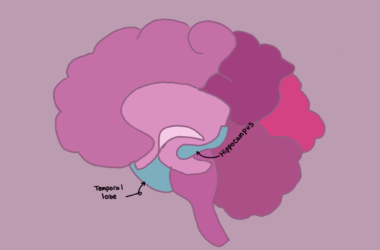
The habenula is a tiny structure buried deep within the brain, composed of two distinct subregions—the medial (MHb) and lateral habenula (LHb). Although small, it is a critical hub for regulating mood, motivation, and reward processing. Because of this, researchers have begun to link abnormalities in this region to major depressive disorder (MDD), a condition that causes persistent feelings of sadness, hopelessness, and a general loss of interest in pleasurable activities.

In a recent review paper in Nature’s Translational Psychiatry, Feiteng Lin, a PhD student in McGill’s Department of Human Genetics and member of Dr. Gustavo Turecki’s Lab at the Douglas Research Centre, synthesized recent research exploring the habenula’s wiring in the brain and how it shapes the pathophysiology of MDD. In an interview with The Tribune, Lin described his deeply personal motivation to study MDD.

“I’m personally interested in [researching] depression because one of my family members [died] by suicide,” Lin said.

Lin highlighted that a major research gap in the field is the limited ability to study MDD-related brain circuitry in living human subjects, explaining that such studies can only be conducted on individuals who have died and donated their brains for research.

“The majority of research has only been done in animal models of depression […] so the major gap I wanted to address is the [lack of] research conducted in humans,” Lin said.

The review found that the two sub-regions of the habenula are affected differently in the brains of MDD patients. Specifically, research on the MHb shows that certain signalling systems appear downregulated, while in the LHb, several stress-related pathways seem abnormally amplified.

Lin also explained how patients who experience prolonged stress tend to have worse symptoms and, therefore, outcomes, which may be related to alterations in the habenula’s neurocircuitry.

“Patients who are generally experiencing stress and anxiety, especially [for longer periods], may develop an overactive habenula,” Lin explained. “My suggestion would be to [develop strategies to decrease anxiety levels] and do more exercise to keep the mood [elevated].”

While ketamine was first used as a surgical anesthetic in the ‘60s, studies from the 2000s proved it was a viable treatment for depression, demonstrating its rapid-acting effects by slowing down the activity of the habenula. Its mechanism blocks the burst firing of LHb neurons, which is significant because abnormal firing is associated with depression-like states.

What makes Lin’s study different from the rest is his focus on the habenula—a brain region that is notoriously difficult to study due to the careful precision required to extract it.

“It’s extremely small, which also makes it difficult to [isolate], and it’s different from other studies using other regions of the brain, such as the prefrontal cortex, which is a large brain tissue [making it] easier to handle,” Lin said. “[Overall], the habenula requires extra carefulness.”

Given that the World Health Organization projects that MDD will become the greatest global burden of disease by 2030, it is imperative that researchers continue investigating its underlying mechanisms and potential treatments. Lin’s study is a promising step in that direction, suggesting that the habenula may play a larger role in MDD than previously understood.“Depression is a leading cause of disability, and it’s affecting lots of people, with many currently [unable to obtain treatment], and therefore continuing to suffer,” Lin said. “There’s multiple avenues towards [investigating the underlying] mechanism of MDD, and so we must keep trying to combine different technologies and strategies [to improve the lives of MDD patients].”

A previous version of this article stated that there are significant changes to the nicotinic acetylcholine receptor in the habenula among those who smoke, quoting Feiteng Lin. The Tribune regrets this error.

Editorial, Opinion

McGill shields Israeli institutions at the expense of its students

The McGill administration’s recent effort to obstruct the Law Students’ Association’s (LSA) referendum epitomizes its blatant disrespect for student expression and democracy. From March 19–21, students in the Faculty of Law voted in favour of a referendum endorsing the Academic and Cultural Boycott of Israel (PACBI). The referendum, introduced by the LSA, passed with 57.3 per cent support and a 67.3 per cent voter turnout. The referendum called for a formal boycott of all exchange and collaborative partnerships with Israeli academic institutions, collaboration with the PACBI Committee, and academic initiatives promoting solidarity with Palestinian scholars.

However, ten minutes before the ballots opened, then-interim (since declared full) Dean of Law Tina Piper and McGill Provost and Executive Vice-President (Academic) Angela Campbell sent a joint letter to all law students and professors dissuading the referendum’s passage, dangerously labelling it as discriminatory toward Jewish students and in breach of the LSA-McGill Memorandum of Agreement (MoA). Piper and Campbell’s intervention is a reprehensible violation of McGill students’ right to free and fair democracy, with administrators using disinformation and fearmongering as tools to obstruct student expression. 

The referendum’s focus on institutions is not incidental, as Israeli universities are not merely neutral sites of learning, but active participants in the production of legal, military, and ideological frameworks that shield state violence from accountability. By conflating a boycott of Israeli institutions with antisemitism, McGill has diluted the impact of a word representative of horrifying hatred and violence. Administrators must confront antisemitism on campus as a pressing issue, not weaponize anti-Jewish violence to shield their suppression of student democracy and obscure the political and legal role of academic institutions in Israel’s assault on Gaza. 

The LSA referendum is explicitly framed around institutional relationships, not individuals. It calls for the severance of academic partnerships and in no way targets individuals on the basis of  Israeli ethnicity, nationality, or background. The institutions are not being singled out arbitrarily by the LSA; Israeli universities have played a legal and political role in helping justify, sanitize, and legitimize the occupation and genocide in Gaza. Tel Aviv University’s (TAU) Institute for National Security Studies, for instance, brings together academic experts and senior security personnel to produce legal and policy guidance for the Israeli state and military. A referendum that targets institutional partnerships is not antisemitic; insisting otherwise irresponsibly collapses political critique into bigotry and shields complicit institutions from accountability.

In response to the referendum, Jonathan Amiel, Faculty of Law Advisory Board Chair, has resigned and withdrawn financial support for the university. In his resignation letter, he warned that if McGill failed to respond, the university would suffer reputational damage, weakened recruitment, lower employer confidence, declining alumni engagement, and donor erosion. His stance has framed a democratically-adopted student referendum as a threat to the faculty’s financial stability and institutional standing, presenting the issue as a crisis requiring administrative intervention and containment. 

McGill’s response reveals an emerging pattern of administrators obstructing and delegitimizing resolutions reached through democratic channels. In April 2025, Students’ Society of McGill University (SSMU) members voted to ratify the Policy Against Genocide in Palestine with a 71.1 per cent majority. In response, McGill threatened to terminate its MoA with SSMU, which would have been detrimental to the Society’s ability to support student groups on campus. Similarly, students passed divestment policies through the SSMU in 2022, and 2023, both of which were blocked by the administration. McGill has repeatedly characterized student mobilization as violating its policies—but when students attempt to use existing democratic structures to advance their goals, the university is quick to bulldoze their efforts. It seems that there is no palatable form of activism to McGill, so long as it objects to their complicity in genocide. 
By sending alarmist memos that claim to speak for all Jewish students, the university both misrepresents the politically diverse communities it claims to protect and weaponizes grounded fears of rising antisemitism to delegitimize student democracy. McGill must cease its attempts to frame the referendum as discriminatory, stop using administrative power and MoA threats to obstruct its implementation, and acknowledge that a boycott of Israeli institutions is not, by default, a danger, but a crucial form of political expression.

Science & Technology

Think you know plants? These six fun facts might surprise you

From the giant sequoias of the Sierra Nevada to the stinking corpse lilies of tropical forests in Southeast Asia, plants take astonishing forms. Despite all relying on the same basic ingredients to thrive—sunlight, water, air, and nutrients—the plant world is endlessly diverse.

But what do plants mean to people at McGill? The Tribune asked students and faculty to share their favourite plant facts.

The flowering takeover – Frieda Beauregard, the academic associate and curator of McGill’s herbarium

Among the 391,000 plant species worldwide, about 90 per cent are angiosperms—flowering plants—whose diversity stems from a key evolutionary change related to reproduction. While their gymnosperm relatives—conifers, cycads, and ginkgos—can take up to two years to produce seeds, some angiosperms can complete their entire life cycle in just a few weeks. This rapid life cycle opened the door to entirely new lifestyles.

“All in all, angiosperms are a very diverse group and are the source of most of our food plants and are important in every (terrestrial) ecosystem,” Beauregard wrote in a written statement to The Tribune. “They have a huge diversity of life-cycles and all different kinds of pollination systems, seed dispersal adaptations, secondary chemicals, etc.”

Fascinating Sphagnum Frieda Beauregard

Sphagnum mossesare a group of plants that are commonly found in peatlands—a type of wetland that stores large amounts of carbon.

“What I find most remarkable is Sphagnum’s ability to control and build their environment,” wrote Beauregard. “They are sort of like beavers, ecosystem engineers that create their particular wetland habitats. Mainly, they do this by manipulating the soil chemistry and holding onto a lot of water, resulting in very acidic conditions and […] specialist communities of plants [such as blueberries and orchids].”

The twilight effect – David Wees, Plant Science faculty lecturer and associate director of the Farm Management and Technology Program

After sunset, an interesting plant phenomenon occurs. During the day, red light dominates over far-red light—a range of wavelengths bordering the edge of the visible light spectrum. But once the sun sets, far-red light becomes more abundant, which acts as a signal for plant development.

“When plants are exposed to lots of far-red light, their stems tend to grow tall and skinny,” Wees wrote to The Tribune//. “To prevent plants from growing tall and skinny (with weak stems), some greenhouse growers will turn on artificial lights for an hour or two right around sunset to counteract this ‘twilight effect,’ therefore keeping their plants more compact and ‘bushy.’”

The science behind beeturia – David Wees

Plants are known to produce a range of pigments, such as green chlorophyll and yellow and orange-looking carotenoids. Since chlorophyll and carotenoids do not dissolve in water, they either accumulate in fat or are digested when they are consumed.

“Beets, however, contain a pigment called betacyanin, which is red or purple,” wrote Wees. “Betacyanin is very water-soluble and not completely digested by our body. So some of it ends up in our urine […], changing its colour to orange-red (depending on how many beets you ate, of course).”

Evolution at full speedCameron So, PhD candidate in the Department of Biology

When you think about lupines, also known as Lupinus, you picture the striking purple blooms that dominate Instagram posts from places like New Zealand and Iceland. Yet beyond their photogenic appeal, lupines are also remarkable for their extraordinary diversity.

The diversification of lupines occurred during the formation of the Andes, a geological event that created isolated, island-like habitats for lupines. Within these newly available environments, lupine species arose at a pace comparable to that of the famous cichlid fish diversification event, which led to the formation of approximately 2,000 species within 15,000 years. As a result, this flowering plant group now exhibits strikingly different variations.

Odd Quebec plants – Antoine Larocque, SciTech Staff Writer
In Quebec, there are about 3,000 native species. Some of the unique specimens you may encounter in your next hike are Monotropa uniflora, a fungus parasite that does not produce chlorophyll; Osmundastrum cinnemomeum, a fern species that still persists after 74 million years; Sarracenia purpurea, a carnivorous plant; and Myrica gale, a shrub with an intense aromatic flavour that acts as a natural insecticide. You should go find them.

Art, Arts & Entertainment, Pop Rhetoric

Human artistry is threatened by the increase in generative artificial intelligence

At a 2024 auction, a portrait of Alan Turing was sold for $1.08 million USD. Although a compelling painting, it was created by the artificial intelligence (AI) robo-artist Ai-Da, built in 2019. Now the most valuable AI-generated artwork ever sold, the piece represents what most artists have been fearing: The invasion of AI in artistic spaces. 

This invasion isn’t strictly within the visual arts, though: In November 2025, How Was I Supposed to Know? reached Billboard’s Adult R&B Airplay. The song was number 30 on the chart. Xania Monet wrote this song; she’s an AI-generated musician who creates AI-generated music.

Generative AI (GenAI) has been increasingly used to create or enhance art. Many are questioning the integrity of non-human-generated art, the value of the ‘art’ Gen AI produces, and how far it will go.

As AI attempts a mimicry of human creativity, the already heavy competition in the art industry has been amplified. Many GenAI image generators exist on the market. DALL·E, now DALL·E 3, was created by OpenAI in 2022, its name ironically inspired by the 2008 film, WALL-E, and impressionist painter Salvador Dali. To test the generator’s knowledge on artistic styles, Jamena McInteer, a full stack developer and UI/UX designer, tried entering different prompts ranging from landscapes to llamas, abstract to photorealism, and oil paint to gouache. McInteer determined DALL·E was successful in creating alluring images that resembled human art, but found the generator’s limits in the sometimes uncanny or inaccurate results. Despite these inaccuracies, DALL·E’s mimicry can produce a broad range of what a user might desire. If it can be thought of, it can be generated, and the quality of these creations is only improving with time.

Many artists have criticized the introduction of AI into artistic spaces. Kenneah March Dimacali, who was selected as a runner-up for the Michèle Whitecliffe Art Writing Prize under the theme ‘Artificial intelligence (AI) and the visual arts,’ wrote in her essay that art is meant to be difficult. It’s not the art itself that is the prize, but the time and effort that it took to make the piece. GenAI ‘art’ is not art because it eliminates the difficulty of the artistic process.

Fortunately, in a push-back, there’s been a rise in appreciation for human-made art. Another study conducted by C. Blaine Horton Jr., Sheena S. Iyenga, and Michael W. White made clear that human-made art is valued over AI art because of the substance and feeling behind it. It takes months or years for artists to create one meaningful piece. AI, however, only takes a couple of seconds to generate something. And, while its quality is adjustable through the viewer’s typed prompts, there is no sentient feeling behind its creation. Art stems from its human artists and is shared with viewers to produce feeling, whereas AI ‘art’ is created solely for a consumer who found an easy way to get an image. 

With products labelled as “human-made,” an anti-AI movement has begun. Past the plastic arts, the book and film industry has joined this movement. Published last year, the horror novel Shy Girl gained positive public traction from readers and critics until it was suspected that 78 per cent of the book was AI-generated. The book’s publisher, Hachette, cancelled its production. Heretic’s producers added an “anti-credit” of GenAI at the end of the film. 

Co-existing in the artistic sphere with AI is becoming inevitable, but there is a significant problem with GenAI developing too fast for regulation to keep up. Artists’ careers are at risk of being compromised. Human creativity and intelligence have decreased. With the abuse of GenAI, artistic creativity and humanity as a whole are threatened. Art is so existentially human; we need it not to survive, but to live. From the first cave paintings found in Altamira to Jeff Koons’ balloon animal sculptures, art’s purest form comes from the human hand at its centre. Even as AI hones its perfect copy, art will never flourish through mere mimicry.

Commentary, Opinion

We can’t all be superheroes

One year ago, I wrote an article titled ‘Disruption is the essence of effective protest,’ arguing that radical activism is more effective than catering to the politically neutral, and that fence-sitters aren’t worth engaging with. But after another year spent watching and reporting on student activism, I can see that I was wrong.

Activism has gotten louder in the past year, but it has also become increasingly insular. Inclusion in activist spaces has grown contingent on adhering to a set of expectations that aren’t always explicit, but are quickly and harshly enforced when broken. There is simply a zero-tolerance policy for error. 

This demand for perfection and refusal to compromise aren’t just unhelpful but actively counterproductive. History proves it: The United States’ Federal Bureau of Investigation’s COINTELPRO program exploited internal divisions within the Black Panther Party by amplifying existing tensions and spreading rumours about ideological purity—and it worked.  By the 1970s, the Panthers were spending more energy on internal purges than organizing. Similarly, Occupy Wall Street failed in 2011 because—despite the hundreds of passionate, radical thinkers—the movement demanded a unanimity that would never materialize. 

The expectation that everyone involved in a social movement must be hyper-radical is strategically self-defeating. Most people who care about a cause are not experts, nor are they willing to dedicate their lives to it. That is not a moral failure. Social movements have never been powered solely by their most radical participants; they succeed when the radical few who are willing to sacrifice everything are supported by a much larger base of people who contribute in smaller ways. Divest McGill needed both visible building occupations and slow, years-long negotiations with administrators to succeed. We can’t all do the superhero work on the frontlines. 

And perhaps more importantly, this stubborn need for a singular, perfect kind of activism conflates performance with substantive change. Telling someone to use the word ‘unhoused’ rather than ‘homeless’ is accomplished in a single breath, but when’s the last time you donated to the food bank or volunteered at a shelter? While changes at the level of language and rhetoric do carry real symbolic weight, their impact pales in comparison to tangible efforts at change. The outcomes we strive for require something much less gratifying—but much more fundamental—than correcting people from our high horse: active, sustained community involvement, and sometimes even compromise. 

Refusing practical engagement comes at a cost, one that has clearly registered at McGill. In 2024, students alleged that the Students’ Society of McGill University (SSMU) President Dymetri Taylor misconstrued the scope of a legal injunction regarding the Policy Against Genocide in Palestine (PAGIP), suggesting that a proposed strike motion could not proceed as drafted. They argued that this misunderstanding prevented McGill students from participating in a nationwide strike. 

The frustration was justified, but the scale and intensity of the response quickly outpaced its strategic value. Students launched a motion to impeach Taylor: Hundreds showed up with pitchforks for the General Assembly public humiliation ritual, but those who called for Taylor’s impeachment perhaps hadn’t considered that installing new leadership would take a whole semester and would interfere with various other facets of student life. By fixating so intensely on punishment under the guise of accountability, we lost sight of the practical reality that SSMU is one of the few bodies capable of turning student demands into institutional action at McGill. 

In the end, the impeachment motion failed. Taylor remained president, and the PAGIP passed the following year. Yet, the hundreds of people with pitchforks are nowhere to be found today. While we were busy debating SSMU’s “delinquency of duty,” SSMU voter turnout dropped by over 50 per cent between the Fall 2023 and Fall 2024 referenda. The motion to increase the Student Services Fee failed, leaving groups such as First Peoples’ House and Student Accessibility and Achievement with less funding to support the groups we purport to advocate for. We showed up in droves for spectacle but not for tangible action. 
No effective movement has ever succeeded by reserving the right to activism to a select, terminally online, jargon-obsessed few. We’re eating our own because of our obsession with ideological purity. At some point, we must choose: Do we want to create change, or do we just want to feel good about ourselves?

Research Briefs, Science & Technology

Not just ice caps: Shorter frozen seasons causing concern for climate scientists

The climate crisis, painfully familiar and distressing, continues to demand our attention. Some researchers are devoting this attention to analyzing the number of frozen land surface days—days when the ground surface is in a frozen state.

A recent paper led by Shadi Hatami, a hydrologist and climate scientist at the University of Calgary and a former postdoctoral fellow at McGill University, exposes a concerning trend: Warming temperatures and diminishing snow depths are causing fewer frozen land surface days every year. 

“We used satellite observation and climate data over a period from 1979 to 2021, and we found that the [number of] frozen days are declining across a major part of the northern hemisphere. This decline is found to be strongly linked to warmer temperatures, and in many regions, it’s linked to thinner snowpacks and snow depths,” said Hatami, in an interview with The Tribune. “We are observing, and we will observe, fewer days each year with a frozen state.” 

While this metric does not capture details about the depth of the frozen soil or the transitions between frozen and thawed ground states, the number of frozen days in a year serves as a helpful, large-scale measure of how long the surface remains frozen.

The study found that over the course of 40 years, 85 per cent of the studied ecoregions experienced a significant increase in annual temperature and a decrease in annual snow depth. This resulted in a significant decrease in the number of frozen days in over 70 per cent of ecoregions. The researchers predicted that these trends would only continue. By the end of the century, northern ecoregions may see an average of 30 fewer days of frozen land surfaces—assuming that the rate of climate warming does not intensify. 

“We should, for sure, be worried about the rate of the change [….] Just one degree centigrade of warming temperature corresponds to roughly six fewer days with the frozen state, and just one centimetre decrease in snow depth corresponds to roughly three fewer frozen days on average,” Hatami said. 

While the trends are concerning, Hatami addressed a few considerations to keep in mind.

“Our frozen day metric reflects the satellite-observed surface condition, so no information about the deeper soil freeze, or the permafrost conditions, for instance,” Hatami clarified. “Another [limitation] is that future-looking estimates are based on the linear extrapolation of historical trends. They should be read as the first-order benchmark, rather than the precise future forecast.” 

The paper further discusses its effects on local infrastructure. Permafrost, which refers to soil below the surface which remains frozen throughout the year, is impacted by declining frozen land surface days. As these soils thaw, roads destabilize to the point of being unusable, limiting the transport of resources and services to northern communities. 

“The Indigenous communities in the northern regions are closely tied to the land. Shorter frozen season and less days with the frozen condition over a year or over a specific season can affect them in several connected ways,” Hatami said. “Their access to the natural resources would be impacted, the hydrology of the region that they are living in will be impacted, and also the broader environmental system that supports their livelihood will be impacted.”

These findings add to the mountain of evidence pointing to the urgency of climate change. Alongside advocating for government action and corporate regulation, it is crucial to acknowledge one’s individual responsibility. Change will come from those who see these disheartening times for what they are: A status quo overdue for upheaval. 

“I would just want to encourage people from engineering backgrounds to look into the environmental side of things,” Hatami said. “Future climate and environment will play a very important role in all of our lives, because we can see already the impact and we can see it in our day-to-day lives. I would like to encourage people to try to look at the environmental side of things and sustainability in their future career goals.”

News

English Montreal School Board and other groups challenge Bill 21 in Supreme Court of Canada

On March 26, a four-day hearing concluded in the Supreme Court of Canada, where six groups challenged the Quebec government regarding Bill 21, continuing the debate over religious freedom, minority rights, and the use of the notwithstanding clause. The six opposing groups include the English Montreal School Board (EMSB), the World Sikh Organization, the National Council of Canadian Muslims, and the Canadian Civil Liberties Association.

Bill 21, passed in 2019, prohibits public-sector workers, including teachers, police officers, and judges, from wearing visible religious symbols while working. The Quebec government has argued that the law is necessary to uphold secularism in public institutions. 

In an interview with The Tribune, Elizabeth Elbourne, a professor in the McGill History and Classical Studies department, emphasized the disproportionately damaging effects Bill 21 has on individuals who wear religious symbols.

“Beyond the impact on particular individuals in their jobs, Bill 21 has arguably created a permission-giving environment for discrimination,” Elbourne said.

Elbourne said that while the law applies broadly, its effects are not evenly distributed. She referenced a survey she conducted with Kimberley Manning, Political Science Professor at Concordia University, which concluded that some student teachers chose to change careers or leave Quebec rather than work under the law.

Historically, the notwithstanding clause has been used sparingly, and typically in response to court decisions. Introduced in 1982 as part of the Charter, it was designed as a political compromise to balance judicial power with parliamentary sovereignty. 

In an interview with The Tribune, Jonathan Montpetit, a senior investigative journalist with CBC News, noted that Bill 21 marks a shift in how the notwithstanding clause has been used in the past.

“It was used preemptively […] the law did not specify a specific Charter right it was overriding,” Montpetit said. “Whatever the Supreme Court decides will have huge ramifications, not just for constitutional rights, but for how we think of the federation and indeed Canadian democracy itself.”

Some challengers also claim that Bill 21 violates rights that cannot be overridden by the clause, including gender equality and minority language rights. The Canadian Civil Liberties Association, one of the six appellants, argues that the law violates the protections of the Canadian Charter.

The EMSB contends that Bill 21 conflicts with Quebec’s identity as both pluralist and secular.

“The [EMSB] argues that the English community has the right to manage its own school boards in accordance with its own values and therefore can’t be made to enforce Bill 21 in English schools,” Elbourne said.

The case also raises broader philosophical questions about democracy and the balance of power in Canada. Montpetit pointed out that the outcome could reshape how Canadians understand their political system.

“Which institution ought to have the final say in a democracy, the courts or the legislature?” Montpetit asked. “Is a democracy about respecting the will of the majority or protecting the rights of the minority?”

In a written statement to The Tribune, Kaya Scrivens, U1 Arts and Vice-President Events for the McGill Religious Studies Undergraduate Society, explained the consequences of Bill 21 for Quebec minority groups and McGill students.

“Bill 21 is a ban on religious symbols in public, but it represents much more than that, and it sets a kind of precedent in Quebec for tolerance of religious discrimination as this bill affects certain religions more than others,” Scrivens said. “In terms of the McGill students, banning prayer spaces affects Muslim students who require prayer at specific times of day more than it affects others who can pray on more lenient schedules and in places that don’t require a prayer room.”

Elbourne believes this case will have significant implications for Canada’s constitutional rights moving forward.

“The challenge won’t overturn the notwithstanding clause, even if successful. Nonetheless, if the court places clearer restrictions on the use of the clause this will shift balance of power back to courts and charter rights somewhat, albeit within limits.”

Arts & Entertainment, Made at McGill

Student artistry: Made at McGill, yet advanced by artists

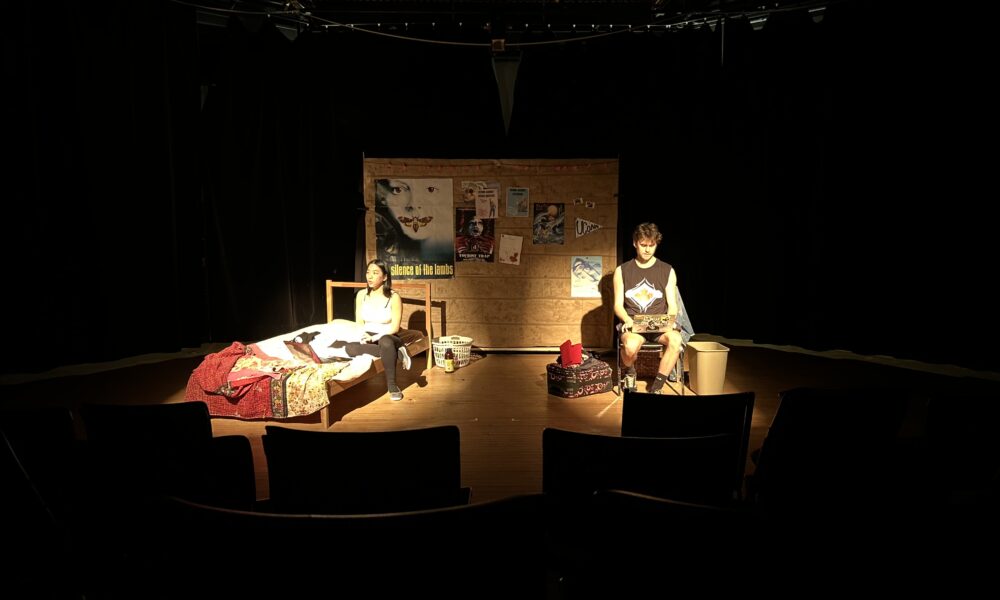
Watching a show in Tuesday Night Café Theatre’s (TNC) space, the first thing you will notice is that the separation between crew and audience—or cast and audience, if the director so decides—is almost non-existent. The small theatre at Morrice Hall, whose seating can be configured as the director wishes, creates a fluid, warm atmosphere that serves as a meeting place for McGill’s artistic community.

For McGill students who wish to participate in the creative arts, whether it be in visual arts, dance, drama, journalism, or other disciplines, several clubs and student societies exist to fulfill this need. Organizations such as the Visual Arts Society and the Photography Students’ Society, as well as a plethora of dance and drama companies like Alegria Contemporary Ballet or TNC, provide students—beginner and advanced alike—the opportunity to explore the arts.

However, these opportunities operate within a university that, outside the Faculty of Music, offers little in the way of support for artists hoping to develop their skills professionally. Notably, McGill’s lack of a studio art program has forced students to look elsewhere, as there is no serious institutional alternative on campus.

This persists in the sphere of theatre. Though opportunities to get hands-on experience are diverse in scope, preparing student actors for careers outside McGill is a challenge. In a written statement to The Tribune, TNC production manager Megan Siow, U2 Arts, outlined the issues that student theatre groups face in establishing themselves as serious alternatives to professional drama programs.

“We strive to create an environment where, regardless of experience level, you can get involved and become part of the community. However, in terms of preparing students for arts outside McGill, TNC only really has the resources to support to a certain extent,” Siow wrote. “TNC is, and cannot be, a place geared toward people who want to seriously pursue a career in the arts [.…] There is nowhere at McGill that is a place for emerging artists who are serious about pursuing theatre.”

There is no doubt that student societies have opened doors for students of all backgrounds to get involved in the arts, yet, as with any club, not all members have the same level of commitment. As Siow affirmed, these clubs do not have the resources to be both a society for students to try out new interests and a pre-professional placement.

It is disappointing that, among the three anglophone universities in the province, McGill provides the least institutional support for the arts despite its international renown. Concordia, just two metro stops away, boasts an incredible selection of professional programs in its Faculty of Fine Arts. Bishop’s University has the only English-language musical theatre program in Quebec. 

Student-run groups do not hold the same power or prestige as academic programs, making it more difficult for artists to navigate bureaucracy. Siow pointed to the difficulties in making the TNC space available to other groups.

“New policies in the last year have made it so we have to go through [Arts Undergraduate Society] AUS and/or the Islamic Studies [IS] Department to approve other groups using the theatre. Adina [Sigartu, IS Administrative Student Affairs Coordinator] and the IS department have always been very helpful, and we are immensely grateful for their support, but certain bureaucracies undermine TNC’s mission to create accessible theatre.”

McGill artists, while creating impressive work on their own, deserve the opportunity to hone their skills through professional programs. Courses such as the Department of English’s Stage Scenery and Lighting and Costuming classes for the theatre are a great example of the fruitful possibilities that McGill could foster, but McGill should be doing more to connect its artists with industry professionals.

The lengths to which McGill’s artistic community will go to express their creativity deserve further support from the university, which continues to neglect its artists. The current offerings, made by students for students, are endeavours that contribute to the vibrant and diverse community we call home, but they are not enough. Emerging artists who wish to attend McGill should not be shut out due to its artistic impracticalities; instead, McGill should listen to its student culture by nurturing creative arts.

Read the latest issue

Read the latest issue