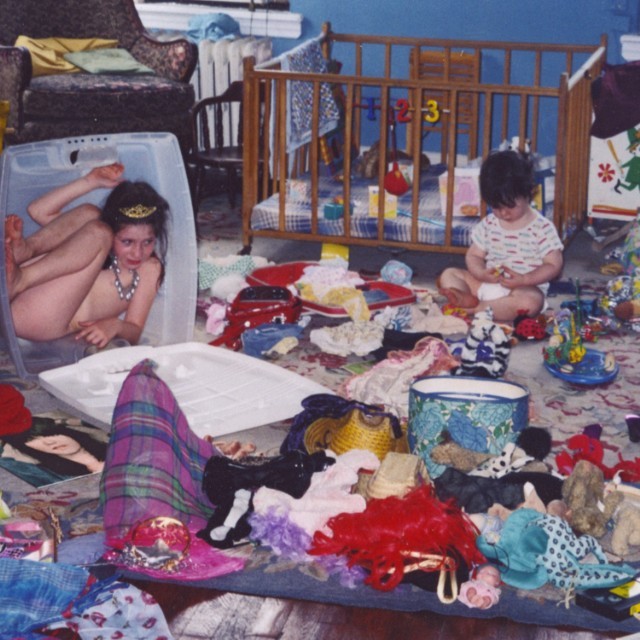
Sharon Van Etten has never shied away from vulnerability. Her music is often associated with a certain melancholy and is characterized by honest lyrics on love, inevitable heartbreak, and the self-reflection that follows. However, on her newest record Remind Me Tomorrow, Van Etten shifts away from her usual brooding depictions of love. The album follows her journey into monogamy and motherhood, and the singer-songwriter’s sound has changed accordingly. She is not angsty here, rather, Remind Me Tomorrow is a reflection on growth and power in what is sure to be a candidate for album of the year.
Vulnerability and contemplation remain common themes on this LP. However, Van Etten trades in her signature guitar-based tracks for a darker, more experimental sound with the use of synthesizers and drones. “Memorial Day” evokes mystery with its unconventional beat structure and layered echoing vocals. “Jupiter 4” is the album’s extra-terrestrial centrepiece, a track that could easily find its way into a science-fiction film with its eerie pulsation over warped synths. The opening track “I Told You Everything” is a piano-driven number that finds its groove halfway through. Here, Van Etten recounts the night that she shared the story of a near-death experience with a would-be lover. Although the instrumentation throughout the album is gloomy, Van Etten successfully juxtaposes it with hopeful and confessional lyricism.
Much of Van Etten’s earlier works showcase the singer’s search—for love, happiness, and autonomy. However, in Remind Me Tomorrow, Van Etten has seemingly found what she’s been looking for. “Want your whole star to shine on in / One star, one light / The meaning of life,” she quietly sings in the closing track “Stay,” an intimate dedication to her son. Romance can be temporary; however, the love between a mother and her child is permanent, and Van Etten has never sounded more confident expressing this unbreakable connection. Even in the midst of the chaos that is motherhood, she is a voice of reason, and Remind Me Tomorrow is a testament to the importance of the destination after a long journey.
Essential tracks: “I Told You Everything,” “Seventeen,” “Malibu,” “Stay”
For many students, the return from winter break marks the start of an annual scramble to track down that internship deemed crucial to curated resumes. The scarcity of paid internships limits opportunities for students who rely on a summer income, meaning that many undergraduate students are unable to acquire work experience in their field of study, leaving them without an understanding of what future jobs might entail. While McGill has some organized initiatives to mitigate this issue, like the Arts Internship Awards, a solution to the problem of unpaid internships will require government intervention and leadership.
Today, internships represent an integral part of the university trajectory. Even in their first year, students are expected to begin working in their field of study to beef up their CVs. The lack of relevant positions can be panic-inducing for many. After hours of cold calling, in-person meetings, and feverish LinkedIn updating to no avail, students can feel disheartened.
Organizations and societies at McGill have taken steps to help students gain work experience in their fields of study. Resources like the Arts Internship Oasis (AIO) and myFuture offer undergraduate students exclusive access to postings through which they can apply directly for positions and funding. McGill’s Career Planning Services also offers students workshops on resume writing, LinkedIn best-practices, and interview techniques to boost their chances of securing employment. Despite these initiatives, McGill simply cannot cater to the27,000 undergraduates in need of work.
In addition to a shortage of opportunities, even the students who succeed in securing employment through McGill still face the dilemma of insufficient income. On the AIO website, for example, it states: “the majority of internships are unpaid, and many of our students are self-funded”.It is unclear exactly what ‘self-funded’ means—likely it refers to students with generous parental support. And, while the AIO does offer some successful applicants up to 5,000 dollars to offset expenses, those who receive this funding are few and far between.
To give all students a chance to gain the work experience they need for successful professional futures, employers, governments, universities, and students must all coordinate to counter underpaid internships. McGill students have already recognized the need for compensated labour. This past November, 54,000 students took part in a week-long protest against mandatory unpaid internships across Quebec. In response, provincial Minister of Education and Higher Education Jean-François Roberge iterated that he plans to address the issue in the near future.
While McGill should feel a duty to assist its students in securing employment, the government is the main body that needs to subsidize internship opportunities. There are already some instances of government-sponsored internship opportunities across Canada: In New Brunswick, for example, the government-run Student Employment Experience Development (SEED) program subsidizes companies to create internship positions for youth. Students can enter a lottery to receive access to these positions and apply to relevant summer jobs. This random lottery circumvents the access barriers which privileged networks like Panhellenic societies uphold. Moreover, by paying companies to offer internships, SEED not only creates more relevant work experience opportunities for students, but it also provides a source of income for those students so that they can afford to take the positions.
Currently, Quebec does not offer any programs like SEED, but Roberge’s response to the November protests offer a glimmer of hope for students. However, if the Quebec government aims to resolve the issue of inaccessible employment for students, it must go further than just paying interns out of pocket and look to increase the overall number of internships while ensuring that they are accessible to students of all backgrounds—not just those born with advantageous connections.
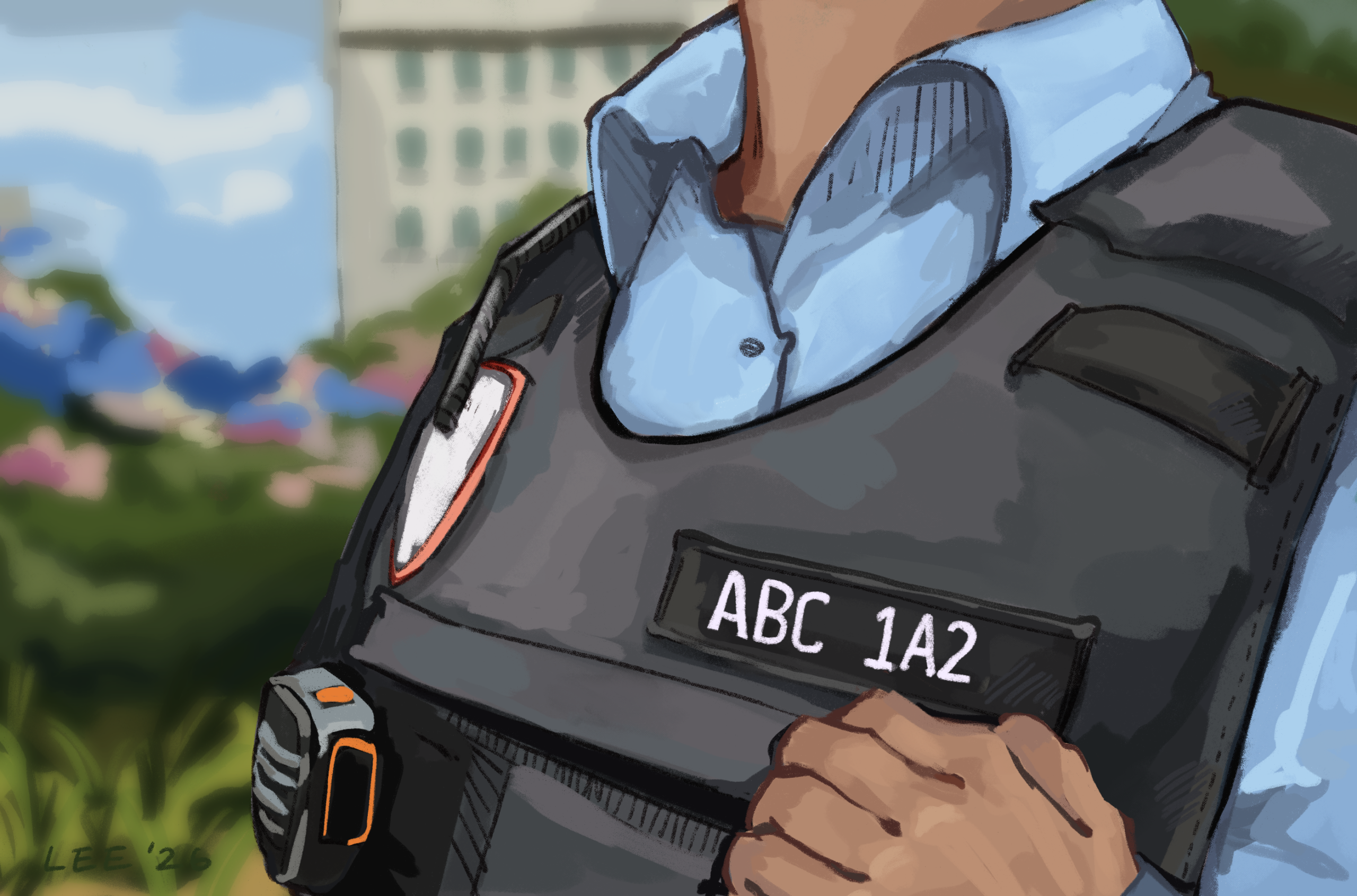
The McGill administration missed the Jan. 1 deadline set by the Quebec government to adopt an updated sexual assault and violence policy. The deadline was part of Quebec’s Bill 151, which was passed in Dec. 2017 and requires all higher education institutions to revise their sexual assault and violence policies in accordance with a new set of regulations.
McGill’s Policy Against Sexual Violence was ratified in 2016 and is currently under revision to reflect the provincial government’s new requirements. As it stands, McGill’s policy fails to adhere to some of the requirements of Bill 151, such as the existence of a standalone policy and clearly-defined regulations regarding professor-student relationships.
Principal and Vice-Chancellor Suzanne Fortier denied that McGill had missed the deadline and suggested that media coverage claiming otherwise lacked nuance.
“McGill had a sexual violence policy in 2016, so we didn’t miss the deadline,” Fortier said. “Our schedule didn’t work perfectly with Quebec, [and], through our schedule, we’re going to look at what adjustments we need to make to be 100 per cent in agreement with the Quebec policy. In fact, we were the first to [have a policy] in 2016, so I think the journalists in some of these cases did not do the full work of really looking at the facts, but we did not miss the deadline in terms of the big policy.”
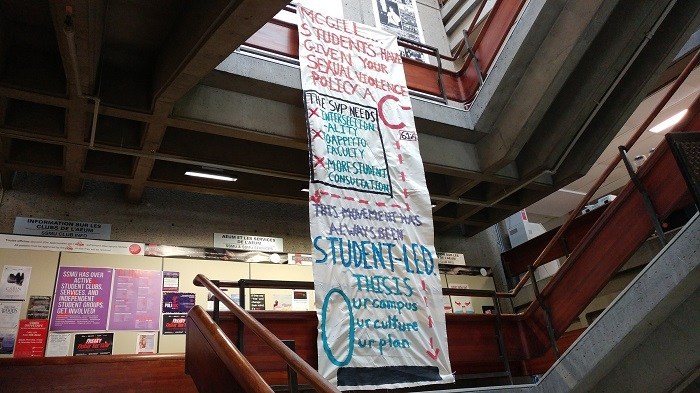
According to Our Turn, a student-led initiative to end sexual violence on university campuses, McGill’s current policy is far from sufficient. In their rating of over 60 Canadian post-secondary institutions based on criteria such as accessibility, scope, and intersectionality, McGill’s policy received a grade of C-. Its poor grade is due, in large part, to the fact that, rather than being a self-contained document, the policy refers to other regulations, such as disciplinary procedures outlined in the Student Code of Conduct, which are not specific to sexual assault.
Connor Spencer, former Vice-President (VP) External for the Students’ Society of McGill University (SSMU) and national chair of Students for Consent Culture Canada, expressed disappointment with the lack of enforcement on the part of the province. In addition to McGill, L’Université du Québec à Montréal (UQÀM) and 26 of Quebec’s 48 CEGEPs have yet to provide an updated policy to the Quebec government.
“There is an assumption of good faith that is not warranted on the part of the province,” Spencer said in an interview with The McGill Tribune. “We actually need to implement a robust oversight mechanism to ensure that there’s a way for students to report their universities for being in violation of either provincial legislation or their university’s own policies.”
Spencer added that McGill’s failure to introduce a more comprehensive policy in spite of active student mobilization suggests a concerning trend of treating measures against sexual violence as boxes to be checked, rather than genuinely attempting to change the circumstances which allow for sexual assault to occur.
“McGill’s unwillingness to engage with student criticism and concerns […] over their policy against sexual violence […] points to the fact that, even though supports have gotten better over the past couple of years for student survivors, […] the underlying willingness to change the rape culture that exists on campus from upper administration is not there,” Spencer said.
Yasmine Mosimann, who works for SSMU as a sexual violence mobilization and advocacy commissioner, emphasized the importance of implementing the proposed changes quickly.
“I will say [that] a concrete and simple measure that McGill should be undertaking is listening to its students,” Mosimann wrote in an email to The Tribune. “It is often the case that there is a great discrepancy between the final reports and what students have said. Yes, there is a review committee in session, but these changes need to be made in real time. Individuals will face sexual and gendered violence between the January deadline and the several months it will take for the reviewed policy to be completed, presented, and voted upon, and not having a strong policy for [those students] is unacceptable.”
Many commuters, including students, rely on infrastructure like public transit, sidewalks, and bike lanes to get around the city. But, sometimes, infrastructure fails: On Jan. 9, three out of four metro lines were closed due to a pepper-spray incident, and, on Jan. 17, the blue line closed due to an electrical explosion in Rosemont station. Even when everything is functioning properly, access to Montreal’s transit system is inequitable, and physical and structural barriers render the city’s infrastructure inaccessible to many Montrealers.
According to a study published by the Communauté métropolitaine de Montréal (CMM) last Feb., 65 per cent of people in the Greater Montreal Area still commute by car, a figure that is increasing as bus ridership faces a steep decline. The effect of this statistic is visiblein Montreal’s intense congestion and traffic problems. That car usage is increasing while public transit remains more affordable suggests that public transit remains a less-viable option for many Montrealers, and, for some, an impossible one.
One in 10 Quebecers have a physical disability, and Montreal currently does little to provide them with transport services: Only 14 out of 68 metro stations are wheelchair-accessible, and they are all on the orange line, with one at the green-orange transfer station Berri-UQÀM. The inaccessibility of other green-line stations like McGill, Peel, and Place des Arts means that McGill students with physical disabilities have few transit options for commuting to school. The Société de transport de Montréal (STM) does have some dedicated transit services, like Paratransit and bus-ramps for wheelchair users, but these services are also unreliable, as many report faulty ramps, inefficiencies, and limited options for travel times. For example, after Montreal received 23 cm of snow on Jan. 20, the STM released a statement warning that buses may be unable to extend wheelchair ramps at usually-accessible bus stops. Montreal should look to neighbouring cities, like Toronto, which is planning on having step-free stations by 2025.
Besides increasing physical accessibility, there are other ways the system can better serve Montrealers. For example, to increase safety, metros and bus lines should run later on weekends to accommodate people who are out late: Public transit is safer than walking home alone at night. Although the chairman of the STM has said that it is ‘impossible’ to keep the metro open for 24 hours, cities like London, Copenhagen, Vienna, and New York City all have 24 hour service, at least on weekends.
To improve bus ridership, the STM can focus on increasing the number of buses to relieve overcrowding on popular lines, as many commuters report waiting up to 30 minutes for a bus empty enough to board. The STM could also consider introducing more payment options, including debit and credit contactless tapping, or even creating an app to add money to OPUS cards.
Increased investment can fix many of these problems. Building elevators, new metro lines, or increasing the number of buses all require large investments, but these are all necessary and, in the case of physical accessibility, a human rights issue. Initiatives like Montreal Mayor Valérie Plante’s Pink Line are crucial—albeit costly—undertakings to help commuters in the West Island and Montreal-Nord better access the city.
In the meantime, commuters can do their part to make the public transit system more accessible. Going to the back of the bus, making space for people in wheelchairs to get on the bus, and giving up their seat to those who have priority all contribute to making the STM’s infrastructure a more viable transportation option for all.
The inaccessibility of the public transit system is indicative of broader issues throughout Montreal’s public infrastructure, including McGill. Montreal is failing to meet the needs and uphold the rights of people with reduced mobility, and the city must be held accountable for fixing that.
I am writing in response to the December 5, 2018, Tribune article entitled “Swim team members allege an unhealthy athletic atmosphere.” While I cannot speak to the individual experiences of the quoted students, I feel it is important to fill in the article’s incomplete picture of the support system McGill offers its 700+ student-athletes. It is vital that our athletes know that the University’s varsity administration, coaches and support staff are committed to assisting them in any way they can, including in the reporting of incidences and/or behaviour that they feel is harmful.
Striving for excellence in both academics and athletics can be a delicate—and often challenging—balancing act. At times, issues arise outside or within the team environment that make achieving this balance even more difficult. This is why several different avenues of support are available to student-athletes facing problems with their varsity experience. These multiple access points, at various levels of the organization, have been designed to ensure that students always feel comfortable divulging the issues they are facing, regardless of what—or who—is involved.
At the team level, students may speak directly with their captain—a peer who is usually a veteran member of the team with strong leadership skills—or with an assistant coach, both of whom will point to other support/reporting services if necessary. At the level of student organization, athletes can speak to a member of the Varsity Council, a group of student-athlete representatives that acts as a liaison between athletes and coaches/staff. Finally, at the administrative level, students are encouraged to raise issues with the Manager of Varsity Sports, the Director of Sport Programming, and/or the Executive Director of Athletics and Recreation.
Mandatory start-of-season orientation sessions ensure that incoming athletes are immediately made aware of each of these support outlets. They also outline the central support services that are available through McGill Student Services. Varsity teams have peer tutoring and athlete-buddy programs designed to raise awareness of the support available and encourage student-athletes to reach out when necessary.
In addition to the ongoing support and reporting outlets listed above, all student-athletes fill out anonymous evaluations at the end of each year, which are then reviewed by senior staff members within Athletics and Recreation. Issues raised within these evaluations are thoroughly addressed with coaching staff and investigated if necessary. In addition, all coaches have regular evaluations with their supervisors, and are certified by various professional associations.
All student-athlete conversations with coaches and staff are strictly confidential, and information is never shared unless express permission is given, or if the health/safety of other athletes is at risk. It is for this reason that varsity staff cannot respond to requests for interviews with the press, and that they do not share information divulged to them with coaches, teammates or professors.
We know that no reporting or support system is perfect. Each athlete has their own individual expectations and needs, and as such will have a unique experience with the assistance available. This being said, I am confident in the Athletics and Recreation staff’s commitment to providing student-athletes with the best experience possible, and in their dedication to providing the ongoing support they need to thrive.
The streets of Montreal are notoriously difficult to navigate. What might begin as a simple walk down a few blocks can spiral into an Odyssey through a dystopic landscape of potholes, puddles, and decades-old construction sites. One-way streets abruptly end at public parks, only to reappear ten blocks north. The steep slopes that crawl up the craggly face of Mont-Royal are made all the more treacherous by ice, proving to be a headache for pedestriansanddrivers. From an outsider’s perspective, donning ski goggles and long johns to bike 25 km per hour up these unplowed boulevards seems like the last thing anyone would ever want to do. For the bike messengers who operate in Montreal, every shift involves another jostle through traffic, rain, snow, or shine. Yet, couriers have formed a warm kinship, founded upon mutual desires for improved working conditions and the world of alleycats—non-sanctioned courier races —that foster a sense of community.
Born in Queens, my mom was raised in Westchester county, New York, a predominantly-Jewish area surrounded by fellow first and second-generation Ashkenazi relatives. Meanwhile, my Arkansas-born father was growing up with Methodist parents who have deep southern roots and distant Scottish ancestry. So, when they married in 1992, a strange mixture of culture, custom, and religion was born. Part of my identity today is this jumbled—sometimes confusing—combination of that heritage.
Every September, my parents packed my brother and me, clad in cotton pyjamas, into the station wagon along with our stuffed animals. We would arrive at my maternal grandparents’ house late on Friday night and drive along the Long Island Expressway on Sunday morning to arrive at the family reunion. There, we were greeted by relatives with heavy New York accents offering bagels shmeared with cream cheese and topped with lox, capers, and red onion. My brother and I failed to escape the suffocating embraces of vaguely-familiar relatives, and, inevitably, we were forced to endure several stories that began with the phrase “Before we left Europe…” We drank sparkling apple cider and, sometimes, a sip or two of cloyingly-sweet red wine.
Family reunions in Arkansas, however, unfolded quite differently. Upon landing in Little Rock, we were met with the thick August air and the scent of dogwood blossoms. From there, we travelled to my paternal grandparents’ home in Pine Bluff and then to Hot Springs, known for its geothermal springs and tourist appeal. Much of my dad’s family does not drink alcohol for religious reasons, so we guzzled Dr. Pepper, an iconically-Southern soda. I sat at the kids’ table, occupied by many small blonde children with names like ‘Carter’ and ‘Tobin,’ and ate ham and my grandfather’s famous cornbread—which, importantly, is far less sweet than the abomination that is ‘Yankee’ cornbread—made in the whisk-scarred bowl passed down from his grandmother.
Back home in the suburbs of Boston, we lit the Shabbat candles in the dining room on Friday nights, decorated the Christmas tree, attended Hebrew school, and dropped neon-coloured tablets into vinegar and water to prepare for Easter egg-dyeing. Mezuzahs hung on door frames throughout the house, and I helped my mom grate onions and potatoes for latkes only a few weeks before attending Christmas Eve Mass and preparing a traditionally-southern New Year’s meal of collard greens and black-eyed peas.
When friends asked about my religion, I used to say that I was Jewish and Christian. Sometimes, they told me that wasn’t possible, or that I “wasn’t really Jewish.” I never knew how to respond. Judgments of my Jewishness come largely from Jews who consider themselves to be more observant than I am; however, non-Jews, too, have told me that I’m not Jewish because I no longer regularly attend synagogue. I’ve rarely seen or been a part of a community that reflects the interfaith niche in which I grew up.
In my mind, celebrating Chanukah and Christmas made me ‘both.’ While I now identify much more strongly with cultural Judaism, my experiences have always lied somewhere in the middle. I have no knowledge of the New Testament, and I can’t read Hebrew fast enough to keep up with prayers that I don’t already know. But, I also crave the crispy fried okra of the south and the tender brisket that I eat on Passover. On the morning of my brother’s Bar Mitzvah, my dad prepared a plate full of BLT sandwiches for breakfast so that we could grab something to eat as we got ready. While I wish that those around me would refrain from making their own assessments of my upbringing, and though I often feel stranded between two cultures, religions, locations, and ways of being, I have come to accept that it is okay to be both. It’s okay to eat pork before going to synagogue.
“I’m just going to use it to get through finals, but during Christmas break I’m going to quit.”
This is how I explained my foolproof plan to abandon my Juul to my housemate at the end of last year. I do this with almost all the promises I make to myself; reaffirming a plan by relaying it to someone else feels like adding a layer of accountability. Pledges made in isolation feel worthless, and I end up motivating myself by setting iPhone alarms with labels that are both aggressive and self-deprecating. These are rarely effective, and most often I succeed only in wallowing in guilt and debauchery. The new year feels like a clean slate: An opportunity to commit oneself to reaching success with a flaring but fleeting determination. As we find ourselves at the beginning of the semester, it’s worth asking why resolutions are so difficult to maintain. Simply put, most of us struggle because we have have trouble understanding our own identity.
This explanation requires a brief interlude into the existential philosophy of Jean-Paul Sartre—bear with me—who began crafting his 683 page magnum opus Being and Nothingnessafter agonizing over how to motivate himself to go to the gym more. According to Sartre, consciousness is not something ‘in itself’; in other words, it is not a tangible thing that has definite characteristics. Human minds are constantly changing. There are quite literally infinite possibilities and choices that could shape your life, and we have an absolute freedom in commanding them. This alone is evidence of the indefinable character of consciousness. If we understand this, we understand that absolutism is incompatible with identity: Our conscious is too fluid for this kind of determination.
Mistakenly equating identity with the sum of our behaviours might explain why so many of us struggle in maintaining our resolutions. In behaving differently, we aspire to become someone else. As a result, we tend to recognize anything short of absolute success as failure. I struggle with this often. When I muff an attempt to improve my habits or my behaviour, it’s hard for me not to feel like I’ve been a bad person or failed myself. This is a common problem in resolution adherence. Sartre reminds us that these failures do not define us. While this notion should be comforting, accepting failure can be an assuaging prospect. Definitive failure is both disheartening and oddly relieving. When I accept my missteps as failures, I let myself forget some of the guilt and self-imposed pressure of a resolution. It’s easier to let our present actions define ourselves than to reaffirm our determination and remain on a path to betterment.
Inevitably, in my pursuit of an existence free of nicotine dependency, I have faltered and taken solace in a drunk cigarette or a piece of Nicorette. However, these errors remind me that my decision to try to quit does not determine my worth. I must decide to quit again and again to make it my reality. Many people who make resolutions view themselves as taking a stride across a spectrum from vice to virtue when what we should really be trying to do is achieve balance. This year, one of my resolutions is about resolutions themselves. I’m trying to think about my attempts at self-betterment as long-term, progressive projects that will, no doubt, include mistakes made along the way. Hopefully, letting go of the guilt and pressure associated with these endeavours will let me be more successful and content. So in 2019, be kinder to yourself. Recognize your missteps as obstacles to overcome, not immovable failures. Remain firm, resolute, and remember: The human consciousness is forever a work in progress.
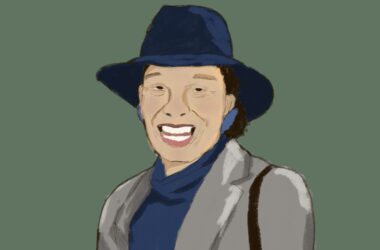
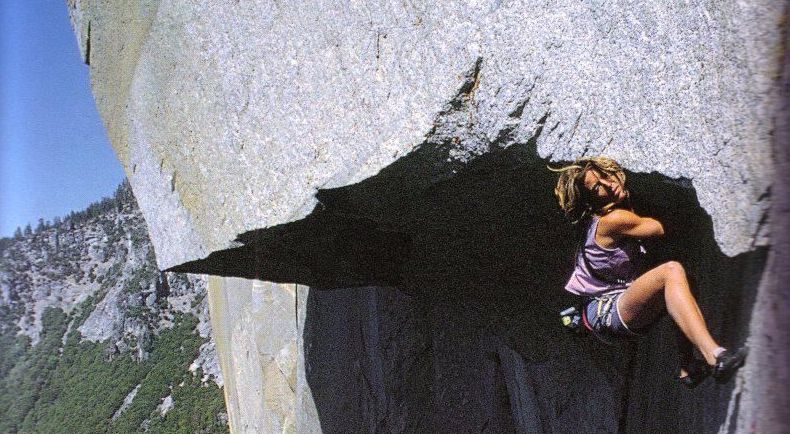
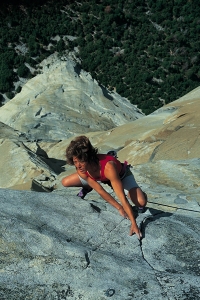
Fall 2018 marked the 25th anniversary of Lynn Hill’s historic first all-free ascent of the ‘Nose,’ an iconic climb in the Yosemite Valley. Since then, much has changed in the climbing world, but her massive achievement still stands tall.
The Nose is the route that snakes up between the two main faces of the monolithic El Capitan. The total elevation gain is 880 metres—twice the height of the Empire State Building.
Yosemite was a hotbed for American climbing culture in the mid-20th century, so athletes had already climbed El Capitan, one of the valley’s crown jewels, before Hill arrived on the scene. On the first ascent of the Nose in 1958, Warren Harding used climbing aids, allowing him to fix anchors to the rock and pull himself upward. In contrast, Hill climbed free: Although she used rope for protection, Hill relied only on her hands, feet, and the natural features of the rock to drive herself toward the summit.
The route is composed of 31 sections—or pitches, and each presents a unique set of challenges to climbers of differing sizes, styles, and strengths. Still, some pitches, including the Great Roof, Changing Corners, and the Bolt Ladder, are universally demanding, making the Nose a formidable foe even for elite climbers.
When Hill began her first free attempt, previous climbers had already conquered most pitches. A few others, like the Great Roof and Changing Corners, were still unconquered when Hill and her climbing partner, Simon Nadin, set off in 1993. After a routine ascent of the first 21 pitches, Hill and Nadin arrived at the Great Roof.
“My foot slipped at one key point underneath the Great Roof,” Hill said in an interview with The McGill Tribune. “[But] my head was so close to the roof that it stabilized me, so I didn’t fall [….] I was able to continue and make that first free ascent of the Great Roof.”
Despite successfully completing one of the most challenging sections of the climb, Hill could not finish it that day.
“Of course, later on, on that same ascent, we ran out of food, and we were really tired, and we didn’t find a way to climb up the Changing Corners pitch,” Hill said.
Though she had free-climbed the majority of the route and performed the first free-ascent of the Great Roof, the Bolt Ladder and Changing Corners remained elusive. Together, they comprised the most difficult section, or the ‘crux’, of the route. Hill left the Yosemite Valley unsuccessful, but the Nose stayed in the back of her mind.
“I wasn’t sure that [Changing Corners] was possible to even climb,” Hill said. “Because when you look at that section of rock, it looks completely blank. And it’s not obvious how to get up something so smooth. But I […] started thinking [that] maybe it [was] possible because it’s a corner. And if it’s a corner, there’s a way to get opposition. So I just thought, theoretically, there should be a way.”
Hill returned to El Capitan with Brooke Sandahl, who had spent years figuring out the most difficult sections of the Nose. Between the two of them, they had climbed most of the difficult sections: Sandahl had mastered the Bolt Ladder, and Hill had unlocked the Great Roof—leaving only the crux to conquer.
“The real difficulty was the Changing Corners pitch, and that involved a unique blend of backstepping and arm barring and a weird move […we called] the ‘Houdini move,’” Hill said. “It’s basically one arm bar with my right arm and then another arm bar right on top with my left so that I can […] spin 180 degrees around in the corner.”
And, with that, Hill had freed the Nose.
(lynnhillclimbing.com)
Hill’s historic free ascent has only been repeated a handful of times since, evidence of the sheer magnitude of her accomplishment. For most non-climbers, if a climb has never been done before, then it is impossible. But for Hill, it means the next logical step.
“It was a natural evolution of my upbringing in a sport that was hardly known,” Hill said. “I was already somebody who was doing things that other people didn’t even understand [….] And once you’re involved in a sport like that and you’re on the cutting edge, you’re doing that stuff all the time. You know that nobody’s done it before. But nobody [had] come to the climb with the experience and the [mindset] that I had.”
The Nose is just one of many first ascents attributed to Hill. For her, the motivation was never competitive—instead, it came from a desire to push the limits of possibility.
“I think it comes from just the curiosity of exploring and finding out what you can do,” Hill said. “It’s very open-minded to me. Just, ‘let’s see what we can do, and put our skills together [to] find a solution.’”
Hill is always pushing people to re-evaluate what’s possible. She stands just 5’2”—and she is a woman. In the 70s, when Hill was first introduced to the sport, there wereonly a handful of female role models for her to look up to.
“I knew that it was unusual [for women to climb at a high level], and yet I still felt very strongly about promoting the idea of equality when prize money was different or when people would say things like, ‘Gee, I can’t even do that,’” Hill said. “Because they’re a man, they figure they should be better than me. And it was really important to me to remind people of the truth. We’re able to do amazing things as women. We can do far more than […] previous generations believed.”
Hill has inspired an entire generation of female climbers, but the benefits reach far beyond the climbing success of athletes likeMargo Hayes orAshima Shiraishi. Indeed, large-scale wall climbing can generate off-wall inspiration as well—small people armed with the pluck and determination to take on a massive sheet of granite make people feel as though their day-to-day objectives are within reach.
“I think that climbing is very positive for people,” Hill said. “I think it’s very empowering. I’ve seen how kids have gotten into climbing, and […] I think it helps them in their lives in so many other ways.”
Hill hopes that climbing’s positive influence will encourage people to be better, especially in the way that we treat the precious, colossal planet that invites curious climbers into its peaks.
“I like the idea that people, they get exposed to climbing, and […] they end up exploring places in the world that are beautiful,” Hill said. “And if we love nature, we have a better chance of saving it from destruction […] that is changing these places in ways that are irreversible.”
After all, wall climbing is a partnership. The public eye is ensnared by audacious climbers, but cliffs, crags, and boulders play an essential role, too. The rock acts as an incubator for the sport, driving innovation and creativity—and providing boundaries that are meant to be crossed.