


Latest News

Commentary, Opinion

The committee on teaching staff-student relationships has failed students

The Ad Hoc Senate Committee for Teaching Staff-Student Relationships was created to respond to widespread student concerns over how McGill deals with abuses of power in the wake of last year’s winter semester walk-out. The committee was tasked with making non-binding recommendations to Senate which would address McGill’s obligations vis-à-vis intimate relationships between teaching staff and students. On Dec. 5, the committee will present its findings to McGill Senate. However, as the student representatives on the committee, we feel that the final report does not satisfy student frustrations.

Through consultations, including written feedback and a student town hall, we saw overwhelming student support for the prohibition of relationships between students and professors. Though this support was particularly salient at the undergraduate level, it was echoed by community members at all levels of the university. In most cases the request included exemptions for situations such as those involving a relationship formed prior to the assumption of teaching duties. The majority of Committee members—including all of the student representatives—strongly agreed with the suggested ban on teaching staff-student relationships.However, the final report does not reflect this. Rather, it recommends a prohibition of relationships within academic units, with various avenues for exemption. The report includes two major loopholes:

Category 1: The teaching staff has no supervisory/evaluative/teaching role over the student AND The relationship will not create the reality or perception of any unfair advantage or disadvantage to the student concerned or to other students in the unit AND The relationship will not place an undue burden on other faculty members within the unit who are obliged to make accommodations for their colleague.

Category 2: The relationship existed prior to both parties participating in the same academic unit AND each element of the category 1 exemption applies.

The fact that the final report ignores student demands for a ban is unacceptable. Teaching staff hold a form of power over students regardless of whether they have supervisory or evaluative responsibilities toward the student. Framing the need to ban student-teaching staff relationships as a matter of conflict of interest completely negates the power dynamic that is inherent to these relationships and puts student safety at risk.

Furthermore, the report defines an ‘academic unit’ as “an administrative unit in which an academic program is delivered at an undergraduate, graduate, or postgraduate level.” This means that a small faculty could be considered a singular unit, or a large department could be considered multiple units. In short, intimate teaching staff-student relationships could plausibly be permissible in larger departments with several streams, such as English or International Development Studies.

Most importantly, the report does not adequately address the consequences a professor may face when in violation of the policy, including, but not limited to, tenure policy. At present, applicants compile their own tenure dossiers, and are not mandated to include information on disciplinary sanctions. Furthermore, tenure can protect predatory professors occupying senior positions from facing removal for sexual misconduct. The only suggestion in the report relating to tenure recommends as follows:

Ensure that official records that include discipline for breaching the policy are communicated to the Dean of the Faculty, prior to a decision being made about tenure.

We are doubtful that McGill has the capabilities to deal with these communications appropriately. The use of academic spaces for romantic and sexual pursuit must be understood as a severe form of academic misconduct which interferes with the social and academic welfare of students. Consequently, disciplinary measures cannot merely be communicated– rather, their formal inclusion in tenure dossiers is necessary. Disciplinary measures should include recommendations on rejecting tenure applications, administrative appointments, and other forms of promotion, and these recommendations should be binding.

Complaints that do not result in official disciplinary measures must be taken into account, particularly, if patterns of repeated complaints exist. This is especially true in cases involving established senior professors, who often have the means to intimidate or discourage students who would otherwise file formal complaints. The report does not reflect this stance, despite the fact that students supported it throughout the consultation process . Terms of tenure should not support professors who engage in inappropriate relationships with students.

As students, we began this committee’s proceedings with the hope that our voices would be taken seriously. McGill has historically failed to engage with students on the subject of sexual violence, and as community members with long-standing involvement in equity work on campus we had reason to feel disillusioned. We know, through extensive experience, that this university tends towards ignoring threats to student welfare unless they are pushed by negative publicity. Nonetheless, we participated in meetings, pushed for consultations, organized a town hall, extended a call for submissions, and in many instances, we came up against misogyny, tone-policing, and general condescension. It is unfortunate that despite the committee’s work, McGill has once again chosen to protect those in power.

The report’s recommendations highlight the reality that the committee’s decisions protect staff, and not students.


McGill, News

McGill’s history of labour conflict

The McGill Social Work Student Association (SWSA) went on strike Nov. 19-23 to protest mandatory unpaid internships in social work degrees. They joined over 50,000 CEGEP and university students demonstrating across the province. Currently, the degree at McGill requires two field placements, usually unpaid, in years U3 and U4, each consisting of 400 hours of labour in the social work field. 

In comparison, similar internships in engineering or management are often compensated, as private sector organizations often operate for profit and receive Quebec government subsidies to fund interns and trainees. However, social work students’ placements typically take place in the public sector and remain uncompensated. For example, at the Université de Sherbrooke, 20 per cent of women-worked internships are paid while 47 per cent of men-worked internships are paid, pointing toward a trend of male-dominated professions being more likely to receive payment for internship requirements.

“The major issue we face with the McGill administration is the conflict that exists between their desire to preserve the status quo and ours to dismantle it,” Yasmin Weiss, the SWSA communications coordinator, said. “Recognizing and acting upon the overt injustice of unpaid internships has been met with bureaucratic opposition at a time when we require all the support we can get.”

Weiss criticized the administration’s refusal to allow social work professors to cancel classes during strike week. Professors had voted in favour of cancelling class in solidarity with the student protest, but the administration cautioned them of their legal obligation to teach.

“Teaching faculty support the concerns of the students, but we do have a requirement to teach classes, both as part of our legal requirements and with respect to the requirement [to provide instruction],” Nico Trocmé, director of the School of Social Work, said. “Any student who requests class is entitled to have class.”

This is not the first time that McGill students have organized around labour issues on campus. The Association of McGill University Support Employees (AMUSE) has previously gone on strike to protect its non-academic staff and floor fellows.

AMUSE is a McGill labour union that represents casual and temporary employees at the university, including both students and non-students in part-time and full-time positions. Its 1,500 members compose 55 per cent of McGill’s non-academic employees. AMUSE began collectivizing in Fall 2008, focusing on students participating in the work-study program. Non-student workers were eventually included, and, when the group voted in Fall 2009, 85 per cent favoured unionization. The Quebec Labour Board accredited AMUSE in Jan. 2010.

When the collective agreement between AMUSE and the university expired in Apr. 2015, the two parties began renegotiating the terms of employment as well as the rights and obligations of employers and employees, including wages, benefits, and non-monetary privileges. Among other requests, AMUSE pushed for a $15 minimum wage and for work-study positions to be posted publicly. However, McGill failed to implement their demands.

“The university has made it clear that they won’t include the changes that we feel are necessary for our members in the collective agreement,” Claire Michela, former president of AMUSE in 2016, said. “We tried all day to make a change that would suit our needs and be acceptable to the university, and we couldn’t do that, so we had to exercise our strike mandate at the end of the day, unfortunately.”

AMUSE voted to go on strike in Oct. 2016 to pressure McGill into reconsidering their demands. The five-day strike was instrumental in securing the wage increase for casual employees in their second collective agreement, ratified on Jan 30, 2017, although demands for a $15 minimum wage were not met.

Ella Hartsoe, current AMUSE President, blames society’s casualization of labour, the practice of making unionized, higher-paying jobs less protected and less benefitted. At McGill, she is also concerned about previously-unionized positions becoming non-union managerial positions.

“Casual workers who happen to be students are not ‘lucky’ for getting experience through working,” Hartsoe said. “They are working and being paid because it’s their right. Sometimes, jobs aren’t for resumes. Often times, for many working students on campus, jobs are for money, stability, and the autonomy that working brings for individuals who may not come from middle or upper-class backgrounds.”

Although they exist in a separate bargaining unit, floor fellows make up part of AMUSE as a result of a history of conflict with McGill. In 2008, then director of residences Michael Porritt was unwilling to consider the floor fellows’ judgment and opinions when they voiced their concerns over his no-tolerance drugs and alcohol policies. In 2012, two floor fellows were dismissed and then evicted for participating in #6party, a five-day protest occupation of the James Administration Building’s sixth floor in response to the university’s refusal to acknowledge the existence of CKUT Radio.

These events prompted McGill floor fellows to join AMUSE in May 2014, enabling them to negotiate with McGill administration for wage and job security as a part of their collective agreement. The negotiation process took over three years and the administration refused to pay the 75 floor fellows working in residences until July 3, 2017, when the floor fellows signed their first collective agreement with the university. Before then, floor fellows received only room and board. This resulted in increased job insecurity, as their living accomodations directly depend on their employment status. Floor fellows continue to only be compensated for an average work week of 13 hours, although they typically work for longer.

“I don’t want to say that it disincentivizes us to do work, but it’s just frustrating that our work isn’t appreciated by administration,” Stephanie Li, U2 Science, a Douglas Hall floor fellow, said. “They know that even if we’re not paid, we’re still going to be doing check-ins [and] we’re still going to be doing events.”

The McGill community itself relies on unpaid and underpaid workers. Tutoring services, the Sexual Assault Centre of the McGill Students’ Society (SACOMSS), the Peer Support Center, Walksafe, Drivesafe, and Nightline are all student-run services that do not offer even minimum-wage compensation for labour.

“Too much labour on campus is unpaid under the guise of ‘experience,’ but, as the Social Work students have pointed out, you can’t pay your groceries, rent, or tuition with ‘experience,’” Hartsoe said.

Arts & Entertainment, Film and TV, Music

The best and worst of 2018

Best Albums:

1. Be the Cowboy, Mitski

Sad indie kids have traded their beanies for cowboy hats, wallowing in perhaps the most beautiful auditory manifestation of sadness to ever have graced the radio waves. Hive Mind, The Internet


2. Hive Mind, The Internet

This summer, the Internet brought the world an R&B collection of soft blues, rap, funk, and jazz.  Crush-worthy lead singer Syd is effortlessly cool, and delivers easy, groovy, and flirty vocals.


3. Sweetener, Ariana Grande

The exhausting media frenzy surrounding Ariana Grande’s fleeting relationship with Urban Outfitters sale section model Pete Davidson was all worth it if just for this album. Or even just the 1:14 interlude “pete davidson.”


3. Isolation, Kali Uchis

Keyboard and reggaeton riffs complement razor-sharp vocals as Uchis sings about personal growth and heartbreak. “Dead to Me” perfectly represents her audacious confidence and hypnotizing charm.


4. Lush, Snail Mail

Fronted by 19-year-old Lindsey Jordan, Snail Mail has established itself as a force to be reckoned with. Their first full-length album Lush, is cathartic but poignant and delicate all at once.


Movies

1. Eighth Grade

Writer-director Bo Burnham’s film debut is cringe-worthy in the best possible way. Funny and uncomfortable at the same time, Eighth Grade stands out against formidable competitors in the coming-of-age genre.


2. Crazy Rich Asians

Awkwafina was there. So was Constance Wu. Everyone was hot. There were Asians, and boy, were they crazy and rich. Katherine Ho’s cover of Coldplay’s “Yellow” was beautiful and tear-inducing.


3. Black Panther

This movie has everything: A soundtrack featuring Kendrick Lamar, explosions, superheroes spaceships, and political intrigue—what more could you want from a Marvel movie?


4. Incredibles 2

After 14 years of waiting, the much-beloved animated, unnamed superhero family has returned. This charming tale of everyday family life and supernatural prowess is sure to leave you hooked.


5. Mission Impossible: Fallout

Tom Cruise skydives into a Parisian disco, disarms nuclear bombs, and tackles a helicopter with another helicopter. Most amazing of all, he makes this 148-minute film fly by. He’ll never grow too old for this shit.


Best Songs

1. “This Is America”, Childish Gambino

The song which made us dance hard and think harder. The now-iconic music video sent Youtube commenters into a frenzy of interpretations. Fun and disturbing in equal measure, “This is America” took the pulse of its time like few songs have in recent years.


2. “Nobody’, Mitski

With the first single off Be the Cowboy, Mitski parlays her trademark emo lyrics into a feel-good pop hit. Finally, an anthem lonely girls and gays can dance to together.


3. “Pristine”, Snail Mail

The embodiment of adolescent melancholy wrapped up in a crisp package, perfect for walking to your local suburban gas station to buy $2 slushies and cigarettes. Unrequited love has never sounded so sweet.


4. “Moo!”, Doja Cat

This viral sensation turns memes, cheesy cow puns, and cute onesies into a surprisingly catchy hit. Doja Cat milks every second of song time to turn an otherwise tongue-in-cheek track into a true masterpiece.


5. thank u, next, Ariana Grande

Put on your lipgloss and grab your glitter gel pens, Ariana Grande has reinvented pop music—again! Say goodbye to toxic exes, petty rivalries, and, most of all, haters.


TV Show

1. Black Mirror

Everyone’s favourite dystopian drama aired its fourth season, once again evoking paranoia and ennui in audiences from around the world.


2. Big Mouth

Big Mouth’s second season added new layers to the hilarious struggles of puberty, introducing more hormone monsters and even a Shame Wizard. The show has captured the hearts of all of those who, for whatever reason, want to relive their early tweens.


3. The Good Place

Michael Schur’s descent into hell somehow managed to get better, adding more philosophy, more demons, and, most importantly, more tension between Chidi and Eleanor.


4. Queer Eye

In Season 2 of their hit show, Jonathan, Karamo, Bobby, Tan, and Antoni return to rural Georgia to teach struggling bachelors how to make avocado toast. Equal parts entertaining and uplifting, Queer Eye is a rare example of a reality show with substance.


5. BoJack Horseman

The depressing, yet hilarious show about a talking horse returned this year—and it was more depressing yet hilarious than ever. Season 5 goes meta: BoJack takes on the lead role in Philbert, a show-within-a-show about a troubled male anti-hero.


Worst:

TV Show: 13 Reasons Why

When a first season wasn’t necessary, 13 Reasons Why came back with another, this time with excessive and gratuitous monologues, polaroids, and sexual violence.


Movie: Bohemian Rhapsody

On top of endless exposition, corny recording sessions, and way too many bad inside jokes between the other three members of Queen, this eight-year trainwreck in the making seems to imply that Freddie Mercury’s coming out is synonymous with selling out.


Song: I’m Upset, Drake

In 2018’s most boring 200-million-stream single, Drake complains about hypothetical alimony payments and Pusha T being mean to him. Fittingly, this dud became an afterthought when King Push released an even crueler diss track days later.


Album: 44/876- Sting & Shaggy

Sting’s first foray into reggae resulted in an atrocity. Shaggy deserved better. We all deserved better.

Out on the Town, Student Life

Montreal tour guide highlights indigenous history

Donovan King (BEd ‘10) is attempting to inject diversity into the tourism business. The Montreal-based guide feels that Eurocentric historical narratives monopolize the tour industry. In response, he decided to dedicate his career to counteracting those patterns of unequal representation by publicizing indigenous narratives on his tours.

As a history and English teacher in Montreal, King often took his students to see the city’s monuments, and, after receiving reprimand for giving tours without a permit, King did some research online and decided to apply for a permit of his own. Throughout the application process, King noticed significant barriers to participation for indigenous peoples and omissions of indigenous history. By law, local guides must complete a 240-hour program at the Institut de tourisme et d’hôtellerie du Quebec, which King feels is incomprehensive.

“It cost [approximately] $2,000 and [lasts] eight weeks, and I had to pass two gatekeepers, both [of whom were] white francophone gentlemen,” King said. “The program had major problems in terms of history content. [It lacked] any sort of indigenous acknowledgement or even basic Mohawk vocabulary.”

King’s background in history helped raise his sensibility to the gaps in knowledge that influence the views of tour guides and consequently spread to visitors’ collective understanding of the city’s history. While working on his master’s in theatre at the University of Calgary, King met an indigenous colleague who made him aware of the oversights in indigenous issues. His sensitivity to the omissions of indigenous history in traditional theatre and history then informed King’s forays into tourism.

“[We spent] many a long night over a pot of coffee reading critical theories,” King said. “[We] talked about discrimination against First Nations, the Charter of Rights and Freedoms [and Canada’s transgressions from it] and started up the Optative Theatrical Laboratories.”

King, describes his tour companies as a theatrical, authentic, and representative upgrade to the simplified colonial stories that saturate the tourism industry.

Now the co-owner of Haunted Montreal and Irish Montreal Excursions, King strives to create an immersive educational experience. Haunted Montreal combines macabre history with storytelling, and King experiments with different narrative methods to highlight contemporary topics of feminism, labour, and LGBT rights. Meanwhile, King’s joint company Secret Montreal offers guided tours of Montreal’s famous Red Light District headed by a burlesque queen rather than a detached guide. In King’s eyes, tourists are looking for an engaging alternative to the traditional tour. He finds that Montreal’s visitors want to dive into the complexities of the city’s history.

“Tourists want [more than] just white people spouting out history books,” King said. “[They] want people who [they] can empathize [with].”

Based on his experience in Montreal, King identifies many gaps in representation among guides themselves. In the industry, First Nations people rarely give tours of their own land, and the proportionally-low numbers of guides from marginalized communities greatly limits the diversity of represented perspectives. Consequently, according to King, one-sided representations of Montreal’s history often become the only ones available to the public.

Ultimately, King believes that diversifying the tourism industry will help recover Montreal’s multicultural histories.

“A lot of these guides are still misrepresenting First Nations people, and, since they have a monopoly, tourists are learning this when they come to the city,” said King. “This power imbalance will result in more power imbalances.”

Commentary, Opinion

Why I left the Arab Student Network

As an international student who came to McGill from a high school in Kuwait, I have experienced my fair share of culture shock. However, the hardest part about coming to McGill wasn’t moving into residence, leaving my family, or even the academic stress: It was the racism. As a queer Arab man, I’ve dealt with microaggressions, fetishization, and other forms of blatant racism since the first day of Frosh, from weird Tinder messages about being Middle Eastern to being yelled at on Ste. Catherine to go back to where I came from. When I started at McGill I told myself that I wouldn’t join an Arab or cultural students’ association because it was too predictable. I wanted to be more than my Arab identity.

After two semesters of constant othering, I learned to appreciate my Arab identity and felt the need to support other people of colour who were in similar situations. I was ecstatic when I found out that the Arab Students’ Association at McGill had been elevated to the status of a full-fledged network. Although my role as a committee member was short-lived, I was excited to finally find a space where I thought I could be unapologetically Arab. But, my joy was brief, and the image of the Arab Student Network (ASN) that I loved was one that I quickly began to question.

Although I believe that the ASN is a necessary service, its current management does not offer Arab students the support they need. In an interview with The McGill Daily, the president of the ASN, Karim Atassi, said that the purpose of the network is to direct Arab resources to all students on campus, and to broadcast ‘secular’ and ‘fun’ aspects of Arab culture for all students to enjoy.

This mandate aims to create a more ‘palatable’ Arab identity, encouraging the appropriation and whitewashing of Arab culture to conform to superficial desires of popular culture like music, partying, and food. Instead of hosting parties and offering discounts to restaurants, the ASN should facilitate resources for Arab students who, like myself, experience intense marginalization on and off campus. The ASN should adopt a similar mandate as that of the Black Student Network at McGill, which encompasses sensitizing the McGill community to issues concerning black people and working toward making campus safe for the well-being and mental health of black students.

The ASN is explicitly apolitical. Remaining neutral, however, is a stance in itself. In my experiences as an Arab in Canada, day-to-day life and politics are inextricable from one another.  Being Lebanese, at any point in my life I know someone affected by conflict. My siblings fled Lebanon as refugees during the 2006 war; and my aunt struggles to return to her hometown of Damascus because of the ongoing civil war. It is extremely discomfitting to know that the main Arab student group on campus makes it difficult to express the political aspects of my identity and how they inevitably affect my life on campus.

Many of ASN’s services, such as a SSMU mini-course in colloquial Levantine Arabic which teaches students the seemingly ‘most widely used Arabic dialect on campus,’ and encompasses dialects used mainly in Lebanon and Syria, are exclusive and geared toward non-Arab students. As a Lebanese-dialect-speaking Arab, I can acknowledge that I have elements of Levantine privilege. Within the national hierarchies of the Middle East, people from the Levant are considered to be closest to white-passing, and our dialects are perceived to be the easiest and softest to the ear. ‘Rougher’ dialects are usually not considered to be as beautiful or poetic, making the ASN’s intentional choice to teach a softer and romanticized Arabic dialect an exclusionary one to most of the Arab world.

Last year, hate crimes reached an all time high in Canada. The Coalition Avenir Quebec (CAQ) and Premier Francois Legault’s harsh anti-immigration stance only contribute to an already hostile environment. The ASN’s whitewashed mandate lacks discussion circles and safe spaces targeted to my experience. I need a place on campus in which I am able to freely express my identity without that fear, and, sadly, ASN is currently not that place.

McGill, News

AUS votes for new VP Internal following resignation

At their meeting on  Nov. 28, the Arts Undergraduate Society (AUS) chose to fill the Vice-President (VP) Internal position through re-appointment by Legislative Council instead of conducting a by-election in January. The decision is a result of previous VP Internal Kevin Zhou’s resignation from office on Nov. 16 due to mental health and academic concerns.

According to AUS President Maria Thomas, the VP Internal’s responsibilities are too important for the position to remain empty until January.

“We consulted with the AUS Legislative Council to decide what was best for the society,” Thomas said. “The Internal position interacts with departments directly, and many departments are dependent on them in order to hold events. It is [a] very difficult position to transition [into], so it is best to find someone as soon as possible.”

Zhou’s resignation follows the resignation of Students’ Society of McGill University (SSMU) VP External Marina Cupido on Oct. 10. As Cupido asserted, members of student government have notoriously-intense workloads, which, along with academics, can prove stressful.

“Overall, every [AUS executive] position is 10 to 15 hours per week, but some can spill over to 25 hours depending on the time of year and [current] events,” Thomas said.

The duty of public service may be enough to justify the workload for some executives, but monetary compensation is also a valued relief for some of the pressure they face.

“This year at AUS Legislative Council, all executives can get paid minimum wage for a maximum of 10 hours [per] week,” Thomas said. “While this doesn’t account for all the hours we put into the AUS, it still means a lot in terms of compensation. What the student body won’t be able to recognize is that it is not just about the hours put in; it’s about the emotional labour invested in wanting to see a positive change in our faculty.”

With two candidates running—Billy Kawasaki and Ashton Mathias—Kawasaki was elected the new VP Internal. Kawasaki was previously student executive assistant for AUS for three years as well as human resources coordinator at SSMU. Kawasaki clarified his goals in a brief statement for the Council.

“I want to sort out the room bookings, start [First-year Events, Academic, and Representative Council] FEARC as soon as possible, […] revamp the office and the lounge, and change the Jack Daniels Room [in the Arts Lounge] into a study room,” Kawasaki said.

Elections were also discussed more generally. While most department societies use online voting for council elections, Classics Student Association (CSA) VP External Sara Merker proposed a motion to allow CSA to hold elections internally. The change would mean that anyone running for a position would be required to attend a meeting in-person where the attendees would vote on behalf of the entire CSA. According to Merker, internal voting has been in CSA’s constitution for years and simply needed the AUS Council’s approval.

However, members debated the accessibility of in-person elections. Arts Representative Ana Paula Sanchez voiced her concern for students who may want to run but could not attend the meeting.

“There may be students [who] cannot come to a meeting,” Sánchéz said. “There’s a reason [that] most departments have switched to online voting [as] it’s really accessible to all students.”

AUS VP Equity Evren Sezgin also opposed the motion and questioned CSA’s motives for wanting internal elections.

“Having an online platform may accommodate the most amount of people,” Sezgin said. “If bureaucracy in AUS is the only reason [to have closed elections] I think it would be worth it to go through [with online voting].”

Philosophy Student Association VP External Affairs Coordinator Brytan Mendes proposed that attendees be able to vote on behalf of absentees. While Merker agreed to Mendes’ proposition, her motion was still denied in a majority vote by the Council.

Nov. 28 was AUS Legislative Council’s last meeting of 2018; the Council will reconvene Jan. 16.

Baseball, Basketball, Hockey, Men's Varsity, Soccer, Sports

Left shoe, right shoe: Superstition in sport

In 1982, only one game stood between the Cameroonian national soccer team and its first-ever trip to the FIFA World Cup. The night before the big game, Head Coach Jean Vincent decided to visit the team captain in his hotel room. He walked down the hall and knocked on the captain’s door. No one answered. Jean went from room to room until he finally reached the last door. The door was ajar and Jean peered in to find his entire team asleep together on the hotel floor. Cameroon qualified for the World Cup the next day.

Team Cameroon employed a superstition. Superstitious beliefs date back to ancient religious rites and tribal customs, arising in the face of stressful situations and uncertainty in order to create a semblance of control. Psychologists believe superstition to be the incorrect assignment of cause to effect, as these beliefs are retroactively linked with an event’s outcome. Sports, by design, cause stress and uncertainty for which superstition serves as a coping mechanism. It is unsurprising, then, that superstition has become such a prevalent force among athletes across disciplines. Despite its ubiquity, however, the phenomenon of superstition in sports remains largely understudied.

McGill men’s soccer Head Coach Marc Mounicot holds a master’s degree in sports psychology and wrote his thesis about the effects of superstition on soccer players’ pre-game anxiety levels. He spoke to the difficulties of researching superstition’s effects on athletes’ performance.

“One of the problems with superstition is that everyone is reluctant to speak about it,” Mounicot said. “It’s something very sacred to the individual.”

Mounicot noted that, while it is hard to discuss, superstition does hold a certain appeal to outsiders as a sensationalized storyline.

“People [are] very interested [in hearing about] the subject because it’s very connected to some unknown,” Mounicot said. “When we tried to build the questions [and talk to people…], we couldn’t go too deeply into personal beliefs or personal things because we knew we could reach a wall.”

As a result, Mounicot’s research was unable to conclude that any real correlation exists between superstitious beliefs and decreased pre-game anxiety. Other research, however, has indicated that superstitious practices in sports may actually have a direct impact on an athlete’s accomplishments. Research found that invoking a good-luck charm, such as an article of clothing, leads to superior performance in golf, as well as improved motor dexterity and memory. Further, research suggests that an increase in perceived ability boosts an athlete’s confidence which, in turn, improves performance.

For many McGill athletes, superstitions are commonplace yet consciously unrecognized or unexplored.

“First off, I put [on] my […] right sock, right shin pad, and right shoe, but I put my left glove on first,” McGill second-year goalkeeper Théo Farineau said. “I have no idea why I do it, but I feel like I’ve always been doing it, and, if I change it, it’s really going to mess up my focus.”

Farineau’s superstitions do not end there: He never steps on the opponent’s side of the pitch; he walks around the field at halftime; he touches his crossbar before each half.

“When I think about it now, I know it’s completely dumb, but I wouldn’t change it,” Farineau said.

Griffin Callahan-Auger, U1 Arts, plays intramural hockey and shares similar feelings. His primary superstition is that he plays best in his second games after sharpening his skates, so he plans accordingly.

“It’s a peace of mind thing,” Callahan-Auger wrote in a message to The McGill Tribune. “There is just no point risking stopping because it isn’t causing any harm right now.”

Superstition is unique to every individual, which Mounicot acknowledges. He makes a point not to observe any superstitious practices that his players may employ out of respect for their privacy.

“I see the game preparation and game routine as very personal, so [I] try not to interfere with this,” Mounicot said.

Further research has shown that an individual’s commitment to a ritual is generally higher as a given game’s uncertainty and importance increases. Additionally, researchers found that personality affects the likelihood that an individual will hold and be committed to superstitious beliefs.

Despite researchers’ limited understanding, superstition has a monumental impact on the professional sports world in which players and fans alike display some of the most unconventional practices.

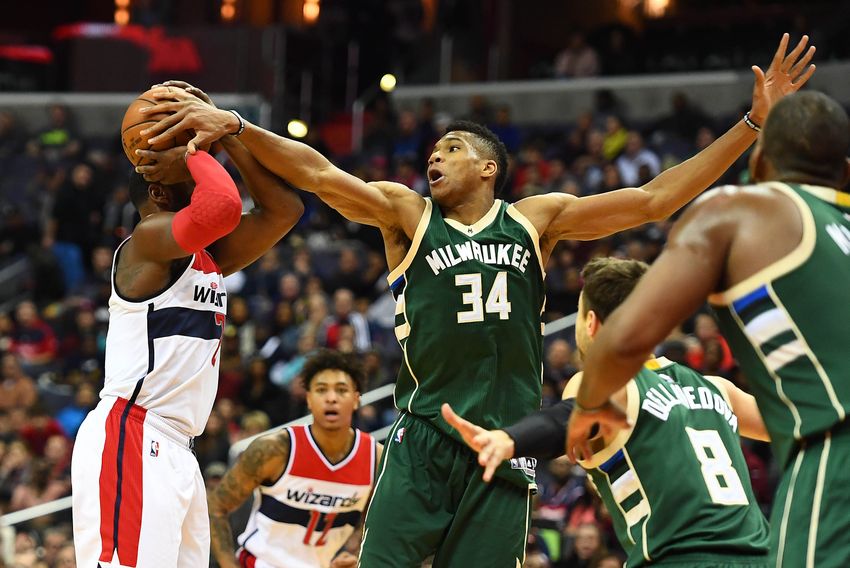
Michael Jordan’s rituals have had a lasting impact on basketball culture. After winning the NCAA championship with the University of North Carolina, he wore his alma mater’s blue shorts as a good-luck charm underneath his Chicago Bulls jersey for every game. Jordan went far out of his way to uphold this tradition; in addition to incurring several fines, he was also forced to wear longer shorts throughout his career. The latter trend quickly caught on in the basketball world. Longer shorts went on to become integral to the modern era of basketball.

There are plenty of other superstitious athletes. Baseball Hall of Famer Wade Boggs started his batting practices at exactly 5:17 and his running sprints at 7:17. He devoured chicken before every game, earning him the nickname of the ‘Chicken Man.’ Serena Williams bounces the ball five times before her first serve, twice before her second, and wears the same socks from the beginning to the end of each tournament. Montreal Canadiens goalie Patrick Roy skated backwards, from centre ice toward the net, turning around at the last second in order to shrink the goal during his career. He believed this practice made it more difficult for opponents to score on his net.

Superstition has also shaped fans’ experiences. In baseball, there are certain unwritten rules: While a pitcher is throwing a no-hitter; teammates will not talk to their pitcher, opposing teams will not bunt, and fans and broadcasters will refrain from talking about the pitcher’s potential achievement. Male hockey players and fans share the tradition of growing playoff beards. A few unfortunate fans even believe that it is bad luck for them to watch their teams play. Fans seek certainty just as much as athletes and can find enjoyment and entertainment in the futile pursuit of victory.

While superstition remains poorly understood on the scientific front, it has, nonetheless, become ingrained in sporting culture. Superstition invokes an unorthodox sense of control for individual players and community for teams and fans, allowing everyone to feel like they are an important part of the action.

Basketball, Hockey, Soccer, Sports

10 things: Powerful sports moments of 2018

North and South Korea enter Pyeongchang under a united flag

For the first time since the Korean War, athletes from North and South Korea entered the Opening Ceremony of the 2018 Games together under the Korean Unification flag. Despite its purely symbolic value, the act was a strong gesture of peace—providing the world with a vision of harmony.

Chloe Kim entertains and inspires in Olympic debut

Chloe Kim made history at this year’s Olympic Games when she became the youngest woman to win Olympic snowboarding gold. The daughter of South Korean immigrants, the now-18-year-old Kim captured hearts all around the world, and her dad did, too. Throughout the competition, he provided some of the most emotional moments from this year’s games with signs, beers, and tears.

Virtue and Moir still golden on ice

With their Olympic victory back in February, Tessa Virtue and Scott Moir became the most decorated Olympic ice dancers of all time. Their free skate, set to the music of Moulin Rouge,  was so much more than a medal-winning routine, though; it brought together figure skating fans from across Canada and the rest of the world to celebrate a partnership that has revolutionized ice dance.

Humboldt Broncos Jersey Day

On Apr. 6, a bus carrying the Humboldt Broncos of the Saskatchewan Junior Hockey League crashed, claiming the lives of 16 young players and team staff. Donations poured in for the families who had lost loved ones. Vigils took place across the country, including on Jersey Day, when people wore their jerseys and green ribbons to show their support for the deceased and their relatives.

#VegasStrong

This story started in 2017 with the Oct. 1 shooting in Las Vegas, but the aftermath is what made this season truly powerful. The Vegas Golden Knights’ inaugural season was a special one—the best in NHL history. The Golden Knights gave the area, which proudly declared themselves #VegasStrong, a team to rally behind all the way to the Stanley Cup final.

Luka Modrić leads Croatia to World Cup Final

Before Luka Modrić became one of the best professional soccer players in the world, he was a war refugee, forced to flee his hometown due to the Croatian War of Independence in the 1990s. Nevertheless, he has had a fantastic career, including an amazing performance this summer which led his nation to its first ever World Cup final.

U.S. gymnasts awarded at ESPYs

At this July’s ESPYs, over 140 of Larry Nassar’s sexual assault survivors received the Arthur Ashe Award for Courage. They received the honour, presented to athletes whose contributions transcend sports, for courageously sharing their stories in court to put the abuser behind bars. The court ruling was a momentous occasion for all survivors of sexual assault, and the image of the gymnasts standing in solidarity on national TV was one of the most powerful moments in sports this year.

LeBron James founds I Promise school

Before leaving Cleveland this summer, LeBron James gifted his hometown of Akron, Ohio with the I Promise School. The public school is specially designed to meet the needs of at-risk youth, like James was. This bigger-than-basketball moment came toward the end of a year in which Fox News’ Laura Ingraham told James to “shut up and dribble.”  

Colin Kaepernick teams up with Nike

On Sept. 5, Nike released an advertising campaign featuring Colin Kaepernick, the free-agent NFL quarterback who became the face of a protest against police brutality in the United States by kneeling during pre-game national anthem performances. Unsurprisingly, the ad received backlash, but, ultimately, Kaepernick’s activism continues to affect and inspire people all around the world.

Naomi Osaka triumphs at the US Open

On Sept. 8, then-20-year-old Japanese-Haitian tennis star Naomi Osaka shook up the tennis world when she defeated 23-time Grand-Slam Champion Serena Williams at the US Open. A controversial confrontation between Williams and the USTA official largely defined the two-set match, souring Osaka’s victory. Still, Osaka and Williams showed great sportsmanship following the match, as Williams congratulated Osaka, and Osaka thanked Williams for inspiring her career and ultimate triumph.

Commentary, Opinion

Campus Conversation: Finding power in representation

For many students on campus, university can be an isolating place. The McGill Tribune Opinion section asked marginalized students to write about their personal experiences with representation, or a lack thereof, to answer the question, “Where do students find representation, and how do they create spaces for themselves?”


Leina Gabra, Contributor

My search for representation at McGill was disappointing and short-lived, but not at all surprising. This isn’t necessarily McGill’s fault; as a half-Japanese, half-Ethiopian woman from Washington, D.C. who also spent seven years living in Tanzania and the Philippines, there is no community toward which I feel a strong sense of belonging. Racial identity crises are an experience that I’m sure many other mixed-race people are familiar with. It’s lonely to feel as though one cannot ever perfectly fit into an ethnic community; further, while mixed-race representation does exist, it’s harder to find when neither of your halves is white. Speaking from a lifetime of experience, half-white has always seemed to be the more ‘acceptable’ form of mixed-race, making me feel even more rejected from my supposed communities. I have made peace with the uniqueness of my experience; however, not being included in the groups that make up my heritage and the lack of representation for non-white mixed students at McGill––and around the world––can still be isolating and, sometimes, even painful. It is a condition that needs to be included in the discourse about race and representation.


Thyaga Dahanayake, Contributor  

Being a student at McGill feels like a mindless blur because there isn’t a single moment in which I feel like a unique individual. I constantly feel the need to conform to my peers’ expectations and my environment. I follow a mundane, monotonous cycle of going to class, listening to lectures, packing my things, and then leaving. I blend into the large sea of first-year students at McGill. Although I’m a person of colour, I haven’t faced drastic moments of isolation. If anything, I feel safe on campus due to the prevalence of groups, spaces, and solidarity movements like #ChangeTheName. If I want to find representation, I look to groups of like-minded people. Joining clubs and organizations like the Tribune or The Plumber’s Station helped me find groups of people with similar interests. For me, joining clubs is more than just a hobby. It’s connecting with people who face similar struggles and who want to work toward similar significant goals. Joining groups makes me feel like I have a platform where I can voice my thoughts and opinions, and, in turn, reach other people who may be struggling.


Abeer Almahdi, Opinion Editor

As an Afro-Arab woman, I’ve struggled to find a place on campus where I feel fully represented. Two of the hardest parts of my identity to reconcile is my parents’ conflicting religious identities. My mother is a Catholic and my father a Muslim, while I am essentially neither. However, I engage with both cultures. I celebrate Christmas, Easter, Ramadan, both Eids, and even some local folk holidays like Saint Barbara’s Feast, and other festivals. Still, I’ve struggled to find a place in which I can practice the atypical blend of Christian Islam in which I was raised. Growing up in the Middle East with two religions meant that I was on both sides of local conflict. I face Islamophobia, but I also face discrimination from my own communities for being mixed. So, instead of looking to spaces like religious associations, I have decided to look outward and explore other ways of expressing my religious identity. I’ve written and performed poetry; I’ve painted; and, now, I’ve written an article about it. I may never find a place to be holistically me, but I’ve chosen to create my own representation.

News, Opinion, SSMU

Students’ Society of McGill University (SSMU) Executive Midterm Reviews

Tre Mansdoerfer, President

Though the executive team faced a significant obstacle this year with the closure of the SSMU building, under Mansdoerfer’s leadership,  they have addressed this problem effectively by relocating clubs and securing a lease on 680 Sherbrooke for student use. His continued work on governance reform, a fall reading week, and the expansion of the Health and Dental plan show that Mansdoerfer has kept an eye to his major campaign promises. SSMU’s new partnership with Nimbus Tutoring and work on a new food security program demonstrate a willingness to engage in new projects on top of addressing pertinent issues. During the Fall, Mansdoerfer has proven his ability to problem-solve, facilitate projects across the society, and build an effective executive team.

Matthew McLaughlin, VP Internal Affairs

Matthew McLaughlin ran on an ambitious platform, which remains largely unfulfilled. The launch of a centralized calendar for McGill events, the first SSMU town hall, and bi-weekly video updates have all been scheduled for Winter 2019, suggesting that McLaughlin may have underestimated the complexity of these projects. Furthermore, addressing the fallout of the $10,000 transit mishap at SSMU’s Children of the Corn Halloween party has consumed time and money that could have been spent implementing campaign promises. However, McLaughlin has been successful in working with other SSMU representatives to create new event planning policies and oversight. He has also made his position’s programming more inclusive and accessible, coordinating activities such as the dry laser-tag event during Frosh Week, which drew 150 students. McLaughlin has also doubled the number of First-Year Council representatives, allowing them to host events more regularly.

Jun Wang, VP Finance

Jun Wang has focused on overseeing the bank transition from Scotiabank to RBC and increasing the financial literacy of club executives and students in the first half of his term. The bank transfer has consumed most of his time, forcing him to neglect other campaign promises such as socially-responsible and green investing, which Wang missed the opportunity to address following Senate’s motion to support divestment from fossil fuels.The bank transition means that all transactions will occur online, streamlining the process of distributing funds to clubs and allowing them easy access to their finances. Wang and club executives cited poor communication as the biggest challenge during the bank transition. Additionally,  clubs were unable to access their accounts during the ‘blackout’ period of the transition, leaving some without funds to hold events. The transition will be complete during the next VP Finance’s term. Wang is delivering on his campaign promise to increase students’ financial literacy by preparing a comprehensive document on SSMU’s finances that is accessible to all students. Wang expects this project to be ready next semester.

Jacob Shapiro, VP University Affairs

Jacob Shapiro campaigned on a platform of continuity, creativity, and community. Most notably, Shapiro has followed through on his promise to advocate for a revision of the S/U grading system, allowing students to switch their pass or fail mark to a letter grade later in the semester. Less successful was Shapiro’s overhaul of existing SSMU mechanisms such as abolishing the academic roundtable of faculty VP Academics which he replaced with one-on-one meetings. These changes have severely limited his bureaucratic capability and accessibility. In positioning himself as the centre of all academic affairs, he has hindered his own ability to act effectively. Despite Shapiro’s promises to prioritize existing UA projects, there has been little continuation of the previous VP UA Isabella Oke’s projects such as the Know Your Rights campaign. Next term, Shapiro should focus on advocating for students’ academic rights with initiatives like his efforts concerning the S/U mandate.

Cody Esterle, VP Student Life

As VP Student Life, Esterle’s portfolio includes coordinating student clubs and services, arranging family care programs, and promoting mental health outreach. Esterle remains committed to their campaign promise of promoting mental wellness on campus: In collaboration with SSMU Mental Health, Esterle organized SSMU’s second annual Mental Illness Awareness Week and has attempted to extend additional support to students living in residence through initiatives such as Draw & Discuss, which they hosted in collaboration with Rez Life. Additionally, they organized a successful Fall Activities Night, at the Tomlinson Fieldhouse and drew record attendance. Esterle’s most significant accomplishment has been handling the additional responsibility of overseeing club relocation during the SSMU building closure. Under their leadership, university groups have been relocated to spaces near the Downtown campus and in academic buildings.


Read the latest issue

Read the latest issue