Latest News

Science & Technology

The impact of climate change on Arctic biodiversity

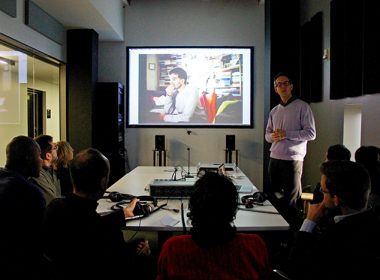
“Most spiders are small. I don’t know if that’s a comfort to you or not,” Dean of Students and Department of Natural Resources Associate Professor Christopher Buddle said to the audience on Nov. 10 at Cutting Edge Lectures in Science, hosted by the Redpath Museum.

As an arachnologist studying the biodiversity of spiders and insects in Arctic systems, Buddle is no stranger to the hostile environments of the North. Much of his research addresses the critical situation concerning climate change that has been becoming an increasingly significant factor in Arctic habitats.

“We know that the Arctic is changing,” Buddle said. “It’s very alarming, because the rate of which things like climate change happen in the North is very, very rapid.”

The far northern environments, which Buddle refers to as “the fragile Arctic,” most severely feel the effects of changing climates. Through his fieldwork in the arctic, Buddle hopes to understand the consequences of climate change on the northern ecosystems and to benchmark the state of its biodiversity.

During one of his northern expeditions, Buddle and his research team collected approximately 30,000 spiders, consisting of 14 families and 306 different species. The Arctic is home to a wide array of spider diversity and taxonomy. The Arctic species exhibit an impressive degree of plasticity and adaptability in order to thrive in challenging conditions.

In 2012, Buddle and his graduate students found that more than half of the female wolf spider population were parasitized by wasps in the Yukon—an unusually high rate. The parasitic relationship begins when the wasp latches on to the spinneret of a female spider and lays its eggs in the egg sac of the host. The wasp eggs hatch and subsequently devour the spider.

A particularly memorable arachnid encounter occurred when Buddle and two research associates accidentally stumbled upon a new species of pseudoscorpion under rocks in the Yukon. Coincidentally, pseudoscorpions—a close relative of scorpions and spiders—were also discovered by complete chance in the 1980s.

“That’s not how we think of science working, by accident, but I think it works by accident more often than not,” Buddle said.

Upon further investigation into these mysterious species, researchers found that pseudoscorpions can survive without breathing for 17 days in deoxygenated water—a discovery that was later reported on by the BBC.

Buddle discussed the importance of species identification in order to track and understand the real and profound effects that occur as a result of climate change.

“We need to tell the stories of species. They have a story to tell, we just don’t know the stories,” Buddle said.

Natural history, as described by Buddle, is usually presented as dead relics in dusty museums. Instead, it ought to be considered as a foundational piece of how humans perceive nature and how field observations are a valuable component of the scientific method. Unfortunately, the number of courses and textbooks on natural history have been decreasing over time. Nonetheless, many passionate professors at McGill are working to integrate natural history back into classes.

“Always be open to working [with] people. They know a hell lot more than you do,” Buddle said. “Collaboration is key, and I think almost most importantly, [is] curiosity, wonder, and passion […] let’s make sure that keeps happening.”

McGill, Montreal, News, Private

Construction affects professors and businesses

Ongoing construction on McTavish and Sherbrooke Streets has been causing trouble for students and professors alike.

McGill staff and students have come up with strategies to cope with the obstructions, such as Anthropology Sessional Lecturer Karen McAllister, who created a map when students had difficulty locating her office.

“Getting to lectures was an issue sometimes, especially when they first started the construction,” McAllister said. “You just recognize that, okay, it’s going to take a bit longer, and that’s fine.”

Local businesses have not been as adaptable to restrictions of movement. Restaurants in particular have been adversely affected by the construction and claim to have generally been uninformed about the process. Pizza Navona Manager Kamalpreet Singh felt that the construction significantly reduced sales, although he pointed out that losses were somewhat offset by the construction workers themselves going for lunch.

“I think, because of the construction, not many people like to pass on this side, they either like to go through Maisonneuve or Sainte-Catherine,” Singh said. “There are a lot of other factors that dropped our sales [.…] But I can say it has affected us, and it has affected our [sales] by 30 per cent along with a number of other factors.”

Singh also expressed displeasure with the dust that the construction stirs up.

“In summer, we were unable to open our doors. We don’t have any air conditioner, but as soon as we opened these doors, dust would come flying in and sit on the tables and pizzas,” Singh said.

Pannizza Manager Erik Boulet was frustrated with the lack of communication from the City of Montreal. His recent investment into an outside patio was made obsolete with very little prior notice.

“The city allowed me to put a patio right in front and a year and a half later they chopped the sidewalk off,” Boulet said. “A couple months before they started doing the construction they came up and said, ‘yep, this is what we’re doing; you have to take down your patio.’”

Boulet expressed frustration over the loss of sales since the construction started.

“We’ve had a decrease in sales of 10 to 11 per cent,” Boulet said. “It’s probably going to get a little bit worse when they start doing the sidewalks too and I don’t even know if I will be able to have access to my commerce.”

The Students’ Society of McGill University (SSMU), however, has unexpectedly benefited from the tearing up of McTavish Street. SSMU VP Finance Niall Carolan empathized with students, but was pleased that his earlier prediction that construction would limit foot traffic and, as a result,  food sales in SSMU turned out to be incorrect.

“While I empathize that it is an added hassle, having students re-routed through our building on the first and second floors has helped spread awareness and boost sales for our student-run operations,” Carolan said. “We are thankful [construction] has not posed any major or long-term inconveniences to our general activities.”

Furthermore, Carolan expects that the finished project will bring more potential customers to SSMU.

“I am very excited for the completion of the construction project, being the last point at the top of the walkway before the mountain should provide a great opportunity,” Carolan said. “As long as we are able to adapt our operations to be able to capitalize on the increased foot traffic, I am confident this project will benefit SSMU operations.”

Science & Technology

Where to look for life on Mars: Finding clues from sulphate isotopes deep within the crust

Thanks to a study published in the October issue of Nature Communications, ecosystems are now known to be capable of surviving in the ancient rocks of the Earth’s crust.

Two members of McGill’s Department of Earth and Planetary Sciences—Boswell Wing and Thi Hao Bui—assisted colleagues from the University of Alberta and the University of Toronto to publish this groundbreaking discovery.

The researchers extracted water from a non-active portion of a mine outside of Timmins, Ontario. The high concentration of sulphur and the variety of sulphate isotopes within the extracted water were deemed worthy of investigation. Isotopes are versions of the same element, but with a different number of neutrons within their nuclei and different radioactive charges.

Measuring the sulphate isotopes proved a tricky and involved process. Bui, a postdoctoral research graduate in the Department of Earth and Planetary Sciences at McGill, outlined the process.

“For every litre of water extracted from the mine, about one milligram of isotope exists,” Bui said. “In the wet lab, research assistants work to locate this one milligram of isotope within the litre of water, which takes a lot of time and energy.”

A machine built by members of McGill’s research staff detects differences between these isotopes because the variation in the number of nuclei affects their weight.

These measurements led the team to its unexpected conclusion: Microbial organisms must be acquiring their energy from the repeated recycling of ancient sulphur.

“We didn’t actually identify any microorganisms in those subsurface waters,” Wing, former Associate Professor of the Department of Earth and Planetary Sciences at McGill, explained. “But what we identified was evidence of their activity.”

By measuring sulphate isotopes dissolved in water, scientists concluded that microbial organisms could thrive in fracture waters found between the cracks of ancient rocks. Microorganisms can take in organic carbon—like sugars—from their atmosphere and can then use sulphate to oxidize it. The combination of suphate and organic carbons allows microorganisms to maintain metabolic activity over two kilometres below the surface of the Earth.

“When [the organisms] do that, they have a very slight preference for the sulphate that contains sulphur 32, relative to the heavier isotopes of sulphur, like sulphur 33 and sulphur 34,” Wing said.

Lead author Long Li, assistant professor at the University of Alberta’s Department of Earth and Atmospheric Sciences, explained that these isotopes provide a renewable energy source for the microorganisms.

“Sulphate […] is actually produced in place by reaction between the water and rock,” Li explained to the McGill Newsroom. “What this means is that the reaction will occur naturally and can persist for as long as the water and rock are in contact, potentially billions of years.”

Not only do the sulphate isotopes highlight how diverse the habitable portions of Earth are, but also that there is a possibility that similar life forms exist on Mars.

While this prediction may also be true for other planets, similarities between early Earth and early Mars make our neighbouring planet a particularly convincing candidate for once having sustained life. Evidence of historical shorelines and indicative chemicals affirms that there were once large bodies of water on Mars. Furthermore, Mars is largely made of the same type of rocks as Earth.

Wing explains that the surface of Mars is dry, cold, and has little protection from UV radiation. However, living deep in the crust of Mars, off only hydrogen and sulphate in a fluid-filled pocket, could allow for growth and a habitable environment.

The novel discovery could help guide further Martian explorations. To look for life on Mars, look within its crust.

 
Commentary, Opinion

When hate trumps hope

On the morning of Nov. 8, I awoke with an overwhelming sense of pride and excitement over the possibility—in my head, it was almost a certainty—of a woman in the White House. After 44 male presidents, an incredibly qualified woman was about to claim the 45th spot and change the trajectory of women’s rights in an unprecedented way. It felt as if American voters were breaking boundaries. Now, all I see are broken hearts. 

The election of Donald Trump exposed a world I didn’t believe existed. Residing in my safe-haven at McGill—a liberal university in Montreal, Canada—has made it easy to maintain this perspective. By electing Trump, Americans decided that it is no longer okay to be different. Different, in this case, is anyone who doesn’t identify as a white, heterosexual male. While society may shudder with fear of this nightmarish reality, this realization is crucial to promoting a future where people can learn to understand and love one another. Facing and coming to terms with Trump’s world elicits the question, what now?

Trump’s world is one where women are deemed less worthy than men to occupy positions of power. It is a world in which women are told that they don’t have fundamental rights to their own bodies, a world where sexual assault survivors are shamed and silenced, and a world where grabbing a woman “by the pussy” is just “locker room banter.” The most frightening feature of all of this is that 53 per cent of white women voted to not only condone, but actively participate in this world. 

Trump’s world is also one where minorities are denied personal freedoms. Trump actively condemned the Black Lives Matter movement and has a long history of marginalizing black people, for example, through housing discrimination. Mike Pence—now Vice President-elect—staunchly spoke out against the legalization of gay marriage and advocates for horrific gay conversion therapy. Trump blatantly insulted Latino-Americans and Americans of Muslim faith, using racist rhetoric to question their civil liberties. The Klu Klux Klan, a white supremacist group, endorsed Trump as a presidential candidate. I sympathize with the millions of Americans—Republicans and Democrats alike—who, as of Nov. 8, are essentially second-class citizens in their own country.

By electing Trump, Americans decided that it is no longer okay to be different.

While Canada may seem far, far away from this nightmare, we can all feel the reverberations. Many did not predict that America would hit such a shocking low—especially not the media. The raw exposure of this terrifying world—one where Donald Trump is the President of the United States—shatters our innocence and naiveté.  Clearly, many of us are out of touch with the world we live in. 

As Canadians, we can feel comfort knowing that the leader of our country does not denounce our differences or openly question our personal freedoms. However, with this comfort must come the acknowledgement that we, too, have a long way to go—especially in terms of adequate representation in politics. It is crucial to open our eyes and ears to the differences around us. Change will come with the capacity to accept what makes us unique, and to hear disillusionment before it is too late.

It is easy to envision society as continuously moving forward: Barriers get broken, stereotypes are dismantled, people become more open-minded and tolerant, and, as a result, the world is a better place. In 2008, Barack Obama became the first black president, inspiring millions with his message of hope. Obama had broken the “last racial barrier” in American politics. Yet, this election demonstrated that progress is nonlinear, and—even more frighteningly—that the progress Americans thought they had achieved was no more than a façade.

Those of us who stand with her mourn the opportunity to elect the first female president. We also mourn the election of Trump and the subsequent validation of his hate rhetoric. But, going forward, we must work to alter the systemic social norms, standards, and interactions that permit such blatant racism, sexism, and discrimination. With disturbing revelations, however, comes the potential for tangible change. Hate will not win when love and compassion continue to fight back. We can use this message to show the millions of Americans who feel unsafe as a result of this election that they still belong. 


Alexandra is a columnist and a U2 student studying Political Science and International Development. She is a proud Torontonian, passionate traveler, and knows all the lyrics to "Bohemian Rhapsody."


Basketball, Football, Hockey, Private, Soccer, Sports

10 Things: Upsets

After a surprising election last week, we’ve got ten sports results that you probably didn’t see coming.

1. The New York Giants defeated the New England Patriots in Super Bowl XLII in 2007. New England entered the game undefeated and as heavy favourites. The game, which featured the “helmet catch” by David Tyree, ended with the Giants taking a 17-14 lead that they wouldn’t relinquish as they handed Patriots their first loss of the season. 

2. Do you believe in miracles? The U.S. men’s hockey team defeating the feared Soviet Union at the 1980 Winter Olympics on American soil was one of the biggest upsets of all time. With a team full of nobodies, they took Lake Placid by storm, and stopped the Soviet machine in its tracks. 

3. In 1985, the No. 8 seeded Villanova Wildcats upset the Patrick Ewing-led No. 1 seeded Georgetown Hoyas, who had been looking to repeat as National Champions. Villanova shot an astonishing 78.6 per cent for the game to shock the reigning champs 66-64.

4. Buster Douglas knocking out Mike Tyson in 1990 will go down as one of the biggest upsets in boxing history. At 42-1 odds, Douglas knocked out Tyson with one punch and took his heavyweight title. The biggest, baddest man in boxing had lost his aura of invincibility.

5. The U.S. men’s soccer team’s 1-0 defeat of England at the 1950 World Cup became known as the “Miracle on Grass.” At the time, England was considered the “King of Football” while the Americans had lost their last seven matches by a combined score of 45-2.

6. Alexander Kerelin, nicknamed the “Russian Bear,” was considered the greatest Greco-Roman wrestler in modern time. In the 2000 Sydney Olympics, he went into the final after going 13 years undefeated in international competition, but lost to a low-ranked American named Rulon Gardner. He retired from the sport in the same year after the upset.

7. In 1919, the racehorse, Man o’War, had been undefeated coming into the Sanford Memorial. The streak ended when he lost to 100-1 longshot horse, who was appropriately named Upset. It was the only blemish in Man o’War’s illustrious 21 race career.

8. At Wrestlemania 22, Rey Mysterio defeated reigning world heavyweight champion Kurt Angle and villain Randy Orton in an entertaining triple-threat match. He pulled out all the stops to win and capitalize on his previous famed victory at the Royal Rumble earlier that year, which earned Mysterio his shot at the heavyweight title.

9. At the 2011 Cricket World Cup, Ireland bettered their famous victory against Pakistan in 2007 by defeating their oldest rivals: England. Chasing an imposing 327, the Irish were aided by the fastest century in World Cup history—courtesy of Kevin O’Brien—to come up with the biggest chase ever in the tournament.

10. The 2016 English Premier League (EPL) season has gone down as one of the most astonishing finishes in soccer history. Leicester City won the EPL after being almost relegated the year before. With 5000-1 odds to start the year, they outplayed Chelsea, Arsenal, Manchester United, and Tottenham to win the league. 

Behind the Bench, Martlets, Men's Varsity, Private, Sports

Quidditch teams at McGill are more than just flightless brooms

McGill often draws comparisons to Hogwarts because of its high towers, majestic archways, and strong academic culture. However, the comparison runs much deeper than aesthetics and academia. McGill fields not one, but two Quidditch teams, both of which competed in the Eastern Championships in Mississauga, Ontario from Nov. 11-13.

In Quidditch, players are divided into four positions: Three chasers, two beaters, a seeker, and a keeper, each of whom run around the field with a flightless broom between their legs. Additionally, one person dresses as the snitch in a gold morphsuit with a tennis ball attached to their back. The team that catches the snitch is awarded 30 points and immediately ends the game. Chasers try to throw the quaffle—a slightly deflated volleyball—into three hoops to score 10 points, while the keepers try to prevent goals. Beaters throw dodgeballs at chasers and seekers, who, if hit, must exit the play and touch their own hoops before re-entering the game. 

The McGill Quidditch Club was created in 2008, becoming the first muggle Quidditch team in Canada and the only co-ed team at McGill. The sport has grown significantly since coming to McGill and competition to get on the team has increased along with the popularity of the sport. A second team, Canada’s Finest Quidditch Club, followed in 2012 due to high student interest in the sport.

“McGill has been known to have large scale tryouts for Quidditch,” Lina Du, U3 Engineering and Beater for the McGill Quidditch team, said. “In the past four years, we have had over one hundred new players and veterans show up to tryouts [for…] only forty-eight positions.”

Indeed, tryouts are becoming increasingly competitive due to the rising prevalence of North American Quidditch as a whole. Both McGill Quidditch teams travel across North America, playing in places ranging from Myrtle Beach, South Carolina to Vancouver, British Columbia. 

“A lot of people think Quidditch is just a game for nerds,” Du explained. “But Quidditch is actually very competitive and it is becoming a more established sport.”

As Quidditch grows in popularity, students are joining not only for a love of Harry Potter, but also to stay in shape, represent McGill, and compete across North America. Competitors include American and Canadian university teams, recreational teams, and CEGEP teams, making the sport a medium that brings people together across borders and communities. Quidditch and the McGill program have gained increased recognition on a global scale.

“A few of our players even went to Germany to compete in the World Cup,” Du said.

The co-ed nature of the sport fosters the community element even further. Most varsity and club sports that exist at McGill are delineated based on gender, but in Quidditch, all are welcome to try out and play. For Du, this aspect is a huge draw to the sport.

“One of the best things about Quidditch is that everyone can play and compete, ” Du said.

The competitive nature of the game and the community element are sure to make the sport even more popular over time. With Canadian schools like the University of Guelph, Western University, and University of British Columbia also fielding competitive teams, perhaps one day the sport will gain varsity status across North America, allowing the game to transcend fiction to become a bona fide varsity sport.

Arts & Entertainment, Theatre

An Iliad: A story of war and grief

How can one make a modern-day audience hang on every word of a three-thousand-year-old story? An Iliad, a one-man show directed by the McGill Classics department’s Lynn Kozak and produced by Chocolate Moose Theatre, proves that remakes of classic texts can be executed in both a skillful and entertaining way.

The play takes the form of a story told by one man, the Poet, who is played by Martin Law, co-founder of Chocolate Moose. This man’s identity and origin, however, are secondary to the story he has to share. It’s a familiar tale: The story of how the Greek warrior Achilles slayed the Trojan warrior Hector. But the Poet’s monologue is not a simple retelling of the classic tale. Although he appears to the audience as a modern-day man, he was there during the war, where he saw and felt its horrors. Through his monologue, the audience sees and feels this turmoil as well.


The story is interwoven with references to today’s world. After three thousand years, the memories of the conflict’s tragedies are still fresh in his mind; he sees them repeated throughout time in the wars humans continue to fight. The ubiquitousness of war is a theme in the production and one of the reasons the Iliad still resonates with audiences. Though Homer’s story is most remembered gorey and graphic descriptions of battle, An Iliad shows that there is much more to the narrative than this.

“It’s a story about grief, rage, emotions related to death,” said Law. 

Throughout the production the Poet takes the audience inside the minds of the characters: Battle-crazed warriors, angry gods, and grief-stricken loved ones. He tells a story of honourable men on both sides, clashing against each other for deeply personal reasons. The Poet makes the audience understand the motivations of the characters.

“Being able to break the fourth wall is fantastic,” said Law. “There’s more storytelling when I can look at someone right in the eye and say, ‘You, yes, you, sitting there, this is what I’m telling you,’ in a way that almost gives you an acting partner, someone to feed off of.”

Law offered his own insight into why people everywhere relate to An Iliad. He discussed grief in the Bible and in the classical tradition.

“In the Biblical tradition, it’s dealt with, but there’s an answer for all of death, and it’s the will of God,” he said. “For the Greeks, the will of Zeus, the will of many gods, capricious gods, is much closer to some of the real things that people feel.” 

In his role as The Poet, Law attempts to tell this classic story of intense grief as naturally as possible in order to make it resonate with modern audiences. 

“As an actor, the easiest thing Lynn [Kozak] did for me was just to say, ‘Look, put it in your own voice,’” Law said. “That was the best way just to make all the text sort of pop.”

The audience is compelled to get angry with Achilles at the loss of his dear friend and to weep with Hector’s wife at the news of his death. An Iliad is an acutely emotional experience, filled with grief and rage, love and suffering. Through the Poet’s monologue, the epic poem becomes universal to human experience.

McGill, News

McGill Faculty of Engineering unveils new equity program

On Nov. 1, McGill’s Faculty of Engineering unveiled the Engineering Equity Ambassador Program. Faculty support staff and professors can volunteer to receive training to become an equity ambassador and serve as a resource for anyone in the engineering community that needs a safe space to discuss equity issues. The program’s intention is to address the Faculty’s commitment to dealing with the equity issues facing underrepresented groups in engineering .

The program was developed by the Faculty of Engineering in collaboration with the Social Equity and Diversity Education (SEDE) Office. Ambassadors will meet confidentially with anyone in engineering facing an equity issue and direct them to the appropriate resources.

Currently, there are five ambassadors–two professors and three faculty staff–who have volunteered for the program and have gone through equity and active listening training with SEDE. However, as Associate Dean Fabrice Labeau explained, the goal of the ambassadors is not only to act in an advising capacity, but also to provide feedback to the Engineering Equity Committee.

“Part of the role of the ambassadors is to report back every year [to the Engineering Equity Committee] on what they’ve heard […] in an anonymous fashion, [and inform future faculty policy],” Labeau said. “If there is a systemic problem in our community, we want to know about it and we can do something about it.”

According to Tynan Jarrett, a SEDE Equity Education advisor who helped develop the project, the ambassador program is a product of student demand for more action on equity.

“[The ambassadors] emerged as one piece of various equity related projects that have been going on in the Faculty of Engineering,” Jarrett said.  “Basically, there’s been a lot of student energy in organizing [initiatives] around equity within the faculty over the last three to four years.”

Disproportionate representation of men in engineering compared to women has been well publicized. According to McGill Enrolment, this year the Faculty of Engineering student body is 28.5 per cent female, one of the greatest gender disparities among all McGill faculties.However, Jarrett says the scope of the ambassador program is more than just gender equality.

“[The program is] intended to address equity in the broadest sense, so gender, of course, […] but also the experiences of indigenous students, experiences of [the] LGBTQ population within the faculty, and certain [minorities] that are very underrepresented in the faculty, ” Jarrett said.

According to Jarrett, certain demographics’ negative experiences in engineering are due to social discrimination.

“It’s not a faculty-specific problem, it's a society-specific problem, and we know that bias exists across the board both within and outside of McGill […],” Jarrett said. “So, yes, there's bias, so, yes, there’s discrimination.”

However, according to Labeau, the disparity in representation of certain demographics in engineering–such as the smaller proportion of women and minorities in the faculty–is not necessarily a symptom of a disparity of treatment, but of systemic barriers for certain marginalized groups.

“I don’t think there is any study out there that will conclude that [there is a disparity of treatment leading to a disparity of outcomes] definitively, but there are a lot of studies that will show that there’s systemic barriers,” said Labeau. “[And] I think our job is to try […] and remove these systemic barriers.”

Susanne Baumann-Moroy, a Human Resources advisor and equity ambassador in the Faculty of Engineering maintains that, fundamentally, the goal of the program is to increase discussion and identify fundamental issues.

“Through the discussion, you sometimes better define the problem […],” Baumann-Moroy said. “It’s often that you label a problem […] as harassment or a racial [issue, but] sometimes it’s an administrative or academic inequity that has nothing to do with [either].”

McGill, News

Part of Frank Dawson Adams Auditorium ceiling collapses

On Nov. 3, the ceiling of the auditorium in the Frank Dawson Adams Building leaked water and partially collapsed during a RELG 252: Hinduism and Buddhism lecture. No injuries were reported.

According to Associate Director of Preventative Maintenance Claude Lahaie, the leak was a result of human error.

“Because the building is very old, we have to [perform] maintenance on it,” Lahaie sad. “We took an electrical cable out of the floor, which left a hole. The incident was a human error, not something that could have been prevented.”

Lahaie stated that the process of restoring the ceiling is still in progress.

“The leak was caused by water coming from the floor above,” Lahaie said. “Someone took a floor opening for a floor drain, thus leaking clean water on the ceiling below. The cleaning work and drying was completed some days ago. The missing ceiling tiles will be replaced shortly. Proper safety equipment is required to lift the personnel up the 30 feet to do the work.”

Professor Lara Braitstein, who teaches RELG 252, said the worst part of the experience was the risk that students would be harmed in the incident.

“The leak was a small leak at first, and it took ten minutes for the ceiling to collapse,” Braitstein said. “I first asked the students sitting there to move, but then it was clear that it was getting worse. I asked them to evacuate to the back, but they wanted to come to the front to take photos and videos. [The students] evacuated, and [the TAs and I] stayed behind to make sure the students were okay.”

Braitstein said she hopes that if this happens during other classes, professors will put their students’ safety first. She was also concerned by the lack of a prompt response from Building Services over the issue.

“After 10 to 15 minutes, Building Services still hadn’t come, and I had called Building Services right after I saw the ceiling start to leak,” Braitstein said.

Hannah McKillop, U3 Religious Studies, witnessed the collapse and was shocked by the situation but appreciated Braitstein’s concern for her students.

“The TA brought over a garbage bin to catch the water and then it began to pour,” McKillop said. “People were taking Snapchats, and we were so confused. Basically, it was just a little stream of water, then it was as if it was raining, it was unbelievable. Finally, [Professor Braitstein] suggested we leave, saying though this was pretty funny, it was also dangerous. Later she sent out an email with resources to mental health services on campus. I think she handled the situation beautifully.”

McKillop said that this incident is a reflection of McGill’s poor infrastructure and that McGill needs to improve the safety of its buildings.

“It's a shame that events like this are needed as a wake-up call, but I hope [that…] future improvements can be made,” McKillop said. “A healthy learning environment requires many things, and one of those is safe and secure buildings.”

McGill, News

McGill Board of Governors and Senate discuss sustainability in annual joint meeting

On Nov. 10, the McGill Board of Governors (BoG) and Senate held their annual joint meeting to discuss challenges pertaining to the university’s direction and mission in the upcoming year. The discussion was focused on McGill’s sustainability plans and initiatives. Past joint Board-Senate meeting topics include strengthening mental health at McGill (2013) and  McGill’s engagement with the external community (2014) . Sustainability was also the focus of the 2007 Board-Senate meeting.

The meeting began with a table display of a few of McGill’s current sustainability initiatives, including the Barbados Field Study Semester and projects funded by the Sustainability Projects Fund, such as the Education Community Living Environment (ECOLE) and Plate Club.

Principal Suzanne Fortier recognized the significance of sustainability efforts from McGill students and faculty in keeping with the university’s mission and Vision 2020 Sustainability Strategy. Vision 2020 aims to establish McGill as a global leader in sustainability through its efforts in five areas: Research, education, connectivity, operations, and governance and administration.

Fortier stated that she believes it is important to include sustainability in all three components of the university’s mission: Teaching, learning, and service to society.

“It is very important that […] in a variety of fields […] we are able to learn about sustainability, teach about sustainability, and also to empower our students to [be sustainable] in their activities, not only while they’re at McGill, but after they leave our university,” Fortier said.

Dean of Science Bruce Lennox addressed the unique challenges of sustainability research, which, unlike other sciences, often lacks a clear end goal or solution.

“We got a man on the moon, and he came back,” Lennox said. “The human genome project, in a small number of years, through basic science development, accomplished [its goal]. But sustainability […] also involves problems […] that don’t have endpoints that are as readily definable as putting someone on the moon. It’s about the integration of science into our society.”

Three McGill professors–Graham MacDonald, Andy Gonzalez, and Elena Bennett, from the Geography, Biology, and Natural Resource Sciences departments, respectively–presented their sustainability research at the World Economic Forum’s Annual Meeting of the New Champions in Tianjin, China in June. MacDonald, Gonzalez, and Bennett presented this research again at the joint meeting on Thursday.

Bennett, an associate professor in the McGill School of Environment,  has been researching sustainability success stories in communities around the world in order to learn how their success can be emulated globally.

“By collecting examples of these success stories, which we call ‘bright spots’ or ‘seeds of a good anthropocene,’ by understanding what makes them successful, we can help build better human-environment relationships that stay within planetary boundaries,” Bennett said. “We see our bright spots as pockets of a better future that’s already in place today.”

Attendees were asked to discuss what they consider to be the top opportunities to advance McGill’s sustainability objectives in teaching, research, and operations. They were divided into three groups to focus on immediate, medium-term, and long-term objectives.

Immediate term objectives identified by attendees included curtailing water use by installing more automated water bottle filling stations and implementing a feedback system for people to report areas of wasteful water use.

Proposed medium-term objectives include reducing barriers to introducing new courses and sustainability initiatives at the university, improved communication and accessibility between the Macdonald and Downtown campuses, and mandatory sustainability courses.

Long-term objectives include setting a target date for McGill to become carbon-neutral and achieve energy efficiency, as well as investing to address the sustainability issues presented by the old age of many university buildings.

There is currently no plan for if, how, and when these initiatives will be implemented. The topic of the next join BOG-Senate meeting has yet to be announced.

Read the latest issue

Read the latest issue