Latest News

a, McGill, News

Wellness Recovery Action Plan offers alternative to McGill’s Mental Health Services

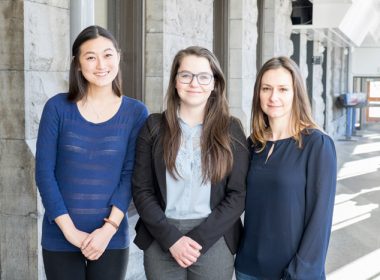
Over the past five years, the McGill Mental Health Services (MMHS) has seen a 35 per cent increase in students seeking help. According to McGill’s Mental Health Education Coordinator Emily Yung, one in 11 McGill students in the past academic year are reported to have used MMHS services. 

The Wellness Recovery Action Plan (WRAP) was initiated for students at McGill in Fall 2015 to help tackle the rapidly rising demand at MMHS. Founded in Vermont 18 years ago, WRAP is a psycho-education program developed for individuals living with mental health issues. At McGill, students meet once a week for six sessions, each lasting two hours in length. Every session is facilitated by a mental health professional and a highly trained student. 

According to Yung, students participating in the program learn a set of key concepts to help build a foundation for recovery, as well as developing a “wellness toolbox” to combat symptoms. The program also helps students identify triggers and develop an action plan when facing a mental breakdown. 

“We talk about what are some strategies we can implement, what are things that have worked in the past for you, […] you talked to a friend, you sought medication from a psychiatrist, all of those things to build a support system in difficult times,” Yung explained.

Yung stressed that the success of the program is due to what students feel they can bring to the discussion.

 “[Students] are able to share some of their darkest moments in life and they can learn from each other about what’s worked,” she said.

WRAP is designed to help students cope with day-to-day challenges, but not for students who are actively in a mental health crisis. 

“We allow students who have mild to moderate mental illness into this group,” Yung said. “We do not put in crisis cases because those students will need much more resources, perhaps more one-on-one [counselling].”

However, students who have been using MMHS services can also join the WRAP Program. What differentiates WRAP from other services offered at MMHS is its transdiagnostic approach—WRAP does not tailor to a specific mental illness, but tackles a spectrum of mental health problems in a group setting. 

“We want to change the mentality of  having one-on-one [therapy session] as the best [treatment strategy….] I understand that it can be appropropriate for many students, but research has shown that group [therapy] is equally as effective,” Yung said. 

According to Clinical Director of MMHS Dr. Nancy Low, WRAP was given two years worth of funding from the Student Services Innovation Fund. 

“We’re going to evaluate [WRAP] after two years and see if it is something we should incorporate [into MMHS],” Low said.

 The cost of WRAP mainly comes from preparing the student facilitators, who are paid $1,000 to undergo a seven-day training session. Students who are currently interested in joining WRAP must first make an appointment with MMHS. 

“We eventually want to make it where students deliver  [WRAP sessions],” Low said. 

Julia Tischer, a PhD student in the school of Architecture who has participated in WRAP, pointed to the time-sensitive nature of her needs as a factor that changes the effectiveness of the program for her.  Tischer explained that she did not immediately get the help she needed when she approached MMHS, but that the WRAP program still benefitted her. 

“When I went to the workshop, my difficult moment had already passed,” Tischer said. 

However, she is still thankful to have joined WRAP as it helped her stay positive and prepare for a crisis situation.

“[WRAP] was still very helpful in many ways,” Tischer said. “I had this wonderful bonding experience with other people who have been going through difficult situations, many related to stress in school. So I didn’t feel alone.”

Additional reporting by Joseph Timan.

Deadpool
a, Arts & Entertainment, Books, Film and TV

Deadpool is a triumph for fans, a challenge for general audiences

In 2014, a short clip of Deadpool test footage was leaked on YouTube, after the character was considered too crass for movie screens. The video—which has since been deleted by 20th Century Fox—sparked a movement among fans who had been altogether disappointed by the character’s 2009 appearance in X-Men Origins: Wolverine. On Feb. 12, the “merc with a mouth” finally made his way into theatres, burdened by an R-rating that was expected to ruin his chances at commercial success. Instead, Deadpool set the record for the highest grossing opening weekend for an R-rated film—and with good reason. Recognizing itself as an adult superhero movie, Deadpool finally gives audiences a comic-based action flick that refuses to take itself too seriously, but in the process, risks constricting itself to a narrow audience.

Deadpool follows Wade Wilson, an ex-special forces operative turned mercenary assassin with a penchant for alcohol and foul language, as he falls in love with a prostitute he meets at his favourite bar. In a twist of fate typical of comic book stories, Wilson is diagnosed with late-stage terminal cancer. In an attempt to save his own life, he subjects himself to experiments by a sadistic mutant doctor, Francis, that leave him with an accelerated healing ability and looking like “an avocado had sex with an older avocado." Taking on the persona of Deadpool, Wilson launches a campaign for revenge against Francis, tracking him down and leaving a trail of bodies in his wake in the hope of reversing his disfigurement and reuniting with his girlfriend.

Deadpool is truly what every comic book fan wants to see when their favorite character gets a movie deal. Deadpool is notorious for his vulgarity, sense of humour, and breaking the fourth wall on the page—characteristics that in the '90s made his edgy comics a hit among readers, creating devoted fans. He was a popular costume choice at comic cons long before there was any talk of his appearance on the big screen. The best part of reading Deadpool is that it doesn’t strive to be anything more than a comedic romp through violence with a beloved—but ultimately not truly lovable—main character. There is debate over whether Deadpool really deserves the designation of superhero; he doesn’t act on moral grounds or in the good of humanity and his services usually go to the highest bidder, or follow his fleeting desires. The film doesn’t try to change his character. Aside from a love story that plays a large role in the plot, Deadpool doesn’t try to find depth in the character like most superhero films do, a refreshing change for fans.

The best part about Deadpool is that it’s not about anything deeper than Deadpool. Even the love story serves to set up a plot in which he ultimately seeks revenge for his disfigured appearance, all the while killing anyone he can get his hands on in pursuit of his nemesis. And he manages to be funny the entire way through, interacting with audiences and winning over fans’ hearts much the same as the print character has for decades. The comedy begins before the movie is even really rolling, with credits that deem the writers “the good guys” and the producers “the asshats.” The film takes advantage of a number of inside jokes for comic fans, such as poking fun at the confusing X-Men cinematic timeline, and develops the self-awareness that make his comics so refreshing. It also situates itself nicely in the X-Men universe, pulling in characters from the comics and helping audiences anchor themselves in an already familiar world. Even the music creates comedy, pairing The Cordette’s Mr. Sandman with a gruesome torture montage.

However, Deadpool presents a challenge to parts of the audience. Nearly every line out of the main character’s mouth is a joke—a breakneck comedic speed that can grow tiring for viewers who fail to develop a connection with the character. This connection is challenged by the violence of the film that serves no greater purpose. Normally when we see a superhuman character disfiguring regular people, it’s justified by the greater good, or it’s used to illustrate the amoral nature of a villain. Deadpool is neither of these things and asks audiences to justify his violence with his search for reunion with his girlfriend, a stretch for audiences accustomed to Captain America and the humanity-saving X-Men.

Deadpool is finally what comic fans have been asking for: A movie made for them. But, in pleasing them, filmmakers run the risk of alienating the general audience in future installments. It’s the nature of comic book movies that there won’t be just one, and Fox and Marvel will have a challenge ahead of them to keep the general audience interested without losing the fans who pushed them into the franchise in the first place.

pretty baby
a, Arts & Entertainment, Film and TV

Flashback: Pretty Baby (1978)

“Storyville, New Orleans, 1917.”

This is the title card that opens Louis Malle’s Pretty Baby. The film tackles the scandalous topic of child prostitution in a strikingly elegant and elegiac fashion through chronicling an upscale brothel in one of New Orlean’s most notorious red-light districts. Madame Nell (Frances Faye) is an old and cynical matriarch who runs the brothel that the film centres on. With an acute attention to detail, most likely due to his love for period pieces, Malle brings Nell’s bordello to life in such a way that even the viewer finds the place endowed with homeliness and comfort.

The first shot of the film is a close-up on the face of a beautiful little girl. This girl is Violet, played controversially by a 12-year old Brooke Shields. Shields’ talent as an actress remains questionable, but Malle demonstrates a deft ability in capturing her expressive face and youthful spirit. As the camera tightens on her awestruck expression in this opening shot, the viewer realizes that Violet is witnessing her mother Hattie (Susan Sarandon) give birth to a baby boy in bed. Like her new half-brother, Violet is herself a “trick-baby,” or a child of a prostitute and an unknown father.

Through Violet’s curious perspective, the viewer perceives the dynamics of Nell’s whorehouse. Aside from the working girls, “Professor” (Antonio Fargas), a black pianist, amuses the guests with his music in the drawing room, and later an eccentric photographer named Bellocq (Keith Carradine) arrives with an interest in photographing the prostitutes. Bellocq is loosely based on actual Storyville photographer Ernest Bellocq. He is eccentric and enigmatic, spending bountiful time at the house while never asking for any services. In a sense, Bellocq is a true artist, deriving the most pleasure out of freezing the world around him through capturing moments in time.

Violet’s dichotomous character is defined by precociousness and innocence. In one of the most disturbing scenes of the film, Violet’s virginity is auctioned off. Malle cuts between shots of Violet, her hair curled and face done up with makeup, to close-ups of the sun-spotted, gray-haired men wishing to deflower her. Standing on the pedestal, Violet waves to Bellocq, whose stolid expression emanates a quiet outrage.

When Violet arrives at Bellocq’s house one day, she asks him if she can stay with him. When he replies yes, she tells him: “I love you once, I love you twice, I love you more than beans and rice!” This childish declaration of love seems to epitomize their relationship, which mimics that of a parent and child despite its sexual intimacy. Bellocq even purchases Violet a doll, declaring, “Every child needs a doll.” Despite the visceral queasiness that an erotic relationship between a child and adult arouses, there seems to be some element of puppy love between Violet and Bellocq.

While Pretty Baby encountered controversy and scandal surrounding its production, Malle’s cool approach to the daring subject matter prevents the film from appearing exploitative. The film is mesmerizingly beautiful in its cinematography and smart in its study of physiognomy. Like Bellocq who finds beauty in a still image, Malle is fascinated by close-ups of the expressions of his characters. Therefore, much like the renowned ending to Francois Truffaut’s 400 Blows, Pretty Baby concludes with a freeze-frame of young Violet’s strikingly beautiful visage. As the credits begin to roll over the image of her face, the viewer realizes that Violet’s story is in fact an accurate documentation of a chapter in American history.

a, News, SSMU

BDS motion passes at SSMU Winter GA

A motion regarding support for the Boycott, Divest, and Sanctions (BDS) movement passed at the Feb. 22 Students’ Society of McGill University (SSMU) Winter General Assembly (GA), with 512 students voting “Yes,” 357 voting “No,” and 14 abstentions.  The two other motions up for vote passed with no discussion from the assembly:  Motion for an increase in indigenous content at McGill, and a motion regarding procurement of products containing conflict minerals.  All three move to ratification by undergraduate students in the upcoming online referendum.  

BDS

The Motion to Support the Boycott, Divest, and Sanctions Movement mandates SSMU to support campaigns associated with the worldwide BDS movement, and to lobby McGill University at its Board of Governors to withdraw investments in companies such as Re/Max, L-3 Communications, and the Mizrahi-Tefahot Bank.  

“This call for BDS states that such campaigns are to remain in place until Israel meets its obligation to recognize the Palestinian people’s inalienable right to self-determination, and fully complies with the precepts of international law,” the motion reads.

Students debated for nearly two hours in the SSMU Ballroom, with overflow rooms elsewhere in the Shatner University Centre hosting a livestream of the event and allowing students to vote. Those who spoke in favour of  a “No” vote cited the potential divisiveness of this motion, and worry that passing BDS would cause a climate of fear among students who feel the decision does not represent them.

"The McGill student body prides itself on our diversity, yet why is when it pertains to the Israeli-Palestinian conflict, [is there] an attempt is made to make our campus homogeneous?” asked Maya Rosenkrantz, U3 Science. “This motion contradicts SSMU’s safer space policy, as BDS proposes a cultural boycott of Israel, alienating students who belong to that culture [….] Students’ mental health is on the line.  Students who identify as Israeli or Zionist are genuinely afraid that if that motion passes, they will not be able to truly express their identity on campus. No student should ever be afraid [of that]."

Supporters of the motion attempted to clarify its purpose—divesting McGill from holdings associated with certain Israeli settlements military effort—while at times, relating the Israeli-Palestinian conflict to apartheid in South Africa.

"As a Palestinian, you do not speak for us," Laura Khoury, U2 Engineering, said. "Please do not speak on behalf of my lived experience [….] It’s your moral obligation as people of social conscience to answer this call. It is not your obligation to tell us what is being done to us. Would any of you here have been in support of South African Apartheid?  [….] No, you would have not."

Students were reminded by Speaker Benjamin Dionne to maintain silent decorum through the debate by refraining from applause, and by their peers to treat the sensitive topic with respect for both sides.

"I would just like to say, as somebody who prides themselves on being both pro-Israeli and pro-Palestinian, as somebody who is very personally affected by this conflict, I ask […] please engage in moderation,” said one first-year student in the Faculty of Law.  “Engage in a dialogue that would endorse both people's rights to self-determination.”

Motion in support of Kahtihon’tia:kwenio (women title holders of the land)

Cadence O’Neal, U3 Arts, moved a motion in support of indigenous women title holders from the floor, which was tabled until the next GA in Fall 2016 in order to undergo consultation from the indigenous student community at McGill.  This motion was developed alongside Kahnawake women, frustrated with McGill's lack of response to their notice of seizure of the unceded territory the university occupies.

"The students who are moving this motion hope to both remind students who are here […] that this is an ongoing issue, that McGill has ongoing political context, and that our university […] is very much involved in a [settler-colonial] situation here," O’Neal said.  

Ashley Dawn Louise Bach, coordinator of the Indigenous Student Alliance, expressed concern that the motion was neither publicized prior to the event, nor included any feedback from her organization.

"I would just like to point out that there was no consultation with the Indigenous Student Alliance […] in the making of this motion,” Bach said . I actually hadn't heard of it until earlier today […] and I feel that this lack of consultation is just a perpetuation of the colonial problems we have at this university."

Movers of the motion agreed to seek further input from the indigenous community at McGill before reintroducing it at the next GA.

a, Opinion

The perks of being a hand writer

One of the quickest ways that professors can get students to drop their course after the first lecture is to announce that laptops are not permitted. The feeling in the lecture hall is almost palpable as everyone pictures lectures with nothing but a pen, some paper, and a professor attempting to keep the attention of 100 or more students. Laptops do have their uses in an academic setting, including those that are not exactly academic—the temptation of the internet is always there during a lull in a lecture. The age-old practice of writing notes by hand, however, has several advantages over typing on laptops.

As much as it might pain students who have full course loads, are involved in extracurriculars, or are trying to maintain some shred of a social life to realize, humans are bad at multitasking. Multitasking leads to impulsive decision making, as well as problems with processing information. Unfortunately, the modern laptop is a multitasking machine: Students can take notes, write emails, update social media, read the news, and check the weather, all while sitting in class. This seems like a godsend being able to get so much done at once, but you are absorbing very little information.

There is no multitasking with a pen and paper—you are locked in. There are no new tabs, updates, or notifications—nothing but what the professor is talking about. There are those who say they can refrain from the endless multitasking capabilities of a laptop in lecture, and maybe they actually can, but all it takes is one boring tangent and suddenly you are deep into scheduling your next two weeks, or chatting on Facebook.

Having sat in classrooms permeated with laptops as well as those in which everyone took handwritten notes, it is clear that students are more engaged, ask more questions, and become more collaborative when laptops are absent.

Every professor who has ever advocated or enforced handwriting has brought up the studies that indicate that students learn better when taking notes by hand. However many times students have heard the speech and rolled their eyes, it doesn’t make the science any less true. Students who take notes by hand remember lectures better than those typing, even when those typing are warned ahead of time. After all, there must be a reason these professors resort to the same tirade time and time again.

The perks of handwriting for individual students are numerous, but should this grant professors the right to ban laptops from their lectures? Earlier this year a commentary in the McGill Daily argued that this was a paternalistic and dictatorial decision that overruled paying students’ rights to decide how best they learn for themselves. While there is some truth there, there is something that the piece failed to recognize. Yes, professors are providing a service for which students pay a good deal of money. But professors are also lecturing to make, in some cases, very dry material seem a little interesting, which becomes even harder to do if the audience is a sea of laptops. Having sat in classrooms permeated with laptops as well as those in which everyone took handwritten notes, it is clear that students are more engaged, ask more questions, and become more collaborative when laptops are absent. There is a real difference in the quality of a lecture when the professor feels appreciated, or at least feels heard.

There is no one right way to learn. Some people might learn better with a laptop. But it has become the norm that the newer, more efficient way is seen as the best way, and this is not always the case. Though it might take a little more thought and require eye contact, the value of hand writing should not be dismissed.


Zachary Carson is a fourth year joint honours political science and international development student. He enjoys listening to Canadaland podcasts, watching Last Week Tonight with John Oliver, and dogs.


Superman
a, Art, Arts & Entertainment, Books

Comic books 101: How to start reading (and loving) comic books

As comic-cons become more popular and geek culture merges with pop culture, comic books are attracting more and more attention. With movie franchises and television series, characters previously restricted to ink and paper are attracting new fans through digital media. However, comics remain intimidating to newcomers, since most characters have multiple series, and every series has a multitude of volumes. Whether you’re interested in superheroes, zombies, or some of the more serious stories told graphically, here are some tips for new comic enthusiasts. 

1. Take advantage of compendiums 

Classics are classics for a reason, so long-running comics are often a great place for newcomers to start, especially superhero classics from Marvel or DC. It can be intimidating to jump into the middle of established story lines, so new readers may feel more comfortable seeking out collected publications. These are series of smaller comics bound together in chronological order, usually across numerous volumes for a certain series or character. Both Marvel and DC have compiled collections for most of their most popular series, usually stretching back to their very beginnings—as early as the 1950s. For classic superheros from the Marvel universe (Iron Man, Captain America, etc.) check out the Marvel MasterWorks series. On the DC side, storylines from iconic characters such as Batman, Superman or the Green Lantern are published together in hardcover.

2. Buy local

Yes, it’s good to support your local economy, but shopping at the comic shop down the street has other important benefits. No one that works in a comic store is going to be clueless about the art form, and they’re usually more than willing to help you dive in. Don’t hesitate to ask for help, your local comic book store owner might be able to suggest the best place to begin with a certain series or a certain character. Or, if you’re not sure who to start with, they might have some suggestions to ease the transition from novels to comics.

3. Begin with familiar stories and characters

Many beloved television series have started as comic series or have been continued after their cancellation in comic book form. Buffy the Vampire Slayer, Firefly and Avatar are just a selection of shows that live on in comic books. The Walking Dead is based off of a comic series of the same name. Check out Dark Horse Comics for many television series turned to the page, including all of director Joss Whedon’s classics. There are also the obvious comic-based movies, such as Guardians of the Galaxy, that can make a good starting point and whose comics are usually easier to get your hands on after the movie versions have premiered. If you, like many others, found your interest in comic books through such movies, identify what characters you liked the most and start with their comics. Chances are if you liked their on-screen persona, you’ll come to love them even more in written form.

4. Put more emphasis on the book

There is no need to jump immediately into episodic comic book series. There are many graphic novels that serve as a great bridge between traditional novels and comics. The best is Watchmen, which runs over 400 pages and combines classic comic panels with written sections between each chapter. Outside of the superhero world, there are light hearted options like Scott Pilgrim or graphic novels that deal with heavier themes, like Persepolis or Blue is the Warmest Colour. These options rely more on images than Watchmen, but still provide a longer reading experience for those adjusting to comics.  

5. Don’t limit yourself to one genre 

Comic books aren’t just superheroes, sci-fi and zombies. Some comic series, such as Sandman by Neil Gaiman, combine enthralling dark stories with haunting imagery for an enchanting and at times chilling reading experience. Others can appeal to the angsty, cynical teenager that lives on in us all, such as Ghost World. No matter what you’re looking for in a story, chances are there’s a comic that’s right for you. You just might have to put in a little research to find it.  

 6. Just start somewhere

There really is no right or wrong way to approach comic books. Head to a bookstore, pick one up, and start reading! It may be intimidating to jump into the middle of a series, but comics are written with their serial nature in mind. Catching up is usually easy, and gaps in the story line are often explained right in the dialogue or text. If you still feel you’re missing something important, never be afraid to make use of Google. Comic book fans have created many online resources to help new and old fans alike stay  up to date.

a, Features

Alone in crowded rooms: A personal struggle with depression

Disclaimer: The recommendations made and experiences described in this article are personal to my time with depression and instability. It is not a universal view on what all depression looks like, or how depression should be treated.

Suddenly, my energy to keep talking disappeared. I left lunch with my two roommates at the E-Café in the McConnell Engineering Building abruptly, and started making my way alone towards the Shatner University Centre .  I walked inside, passing a few stairs, corners, and doors until I was sitting on the ground in an empty room on the fourth floor, with my back to the entrance. On the other side of the door I knew there was a campus full of people that would want to support me if they knew what I was going through, but all I felt in the moment was loneliness and pain. Sorrow so deep and thick, I couldn’t wade out of it no matter how much I shook my legs. So I shook, and shook, and shook.

*Ring ring* *Ring ring*

Clearing my throat and wiping my nose, I stared at my phone.

*Ring ring* *Ring ring* *Click*

Me: Hello?

N/A: Hey! What are you doing right now? I could really use a break, I’m feeling pretty drained.

Do I tell her? No. It’d probably be good for me to be around somebody right now. Leave it. Go see her.

Me: Oh my gosh, I’ve got way too much food that I’m not going to eat, let me bring you some! Where are you? Let me come feed youuuu.

Is this helping? I think so.

N/A: Yay! Blackader, come, come.

Me: Kk coming. Come meet me in the lobby and you can tell me all about your day.

Click.

A sigh, followed by an empty laugh, escapes my mouth and echoes around the room. What’s happening to me? Just get back up.


 first time I admitted to myself that my emotional footing was not as stable as it used to be was in the summer of 2015, between my second and third year of university. I didn’t realize it until months after the event above: After my mom had gotten sick, after I’d split things off with my girlfriend at the time, and after losing loved one after loved one to cancer and other diseases. Instead, it came when a group of people I loved went out of their way to organize a party for me after I finished my Law School Admission Test (LSAT).

Walking into a room full of people, green strands hanging from the ceiling, and friends in multi-coloured cone-shaped hats greeting me at the door, all I wanted to do was make them feel the way they wanted me to—happy. But I didn’t have the energy. I was at the helm of a boat with no rudder, spinning the wheel wildly with no result.

I smiled widely while greeting my friend in the library and walking into the party, but internally, my emotions felt the result of whatever was hiding deep in the back of my mind, and fighting it was exhausting.

My instability was a constant process of waiting—whether it was waiting for highs to drop suddenly to particularly thick lows, or for lows to stretch long enough that they could be broken out of by a rush of unpredictable positivity (from a song, an expression of love, or anything, really).

Waiting came with its anxieties. I could never fully enjoy the highs because of the feeling that something darker was waiting around the corner. In Psychology Today, Art Markham, a psychology professor at the University of Texas, said students often suffer from ‘“waiting anxiety,” thus experiencing /rumination/, before, during, and after taking the LSAT. Rumination is typically a neutral term, but Markham redefines it as “[thinking] repeatedly about the source of one’s anxiety and [worrying] about the outcome.”

Applying Markham’s definition of rumination to a situation where depression was the outcome, understanding its source and how to work my way out of it became my obsession.

My instability transformed from a period of waiting to a period of self-recognition. I found myself taking a back seat on my own emotional decisions, and I looked inward to find anything that would make the process more pleasant and worth it. It was, and continues to be, a period of incredible change. The process of climbing back into the driver’s seat entails many things: Asking what makes or made you feel better or worse, what fuels your productivity, what gives you purpose, and what provokes negative or triggering emotions. Such questions can be largely transformative, but you can only ask yourself so many questions and change so much before others start noticing and asking you some as well.

When asked if depression looks the same in everyone, the National Institute of Mental Health answers bluntly: “No.”

Some people respond well to the type of support that takes the form of the ever-so-overused question, “How’s it going?” And some don’t. What’s the best way to tell what somebody dealing with instability might want? Ask.

“Do you want me asking you how you’re doing?” If the answer is “No,” then don’t. If the answer is “I don’t know,” then ask when it feels appropriate; there really is no hard rule about when that time is. If you get a response that indicates they might not want to talk about it, then move on to the next topic. If the answer is “Yes I'd like you to,” or “Yeah, feel free to ask anything,” apply the same logic as if they said maybe.

Some people might find talking therapeutic, and some might not, confirmed Dr. Robert Whitley, assistant professor of Psychiatry at McGill, and principal investigator of the Social Psychiatry Research and Interest Group (SPRING).

“Letting [someone] know that you’re there for them if they need an ear to listen can be helpful,” Whitley said.

For me, talking was my way of letting people in and attempting to bridge the gap of understanding from different lived experiences.

It may seem trivial to ask if somebody is okay with being asked a question, but in my experience it reinforced the importance of clarity and being upfront about other people's comfort levels. Besides the banality associated with micro-adjustments to everyday conversations, they all remain expressions of love that may, for some, inspire feelings of care and companionship during a time of loneliness and instability. Personally, these questions helped to flesh out day-to-day solutions, but in itself, the process of communicating could remain and can still be difficult.

Is it wrong for me to need help? This question popped up constantly in my experience with instability. I didn’t want to feel like I relied on anybody else to feel whole or healthy again. I felt, and to some extent still feel, responsible for my hitting my ‘wall.’ Over the summer and throughout Fall 2015, I rejected romantic relationships the moment I associated them with requiring someone else to make me feel complete. I constantly dwelled over the fear of burdening anyone with my problems.

“This year is gonna be a lot for me,” I said. “I’m sorry, I just don’t think I can get in a relationship right now.”

I wasn’t lying, but I wasn’t telling the entire truth.

cope with my inability to accept help, it turned out that giving support fit perfectly as a replacement for receiving it. I didn’t want others to feel the way I did, so I found purpose again in providing comfort and education on mental health issues. I wanted to be a resource for those feeling the same or similar to myself, those who felt alone in crowded rooms, and those who wanted to reach out and talk about how they were feeling. But the wall that separated my ideologies from my actions was the inability to follow my own advice.

Even my attempts to communicate and let people in lacked something. I approached every situation as an educational tool, and less of a learning space for myself. As a result, an emotional divide between my words and their content was always present. I felt happy for anyone that found me helpful, but grew sad watching my knowledge go wasted on myself. This emotional duality became my reality, always elated and depressed at the same time. For those in similar experiences, this can be incredibly confusing and isolating.

When replying to questions such as “How are you?” it wasn’t surprising when people were confused by the answer, “I’m really depressed,” said while laughing heavily. In a lot of cases, it was met with a response spit through weaker laughter of, “Really?” or, “Why are you laughing?”

For those who might find themselves confused or thrown off by such honesty, it is important to remember that different emotions don’t have to be mutually exclusive. Just because somebody expresses outward happiness while communicating that he or she is sad, doesn’t mean that this person is lying or being insincere.

“The same way a broken leg can limit some aspects of your life, mental health can sometimes overwhelm your mind, but it doesn’t limit your ability to feel a range of emotions,” Whitley said.

The assumption that seemingly conflicting emotions can’t be felt simultaneously forces some people to choose one or the other, often feeling like their sad emotions are not welcome and further pushing them inwards.

For some, laughing or smiling when talking about tough issues may serve a purpose—perhaps as a defence mechanism, or in my experience, a way to force myself to not feel ashamed for the way I was feeling by making the topic more approachable or light-hearted. For others, it may not. What’s important is to recognize that regardless of how one chooses to speak about their experience, each sentence should be valued as an attempt to reach out, and listeners should stay conscious of what might accidentally make them feel ashamed.

Emotional shaming and discounting, whether intentional or not, islargely enforced by the gendered emotional roles of men, and has a prevalent impact on their depression and suicide rates.

According to Jane Powell, in The Guardian, more men below the age of 35 died from suicide in the UK than road accidents, murder, and HIV/AIDS combined in 2011. Powell partially attributes this to her theory that for some men, asking for help may be seen as a failure. Breaking out of the typical set of emotions associated with masculinity can be difficult for many self-identified men; however, there are potential solutions to this problem already in the works. On a macro scale, feminist campaigns aimed at relieving societal roles of women by also alleviating societal roles of men can help push back against some causes of these high suicide rates. On a micro scale, what can be helpful is making sure that the people you know who may be dealing with instability (or whatever they define it as) are aware that they can express typically ‘non-masculine’ emotions. The decision to express those emotions is up to them, but opening the door for it to be a possibility can be incredibly comforting and might inspire more trust or openness between the parties involved.

For those who find themselves in the company of somebody struggling with mental health issues, it’s important to know that /you don’t have to be this person’s saviour/. I am by no means suggesting that it is one’s social obligation to take on every support role that presents itself. In cases where it may be too damaging to your own mental health, too exhaustive, or really for any reason at all, it’s completely fair to take a step back. Every situation should be handled differently. In my case, hearing something along the lines of, “I love you so much, but I might not be able or qualified enough to be a helpful support system. Do you want help looking into other resources together though?” would have been helpful in gauging what kind of relationship I should be associating with that person. In similar cases to this, where a person's immediate support structures might not be able to help, it’s important for alternative resources to aptly available.

McGill provides some services, like the McGill’s Mental Health Services (MMHS), but, like many services, it isn’t perfect and the waitlists are incredibly long.

“[Waitlists are] delaying students [from getting] access to crucial care by months,” Whitley said. “In regards to the admin […] much much more can be done.”

According to Emily Yung, mental health coordinator at MMHS, the average wait time is at least a few weeks.

“It’s about two weeks long to see a psychiatrist… and four months for individual psychotherapy,” Yung said. “[With] the largest proportion of students who seek care [at MMHS going] for depression or anxiety.”

tiatives like Mentoring Across Campus, and The Buddy Programdo a good job at building better student-faculty relations, which may help some students feel less like just another number, and lift pressure off MMHS by shifting the focus away from bandaid solutions to more preventative measures.

Yet, according to Whitley, these services are largely underpromoted and underperforming. He insisted that more focus must be put on these preventative measures. Professors can seem unapproachable in university settings, and though I never had a bad experience managing my workload during my struggle, many other students do. The added pressure can contribute to already existing symptoms.

“Mental health needs much more than services […] social determinants of mental health on campus [such as] loneliness […] peer pressure to be popular, drink, or have sex, and increasingly heavy workloads all can play a large role [in causing depression],” Whitley said. “Faculty members should be getting compulsory mental health training where they learn […] how to treat these issues compassionately.”

Training for a standardized Canadian program does exist on campus, through the Mental Health First Aid training sessions, however it is not mandatory for all staff, and even if it were, it might not be possible due to issues of space. MMHS is struggling to physically fit more doctors, and there just aren’t the human resources available to manage that many people moving around.

“Right now I’m the only trainer [at Mental Health Services],” Yung said. “All the offices are full [… and] resources are not increasing to meet the rising demand.”

If a training program were implemented, outsourcing some of the work to one or more of the five federally certified Mental Health First Aid Trainers in Montreal could alleviate the weight on the McGill’s services.

But even with a mandatory staff training at McGill, a Canadian standardized program might not properly address stressors affiliated with specific settings, such as factors that affect McGill students, or campus resources to point to. When temperatures dropped around the same time workloads increased, and the average hours of sunlight per day decreased in Montreal, I noticed a considerable return of my instability, but didn’t understand why.

According to Students’ Society of McGill University (SSMU)’s Mental Health Coordinator Anya McMurrer, a large problem for many McGill students’ mental health is Seasonal Affective Disorder (SAD), which—especially in combination with excess stress from a large workload—can be destabilizing.

Collaboration with some of the amazing student-run services such asMcGill Students’ Nightline, the Peer Support Network, and the Sexual Assault Centre of the McGill Students’ Society [SACOMSS] could help alleviate organizational stress on the system when trainers are needed, as well as create a program much more tailored to McGill; however, I disagree with Dr. Whitley on the emphasis of compassion as its focal point.

Compassion, as defined by Dr. Emma Seppala, the science director of Stanford University’s Center for Compassion and Altruism Research and Education, is “The emotional response when perceiving suffering and involves an authentic desire to help.”

When I was slouched over in that room on the fourth floor of the Shatner University Centre, I found myself looking for something else. I wanted somebody to lay or sit down with quietly, to silently feed off of each other’s energy and understanding, or somebody that could match my tone when talking about my mental state—whether through light-hearted laughter or serious responses.

But I never wanted somebody to help me. Compassion can help, but what I came to value most in people during my struggle with instability and depression was empathy. I didn’t need a saviour; not every depressed person does. Some might, but what I, as well as others like me need, is for you to make an attempt at understanding.

One needs empathy to be compassionate, but understanding the former may be harder than the latter. As contenders for the generation with the lowest levels of empathy, we all need to make an active effort to read about or talk to people with these experiences in order to start working those mental muscles.

Finally, to those who might find themselves reading this from a less-than-optimistic place—you are not alone. You are not your depression. You can make it through this. If you find yourself wanting or needing a hand, know that many people who are reading these words will want to give it to you. I know I will if you want to reach out.


Author's note: 

This article for me has been the culmination of months of struggling, and to some extent a way for me to begin to own and use a part of myself that was largely debilitating. But beyond writing this for myself, I also wanted to write this as both a thank-you letter and an apology. To clarify, I am not sorry for how I’ve been feeling, but rather for not properly being able to express my love and thanks to all my friends, family, and the community that has been around me these few months. Knowingly or not, your constant expressions of love, though it maybe not be registered traditionally, have kept me running. It’s because of that love that I get out of bed early every morning, and it’s because of that love that I’m working my way out of that period of instability. Thank you.

For those who might want to look into some of McGill’s on-campus resources, here’s a link to the McGill Mental Health Hub, found at mcgillmentalhub.ca. Sending my love, Ben.

a, Campus Spotlight, Student Life

Campus Spotlight: Bar des Arts

McGill’s hustle and bustle can often seem neverending, and finding an environment where one can escape the busy-ness of student life while still on campus can be a challenge. The Arts Undergraduate Society’s (AUS) Bar des Arts (BdA) serves as a resting spot for students to enjoy a beer and grilled cheese, play a game of pool, or just relax with a diverse group of students. 

“The role of BdA […] is to provide a space for students, run by students, that is about the students,” Nic Price, U4 Arts and BdA co-chair, said. “It’s really about offering a judgment-free, stress-free space for people to take a break from their daily lives on campus and have some fun.”

Nestled in the Arts Lounge in the basement of Leacock, BdA acts as a central meeting place on campus. Students of all faculties (not just Arts) toting frosh mugs and various reusable cups gather from 5 p.m. to 8 p.m. every Thursday evening. 

“You’d be surprised how many people are not in Arts," Alyssa Gold, U3 Arts and BdA staff member, said. "There’s education, science, there are people who are in graduate programs here.”

This spirit of inclusivity stems from the tight-knit community among the staff, which extends to its patrons. Working together in various roles from serving beer, to checking IDs at the door, to managing cash, the camaraderie of BdA staff members continues even after closing time. Outside of the bar, the staff participate in events like apartment crawls and Faculty Olympics.

“The staff honestly, we are like one big family,” Alanna Sokic, U3 Arts and staff member, said. 

This familial feel allows attendees to feel right at home at BdA, regardless of whether they would like to drink or not. Options such as water and juice are available in addition to beer, week to week. 

“It’s more about the atmosphere and the people and less about the drinking,” Gold said. 

In order to keep the weekly events engaging, each Thursday is marked by a new theme. Themes often incorporate a range of additional food and drink items. Price remarked on the continuous effort to appeal to a wide range of interests. 

“We’ve done champagne for The Bachelor theme, we’ve done churros; we’ve done a bunch of things,” Price said.

While holiday-themed events in general tend to be the most popular, more unexpected themes also have the ability to draw in large crowds. 

“Our best selling event was Mimosas & Samosas,” Price said. “That day we sold 1500 beers, I mean, it is unheard of. We sold all the mimosas and all the samosas.” 

In line with other sustainability missions on campus, BdA sells plastic recyclable cups provided by their sponsor, Sleeman, in case students forget to bring their reusable and non-breakable cup.

“It is in an effort to promote sustainability but is also in order to promote [the] safety of our patrons,” Price explained. 

BdA also acts as a platform for other clubs and organizations on campus to showcase their respective events and initiatives. Every week BdA hosts groups who would like to sell tickets for other events on campus, recruit new members, or just get the word out there about their club’s platform. 

All in all, the BdA staff seek to inspire an environment with welcoming and non-intimidating vibes. Staff are quick to point to the openness of the environment as the result of BdA’s continued success. As word of mouth grows, so does the diversity of attendees. Staff members emphasized that forming new friendships and strengthening old ones is what makes BdA so appealing. 

“Just come, we don’t bite,” Price said. 

Whether it’s during the midterm lull or amped up holiday seasons, even after last call staff and attendees alike aren’t quite ready to leave BdA. The message that resonates is that BdA is a place all students can enjoy themselves be it once a semester, or every week. The impression is that your first visit to BdA likely won’t be your last. 

“People love it so much they’ll want to stay afterwards,” Sokic laughed.  

Race and RENT
a, Arts & Entertainment, Theatre

Race and RENT: A look at racial representation within the McGill theatre community

The poster for the Arts Undergraduate Theatre Society’s (AUTS) most recent production, RENT, might have unsettled those who know the original musical well. Their first question would likely be: “Wait, why is everybody white?”

RENT is a musical that centres on the lives of poor artists in 1980s New York dealing with love and loss in the time of the AIDS epidemic. While it’s focus on queer people of colour living with a highly stigmatized illness is a little heavier than Wicked, RENT is as beloved as it is critically acclaimed. The popular image of RENT is based in part on its original 1993 cast as well as on its 2005 movie adaptation. Both renditions depict a majority non-white group of bohemian artists, with specifically Latino and black characters in leading roles. RENT is singular as a Broadway show with diverse and non-tokenized roles for ethnic minorities. In the AUTS version, there was only one person of colour in the main cast, Tiger Xu, a student of Chinese descent who was also the only main character in an antagonistic role.

“Of course [being the only person of colour] went through my head,” Xu explained. “It does play a role; I play an evil character, maybe it’s easier for an audience member to identify someone who looks different.”

In terms of casting, the director of AUTS’ RENT Daniel Austin-Boyd admitted that many of the same actors are cast in AUTS productions season after season, and this community of performers is, in majority, white. Though that doesn’t mean there hasn’t been conversation about looking into selecting more performers of colour.

“It’s kind of insulting to a person to say you only got in because of your ethnic background; that’s not exactly the most respectful thing either,” Boyd claimed. “But I feel like [having more performers of colour] a good goal. Ultimately, I think the most important thing is that you get people who are good at what they do.”

Like other theatre companies, the first step of AUTS’ process is selecting the actual show. Austin-Boyd emphasized the popularity of RENT as a central reason behind his choice to put it on.

“Firstly, it’s just a very popular musical, and AUTS needs to get audiences to cover the cost of renting Moyse Hall,” Austin-Boyd explained. “I also liked that the characters were roughly the same age as McGill students. Finally, it is a rock musical, so it was a nice contrast to the kind of shows we usually put on.”

Austin-Boyd acknowledged that the McGill context is very far removed from the original context of the musical.

“I’m not going to say it didn’t cross our minds,” Austin-Boyd said of the largely-white cast. “A lot of the original cast was very ethnically diverse. That being said we are at McGill and McGill’s a university so we don’t have the same pool as all of New York City. Our primary consideration was, do they fit the characters?”

Beyond RENT and the AUTS, the issue remains that the pool of actors within McGill theatre is small, and quite homogenous. Shanti Gonzales is a student director working on a production of Paula Vogel’s play How I Learned to Drive, as a part of the McGill

Director’s Projects Festival (going on in Moyse Hall March 30 to April 9, 2016). Gonzales, concerned with diversity in her production, opened her call for auditions to those outside McGill.

“When race comes up in a casting discussion, the most common excuse is ‘We did what we could with who showed up,’” Gonzales explained. “My response to that is ‘Extend your audition call to a more diverse array of people.’ Without that extension, the same bodies are put on stage time and time again, and those bodies are almost always white.”

She pointed out the irony of McGill theatre’s consistent whiteness, as it so contrasts Montreal’s diversity, mentioning that organizations such as The Black Theatre Workshop and The Centre for Intercultural Arts are only blocks away from campus. On the topic of choosing RENT, Gonzales believes that the AUTS was more attracted to the big name of RENT and did not think enough about the social logistics of what they were putting on. She reiterated that RENT is very different than other big-name musicals, as it places marginalized bodies at the centre of the story; by failing to deliver diverse representation, Gonzales stated that the mission of the original show is ignored. However, Gonzales takes an optimistic approach to the situation, viewing it as a way to open up a conversation on diversity and representation in casting.

“The student directors are students—they’re not going to have all the right answers the minute they assume the director position,” Gonzales sympathized. “However, what they put onstage matters. A lot. Representation matters at all levels.”

Nathaniel Hanula-James, the publicity manager of McGill’s Tuesday Night Café Theatre Company (TNC), has also starred in numerous productions during his time at McGill. Every year, new directors apply to work with TNC for the season, and it’s up to the board of the TNC to consider new directors within their mandate for inclusivity.

“If we have the same director who comes to us multiple times with a wonderful vision, we don’t want to keep privileging that director and have them do multiple seasons,” Hanula-James said. “Instead, we’re trying to pay more attention to first-time directors, who will maybe not produce as good of a play, but who we would want to give more of a chance to. Similarly, if you cast an actor of colour because there is a mandate for that, and they are not as good of a performer, well then train them!”

Gonzales explained that often racial dynamics are at play when assessing auditions.

“The white face is the face that we’re used to reading, so that one becomes the most legible to us,” Gonzales said. “Then in casting, I’ve seen directors consider someone white against someone of colour, and conclude that the white person is better—genuinely believing that it was a matter of talent. The fact is, both actors were just as talented, but the white body was easier to read.”

On a similar vein, Xu added that he understood audiences might subconsciously relate his racial appearance to his character.

“It’s harder to picture myself as being in one of the main couples,” Xu said. “The casting was predominantly white and I think that factors into it. The reality is that it’s easier to have me as an outsider.”

Xu also stated that the creative team of RENT did put in effort to cast fairly, and that casting him in such a way was more of a subconscious choice, when working with what they had. Xu asserted that as more people of colour are cast in shows, regardless of their roles, the community gradually becomes more inclusive.

“Looking on stage at performers, you can’t avoid seeing colour, it’s about getting used to that,” Xu stated. “We need to get used to the idea that people of colour can be in these roles too. I think representation is one of the least volatile and most powerful ways to do that.”

In a student-run atmosphere like McGill’s theatre community, companies such as the AUTS will continue to grow and flourish. Hopefully, this growth will come in part due to an understanding that diversity is not just for inclusion purposes; it makes for more interesting theatre.

Hanula-James emphasized that a student theatre community should have more training opportunities. Not making it into a show, or not getting into a very small theatre class, should not mean the end of the road for developing new talent. In the spirit of learning, RENT should not be looked upon as a failure on the part of anyone involved, but as a point of reflection and the beginning of an active conversation.

“McGill theatre, in general, should be more about training people and growing people, not about assembling a line of stars to keep performing in McGill theatre,” Hanula-James stressed.

Gonzales echoed Hanula-James statements, noting that there are numerous ways to find performers and interact with new people, all of which can increase a production’s overall presentation.

“Cast the architecture student at Concordia who wants to give it a go,” Gonzales said. “Find an underground clown class that meets in a gallery basement every Tuesday and see what they have to offer you. Just because we pay tuition doesn’t make us the only people who have something to offer and something to learn. McGill has taught me that I have the most to learn from my peers. And my peers don’t have to just be McGill students.”

Reindeer Racing
a, Sports

10 Things: Reindeer Racing

1. Reindeer racing is a competitive and widely followed sport in some northern parts of Norway, Finland, and Russia. It involves speed-suit-wearing jockeys on cross country skis and a harness being dragged along by full-grown reindeer on a fixed snowy course, reaching speeds of up to 60 km per hour.

2. Reindeer—more commonly known as caribou in North America—are a species of deer native to arctic, subarctic, tundra, boreal, and mountainous regions of northern Europe, Siberia, and North America. Both male and female reindeer grow and shed antlers each year, with some large males displaying antlers up to 135 cm in length. Depending on the subspecies and quality of diet, some reindeer can grow to be up to 185 kg in weight.  

3. Racing reindeer can be traced back to the Sami, an indigenous Scandinavian people who inhabit the far north of Norway, Sweden, Finland, and the Kola Peninsula of Russia. Reindeer are integral to Sami heritage and lifestyle, who rely on the animals for their fur and meat, as transportation and as a source of cultural pride.

4. Reindeer are notoriously difficult to domesticate and train for racing, being naturally skittish animals. The semi-wild reindeer are mostly raised for their meat, with only some particularly strong and fast specimens chosen and bred for their racing abilities.

5. “When the reindeer is a few years old, they’ll start to race it and see how good it is,” Dr Carol Brown-Leonardi of the Open University told The Guardian. “Reindeer herding is big business in that part of the world. So they may be wasting money because they’re investing in a reindeer they’re not sure about. It’s quite a gamble on gut feelings and instincts.”

6. The largest annual reindeer race takes place in Tromsø, Norway, each February as part of Sami National Day celebrations. Thousands of spectators come from near and far to witness “the fastest reindeer in Norway” race down a 200m track on Tromsø’s main avenue through the city center, where stores and even banks are closed for the day.

7. The competition is organised as an elimination cup, starting with qualifying heats where only the winners of each heat progress through to the next round. The final at the end of the day decides the national champion of Norway.

8. Another major race on the reindeer racing circuit takes place on a 1000m snow track in Levi, Finland, another region that prides itself in its Sami roots. This is contested between reindeer breeding cooperatives, who compete to see who produced the strongest and fastest reindeer in their herds that year. There are 51 reindeer breeding cooperatives in Finland that raise reindeer for meat, breeding, pulling sleighs, work on farms, as well as racing.

9. In Naryan-Mar, Russia, teams come from reindeer herding communities in the region to participate in various events including sled races. In its journey to the 2014 Winter Olympic Games in Sochi, Russia, the Olympic flame passed through Naryan-Mar on a reindeer sled.

10. Every February, as part of the lead-up to the Iditarod Dog Sled Race in Anchorage, Alaska, hosts a winter variation of Pamplona’s Running of the Bulls: The Running of the Reindeer. People gather in heats and sprint down a street pursued by a herd of charging reindeer, dodging hooves and antlers as they run.

Read the latest issue

Read the latest issue