Latest News

Editorial, Opinion

Quebec’s potential ban on public prayer epitomizes the hypocrisies of selective secularism

With the announcement of a new committee on secularism, the Coalition Avenir Québec (CAQ) government is poised to tighten restrictions on religious expression, especially through the expansion of Bill 21—a 2019 law barring public employees from wearing religious symbols—and a potential ban on public prayer. The CAQ committee will assess how public institutions have implemented secularism since the bill’s enactment, and whether this implementation aligns with the province’s vision of secularism.

Quebec’s secularist policies have their roots in the Quiet Revolution, when the government reduced the role of the Catholic Church in public institutions both due to the church’s corruption and inefficiency during the Grande Noirceur and as a strategy to modernize Quebec’s economy and education system. Today, however, secularist legislation increasingly targets and disproportionately harms religious minorities while being justified under the guise of neutrality. Muslim women who wear the hijab are particularly injured by these policies, as exemplified by the banning of religious symbols and dress in public institutions. 

Religious groups whose attire is integral to their faith—including Sikh turbans and kirpans, Jewish kippahs, or hijabs—bear the oppressive weight of Bill 21’s regulations. Given that wearing a headscarf is, for many Muslims, a compulsory act of faith, the ban dangerously undermines the freedoms of religious practice. By contrast, Christian symbols, such as the famous Mount Royal cross, remain neatly exempted from the ban, as the bill contains a clause permitting religious symbols in public spaces if they represent a component of Quebec’s cultural heritage. As a result, the province’s Christian history is given preference and is permitted to persist publicly, a further testament to so-called “neutrality” as a facade for religious discrimination and xenophobia.

With the CAQ’s latest committee, restrictions are set to tighten even further, including potentially expanding prayer restrictions beyond public institutions to all public spaces. Quebec Premier François Legault has cited instances of Muslim Montrealers praying during pro-Palestinian protests as justification for the ban, a rationale that, by portraying individuals who choose to practice their faith during protests as more disruptive, threatening, or extremist than their fellow protestors, isolates and racializes religious minorities. 

Restrictions on public displays of religion will also only deepen the ostracization of religious minorities from public sector jobs, as they will be forced to either yield their religious expression or turn towards the private sector. As a result, the public sector will become increasingly homogenized and experience a stark drop in religious—and, by consequence, ethnic and racial—diversity. Such a blow to public sector diversity would not only disadvantage job-seekers but also undermine the quality of public services. Diverse employee backgrounds are imperative to ensuring public institutions comprehensively serve groups of all demographics. 

Such barriers to entering the public sector pose a particular risk to Quebec’s non-Christian immigrant populations, exacerbating cycles of mistreatment rooted in Canada’s already racially-exclusive history of immigration policies. Education policies further exemplify this discrimination, as Quebec offers in-province tuition rates for students immigrating from France and Belgium, nations with which the province has built relations of reciprocal tuition benefits. However, Quebec has not formed equivalent relations with French-speaking African nations, effectively excluding students from these countries from accessing reduced tuition. Together, these patterns of mistreatment for religious minorities reflect how the CAQ government has privileged its white, Christian population at the cost of minority groups, all while framing their actions as neutral. 
Quebec must end its use of secularism as a justification for discriminatory treatment of religious minorities and welcome diversity back into the public sector. Being exempt from Bill 21 and the proposed prayer ban, McGill has the opportunity to serve as a model for other institutions in Quebec by providing support for religious minorities within its faculty and student body. Particularly given the university’s international and religiously diverse demography, McGill must affirm its commitment to freedoms of religious expression on campus by reminding students that they are welcome. McGill has a responsibility to create spaces for religious minorities to safely and comfortably practice their religions, as well as to properly advertise and distribute existing resources through events and programming. In collaboration with student groups representing religious minorities on campus, McGill must offer support and allegiance to its future graduates, many of whom would be painfully disadvantaged by the work of this secularism committee.

Art, Arts & Entertainment, Film and TV

What we did not like this break

The Arts & Entertainment section has decided to complain. We present an attack on architecture, travel entertainment, and terrible takes on television.

The CN Tower – Kellie Elrick, Arts & Entertainment Editor

I do not like the CN Tower! Visiting Toronto over reading week, I stood in King’s College Circle, admiring the oaks and arches and widow’s walks and—eurgh! There it was. It’s grey and bland and phallic (the positioning of the Rogers Centre does not help). I have no desire to go up the CN Tower, and I don’t want to rotate while I eat. Towers, in general, do not do much for me. The only tower I have climbed is the Tour Montparnasse, which is objectively not a very good tower (although perhaps one of the benefits of these aesthetically abominable towers is that once you’re inside, you don’t have to look at them). It feels wrong to bash a Canadian monument right now—and I do take great comfort in the fact that it’s taller than any tower in the United States—but the fact remains. Fucking ugly tower.

The (lack of) TVs on planes – Charlotte Hayes, Arts & Entertainment Editor

Look, I know everyone on the plane has a phone. And I know every one of those phones can download hours of Netflix, perfectly tailored to their taste and flight time, but I’m still mad about it. Where did the little seatback TVs go? What am I supposed to do when my phone inevitably dies after I spend three hours calling my mom because I got to the airport way too early? My readings? Don’t be ridiculous. The sacred art of the plane movie is disappearing before our very eyes. Future generations will never know the unique joy of flicking on that tiny screen and settling in for a mid-budget action-romcom—the kind you almost saw in theatres but never quite made time for. Sure, with a streaming service, I can curate my movie selection to match my taste exactly (and avoid awkwardly fast-forwarding through some risqué content with a child seated behind me), but it’s just not the same. The joy is entirely lost if I know what movies are available even a second before I’m in my seat. It’s a real tragedy.

TV isn’t real life—and that’s the point – Yusur Al-Sharqi, Managing Editor

Nothing on Earth irritates me more than the imbecilic complaint that “this would never happen in real life.” Okay? And?

Over the break, I heard from several people they disliked certain TV shows because they were “unrealistic”—Grey’s Anatomy, Euphoria, even Gossip Girl. But do you really want to see what the life of a surgeon or a high school student is like? Do you want to spend six hours standing in an operating room, elbow-deep in bloody intestines, or in a classroom watching a bunch of teenagers scroll through TikTok for an entire school day? That’s your prerogative, I guess… but personally, I love the drama. 

The most absurd criticism I heard was that Keeping Up with the Kardashians isn’t realistic. No kidding. The show is a meticulously staged, champagne-soaked fever dream—and that’s what makes it a work of art. You can’t airbrush your face in real life, but Kris Jenner’s flawlessly digitally enhanced face on my screen? Iconic. If you’re looking for reality, then maybe reality TV isn’t for you.

The point is that TV isn’t meant to reflect our everyday lives. It’s made to entertain, captivate, and sometimes be totally absurd. While I’m escaping reality in the plane crashes and hospital shootings and cocaine-laden parties that grace my screen, you realism-lovers can go pay bills or wait in traffic for an hour. Enjoy that!

For favourable takes and recommendations, see our previous articles on ‘What we liked this break.’

Science & Technology

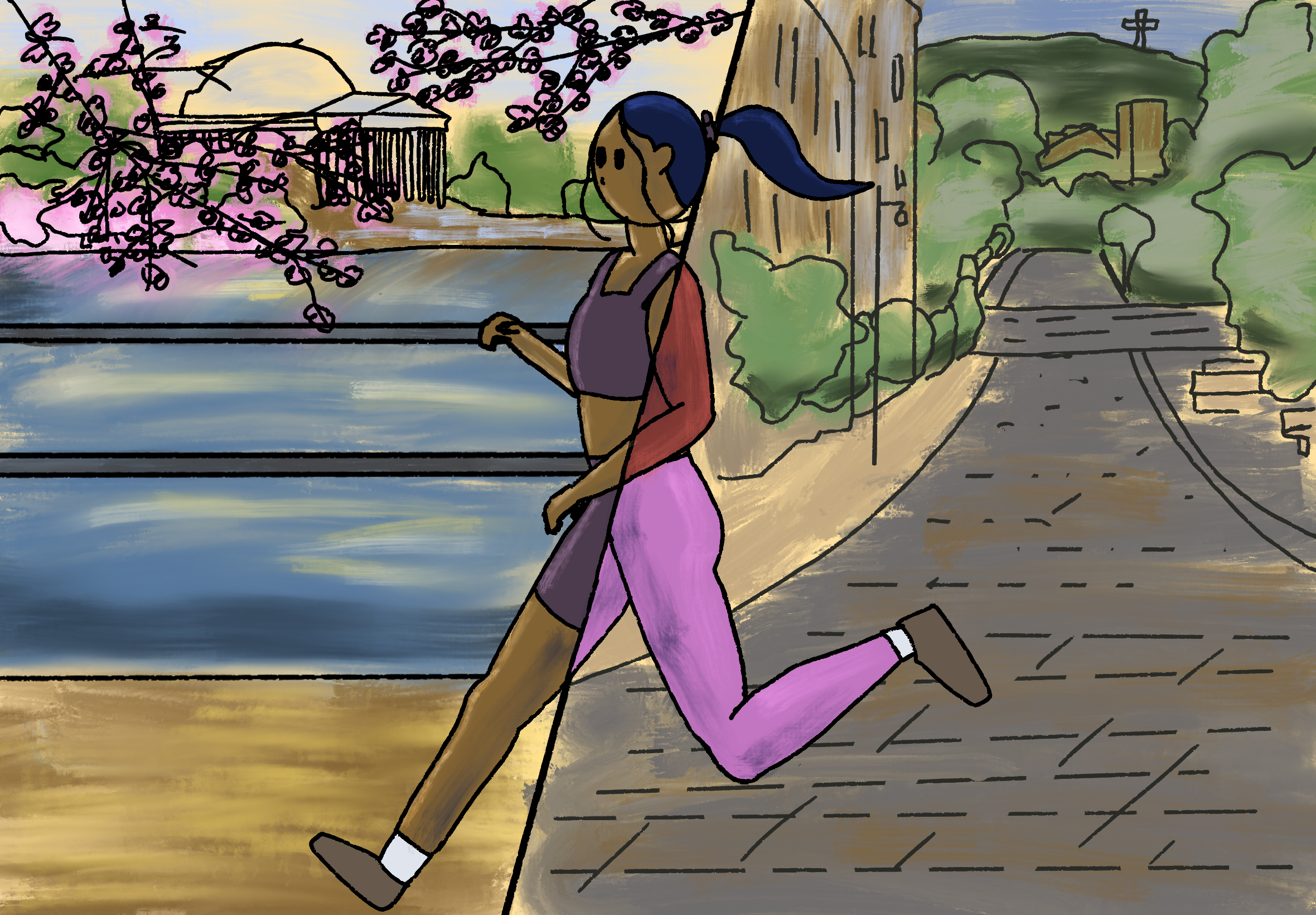
What makes a runnable city?

Curating a culture of active living is central to achieving the United Nations’ Sustainability and Development Goals (SDGs), specifically SDG 3, healthy living, and SDG 13, climate action. Active living is a lifestyle that promotes physical activity as an integral part of daily life—whether it be cycling to work or choosing to walk instead of drive—which has been shown to improve health and boost creativity. 

However, creating societies built around active living goes beyond convincing everyone to take up a recreational sport. The infrastructure itself significantly influences the exercise choices people make. 

This relationship was recently explored by Grant McKenzie, associate professor in McGill’s Department of Geography, whose paper in the Journal of Transport Geography analyzed the effects of infrastructure on running habits, in particular focusing on the gender divide in recreational running.

“We looked at some spatial and temporal patterns, and we also looked at some regressions to basically tell us what factors in the built environment, as well as socioeconomic and demographic, contribute to where men and women would choose to run,” McKenzie said in an interview with The Tribune. 

Using data from Strava, an exercise-tracking app, McKenzie analyzed the habits of recreational runners in Washington D.C. and Montreal. His research supported previous findings—there is a clear gender divide in where and when people choose to run—but also provided new insight into the role infrastructure plays in these decisions.

While it was not surprising that women are more likely to run during the day than at night, the difference was more profound than expected, with only 8.8 per cent of running activities conducted by women in Montreal during the night—compared to 13.1 per cent of running activities by men.

“We looked into a couple cases in Montreal to find certain areas where there was a dominance of women running during the day, and then that completely disappeared, and [that same area] was more dominated by men in the evening and night,” McKenzie said.

While the presence of women runners decreased in some areas after nightfall, other areas saw an increase in women runners at night compared to during the day. Infrastructure played a key role in these patterns. 

The study found that at night, women preferred routes near bike lanes, parks, and public landmarks, illustrating how city design influences perceptions of safety.

“There’s a lot of evidence and research on things like street lights: Having street lights and having homes with their outdoor lights on has a big impact on where people choose to walk and the perception of safety in a neighbourhood,” McKenzie explained.

Interestingly, while McKenzie’s team initially hypothesized that crime levels would dictate where women ran, they found only a weak correlation. Instead, the perception of safety was a stronger determining factor.

“There’s some background from the social psychology literature on this: That crime actually isn’t a representation for perception of safety, and so perception of safety and crime are actually very different beasts,” McKenzie said.

These findings highlight the complex factors necessary to address to make active living accessible to all.

“A lot of [our findings] have big implications for how we organize our public space. We’re helping to answer what it means for public policy to encourage development, safe spaces, and the development of neighbourhoods for active living, and a lot of this work is aiming to help that discussion,” McKenzie explained.

Ultimately, this work amplifies the voices of those who rely on active transportation. In North America, cities are largely built around private vehicles, often overlooking the needs of pedestrians and cyclists. Addressing these gaps is key to the creation of truly accessible and vibrant urban spaces.

Conferences

Journalism In Crisis

March 22nd is The Tribune’s annual conference at Thompson House 3650 McTavish Street! Don’t miss out on industry focused panels, a practical workshop, and an inspiring keynote, all for free with catering.

Features

Under the neon lights: The paradox of Montreal’s nightlife

Freedom or a culture of harm?

Author: Malika Logossou, Student Life Editor

Recently, the news of Muzique closing its doors sparked public outcry. The club cited the change in the party scene as the reason for its closure; John Gumbley, one of the club owners, told CTV news that young adults drink and party less, a trend supported by statistics. Many lamented the club’s closure, fearing that the loss of the long-time Montreal staple would negatively impact the rest of the city’s club scene. Others felt indifferent, citing the club’s longstanding unsafe reputation. As Gumbley admitted to CTV news, “Muzique was like, I think, the last ‘boy scout’ of clubs where it was anything goes, and it was a bit on the raunchy side.”

Testimonies from undergraduates echo the consequences of the ‘boys’ club’ atmosphere.

 “From what I remember, almost every girl I know that has gone to Muzique has had some sort of bad experience with the guys there,” Anastassia Haidash, U2 Arts, wrote in a written statement to  //The Tribune//. “It has really been forever since I have heard of anyone I know going there for a night out because of bad experiences in first year.” 

Josephine Morchoisne, U3 Arts, who regularly goes clubbing, expressed similar sentiments.

“Even if we were with two guys, it wasn’t safe at all [….] I have never felt unsafe in a club except for Muzique,” she told //The Tribune//. 

Muzique’s reputation for being an unsafe club is well-documented, with countless negative reviews circulating on online forums and social media. Yet, often missing from these discussions is a deeper examination of why so many nightclubs—Muzique included—stay open until financial struggles, not safety concerns, force them to shut down. 

Reasons for going out

Clubs like Muzique follow an outdated model, where quality music, good service and decent drinks are not the primary mechanisms of attracting customers. Instead, policies like free or discounted entry for women are used to attract men partygoers, who are more likely to spend big on tables and bottle service. Not only does this create an environment within the club where men behave creepily, but this approach reinforces the idea that women clients exist to attract men, reducing them to commodities rather than clubgoers in their own right. Clubs also fail to enforce strict anti-harassment policies and remove known offenders. This reflects a nightlife industry that prioritizes profit over people by objectifying women and treating harassment as an unfortunate but unavoidable consequence. 

Thousands of women go clubbing every night. Many enter these spaces with excitement, seeking a fun night out with friends. Others are influenced by the romanticization of nightlife or the desire to fit in.

“It is most definitely for social reasons [that I went clubbing],” Haidash wrote. “At the beginning of first year, I had this picture in my head of what clubbing was like (definitely because of movies), and I was excited to go, but after maybe a week of university starting, I only went out to try and fit in and make friends.”

For some, clubbing represents a step into adulthood.

“Two years of pent-up COVID solitude made clubbing sound like the purest essence of going out. As downright corny as it sounds, going to Café Campus truly felt like a sign of no longer being a teenager who relied on house parties and siblings to get drunk,” Gilad Maianski, BA ‘24, explained in an interview with the //Tribune//.

The cost of participation

The cost of clubbing extends beyond entrance fees and overpriced drinks. For many women, it requires a constant state of vigilance—an unspoken understanding that harassment is not an anomaly but an inevitability. 

“Women getting taken advantage of and disrespected on a night out is disgustingly common,” Haidash wrote. “From getting repeatedly spoken to to getting grabbed, touched, etc, it happens pretty much every night out.”

Elise Holbrook, U2 Music, has had similar experiences, and highlighted how blurred the concept of consent becomes in a club setting.

“You just make eye contact with [men] and maybe start dancing with them, and then they think they can grind on you and bite your neck—like, that happened to me,” Holbrook recalled. “Even with the women, there wasn’t always consent exchanged. I never felt uncomfortable, but it’s still something to be aware of.”

“I don’t think I’ve ever gone out without being harassed at least once. Just last month, I had to jab a guy under the ribs on the Barbossa dance floor because him and his friends kept kicking us and trying to mosh,” Estora Marshall, U2 Arts, wrote to //The Tribune//. “I think at a certain point you get used to it: You’re never going to have fun in Montreal without getting a thick skin and sticking up for yourself.”

Over time, the frequency of this persistent objectification fosters a more subtle, tacit problem: A troubling sense of resignation as women begin to perceive harassment as an unavoidable aspect of nightlife.

A search for safer venues

Growing intolerance for the handsy men on dark dance floors has led to a shift in club demographics, with young adults going to lesser-known clubs to escape harassment. 

“The places that I tend to go are a little bit smaller, [which] means that there’s not as many creeps, but maybe they don’t have as many resources and you don’t get that full clubbing, Charli xcx experience,” Holbrook said. “So you lose a little in the wildness, which is too bad, but sometimes it’s a compromise you have to make if you don’t wanna be creeped on.”

Morchoisne, who goes out two to three times a week, favours smaller clubs for the music and more welcoming social atmosphere. 

“I love house music, so my favourite club would be Flyjin [….] [I love Le Bar Baby] because […] it’s really well decorated, and just the vibe is nice to have drinks with friends and go dancing. And the most important thing is that the entrance is free in most places; even if you are on a budget, you can go out.”

Many queer spaces also offer alternatives to traditional clubs, creating a safer, more inclusive environment for 2SLGBTQIA+ partygoers. Venues like Club Chez Mado, Champs or raves like Latex provide diverse nightlife experiences, celebrating queer expression without fear of judgment or exclusion. However, queer spaces, often assumed to be safer alternatives, can also be sites of harassment. Many straight people seek refuge in these venues to escape predatory behaviour in mainstream clubs, inadvertently undermining the purpose of these spaces. As queer clubs become more widely attended, their original intent can become diluted, and the very people seeking “refuge” are met with the same dangers they hoped to avoid.

The clubs I feel safest in are those that are not advertised as gay but are frequented by gay people,” Marshall wrote to //The Tribune//. “Unfortunately, people now treat “gay clubs” as safety centres or “themed” experiences. I think all the straight girls started going to gay clubs because they thought that there wouldn’t be any creepy guys, causing the creepy guys to infiltrate the gay clubs in order to find the straight girls.” 

The current commercialization of gay clubs strips them from their original intent of providing a safe space for queer individuals. In doing so, it undermines their importance as inclusive spaces for self-expression and diminishes the authentic gay club experience.

Holbrook highlighted another troubling aspect of this shift: The objectification of queer women within these spaces.

“I’ve been to a few different clubs and had queer experiences at them and every single time I was perved on by old men who sometimes I had to push off by force […] and they thought that what I was doing with another girl was a spectacle for them.”

She also noted that harassment remains prevalent even in queer spaces, particularly when she is unaccompanied by men friends.

“Most people have experienced harassment,” Holbrook said. “I noticed a difference when I go with my male friends or not, regardless of the sexuality of my male friends. If they’re away from me, I’ll get harassed, especially in places like Unity.”

Despite this, many queer women still find gay clubs to be an improvement over more mainstream venues.

“I still feel safer in gay clubs, though, because it still does not compare to the risks of the bigger straight clubs. Protecting you and your friends from a couple creepy people is easier than trying to avoid hundreds of them,” Haidash added.

Where reporting mechanisms exist, they are often ineffective, placing the burden of safety on those most at risk to defend themselves.  This leads to a shift in the club scene with many patrons, in particular women and queer people, avoiding larger, mainstream clubs.

What can we do?

Overall, Muzique’s closure is a sign that young people are less willing to compromise on an uncomfortable or unsafe clubbing experience—they are willing to sacrifice a crowded dancefloor for better music, stylish venues, top-notch service, and a safer experience. Clubs should take note, and curate unforgettable experiences or cater to unique niches rather than continuing to use women to funnel as many men as possible into a massive venue. 

While clubbing remains a vital pastime for socialization and escapism, it should not come at the expense of personal security. If the nightlife industry is to be truly safe and inclusive, it must implement meaningful reforms. Club owners must enforce zero-tolerance policies, train staff to handle harassment appropriately, and ensure that safety takes precedence over profit. 

Beyond institutional accountability, social attitudes must shift. Students and young adults play a critical role in reshaping club culture—not just through public discourses or online reviews but by making intentional choices in where they spend their money. Voting with your dollar sends a clear message: If you don’t appreciate the environment or values of clubs where people are routinely harassed or mistreated, don’t give them your business. Instead, find places that align more closely with your values and support those venues so they thrive.


Hockey, Sports

Stadiums and sponsorship: insights drawn from Bell Centre

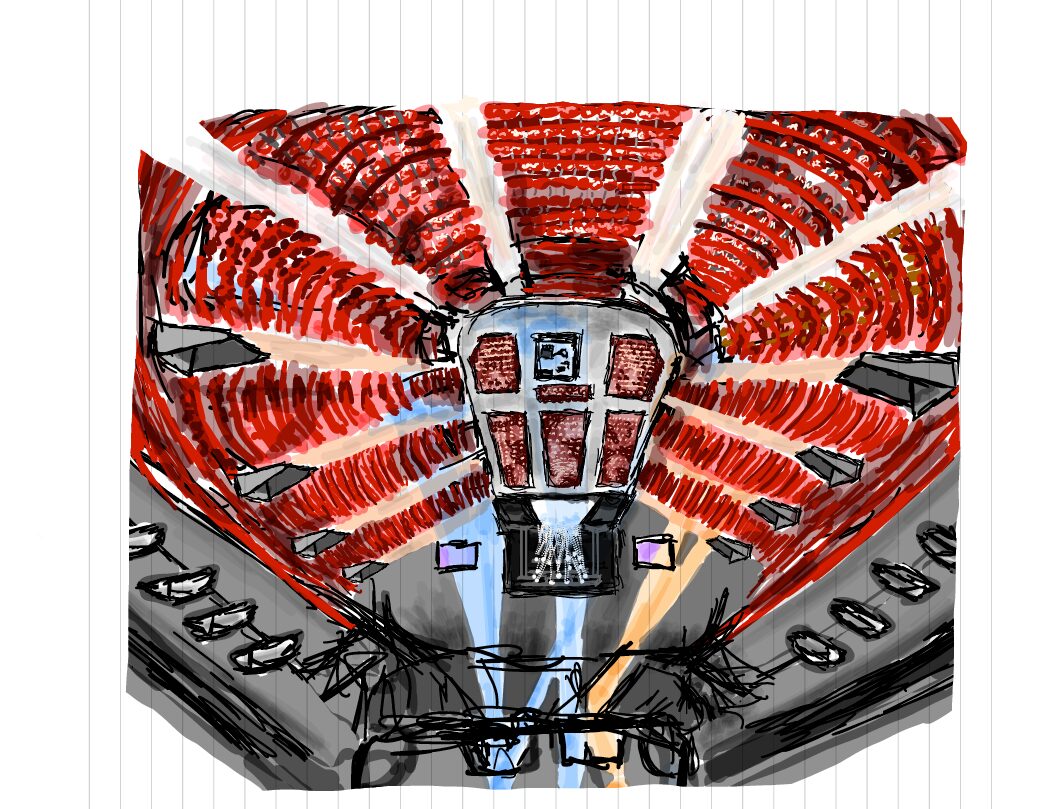
The Montréal Canadiens have shown flashes of improvement this season but remain on the cusp of making playoffs. While the team evolves, one thing remains unchanged—the heart of Montreal hockey beats strongest at the Bell Centre. As both a historic landmark and a commercial asset, the Bell Centre exemplifies the current intersection of tradition and economics in modern sports.

The Bell Centre (originally the Molson Centre, named after its founding sponsor) was an approximately $270 million CAD project in 1996. It boasted improved sightlines, new premium seating options, and a significantly larger capacity than the Montreal Forum, the Canadiens’ previous home. Before they settled there, the team had played in an assortment of venues, beginning with Jubilee Rink between 1909-1910, followed by the Montreal Arena from 1911 to 1918 and the Mount Royal Arena until 1926. The Forum hosted the team from 1926 to 1996 and was the site of some of the franchise’s greatest triumphs, including numerous Stanley Cup victories.

However, by the early 1990s, the Forum’s limitations had become apparent. It was aging, smaller than the modern standards, and it lacked the amenities expected in contemporary sports venues. To meet the growing demands of the sport and its fanbase, the Canadiens moved into a state-of-the-art facility in 1996: The Molson Centre.

The home of the Habs has since undergone changes and renovations, including a naming rights change. The Molson Centre (1996-2002) was named after Molson Breweries, a company deeply intertwined with the team’s history. Molson, which held a long-standing ownership stake in the Canadiens, used this sponsorship to solidify its branding within the sport in the early 2000s. 

In 2002, telecommunications giant Bell Canada acquired the naming rights to Molson Centre, renaming it to the Bell Centre later that same year. Since then, the Bell Centre has remained the official name of the arena, despite shifts in minor stake team ownership landscape; Bell never owned a controlling share of the Canadiens.

The Bell Centre is one of many major sports venues that have undergone corporate sponsorship-driven name changes. Similar examples include Scotiabank Arena in Toronto (formerly the Air Canada Centre), Crypto.com Arena in Los Angeles (formerly the Staples Center), Mercedes-Benz Stadium in Atlanta, and for a glimpse across the pond, Etihad Stadium in Manchester, U.K.

The increasingly common trend of selling stadium naming rights is clear. Teams seeking financial stability and additional revenue streams see this as an unobtrusive way to bolster their margins. For corporations, these agreements provide unparalleled branding opportunities in high-visibility environments. For fans, however, such rebranding can be an embarrassing abandonment of authenticity and spirit. The shift from historic, community-rooted stadium names to generic corporate branding can be a severing of emotional ties for supporters. While clubs justify the practice as a financial necessity, many see it as yet another reminder that modern sports prioritize profits over passion.

Looking ahead, stadium sponsorships are likely to continue evolving. More technology firms are entering the sponsorship space, as seen with Amazon’s Climate Pledge Arena in Seattle. Some teams are also opting for shorter-term agreements to maintain flexibility in sponsorship revenue. For example, FC Barcelona signed a four-year sponsorship with Spotify in 2022, much shorter than traditional stadium agreements which usually range between 10 and 20 years.

Given the Bell Centre’s longstanding partnership with Bell Canada, it remains to be seen if a new company will eventually take over its naming rights. However, what remains certain is that corporate sponsorship in stadiums is not just a trend but an economic necessity in modern sports. As the Canadiens strive to rebuild and reassert themselves as Stanley Cup contenders, the Bell Centre stands as both a symbol of tradition and as an ever-evolving commercial entity—a testament to the fusion of sports and business in the modern era.

Off the Board, Opinion

My thoughts on femininity as a so-called 900-pound grizzly bear

For years, boys at school called me “Boog.” When I asked what they meant, they said that it was a character from the movie Open Season: “A nine hundred-pound bear,” they would say. So, naturally, I thought I was fat.  I developed an intense anxiety about eating in front of men that persists to this day.

I know many other women with the same fear. Women are taught to shrink, physically, emotionally, even ideologically. We are praised for smallness and delicate features and soft skin and gentle voices—and shamed for having an appetite for anything more than we’re given. Consume little and demand even less so that men have more room to expand. 

In case you’re curious, it turned out the nickname was never about my weight—it was about the hair on my body. I’m not sure which is worse, but the fundamental problem was the same either way:  I was nauseatingly afraid of being perceived as unfeminine.

I have since learned that trying to prove your femininity will shrink you to death by design. For a long time, I thought that if I could control how men perceived me, I could win. I imagined that by conforming to the expectations they set for me, I would unlock some version of femininity that would give me power. But when all of those boys who made fun of me slid into my DMs later on (true story), I didn’t feel the satisfaction I thought I was supposed to—I felt worse. I conformed to their standards. Should I be pleased with myself for that? 

I believe choice feminism—the idea that any choice a woman makes is inherently feminist simply because she made it herself—is a myth. I think the male gaze permeates women’s actions more than we’re even conscious of, and I do, uncomfortably, believe that giving into it contributes to the oppression of other women. I realize this when the makeup that I claim to wear “for myself” goes untouched on days that I don’t leave my apartment. The act of adorning myself makes me feel good, yes, but not in a vacuum. It feels good because it makes me think that others will find me more attractive (and those standards of attractiveness by which I judge myself didn’t fall from a coconut tree). 

Still, there is no force on Earth that can separate me from my MAKEUP FOREVER Artist Colour Pencil Longwear Lip Liner in the shade “Wherever Walnut.”  I love femininity, and I don’t think we should be at war with it. But I believe that there’s some freedom in recognizing the male gaze, the “ever-present watcher.” Maybe that’s the first step to figuring out which parts of our femininity actually belong to us.

I don’t have a solution. Some believe that overcoming the male gaze means gazing back—judging back, objectifying back. Others argue that we should only care about our self-perception. But I think it’s human nature to see ourselves through the eyes of others. The question is, whose eyes will I choose to see myself through? 

When I find myself fixated on this question and terrorized by the “ever-present watcher,” I think about Nawal El Saadawi, an Egyptian writer, doctor, and radical feminist.

In Woman at Point Zero, Saadawi tells the story of Firdaus, a woman who searches for the warmth of her late mother in every woman she meets. Her last memory of her mother is from when she was a baby. She recalls struggling to learn to walk, feeling as if something was always pushing her over; the only thing that held her up was her mother’s gaze.

 “They were eyes that watched me,” she writes. “Even if I disappeared from their view, they could see me, and follow me wherever I went, so that if I faltered […], they would hold me up.”

As she searches for her mother, she finds her, to some extent, in every woman around her. Herein might lie the solution, I think—to realize that the gaze that steadies us, the one that truly sees us, has always belonged to other women.

McGill, News, PGSS, SSMU

AGSEM member still awaiting recourse for McGill security alleged assault in December

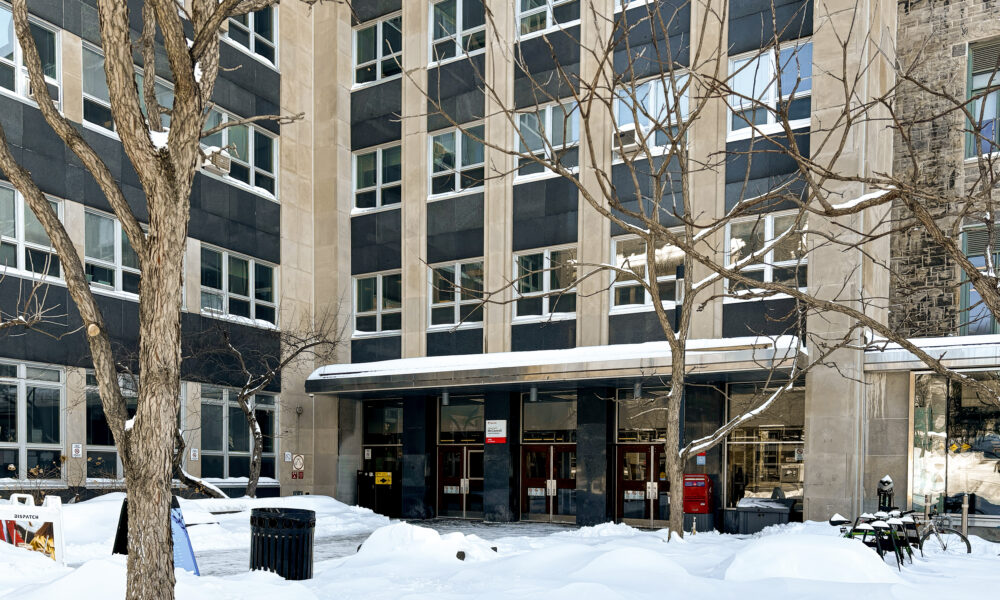
On Dec. 11, a member of the Association of Graduate Students Employed at McGill (AGSEM) alleges security officers forcibly detained her in the McConnell Engineering Building for taking a picture of armed agents there. Reportedly, the member has yet to receive communication from McGill about recourse.

In a written statement to The Tribune, the AGSEM member, Asa Kohn, explained that she has a job with the Students’ Society of McGill University (SSMU), with a scope that includes addressing the increased presence of security officers on McGill campus. When she saw two private security guards in McConnell that afternoon, she snapped photos of them to show her colleagues. One of the guards then approached Kohn, yelling at her to delete the images while placing his hand on his weapon. 

“I tried to leave, but he grabbed my arm, dragged me to the wall by the door of the porter’s office, and forcibly held me there,” Kohn wrote. “He continued to yell, sometimes in English but mostly in French even when I told him I don’t speak French. He demanded several times that I delete my photos, give him my camera, and stop recording him. He threatened to break my camera and said that he had a gun.”

Kohn reported that a man identifying himself as the building porter then arrived and pushed her to the side to access his office door. When she tried to record this incident, explaining her reasons for photographing and asking what law or McGill policy she was violating by doing so, neither the porter nor guard responded.

Kohn explained that McGill security guards then arrived to prevent her from leaving McConnell, even after the private security guard had released her. According to Kohn, the guards also told bystanders to “back off” while they detained her for approximately 50 minutes.

“When the police finally showed up, they immediately told me that I hadn’t broken the law and was free to go,” Kohn wrote.

In a written statement, the McGill Media Relations Office (MRO) claimed that the events of Dec. 11 provoked external security involvement.

“The initial incident did not involve McGill Security agents,” the MRO wrote to The Tribune. “As we understand, it relates to an individual recording the movements of a couple of armoured truck guards. We understand that [the guards] had safety concerns about being filmed, so they contacted the Montreal police for assistance [….] That puts into motion McGill protocols that focus on avoiding escalation and waiting for police to arrive to determine if they think a crime was committed.”

The MRO also commented on McGill security’s role in the events at McConnell.

“The work of Campus Security was complicated by the intervention of other community members who, despite what one assumes were good intentions, fuelled tense exchanges,” the MRO wrote.

Kohn expressed that the hostile behaviour she alleges experiencing from security on Dec. 11 has occurred multiple times since she began documenting their campus presence in Summer 2024, with security “arbitrarily” demanding her student ID and addressing her by her name when encountering her on campus.

“This sort of intimidation might be expected from a body designed to impose order on behalf of McGill,” Kohn wrote. “What is more disheartening is that other parts of the university have not helped me.”

Kohn also alleged that McGill “has done nothing to rectify the situation,” since she filed an internal complaint with McGill Security Services eight weeks ago, but has not received a response. She also submitted a request for information with the SPVM on Dec. 16. 

SSMU Vice-President University Affairs Abe Berglas confirmed Kohn’s difficulties accessing support from McGill in a written statement to The Tribune, reporting that they met with a representative from Campus Public Safety a week after Kohn’s alleged assault.

“[The representative] couldn’t tell me what Asa had done wrong for the security guard to grab her,” Berglas wrote. “I asked him what he would do about it, and he said that without a formal complaint, he would not take any action.”

In their statement about the events of Dec. 11, AGSEM affirmed the need to seek non-administrative support at McGill in situations like Kohn’s.

“There are ways we can look out for each other on an individual level,” the union wrote. “Bystanders on [Dec. 11] prevented worse abuse of the staff member. Their presence provided accountability.”

Behind the Bench, Sports, Volleyball

Know Your Coach: Rachèle Béliveau

After 34 remarkable years at the helm of McGill’s Women’s Volleyball program, Coach Rachèle Béliveau has just completed her final season. Her journey from Olympic athlete to one of Canada’s most accomplished university coaches offers valuable lessons in dedication, adaptation, and passion for the sport.

Béliveau’s volleyball career began in her early years in Sherbrooke, QC, playing from age 12 and included a varsity career at Université de Sherbrooke. Her talents as a setter earned her a spot on Canada’s national team from 1980 to 1986, appearing at both the 1984 Los Angeles Olympics and the 1986 World Championship

“It was tough to make my place on the national team because of my height, but my sense of the game and my tactical awareness covered the lack of height,” Béliveau recalled in an interview with The Tribune. “That skill has transferred to my coaching.”

Her most treasured playing memory came not at the Olympics, but when Canada defeated volleyball powerhouse Cuba in the North, Central America and Caribbean Volleyball Confederation (NORCECA)—a qualifying event for the Junior World Championship

“We won the final against the best team in the world, which was Cuba at the time,” Béliveau recounted, smiling. “So that was a surprise, and is why that was the most rewarding victory in my professional career.” 

The transition to coaching came naturally. While completing a master’s degree in Kinesiology at Université de Sherbrooke—taking some classes at the national team centre in Regina—and obtaining her coaching certifications, Béliveau realized she had a talent for guiding fellow players. After Beliveau gained experience coaching 14- and 15-year-olds, McGill hired her in 1991 when she was just 30 years old, beginning what would become a coaching career for the ages.

Under Béliveau’s leadership, Martlets Volleyball has made five appearances at the U Sports national championship level, securing a bronze medal in 2012. Her coaching philosophy emphasizes technical development and tactical understanding, qualities that have earned her six Conference Coach of the Year awards

“What my players appreciate is the way I can teach them,” Béliveau explained. “They see the progress very quickly [….] As an athlete, if I give advice, you will see a change. Once I have their confidence in my abilities to help guide them, my strength is the tactical and technical part of the game. That’s how I build these successful teams.”

Volleyball has transformed dramatically across her tenure at the forefront of the Martlets franchise. Today’s players are taller, fitter, and more athletic than ever, and the game itself has evolved from a controlled style to a more forceful approach.

“The game was more controlled long ago,” Béliveau said. “Now it’s more powerful. Sure it has more mistakes, but it’s more explosive and intense with spectacular moves and physical prowess on display.” 

Originally planning to retire three years ago at age 60, Béliveau postponed her departure when the pandemic interrupted competition. She returned to lead McGill to its first Réseau du sport étudiant du Québec provincial title and a fourth-place finish at Nationals, before guiding a young squad through her final transitional season this year. Across her career, she has coached “78 conference all-stars, 19 All-Canadians, 21 league award recipients and eight major national awards honourees,” according to McGill Athletics.

Post-retirement, Beliveau plans to move to Sherbrooke to be closer to her family—including her son and daughter, who both work as volleyball coaches for local teams in Sherbrooke. While she expects to stay connected to the sport, she looks forward to stepping back from her current intense schedule. As Béliveau hangs up her whistle, she leaves behind not just a victorious legacy, but a community of athletes who carry forward her technical knowledge, tactical wisdom, and enduring passion for volleyball.

“The time goes really, really fast,” Béliveau said. “While you’re there, appreciate it. Sometimes we train hard, we play a lot of volleyball. People are tired, we have school. But appreciate it when you’re in the moment, because it goes fast.”

Science & Technology

Stepping forward: How technology is improving gait for Parkinson’s and aging adults

The ability to walk is something most people take for granted. But for individuals with Parkinson’s disease and age-related mobility challenges, it can be a daily struggle. Slow, shuffling steps, difficulty maintaining balance, and unstable walking patterns make simple movements feel like obstacles. 

Nancy Mayo, a professor at McGill’s School of Physical and Occupational Therapy, addresses these challenges with her company, PhysioBiometrics. Her team has developed a wearable device called the Heel2Toe sensor, designed to help people improve and regain control over their walking patterns, or gait

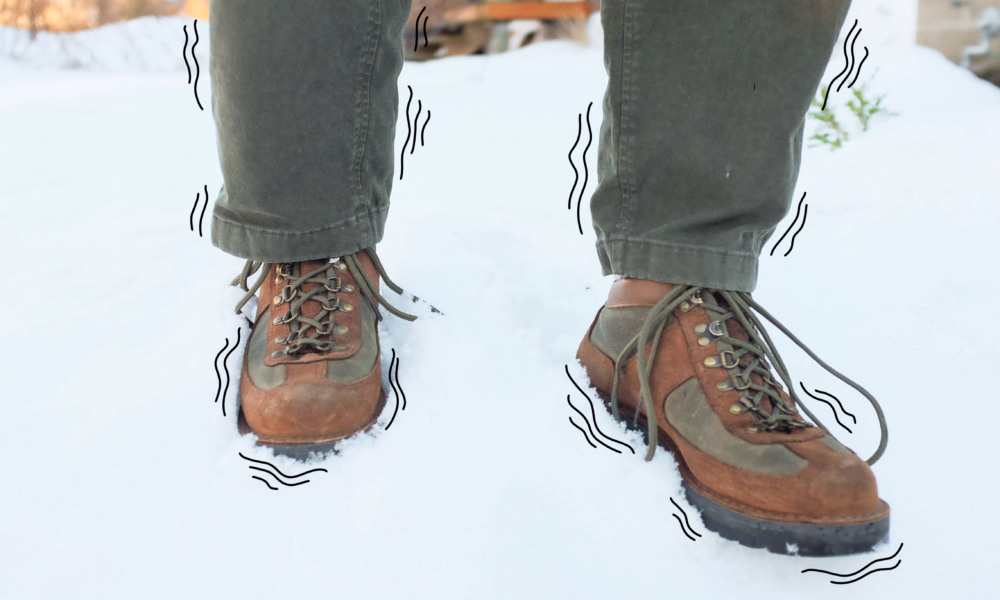
The Heel2Toe sensor is a small device that attaches to the side of a sneaker. It emits a sound when a strong heel strike is detected, reinforcing a standard heel-to-toe walking pattern. By providing real-time auditory feedback, the sensor helps wearers make immediate adjustments, in turn promoting better steps, posture, balance, and coordination. 

Mayo conducted a pilot study to test the Heel2Toe sensor in action. Participants were divided into two groups: One using the Heel2Toe sensor, and the other following a workbook-based exercise program. Over three months, those in the sensor group demonstrated significant improvements in their walking ability, with 13 out of 14 participants increasing their walking distance by an average of 66.4 metres in the Six-Minute Walk Test

To better understand how the Heel2Toe sensor works, The Tribune attended a class run by Natasha Hassija, a PhD student in Rehabilitation Sciences. The class, held biweekly over five weeks, is part of a research project aimed at determining the benefit of combining the Walk-BEST—BEtter, faster, longer, STronger—coaching sessions with at-home practice using the Heel2Toe sensor in participants over 50 years old. 

“We are trying to see the benefit of expert coaching plus technology-assisted home practice. We have tested each component separately—now we are combining them,” Hassija explained in an interview with The Tribune

The session began with participants reflecting on their progress, sharing how they felt about their walking since the previous class. The exercises done during the session were structured around basic elements of proper walking: Heel-to-toe stepping, engaging the hip, arm movement, posture, breathing, and walking while engaging the brain. 

Each exercise focused on different aspects of movement, some targeting physical elements like balance, flexibility, and pace, while others targeted cognitive aspects, for example, by continually subtracting seven from 100 while walking. Every exercise concluded with a moment of self-reflection, encouraging participants to be aware of their movement. 

After the class concluded, The Tribune met with Mayo to discuss her research further. She highlighted a key challenge in Parkinson’s gait training. 

“Because of the nature of the condition, where dopamine-producing cells die, it’s difficult for people with Parkinson’s to perform automatic movements. Telling them to ‘walk properly’ isn’t enough—their brain doesn’t let them,” Mayo said.

This is where the Heel2Toe sensor makes a difference. Mayo explained that the device provides an external cue, stimulating the dopamine system and reinforcing correct movements.

“One classic example is arm swinging,” Mayo noted. “Most people swing their arms naturally while walking, but those with Parkinson’s don’t, which affects their balance. The sensor helps retrain those movements.”

She also explained that many older adults unknowingly reinforce problematic gait patterns, which can lead to instability and falls. 

“If you walk badly for 10,000 hours, your brain will own that bad walking pattern. We have to unprogram that,” Mayo said. “Our program is breaking that cycle and getting them to walk BEST.” 

This research is part of an ongoing effort to integrate technology into rehabilitation. While technology alone may not be a complete solution for mobility challenges seen in both Parkinson’s disease and other aging-related conditions, the integration of structured exercise programs with innovative tools like the Heel2Toe sensor represents a promising step forward.

Mayo emphasized the importance of quality, as opposed to quantity, when trying to improve gait. 

“Walk better before you walk more. Taking thousands of bad steps won’t help, but practicing good ones will.”

Read the latest issue

Read the latest issue