

Latest News

Arts & Entertainment, Music

Open mic nights at Turbo Haüs: A safe space for artistic self-expression

Tuesday nights at Turbo Haüs are synonymous with music and connection, and March 17 was no different. Located minutes away from the Plateau, the cocktail bar is committed to actively supporting the Montreal music scene. Open Haüs Nights give performers the opportunity to show off their skills and connect with other musicians, all in the spirit of enjoying the raw live performance experience.

While the bar is rather small and nearly completely hidden on rue St.-Denis, its intimate atmosphere is offset by its eccentric decor. A massive statue of a surreal, freakish woman greets visitors near the bar’s entryway, while artworks depicting alien-like figures adorn the walls.

A wall separates the seating and bar area from a spacious dance floor and stage. Along the walls, several coat racks are propped up, allowing visitors to enjoy the music in total comfort. At 7:00 p.m., musicians can sign up to perform, with the first act typically taking the stage around 8:00 p.m.

The venue provides a full backline, further encouraging participation. Musicians who may not have their own instruments can join in on the fun, too, or can experiment with a different kind of sound by picking up a new instrument. This setup also alleviates the burden of transporting one’s own equipment. Artists performed a mixture of their own original work and covers, with genres ranging from folk to rap to alternative rock. 

The crowd is a melting pot of regulars, new attendees and performers. From the first act, a strong sense of community and camaraderie is felt. As a young duo was on stage, one of the bar’s employees ran into the dancefloor area, requesting a song. Another performer, El Totoso, encouraged audience members to provide feedback on one of his original songs, which he plans to perform to the person to whom he dedicated it. Casual interactions such as these foster the bar’s intimate and inviting atmosphere.

Singer-songwriter Danny Durand, a regular performer at Turbo Haüs’s open mic nights, revealed in an interview with The Tribune that he values the safe space that the venue creates for experimentation. The low-stakes environment allows musicians to take risks without fear of judgment. If a musician slips up, it can be easily brushed off. And since the crowd consists of many regulars, performers grow comfortable with the familiar crowd.

“It’s not a show like at the Bell Centre,” Durand said. “It doesn’t matter if you try something and it doesn’t work.”

Durand also credits the bar’s distinct energy for shaping the style of his performances. The musician recalled feeling inclined to perform his work with a more aggressive tone by leaning into the rock atmosphere within the bar, a tone that strays from his usual folktronica sound.

These open mic nights represent an earnest commitment to live performance and creativity. For instance, there is no advertised setlist. While musicians can take the opportunity to promote their own work, they don’t have to. They’re offered the safety to perform any work just for the sake of having fun and sharing a project with whoever lends their ear. This freedom allows musicians to be authentic and vulnerable in their performance without it feeling too daunting.

“It’s like music is a flower and this is the pot. This is the soil where it grows from,” Durand explained.

In a world dictated by social media algorithms, both well-established and aspiring musicians feel the pressure to constantly adapt to the ever-changing digital world to increase the reach of their work. However, Turbo Haüs’ accessible and nonthreatening space builds community through music in a world that promotes social isolation. Open mic nights remind musicians that there is an audience who will heartily listen to what they have to say.

Open Haüs Nights are held every Tuesday night from 7:00 p.m. to midnight at Turbo Haüs.

Science & Technology

Spotlighting Canadian women in science

Women have long driven scientific discoveries in Canada, yet their contributions often remain unrecognized and overlooked. Spotlighting the work of these innovators is crucial, as it ensures they are remembered without misattribution. The Tribune has compiled a list of women whose groundbreaking achievements continue to inspire future generations.

Elizabeth Elsie MacGill

Elizabeth Elsie MacGill was the first woman to earn a Bachelor’s degree in Electrical Engineering in Canada, and later, in 1929, became the world’s first woman to earn a Master’s degree in Aeronautical Engineering. She led the Canadian production of Hawker Hurricane fighter planes during World War II, earning her the nickname “Queen of Hurricanes” in a male-dominated field. MacGill also served as the national president of the Canadian Federation of Business and Professional Women’s Clubs from 1962 to 1964, and then as a member of the Royal Commission on the Status of Women in Canada from 1967 to 1970.

Anne Innis Dagg

In 1956, at the age of 23, Anne Innis Dagg became the first Canadian biologist and Western researcher to study giraffes in their natural habitat. Despite publishing 20 research papers, universities continually sidelined her: The University of Guelph denied her tenure, and the University of Waterloo rejected her application because she was married. However, in 2010, giraffologists rediscovered Dagg’s contributions to the field, and filmmaker Alison Reid highlighted her journey in an award-winning documentary based on Dagg’s memoir. In 2019, she was named an honorary member of the Canadian Society of Zoologists and a Member of the Order of Canada.

Annette Herscovics

In 1969, Annette Herscovics shaped the future of medicine when she discovered that thyroglobulin—a key precursor to thyroid hormone–goes through carbohydrate modifications. This was one of the earliest discoveries in glycoproteins, and it took place here, at McGill. A few years later, in 1974, she found the universal process by which carbohydrates attach to proteins in nucleated cells while researching at Harvard.

Nadine Caron

Nadine Caron, a member of the Sagamok Anishnawbek First Nation, was the first Indigenous woman to graduate from the University of British Columbia’s medical school and became the first female Indigenous general surgeon in Canada in 2005. Her expertise is broad, and she leads projects on cancer as well as healthcare services in rural and remote settings. In 2025, Caron joined six other individuals as inductees into the Canadian Medical Hall of Fame

Roberta Bondar

Roberta Bondar, neurologist, medical researcher, and educator, contributed tremendously to the field of space science and medicine. In 1992, she became the first Canadian woman astronaut to go to space, breaking gender barriers in both medicine and aerospace. She also led NASA’s head of space medicine for over a decade. Bondard holds the NASA Space Medal, has been named Officer of the Order of Canada and is an appointee to The Order of Ontario. She was also inducted into the International Women’s Forum Hall of Fame, the Canadian Medical Hall of Fame, and has received 24 honorary doctorates.

Donna Strickland

Donna Strickland, a professor in the Department of Physics and Astronomy at the University of Waterloo, pioneered the development of chirped pulse amplification, enabling the creation of the highest-intensity lasers possible. In 2018, she became the third woman to ever win the Nobel Prize in Physics. Her work has large implications, revolutionizing laser applications, from leading to more precise corneal surgery in patients to the machining of small glass parts for use in cell phones.

Juliet Daniel

Juliet Daniel is a major pioneer in cancer biology who has been credited with finding the ‘missing puzzle piece’ explaining why Black women experience higher breast cancer mortality rates than other racial groups. Her research focuses on colon cancer, as well as triple-negative breast cancers, which are most prevalent in young women of African and Hispanic descent. Daniel’s research is critical to the advancement and study of breast cancer and has earned her several awards, including the Black Excellence in STEM & Medicine Mentorship Award in 2022 from the Canadian Black Scientists Network and WXN Canada’s Most Powerful Women: Top 100 Award in 2020. She was also featured in “Millennium Minds: 100 Black Canadians” in 2000, a testament to her achievements.

Editorial, Opinion

Protect trans students, not transphobic educators.

A high school educator is suing the Quebec government, claiming a provincial policy that allows students over the age of 14 to change their name and pronouns without parental consent violates her Canadian Charter rights. The policy, introduced by the Quebec Education Ministry in 2021, requires educators to use students’ preferred names and pronouns, even when the parents are unaware. The teacher has claimed that this obligation obstructed her freedoms of expression and conscience.

With anti-trans sentiments rising across North America, Quebec must enshrine trans student dignity and anonymity in policy and in practice, rather than validating the transphobic biases of educators. Institutions across Canada have a profound duty to ensure that transphobia is neither normalized nor accepted, and that trans-inclusive policies are enforced effectively and completely.

This lawsuit communicates a clear message: The transphobic ‘discomfort’ of a teacher deserves more legal recognition than the identity and human rights of trans individuals. This negligence of inclusivity in schools is a fundamental safety concern; 46 per cent of transgender and non-binary youth have considered suicide in the past year, citing non-recognition of their identities, violence, and bullying as key factors. 

Confidentiality is critical to protecting the physical and emotional safety of 2SLGBTQIA+ individuals, particularly for those who are uncomfortable coming out at home. Trans youth are far more likely to be kicked out of their homes or later become unhoused and experience disproportionate levels of violence as early as age 15, making schools a crucial space for safety and discovery. 

Yet, the educator invoking this lawsuit has erroneously equated confidentiality with withholding vital information from family members. While mandated reporting policies may require teaching professionals to share privately-disclosed information for safety reasons, confidentiality in the context of a student’s gender identity does not fall under this umbrella. Forcibly outing trans students to parents only exposes them to heightened risk at home.

Confidentiality may seem basic in the context of policy imperatives such as healthcare access, but it is foundational to trans safety. A study of patient-clinician relations found that doctors using patients’ preferred pronouns reduced the likelihood of trans youth suicide by more than 30 per cent, proving the importance of identity-affirmation to the well-being of trans individuals. 

This lawsuit stands alongside several legal challenges to trans rights across Quebec. French-Language Minister Jean-François Roberge’s policy to ban gender-inclusive language from government communications in French poses a significant risk to inclusivity in the province. Roberge has repeatedly asserted that French gender-neutral pronouns are “grammatically incorrect.” This fallacious argument interprets the gendered nature of the French language as requiring an equivalent binary at the level of identity and neglects the evolving nature of grammar and syntax. Trans individuals deserve to see their identities represented in the language of the law, as the normalization of gender-neutral pronouns in official, public contexts reaffirms 2SLGBTQIA+ identity rights. 

Homophobic and transphobic discourse at the level of political rhetoric and legislation also leads to anti-2SLGBTQIA+ sentiment in inter-personal contexts. Over 40 per cent of Quebec high school students surveyed in 2025 stated they would feel uncomfortable if their best friend was gay, compared to only 25 per cent in 2017. Quebec is entering a period of major backsliding where queerness has been de-normalized and the alleged ‘discomfort’ of a cisgender person is prioritized over the rights of transgender people.

The Canadian and Quebec governments must take active steps to ensure that such anti-trans sentiment is curbed and trans rights are protected under the law. McGill too must dedicate itself to protecting 2SLGBTQIA+ individuals through language, confidentiality, and policy. While the university offers a preferred first name policy, it is not well enforced: Professor of Religious Studies Douglas B. Farrow repeatedly violated the preferred first name policy, expressing hostile views towards trans and queer individuals, with minimal intervention from the administration. Further, in 2023, McGill’s Centre for Human Rights and Legal Pluralism hosted a debate titled “Sex vs. Gender (Identity): The Divorce of LGB from T,” inviting notoriously transphobic and trans-exclusionary speaker Robert Wintemute as its host. 

Both McGill and the Quebec government possess explicit constitutional and policy bases mandating the protection of trans rights, yet both fail to defend 2SLGBTQIA+ rights against rising hateful extremism. Quebec must reject this lawsuit and strengthen confidentiality protections for trans students; McGill must ensure neither faculty nor campus events are empowered to platform trans-exclusionary rhetoric.

Commentary, Opinion

Quebec must take online misogyny seriously

Despite efforts to advocate for women’s rights, including Quebec’s investments in combating domestic violence, there is a sense of ‘rolling back’—from bills meant to cut federal funding for causes such as the Women’s Program to public figures experiencing harassment online. 

Quebec Solidaire co-spokesperson Ruba Ghazal and author India Desjardins have spoken out about the online hate they have received for simply existing as women in a public position. They are not outliers; many women who speak out—especially on polarizing issues—face violent insults. In response to this problem, Ghazal has proposed a system outside of involving police forces: A 24/7 hotline to help cyberbullying victims. 

The mishandled issue of cyberbullying reflects a broader pattern where hate against women is dismissed. With the rise of the manosphere—male-centred online communities promoting anti-women ideologies—it is important that women are not silenced. 

Although social media is often regarded as a space for self-expression, many women censor themselves or leave online discourse out of fear. A Canadian survey found that 4 out of 10 women who experience cyberbullying choose to completely remove themselves from social media. Harassment is not only an emotional attack; it is also an active filter that asserts who has the right to speak and influence others. 

Because institutions shape what speech is acceptable, they also have a responsibility to address online misogyny. However, rather than assuming that a resolution is outside of the realm of possibility, universities such as McGill must take concrete steps to address online misogyny. This could include expanding their Code of Student Conduct to explicitly cover harassment in digital spaces, implementing clear reporting mechanisms for students targeted online, and establishing dedicated support systems, such as trained staff or hotlines, to respond to these complaints. While enforcement may be complicated by anonymity, universities can still investigate cases tied to identifiable students and set institutional standards to make such behaviour unacceptable. 

Some may argue that it is too difficult to respond to these online attacks given the anonymity of users and the huge amount of content in the digital space. Yet, as the popularity of the manosphere demonstrates, online misogyny has consequences that extend beyond individual harm; it can lead to severe psychological harm, loss of economic opportunities, and even physical violence against women. Although implementing effective responses is challenging, Ghazal’s proposed hotline points to alternatives to institutional inaction and overreliance on policing by offering a support-based approach for survivors of harassment.

Universities, however, cannot afford to treat this issue as external to their responsibility. Young adulthood is both the age at which many men are drawn into misogynistic online spaces and the age at which women are most likely to experience gender-based violence, placing universities at the centre of this dynamic. At McGill, reports of misogyny in academic spaces, student governance, and campus life demonstrate that these harms are not confined to the digital sphere and shape students’ everyday experiences. But unlike social media platforms, universities have the ability to impose meaningful consequences through their codes of conduct and to provide direct support to affected students. 

Universities, media outlets, and public agencies have failed to act because online misogyny is often treated as background noise rather than as an issue requiring intervention, but the link between online harassment and real-world violence, where misogynistic content normalizes hostile behaviour toward women, cannot be overlooked. Universities and media outlets have the resources to take action and should strive to change these norms rather than reproduce them. 

Online misogyny is not inevitable, but rather a problem that institutions have yet to take seriously. As long as it is dismissed by institutions, the burden will always fall on women to simply endure it. Institutions must recognize their roles in sustaining misogynistic systems of oppression and implement concrete policies to properly support women.

Basketball, Sports

March Madness 2026 features a freshman phenom, a defending dynasty, and 64 reasons to believe

At this year’s March Madness basketball bonanza, 68 men’s teams and 68 women’s teams will tip off their pursuit of a national championship. The men’s tournament features the Duke University Blue Devils as the clear frontrunner, anchored by arguably the most dominant freshman college basketball has seen in years. The women’s bracket pits defending champions, the University of Connecticut Huskies, against a field of challengers led by the South Carolina Gamecocks, Texas Longhorns, and UCLA Bruins.

Men’s Tournament:

Duke’s path in the East Region feels like destiny. The Blue Devils enter as the top overall seed with a 32–2 record, powered by Cameron Boozer, the frontrunner for National Player of the Year. The 6-foot-9 forward averages 22.5 points, 10.2 rebounds, and 4.2 assists per game while shooting 56.5 percent from the field. His versatility is staggering: He scores inside and out, dominates the glass, and creates plays for teammates with court vision rare for any player, let alone a freshman.

Duke possesses one of the nation’s most complete defensive profiles, ranking among the top teams in rebounding and consistently forcing opponents into low-percentage possessions. Their 17–2 record in Quadrant 1 games includes victories over the Michigan Wolverines and Florida Gators, two other number one seeds.

The concern is health. Starting point guard Caleb Foster suffered a fractured foot and is unlikely to return unless the Blue Devils reach the Final Four. His absence, coupled with that of Patrick Ngongba II due to injury, has thrust Cayden Boozer, Cameron’s twin brother, into a larger role. If Cayden maintains his Atlantic Coast Conference (ACC) Tournament form, Duke’s margin for error increases. If not, the pressure on Cameron intensifies.

Duke’s likely Elite Eight opponent is UConn, the second seed in the East. The Huskies possess size, shooting, and a methodical offensive system that can neutralize Duke’s length. The West Region features the Arizona Wildcats as the top seed, built on defensive suffocation and efficient offence. In the Midwest, Michigan enters with Yaxel Lendeborg, a dominant forward whose size makes them a nightmare matchup. The South belongs to Florida, fueled by explosive offence.

Prediction: Duke defeats Arizona in the final. Cameron Boozer’s dominance proves insurmountable, and the Blue Devils capture their first national championship since 2015.

Women’s Tournament

Defending champion UConn seeks their third consecutive national title, a feat that would cement this era of Huskies basketball as one of the program’s greatest dynasties. UConn’s success stems from balance: Elite guard play, interior dominance, and suffocating defence. Their tournament experience gives them an edge in close games.

South Carolina presents as their most formidable challenge. The Gamecocks boast the nation’s most dominant defence and a roster loaded with athleticism. They defend the rim ferociously and turn defence into offence seamlessly. If South Carolina and UConn meet in the Final Four, it will be a clash of styles: UConn’s precision against South Carolina’s physicality.

Texas brings size and scoring punch, while UCLA rounds out the top seeds with a potent offence led by elite guard play. The Iowa Hawkeyes possess one of the nation’s most explosive offensive lineups, and the Louisiana State University Tigers combine athleticism with championship swagger. 

Prediction: UConn defeats South Carolina in the championship game. The Huskies’ experience and ability to execute in crunch time prove decisive as they complete the three-peat in Phoenix.

March Madness thrives on unpredictability. The California Baptist LancersDominique Daniels Jr. averages 23.2 points per game, and their matchup with the Kansas Jayhawks could produce an upset. The Virginia Commonwealth University (VCU) Rams have the defensive intensity to frustrate higher seeds. On the women’s side, the Princeton Tigers enter with a disciplined system that can frustrate opponents.

The beauty of March Madness lies in its refusal to respect conventional wisdom. Injuries, fatigue, and nights of bad shooting derail favourites. Role players become heroes. That is why brackets get filled out and millions watch.

And so the chaos begins. Duke and UConn carry championship expectations. Cameron Boozer enters his first National Collegiate Athletics Association (NCAA) tournament in what is already considered one of college basketball’s all-time great freshman seasons. The next three weeks will produce moments that define careers and games that live in March Madness lore.

Duke and UConn are my picks. But if March has taught us anything, it is that the bracket never unfolds as predicted. That is why we watch.

Brackets and predictions were completed before the first games of the 2026 NCAA tournaments.

News

McGill drops legal battle over out-of-province tuition hikes

As of Feb. 27, both McGill and Concordia University have dropped their legal battles against the Quebec government’s out-of-province tuition hikes. The decision was made in light of a January 2026 decision by the Quebec government that maintained tuition hikes for new out-of-province students studying at English universities by 33 per cent—from around $9,000 CAD to $12,600 CAD—despite a Quebec Superior Court ruling that found the hike “unreasonable.” Originally introduced in October 2023, the Legault government stated that the tuition increase aims to safeguard the French language and limit the number of students in the province who do not speak French. Since 2020, McGill’s undergraduate out-of-province population has remained steady, from around 22 to 25 per cent.

In a written exchange with The Tribune, McGill’s Media Relations Office (MRO) wrote that McGill does not believe the Quebec government’s response to the tuition hike has properly respected the 2025 ruling. Nonetheless, McGill has decided to discontinue the legal battle after careful consideration.

“Further litigation would undermine its objectives of strengthening local engagement and advancing partnerships that contribute to the vitality of the Québec society,” the MRO wrote. “McGill will continue to work with the Government of Québec to ensure predictability, stability, and transparency in the rules governing higher education.”

The MRO asserts that McGill is committed to investing in Scholarships and Student Aid to ensure students have proper access to financial support and resources to succeed in their studies.

However, recent changes have led out-of-province students to question how welcoming McGill is to non-Quebecois Canadians. Students have expressed concern not only about the immediate financial implications of the tuition hike, but also its broader impact on accessibility, diversity, and belonging.

In an interview with The Tribune, Faye Dryden, a U3 Environment student from British Columbia, explained that the policy would cause significant financial strain, particularly in the context of limited scholarships, for out-of-province students. 

“If the tuition increases had been in place when I applied, it is likely I would have reconsidered accepting my admissions offer and gone to my second choice school,” Dryden said. “It is important that McGill provides equal opportunity for people from around the world to have access to the quality of education provided by the school.”

Alyssa Volante, a U2 Science student from Ontario, similarly emphasized in a written statement to The Tribune that the increased tuition costs would have changed her decision to attend McGill. She noted that comparable institutions in Ontario would have been more financially reasonable, highlighting broader concerns about the way the policy shapes students’ sense of belonging.

“There are many great universities in Ontario, where I’m from, and such a steep increase in tuition wouldn’t have been worth it for me,” Volante said. “Raising the tuition eliminates a whole group of students that can make great contributions to McGill but don’t come because they can’t afford it. Having lower tuition allows McGill to accept the brightest students [….] I’m from one province over and I’m already made to feel like I don’t belong.”

In an interview with The Tribune, Emma Harden-Wolfson, assistant professor in the Department of Integrated Studies in Education, highlighted that McGill’s decision to drop the legal challenge may not stem from one motive alone. She noted that the university has already demonstrated a willingness to invest heavily in legal battles. 

“It seems an interesting argument to make that the cost is the reason for discontinuing the legal challenge,” she said. “I’m sure it’s part of the situation, but I feel like it’s not all.”  

Harden-Wolfson situated the decision within a broader structural context, pointing to the increasing normalization of differential tuition models. While Quebec’s policy has drawn particular attention, she emphasized that similar approaches exist elsewhere. 

“Perhaps what this means is that this is something that will become more common across Canada in the future,” she said. “We already see a differential sense of belonging among all kinds of students.”

Arts & Entertainment, Pop Rhetoric

An anatomy of the rise and fall of Lil Timmy Tim

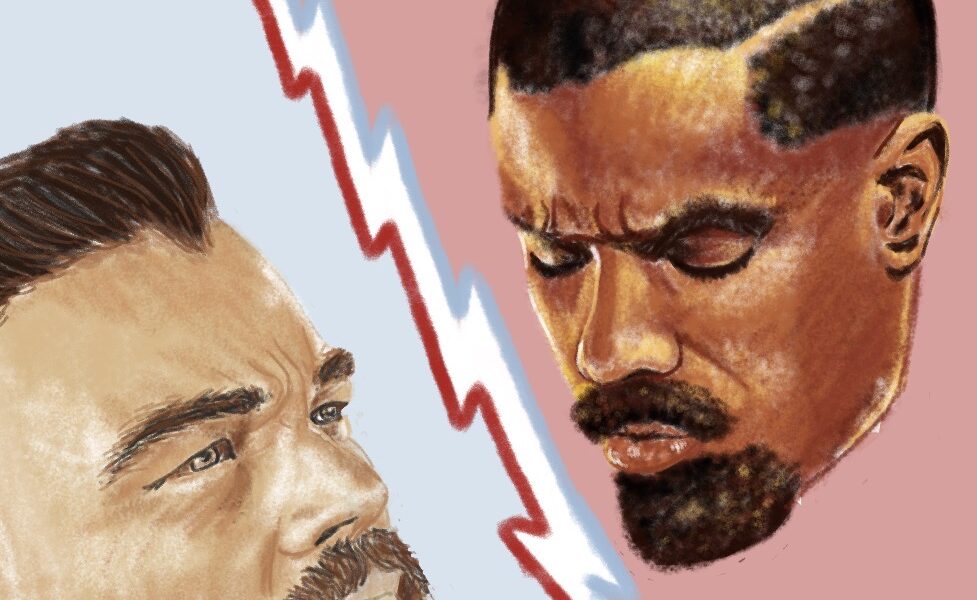
In a tragic case of male ego coming to the fore, Timothée Chalamet, who went from playing European sad boys to a despicable American table tennis player in search of glory, lost this year’s biggest acting award to Sinners Michael B. Jordan. In a February 2026 conversation with former colleagueMatthew McConaughey, Chalamet threw shade at ballet and opera, showing us How to Lose an Oscar in Ten Days. Under fire for defending the need to “keep movie theatres alive” while attacking other art forms, he has alienated many of his once devoted fans. 

“I don’t want to be working in ballet or opera,” the actor said, “Where it’s like, ‘Hey, let’s keep this thing alive, even though no one cares about this anymore.’” Quick to backtrack his comment, Chalamet then claimed he respects both communities.

As karma would have it, he did not win a BAFTA Actor Award or an Oscar a few weeks later, despite having been considered the front-runner throughout the whole award season. Members of the ballet and opera communities openly rejoiced at Chalamet’s downfall and took to social media to voice their grievances with the actor’s remarks. Notably, the English National Ballet commented on the situation, saying that these art forms are “not only alive and well, but thriving.” Other companies took this as a promotional opportunity, with the Los Angeles Music Center offering a 20 per cent discount on ballets this summer by using the code “CHALAMET.”

As such, we may ask ourselves: Is Chalamet onto something? As someone who has grown up with a profound love for the performing arts, it seems to me that Chalamet misspoke, but the public may have slightly blown it out of proportion. Ballet and opera are not dying, but they have historically been extremely exclusive art forms, associated with the European aristocracy—an exclusivity that many wish to uphold. These are art forms that have largely catered to the elite and privileged and tend to feature predominantly white, slender, and able-bodied artists. Thus, Chalamet may have opened up an important conversation about the accessibility of these performing arts. Still,  undermining other art forms to argue the value of your own is not the right approach.  

In my view, then, Chalamet, whose family has a background in the performing arts, spoke with arrogance but did point to something important: Cinema and ballet cater to vastly different audiences, and the former is a lot more accessible than the latter. It would be a lie to say that “no one cares” about ballet and opera, but these are two art forms that have not given many people the opportunity to care, which is something that needs to be improved should they wish to avoid proving Chalamet’s statement correct.

Chalamet’s biggest problem is that he has used method acting throughout his Oscar campaign, but the character he was campaigning for, Marty Mauser, is a terrible person. There has been a recent debate around method acting and Kristen Stewart’s comments that male actors use the gendered practice of method acting to mask vulnerability and assert control, while women who do the same are labelled as difficult or crazy. It could be argued, then, that Chalamet’s comments are a continuation of his choice of relying on method acting for the Marty Supreme campaign. We may then question the gendered component of the practice of method acting and the validity of using it as an excuse to act like a bad person.

Ultimately, it seems to me that while Chalamet should not have shamed other art forms to promote his own, it has forced our society to have important conversations about the accessibility of the performing arts and the validity of method acting. Having these conversations matters if we wish to uphold the egalitarian ethos of democracy and strive to flatten the structural injustices that burden our society. 

Commentary, Opinion

A ‘walkable’ city where food is increasingly out of reach

A recent Concordia University study revealed that 20 per cent of Montrealers cannot reach a quality grocery store within a 10-minute walk, a number that rises to nearly half the population when the diversity of food options is considered. These gaps are most pronounced in neighbourhoods such as Montréal-Nord, parts of western and southwestern Montreal, and suburban areas, where residents must rely on public transit or cars to access basic necessities. At the same time, Quebec is facing rising housing costs and unprecedented demand for food banks, with more residents turning to them for assistance, as demand is expected to rise by approximately 26 per cent in the next three years. For a city that presents itself as accessible, this reality points to an apparent failure: Access to healthy food remains uneven and dependent on income. Montreal must introduce targeted solutions to improve access to healthy food for everyone—not only those who can afford the time, transportation, or proximity required to obtain it.

Montreal often defines itself as a walkable, bike-friendly city where residents can easily move from point A to B. However, this vision of accessibility assumes mobility and resources, that residents can easily walk long distances carrying groceries or use a combination of cycling and public transit to meet their transport needs. This is not a neutral assumption. For many, particularly older adults and individuals with limited mobility, access to food is directly constrained by distance, travel time, and physical effort. As transit costs rise across Canadian cities like Montreal, low-income residents are left with fewer means to access essential goods. 

These accessibility gaps are further intensified by Montreal’s broader cost-of-living crisis. Rising housing costs are placing increasing pressure on household budgets, with the Tribunal administratif du logement (TAL) recommending a 3.1 per cent increase for 2026, having suggested a 5.9 per cent increase in 2025—rates among the highest in two decades. Such rent hikes force many residents to make difficult trade-offs between housing and basic necessities. 

Rising costs are also pushing employed and unemployed Canadians toward food banks, as one in four now experiences some form of food insecurity. As a result, demand for food banks has increased by 61 per cent since 2019, and according to Food Banks Canada’s HungerCount 2025 report, monthly visits reached nearly 2.2 million in March 2025. In this context, food accessibility cannot be reduced to proximity.

Access to food should not depend on how far someone can travel, how much they can carry, or how much of their income remains after paying rent. In a city that claims to be accessible, this is not a minor gap waiting to be filled; it is a systemic failure to address the needs of residents. This reality is most visible in suburban and low-income neighbourhoods, where residents already face longer distances to grocery stores and must rely on transportation, making access to food even more dependent on financial means. In this sense, food accessibility in Montreal is not evenly distributed—it is structured by income and geography. 

The city must address this issue not only by prioritizing residents’ proximity to grocery stores, but by recognizing that food access is equally a question of urban policy and affordability. This could take the shape of horticulture plots and collective gardens, a model already proving to be effective in Rivière-des-Prairies–Pointe-aux-Trembles, a borough where much of the population lives more than 500 meters from the nearest supermarket. The city should further strengthen this effort by expanding subsidized neighbourhood food markets and mobile grocery programs in underserved areas, bringing affordable produce directly to residents who live far from full-service supermarkets.  Ensuring access to healthy food is a basic responsibility in a city that claims to serve all of its residents.

Laughing Matters, Opinion

Squeaky cheese is Quebec’s new playground for cultural preservation (and I’m not mad about it)

The producer group representing Quebec’s dairy industry intends to request a protected Geographical Indication (GI) for Quebecois cheese curds. Products with a GI can only be produced in one given region, which certifies their authentic origin. Similar designations protect the quality of Bordeaux, Parmigiano Reggiano, and Tequila. The request to claim poutine cheese curds as a controlled, Quebec-only item highlights the province’s persistent efforts to protect its cultural heritage—this time, unlike many of its other cultural preservation projects, the amusing endeavour feels relatively harmless as it, refreshingly, does not target the province’s multiculturalism

The Conseil des industriels laitiers du Québec (CILQ) aims to submit this demand to the Conseil des appellations réservées et des termes valorisants (CARTV), the Quebec organization responsible for granting controlled status to agricultural products. 

CILQ President and CEO Charles Langlois and his fellow cheesemonger conglomerates seek recognition for the quality of the province’s cheese curd, the quintessential ingredient to any respectable poutine.  Many know poutine as the unofficial national dish of Canada, often enjoyed after a hockey game or a long day of profusely apologizing to a Timmies cashier. Fearing the Canadianization of Quebec’s culinary success, Langlois says obtaining a GI would protect Quebec’s provincial food heritage amid the growing mainstream popularity of poutine nationally and internationally.

If adopted, a seal would be assigned to cheese curds made in Quebec from Quebec milk. Other criteria, such as meltability, heat resistance, and squeakiness, might determine whether a product qualifies for the GI. If cheese tasting can become official provincial business, then sign me up to be a Quebec bureaucrat. 

However, to obtain the GI, the CARTV must first prove that Quebec squeaky cheese has a distinctive characteristic or reputation that sets it apart from others produced outside Quebec. However, while cheese curds are an integral part of Quebec tradition, they are not inherently Quebecois in origin or production. We can only hope that the potential Quebec-isation of cheese curds will not lead to a slippery slope of paperwork filed to certify beavers, maple trees, or Heated Rivalry as fundamentally Quebecois.

The Fromagerie St-Albert in Ontario has produced notoriously squeaky cheese curds since 1894, well before Quebec invented poutine in the 1950s. Eric Lafontaine, Director General of the Ontario establishment, says Quebec’s claim for the invention of cheese curds is unfair. Similarly, Wisconsin is famous for its cheese curd industry, which grew in the 1860s. 

Producers unable to claim the “Quebec poutine cheese” GI would still be able to market their cheese curd as such, only prevented from claiming any link to Quebec. The GI is, to a certain extent, symbolic. Behind the demand really lies a pride in regional culinary mastery. And who can blame Quebec for wanting recognition for the invention of poutine and its agricultural expertise? The province is known for its fromageries and institutions that sell exceptionally fresh cheese curds, a key factor in its beloved squeakiness. 

The Quebecois love their cheese—sue them! It wouldn’t be surprising if this curd venture were a cheeky ploy orchestrated by a secretly foodie bureaucracy that, if the GI were instated, would have to annually assess the squeakiness of every producer’s cheese to ensure status regulation. 

But this cheese curd-fuffle is not an isolated effort by Quebec to promote its heritage. It fits into a series of measures aimed at preserving regional identity, often at the expense of the province’s multiculturalism. Whether through implementing harsh migration restrictions, cutting funding for non-French-speaking educational institutions, or enforcing French-language laws that contradict Canadian constitutional rights, the province has shown consistent aggressiveness in cultural preservation enterprises. 

The CAQ government’s hostility has discouraged non-Francophones and foreign immigrants from engaging in Quebecois culture. Considering the especially combative stance Quebec has taken since 1977, maybe this cheese petition isn’t so terrible after all. 

Only a few solutions for effective cultural promotion have been proposed by critics. Shouldn’t we see this cheesy—albeit silly—undertaking as an earnestly positive way to promote Quebecois culture? Although frivolous, this request for a Geographical Indication does not threaten the rights and well-being of Quebec residents but celebrates tradition without disparaging others. Maybe, just maybe, Quebec has finally discovered a form of Quebecois nationalism that doesn’t result in discriminatory consequences—though the lactose-intolerant community’s stance on the topic remains to be seen.

Behind the Bench, Sports

Adam Silver’s woeful mismanagement of NBA gambling partnerships

Earlier this week, Miami Heat announced that they are expected to waive Terry Rozier ahead of the National Basketball Association (NBA) playoffs. Rozier was arrested in October 2025 and charged with wire fraud conspiracy and money laundering conspiracy. As it is alleged, he manipulated statistical outcomes while telling associates to bet the unders on his stat lines. Rozier is not the first player to have allegedly done this: Jontay Porter was banned for life from the NBA in April 2024 after the conclusion of the NBA’s investigation into him.

NBA Commissioner Adam Silver has woefully mismanaged the NBA’s relationship with gambling as he is seemingly obsessed with the ‘enshittification’ of the NBA. In the early days of any product or service, surpluses are directed to the consumer in order to draw in new customers. As ‘enshittification’ occurs, surpluses in value are redirected towards the supplier and then eventually the shareholders. Silver is on step three as he relentlessly chases marginal revenue increases at the expense of fans and players alike. Under the watch of Silver, the NBA has become a luxury product where basketball is secondary. When asked by a New York Times reporter about the rising cost of watching NBA games, Silver showed no concern about fans being priced out and instead pointed to platforms like TikTok and Instagram as a place where people can consume NBA content through highlight videos, stating, “This is very much a highlights-based league.”

For those lucky enough to watch games, be prepared to get bombarded with gambling everywhere you look. The gambling company FanDuel holds the regional broadcast rights to 13 NBA teams—including reigning champions Oklahoma City Thunder—whose games are shown on FanDuel Sports Network. Gambling has overrun every part of the broadcast and in-person viewing experience—and for what? Gambling partnerships only account for about one per cent of the NBA’s projected $14.3 billion USD revenue, despite how much they threaten the integrity of the game and the safety of players.

During a recent interview with the New York Times, Houston Rockets guard and NBA Players Association President Fred VanVleet aired his frustrations with the NBA’s gambling partnerships, saying that “a nice little campfire makes you feel warm. You got marshmallows and s’mores. But if it turns into a wildfire, that kind of feels like where we are right now.”

One of the problems VanVleet raised was fans confronting players after losing a bet. VanVleet shared that someone once confronted him about a bet during church. He also highlighted a high-profile incident in which an angry fan found Golden State Warriors forward Jimmy Butler III walking alone on the streets of New Orleans and cussed him out for not scoring 30 points the previous night, as the fan had put $3,000 USD on it. Reflecting on the incident, VanVleet said, “If Jimmy escalates that situation and somebody’s got a gun on him, that’s real.” He also commented on the additional revenue from gambling partnerships stating, “It’s not substantial enough to make it worth any of this. For us or for the league, quite frankly.”

Not only has the NBA’s embrace of gambling harmed the league, but it has also affected the young men who are its largest group of consumers. The National Council on Problem Gambling estimates that roughly 15 per cent of men aged 18-34 in America are currently struggling with gambling addiction. Gambling addiction is not just a habit of silly little NBA bets; it is the addiction with the highest rate of suicide. Nearly one in 20 gambling addicts attempts suicide. Others destroy their credit, put themselves into life-altering debt, and ruin relationships with loved ones. 
The NBA ought to be ashamed of the way they have helped fuel an epidemic of addiction, putting their athletes in harm’s way and making basketball secondary. If you ever find yourself placing a $3,000 USD wager on Jimmy Butler to score 30 in a regular season game, you can call or text 1-800-522-4700 in the United States or a provincial gambling support hotline in Canada.

Read the latest issue

Read the latest issue