-

Atlantic
-

Central
-

Southeast
-

Pacific
-

Northwest
-

Southwest

Published by the SPT, a student society of McGill University
 Boundless: McGill Tribune Special Issue
November 30, 2016
Boundless: McGill Tribune Special Issue
November 30, 2016
 The Sport Authority EP. 7: Looking back at Sam Hinkie and The Process
April 12, 2016
The Sport Authority EP. 7: Looking back at Sam Hinkie and The Process
April 12, 2016
 Rare books: The hard spine of the modern library
April 5, 2016
Rare books: The hard spine of the modern library
April 5, 2016
 Boundless: McGill Tribune Special Issue
November 30, 2016
The Sport Authority EP. 7: Looking back at Sam Hinkie and The Process
April 12, 2016
Rare books: The hard spine of the modern library
April 5, 2016
Boundless: McGill Tribune Special Issue
November 30, 2016
The Sport Authority EP. 7: Looking back at Sam Hinkie and The Process
April 12, 2016
Rare books: The hard spine of the modern library
April 5, 2016
Being a student comes with responsibilities other than studying, completing assignments, and writing exams—namely, budgeting and eating. It can be frustrating to spend a full day on campus without any affordable meal options—especially when it’s the end of the month and students are strapped for cash. Whether you’re rubbing your last few pennies together or are just a frugal individual, check out these five options for meals on campus or close-by for under $5.
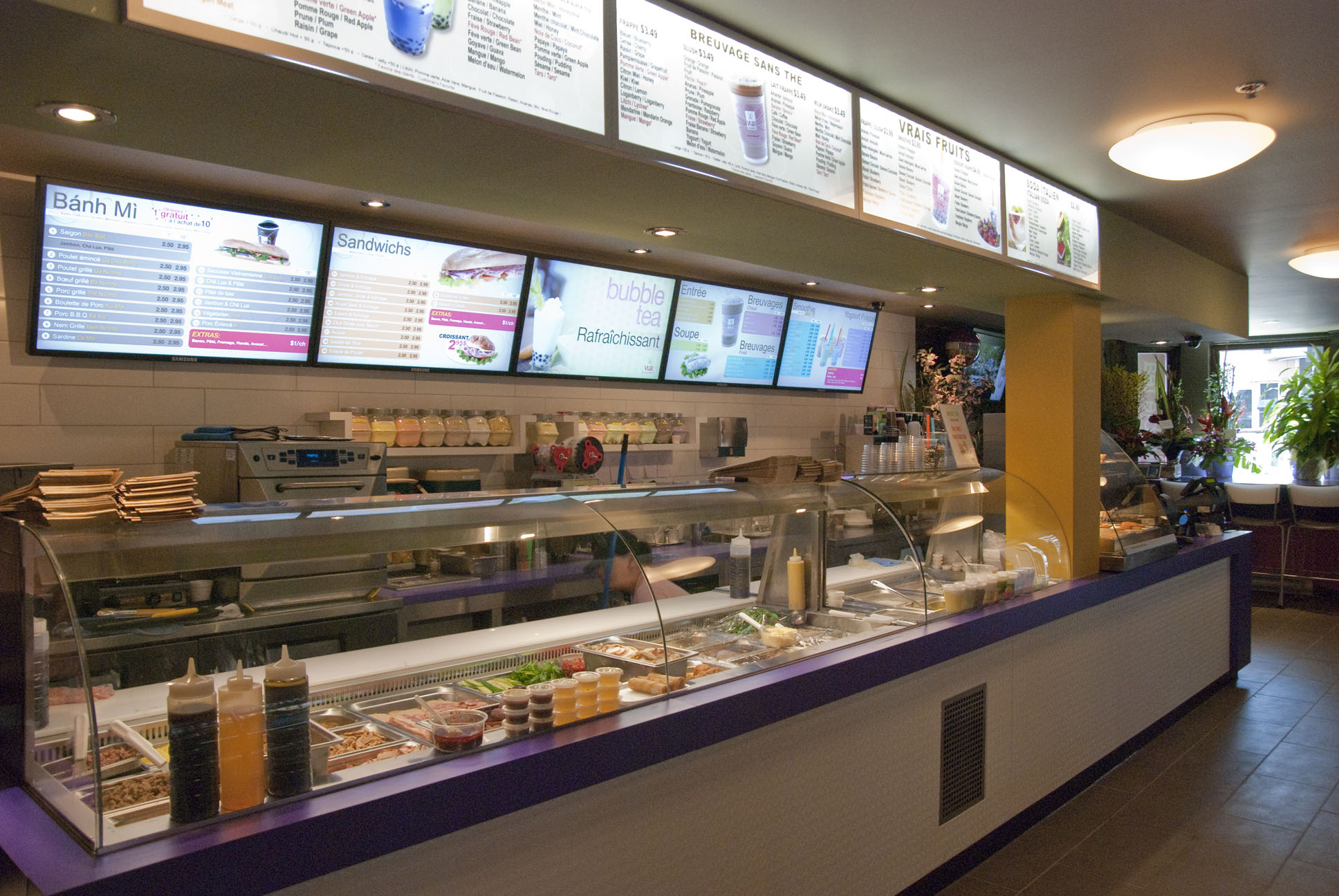
Located at 2020 Boulevard Robert-Bourassa, Vua Sandwiches—a Vietnamese restaurant only a couple block from campus—is an excellent option for students on-the-go. They specialize in Bánh Mì, which are sandwiches filled with a selection of meats, such as minced chicken and fermented pork, as well as tofu and vegetables, and come with the standard fillings of carrot, radish, coriander, and jalapenos. The bread is fluffy on the inside and crunchy on the outside—the pickled daikon, radishes, and carrots are both sweet and tart. When coupled with any of the various meat choices, the resulting flavour and texture profile is delicious. Although it is primarily known for its wide selection of Bánh Mì, Vua also has 13 non-Vietnamese sandwich variations on its menu such as shish taouk and roast beef. Seven-inch sandwiches go for $3.75 while the 10 inch version is $4.25, which goes up to $4.89 with tax. Vua is filling, delicious, and extremely affordable—students can grab their food quickly and be satisfied for the rest of the day.
While upper-year students don’t generally think to return to McGill residence cafeterias after finishing their year in residence, Meatless Mondays at Royal Victoria College Cafeteria (RVC) may in fact lure students back to this familiar dining spot. Meatless Mondays provide a $5 meal that features anything from the hot steam counter. This often means options like macaroni and cheese, beet tacos, vegetarian casserole—all served with two sides, including steamed veggies, rice, and potatoes. If you don’t have time to wait among the hordes of people lined up, you can always head to the sandwich counter and get a meatless panini for $5 as well. For those with roll-over money on their student cards, Meatless Mondays are the perfect way to use up remaining meal plan dollars; it’s also a healthy and inexpensive option for students thinking of topping up.
Pizza Navona is an off-campus establishment, but since it’s location on Rue Sherbrooke is almost across from the Roddick gates, it might as well be considered on-campus. Known by most students for their pizza’s sesame seed crust, Navona offers a deal that includes two slices of cheese pizza and a drink for $4.34 without tax. Aside from being convenient for a quick meal, Navona is also a strong supporter of many McGill-run student initiatives like Right to Play, the McGill Ultimate Team, and the Arts Undergraduate Society, so you can be sure you’re giving your money to a company that will use it to give back to you and the McGill community in some way.
Tucked away in the basement of the Cartier Building at the corner of rue Peel and Rue Sherbrooke, this depanneur sells more than just beer and snacks. Super Sandwich features a variety of both vegetarian and deli meat sandwiches—from ham and cheese, to tuna, to crab meat—all for under $5. The sandwiches are made with fresh, warmly-toasted bread, which is delivered to the store each morning. Due to their simplicity—with only the essential toppings like tomato, lettuce, mustard and mayo, the sandwiches are made in under 15 seconds. Super Sandwich is therefore a great spot for a quick grab-and-go meal in between classes.
Midnight Kitchen is one of McGill’s best food resources for students. It runs Monday through Friday at 12:30 p.m. in the SSMU Building, either on the third floor in room 302, or upstairs in the fourth floor Clubs Lounge. The Midnight Kitchen Food Collective serves vegan meals on a pay-what-you-can basis. Their meals typically include a serving of vegetables, rice, and some sort of dessert. The organization also works to be environmentally sustainable by asking students to bring their own tupperware containers/plates, as well as utensils for the daily lunch service. Midnight Kitchen is an ideal option for students looking for an inexpensive meal on campus that is both healthy, and environmentally responsible.
 Boundless: McGill Tribune Special Issue
November 30, 2016
The Sport Authority EP. 7: Looking back at Sam Hinkie and The Process
April 12, 2016
Rare books: The hard spine of the modern library
April 5, 2016
Boundless: McGill Tribune Special Issue
November 30, 2016
The Sport Authority EP. 7: Looking back at Sam Hinkie and The Process
April 12, 2016
Rare books: The hard spine of the modern library
April 5, 2016
At its core, the Trans Pacific Partnership (TPP) is a trade deal between Canada and 11 other Pacific rim nations that seems to be incensing Canadian dairy farmers and car makers by increasing imports in these sectors. But the TPP contains a myriad of new copyright protection that will make the lives of Canadians much more difficult. It is surprising, then, that these aspects of the deal have been overshadowed by those talking about the dairy and automotive industries. Some of this rooted in the secret nature of the negotiations—especially during the recent Canadian federal campaign; but such obscurity should not be replicated in the public discourse. The government line need not determine the public’s priorities. Now that more information regarding the TPP’s changes to copyright law has been leaked, it needs to be discussed.
The majority of the media’s focus on the deal has been on the potential effects that it could have on these two industries; however, outside of those Canadians who are directly employed in the dairy and automotive industries, the effect will be dispersed. Cheese might be a bit cheaper at Provigo, and you might see a few more Japanese cars driving down Rue Sherbrooke.
The potential changes that the TPP will have on copyright law, however, could affect everyone in Canada who has a website, uses the internet, or maybe illegally downloads an episode of Last Week Tonight. First, the deal has the potential to alter the current ‘notice-and-notice’ system that Internet service providers (ISPs – i.e. Videotron, Bell, etc.) are required to use when copyright complaint is lodged to a ‘notice-and-takedown’ system.
With the notice-and-notice system, ISPs are required to let a website know if it has received a complaint. Only when copyright holders convince a court of law of the violation can they have the content in question removed from the website. Alternatively, a notice-and-takedown system will block or remove content from a Canadian website as soon as a complaint is made. A notice-and-takedown is a significant step backwards. Not only does it increase the amount of content blocked by ISPs, but eliminating the judicial process reduces the ability to discern whether the content was even copyrighted in the first place.
The deal could also create civil or criminal penalties for Canadians who transfer content they already own from one device to another, or for simply uploading or reposting professional sports highlights—is that gif of Batista’s bat flip really worth jail time? Under this system, authorities would be able to seize and destroy devices used for copyright infringement.
Don’t start hiding your laptop under the floorboards yet though. Even if Canada adopts these strict regulations, it doesn’t mean that they will be actively enforced.
Some changes could have more easily enforceable effects. The TPP will extend the terms of copyright from the life of the author and 50 years thereafter, to life of the author plus 70 years. This could easily cost the country over $100 million a year in lost public domain content. The extension of copyright will negatively impact individuals who desire access to large amounts of created content. Take a university library as an example. Library costs could easily increase as a result of copyright extensions, as content previously in the public domain will now have to be paid for. As usual with any increase in operating costs, universities will most likely pass these on in the form of increased student fees.
Most students currently perceive the TPP as being about cows and cars and as such, don’t really see it as having a big impact on their lives. But beyond these highly publicized aspects of the trade deal, the TPP could have profound effects on how Canadians can use the Internet and easily access created content. Despite this, most of the discussion of the deal has been centred around its affect on a relatively small group of Canadians. People cannot express their opinions about things they are not aware of, which is why the discussion needs to shift from cows and cars to copyright.

 Boundless: McGill Tribune Special Issue
November 30, 2016
The Sport Authority EP. 7: Looking back at Sam Hinkie and The Process
April 12, 2016
Rare books: The hard spine of the modern library
April 5, 2016
Boundless: McGill Tribune Special Issue
November 30, 2016
The Sport Authority EP. 7: Looking back at Sam Hinkie and The Process
April 12, 2016
Rare books: The hard spine of the modern library
April 5, 2016
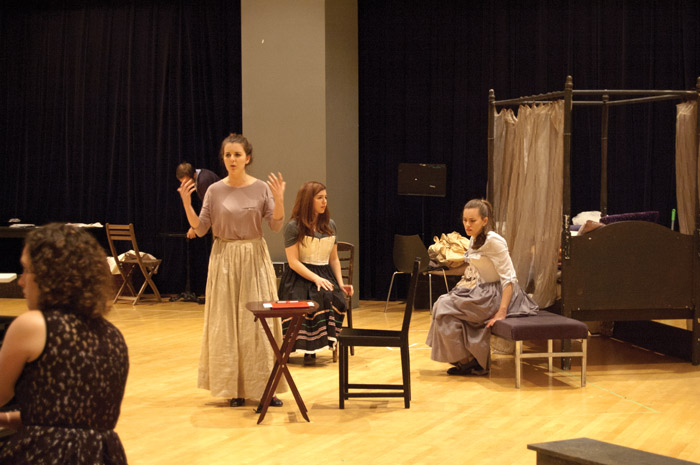
Little Women, Opera McGill’s first production of the season, is based on the beloved novel by Louisa May Alcott, as well as the opera written and composed by Mark Adamo in 1998. Set in Massachusetts in the 1860s, Little Women is brought to the stage in a way that celebrates the classic and revives it for a modern audience, bringing to stage the nature of family ties and the cycle of life.
The opera takes audience members on a journey through the lives of the four March sisters, Meg (Simone McIntosh), Jo (Kaylee Gallagher), Beth (Chelsea Rus), and Amy (Lauren Woods), moving across happy and sad times in their life as seen through the eyes of Jo. Jo alternates between the life she could have had, and the life she ultimately chose to lead, constantly yearning to bring back the times when the family was all together.
The set captures the March family home, and the costumes are reflective of the time period. The show opens with Jo writing, while Amy works on a painting; these acts are reflective of each sister’s respective hobby, and what they ultimately do in life.
The opera revolves around the blossoming of Jo and Laurie’s (Torrence Grick) friendship throughout the years, ultimately telling a story about Jo’s coming of age. Jo takes the audience back in time with Laurie’s arrival as their new neighbor. Laurie becomes friends quickly with the March sisters, and as they grow up, Laurie falls in love with Jo and hopes for more than just friendship; however, his longing for Jo blinds him from the affection he receives from other people. Gricks captures Laurie’s devotion to Jo extremely well, however, it would have added more to his overall performance had Gricks further developed Laurie’s strength of character, not just his role as Jo’s love interest.
The talented cast of Little Women features Bruno Roy, one of eight finalists from across Canada who will compete in the final round of the Canadian Opera Company (COC), as Brooke—Laurie’s tutor and Meg’s husband. Gallagher gives a stellar performance, playing Jo—the most ambitious of the four sisters—with ease, giving a voice to both the trials and successes of herself and her sisters. McIntosh provides a contrast to Jo’s independent character and personifies Meg’s conflicting responsibilities towards her family and the man she loves in a standout aria “Things Change, Jo.” Rus portrays Beth angelically. Though her character is the most withdrawn of the March sisters, she serves as a strong figure through her devotion to her family. This can be felt in her aria sung on her deathbed, “Have Peace Jo.” At this moment, the audience is given a glimpse into Beth’s character, which Rus personifies well. Woods portrays Amy as the childlike, at times frivolous, youngest March sister, adding comic relief to some of the more serious scenes.
During the rising action of the production, Meg falls in love with Brooke and the March family dynamic dramatically shifts. Jo is caught in between her happiness for her sister and her own sadness that life will not ever be the same again if her sister leaves the family for her husband. Jo realizes her fears are unwarranted, and ultimately comes to terms with the idea that, although life is full of changes, the family bond will always stay the same. The opera is tied together and comes to a riveting ending with its final aria, “Let Me Look At You,” sung by Gallagher, McIntosh, Rus, and Woods, where the four sisters—although no longer all together—reflect on their childhood memories in recognition and celebration of the past and future. In this manner, the opera closes reflecting on the sisters’ gratitude for one another, and how each has matured over the years.
Little Women ultimately focuses on Jo’s memory of the past, and its role in the future—bringing to light how although the past often is reminiscent of fond memories, it is impossible to turn back the clock.
Little Women is showing November 6 to 7 at 7 P.M. and November 8 at 2 P.M. at Pollack Hall, at the Schulich School of Music (555 Rue Sherbrooke). Student tickets cost $17, and general admission costs $28.
 Boundless: McGill Tribune Special Issue
November 30, 2016
The Sport Authority EP. 7: Looking back at Sam Hinkie and The Process
April 12, 2016
Rare books: The hard spine of the modern library
April 5, 2016
Boundless: McGill Tribune Special Issue
November 30, 2016
The Sport Authority EP. 7: Looking back at Sam Hinkie and The Process
April 12, 2016
Rare books: The hard spine of the modern library
April 5, 2016
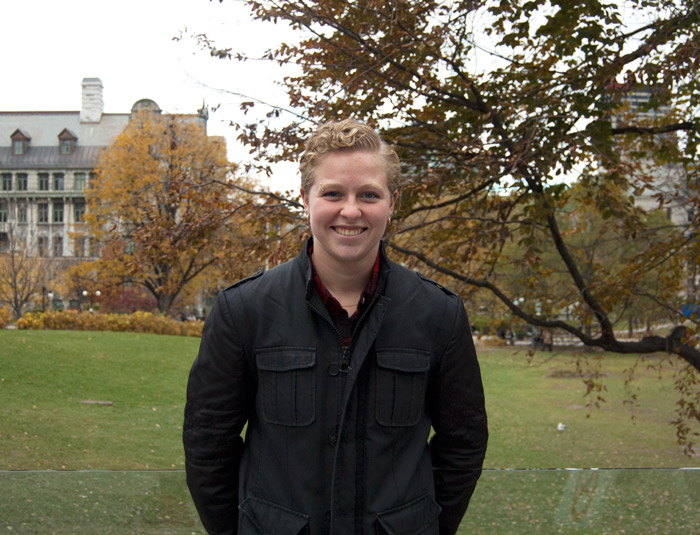
Current students should focus their energy on climate change because it is the defining issue of our generation. It threatens the livelihood and existence of the human species; scientists argue a temperature increase of more than two degrees celsius will have an unpredictable and destructive impact on ecosystems, food sources, and cities across the globe. The environment also greatly affects humankind’s social existence in matters of health, equity, and economic decision-making. As demonstrated by key moments of historical social activism, students are well-placed to protest in protection of the environment.
Similar to U.K. students in the 80s protesting descriptions of the South African National Congress (ANC) and Nelson Mandela as terrorists by prominent members of the British Conservative Party, students’ college-bred critical thinking can wrest the climate narrative away from those who deny climate change. Divestment movements have not yet had success in Canada in the form of a complete divestment, but have had a significant impact on the discourse surrounding climate change. They have led protests against investment in oil and gas companies and started petitions against people who refute scientific reasoning with arguments that climate change models are imprecise and hence invalid. While such methods have yet to reach a boiling point in terms of concrete change, they serve as the impetus for greater discussion on the role of institutions in perpetuating systems of oppression; in this case, a system of environmental degradation.
Unlike business professionals or politicians, students usually don’t have jobs that would encourage them to support environmentally irresponsible enterprises. Students had more leeway to lobby the British Conservative Party in the 80s to economically boycott apartheid South Africa despite the government’s resistance to doing so; then Prime Minister Margaret Thatcher opposed a full economic embargo on the grounds that they hurt British interests as well as poor South African blacks while favouring ‘constructive engagement’ in countering apartheid. It cannot be forgotten that Thatcher had a husband with deep business ties to South Africa and was staunchly committed to economic liberalism. Thatcher’s policy promoted capitalism over human rights, even if the end goal was dismantling apartheid. Think tanks, like the Cato Institute, arguably behave the same in terms of climate change. Students are not as susceptible to similar moral compromise due to their ties, and so they can vigorously protest countries and companies that fail to live up to climate standards.
Students are in a unique position to think critically about technology and human progress as the sole means of combatting climate change. Yes, as Bill Gates argues, a strong culture of innovation will help mitigate the effects of rising sea levels and find alternative energy sources. Students, however, cannot allow a ‘we’ll figure it out eventually’ attitude to undermine the drive to find new ways of taking responsibility and protecting the environment.
With their incredible scope to be thoughtful and proactive in responding to climate change, students can pressure governments to follow their lead. Students are exposed to new ideas daily through classes, social media engagement, and talking to other people; anyone taking McGill’s Philosophy of Environment class, for example, will learn that the Whanganui Iwi River in New Zealand was granted legal personhood (similar to a corporation’s rights) in 2012 in order to protect the ecosystem. Knowing that there is a precedent of ‘nature rights’ can help students bring forth creative solutions to governments and hold legislation to a higher standard. This is necessary considering that the United Nations recently stated that the climate change plans of 146 countries were insufficient.
Students are equipped to grapple with the complexities of climate change and protest them in a unique manner. Historically, students have been successful agents of change through protesting and clamoring for changes in the status quo. With the future at stake, now is the time to speak up.
 Boundless: McGill Tribune Special Issue
November 30, 2016
The Sport Authority EP. 7: Looking back at Sam Hinkie and The Process
April 12, 2016
Rare books: The hard spine of the modern library
April 5, 2016
Boundless: McGill Tribune Special Issue
November 30, 2016
The Sport Authority EP. 7: Looking back at Sam Hinkie and The Process
April 12, 2016
Rare books: The hard spine of the modern library
April 5, 2016
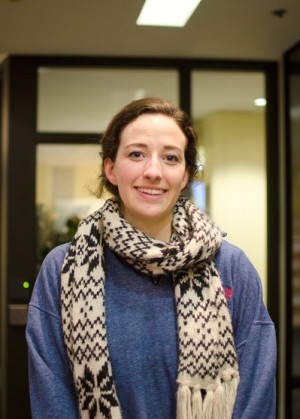
Sarah Dubois is the type of person who is at ease in any setting—at one moment, she’ll be talking seriously about her passion for environmental sustainability; the next, she’ll put on a Quebecois accent and tell a funny story about a teammate at practice. Dubois sees life as a balance between responsibility and having fun.
“I do my laundry because I’m an adult,” she laughed. “But I still have Doctor Who on in the background.”
This philosophy transitions onto the soccer pitch. Dubois came to McGill after goalkeeping for Team Alberta, turning down several other elite North American university soccer programs. She has always aimed to balance her academics and athletics, and hopes to become an environmental lawyer after finishing her degree.
Dubois’ love for soccer, however, would be tested in her sophomore season.
“Second year I came into training camp with a weak back,” she explained. “And at one of our pre-season tournaments I went up for a ball, and lost all feeling in my one leg and had shooting pains down my other leg.”
She was told she might never walk, let alone run, again. Threatened with permanent paralysis, Dubois was told to stop physical activity and spent the autumn in hospitals instead of on the soccer field.
“I had bone scans, X-rays, MRIs, blood tests, was tested for degenerative diseases, I saw a rheumatologist—which is a doctor for arthritis—I was getting tested for possibly cancer,” Dubois said without a hint of negativity. “Nobody could tell me exactly what was wrong.”
Dubois’ desire to rejoin her Martlet soccer family, however, proved greater than her physical limitations.
“I would have had a spot with the team in a managerial role or as their no.1 fan,” Dubois said.
Playing, however, was always the goal. She started rehab and underwent a difficult therapy program. Dubois is quick to give others credit for supporting her through her recovery.
“My team was there all the time when all I was feeling was loneliness and pain, and I was going to all the practices even when I couldn’t play,” she said. “Our team physio helped me through everything, whether it was hot water baths or even just muscle-stimulation to help me get through my classes.”
Ultimately, doctors found no conclusive diagnosis for Dubois’ pain and muscle atrophy, and she was eventually cleared to be on the field and help train the other keepers. By the indoor soccer season, which occures in the winter, she was allowed to practice and play.
After persisting through several medical procedures over the summer, Dubois finally went full tilt for the first time post-injury at the Martlets’ August training camp. She’s recovered so well that she has even started a few games as goalie this season—a privilege she doesn’t take for granted.
“It was one of the best feelings,” she said. “Knowing I might have never played again, I’m so much more thankful whenever I’m on the field.”
This year, her goal is for the Martlets to make the CIS National Championships. Dubois is confident that if the team pulls together, with their strong players, young talent, and drive from coaches, they will succeed.
Dubois recently spent time off the pitch after taking a hard hit, but she’s been cleared to play this week if she can work through the pain. She can’t help but grin—of course Dubois can handle a bit of pain to play the game she loves.
As she says, competing post-injury is “like being alive.”
McGill Tribune (MT): What was the last book you read?
Sarah Dubois (SD): The Kite Runner. It was pretty emotional. Not my typical type of book.
MT: Pizza or poutine?
SD: Pizza.
MT:What is a song that always makes you dance?
SD: Oh. Jeez. “I Can’t Dance” by Genesis.
MT: Who was the last person who texted you?
SD: You (laughs). But before that, my mom.
MT: Who is your favourite superhero?
SD: I’ve got to go with probably Superman.
MT: Is there any reason why?
SD: Because he stands for hope. Don’t write that (laughs).
 Boundless: McGill Tribune Special Issue
November 30, 2016
The Sport Authority EP. 7: Looking back at Sam Hinkie and The Process
April 12, 2016
Rare books: The hard spine of the modern library
April 5, 2016
Boundless: McGill Tribune Special Issue
November 30, 2016
The Sport Authority EP. 7: Looking back at Sam Hinkie and The Process
April 12, 2016
Rare books: The hard spine of the modern library
April 5, 2016
Katie Duff, U3 Electrical Engineering, is using her passion for her field of study to further cancer research and create new modes of early detection for aggressive forms of cancer.
Duff began her journey in the Faculty of Science, but after changing programs five times, she finally landed in the Department of Electrical Engineering, with a minor in software engineering. Duff switched to engineering in order to focus less on theory and more on solving problems, like operating with budgetary and material constraints, and work on tangible projects with finished products.
Although she took part in interesting projects in her classes, including building robots and AM radios, Duff’s favourite project is the one she has been working on outside of class since the beginning of last summer. Duff is assisting Milica Popovich, Associate Professor of Electrical and Computer Engineering, in designing a bra that uses low-energy microwave radiation to detect breast cancer tumours. X-ray mammography has ionizing radiation and can actually cause breast-cancer if used too often. For this reason, it is only safe to use once or twice a year—which can be a problem for aggressive forms of cancer that can go from Stage I to Stage III in as little as six months. Low-energy radiation, however, is safe to use more frequently, and can help prevent the spread of aggressive cancers through earlier detection.
Duff first heard about the project at a banquet for the International Association of Electrical Engineers (IEEE), which she had been asked to co-host. She was keen to pursue the project because it utilizes both aspects of her degree: Signal processing, which involves electrical engineering, and computer programming, which requires knowledge in software engineering. She also cites recent family events, which convinced her this was an especially important project.
“My aunt recently had breast cancer and the problem [was] that it developed super quickly between her two mammogram scans—and that’s the exact situation that [this project] is trying to deal with,” Duff said. “If you detect [the cancer in] its first stage, there’s a 99 per cent survival rate. But when you get to the third stage, it drops down to [around] 24 per cent.”
Although Duff wasn’t initially eligible to assist with this research as she lacked the prerequisite courses, her passion for the project drove her to seek out Popovich and convince her to take her on.
“I emailed [Popovich] and was like, ‘I know that I’m not eligible at all but meet with me anyway,’” Duff said. “I [told her] ‘I will learn anything, I’m a hard worker, [and] I really care about [the project]. You will not regret this.’”
The bra has just recently been approved by the ethics board, and will hold clinical trials throughout November, which Duff will continue to be a part of. This will allow her to work with doctors and patients, and practice communicating the details of her project in a clear and accessible manner. Duff already possesses plenty of communication skills experience conveying information thanks to her position as manager and math tutor for the Peer Tutoring Service in the Faculty of Engineering. She enjoys the opportunity to help younger students stay positive and feel confident in their abilities.
“I think there’s a lot of pressure in engineering […] that you’re supposed to just ‘get it’ [and people think] ‘If I can’t just get it, I shouldn’t be here,’” Duff explained. “[I like] having people say ‘I get it,’ or have people email me and be like ‘You’re the reason I passed this class.’ I think that’s the most rewarding thing—to have someone [say], ‘You know what, I’m not bad at this; I can do this.’”
Duff strives to maintain a well-rounded university experience that is not confined to academic study. She is a choir singer, a former athlete on the McGill Nordic Ski Team, and a member of a mentorship group for students called Promoting Opportunities for Women in Engineering (POW) McGill. She is passionate about increasing female representation in engineering—a field whose ‘boys club’ image can be intimidating.
“The biggest thing is that [often] girls who go into engineering are girls who excel—[they] know that they can be good at it because [they] had to be really good at it in high school,” Duff explained. “But there are guys […] who are not top students—they’re doing fine, well enough to get into the program but they by no means feel they are the best or the most brilliant—and still [think] they can do [it]. My vision for […] girls in engineering is to meet a girl who’s doing badly in engineering, and to have her not feel like she should drop out.”
Duff hopes to increase female visibility by being a role model and support system for other female engineers. With one year left to go in completing her degree, she is looking forward to spending it immersing herself in the music, sports, clubs, and academics that she thoroughly enjoys within McGill and Montreal alike, and is excited about the prospects for future research opportunities that her degree will lead to.
 Boundless: McGill Tribune Special Issue
November 30, 2016
The Sport Authority EP. 7: Looking back at Sam Hinkie and The Process
April 12, 2016
Rare books: The hard spine of the modern library
April 5, 2016
Boundless: McGill Tribune Special Issue
November 30, 2016
The Sport Authority EP. 7: Looking back at Sam Hinkie and The Process
April 12, 2016
Rare books: The hard spine of the modern library
April 5, 2016
TAME, a new exhibition showcasing dance by choreographer Lara Kramer immerses its audience in a world of dreamy experimentation through unconventional movement.
The set of TAME was reminiscent of a first apartment, stuffed with the gleeful accumulation of garish, yet cohesive ‘70s and ‘80s ephemera. Crowded with clothing and magazines, the stage of TAME felt familiar—like an exaggerated version of an adolescent bedroom. According to the choreographer, the vintage set was developed over a course of two years; as the piece came together, so did the set’s theme. Most contemporary dance pieces are minimal in their costuming and stage design; presumably not to distract from the dancers’ movements, however, the busy set of TAME didn’t draw away from the dancer’s performance at all—in fact, it was much more engaging and cohesive with the concept behind the piece.
In this informal environment, the three dancers experimented with concepts of physical, mental, and personal space. This aforementioned space was created and manipulated through interaction and movement between props and bodies, often in bizarre or comical ways. Kramer excellently utilized props such as rope, marshmallows, popcorn, and paper towels to raise questions about the space within humans and the space that they occupy on a daily basis.
An eerie silence was interrupted by the soft sound, akin to the crackling of paper, as one dancer sat in a wheelchair covered in medical paper, before the loud music and screaming was reduced once again to silence. One of the best moments of the piece was when a wild dance party deteriorated into a screaming tantrum, which eventually subsided to reveal an orchestral cover of “Hotel California” playing softly from an onstage stereo.
However, the set wasn’t the only theatrical element of the piece. The three dancers developed their characters distinctly through small solo sections that utilized different props. There were sections with interaction between the dancers, but often, the three performers separately experimented the space around them. But whilst the theatrical elements were organic and the dialogue between the characters dramatic, it ultimately felt out of place with the rest if the piece. The final product contained dialogue between the dancers, but it was mostly background noise—softly spoken and improvised.
The beginning of the piece was hardly recognizable as a dance production, and instead felt more like the opening scene of a play, whilst the dancers’ movements were subtle yet affected. The simple act of walking across a room, feeling one’s feet on the floor, or turning the pages of a magazine were elegant and careful—a reminder that every movement can be a part of a larger dance routine.
The nature of the choreography as well as the props provided room for improvisation. Instead of a strict choreography where the audience could often anticipate dancers’ next movements, like in music, this choreography was constantly surprising and changing, which made the show all the more engaging and comedic. Spontaneous moments such as a glass full of juice spilling onto the floor made the scene feel more immersive and real.
At some points, the sexual nature of the piece wasn’t explicitly obvious. The characters in the show are all presented as sexual beings in an entirely natural way. For example, the causal femininity of their costumes—one wore a crop top and tights, another shuffled around in slippers, underwear, and a quintessential ‘80s windbreaker—revealed the natural, languid, and comfortable femininity that many women wear while not in the male gaze. Other moments were more obvious, such as when one dancer used a rope hanging from the ceiling in an amateur quasi-pole dance, or when another pretended to be a male masturbating to the TV.
TAME was exciting in the way characterization and media such as props and music were used to discover different experiences of individuals and the space they inhabit. Subtle movements and sounds were juxtaposed with dazzling and bizarre displays of energy to create an enchanting and provocative experience.
 Boundless: McGill Tribune Special Issue
November 30, 2016
The Sport Authority EP. 7: Looking back at Sam Hinkie and The Process
April 12, 2016
Rare books: The hard spine of the modern library
April 5, 2016
Boundless: McGill Tribune Special Issue
November 30, 2016
The Sport Authority EP. 7: Looking back at Sam Hinkie and The Process
April 12, 2016
Rare books: The hard spine of the modern library
April 5, 2016
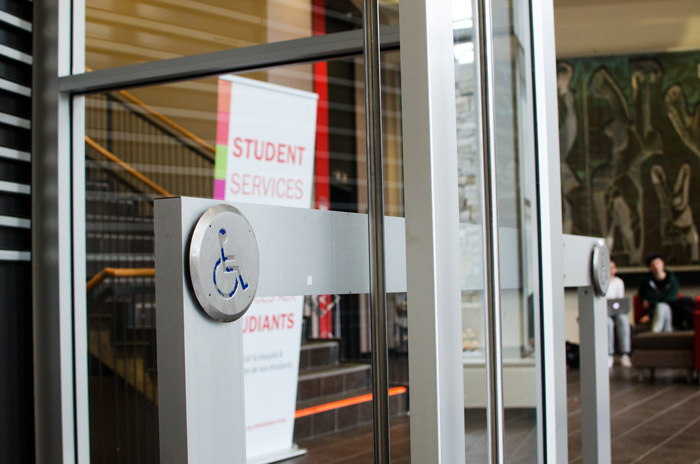
McGill is seeking to incorporate universal design—an approach towards the establishment of an environment that adapts to everyone’s needs—to the physical layout of its buildings and accessibility of the university as a whole. The thinking behind universal design is that disabling situations within people’s environments are what affect individuals with impairments; disability stems thus from the environment, attitudes, and systems, instead of from the individual. It is this approach that is guiding the administration in adapting the design of McGill’s Downtown and Macdonald Campuses to create an accessible environment for all students.
Due to the age and layout of many McGill buildings, the promotion of physical accessibility is challenging; however, under Article 15 of McGill’s University Policy Concerning the Rights of Students with Disabilities, there is an ongoing effort to remove all architectural barriers that limit students with disabilities from full participation in university life.
The Office for Students with Disabilities (OSD) provides a collection of campus access guides, which are downloadable as PDFs, and detail the accessibility of all buildings through maps that highlight wheelchair accessible entrances, elevators, wheelchair accessible washrooms, and accessible parking.
The campus access guides also list drop-off locations for Paratransit, Montreal’s adapted public transport system. In addition, McGill campus has its own adapted mobility bus, which is a free service available to all individuals with impairments and injuries that compromise mobility.
The adoption of universal design at McGill applies to more than physical barriers, and includes the modification services such as OSD’s note-taking service to make it more accessible to all McGill students.
“We have dozens and dozens of diagnoses, whether they be physical or related to mental health—so it becomes literally impossible for disabilities service providers to be targeting specific knowledge to specific situations,” said Frederic Fovet, the former director of the OSD, in a video interview about universal design.
It is therefore far more sustainable to provide these services to all McGill students who request them. The universalization of services and buildings on campus stands to benefit all students and move McGill towards a more sustainable system of promoting accessibility.
There is still much work to be done, however, in making the campus accessible to all students. Specifically, there is room for improvement with regards to student housing at McGill and the creation of more wheelchair-accessible dorms. Student Housing and Hospitality Services (SHHS) and OSD have collaborated to make more equitable and accessible spaces in residence. They have created the Accessibility Hub, a centralized resource on accessibility and housing at McGill, for this purpose. SSHS and OSD have also compiled a residence comparison chart, which allows students to view which residences include universally accessible rooms.
While there is still much work to be done, McGill’s adoption of the Standards for Barrier-Free Campus, a list of goals to remove access barriers, means that the university is working towards eliminating disabling situations on campus. The standards include efforts such as adopting universal design for all building entrances so that people with disabilities may enter and exit through the same places as the general university population. Other initiatives include: Providing barrier-free washrooms at the main entrance level of every McGill building when feasible, creating spaces for wheelchairs in auditoriums, theatres, lecture halls, and classrooms, and providing at least one exterior accessible parking space outside of every major building complex.
The promotion of equity and the removal of access barriers on campus, in terms of architecture, availability, and visibility, will gradually allow for more people to have access to a McGill education and reap all of its benefits
This article was corrected on Nov. 4, 2015. The Tribune regrets these errors.
 Boundless: McGill Tribune Special Issue
November 30, 2016
The Sport Authority EP. 7: Looking back at Sam Hinkie and The Process
April 12, 2016
Rare books: The hard spine of the modern library
April 5, 2016
Boundless: McGill Tribune Special Issue
November 30, 2016
The Sport Authority EP. 7: Looking back at Sam Hinkie and The Process
April 12, 2016
Rare books: The hard spine of the modern library
April 5, 2016
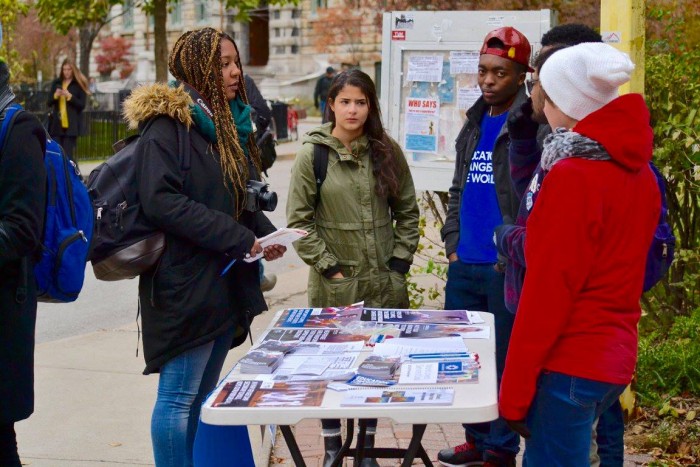
A campus event which intended to raise awareness for Canada’s Student Refugee Program (SRP) erupted into controversy this past week after the Facebook page for the event was titled “Mock refugee camp at the Y-Intersection.”
The McGill chapter of the World University Service of Canada (WUSC) sought to construct a “refugee tent” at the Y-Intersection on Oct. 27. According to event organizer Daniel Kent, the construction of the tent was intended as a symbol of the refugee experience that would increase awareness of the SRP on campus. “When we try to raise awareness about [refugee] issues, we try to talk about [the SRP],” Kent said. “We’ve been having a lot of events, but at [our last event, only] around six people showed up.”
The SRP’s mock refugee tent sparked public backlash, however, and a heated online argument almost immediately ensued on the event’s Facebook page. In a response to heavy criticism, the name of the event’s organizers changed its name from “Mock Refugee Camp” to “Info Station.”
Anne-Sophie Tzeunot, U3 Political Science and vice-president (VP) of the McGill African Students Association (MASS), explained why she was concerned by the event’s use of a mock tent.
“We think that having a refugee camp would not look authentic,” Tzeunot said. “Any kind of visual embodiment would not look respectful. We don’t think a simple tent can represent [the experiences of refugees].”
According to Kent, however, who arrived to McGill in 2011 from Kenya with the assistance of the SRP, the refugee experience is familiar to many of the WUSC event’s organizers. Kent hoped the event would allow him to share his own experiences as a refugee.
“Our SRP committee has eight refugee students and six who are active day to day,” Kent said. “[I thought] if I was able to show how I lived in a refugee camp, if I was able to recreate how I ate, slept, studied, and lived, people would be interested and would want to hear my story.”
MASS in turn acknowledged that many of the event’s organizers had past experiences as refugees, but still objected to the construction of a refugee tent.
“We’re not undermining the experience of the refugees themselves […], we just don’t think that the experience of a refugee can be reduced to a tent,” Tzeuton said. “There’s so many experiences and perspectives.”
WUSC released a statement on the event’s Facebook page, emphasizing a misunderstanding and misrepresentation of the event.
“The event’s original description and title were poorly worded, and many well-meaning community members misinterpreted them as implying that we were attempting to romanticize or simulate what it means to be a refugee,” the statement read. “This was far from our intention, and we apologize for the distress we may have caused any member of the McGill community through the description of our event.”
The Students’ Society of McGill University (SSMU) VP (Clubs and Services) Kimber Bialik acknowledged that the situation is complex.
“This is difficult for both parties involved because there are students on both sides [of the argument] who were refugees, or have close family and friends who were refugees,” she said.
The controversy was first brought to Bialik’s attention after complaints and a petition—started by student activists—began to circulate over Facebook, demanding that WUSC organizers refrain from using tents or other objects to erect a “mock refugee camp.” The petition has since been removed. Bialik referred the matter to the VP University Affairs, Chloe Rourke, and SSMU equity commissioners.
“Our equity commissioners try to be proactive and ensure that all students are comfortable with what happens on campus,” Bialik said. “The Equity Commission and the VP University Affairs helped WUSC write the statement that appeared on [the event’s Facebook page].”
Kent noted, however, that one such Equity Commissioner, Marilyn Verghis, also serves as VP Education on MASS’s executive board, a potential conflict of interest.
“[Verghis] made [her role in MASS] clear. She just told us that she had to put on a ‘MASS hat’ when she had to talk as an exec of MASS and that she would put on an ‘equity commissioner’s hat’ when she had to talk about that,” Kent said. “[Verghis], as the equity commissioner, told us the best thing would be to get rid of the tents.”
According to Rourke, Verghis’ involvement in both MASS and as an equity commissioner allowed her input to be even more valuable.
“I disclosed in my initial email that Marilyn was involved with MASS as an executive, and suggested that her perspective would be valuable in understanding the different views held by the student body on this matter,” she said. “WUSC agreed and myself, Marilyn, and four members of WUSC met to discuss the sequence of events that occurred over social media including the open letter.”
Rourke also noted that the decision for WUSC to release a public statement addressing the issues that had arisen amongst the McGill community.
“I believe the meeting helped to clear up a number of misconceptions on both sides, and it was agreed a public statement should be released on behalf of WUSC to address the community’s concerns,” Rourke said. “The event was always meant to provide a platform for individual members of WUSC to share their experiences and not meant to represent the diverse experiences of millions of refugees and displaced people [….] I believe a large amount of this conflict was spurred by miscommunication and a misinterpretation of WUSC McGill’s intentions and the actions they took in response to concerns.”
Without the presence of a tent, the event ultimately went ahead on Wednesday. Kent deemed it a success that allowed students to gain a better understanding of WUSC.
“I think that a lot of people got their misconceptions [of WUSC] cleared when they visited us,” Kent said. “A lot of people reached out saying that they had signed the petition, but didn’t really understand what was going on.”
Dean of Students André Costopoulos discussed the beneficial outcomes of the event.
“I think that it was a positive event and it went well,” Costopoulos said. “It was interesting to me that we had students who were refugees who wanted to tell their story.”
Costopoulos went on to praise those involved in the planning of the event for their attempts at resolving the dispute.
“[The organizers] were respectful of viewpoints that were expressed to them,” Costopoulos said. “Universities are about discussion, they’re about negotiations and expressing opinions—and we accomplished that.”
Going forward, Kent expressed his desire for good relations amongst everyone involved.
“I don’t think that there was any conflict,” he said. “We think that it was a misunderstanding and tried to clear things up. It was unfortunate that [MASS] released a statement without consulting us. We have many members who are also members of MASS. I’m hoping they will come together and work with us.”
Tzeuton struck a similar chord, also acknowledging the success of WUSC’s event.
“We think that WUSC did an amazing job,” Tzeuton said. “We don’t want an environment of conflict. There are WUSC members who are MASS members. MASS also has events upcoming to benefit refugees.”
The SRP, a nationwide initiative first introduced to McGill in 1986, and funded with a $0.50 student fee each semester, supports two international refugee students studying at the university each year. Though the fees are collected by the university, much of the administrative work is handled by WUSC’s volunteer SRP committee, which also helps those selected by the program with immigration paperwork in securing a spot in residence, and coordinating travel. Four refugee students will be accepted this year, as part of McGill’s response to the crisis in Syria.
Costopoulos also mentioned financial challenges currently facing the SRP program.
“It’s an expensive program, and they’re going to have to do something a little different [in the future],” Costopoulos said.
It was originally intended that the current fee, levied in 1986, would be adjusted for inflation over time. This has never been done, and 30 years later, it is proving insufficient to fund the SRP.
“One of the ideas that they’re considering is raising the fee,” explained Costopoulos.
Bialik explained that whether or not to raise the fee, and how to do so if deemed necessary, was currently being considered by McGill’s fee advisory committee.
“[The SRP fee] isn’t actually a student fee,” she said. “The money doesn’t go to WUSC, but to McGill, and WUSC never touches any of the money. They just help to settle the refugees.”