

Latest News

Science & Technology

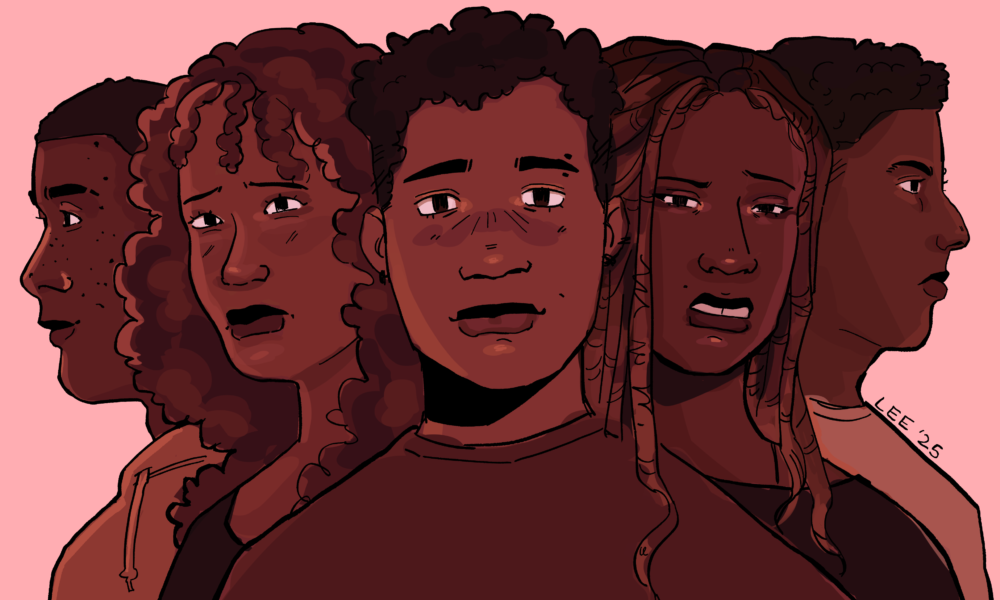
Black History Month panel investigates representation in genetics research

On Feb. 12, McGill’s DNA to RNA (D2R) initiative hosted a webinar in honour of Black History Month. Led by Mariloue Daudier, Senior Advisor, Equity, Diversity and Inclusion for D2R, the session explored the opportunities and challenges faced by Black individuals in genetics research. The webinar featured three guest speakers who shared their insights on the importance of Black representation in RNA research and therapeutics.

Daudier began with an introduction to D2R—a McGill-led research initiative with the goal of developing an inclusive Canadian approach to genomic-based RNA therapeutics. She described a brief history of Black people in Canada, explaining that Black people continue to face equity and inclusion issues today, with particular barriers to representation in research.

However, she noted McGill’s commitment to addressing these issues and highlighted the university’s anti-Black racism action plan.

“Why this is so important to me is because by always putting Black people in the broad category of racialized individuals, we lose track of the actual representation and issues faced by the Black communities [specifically],” Daudier said. “I think [McGill’s action plan is] really a game changer to make life better for Black communities.”

The first speaker, Paul Wankah, an Assistant Professor in McGill’s Faculty of Dental Medicine and Oral Health Sciences, discussed the importance of Black representation in research, as well as issues of mistrust between Black communities and the medical field.

Wankah presented findings from various studies, examining the different ethnic groups represented within these findings. Notably, he presented a study that looked at racial and ethnic representation across several clinical trials of the COVID-19 vaccine, a prevalent RNA therapeutic. This study revealed that Black participants made up only five to seven per cent of the trial population, as compared to white participants, who made up 83 to 89 per cent.

“Here we have evidence that there is under-representation of Black people in genomic research and therapeutics,” Wankah said. “[The authors] argue that the dominance of European and American genomic research is related to advances in genomic technologies within these countries, and them having better funding opportunities, might be why [Caucasians] are much more represented in genomic research.”

Wankah then explained the origin of mistrust between Black communities and the field of medicine, referencing historical abuses in healthcare research that have led to hesitancy among Black people to participate in such studies. 

“We need more studies to understand and develop strategies to close this diversity gap,” Wankah concluded.

The second speaker, Momar Ndao, an Associate Professor in McGill’s Department of Medicine, addressed the issue of medical mistrust in Black communities abroad, focusing on his lived experience in Senegal. 

Ndao discussed gender roles as an important factor in vaccine decision-making, particularly in developing countries. He asserted that in these communities, the father makes the primary decision for their kids’ vaccination status. With limited access to information, they may be hesitant to trust the effectiveness of vaccines.

“We absolutely need to work together to make sure vaccines and technologies can be transferred [to developing countries],” Ndao said, emphasizing the importance of targeting rural areas in developing nations rather than just capital cities.

The final speaker, Loydie Jerome-Majewska, a Professor in the Department of Pediatrics, discussed the importance of Black inclusion in pediatrics. She began by discussing the prejudice faced by Black physicians, particularly when patients select a physician for their care.

She referenced a study that found Black babies had higher survival rates when cared for by Black physicians.

“We need researchers and participants that are Black in order to really understand the diseases that impact children and contribute to their low birth weight,” Jerome-Majewska said.

This powerful finding highlights the need for greater involvement of Black physicians in pediatric care and research. Jerome-Majewska concluded by reiterating the realities behind Black individuals’ mistrust of medical research, both as participants and as researchers themselves.

Hockey, Sports

Team USA dominates Finland 6-1 at the 4 Nations Face-Off

On Thursday, Feb. 13, Team USA defeated Finland in a 6-1 victory in the 4 Nations Face-Off at Montreal’s Bell Centre. The tournament—featuring top National Hockey League players from the U.S., Canada, Finland, and Sweden—is a showcase of elite international hockey. It also serves as a preview for next year’s Winter Olympics in Northern Italy, giving fans an exciting sneak peek of what’s to come.

In the first period, Finland set the pace early against the U.S., with defenseman Henri Jokiharju putting the first point on the board. This lead was cut short when left winger Brady Tkachuk struck next, tying the game for the Americans with a quick goal. Finland struggled to match the U.S.’s intensity, spending much of the remaining period defending their own zone. Goaltender Juuse Saros was under heavy pressure, making several key saves to keep Finland in the game. 

Finland controlled much of the second period, fending off Team USA’s shot attempts for the first nine minutes. Finland’s strong defence limited the U.S.’s offensive chances as the Americans looked to gain more puck possession. Despite Finland’s defensive skills, the U.S. began making more advances late in the period. Left winger Matt Boldy deflected a shot right past Saros, giving Team USA a 2-1 lead heading into the final period.

In the third period, Team USA closed down all competition with Finland in a quick turnover. Leading 2-1 at the start of the third period, the U.S. took advantage of a power play just 15 seconds in, as right wingman Matthew Tkachuk’s shot deflected off a defender’s stick and past the Finnish goalie. A mere 11 seconds later, left winger Jake Guentzel extended the lead to 4-1, finishing with a strong shot from the left circle. 

At this point in the game, there was a noticeable shift in the crowd’s energy. There was an outpour of booing and nagging from fans, solely directed at Team USA thus far in the game. A surprising number of fans were cheering for Finland, despite being so far from home. However, spectators’ loyalties switched as the Americans began to stack up goals. “USA” chants slowly rippled through the crowd as people inevitably jumped on the winning team bandwagon. 

At 3:00 into the third period, Brady Tkachuk scored his second goal of the game, just before his brother, Matthew Tkachuk, sealed the 6-1 victory with another power-play goal at 11:13. An unexpected four-goal outburst secured the win for Team USA, keeping them as a top contender in the 4 Nations Face-Off.  

The game had its share of scrappy moments and physicality, with players exchanging a few heated confrontations throughout the match. Both teams were aggressive, particularly in the second period, when tempers broke after some hard hits and close calls. A few minor scuffles broke out as players fought for possession in front of the net, but both teams kept their focus, and the game remained under control, with Team USA ultimately securing a significant victory.

Team USA’s 6-1 victory over Finland was a statement win in the 4 Nations Face-Off, solidifying the team’s elite hockey reputation. After a competitive first two periods, the U.S. pulled ahead in the third, proving their ability to dominate against such strong international competition. This victory put them in a strong spot moving forward, and inevitably helped them prepare for their matchup against Canada on Feb. 15, which they won 3-1. Meanwhile, Finland went on to restore their reputation after playing against Sweden on Feb. 15, winning 4-3 in overtime. 

Moment of the Game: Matthew Tkachuk took a shot from the point and scored by deflecting the puck off a defenceman’s stick and 11 seconds later, Jake Guentzel scored with a snapshot, all within the first 26 seconds of the third period. 

Stats Corner: Team USA took 32 total shots on net, while Finland took 21.

Editorial, Opinion

Lip service won’t save lives amid the Indigenous domestic violence crisis

This Valentine’s Day, the Centre for Gender Advocacy and The Native Women’’s Shelter of Montreal’’s Iskewu Project co-hosted their annual memorial march and vigil in honour of Montreal’s Day of Action for Missing and Murdered Indigenous Women, Girls, and Two-Spirit People (MMIWG2S+). 

With the Canadian government offering little more than mere lip service to the MMIWG2S+ crisis, marching Montrealers demanded tangible action, remembrance, and broader awareness. The ongoing national inquiry into MMIWG2S+ has resulted in countless studies highlighting that colonial and patriarchal policies were sources of intergenerational trauma, which in turn cause Indigenous women to be overrepresented among those missing and murdered. However, the government, universities, and other institutions have taken minimal action to address its roots, and in some cases—such as McGill’s ongoing legal battles with the Kanien’keha:ka Kahnistensera (Mohawk Mothers) over McGill’s New Vic Project—actively aggressed Indigenous communities.

The federal government’s initiatives to tackle the MMIWG2S+ crisis include a crisis line for those affected or in need of assistance, closely mirroring Quebec’s recent $900,000 CAD investment into a phone support line for Indigenous domestic violence survivors, an issue distinct from MMIWG2S+ yet deeply rooted in similar systemic challenges. 

The funding will be directed by the Espace Femmes Premières Nations Québec (EFPNQ) and Femmes Autochtones du Québec to offer over-the-phone hotline services in French, English, and several Indigenous languages, through which survivors can seek help in instances of intimate partner violence. Given that Indigenous women are about 3.5 times more likely to experience intimate partner violence than non-Indigenous women, this investment represents a crucial step.

However, 363 First Nation communities across Canada still lack standard cellular services, limiting the efficacy of this program and underscoring the need to address the deep roots of the Indigenous intimate partner violence crisis. Canada’s history of settler colonialism, the persistence of colonial dynamics in legal frameworks, and the residential school system, which only ended in 1996, form webs of intergenerational trauma and sow general distrust in Canadian systems among Indigenous peoples. With these previous and ongoing violences in mind, skepticism of a phone line and associated resources funded and distributed by the government is natural. 

Given the chronic underfunding of resources for survivors of intimate partner violence, such as Quebec’s appalling shortage of shelter space that led to 3,300 women getting turned away last year, a phone line initiative may well be part of the solution. However, immediate crisis response, although crucial, must be accompanied by preventative systemic change that tackles domestic violence before it occurs, effectively breaking intergenerational cycles. Additionally, it is imperative that solutions, including this hotline, are culturally- and community-informed, possessing sensitivity to the diversity of individuals under the Indigenous umbrella and offering resources both on- and off-reserve. 

Given the Canadian Government’s 46.6 per cent rate of inaction on its proposed initiatives to tackle the MMIWG2S+ crisis in 2023, the government must transform its current approaches to supporting Indigenous survivors of domestic violence. High grocery prices in Indigenous communities (potentially worsened by U.S. tariffs), inadequate healthcare systems, and flaws in foster care systems merely scratch the surface of environmental conditions that stand in the way of what would otherwise be a terminable cycle of violence. 

McGill, as both an educational and research institution, has the responsibility to foster a generation of academics and future leaders who will fight for meaningful policy changes to end the crises and violence Indigenous communities face. The university can use its own endowment to fund research on Indigenous domestic abuse and create scholarship on anti-Indigenous systemic racism—for example, by expanding the current Indigenous Studies Program to include a major. Additionally, McGill must serve as a model through its own reporting systems, which have been chronically undervalued and underfunded despite their cruciality. In the face of budget cuts, McGill must demonstrate continued commitment to supporting survivors of intimate partner violence, and to educate on Indigenous history and culture. Creating spaces on campus for discourse will mobilize the next generation to become involved in programming like the MMIWG2S+ march and vigil last week, fostering an engaged student body that will participate in community movements and initiatives to support Indigenous peoples.

Art, Arts & Entertainment

Wieland exhibit at the MMFA wears its heart on its sleeve

Joyce Wieland stares with dots of navy for eyes, a dash of white for a nose, and no mouth. She is pale and faceless, yet her portrait seems to pose defiantly. She is challenging us. 

Heart Onwhich opened at the Montreal Museum of Fine Arts (MMFA) on Feb. 8—commemorates Joyce Wieland, a Canadian filmmaker and artist. Her work is deeply political and feminist, spanning a wide array of mediums. Oil paintings, cardboard collages, plastics, photography, films, and quilts line the large stone halls of the MMFA’s Michal and Renata Hornstein Pavilion

“Visitors will discover the beauty of her sensational paintings, the layered wit of her textile pieces, and the eloquence of her experimental films,” writes Anne Grace, Curator of Modern Art at the MMFA, in the exhibition press release.

Every piece in the exhibit draws a narrative as Wieland blends elements of animation, comics, and storyboarding. The foundations of her distinctive visual storytelling begin in the first room, with collage. The first few rooms showcase her early works of the late 50s and early 60s, including the faceless self-portrait, Myself (1958). Within this first room, the cardboard collages are experimental and full of wonder. It feels as if she was simply using the materials she had on hand, imbuing the work with a nostalgic and homemade quality. Her paintings in the first room are defined by bold-coloured backgrounds, wide strokes, and a spread of smaller illustrations and symbols. 

Even in her paintings, she incorporates collage: Each illustration could work as a standalone symbol, yet she combines it with others within the same painting. In March on Washington (1963), linked rings, a black-and-white heart, a Confederate flag, and a shirt emblazoned with “FREEDOM NOW,” among other symbols, recount both the tension and unity during the civil rights movement in the United States. Viewers can move their eyes through each symbol on the canvas and see a narrative unfold about the fight for racial solidarity.  

She pushes further into storyboarding with the painting Untitled (Sinking Liner)  (1963), which breaks the canvas into four sections like a comic and shows each frame of a sinking ship. She calls these “filmic paintings” as they mirror the films projected alongside the tangible displays. The films seem to tie together each element of storytelling as if each painting and collage culminated into the visuals of her films. The museum also incorporates her photography, many of them displayed on monochromatic film rolls, as if the visitor is given a peek behind the scenes, into her camera itself.

“With her seductive wit and piercing intelligence, Joyce Wieland asked us all to do better, to care more,” writes Georgiana Uhlyarik, Fredrik S. Eaton Curator of Canadian Art at the Art Gallery of Ontario, in the exhibition press release.

Wieland cements her political focus with the collection of her quilts, embroidery, and plastic artwork. She explores Canadian identity with O Canada (1970), a series of embroidered women’s lips mouthing the newly official national anthem. The embroidery brilliantly acts as an animation of singing the anthem as each embroidered lip acts as a frame that visitors can see the song being sung when their eyes move across the fabric. Many of her pieces are also made of plastic, which often feature a collage of brightly coloured plastic ‘pillows’ that recreate movie frames, flags, and a mirror. 

As visitors walk through the exhibition, the range of experimental mediums may seem scattered, lacking a centralized identity. Yet, Wieland’s multiple mediums, coupled with the curators’ choice to feature them all, challenge the idea that artists must stick to one form to craft their artistic identity. The camera roll alongside the finished films defy what it means to present a complete project as the plot of artistic development is what is celebrated. Her radical switches from painting to film to plastic mirror the revolutionary political changes of the 60s and 70s. Wieland may have started faceless, but her features are fleshed out with each storyboard, activist painting, film, and photo.

Heart On was curated by Anne Grace and Georgiana Uhlyarick. Tickets are available online until  May 4.

Art, Arts & Entertainment

Reclaiming space: Celebrating Indigenous artistry at McGill 

Art has always offered new ways of seeing, providing glimpses into diverse worldviews and creating futures that we can strive to inhabit. On the evening of Feb. 7, the University Centre Ballroom saw a group of artists, students, and educators interrogating these multiform possibilities, recognizing the potential for art to be a reclamation of space, a form of liberation, a medicine, and an education. Indigenization and Art, an event hosted by the Students’ Society of McGill University (SSMU) celebrated Indigenous artists and identities, casting the spotlight on Zoe Gesaset-Gloqowej Lee (Chinese-Mi’kmaq), Jenni Makahnouk (Anishinaabe), and Chelazon Leroux (Dene First Nation) to share their teachings and art with the McGill community. 

The room was gently abustle with students, milling amongst a host of local Indigenous art vendors. Monalisa Simon (Inuk), owner of Oddly Monalisa Creations, designs cute, concealable self-defence tools for women, responding to the crisis of Missing and Murdered Indigenous Women, Girls, and Two-Spirit People across Canada and the U.S.. While the crisis demands systemic change rather than placing responsibility on individuals to protect themselves, Simon responds with practical creativity, imbuing self-defence with elements of individuality and empowerment. A table nearby summoned a large crowd with their bucket of soapstone, encouraging guests to try carving. People sat on the floor, hands busy as they chatted amicably with representatives from Atelier Tlachiuak, a grassroots collective of Indigenous artists, the majority of whom are Inuit, in Tiohtià:ke. The collective provided space for unhoused artists and promoted “art’s power to heal, unite, and drive social change.” 

The night would not be complete without its speakers, interviewed by Raymond Jordan Johnson-Brown (Arts, U3)—a social media personality, and Gender, Sexuality, Feminist and Social Justice Studies (GSFS) student at McGill. Institutions “work for Indigenous communities but not often with them,” Johnson-Brown remarked. He saw this gathering as an opportunity for further dialogue and collaboration between Indigenous and settler folks, facilitated by art.

On McGill’s campus, where many of the night’s contributors do not see themselves or their communities reflected, art can operate as a potent method to reclaim space through visibility, serving as an assertion of presence, permanence, and continuity. For Lee, designer, muralist, and McGill undergraduate student, her artwork—in this case, a mural intended for the SSMU lobby—is a recognition of Indigenous presence within the McGill community. Lee’s practice investigates legacy and self-recognition, blending influences from the people she loves and the aesthetics which inspire her such as Pinterest art and risograph printing. The mural will depict “traditional medicines from across the country” such as sweetgrass, cedar, and Saskatoon berries. 

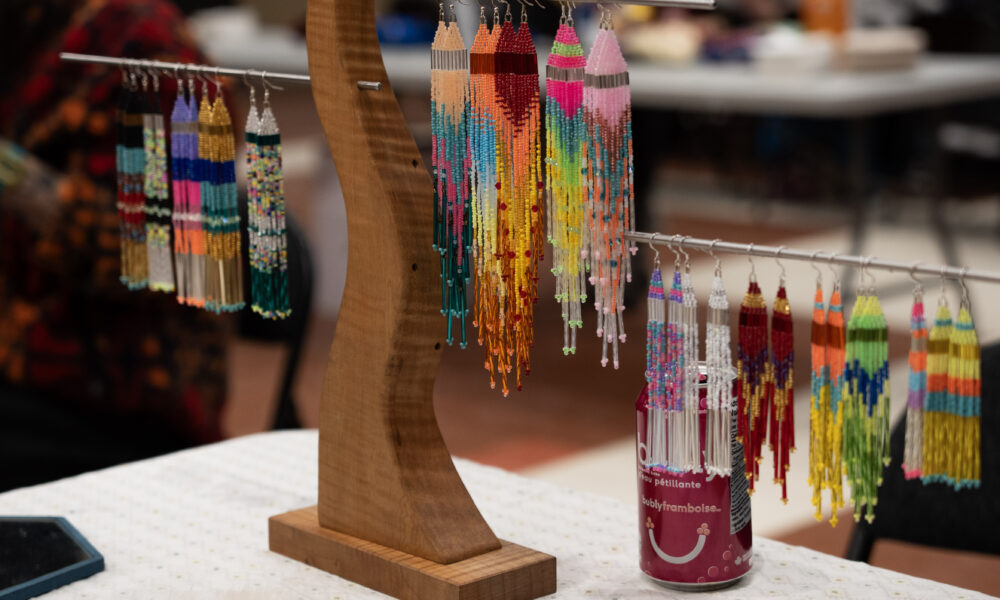
The second speaker was Jenni Makahnouk, an Anishinaabekwe beader and McGill’s first Anishinaabekwe valedictorian. Makahnouk critiqued the institution’s emphasis on French and English languages, stating she feels represented by neither. She seeks to uplift Ojibwe and other Algonquin languages, using beading as a methodology to explore the ties between language and craft. For Makahnouk, beading is both an artistic and educational practice—one that resists colonial linguistic structures while fostering cultural healing. She reminds the audience that “Indigenous art is still art,” deserving recognition as “luxury goods” rather than pigeonholed as simple handicrafts. 

The grand finale of the evening was carried out by the dazzling Chelazon Leroux: Drag artist, comedian, and educator. Leroux views drag as a means of storytelling, humour, and healing—integral practices for many Indigenous communities. Raised in Treaty 8 Territory, Fond Du Lac First Nation, they describe drag as a “superhero” persona that helped them navigate intergenerational trauma and explore their Two-Spirit identity, which they describe as being “the blessing of carrying both the feminine and masculine spirits.” When explaining that many Indigenous worldviews are defined by one’s role in supporting their community, Leroux said that being Two-Spirit is a responsibility to bridge the genders, providing a third way to serve the community. Leroux closed the night with a vivacious performance, their shimmering hair flashing as they danced to Doechii. The evening highlighted art’s power to reclaim space, challenge institutionalized erasure, and foster connection—affirming Indigenous presence and creativity as integral to the McGill community.

Zoe Gesaset-Gloqowej Lee is a Design Editor at The Tribune. Though quoted, she was not involved in the editing or publication of this article.

Science & Technology

Breaking down silos: SUSAN’s global initiative to advance sustainability

From governance and policy to social sustainability and economics, solving global environmental issues demands collaboration across all fields. 

Juan C. Serpa, Associate Professor of Operations Management at McGill, has constructed a groundbreaking initiative designed to bridge the gap between different academic disciplines, fostering collaboration in the fight for sustainability. His project, the Sustainability Academic Network (SUSAN), has become a central hub for researchers, students, and organizations, connecting over 3,000 institutions and classifying sustainability efforts into 60 distinct themes with the help of generative AI.

“We’ve been working on this for two years and released it six weeks ago, and it suddenly became viral,” Serpa shared in an interview with The Tribune. “We’ve had 8,000 users sign up already.” 

The rapid success of SUSAN reflects the growing demand for a centralized space where sustainability-focused individuals can easily connect, share resources, and collaborate across various disciplines. 

“Universities have traditionally been organized in silos,” Serpa explained. “We think about engineering, business, medicine, and arts separately. But sustainability isn’t like that. It requires input from all these fields. To tackle challenges like solar power, we need engineers, policymakers, business leaders, and more—all working together.”

SUSAN is a platform designed to address this need, uniting researchers across disciplines and promoting collaboration on projects ranging from renewable energy solutions to social sustainability initiatives. 

Serpa believes that sustainability is a unique challenge in academia. 

“If I were going to create the law academic network or the medical academic network, they don’t need this. They talk with each other already. They have their own mechanisms,” Serpa said. “Sustainability crosses the boundaries, and that’s why we need a platform like this.”

For many students and academics, finding sustainability-related events, conferences, and networking opportunities is a time-consuming task, requiring them to visit multiple websites and sift through scattered resources. SUSAN solves this problem by consolidating all these resources in one place. Whether you are looking for conferences, networking opportunities, or simply to connect with others working on similar projects, the platform serves as a comprehensive hub for all things sustainability. 

As SUSAN continues to grow, it faces the challenges of sudden success. Serpa anticipated that within the next few months, the platform could reach 100,000 users, which may put stress on its current financial model. Despite this, he is committed to ensuring that the platform remains independent from corporate influence and stays true to its goal as an academic initiative. 

“It’s a good problem to have,” Serpa said. “But as we grow, we need to think about how we can ensure this platform remains focused on its mission: Helping sustainability initiatives thrive.” 

Serpa’s vision for SUSAN goes beyond academic connections. He hopes that the platform will serve as a community space for anyone interested in sustainability, from students launching their careers to grassroots organizations hosting local events. He envisions a global network where universities like McGill and institutions worldwide come together, share resources, and work collaboratively to build a sustainable future. 

“There are already sustainability events happening all over Montreal, and we want to create a central calendar for all of them,” Serpa said. “By connecting universities, communities, and organizations, we can maximize our collective impact.” 

With its potential to grow into a vital resource for sustainability efforts worldwide, Serpa is optimistic about the platform’s future. 

“I don’t want it to be my own platform. I want it to be something that is from the research community,” he said.

As the world grapples with urgent environmental challenges, initiatives like SUSAN showcase the power of collaboration—and how enthusiastic people are about collaborating across disciplines to solve today’s pressing issues. For students, researchers, or simply anyone passionate about sustainability, this platform could be the gateway to making a difference.

Commentary, Opinion

What’s up, doc? Discrimination against foreign doctors runs rampant amid Canada’s doctor shortage

Canada faces a dangerous shortage of medical doctors, leaving approximately five million Canadians without access to primary care providers in 2022. Simultaneously, internationally-trained physicians (ITPs) struggle to meet unnecessarily burdensome requirements to practice medicine in Canada. 

Foreign-trained doctors must undergo eight cumbersome steps to obtain a Canadian medical license—as opposed to three for Canadian-trained doctors. These include the National Assessment Collaboration Objective Structured Clinical Examination, which is expensive, offered a few times a year, and only open to a small number of applicants. This is not required for doctors from the UK, Ireland, and Australia who can apply through the College of Family Physicians of Canada. ITPs must re-complete residency training, as most provinces do not recognize foreign clinical experience, despite many ITPS having been doctors for many years. This is particularly difficult considering only 10 per cent of residency spots in Canada are open for ITPs. 

Although many provinces have introduced another quicker ITP-licensure pathway called the Practice Ready Assessment, this poses new challenges. All ITPs must fulfil a “Return of Service” requirement which mandates that physicians work in underserved areas for a set amount of time after completing their residency—usually, rural towns and communities where access to healthcare is especially low—for many years to be eligible for a license. These obstacles act effectively as indenture agreements, while Canadians and Americans are not subject to the same restriction of movement and job freedom. They do not ensure doctors are actually qualified, disregard doctors’ potential need for additional training, and apply indiscriminately to ITPs, regardless of expertise, of which 78.1 per cent are from non-Western countries. This exposes how the inequitable licensing process lacks justification and disproportionately affects doctors of colour. 

In 2020, a group of internationally trained physicians filed a human rights lawsuit—against the British Columbia Ministry of Health, the College of Physicians and Surgeons of B.C. and the University of British Columbia—for imposing barriers on foreign-trained doctors. They outlined how these discriminatory practices propagate a blatant double standard for ITPs, even when ITPs have the same level of qualification and often even more clinical experience. They argued that the province is blocking most immigrant physicians from pursuing their livelihood and lifelong profession. 

Racialized doctors’ expertise is severely devalued, and systems that uphold standards of professionalism and expertise really often protect standards of whiteness in “prestigious” institutions. It indicates a deep lack of motivation in Canadian governments to change mechanisms of white privilege and systemic racism, even when it is detrimental to the health and well-being of all Canadians.

Effective steps towards addressing Canada’s doctor shortage and the discrimination faced by ITPs would include increasing residency and professional positions for all doctors, with more spots open for ITPs, and lowering costs for examinations and re-training. Canada should also prioritize equality for all foreign workers by establishing more agreements—such as existing modified pathways for doctors from Ireland, the UK, and Australia—for already licensed doctors to skip re-examination and re-training, especially with doctors from Asian countries, where 62 per cent of ITPs immigrate from. Instead of forcing only foreign doctors to work in underserved areas with Return-of-Service contracts, Canada must provide incentives to all doctors to address community needs. 

Although Health Ministers and politicians promise action in the form of expanding open residency positions, making the licensing process quicker, and allowing ITPs to run independent practices, these measures barely scratch the surface. They do not address the scale of the problem or the systemic inequality, racism, and xenophobia still embedded within the structure of the medical licensing process. 

Ironically, Canada remains committed to enforcing the myth that these qualified doctors must be vetted and barred from practice to such a high degree to protect Canadians’ “safety,” while millions of Canadians suffer from a lack of medical care.  In order to obtain the necessary structural changes, there is a need for meaningful consideration of this deeply entrenched racist conflation between expertise and whiteness, as well as comprehensive disruption of the bureaucratic and political systems that uphold it. 

News, SSMU

New SSMU food pantry offers students groceries at affordable prices 

The Students’ Society of McGill University (SSMU) recently launched a new pay-what-you-can student food pantry on Jan. 30 to promote greater food security on campus. Planned in partnership with the ECOLE project, a sustainability-focused communal student housing cooperative, the pantry is located in the foyer of the ECOLE building at 3559 Rue University. 

This project is just one of several initiatives to battle food insecurity at McGill, an issue student groups—such as McGill Food Coalition, Midnight Kitchen, Student Nutrition Accessibility Club’s (SNAC), and Let’s Eat McGill—claim is prevalent on campus. According to a survey carried out by Let’s Eat McGill in Winter 2023, over 30 per cent of surveyed students went without meals once or twice a month, while over 20 per cent of students went without meals several times a month.

Nika Rovensky, one of the facilitators of ECOLE  and the Community Engagement Commissioner at SSMU, manages the SSMU food pantry in partnership with SSMU Vice-President External Affairs, Hugo-Victor Solomon

Located opposite the Birks Building, the food pantry is open to students 24/7, making it unique compared to other initiatives on campus. In comparison, SSMU’s Grocery Program is available once a semester, and SNAC’s weekly produce distribution operates every Monday from 1 p.m. to 4 p.m.. Similarly, the Midnight Kitchen operates once or twice a week at 1 p.m.. 

“One really big thing that we wanted to address was the aspect of accessibility, and being able to come get [food] on your own schedule and not being held back by a window of time,” Rovensky said. “That’s why the food bank is refilled once a week but it’s accessible at all times. You don’t need to tap in or anything, you can just open the door and it’s just there.” 

Solomon believes that the food pantry is a tangible way to give back to the student community and address the issue of food insecurity. 

“This project is squarely in line with mandate 5.1.1 of the SSMU’s Food Security Policy by promoting food sovereignty for the student community while working to ensure more equitable access to food resources,” Solomon wrote in a statement to The Tribune.

The food bank operates on a pay-what-you-can scheme, with signage in the pantry indicating suggested amounts for students to pay. Suggested prices, which can be paid via e-transfer, range from $0.25 CAD for canned items and pasta, to $0.50 CAD for single vegetables, and $1 CAD for everything else. 

Innovation Assistance, a community food distribution centre that aims to provide food sovereignty to those who need it in the Peter-McGill area, delivers the food bi-weekly. Micah Angell, the coordinator of Innovation Assistance, explained why the centre collaborated with the food pantry in a written statement to The Tribune.

“Innovation Assistance’s Food Dream desires for the residents of Peter-McGill to have no barriers between them and the food that they want to consume,” Angell wrote. “Being able to help make sure that students facing food insecurity at McGill have access to healthy and local food is a huge win for us and for the neighbourhood.”

SNAC and Midnight Kitchen are also collaborating with the student food pantry, delivering produce and allowing volunteers to restock the pantry every week or several times a week if needed. 

Rovensky explained how the food pantry aims to promote sustainability by limiting its food waste 

“If there’s food that hasn’t been taken, and it might be going bad, we find a way to repurpose it here,” Rovensky said. “An example of that would be that we had a film screening this past week and there were some extra parsnips [in the pantry] and they made parsnip chips for the film screening for the people that came. So it’s [a] very circular [process].” 

Looking to the future of the food pantry, Rovensky and Solomon both hope that the program will continue to grow. 

“This is a pilot project and we’re looking to expand it long-term in collaboration with Student Housing and Hospitality […] at McGill, and have a larger space in the University Hall Building,” Rovensky said. 

Features

Unearthing Canadian veins of greed

How the country enables the global mining industry’s exploitation of people and the planet

On Jan. 13, 2025, Mali took a bold step in reclaiming control over its natural resources, as the government began seizing $245 million CAD worth of gold stocks from Canadian mining giant Barrick Gold. The seizure is part of a wider dispute over Barrick’s refusal to pay its dues under Mali’s newly passed mining codes, which seek to address decades of unequal agreements that have left African states with minimal stakes in their own resources. A quick search reveals that this is not the first time Barrick has been called out—among other controversies, Mali had previously demanded about $500 million USD in unpaid taxes from Barrick, a sum that points to the company’s failure to meet its obligations.

This issue stretches far beyond Mali and forms part of a larger, predatory pattern. Nearly half of the world’s mining companies are based in Canada, and they are leaving a trail of devastation.

feature imageThe Toll of Canadian Miningfeature image

In Ecuador, Indigenous women have been sounding the alarm that a proposed free trade agreement between the Canadian and Ecuadorian governments could pave the way for even more human rights and environmental abuses by Canadian mining companies.

In Honduras, two workers fled their village after forces tied to the now-closed Canadian mining giant Gold Corp murdered their uncle, an environmental activist, in what they believed was a targeted killing.

When they sought refuge in Canada, officials told them to lie about their story and present it as an escape from drug traffickers instead of revealing the truth—that their uncle’s death was a direct consequence of Canada’s mining interests. These are just two of countless examples of how Canada’s global footprint is built on exploitation, all while the country turns a blind eye to the damage caused in its name.

Even within Canada, the government has allowed corporations to exploit the country’s land and mistreat its Indigenous communities. This is especially troubling because the mining industry does have the potential to be more ethical through measures like resource management, community engagement, and stringent environmental protections. Our dependence on mining industries, particularly for technology, is undeniably problematic.

However, change is possible even within our global capitalist economy. Ethical mining must address historical injustices by securing community consent, investing in long-term benefits for local populations, and ensuring transparency in supply chains. While the extractive industry has caused significant harm, it’s possible to envision a future where it is compatible with both environmental and social well-being. The challenge lies in shifting the focus away from corporate interests and toward a model that prioritizes people and the planet.

The mining giant Glencore stands in stark contrast to this vision of ethical mining. After years of investigations, the Swiss Office of the Attorney General found the company guilty of “inadequate organization” due to corrupt mining deals in the Democratic Republic of the Congo, specifically around its dealings with Israeli businessman Dan Gertler. Glencore’s involvement in bribery and illegal practices resulted in significant losses for the Congolese people, with billions of dollars in potential earnings from resources like copper and cobalt being siphoned off. Glencore has paid fines, but the penalty barely scratches the surface compared to the wealth generated by exploiting these resources. Even after the United States government sanctioned Gertler for his role in this corruption, Glencore continues to pay him tens of thousands of dollars as royalty payments from mines acquired through these corrupt deals. Undeterred by these controversies, Glencore is expanding its operations in Canada, acquiring four massive coal mines in British Columbia. Glencore’s takeover of B.C. mines raises concerns about ongoing selenium pollution in the Elk River Valley, which has long been toxic to fish. Reports highlight that the government has failed to impose strong conditions on Glencore to halt the pollution and cover the massive cleanup costs. Advocates fear the company’s vague commitments to environmental remediation will fall far short of addressing the long-term environmental devastation in B.C.

feature imageA Safe Haven for Mining Corporationsfeature image

Canadian mining companies dominate the global extractive industry not because of their technical expertise or ethical leadership, but because Canada has deliberately positioned itself as a regulatory bastion for mining corporations. With 47 per cent of the world’s public mining companies listed on Canadian stock exchanges, the country provides an ultra-permissive legal, financial, and diplomatic environment that enables these companies to operate with near-total impunity. Even mining corporations not physically based in Canada register as Canadian companies because the country offers a system designed to protect corporate interests over human rights and environmental accountability.

Alain Deneault, philosopher, researcher and professor at Université de Moncton, explained in an interview with The Tribune that the mining companies benefit from Canada’s lax disclosure requirements, which allow them to engage in speculative resource claims, inflating their market value without stringent verification.

“Canadian mining companies can speculate on potential resources rather than just proven reserves, creating opportunities for market manipulation,” Deneault said.

Beyond financial benefits, Canada’s diplomatic network acts as an unofficial lobby for mining corporations.

“A whole network of Canadian diplomats are actively working to represent the interests of mining companies in the countries where they operate,” Deneault said. “This pressure forces governments to lower tariffs, invest in infrastructure that supports mining, and even expel people from their land.”

The result is a global empire of extraction, where Canadian mining companies can pollute, displace, and exploit with minimal consequences, knowing that the legal, financial, and diplomatic frameworks of their home country will work in their favour.

feature imageBarrick Gold’s North Mara Mine: A Case Study in Corporate Abusefeature image

At Barrick Gold’s North Mara mine in Tanzania, violence, forced displacement, and human rights abuses have become routine. The Canadian mining giant has operated the mine through subsidiaries since 2006.

According to MiningWatch Canada, which has been documenting abuses at North Mara since 2014, the situation on the ground is dire.

“Conflicts happen weekly around the mine,” Catherine Coumans, Research Coordinator for MiningWatch said in an interview with //The Tribune//. “These result in arbitrary arrests, severe beatings—some leading to death—as well as people being shot, maimed, or killed. And these are not just people accused of entering waste rock piles for residual gold. Even innocent bystanders, including schoolchildren, have been targeted.”

Forced evictions have been taking place since the mine’s inception. The Kuria people, Indigenous to the region, traditionally rely on cattle herding and small-scale gold mining for their livelihoods. But when gold was discovered in their lands, Barrick moved in to claim it.

“As is so common all over the world, whenever small-scale gold mining starts, governments and mining companies notice and go, ‘There’s money to be made there,’” Coumans explained. “And within no time at all, the small-scale miners are forced off their land, and large-scale mining companies take over, often with government support.”

The most recent wave of forced evictions, between 2022 and 2023, displaced 5,000 families—tens of thousands of people.

“When I say forcibly evicted, […] people had no choice. These evictions were accompanied by violence, intimidation, and coercion,” Coumans said. “These families lost not just land, but generational wealth—something passed from parents to children. Now, it’s gone.”

feature imageProtecting Profits, Dodging Accountabilityfeature image

Canada’s legal framework does not just fail to hold mining companies accountable—it actively protects them. When Canadian corporations commit abuses abroad, victims seeking justice are often blocked by legal loopholes that allow these companies to evade responsibility and shift cases to foreign jurisdictions where legal systems are weaker or more easily influenced. Canadian law makes it very difficult to sue companies domestically as it empowers corporations to argue that cases should be heard in the countries where alleged abuses took place.

“It’s really dire. So many people are being harmed by Canadian mining companies overseas, and we have no place in Canada for them to have their cases heard,” Coumans said.

In December 2023, an Ontario judge ruled that a lawsuit against Barrick Gold, filed on behalf of 32 Tanzanian plaintiffs, would not be heard in Canada. Instead, the case—alleging severe human rights abuses at Barrick’s North Mara mine—was dismissed on jurisdictional grounds, with the judge determining it should be heard in Tanzania.

“This is a major setback for the plaintiffs and raises serious concerns about whether Canadian courts will ever hold Canadian mining companies accountable for overseas abuses,” Coumans said.

The case, which centred on allegations of excessive use of force by mine security, was never even debated on its merits. Instead, Barrick managed to argue that, despite being headquartered in Canada, it was not sufficiently “present” in the country to warrant a trial in Canadian courts.

The ruling reinforces an already troubling reality.

“It will create a chill on new cases being brought forward against Canadian mining companies for harm they are alleged to have done overseas,” Coumans warned.

As Deneault puts it, “You are told to go seek justice in Tanzania, Mali, or other countries where the legal system has already been compromised—often by the very corporations you are fighting.”

This system exposes a fundamental truth about Canada’s governance.

“If Canada were a true democracy—which I do not believe it is—it would establish an independent commission to investigate the actions of its mining companies abroad,” Deneault said.

Such a commission, with the power to compel corporate testimony and enforce reparations, would be a necessary first step toward accountability.

feature imageAcademic Endorsement of the Mining Machinefeature image

As early as 2006, McGill has partnered with mining giants like Barrick, Rio TintoVale, and Dec. 31, 2024, McGill continues to hold investments in Barrick Gold Corp., owning 211,755 shares through segregated accounts and pooled funds. The university also collaborates with the destructive corporation through its Holding Institutions Accountablefeature image

Universities justify these partnerships by claiming financial necessity, arguing that student fees and government funding are insufficient.

“They are very willing to take that funding and not look too hard at the track record of the companies that are offering the money,” Coumans explained.

The result is a system in which institutions of higher learning, which should be sites of critical inquiry and ethical leadership, become complicit in whitewashing corporate crimes.

“If you name any major ethical issue in the world today, you will find academics working to justify or enable it—whether through engineering, policy research, or even outright propaganda,” Deneault said. “Universities today present themselves as the brainpower of multinational corporations. The great challenge for them is to free themselves from financial power and reclaim their role as spaces of critical inquiry rather than corporate training grounds.”

The time has come for McGill to face its reckoning. It must divest from blood-stained industries, address its complicity, and start fostering an academic environment that does not simply serve the interests of multinational corporations, but prioritizes the well-being of the communities they have harmed. The university cannot claim to champion justice while benefiting from industries that commit atrocities.

McGill’s continued entanglement with the mining industry is not just a financial issue—it is a moral failure.

*Quotes from Alain Deneault were translated from French.

Off the Board

My cultural identity is not dependent on a language

A few weeks ago, my friend Toscane and I were stopped by a man who asked us if we were French. With our affirmative response, he excitedly expressed his love for our accent before noticing the Hamsa pendant on my necklace. Also called the Hand of Fatima, the Hamsa symbol is popular in North Africa where it is believed to ward off evil and bad luck. The man then asked me: “Are you Moroccan?” When I answered that my mom was, his face lit up, and he started speaking to us in Arabic. I apologized and politely explained that I unfortunately didn’t speak the language—and his disappointment was obvious. 

I am all too familiar with this kind of situation. I feel proud when people ask if I am Moroccan, but that feeling quickly fades when I cannot interact with them in the language. The shame I feel in those moments makes me wonder if it’s even fair to mention that I have some Moroccan blood.

My mom was born and mostly raised in Rabat. From her name and her looks, you can immediately tell that she’s from North Africa. I, however, inherited my last name from my French father, meaning that, on paper, my tie to Morocco is mostly invisible. My name is Auxane Nawel Bussac, but my Arabic middle name exists only on my passport; even my McGill ID does not show it. At times, I have been called  “white-passing” because, despite my curly hair, you wouldn’t assume that I am anything other than French—my little brother took all the Moroccan genes. 

Some part of me has always been frustrated that I cannot prove my heritage without showing a picture of my mother’s side of the family. Only the oldest four of my 14 cousins got to spend their summers at my grandparents’ house in Rabat, learning about Moroccan culture and their roots; The rest of us didn’t have that opportunity. I have visited my grandparents many times, but only ever briefly, spending most of our time in the house speaking French, and never getting the chance to interact with anyone in Arabic.

Compared to my aunts and uncles who actively practice their heritage, my mom barely identifies with Morocco. She went to a French high school while living in Rabat, then left the country when she was 18, and rarely speaks Arabic anymore. While raising my brother and me, however, she did occasionally throw in some words of Arabic, especially when she was mad. Every one of those moments reminded us of our mother’s Arabic past. One that was only hers, and couldn’t be ours. She was never very open to talking about that side of her, widening the gap between her culture and my brother and me.

I don’t speak Arabic. My brother and I have both tried to learn, but never with any consistency. But that does not mean I can’t relate to my Arab heritage. I might not be Moroccan, but my mom is, and I firmly believe that this in itself is a core part of my identity as well. When I find myself in a situation where people are disappointed that I don’t know Arabic, I remember that I watched the 2018 World Cup Final in a Moroccan lounge at a distant aunt’s place in Rabat. That specific moment, and all the others that I spent with the Moroccan side of my family, are proof that I do belong, whether or not I speak Arabic

I am not Moroccan, but I am not not Moroccan either. I don’t mind standing in the middle. This blend might even be a gift, a sign from my middle name Nawel, which means “gift” or “unmerited favour of God.” One day, I’d love to learn Arabic—but until then, if asked about my origins, I will proudly say that I am part Moroccan, on my mom’s side, without feeling ashamed. 

Read the latest issue

Read the latest issue