


Latest News

Campus Spotlight, Student Life

Swab the World is saving lives

Swab the World is a non-profit organization that helps patients locate STEM cell donors easily and quickly. They provide a platform for individuals seeking matches to launch an effective recruitment campaign as well as a space for them to “connect, share, love, and grieve,” according to their website.

Co-President Matthew Homa, an MDCM Candidate at McGill, wrote to The Tribune to discuss the club’s activities. Homa explained how the chapter, which is under the Medical Students Society, was founded and why he joined the organization.

“Our founder, Mai Duong, was diagnosed with acute myeloid leukemia in 2013, and after beating it once and having it return, she learned that a stem cell transplant was the only treatment that could save her life,” Homa wrote. “However, recipients are more likely to match with someone of their ethnicity, and the lack of diversity in our current registry made it virtually impossible for her to find a match.”

He went on to write that Duong rallied the Montreal Vietnamese community to find her match. After she secured a donor, Duong made it her mission to raise awareness about the lack of diversity in donor pools, leading her to start Swab the World. In 2018, she co-founded the organization with Christiane Rochon, and in 2021, McGill’s chapter was launched by Chloe Gordon and Owen Luo

“At McGill, our passionate club of 40 Swab ambassadors continue [Duong’s] mission on the local level, helping raise awareness about the need for stem cell donors and the inequality in finding a donor while helping students sign up for the donor registry.”

Homa also touched on the challenges the chapter has faced, writing about the difficulty of reaching ethnically diverse students.

“One of the biggest growing pains has definitely been reaching out to the broadest audience possible,” he wrote. “It’s easy to fall into a niche, advertising in the same buildings on campus or collaborating with the same clubs because that’s familiar to us. However, we would then be actively disadvantaging all of the communities that need donors whom we’re not working with! So, we’re always trying new things, working with new clubs, and sharing our message with the broader community.”

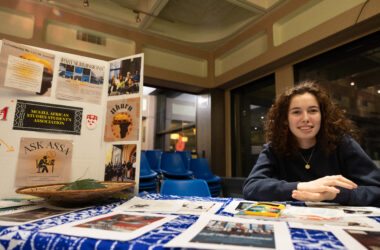
One way they do this is by collaborating with culture clubs to reach diverse students. On Jan. 31, the chapter hosted an intercultural food fair with the McGill Vietnamese Students Association and the McGill University Filipino Asian Students Association. The culture clubs sold treats—with 50 cents of each sale going to Swab the World, and the Swab ambassadors offered on-site swabbing kits. The chapter also frequently hosts swab booths that allow McGill students to submit their saliva samples for registration. These DNA samples, after being examined for particular characteristics, are used to match donors with patients.

The chapter has several events coming up that Homa wanted to bring attention to. First, on Feb. 14, they will have a swab booth at the Black Student Network’s Black Beauty Day. The next day, Feb. 15, they will host a swab booth at the DKE house before the frat’s party. Finally, on Feb. 22, they are tabling and hosting a swab booth at the Coda Foundation’s Coda Gala. Coda is a student-led non-profit raising money for hospital cancer care.

Looking ahead, Homa wrote that their chapter will have a booth at the Universities Allied for Essential Medicines’s North American conference from Mar. 21 to 23 to discuss the racial barriers to transplant access.

For anyone unavailable to attend events in person, it’s possible to swab from home.

“While we’d love to see you join our events and swab to join the registry, you can register from home! Just look up Swab the World, visit our website, and register to donate. A kit will get sent to your house, and you can swab your cheek at a time that works for you! Stem cell transplants are often the last treatment option for leukemia, lymphoma, and other patients with hematologic conditions, so your 5 minutes signing up could save a life,” Homa wrote.

Find Swab the World on Instagram @swabtheworld_mcgill.

McGill, News

For a second time, the Board of Governors CSSR does not recommend McGill divest from weapons manufacturing

The McGill Board of Governors (BoG) held its first meeting of the Winter 2025 semester on Feb. 6. The BoG—which has the final say over all academic, business, and financial affairs at the university—began after nearly two hours of private session, closed to the public and media. The meeting’s open session commenced with a report from McGill’s President and Vice-Chancellor Deep Saini.

Among Saini’s remarks was a reflection on the annual meeting of the World Economic Forum, which he attended in Davos, Switzerland in late January. According to Saini, the conference was dominated by conversations about AI. He noted that universities are globally seen as laggards in the AI sector. 

“While we are generators of a lot of the technology that drives AI, we are almost absent from that option,” Saini said. “McGill has the opportunity to actually leapfrog and show the way.”

Next, the meeting moved on to committee reports, starting with the Committee on Sustainability and Social Responsibility (CSSR). On June 25, 2024, community members submitted an Expression of Concern (EoC) to the committee, urging McGill to review divestment—which was resolved in December 2024, with the BoG ultimately deciding not to divest. In its report on the matter, the committee stated that “the concept of ‘social injury’ is not one which extends a ‘daisy chain’ of causation to an infinite number of parties through their mere association or presence in a territory.” 

Committee Chair Alan Desnoyers explained that during the same period, the BoG received a request from the McGill administration to explore divestment from “direct investments in companies that derive a dominant portion of their direct revenues from the production of military weapons, regardless of the country in which they operate.” The latter came from negotiations between the administration and the Palestine Solidarity Encampment which took place on Lower Field for 75 days in the spring and summer of 2024, until the university dismantled it. The report shared at the Feb. 6 meeting was in regard to the administration’s request for review.   

Ultimately, Desnoyers explained that the CSSR would again, not recommend divestment. 

“After careful consideration of the diverse opinions and expert insights, as well as the review of McGill’s investment practices, the committee is satisfied that the university’s overall investment approach is well-positioned to preserve the capital of the McGill investment pool within the social and ethical norms of the university,” Desnoyers said. 

Following Desnoyer’s presentation, Students’ Society of McGill University (SSMU) President Dymetri Taylor expressed that this decision may face backlash from students and community members and asked the Board if it would ever consider such divestment. 

“I don’t think you can ever say ‘Never.’ I think it’s very context-dependent, and at this stage, […] we felt it wasn’t necessary,” Chair of the Board, Maryse Bertrand responded. 

In a written statement to The Tribune, Students for Palestine’s Honour and Resistance (SPHR) wrote that this decision will not deter their action. 

“Last Thursday was a reminder to the BoG that we will not be quiet and there will be no business as usual until divestment,” SPHR wrote. 

The Board then moved to hear a report from the Audit and Risk Committee. Committee Chair Maarika Paul outlined the group’s updates, including that all of the recommendations outlined in the Internal Audit Final Report of the Macdonald Campus Asbestos Investigation have been completed. This report was submitted to the Board in September 2023 in response to multiple incidents of asbestos exposure on the satellite campus that year. 

The Board then heard a presentation from Dean Viviane Yargeau on the Faculty of Engineering. Yargeau emphasized her focus on expanding experiential learning, citing the faculty’s newly-introduced Internships and Co-ops Office. The Dean also touched on gender diversity in the faculty, stating that with 36 per cent of its engineering students identifying as women, McGill has one of the highest proportions in the country.

Finally, Taylor presented on SSMU, outlining the union’s management structure, funding mechanisms, what student groups SSMU supports, and current challenges the body is facing. These challenges included polarization of the student body, a lack of engagement, and the overpowering authority of SSMU’s Board of Directors over its Legislative Council.  

Moment of the meeting:

As the BoG met inside the James Administration Building, protestors splattered red paint on the outside walls of the building, materializing their discontent with McGill’s response to calls for divestment. 

Soundbite:

“That’s certainly more information about the SSMU than I’ve ever had in all my years here.” — Bertrand on Taylor’s SSMU presentation.

McGill, News, The Tribune Explains

The Tribune Explains: The BSN’s fund for Black, African and Caribbean students and organizations

On Jan. 6, McGill’s Black Students’ Network (BSN) launched the Black, African and Caribbean Students and Organizations (BACSO) pilot project. This project seeks to provide funding for Black, African, and Caribbean Students at both the undergraduate and graduate levels, as well as Black organizations at the undergraduate level. The BSN has set aside $30,000 CAD for this initiative and will split the funds equally between student and organization applicants under the Students’ Society of McGill University (SSMU). The Tribune explains the ins and outs of the fund and how students can access it.

Why did the BSN create this fund?

The BSN’s VP Finance Orlane Donkpêgan, U3 Arts, explained that this initiative was made possible after SSMU members voted to approve a service fee increase for the group during the 2024 Winter Referendum. This doubled BSN’s service fee from $1.00 CAD to $2.00 CAD per student per semester.

Donkpêgan expressed that with an expanded budget, the BSN was able to improve its financial management from previous years and provide direct support to Black-identifying students and Black student-led organizations at McGill through initiatives like BACSO.

“The necessity of this fund was mostly to give back to Black organizations and the Black community,” Donkpêgan told The Tribune. “Because we operate as a service, I felt like one way to support our community better was to give back financially. [We are doing] so by supporting clubs that might be lacking funding for a specific event, or for students facing significant, difficult hardships preventing them from meeting essential needs.”

How does the BSN allocate funding?

BACSO provides the funds in two ways. The Financial Support for Black, African and Caribbean Students fund (FS for BACS) has been partially launched and can offer monetary support to individuals. As the fund takes off, the BSN hopes to be able to fund student projects and initiatives through FS for BACS as well. Students can split their financial requests over multiple months within a semester, but the total amount they request cannot exceed $1,500 CAD per semester. Donkpêgan reported that the BSN prioritizes first-time applicants and requests related to education and health expenses.

The Financial Support for Black, African and Caribbean Organizations fund (FS for BACO), on the other hand, supports SSMU-affiliated Black organizations with bank accounts operating under the student union. These organizations can apply for up to 45 per cent of the fund’s allocation, or a maximum of $6,750 CAD, to support club events. 

How does the application process for funding work?

Students and organizations must fill out unique application forms detailing the amount they are requesting and their intended use of the funds. The BSN President, Finance Project Manager, and VP Finance review these applications on the 15th and 30th of each month. The network reserves the right to request additional documents from the applicants and SSMU throughout the review process. They may also consult SSMU’s Black Affairs Office before making final decisions; otherwise, all applications are kept confidential. According to Donkpêgan, this process is rigorous but necessary for the BSN. 

“The application process is tedious. The questions are usually long and we look at them very carefully. We want to make sure people are putting care in their application, in the same way, we want to take care in helping students and making sure we make meaningful change in our community,” Donkpêgan explained. 

How does the BSN hope to continue the pilot project?

Donkpêgan stressed the importance of ensuring this initiative creates a lasting foundation for future BSN projects. Although a pilot project, BACSO may grow and evolve in the coming years. This is the first fund that the BSN has ever launched for students and organizations.
“It was very important to me that we establish this project before I leave McGill,” she shared. “$30,000 [CAD]is a considerable amount of our budget, but we think this is a way of helping our community. [….] With tuition being a lot more expensive and the cost of living increasing, especially for visible minorities, this fund helps alleviate some of that added stress, on top of the pressures BIPOC students already face.”

A previous version of this article stated that FS for BACS can fund student initiatives and projects. In fact, this aspect of the fund is not yet operational. The Tribune regrets this error.

Sports, Winter Sports

Chill, thrills, and team spirit: Inside McGill’s wild winter Olympics

This past weekend, a group of roughly 60 McGill students and McGill Outdoors Club (MOC) staff members headed to Auberge du Lac Priscault for the annual MOC Winter Olympics. Participants boarded a two-hour bus ride and braced themselves for a weekend of snow and sweat.   

Upon arrival, the students were grouped into six different teams and tasked with creating a group name and chant, creatively ranging from Ketchabasco to MAMASCAN. 

After this exciting introduction, the Olympians retreated to their bunk beds to rest up for the competition. On Feb. 1, the first event was a thrilling tournament of snowshoe racing, where participants had to sprint through an obstacle course as fast as possible in snowshoes while having snowballs hurled at them. Between the chanting, tripping, and heavy snow, the race was an intense start to the day. Shortly afterward, the groups were sent to start building their quinzees—shelters made of a hollowed-out pile of snow. After over an hour of digging and packing down snow, participants left for lunch while the quinzees froze over. 

Next on the agenda was Ice Man’s Revenge, an infamous take on tug-of-war, where participants are strapped into harnesses and tied to an opponent with a long rope. The aim is for opponents to use ice axes to climb away from each other on their stomachs and to pull the competitor across the boundary: A gruelling game that uses every ounce of strength participants have.  

Back at the quinzees, participants began digging the shelters out and polishing them into some impressive pieces of architecture. One quinzee was furnished with an ice fridge, others had non-stop Frank Sinatra playing for ambience. The night ended with some star-gazing and camp games, with competitors putting aside the competition and sharing some laughs and snacks.  

MOC President Zosia Stevenson, U3 Arts, and competitor Maya Cordano, U1 Arts, spoke on their experiences from the weekend.  

“Seeing a bunch of adults letting their inner child out and having fun outside was definitely the main highlight for me,” Stevenson said.

“It felt like being a kid again—running around in the snow—only better, since there was no curfew,” Cordano added.

In addition to the events, participants were also assigned to make and serve one meal during the trip. Competitors helped prepare wraps, burrito bowls, waffles, and much more. Chatting and listening to music while cooking was another way participants bonded and came together over the weekend. 

The final competition of the Olympics was a sled wheelbarrow relay race, where one participant had to plant their hands on a sled while being pushed in wheelbarrow position by a team member and weaved through an obstacle course of sleds and snowshoes. Competitors persevered past frozen fingers and toes to give everything for the finale. 

After a hectic and entertaining last event, the Olympians packed up their cabins while they awaited the final results. Tensions were high in the final ceremony and teams gave their all for one last chant. The team It’s Always Sunny in Plaiyadelphia took first place, with The Humble Horseshoe Hares and The Conservation of the Wenguins following closely behind. Team members happily received handmade trophies that resembled the MOC house. 

This fun-filled weekend would not have been possible without the work of the MOC executives and the amazing hosts at Auberge du Lac Priscault. They created the perfect environment for students to shake off the stress of midterms and build connections with other outdoor enthusiasts that they would not otherwise have had the chance to meet. 

“Going to the Winter Olympics was one of my defining McGill experiences,” participant Sam Rudin, U1Arts, shared in a written statement with The Tribune. “You had the opportunity to meet people with interesting experiences and to develop a bond centred around a core experience. It’s something that I will carry forward with me and cherish.” 

Out on the Town, Student Life

Where to wine and dine your Valentine

Second only to, “It’s not you, it’s me,” the phrase “I don’t know. You choose,” is the most unromantic thing you  can say to your Valentine. If your Valentine’s Day plans lean more towards concepts than concrete visions, it’s time to get organized—and fast. Luckily for you, I’ve already made my reservations. Roses are red, violets are blue, I’d like to make planning easier for you. Here’s my list, or rather, my love letter, to Montreal’s most romantic restaurants and bars.

Restaurants

Nili 

With its vibrant red lighting and playful decor, Nili is the epitome of cool. Within its four eclectically-decorated walls, the restaurant offers the perfect atmosphere for an intimate meal. Its menu, featuring a mix of French and Moroccan-inspired dishes, is simple but undeniably delicious. Start with the refreshing cucumber and mint hummus, followed by the rich, flaky chicken pastilla. For dessert, indulge in msemen, a flat Moroccan pancake served with orange blossom sauce and topped with rosebuds. 

Buvette Pastek

Located in the heart of Old Port, Buvette Pastek is a candle-lit restaurant that invites romance all year long. They have designed a $75 CAD-service Valentine’s Day menu available exclusively on Feb. 14 and 15. The service begins with an amuse-bouche of focaccia with red wine butter. There are three appetizer options as well as three main course options, followed by a cheese platter, and finally, a chocolate and strawberry tiramisu for dessert. Though more expensive than the other restaurants on this list, Buvette Pastek promises a memorable night.

Bar St-Denis 

Bar St-Denis might be one of Montreal’s most underrated dining spots. Tucked away on Rue St-Denis near Jean-Talon Market, the restaurant blends an unassuming bar aesthetic with seriously impressive cooking. Bold and unexpected dishes, like fresh scallops with bergamot and rice pudding with elderberry and olive oil, add to its charm. Bar St-Denis proves that a restaurant can be both laid-back and one of the city’s best-kept culinary secrets.

Bars

Big in Japan 

Once you pull back the dramatic curtains concealing this speakeasy’s entrance, you’ll immediately notice all the cozied-up couples. This chic, lavish spot plays its music just loud enough to give every patron the perfect excuse to lean into their date. The dim lighting casts a glow that makes every moment feel cinematic, while the air is filled with the gentle clink of glasses and soft murmur of conversation. A night at Big in Japan is a dressed-up affair, with servers in crisp uniforms with black ties and jazz floating through the room. Best of all, cocktails like their espresso martini and sake sour are as perfectly crafted as the atmosphere. 

Bar Suzanne

For a more laid-back night, Bar Suzanne is an ideal spot. With dim, candle-lit tables surrounded by lush greenery, the vibe is relaxed, yet refined. Not only can you enjoy a drink with your date, but the bar menu features the perfect mix of small late-night bites, including crispy fried chicken and their popular dumpling menu. Featuring a warm, unpretentious atmosphere, Bar Suzanne offers you a chance to enjoy a casual yet intimate and stylish night out with your date.

Kabinet 

If you’re looking to impress your date with a romantic taste of vintage opulence, make a reservation at Kabinet. Inspired by 1970s Paris, the restaurant’s neoclassical interior design touts rich colours, velvet accents, and even a crystal chandelier. The atmosphere is undeniably romantic, with plush seating and soft lighting, perfect for intimate conversations. While Kabinet pays homage to traditional cocktail menus with classics like the pisco sour or the Pimm’s cup, it offers delightful surprises like a tiramisu martini.

Science & Technology

Shane Laptiste celebrates history and future of Black architecture

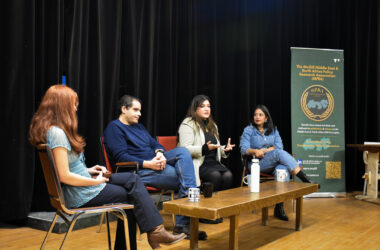
McGill’s official Black History Month programming kicked off this Feb. 6 with their Black History Month Opening Ceremony and Keynote, featuring architect Shane Laptiste as the keynote speaker. Laptiste, who holds both a Bachelor’s and Master’s degree in Architecture from McGill, spoke on the importance of reimagining architecture to centre Black voices and create inclusive spaces for Black communities in contemporary architecture.

Lynda Bulimo, an Equity Education Advisor at McGill and host of the ceremony, delivered the opening remarks. 

“Though we celebrate Black History Month institutionally for the ninth year, we know that Black people have long been here, celebrating, resisting, organizing and innovating in so many ways,” Bulimo said. “I want to credit and thank all the Black people who came before us and who made way for this present moment.”

She introduced Robert Spade, assistant professor at the Schulich School of Music and Senior Cultural Advisor at McGill, who officially opened the ceremony with a speech emphasizing tolerance and curiosity.

“The world is mysterious. It’s a wondrous place. If somebody has a way that you don’t understand, it’s okay,” Spade said. “When I was 18, you see, I knew everything. Now that I’m a little older, I feel like I know less and less.”

Spade closed his introduction with a song before passing the microphone to Tynan Jarrett, Director of Equity and Diversity in the Office of the Provost and Dami Bali, President of the McGill chapter of the National Society of Black Engineers. After Bali, Claire Mabia, Black Affairs Commissioner of the Student Society of McGill University, spoke about her work overseeing programs like the Black Equity Fund. Finally, David Theodore, Director of McGill’s Peter Guo-hua Fu School of Architecture, introduced the keynote speaker. 

Laptiste began his keynote with a story about his great-grandmother, who came to Montreal in 1922 from Grenada. 

“She came to Montreal as a domestic worker, leaving behind my one-year-old grandfather, and she spent nearly five decades in Montreal living in a range of housing, mostly adjacent to the St. Antoine neighbourhood, now known as Little Burgundy,” Laptiste said in his talk. “Through mostly unwritten rules, it was also the one area that, as a single Black woman, she would have been able to obtain housing in Montreal.”

This personal history drew Laptiste’s attention to the ways Black communities have been systematically pushed to the margins in North American cities through discriminatory housing practices, both legally enforced and informal. 

His interest in architecture began young, and he remained committed to pursuing it despite the barriers he faced in his education. 

“After seeing a Black architect on TV, I was inspired to become an architect and enrolled at McGill School of Architecture,” Laptiste said. “Being one of the few Black students, I encountered a certain invisibility of Black agency and the shaping of space, as well as a lack of recognition of the architecture of Black cultures and communities.”

Since graduating from McGill, Laptiste has co-founded the Toronto-based architecture firm Studio of Contemporary Architecture (SOCA) with Tura Cousins Wilson. Among his ongoing projects, Laptiste described a public fountain in Toronto designed to honour Black residents of 19th-century Toronto, whose names they had found in old city directory books, and an interpretive centre for the Oro African Methodist Episcopal Church built in Oro, Ontario in 1849 by Black veterans of the War of 1812. 

Laptiste is also in the process of designing a memorial dedicated to Samuel Adams, a Black ironworker who came to Canada through the Underground Railroad and invented a popular tool used to excavate gravel from riverbeds for use in reinforced concrete. The memorial incorporates stones from Adams’ original house, repurposing them to create a space for reflection and learning.

In addition to these projects, Laptiste runs workshops, collaborates with researchers studying Black spaces and histories, and engages in discussions with communities about how best to support their needs through architectural projects. 

“There’s the balance of social, aesthetic, functional, economic, cultural, and environmental considerations that are key to the process, and it’s impossible for that to be done from a singular viewpoint,” Laptiste said.

Horoscopes, Student Life

The Tribune Predicts: Valentine’s Day horoscopes

Unsure how your Valentine’s Day will unfold? Luckily for you, we do! Check out your horoscope to see if love is in the stars for you.

Aries (March 21 – April 19): Your fiery passion has you convinced you’re the one for someone special—but don’t let excitement turn into delusion. You might think they’re fashionably late when, in reality, you’ve been ghosted. Channel your energy into something productive—the gym is calling, and those chocolates don’t stand a chance!

Taurus (April 20 – May 20): Forget romance—this Valentine’s Day is all about the platonic relationships in your life! You may be a little disappointed at first, but when your friends surprise you with sweets, teddy bears, balloons, and a movie night, romance will be the last thing on your mind.

Gemini (May 21 – June 21): Why choose just one Valentine when the stars align for multiple? This Feb. 14, you’ll find yourself juggling more than one admirer, unable to turn down any offers. With breakfast, lunch, dinner, and even a late-night rendez-vous, you’ll make the most of your romantic prospects and, of course, enjoy plenty of free meals along the way.

Cancer (June 22 – July 22): Lucky Cancers, your Valentine will be completely smitten with your nurturing and caring personality. They’ll plan the entire day, choosing the perfect gifts, and making sure everything is just right as a way to express their admiration for you. This special someone isn’t a temporary fling, and this day could stand as a mark of your love if you play your cards wisely.

Leo (July 23 – Aug. 22): This Valentine’s Day, opt for a stress-free celebration and skip the pressure of planning the perfect date. Instead, treat yourself to the ultimate holiday package—candles, sweets, and plush gifts—all yours to enjoy. By spending some quality time with yourself, you’ll bask in the peaceful luxury of self-love and indulgence.

Virgo (Aug. 23 – Sept. 22):  Unlike Cancers, who expect their Valentine to plan the day, your perfectionist nature drives you to create the perfect celebration. From décor to details, your efforts will make the occasion truly special—so when your Valentine arrives, they’ll say the phrase you love to hear: “It’s perfect.”

Libra (Sept. 23 – Oct. 23): No date scheduled on the 14th? No problem! With your charm and charisma, you’ll woo someone on the spot and claim them as your Valentine. Perhaps a stroll down Saint-Laurent or a spontaneous night out at the bars is in the cards for you? 

Scorpio (Oct. 24 – Nov. 21): Flattered yet conflicted, you’ll be overwhelmed by a classic Valentine’s predicament: What to do when two people declare their undying love for you. It’s a tough decision to make. But at least, unlike Aries, you’re not the one getting your heart broken.

Sagittarius (Nov. 22 – Dec. 21): Your constant need for adventure will take you and your Valentine to the ice skating rink! After all, what’s more romantic than stumbling into each other’s arms? Just be careful! Red may be the colour of love, but let’s stick to roses and hearts, not stitches and an ambulance ride…

Capricorn (Dec. 22 – Jan. 19): You will spend this day helping friends find a date instead of securing one for yourself. How delightful of you, Capricorn, you make such a great friend. Hopefully, the satisfaction of a job well done is more than enough.

Aquarius (Jan. 20 – Feb. 18): You may be expecting to spend Valentine’s Day alone as the independent and busy person that you are. However, fate will intervene; perhaps a mysterious letter will invite you to a rooftop meeting. Wonder who it could be?
Pisces (Feb. 19 – March 20): Your emotions will run deep on Valentine’s Day, prompting a sip of Pinot Grigio with every happy couple in sight. As the glasses add up, so will your courage to call that ex you never quite got over. The Tribune recommends putting your phone on ‘Do Not Disturb,’ on the 14th but hey, love (or wine) works in mysterious ways. (P.S. avoid drinks and bars this Friday).

Editorial, Opinion

Canadian democracy depends on investment in Black political representation

Following Prime Minister Justin Trudeau‘s resignation announcement last month, he leaves behind a 10-year-long legacy of landmark initiatives founded in his majority Liberal government, including the establishment of the Parliamentary Black Caucus (PBC) and the Liberal Black Caucus (LBC). The past decade has been shaped by both progress and challenges for Black communities in Canada, and now, with an election looming, the future of Black political leadership faces a critical juncture. This transformation could redirect the momentum, stability, and visibility of Black political representation—and therefore of justice—for Canada’s Black communities.

Though symbolically monumental for the support and endorsement of Black politicians, the PBC and LBC have struggled to concretely establish themselves in public discourse, lacking a firm foundation from which to demand actionable steps towards Black representation and addressing anti-Black racism. PBC is notably absent from social media, and LBC has only a small following. Neither group has made a major public statement since that of the PBC in 2020, when the caucus commented on the growing Black Lives Matter movement. Of the 40 actionable steps laid out in this public statement—which included disaggregated data collection, financial assistance for Black businesses, and the implementation of a Black justice policy strategy—only 24 have been addressed. However, the majority of these actions are merely proposed bills or, for those that have been passed, are still in the budgeting phase. 

Gaining respect and consideration as a Black politician means riding a fine line between palatability and protest. For example, in October 2023, the Ontario New Democratic Party expelled Sara Jama from its caucus after she expressed support for Palestine. When faced with such severe scrutiny and backlash, racialized politicians often face the difficult task of balancing political survival with staying true to the communities they represent. Efforts to appear more acceptable within the political system may be strategically effective, but they pose the risk of Black politicians being perceived as allegiant to a system that has long oppressed and marginalized Black communities. 

However, it is Black political representation—especially the inclusion of Black women—which has fueled some of the most crucial advances in anti-racism in Canada. In February of last year, a group of Quebecois Black political leaders established Montreal’s first Black women’s caucus—a vital step in platforming the uniquely marginalized voices of Black women in government. Solidifying and upholding this Black representation, however, requires consistent investment in financial resources, mentorship, media coverage, and institutional support in every echelon of Canadian society—from elementary school classrooms, to university hiring practices and academic Black studies programs, to political internship opportunities, to the highest levels of government.

As Conservative party leader Pierre Poilievre—a candidate explicitly opposed to Diversity, Equity, and Inclusion (DEI) initiatives—leads in the polls for the October federal election, it is ever more important that the foundations of Black political representation and funding for DEI initiatives under the Trudeau government are not abandoned, but rather reinvigorated. But the effort to maintain this energy cannot fall solely on the shoulders of Canada’s Black communities. When they bear the full weight of this effort, non-Black people evade accountability for their own role in a racist system, and the contributions of Black politicians’ are often reduced to their racial identity, dismissing their expertise beyond racial issues.

Politicians must prioritize policy changes that address racially oppressive legislation over glamorous self-centred political action, while the broader government’s data collection must be disaggregated to make visible the violence and marginalization faced by Canada’s Black and racialized communities. 
In a moment when Black political representation is already limited, the most important commitment is that of sustained mobilization against anti-Black racism and the barriers to representation. When so many forces are pushing against this movement, students must look to the past to remind themselves that collective conviction has the power to reverse even the most disheartening tides. As students whose activism has achieved revolutionary change in the past, McGillians must harness the malleability of this moment as a window for monumental progress garnered through persistent education, protest, and confrontations both small and large. Expanding and strengthening Black political representation is the only means by which Canada can fight the tide of racism, white supremacy, and Black erasure propagated by an already white-dominated political system.

Hockey, Sports

Redbirds bring the heat against the Lakehead Thunderwolves

This past Saturday, Feb. 8, Redbirds hockey won 4-2 against the Lakehead Thunderwolves in what one could call a brawl masked as a university hockey game. The intense aggression and rigour from the Thunderwolves were counteracted by the Redbirds, leading them to a predictable but entertaining victory. 

Centre Charles Boutin, U1 Management, scored an impressive first goal 10 minutes into the first period, sneaking the puck from the goalie and taking the opportunity of a semi-open net. Shortly after, forward Brandon Frattaroli, U3 Arts, scored in the 12th minute, followed by another goal from centre Xavier Fortin,  U2 Arts, only 30 seconds later. The Redbirds ended the first period with a 3-0 lead. 

The second period opened with some great stickhandling from the players. As the Thunderwolves began their fight for a goal, the Redbirds knew they had to increase their stamina.

The first penalty of the game was handed to the Thunderbirds, this marked the beginning of many penalties to come. Luckily, this powerplay proved beneficial for the Redbirds, as Frattaroli scored his second goal of the game. The Redbirds’ sizable lead overwhelmed the Thunderbirds, and fights began to break out between the two teams, leading to several roughing penalties. The aggression became useful for the Thunderbirds, leading them to score their first goal of the game 16 minutes into the second period. However, the Redbirds continued to carry their lead into the third period, ending this one at 4-1. 

The Redbirds began the period with a penalty, which was shortly followed by another Thunderwolves penalty. The Thunderwolves scored their second goal five minutes into the third period. Penalties were handed out left and right as players continued to find themselves in altercations. The audience even pitched in to alert the referees when they noticed a Thunderwolves player slashing one of the Redbirds. While the Thunderwolves put up a good fight, the Redbirds won the game 4-2. 

Frattaroli commented on the Thunderwolves’ rigour in the third period.

“The team in the third period made a good push,” he said. “Our penalty kill was outstanding. We found a way to fight the penalties and ended up winning.”

Left Wing Stephane Huard, U2 Arts, felt confident with his team’s performance despite the challenges in the third period.

“[I feel] pretty good,” he said. “We are getting back to our game, so I am pretty happy with that.”

Redbirds Head Coach David Urquhart, also felt content with the team’s performance Saturday night.

“It’s a great win,” he said. “I thought the first two periods were outstanding and you can really see the potential in the team, and it’s a big win because that clinched the playoff spot for us.”

The Ontario University Athletics East first round of playoffs for the Redbirds begins Wednesday, Feb. 19. The location and timing of the game are to be decided. 

The Redbirds will take on Ontario Tech Ridgebacks in Oshawa, Ontario on Feb. 15 at 7 p.m.. The Ridgebacks are currently ranked above McGill in the Ontario University Athletics East.  

Quotable:

“We still have two games to go, so our goal is to have home [games] in the first round, and if we can take business on our end in the next two games we will get that.” — Coach Urquhart

Moment of the game: 

One particularly notable moment of the game was the 360 flip save made by the team’s goalie, #31 Alexis Shank,  U4 Arts. The goalie was able to flip around and save a fast-flying puck coming his way. The act blew the crowd away, even some players looked surprised to see such an impressive save!

Stats corner: 

During this game, McGill took 43 shots on net, with the Thunderwolves taking 33.

Campus Spotlight, Student Life

Swab the World is saving lives

Swab the World is a non-profit organization that helps patients locate STEM cell donors easily and quickly. They provide a platform for individuals seeking matches to launch an effective recruitment campaign as well as a space for them to “connect, share, love, and grieve,” according to their website.

Co-President Matthew Homa, an MDCM Candidate at McGill, wrote to The Tribune to discuss the club’s activities. Homa explained how the chapter, which is under the Medical Students Society, was founded and why he joined the organization.

“Our founder, Mai Duong, was diagnosed with acute myeloid leukemia in 2013, and after beating it once and having it return, she learned that a stem cell transplant was the only treatment that could save her life,” Homa wrote. “However, recipients are more likely to match with someone of their ethnicity, and the lack of diversity in our current registry made it virtually impossible for her to find a match.”

He went on to write that Duong rallied the Montreal Vietnamese community to find her match. After she secured a donor, Duong made it her mission to raise awareness about the lack of diversity in donor pools, leading her to start Swab the World. In 2018, she co-founded the organization with Christiane Rochon, and in 2021, McGill’s chapter was launched by Chloe Gordon and Owen Luo

“At McGill, our passionate club of 40 Swab ambassadors continue [Duong’s] mission on the local level, helping raise awareness about the need for stem cell donors and the inequality in finding a donor while helping students sign up for the donor registry.”

Homa also touched on the challenges the chapter has faced, writing about the difficulty of reaching ethnically diverse students.

“One of the biggest growing pains has definitely been reaching out to the broadest audience possible,” he wrote. “It’s easy to fall into a niche, advertising in the same buildings on campus or collaborating with the same clubs because that’s familiar to us. However, we would then be actively disadvantaging all of the communities that need donors whom we’re not working with! So, we’re always trying new things, working with new clubs, and sharing our message with the broader community.”

One way they do this is by collaborating with culture clubs to reach diverse students. On Jan. 31, the chapter hosted an intercultural food fair with the McGill Vietnamese Students Association and the McGill University Filipino Asian Students Association. The culture clubs sold treats—with 50 cents of each sale going to Swab the World, and the Swab ambassadors offered on-site swabbing kits. The chapter also frequently hosts swab booths that allow McGill students to submit their saliva samples for registration. These DNA samples, after being examined for particular characteristics, are used to match donors with patients.

The chapter has several events coming up that Homa wanted to bring attention to. First, on Feb. 14, they will have a swab booth at the Black Student Network’s Black Beauty Day. The next day, Feb. 15, they will host a swab booth at the DKE house before the frat’s party. Finally, on Feb. 22, they are tabling and hosting a swab booth at the Coda Foundation’s Coda Gala. Coda is a student-led non-profit raising money for hospital cancer care.

Looking ahead, Homa wrote that their chapter will have a booth at the Universities Allied for Essential Medicines’s North American conference from Mar. 21 to 23 to discuss the racial barriers to transplant access.

For anyone unavailable to attend events in person, it’s possible to swab from home.

“While we’d love to see you join our events and swab to join the registry, you can register from home! Just look up Swab the World, visit our website, and register to donate. A kit will get sent to your house, and you can swab your cheek at a time that works for you! Stem cell transplants are often the last treatment option for leukemia, lymphoma, and other patients with hematologic conditions, so your 5 minutes signing up could save a life,” Homa wrote.

Find Swab the World on Instagram @swabtheworld_mcgill.

Read the latest issue

Read the latest issue