Latest News

a, Science & Technology

19th edition of Soup and Science

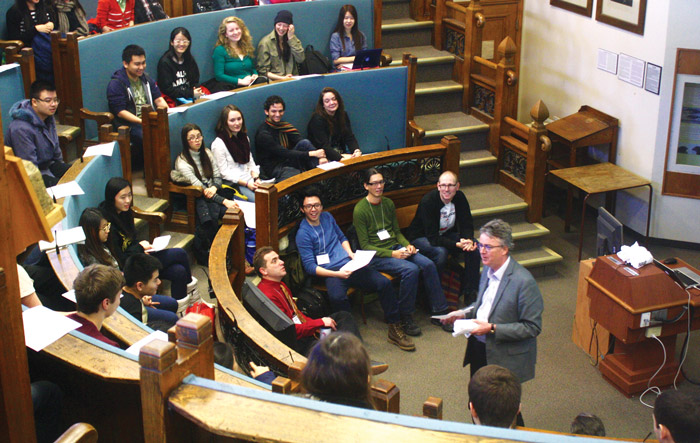
Soup and Science, presented by the Office of Undergraduate Research in Science, has provided a platform for undergraduate students to hear professors discuss their research and potentially secure a position as an undergraduate researcher in their labs. As Dean of Science Martin Grant explained, Soup and Science offers students a chance to participate in “multidisciplinary speed dating.” Participating professors briefly present their fields of research, and students are encouraged to mingle and network with the participating professors over a bowl of hot soup.

Monday

Professor Karine Auclair from the Chemistry Department kicked off the 19th edition of Soup and Science with a presentation about her lab’s work in understanding P450 enzymes, which are found in the liver and play an essential role in drug metabolism. Auclair’s goal is to understand the role P450s play in antibiotic resistance.

“We can’t do the chemistry that these enzymes can do,” she explained.

By understanding P450s’ roles as biocatalysts in antibiotic reactions, resistance mechanisms can then be inhibited.

The next speaker, professor Shirin Abbasi Nejad Enger from McGill’s Department of Medical Physics, focused on a unique cancer treatment called brachytherapy. Enger’s lab delivers injections of radioactive iodine seeds near cancerous tumors; this technique offers the advantage of targeted treatment and facilitates removal of radioactive substances. Drawing from many disciplines, Enger and her lab decide on the specific dose and placement of these radioactive seeds, taking into account nearby radiosensitive tissues.

Chemistry professor Janine Mauzeroll opened up her dynamic presentation by identifying chemistry’s newest trend: Magnesium alloys. Mauzeroll and her team can measure the surface topography of materials like batteries using a method known as scanning electrochemical microscopy (SECM). Her lab works on producing stable magnesium which could be used to avoid the degradation of car batteries. Though magnesium offers a tempting solution for increasing car battery life, the catch is its rapid corrosion rate.

Professor Boswell Wing from the Department of Earth and Planetary Sciences came prepared with a roll of toilet paper to conclude Monday’s session. As he unrolled the toilet paper across the room, Wing explained that it represented the scale of time. According to Wing, only the last sheet represented the existence of humans—microbes had begun to populate the earth much earlier. Wing explained that through isotopic ratios found in the rock record, he and his team are able to approximate the microbial composition of ancient Earth.

— Lydia Kaprelian

Tuesday

Chemistry professor Amy Blum presented her work in nanomaterial design to open Tuesday’s Soup and Science. Given the fact that a virus’ structure is determined by its genetic code, Blum and her team are able to design nanostructures with specific optical properties through genetic manipulation. According to Blum, the application of this can lead to the creation of metamaterials—materials with properties that do not exist in nature—with a negative index of refraction. In other words, a cloaking device.

Physiology professor Maurice Chacron followed Blum, explaining how behavioural output changes with a person’s state of mind. According to Chacron, the sight of sushi can lead to salivating or nausea. As such, Chacron’s lab studies the neuromodulators responsible for these changes, and tries to understand the brain’s translations of sensory signals to behavioural outputs.

Computer science professor Bettina Kemme’s presentation described server architecture in massive multiplayer computer games. Kemme’s team attempts to resolve data overload issues by separating the world into rooms or operating with parallel servers, a computational method where large problems are subdivided into smaller ones and then all solved simultaneously. 

Kemme has done this by creating a virtual McGill world. “If you don’t spend enough time on the real world campus, you can now spend your virtual life there too,” she promised.

Physics professor Alex Maloney’s presentation on theoretical physics concluded Tuesday’s speeches. He began by outlining an irreconcilable compatibility issue with two theories of modern physics: Quantum physics and its characteristic quantum “fuzziness”—or the existence of particles as a particle and a wave—and general relativity with its smooth curve geometry. The inconsistency between the two is often not a problem because they operate on different scales. The problem only arises, he clarified, when we consider black holes. This is because their radius is a kilometre long, and their mass can be as large as the sun’s. Maloney’s lab works on math theory that revolves around quantum gravity to rectify this discrepancy.

— Lydia Kaprelian

Wednesday

Wednesday’s Soup and Science began with an appropriate analogy made by medical physics professor Isaam El Naqua.

“[In our research] we collect information; biological, physical, and imaging data [information] create a big soup, where people like me stir this soup,” El Naqua said.

Through his multidisciplinary study, El Naqua tries to alleviate the negative effects of cancer radiation treatment by collecting and analyzing clinical data using various advanced methods such as imaging technology and complex systems analysis.

Continuing with the theme of data and information, mathematics professor Abbas Khalili’s research focuses on new statistical technologies to solve the challenges posed by the enormous amounts of data now available to us from modern technologies, ranging from genomics to Google.

Chemistry professor Jean-Philip Lumb—who calls himself a “firefighter of chemistry”—followed Khalili by explaining his research on fire. His team is looking for methods favouring partial combustion over complete combustion in organic reactions. His motivation revolves around the fact that partial combustion generates large amounts of waste and is highly inefficient. As a possible solution, Lumb pointed out the enzyme tyrosinase, which controls combustion in living organisms and could potentially be used in chemical industry as a catalyst.

Next, immunology professor Martin Richer introduced his immunological research, which focuses on the antigen sensitivity of CD8+ T-cells. These cells  are involved in autoimmune diseases such as diabetes or immunity deficiency conditions, including cancer.

The day ended with professor Shane Sweet, from the Department of Microbiology and Immunology, who spoke about his research on the psychological factors that motivate people to engage in physical exercise. His two focus groups of study include people in cardiovascular and spinal injury rehabilitation.

“The idea behind my work is: Let’s get moving,” Sweet said.

— Alex Pozdnyakov

Thursday

Thursday kicked off with a peek into the wild world of quantum physics. Professor Guillaume Gervais, a physicist, spoke about his work with “quantum faucets”—openings just a few atoms across—that allow physicists to see the effects of quantum mechanics on passing electrons. “Everything you know about Ohm’s law, about circuits […] doesn’t apply here,” Gervais said.

His research also explores dimensionality. Gervais’ work in this field attempts to observe particle interactions in one dimension. The solutions to equations describing the positions of particles are expressed very differently in three dimensions and one dimension.

After Gervais, biochemistry professor Sidong Huang explained his research, which explores biology on the molecular scale in genetic determinants of chemotherapy resistance. Many tumours, he explained, show promising initial responses to chemotherapy treatments, going into remission before developing resistance to the drugs. His work attempts to determine why this occurs, using functional genomic techniques to find the mutations that cause this resistance.

Physiology professors Ana Nijnik and Jason Tanny’s work explored the effects of DNA packaging on the human body. When a cell divides, DNA is wrapped around proteins called histones. These proteins can affect which genes are expressed later on in the cell’s life. Nijnik examines the effects of these proteins on blood cell production, a process known as hematopoiesis, whereas Tanny is especially interested in the role that gene translation—in particular, the gene PTEFb—plays in cardiac hypertrophy.

Rounding off the day, pediatrics professor Pia Wintermark discussed the topic of neonatal brain research. Her lab attempts to determine both treatments for and the causes of brain injury in infants. For example, in infants who have been asphyxiated, hypoxia—a type of brain damage caused by a lack of oxygen—is often worsened after resuscitation due to a sudden influx of oxygen, otherwise known as hyperoxia. Wintermark explores methods of reducing this damage, while also attempting to determine why these methods work better for some individuals than others.

— Clare Lyle

Friday

The final day of Soup and Science lectures began with biology professor Thomas Bureau talking about his research on transposons, also known as the “jumping genes.” Bureau compared the genome to “an ocean with genes as islands in open waters,” which are filled with “strange entities” of transposons. By discussing the artificial selection of corn from maize, Bureau demonstrated how transposons destroy existing genes or contribute to the emergence of new ones.

Next, computer science professor Yang Cai introduced his research on algorithmic game theory, which finds its applications in “markets, social networks, evolution, internet advertisement, and elections.”

According to Cai, the problem of these models lies in the fact that they lack central design, components, and information richness history theory—a framework to describe a communications medium by its ability to reproduce the information sent over it—and therefore cannot be solved with standard approaches. In these cases, the algorithmic game theory comes into play.

Geography professor Benjamin Forest opened his lecture by letting the audience know that he is well-versed in parties. Indeed, his research is focused on analyzing geographical data of elections. By using a spatial technique called LISA (Local Indicator of Spatial Autocorrelation), Forest was able to identify certain patterns of electoral preferences across Quebec.

Microbiology and immunology professor Corinne Maurice followed by discussing her work on gut microbiota. With the human body containing trillions of microbial cells, Maurice characterized humans as “walking microbial systems.” Even though metagenomics techniques have been able to identify most of those microbes, Maurice emphasized that there is still a lot that is unknown about gut microbiota.

To wrap up the week, physics professor Robert Rutledge posed a question: What does a cell phone become when it shrinks until it becomes almost as dense as a black hole? Rutledge’s interests are focused on studying the bulk dense nuclear matter and strong nuclear force. Even though current theoretical predictions are still off by a significant margin, Rutledge’s research attempts to tackle this issue by observing neutron stars, black holes and gamma-ray bursts, and optical and radio observatories.

— Alex Pozdnyakov

a, Opinion

Commentary: Who is Charlie?

Charlie is the hero of the freedom of the press. Charlie has, rightfully, taken freedom of speech to its very limits, pushing past the boundaries of political correctness. Charlie is a martyr. This has been the prevailing narrative since the shooting at Charlie Hebdo.

But Charlie is not a supporter of freedom from discrimination or freedom of religion. Charlie wrongly equates freedom of expression with freedom from consequence.

On Jan. 7, two gunmen took 12 lives at the offices of Charlie Hebdo, a French satirical magazine. The suspects have been identified as Islamic extremists who sought revenge for the magazine’s many infamous portrayals of Muhammad and the Islamic tradition, such as the cartoon depicting the Prophet Muhammad naked, and a cover cartoon featuring Muhammad kissing a Charlie Hebdo staff member.

Since the shootings, people across the Western world, including many high-profile politicians and celebrities, have condemned the actions of the terrorists and proclaimed “#jesuisCharlie.”

Sending out a quick tweet proclaiming “#jesuisCharlie” is easy. It is harder to give some thought into why we are mourning. The inexcusable murders of the Charlie Hebdo staff members have been taken and shaped into the symbol of free speech and freedom of the press. #JesuisCharlie mourns not the individuals who were killed, but rather the idea they seemingly symbolize. Charlie Hebdo is the representation of a modern era Marianne–the embodiment of liberty and reason.

But is this an accurate portrayal of Charlie?

My argument is not that the editorial choices of Charlie Hebdo should have been subdued, but that there is a greater complexity that should not be filtered in black-and-white: Making a martyr out of Charlie Hebdo actually hurts liberty.

Charlie Hebdo is not a high-minded, highbrow publication with the purpose of fighting for freedom. Its staff members have claimed that the magazine’s intent is to satirize the follies of politicians, institutions, and religions, just about anybody or anything. As George Packer of the New Yorker so vehemently declared, “Charlie Hebdo had been nondenominational in its satire, sticking its finger into the sensitivities of Jews and Christians, too—but only Muslims responded with threats and acts of terrorism.”

Charlie is the schoolyard bully making fun of the vulnerable, and then
justifying it by saying, “I make fun of everyone—can’t you take a joke?”

But to use the fact that many religions were ridiculed as a defense of Charlie Hebdo’s content is to misunderstand the underlying situation in which the incident took place and to hide behind a thin veil of humour. The purpose behind satire is to raise unheard voices and to question the loudest voices through comedic means. But whose voice does Charlie Hebdo champion? Is it noble to scream, “Mock everything!” with no intention of addressing the fact that some groups are more privileged than others?

The French republican tradition is secular: A large part of the French Revolution was to separate the state from the church, which had ties to every aspect of public life. Secularism in France differs from secularism here in North America, as it insists on having no religion rather than accepting all religions. This is illustrated, for example, in the ban on burqas in France.

The end of French colonialism in the mid-20th century has also brought in many Muslim immigrants into France, and for the most part, they still face systematic discrimination. The reality is that Muslims in France are vulnerable to prejudice in a way that the majority isn’t.

To make a crude comparison, Charlie is the schoolyard bully making fun of the vulnerable, and then justifying it by saying, “I make fun of everyone–can’t you take a joke?”

Civil liberties like freedom from discrimination and freedom of religion are taken for granted by the in-group, and taken away from the minority–Muslims in France. Nothing can justify what the gunmen did, but making Charlie Hebdo a spokesperson for the cause of liberty is not completely accurate. Freedom of expression does not mean freedom from consequence. Charlie Hebdo’s publications served to exacerbate anti-Muslim and anti-Arab sentiments in an already hostile environment. Its words and drawings perpetuate a society and culture that enforces the status quo. You can condemn the actions of the terrorists and disagree with the content Charlie Hebdo puts out at the same time. To make Charlie a martyr is to ignore the wider context in which the events played out.

a, News

Nurse shares experience in combating stigma against Ebola at McGill lecture

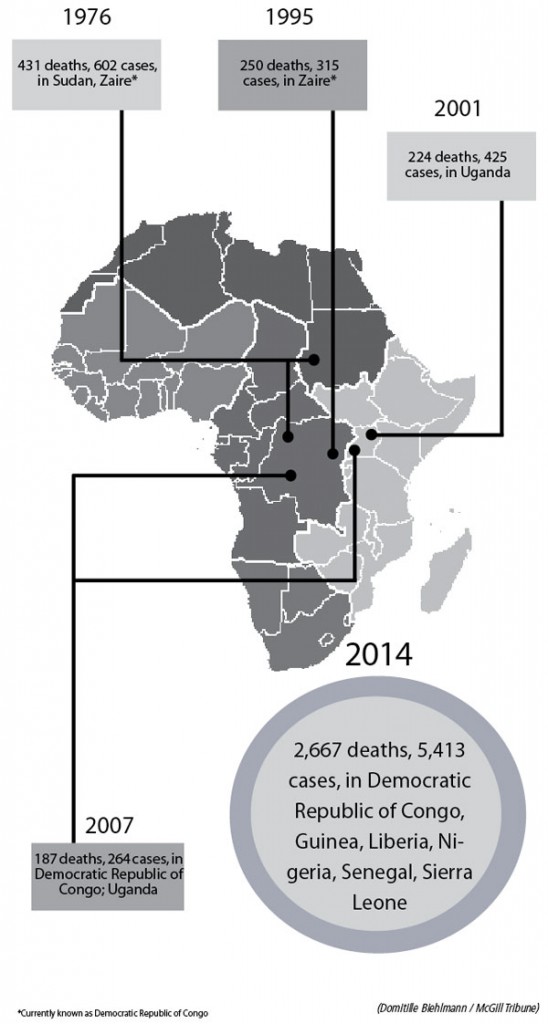
Kaci Hickox, a Maine nurse who has worked with non-profit medical humanitarian organization Médecins sans frontières (MSF) to treat Ebola patients in Sierra Leone, spoke to members of the McGill community on Thursday about the circumstances of the current Ebola outbreak and the challenges that need to be overcome in order to beat the disease. (more…)

a, Men's Varsity, Sports

Basketball: Bourque leads Redmen past Rouge et Or


McGill Redmen
73

Laval Rouge et Or
42

“Going into the game you always think you’re going to win—you have to be confident,” sophomore wing Michael Peterkin said. “We beat [Laval] two days ago, and we had a tough game when we won that so we thought if we stick to our game plan we’d have a chance to win again.”

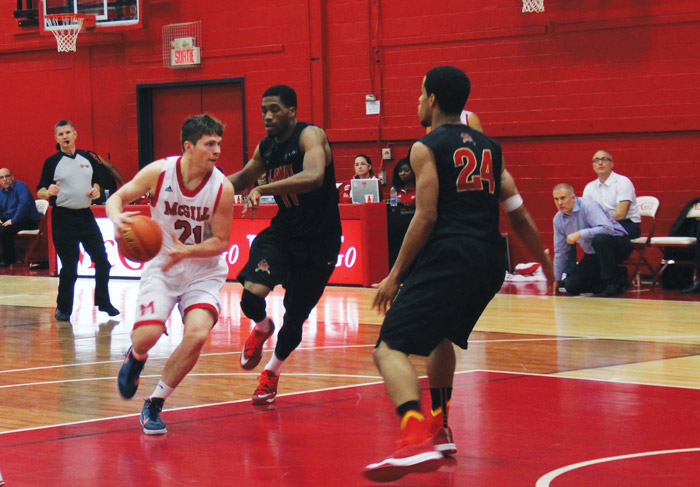
With tight defence and strong offensive play, the McGill Redmen (6-2) were able to do just that, defeating the Laval Rouge et Or 73-42. Despite the wide margin, the win did not come easily for the Redmen. The first quarter finished with McGill leading by just one point, but strong play in the second and third quarters widened the lead.

Sophomore forward François Bourque, who registered 17 points and 10 rebounds for a double-double, credits his achievement to good teamwork.

“I am proud [of myself] but I have to give credit to the rest of the team they gave me good looks and it was pretty easy for me to finish on the basket,” Bourque said.

Guard Christian McCue also noted the team effort that led to the win.

“I [absolutely] think this was one of our best games this season,” McCue said. “It was one of the first nights we really came together. All five guys on the court were really playing well together on offence. It seemed like everyone was kind of clicking. Everyone was in the right spot at the right time and we really were just cohesive as a team on the offence and [in general] tonight.”

Though the Redmen have been hot as of late, the same cannot be said of the team’s shooting.

“The last couple games we have been struggling with field goal percentages I guess were going to have to get better by making more reps,” Bourque commented on the team’s shooting woes. Although McGill won, its field goal percentage was 35.4 per-cent on two-pointers and 27.8 per-cent on three-pointers, both of which need to improve for the Redmen to find success in the playoffs. Laval’s offensive play, however, was considerably worse: 26.2 per-cent on field goals and 15 per-cent on three-pointers.

McGill’s low field goal percentage speaks less to its impotence on offence and more to Laval’s strength on defence. The Rouge et Or’s defensive strategy limited high quality shots, but not enough to choke the Redmen out on the court. The two teams run similar offences, a point that is not lost on McCue.

“[We] both have quick guards, so in that respect we are pretty similar,” McCue explained. “When it comes down to it, it’s just who […] can keep the other guy in front of them. It’s just who’s going to take that extra step and play defence a little harder on that night.”

The Redmen showed that they could be quick on its toes and strike back hard. Even with their amazing work on the court, the Redmen still see areas that need to be improved. Senior forward Rodrigo Imperador, who scored seven points in his 11 minutes of playing time, didn’t think that this was one of McGill’s best games.

“I think that it was a good game, but I think this is just a little taste of what we can actually do,” Imperador said. “I don’t think it’s our full potential, but it’s in the right direction.”

McGill will try to keep things rolling at home as they take on UQÀM (2-4) next, on Jan. 29.

a, Opinion

Commentary: The American health care distraction

In the debate over health care reform in Canada, defenders of the status quo often resort to the tired claim that a greater role for competition, private financing, or private provision of health care services in Canada would mean the ‘Americanization’ of health care. Indeed, the claim is often made that proponents of private financing and delivery with the universal Medicare system are recommending the United States’ approach to health care policy in which only the rich can have access to top quality care, a highly deceptive and misleading argument.

Most people arguing for a greater role for private financing and delivery of health care in Canada are not recommending the adoption of a U.S. style health care system. All Canadians should agree that it is in the national interest to have a high- quality universal access health care system regardless of ability to pay.

The U.S. is a straw man comparison and is not a model for any country to reform its own nation’s health care system on. In addition to its high costs, the U.S. also fails to deliver coverage to millions of its citizens. However, while Canadian health care is better than the system (or lack thereof) that exists in the U.S., it actually performs relatively poorly compared to other developed nations that provide universal health care.

The question Canadians must ask is how to best organize health care policy in Canada to better deliver on the promise of high quality care provided in a timely fashion regardless of ability to pay at reasonable cost to the taxpayer. The facts show clearly that Canada’s government breaks that promise on a daily basis despite asking Canadians to pay for the developed world’s second most expensive universal access health care system.

Notably, in spite of those comparatively high expenditures, Canadians receive relatively poor access to physicians and medical technologies, and are cared for using far too many old and outdated pieces of medical equipment. Canadians also have to live through the agony of some of the longest waiting times in the developed world.

The question Canadians must ask is how to best organize health care policy in Canada to better deliver on the promise of high quality care provided in a timely fashion

Austria, Belgium, France, Germany, Japan, Luxembourg, and Switzerland all deliver health care services without waiting lists that are excessively long, while still providing treatment regardless of ability to pay.

Australia, Japan, Sweden, Switzerland, and France all manage to outperform Canada in outcomes closely related to the performance of the health care system. According to the Fraser Institute, a Vancouver-based market-oriented think tank, Canada performs worse than these other nations on indicators that range from infant mortality to breast cancer survival rates.

Critically, every one of these nine nations employs competition in the delivery and financing of health care and requires patients to share in the cost of the care consumed to the benefit of both patients and the public treasury.

More specifically, each of these nations employs private providers in the delivery of publicly funded health care services, employs a private parallel health care sector that individuals can access easily, and requires cost sharing or user fees for universally accessible health care services.

According to organizations like the World Health Organization and the respected health policy think tank the Commonwealth Foundation, all the above-mentioned nations achieve better health care outcomes at a lower cost than Canada.

The claim that employing private financing and provision of health care in Canada would lead to the ‘Americanization’ of health care is not based on facts. The truth is that employing these policies would improve the state of health care in this country and make Canada’s universal health care system much more like those in Sweden, Switzerland, or Japan. Universal health care is rightly a Canadian value. Yet this does not mean the system is perfect. The failure of the Canadian model to deliver a quality of service on par to other developed nations means that we must move away from our obsession with comparing ourselves to the U.S. and learn from our global peers who seem better able to balance the twin goals of equity and efficiency in health care.

a, Arts & Entertainment, Film and TV

TV Reviews

Downton Abbey

Downton Abbey has gained a solid and loyal following throughout its four seasons, mainly consisting of—from my experience—an older female demographic. However, I myself have kept up with the show, and have discovered some male friends who shyly profess their love for the British soap opera. This bashfulness is unnecessary and outdated, but unfortunately, there’s still a perception that dramatic and romantic shows are still exclusively targeting women. While the historical time period entails a certain gender hierarchy, the presence of powerful and influential women adds complexity to the show, and makes it all the more engaging for a feminist viewer.
With only two episodes of season five released in North America thus far, Downton has already introduced some major developments. However, each episode seems to be grasping at some dramatic event to spice up the drawling day-to-day life of an aristocratic household. Edith throws a book across her room, and as it lands in the fireplace—which apparently burns all night—it then ricochets onto the floor while she lies in her bed, oblivious to the sudden burst of flames.
While this plot development, among others, is disappointingly superficial, the characters remain complex. The development of the under-butler Thomas Barrow over past seasons seems to be coming to a head in the fifth, as we see his soft and vulnerable side conflicting with the vindictive manipulation of his co-workers. Rob James Collier performs the character with stunning persuasion, perhaps outshining any other performance on the show. Sparks like these keep the BBC series burning season after season, despite some of the contradictory moments and bland performances. The new season holds the promise of more intrigue, scandal, and the possibility of some shifts in the paradigms of British society, changing the very framework of the show and making it both exciting and interesting to watch.

— Elizabeth McLellan

Parks and Recreation

It’s the beginning of the end; Amy Poehler’s hit sitcom Parks and Recreation premiered its seventh and final season last week with two back-to-back episodes, “2017” and “Ron and Jammy.” So, does the vehicle for television’s perkiest comedian successfully rekindle its infectious energy? Short answer: Abso-frikin-lutely.
Starting the audience smack-dab back where season six ended with a brief glimpse of 2017 Pawnee, the show doesn’t miss a beat as it comfortably slides back into its familiar setting, acting as though it had never left. For this reason, new fans are probably better left starting elsewhere in the series as, despite the sitcom aesthetic, continuity jokes hold the brunt of the humour.
However, it is for this very reason that returning fans will find a lot to love and then some with the new season, as familiar characters and dynamics are played off hysterically with clever twists, while futurist jokes are few and unobtrusive. While the premiere isn’t exactly perfect—Tom’s subplot feels a little underdeveloped compared to the others’—if these episodes are a sign of things to come, then season 7 is gearing up to be the series’ best.

— Martin Molpeceres

Girls

Four seasons into its run, Girls is becoming increasingly like televisual comfort food. Though it may not offer much in the way of surprises—as other long-running shows, such as Mad Men, are still able to do from time to time—it consistently provides its viewers with half-hours that are funny, diverting, and sometimes even moving.
This season’s premiere was no exception. Adam was his bizarre but lovable self (his depression ad provided the episode’s comic highlight), Hannah was as neurotic as ever (the episode’s teaser was pleasantly reminiscent of that of the pilot), and the supporting cast continued to play their respective roles quite nicely.
Most notable among them was Marnie. Her already-infamous sex scene from the episode’s opening minutes guaranteed on its own that she’d be among the show’s most-discussed characters, but her dramatic meltdown following her disastrous jazz brunch performance made for a satisfying emotional climax.
The New York setting worked as well as it has in the past, but it’ll be interesting to see how the show handles Hannah’s move to Iowa. The challenges of her long-distance relationship should provide a healthy dose of dramatic intrigue, and the new setting provides opportunities to keep the now-familiar character from becoming stale.

— Max Joseph

a, Martlets, Men's Varsity, Sports

Know your coaches: Martlet and Redmen basketball and hockey

Peter Smith – Martlet Hockey

There are very few teams in university sports that can claim to be as dominant as the Martlet ice hockey team has been in recent years. A large part of that success can be traced back to the steady hand of Peter Smith, who has served as the team’s coach for 15 seasons and holds a career .721 winning percentage behind the bench. Like many McGill coaches, Smith holds a degree from the school as well. Smith, however, spent his time at McGill in the pool, rather than on the ice. He swam for the Redmen and was team captain from 1977-1979, qualifying for CIS nationals in all three years. Smith has also had success with the Canadian national women’s team, winning a silver medal at the 2008 IIHF World Championship as head coach, and a gold medal at the 2010 Olympics as an assistant coach.

Kelly Nobes – Redmen Hockey

When Kelly Nobes was hired in 2010 as the Redmen hockey team’s head coach, he had big shoes to fill. The team’s previous head coach, Martin Raymond, held the position for over a decade before leaving for a job with the AHL’s Hamilton Bulldogs—a minor league affiliate of the Montreal Canadiens. In the four years since being hired, Nobes has managed to achieve success surpassing that of any previous Redmen head coaches. The 2010-2011 Redmen squad set a school record for wins in a single season, and the following year McGill won its first ever University Cup title. Nobes is no stranger to success in a McGill jersey, spending four years as a centre on the team before graduating in 1997 with a bachelor’s degree in physical education. During his time on the team he tallied 181 points in just 131 games, and graduated as the ninth-leading scorer in team history.

Ryan Thorne – Martlet Basketball

Coach Ryan Thorne was awarded his fourth RSEQ Coach-of-the-Year award in 2014, and it came as no surprise after Thorne coached the Martlets to their third consecutive RSEQ Championship. Thorne has served as the team’s coach for 12 seasons, but it is only recently that McGill has truly hit its stride. Despite struggling early in his tenure, the Martlets are now poised to compete for a national championship, in part thanks to Thorne’s strong recruiting record—a Martlet has been named RSEQ Rookie-of-the-Year for each of the past three seasons. Thorne spent his playing days with Bishop’s University, captaining the Gaiters to a National Championship in 1997-1998 while being named an all-Canadian in the process. With the Martlets holding a perfect record, it may not be long before Thorne adds a second title to his mantle.

David DeAveiro – Redmen Basketball

It has been almost 40 years since the Redmen basketball team last won a national championship, but that is a drought that David DeAveiro is working hard to end. In his four years at the helm of McGill’s program, DeAveiro has led the team to two RSEQ Championships, but the team has yet to have success on the national stage. DeAveiro’s coaching career began with the University of Ottawa, where he also spent five seasons as a player. Since he began coaching, DeAveiro has worked with Canadian national teams at all levels, including in 2011 when he served as an assistant coach for the national squad competing in the PanAm Games.

a, Martlets, Men's Varsity, Sports

The week that was: January 20

Athletes of the week

Francois Bourque

Bourque, a towering 6’6” forward from Terrebonne, Quebec, carried the Redmen to two victories over the weekend against Laval. He notched a double double in both games and averaged 13.5 points, 13 rebounds, and 2.5 assists, proving to be too much to handle in the paint and on the glass. Bourque has come back from the winter break with a renewed sense of aggression and has hit double digits in points and rebounds in all but one game. The Redmen, who often operate with Bourque as their sole big man, will need more performances like this to keep the wins coming.

Katia Cleyment-Heydra

The reigning CIS Player-of-the-Year was at her finest once again for the Martlets this weekend, tallying two goals and two assists over a pair of games. She did most of her damage in a 5-3 victory against Concordia, scoring a goal merely 14 seconds into the game, the new team record for fastest goal. She has been instrumental to the Martlets’ success, is leading the CIS in assists, and is tied for sixth in total scoring. Look for this seasoned veteran to peak in the second half of the season and cap out an already noteworthy career.

Beyond the box score

Martlet Hockey 

With a weekend split–a 5-3 win against Concordia and a 6-4 loss to number one ranked Montreal–the Martlets will likely stay ranked second in the nationwide rankings. Senior forward Katia Clement-Heydra put forth strong performances in each game, tallying four points in total. This included scoring the opening goal 14 seconds into the loss to Montreal, which set a school record for quickest goal to begin a game. The team’s leading scorers Gabrielle Davidson and Leslie Oles racked up three and four points respectively over the weekend. McGill’s goaltending was uncharacteristically weak, as both Brittany Smrke and Taylor Hough struggled to make saves at times when the Martlets needed them. Smrke stopped just 23 of 28 shots he faced, and Hough didn’t fare much better, turning away 19 of 22 shots. The Martlets now have a week of rest before taking on Concordia on Jan. 25 at 3 p.m.

Martlet Basketball 

The Martlets’ (8-0) undefeated season continued this week, with two victories over the Laval Rouge-et-Or. McGill triumphed 74-62 on the road Thursday, before returning home Saturday to win 61-52. The games marked the 15th and 16th consecutive wins against Laval for McGill. All-Canadian forward Mariam Sylla led the way in both match-ups, notching 11 points and 8 rebounds in Thursday’s game before pouring in 18 points and collecting 18 rebounds Saturday. The latter effort was Sylla’s league-leading fourth double-double this season. Senior point guard Dianna Ros also made significant contributions, reaching double-digit scoring in both games while dishing out six assists per game. McGill’s victories, coupled with a Windsor Lancers’ loss Saturday, mean that the Martlets will likely climb to number one in the nationwide rankings for the first time in the program’s history.

Martlet Volleyball

The Martlets raced out to an early one set lead but were unable to finish the job, ceding three straight sets to the Sherbrooke Vert et Or. With the exception of the second set which ended 25-17, only 11 total points separated the two squads in the other three sets. Additionally, rapidly improving middle blocker, Charlotte Clarke, tore her ACL while star libero Daphnee-Maude Andre-Morin will be spending the rest of the season on the bench after failing to receive clearance from the medical staff following a concussion earlier in the season. Clarke had registered seven points prior to exiting the game while junior power hitter Ashley Norfleet led the squad with 14.5 points earned primarily through 13 kills. The Martlets currently sit in last place in the RSEQ but still have five games to turn their season around.

By the numbers

1.98 – Height, in metres, of Hao Xu’s gold medal-winning high jump for McGill at the Rouge et Or Invitational. Also, on an unrelated note, Michael Jordan’s height.

300 – Number of games David D’Aveiro has won as head coach of the Redmen basketball team after Saturday’s victory over Laval.

319 – Number of fans who didn’t find a seat at this year’s Carnival game.

a, Arts & Entertainment, Theatre

The Yellow Wallpaper puts on clinic in simple, eerie brilliance

Oftentimes it is the sheer surface simplicity of art that enables it to strike a resonant tone within the audience. Tuesday Night Theater (TNC)’s production of the The Yellow Wallpaper, based off of Charlotte Perkins Gilman’s haunting 1892 short story, brilliantly demonstrates this phenomenon. On the surface, TNC’s rather frugal production, which presents a largely unadulterated version of Gilman’s story, may come off as overly simplistic; however, smart and creative choices in stage design, lighting, and costuming as well as powerful acting stand as a testament to the production’s outstanding performance. Its simplicity allows the issues of gender inequality to come to the fore easily, captivating the audience just as the short story did in 1892.

The Yellow Wallpaper provides a historical snapshot of popular—but skewed—notions surrounding the medical and professional treatment of women during the 19th century. It highlights a woman’s descent into madness as she is subjected to the popular treatment for mental illness at the time, Dr. S Weir Mitchell’s infamous ‘rest cure.’ Though Dr. Mitchell’s treatment called for the near-complete cessation of mental and physical stimuli, TNC’s production of Gilman’s classic presents us with an abundance of both such things that intelligently makes the audience feel the error of the Victorian Age.

While walking into the theatre, the ominous presence of yellow-tinged insanity begins to impart its subtle effects on the viewer. The entirety of the stage is designed in such a way that the audience is not merely viewing the characters acting within the confines of a separate yellow-wallpapered room, but actually within the room itself, surrounded on all sides by a creeping yellow glow. This decision, coupled with purposefully placed deviations in the largely consistent yellow pattern, is instrumental in enabling the audience to mirror, to some extent, the exact emotions of curiosity and suffocation undergone by the play’s narrator as a result of the wallpaper. The lighting design, coordinated by Louis Ramirez and Hayley Brown, nicely complements the atmosphere generated through the set by appropriately and dynamically changing the lighting according to the tension of the scene.

The eeriness of the great set design is matched by the equally hair-raising performances of Connor Spencer and Rachel Stone. Stone, calmly enacting the narrator’s more submissive tendencies with her slow and often blank-faced line delivery, and Spencer, spastically fidgeting out the narrator’s growing mental instability with intense eye movements and incessant scratching, both play the divided consciousness of the narrator as she struggles to cope with the pressures of solitary confinement. Their respective costumes brilliantly highlight this dichotomy between the two, as Stone sports a more traditional, homey orange sweater and skirt combo while Spencer wears a pair of white button-down jeans and a white headband that are subtly reminiscent of a psychiatric ward. While there were occasional slip-ups in line delivery, none were substantial enough to detract from the overall experience.

The chemistry between the two actors is really brought out by director Grace Jackson’s meticulous emphasis on the positioning of the two. At the outset of the play—a time when the narrator’s sanity is relatively intact—the two are constantly placed opposite from one another on stage and maintain this mirror image in what serves to clearly illustrate a mental separation between the two. However, the end of the play increasingly places the two characters placed side by side, often delivering the same lines together, in what symbolizes an unfortunate union of insanity.

Although TNC’s production of The Yellow Wallpaper doesn’t break any new ground and rarely deviates from the traditional plot, it still delivers a powerful message in its quick hour-long runtime, which results in a short, sweet, and to the point production.

The Yellow Wallpaper runs from Wednesday, Jan. 14 to Saturday, Jan. 17 at 8 p.m. at Tuesday Night Cafe Theatre (3485 McTavish). Student/senior tickets are 6$ and adult tickets are 10$.

Travel

The white-hot beauty of Iceland in stunning photos

This is some dummy copy. You’re not really supposed to read this dummy copy, it is just a place holder for people who need some type to visualize what the actual copy might look like if it were real content.

If you want to read, I might suggest a good book, perhaps Hemingway or Melville. That’s why they call it, the dummy copy. This, of course, is not the real copy for this entry. Rest assured, the words will expand the concept. With clarity. Conviction. And a little wit.

In today’s competitive market environment, the body copy of your entry must lead the reader through a series of disarmingly simple thoughts.

All your supporting arguments must be communicated with simplicity and charm. And in such a way that the reader will read on. (After all, that’s a reader’s job: to read, isn’t it?) And by the time your readers have reached this point in the finished copy, you will have convinced them that you not only respect their intelligence, but you also understand their needs as consumers.

© Images: IURIE BELEGURSCHI

Read the latest issue

Read the latest issue