Latest News

Hannibal Lecter in the season 2 finale
a, Arts & Entertainment

Hannibal makes a killing in dramatic season two finale

There are certain things we have come to expect from primetime slots on big-budget channels: drama is a must, and thus, a healthy handful of deceit and heartbreak is an overdone yet long-adored aspect of all good thrillers. Hannibal has navigated these expectations while balancing its loyalty to the novel series from which it is adapted, concluding in an explosive season finale titled “Mizumono”, where the cast and director David Slade artfully wrapped all the craziness of the earlier episodes into a succinct package, lacing it with unrestrained intimacy.

Picture this: all your heroes are sprawled out and wounded—perhaps fatally—as the antagonist strolls past the decay into the rain, cleansing himself of his sins and entering into a life on the run. Hannibal’s finale was just as manic as it was cautious, bringing in surprise twists with the resurrection of previously believed long-dead characters while still making each micromanipulation entirely plausible. The end of the episode left both the characters and the audience in pieces, particularly as Hannibal Lecter (Mads Mikkelsen) delivered his final sermon to Will (Hugh Dancy) before gutting him and slicing the throat of the previously believed deceased Abigail (Kacey Rohl). With this, Hannibal shows us his heart, his trust, and his love for Will, then immediately tears it apart by forcing Will out of his life.

Hannibal prides itself on its skill in the visual arts, using dim lighting and blurred camera angles to its constant advantage in creating an eerie, unpredictable atmosphere. One of my first thoughts during the finale was how beautiful and calculated each action was. While season one relied on grandiose images of meals or decaying corpses interspersed with cuts from the forensic lab, season two shifted into subtlety, instead making use of gestures and the interplay of dialogue with action.

The finale was key in showing how far the show had come in terms of visual perspicacity, the most dramatic image being that of Alana (Caroline Dhavernas) lying face-up on the concrete, surrounded by shattered glass and doused by rain. Her eyes swell and her face recoils in terror as the shoes of Dr. Lecter enter the screen just beyond her. The precarious nature of Alana and all the other characters left to die in Dr. Lecter’s house are simultaneously illuminated and pushed to the wayside as the true power of Hannibal is finally revealed. As described by executive producer Bryan Fuller, in that moment, Hannibal essentially “dropped the mic and walked off the stage.”

Moving forward, the direction of the show is unclear, as can only be expected when the majority of the cast is left facing their impending mortality. A third season has been confirmed, and an after-credit teaser left viewers with just enough to chew on without fully tasting what is to come. What I have most enjoyed about Hannibal is its commitment to the books, enough to satisfy long-time “Fannibals” while still allowing for new arcs and bridges to be inserted into the storyline. I had suspected, and interviews with Fuller have confirmed, that some do survive Hannibal’s massacre. Perhaps season three will be a game of cat-and-mouse between Hannibal and the FBI, or maybe we’ll see Will re-emerge to resume his obsession with destroying Dr. Lecter. Whatever season three has in store, it is sure to be bold, bloody, and undoubtedly delectable.

a, News

Applying AP/IB credits to transcript now optional for incoming, current students

Under recent changes to McGill’s “Advanced Standing Transfer Credits” policy, students with qualifying AP and IB test scores will now have the option to complete their degree with more than 120 credits. Previously, any transfer credits were required to count toward students’ degrees.

This change was pushed forth by Max Blumberg, U2 Science, who felt that the former policy punished incoming students for having taken advanced courses in high school.

The policy will be in effect beginning next semester, giving incoming and current students more freedom to plan their degree, according to Kathleen Massey, university registrar and executive director of enrolment services.

“[Students have] different reasons for wanting to stay longer—having the time to participate in an international exchange, completing specific courses at university necessary for admission to professional programs, and having time to explore their academic program options at McGill,” she said. “A compelling case was made and was supported by research about practices of some other universities.”

According to André Costopoulos, Dean of Students, financial reasons did not factor into the decision.

“More crowded classes [would occur, but] not necessarily more classes,” he said. “I don’t think it’s a huge factor, but it won’t reduce the problem nonetheless. Nobody knows how many more students will choose to stay.”

He also noted that the effects of the change would be minimal.

“I doubt there will be much of an impact because I think most people that wanted to stay before did so anyway and just accepted the consequences of the limit,” Costopoulos said.

Other options considered included raising the credit limit to 150 credits, and allowing students to receive exemptions for previous coursework without credit.

Blumberg objected both options due to the logistical difficulties behind them.

“Raising the limit to 150 allows students without advanced credits to stay for five years, [for] which McGill doesn’t have the physical capacity,” he said. “For the other option, the problem was professional schools typically only accept [advanced] credit towards fulfilling prerequisites if a student’s undergraduate school gave credit for those classes.”

While all student affairs and advising offices are aware of the revised policy, a public official notification for the change has not been issued. According to Costopoulos, the policy change is not expected to greatly impact the decision for prospective students, who normally choose to receive credits for previous coursework.

“The possibility to get the credits acts as a recruitment tool,” he said. “It makes McGill more attractive to incoming students. It’s later on [in their degree] that they realize they don’t want them. I’m not too sure if advertising this [policy change] to incoming students would make a difference.”

Demonstrators rallying in solidarity with victims of police brutality
a, News

Demonstrators rally in solidarity with victims of police brutality

Demonstrators rallied downtown to show solidarity with victims of police brutality on May 7. Approximately 40 people attended the protest, including individuals who had previously acquired injuries as a result of police actions.

The protest was held in part as a response to heightened police presence at an earlier demonstration in April, which protested government austerity and comprised of 10,000 attendees, according to L’Association pour une Solidaritè Syncidale Ètudiant (ASSE), the student union that took part in organising both demonstrations.

One attendee at the May rally, Robert Fransham, a 71-year-old activist, was injured in the April protest. According to Fransham, his leg received lacerations from police actions.

“I got hit by a police officer,” he said. “I was on my bicycle and he hit me with his shield and knocked me down. My leg got tangled up in the frame of my bicycle [….] I had to get stiches in my leg, and I’ve been on crutches because of the damage to the leg.”

The recent rally was also organised by the Collective Opposed to Police Brutality (COPB). Jennifer Bobette, a member of COPB, echoed Fransham’s statements, stating that remembering victims of police brutality is an integral part of mobilising against it.

“[It is] really important to not forget all those victims, and see how they are doing many years after their injuries,” she said. “It’s also important to denounce police abuses, and this is what we’re going to do.”

Demonstrators also rallied against the Montreal Police Service’s (SPVM) use of the municipal by-law P6, which requires demonstrators to provide their marching routes to the SPVM and bans the wearing of masks. If these regulations are not met, the demonstration can be declared illegal in accordance with the by-law.

In an earlier response to the controversial by-law, police spokesperson Stéphane Lemieux defended to CTV that the by-law helped ensure the safety of individuals involved in the protests.

“It helps us control the protests,” Lemieux said. “They can’t march against traffic and risk getting hit by cars.”

According to Michelle Moore, a media activist who attended the rally, the SPVM have been inconsistent in their enforcement of by-law P6.

“It’s up to police to decide whether or not they want to enforce the P6 rule [….] In my opinion, that is arbitrary,” Moore said. “[The police] are not enforcing this controversial law in a way that’s consistent. They’ll use it for some groups but not for others.”

For example, Moore noted that an Earth Day rally on April 22 was a protest that did not give an itinerary to the SPVM and was permitted to march.

Fransham said that he hopes that the recent events will bring awareness to the issue in the future.

“Police are very provocative, much more than they need to be,” he said. “My personal statement is to boost young people, who will take risks and come out to demonstrate against problems that exist in our society.”

Police at the scene declined to be interviewed.

SSMU Building at McGill
a, News

J-Board upholds invalidation of Tariq Khan’s SSMU presidency

Elections SSMU’s controversial decision to invalidate Tariq Khan’s presidential win has been upheld by the Judicial Board (J-Board) of the Students’ Society of McGill University (SSMU) following a hearing on April 29.

The J-Board’s unanimous ruling, which was ratified by the Board of Directors on April 30, confirms Elections SSMU’s decision to appoint  runner-up Courtney Ayukawa as the SSMU president-elect.

Khan was elected SSMU president on March 21, winning the position by 78 votes over Ayukawa. On Apr. 1, Elections SSMU announced the invalidation of the result, following an investigation into multiple allegations of misconduct by Khan and members of his campaign during campaign period. Alleged bylaw infractions included unsolicited messages regarding the elections, external influence on Khan’s campaign, the obstruction of free voting, and financial inconsistencies within his budget report, as investigated by Elections SSMU through evidence such as witness testimonials, video footage, and message screenshots.

Khan’s petition to the J-Board was an appeal of the April 1 ruling. His legal advocate argued that Elections SSMU had not properly exercised discretion regarding the admission and publication of the evidence of the investigation, and that Elections SSMU had used biased evidence for its ruling.

“There were a lot of biases and inconsistencies in the testimonies, and the assessment by the Chief Electoral Officer (CEO) was biased towards those who made the allegations,” said Kiran Ross, Khan’s advocate. “For these reasons, the invalidation should be immediately overturned.”

Elections SSMU’s advocate, Catherine Hamill, stated that they had conducted their investigation with due diligence and had considered the possible biases of all pieces of evidence. Hamill stressed that Elections SSMU had ensured evidence possibly marked by bias had been corroborated by other evidence before taken into account.

“Elections SSMU is aware of the impact this invalidation has on Tariq Khan and McGill,” she said. “Considering the totality of all evidence that was used to invalidate [the election], the decision is reasonable.”

Khan’s advocate also argued that although she and Khan received the evidence prior to the hearing, some of the sources had been redacted by Elections SSMU, which obstructed Khan’s attempts to conduct investigations into the legitimacy of the testimonials. The J-Board, however, received and reviewed the unredacted evidence.

According to Chief Justice Bennet Misskey, the ability to redact certain pieces of evidence is necessary to protect sources who wish to remain anonymous.

“The CEO relies on the use of informants in the process of gathering and evaluating evidence of bylaw infractions,” he said. “Oftentimes, these informants will only come forward if they can be assured that their identity will be protected. The evidence that was redacted in the case of the Khan hearing […] was evidence that would put the informants’ identity at risk.”

In his explanation of the J-Board’s decision to uphold Elections SSMU’s invalidation of the election, Chief Justice Misskey highlighted the quasi-judicial mandate of the J-Board.

“The Judicial Board interprets the legality of the [decisions made by the] SSMU body,” he said. “Upon an independent review of all the evidence, the Judicial Board found that the CEO’s decisions regarding his findings of fact and the sanctions imposed for bylaw infractions fell within a range of reasonable alternatives that were open for him to make and were therefore within the scope of his discretion.”

According to the CEO, Ben Fung, this case has highlighted the importance of complying with SSMU’s bylaws, but has also raised issues regarding their clarity.

“I think this entire process showed that in general there are a lot of things that need to be fixed in the electoral process,” he said. “We’ll be looking to more clearly define the way Elections SSMU oversees elections in general and how we perform our investigative duties.”

Khan also emphasized the need to clarify the bylaws.

“Even though both parties do agree that there are a lot of ambiguities in the constitution and the bylaws, and [that] a lot of work that needs to be done,” he said. “It is sad that I am the one who’s paying the price for all those discrepancies.”

Fung said that after this case, there will be reform to the Elections SSMU voting system through a modification of the bylaws, including shortening of the voting period and a change towards the preferential ballot.

“In the case of an invalidation, there wouldn’t be a need for a re-election [with a preferential ballot] because votes can just be transferred,” he said. “It’s more of a fair and representative way of voting.”


a, Opinion

Call for intervenors

Posted on behalf of the SSMU Judicial Board:

The Judicial Board has accepted jurisdiction to hear an appeal submitted by Tariq Khan regarding the invalidation of his election as President.  The appeal will be heard at the end of April and we are extending an invitation to anyone wishing to intervene in the dispute to duly complete a Judicial Board FORM I-1 “Application for intervention” (found on the Judicial Board website) and submitting an electronic copy to the Chief Justice. You will have until noon on Tuesday, April 29th to submit an application.  Please be advised that the J-Board recognizes intervening parties only where those parties are necessary for a complete solution to the questions in issue. Intervenors will be notified by the Chief Justice whether they have been accepted within a reasonable time.

SSMU legislative council
a, News

SSMU Council votes to re-run University Centre Building Fee in Fall 2014

The implementation of a University Centre Building Fee will be the subject of a referendum question in Fall 2014, following approval of the referendum question at the April 10 meeting of the Students’ Society of McGill University (SSMU) Legislative Council.

Students voted against implementing a University Centre Building Fee during the Winter 2014 referendum period. SSMU President Katie Larson said the details of this new referendum would be up to next year’s Council.

“They could mandate a special [referendum] earlier in the semester,” she said. “They will have options, which we will be passing onto the new executive.”

Clubs and Services representative Zachary Rosentzveig spoke against the motion.

“I think it’s problematic that this Council wants to vote on a referendum question that next year’s council will be tasked with defending and presenting,” he said.

Vice-President Finance Tyler Hofmeister defended the motion, noting that without the fee, access to the SSMU Building would be limited next year.

“All-hours building access has been cut for the building, given the current amount that we can afford,” he said. “In that case, it’s very likely that the future Council would want to pass a referendum early in the year, so as to keep the building open for all-hours access.”

Council also approved the 2014-2015 budget, which reflects the changes SSMU would make to its operations should the building fee fail to pass once again. Besides the removal of after-hours access to the SSMU Building, other changes include an increase to the price of mini-courses to run a $10,000 profit, as well as an increase in prices at Gerts to run a roughly $17,000 profit.

Library Improvement Fund Committee Report

Erin Sobat, a representative of the Library Improvement Fund (LIF) Committee, presented a plan to allocate approximately $756,000 worth of funds to various library projects this year.

The LIF is funded by student fees which are matched by the university.

These projects include the renovation of the Redpath washrooms, an expansion of the Redpath group study zone with new seating areas and computers, an increase in seating options at the Schulich library, and the purchase of group study room presentation equipment for McLennan Library. Other allocations include an increase in student employment at the library through work-study programs.

Global health preventative measures against smoking, AIDS, obesity
a, Science & Technology

Global health preventative measures utilize texting and television shows

Each winter, influenza viruses sweep across the globe, causing an estimated three to five million severe cases worldwide and 250,000 to 500,000 deaths, according to the World Health Organization (WHO)—and this is only one type of infectious disease. Faced with a spectrum of chronic illnesses, viral infections, and microbial pathogenesis, today’s healthcare infrastructure faces an overwhelming societal and economic challenge. To address this issue, many countries around the world have put an emphasis on innovating unique public health measures to focus on preventative care.

United Kingdom

The United Kingdom has chosen to approach one health issue, obesity, in a colour-coded fashion. Their traffic-light food labeling system aims to improve consumer awareness of nutritional information simplistically. Prepackaged food products are labeled red, yellow, or green based on the ratio of fats, sugar, and salt relative to each other that they contain. With this program, the United Kingdom Standard Food Agency hopes to encourage individuals to think before buying a product labelled red. It also allows consumers to quickly pick out unhealthy products from the grocery aisles.

India

Given the technological boom we have seen in the past decade and its ability to reach even the most rural areas, India is considering affordable mobile technology to promote preventative care. Rural populations affected by chronic diseases lack access to the resources necessary to manage these illnesses and prevent them from worsening. The government hopes that with cell phones—whose usage has increased in rural populations—health institutes could provide geographically distant or isolated patients with information on products and services through texts and apps, such as by texting appointment reminders. Automated texts could also serve as reminders to chronically ill patients to take their medications or get immunized. In the future, mobile health care could prove a powerful prevention tool in many countries.

Brazil

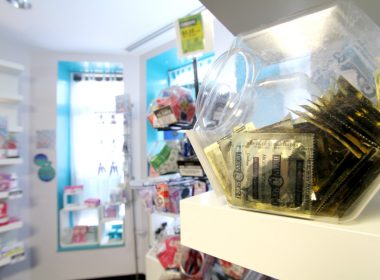
Brazil harnessed its creativity and effectiveness in promoting preventative measures through tapping into the country’s love for soap operas. In 1991, the government launched an anti-AIDS campaign that not only distributed condoms and needles, but also used TV soap operas to educate their audience about the health risk of HIV/AIDS.

Canada

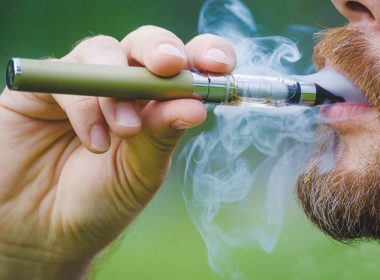
There are dozens of preventative measures taking place in Quebec, but one of the most interesting ones is the smoking cessation program. The provincial government established the Plan québécois d’abandon du tabagisme (PQAT) was created in 2002, focusing on stop-smoking campaigns and support for those wishing to quit through measures like quit smoking centres and a smoker’s help line. Interestingly, the Régie de l’assurance maladie du Québec (RAMQ) has decided to allow the public drug insurance plan to cover some pharmaceutical products that assist in quitting smoking.

Redmen rugby McGill
a, Martlets, Men's Varsity, Sports

Tribune Sports Awards 2014

It’s rare for a freshman to crack Redmen basketball Head Coach Dave DeAveiro’s lineup—never mind become a starter.  (more…)

Redpath Museum at McGill
a, Features

The Many Faces of the Redpath Museum

It isn’t often that a museum exhibit gets to stare back at its visitors. But for the past year, those who have climbed to the third floor of the Redpath Museum have been able to lock eyes with three unexpectedly youthful new faces—model reconstructions of what the museum’s 2000-year-old Egyptian mummies might have looked like centuries ago.

These facial reconstructions, which were added to the museum’s display in 2013, were constructed by a forensic artist based on the data collected from computed tomography (CT) scans performed on the mummies at the Montreal Neurological Institute (MNI) in 2011. Since the exhibit opened, it has been featured on Le Devoir, the Globe and Mail, and the Smithsonian, and has become a staple of guided tours at the Redpath Museum.

What few of these public-interest displays touch on is that the facial reconstructions are simply the “flashy part” of an international scientific study led by the University of Western Ontario (UWO), according to Barbara Lawson, curator of the museum’s World Cultures section.

“[The reconstructions] weren’t driven by [a need for] an exhibit, but [were] simply a way of elaborating on the data the researchers [had access to],” said Lawson.

The UWO’s IMPACT Radiological Mummy Database is a project that collects information about mummification practices and ancient life from mummies worldwide without damage to the wrappings. The Redpath mummies were among the first to be scanned for the database.

Lawson explained that she created an exhibit to make the research accessible to the public and help them understand museums as living institutions that continue to work with its exhibits. Though it barely skims the surface of how such an institution operates, it is certainly a start.


More than just a museum

Like the double life led by the Redpath mummies both as subjects of research and objects of exhibition, the Redpath Museum holds a complex relationship with McGill’s academic community and the public. Administratively, the museum is a department within the Faculty of Science, hosting faculty members, graduate students, and courses in paleontology, geology, and natural history. Geographically, the museum sits next to the Y-intersection at the centre of campus, its stoic masonry and crown mouldings blending seamlessly with those of the Arts Building and Redpath Hall.

The Redpath Museum is one of the few departments at McGill that allows the public to roam its facilities and watch students at work maintaining the collections. On Nuit Blanche, when visitors of all ages come from across Montreal and line up to the Roddick Gates for the chance to go on the famous “flashlight tours,” the museum seems to belong more to the entire city than simply the university.

The museum has not always operated this way. Peter Redpath, whose family made its fortune through the Redpath Sugar Refinery, built the museum in 1881 to house the natural sciences collection of McGill’s fifth principal, Sir William Dawson. Dawson had been offered a position at Princeton, but what he truly wanted was a state-of-the-art research institute where he could complete his work.

“For scientists like Dawson, at his time, [such an institute] would have been a museum,” said David Green, the Redpath Museum’s current director. In the 19th century, natural history—a discipline with origins tracing back to Aristotle—was experiencing a renaissance as the works of naturalists like Charles Darwin began to push the study of organisms away from descriptive taxonomy and into the realm of scientific theory.

Consequently—and driven by the era’s colonialism—scientists became interested in collecting specimens from around the world to catalogue and study at home. The first natural history museums were built to facilitate the research and teaching surrounding these specimens.

The Redpath Museum was this kind of an institution from the start.

“The different floors were crowded with stuff [from Dawson’s collections],” said Green. “He had his office in the museum, could do his [scientific] studies here, and did his classes in the auditorium at the back of the museum.”

In the 1950s, the museum began to reinvent itself as a public institution by renovating exhibits and encouraging school groups to visit, in addition to keeping up with its scientific research. However, from 1971 to 1985, financial pressures caused McGill to close off public access in order to focus on teaching and research.

“[This meant that] if the museum goes too far in [the] direction [of being a public institution], we could be accused of being not central to the mission of the university, which is research and teaching [….] There’s a balance that has to be struck between these things,” said Green.

Far from fostering exclusion, the museum’s outreach office feels that the university affiliation actually enhanced its public appeal.

“[Visitors] feel quite privileged,” said Ingrid Birker, the museum’s science education and public outreach coordinator. “The texts [on display] are written by content experts who happen to be professors who are teaching the material, and [they] don’t shy away from the scientific terminology.”

According to Natalia Toronchuk, a public education curriculum developer and former student volunteer at the museum, the exhibits’ minimal design elements exude the feel of a workplace.

“You have a sense of [being able to] trust what’s said, because you know there are experts working right behind the door,” she said.


Student and public participation

Today, visitors from the public seem at times to have a much bigger presence than casual student visitors from within McGill.

On Sunday afternoons, the museum hosts film screenings and family workshops.

“We serve easily 300 people [on Sundays], and they’re the public, not McGill students,” said Birker. “[On weekdays,] we get students sent by their CEGEPs to do projects—high school students, […] not always students from McGill necessarily.”

On the students’ side, past and current members of the Redpath Museum Club (RMC)—a student group that volunteers to lead tours at the museum and act as liaisons for the student community—have noted a lack of awareness of the museum’s resources in the wider student body.

“[There’s] a history of Montreal book [Montreal: Seaport and City] by Stephen Leacock where he mentions [that] people ‘have lived and died’ without ever walking into the [Redpath] Museum,” said Isabel Luce, a former president of the RMC. “That’s very much true. I meet fourth-year [students] who [have] walked by the museum and don’t even realize what’s inside.”

It was partly the student community’s lack of engagement with the museum that motivated Donald Fowler, now a PhD student researching evolutionary science at the museum, to start the RMC as an undergraduate student in 2005. Apart from students’ lack of knowledge of what was on display, Fowler was concerned that students were unaware of the ways that the museum could be used as a resource for their academic or professional interests.

“There wasn’t a way for students to get involved at the museum,” said Fowler. “[The RMC] was [made] to create a place for people to figure out what their interest is, [and] how to get involved in it—be it public education, guiding, or [the museum’s] research.”

During Luce’s time as president of the RMC in 2010, the club launched a student version of the Redpath Museum’s popular Nuit Blanche flashlight tours in collaboration with the Students’ Society of McGill University (SSMU). The tours are attended every Fall by more than 100 students.

“[The student flashlight tours] are meant to appeal to the people who walk by every day,” said Luce. “There’s a lot of different outreach programs at the museum that target a wider group of [the public], but there’s a need to [add] variety to that.”


Improving accessibility

Part of students’ frustration with the Redpath Museum’s uneven appeal—successfully bridging its academic research with public interest, but skipping over the McGill student community in between—is simply a problem due to a lack of resources. There is insufficient space, funding, and staff at the museum to provide equipment or assistance to every student who wishes to work with the objects. The RMC does not provide students with access to the labs and the collections at the museum. Students intending to use the collections must first submit a research proposal and a statement outlining the specimens required.

According to Green, another reason for these restrictions is the need to fulfill the mandate of the museum as a reputed academic institution.

In the Mummies and World Cultures collections, Lawson is the only staff member able to assist students who wish to use collections for independent research. Priority is given to doctoral or masters’ students, then to undergraduates who are writing honours theses or researching topics that specifically target objects which Lawson herself is currently working on.

Students will also occasionally access the collection through museum visits that they go on as part of their courses. In professor Michael Fronda’s HIST 450 course Ancient Historical Methods, students are given the chance to work with the museum’s Roman coin collection under Lawson’s supervision. Students have gone on to make independent discoveries about items in the collection and pursue similar research at the graduate level.

“I had one student [who] tried to catalogue all the unpublished coins [at the museum] that [were] not on display, including […] a mystery coin [that] I assumed was just a forgery,” said Fronda. “But he figured out it was an early modern reckoning token [that] was used in banking houses […] as a placeholder for counting [accounts].”

Katrina Van Amsterdam, a graduate student in classical studies who took Fronda’s course as an undergraduate, said that she has used coins in many other papers since that class.

“The visit to the Redpath Museum [was] instrumental for [giving] me a better grasp of what to look for and how to interpret these objects,” said Van Amsterdam. “It was wonderful to be allowed to look at the evidence […] in a personal manner.”

Other students like Toronchuk and Jacqueline Riddle—another former president of the RMC—have volunteered to lead public tours and leveraged the experience into outreach or curatorial opportunities at Redpath and other museums. For now, however, the only way that the majority of students are able to discover the academic resources available at the museum is by participating in certain courses, such as the one taught by Fronda, the anthropology department’s Human Evolution, or the Faculty of Religious Studies’ Religions of the Ancient Near East.

In these cases, when the arrangement works, it does so extremely well. For Toronchuk, the museum’s greatest strength for both the student and the public is in inspiring curiosity.

“[It’s the] kind of Aristotelian wonder that [an educational] institution is supposed to be about,” she said. “It’s not just learning […] and it’s in some ways even more valuable [than learning].”

This is not a far cry from what Fronda has observed in his students’ reactions to their opportunity to interact with the collections.

“There’s a certain kind of wow factor, […] a kind of visceral, emotional attachment to the material that I hope carries on and [will] encourage them to do more with antiquities,” Fronda said.

For Lawson, it is also this sense of continuity with a century’s worth of notable research and learning that, combined with the cutting edge research taking place at the museum currently, makes the museum an important resource for both the McGill community and the public. This consideration underpinned how she chose to present the mummies’ new faces to the public.

“[The museum has] a symbiotic relationship with research interests at McGill and [other] researchers around the world,” said Lawson. “We also display what the public is interested in […] in a way that illustrates the complicated things in an accessible way […] One way of serving [all of these people’s] needs and interests is to have exhibits that connect to the sorts of question that they are asking.”

Read the latest issue

Read the latest issue