

On February 4, the Harper government unveiled its proposed Fair Elections Act, which, among other things, claims to simplify regulations, give law enforcement more autonomy, and increase the donation limit to campaigns. One of the more notable provisions would significantly strengthen voter identification requirements and dispose of the previous provision[Read More…]
Latest News
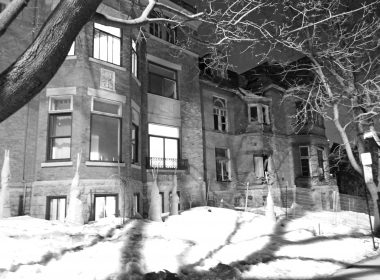
Demolition of historic Montreal mansion halted by QC culture minister
The scheduled demolition of the historic Redpath Mansion has been suspended, following the intervention of Quebec Culture Minister Maka Kotto on Feb. 17. Built in 1886, Redpath Mansion is a 128-year-old building located west of campus. A four-storey student residence was scheduled to replace it. To stop the construction, Kotto[Read More…]
Management plagiarism and admissions policies under discussion
Qualitative assessments for admissions and a new plagiarism policy are currently under discussion between the Management Undergraduate Society (MUS) and the faculty’s administration. Admission’s Policy The MUS is discussing adding more qualitative measures to the current admission requirements for prospective BCom students. Currently the Faculty of Management only considers incoming[Read More…]

William Fitzsimmons—Lions
For the past 10 years or so television has served as a springboard for a number of artists making the leap to wider recognition. It’s been just over seven years since William Fitzsimmons’ “Passion Play” was featured on the medical drama Grey’s Anatomy, and his sound remains largely the same.[Read More…]
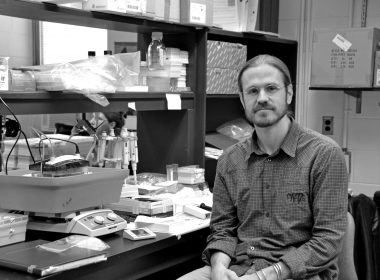
Defining a new pathway to the study of mucosal immunity
At first sight, Irah King looks like your average yoga teacher: long hair, cool bracelets, and a warm smile. However, you’d be surprised at the story behind this new member of the Department of Microbiology and Immunology. King has a diverse background—a bachelor in psychology, a master’s in physical therapy[Read More…]
The Lego Movie reminds us that it’s good to be a kid
“Everything is Awesome,” the song heard at the beginning of The Lego Movie, sets the mood for the film right away: it’s fun, hilarious, and unapologetically zany. Remarkably, writer-directors Phil Lord and Christopher Miller—known primarily for their work on Cloudy with a Chance of Meatballs and 21 Jump Street—sustain this[Read More…]

Sports Briefs — Feb. 25
Swimming Swimming in front of friends and family at the 2014 Speedo CIS Championships, Toronto native Simone Cseplo broke five McGill records. The freshman capped an outstanding rookie season by earning second team All-Canadian status and a silver medal in the 50m backstroke (28.24)—McGill’s only podium finish of the weekend.[Read More…]
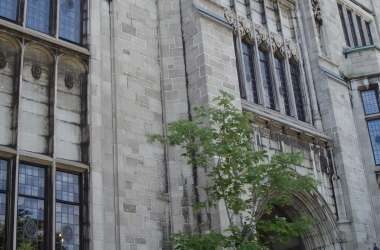
The moral hazard of Birks
I was sitting in a conference in the basement of the Birks building, staring through the floor as the TA mumbled something about critical thinking… and I suddenly noticed that one of my classmates was still wearing his boots. As a rule-following person in general, I’ve followed the Birks rule[Read More…]

This month in science @ McGill
Seashells inspire shatterproof glass: The intricate patterns of waves on the surface of seashells serve more than a decorative purpose. These tiny cracks are actually the secret behind the incredible strength of the shell. Thanks to a technique developed by Francois Barthelat—a professor in the Department of Mechanical Engineering at[Read More…]
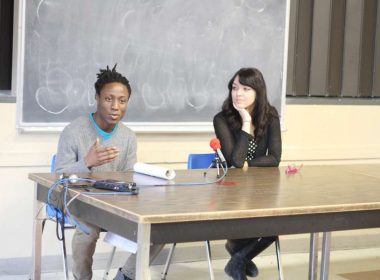
i-Week panel examines relationship between migrants and Indigenous communities
Building relationships between international students, migrants, and Indigenous peoples was the focus of a panel discussion hosted by the Social Equity and Diversity Education Office (SEDE) on Thursday. According to Juhi Sujan, administrative coordinator at SEDE, the event was coordinated to address an unique subject matter. “In envisioning the event,[Read More…]