Latest News

Science & Technology

Take The Tribune’s Science and Technology quiz

Which McGill campus building has an observatory on its roof?

a) McIntyre Medical Building
b) McCall MacBain Arts Building
c) Burnside Hall
d) Ernest Rutherford Physics Building

What causes the glowing green light in the sky over Montreal?

a) The aurora borealis / northern lights
b) The Desjardins Complex
c) Global warming
d) Aliens

Barbara Althea Jones was a Trinidadian professor at McGill in the 1960s who had what combination of vocations?

a) Physicist and painter
b) Neuroscientist and historian
c) Geneticist and poet
d) Mathematician and philosopher

How many watts are the light bulbs in the spinning beacon on top of the Royal Bank of Canada building in downtown Montreal?

a) 800
b) 1,800
c) 2,500
d) 6,000

Which of the following is a real degree at McGill?

a) Environment, Ecology, and Ethics
b) Sustainability, Science, and Society
c) Climate Change, Culture, and Criticism
d) Global Warming, Geopolitics, and Governance

What unusual material are the wheels of the Montreal Metro made out of?

a) Plastic
b) Carbon fibre
c) Steel
d) Rubber

Which Canadian institution did Maude Abbott, for whom the Maude Abbott Medical Museum is named, receive her medical degree from, after being refused entry to McGill on the basis of her gender?

a) Bishop’s University
b) University of Toronto
c) Queen’s University
d) Royal Victoria College

Which two McGill buildings burned down in unrelated incidents in 1907?

a) The original Burnside Hall and the Redpath Museum
b) Royal Victoria Hospital and Royal Victoria College
c) MacDonald Engineering and the Old Medical Building
d) The Arts Building and MacDonald-Harris

Answers:

d) Ernest Rutherford Physics Building
b) The Desjardins Complex
c) Geneticist and poet
c) 2,500
b) Sustainability, Science, and Society
d) Rubber
a) Bishop’s University
c) MacDonald Engineering and the Old Medical Building

Campus Spotlight, Student Life

Dead languages live on campus

Nobody tell the Office québécois de la langue française, but if you keep a careful eye out, there are a handful of improperly-francized signs hiding around the McGill campus. For once, though, they’re not in English—and no, it’s not the Italian “pasta” advertised at the Royal Victoria College Dining Hall either. This time, the culprits are older than Quebec itself—or French, for that matter: This time it’s Latin and Greek quotes. Although including Latin and Greek inscriptions in modern construction is rare, if you look closely at some of the older buildings on campus, you can still spot several ancient phrases on building stones and above archways.

Grandescunt aucta labore

This is likely the most common Latin phrase you can spot on campus, as it is McGill’s official motto and part of the university’s coat of arms. Translating to “By work, all things increase and grow,” the quote compliments McGill’s official mascot: The martlet, a mythical bird that has no feet and can never stop flying, symbolizing industry and studiousness. Taken together, the motto and mascot paint quite a picture of the ideal McGill student’s work-life balance. You can see this inscription inside the Arts Building, over the door to the James Administration Building, and in the lobby of Sherbrooke 680

αριστον μεν υδωρ

One of the few Greek inscriptions on campus, this is a historically-attested phrase meaning “Water is the best of all things,” and suitably appearing over the drinking fountain on the first floor of the Birks Building. It is attributed to the Ancient Greek poet Pindar and can also be found in the town of Bath, England, inside its 18th-century pump room supplying a Roman-style bath. 

Concordia salus

While technically on campus, this phrase is actually part of Montreal’s official coat of arms. It appears above an archway of the McTavish Reservoir & Pumping Station, visible from Ave. du Dr-Penfield. The Latin phrase translates roughly to “Salvation through harmony,” and was also the inspiration for choosing the name “Concordia University” when Sir George Williams University and Loyola College merged in 1974. 

καλλιστον εφοδιον τωι γηραι η παιδεια

This Greek inscription actually appears twice on campus, once above the fireplace in the Birks lounge, and once over the inside of the main entrance to the Arts Building. It translates to “The finest provision for old age is education,” and is attributed to Aristotle, as quoted by Diogenes Laertius in his Lives of Eminent Philosophers

Nosce te ipsum

Unlike most of the other phrases on this list, Nosce te ipsum is a fairly recent addition to the McGill campus. Located in the Strathcona Anatomy and Dentistry Building as part of an exhibition by the Maude Abbott Medical Museum, the quote can be found in several old fire-extinguisher boxes in the stairwells and hallways. The expression means “Know thyself” and was popular in both Latin and Ancient Greek philosophical texts. During the Renaissance, it became common to use this quote in medical texts, with the mantra symbolizing the quest to understand the human body more deeply. 

Hic est locus ubi mors resurgens rediviva est

If you look up at the Duff Medical Building from Ave. des Pins, you’ll find this bold assertion over the top of an archway. Proudly declaring, “Here is the place where death arises to new life,” this statement reflects the optimistic, but often arrogant, tone of the medical profession in the early twentieth century. The inscription dates back to the original construction of the building in the 1920s.

Editorial, Opinion

McGill does not contest the latest faculty union certification: A shift or merely an exception?

On Dec. 31, the Tribunal administratif du travail certified the Association of McGill Academic Staff of the School of Continuing Studies (AMASCS) as McGill’s fourth faculty union. AMASCS is the first instance of faculty unionization that McGill did not contest in court—a pivotal moment for the unions, who have faced protracted, embattled paths toward certification over the past few years. 

In April of last year, the Association of the McGill Professors of Law (AMPL) went on an indefinite strike to protest stalled negotiations over a collective agreement (CA) with McGill that would protect faculty governance, pay, and work conditions. McGill maintained an anti-union stance throughout its legal battle with AMPL and the subsequent strike, delaying the Fall semester, before finally reaching a settlement with the union in October. 

The Association of Graduate Students Employed at McGill (AGSEM) faced similar hostility when negotiating with the university for higher wages and a new CA. McGill refused to meet AGSEM’s demands for a wage increase, and its counter-proposal only addressed one of several main demands—allowing one Union Delegate per Hiring Unit to attend their annual meetings—leading to a strike in March that delayed coursework grading and put overwhelming pressure on McGill professors. 

While a necessary first step, McGill’s lack of contestation of AMASCS does not make up for the university’s long-standing “bad faith” in union negotiations, its reluctance to adequately meet demands, or, more broadly, its institutional stance towards unions on campus. The acceptance of AMASCS is an important step forward, but it may have more to do with the nature of the faculty itself than a fundamental change in McGill’s attitude. While the academic staff of the School of Continuing Studies are critical workers at McGill, the faculty is relatively small, and its unionization empowers a smaller number of members in relation to the McGill administration compared to larger faculties. 

If McGill remains committed to recognizing and respecting faculty unionization, the certification of AMASCS will mark a monumental step toward fostering a true workers-first environment. Continuing to support unionization efforts in other faculties would demonstrate McGill’s dedication to equity, solidarity, and the empowerment of all workers, laying the foundation for a more just and collaborative campus community.  However, if McGill chooses to sustain historic hostility towards unionization and union demands, the AMASCS certification will be little more than a token example to which McGill can point when criticized for its anti-union attitude. 

Unions are a vital artery in any institution, but especially an educational one. They bring individuals together to act as a collective bargaining unit to protect rights, wages, work conditions, and a salient voice in the administration and its decisions. Unions are a benefit to faculty and students alike; when professors are better paid and better treated, they are able to offer a higher-quality education to their students, thus maintaining the academic prestige McGill proudly advertises. 

As unionized workers have gone on strike for their rights at McGill, students and administrators have wrongly misplaced the blame, criticizing striking TAs or Law professors for the inconvenience of overdue grades or delayed semesters, respectively. McGill’s historically anti-union stance has exacerbated this animosity towards strikers—a resentment which should be directed at the administration whose mistreatment made the strike necessary in the first place. Such misdirected anger only adds to the exploitation and disrespect strikers have already endured as victims of administrative mistreatment. 

Despite McGill’s institutional attitude towards unions, the aggregated progress of AMPL, AGSEM, and now AMASCS has paved a smoother road for future collectives. In the same way unity within a faculty births political power larger than the sum of its parts, unity between faculties does the same. It proves to both McGill and its non-unionized faculties that unionization is possible and can be won, even against an administration that opposes it. 

Where this animosity threatens to pit members of the McGill community against one another, students and faculty alike must remember their solidarity, and strength in numbers. We must acknowledge that unions are a universal good, and remind ourselves that we are all fighting for the same future community. Faculty rights become students’ gains, and students’ gains are McGill’s gains, both as a world-renowned university and as a community of people who have come together to teach, learn, and support one another.

Science & Technology

Unveiling the adaptive roles of autistic behaviours

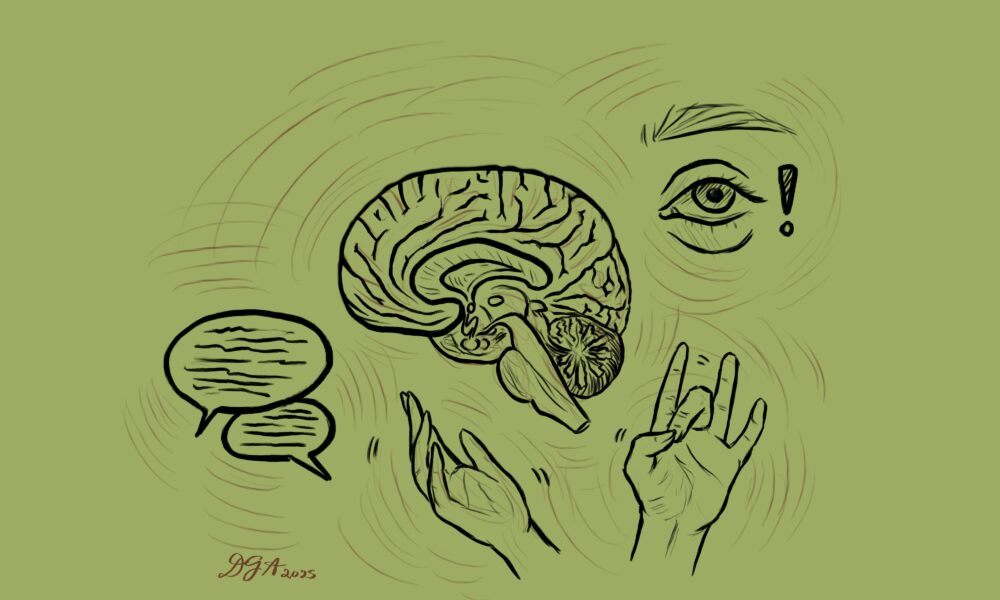
Autism, also known as autism spectrum disorder, affects approximately one in 100 children worldwide. It constitutes a diverse group of brain development conditions that impact how individuals perceive and socialize with others, often leading to differences in social interaction and communication in comparison to their neurotypical peers. 

One of the hallmark features of autism spectrum disorder is the presence of restrictive and repetitive behaviours and interests (RRBIs). 

According to Stephanie Lung, a PhD candidate in McGill’s Department of Educational and Counselling Psychology, one characteristic of RRBIs is repetitive motor behaviour, such as hand flapping, finger flicking, and feet flexing.

“Another characteristic of RRBIs is insistence on sameness. This can translate into behaviours like eating the same food every day, having to sit in the same room every single time, or sticking to a specific routine. Any changes to the routine can be overwhelming,” Lung said in an interview with The Tribune. “The third characteristic is exceptional knowledge in a very specific area that could appear developmentally inappropriate.” 

Interestingly, RRBIs serve regulatory purposes for autistic people. Present from early childhood, RRBIs are associated with developmental benefits, and their continued presence beyond early childhood suggests that they may serve adaptive functions.

To gain a deeper understanding of RRBIs, Lung and her team recently conducted a study that examined the current literature and investigated the primary functions of RRBIs in autism.

Drawing from key evidence in existing literature, Lung found that RRBIs serve several important functions for autistic individuals, one of which is sensory regulation. Compared to non-autistic populations, autistic people are more sensitive to changes in environmental stimuli.

“For example, they may be exceptionally sensitive to bright light or loud noises. If the clothes are not soft enough, they will not wear them. If there is a droplet of water on their clothes, they have to pick it out right away,” Lung explained.

Due to these sensory sensitivities, the study highlighted a need to provide a calming environment for autistic children so that they can optimally learn and process information. A Snoezelen room, for example, provides an environment with light, sound, and touch stimuli designed to help reduce agitation among people with autism.

Another important function of RRBIs is to manage elevated levels of anxiety, which are common for autistic people. Anxiety in autism is often associated with unpredictability and sensory processing issues, such as loud noises, physical touch, and specific food textures or tastes. Repetitive motor behaviours can serve as a calming strategy, helping to temporarily disconnect autistic individuals from unpleasant sensory experiences and alleviate anxiety related to sensory overload. 

Furthermore, the study suggests that RRBIs, particularly insistence on sameness, play a role in establishing familiarity in unpredictable surroundings. The adherence to a known routine or ritual reintroduces certainty to a changing environment, thereby alleviating feelings of fear and anxiety associated with the unknown and chaos.

Lung’s research sheds light on the constructive characteristics of RRBIs, contrasting with the broader literature that often focuses on their interfering impact. The identified functions of RRBIs can serve as criteria for evaluating the usefulness and effectiveness of existing behavioural interventions for autism.

Although Lung’s paper strives to be systematic and comprehensive, it primarily includes studies from Europe and North America, potentially limiting the cultural representativeness of perspectives on RRBIs. Additionally, the exclusion of non-English studies restricts the inclusion of non-English-speaking autistic experiences. 

“Future research should also explore how these behaviours vary across different age groups, life circumstances, and cultures,” Lung added.

Arts & Entertainment, Film and TV, Music

What we liked this winter break

Squid Game Season 2 – Bianca Sugunasiri, Staff Writer 

Dec. 26 marked the release of director Hwang Dong-hyuk’s highly anticipated Squid Game Season 2. The show revolves around the titular “Squid Game,” which extorts the vulnerabilities of financially struggling Korean citizens by offering a once-in-a-lifetime opportunity to win a fortune. Accepting the offer lands contestants in a game that has them gambling with their lives. The extortion of the weak is nothing new, but the game’s twisted design features a series of traditional Korean children’s games with gruesome stakes: Elimination by death. 

Season 2 veers away from the shock factor of Season 1 to a layered plot that is both horrifying and psychologically intriguing as characters are forced into impossible decisions. Innocent individuals turn murderous as their desperation turns to greed. The impeccable acting elevates the plot with visceral portrayals of pain and torment. Each character displays inconsistency in the morality of their actions. Lee Byung-hun‘s portrayal of Hwang In-ho was particularly mesmerizing. In-ho, one of the masterminds (The Front Man), inserts himself into the game and befriends tragic hero Seong Gi-hun (Lee Jung-jae), who seeks to undermine the twisted organization. At times In-ho appears genuine in his support of the players’ successes, inviting the audience to question the integrity of even the most abhorrent characters.

The perfect blend of horror and satire, Squid Game Season 2 investigates the good, the bad, and the gory of the human condition in a way that will have you binging the series in a week (or 48 hours, as I did). 

Squid Game is available on Netflix.

The Good Whale – Tamiyana Roemer, Staff Writer 

Oscar Wilde once argued that “Life imitates Art far more than Art imitates Life,” and the podcast The Good Whale exemplifies this concept particularly well.

When Keiko starred as the titular orca in the 1993 Warner Bros. classic Free Willy, he became a beloved global icon. So when it was revealed that Keiko was dying—largely due to the sub-par facilities in which he lived—the public outcry was remarkable. Keiko’s millions of adoring fans, led by armies of impassioned children, inspired a massively ambitious operation in which well-meaning experts butt heads over what it truly meant to free Keiko. In six episodes, host Daniel Alarcón delivers Keiko’s journey from Mexico to Norway through a lyrical line of storytelling alongside immersive, atmospheric scoring. His interviews with Keiko’s former trainers and advisors are both compelling and conflicting, reflecting the infighting that defined the Free Willy-Keiko Foundation

I was devastated by a whale’s setbacks and elated over his achievements. Keiko’s tale is one of hope and dedication, but it is also a reminder of human fallibility, amidst even the best of intentions. 

A Gentleman in Moscow – Isobel Bray, Contributor

Based on Amor Towles’s 2016 book of the same name, A Gentleman in Moscow is an emotional short series set amidst the changing political landscape of 20th-century Russia. We follow Count Alexander Ilyich Rostov (Ewan McGregor) in the aftermath of the Bolshevik Revolution. Rostov, a member of the deposed aristocracy, avoids execution—and is instead sentenced to spend the rest of his days in the luxurious Metropol Hotel. The story captures the unique environment of post-revolutionary Moscow with beautiful cinematography. 

The series shines in its combination of vivid characters and self-contained setting. It is mostly filmed in the hotel, creating a simultaneously comforting and claustrophobic atmosphere. Very few scenes take place outside and are mostly given in flashbacks: The viewer gets to experience Russia as Rostov does, from within the confines of the Metropol.

McGregor delivers a charismatic and emotional performance, blending the Count’s elegance and humour with grief and melancholy. We not only follow the Count’s life but the many characters that move in and out of it. The hotel guests and staff are loveable and eccentric, both in their own stories and the parts they play in Rostov’s—teaching him valuable lessons along the way.

A Gentleman in Moscow is an immersive story of resilience and friendship, perfect for adding warmth to the dark winter months. 

A Gentleman in Moscow is available on Paramount+ or for free on CBC Gem.

Space 1.8 by Nala Sinephro – Annabella Lawlor, Staff Writer

Crickets and chirping birds underscore the crunching of coiling leaves beneath feet; plucked harp chords and brassy notes creep into view. Harpist and synth composer Nala Sinephro explores the concavities of the auditory universe in her 2021 ambient jazz record, Space 1.8. This wondrous ambiance is alluring, mysterious, and intense. Its entrancing rhythms placate the senses, hushing anxieties with whooshing melodies and electrified synthesizers.

With each song like a different constellation to be observed, Sinephro’s atmospheric landscape transports listeners to unearthly dimensions. Nubya Garcia’s outstanding saxophone performance on “Space 4”—her only appearance on the record—traipses through the star-lit sky, dancing through nebulous psychedelia and drifting debris. 

Sinephro and ensemble effortlessly capture the curiosity, peril, and looming unknown of space exploration. Its seeming simplicity is rather a complex mastery of the ambient soundscape; Sinephro’s work is a stunning study of what lies beyond our world, inviting listeners to imagine this orbiting, threatening, and immense environment.

Children of Men dir. Alfonso Cuarón – Charlotte Hayes, Arts & Entertainment Editor

Although it was released in 2006, Alfonso Cuarón’s dystopian film Children of Men, based on the P. D. James novel, feels eerily prescient as it imagines the not-so-distant future of 2027. Set in a world reeling from an infertility pandemic and societal collapse, the story unfolds in a chaotic Britain. When Theo (Clive Owen), a jaded bureaucrat, is unexpectedly contacted by a former lover, he is drawn into a desperate fight to protect humanity’s last hope.

On a technical filmmaking level, Children of Men is unparalleled. Despite its existentially heavy premise, the film delivers some of the most breathtaking action set pieces of the 21st century. One standout scene involves a flaming car ambush in the woods, followed by an anxiety-inducing motorcycle chase—all within the first 45 minutes. This heart-pounding sequence, one of the most intense 20 minutes I’ve ever experienced, is just the beginning. The film maintains its relentless pace, constantly raising the stakes and leaving no room for the characters—or the audience—to catch their breath. With world-ending stakes and viscerally intense action, it is impossible to look away, even for a moment.

The eerie accuracy with which the film predicts—or at least mirrors—global events of the late 2010s and early 2020s only enhances the brilliance of its script. Most notably, it highlights how pandemics can incite systemic violence and discrimination against marginalized groups. In Children of Men, the infertility crisis leads to a government program aimed at deporting immigrants under the guise of protecting ‘British jobs’ for ‘real citizens.’ This fictional medical emergency becomes a haunting allegory for how fear and scarcity can drive authoritarianism, xenophobia, and the erosion of fundamental human rights. Children of Men doesn’t just envision a dystopian future—it forces us to confront the fragile foundations of our own society and the devastating consequences of their collapse.


Basketball, Behind the Bench, Sports

Who’s to blame for the NBA’s viewership struggles?

There are few things in sports more exciting than a professional basketball game. High-flying dunks, intense defense, and an electrifying atmosphere make for an enthralling product. However, in recent years, television ratings for NBA games have gone down across the board, and fans are disgruntled with the state of the league and lack of viewing access. 

According to Sports Media Watch, NBA viewership during the 2024-25 season on ESPN, ABC, and TNT—the league’s national television partners—was down nearly 20 per cent compared to the 2023-24 season. Additionally, from late October until early February, the NBA is competing with the NFL for the eyes of sports viewers. NFL viewership is down roughly two per cent, meaning the NBA’s decline in viewers is ten-fold compared to that of its main competitor.  

Some consideration must be given to the changing state of the game when examining this perceived dropoff in popularity. Teams are shooting more three-pointers than ever before, the culmination of changes that have been brewing since the Golden State Warriors began the three-point revolution in the mid-2010s. From 2000-2009, teams averaged 15.7 three-point attempts per game. In the 2020s, that number has increased to 34.9, accounting for nearly 40 per cent of total shot attempts. In the current season, the Boston Celtics attempt nearly 50 three-pointers per game, prompting fans to claim the team has “ruined the sport.” For many fans, this can generate disinterest in the modern game. 

This is a natural reaction to a changing sport, but it is not the players’ or league’s fault. To many, this version of the game may be the most exciting, with teams propelled by high-powered offenses. Fans of the “old” game may also feel alienated by the modern NBA superstar, a player who, while talented on the court, may make headlines off of it. The blurring of lines between sport and entertainment may dissuade a fan of the “classic” NBA.

Another quirk of the modern era railed against by fans, both young and old, is the increasing prevalence of “load management,” where star players will sit out games in order to rest and avoid injury. Fans who tune in to games expect to see the sport’s brightest stars. However, the players are increasingly unavailable in the interest of preserving their energy throughout a gruelling 82-game schedule, with additional games through the NBA Cup, created in 2023. That same year, the league introduced a new Player Participation Policy that sought to reduce load management by placing restrictions on the number of players that could rest per game and banning players from missing games televised on national TV for load management reasons. This policy has been largely successful, but teams can work around it by placing an injury designation on players that may not be injured to the extent teams say in order for the player to get rest.

The final and arguably most prevalent problem plaguing the league is the lack of access to games on television. The most common causes of this are local blackouts—where games are blacked out in certain areas due to broadcasting agreements and streaming restrictions—meaning games may only be shown on expensive streaming services. This represents a massive barrier to entry to prospective fans. The emergence of third-party pirated streams is also a growing concern, particularly with younger fans who wish to work around blackouts or streaming restrictions.
In order to avoid alienating viewers, the NBA must ensure that its games are accessible to the greatest population of fans possible. Regional blackouts and expensive streaming packages are hurting the popularity of the game and slowing its growth, taking away potential new fans because of the barriers to entry. Many of the problems fans have with the state of the on-court product are over-exaggerated, but problems with access to games are very real and hugely consequential. Commissioner Adam Silver and his Board of Directors must address this issue as soon as they can in order to limit the long-term effects of decreased viewership and ensure that the next generation of basketball fans will not be dissuaded by increased streaming costs and lack of availability.

News, SSMU

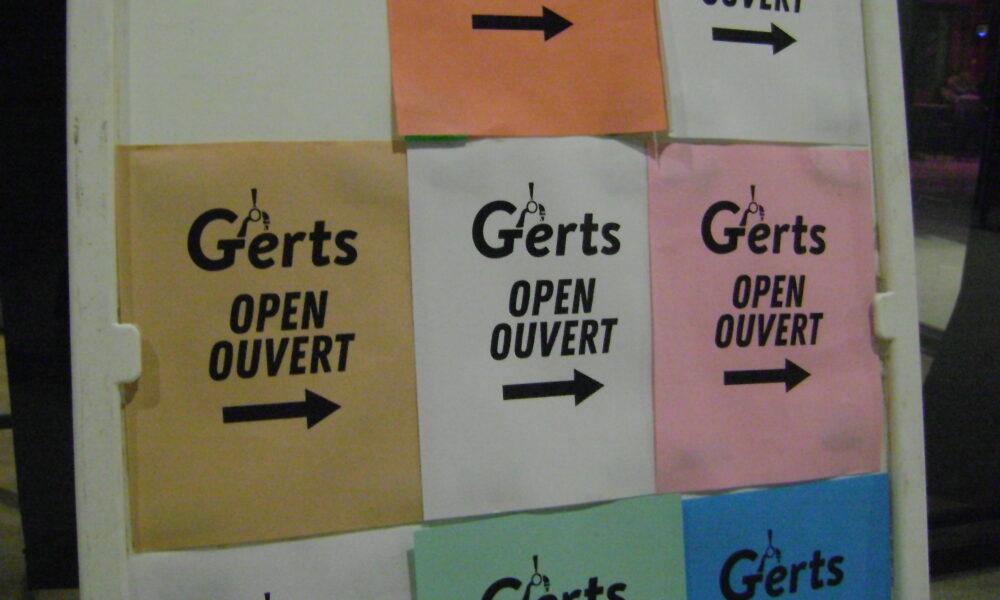
Gerts serves its first beers after spending eight months closed for renovations and restructuring

Gerts, McGill’s campus bar, reopened to the public on Jan. 6 after spending the Fall semester with shuttered doors. Located in the basement of the University Centre, Gerts served its last beer on April 26, 2024, before closing for over eight months due to problems with its electrical system and management structure. 

Despite delays in reopening, the 50-year-old student bar is fully operational again. The Gerts Café, which used to occupy the same space as the bar, has been slated to relocate to the main floor of the University Centre.

The Students’ Society of McGill University (SSMU) executive team wrote to The Tribune explaining that infrastructure problems and difficulties with Gerts’ management arrangement were the main reasons for the bar’s closure last semester.

“Gerts was initially closed due to changes in the management structure that made hiring for new managers necessary, as well as newly identified issues pertaining to purchasing new furniture and equipment and the electrical system in the Gerts bar area that required moving the café upstairs,” the executives wrote. 

After Gerts’ management was reconfigured, the staff hiring process continued throughout the entirety of the Fall semester, and contractors began carrying out renovations.

Former SSMU Vice-President (VP) Operations and Sustainability Meg Baltes helped coordinate Gerts’ renovation and eventual reopening throughout the fall. This involved sourcing higher-quality furniture for the bar and replacing aging equipment for the well-loved hub of student life.

“A significant amount of effort was put into predicting future issues and accounting for them during our renovations and restructurings [….] There were definitely hiccups in the reopening, as any bar will face, but most of these were due to delays in working with third-party service providers,” Baltes wrote to The Tribune. “We are [in] a McGill building, so we are not allowed to modify the building ourselves and [renovations] must operate on Facilities Management and Ancillary Services’ timeframe.”

The position of VP Operations and Sustainability, which is responsible for managing Gerts, sits vacant following Baltes’ resignation effective Dec. 13. Though a by-election was held to fill the position, its results were nullified after it failed to reach the required 15 per cent quorum. However, SSMU executives remain confident this vacancy will not affect Gerts’ operations in the coming semester. 

“This vacancy has no impact on the funding or operations of Gerts. Management of Gerts is stable independent of the VP’s role being filled, as the Gerts Bar Manager and Gerts Cafe Manager report to the Student Life Operations (SLO) Director, who is a full-time employee of the SSMU,” the SSMU executive team wrote to The Tribune.

As part of SSMU’s SLO department, Gerts is owned and operated by SSMU. As a result, Gerts does not have to pay rent, nor does it have to maintain its own communications team or HR division, and the bar receives funding from student fees. 

“Gerts does not receive direct funding in the form of a specific amount from the SSMU; however, Gerts staff, like any SLO staff, are paid by the SSMU and any losses incurred by Gerts are covered by the SSMU,” the executive team told The Tribune.

Leo Ortega, U3 Arts, enjoyed a beer with his friends on Gerts’ opening night, excited to see the bar reopened. 

“I think it’s a good use of SSMU money,” Ortega told The Tribune. “You don’t really have any community spaces on campus, this is the closest we have to that. Bands play here, people meet up here. I think it’s something that was lacking over the last semester.”

Baltes was also optimistic about the semester to come. 

“[Gerts] spans generations as a staple of the campus, with many alumni visiting, telling the bartenders about old Gerts stories from decades ago,” she wrote. “I am happy that the SSMU has been able to support this institution and bring it back to students in full force this semester.”

Arts & Entertainment, Film and TV

A Complete Unknown’ is a love letter to Bob Dylan’s anachronistic genius

My expectations were high when I sat down to watch A Complete Unknown, the Bob Dylan biopic directed by James Mangold and starring Timothée Chalamet. Dylan’s career is one of the most monumental in music history, and Dylan himself—with his nasally voice, stoic affect, and famous dexterity on the guitar—is singular in every regard. But by the time I left the theatre, Chalamet, along with his co-stars Monica Barbaro, Edward Norton, and Elle Fanning, had exceeded every expectation.

The film follows Dylan (Chalamet) from his arrival in New York City in 1961 to his controversial performance at the 1965 Newport Folk Festival. It portrays his first small gigs at the Gaslight Cafe in Greenwich Village from which his fame quickly sprung. Woven through his rise to stardom are his romances with Sylvie Russo—a stand-in name for the real-life Suze Rotolo (Elle Fanning)—and musician Joan Baez (Monica Barbaro), his friendship with fellow folk musician Pete Seeger (Edward Norton), and his explosive fame in the folk world—and eventually beyond it. 

If the saying “show, don’t tell” applies to films as well as writing, then Mangold’s interpretation of Dylan’s early career should be the textbook case. Each actor so wholly embodies their character that they could have spent the entire film drinking a cup of coffee and one still could have seen clearly into Dylan, Baez, or Seeger’s souls. While Chalamet’s performance embodied Dylan’s genius, it also brought to light his human flaws and pretension. “You know,” Baez says to Dylan in his bedroom one morning, “you’re kind of an asshole.” Dylan only chuckles.

Mangold synthesized Dylan’s rise to stardom, his brooding frustration with the folk scene, and his reluctance towards emotional vulnerability in a tight, seamless narrative fuelled by the characters themselves, and illustrated through moments whose beauty is in their simplicity. One evening, Dylan runs into a man named Bob Neuwirth (Will Harrison) who invites him to his band’s gig downtown. Watching the energetic Neuwirth play electric guitar from the corner of the Irish bar, Dylan begins to crack a rare smile—a moment cut short when the blonde woman in front of him turns and screams, “IT’S BOB DYLAN,” and chases him out of the bar. That night would spark Dylan’s signature rebellion against folk music and inclination towards electric guitar, culminating in the film’s climactic Newport Folk Festival performance.

Amidst the effortlessly evolving plot, the artfully chosen settings in Greenwich Village, the detailed recreation of Newport, and the beautifully unadorned cinematography, it is Chalamet’s musical talent that is the most striking. Dylan is known for his swinging, nasal voice and his clear finger-picking control of the acoustic guitar. Where many biopics would use original tracks over which the actor would lipsync, Chalamet sang every note of the film himself. But, most impressive of all, is that he performed the songs live on set. To even approach the mechanics of Dylan’s musicianship is impressive enough, but to do so, as Chalamet did, with complete control—enough to take creative liberties himself that one can easily imagine Dylan might have made—is almost incomprehensible. 

Between grasping at soon-to-be-famous lyrics on a hotel notepad in the middle of the night, or playing simultaneous guitar and harmonica in front of 10,000 people at the Newport Film Festival, Chalamet literally did not miss a beat. His co-stars didn’t either; the talent of Norton and Barbado alongside Chalamet came together in moments of palpable joy on screen—like when Barbado sings ‘Blowin’ in the Wind’ for the first time with Dylan on his bed, harmonizing with the soon-to-be-famous chorus, or when Seeger joins Dylan’s acoustic guitar with his banjo amidst high-end party-goers eager to hear Dylan play. 

A Complete Unknown is a masterpiece of a love letter to Dylan’s career, to the 1960s, to political and musical revolution, and to raw genius.  

Commentary, Opinion

In the wake of Trudeau’s resignation, U.S. political polarization should serve as a cautionary tale

A widely unpopular progressive party leader, having unsuccessfully attempted to fend off a populist conservative challenger, is forced to step down for the sake of his party’s re-election prospects. Wait, who are we talking about?

Canadian Prime Minister Justin Trudeau’s resignation on Jan. 6, 2025 shares eerie resemblance with former U.S. President Joe Biden’s choice to step down this past July. Both represent an attempt to distance the two parties from the poor image voters have of their soon-to-be-former leaders. Americans now know that Biden’s decision to step down from the position of Democratic Party nominee was neither sufficiently impactful nor well-timed enough to win former Vice President Kamala Harris the 2024 U.S. Presidential Election. To ensure that Trudeau’s resignation will not result in a similar failure, the Canadian Liberal Party must seize the lifeline Trudeau has thrown to them. 

Looking back, perhaps the largest obstacle that stood between Harris and the U.S. presidency was her association with the Biden administration, as many Americans doubted that she would go beyond echoing Biden’s policies. A similar concern exists now among Canadian Liberals; almost all the potential replacements for Trudeau have either worked or are still working in his cabinet. If Liberals wish to compete with Conservative Party Leader Pierre Poilievre in the upcoming election, they must clearly differentiate themselves from the Trudeau period and demonstrate their capacity to move forward.

However, the Liberals do have a crucial factor on their side: Time. Harris had come into the presidential race without the execution of an open Democratic primary, limiting the American public’s faith in her, and leaving a mere three months to mount a campaign from scratch. Trudeau’s resignation differs, as there is ample time to identify an inspiring replacement through a traditional leadership race. Trudeau’s proroguing of Parliament until Mar. 24, 2025 ensures that the Liberals will have several months to choose a party leader who could reasonably win the election before a motion of confidence is called.

In addition to their differences in electoral timeline, two additional factors exist that could win the Liberals favour: The prospect of a U.S. tariff on Canadian goods and Trump’s remarks on making Canada the ‘51st state.’ Such an international threat could generate a rally-around-the-flag effect, as Canadians, regardless of their party affiliation, would be united in their fear of threats to Canadian sovereignty by U.S. economic force. The Trump problem could thus be, if weaponized efficiently by Trudeau and his successor, a tool to attract voters to the Liberal party with effective solutions to tariff threats.

Finally, and perhaps most significantly, it is necessary to recognize that Canadian politics are not nearly as polarized as U.S. politics. The election of President Donald Trump represents an undeniable threat to American democratic processes, both due to his identity as a convicted felon and perpetrator of sexual assault and rape and because of his political agenda. Trump’s Agenda47 is centred on the deportation of immigrants—who Trump refers to as ‘illegals,’ censorship of ‘radical’ educational topics, aggressive attacks on TSLGBTQIA+ rights, reversal of climate change policies, and still more. Severe ideological divides followed in the wake of these extremist proposals, meaning that bipartisan collaboration in favour of the people was almost inconceivable. By contrast, Canada has witnessed numerous instances of cross-party cooperation, such as in the Russian invasion of Ukraine, worker striking laws, trade relations with the U.S. and Mexico, and the rights of Indigenous peoples. The Liberal Party therefore must be cautious over these next few months so as not to introduce a level of polarization that makes democratic collaboration impossible. 

As shapers of public discourse, McGill students must commit to collaborative dialogue over partisan divides. Through forums for cross-partisan student discussion, the McGill student body can fight the drift towards polarization, shaping a better political future for generations to come. Regardless of whether history repeats itself in Canada this election cycle, the disturbingly polarized nature of U.S. politics should serve as a cautionary tale. Members of the Canadian political landscape must take deliberate steps to avoid entering a state of deep division that has already paralyzed governance and fractured communities in the United States.

Arts & Entertainment, Film and TV

Something wicked this way comes!

It’s good to see me, isn’t it? I’m a certified sentimental fan and infamously famous son of a witch. If you were to ask me my favourite musical, I’d answer like a mother would if asked her favourite child: I love them all equally but differently. Of course, I would be lying. In a film where no good deed goes unpunished, and the gold standard is a bygone dream, Stephen Schwartz’s Wicked stands out as a musical that not only defies gravity but expectations themselves. Upon hearing about the adaptification of Wicked to the silver screen, I was so happy I could’ve melted

A tale of change which is as tragically beautiful as it is beautifully tragical, Wicked centres the untold story of the not-so-friendly friend of Dorothy’s: Wicked Witch of the West Elphaba Thropp, and her relationship with Good Witch of the North G(a)linda Upland. Cleverly named after the author of The Wizard of Oz, L. Frank Baum, Elphaba endures the trials and tribulations of Oz all while acting, dancing, and singing—oh my! Through subversion and references, the adaptation expands on the preexisting world of Oz to remind us that there are two sides to every story. Wicked is representative of a New Age fascination with antiheroes and their origins, a genre of story that seems to be here for good. It is an invitation to return to a popular classic with new infinity glasses and reexamine our own perspectives.

Wicked is the musical on everyone’s mind, and as the story has worked its way into the hearts of so many, it has inevitably managed to get on some nerves. In a wonderfully weird interview between journalist Tracy Gilchrist and Wicked costars Cynthia Erivo and Ariana Grande, the phrase “holding space” took flight, igniting public discourse from internet cynics who point out the over-the-top saccharine sentimentality of theatre kids. The interview drew fame from Gilchrist’s tenderly “cringe” questions and Erivo’s emotionally-charged response to hearing that queer people are finding strength in “Defying Gravity,” a renowned song from Wicked about rejecting social convention and embracing otherness. Grande reaching out to comfort Erivo by clasping her index finger and gently tapping has since become its own viral image, recalling the Sistine Chapel’s Creation of Adam. Grande and Erivo have since discussed the hand-holding in a Variety interview. 

“I didn’t know what any part of it meant, I didn’t understand the first sentence and then I definitely didn’t understand how you responded. And I just wanted to be there. Because I knew something big was happening and I didn’t know how to be there,” Grande recounted. 

“After a while, I didn’t know how to be there,” Erivo said. 

In many ways, Wicked has become the poster child for the modern pop musical. By interpreting  The Wonderful Wizard of Oz, Wicked cleverly works within the confines of a world audiences are already familiar with, while also delivering its own story with unique moral takeaways. It thus escapes the pitfalls of being a regressive screen-to-stage-to-screen adaptation. With Wicked available to stream on digital video-on-demand services, we can rejoycify and say there’s truly no place like home.

Though Gregory Maguire’s book tackles dark, uncomfortable political issues, including fascism, terrorism, and a newly introduced Ozian apartheid state, the adaptation fixates primarily on worldbuilding. The musical does a lot to sanitize the original story and make it more palatable to audiences by removing themes of sexuality and violence, erasing allusions to religious extremism, and focusing instead on forbidden romance. The movie adaptation strikes a masterful balance between Maguire’s macabre world and Schwartz’s family-friendly matinee. Wicked is able to fully engage with the more radical themes of its predecessors to feel more relevant than ever as we arrive on the precipice of great political change.

But remember, my sentimental friend—a musical is not judged by how much it is loved by others, but by how much you love it.

Read the latest issue

Read the latest issue