Latest News

Commentary, Opinion

In the wake of Trudeau’s resignation, U.S. political polarization should serve as a cautionary tale

A widely unpopular progressive party leader, having unsuccessfully attempted to fend off a populist conservative challenger, is forced to step down for the sake of his party’s re-election prospects. Wait, who are we talking about?

Canadian Prime Minister Justin Trudeau’s resignation on Jan. 6, 2025 shares eerie resemblance with former U.S. President Joe Biden’s choice to step down this past July. Both represent an attempt to distance the two parties from the poor image voters have of their soon-to-be-former leaders. Americans now know that Biden’s decision to step down from the position of Democratic Party nominee was neither sufficiently impactful nor well-timed enough to win former Vice President Kamala Harris the 2024 U.S. Presidential Election. To ensure that Trudeau’s resignation will not result in a similar failure, the Canadian Liberal Party must seize the lifeline Trudeau has thrown to them. 

Looking back, perhaps the largest obstacle that stood between Harris and the U.S. presidency was her association with the Biden administration, as many Americans doubted that she would go beyond echoing Biden’s policies. A similar concern exists now among Canadian Liberals; almost all the potential replacements for Trudeau have either worked or are still working in his cabinet. If Liberals wish to compete with Conservative Party Leader Pierre Poilievre in the upcoming election, they must clearly differentiate themselves from the Trudeau period and demonstrate their capacity to move forward.

However, the Liberals do have a crucial factor on their side: Time. Harris had come into the presidential race without the execution of an open Democratic primary, limiting the American public’s faith in her, and leaving a mere three months to mount a campaign from scratch. Trudeau’s resignation differs, as there is ample time to identify an inspiring replacement through a traditional leadership race. Trudeau’s proroguing of Parliament until Mar. 24, 2025 ensures that the Liberals will have several months to choose a party leader who could reasonably win the election before a motion of confidence is called.

In addition to their differences in electoral timeline, two additional factors exist that could win the Liberals favour: The prospect of a U.S. tariff on Canadian goods and Trump’s remarks on making Canada the ‘51st state.’ Such an international threat could generate a rally-around-the-flag effect, as Canadians, regardless of their party affiliation, would be united in their fear of threats to Canadian sovereignty by U.S. economic force. The Trump problem could thus be, if weaponized efficiently by Trudeau and his successor, a tool to attract voters to the Liberal party with effective solutions to tariff threats.

Finally, and perhaps most significantly, it is necessary to recognize that Canadian politics are not nearly as polarized as U.S. politics. The election of President Donald Trump represents an undeniable threat to American democratic processes, both due to his identity as a convicted felon and perpetrator of sexual assault and rape and because of his political agenda. Trump’s Agenda47 is centred on the deportation of immigrants—who Trump refers to as ‘illegals,’ censorship of ‘radical’ educational topics, aggressive attacks on TSLGBTQIA+ rights, reversal of climate change policies, and still more. Severe ideological divides followed in the wake of these extremist proposals, meaning that bipartisan collaboration in favour of the people was almost inconceivable. By contrast, Canada has witnessed numerous instances of cross-party cooperation, such as in the Russian invasion of Ukraine, worker striking laws, trade relations with the U.S. and Mexico, and the rights of Indigenous peoples. The Liberal Party therefore must be cautious over these next few months so as not to introduce a level of polarization that makes democratic collaboration impossible. 

As shapers of public discourse, McGill students must commit to collaborative dialogue over partisan divides. Through forums for cross-partisan student discussion, the McGill student body can fight the drift towards polarization, shaping a better political future for generations to come. Regardless of whether history repeats itself in Canada this election cycle, the disturbingly polarized nature of U.S. politics should serve as a cautionary tale. Members of the Canadian political landscape must take deliberate steps to avoid entering a state of deep division that has already paralyzed governance and fractured communities in the United States.

News, SSMU

Gerts serves its first beers after spending eight months closed for renovations and restructuring

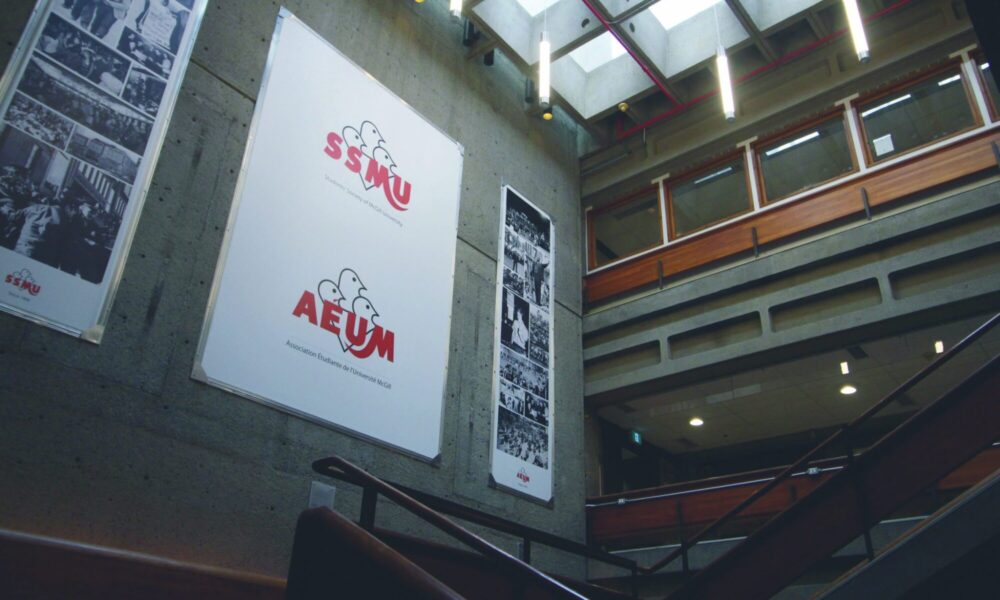
Gerts, McGill’s campus bar, reopened to the public on Jan. 6 after spending the Fall semester with shuttered doors. Located in the basement of the University Centre, Gerts served its last beer on April 26, 2024, before closing for over eight months due to problems with its electrical system and management structure. 

Despite delays in reopening, the 50-year-old student bar is fully operational again. The Gerts Café, which used to occupy the same space as the bar, has been slated to relocate to the main floor of the University Centre.

The Students’ Society of McGill University (SSMU) executive team wrote to The Tribune explaining that infrastructure problems and difficulties with Gerts’ management arrangement were the main reasons for the bar’s closure last semester.

“Gerts was initially closed due to changes in the management structure that made hiring for new managers necessary, as well as newly identified issues pertaining to purchasing new furniture and equipment and the electrical system in the Gerts bar area that required moving the café upstairs,” the executives wrote. 

After Gerts’ management was reconfigured, the staff hiring process continued throughout the entirety of the Fall semester, and contractors began carrying out renovations.

Former SSMU Vice-President (VP) Operations and Sustainability Meg Baltes helped coordinate Gerts’ renovation and eventual reopening throughout the fall. This involved sourcing higher-quality furniture for the bar and replacing aging equipment for the well-loved hub of student life.

“A significant amount of effort was put into predicting future issues and accounting for them during our renovations and restructurings [….] There were definitely hiccups in the reopening, as any bar will face, but most of these were due to delays in working with third-party service providers,” Baltes wrote to The Tribune. “We are [in] a McGill building, so we are not allowed to modify the building ourselves and [renovations] must operate on Facilities Management and Ancillary Services’ timeframe.”

The position of VP Operations and Sustainability, which is responsible for managing Gerts, sits vacant following Baltes’ resignation effective Dec. 13. Though a by-election was held to fill the position, its results were nullified after it failed to reach the required 15 per cent quorum. However, SSMU executives remain confident this vacancy will not affect Gerts’ operations in the coming semester. 

“This vacancy has no impact on the funding or operations of Gerts. Management of Gerts is stable independent of the VP’s role being filled, as the Gerts Bar Manager and Gerts Cafe Manager report to the Student Life Operations (SLO) Director, who is a full-time employee of the SSMU,” the SSMU executive team wrote to The Tribune.

As part of SSMU’s SLO department, Gerts is owned and operated by SSMU. As a result, Gerts does not have to pay rent, nor does it have to maintain its own communications team or HR division, and the bar receives funding from student fees. 

“Gerts does not receive direct funding in the form of a specific amount from the SSMU; however, Gerts staff, like any SLO staff, are paid by the SSMU and any losses incurred by Gerts are covered by the SSMU,” the executive team told The Tribune.

Leo Ortega, U3 Arts, enjoyed a beer with his friends on Gerts’ opening night, excited to see the bar reopened. 

“I think it’s a good use of SSMU money,” Ortega told The Tribune. “You don’t really have any community spaces on campus, this is the closest we have to that. Bands play here, people meet up here. I think it’s something that was lacking over the last semester.”

Baltes was also optimistic about the semester to come. 

“[Gerts] spans generations as a staple of the campus, with many alumni visiting, telling the bartenders about old Gerts stories from decades ago,” she wrote. “I am happy that the SSMU has been able to support this institution and bring it back to students in full force this semester.”

Science & Technology

Unveiling the adaptive roles of autistic behaviours

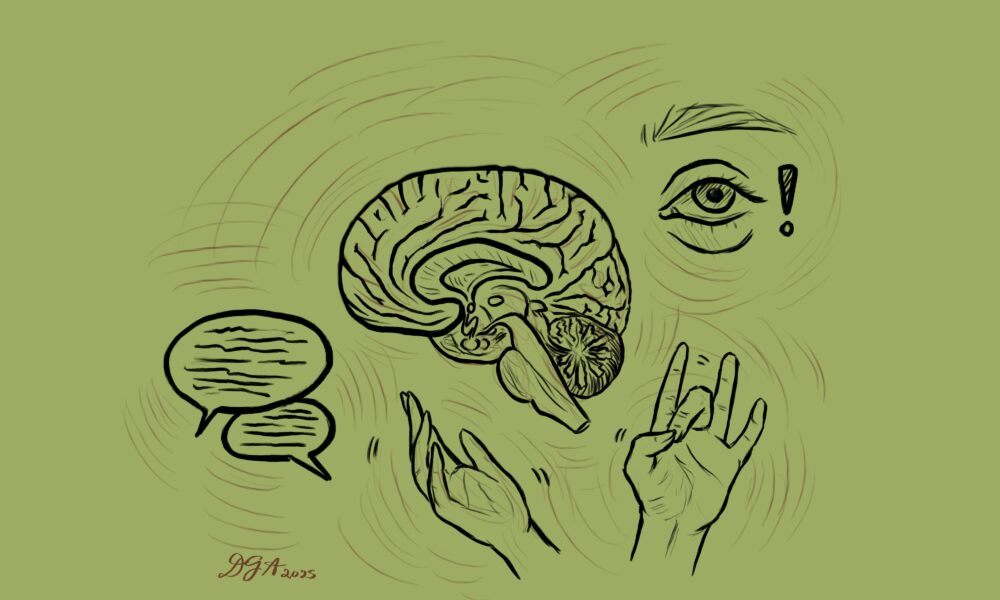
Autism, also known as autism spectrum disorder, affects approximately one in 100 children worldwide. It constitutes a diverse group of brain development conditions that impact how individuals perceive and socialize with others, often leading to differences in social interaction and communication in comparison to their neurotypical peers. 

One of the hallmark features of autism spectrum disorder is the presence of restrictive and repetitive behaviours and interests (RRBIs). 

According to Stephanie Lung, a PhD candidate in McGill’s Department of Educational and Counselling Psychology, one characteristic of RRBIs is repetitive motor behaviour, such as hand flapping, finger flicking, and feet flexing.

“Another characteristic of RRBIs is insistence on sameness. This can translate into behaviours like eating the same food every day, having to sit in the same room every single time, or sticking to a specific routine. Any changes to the routine can be overwhelming,” Lung said in an interview with The Tribune. “The third characteristic is exceptional knowledge in a very specific area that could appear developmentally inappropriate.” 

Interestingly, RRBIs serve regulatory purposes for autistic people. Present from early childhood, RRBIs are associated with developmental benefits, and their continued presence beyond early childhood suggests that they may serve adaptive functions.

To gain a deeper understanding of RRBIs, Lung and her team recently conducted a study that examined the current literature and investigated the primary functions of RRBIs in autism.

Drawing from key evidence in existing literature, Lung found that RRBIs serve several important functions for autistic individuals, one of which is sensory regulation. Compared to non-autistic populations, autistic people are more sensitive to changes in environmental stimuli.

“For example, they may be exceptionally sensitive to bright light or loud noises. If the clothes are not soft enough, they will not wear them. If there is a droplet of water on their clothes, they have to pick it out right away,” Lung explained.

Due to these sensory sensitivities, the study highlighted a need to provide a calming environment for autistic children so that they can optimally learn and process information. A Snoezelen room, for example, provides an environment with light, sound, and touch stimuli designed to help reduce agitation among people with autism.

Another important function of RRBIs is to manage elevated levels of anxiety, which are common for autistic people. Anxiety in autism is often associated with unpredictability and sensory processing issues, such as loud noises, physical touch, and specific food textures or tastes. Repetitive motor behaviours can serve as a calming strategy, helping to temporarily disconnect autistic individuals from unpleasant sensory experiences and alleviate anxiety related to sensory overload. 

Furthermore, the study suggests that RRBIs, particularly insistence on sameness, play a role in establishing familiarity in unpredictable surroundings. The adherence to a known routine or ritual reintroduces certainty to a changing environment, thereby alleviating feelings of fear and anxiety associated with the unknown and chaos.

Lung’s research sheds light on the constructive characteristics of RRBIs, contrasting with the broader literature that often focuses on their interfering impact. The identified functions of RRBIs can serve as criteria for evaluating the usefulness and effectiveness of existing behavioural interventions for autism.

Although Lung’s paper strives to be systematic and comprehensive, it primarily includes studies from Europe and North America, potentially limiting the cultural representativeness of perspectives on RRBIs. Additionally, the exclusion of non-English studies restricts the inclusion of non-English-speaking autistic experiences. 

“Future research should also explore how these behaviours vary across different age groups, life circumstances, and cultures,” Lung added.

Arts & Entertainment, Film and TV

A Complete Unknown’ is a love letter to Bob Dylan’s anachronistic genius

My expectations were high when I sat down to watch A Complete Unknown, the Bob Dylan biopic directed by James Mangold and starring Timothée Chalamet. Dylan’s career is one of the most monumental in music history, and Dylan himself—with his nasally voice, stoic affect, and famous dexterity on the guitar—is singular in every regard. But by the time I left the theatre, Chalamet, along with his co-stars Monica Barbaro, Edward Norton, and Elle Fanning, had exceeded every expectation.

The film follows Dylan (Chalamet) from his arrival in New York City in 1961 to his controversial performance at the 1965 Newport Folk Festival. It portrays his first small gigs at the Gaslight Cafe in Greenwich Village from which his fame quickly sprung. Woven through his rise to stardom are his romances with Sylvie Russo—a stand-in name for the real-life Suze Rotolo (Elle Fanning)—and musician Joan Baez (Monica Barbaro), his friendship with fellow folk musician Pete Seeger (Edward Norton), and his explosive fame in the folk world—and eventually beyond it. 

If the saying “show, don’t tell” applies to films as well as writing, then Mangold’s interpretation of Dylan’s early career should be the textbook case. Each actor so wholly embodies their character that they could have spent the entire film drinking a cup of coffee and one still could have seen clearly into Dylan, Baez, or Seeger’s souls. While Chalamet’s performance embodied Dylan’s genius, it also brought to light his human flaws and pretension. “You know,” Baez says to Dylan in his bedroom one morning, “you’re kind of an asshole.” Dylan only chuckles.

Mangold synthesized Dylan’s rise to stardom, his brooding frustration with the folk scene, and his reluctance towards emotional vulnerability in a tight, seamless narrative fuelled by the characters themselves, and illustrated through moments whose beauty is in their simplicity. One evening, Dylan runs into a man named Bob Neuwirth (Will Harrison) who invites him to his band’s gig downtown. Watching the energetic Neuwirth play electric guitar from the corner of the Irish bar, Dylan begins to crack a rare smile—a moment cut short when the blonde woman in front of him turns and screams, “IT’S BOB DYLAN,” and chases him out of the bar. That night would spark Dylan’s signature rebellion against folk music and inclination towards electric guitar, culminating in the film’s climactic Newport Folk Festival performance.

Amidst the effortlessly evolving plot, the artfully chosen settings in Greenwich Village, the detailed recreation of Newport, and the beautifully unadorned cinematography, it is Chalamet’s musical talent that is the most striking. Dylan is known for his swinging, nasal voice and his clear finger-picking control of the acoustic guitar. Where many biopics would use original tracks over which the actor would lipsync, Chalamet sang every note of the film himself. But, most impressive of all, is that he performed the songs live on set. To even approach the mechanics of Dylan’s musicianship is impressive enough, but to do so, as Chalamet did, with complete control—enough to take creative liberties himself that one can easily imagine Dylan might have made—is almost incomprehensible. 

Between grasping at soon-to-be-famous lyrics on a hotel notepad in the middle of the night, or playing simultaneous guitar and harmonica in front of 10,000 people at the Newport Film Festival, Chalamet literally did not miss a beat. His co-stars didn’t either; the talent of Norton and Barbado alongside Chalamet came together in moments of palpable joy on screen—like when Barbado sings ‘Blowin’ in the Wind’ for the first time with Dylan on his bed, harmonizing with the soon-to-be-famous chorus, or when Seeger joins Dylan’s acoustic guitar with his banjo amidst high-end party-goers eager to hear Dylan play. 

A Complete Unknown is a masterpiece of a love letter to Dylan’s career, to the 1960s, to political and musical revolution, and to raw genius.  

Arts & Entertainment, Film and TV, Music

What we liked this winter break

Squid Game Season 2 – Bianca Sugunasiri, Staff Writer 

Dec. 26 marked the release of director Hwang Dong-hyuk’s highly anticipated Squid Game Season 2. The show revolves around the titular “Squid Game,” which extorts the vulnerabilities of financially struggling Korean citizens by offering a once-in-a-lifetime opportunity to win a fortune. Accepting the offer lands contestants in a game that has them gambling with their lives. The extortion of the weak is nothing new, but the game’s twisted design features a series of traditional Korean children’s games with gruesome stakes: Elimination by death. 

Season 2 veers away from the shock factor of Season 1 to a layered plot that is both horrifying and psychologically intriguing as characters are forced into impossible decisions. Innocent individuals turn murderous as their desperation turns to greed. The impeccable acting elevates the plot with visceral portrayals of pain and torment. Each character displays inconsistency in the morality of their actions. Lee Byung-hun‘s portrayal of Hwang In-ho was particularly mesmerizing. In-ho, one of the masterminds (The Front Man), inserts himself into the game and befriends tragic hero Seong Gi-hun (Lee Jung-jae), who seeks to undermine the twisted organization. At times In-ho appears genuine in his support of the players’ successes, inviting the audience to question the integrity of even the most abhorrent characters.

The perfect blend of horror and satire, Squid Game Season 2 investigates the good, the bad, and the gory of the human condition in a way that will have you binging the series in a week (or 48 hours, as I did). 

Squid Game is available on Netflix.

The Good Whale – Tamiyana Roemer, Staff Writer 

Oscar Wilde once argued that “Life imitates Art far more than Art imitates Life,” and the podcast The Good Whale exemplifies this concept particularly well.

When Keiko starred as the titular orca in the 1993 Warner Bros. classic Free Willy, he became a beloved global icon. So when it was revealed that Keiko was dying—largely due to the sub-par facilities in which he lived—the public outcry was remarkable. Keiko’s millions of adoring fans, led by armies of impassioned children, inspired a massively ambitious operation in which well-meaning experts butt heads over what it truly meant to free Keiko. In six episodes, host Daniel Alarcón delivers Keiko’s journey from Mexico to Norway through a lyrical line of storytelling alongside immersive, atmospheric scoring. His interviews with Keiko’s former trainers and advisors are both compelling and conflicting, reflecting the infighting that defined the Free Willy-Keiko Foundation

I was devastated by a whale’s setbacks and elated over his achievements. Keiko’s tale is one of hope and dedication, but it is also a reminder of human fallibility, amidst even the best of intentions. 

A Gentleman in Moscow – Isobel Bray, Contributor

Based on Amor Towles’s 2016 book of the same name, A Gentleman in Moscow is an emotional short series set amidst the changing political landscape of 20th-century Russia. We follow Count Alexander Ilyich Rostov (Ewan McGregor) in the aftermath of the Bolshevik Revolution. Rostov, a member of the deposed aristocracy, avoids execution—and is instead sentenced to spend the rest of his days in the luxurious Metropol Hotel. The story captures the unique environment of post-revolutionary Moscow with beautiful cinematography. 

The series shines in its combination of vivid characters and self-contained setting. It is mostly filmed in the hotel, creating a simultaneously comforting and claustrophobic atmosphere. Very few scenes take place outside and are mostly given in flashbacks: The viewer gets to experience Russia as Rostov does, from within the confines of the Metropol.

McGregor delivers a charismatic and emotional performance, blending the Count’s elegance and humour with grief and melancholy. We not only follow the Count’s life but the many characters that move in and out of it. The hotel guests and staff are loveable and eccentric, both in their own stories and the parts they play in Rostov’s—teaching him valuable lessons along the way.

A Gentleman in Moscow is an immersive story of resilience and friendship, perfect for adding warmth to the dark winter months. 

A Gentleman in Moscow is available on Paramount+ or for free on CBC Gem.

Space 1.8 by Nala Sinephro – Annabella Lawlor, Staff Writer

Crickets and chirping birds underscore the crunching of coiling leaves beneath feet; plucked harp chords and brassy notes creep into view. Harpist and synth composer Nala Sinephro explores the concavities of the auditory universe in her 2021 ambient jazz record, Space 1.8. This wondrous ambiance is alluring, mysterious, and intense. Its entrancing rhythms placate the senses, hushing anxieties with whooshing melodies and electrified synthesizers.

With each song like a different constellation to be observed, Sinephro’s atmospheric landscape transports listeners to unearthly dimensions. Nubya Garcia’s outstanding saxophone performance on “Space 4”—her only appearance on the record—traipses through the star-lit sky, dancing through nebulous psychedelia and drifting debris. 

Sinephro and ensemble effortlessly capture the curiosity, peril, and looming unknown of space exploration. Its seeming simplicity is rather a complex mastery of the ambient soundscape; Sinephro’s work is a stunning study of what lies beyond our world, inviting listeners to imagine this orbiting, threatening, and immense environment.

Children of Men dir. Alfonso Cuarón – Charlotte Hayes, Arts & Entertainment Editor

Although it was released in 2006, Alfonso Cuarón’s dystopian film Children of Men, based on the P. D. James novel, feels eerily prescient as it imagines the not-so-distant future of 2027. Set in a world reeling from an infertility pandemic and societal collapse, the story unfolds in a chaotic Britain. When Theo (Clive Owen), a jaded bureaucrat, is unexpectedly contacted by a former lover, he is drawn into a desperate fight to protect humanity’s last hope.

On a technical filmmaking level, Children of Men is unparalleled. Despite its existentially heavy premise, the film delivers some of the most breathtaking action set pieces of the 21st century. One standout scene involves a flaming car ambush in the woods, followed by an anxiety-inducing motorcycle chase—all within the first 45 minutes. This heart-pounding sequence, one of the most intense 20 minutes I’ve ever experienced, is just the beginning. The film maintains its relentless pace, constantly raising the stakes and leaving no room for the characters—or the audience—to catch their breath. With world-ending stakes and viscerally intense action, it is impossible to look away, even for a moment.

The eerie accuracy with which the film predicts—or at least mirrors—global events of the late 2010s and early 2020s only enhances the brilliance of its script. Most notably, it highlights how pandemics can incite systemic violence and discrimination against marginalized groups. In Children of Men, the infertility crisis leads to a government program aimed at deporting immigrants under the guise of protecting ‘British jobs’ for ‘real citizens.’ This fictional medical emergency becomes a haunting allegory for how fear and scarcity can drive authoritarianism, xenophobia, and the erosion of fundamental human rights. Children of Men doesn’t just envision a dystopian future—it forces us to confront the fragile foundations of our own society and the devastating consequences of their collapse.

Basketball, Behind the Bench, Sports

Who’s to blame for the NBA’s viewership struggles?

There are few things in sports more exciting than a professional basketball game. High-flying dunks, intense defense, and an electrifying atmosphere make for an enthralling product. However, in recent years, television ratings for NBA games have gone down across the board, and fans are disgruntled with the state of the league and lack of viewing access. 

According to Sports Media Watch, NBA viewership during the 2024-25 season on ESPN, ABC, and TNT—the league’s national television partners—was down nearly 20 per cent compared to the 2023-24 season. Additionally, from late October until early February, the NBA is competing with the NFL for the eyes of sports viewers. NFL viewership is down roughly two per cent, meaning the NBA’s decline in viewers is ten-fold compared to that of its main competitor.  

Some consideration must be given to the changing state of the game when examining this perceived dropoff in popularity. Teams are shooting more three-pointers than ever before, the culmination of changes that have been brewing since the Golden State Warriors began the three-point revolution in the mid-2010s. From 2000-2009, teams averaged 15.7 three-point attempts per game. In the 2020s, that number has increased to 34.9, accounting for nearly 40 per cent of total shot attempts. In the current season, the Boston Celtics attempt nearly 50 three-pointers per game, prompting fans to claim the team has “ruined the sport.” For many fans, this can generate disinterest in the modern game. 

This is a natural reaction to a changing sport, but it is not the players’ or league’s fault. To many, this version of the game may be the most exciting, with teams propelled by high-powered offenses. Fans of the “old” game may also feel alienated by the modern NBA superstar, a player who, while talented on the court, may make headlines off of it. The blurring of lines between sport and entertainment may dissuade a fan of the “classic” NBA.

Another quirk of the modern era railed against by fans, both young and old, is the increasing prevalence of “load management,” where star players will sit out games in order to rest and avoid injury. Fans who tune in to games expect to see the sport’s brightest stars. However, the players are increasingly unavailable in the interest of preserving their energy throughout a gruelling 82-game schedule, with additional games through the NBA Cup, created in 2023. That same year, the league introduced a new Player Participation Policy that sought to reduce load management by placing restrictions on the number of players that could rest per game and banning players from missing games televised on national TV for load management reasons. This policy has been largely successful, but teams can work around it by placing an injury designation on players that may not be injured to the extent teams say in order for the player to get rest.

The final and arguably most prevalent problem plaguing the league is the lack of access to games on television. The most common causes of this are local blackouts—where games are blacked out in certain areas due to broadcasting agreements and streaming restrictions—meaning games may only be shown on expensive streaming services. This represents a massive barrier to entry to prospective fans. The emergence of third-party pirated streams is also a growing concern, particularly with younger fans who wish to work around blackouts or streaming restrictions.
In order to avoid alienating viewers, the NBA must ensure that its games are accessible to the greatest population of fans possible. Regional blackouts and expensive streaming packages are hurting the popularity of the game and slowing its growth, taking away potential new fans because of the barriers to entry. Many of the problems fans have with the state of the on-court product are over-exaggerated, but problems with access to games are very real and hugely consequential. Commissioner Adam Silver and his Board of Directors must address this issue as soon as they can in order to limit the long-term effects of decreased viewership and ensure that the next generation of basketball fans will not be dissuaded by increased streaming costs and lack of availability.

Features

Curiosity in crisis

Language, literature, and “What the hell are you going to do with that degree!?”

Written by Kellie Elrick, Arts & Entertainment Editor

Designed by Mia Helfrich, Design Editor

This fall, security guards flooded the campus, the West Coast burned, the library sat empty of books, and thousands of students walked into classrooms to study art and literature and film.

When I was applying to university, I thought I wanted to study oceanography, or marine biology, which morphed into an interest in primatology, then anthropology and archaeology, and eventually into languages and literature. I stumbled across disciplines, taking courses in physics and classics and Japanese poetry, relentlessly confused and at one point registering for a class only to discover that it was in fact being taught in Africa. I eventually landed in McGill’s Liberal Arts major, wracked with doubt and joy.

Anita Parmar, Co-Director of McGill’s innovative education space Building 21, also began university torn between the humanities and sciences, and ended up with a PhD in Theoretical Condensed Matter Physics.

“I distinctly remember in high school thinking, well, artists use art to dive into their understanding of the world. Authors or storytellers write stories. And all those philosophers use philosophy. I chose physics [….] I think there is this fundamental wanting to understand the world,” Parmar said in an interview with The Tribune.

Inversely, Anastassios Anastassiadis, a History and Modern Greek Studies Professor at McGill, studied physics as an undergraduate student at a Liberal Arts college before ending up with a Doctorate in history.

“The important elements in physics are space and time [….] And, as a matter of fact, it’s the same thing for history,” said Anastassiadis in an interview with The Tribune.

The questions I wanted to explore through science—how we understand landscapes and animals, how to change our relationship to the natural world, how we ended up in this ecological crisis—are in many ways the same ones I’m exploring now through the environmental humanities.

Disciplines are often different versions of the same questions, the same sentiment in different clothing.

“I think that I’ve learned so much more about, let’s say, philosophy, from my English degree than when I actually took Philosophy classes. And I’ve learned so much about history that I did not take away from my History classes,” Gaëlle Perron, a U3 Honours English Literature student with a Classics minor, said.

But increasingly, students do not only come to university to understand the world; they come expecting prospects in return. And what’s education for, anyway? To learn hard skills, or how to live? To become a better person, or an employed one?

“From the 1980s onwards, we had this development of the corporate university,” Anastassiadis said. “Now the idea is not that education is a public good that has to be provided, but education is a consumption.”

My friends and family will ask, for instance, why I decided to study literature in Italian, a language that is not my own, and why I decided to write an honours thesis on Natalia Ginzburg, and what within her work could possibly be so important to me. The answer is that I still don’t know—it’s the unknown that propelled me into the humanities in the first place. I read her six-page essay “Winter in the Abruzzi,” and somehow felt that when I looked up from the last page, things around me had changed—I had emerged from the text a different person. I wasn’t sure how it happened. I had to try to understand it.

I’ve heard a few times that humanities graduates make good CEOs, which never resonated with me. I didn’t want to be a CEO; I wanted to read novels. Learning languages does not come naturally to me. But, very simply, they bring me joy, and open up my life.

Pasha Khan, now an Islamic Studies Professor at McGill, initially accepted an offer to study Computer Science as an undergraduate.

“I kind of cried and wept and threw a tantrum, and my parents allowed me to do an English Lit degree. So it was out of love. It was out of desire for literature, for language. But it was never really about the English language as such. During my undergraduate degree, and even before that, I was relearning the languages of my heritage […] I learned to read Urdu. I learned to read Punjabi, both scripts,” Khan said.

I feel fundamentally that the end goal of education should not just be to make enough money that you can buy something to dry your tears with. I’ve encountered numerous times the sense that happiness is impractical; meandering curiosity is a hindrance on the path to employment; learning for joy is a treat for only society’s most privileged. However, it’s also what Ginzburg, a Jewish writer and intellectual who suffered under Italian Fascism, wanted for her children: “Not a desire for success but a desire to be and to know.” Ginzburg knew hardship; she knew pain—the Fascists tortured and killed her first husband—and yet she wanted her children, above all else, to be curious, and to love.

I often feel like the world is—for a lack of a better term—going to shit. But then I stumble across Gaspara Stampa in 16th-century Venice, writing about being heartbroken and hopeful and lost, asking and struggling with the same questions that I have now. When stories reach through time, across land and language, and somehow end up with us, I can’t help but feel that it means something.

“You’ll hear about Orpheus in Hozier’s music [….] Why are we so obsessed with this man that goes back to save his wife, and then looks back at her? Why does that speak to humanity thousands of years after the original myth was written?” Perron said.

My paternal grandmother was supposed to attend St. Olaf College and become a wife, or a Lutheran nun. Instead, she got a scholarship to attend the University of Wisconsin. She studied nursing, then education, and somewhere along the way, she read The Golden Bough. The book changed everything; she quit the Young Republicans’ Society and the Young Lutherans’ Society and joined a theatre group and started skinny dipping and married a Canadian soil physicist and travelled lots.

She’s now 87 years old and has dementia, and there are lots of things we can’t talk about anymore. But books are one of the things that stayed. We can talk about novels she read when she was young and that I’m reading now, and she remembers everything. The humanities stayed with her throughout her whole life. Perhaps the intangible, subtle, wide-ranging nature of its impact is precisely what has allowed it to last.

During an anthropology lecture, my professor sent us outside for a few minutes, asking us to look at the world ethnographically and notice things we hadn’t before.

The next day, walking out of Parc La Fontaine, it really did seem as though I had never laid eyes on these streets before: The trees and brightly coloured doors and balconies seemed completely novel. It was only when I hit Boul. St-Joseph that I realized I had in fact walked the wrong way out of the park, and had not unlocked a new register of perception; everything was actually new, and I felt very, very silly.

The humanities can teach students how to exist in the world, how to be fulfilled, how to be good. Reading has altered, on an essential level, the way I am—but this has its limits.

Fiction is much more difficult to put into practice. Tolstoy’s argument for abstinence in The Kreutzer Sonata had such an effect on one 18-year old reader that he castrated himself, and dedicated his life to farming a small plot of land. When he was 30, he went to visit Tolstoy’s estate, and discovered that the great writer—who asked “How Much Land Does a Man Need?” and concluded six feet (enough space for a grave)—lived on a sprawling estate, and had around a dozen children.

Sophia Tolstaya’s diary from Aug. 31, 1909 recounts the reader’s visit: “He was obviously very hurt, said he wanted to cry, kept repeating, ‘My God, my God! How can this be? What shall I tell them at home?’ and questioned everyone, seeking an explanation of this contradiction.”

Last spring, lectures became punctuated with protests. My classes kept going, as protestors proclaimed through the door that there was a genocide going on in Palestine; that McGill was exploiting its TAs; that there were unmarked Indigenous graves on the grounds of the university’s New Vic Project. It was hard not to feel like the real world—where the things that mattered were happening—was somewhere out there.

I didn’t know how to reconcile all the images around me, scrolling past shiny red shoes and libraries in Europe and wildfires and floods and cats on windowsills and my friends travelling and drinking and dancing and hippopotamuses and protests and rubble.

“So maybe I’m studying theories of injustice, but can I actually ever apply any of this to solve a problem of injustice in the real world?” wondered Elisia Wong, a U2 Joint Honours English Literature and Political Science Student. “I think I’ve slowly come to realize that it’s not really about whether or not that whole thing transposes onto the outside world, but I’m learning little things that […] can help me navigate it […] I think that there is real value in understanding what the consequences that you want are and what is possible.”

The realm of beauty, fiction, and language is also fundamentally imaginative, and therein lies a kind of power to think beyond material conditions and understand minds that are not our own.

There are times when big-picture thinking feels very small—I still struggle sometimes to justify my education to my family. My maternal grandparents don’t know what I’m studying. They never learned English, and no one in my family knows how to say “Liberal Arts” in Cantonese. “I told them you study history, and other things,” my mother said. “Even if I explained it, they wouldn’t understand it.”

They gave up their whole lives for their children and fled their country on foot and worked in factories, inhaling toxic fumes, and now I study paintings in buildings with stained-glass windows.

When my grandmother died, my grandfather started spouting stories about their lives before they immigrated. I didn’t know how to explain that this was what I wanted to study—people, places, languages—that the world of the humanities was not that far from ours. But justifying the study of marginalized voices, the literature of oppression and resistance, to people who had actually lived through these things somehow rang hollow.

I don’t know what my role is in all these stories and paradigms; I live at some sort of crossroads between identities and privilege and oppression that I can’t quite get at. I’ve spent most of my life terrified that I’m not “getting” what I should from my identity. That I’m not who I say I am because I’m not feeling the right kind of pain.

Grasping at these intangible things that affect me in ways I don’t understand—race, power, art, science, family, history, language, poetry—may be the only way to begin figuring out what I’m doing here. Curiosity asks us to think beyond transaction: To give yourself over to questions and problems and pain bigger than yourself and expect nothing in return.

“We have to allow people the margin of thinking uselessly. If you’re driven only by what is concrete— ‘I need to have an answer today!’—we don’t allow our minds the liberty and the capacity of being imaginative,” said Anastassiadis. “Human evolution requires the capacity for our mind not to function according to what has been passed down to us, and what we have been asked to do, but [rather] what we’ll be able to invent ourselves and to imagine.”

The lovely ambiguity and contradictions of the humanities, of studying poetry in times of crisis, trying to understand lives that we can’t live, making sense of the endless stream of information and images being thrust upon us, asking how things can be so beautiful and so terrible all at once, learning to live in new languages, dreaming of a future in a world where tomorrow is uncertain, are a fundamentally true expression of the contradictions and complications within the real world, and within my own life.

“I think anybody would say that the most interesting questions,” Parmar said, “are the ones that seem impossible.”


McGill, News

Board of Governors’s CSSR does not recommend McGill divest from companies in business with Israel

At a Board of Governors (BoG) meeting on Dec. 12, The Committee on Sustainability and Social Responsibility (CSSR) presented a report that did not recommend that McGill should divest from companies with financial ties to the Israeli state.

CSSR Chair Alan Desnoyers presented the report to BoG, which the committee compiled in response to an expression of concern (EoC) that the Secretariat received on June 25. This EoC demanded that the university divest from companies complicit in the genocide in Palestine, which they claimed constitutes social injury. 

Desnoyers explained to the BoG that the committee did not recommend divestment because it did not find that such companies caused social injury. According to the CSSR’s terms of reference, social injury refers to “the grave injurious impact” of a person’s activities on others or the environment. As Desnoyers noted, the terms of reference state that a person will not be deemed responsible for social injury for doing business with those who directly cause it. Under these terms, the committee found that private entities with financial ties to the Israeli military do not necessarily cause social injury.

In response to a question on the university’s plan for sharing this information with staff and students, Vice-President (Communications and Institutional Relations) Philippe Gervais explained that McGill was planning on sending communications to the McGill community in the coming days. Gervais noted that many students, including those who would have otherwise protested in response to McGill’s decision, will be busy studying for exams or will be out of town for the holidays.

“We’re planning on […] a quiet communication to the community,” Gervais said. “We’re not hiding from it, but we’re not promoting it widely.”

Desnoyers went on to note that the CSSR is also working on a report in accordance with their mandate to evaluate “the question of divestment from direct investments in companies that derive a dominant portion of their direct revenues from the production of military weapons regardless of the countries in which they operate.” McGill committed to considering divestment from weapons manufacturers on June 18, during negotiations with representatives to the Palestine Solidarity Encampment. The CSSR expects to table their report on this item at the next BoG meeting on Feb. 6.

Desnoyers also shared the CSSR’s recommendation to the BoG that it endorses the 2025-2030 Climate and Sustainability Strategy. This strategy will follow the 2020-2025 strategy, and seeks to enhance McGill’s environmental commitments and sustainability. It is focused on improving four areas: learning and research, physical environment, resource management, and community building. In addition to existing long-term commitments—such as reaching carbon neutrality by 2040—the 2025-2030 strategy includes new commitments to “increase climate resilience” and “become a nature positive university.”

Provost and Executive Vice-Principal (Academic) Christopher Manfredi also gave a presentation on behalf of the Finances and Infrastructure committee to the BoG. Manfredi explained that the committee recommends a final fiscal year (FY) 2025 budget with a deficit of $15 million CAD, with a $5 million CAD contingent. Due to a number of changes in funding—including tuition hikes for out-of-province students—budget projections predict that the deficit will reach $44 million CAD by FY2026.

Manfredi also presented financial plans for FY2026, and estimated that McGill will need to make roughly $45 billion CAD in budgetary corrections during that year to have a balanced budget. Proposed methods of addressing this deficit in FY2026 include increasing tuition for out-of-province students in professional programs, reducing staff, and lowering the amount of the operating budget going toward student aid.

Another topic discussed at the meeting was the potential impacts of the provincial government’s adoption of Bill 74. This bill grants education ministers greater power in restricting the number of international students post-secondary institutions take in. In his opening remarks, McGill Vice-Chancellor and President Deep Saini stressed that capping international student numbers would diminish the rich perspectives of international students in classrooms, violate the academic freedom and autonomy of universities, and threaten the research sector—which relies heavily on international students. 

“In my view, […] this legislation poses an enormous risk to Quebec’s future,” Saini said. “[International students] enrich the nature of discourse in classrooms [and] bring talent that is not locally available.”

Moment of the meeting

Saini explained that the government will likely announce a scenario for restrictions on international students in January 2025. One potential scenario would see international student intake capped at the number who entered in Fall 2024. Saini emphasized the harmful effects of such a limit, and noted that McGill and other Quebec universities are collaborating to present alternative scenarios to the provincial government.

Soundbite

“It’s a question of reprioritizing as we reprioritize everything […] to realign our expenses to what we can afford to make sure these important points do not get dropped [….] We’re not talking about humongous investments that are going to change the face of the budget.”— Vice-President (Administration and Finance) Fabrice Labeau responding to a question on the impacts of the Climate and Sustainability Strategy 2025-2030 on McGill’s finances. Labeau expressed that he was optimistic about the plan, stressing that many of the projects it outlines entail relatively small expenses for the university.

News, SSMU

Students call to impeach SSMU President Dymetri Taylor following mishandling of students’ motions for special strike

At a Students’ Society of McGill University (SSMU) General Assembly (GA) on Dec. 5, 356 undergraduate students passed a motion of impeachment against SSMU President Dymetri Taylor. The motion called for a referendum on the question of whether or not to remove Taylor from office on the grounds of impropriety and mishandling of duties. The motion claimed that Taylor obstructed the society’s democratic process by misrepresenting its legal limitations.

150 undergraduate students signed a motion submitted by a member of Students’ for Palestine’s Honour and Resistance (SPHR) at McGill to SSMU on Nov. 5, requesting a Special Strike GA to vote on whether constituents would participate in an international student strike for Palestine. SSMU’s Steering Committee denied this motion on Nov. 6, claiming that the wording was nearly identical to that of the Policy Against Against Genocide In Palestine (PAGIP)—a policy passed in the Fall 2023 referendum and subsequently suspended in an injunction, impeding SSMU’s ratification. The Steering Committee claimed that because of the similarities in wording, the motion seeking to hold a referendum on the strike would therefore be liable to the same injunction constraints, making it illegal to pursue under Quebec law. Taylor then stated that for SSMU to facilitate the GA the language changed in the motion would result in it having nothing to do with solidarity for Palestine, stating that otherwise he and SSMU could be held legally responsible for violating the injunction restraints. 

SPHR put forth a revised motion on Nov. 13. SSMU rendered the motion null, stating that the time required to ensure it did not violate the injunction would make it no longer feasible to hold a Special Strike GA and a referendum vote before the organized international strike began on Nov. 21.

On Nov. 27, an anonymous source claiming to be a former member of SSMU’s 2023-2024 executive board sent an email to SPHR, The McGill Daily, and The Tribune expressing concern that Taylor had misrepresented SSMU’s ability to take a stance on the genocide in Palestine in his refusal of the Special Strike GA motion. The source also provided a legal advice document from SSMU’s lawyers, including advice received on Palestine-related issues. As the former board member noted, the document outlined that SSMU and its executives could organize and participate in events showing support for Palestine without violating the injunction as long as they used terms other than those used in the PAGIP. 

“No board member or Officer of the Society should therefore be making the claim that the court order against the [PAGIP] constitutes a blanket ban on SSMU taking Palestine-related positions,” the former board member wrote. “They CERTAINLY should not be using this excuse to block students from exercising their constitutionally-mandated, democratic prerogatives.”

Outside of the Special Strike GA motion submitted, which called for all undergraduate students to strike, individual student societies such as the McGill Students’ Geography Society (MUGS), Philosophy Students’ Association (PSA), and Anthropology Students’ Association (ASA) held GAs which passed a motion to picket classes on Nov. 21 and 22. 

The student who put forward the motion of impeachment presented the case at the GA on Dec. 5, outlining how SSMU’s non-participation in the Student Strike for Palestine affected SPHR’s movement. 

“This strike motion should have placed the entire SSMU student body on strike for Palestine during the week of Nov. 21 [….] This was a historic landmark for the student movement for Palestine and Montreal. Dymetri [Taylor] knew this and denied students the right to take action,” the student said at the GA. “This constitutes an undeniable abuse of power.”

In an interview with The Tribune, Taylor explained that he had misunderstood SSMU’s capacity to support Palestine due to in-person legal advice given during and before the interrogation and examination of the PAGIP injunction, which didn’t align with the legal advice given on paper. As such, he stated that the charges made against him in the impeachment motion didn’t reflect the intent of his actions.

“Delinquency of duty, more or less, means I’m not doing my job. Impropriety means I’m purposely lying. I’m not lying when I’m saying that I did generally think and misunderstand as to the ramifications of the ‘Policy Against Genocide’ versus going on strike,” Taylor said. “I have spent around 60 to 70 hours a week in this office just trying to do what I can. […] I’m a student. I make mistakes. I’m not infallible.”

He further stated that if he remains in office, he intends to address his past actions and regain the student body’s trust through working with an Accountability Coordinator.

“There’s other things than going straight to impeachment. We have the accountability committee for a reason,” said Taylor. “And while I have my own ideas as to what I can do, I’d ask what would you [the accountability committee] recommend or mandate that I have to do to ensure that this isn’t happening?”

An SPHR representative spoke in favour of Dyemtri’s removal in an interview with The Tribune, stating that SSMU had a responsibility to represent students’ voices on Palestine-related issues when asked and able. 

“The problem we have now is that our student union functions more like a corporation than a real representative body,” the representative said. “The SSMU can publicly take a stand in support of students and their fight for divestment […] as well as operate as an organized channel through which students can do actions like striking or boycotts or otherwise organized acts of solidarity.”


On Dec. 17, SSMU announced that students voted not to impeach Taylor with 58.6 per cent of the vote in the referendum. A total of 16.9 per cent of the student constituency cast a ballot. Taylor will thus continue his tenure.

McGill, News

McGill Senate concludes 2024 with reflections on guest speaker policies and financial standings

McGill’s policy on controversial speaker events, the university’s projected $45 million CAD deficit for fiscal year 2026, and the school’s fundraising standing were among the topics of discussion at the university Senate’s final meeting of the calendar year on Dec. 4.

The meeting commenced with two memorial tributes to the late Professor Philip E. Branton of the Faculty of Medicine and Health Sciences and Professor Jon Bradley in the Faculty of Education

The Senate moved to discuss the policy on speaker events after a Nov. 25 directive paused invitations for in-person extracurricular events until Jan. 1. This policy came in the wake of outcry at McGill’s decision to host Mosab Hassan Yousef for a talk, who students denounced for his past Islamophobic and anti-Palestinian remarks. This controversy over a speaker—an issue not unique to McGill—prompted Senators to question the decision-making process, expressing concerns about the lack of transparency and consultation with academics and students. 

Interim Deputy Provost (Student Life & Learning) Angela Campbell explained the decision followed a death threat, and provided no further information. She acknowledged the difficulty in managing the situation, emphasizing the need for community consultation.  

“Between now and Jan. 1, when this pause ends, a process will have to be put in place whereby this community decides whether or not we say no to particular speakers. Senate was invited to comment on that last month, it did not,” Campbell explained. 

While Campbell suggested that some individuals have pointed to hate speech as a potential boundary for rejecting speakers, she stressed that the topic requires further discussion. 

Senator Victor Muñiz-Fraticelli replied, stating that the Senate engaged in an open discussion on the topic earlier in the month. However, Campbell clarified that no final decisions or policy was established detailing the university’s response to hosting controversial speakers. Faculty of Medicine and Health Sciences Dean Lesley Fellows concluded the discussion in the interest of time, highlighting its significance and suggesting that it will continue in the future. 

The meeting turned to Provost and Executive Vice-President (Academic) Christopher Manfredi, who presented the budget planning report for 2025-26 and revealed a projected deficit of $45 million CAD for the 2026 fiscal year. Looking to the future, Manfredi attributed this deficit to an estimated 2 per cent annual increase in revenue juxtaposed with a 3.5 to 4 per cent annual increase in expenses for fiscal years 2026 to 2028. Several factors are contributing to the financial challenges: Declining international student enrolment, loss of revenue due to tuition policy changes for out-of-province undergraduate students, costs associated with the Canada Awards program to maintain enrolment levels, and uncertainty surrounding the provincial government’s proposed Bill 74 and the Dubreuil report. 

Bill 74 seeks to limit international student recruitment and impact graduate programs, and the Dubreuil report proposes capping anglophone university enrollment at 15 per cent or requiring 85 per cent of instruction to be in French. Manfredi underscored that both could severely affect McGill and Concordia’s future enrollment.

“I think there is a unanimous agreement among all Quebec universities that this would not be a good thing for Quebec,” Manfredi said. “I want to assure members of Senate that there’s significant engagement with the government, both with our stakeholders who are outside the university sector, but also in collaboration with other Quebec universities.”

Next, Associate Vice-President (Financial Services) Christiane Tinmouth presented an overview of the university’s financial state for the 2024 fiscal year, noting a surplus of $78 million CAD in the operating fund, primarily due to a favourable pension remeasurement gain. She detailed the breakdown of revenues and expenses, noting the operating fund surplus was achieved on a Generally Accepted Accounting Principles (GAAP) basis.

Concluding the meeting, Vice-President (University Advancement) Marc Weinstein presented a report on fundraising. He announced the Made by McGill: The Campaign for Our Third Century had surpassed $2 billion CAD ahead of schedule. The campaign, launched in 2019, has funded almost 5,000 projects across the university with donations from over 113,000 donors in 132 countries. 

“We are trying to optimize our fundraising efforts to better support the emerging priorities of the university. We are reorganizing advancement as we speak, and our goal is to better support McGill philanthropically by re-working our operation, both centrally and in faculty,” Weinstein said. 

Moment of the meeting: 

Manfredi stressed that the decline in international student enrollment is particularly concerning as they pay significantly higher tuition fees than domestic students. Additionally, the Quebec government’s tuition policy changes have resulted in a $5,000 CAD per student revenue loss for each international student. These factors combined have created a significant financial strain on McGill. 

Soundbite: 

“[There is] a concern about thinking there was a lack of transparency, and wondering if there could be some way of consulting academics and students to be included when important decisions are made like this […] having designated academics and students that could be included when important decisions are made about this.” — Faculty of Dental Medicine and Oral Health Sciences Senator Alissa Levine on the directive of the Nov. 25 email and the implications of a future speaker policy. 

Read the latest issue

Read the latest issue