Latest News

a, Student Life, Student of the Week

Student of the week

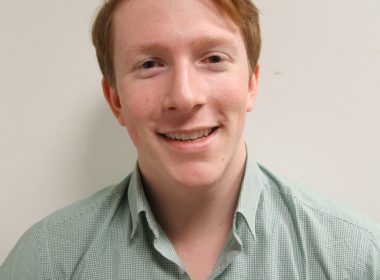
Selina Liu has been interested in sustainability for as long as she can remember. Currently a U3 student studying chemical engineering, she has been involved in various outlets to promote sustainability across the McGill community.

Last year, Liu served as the finance coordinator for the McGill Farmer’s Market. As one of four coordinators, she helped organize the market that takes place on McTavish every Thursday throughout the months of September and October. It allows local farmers to showcase and sell their products, which range from fresh, organic vegetables to different types of honey, bread, and tea.

“It gives an opportunity for farmers and students to interact,” Liu said. “It lets students become more aware of what they’re eating and where their food is coming from.”

Liu’s favourite thing about the market is that it brings together farmers and students in support of locally grown food. She said she feels it is important to support the agricultural community by either buying vegetables at the market or signing up for the Community Supported Agriculture baskets, which are baskets of locally sourced food.

“It’s great because you pay for the baskets up front, which eases the start-up costs for the farmers,” she explained. “It also makes sure you get fresh, seasonal vegetables for eight weeks. It’s convenient, and it’s a great learning experience because you get to learn what grows in your region, when different vegetables are ripe, and different ways of cooking them.”

Liu has also been a sustainability coordinator for the Engineering Undergraduate Society (EUS) for three years. This year she is starting a committee called the EUS Sustainability Commission, which aims to build a network of students and groups on McGill campus, specifically in engineering, who are involved in sustainability.

“The committee is about getting engineers to find their niche,” Liu said. “So many engineers are already passionate about sustainability, but don’t know all the ways that are out there that they can get involved.”

The committee will be the link between engineering students who share this interest and like-minded organizations that are looking for volunteers.

Liu hopes to organize a sustainability fair sometime in the future, where engineers can see all the different opportunities available to them.

“I’m very passionate about empowering engineers in the world of sustainability,” she said. “There is so much potential for engineers to get involved, both at McGill and after you’ve graduated.”

Her intention is that the committee will highlight how crucial engineers are to the creation of a sustainable society.

“Engineers are the ones who will be building the infrastructures and technologies that will allow us to take better care of the planet,” Liu said. “We’re such an important piece of the puzzle that most people don’t realize.”

Although Liu isn’t sure if she will pursue sustainability as a career, she knows that her passion for it will permeate into whatever field she chooses to follow.


What did you dress up as for Halloween?

A piece of bacon, which is funny because I’m actually a vegetarian for this semester.

If you could only eat one thing for the rest of your life, what would it be?

Oatmeal. But only the large flake kind, not the instant kind.

Who’s your favourite TV character?

Phil Dunphy from Modern Family. Or the girls from “Girls.” Those are the only TV shows I’ve been watching recently.

What’s your favourite vegetable?

Zucchini.

a, Sports

Point counterpoint

With the National Football League (NFL) moving into the second half of its 2013 season, neither the American Football Conference (AFC) nor the National Football Conference (NFC) has a runaway favourite to win the league. Two contributors weigh in on which conference boasts the most talent in a league renowned for its parity.

AFC

Offence:

No team in the NFC compares to the offensive powerhouse that is the Denver Broncos. Led by Peyton Manning and his new favourite target Wes Welker, the Broncos are on pace to shatter just about every scoring record, including most points in a single season. Manning is also slated to break Tom Brady’s record of 50 TD passes set in 2007. With weapons like Demayrius Thomas, Julius Thomas, and Eric Decker, no defence in the NFC—or AFC for that matter—has the personnel to match the Broncos for a full 60 minutes. Moreover, the top four AFC teams have outscored the top four NFC teams by a 933-877 margin, as well as 111 touchdowns to 98, respectively.

Defence:

On the surface, it may appear that the AFC is disadvantaged because much of the media coverage focuses on the strong defensive units of the Seattle Seahawks and the San Francisco 49ers. What many overlook, however, is Kansas City’s defence, which leads the league in points allowed, sacks, and fumble recoveries. Additional statistics prove the AFC’s defensive prowess. Seven of the NFL’s top 10 defensive teams in terms of points allowed hail from the AFC. Of the 10 teams that lead the league in sacks, eight come from the AFC. Seven of the top 10 stingiest units in terms of yardage allowed and yards-per-play also are from the NFC. Finally, four of the five worst defences in terms of yardage allowed and points allowed are from the NFC, showing that there is depth from the top to bottom in the AFC.

Coaching:

In terms of coaching, the AFC stands well above its NFC counterpart. Andy Reid has taken a Kansas City team that went 2-14 last year and turned them into a legitimate Super Bowl contender, boasting the league’s only remaining undefeated record. Over in New England, Bill Belichick—one of the greatest football minds of our generation—has led a Patriots team decimated by injuries and free agency to an AFC East best 6-2 record. No matter what players are lining up on the field, or what team they are playing, Belichick devises game plans that put his team in a position to win each week. In Indianapolis, Chuck Pagano, who overcame his battle with cancer last year, is leading a young Colts team to one of its best starts in franchise history. Having taken his second-year quarterback Andrew Luck under his wing, Pagano and the Colts have handed out huge losses to NFL powerhouses such as Seattle, San Francisco, and Denver.

Drew  Allen


NFC

Offence:

At the halfway point in the NFL season, it is clear that the league’s most lethal offences reside in the NFC. With the read-option tearing through defences and versatile quarterbacks dotting the conference landscape, NFC teams are virtually unstoppable.

The NFC North is home to the league’s top quarterback, Aaron Rodgers, while running back Adrian Peterson and wideout Calvin Johnson are also the standard bearers at their respective positions. Julio Jones, Cam Newton, and Drew Brees light up the scoreboard on a weekly basis and give the NFC South some of the most electrifying players in the league. The NFC East may lack an elite team, but with Dez Bryant, LeSean McCoy, and Robert Griffin III, it has no shortage of thrilling young offensive stars in intriguing systems. The future of the NFL resides in the NFC West as Colin Kaepernick and Russell Wilson both lead two of the NFL’s flashiest young teams.

Defence:

Unlike in the AFC where defensive statistics are skewed by weak offences, NFC teams have the tough task of taking on a slew of talented offensive players each week. TThe truth is that the most daunting and imposing defensive players dwell in the NFC. Led by Richard Sherman and Patrick Willis, the Seattle Seahawks and San Francisco 49ers are two of the league’s premiere defensive units. The teams combined to make up over half the All-Pro defensive team last season, and have continued to puzzle offensive coordinators and quarterbacks alike in 2013.

In the trenches, the NFC is anchored by Ndamukong Suh and Jared Allen who make even the best offensive lines look like sieves. Linebackers DeMarcus Ware and Clay Matthews have wreaked havoc for opposing teams’ quarterbacks, while Lance Briggs, NaVarro Bowman, and Sean Lee have been spectacular at stonewalling rushing attacks. In the secondary, Charles Tillman and Darelle Revis cause headaches for offensive coordinators with their shutdown defensive abilities. These elite defences can dominate any AFC opponent.

Coaching:

Ever since Lombardi and Landry roamed the sidelines in the 60s and 70s, the NFC has been home to the league’s best NFL minds. Other than the presence of Bill Belichick, the AFC has merely a weak fraternity of coaches.

The New Orleans Saints saw the importance of coaching first-hand in 2012, as their record dropped from 13-3 in 2011 to 7-9 the following season in large part because of the absence of Head Coach Sean Payton. The NFC has offensive masterminds such as Mike McCarthy, who has taken his Packers to the playoffs in four straight seasons and looks to add another Lombardi trophy to his resumé. Mike Shanahan and Tom Coughlin are two of the biggest names in the business—with a pair of Super Bowl rings to back up their claim. Jim Harbaugh and Pete Carroll represent the new wave of NFL coaches rising from the college system, and it won’t be long before their knuckles are lined with championship rings too.

— Aaron Rose

Editor’s pick: The NFC

Although the AFC may have the statistics to back up offensive and defensive success, the conference’s numbers are skewed by the presence of a few elite teams, namely the Denver Broncos, Kansas City Chiefs, and New England Patriots. These teams have been able to pad the score sheet with the aid of weak schedules, in contrast to the steady excellence of the NFC.

a, Arts & Entertainment, Film and TV, Theatre

NTS graduate Colm Feore graces local stage once again

It’s no secret that there is a healthy amount of tension between Anglophone and Francophone cultures in Montreal, but one place the two co-exist beautifully is at NTS, a school that fosters the acting, writing, and directing talents of young people of both languages.

Canadian actor Colm Feore graduated from the National Theatre School (NTS) in 1980, and last week received the 2013 Gascon-Thomas Award for his contributions to Canadian theatre and his status as a role model to students.

Although the award is an honour for Feore, it’s also a reminder of how long he’s been acting—and of his age.

“If you’re still doing it at my age, they think, ‘Well we better give him something,’” Feore laughs. “[However], it’s encouraging to younger people, I suspect, that you can keep working and making a living doing this.”

After over 30 years in the business, with success on the stage, TV, and in well-known movies such as Chicago and Bon Cop, Bad Cop, Feore is the perfect example of a Canadian actor who has been able to diversify and adapt to different roles, while also remaining true to his roots.

“If you want to be Canadian, you need to start where you know,” says Feore. “The great advantage of being in Montreal is you have those two elements—French and English—that give you a better sense of who you are, and where you’re from. You can go to America and put on an American accent, but there’ll be 50 million people there already doing that.”

Having been determined to become an actor since a young age, Colm Feore unwaveringly pursued his career in the arts. However, he too had some doubts.

“I had applied to universities out of high school [….] I was an indifferent student, and when I got accepted to the Theatre School I took it as an endorsement of what might be possible [….] I thought ‘I should try this, and if it sucks I’ll go back to school and study something serious,’” he says.

It is because of this honesty, among other things, that Feore was one of the best possible role models to confront the National Theatre School students about the reality of finding a job as an actor, and the amount of hard work it takes to succeed in such a cutthroat environment.

“There are many, many more people trying to [act] now,” Feore explains. “Some people get famous fast, and everyone else thinks, ‘Oh, it can work!’ But it doesn’t work like that; it’s horribly difficult and restrictive. If you don’t have a foot in the door, or a friend on the inside who can guide you, you don’t have a chance.”

However, he believes that a school like NTS can help young actors get that footing, and actually have a chance—and that his schooling definitely helped advance his career.

“One of the things about NTS is that it has a reputation around the country. It started in 1960 and churned out the best people in the theatre,” says Feore. “The reputation rippled across the country and the rest of the world that this was the best place to be.”

While NTS fostered Feore’s career when he was young, a certain playwright helped inspire it—Shakespeare. Feore is adamant about the importance of keeping the bard relevant in schools today, especially because his writing can often seem inaccessible to an untrained reader.

“The best thing to do is study the best thing [Shakespeare], because then you know that all the effort that you put into it will be rewarded,” says Feore. “If you have muscled your way through King Lear, or Othello, or Macbeth […] you have a foundational understanding of what a good play is [.…] It becomes a foundational canon of your reference material.”

a, News

Fire at Macdonald Campus destroys storage barn, two silos

A storage barn and two silos at Macdonald Campus were destroyed by a fire that started just before 6 a.m. Thursday morning. The cause of the fire is unknown and remains under investigation.

Employees and students performing morning chores in the cattle barn spotted the flames and shut the firewall doors separating the storage barn, filled with dry hay and feed, and the adjacent cattle barn housing 135 cows. The firewall, engineered to prevent fire from spreading between the two barns, successfully kept the cattle barn from burning.

Sixty firefighters and 12 fire trucks worked to put out the flames while staff and students led the cows to outdoor pens until the fire was under control. No people nor animals were injured, and the cows were returned to the barn later that day.

Chandra Madramootoo, dean of the Faculty of Agricultural and Environmental Sciences, said the faculty plans to make repairs to the buildings after the damage has been fully assessed.

“It will take several weeks to get an estimate of the extent of the damages, and [it] also takes time for the insurance adjustors to complete their work,” he said. “We have lots of cleaning up to do.”

According to Madramootoo, the incident will not affect students but will require modification to some research projects.

“There should be no effect on students [or] for professors who are doing research; we have already started to make adjustments,” he said. “The goal is to try and return to normal as quickly as possible, but it will be a slow process.”

In an email sent to staff and students, Principal Suzanne Fortier thanked those who contributed to the group effort that minimized damage.

“Our employees moved fast to keep the blaze from spreading and affecting livestock in the adjacent barn, and a group of about 20 students practicing nearby with the Macdonald Campus Woodsmen team came to offer help,” Fortier wrote. “Thank you to everyone who quickly responded to [the] serious fire.”


a, Arts & Entertainment

Worms of the Big Apple

In case you haven’t caught the barrage of social media buzz about it yet, Humans of New York’ is an online photography blog made up entirely of portraits of people on New York City streets. The man behind the camera, Brandon Stanton, describes the blog as a “photographic census” of the city’s different neighbourhoods. He roams the streets, taking portraits of perfect strangers in their everyday passing moments, and, in effect, makes the mundane unique and beautiful through his lens.

Today, three years after kick-starting his project, Stanton has not only racked up more than 6,000 unique portraits, but also more than 1.5 million likes on Facebook, tens of thousands of comments per day, and, most recently, a book deal. In mid-October, when the hardcover version of Stanton’s work took to the shelves, its sales surpassed all expectations as it soared to the number one spot on the New York Times’ bestseller list after just one week.

The book, like the blog, is intelligently simple. Each crisp page features one to three photos, and most are supplemented by a caption that is either Stanton’s own, a single-phrase reaction to the photo, or a snippet from the conversation he had with the subject or subjects. These people act as characters in what seems to be an overarching narrative of the city itself.

Although we only get fragments of the “humans’’’ stories, many are profound. In some instances, the narrative has political overtones: one photo spans two pages, showing two men kissing as the sun sets under a Statue of Liberty backdrop. Another shows a young man saying, “In Korea, the culture is much more centred around doing what you’re told. Here, everyone wants to argue and discuss and figure things out together. But there’s a lot of pressure that comes with having that much freedom to make your own decisions.”

Each personal story buttresses the greater discourses in society and the political world.

The book features racial and religious minorities, immigrants, queer couples, single mothers, the elderly, the poor, the homeless, drag queens, and countless individuals from other marginalized groups.  Each person is given a voice, may it be moving, humorous, thought provoking, or intimate. Their photos are placed alongside those of the wealthy, white, and otherwise hegemonic individuals—all given the same amount of value and space on Stanton’s pages.

Aesthetically, the book is stunning. On a given page, the photos complement each other, often contrasting in colour, shape, and theme. From one perspective, the book is a fashion anthology, because it documents some of the best dressed in the city, inclusive of all socioeconomic levels. Stanton has included the fan favourites from the blog Today in microfashion…,  a recurring caption that accompanies photos of the cutest and most uniquely dressed children of the city. The print medium offers a more formal plane than its online counterpart; the blog offers free-form viewing style while the book has a stricter format, but the book’s well-designed pages make the transition from online to hard copy pay off.

Humans of New York highlights New Yorkers’ striking individuality and allows us to see how they all converge to operate as the powerful, humming, massive unit that is New York City. For all fans of the blog and those desiring a humanistic view of the United States’ most famous cosmopolitan city, Humans of New York comes highly recommended.

a, Editorial, Opinion

Incomplete athletics policies leave room for inaction

Last Friday, the Montreal Gazette reported on a 2011 incident in which three McGill students were accused of an alleged sexual assault on a former Concordia student. The three men—who were arrested in April 2012—are McGill Redmen football players and have continued to play for the squad in the two seasons since their arrest. They are scheduled to appear before a Quebec court for a preliminary hearing next month.

Although the specifics of the incident will not be revealed until the trial unfolds, there are serious questions that need to be asked about how McGill  handled this incident over the past two years. (See: “McGill students’ criminal case draws attention to disciplinary procedures“) The limitations of the current institutional framework appear to be the main factor in McGill’s evasive response to the alleged incident, including the decision to allow these athletes to continue to play.

Currently, McGill student misconduct is assessed through the Code of Student Conduct, which determines academic sanctions for violations of rights and responsibilities.

McGill Athletics is another matter. The official rules governing varsity athletes do not extend far beyond the general Code of Conduct, aside from a few stipulations in the “Guide to Varsity Sports for Student-Athletes,” which seek to address issues including performance enhancing drugs, hazing, and conduct on the field.

McGill Athletics has a disciplinary officer who deals with athlete misconduct. Whether this person ever addressed this specific case remains unclear, but interviews suggest that, because the alleged incident did not occur on McGill campus or during McGill-related activities, it would not rest under the university’s jurisdiction to respond. Rather, the burden would fall on the police to investigate the situation.

We believe that this is a flawed system. Other universities, such as Bishop’s University and the University of Winnipeg, have provisions for their student athletes which stipulate that they will be held responsible for criminal misconduct regardless of whether it happens on or off campus or in university activities. Adopting such a measure would ensure that McGill has a framework to handle these situations and can hold students who represent the university to a higher standard. It would also bring the athletics program in line with the policies of many NCAA teams when their student athletes face arrest.

Apart from the framework, there are unofficial disciplinary measures available. Even if a player is on the roster, a program has no obligation to allow that student athlete to compete.  The football program should have acted on knowledge of the arrest and instituted administrative sanctions, suspending the players from any involvement on the team until the case was resolved. This is not a judgment on the innocence or guilt of the players; it serves as a demonstration that McGill Athletics takes criminal allegations very seriously.

Varsity athletes are chosen to represent McGill wherever they are, and as such, should be held to the highest standards of conduct. Regardless of the outcome of the criminal trial, the university’s inaction only contributes to the devastating culture of silence that survivors of sexual assault already face.

While there is still much to come to light here about the case, establishing measures for the future is one decisive step McGill can take.

McGill demonstrated its ability to amend its policies following a similar situation involving its student athletes, namely the football team hazing incident in 2005. In response to the controversy, McGill created new policies to maintain and promote the integrity of its athletics program. We believe that this is a valuable opportunity to do so once again.


a, Arts & Entertainment, Theatre

Oral tradition: Montreal edition

This year marks the 10th anniversary of Canada’s annual Spoken Word Festival, and the first time the festival has graced a Montreal stage.

Since its inception in Ottawa in 2004, the Canadian Festival of Spoken Word has grown from six teams of poets to 20, with a constantly growing audience appealing to viewers of varying ages and languages. Originally a space to showcase spoken word talent, the festival has grown to incorporate a medley of performance events designed to facilitate the bright and dynamic Canadian spoken word and poetry communities.

Our vibrant city provides a fitting backdrop for the first multilingual festival. Moe Clark directs this year’s presentation, which includes showcases, workshops, and panels, and brings together a collaboration of the stories of over 120 poets under the theme of “Diverse Languages.” The bilingualism that is so central to Montreal, and the larger tension between French, English, and Canada’s Indigenous languages, intersects directly with the festival’s through-line—the negotiation and diversification of language. Under Clark’s artistic direction, the festival intends to honour the rich diversity of languages and oral traditions that are in danger of extinction by deconstructing frameworks of language.

Clark seeks to promote awareness about the multiplicity of language. By integrating different disciplines of what constitutes communication—visual, physical, spoken, lyrical—Clark hopes to widen the scope of the festival’s target audience and their perception of language. Through a combination of poetry, storytelling, and dialogue, the acts in the festival show oral traditions as playing a crucial part in the transmission of history, while attending to both the conflict and interdependence of spoken and written work.

“We have chosen to make each showcase eclectic and diverse, to represent not only the diversity of voices that exist within spoken word, but also to highlight the cabaret style performances of Montreal,” Clark explains. “To do this, we’ve veered away from hosting more ‘token’ showcases, i.e. only Aboriginal artists, only queer performers, et cetera, by bringing spoken word poets from various genres and orientations together in the same event.”

The acts are structured to demystify storytelling and spoken word in an effort to examine language and make its preservation and transmission more accessible.

Recruiting this community of artists was a key part of creating material and establishing a “collective conscious” for the festival. Clark describes how the individual diversity and dynamic energy of the contributors are “language keepers” who “keep the flames of language lit through generations” and build upon the stories that they are preserving.


The Canadian Festival of Spoken Word “Diverse Languages” runs from Nov. 4 to Nov. 9 at Theatre Rialto, with events scheduled all day. The last event will showcase this year’s poets of honour: Jose Acquelin and Tanya Evanson.

a, Science & Technology, Student Research

Breaking down barriers in osteoarthritis

Known for its excellence in research, McGill University is home to a host of professors and scientists whose work contribute to scientific innovation. In tribute to the amazing research conducted within McGill’s walls, each month Science & Technology will feature student researchers who have helped contribute to the cutting edge science conducted at the laboratories. This series hopes to shine a spotlight onto the hard work of undergraduate students who dedicate themselves to research in the lab. 

For many students, the first day of work entails filling out papers and easing into the new job. But on Joseph Yang’s first day, he was handed a scalpel and was asked to collect cartilage from mice.

“I really wasn’t expecting to do so many things my first day,” he said. “It was kind of nasty at first—having to cut everything out—but eventually I got pretty good at it. [It got to a point] where I had to dissect around 15 to 20 mice a day.”

Yang, currently a U1 microbiology and immunology student, recently received a second place award for his poster in the Medical Sciences category at the Undergraduate Research Conference on Oct. 10. Submissions were mostly from fourth year students, so Yang was surprised when he heard his name announced. His poster focused on the research he had conducted this past summer at the laboratory of Vice Chair of research at the University of Toronto and adjunct scientist in developmental & stem cell biology Benjamin Alman. Yang’s research was conducted under the supervision of Peter Kannu, a staff physician in the Clinical and Metabolic Genetic Department. The lab is located in Toronto at SickKids Hospital.

“The goal of my research was to see whether my protein, called aquaporin 9 [which regulates transport of both solute and water] was implicated in causing osteoarthritis [a degenerative joint disease],” Yang said. “We used a mouse model and knocked out aquaporin 9 to see the differences in gene levels of osteoarthritis markers like COLX.”

By knocking down the protein, Yang was able to observe what happened in mouse cells when this protein was no longer functioning. He paid particular attention to certain genes known for their involvement in osteoarthritis.

“What happens in osteoarthritis is that there are cells called chondrocytes in the joint area that are supposed to be in the resting state, but they start differentiating into a state known as a hypertrophic state,” Yang said. He explained that in the hypertrophic state, the cells change their morphology and produce collagenX, instead of collagen2 which is required for the proper structure of healthy cartilage. This state leads to a breakdown of cartilage, resulting in the pain associated with osteoarthritis.

Yang’s project consisted of classifying whether or not the protein aquaporin 9 was involved in osteoarthritis. His results from this summer indicate that this protein does indeed have implications in the disease.

“We noticed that when we knock out aquaporin 9, [making the protein non-functional] the expression level of certain genes responsible for breaking down cartilage are overexpressed. Essentially, when we knock out aquaporin 9, these gene levels go up.” In other words, when aquaporin 9 is not functional, genes implicated in osteoarthritis make more gene products than they normally do in healthy individuals.

Yang also looked at the difference in expression of the osteoarthritis marker COLX between wild type cells—those with the functional aquaporin 9 protein—and knock-out cells—those without aquaporin 9. A ‘marker gene’ in this case is a gene that is known for its expression in a certain disease.

“We stained for COLX expression and one thing that was really interesting was that […] the COLX expression levels were only different in the articular cartilage of the joint [flexible connective tissue],” Yang explained.

This observation was very important to his project, as it helped localize where arthritis affects the joint. It also indicated a strong correlation between aquaporin 9 and osteoarthritis—the goal of Yang’s project.

As for many undergraduate students, this summer position was Yang’s first experience in research. One of the benefits of this experience was that it enriched his taste for research and enhanced his learning in the classroom.

“[Now] when I am learning about PCR and DNA sequencing, I have physically done it before. It’s not an abstract thing, because I have already done it. [My lab work allows me to] appreciate the basics of why we are learning about this technique.”

Having enjoyed his experience, Yang is currently working in a lab in the Institut de Recherches Cliniques de Montréal (IRCM) under the supervision of Director of Biochemistry of Epigenetic Inheritance Research Unit and associate IRCM research professor Nicole Francis, whose lab focuses on proteins involved in cell division of mitosis. In the future, Yang hopes to apply to a MD-PhD program.

“I like research, but I think I would like to do [a] MD-PhD. I want to do more research to make sure that I really do like it. [It] can be frustrating.”

Yang emphasizes that, as an undergraduate student, getting involved in research can be a difficult process. However, he notes that perseverance is essential to acquiring the opportunity to become a part of a lab community.

“[When I applied], I had just finished first year, so I had no lab experience,” said Yang. “My understanding of these biological techniques was pretty limited, so I knew I was in a [less advantageous] position to apply for these full-time positions over the summer.”

“I applied to a lot of labs—25 or something like that—and if I was lucky I would get a response from five. Three said they only took fourth or third year students, but luckily I got an interview at one lab, and that was the lab I actually worked at. I think it is important to keep trying— even if you might not get a response, don’t be upset by that. Apply to a lot of labs and really show that you want to do it.”

Yang said he admires the level of intellectual discussion and collaboration that occurs within both labs he has worked at so far, and he looks forward to the opportunity to continue acquiring a taste for research in his future years at McGill.


Favourite lab technique:

“[Collecting cartilage from mice] takes a while because you have to be careful not to dissect other stuff [besides] the cartilage. It was tedious at first, but it is a really good technique [to learn]. You have to focus a lot. Also, [although it was not my favourite task] stacking pipette tips was [surprisingly] fun—[the summer students] raced each other!”

Most embarrassing moment:

“I had a lot of embarrassing moments. For example, we were doing this project where we had to culture cells for 21 days and check them every three days. We had to compare the first three days with the 21st day. I contaminated the cells [on the 21st day] so it basically failed.”

If you were a mad scientist, what would you do in your lab?

“I would make a time machine and go back [in time]. I have a few people I want to meet.”

Advice for other students applying to a lab:

“Apply early, because spots fill up. The applications [for my lab] were due at the end of January but I applied in early December. When I went home for the Winter break, I did my interview at the lab. A lot of positions are filled by people who have connections at the lab, so there are a really small number of spots available. If you don’t apply early they will fill up so fast.”

Joseph Yang is a U1 microbiology and immunology student

a, News

Panellists talk barriers to women in politics

Barriers to the participation of women in politics were at the forefront of a panel discussion hosted at Thomson House on Oct. 28.

The event, “Yes SHE Can,” was co-hosted by the McGill Political Science Students’ Association and McGill’s Women in House program.

The panel featured four experts on women in politics, who addressed the unique challenges women face, including the media’s representation of female politicians and the lack of access to resources such as childcare.

“Just look at the caricature of political women,” said Martine Desjardins, a political activist and former chair of the Fédération étudiante universitaire du Québec (FEUQ). “They are always represented as someone working in [the] kitchen, whereas the men are portrayed as superheroes.”

Elisabeth Gidengil, director of McGill’s Centre for the Study of Democratic Citizenship, said women in politics face considerably more pressure than men to focus on their appearance.

“We never get to hear what a male premier or minister is wearing,” Gidengil said. “However,  it is a different case for the women, and heaven forefend if she wears the same thing twice.”

Desjardins criticized the expectation that women should maintain a polished appearance by drawing on her own negative experiences with the media during her time at FEUQ.

“[The media] thought I was having bad negotiations because I had no make-up on, because they said I looked sick,” Desjardins said. “So after that, I learned to do my makeup.”

The panellists also emphasized the need for women in politics to receive support from their families and increased access to childcare. Janine Krieber, a political science professor at the Royal Military College of Canada, suggested a lack of childcare services is hindering women from political engagement.

“Women occupy lower levels of power because politics is not very family-friendly,” Krieber said. “Dysfunctional daycares are an example. [Women] must consider their children and their parents. Women also need support from their home and especially their spouses to be successful.”

Another panellist was Patrik Öhberg, the principal investigator for the Swedish survey of the international Comparative Candidates Survey which examines the backgrounds of candidates in elections around the world. He said in comparison with other nations, the representation of women in Canada’s current political system is low.

“In Sweden, if a parliament does not have equitable representation, they better have a very good reason for it,” Öhberg said. “In Canada, it just seems to be acceptable.”

To address this lack of representation, Desjardins said that women involved in politics should help bring other women into politics.

“Women need to learn how to support each other in leadership positions and not be competitive to each other,” Desjardins said.

According to Shaina Agbayani, one of the co-ordinators for Women in House, the goal of the event was to bring the double standards expected of female politicians to light.

“The impacts of these standards were discussed constructively by our panellists in a way that, hopefully, takes a step towards challenging them so as to contribute to the wider discussion of how we can work toward building a more equitable and representative democracy,” Agbayani said.

Devan Braun, U3 Arts, noted the importance of increasing the awareness of issues facing women in politics to the McGill community.

“It is important to create awareness for such biases in politics because people do not realize that such double standards exist until they are pointed out to them,” she said.

The event anticipates McGill’s Women in House annual two-day trip this November, when female students will have an opportunity to shadow female Members of Parliament and senators.

a, News

Could McGill have a Fall reading week?

As the Fall semester drives on towards finals, many McGill students look wistfully towards other universities that have implemented a Fall break in recent years.

While Fall reading weeks used to be unusual for Canadian universities, the additional break is quickly becoming the norm. For the first time this year, a majority of public Ontario universities—11 out of 20— have decided to set aside two to five class-free days in October or November.

New universities to implement this strategy this year are Brock University, Carleton University, McMaster University, and Western University. Others, however, introduced their break much earlier—for example, Trent University has had a Fall break since 1964.

An often-cited reason for the implementation of these Fall breaks is to address the rising concern over students’ mental health by offering an opportunity for students to catch up on schoolwork and spend time with friends or family before final exams begin.

In a report by Western’s weekly newspaper, Western News, John Doerksen, vice-provost (Academic Programs and Students) said that Western implemented its Fall Break , an additional two days off before the last weekend of October, in order to allow students to focus on their studies and reduce academic stress.

“The Fall study days provide students with a block of time to begin end-of-terms projects and essays, to catch up on other course work, or simply to catch their breath,” Doerksen said. “I’m hopeful the break will mitigate some of the anxiety that students may feel as important course deadlines approach.”

Dr. Perry Adler, associate director of the Teen Health Unit at the Jewish General Hospital, said he would support a Fall break at McGill based on his experience providing for university-aged patients.

“Most [of the patients’ stresses] negatively affect their abilities to meet their academic responsibilities,” Adler said. “Having a break from school in the Fall semester would help many students.”

Julia Martschenko, a student at the University of Toronto, said that she appreciated having the break last year.

“The Fall break is great because it gives me another opportunity to go home and visit family and friends,” Martschenko said. “I really appreciated it last year as I used the days without classes to catch up on the work that had piled up during midterm season.”

McGill’s Deputy Provost (Student Life and Learning) Ollivier Dyens said the break would be beneficial to the McGill community, but that logistical issues complicate the addition of a break to McGill’s already full calendar.

“[This decision] would involve all sorts of units—facilities, issues with residences, with dining services—[and cause] all sorts of pedagogical issues,” Dyens said. “The university is based on collegial governance. You [have] to get a buy-in from everyone, [including] the academic sector, the dean, the students, and the graduate students.”

According to Dyens, the possibility of a Fall break has been discussed among the McGill administration and there could be potential for one to be implemented in the coming years if the Fall semester were stretched further into December.

“The Quebec government mandates a certain amount of contact hours between the students and professors,” he said. “A certain number of hours has to be [completed] in that small window [….] I believe we could have a Fall break but that would mean a longer semester—for example, until Dec. 23.”

However, some Quebec universities have been able to implement all fall break. In October, L’ École Polytechnique de Montréal has a week-long Fall break from Nov. 14-18. Instead of Finishing their semester on Dec. 18th like McGill, L’ École Polytechnique de Montréal finishes their semester on Dec. 20.

Dyens said that while the procedure is complicated, he is open to suggestions.

“If it is brought up enough by students, I would welcome them to come and see me,” he said. “We’ll organize a meeting with the registrar and we’ll discuss this—especially if it’s important for the students.”

When considering the possibility of implementing a fall reading break, SSMU Vice-President (University Affairs) Joey Shea stressed that although a few days off school would have an effect, this may not address the root of the issue of student stress.

“[With] the overall intensity of McGill and the academic pressures, there are bigger factors that affect mental health,” Shea said. “I think we need to take a more general approach to mental health—being as important as your physical health and academics—rather than just [taking] a week off school.”


—Additional reporting by Annie Xie

Read the latest issue

Read the latest issue