

Starting a science degree at McGill can feel overwhelming. Between heavy course loads, fast-paced lectures, and the pressure to perform, many students struggle to find study strategies that work for them. SciLearn, a program run by McGill’s Office of Science Education (OSE), aims to change this.
Grounded in neuroscience, SciLearn supports the growth, well-being, and academic success of undergraduate students by helping them study more effectively.
“We try to provide [first-year undergraduates] with some skills that can enable them to feel well and to be successful in their first year,” Cyrille Mvomo, a PhD student and Science Education fellow at OSE, said in an interview with The Tribune.
The program’s innovative approach has gained international recognition, earning a bronze QS Reimagine Education Award for its application of neuroscience learning.
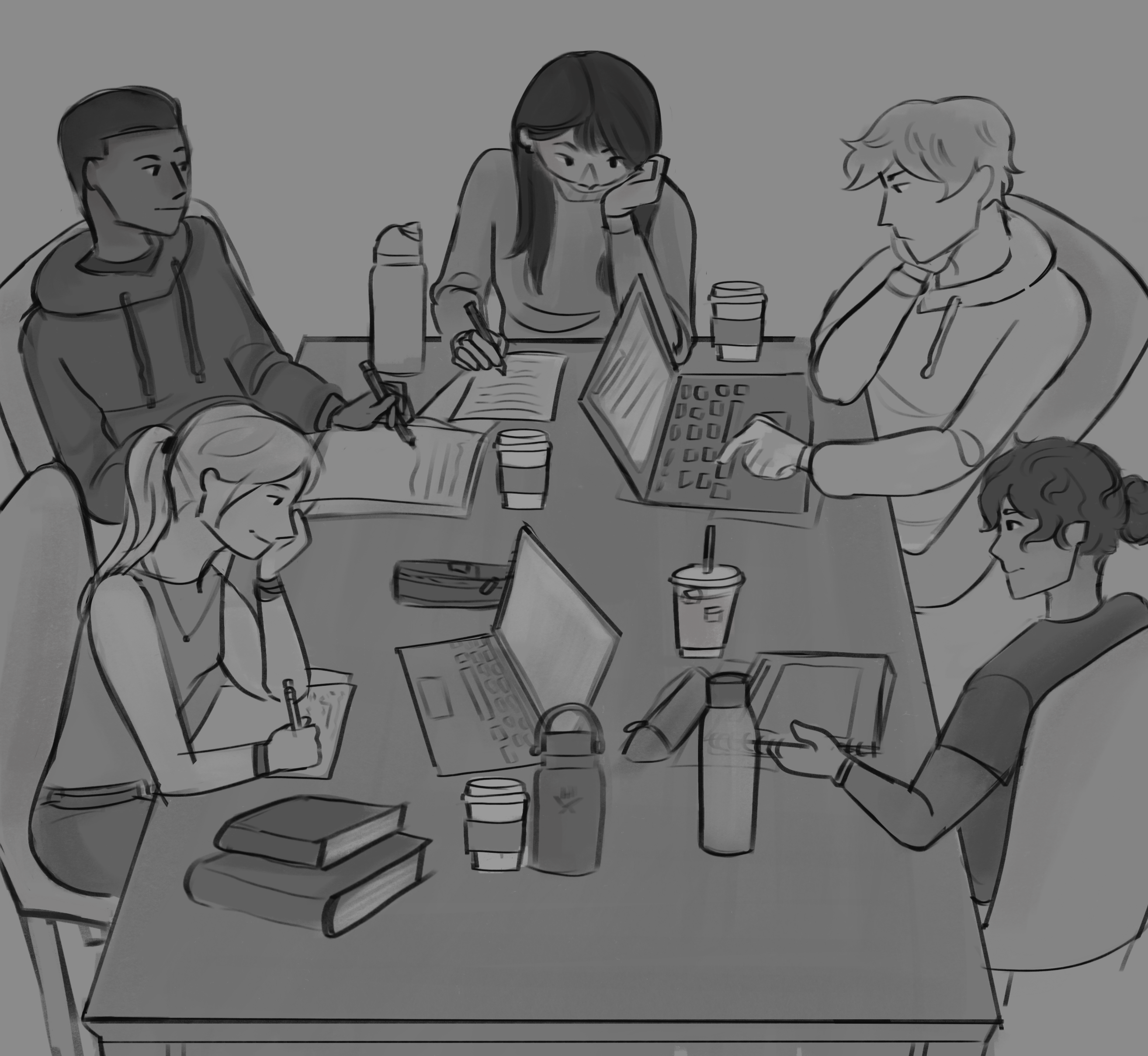
One of SciLearn’s central initiatives, SciLearn Peer Collaboration, operates a collaborative learning space on weekdays from 3:00 p.m. to 5:00 p.m. in the Burnside Hall basement, room 1B23. There, teaching assistants and undergraduate peer mentors assist students as they study together. The workspace hosts course-specific study sessions for a selection of 100 and 200-level science courses. Students can work on assignments, prepare for exams, ask questions, or simply take a break in between study sessions. Although SciLearn is housed within the Faculty of Science, students from other faculties enrolled in first-year science courses are also welcome.
“We want everyone to come,” Kira Smith, Student Engagement and Learning manager at OSE, told The Tribune. “Part of the network that we establish between students means that the students who […] understand the concept can support their fellow peers in developing that same understanding and learn as they are teaching their peers [….] It is [a program] that builds on everyone’s strengths.”
According to a survey conducted by OSE researchers, between 85 and 90 per cent of students reported that SciLearn Peer Collaboration prepared them for their assessments, improved their understanding of class material, and provided a centralized space to study multiple courses.
Beyond SciLearn Peer Collaboration, SciLearn organizes events, such as workshops that explore the neuroscience of learning, memory, attention, and motivation. Through a combination of guest lectures, study groups and other events, SciLearn helps students understand how the brain retains information and applies the knowledge to improve their study practices.
SciLearn also collaborates with instructors in select science courses to deliver guest lectures which introduce students to neuroscience-informed learning strategies.
“In our events, we realized that some of the students had some misconceptions about the neuroscience of learning that could prevent them from optimizing their learning performance,” Mvomo said. “For example, [people think] they are a visual learner, they are an auditory learner, and they cannot learn in any other way [….] After attending our events, these kinds of misconceptions are decreasing.”
As advice to first-year students, Mvomo cautions against cramming before exams, noting that it does not support long-term retention of information. He also encourages students to remain open-minded about academic support programs and workshops, even those that may initially seem unnecessary.
Smith echoed this message and also emphasized the importance of self-compassion.
“Remember that you are a person first, then you are a student, and then you are a club member or executive, etc.,” Smith said. “[Be] gentle with yourself and [lean] on the supports that exist for you [.…] Once you have identified these community members who […] want to help, lean on them, because it makes us feel good to help you, too.”
The SciLearn program will continue to evolve, with upcoming initiatives including discussions on artificial intelligence in learning, an expansion of guest lectures, independent study group sessions, and plans to secure a larger space to broaden services.
Altogether, SciLearn aims to provide science students with practical tools, evidence-based learning strategies, and supportive spaces designed to help them thrive at McGill and beyond.
“It is a program that just wants students to succeed, and we are doing everything that we can to do that, including giving them free snacks,” Smith said.


