

McGill’s Plurilingual Lab resumed its Grad Talks series on Jan. 15 as part of an initiative to highlight graduate students’ research on language education while also allowing them to receive constructive feedback from other researchers. The first talk of the year was led by Tiffany Tam, a University of Toronto[Read More…]
Tag: Linguistics

Shop talk: We need to have a word about jargon
A 2020 study on jargon published in the Journal of Language and Social Psychology found that not only did using more jargon harm levels of understanding among lay people, but it also decreased their engagement with the material and their subjective sense of identification with the scientific community at large.[Read More…]

How does sign language impact deaf children’s ability to learn spoken language?
An infant’s first three years of life are their most intensive period for acquiring language. At this stage, parents often speak to their children to stimulate language development and avoid communication challenges later on for their infant. However, this period can be difficult to navigate for speaking parents of deaf[Read More…]
The science behind the beat
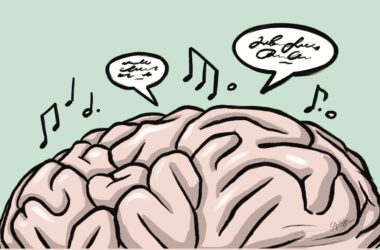
Imagine a world where every sound makes you want to move. Why is it that some sounds, like the rhythm of a song, spark an irresistible urge to dance while others, like everyday conversation, leave us still and focused? Benjamin Morillon, who completed his postdoc at Montreal Neurological Institute-Hospital (The[Read More…]

The transforming landscape of linguistic diversity
The Montreal Underdocumented Languages Linguistics Lab (MULL-Lab) houses linguists from McGill and the wider Montreal community who focus their research on languages that are considered to be at risk of extinction because so few people speak them. For example, MULL has ongoing research on Inuktitut and Tlingit, two Indigenous languages[Read More…]

Innovative algorithm develops theories on rules of human language
Over the last several years, artificial intelligence (AI) has made huge strides forward in the areas of language modelling and translation. Recent improvements are exemplified by the accuracy of machine translation services such as Google Translate, the ability of devices like Amazon’s Alexa to interpret and respond to instructions given[Read More…]

Orphaned tongues
A few months ago, I taught my parents a gesture known as the “finger heart.” To make it, you gently cross your thumb and index finger. Selfies featuring this gesture have become a staple of our text conversations, and I hoard a precious collection of screenshots that document this phenomenon:[Read More…]
Exploring the linguistic mosaics of Montreal bilingual speakers
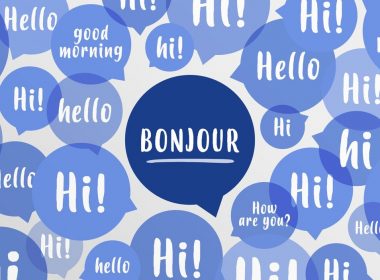
Montreal is a one-of-a-kind city for several reasons: It has a vibrant nightlife, an incredibly rich history, and an amalgamation of diverse cultures. Yet, nothing in Montreal is as iconic as the role of language in shaping the city’s unique culture. As most Montrealers speak both French and English, casual[Read More…]

The ubiquity of human song
From songs on the radio to birds chirping outside, humans are constantly surrounded by music. However, while making music appears to be a universal phenomenon, the vast diversity of music across different cultures also seems to point toward variation. Furthermore, human song’s global similarities have never been proven through research. [Read More…]
Studying bird speech patterns can explain universal grammar rules
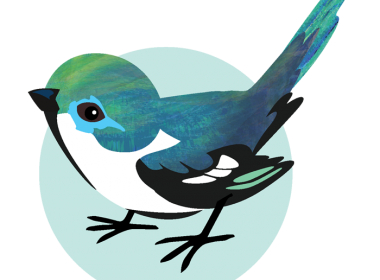
In the 1960s, Noam Chomsky, a linguist at the Massachusetts Institute of Technology, observed that different languages across the world have common patterns. Chomsky postulated the Theory of Universal Grammar (UG), which suggests that humans have created languages and grammar rules that conveniently fit with how our brain is organized.[Read More…]