
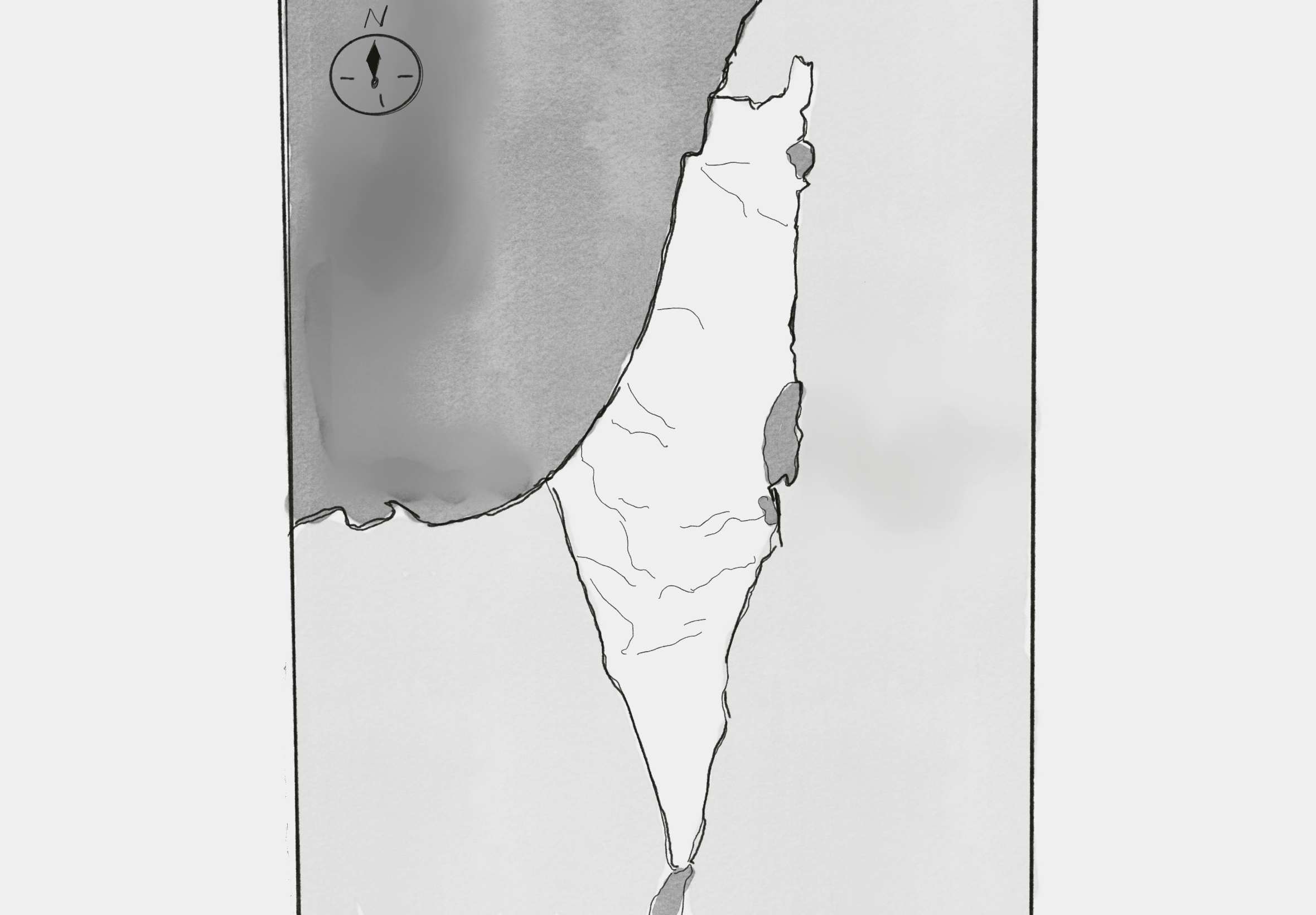



On Feb. 19, the Montreal British History Seminar hosted “Gaza 1917.” Laila Parsons, a decorated historian specializing in 20th-century Middle Eastern history and professor in the Department of History and Classical Studies and the Institute of Islamic Studies, led the seminar.
Parsons prefaced the talk by specifying that the conquest of Palestine in 1917 should not be understood as a distant part of World War I history or as a heroic British victory over the Ottoman Empire. Rather, she argues that the conquest represents a foreign incursion.
“[The conquest stands as] an alien invasion and occupation, and as the material starting point of the colonization of Palestine,” Parsons stated.
She maintained that, from the perspective of Palestinians, the invasion represented a rupture in which they lost the structure that came with Ottoman rule. The British encouraged the expansion and acquisition of land from Zionist settler colonies initially established under the Ottoman Empire in the late nineteenth century.
“The promise of a national home for the Jewish people in Palestine was meaningless without the military occupation that first conquered the land and then protected the settler community, at least until 1939,” Parsons said.
Parsons then clarified that the British had initially been waging a defensive war against Ottoman attacks on the Suez Canal. However, this had changed by the spring of 1917.
“The earliest point [would be] when the British Prime Minister David Lloyd George started talking about ‘wanting Jerusalem as a Christmas present,’” Parsons said.
The British continued their advance into what they understood as the ‘Near East,’ taking Jerusalem, then Damascus, and eventually the whole of Syria.
The conquest’s extent is exemplified in Parsons’ quoting of General Edmund Allenby, a high-ranking British officer.
“I can occupy any strategic points I like,” Parsons read from a letter written by Allenby. “I have the military administration of Syria and Palestine.”
The presentation concluded with an account of the strained peace in the postwar period. Parsons described cataclysmic famine, destruction of essential infrastructure, and a Palestinian future dictated by the brutal British military occupation—factors which led to the termination of the British Mandate for Palestine, the unilateral declaration of Israeli independence, and the 1948 Nakba—to put into context how the consequences of the British conquest of Palestine persist today.