
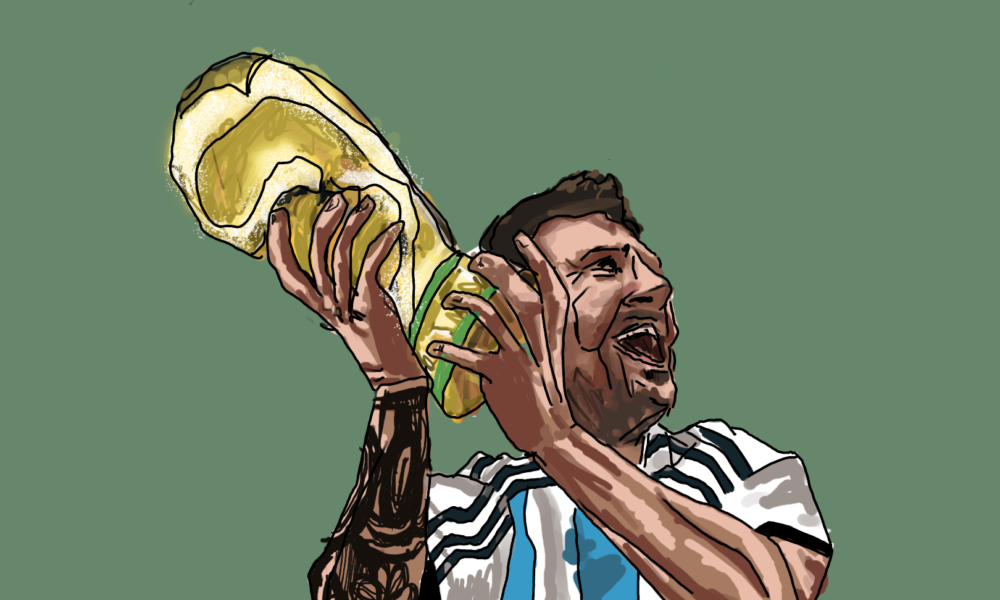




For more than two decades, Lionel Messi has been the most watched, celebrated, monitored, and scrutinized soccer player on earth. On Aug. 31, at the age of 39, he finally put down the Argentina jersey for good, bringing an extraordinary international career to an end.
It was not quite the farewell Messi might have imagined. In July, Argentina lost the 2026 World Cup final to Spain, falling just one goal short of defending the trophy they won four years prior at the 2022 FIFA World Cup in Qatar. The 2022 Final was a glorious match where Messi brought home the Golden Ball for the second time in his career. However, even though his career ended with a loss, Messi’s place in international soccer history was already secured.
Yet, Messi’s journey to this acclaim was anything but easy. Long before he became the player who could fill stadiums just by stepping onto a pitch, Messi was just a boy from Rosario, facing a critical problem that threatened his dream. He had been diagnosed with a growth hormone deficiency that stunted his height and required expensive treatment.
Not letting his size hinder his incredible talent, he moved to Spain at the age of 13 to join La Masia, FC Barcelona’s youth academy—leaving behind his family, friends, and home in hopes of pursuing his soccer dream. As we all know, his gamble paid off: FC Barcelona saw something extraordinary in the teenager, and Messi eventually became one of the greatest players the sport has ever seen.
Playing for Argentina, however, was a different story. When Messi made his senior international debut in 2005, he was only 18. The years that followed brought him plenty of frustration and required even more hard work. He reached the 2014 World Cup final, only for Argentina to lose to Germany. Then came defeats in the 2015 and 2016 Copa América finals. After Argentina’s 2016 defeat to Chile, Messi briefly retired from international soccer. For a player who had won almost everything at the club level, his inability to win a major trophy with Argentina had become a wrinkle in his legacy.
In 2021, Messi finally got the chance to hold a major international trophy after leading Argentina to victory against Brazil in the Copa América. A year later came the defining moment of his career: At the 2022 World Cup in Qatar, Messi captained Argentina to glory, scoring twice in the final against France and finally winning the trophy that had escaped him in 2014.
Then came one last World Cup run in 2026. Messi helped Argentina reach another final, scoring eight goals throughout the tournament. This time, there was no fairytale ending. Spain defeated Argentina, leaving Messi to walk away in second place.
Still, the numbers tell only part of his story. Messi finished his Argentinian career with 207 appearances and 125 goals, both of which became national records. He leaves as a World Cup winner, a two-time Copa América champion, and the player who ultimately turned years of disappointment for Argentina into an era of unprecedented success.
Not only did Messi achieve unparalleled accomplishments, but he also made a name for himself apart from Argentina’s other leading soccer legend, Diego Maradona. For years, Messi was compared to Maradona, with an expectation that Messi had to match Maradona and carry forward Argentina’s legendary status. One would assume that Messi felt strained by this pressure—almost as if he owed it to his country to not just follow in Maradona’s footsteps, but to surpass them. Yet, that was not the case; Messi himself said that he felt no extra pressure as he already lives with a constant internal expectation to play well. He moved beyond the burden of replicating Maradona’s legacy and created his own.
The boy from Rosario, who once left Argentina because of a medical condition, became the captain who brought the World Cup home. Messi’s No. 10 has become part of Argentina’s identity. This weekend, soccer matches across the Argentine League will pause in the 10th minute for one minute of applause in his honour. Messi may no longer wear Argentina’s jersey, but his legacy with the national team is forever woven into the country’s history.