
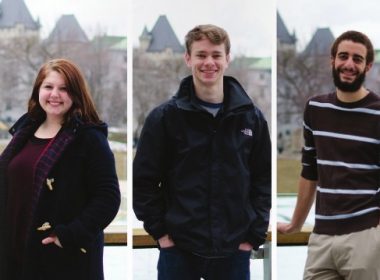
In August, The Tribune met with nine different students, who would then go through a year’s worth of experiences in Montreal and McGill. Each was asked to describe something important to him or her. Eight months later, we revisited their stories.
Articles by Caity Hui

Les nuits illuminées
Glittering purple and blue, the snow was painted in the soft light of the churning ferris wheel, standing amidst a crowd of milling viewers in the heart of Place des Arts. In the background, a projection danced across the face of a building—one of many art installations at Montreal’s 12th[Read More…]

Cracks in the surface
I remember looking out over the horizon. The sun was just rising and rays of pink were kissing the calm blue of the Alboran Sea. My body ached as we ran down the beach towards our coaches standing at the edge of the lookout-heart pounding, feet digging into the sand[Read More…]
The evolution of e-sports
Twelve feet wide, five feet tall, and nine feet deep. The Nimrod computer cast a looming presence at the Festival of Britain in 1951. Nimrod was the first computer designed specifically for playing video games—in this case, the mathematical strategy game Nim. In Nim’s traditional set-up, two players take turns[Read More…]
Off the blackboard
In 1999, McGill’s World of Chemistry professors digitized around 6,000 35 mm slides to implement the lecture recording system (LRS) now employed in over 350 courses for about 50,000 students on campus. In 2011, the first Lorne Trottier Lecture Symposium was conducted, taking full advantage of the power conferred by[Read More…]

Off the board: Embracing duality
“What’s your background?” As a biracial person, I hear this question at least once a month, or several times a day if I am new to the community.
A precipitous balancing act
Today’s academic landscape has drastically evolved from that of the past. As universities pump out an increasing number of graduate students each year, the grant money and academic positions once available to incoming researchers are now spread thin. This phenomenon has resulted in more efforts and minds contributing to the[Read More…]
The struggle to cure HPV
To latch onto a human host cell, the human papillomavirus (HPV) scans the outside of its target until it reaches its receptor protein—the trapdoor through which the virus may pass into the cell.

Campus stories
In August, the Tribune met with nine different students, who will each go through a year’s worth of experiences in Montreal. Each was asked to describe something important to him or her. In April, we will revisit their stories. Eric Mitchell, U2 Faculty of Science, neuroscience Describe something important to you right[Read More…]
S.R.E.A.M: Science rules everything around me
If anybody came out to GZA’s lecture on “Consciousness, Creativity, Music, & the Origin of the Universe” that packed Leacock 132 last Saturday eagerly awaiting the Wu-Tang Clan founding member to explain advanced scientific principles to the audience, then they may have gone home feeling disappointed and unfulfilled. This, however,[Read More…]
The Med School Diaries: Sophia Bachilova
Sophia Bachilova grew up in Massachusetts, but came to McGill University to complete her undergraduate degree in animal science at the MacDonald campus. She graduated in 2009 with a BSc. and worked in Montreal for a couple of years in order to try to build a life with her partner—whom[Read More…]
The Med School Diaries: Katherine Cole
Katherine Cole is an out-of-province second-year medical student at McGill University and originally from Red Deer, Alberta. She completed two years of her undergraduate degree in evolutionary biology at Red Deer College and the University of Alberta. McGill Tribune: What medical schools did you apply to? Katherine Cole: I actually applied for the[Read More…]

The Med School Diaries
It was one of Montreal native Carl White Ulysse’s first days working in the hospital as a part of his second year in McGill’s medical program. The patient was lying down on his back as Ulysse manoeuvered the smooth, stainless steel of the laryngoscope through the patient’s vocal cords. He[Read More…]
The Med School Diaries: Nebras Warsi
Nebras Warsi is a first year medical student at McGill University. He was born in England but spent a part of his life growing up in Saskatchewan. As an undergraduate at McGill University, and after his mother moved to Montreal, he was able to apply to McGill as an in-province[Read More…]
Useful Science bridges communication gap in research
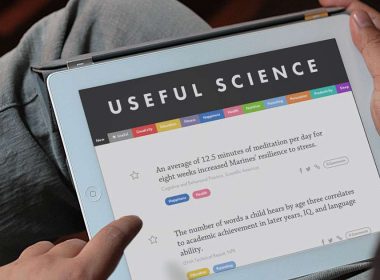
Science communication today is like a game of broken telephone. Data generated in the laboratory quickly spreads from one social media site to the next until ionized alkaline water boosts energy levels and eating ginger cures cancer. “We’ve had the Stone Age, we’ve had the Bronze Age, we’ve had the[Read More…]
Science capsule: miniature brains, major movements in microcephaly
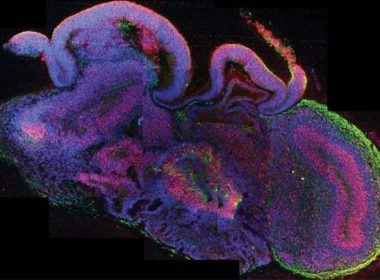
For 10 months, scientists from the Institute of Molecular Biotechnology (IMBA) at the Austrian Academy of Sciences (OeAW) fed and cared for a tiny cluster of cells. With the correct mixture of nutrients, chemical environment, and appropriate coaxing, the researchers successfully cultured miniature brains that are still functioning today—10 months[Read More…]
Research Briefs — Mar. 25
Drugs and Down syndrome For the past 25 years, Roger Reeves, a professor and researcher at Johns Hopkins University, has been growing brains—in particular, the cerebellum. By targeting this area of the nervous system, Reeves hopes to develop a treatment for Down syndrome, a condition caused by inheriting a third[Read More…]
Global Engineering Week offers fresh perspectives on the field
Engineering today looks drastically different from engineering 100 years ago. In the past, designs were focused on safety, economic development, and durability. While these issues still remain important, advancements in technology and research have opened our eyes to issues that extend well beyond the strength of the physical structure. It[Read More…]
Research Briefs
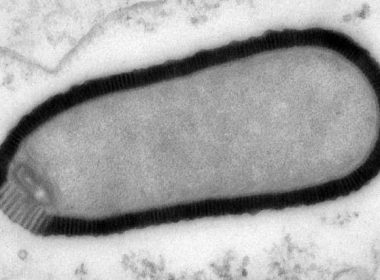
Sea turtles “lost years” uncovered When sea turtles hatch, the first few hours of their lives unfold as a desperate obstacle course as they attempt to reach the ocean. Dodging sea gulls, footprints, and crabs, many of these scampering hatchlings—little over an inch in diameter—do not survive the trek from[Read More…]

This Month in Student Research: Finding the art in developmental biology
Known for its excellence in research, McGill University is home to a host of professors and scientists whose work contributes to scientific innovation. In tribute to the amazing work conducted within McGill’s walls, each month, Science and Technology features a student researcher who has helped further the cutting-edge science conducted[Read More…]

This month in science @ McGill
Seashells inspire shatterproof glass: The intricate patterns of waves on the surface of seashells serve more than a decorative purpose. These tiny cracks are actually the secret behind the incredible strength of the shell. Thanks to a technique developed by Francois Barthelat—a professor in the Department of Mechanical Engineering at[Read More…]
Researchers uncover metabolic fountain of youth
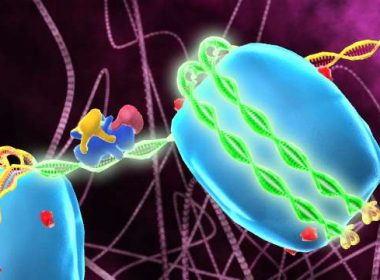
If aging were an orchestra, our youth would be a symphony that eventually starts to play out of tune. First the winds and brass would skip a beat, then the strings would lose their tempo and the percussion would fall behind. As time progresses, the beautiful melody unravels to a[Read More…]
The puzzle of pain behaviour
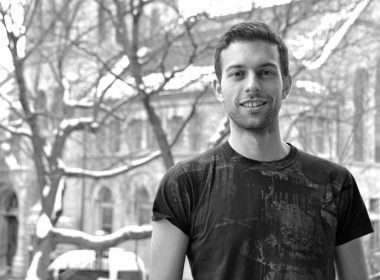
Basil Kadoura, a U3 neuroscience student, has always had pets, so it comes as no surprise that he currently enjoys spending his days in the lab playing with mice. Working under the supervision of McGill professor Jeffrey Mogil, Kadoura is investigating a chemosignaling study concerning how mice respond to male[Read More…]

What is the science behind chemical attraction?
When we meet someone that we like, our heart flutters and we feel short of breath. On a first date, our stomach is full of butterflies. And when we fall in love, we feel a powerful sense of empathy towards our partner. While poets, novelists, and songwriters have described the[Read More…]
Feb. 11 SciTech calender
Psych of Sex—What’s going on in your head when you think about sex? Hosted by the McGill Psychology Student Association (MPSA) featuring Dr. Jim Pfaus, Concordia’s leading psychosexual researcher Date: February 11, 2014 from 6-7 p.m. Location: Leacock 219 McGill Start-Up Career Fair Students have the opportunity to bring[Read More…]
Soup and science leaves students inspired, curious
What would you say if you were asked to communicate your life’s work in three minutes? On Friday Jan. 17, five researchers attempted to complete this task over lunch at the Redpath Museum, where students listened as professors gave snapshots of their research. “I wanted to attend Soup and Science[Read More…]
Research briefs
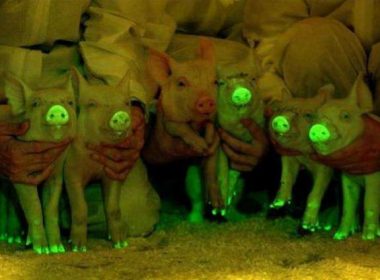
Glow-in-the-dark piglets born As the new year rolls in, so does the prospect of glow-in-the-dark bacon and neon pork chops. Last August, two researchers at the South China Agricultural University in Guangdon Province—Zhenfang Wu and Zicong Li—successfully injected biofluorescent genetic material taken from jellyfish directly into pig embryos, resulting in[Read More…]
Pioneering a new approach to immunology
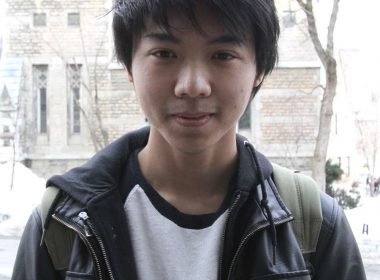
C. elegans, more formally known as Caenorhabditis elegans, is a simple, transparent roundworm often used in genetic research. After working with the organism from a neuroscience perspective under the supervision of associate professor Joseph Dent, U2 interdepartmental honours student Daegan Sit combined his experience with the worm and his interest[Read More…]
SciTech Calendar: Jan. 14
Major Depression and Suicide: Presentation by Dr. Gustavo Turecki Contact unleashmcgill@gmail.com to RSVP Jan 20, 6 to 8 p.m. The Killam Prize lecture—Vaccines: Impact on Global Health and Economics Lecture given by Dr. Lorne A. Babiuk, 2013 Killam Prize Winner in Health Sciences. Registration is free but on a first-come,[Read More…]

Get A Seat released in time to ease add/drop period woes
With over 22,000 full time undergraduate students at McGill and limited course registration, the first few weeks of January—also known as the add/drop period—can be stressful. After forgetting to check Minerva one time too many, Noah Lackstein, a U2 Management student at McGill, developed the app Get A Seat to[Read More…]
Soup and Science Preview 2014
What is it? This week, head over to the Redpath museum to listen to a collection of professors provide a short presentation of their research. Make sure to get there early, as seating is limited and spots fill up fast. Following the presentations, students are invited to mingle with the[Read More…]

Delving into the laser lab
Enclosed within the Wong building is a laser lab—and in between homework and classes, this is where Luke Matus spends the majority of his time. “I’m in chemical engineering, so I had no experience in lasers or surface engineering,” said Matus, a U2 engineering student. “I was just interested in[Read More…]
Then and now: the poliovirus epidemic
By the 20th century, few diseases frightened parents more than the fever, chills, and paralysis delivered by the poliovirus. In response to the epidemic, we saw the development and distribution of two polio vaccines that drastically helped eradicate the virus. Unfortunately, this improved technology has its consequences. As vigorous vaccination[Read More…]
2011 science capsule
Living without a heart In March of 2011, two doctors from the Texas Heart Institute Billy Cohn and Bud Frazier helped Craig Lewis set a world record. They replaced their patient’s heart with a device that allowed blood to circulate throughout his body without a pulse. Essentially, the device uses[Read More…]
When philosophy and linguistics meet neuroscience
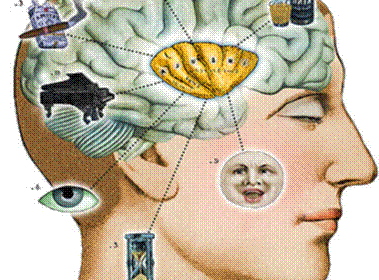
Jeremy Cooperstock studies human-computer interactions in an effort to augment environmental awareness for the blind community, treat lazy eye syndrome, and train medical and music students, among other endeavors. As an associate professor of the department of electrical and computer engineering and director of McGill’s Shared Reality Lab, he was[Read More…]
Concrete canoe design team unsinkable
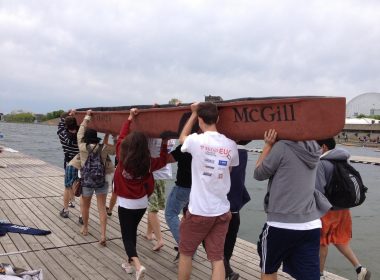
The Kraken lurked next to the Engineering Café for the first few months of the school year, unbeknownst to most students. Created by McGill’s concrete canoe design team, the Kraken competed last May at the Canadian Concrete Canoe Competition (CNCCC). The competition started in 1995 and aims to allow university[Read More…]
Breaking down barriers in osteoarthritis
Known for its excellence in research, McGill University is home to a host of professors and scientists whose work contribute to scientific innovation. In tribute to the amazing research conducted within McGill’s walls, each month Science & Technology will feature student researchers who have helped contribute to the cutting edge[Read More…]
Research briefs
Safety questioned in hands-free texting apps An article in the November issue of Scientific American revealed a surprising twist to the popularity concerning hands-free texting apps, such as Voice Text Pro and DriveSafe.ly. Developers assumed that, since drivers would not need to take their eyes off the road to use[Read More…]
Research briefs
Technology and medicine join forces through an in-home HIV test Despite approximately 2.5 million new cases of HIV each year worldwide, six out of 10 go undiagnosed. Dr. Nitika Pant Pai and her team at the Royal Victoria Hospital of the McGill University Health Centre (MUHC) hope to address this[Read More…]
Student of the week
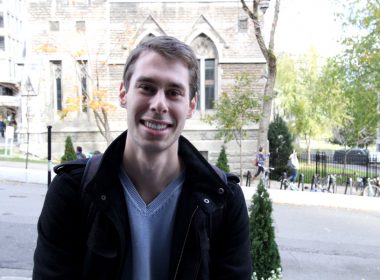
By his fourth year at McGill, Per Kraut never imagined he would be involved in so many diverse communities at McGill. “I came to McGill thinking I wouldn’t get involved in that much,” Kraut explained. “But suddenly here I am in fourth year. I guess I just like to try[Read More…]
What’s the science behind werewolves and zombies?
The legend of a howling man who shape-shifts by the light of the full moon strikes a particular chord come Halloween, as do the sunken eyes of flesh-hungry zombies that populate contemporary horror fiction. Both of these creatures stem from a long line of folklore, but like most myths, these[Read More…]

Montreal’s maple trees: where monoculture meets bigotry
If you take a walk up Mount Royal, you may notice that about a third of all the yellow leaves have peculiar black spots. These spots are caused by Rhytisma, a black tar fungus which lives parasitically in the leaves of deciduous forest species, and is killing Montreal’s maple trees.[Read More…]
Midterm season app reviews
Study Blue StudyBlue is one of several flashcard apps available online and for iPhone and Android. The app allows you to make digital flashcards and flip through them while keeping track of your progress. You can also share flashcards with peers. Each flashcard can contain text and pictures, and the[Read More…]
Ask Scitech: Can we rust to death?
Clad in a red iron power suit, this American superhero is known for defending the world with the Avengers. However, Iron Man’s plates of armor proved more than just a military weapon; they also saved his life and allowed him to escape captivity to become the superhero he is today.[Read More…]
Research brief: Computer game aids DNA research
Thanks to the work of McGill professors Jérôme Waldispühl and Mathieu Blanchette, anyone with access to the Internet can contribute to current research in molecular biology. The duo designed a computer game known as Phylo, aimed at harnessing the problem solving abilities of humans to decipher the multiple sequence alignment[Read More…]
Getting a nose into research: interview with Maral Saghaei
Known for its excellence in research, McGill University is home to a host of professors and scientists known for their prestigious work and contributions to scientific innovation. In tribute to the amazing research conducted within McGill’s walls, SciTech will feature each month student researchers who have helped contribute to the cutting edge science conducted at the laboratories. This series hopes to shine a spotlight onto the hard work of undergraduate students who dedicate themselves to research in the lab.
App review: LeftoverSwap
“You’re hungry. And cheap. We understand.” This is the motto of LeftoverSwap, a new app created to facilitate the exchange of leftovers between members of the community. The app allows ‘leftover givers’ to snap a picture of what food they cannot finish, name it, and share it with other members[Read More…]
What’s in a name?: evolving our reactions to chemicals
In 2011, the Campaign for Safe Cosmetics (CSC) released a report featuring a baby covered in bubbles and sitting in a bath with the words “Baby’s Tub is Still Toxic.” The warning was in response to the discovery that Johnson & Johnson’s baby shampoo contained trace amounts of formaldehyde. Because[Read More…]
What determines your drinking gene?
As an equal mix of Chinese and Irish, I had a 50/50 shot at enjoying the stereotypical Irish drinking culture. Unfortunately, I was never able to fully participate due to my inability to handle a large amount of alcohol. Curiously, this has a little less to do with my lifestyle, and a lot to do with my Asian ancestors’ solution to clean water hundreds of years ago.
McGill’s medical clubs
There are a variety of medical clubs at McGill that provide undergraduate students with resources and unique opportunities. In case you were overwhelmed at Activities Night, SciTech interviewed two of these organizations to find out what they’re all about.
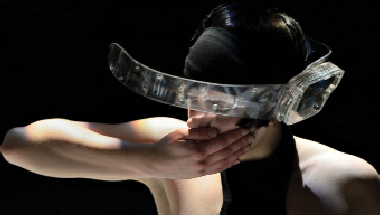
Research in Brief: Prosthetic digital musical instruments
After three years developing their project, McGill Music PhD students Joseph Mallock and Ian Hattwick have designed and produced the first prosthetic digital instruments in the world.

Ask Scitech: You snooze you lose; why you should avoid the snooze button
You spend one third of your life sleeping, according to a recent study conducted by Statistics Canada. Based on an average life span of approximately 90 years, 30 of those are commited to sleep.
Interview with Alex Gershanov
Often, research requires a lot of precision and patience, which is exactly what Alex Gershanov, a U2 chemical engineering student, discovered this summer while working at Associate Professor and Chemical Research Chair Nathalie Tufenkji’s lab, the Biocolliods and Surfaces Laboratory, in ground water remediation. “My research surrounds zero valent iron nanoparticles,[Read More…]
Interview with Blair Jia
Getting published as an undergraduate student is a honourable achievement—one of which U3 quantitative biology student Blair Jia received this August. This summer Jia designed a fabrication protocol to improve the imaging chamber used in Convex LensInduced Confinement (CLIC) microscopy under the supervision of Assistant Professor Sabrina Leslie from the Department of Physics.
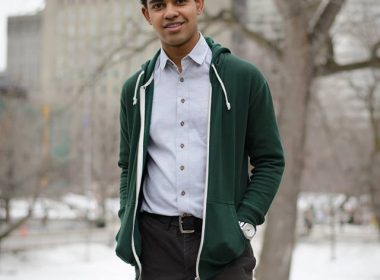
Interview with Carl Ulysse
For Carl Ulysse, working at neurologist Lesley Fellows’ lab was both an inspiring and rewarding experience. Unsure what to do with his summer after completing his first year in medicine, Ulysse applied to the Faculty of Medicine’s research bursary program, which provides funding for student research for eight weeks during the summer.
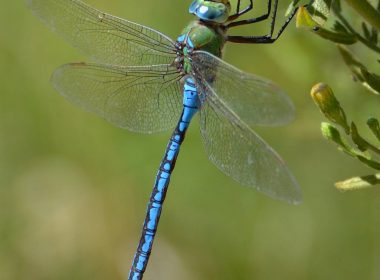
This Week in Research
Dragonflies are advanced predators (Sam Reynolds) New studies on dragonflies and their hunting strategies have led researchers to believe that they may be among the most developed predators on the planet. One study, conducted by professor Robert M. Olberg from Union College, suggests that dragonflies catch nearly 95 per cent[Read More…]
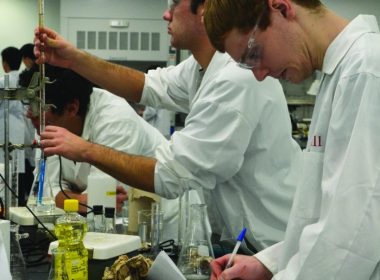
Looking ahead
One of the most highly sought-after experiences for undergraduate science students is the elusive ‘lab job.’ There is no doubt within McGill’s Science student body that a lab research position is one of the most essential additions to your CV and med school application. Although working in a lab is[Read More…]
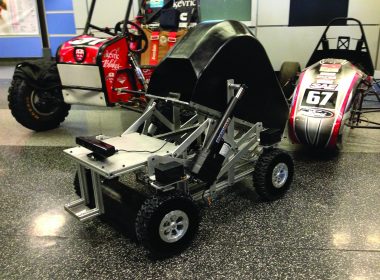
McGill engineers compete to design lunabot
Busy beneath the McConnell cafeteria is McGill’s LunarEx robotics team’s lab, where the team has been working hard for the past year to construct a robot to compete in an international competition sponsored by NASA. Through this ‘lunabotics’ (moon-related robots) mining competition, NASA aims to increase interest in robotics and[Read More…]

This Week in Research
Compiled by Caity Hui Artificial Obesity New evidence suggests that diet soft drinks and other artificially sweetened products may induce weight gain, as well as increasing our risk for Type 2 diabetes. According to former McGill researcher Dana Small, sugar substitutes, like aspartame and sucralose, taste more intensely sweet than[Read More…]
How much is too much caffeine?
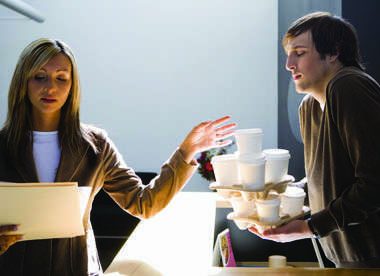
Coffee is often a welcomed friend during the semester. According to folklore, the bean’s energizing properties were first discovered by an Ethiopian goat herdsman, who found his flock frolicking after eating coffee berries from nearby bushes. It’s not just goats that enjoy the effects of caffeine, however. According to the[Read More…]
Behind the scenes at the Dent lab
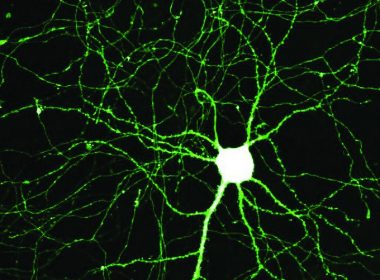
The Dent Lab in the Stewart Biology building is humming with activity. Run by Dr. Joseph Dent, an associate professor and researcher at McGill University, the lab focuses on the molecular genetics of the behaviour in C. elegans, a nematode roundworm. Specifically, the lab’s research focuses on understanding the structure[Read More…]
Does chocolate make you smarter?
As it becomes increasingly difficult to find a seat at McLennan, it’s clear midterms are fully underway at McGill. Although these tests make up less of our grades than finals, many students will do whatever it takes to perform well. Tactics range from taking up residence in the library to[Read More…]
Why do we fall in love?
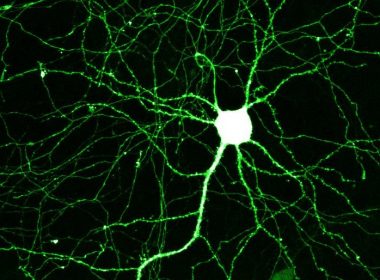
For some, the key to success on Valentine’s Day consists of an amalgamation of romantic gestures, boxes of chocolate, and dinner dates. However, no number of roses, Laura Secord truffles, or Chardonnay can amount to the necessary spark in our brains to fuel love. While common notions of romance suggest[Read More…]
Up close and personal with the human brain
Not many students can say they have touched a human brain, but thanks to the Neuroscience Undergraduates of McGill (NUM), I— along with around 130 other McGill students—can attest to holding not one, but six. On Jan 30, NUM hosted the first event of its kind at McGill: Touching Human[Read More…]
Communication critical step in combating tropical disease
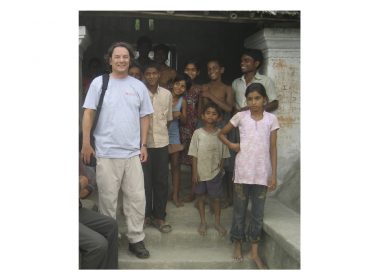
For Greg Matlashewski, a McGill professor and former chair of the department of microbiology and immunology, branching out from the lab and into the field had many positive results for his work regarding treatment for visceral leishmaniasis. Visceral leishmaniasis, transmitted by sandfly bites, is one of many neglected tropical infectious[Read More…]
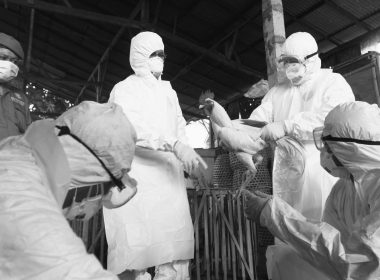
Avian flu mutation has even deadlier potential
In 2011, when scientists at the Erasmus Medical Center in the Netherlands pinpointed the necessary mutations to make the H5N1 avian flu virus highly contagious, they had to weigh the risks and benefits of their discovery. H5N1—commonly known as the bird flu—first broke out in Hong Kong in 1997. A[Read More…]
This Week in Research
Earth-like planets If extraterrestrial life does exist in outer space, planet KOI-172.02 is a good candidate to host life similar to that on Earth. Using the Kepler space telescope to find planets, scientists at NASA have detected at least 17 billion Earth-like planets surrounding Sun-like stars in the Milky Way.[Read More…]
Why You Should Eat More Curry
What exactly is Alzheimer’s? Often referred to as “Old timer’s disease,” Alzheimer’s is a type of dementia that affects nearly 36 million people worldwide. It causes problems with memory, thinking and behaviour, and is classified as a progressive illness, which means that symptoms will gradually worsen over time. Whereas someone[Read More…]
This Week in Research
Vitamin D and cancer Vitamin D is correlated with many health benefits, including lower cancer risk; but until now, the link has always been unclear. McGill researchers have uncovered a piece of the puzzle, explaining how the vitamin may help to prevent cancer. In a recent study published in[Read More…]
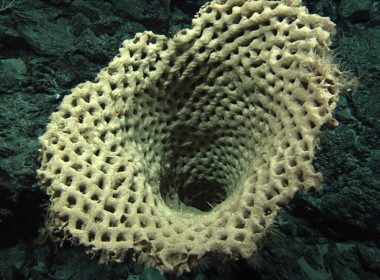
Ocean may yield cystic fibrosis treatment
The Cystic Fibrosis Translational Research Centre at McGill University and the University of British Columbia are looking in unexpected places for potential cures—under the sea. Dr. David Thomas, Chair of McGill’s department of biochemistry and Canada Research chair in molecular genetics, focuses his research on investigating quality control of proteins.[Read More…]
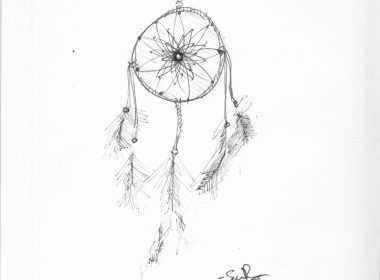
Nightmares may be evolutionary survival tool
Nightmares have always been a dreaded human experience. In certain cultures, they were thought to be premonitions of the future. It was this ominous notion that prompted indigenous cultures to construct dream catchers. When a bad dream entered the dreamer’s sleep, the webbing of the dream catcher supposedly trapped this[Read More…]

Researchers find vampires not so undead after all
On Halloween, the streets will be filled with children dressed up as witches, vampires and other frightening creatures. For the past fifty years, research has speculated that the myth of one of these monsters can actually be traced back to a medical disorder. Vampires are typically characterized by sensitivity to[Read More…]
Research in protein breakdown opens doors for cancer treatment
A team of researchers, led by McGill Professor Dr. Barry Posner, has recently uncovered the importance of growth factors in maintaining healthy cells. Growth factors are molecules that stimulate and regulate cellular growth. Put simply, our cells are involved in a continuous cycle of breaking down and re-growth, much like[Read More…]

How social media is changing science
Early in 2011, Ichthyologist (fish biologist) Brian Sidlauskas led an expedition to catalogue biodiversity in a remote river in Guyana. His goal was to bring back over 5,000 fish. According to Guyana’s customs laws, in order remove specimens from the country, each must be documented and identified. This presented an[Read More…]