Latest News

Science & Technology

How are Canadians who have legally used psilocybin faring?

While psilocybin, the active psychedelic compound in magic mushrooms, is illegal for both medical and recreational purposes in most countries, studies are increasingly pointing to its potential uses in psychotherapy, especially for relieving anxiety and depression in patients who have terminal illnesses. Canada, alongside Australia, is currently one of only two countries in the world allowing psilocybin prescription through what is known as “compassionate access” for patients without other effective treatment options.

Although Canada has allowed psilocybin use in limited therapeutic contexts since 2020, there is a lack of research on how psychedelic experiences have affected real-world patients. According to Sara de la Salle, a postdoctoral fellow in McGill’s Department of Psychiatry and first author of a recent study following eight real-world patients after their psychedelic experiences, there is even a lack of data on how many patients have accessed psilocybin. 

“I’m sure Health Canada knows how many they’ve approved, but there’s no public information on this process,” de la Salle said in an interview with The Tribune. “What prompted [our study] was just to have any type of information on what these people were going through, because there’s nothing. There’s no reports.”

Her research aims to address this lack of information through a voluntary survey completed by patients who received psilocybin through legal means between 2020 and 2022. 

The day after participants’ psilocybin treatment session, researchers looked at factors like how safe they felt during the session, what side effects—nausea, vomiting, etc.—they experienced, and how meaningful they perceived the session to be. In addition, they used two assessments that are common in psychedelic research: The Mystical Experiences Questionnaire (MEQ) and the Emotional Breakthrough Inventory (EBI). 

“Those two are very prominent measures in psychedelic studies, but usually not so much in more traditional treatments for depression,” de la Salle said. “They’re trying to capture things that are difficult for people to describe, like transcendence of time and space, or ineffability.”

Of the five participants who filled out this portion of the survey, one considered it to be the most meaningful experience of their life, and two said it was the most spiritually significant experience of their life. The average MEQ score was 64.3—for perspective, the threshold for having a ‘complete mystical experience’ is a score of 60 on all sections of the questionnaire—and the average EBI score was 63.4 out of 100. 

In addition to this data, eight participants filled out the survey two weeks after their treatment session. This part of the study compared patients’ self-reported symptoms of anxiety and depression, pain, and overall well-being to their pre-treatment levels.  

“We wanted to mimic what is being looked at in clinical trials to see: Are the benefits the same? Because we don’t really know what is going on with people who are getting special access,” de la Salle explained. “And we did, in fact, see very similar benefits.” 


A majority of participants noticed some improvement in their symptoms of depression, spiritual well-being, and relationships with family and friends. On the other hand, six patients reported no effect on their pain levels, and four patients found no effect on their fear of death. Additionally, one of the eight patients experienced generally worsening mental health after the session. 


Interestingly, the study also asked participants to predict how they thought the intervention would impact them. While the actual results were generally positive, they underperformed compared to the predictions, indicating that it may be worthwhile to temper patients’ expectations of psilocybin-assisted psychotherapy. 

While the study is limited by its small sample size and lack of in-person contact with patients, de la Salle believes it is an important addition to real-world psilocybin research in Canada. 

“It was a good step in the right direction. There are more attempts to collect information, but really we just wanted to send the message that [psilocybin-assisted psychotherapy] can be beneficial, but we don’t have any information,” de la Salle said. “And since Health Canada grants these approvals, it would be very easy for them to have some way of collecting information.”

Behind the Bench, Soccer, Sports

Chelsea FC Ltd.’s most recent financial gambit

This past May, Chelsea Football Club was a bustling machine of termination and change. For the second consecutive season, the men’s team saw a finish outside of the English Premier League’s (EPL) top four—something that had not occurred since the league’s first two seasons—1992-1993 and 1993-1994. The women’s side stood in victorious contrast, having secured their fifth consecutive Women’s Super League title (WSL). Just one weekend before, Mauricio Pochettino left his men’s-side managerial role, later to be replaced by former Leicester City manager Enzo Maresca

Media and fan discussion continued to report largely on Chelsea FC’s stumbles, and experiments were being made company-wide. In what was framed as a celebration of the women’s achievements, Chelsea released a club statement announcing a restructuring that would position Chelsea Women “alongside, rather than beneath” the men’s team. This news prodded reluctant ambivalence from fans—even in hindsight, the vague language of the statement seemed to underscore a lack of meaningful change.

The true motivation became clear the following month, when the decision was not so much backtracked as it was obliterated from relevancy: Control of the women’s side was transferred from Chelsea FC Holdings to BlueCo, the former’s parent company. Thus, effective June 28, the men’s and women’s sides were no longer registered under the same holding company—a complete split in their financial assets, losses and profits, except for what Holdings might stand to gain from the sale of the women’s team. The teams became separate entities.

This shift came just before the year-end accounting cutoff on June 28. Under the EPL’s profitability and sustainability rules, clubs cannot exceed a £105 million loss over three years. Chelsea’s lavish spending during transfer windows under the collaborative ownership of Chairman Todd Boehly and Clearlake Capital has brought them perilously close to breaching these limits. For instance, take Enzo Fernández, Wesley Fofana, Mykhaylo Mudryk, and Moisés Caicedo—all are transfers in excess of €70 million that have occurred within the past three years. The examples of these exorbitant transfers is unique in the world of football at large, and unheard of in women’s football, which never reaches these prices. By moving the women’s team off Chelsea FC Holdings’ books, the club reduces the financial burden on the men’s side. Though it was publicized as an opportunity for the women’s team to operate its own management and facilities, it is glaring that the move allows Boehly’s men to skirt potential penalties while keeping their focus on navigating the next season’s/quarter’s challenges, or potential profits.

Chelsea Women’s impressive success has been undermined by this financial maneuvering. What was painted to look like a strategic repositioning for equality over months of manipulative statements proved to be a way to grease the gears of the Men’s operations. The women’s team, despite their achievements, has been made a vehicle  for financial futures—lest we forget the men, though better compensated, also essentially serve the same purpose for the financial suits.

The women’s side has already undergone significant change since May. Emma Hayes, London native and winner of 16 trophies with the club as manager, departed for the U.S. Women’s National Soccer Team Head Coach role. She is succeeded by former Olympique Lyonnais Féminin’s former manager, Sonia Bompastor. This is part of the broader reshuffling of Chelsea’s internal structures—another sign that the women’s team is adapting to fit the new order, rather than driving it. 

The long-term effects of this financial separation, of course, remain to be seen. The immediate benefit for the men’s team is clear, their path to financial compliance is indubitably smoothed no matter the valuation of the acquisition (as yet unknown). But the impact on the women’s team is murky and uncomfortable in light of that fact. What happens when a highly successful team, like Chelsea Women’s, is repurposed to serve the financial interests of a less stable component? Can they continue to dominate? Time will tell if they are able to take advantage of their new independence, or if the shift in priorities undermines their momentum.

Science & Technology

McGill research explores how an arthrogryposis diagnosis affects families

In Canada, over 30,000 children with disabilities are being cared for at home. Caregiving for children with disabilities requires providing support in various activities of daily life, such as bathing, dressing, managing finances, shopping, and providing transportation. 

While care can be rewarding, caregivers are at higher risk of experiencing negative health effects, including mental health issues such as depression. Rare diseases such as arthrogryposis—a condition in which multiple joints are unable to fully or partially extend or bend—pose additional challenges for caregivers due to the complexity of the disease. 

“Arthrogryposis is a congenital condition that affects joints from birth. It is different from conditions like joint stiffness and muscle weakness, which can develop over time,” Rose Elekanachi, PhD candidate in McGill’s School of Physical and Occupational Therapy, said in an interview with The Tribune.

Arthrogryposis commonly affects the wrists, hands, elbows, shoulders, hips, knees, and ankles. In severe cases, this condition may also affect the jaw and spine. Causes of arthrogryposis are variable and may include genetic, parental, and environmental factors, as well as fetal anomalies—unusual conditions in a baby’s development during pregnancy.

The experience of providing care for arthrogryposis remains largely understudied. In a recent paper, Elekanachi and her team explored the lived experience of caregivers of children with arthrogryposis, emphasizing the financial and societal challenges caregivers encounter.

“The term ‘caregivers’ is used to refer to both paid caregivers and parents,” Elekanachi noted.

Through her research, Elekanachi aims to raise awareness of arthrogryposis among healthcare professionals and caregivers, and guide local policymakers in improving service provisions to meet the unique needs of caregivers of children with this condition.

The initial financial burden for families is considerable due to the need for numerous diagnostic tests and consultations.

“Immediately after childbirth, caregivers have to go to several healthcare professionals to receive a reliable diagnosis because this condition was very rare and [little known] a couple of years ago, and these expenses come at a significant out-of-pocket cost,” Elekanachi said.

Furthermore, the cost of caring for children with arthrogryposis varies depending on the child’s specific needs.

“For example, the child may need a walking aid, arm splints, ramps for stairs, or adjustments for beds, and things like that. Depending on the location of the affected joint, the level of financial commitment is different,” Elekanachi explained.

According to Elekanachi, the caregiving experience is complex, as this condition often requires multiple types of care, including rehabilitation, speech therapy, and orthopedics—surgeries treating conditions of the bones, joints, muscles, ligaments, tendons, and nerve structures.

Elekanachi also discusses the societal challenges surrounding the condition, including accessibility issues in public spaces, and highlights the need to allow people with arthrogryposis to speak up for their unique needs and advocate for themselves.

“We still have a society that may not be completely accessible to children with disabilities, such as classrooms, metro stations, and bus stops. Sometimes, the school may not have adequate equipment or accommodations for these students,” Elekanachi said.

In addition, the study highlighted a correlation between the caregiver’s health and that of the child. The multiple challenges caregivers face can increase their risk of poor health, reducing their ability to care for their child, which has been associated with increased hospitalizations.

“Going forward, future studies need to shift focus from the condition itself to [include] the secondary piece that affects the condition, such as caregiver experiences,” Elekanachi stated. “Healthcare professionals and researchers need to understand caregiving experiences across conditions and share comprehensive resources with caregivers.”

Science & Technology

The science behind Ozempic’s triumph

On Sept. 23, McGill’s Office for Science and Society (OSS) organized the Annual Trottier Public Science Symposium, aiming to increase understanding of Ozempic and its deeper implications. Moderated by Joe Schwarz, professor in chemistry and Director of OSS, the event featured two experts in the field. 

Research leading to discoveries of GLP-1 and Ozempic

Patricia Brubaker, professor in University of Toronto’s Department of Physiology and Medicine, began by discussing the promising role of glucagon-like-peptide-1 (GLP-1)—a hormone that helps stabilize blood sugar levels following meal consumption—in diabetes management and weight reduction. 

Initially discovered in 1987, GLP-1 not only prevents the release of glucagon, which raises blood sugar levels, but also slows stomach emptying and reduces appetite, contributing to weight loss.

“Ozempic isn’t GLP-1 itself; it is a synthetic analogue of the naturally occurring hormone that acts to agonize the effects of GLP-1 inside our bodies,” Brubaker noted. 

Ozempic and other GLP-1 agonists have proved effective in managing Type II diabetes, a chronic condition that affects insulin regulation and metabolism, by improving insulin secretion within the body.  

Unlike other medications for diabetes, Ozempic stays in the body for a longer period, with a half-life of about one week. This means that if an individual takes roughly two milligrams of the drug on Monday, there will still be about one milligram remaining in their body the following Monday. Once its biological mechanisms are activated, it facilitates weekly dosing, making it easier to take consistently than a daily medication. 

Brubaker is cautious about the potential side effects, which require careful monitoring and titration—a process to make sure that people adjust to the drug gradually—of dosages. 

“There have been emergency cases of people overdosing themselves with multiple injections in a day to drastically lose weight, but keep in mind this is lethal,” Brubaker explained.  

Therefore, self-injection of Ozempic can be dangerous for those aiming to lose large amounts of weight very quickly, or those aiming to immediately suppress their appetite. Taking necessary health precautions is crucial to preventing hormonal imbalance. 

Do dietary supplements truly match their claims?

The second speaker of the night was Peter Cohen, associate professor of Medicine at Harvard Medical School. His advocacy in the medical field has led to the banning of multiple drugs and warnings for inaccurate drug advertisements. 

In contrast to Health Canada’s stringent regulations on dietary supplements and pills, the sale of supplements and vitamins is permitted by default in the States until the FDA takes action to ban or restrict them. This lack of this oversight has led to drug abuse and the spread of misinformation about dietary supplements, often propagated via social media.

“Because of social media these days, it’s very easy for people to believe a testimony after taking supplements that will suggest to audiences that the drug in fact magically works,” Cohen said in his talk. 

Cohen highlighted that numerous patients have unknowingly consumed supplements that have been detrimental to their health, causing allergies or temporary health issues that resolve after they stop taking the supplement. 

Physicians play a crucial role in reporting adverse effects to the FDA, but the reliance on manual reporting means individuals can obtain specific supplements without strict prescriptions. While the FDA has no other means of tracking supplement safety, it is their duty to remove any harmful substances. 

“We see a crisis happening with Ozempic as well. It is still a relatively newly-discovered drug, and it could be a supplement for those who are suffering from obesity with serious health implications, not for casual use,” Cohen said. 

The symposium emphasized the vital role of credible science communication in ensuring that modern medicine’s benefits are not overshadowed by misuse. It concluded with a call for greater awareness and responsibility from both the scientific community and the public. 

While drugs like Ozempic show promise, they are not quick fixes and require careful consideration. In a time when misinformation prevails, events like this are crucial for navigating the future of medication use in our society.

Editorial, Opinion

Solidarity must supersede suppression at McGill

In the past week, Israel has intensified its military actions in Lebanon, killing over 700 civilians and displacing over 90,000 people. Destructive Israeli airstrikes have destroyed densely populated residential areas, including a massive bombing that flattened four buildings in Southern Beirut. Lebanon’s health minister, Dr. Firass Abiad, reported that Israel’s military campaign in Gaza has killed over 1,640 civilians in Lebanon since its escalation last October. While international pressure builds for an imperative ceasefire, Israeli Prime Minister Benjamin Netanyahu has reaffirmed a commitment to continue military actions against Hezbollah.

This period of heightened violence and humanitarian crisis coincides with the approaching one-year anniversary of the Oct. 7 Hamas attack, which resulted in the unconscionable murder of 815 Israeli civilians. In response, the Israeli Defense Forces unleashed brutal military operations in Gaza, killing over 42,334 Palestinians, and unjustifiably displacing over 75 per cent of the population. Quebec’s Minister of Higher Education, Pascale Déry, has called on universities to be “more vigilant and proactive” in anticipating a “climate of tension” on campuses and is urging institutions to prepare for the potential unrest. 

What Déry refers to as “tensions” points to the ongoing repression of student democracy at McGill. On Sept. 16, the Students’ Society of McGill University (SSMU) revoked the club status of Solidarity for Palestinian Human Rights (SPHR) after McGill threatened to withdraw funding if ties with SPHR were not severed. This decision came months after the university’s unlawful and callous dismantlement of the 75-day Palestine Solidarity Encampment on campus, which stood in solidarity with Palestinian resistance and demanded McGill’s divestment from weapons manufacturing corporations. Though this stance was supported by 78 per cent of voters in a Fall 2023 referendum question regarding the implementation of the Policy Against Genocide in Palestine with record-breaking voter turnout, McGill has continued to condemn pro-Palestine activity while simultaneously defying the clear demands of its student body.

McGill’s prejudiced actions against SPHR are emblematic of its broader strategy of suppression, reflecting a persistent unwillingness to engage with student activism or to acknowledge its institutional ties to larger oppressive structures, like its investment in weapons manufacturing company Lockheed Martin, which supplies the Israeli Defense Forces. Just as McGill avoids reckoning with its presence on unceded Indigenous land, it similarly refuses to recognize the Palestinian cause. Instead, the administration maintains its investments, prioritizing profit over justice. McGill’s tendency to frame sentiments of anti-Zionism as antisemitism, often twisting SPHR’s language and imagery to fit this narrative, allows the university to sidestep the moral imperative of addressing their ties to the ongoing genocide in Palestine.

As the anniversary of the devastating Oct. 7 attack approaches, we must unite as a student community to promote collective peace and solidarity. The university must do better—restoring SPHR’s club status and providing culturally relevant mental health resources for students are crucial steps forward. Just as the university has provided institutional support for Ukrainian students in times of uncertainty and conflict, it is essential that they extend the same empathy and resources to those affected by the crisis in Lebanon and Palestine. Though it’s easy to feel discouraged when McGill dismisses student activism, our resistance and mobilization must persist. Our actions, voices, and protests remain powerful tools for change, and we must continue to use them, as we call on McGill to stand on the right side of history.

As students, condemning any civilian massacre, any act of violence, and any form of oppression should be the simplest decision. But if our community’s shock and distress comes only at the sight of certain brutalized bodies, if our administration speaks out in the name of the horrific violence that took place on Oct. 7, but not when Palestinians are atrociously murdered, abducted and imprisoned, or when Lebanese families are forcibly displaced and bombed, then it is imperative to confront which forms of brutalization our institution deems intolerable and which it does not. Asking for freedom is not a complex demand. Students deserve the right to call for action against genocide and colonialism. Israeli students deserve the space to mourn the horrific day that brought the highest loss of Jewish life since the Holocaust. Lebanese students deserve the ability to seek active support and mobilization from the community around them. And Palestinians deserve sovereignty, safety, and humanity in the face of systemic ethnic cleansing. If any of those statements make you uneasy, then you must ask yourself why.

Commentary, Opinion

Silent stones: revisiting the forgotten in Montreal’s cemeteries

Graveyards occupy a uniquely taboo space that bridges the gap between the grieved and the grieving. They might almost be considered parks, yet they are not always viewed as sanctuaries. With 41 recognized cemeteries and a rich history of burial rites, Montreal stands as the resting grounds to 1.5 million deceased persons—many of whom, having faced historical discrimination, were often denied the same dignity in death that their more privileged counterparts received. 

Notre-Dame-des-Neiges, one of Montreal’s most renowned cemeteries, exemplifies traditional cemetery excellence. It features a biodiverse garden of 13,500 trees intertwined with Gothic structures and Roman Catholic design elements. Its placement allows for a perfect instant where the sun slips just past the horizon causing the graves to cast these elongated shadows—a vision I call “seeing the sleeping stretch,” one of Montreal’s sacred experiences.

In many senses, cemeteries act as time capsules of the past: a laid-to-rest reflection of the narratives we tell ourselves about the bygone era in sepia nostalgia. By revisiting graves, we humanize history and confront it with the narrative skepticism it deserves. It’s crucial to acknowledge that not all stories receive equal attention; many marginalized individuals are forgotten in death. As cemeteries garner their utmost traction around the upcoming Halloween season, it is worth considering what they stand for and why we visit them. When planning a visitation, executing proper etiquette is often just as valuable as having the right intention to respect everyone’s unique relationship to death, especially for those whose lives—and deaths—have been overlooked in the broader narrative.

Recently, there has been a flurry of controversy surrounding “#Gravetok,” a subsection of TikTok dedicated to cleaning graves and telling the stories of the deceased. The concerns primarily arise from questions of consent, damaging the graves with harsh chemicals and some echoing naturalist ideas about the significance and found beauty of allowing memory to wither and fade away as time intends. 

It’s a thin line between honouring the past and letting justice slip just out of reach of recent memory—a Sisyphean task where you can’t quite have your grave and clean it too. If there is certain beauty in forgetting then what hope is there for those who never had their stories told in the first place? 

As a society, we decide who deserves to have their stories told beyond death. We celebrate the deceased with decorations while often overlooking the discomfort and pain that accompany loss. However cruel we like to imagine the past, it has consistently been more difficult for marginalized groups to gain recognition and dignity in life and death. What if we were to give these individuals another chance to have their stories revisited? By acknowledging their lives and struggles, we could allow them to be remembered with the dignity they were once denied, ensuring that their legacies are honoured and their voices are heard long after they are gone. This act of remembrance could reshape our collective understanding of justice, compassion, and the value of every life, regardless of societal privilege.
Whether it be a tranquil respite from city life, existential memento mori, or the space to pay respects to those who have endured hardship, cemeteries have so much to offer the everyman and act as a microcosm of the best mankind has to offer: The very human, ultimate good faith to do well by the past while steadily moving forward towards a brighter future. It is worth challenging our taboos around death. It is worth breaking these cycles of comfort and being critical of the same stories about the same people we tell ourselves. It is the never-ending lesson in empathy, as though to say: “I’m sorry we forgot about you then, but you are loved now.” It is worth celebrating those who have passed and will pass. No one deserves to be unappreciated and forgotten; everyone deserves to be mourned.

Arts & Entertainment, Music, Pop Rhetoric

Bring more big-name musical acts to Montreal

Montreal is often overlooked when it comes to big-name concert tours. Despite its vibrant music scene and energetic crowds, many artists don’t think to stop in Montreal when booking their Canadian tour stops. Meanwhile, cities like Toronto and Vancouver are popular tour destinations. What do other cities have to offer that Montreal does not? 

Popular artists such as Olivia Rodrigo have commented on the electrifying energy and enthusiasm that Montreal’s crowds bring to a show. The city also hosts a wide variety of concerts and festivals, from techno events such as Piknic Électronik, to the annual Montreal Jazz Festival, to festivals highlighting Francophone artists, demonstrating that there is an audience for any artist, regardless of style or genre.

Montreal hosts millions of spectators every year at these festivals, and their popularity is only expanding over time. However, the city’s enthusiasm for its music scene extends beyond festivals; local scene bands, live music in bars, and concerts by big and small artists alike captivate its residents year-round. It is this open-mindedness and vast interest in live music that makes Montreal a city eager to receive larger artists. 

Furthermore, Montreal’s geographic location is ideal for hosting out-of-town audiences from smaller cities in Eastern Canada and even those from the U.S., in places like Boston and New York City. While it might seem far to have to travel from Montreal to Toronto to see a popular artist or band perform live, it is nothing compared to the distances those who live in Quebec City, or even in the Maritimes, must travel. Such trips are long, pricey, and often unfeasible for the average concert-goer. By adding tour stops in Montreal, top-tier artists can increase accessibility for fans across Canada.

In general, Montreal is a more affordable city than Toronto, with prices being on average 10 per cent lower. For the artist, this can mean spending less on venue rental fees and on hiring production staff. For the audience, it means that finding transportation, lodging, and food won’t be as costly, leaving more of their budget for the concert tickets themselves. This price difference between the two cities can be reflected in ticket prices as well. 

Montreal is likewise well-adapted and accustomed to hosting substantial crowds while still offering reliable services. The city is home to Place des Arts, a large concert hall located in the Quartier des Spectacles, which has a total capacity of 8000 seats and hosts many performances and artists every year.

Centre Bell is another notable venue that can welcome bigger artists. The recent Charli XCX and Troye Sivan Sweat Tour held in this arena transformed the space’s stage with different light displays and impressive set pieces made of scaffolding. The result was an outstanding experience for the fans, and it illustrated the city’s ability to organise thrilling and remarkable concerts. This makes Montreal a city capable of—and accustomed to—organising distinguished cultural events.

Not only does Montreal have the capacity to coordinate important concerts for bigger artists, but its population is also adapted and open to them. With a metro area population of 4,342,000 people in 2023, Montreal is the second largest city in Canada—and inhabitants aged 25 to 34 years old are the city’s largest age group. Younger people tend to attend more concerts as they are usually up-to-date on trendy artists and follow pop culture through social media. The social aspect of concerts also tends to appeal more to younger generations, making them the perfect target audience for big tours.  

Montreal’s demographics, its location, its passion for live music, and its ability to organise larger events while maintaining a reasonable price for its services make it a hidden hosting gem for the worldwide famous artists that tend to overlook this city. 

McGill, News, Private

Fiat Lux library project suspended due to funding cuts

Following changes to funding structures imposed by the Quebec government, McGill has decided to suspend work on the Fiat Lux library project. The project aimed to transform the McLennan-Redpath Library Complex to provide students with an expanded study space and modern facilities. McGill President and Vice-Chancellor Deep Saini publicly announced the project’s suspension in a Senate meeting on Sept. 18. 

The Fiat Lux project would have sought to create a library space that meets the contemporary needs of McGill’s library users by introducing new types of flexible, creative, and collaborative spaces, including a makerspace, media production facilities, and a technology lending program. The project would have also seen the transfer of around 400,000 books back into the McLennan-Redpath complex and would have doubled the existing building’s library space for the McGill community.

During the Senate meeting, Saini communicated that the university is facing significant financial challenges due to changes the Quebec government made to the mechanisms for funding construction and renovation projects, which impose a yearly cap on the amount the provincial government is willing to contribute. According to Saini, these changes in the funding structure were not targeted at McGill and affect all Quebec universities.

“This has forced us to undertake a careful evaluation of all the university’s infrastructure plans, and very difficult decisions have had to be made,” Saini said in the Sept. 18 Senate meeting. “After extensive deliberations, we have come to the painful decision that we must suspend the Fiat Lux library project.” 

McGill’s Vice President (Administration and Finance) Fabrice Labeau noted during the meeting that although the Fiat Lux project has been suspended, an altered or scaled back version may still be completed.

Initially announced in 2019, the first stages of the project have already been carried out, such as the transfer of 2.4 million library items—including books, journals, and tapes—to the newly constructed off-campus McGill University Collections Centre (MUCC) in Salaberry-de-Valleyfield, Quebec. The main thrust of construction was anticipated to begin in 2025 and was expected to last about three years.

McGill librarian David Greene stated that the Trenholme Dean of Libraries, Guylaine Beaudry,  informed library staff of the project’s suspension on Sept. 16, two days before the Senate meeting. 

“Given the facts we knew already about the changes to the government funding model and how it would impact McGill’s capital projects, we were all prepared for disappointing news about Fiat Lux,” Greene wrote in a statement to The Tribune. “McLennan Library dates back to the 1960s and is in serious need of modernization. It’s clearly inadequate for the current needs of McGill students.” 

Sydney Schwandt, U0 Arts, reflected on the McLennan Library’s current lack of books following the relocation of the vast majority of its contents to the MUCC. 

“It’s kind of unsettling,” Schwandt told The Tribune. “Normally libraries have books, and for it to not have anything just feels off.” 

Greene remains optimistic that renovations will be able to continue despite the suspension of the project. 

“I’m holding out hope that a modified version of the project can still allow us to achieve [our] goals, and I’ve been assured by our Dean that she is focused on delivering the core of our vision with as few compromises as possible,” Greene wrote.

Despite the financial challenges the university is facing, the McGill Media Relations Office (MRO) stated that it remains committed to providing vital academic services to the community.

“McGill is exploring options to increase study, research and collaboration spaces in our libraries in order to meet the evolving needs of students and other library users,” the MRO wrote to The Tribune. “We’ve gone back to the evaluation of those needs to come up with other ways to improve spaces for library users.”  

Greene highlighted the time and energy already invested in the project by people across the McGill community, and urged McGill not to cancel it entirely.

“[A] suspension and modification of this project is disappointing, but we must accept it given the circumstances,” Greene wrote. “However, should the status be moved to ‘canceled’ […] that would be genuinely heartbreaking and a huge setback for our university.”

McGill, News

Candace Brunette-Debassige gives talk on Indigenous women’s leadership in Canadian universities

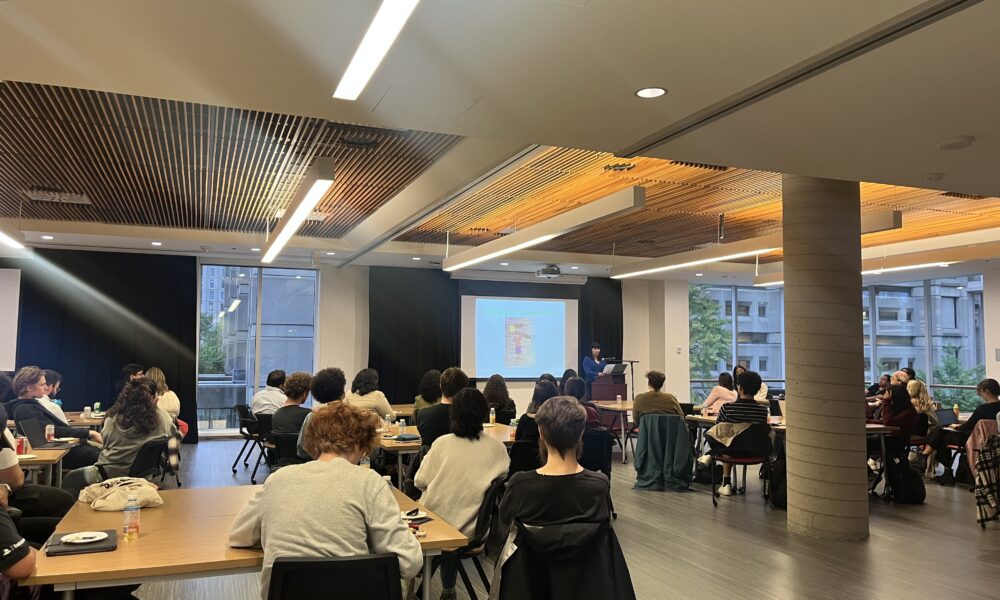
McGill staff and students convened at Donald E. Armstrong Building on Sept. 25 for a talk presented by Candace Brunette-Debassige, assistant professor and Director of Indigenous Education at Western University. Her talk, entitled “Indigenous Women’s Leadership in Canadian Universities,” was organized by McGill’s Office of Indigenous Initiatives (OII) as part of the university’s Indigenous Awareness Weeks, taking place between Sept.19 and Oct. 2. 

Organizers from the OII opened the event with a land acknowledgement and by inviting Robert Spade, assistant professor at the Schulich School of Music, to sing before introducing Brunette-Debassige. 

Over the course of her talk, Brunette-Debassige discussed her research, which implemented an Indigenous story methodology to better understand Indigenous women’s experiences in leadership roles across Canadian universities between 2015 and 2020. Brunette-Debassige compiled qualitative data from 12 Indigenous women’s experiences in administrative university roles, including those of Brunette-Debassige herself, who is a Mushkego Cree iskwew of Peetabeck First Nation (Treaty 9). She found that although Indigenous representation in leadership roles at Canadian universities has been on the rise since the Truth and Reconciliation Commission issued its final report in 2015, Indigenous people remain underrepresented in these roles and face unique challenges when hired for them. 

Borrowing from scholar Tanya Fitzgerald, Brunette-Debassige explained that Indigenous women are caught in a ‘triple bind,’ facing patriarchy, racism, and settler-colonialism. She invoked the teachings of Wisakedjak, the Trickster, to explain how Indigenous women found themselves in “paradoxical, in-between spaces.”

“Trickiness emerged in […] the difference in the divide between policy and practice, between rhetoric and reality,” Brunette-Debassige said. “It emerged in how women were simultaneously placed as being a symbol of the solution, but also being told they were the source of the problem, how they were tokenized and hypervisibilized. It even came through in them being both resistant [to] and at the same time complicit in the university.” 

Brunette-Debassige also highlighted that Indigenous women are put in an impossible position when given the responsibility of addressing settler-colonialism at universities that perpetuate it.

“The contemporary university continues to be deeply complicit in ongoing settler colonialism, […] contributing to the othering and erasing [of] Indigenous peoples, our rights, our knowledges and education, through the ongoing privileging of Western knowledges,” she said.

Brunette-Debassige ended her talk by calling not only for greater Indigenous representation in universities’ leadership, but for better practices that look at systemic issues of settler-colonialism within universities. She also spoke to the need for more research on Indigenous leaders’ experiences at universities, and fielded a number of questions from the audience.

Spade invited students from his Ojibwe Song and Drum class to sing alongside him at the close of the event.

Najib Fenaoui, one of the students who performed, told The Tribune after the talk that Brunette-Debassige led him to reflect on his own experiences with intersectionality.

“I’m not Indigenous, but I can identify moments in my life where I felt in-between. You know, too different, whether it’s [because of] culture or sexuality or gender,” Fenaoui said. “It can be a really uncomfortable place to be in, especially if it’s not acknowledged.”

Annelies Koch-Schulte, U3 Arts and Science, explained that the lecture drove her to consider McGill’s complicity in settler-colonialism. Koch-Schulte acknowledged the importance of talks such as the one given by Brunette-Debassige and urged McGill to confront the ways it continues to perpetuate colonial ideologies, citing their legal battle against the Mohawk Mothers as an example.

“[McGill] needs to decide to have a turning point,” Koch-Schulte said. “Whether that occurs because [of] a change in who’s working in the administration, or whether it’s a change of heart, I think that that change can come at any point if [the university is] open to it.”

During the question-and answer-period of the lecture, Brunette-Debassige underlined the need for structural change at universities.

“Leadership is very individual and it’s not looking at the larger system,” Brunette-Debassige said. “The answer is not only leadership, it’s governance.”

Features

Rallying to Resilience

My sweaty palm grips the racquet, the noise around me blurring. I can hear my heartbeat ringing in my ears. I step onto the court and focus on hitting my targets in the warm-up, listening to the sound of the ball making contact with the front wall. Bam. Bam. Bam. I notice the details of each shot. Where is my racquet making contact with the ball? How is the height and the pace? How can I adjust? The referee calls time, and warm-up ends. The racquet spins, dropping to the ground and landing on the down symbol. I have the first serve. I step into the service box, bouncing the ball three times, each time reminding myself that I am ready. I know where to place the ball and what to do. I toss the ball and my racquet makes contact. The match begins. 

Ever since I can remember, sports have been a huge part of my life. From gymnastics to karate, to running, basketball, and squash, I was always the kid in school joining every sports team. My dad introduced me to squash—he picked it up in his 20s recreationally, and by the age of seven, I picked up my first racquet. My brother then got involved in squash at our local squash club, and soon after, I followed in his footsteps. I played my first tournament at 10 years old—although I lost almost every single match, I was mesmerised by the sport. I remember watching the older players compete for provincial and national championships, particularly the under-19 girls division. I kept thinking,“I want to be this good someday.” 

From my first tournament, I was hooked. I started playing a couple of times a week in my local squash program and playing more tournaments, determined to improve my game. I moved up to playing provincially, then nationally, and now at McGill. Along the way, squash became a core part of my identity. When I was asked to introduce myself or say a fun fact or favourite hobby, the first thing that came to mind was squash. Squash also became a sort of family tradition. My parents, brother, and I would go to our local squash club every Christmas and New Year’s Day. If you walked into our dingy hole-in-the-wall club on an empty Christmas day you’d be sure to find us fiercely battling it out on court. These were also usually the only times my brother and I would let my dad win (he would say otherwise). 

Throughout my middle and high school years, I played and competed at a high level, representing B.C. and Canada at competitions. My fondest memory was travelling to Amsterdam to represent Canada in the Dutch Junior Open, playing against top-level junior players from around the world. It felt amazing to be surrounded by other athletes playing the best they could. I was inspired and full of motivation. Along the way, I’ve watched my peers drop like flies at each level. I’ve wondered: What has kept me playing? 

Like many athletes, I’ve hit roadblocks and points of burnout in my sport. COVID-19, which halted group practices and competitions, was detrimental to every student-athlete.

Ava Bicknell, U2 Arts and Co-Captain of the McGill Women’s Squash Team, told  The Tribune, “I couldn’t train during COVID. I didn’t play for two years so I lost interest in the sport. I found it hard to be motivated because I couldn’t play.” For many athletes like Ava, this was a harsh reality. The pandemic deeply affected athletes’ motivation and interest to keep going, making many lose their momentum. The pandemic was also difficult for young woman athletes in particular. Even before the pandemic, one in three girls in Canada quit their sport during their late teenage years. The loss of community exacerbated the high dropout rate of woman athletes.

COVID was also a time of reflection for many athletes. For me, the pandemic was the first time I was forced to step back from my sport. It made me realize how much I love to play, but also how stressful and anxiety-inducing tournaments could be. My teammates seemed to be reevaluating their interest in squash too—many quit after the lockdown. I had to ask myself the hard questions: Do I want to keep playing? Do I miss playing or is this feeling a longing for an old habit? In this time of reflection, I realized how much I had grown to love squash and training towards a new goal, tournament, or ranking. I did not want to stop. I worked with my coach online to do as much off-court training as possible, improving my game’s physical aspects, speed, strength, and endurance. Once lockdown ended, I realized that I had been longing to get back on court.

However, just two months after I started training again, I faced my biggest roadblock—the nightmare every athlete dreads: Injury. I sprained my ankle in practice and couldn’t play at my maximum capacity for six months. The two weeks of not being on court felt gruelling. Every day, I would go to the squash club and spend my time biking while I watched my teammates practice. I was devastated. I felt like all my progress had been lost from one stupid mistake. I went from feeling like I was playing my best in a practice match, to being unable to walk off the court. My time away from squash reinforced the love I had for my sport, motivating me to push myself to work smarter and play harder.

Getting back to training and competitions months after my injury was challenging. I was behind where I needed to be. I was also gearing up for my recruiting year, where I would begin talking to coaches in the U.S. about playing Division One squash. I was extremely frustrated with my performance and my recovery time from my injury. My love for squash began to fade. 

Recruiting wasn’t going well either. With the long-term effects of the pandemic, it was harder to get into international tournaments and to compete against American players who already had exposure to college coaches. I kept telling myself it would work out, and I would achieve my goal of playing Division One squash, but in the end, it didn’t. I was devastated. This is what everyone I was competing against wanted; why couldn’t I have it too? 

My frustration carried on into my last year of high school. As I began to near the end of my junior squash career, I started feeling burnt out. I didn’t enjoy competing anymore. What was the point? I felt disincentivized to play because it felt like there was no future for me in the sport. On top of this struggle, many of my teammates had quit, altering the social dynamic, and making training less enjoyable. After my last provincial championships, I took my first voluntary break from squash. I stopped training five to six days a week, let myself rest, and distanced myself from the sport.

I came to McGill last fall, knowing I would join the Women’s Squash Team. My brother was already on the Men’s team, and I hoped it would be a positive social experience, but I assumed it wouldn’t be such a big part of my life anymore. 

I was wrong. As soon as I stepped back on the court, my heart pounded out of my chest, my palms turned sweaty, and butterflies swirled in my stomach. In that moment, I remembered why I love to play. 

But, while many athletes come into university with this same mindset, their ability to follow through and continue playing is dependent on many factors. What makes or breaks someone’s experience with sports, especially in university?

For many athletes, including myself, the likeability of the sport is tied to the team’s dynamic. Lilly Breton, U3 Arts and a former player on the McGill Women’s Field Hockey Team, told The Tribune that after her first year, she “just felt like it was a different dynamic with the girls, and I didn’t really like to feel in competition with my teammates, like we’re a team, but it was […] a super stressful and anxiety-inducing environment.” Players like Breton often decide to leave their teams, rather than continuing in unpleasant conditions.

On the flip side, the strong community in the squash team brought me back to the sport. My love for squash stemmed from my teammates. I loved being in my first all-girls team, having strong woman athletes around me, all training for a mutual goal. I got lucky enough to join a team where I met some of my best friends.

McGill Tennis Coach Lutwin de Macar told The Tribune that athletes’ relationships with their sport are “about the people, about the energy, about the atmosphere; whether you’re varsity, whether you’re not, […] you could still make a great experience out of it.” As de Macar reflects, at any level of sport, the community and the energy athletes are surrounded by can make or break their motivation to play. 

Also, the flexibility with my training and keeping a good balance between school, sports, and socializing has been crucial. With just team practices, I could play as little as three times a week, allowing me to focus on my school and social life. But the entire team drives one another to improve, and nearly every day, I’m either training on the court with my teammates or hitting the gym alongside them. With the squash team, I’ve been able to balance my training and my game around my priorities. Now I not only play for McGill but also for Team Quebec. Seeing how all these small adjustments improve my game pushes me to keep going. I love reflecting upon how much I have improved by staying consistent, and how much the hard work has paid off.

Finally, falling back in love with my sport has been tied to having a competitive challenge. While McGill’s squash team isn’t varsity, we compete at a varsity level against other Canadian teams in the Ontario Jesters University Squash League. The McGill women’s team won the Ontario University Association (OUA) League for the first time in McGill history, beating the crowd-favourite Queen’s University. Now, every time I walk past the courts, I smile when I see our first-place banner hanging. We may not be receiving the recognition or funding we aspire to have from McGill Athletics to become a Varsity team, but we are competing at a high level. 

Institutions play such an important role in how athletes view their relationships with their sport, especially in university. For young woman athletes, this can be the ways in which our school represents and supports us—in funding or spirit. 

Breton discusses how with field hockey, “There’s no extra support, especially when it comes to funding […] It all comes out of pocket. It’s super expensive compared to the men’s high-level sports, [because] they have funding. They have […] five physios [in] a team, they have all these different resources. So at least for field hockey, I think that’s why a lot of girls dropped out […] there was just no point.” 

Breton emphasized that McGill Athletics and their lack of support for women’s sports teams can affect how woman athletes view themselves and their relationships with the sport, especially when men’s teams take precedence. Support from institutions can be a huge incentive or a massive hardship, which can be a deciding factor for young women already struggling to stay in the game. 

For all athletes, love for your sport comes and goes, and sometimes the sacrifices we make feel bigger than our return on investment. But finding a sport where you love to compete and can’t imagine your life without it makes everything worthwhile. Being surrounded by teammates who are just as excited to win that big match or help you pick yourself up after a tough loss is what makes it worth it. So to you, squash might just be hitting a ball against a wall, or that court you walk by on the way to the B2 Gym. But for me, squash is my challenge. It pushes me to be mentally and physically tough, a sport that has brought my family closer and has allowed me to form some of my closest and most meaningful friendships. This is what has shaped my relationship with my sport.


Read the latest issue

Read the latest issue