


Latest News

Arts & Entertainment, Music

‘BRAT’ and it’s the same but it’s in Montreal with Troye Sivan so it’s not

Even though I’ve finally had to accept that summer is over, getting to watch the Sweat tour with Charli XCX and Troye Sivan at Place Bell transported me back, one final time, to the joys of “BRAT summer.” Prior to the show’s commencement, I made sure to get my “SWEAT tour” T-shirt to commemorate what I knew would be a concert experience unlike any other. As  soon as Troye Sivan came on stage, he cemented my predictions. 

The concert lasted just under two hours, with Sivan making his grand entrance at exactly 8:30 p.m. to perform an energetic rendition of his hit “Got Me Started.” The pair proceeded to trade time in the spotlight, with one of them performing two to three songs, thanking the audience, and then ceding the stage to the other to repeat the cycle. I found it a little strange that the first time they performed together was over an hour into the concert during “1999,” but after that, they shared the stage for multiple songs. 

Remarkably, the night felt like two separate concerts in one. When Sivan came on stage, everyone was jumping and dancing along to his more dance-pop-esque music. Alternatively, when Charli performed, I felt transported to a DJ set where everyone was bumping their heads up-and-down to her style of synth-pop—with the one exception being during the viral “Apple” dance when the whole crowd immediately started doing the TikTok choreography, with famous Montreal TikToker and McGill student Nadia doing the dance on the big screen.

There were minimal set pieces, though a caged performance area running under the mainstage brought the performers within arms-reach of those in the pit. Both artists employed a variety of strobe lights and projections to captivate concertgoers—including an unforgettable clip of Sivan answering the phone in drag before launching into a performance of “One of Your Girls.” While these set pieces were great, I strongly believe that the show would’ve been just as spectacular without them due to the strong stage presence of both artists. 

While the whole concert was outstanding, there were a few moments that stood out to me. The highlights from Charli’s act were her performances of “Von dutch,” “Club classics,” “Vroom Vroom,” and “Girl, so confusing.” This, however, could be coming from personal bias, as those are some of my favourites from her discography due to their lively, danceable nature. Notably missing from her setlist, though, was her song “B2b,” whose absence saddened me. From Sivan’s performance, “What’s The Time Where You Are?,” “One of Your Girls” (obviously), and “My My My!” were all phenomenal. Yet my favourite part of Sivan’s performance was him shouting “Montreal!” more than 20 times throughout the evening, particularly because the autotune on his microphone made it sound hilarious. 
My only wish is that Charli would have brought out a special guest during the show. Whether it be Lorde for “Girl, so confusing,” Billie Eilish for “Guess,” or even Addison Rae for “Von dutch,” I think it would’ve added to the show. Though I can’t say I’m all that shocked given that she didn’t bring anyone out at her first show—and my hope was fairly far-fetched—it would’ve been an incredible way to make an amazing concert even better. Nevertheless, the concert was truly one of the most incredible live music experiences of my life. I hope everyone, whether a fan or not, gets to see Troye Sivan or Charli XCX at least once in their lives.

Off the Board, Opinion

Disabled athletes deserve better media coverage

This summer’s Olympic and Paralympic season abounded with incredible feats of athleticism. As a disabled journalist, I was pleased to see Paralympic athletes garner significant media coverage across Canadian news outlets. But while some media agencies got disability coverage right, others perpetuated harmful stereotypes, framing disabilities as obstacles to be overcome. 

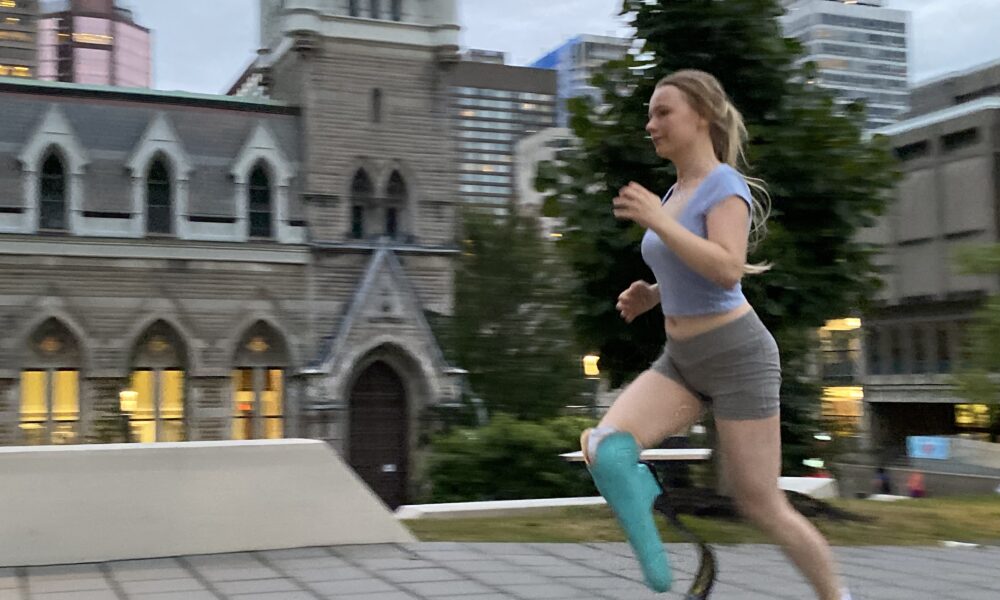
Although I never deliberately try to hide the fact that I’m an amputee in my everyday life, it’s fairly easy for me to do so. My below-the-knee prosthesis is slim, coloured to my skin tone, and easily concealed under pants. Whenever I go running, however, my amputation is on full display. The shape of my running prosthesis—a slim socket attached to a curved running blade—makes it impossible to hide. While running, strangers not only keep their eyes trained on me, but frequently come up to me to ask invasive questions and praise my courage, charisma, and resilience. I am routinely subjected to an uncomfortable excess of attention. Although strangers generally mean well, their celebration of my character is misguided; after all, they don’t know me. 

Despite rarely explicitly mentioning my amputation, it’s clear that these individuals praise my running because they see my amputation as a barrier I have to surmount. Of course, it is harder to run as an amputee. Not only is it something I had to re-learn how to do after my amputation, but it’s more painful for me to run than for many of my able-bodied peers. Friction between my leg and running prosthesis creates skin irritation, and running with the prosthesis itself often leads to pain at the bottom of my stump and lower back. Moreover, it can be difficult to find accessible routes amidst Montréal’s worn-down and often uneven sidewalks. Still, my running is more ordinary than it is inspirational. Framing my amputation as an obstacle places me in opposition to a fundamental part of who I am, an aspect of my everyday life. My amputation is something I work with, not something I work against. 

Journalists often make the same mistake of portraying disabilities as obstacles. Of course, my sweaty, tomato-faced runs around my Montréal neighbourhood are hardly comparable to the athletic performances seen at the Paralympic level. Unlike my ordinary runs, Paralympic athletic achievement is inspirational. Nevertheless, media coverage of the Paralympics often portrays disabled athletes’ victories as being achieved in spite of their disabilities. Presenting disabilities as obstacles only perpetuates the cultural narrative that disabled people need to be cured—that we are not welcome to exist in this world as we are. 

Disabled athletes not only deserve greater visibility, but more persistent coverage year-round. Although the 2024 Paris Paralympic Games were the first in history to receive some coverage of all 22 sports played, writing about disabled athletes only once every Paralympic season falls short of consistent representation. Similarly, news agencies overwhelmingly favour coverage of man athletes, and must also work to rectify the unequal representation of woman athletes in sports journalism. 

We have a responsibility as journalists to lead by example. Media coverage shapes our values and worldview, and how the media represents disabled people inevitably influences how individuals interact with disabled people in the world. When we are simply going about our ordinary lives, we deserve to be represented as just that—ordinary—rather than as reductive objects of inspiration or feel-good stories for able-bodied audiences. As journalists, we should strive to let disabled people tell their own stories, rather than force stereotypical narratives onto them. By asking questions rather than making assumptions, we can more authentically represent disabled people’s stories. Ultimately, our responsibility as journalists to inform the public is rooted in an even greater responsibility: To truly listen.

Arts & Entertainment, Film and TV, Pop Rhetoric

Applause for representation, but can we get an encore? 

Criticism rained down on the 76th Primetime Emmy Awards this past weekend. Only six months after the previous Emmys in January, the ceremony felt repetitive. However, the Emmys have increasingly devoted airtime to recognizing marginalized communities; the Sept. 15 ceremony marked historic wins for Shōgun’s Hiroyuki Sanada and Anna Sawai, the first Japanese actors to win in their respective categories, and The Bear’s Liza Colón-Zayas, who became the first Latina to win Best Supporting Actress in a Comedy. These wins lead to a wider variety of voices being shared within a competitive industry. Yet, as this continues, we must raise a critical question: Is representation enough to truly celebrate and uplift marginalized communities?

There is no doubt that representation at awards shows matters. It provides visibility and recognition to historically underrepresented groups such as racialized people, the LGBTQ+ community, and disabled individuals, giving audiences role models to look up to. Coming from a high school in Malaysia, Michelle Yeoh’s historic Oscar win for her role in Everything Everywhere All At Once filled me with hope and pride. 

However, representation is often seen as the final goal, rather than the starting point for deeper structural change within the industry. The risk behind heaping praise on this recent—and deserved—rise in representation at award ceremonies is that it becomes tokenistic. If we don’t continue fighting for more meaningful ways to represent marginalized communities, the status quo could become a superficial medium for the industry to appear diverse without addressing the power dynamics that continue to marginalize voices behind the scenes.

While it is exciting to see talents like Sanada, Sawai, and Colón-Zayas gain recognition, the industry frequently prioritizes celebrating individual achievements over systemic change. Award wins don’t address the deeper inequalities that marginalized groups face within the industry such as the hidden difficulties of being a woman or BIPOC director. As a result, representation, while essential, often feels like a checkbox rather than a meaningful step toward greater inclusivity. It seems absurd that audiences should applaud award shows for “making history” while overlooking systemic issues that persist within the industry. 

While representation takes centre stage, not nearly enough attention is being brought to the more explicitly political acts and statements at the Emmys. For instance, Oji-Cree actor D’Pharaoh Woon-A-Tai of Reservation Dogs arrived on the red carpet with a red handprint painted over his mouth: A symbol for the Missing and Murdered Indigenous Women movement across the U.S and Canada. Pro-Palestinian protestors gathered outside the awards ceremony, not unlike those who delayed the Academy Awards in March, to protest the ongoing siege on Gaza. These examples of outcry against horrifying violence are only some of many. Amongst the glitz and glamour of the evening, these political acts are muffled and difficult to find in the media unless explicitly searched for. 

The media also often highlights marginalized artists’ achievements over their political activism. This selective enthusiasm highlights the industry’s ongoing struggle to engage sensibly with marginalized communities. Colón-Zayas’ acting in The Bear is rightly celebrated, but when she used her platform to speak out on injustice, ending her speech with “vote, vote for your rights,” she received far less attention. The Emmys’ focus on representation without engaging with broader social issues limits the industry’s potential to truly amplify marginalized voices.

The sheer amount of power and influence the television and film industry has is astounding. To say that it should not be used as a platform for promoting diversity and equity is missing the beauty of the art in the first place. The industry should recognize more political activism and aim to highlight actors from marginalized communities who fight for justice and challenge power structures. However, to lead this change beyond representation, the industry must be willing to embrace the full spectrum of what it means to create a more inclusive, transformative celebration of marginalized identities.

Arts & Entertainment, Film and TV

‘The Substance’ is difficult to stomach

I’d never been to a movie by myself before, so when I discovered that the Québec premiere of The Substance at Cinéma Du Parc sold out before my friends had bought their tickets, I listened to their encouragement about the “peaceful” nature of solo movie-watching and decided to go alone. Midway through the movie, as I witnessed no less than five walk-outs and heard the man behind me whisper, “I think I’m going to pass out,” I realized this might not be the cozy viewing experience that I’d had in mind. 

Director Coralie Fargeat’s sophomore film is disgusting to the point of absurdity. After Hollywood studio executives fire Elisabeth Sparkle (Demi Moore) from her long-term aerobics show on her 50th birthday, she is forced to reckon with her middle age. This is when she learns about “The Substance:” A black-market drug that promises to unlock a younger, better version of its user. After following the concerningly vague instructions that accompany the drug, Elisabeth spawns Sue (Margaret Qualley), her younger, shinier counterpart, who takes her place every other week through a gruesome spinal tap. At first, both women seem satisfied with this arrangement, but as Sue bends the rules of their symbiotic relationship, Elisabeth begins to undergo a monstrous transformation that rivals David Cronenberg’s The Fly or Julia Ducournau’s Titane

Fargeat’s visceral gore is elevated almost to the level of camp. Extreme close-ups snap in on bloody stitches, sagging skin, or two mutated eyes battling for dominance inside one socket, while ASMR-like sound effects punctuate every moment. In one scene, as a man masticates a pile of shrimp, I could only imagine that the Foley artist was slapping a plate of jello to produce such revolting sounds. 

This penchant towards excess extends beyond the film’s gore. When Sue steps into a dazzling reality, Fargeat’s visuals magnify her sexy, glamorous lifestyle so that it, too, becomes hard to look at. Through oversaturated colour, Sue’s bubblegum-pink lip gloss appears sickly sweet, and zoomed-in shots chop up her spandex-clad curves into pieces. As Sue’s youthful qualities are made uncanny and strange, both women’s lives are imagined as a double-edged sword of dissatisfaction and self-hatred. 

The Substance’s final 30 minutes are made to be seen in a packed theatre. While the film’s horror is pushed to shocking extremes through slimy prosthetics and practical effects, Moore simultaneously injects each scene with sardonic humour. Culminating in a spectacular, blood-soaked, reverse Carrie sequence, the entire audience around me was laughing in shock. 

Although its sci-fi-ish premise reads like a Black Mirror episode, The Substance is not the nuanced satire on anti-aging that it presents itself to be. The film opens with several clear—yet somewhat unimaginative—examples of sexism in Hollywood: Casting calls for women are marked with strict age limits, while panels of casting agents ruthlessly scrutinize their bodies. In one scene, a patronizing producer spouts phrases like “pretty girls should always smile!” as he ignores the tears in Sue’s eyes, while in another, he refers to the ticking biological clock of women over 25. 

Instead of building on these examples, however, Fargeat leaves them behind in favour of focusing on the film’s body horror. Despite continuously identifying Hollywood’s obsession with youth and its impossible beauty standards, Fargeat ultimately positions Elisabeth as the character that we are cringing and laughing at by the film’s conclusion, witnessing her transformation into a monster as she suffers the consequences of her own self-hatred. In this sense, The Substance can’t seem to decide whether the subject of its critique is the patriarchal beauty industry, or the women who buy into it. 

The Substance’s commentary may be somewhat simplistic, but Fargeat uses it as a provocative jumping-off point for the rest of the film, which transforms—like its protagonist—into something nauseating and deranged, yet entirely singular. 


The Substance is now playing in theatres.

News, Recap, SSMU

Recap: SSMU Legislative Council Sept. 19 meeting

The Student Society of McGill University (SSMU) met for its first Legislative Council meeting of the semester on Sept. 19. Speakers discussed various departments’ progress on projects throughout the summer, reviewed the McGill Sustainability Projects Fund (SPF), and addressed a motion for a call-to-action regarding a pro-2SLGBTQ+ demonstration.

The SSMU Executive Committee began the meeting by providing updates on its work over the summer. The Committee noted that it worked with the Dental Students’ Association and Macdonald Campus Students’ Society to adopt a new online voting system with Simply Voting now that the groups’ elections are no longer supported through myInvolvement. Additionally, the Committee explained that it has been working to bolster student engagement. Lastly, the Committee discussed amending the SSMU Constitution with the aim of addressing issues within the Judicial Board. The proposed amendments would give the Judicial Board power to produce binding decisions on SSMU governing documents and create a process for appeals.

The meeting then turned to the SPF’s summer activities. The SPF approved numerous projects including the distribution of compost bins and materials for Science Frosh and the creation of a sustainable materials library for students in architecture and engineering. Budgets for the SPF’s projects ranged from $500 to $5,000 CAD.

Lastly, the Legislative Council heard a call-to-action proposed by Vice President University Affairs Abe Berglas. Berglas that the SSMU sign on to a call-to-action put forth by P!NK BLOC, a Montreal-based queer revolutionary collective, on Sept. 20. The call-to-action was in conjunction with a planned protest in response to calls for national protests by Hands Off Our Kids, an organization advocating for the regression of civil education and free expression, and Ensemble Pour Protéger Nos Enfants, a Quebec-based group that champions similar ideas. Berglas’ motion was amended for the SSMU to advertise the protest and the call-to-action on its Instagram as opposed to being a direct signatory. The motion passed 15-0 with four members abstaining.

An previous version of this article stated that SSMU VP University Affairs Abe Berglas’ motion called for the Council to share information on a counter-protest on its Instagram. In fact, this was the amended version of the motion which was passed. The original motion was for the Council to sign on to the September 20 Call to Action put form by P!nk Bloc among other organizations. The Tribune regrets this error.

Commentary, Opinion

The people-pleasing is not pleasing the people

For many students, university marks the first leap into adulthood—living with strangers, taking on leadership roles, and meeting people from all walks of life. In these situations, conflict is not just a possibility; it’s a certainty. 

Just last week, my colleague and I were discussing how to resolve an issue of poor communication when he shrugged and said, “It only becomes a problem if we talk about it.” I couldn’t help but think, “But it’s already a problem for me!” The reality is that issues don’t disappear when we stop talking about them; they fester and grow beneath the surface instead. 

Somewhere along the way, Gen Z developed the belief that pretending everything is fine makes everything fine. In reality, conflict avoidance is not a virtue; in fact, it becomes more damaging than facing conflicts head-on. We’ve created a generation of people-pleasers who think that staying neutral and avoiding disagreement keeps everyone happy. But, under pressure, this shallow contentment is quick to fall apart. The truth is, if a relationship can’t withstand honest communication, then it probably wasn’t built on solid ground to begin with. Healthy relationships are strengthened by addressing disagreements, not by pretending they don’t exist.

Whether it’s through changing the subject, delaying important conversations, or ghosting, conflict-avoidant behaviours are not only ineffective but downright harmful—especially for a generation already struggling with high rates of anxiety and depression. A 2021 study revealed that individuals who confront and resolve daily conflicts tend to experience lower stress levels and a more stable emotional state. Conversely, suppressing emotions has been linked to an increased risk of serious health issues, including premature death. Additionally, relying on nervous laughter or fake smiles rather than addressing distress can exacerbate feelings of loneliness and depression.

Conflict avoidance can also have detrimental effects on interpersonal relationships. It can lead to gunny sacking, a term used by psychologists to describe the unhealthy practice of storing up unresolved grievances and negative feelings about someone or something instead of addressing them as they arise. Over time, this buildup creates a metaphorical “gunny sack” filled with complaints, which can lead to explosive confrontations when the person finally reaches a breaking point. 

Worse, avoiding conflict often leads to passive-aggressive behaviour—where people express their frustration indirectly, through sarcasm or subtle digs—because they don’t know how to confront it directly and lack effective conflict-management skills. The discomfort of long-term, underlying resentment has much more dire effects than the uncomfortable experience of direct communication. 

There is a prevailing notion—especially in Canada—that being “nice” means never taking a stance that might upset someone else. But niceness is not the same thing as kindness. Niceness is surface-level, often driven by fear of judgment or rejection, while kindness involves deeper understanding, honesty, and sometimes difficult conversations. Direct communication is a genuine act of care; these conversations imply that someone is willing to embrace the discomfort of vulnerability and open dialogue to strengthen the relationship because they want it to work. In doing this, we offer others the chance to change their behaviour and extend them grace. We need to recognize this kind of communication as an expression of love. I would choose this kind of kindness over mere “niceness” any day.

Of course, this doesn’t mean every minor inconvenience requires a major discussion, nor should we jump to criticize someone for every small misunderstanding. In some cases, if someone is particularly unreceptive, it’s healthier to step back rather than push for a conversation. However, more often than not, people are more open to communication than anticipated. If an issue can be resolved through dialogue, we should engage in that conversation.

For a generation that has the capacity to turn anything into a joke, it’s time to get serious. The key lies in learning how to approach conflict constructively without making it personal or hurtful. This means being honest, maintaining a solution-focused mindset, using “I” statements rather than “you” statements, and leading with compassion and empathy. This direct communication, as opposed to avoidance, is what truly pleases people.

Behind the Bench, Sports

Canadian Sail Grand Prix team sees growing popularity and prowess

Every year, 10 teams from different nations compete on F50 foiling catamaran sailboats at some of the most incredible sailing venues around the world in the Sail Grand Prix (SailGP). Fans of all ages come out to watch the world’s best sailors race the fastest sailboats ever made against beautiful backdrops. At each event, all ten teams complete six fleet races building up to a winner-takes-all final which determines the event champion. The season concludes with a Grand Final, where the top three teams of the season compete for a prize of $7 million USD.

In recent years, the SailGP franchise has seen a significant increase in its fanbase—a boom in viewers across social media platforms and an in-person attendance of more than 200,000 spectators, as well as a 48 per cent increase in broadcast viewership over the past year. As the sport’s popularity grows, so does its appeal to sponsors. Therefore, knowing what attracts more spectators is key. Is it the speed, the spectacular boats with 28-metre-tall sails, or the full-speed crashes that get fans hooked? It’s probably a mix of them all. 

However, as Sail World managing editor Mark Jardine stated in an article, fans crave access to the sailors’ personalities and rivalries. Jardine compares the SailGP competition to Formula One (F1) motor racing, and notes how very few F1 fans know the speed record of any competition. Instead, a large part of its success lies in the great rivalries between drivers—like between Lewis Hamilton and Max Verstappen—showcased to fans with on-board cameras during the racing and at press conferences. The popularity of a documentary by the Canadian SailGP team, “Against All Odds,” indicates that perhaps the same principle is true for fans of sailing.

“Against All Odds” follows the Canadian SailGP team through the 2023-2024 season. The team, led by Phil Robertson, started off the season strong, finishing in third and second respectively at their first two events. The rookies on the team seemed to have gotten the hang of the very technically challenging F50 boat in record time. However, things took an unfortunate turn in Saint-Tropez, France, when the team’s lucky streak was cut short by extremely harsh wind conditions, and spectators began to believe the Canadians beginners’ luck had run out. 

In Sydney, Australia, the team faced an even bigger obstacle when their wing was smashed during haul-out by a flash storm, almost certainly putting an end to their season. Canadian SailGP fans celebrated when it was announced that the league and sponsors had decided to fund and produce a brand new wing in time for the next event in Christchurch, New Zealand—Robertson’s hometown. The team was thrilled that they would be able to compete. 

The rookies and veterans pulled through to surprise everyone and win the Christchurch event. The team was making history. Not too long after, Team Canada set a new SailGP speed record of 101.98 km/h while testing the new T-Foils in San Francisco. Also breaking records were the Canadian fans at home; the first ever Canadian SailGP event was held in the Halifax Harbour in June 2024, and was attended by record-setting shoreside crowds of 50,000 people. Tickets for the event sold out within 12 minutes of going on sale, and every merchandise-selling record in the history of the competition was broken.

The Canadian SailGP team’s high, however, has been short-lived. In the recently-announced 2024-2025 schedule, the Canadian event has been replaced by an event in the United Arab Emirates.
SailGP also recently announced that two new teams will be joining the competition this November, meaning that one of the current teams will be benched to leave room for the newcomers. It has not been officially announced which team will be cut, but historically there are few teams without home regattas. Canadian fans are therefore wondering if the scrapping of the Halifax event is a preview of more disappointing news to come. Regardless of what the future holds for the Canadian team, SailGP will continue to be an exhilarating display of top athletes using a force of nature to produce some fascinating racing.

Art, Arts & Entertainment

‘Two by Two, Together’ bridges the gap between art and viewer

Two by Two, Together, the latest exhibition at the Montreal Museum of Fine Arts (MMFA), displays works that have been acquired by the museum over the past five years. Open as of Sept. 11, the exhibition groups together a multitude of works by both local and international artists from 440 BCE to the present day.

The pieces are arranged based on time period, theme, subject, material, and function. As the curator, Iris Amizlev was thinking about how to group these diverse and, in some cases, seemingly unrelated pieces. In an interview with The Tribune, she explained that her process began by asking herself: “How could I make these pieces sing?” The resulting groupings—a pair of self-portraits by Rembrandt, a print of multicoloured vases next to ancient Roman glasswork, and a wall dedicated to various depictions of the female form—speak to the ways in which art can create dialogue across time, place, and medium. 

Amizlev elaborated that her objective for the exhibit was to contribute to the works’ storytelling and inspire creative thought processes among viewers. Rather than displaying each piece independently in a traditional manner, she sought to create a more interconnected experience. 

This intention is visible through the exhibit’s layout. While many art exhibits are organized linearly, funnelling viewers towards pieces via separate rooms and hallways, the works in Two by Two, Together are all displayed within one airy room. This openness allows viewers to jump between pieces freely. Although the paintings, photographs, relics, and displays are certainly the focal point of the exhibit’s message, the thoughtful curation further emphasizes its focus on discourse through time and space.

In one corner, Still Life with Tomatoes (1720-1806) by Italian artist Carlo Magini is displayed next to the abstract Pears and Avocados (1944) by Madeleine Laliberte. While these pieces are strongly connected through their respective depictions of produce, there is also a juxtaposition between their art styles and time periods. By pairing hyperrealism and pure abstraction side-by-side, while maintaining the same theme, these works invite the audience to consider how similar subjects can act as a link between the otherwise contrasted pieces. 

In addition, the exhibition demonstrates the MMFA’s commitment to displaying works by artists from groups who have historically been underrepresented in the art world. Nunatta Sapujjijingit [Protectors of Our Land] (2021), a monumental whalebone carving by Inuk artist Manasie Akpaliapik, combines traditional Inuit legends with symbols of colonialism to bring attention to the effects of climate change. A sculpted face by Māori artist Riki Henare Manuel highlights Indigenous artists reclaiming control over their cultures amidst ongoing colonialism. 

Some may assume that a museum curator’s take on art is more valid than someone who looks at art simply for fun, but Two by Two, Together challenges this notion. In our interview, Amizlev expressed her hope that viewers to participate in the discourse prompted by the exhibit, noting that she prioritized playfulness and creativity when curating the exhibit. Visitors should think about how they would group these pieces together, embrace connections between diverse works, and in so doing discover their own subjective viewpoints. In a field where such dialogue is often reserved for those with a formal education in art, it feels especially powerful that the MMFA has put together an exhibition where the viewer, be they an art history major or someone just looking for something to do on a Sunday, has the opportunity to play an active role.


Two by Two Together runs until Oct. 5, 2025. Tickets are available online or in person at the MMFA.

McGill Recommendations, Out on the Town, Student Life

Activities in Montréal you can’t miss

Despite this week’s high temperatures and blue skies, McGill students know that the warm weather will not last forever. Still, students are enjoying every last bit of summer: Campus is buzzing with people walking around, getting hot dogs, studying outside, or simply laying down for a nap on the Lower Field. While Montréal’s outdoor events calendar is winding down for the winter, a few events are still happening here and there while we all pretend the cold isn’t coming. The Tribune offers a few recommendations for those who refuse to accept that fall is right around the corner. 

Village au Pied-du-Courant 

2380 Notre Dame Street East

Since June 13, Pied-du-Courant has welcomed the people of Montréal for a fun outdoorsy festival every Thursday, Friday, and Saturday. The entrance is free until 7:00 p.m., and then it costs $5 CAD—only card payment is accepted on-site—which makes it one of the cheapest festivals in town. Every day, new musicians and/or DJs are introduced—check out their Instagram for more information. Located in the Old Port, the Village au Pied-du-Courant has a breathtaking view of the Saint-Laurent River and one of the beautiful bridges that cross it. You’ll also find plenty of drinks and food on the site. You have until Sept. 21 to jump on this opportunity. Furry friends are also welcome!

Aire Commune

Esplanade Louvain, Avenue de l’Esplanade/De Louvain Ouest

If you’re looking for something to do on the remaining Thursday nights of September, Aire Commune should be on your radar. From 5:00 p.m. to 10:00 p.m., the Esplanade Louvain throws outdoor parties featuring performances from a variety of artists. Each week, the style of music being played varies based on the theme of the party. While the entrance used to be free, the festival has become the victim of its own success. The price to attend now ranges between $7.42 CAD until 6:30 PM and $11.12 CAD if you arrive later. Nonetheless, Aire Commune ensures an awesome time, which makes it a great place to decompress and have a drink with friends after class. Try their amazing poutine if you get a chance!

Piknic Electronik

Parc Jean-Drapeau

A longtime student favourite for summer festivals, the famous Piknic festival takes place in Parc Jean-Drapeau. It opened its doors on May 19 and will last until Oct. 6, welcoming thousands of people partying on weekends. Piknic offers two types of events: Off Piknic—a concert event with popular artists coming to perform—and Piknic Electronik on Sundays, where DJs play one after the other from 4:00 p.m. onwards. While the former usually exceeds $80 CAD, the latter is much cheaper with tickets starting at $24 CAD. Piknic also offers student-friendly passes for the season, such as the Student Back-To-School Pass for $60 CAD. Overall, Piknic never disappoints and is a great place to party with Montrealers from distant horizons. 

The Gardens of Light

Montréal Botanical Garden

If you are a fan of immersive experiences and breathtaking light displays, the Gardens of Light in the Botanical Garden is a must-see. This year, running from Aug. 30 until Oct. 31, the Japanese, Chinese, and First Nations gardens will come alive with spectacular illuminations. This edition will feature projections inspired by elements of Japanese culture such as the seven autumn plants, the two most famous butterflies in Chinese culture—Liang Shanbo and Zhu Yingtai—as well as fundamental principles of Indigenous culture through Innu poet Joséphine Bacon’s words and Métis artist Moe Clark’s songs. Take advantage of their 25 per cent discount from Sept. 2 to Oct. 8 when purchasing tickets for visits on Mondays and Tuesdays. Show your student ID to pay $12.25 CAD instead of the regular adult price $15.75 CAD. Montréalers also get a discount, so make sure to bring all your loved ones.

Arts & Entertainment, Pop Rhetoric

‘The Bachelorette’ has lost the plot

Jesse Palmer’s piercing gaze finds me through my computer screen as he tells me, “Tonight we’re going to watch something that we have never seen before in Bachelor Nation history.” I groan. I’ve spent more hours of my life than I would like to admit watching ABC’s The Bachelor, The Bachelorette, and Bachelor in Paradise. Over the years, I’ve found that the “never seen before” controversy is always a variation of the same thing: The men behave reproachfully, the women are labelled as “strong,” and the show remains entirely performative in achieving its stated goal of finding love.

The Bachelor franchise has long been criticized for its deeply patriarchal, gendered, and racist norms. Under the guise of progress, the network began assembling more diverse casts and putting women of colour in the spotlight, starting with the first-ever Black Bachelorette—Rachel Lindsay—in 2017. However, the show’s creators and fans consistently fail the women of colour leads—showing that while representation in the media is essential, it only goes so far when these women are sabotaged from the start. 

Of the 23 leads over the course of the show’s history, all but five have been white—and don’t get me started on The Bachelor which has had one non-white lead in the nearly 30 years it has been running. Jenn Tran, the latest Bachelorette, was the franchise’s first Asian-American lead, and perhaps one of the best leads that the show has seen: Charismatic, confident, strong-willed, and funny. However, the producers undermined her from the start.

The leads are generally picked from the previous season’s runners-up and are chosen prior to the “After the Final Rose” (AFR) episode of each season. Tran was in the final six of Joey Graziadei’s season, marking a departure from the show’s usual tempo. Because of this, fans predicted that the Bachelorette would either be Daisy Kent or Maria Georgas, two of the final four from the season. At the AFR for Graziadei’s season, host Jesse Palmer sat down with Kent and asked if she wanted to be the Bachelorette. Kent declined and minutes later, Tran was announced as the lead. Simultaneously, rumours swirled online that Georgas had been considered for the role and declined. From the start, the producers made it clear that they thought Tran to be the third pick after two white women.

This is far from the first time a woman of colour has been the second choice. Clare Crawley (season 16) left after the first three weeks with her frontrunner, Dale Moss. With only seven weeks left, the producers replaced Crawley with Tayshia Adams, the series’s second lead woman of colour. Even though the men were cast with Crawley in mind, the producers did not restart the season or introduce a different cast. Adams was left to try to find love and a particularly expedited engagement with the  21 men who were initially there for Crawley.

The creators of the show are not the only ones who place unrealistic expectations on women of colour leads; the fans have an equal part to play. Many fans of the show expect BIPOC leads to perfectly represent every aspect of their identity and lash out when this is inevitably not achieved. Tran, a Vietnamese-American woman, received online hate ranging from criticism over her showing moments of insecurity on camera to insults about her proficiency in Vietnamese. 

In a TikTok Tran posted on Aug. 26, she stated, “The thing that I have come to learn about […] the entertainment industry is that people want to put you into a box at all times. Whether it’s the box of ‘You’re Asian’ or its the box of ‘You’re American.’” 

In the pursuit of novel drama and higher ratings, the Bachelor franchise is purposefully putting women in harm’s way. Tran and other women of colour on the show are simply not afforded the same grace as their white counterparts. The show must reckon with its unacceptable treatment of women of colour and find a way to genuinely allow them to take the wheel in their “journey” for love and connection. That would truly be something that we have “never seen before.”

Read the latest issue

Read the latest issue