
Latest News

Features

American gladiators

//Warning: This piece mentions self-inflicted harm.//

Dave Duerson was a hard-hitting safety at the core of two Super Bowl-winning defences, taking home titles with the 1985 Chicago Bears and the 1990 New York Giants, two of the greatest defensive units in the National Football League’s (NFL) history. The Associated Press voted him Second Team All-Pro for his stellar 1986 campaign, during which he set the record for sacks by a defensive back in a season with seven—a record that stood for nearly two decades. Duerson earned four Pro Bowl selections and gained great success off the field; voters named him Walter Payton Man of the Year in 1987. Following his career, Duerson appeared to be enjoying a fruitful retirement. 

So, why did authorities find Duerson dead in his Florida home on Feb. 17, 2011, with a self-inflicted gunshot wound to the chest?

Those in his inner circle noticed significant changes during the last decade of his life. He was increasingly erratic and violent, and he suffered from bouts of depression and intense mood swings. His memory faded and he had trouble putting together words to form sentences. To his wife, Alicia, he had become a completely different person. Duerson’s final message, sent in a text to his family members, was simple.

//“Please, see that my brain is given to the N.F.L.’s brain bank.”//

Upon autopsy, Duerson was found to have been suffering from a neurodegenerative disease called chronic traumatic encephalopathy (CTE). The disease most commonly affects athletes involved in contact sports who have sustained multiple concussions without proper recovery time between injuries. At the time of his death, Duerson was one of about 15 retired NFL players posthumously confirmed to have the condition. This number has now increased to at least 345, according to data collected by Boston University’s (BU) CTE Center, the institution where Duerson requested his brain be donated for research. The 345 confirmed cases came from a study of 376 former players, or 91.7 per cent of the sample. While this is a clear example of selection bias, the numbers are still shocking.

According to the Mayo Clinic, a concussion is “a mild traumatic brain injury that affects brain function [….] [Effects] can include headaches and trouble with concentration, memory, balance, mood and sleep.” These symptoms can present significant challenges to the mental health of those who sustain the injury. Concussions are not only found in the highest levels of sport—in fact, it is estimated that between nine and 12 per cent of all injuries sustained in high school athletics are concussion-related. For an age group that is already at higher risk for mental health problems, concussions introduce unpredictable consequences, making brain injuries a youth health issue, not just a professional sports problem.  

In an interview with //The Tribune//, Dr. Gordon Bloom, professor of Sports Psychology at McGill University, explained that the effects of concussions can be incredibly detrimental to the mental health of even casual athletes, especially if not properly diagnosed or treated.

“Unlike other injuries that are more visible, a concussion is an invisible injury [….] People look at someone [with a concussion] and think that they’re completely healthy when they could be going through so much trauma, turmoil, and stress,” Bloom said. “[Symptoms] could last weeks, days, months, years, and that can have a harmful effect on someone’s mental health because it affects your day-to-day activities. You can’t go to school, sometimes you can’t drive […] or [go] somewhere where there’s loud music or bright lights.”

Clearly, CTE’s long-term risks extend beyond the upper echelons of professional sport, affecting amateur and youth levels as well. BU examined the brains of over 150 contact sport participants who had passed away before the age of 30 and found that over 40 per cent of them had CTE, including the first-ever confirmed case of CTE in a woman, a 28-year-old collegiate soccer player. 

According to the lab, “more than 70 per cent of them had apathy, and a similar number were depressed, while more than half had difficulty controlling their behavior; many also had issues with substance use.” Dr. Annie McKee, Director of the BU CTE Center, contends that “those symptoms might be a result of the head injury itself […] breaching the blood-brain barrier.”

This creates a troubling dynamic: An athlete gets concussed, can’t engage with life as they once did, slips into depression, and then re-enters their sport too early and sustains another concussion. If the concussion itself can cause symptoms of depression, not just solely through social isolation, a vicious cycle begins to emerge. 

CTE, as it is currently understood, is a rare phenomenon, but there are risks from concussions themselves that are much more common and are still cause for concern. If not dealt with properly, concussions can create significant interruptions to the most formative years of most youths’ lives. Bloom expanded on the severity of this issue.

“What some of the evidence shows is that if you come back too early, when you’re not fully healed, and you sustain another traumatic brain injury, that you’re doing damage to your brain long term, and if that happens repeatedly, you’re playing with fire,” Bloom said.

For younger athletes, missing out on the socialization they gain in schools can have a massive impact on their social development, not to mention the possible effects concussions have on growing brains, as the human brain does not fully develop until the age of 25. 

In an interview with //The Tribune//, Dr. Isabelle Gagnon, professor and Associate Dean of the McGill School of Physical and Occupational Therapy, who heads a research program on pediatric concussions at the Montreal Children’s Hospital, outlined key concerns when a young person or child sustains a concussion.

“Social life [for kids] is very different [compared to adults], because the social environment is related to school [….] So if you’re taken out of there or have trouble reintegrating, you’re also excluded socially from your circle. That creates extra anxiety, extra problems and symptoms,” Gagnon explained. “We have to protect these young kids, because […] they injure the brain, but the brain is still very, very actively changing, so it’s more difficult to judge the impact of the injury on a brain that’s so unstable.” 

Recovery from a concussion can be a long and arduous process because the timeline is not necessarily linear or the same for every person. Gagnon says that this is a key factor in why concussions are so risky when someone returns to action before their body is ready.

“It’s less about the seriousness of the injury itself, in the sense of the hit, or whether [someone] lost consciousness or not, […] it’s mostly about the rate of recovery that we worry about [….] We worry a lot about […] a repeated concussion in someone who would have had one before that took three, four, five months to recover [….] Then we worry more about the next one, what that one is going to do,” Gagnon explained.

Many problems arising in concussion diagnosis and recovery stem from the difficulty of diagnosing concussions, especially in youth. It’s difficult to determine whether academic struggles are due to a concussion suffered earlier in the year or just a student underperforming. There are no concussion spotters in high school sports like there are at the professional or collegiate level, and up to 30 per cent of high school athletes do not have access to an athletic trainer experienced in identifying concussion injuries. 

The onus is on adolescent athletes to honestly report how they are feeling and if their condition has improved, or if they think they may have sustained a concussion in the first place. For many years, this was a difficult task, as research into concussions was limited, and people did not understand the full scope of how the injury could affect mental and physical health. However, in the past decade, concussion education has improved drastically.

“I think the message now, through the research […] and really paying attention to this, is that people now are being more honest,” Bloom said. “They realize [they] don’t want to have long-term brain damage, so [they’re] going to be more honest and forthcoming with my symptoms than they used to be.”

The question that parents of athletes across the country now have to face is: //Is all of this worth it? Should my kid play tackle football as a ten-year-old and risk altering their adult life forever?// 

The answer to this question, of course, is not a simple yes or no. 

Youth sports promote teamwork, enhance social opportunities, and provide an outlet for kids to stay healthy by doing physical activity. According to the U.S. Office of Disease Prevention and Health Promotion, participation in youth sports can lead to “lower rates of anxiety and depression, lower amounts of stress, […] [and] reduced risk of suicide.” Many parents, especially those who had positive experiences with sports themselves, would certainly be inclined to allow their children to participate despite the existing risks.  

Eloa Latendresse-Regimbald, the starting quarterback at McGill who grew up playing football in the Greater Montreal area, believes that there is inherent risk in playing football, but recent attitudes have improved concussion management and recovery.

“Nowadays, when you start [playing] really young, there’s not a lot of contact [….] Even though it’s a beautiful sport, I think you need to be aware of the consequences that [it] comes with,” Latendresse-Regimbald said. 

He ended with a poignant message to all athletes, reminding them that there’s more to life than sport.

“Every athlete is going to have a life after football, and if the few years you play football affects your life [after] […] it’s an issue.”

The larger problem is that contact sports like football and hockey are firmly enshrined in North American culture. It’s impossible to turn on a television during the fall and not see a football game on. Football tells the tale of America: Underdog stories, intense comebacks, competition. It reflects all the good we want to see in the country, and has all the stories to keep our eyes glued to the screen. And once winter arrives, sports fans in both the U.S. and Canada can be found cheering on their favourite hockey teams on the ice, or driving their kids to an early-morning practice. It then creates a daunting task of changing sports that are so closely tied to people’s national identity.

But beneath the cheers and celebrations lies an unsavoury truth: Athletes are sacrificing their quality of life 30 years in the future for immediate gratification. 

It’s the same choice parents must make when they consider allowing their kids to play sports in the first place. Almost three million children aged six to 14 play organized tackle football. That’s three million brains slamming together at the line of scrimmage, three million heads bouncing off the turf after a contested catch—to what end?  The macho, tough-guy attitudes of the past may be fading away, and concussion education may be standard practice for the athletes of today, but football is rooted in violence. Players are praised for brain-jarring hits, and physicality is emphasized above all. No matter how many advancements are made, athletes are still making the conscious decision to risk completely altering their lives for what is, at the end of the day, a game.

The NFL generated over $23 billion USD in revenue during their 2024 fiscal year. It’s not competing with the NBA, MLB, or NHL; it’s competing with Google, Microsoft, and Apple. As the NFL’s revenue grows, so too does the popularity of football worldwide. It will continue to invest in concussion education and research, develop new helmets, and add new rules in an attempt to improve player safety. But to ensure that no player ever meets the same fate as Duerson, there needs to be serious reconsideration about the longevity of the sport if it continues on this course.

Flag football has increased in popularity—over 600,000 kids are playing for teams in the NFL FLAG program in the United States—and concussion education is the best it’s ever been. But football’s connection to American identity, its entrenchment in the hearts and minds of people across races, religions, and backgrounds, makes it nearly impossible to see any major changes coming to the sport. 

Despite the comparatively paltry popularity of football in Canada, the data show that the perceived absence of macho culture does not mean that Canadians aren’t also at risk of brain injury. On average, 200,000 Canadian athletes suffer a concussion every year. 

Canada’s advancements in concussion education can be owed to Rowan’s Law, a legislation that requires sport organizations to educate their athletes on concussions and have proper concussion management protocols. This law was created in honour of Rowan Stringer, who passed away at just 17 following repeated, mismanaged concussions suffered while playing rugby. This is not just an American issue; it affects athletes of all ages, in all sports, in all places.

Without proper treatment, people who suffer from concussions may suffer from the same hurdles that have afflicted other athletes for years: headaches, lethargy, and depression. The reliance on self-reporting of concussions will continue to lead to more people coming back into action before they’ve fully recovered, risking more serious consequences like CTE. The average NFL career is just over three years, largely on account of turnover due to injuries like concussions. While NFL executives continue to rake in the cash, its players continue to go to war on the gridiron every Sunday, risking their bodies while fans cheer on the carnage. It is a cycle that will continue to compound until something changes. These changes must take place at the grassroots level: reducing head-to-head contact in youth sports. 

Dave Duerson’s final message wasn’t just so his family could get closure; it was to ensure any athlete going through the same issues could get the help they need, and that future athletes could be protected from repeated head injuries and their devastating effects on mental health. Sporting organizations across the world must honour his memory by protecting their athletes and making sure that players don’t sacrifice their quality of life for the sports that they love.

Arts & Entertainment, Culture, Private

A deep dive into the Montreal Steppers and the art of stepping

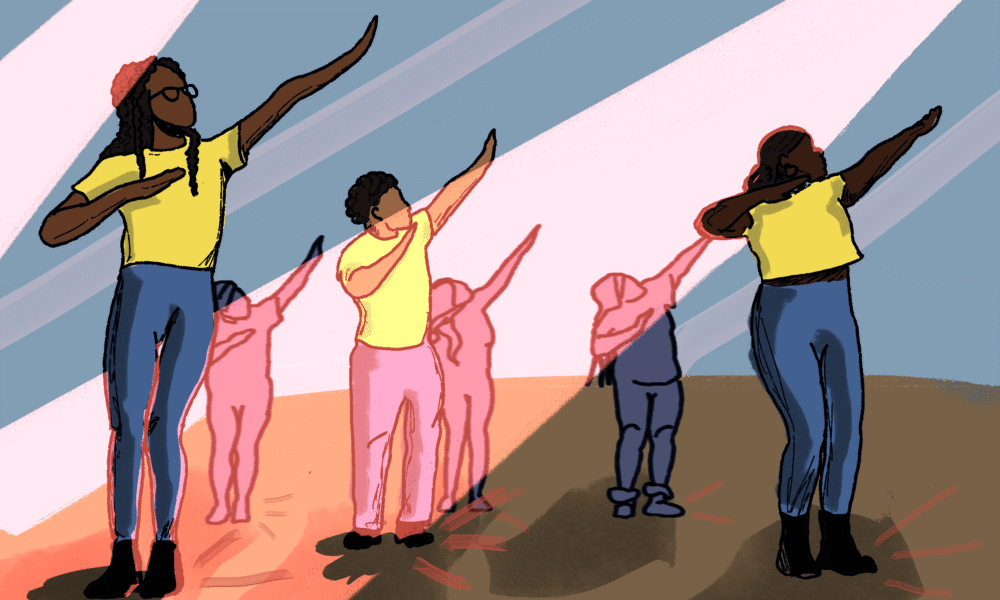
Body-based art forms have long served as forms of resistance in Black communities, and stepping is one of its most powerful expressions. It is a Black diasporic art form that uses clapping, stomping, body slapping, and vocalization to create rhythm and beats through movement.

The Montreal Steppers, a nonprofit organization founded in 2019, carry on this legacy by teaching stepping across Montreal and beyond. Kayin Queeley, founder and director, explained his motivation for creating the organization in an interview with The Tribune. 

“When I came to Montreal, I was surprised at how little […] awareness [there was] about stepping,” Queeley said.  “So what I thought of doing is creating different workshops that would marry learning step with learning […] elements of Black history, like how stepping started, what it was about, why it was important.”

Although many may be tempted to describe stepping as a dance, Queeley clarified that it is a distinct art form.

“Stepping is an art form because of its history, because of its lineages, because of its movement, because of its expansion, and […] because of those elements that bring together the new music, the sharing of sounds, the synchronization, […] [and] the polyrhythmic beats,” he said.

By shifting dialogues about Black culture and history, creating original productions, and collaborating with various communities, the organization does more than just teach step.

“We worked with close to 25,000 students across the province since we started. We’ve written original productions that centre Black life after slavery, and we do a lot of community collaborations,” Queely said. “We’re [also] working with seniors and adults and people who might have limited access and mobility, but to give them the sense that the body still has power.”

The Montreal Steppers offer introductory and advanced workshops, as well as courses in several schools, such as the National Theatre School of Canada. The group also shares stepping with college and university students through workshops and performances; they have staged productions all over Canada and have even gone on an exchange to South Africa. 

“We don’t compromise our workshops by just focusing on teaching step [….] We focus on what is critical to the work we do, [which] is making sure that people at least leave with the knowledge being presented to them,” Queeley explained. 

During performances, audiences are invited to try stepping movements. This collectivity of movement, sound, action, and momentum gives the art its meaning. 

“When we’re working together, moving at the same [time] in the same direction, there’s impact, and it gives nod and recognition to the art form of people mobilizing together to make a difference, because [Black people] came together to create this music to resist and to push back against narratives and beliefs that people held,” Queeley said.

The Montreal Steppers also honour Black history by honouring the cultural roots of stepping in each space they enter.

“We thank the ancestors in every space to say ‘thank you for creating this art form out of resistance that we get to share as performance, that we get to share as teaching, that we get to share as community,’” he shared. 

Queeley expressed that the organization also acknowledges the land and people present at each event.

“Once we’re in a space, we give acknowledgement to the land, recognition to the Indigenous Peoples […] the land, the music with it and the ground, and then the final acknowledgement is to the people.”

Beyond enjoyment, the Montreal Steppers hope that their workshops and performances help audiences learn or relearn new elements of Black history.

“It’s not just performance. It’s a ritual, it’s a practice, and that’s why we talk about it as ancestral, because it comes with that level of weight and influence and impact,” Queeley said. “It’s important that we celebrate it, and we don’t shy away from what is ours.”

Anyone interested in joining a stepping class or learning more about this art can reach out to the Montreal Steppers through their website and Instagram.

Commentary, Opinion

Sudine Riley’s case shows how systemic anti-Black racism shapes Canada’s justice system

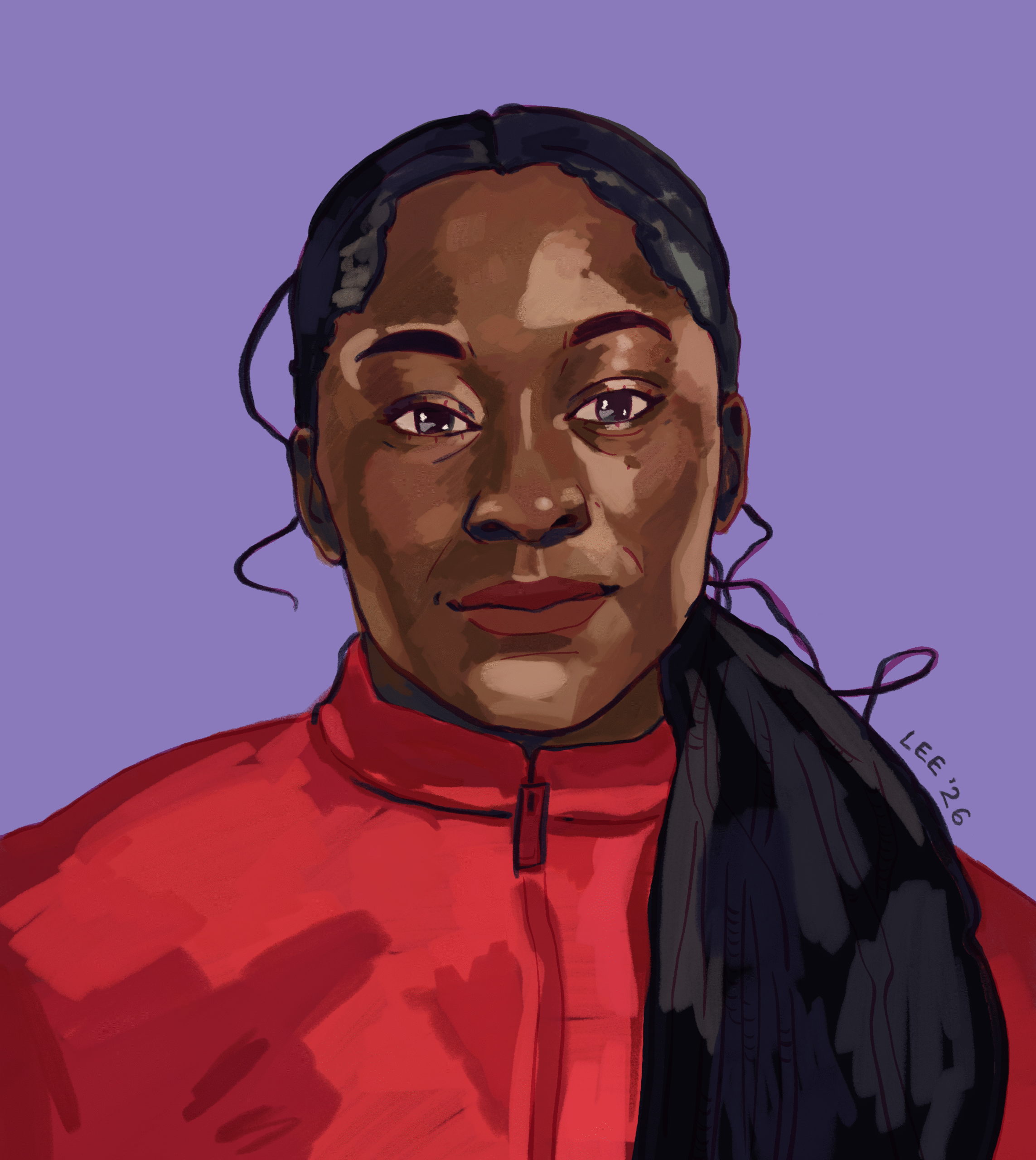
Ontario’s Special Investigations Unit (SIU) has declined to invoke its mandate in response to allegations that Sudine Riley, a Black criminal defence lawyer, was violently assaulted by Durham Regional Police officers inside the Oshawa courthouse. According to statements released through her counsel, Riley was questioned about her presence in an interview room after completing her court appearances, had her head slammed into a desk, and was dragged to courthouse cells. Riley has since been charged with violating the Trespass to Property Act, and the matter has been referred to York Regional Police for criminal investigation. 

While courts have historically been framed as neutral spaces conducive to procedural justice, the institutional response to Sudine Riley’s alleged assault demonstrates how anti-Blackness remains embedded within the Canadian legal authority. By employing restrictive thresholds to determine eligibility for investigation and rendering Black professionalism conditionally legitimate, oversight systems reproduce the very racial hierarchies they purport to regulate. 

Under Ontario’s Special Investigations Unit Act, the SIU maintains jurisdiction only in cases involving ‘serious injury,’ death, sexual assault, or the discharge of a firearm. According to the agency’s own criteria, ‘serious injury’ refers to harm likely to interfere with health or comfort that is neither transient nor trifling in nature, typically involving hospitalization or fractures. Oversight is contingent on these categorical thresholds.

However, data on policing in Ontario demonstrates that racialized harm often operates through discretionary force and suspicion that does not always culminate in catastrophic injury. The Ontario Human Rights Commission (OHRC) found that although Black residents comprised 8.8 per cent of Toronto’s population, they accounted for 28.8 per cent of arrests involving a single charge and 38.9 per cent of arrests involving ten or more charges. In police-involved shootings nationwide, officers kill Black people at disproportionate rates: Black people account for 8.7 per cent of those killed despite constituting only 4.3 per cent of Canada’s population. Because oversight is triggered by bureaucratically-designated and highly specific thresholds, many forms of racially biased policing fall outside the reach of jurisdiction for formal investigation, further determining which—and whose—injuries qualify for recognition, compromising mechanisms meant to ensure accountability and institutional reform. 

Research on systemic anti-Black racism in Canada demonstrates that professional status does not insulate Black individuals from suspicion. The OHRC’s inquiry into the Toronto Police Service concluded that race remains a significant predictor of police use of force even after accounting for age, gender, neighbourhood, and situational factors. In Quebec, a 2024 Quebec Superior Court ruling found that racial profiling is a systemic issue within the Service de police de la Ville de Montréal (SPVM) and held the City of Montreal liable in a $171 million CAD class-action lawsuit concerning discriminatory police stops. The decision affirmed that institutional practices, not merely individual ‘misconduct,’ produced discriminatory effects on Black and other racialized communities. 

Evidently, suspicion is institutional and not incidental. It manifests through discretionary stops, challenges to authority, and demands for verification that are disproportionately exercised against Black people. Black legal professionals are frequently mistaken for defendants or court clerks, asked to justify their presence in courthouses, or required to produce identification in ways their white counterparts are not. This dynamic, presumed illegitimacy of presence, persistently associates Blackness with deviance and criminality irrespective of role or status.

Canada, as a national entity, often touts its exceptionalism: The assumption that systemic racism and racialized police violence is an American problem, and that its justice system operates through neutral procedure. However, when its oversight mechanisms define harm so narrowly and its institutions view Black legitimacy as conditional, Canada cannot continue to assert its inherent ‘neutrality.’ If serious injury is the threshold for recognition, and suspicion remains discretionary, then the problem is undoubtedly structural. Accountability requires a framework that recognizes anti-Black harm before it escalates. Until then, Canadian exceptionalism obscures the fact that, in practice, neutrality remains a claim rather than a condition. 

Sudine Riley was not a bystander. She was a criminal defence lawyer doing her job inside a courthouse. Yet, this proximity did not insulate her from the racialized scrutiny and discretionary force documented across Canadian policing. Meaningful reform requires expanding accountability frameworks beyond individual incidents and confronting the systemic conditions that allow racial bias to persist.

McGill, News, Private

McGill community discusses anti-unionization efforts amidst $45 million CAD budget slash

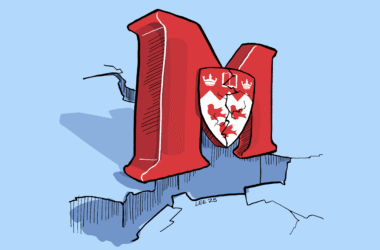
Following the Quebec government’s decision to maintain a tuition hike for out-of-province students, alongside McGill’s faculty and staff unionization efforts, the university is implementing a $45 million CAD budget cut for the 2025-2026 fiscal year (FY2025-26). This measure coincides with the administration’s intensified anti-union stance: McGill has spent over $1 million CAD in the past five years alone fighting unions. 

Despite having its own in-house legal counsel, McGill has retained an external legal counsel for negotiations with faculty unions. Documents obtained by The Rover indicate that Borden Ladner Gervais (BLG), the external law firm McGill employs in discussions with unions, costs the university approximately $400,000 CAD annually.

In an interview with The Tribune, Barry Eidlin, associate professor in the Department of Sociology and second vice-president (VP) of the Association of McGill Professors of the Faculty of Arts (AMPFA), explained that McGill’s retention of BLG sends a strong signal to the faculty unions at the bargaining table.  

“This [legal] counsel suggests that they are taking a very hard-nosed approach,” Eidlin said. “The reason that they’re going to outside counsel is precisely because they want the special expertise in avoidance. Or at least, if not avoidance, mitigation.”  

McGill’s decision to hire BLG, who has previously been involved in other major labour disputes, has prompted criticism from some faculty representatives, including Jonathan Nehme, president of the Association of McGill University Support Employees (AMUSE). 

“That decision is well-reflective of the way McGill acts as an employer,” Nehme explained in an interview with The Tribune. “Their representatives are very hostile to unionization efforts and actively act against union members being made aware of the fact that their union exists. McGill hiring professional mercenary union busters fits with that.”  

In a written statement to The Tribune, McGill’s Media Relations Office (MRO) maintained that the university is open to negotiation. 

“The legal fees incurred by McGill for labour relation matters are related to various files,” the MRO wrote. “McGill welcomes discussions with all its association and union partners and appreciates the time they dedicate to negotiating. We firmly believe that the best agreements are reached at the bargaining table.” 

Retaining external legal counsel during a period of budgetary reductions has drawn scrutiny from some faculty representatives, who have questioned whether academic cuts are occurring alongside sustained legal expenditures. The McGill Association of University Teachers (MAUT) President Steve Jordan and President-Elect Reghan James Hill have filed an access to information and privacy (ATIP) request regarding the university’s expenditures.  

“In 2026, I would encourage the Vice-President (Administration and Finance) to disclose the amounts McGill University has paid to other law firms in connection with this matter,” wrote Jordan and James Hill in a joint statement to The Tribune. “The lack of transparency also raises legitimate questions about how much the university might spend each year on litigation aimed at preventing or impeding reasonable [ATIP] requests.”

Eidlin argued that these developments reflect what he describes as a broader corporatization of the university.  

“With the change and structure of the university toward this more corporate model, it became increasingly clear that you had this administrative layer that had developed into a separate form, separate from the faculty and the rest of the university,” said Eidlin.

Eidlin also highlighted that administrative roles have become professionalized career tracks rather than temporary service roles undertaken by faculty, likening the process to “the academic version of climbing the corporate ladder.” 

Nehme emphasized some of the university’s choices that push this corporate image.

“The way [the university has been] restructuring [its] budget, the way they treat labour disputes et cetera, to even the fact that they renamed the Principal to President is extremely characteristic of McGill choosing to move forward with running itself as a for-profit corporation instead of a public academic institution,” Nehme said.

In the Department of Sociology, Eidlin mentioned that the number of faculty members has declined by approximately 40 per cent over the past decade. Graduate student representatives describe similar pressures. Dallas Jokic, president of the Association of Graduate Students Employed at McGill (AGSEM), said that 21 per cent of teaching assistant (TA) positions in the Department of English were cut between Fall 2024 and Fall 2025. Eidlin suggested that the upper administration has split off from the rest of the university. 

“It is like this bifurcation where the segment of the university is not experiencing austerity,” he said.  

Jokic also pointed out that cuts to TA hours degrade the quality of education at McGill. 

“Cuts tend to make professors turn away from qualitative learning and assessments and towards those which are easier to grade,” Jokic said. “That means less personalized feedback on essays and more multiple-choice tests.”  

Faculty representatives also pointed to a widening pay gap between academic staff and senior administration. A report by the Association of McGill Professors of Science (AMPS) found that expenditures on director and manager salaries from operating funds increased by 118 per cent over the past decade, adjusted for inflation. Contrastingly, the salary mass for full-time academic staff rose by six per cent. 

“Professors’ salaries are not keeping pace with inflation, even when professors’ performance evaluations are formally rated as exceptional,” noted Jordan and James Hill. “These concerns have led MAUT, for the first time in its history, to formally reject the administration’s proposed (2026) salary policy.”

Eidlin and Jokic both emphasized that the growing administrative share of operating funds signals a shift from collegial governance toward more centralized, managerial modes. In a written statement to The Tribune, MAUT revealed that it is currently conducting a survey which suggests that concerns about centralization are widespread among academic staff.

“A recurring theme among academic staff was concern about what our members describe as increasing centralization or decision-making and, in some cases, shifts toward managerial or corporate modes of governance.”

These concerns have coincided with unionization efforts across McGill’s faculties. The Association of McGill Professors of Law (AMPL) received union certification in late 2022. AMPFA and the Association of McGill Professors of Education (AMPE) followed. In 2024, AMPL voted to strike in August, going into the start of the fall semester. Days before the vote, McGill Provost Christopher Manfredi and VP Administration & Finance Fabrice Labeau sent emails to AMPL members addressing the potential strike. Later that year, the Tribunal administratif du travail found that McGill had violated the Quebec Labour Code by interfering in the unionization process. Global News reported that the university defended its actions by insisting that it had followed all procedures. 

The disparity between fiscal restraint and administrative growth has intensified scrutiny over how authority and resources are distributed within the university. For representatives of faculty unions, unionization is a mechanism to formalize bargaining power. For the administration, it remains part of routine labour relations within a complex financial environment. Eidlin highlighted this as the most complex part of labour matters. 

“One of the things that I’ve spent a lot of my time as a labour researcher, getting my head around, is the degree to which employers attach an extremely high value to retaining control of the workplace,” Eidlin concluded. “It is a very high price that they are willing to pay. I think that’s also part of the dynamic that we’re seeing here, is what premium management places on retaining control of the workplace.”

Campus Spotlight, Student Life

Queer McGill’s second annual Black History Month event fosters solidarity and community

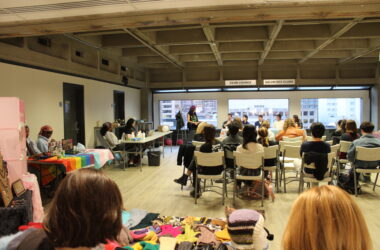
On the evening of Feb. 18, Queer McGill hosted its second annual Black History Month event, featuring students, panellists, and representatives from various McGill organizations, centred on the celebration of intersectionality between queer and Black communities on campus. 

In an interview with The Tribune, Queer McGill member Al Derviseric, U3 Arts, shared some of the initiatives and core values of the club, highlighting its important work in providing resources such as gender-affirming care, safe sex supplies, education, and outreach to McGill’s queer community. 

“Queer McGill is a student service for the queer student body,” Derviseric said. “We have resources that are free or pay-what-you-can. For Black History Month, this is our second annual attempt at a panel. The goal tonight is to reach out to all sections of our queer student body.”

Derviseric stressed the importance of solidarity, intersectionality, and representation— three themes that guided the event’s agenda

“In the panel, the idea was to highlight Black voices in our community and also to have the vendors and the panellists to talk about or sell what they do, and just to highlight some community members from the queer community. I think solidarity between all groups at the margins of society is very important. It is very important that we stand up for each other, and it’s important to achieve collectivity and collective resistance,” Derviseric said.

Organizers and attendees also emphasized the importance of creating a safe, accepting, and intellectually stimulating space for queer and Black students to come together. Miah Dionne, a M.A. student in Education and Society at McGill, expressed the importance of bringing marginalized groups together to learn from and celebrate one another. 

Dionne is involved in various anti-Black racism initiatives at McGill, including the Black Student Liaison and the Branches Program for Black learners. She is also the leader of Black Students for Youth, a mentor program designed to offer a network of support systems for Black students designing their educational paths. She highlighted the value of the event in creating a space of collaboration and education for queer and Black students. 

“Having the space to speak with folks is always revolutionary,” Dionne said. “We can exchange ideas, especially as someone who talks a lot about Blackness, but also learning about queerness and how being on those margins and being able to find solidarity with each other is something that is very powerful.”

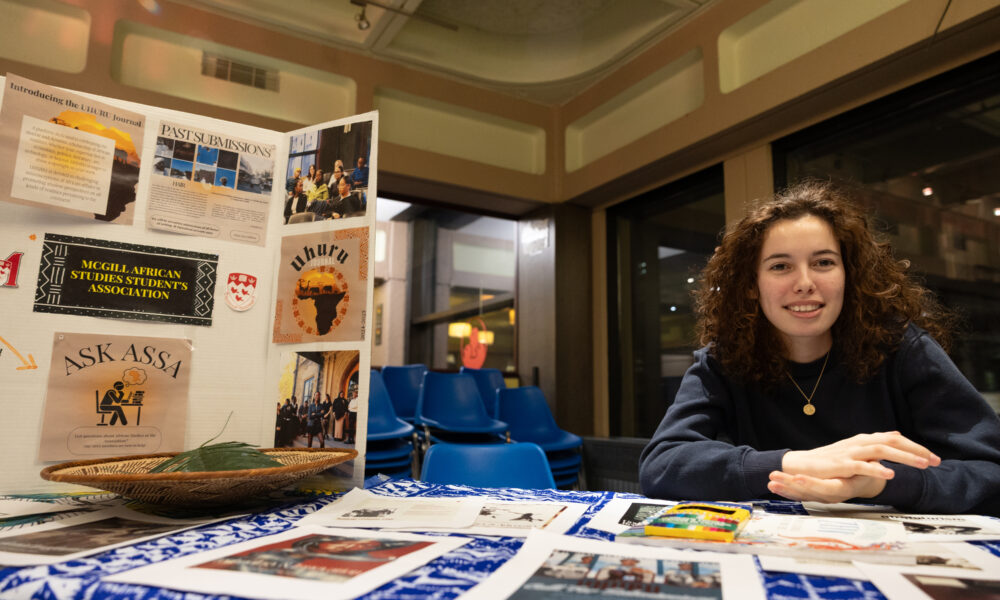
Matahilde Martial-Oger, U2 Arts, represented UHURU, the African Studies journal at McGill. Martial-Oger is a junior editor on the journal and articulated the publication’s vital role in creating an academic space for innovation and creativity surrounding diasporic African culture, politics and society. 

“What we want to do is give a space for McGill students, but also people in the world because we are not just restricted to university students and certainly not to Canada […] to empower them to speak their stories, to bring an analytical and artistic personal perspective on the various topics that they want.”

Martial-Oger stressed UHURU’s vital role in fostering increased student scholarship and engagement with African Studies, pointing out its marginalized position as a field of study at McGill. 

“We want to give a place to a topic that is often neglected. If we even consider the fact that African Studies is part of the Islamic Studies [department] at McGill, it speaks to that issue,” Martial-Oger said.

UHURU’s upcoming issue is focused thematically on Afrofuturism, which Martial-Oger described as a unique and forward-looking lens through which African Studies can be engaged. 

“Afrofuturism is a cultural, artistic, and political movement that seeks to reimagine, reconsider, reframe African history, cultural movements, and future through a more futuristic lens, a more optimistic one as well,” Martial-Oger said. “It kind of reaches into science fiction, it has its own look that is very bold, it stands out, mixing tradition with also a futuristic sense.”

By showcasing intersectionality and solidarity between Black and 2SLQBTQIA+ students on campus, the event reaffirmed that true inclusion rests in shared learning and mutual empowerment—a vision that Queer McGill and its collaborators continue to bring to their events.

Interested students can visit Queer McGill’s Facebook and Instagram to learn more. UHURU is currently accepting submissions for their upcoming issue. More information about the journal can be found on their website.

Science & Technology

Take the Tribune’s Science and Technology quiz

Montreal is often nicknamed the “Underground City” due to its large pedestrian subway network. How many kilometres does this network run?

  1. 33 km
  2. 55 km
  3. 23 km
  4. 47 km

Which McGill professors discovered the chemical element radon in 1899?

  1. John J. M. Bergeron and Ernest Rutherford
  2. Rudolph Marcus and Otto Mass
  3. John S. Foster and William Osler
  4. Ernest Rutherfold and Robert B. Owens

Annie L. Macleod was the first woman to earn a PhD at McGill. In which department did she complete her PhD in 1910?

  1. Genetics
  2. Chemistry
  3. Immunology
  4. Neuroscience

In what McGill faculty did Leonard Cohen, legendary Montreal poet and lyricist, enroll for a single semester after completing his undergraduate English literature program at McGill?

  1. Science
  2. Arts
  3. Law
  4. Schulich School of Music

In what year did Dr. Wilder Penfield found the Montreal Neurological Institute?

  1. 1912
  2. 1934
  3. 1955
  4. 1898

Which dinosaur species at 8 meters in length captivates the entrance of the Redpath museum?

  1. Tyrannosaurus
  2. Hadrosaurus
  3. Gorgosaurus
  4. Megalosaurus

In what McGill building can you find the Facility for Electron Microscopy Research (FEMR), dedicated to advanced electron microscopy—one of the most cutting-edge electron microscopes of the modern era?

  1. Duff Medical Building
  2. Maass Chemistry Building
  3. McIntyre Medical Building
  4. Strathcona Anatomy and Dentistry Building

Which of the following is an ecosystem not represented in Montreal’s Biodome?

  1. Temperate Grasslands
  2. Laurentian Maple Forest
  3. Sub-Antarctic Islands
  4. Tropical rainforest 

Answers:

a) 33 km
d) Ernest Rutherfold and Robert B. Owens
b) Chemistry
c) Law
b) 1934
c) Gorgosaurus
d) Strathcona Anatomy and Dentistry Building
a) Temperate Grasslands

Cross-Country / Track, Sports

McGill track and field shines at RSEQ Indoor Championships

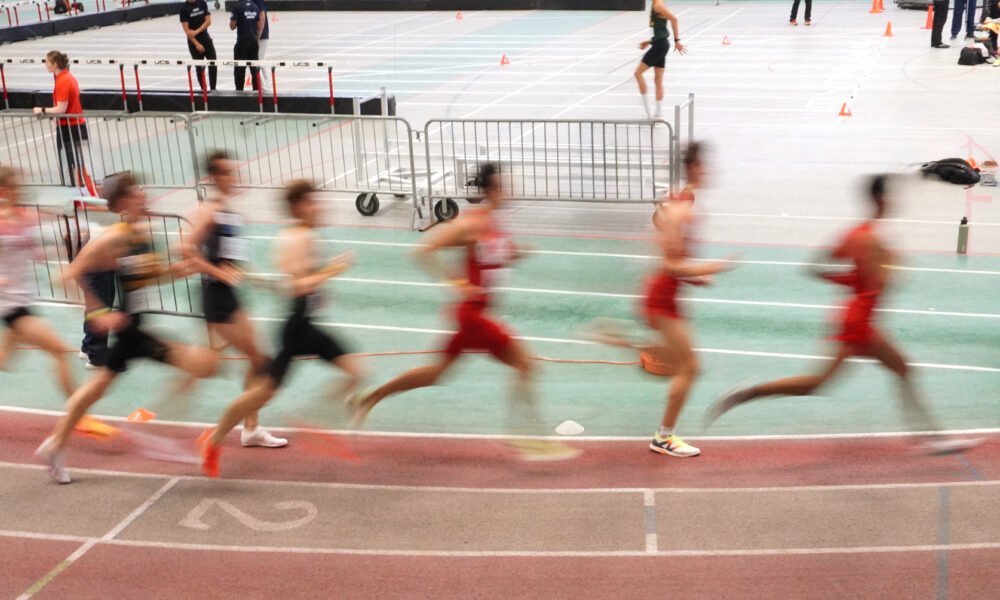
Athletes from 11 universities competed at the Réseau du sport étudiant du Québec (RSEQ) Indoor Track and Field Championship meet on Feb. 20 and 21. Hosted at McGill’s Tomlinson Fieldhouse, the meet featured 82 McGill athletes with impressive results from both the Redbirds and the Martlets

As the final home meet at McGill, the RSEQ championship carries more than results and standings. It represents the last time the McGill track and field team will ever compete on home soil, and the final meet the 125-year-old program will ever host. For athletes, the RSEQ championship also serves as a qualifying event for the U SPORTS National Championships. Athletes who placed first in their event, produced a result ranked in the top 12 nationally, or reached the U SPORTS Qualifying Standard will represent their university in Winnipeg from March 5 to March 7.

Despite McGill Athletics’  decision to cut the program, the team has had one of its best seasons yet. At the Martlets Open on Nov. 29, the Men’s and Women’s teams placed first and second, respectively, out of 19 teams, breaking several school records along the way. However, the team faced some unexpected challenges over the past weekend. The 4×200 Men’s Relay was disqualified due to improper baton passes after breaking the school’s record for the second time this season.

Head Coach Dennis Barrett started coaching McGill Track and Field in 1986. In an interview with The Tribune, he discussed the expectations entering the meet.

“We’ve been doing quite well,” Coach Barrett said. “We want to make sure we’re competing at a very high level in terms of our athletes and our team being competitive to be in the hunt [for champions at the] RSEQ championships.”

William Sanders, U1 Engineering and member of the 4×200 team, explained to The Tribune his emotions after the disqualification.

“It’s unfortunate because we ran a great time,” Sanders said. “But we’re still going to Nationals, and we just put up the best time in the country. So I think we know what we’re going to do, and everybody else does too.”

Sanders also competed in the 600-metre, 300-metre, and 4×400-metre events, placing third in the 600 and winning both the 300 and 4×400-metre races. In the 300-metre dash, Sanders clocked 34.03 seconds, breaking the school record that was last set by his teammate Luca Nicoletti, U3 Engineering, at the Martlets Open.

“I’m super happy with that one,” Sanders explained. “Before the race, [Nicoletti and I] said that the only good outcome was that we both make it to nationals. We went out there and dragged each other to our personal bests.”

Nicoletti believes that this is the strongest the team has ever been.

“I would say this is our glory year of track, and it’s the best I’ve seen this program,” Nicoletti said.

 Determination carried the team throughout the season. With the men’s team placing second and the women’s team placing third, and capturing five golds combined, the track and field team has seen success across the board, from the men’s squads to the women’s, and from the racetrack to the field events. 

Rebecca Warcholak, U2 Science, is one of the captains of the McGill track and field team. She placed first in the triple jump event with a mark of 11.68 metres. In an interview with The Tribune, she reflected on how McGill Athletics’ decision has motivated her to elevate her performance.

“Standing on the runway competing yesterday and today, I was definitely trying to fuel myself with all the anger and the emotions that were present this entire season and just making sure I don’t have any regrets,” Warcholak said.

Sanders and Nicoletti also shared similar sentiments, describing how the decision has impacted them.

“I’m thinking about this decision while I’m on the starting line,” Sanders said. “At nationals, I want to show the country what a horrible mistake [McGill Athletics] made.”

“I love my school, but I’m very disappointed in my athletics department,” Nicoletti said. “We have a lot of promise. There are a lot of young guys who will have a shot at the Olympics, and this could be ruining their dreams.”

Barrett, however, emphasized the importance of staying in the present moment.

“One of the things that sports has taught me is that you’ve got to focus on the here and now, and tomorrow will take care of itself. You focus on now, keep battling, and hope you can get a reversal of fortune going forward.”

Despite the uncertainty, the team hopes to carry the words of their head coach at the U Sports Championships, where they will represent McGill and strive to achieve new heights one last time.

Science & Technology

McGill Biodesign pushes the boundaries of competitive bioengineering and peer collaboration

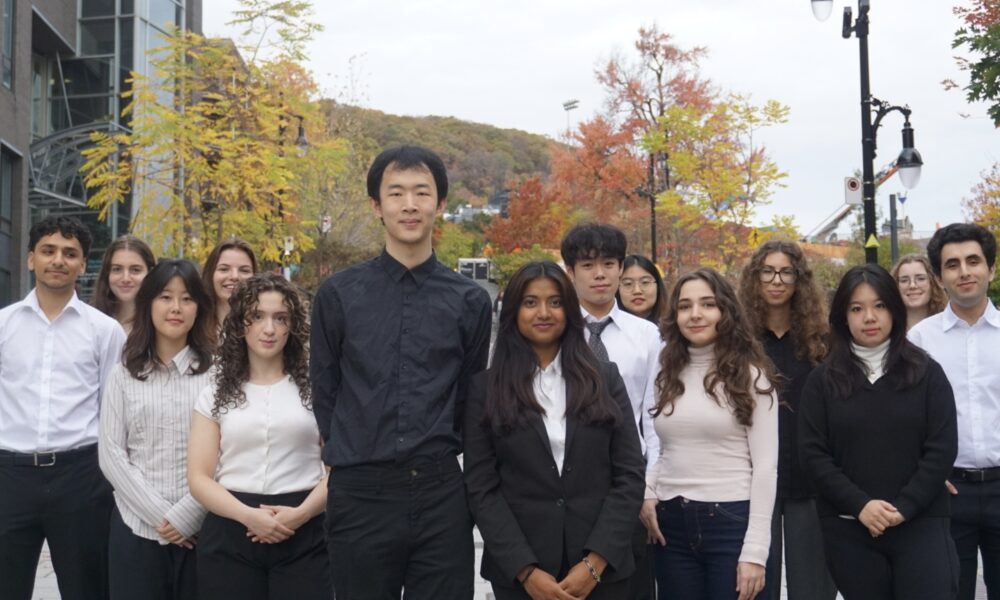
McGill BioDesign is one of McGill University’s premier bioengineering design teams. Based on engineering design practices, the team tackles an array of projects in medtech and sustainability, affording students the opportunity to collaborate in research laboratories across campus and compete internationally. For many, McGill BioDesign provides a unique learning environment outside of traditional coursework.

In an interview with The Tribune, project lead and U3 Faculty of Science student Siqi Mi—who joined McGill BioDesign as a research member and currently serves as Team Lead for the SensUs project—praised the team’s open-minded ethos and push to pursue individual interests.

“For me, BioDesign is a place [where] you can implement your thoughts,” Mi said. “When you feel like there’s a problem outside […] you can just come in and bring it up, and people will do the research and implement it into a protocol.”

Each year, McGill BioDesign runs approximately five projects, with teams of roughly 15 to 25 members. Projects begin with an ideation phase, followed by a literature review and protocol designs. Teams often start by replicating methods described in previous research before modifying them to meet specific project goals. 

“We definitely follow the path of what the previous paper has done […], and oftentimes we will add our new stuff in it to improve for certain goals,” Mi explained.

A distinctive feature of BioDesign lies in its internal structure. Similar to the scientific industry, projects at BioDesign are divided into research and translational potential groups. The research group handles experiment ideation, laboratory testing, and result optimization for competition. The translational potential group focuses on the projects’ real-world applications, consulting with industry professionals and collaborating with the research team on commercial aspects. The two groups meet weekly to update one another on progress and constraints.

In addition to developing practical skills, BioDesign allows its members to see how research unfolds outside a classroom setting. 

“Oftentimes, research fails. You go into lab, and whatever you make doesn’t work,” said Alan Fu, BioDesign’s Co-President and a U3 student in the Faculty of Engineering, in an interview with The Tribune. “But you slowly iterate, you slowly improve, and finally achieving something that gets some nice results is quite satisfactory.”

BioDesign also emphasizes global exposure. Each year, the team sends projects to international competitions, including the SensUs competition in the Netherlands and the BioDesign Challenge in New York City. SensUs is a biosensor competition that provides teams with a specific challenge; one recent prompt involved developing a monitoring system for levodopa, a medication used as a dopamine replacement in Parkinson’s patients. In addition to international events, BioDesign participates in local competitions such as the TechIdea Pitch Competition, where the team recently placed third.

On campus, BioDesign hosts the Biocase competition, inviting undergraduate teams to design solutions to bioengineering-related dilemmas over the course of a weekend. According to organizers, hosting Biocase serves as a way for BioDesign to give back to the student competition community.

Beyond research and competition, members consistently praise the club’s sense of community. Students come from a range of academic backgrounds, which allows projects to benefit from different perspectives. Fu noted that the club fosters close friendships through shared lab work and team social events. 

“I joined BioDesign in my first year, and that was when I met some of my closest friends from university,” Fu recalled.

Over the past four years, BioDesign has grown from approximately 40 members and around two projects to more than 100 members across five projects. Certain initiatives continue for longer than an academic year, and one team is currently in the peer-review process for publication through Cambridge University Press.

For students interested in applied science and design, BioDesign offers a clear pathway into hands-on research. 

“Getting involved in a design team is a really amazing way to get actual hands-on experience on what industry or research might actually look like,” Fu said. 

Interested students should note that recruitment for research roles typically occurs in the fall, while executive positions open later in the academic year.

Arts & Entertainment, Books, Culture

A rat who betrayed a cat, a benevolent dragon, and a pig who stopped for a snack

Folk tales and legends are forms of art that permeate our lives and pass on wisdom across generations. Few embody this as vividly as the Chinese zodiac, which continues to influence centuries after its origins. The shengxiao, or Chinese zodiac, are the 12 animals that represent each year in the Chinese lunar calendar, or yin-yang li—also known as “heaven-earth.” Each animal has a distinct personality with character traits, lucky signs, and compatibility. On Chinese New Year, which typically begins between Jan. 21 and Feb. 20 on the Gregorian calendar, the cycle changes to the next animal in the zodiac. This year, the celebration begins on Feb. 17 and ends March 3, marking 2026 as the year of the fire horse. Chinese astrology places one of the five elements in rotation with the zodiac in a 60-year cycle. The elements—wood, fire, earth, metal, and water—interact with the animals to create a unique projection for each year.

It is believed that the zodiac emerged from a legendary race between all the animals; however, sources disagree on its historical origin. Some trace it back to the Warring States period (475-221 BCE), others to the Qin dynasty (221-207 BCE), and some to the Han dynasty (206 BCE-220 CE). Over time, the Chinese zodiac evolved into a shifting piece of culture, guiding how people interpret the future and providing insight into the personality and fortune of each upcoming year.

The Story of the Chinese Zodiac

Centuries ago, the Jade Emperor, the most revered of the Daoist deities, wished to help his people measure time by giving them a proper calendar: The zodiac. Hoping to name each year after a different animal, he asked them all to partake in a swimming race where the first twelve to cross the river to his palace would be named the zodiac. Legend has it that the story begins with the rat betraying the cat and the kinship they once shared. 

Although contested, one version of the tale recounts how the two animals, the closest of companions, were horrified by the setting of the race, as neither could swim particularly well. They decided to ask the ox if he would kindly offer them a ride on his back. The rat, blinded by ambition, wished to be first in the calendar and mused that the ox would swim faster without the cat on his back. So, he pushed his friend into the swirling waters. Thus, there is no cat in the zodiac calendar. Some even claim this to be the origin of the two species’ longstanding animosity. 

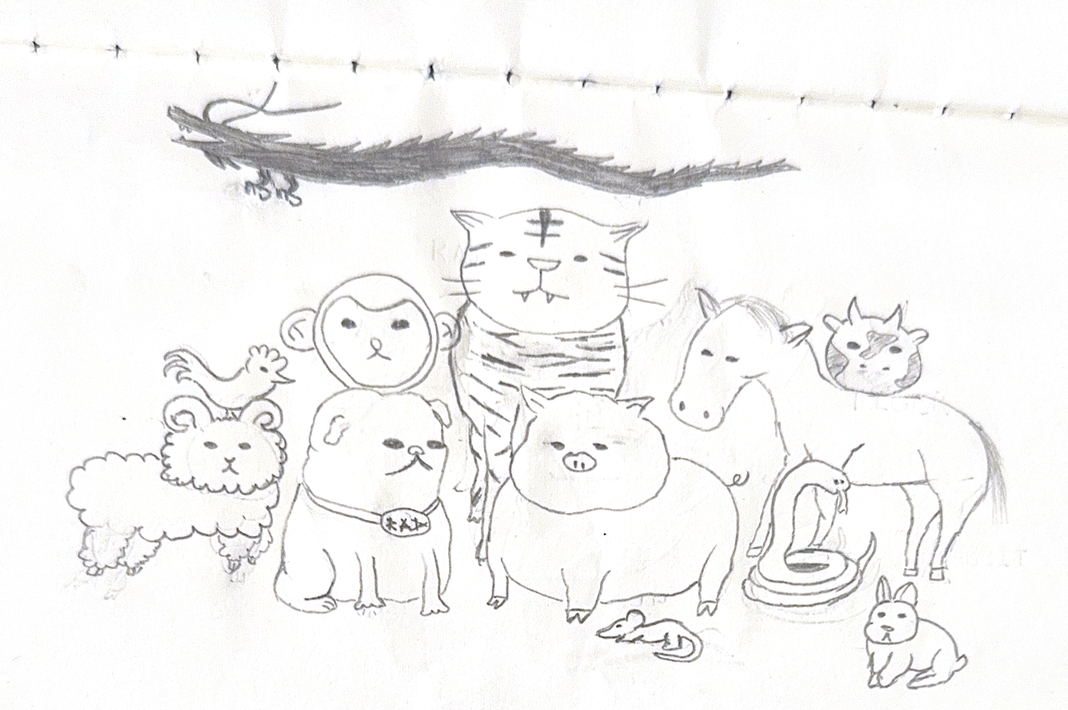
However, many agree on the rest of the tale. Each of the remaining animals ventured on their own journey to reach the Emperor. After the rat finished first, the ox lumbered after him, honour still intact. The tiger came third, easily braving the river. The resourceful rabbit hopped across by way of stones, but reached an impasse and was unable to go any further until a log blew his way. To his surprise, the log carried him to the Emperor’s palace over the distance remaining. The dragon arrived fifth, much to the Emperor’s bewilderment—the dragon revealed that he had stopped to provide rain to a drought-ridden town, and then had blown the log across for the stranded rabbit. The horse and the snake ran neck and neck, but the snake spooked the horse and underhandedly secured sixth place. The rooster, monkey, and goat came next, having built a makeshift raft which pleased the Emperor. As a result, he deemed the goat eighth, the monkey ninth, and the rooster tenth. The languorous dog came eleventh, after he had whittled away his time luxuriating in the river’s cool water. Finally, the pig came last, having paused for breakfast, lunch, dinner, and a nap. 

Each year, the order of the animals reminds us to be mindful of our thoughts, the way we treat others, and the way we carry ourselves throughout the year. This centuries-old tale is ever-influential today.  

McGill, News, SSMU, The Tribune Explains

The Tribune Explains: SSMU Special Plebiscite on constitutional reform

From Feb. 16 to Feb. 19, students voted in a Special Plebiscite concerning proposed amendments to the Constitution of the Students’ Society of McGill University (SSMU). The vote was intended to gather feedback from students ahead of a Special Referendum later this semester, when the constitutional changes may be adopted. 

According to certified results processed by Simply Voting, 1,482 students cast ballots, representing 6.2 per cent of 23,957 eligible voters.

The Tribune explains what the plebiscite asked, what the results were, and what happens next.

How is a plebiscite different from a referendum?

A plebiscite gathers student opinion but does not itself amend governing documents. In contrast, a referendum is binding and can formally change the Constitution if it meets quorum. The results of the Special Plebiscite may influence what appears on the Special Referendum ballot later this semester, but they do not mandate any specific revisions be made to the proposal.

Why was this plebiscite held?

While the vote itself will not amend the constitution, SSMU held the vote to consult the student body on potential changes before bringing them forward to the referendum. 

The results of the plebiscite will help inform proposed amendments to the SSMU Constitution before a separate vote later this term. Students were able to consult a separate document outlining the full proposed amendments before voting.

Because changes to the constitution affect how SSMU governs itself, this preliminary vote served as an opportunity for students to voice their opinions on the current SSMU governance system before binding changes are made.

What was on the ballot?

The plebiscite included three questions related to governance and constitutional reform. First, it asked which of the Board of Directors (BoD), Legislative Council (LC), or Executive Committee should serve as SSMU’s highest governing authority. This question concerned SSMU’s inner hierarchy and which body should hold the most decision-making power within the organization.

A majority of participating voters selected the LC, which received 586 votes, or 51.1 per cent of ballots cast on the question. The BoD received 440 votes (38.4 per cent), while the Executive Committee received 121 votes (10.5 per cent). There were 335 abstentions on this question, representing 22.6 per cent of participants.

The next question on the ballot asked voters to rank their preferred quorum threshold for a student strike from the following options: 50 per cent, 40 per cent, 30 per cent, 20 per cent, or 15 per cent of the student body. Quorum determines the minimum level of student participation required for a strike vote to be valid. Thus, changing this threshold would significantly affect how student strikes are ratified. 

Based on the ranked ballot points system, the 20 per cent quorum option received the highest number of points (4,114), followed closely by the 30 per cent option (4,050). 

The 15 per cent option received 3,786 points, the 40 per cent option received 3,529 points, and the 50 per cent option received 2,998 points. There were 172 abstentions on this question, representing 11.6 per cent of voters.

The final question on the ballot was a call for open feedback on constitutional reform, allowing students to directly voice their opinions on changes to SSMU’s legislature.

What happens next?

The results of the plebiscite will be considered as constitutional reform proposals move forward. Students will have the opportunity to vote again when the amendments are presented in a Special Referendum.

Although turnout was relatively low at 6.2 per cent, the plebiscite offers a view of student opinion on key governance questions. The upcoming Special Referendum will ultimately determine whether these preferences influence constitutional change.

Read the latest issue

Read the latest issue