


Latest News

Student Life, Word on the Y

Oh the places we’ll go!

Summer is nearing, and with it come those mid-lecture daydreams of travel. For some, visions of an idyllic European getaway dance through their heads. For others, bucket list travel may look like an adventurous road trip or a rugged hiking adventure through some of Canada’s national parks. Where do McGill students dream of travelling? The Tribune talked to some students to learn more about some of their bucket list travel spots. 

“I’d really like to go back to Indonesia. A couple of years ago, my family and I went to Bali, and I really enjoyed it. So it would be fun to go back and do that again or see some other areas with friends or with my sister [….] I’ve never been to other eastern Asian cities. I think a place like Tokyo or somewhere like that could be fun. But there’s so much out there; it’s hard to pick!” – Zola Campisi, U1 Science

“I think it would be really cool to go to Newfoundland and do some camping trips in some of the parks there. I really like hiking, backpacking, canoeing, and that kind of thing.” – Liam Foese, U2 Arts

“I would love to travel and spend a couple of weeks in South America and visit Colombia, Argentina, Ecuador, and Brazil. The coastlines and landscape there seem beautiful and there’s a lot of history and ancient ruins I would love to explore. I plan to spend a semester in Colombia next year to learn Spanish and continue to learn more about South America! I think it would also be cool to visit more of South and South Eastern Asia at some point. Those cultures are also super interesting and I’m a geography minor, so the new master-planned cities interest me.” – Sonali Cowieson, U2 Arts and Science

“I would really like to visit my cousin in Tokyo, see the cherry blossoms during the day [….] At night, my cousin promised he’d take me to his favourite bars and to the karaoke bar Scarlett Johansson and Bill Murray sing at in the movie, Lost in Translation.” – Emilia Oliver, U2 Science

“My bucket list travel plans would be to visit countries in Southeast Asia. In the past, I feel like I’ve only ever really travelled to countries that have very Western cultures, so I want to get the chance to see something different. It might sound stupid, but in particular, I really want to visit Cambodia because I really like the food there!” – Iona Wyper, U3 Science

“One of my bucket list trips right now would be hiking the mountains in Peru and Argentina just because I’ve seen so many pretty photos and astrophotography photos from trails up in this area. I would also like to visit this park in Northern Canada called Auyuittuq National Park which is only accessible by boat for part of the year and requires guides to protect you from the polar bears. I saw the mountains while I was flying over the Park and it looked insane, so it’s an eventual goal to go there. These places are fairly remote and hard to find, but in the shorter term, I’d love to go visit Churchill which is the polar bear capital of the world and do some backpacking in the mountains in Norway. I really like travelling to get to see new parts of the world that you can’t really see anywhere else and I really love hiking, the mountains, and the ocean.” – Tristan Stevens, U3 Science


Arts & Entertainment, Film and TV, Pop Rhetoric

It’s time to give complex women characters leading roles

In a recent interview with The New Yorker, acclaimed director Sofia Coppola argued that Apple TV+ executives slashed her latest project after finding the woman lead “unlikeable.” Known for her work on films such as The Virgin Suicides, Marie Antoinette, and most recently Priscilla, Coppola was set to partner with the streaming service to create a limited series based on Edith Wharton’s novel The Custom of the Country starring Florence Pugh. According to Coppola, “the idea of an unlikeable woman wasn’t [the Apple executives’] thing.” While complex women characters have been around for ages, the idea of them in a lead role is often critiqued much more than roles for men of similar “complex calibre.” Coppola herself even admits to the interviewers that, while her leading character is “unlikeable,” “so is Tony Soprano!” Her words highlight the misogynistic hypocrisy that is deeply embedded in the entertainment industry. 

In television, audiences often enjoy watching a character that is unlikeable or complex, especially as these individuals are generally easier to relate to than flawless characters.

While some of the highest-rated and most critically acclaimed shows ever feature an unlikeable lead, these characters are overwhelmingly men: Walter White of Breaking Bad, Tony Soprano of The Sopranos, and, more recently, Kendall and Roman Roy of Succession. Part of what I enjoy most about a show is watching a protagonist whom I know I should really hate but still find myself rooting for in the end. 

The cancellation of Coppola’s project reinvites debates over why complex women characters are so widely disliked in television, especially in comparison to their counterparts. In all three of the aforementioned shows, the woman lead is consistently disliked by audiences; Breaking Bad’s Skyler White is arguably one of the most hated female characters in television history. When looking back at the show, it’s hard for me to remember what I actually disliked about Skyler while watching. Did I grow to find her annoying because everyone who has seen the show constantly emphasizes their dislike of her, or did I dislike her too? With Skyler’s role being so well-written, why did viewers despise Skyler—and Gunn’s portrayal of Skyler—yet seem to love Walt? The obvious answer is internalized misogyny. While complex male characters like Walt are considered heroes, especially due to his justification of his actions by “providing for his family,” women complex characters who do the same thing—Skyler, trying to protect her family from Walt’s evil—are considered hypocrites. I’m sure if some people rewatched the show, they would hate Walt as much as one should—as many of his actions are despicable—and perhaps recognize Skyler as the voice of reason that she was meant to be. 

Unfortunately, these double standards are not exclusive to Breaking Bad. Perhaps almost as disliked as Skyler is Shiv Roy in Succession—the only daughter in the HBO family drama. Shiv is not as disliked as Skyler, but many view her as the worst sibling on the show. Many view her as unlikeable due to her conniving and almost “evil” nature, but it is important to view her actions as doing what is necessary to succeed as the only daughter in the family. 

Going back to Coppola’s show, the cancellation is disappointing not only because audiences are missing out on the potent combination of Coppola’s directorial talents and Pugh’s ability to play a diverse range of roles wide but also because there is a need for more complex women characters in leading and better-written roles. Maybe Apple TV+ didn’t want to take the risk, but some production company at some point in time will have to—TV needs to have a complex woman lead for viewers to resonate with. The trend of complex women characters being labelled “unlikeable” while their male counterparts are applauded needs to end. After all, how can viewers ever be expected to like one if they’re never given the chance?

Science & Technology

McGill’s Undergraduate Poster Showcase celebrates star students’ scientific research

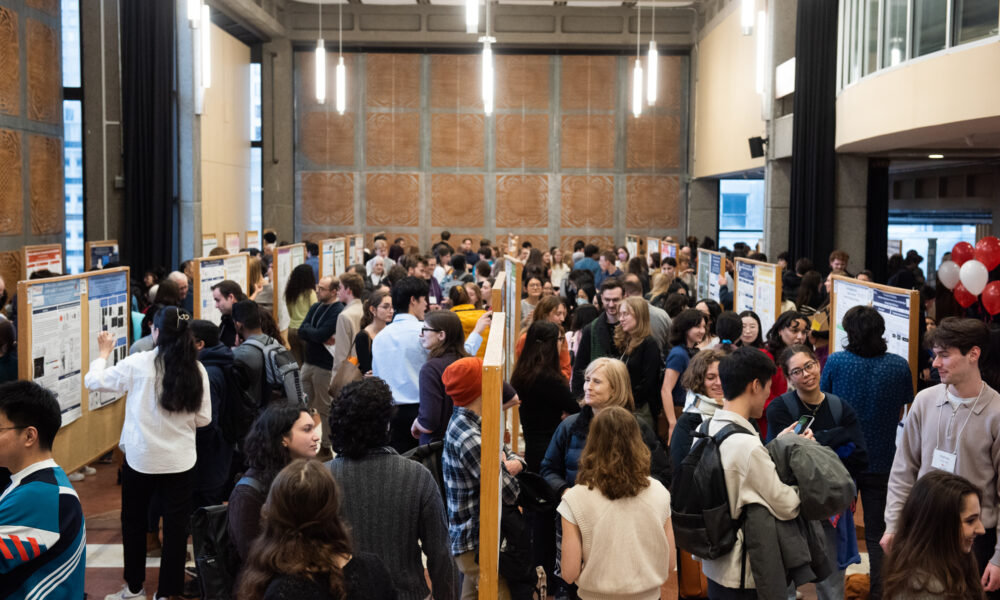
On March 19, McGill’s Office of Science Education hosted its fifth annual Undergraduate Poster Showcase in the University Centre Ballroom, providing students with an opportunity to share their research, passion projects, and in-class work. This year, the event featured 150 colourful posters rich with information, images, and creative interpretations of science. 

The Tribune spoke to undergraduate students Michelle Kowalska, Evonne Henning, and Emma Tomiuk about their research.

Exploring LGBTQ+ substance recovery

“Unfortunately, LGBTQ+ individuals may be at higher risk of struggling with substance misuse compared to their cisgender and heterosexual peers, mainly due to social and systemic factors, such as homophobia, transphobia, and discrimination,” Kowalska, U3 Arts, explained in her poster presentation.

For Kowalska, this heightened risk of substance misuse points to the importance of creating inclusive support services and recovery programs that are responsive to the needs of LGBTQ+ people. It is also essential to understand their personal experiences of substance misuse and recovery.

“To be able to investigate that, we conducted semi-structured interviews with LGBTQ+ individuals to discuss questions such as what is substance misuse and what is abstinence versus recovery,” Kowalska continued.

Her findings suggest the need to broaden traditional definitions of recovery to encompass LGBTQ+ perspectives and highlight the impact of intersectional factors such as race, gender, ethnicity, and socioeconomic status on recovery experiences.

Kowalska’s study also calls for further research into LGBTQ+ recovery experiences, particularly the intersections of identity and recovery, to better understand and support the needs of these communities.

Partial versus total knee replacement in patients with knee osteoarthritis 

In Canada, roughly 55,000 knee replacements are performed each year. Around 90 per cent of these are total knee replacements, with partial knee replacements making up the rest.

Knee replacement surgery involves replacing parts of injured or worn-out knee joints with an artificial implant. It is one of the most recommended surgeries for knee osteoarthritis—a condition that reduces one’s ability to move freely by causing pain, swelling, and stiffness in the knee joint.

“A partial knee replacement preserves the anterior cruciate ligament, which is a ligament that controls the motion of the knee, but a total knee replacement removes this ligament,” Henning, U3 Science, said in her talk. “A partial knee replacement is [also] less invasive, heals faster, and has a shorter operation time.”

Given the advantages of partial replacements over total knee replacements, Henning’s team aimed to quantify the differences in knee function between patients who undergo the former surgery and those who undergo the latter.

Henning did not observe statistically significant differences between the two groups of patients in terms of pain, stiffness, and physical function.

“This suggests that a partial knee replacement could be a potential alternative to total knee replacement for patients with knee osteoarthritis,” Henning said.

Student motivation changes and relation to learning

Expectancy-value theory is one of the most influential theories for understanding motivation. One component of this theory, cost, can be defined as the extent to which a student needs to sacrifice to perform a task.

“[According to expectancy-value theory,] there are three types of cost—psychological cost, effort cost, and opportunity cost,” Tomiuk, U3 Arts and Science, said in her poster presentation. 

Tomiuk is dedicated to studying the changes in motivation of McGill undergraduate students throughout the semester and whether motivation levels can predict students’ grades.

Another component of the theory is value, defined as the extent to which the individual values the desired outcome. Value can be further categorized into interest value (personal enjoyment), utility value (perceived usefulness for future goals), and attainment value (the importance of achieving the outcome).

Self-efficacy, one’s belief in one’s capacity to achieve a goal, also plays a crucial role in controlling motivation.

“We found that costs and attainment value decrease over time, whereas self-efficacy and interest value increase over time,” Tomiuk said. “Lower costs and higher self-efficacy predict higher grades.”

Tomiuk suggested that future research could focus on the impact of students’ learning environment on their motivation. 

Science & Technology

Practices of resistance in times of crisis presents: Podcasting for change

On March 22, McGill’s Faculty of Arts hosted a workshop led by Jack Solar, the Spoken Word Coordinator at the campus radio station CKUT 90.3 FM, on the use of a rapidly developing form of information technology: Podcasts. The event was part of the “Public Narrative and Critical Thinking in Times of Hyper Technologization” workshop series, which also included a discussion of artificial intelligence. 

Solar began with a history of radio broadcasting, along with an overview of the basics of recording and editing a podcast. This included an explanation of the necessary hardware and software, as well as some tips for content management. For the rest of the presentation, Solar explored the revolutionary potential of podcasts and how we can utilize new technology to spread information across the public sphere.  

As Solar explained, CKUT holds significant historical importance in the Montreal community, originating from McGill’s radio club, which was established in 1921. They officially began broadcasting in Nov. 1987 and have been creating and sharing content ever since. Solar highlighted the impact of FM radio, which allows the station to reach audiences as far as the Eastern Townships and upstate New York.  

The campus radio station is known for its diverse programming, including advocacy for Black awareness, 2SLGBTQIA+ issues, homelessness awareness, and coverage of student protests. 

“We want to speak about things that are challenging,” Solar said in their presentation. “Our goal is not to speak for other people but to put a microphone in front of them and let them tell their stories.”  

While traditional FM radio stations have wide public reach, a podcast can be a more accessible way to start making audio content. Having started with just a MacBook and Garageband, Solar emphasized the low barriers to entry of podcasting and the basics needed to start a podcast of your own.  

Looking at the technical aspects of production, Solar highlighted that recording, editing, and publishing are the three steps to follow in creating a successful podcast. All you need is a device to record on, a microphone, a place to record, an editing software system, and a platform to post your content to.  

Solar emphasizes the importance of finding the purpose of your podcast, defining the topics you want to cover, and identifying your target audience. Think about the “who,” “what,” and “why” of your podcast and how you are going to get people to engage with your story.  

Discussing some of the challenges of podcasting, Solar looked at the reality of content creation. Building an audience, making a story that will catch people’s attention, scripting, and finding your style are all factors that need to be considered when developing a new podcast.  

“The truth is that podcasting is about marketing, charisma, and character. It is as much about finding your angle as it is about finding your voice,” Solar said. 

Solar advises against perfectionism and procrastination and urges podcast enthusiasts to find their unique perspective, original branding, and collaborators to make the podcast authentic, compelling, and impactful for its viewers. 

“It’s good to look at the landscape of successful people, see what they’re doing, and learn from them—or counter them,” Solar explained.  

Solar advises aspiring podcast creators to emphasize storytelling that captivates audiences and builds a sense of connection among viewers.  

Unlike traditional media or news outlets that may focus on negative aspects like reprimanding or shaming audience members, successful podcasts prioritize creating genuine connections and meaningful conversations, rather than promoting divergence.  

They concluded by reiterating the workshop’s aim to educate and inspire individuals to use their voices and share meaningful stories. As technology continues to evolve, podcasts can be a tool for education and promoting social change, creating a space to form connections across diverse communities.  


McGill, News

Panel discusses the politics of memory through the lens of Haiti, the Congo, and Angola

Content warning: Mentions of violence and genocide

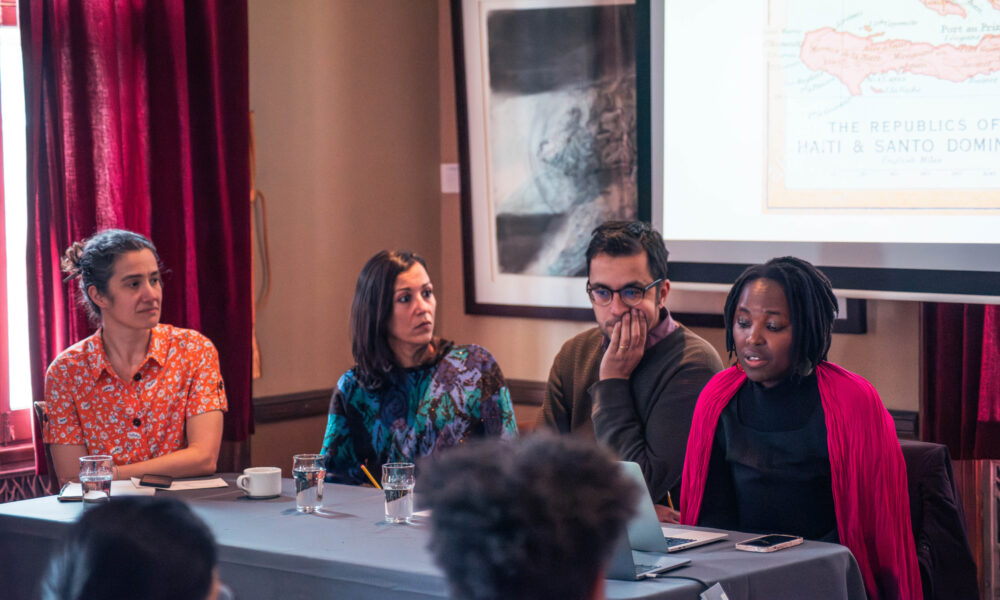
On March 22, the Institute of the Study on International Development (ISID) hosted a panel titled “Global History, Global Memory.” The panel featured Professors Sabine Cadeau and Pedro Monaville from McGill’s Department of History and Classical Studies, and Professor Elisa Scaraggi from NOVA University Lisbon. Rachel Hatcher, who is a historian, teaches International Development courses, and is McGill’s Jewish Student Affairs Liaison, chaired the panel. This event was part of a day-long conference called “Developing Memory, Memories of Development,” held in the Thomson House Ballroom.

Cadeau was the first to speak about her research on the 1937 Haitian Massacre, the subject of her recently published book, More than a Massacre. She aimed to demonstrate the gap between the history she uncovered through the memory of survivors of the massacre and the records found in the Haitian state archives, trying to preserve the history that has been forcibly removed from state records. Cadeau explained that she found no records of violence during that period of Haiti’s official history. She believes this erasure of violence from history is an intentional act by the state to hide its past crimes. 

“Perpetrators of violence contribute to what is easily forgotten,” Cadeau stated.

Monaville continued the discussion, reflecting on the topic of his latest book, Students of the World. He sought to understand and analyze the repression faced by the student movement advocating during the 1960s for the decolonization of Congo. He explained that state policies and practices of violence, exemplified by the Kinshasa student massacre in 1969, led to the suppression of the student movement. For Monaville, this event is reminiscent of the repression of the anti-colonial activism done under the Belgian regime, such as the urban riots in January 1959, before the Republic of Congo became independent in June 1960.

“One of the earliest kicks in my project was to understand the significance of the repression of the student movement in a chain of state violence, connecting the colonial past to the colonial present,” Monaville said.

Afterward, Scaraggi proceeded to talk about the liberation movement in Angola against the Portuguese government, starting in 1961. She explained that the movement comprised three main groups: The National Front for the Liberation of Angola (FNLA), the Popular Movement for the Liberation of Angola (MPLA), and the National Union for the Total Independence of Angola (UNITA). The conflict between the three movements eventually led to a civil war, starting in 1975—the year Angola became independent from the Portuguese colonial regime—and ending in 2002. Scaraggi argued that politics and history were shaped by two important factors: The monopoly of explanation of the past by the prevailing party, MPLA, and a single account of liberation, which was used to legitimize the party’s authority. 

Panelists received questions from the public after presenting their work. Jacob Blanc, an associate professor and one of the organizers of the event, explained how the panelists’ research and discussion that ensued align with the ISID’s mission in an interview with The Tribune. Blanc noted that the ISID supports research that conceptualizes the way societies develop themselves and how they think of their development differently from the way international organizations do, which is through “traditional development avenues.”

“[We are] looking at three different postcolonial contexts, thinking about violence—both within the boundaries of colonial forms of oppression and resistance, but then also now in postcolonial context—and what it means to even think about the past, and particularly when the past is very violent and difficult to talk about,” Blanc said.

This piece was updated at 12:10 p.m. on April 4.

Commentary, Opinion

Floor Fellows are the latest domino to fall in McGill’s decline

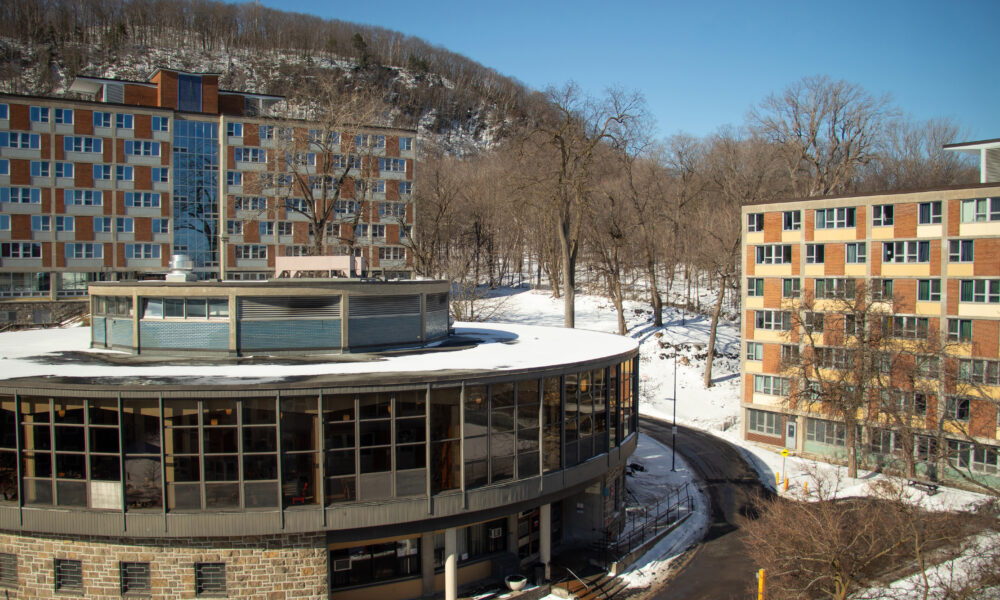
On Feb. 15, Daniel Fournier, Associate Director of McGill Residence Life, announced that the Floor Fellow position, a staple of the McGill residence system, would be abolished effective May 2024. This callous decision leaves McGill as the only major Canadian university without Floor Fellows or a comparable position; it will harm Floor Fellows who are losing employment and every student living in residence. Furthermore, this decision bears concerning implications for McGill’s future. The abolition of Floor Fellows will no doubt herald more cuts to student services, and more broadly, it signals the decline of McGill as a major global institution. 

McGill proclaims itself as “one of the leading universities in the world” while it cuts essential services for its students. Floor Fellows are necessary for student life at McGill—they are regularly the first to respond to instances of sexual assault, medical emergencies, and suicidal ideation. McGill alleges that their services—namely the Wellness Hub and Office for Sexual Violence Response, Support, & Education (OSVRSE)—overlap with the responsibilities of Floor Fellows, thereby making the position redundant. This conclusion fundamentally misconstrues the purpose of this important role. Floor Fellows are not therapists, doctors, or counsellors—nor should they be. Floor Fellows are peer-support staff that form the crucial link between McGill’s bureaucracy and first-year students. The Wellness Hub and OSVRSE can be inaccessible for the average student, as both are critically understaffed and suffer from extremely long wait times. While Floor Fellows alone cannot rectify this dysfunction, they play a critical role in supporting their students when they cannot immediately access the university’s services. 

Floor Fellows serve as critical peer support for university students at their most vulnerable during their first year of university. Most of these students are living independently for the first time and many are new to Montreal. Although Residence Life offers some workshops for first-year students, this is far from a substitute for the one-on-one, personalized help that Floor Fellows offer. Floor Fellows establish a personal relationship with their students, and therefore many students feel comfortable disclosing traumatic experiences with them that they wouldn’t feel comfortable sharing with unfamiliar adults. Although McGill purports to be increasing security personnel for safety within residences, security can not be equated to peers, and will no doubt struggle to make a meaningful connection with the residents they police. 

McGill is not simply creating a less-exciting residence—they are creating a dangerous environment wherein predators can thrive and students are disincentivized to report sexual violence when it inevitably occurs. Moreover, in a climate where 95 per cent of Canadian university students reported being overwhelmed, 84 per cent are suffering from anxiety, and 80 per cent are lonely or depressed, the decision to cut back on mental health support staff is shocking. Given the mental health crisis throughout Canadian universities and Canada as a whole, McGill must invest more in the mental health of its students, not strip them. 

Incoming first-year students and their families will pay more and receive less in residence without Floor Fellows. Tuition, rent, and meal plan expenses are all expected to increase next year, both as a result of tuition hikes and other financial difficulties. With this in mind, is McGill truly competitive with other Canadian universities? As attending McGill becomes increasingly financially unattainable and the services provided by the university decline, the name recognition and prestige McGill boasts will plummet. For those set on McGill, living in residence is a less attractive option than ever, with less peer support, increasingly inaccessible resources, and skyrocketing costs. Living off-campus, rather than in residence, is not only more affordable but now provides an equally supportive environment to McGill residences. 

McGill can still reaffirm its commitment to its students and engage its Floor Fellows in good faith dialogue regarding the future of their position. Whether they will enter discussion, or continue down the path of institutional decline, remains to be seen.

Sports

Ready, set, go: Paris faces hurdles for the Olympic and Paralympic games

In four months, Paris will welcome over visitors, spectators, and over 10,000 athletes for the 2024 Olympic and Paralympic Games. As the opening ceremony edges closer, The Tribune takes a look at the controversies surrounding the event.

The first descent into the scandal spiral began last year, when the carefully crafted image of ethics sold to the French public began to crack as allegations of corruption surrounding the International Olympic Committee (IOC) emerged. On June 20, 2023, the French police raided several locations associated with the IOC, including the headquarters of the Organizational Committee of the Games (COJOP), as well as Solideo, the group overseeing the construction and sites for the games. France’s main anti-corruption entity, the Office Central de lutte contre la Corruption et les Infractions Financières et Fiscales (OCLCIFF) conducted the raids as part of a series of investigations that began in 2021. The following day, police raided the sports consulting firm Keneo, under potential charges of illegal conflicts of interest, embezzlement of public funds, and preferential treatment, dating back to 2017. However, these legal issues were just the start of a string of controversies. 

When the COJOP unveiled the schedule of events, it became clear that one in particular—surfing—would be taking place over 15,000 km away from the French capital in Teahupo’o, Tahiti, French Polynesia. While there is no doubt that the island hosts some of the world’s best waves, its fragile environment raises several concerns. Each year, Teahupo’o sets up and dismantles a semi-permanent wood tower to host the judges for the World Surf League competition. However, the COJOP planned to build a permanent aluminum tower almost twice as heavy as the wooden structure for the Olympics. 

Polynesian surfer Matahi Drollet flagged issues with this construction. The main concern is the ecological risks, as no environmental assessment had been conducted prior to the announcement. Risks include disruptions to the underwater ecosystem the propagation of ciguatera, an illness that plagues fish, impacting the local fishing economy. Perhaps the biggest fear is the potential influence on the nature of the island’s legendary waves. Following widespread mobilization among local communities and environmental activists, the authorities shared an updated plan. The aluminum tower will go back to the dimensions of the current structure, accommodating only 25-30 individuals, as opposed to the 40 originally planned. However, the structure will still use a concrete base for its foundation, which risks harming sea life by disrupting the physical landscape of the natural coastal ecosystem and leaching harmful chemicals into the water.  

The seemingly resolved issue resurged in early Dec. 2023 when the President of French Polynesia, Moetai Brotherson, cancelled the planned tests of the structure and halted its construction. In a video shared by the Vai Ara o Teahupo’i association following the route of the barge carrying the tower, destroyed coral reefs were clearly visible. On Dec. 5, the prosecutor’s office of Papeete opened an investigation into the potential violation of French Polynesia’s environmental code. However, the file was closed on March 3, due to “insufficiently characterized infractions.”

Back in the French capital, the Ministry of Sports announced in May 2023 that around 3,000 student accommodations would be requisitioned to house the Olympic and Paralympic Games’ staff from the Centres Régionaux des Oeuvres Universitaires et Scolaires (CROUS), which handles accommodations, financial aid, and other support for students. The CROUS guarantee for students to regain their residences back in September and some compensation and limited assistance. However, the leading student union advocated for the CROUS to first turn to students who would willingly provide their accommodations, instead of mandating it to students who may not be able to find alternatives. Many need to stay in their accommodations over the summer due to classes or other responsibilities. Finding affordable options in Paris is a challenge in normal circumstances, and even more so in a context where excess demand from the Olympic games is pushing up prices.

Ultimately, in a race against time, one question remains: Will the City of Light be ready to host the thousands of expected visitors, or will the shadows of controversy loom over the first Olympics held in Paris since 1924?

McGill, News

McGill Senate discusses Palestine, tuition hikes, and budget cuts

The McGill Senate convened on March 20 in Leacock for its third meeting of 2024. Central topics were student calls for McGill to cut ties with Israeli institutions, the tense atmosphere on campus over Israel’s siege on Gaza, and the ongoing legal battle between McGill and the provincial government over proposed tuition hikes.

The meeting began with memorial tributes to the late Professor Emeritus Radoslav Zuk and Professor Monica Popescu, followed by a discussion of the Senate Steering Committee report. The report explains that four motions related to the ongoing genocide of Palestinians had been submitted but were unanimously declined by the Steering Committee—meaning they were not on the agenda for discussion—on the grounds that they are not Senate business. These motions requested a condemnation of Israeli military presence in Gaza, the prohibition of academic trips to and exchanges to schools in Israel, and divestment from companies complicit in Israel’s occupation of Palestine. 

Senator Ipek Türeli asked for further clarification regarding the Senate Steering Committee’s rejection of the motions. McGill President Deep Saini stated that as a financial matter, divestment is an issue pertaining to the Board of Governors. Associate Provost (Equity and Academic Policies) Angela Campbell added that it would be “entirely inappropriate” for the Senate to impose restrictions on the specifics of academic courses.

“Senate has the purview to approve particular programs and courses in terms of what, generally, they speak to […] but they don’t speak to the specifics of what an instructor does with that course,” Campbell explained.

She added that the preamble “had many inconsistencies and errors,” an additional reason behind the motions’ rejection. 

Law Senator Weeam Ben Rejeb asked why the Senate did not offer other alternative paths to address this issue instead of simply turning it down on the basis that it is not within the Senate’s jurisdiction. Deputy Provost of Student Life and Learning Fabrice Labeau’s response was that there is an “established path” of bureaucratic procedures that allows subcommittees to deal with specific issues and motions before they come to the Senate. 

During his remarks, Saini acknowledged that the Board had chosen Pierre Boivin to be the University’s 21st Chancellor and that he would assume the role on July 1. He then moved on to discuss the “campus climate,” expressing an acceptance of political activism but only when it is practiced within specific bounds so as to minimize disruptions to the university’s operations. 

“Students and colleagues have the right to learn and work in a peaceful environment that is propitious for their success,” Saini said. “And when protest activities interfere with these rights, they are no longer acceptable. I reiterate that if this line is crossed—that is if demonstrations block access to buildings or otherwise interfere with campus activities—we will apply our policies and procedures to ensure that the university business can continue unimpeded.” 

President Saini also discussed McGill’s ongoing legal battle with the Quebec government over the proposed tuition hikes for out-of-province Canadian students and international students attending English-speaking universities in the province. McGill is asking the court to issue a stay, which would suspend the implementation of the proposed measures while the court deliberates on the challenges. 

He also clarified the misunderstanding about mandatory French proficiency levels, stating that French proficiency will not be a condition for graduation for McGill students, as some may have believed. In reality, 80 per cent of all undergraduate students from out of province will be expected to reach level-5 proficiency, or the university will be penalized in a yet-to-be-defined manner.

After Saini’s remarks, Ben Rejeb raised concerns about the health of the students who have been on a hunger strike for over a month to pressure the university to divest from companies complicit in Israel’s siege on Gaza. The hunger strikers’ online posts document their drastic weight loss and worsening health. Saini responded that the university is in touch with them, but remarked that the group of hunger strikers should follow the established processes to communicate with the university. Since the Senate meeting, one of the indefinite hunger strikers has been hospitalized due to deteriorating health from 34 days of starvation and has ended her strike.

Later, Provost and Executive Vice-President (Academic) Christopher Manfredi gave a presentation on budget planning, describing the theme of the 2025 fiscal year (FY2025) as “uncertainty.” 

Manfredi explained that in addition to the tuition increases for newly enrolled out-of-province students, the Quebec government’s re-regulation of tuition for international students will also impact McGill’s budget going into FY2025. 

“So we will now start getting a grant for those [international] students, but we will also have to start paying a forfaitaire [flat rate] for those students. And the grant will be roughly $12,000, the forfaitaire will be $17,000. So we’re going to lose roughly $5,000 per newly enrolled international student, starting with the cohort coming in fall 2024,” Manfredi said.

According to Manfredi, the university is looking to find roughly three million dollars 

in cost savings for FY2025—which starts on May 1, 2024, and ends on April 30, 2025—and more as the year progresses.

Moment of the meeting:

Senator Türeli pointed out that while the Senate Steering Committee’s report argued that the Senate’s prohibition of trips to Israel in individual academic courses would be an infringement on the professors’ academic freedom, their denial of the senators’ opportunity to debate the matter is just as much of an infringement. “In the Senate, we should have the academic freedom to discuss this important issue,” Senator Türeli said. 

Soundbite:

“We’re not going to achieve savings through layoffs [….] We are going to have to probably reduce headcount through attrition as a blunt instrument.” — Manfredi, on strategies to cut costs for FY2025.

News

Statement regarding former SSMU President Darshan Daryanani

As part of our mandate to cover campus news and student politics, The Tribune published 33 articles about Darshan Daryanani, former President of the Students’ Society of McGill University (SSMU), between 2021 and 2022. However, all of the facts were not available at the time of reporting.  

In the Spring of 2023, Daryanani commenced legal action against 19 defendants including The Tribune and a staff writer, claiming damages for injury to his reputation, health, and earning potential. Daryanani and The Tribune have settled the matter, without any admission of liability.  

As part of the settlement, The Tribune is publishing this statement to clarify the timeline and facts regarding Daryanani’s presidency. 

Start of Presidency 

Even before Daryanani assumed office as SSMU President, efforts were made to remove him from his role.  

In March 2021, one of the candidates, who was subsequently elected to the SSMU Executive, publicly encouraged his peers to “start a controversy” about Daryanani. The candidate received a sanction from Elections SSMU for negatively campaigning against Daryanani. Nonetheless, Daryanani won the SSMU presidential race against two candidates, with 55% of the vote. 

In May 2021, the aforementioned individual unsuccessfully attempted to oust Daryanani with a “vote of non-confidence”.  

On May 31, 2021, during a confidential session, the SSMU Board removed Daryanani from his position as Chair of the SSMU Board of Directors. Daryanani was not present in the meeting, nor was he provided with any reasoning for his removal. Daryanani maintains that the SSMU’s actions contravened his employment contract and SSMU governing documents. 

The Tribune has only recently learnt of this context. 

Five-month long Suspension 

Only three months after Daryanani commenced office as President, the SSMU Board took the extraordinary measure to suspend him from his role as President.  

The SSMU Board initially told Daryanani that the suspension would end on November 5, 2021. Instead, they repeatedly extended his suspension four more times, over a period of five months. No reason was given for the suspension or subsequent extensions. 

The Tribune did not have this context at that time of reporting. 

Reinstatement 

On January 6, 2022, SSMU finally appointed an independent lawyer to conduct an “admissibility analysis” into the complaints. Daryanani was not required to be interviewed by the investigator, and he was never informed of any allegations against him.

The analysis was conducted by Maître Magalie Poulin, a lawyer at HumaniLex Services Conseils. Poulin concluded that: 

“None of these complaints are reasonably susceptible to lead to a conclusion of psychological harassment if they were respectively subject to an investigation. Indeed, even if all the alleged facts were proven as they were reported to us by the Complainants, they could not constitute a situation of harassment for either one of them.”  

Daryanani was accordingly reinstated on February 14, 2022; however, he had lost five months of his Presidency.  

In the February 22, 2022 issue, The Tribune covered this reinstatement, including perspectives from Daryanani and SSMU executives. At that time, The Tribune did not report on the conclusion of the investigation. 

Impeachment  

Despite the result of the investigation, SSMU representatives organized an online impeachment assembly on April 11, 2022, just six weeks before the scheduled end of his term.  

The SSMU representatives did not provide any reasons for Daryanani’s removal. Daryanani claims that it was impossible for him to have a fair opportunity to defend himself against unknown allegations. He maintains that the impeachment violated SSMU regulations, and that it was inherently devoid of fairness and transparency. 

Resolution 

Daryanani’s claim against the other defendants remains ongoing in the Superior Court of Quebec. Daryanani believes that the resolution with The Tribune is a positive step, and that going forward, there will be an increased awareness of the fundamental principles of due process, procedural fairness and natural justice on university campuses, in student government and in the media.

Read the latest issue

Read the latest issue