


Latest News

Emerging Trends, Student Life

Is ‘real’ thrifting gone for good?

You’ve likely seen them on your friends and in your feeds: Tattered Carhartt jeans, 90’s Levi’s, and Nike crewnecks from the 80s. Lately, vintage items have become coveted by Gen Z fashion enthusiasts the world over. There are over 15 million posts under #VintageClothing on Instagram, and even young celebrities like Olivia Rodrigo are wearing retro clothes (albeit fancier fare like Chanel and Prada).

The vintage-clothes frenzy means that a pair of vintage Levi’s can go for upwards of $150. Used sweatshirts from brands such as Patagonia and Ralph Lauren, that could once be found for $5 on sites like Depop and Poshmark, are being scooped up and resold for 20 times as much on the same platforms. Brands like Carhartt and Dickies (historically staples for carpenters and painters) are being worn all over Instagram by kids who have never opened a can of paint, nor held a hammer. 

So what makes thrifted clothing so appealing? 

A decade ago, the answer might have been sustainability—thrifted clothes are undeniably better for the planet than fast fashion. They are also cheaper, making fashion more accessible to lower-income individuals. But while these answers still hold true today, the hype around thrifting has become less about its practicality and more about achieving a retro look. This can negatively impact people who rely on second-hand retailers for affordable clothing.

As more influencers wear and sell vintage, many people have come to prefer the distressed style and broken-in feeling that gives thrifted clothes their authenticity. 

“Wearing jeans from a retail store has that feeling and look that you don’t entirely enjoy, but getting that same pair of jeans from a thrift store is so much better, everything from the style to the worn-in feeling,” Eliot Loose, U0 Arts, explained. 

Because of the online conversations around vintage clothing, thrifters are also more informed than ever before about which brands maintain their value over time. Thus, many search for discontinued designs, like the legendary Levi’s Silver Tabs

“With apps like Depop, you can really find anything,” Myla Seder, a popular Depop seller who sells under the name @mylaseed, said. “Being able to type whatever you’re looking for into a search bar has completely changed thrifting.”

As a result of their cult following, it’s much harder to find desirable brands at a reasonable price, and many mainstream thrift stores like Salvation Army and Renaissance have been completely picked over by people who know what to look for. Thrift stores that still have coveted attire often take advantage of the high demand by hiking their prices. In Montreal, stores like Citizen Vintage and Cul-de-Sac sell used T-shirts for more than $20 and jeans for up to $150. 

Many shoppers don’t mind paying for a curated selection, and shop owners know that many would rather spend more money to know that what they’re getting is legitimate, rather than risk sifting around actual “thrift” stores for hours, potentially leaving empty-handed. 

“There’s a lot of fun in sharing ideas about new styles and selling clothes that you’re interested in,” Erika Bonneville of La Caravane Vintage, one of Montreal’s many higher-end, curated shops, explained. “For example, my business partner loves old Western clothing, so it’s nice for him to find items that he’s actually interested in, and it’s fun for us to share our knowledge and love for vintage clothing.” 

But do these curated stores take away from one of the fundamental appeals of thrifting—finding a gem for little-to-no money? And how does that squeeze the customers both online and off? 

“For a long time, Depop and Etsy were great and boosting traffic for the store and finding new pieces,” Bonneville said. “But nowadays, they’re taking bigger cuts and are huge competition for small businesses.” 

Nobody knows how thrift culture might change in the coming years, or when Gen Z will tire of it, but it’s hard to imagine that it’ll ever return to the treasure hunt it once was. 

Science & Technology

McGill experts discuss cell biology at 36th Soup and Science event

McGill’s Faculty of Science organized the 36th edition of Soup and Science from Sept. 25 to 29 in the Redpath Museum. The event offered the McGill community and beyond the opportunity to discover research from multiple fields, such as geography, physics, and computer science, in a relaxed and interactive environment. In total, it featured 25 insightful research presentations from distinguished professors and students. The Tribune compiled an overview of three talks by cell biology experts Dieter P. Reinhardt, Shuaiqi Guo, and Neha Dinesh.

Extracellular fibre systems in health and disease

Dieter P. Reinhardt, professor in McGill’s Department of Anatomy and Cell Biology and Canada Research Chair in Cell-Matrix Biology, began by discussing the role of the extracellular matrix—the materials surrounding cells—in organs and tissues such as the aorta.

“It is extremely important that [the aorta] is elastic. After every pump of the heart, the blood goes into the aorta, which expands and recoils. So, the elasticity is critical for [its] function,” Reinhardt explained.

Reinhardt’s research focuses on fibrillin-1, an extracellular protein contributing to the aorta’s elasticity. Fibrillin-1 binds to other proteins to form threadlike filaments called microfibrils, which then form elastic fibres that allow the skin, ligaments, and blood vessels to stretch. 

“There are a number of known [fibrillin-1] mutations that lead to genetic disorders like Marfan syndrome, stiff skin syndrome, and many others,” Reinhardt said.

Reinhardt’s research aims to further the understanding of fibrillin-1’s role in various pathological pathways and treatments of disorders, such as acromicric dysplasia and Weill-Marchesani syndrome.

What makes bacteria stick?

Shortages of antimicrobials—medicines used to treat infections caused by bacteria, viruses, protozoans, and fungi—are worsening worldwide, lowering access to effective therapies for life-threatening infections.

Shuaiqi Guo, assistant professor in McGill’s Department of Anatomy and Cell Biology, proposed a novel anti-adhesion therapy—an alternative in the prevention and treatment of bacterial infections. Such therapy is meant to reduce the contact between bacterial pathogens and host cells by inhibiting the pathogen’s adhesive abilities.

“Bacterial pathogens have to adhere to host cells in order to cause an infection. What if we disrupt bacterial adhesions instead of killing them?” Guo asked. “This way, we are coming up with a new way to treat infections.” 

Guo’s research focuses on a key “tool” that bacteria use to establish themselves: Type IV pilus (T4P), which is a flexible cell-surface filament with crucial functions.

“An important function of T4P is to facilitate the adhesion and motility of bacteria [via rapid cycles of extension and retraction]. For example, Pseudomonas aeruginosa, a bacterium that causes a variety of infections, uses T4P to move on [cell] surfaces,” Guo explained. 

Guo can observe T4P movements at high resolution using the imaging technique, cryo-electron tomography (cryo-EM). Cryo-EM is uniquely suited to study the fine structure of bacterial cells because it preserves their native cellular structures.

Guo’s research highlights T4P as a potential therapeutic target against bacterial infections and lays a path for the development of anti-adhesive drugs.

The role of fibronectin in skeletal development and associated pathologies

Neha Dinesh, Ph.D. student in McGill’s Department of Anatomy and Cell Biology, studies the consequences of fibronectin (FN) mutations in skeletal development.

“Fibronectin is a key extracellular matrix protein required for the development of major organ systems,” Dinesh said. “It exists [as] plasma fibronectin and cellular fibronectin.”

Dinesh’s research aims to understand how FN mutations lead to skeletal dysplasia—a group of rare conditions that affect bone development, neurological function, and cartilage growth. While skeletal dysplasia attacks different body parts for different individuals, it most commonly impacts the legs, arms, ribcage, skull, and spine.

Dinesh found that FN mutations impaired the function of chondrocytes—cells mainly responsible for cartilage formation—leading to skeletal dysplasia. This finding suggests that FN is crucial for proper skeletal development.

Although the therapeutic treatments for skeletal dysplasia are presently limited, ongoing research will continue to unravel the pathological mechanisms of FN mutations in this disease and eventually contribute to the development of pharmacological interventions. Although all three of the talks spotlighted cell biology, Soup and Science successfully assembled an assorted trio of fascinating research topics.

Rugby, Sports

Redbirds Rugby roars in first home win of the season against Université de Montréal

Redbirds rugby welcomed Université de Montréal’s (UdeM) Carabins on Sept. 29, eager to prove themselves on home turf after two back-to-back losses.

“Last year we had an extraordinary season, so this year it was hard to lose and realize that we weren’t necessarily at the same level,” second-year fullback and team captain Gaspard Poire said in an interview with The Tribune. “We had a lot of expectations and hope [for this match], and it was much harder than we had thought.” 

As part of the Truth and Reconciliation Games played across the lacrosse, football, rugby and hockey teams on Sept. 29 and 30, players wore orange warm-up jerseys and encouraged fans to wear orange in the stands in commemoration of Orange Shirt Day, a day meant to spread awareness of the intergenerational, settler colonial impact of residential schools. Head coach Ian Baillie stressed the importance of supporting Indigenous communities. 

“This is something we need to do,” Baillie explained. “A couple of the coaching staff, myself included, are school teachers, we celebrate this at our schools through the day in orange T-shirts. [The initiative is] player-led, not from us [….] Good to see the guys recognize that responsibility.”

Earlier that day, members of the squad expressed their support for the initiative in front of the Faculty of Education.

“Our club presidents care very much about the Indigenous legacy game and they were really working hard to get us properly showing our support,” second-row Ian McDowell said. “Part of that was the orange warm-ups. Part of that was encouraging the crowd to come out with orange [shirts]. [….] We want to show that we care and that we are supporting this cause.

The opening of the game set the tone for the evening. Within the first five minutes, outside centre Martin Laval narrowly missed the opportunity to strike first by converting a penalty kick. 

Instants before half-time, UdeM scored the first breakthrough of the match, a try followed by a conversion, setting the score at 7-0. 

The second half witnessed the Redbirds consistently applying pressure on the opponents’ defensive line. The Carabins maintained their lead with an unconverted try, pushing the score to 12-0.

Despite being pointless for most of the game, the Redbirds came back in the dying moments of the match. McDowell pierced through the Carabins’ defence and buried a try in the 59th minute, and Laval’s successful conversion narrowed the score to 12-7.   

The intensity reached new heights after UdeM’s successful penalty kick extended their lead to 15-7. However, McDowell once again broke through and managed to make a second try, quickly followed by a third, leading McGill to a miraculous 17-15 comeback. 

As the game came to a close, the pressure reached its peak with the Carabins preparing for a potentially game-winning penalty kick, however,the unsuccessful attempt gave McGill its first home win of the season. 

“We worked hard for this. We worked harder than we probably needed to,” McDowell told //The Tribune//. “This is our starting point. We needed to have this win to keep our season going properly. […] We’re building from here.”

The Redbirds (2–2) will face off against the Concordia Stingers (1–2) on Oct. 15 with the hopes of ending their nine-game losing streak against them.

Moment of the game: As the final whistle sounded, the crowd and squad erupted in joy. Second-year winger Robert “Will” Storey, who was injured during the game, hopped and celebrated on his crutches. 

Quote: “We are highly involved in our rugby community, and bringing young kids to the game where we can, and giving them the opportunity to play in front of all these people is a really good piece of what we want to be about as well.”

— Head coach Baillie on the children walking onto the field alongside the teams to start the game and playing on the field after.

Stats corner: This win brings McGill on a seven-game win streak against UdeM. 

McGill, Montreal, News

Faculty of Education holds fifth annual Skátne Entewathahíta – We Will Walk Together event

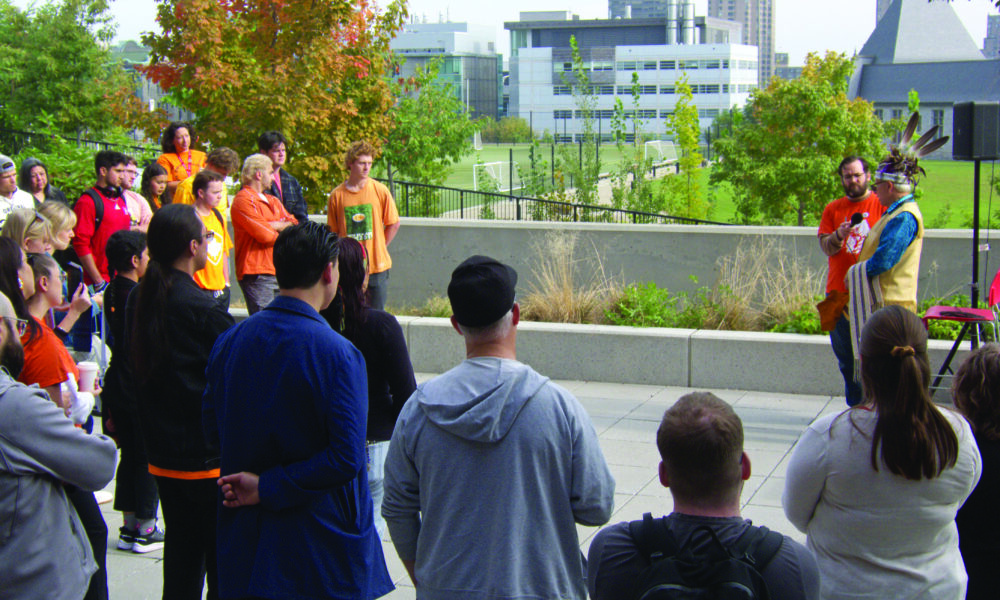
On Sept. 29, McGill’s Faculty of Education held its fifth annual event for the National Day for Truth and Reconciliation, also known as Orange Shirt Day: Skátne Entewathahíta – We Will Walk Together

The event, which is an initiative led by Indigenous students and faculty members, began with an introduction from Dennis C. Wendt, an Associate Professor in the Department of Educational and Counselling Psychology and the faculty coordinator for the event. Wendt opened with a land acknowledgement before explaining the theme of this year’s event: “Pathways from Awareness to Action: What Is Our Role?” 

Following Wendt’s introduction, Elder Ka’nahsohon Kevin Deer—who is Kanien’kehá:ka and is a member of the Kahnawake First Nation, a faithkeeper at the Mohawk Trail Longhouse, and a prominent knowledge holder—began his opening remarks. Elder Deer discussed a number of teachings, warned listeners against the continued use of fossil fuels, centred the importance of listening to Indigenous teachings in relation to the land, shared his own experience with residential schools, and concluded on a message of hope for the future of the climate. 

Celeste Pedri-Spade, the university’s first Associate Provost for Indigenous Initiatives and an associate professor of anthropology, was next to speak. Pedri-Spade discussed what Orange Shirt Day means to her as a mother, an Anishinaabekwe, and an intergenerational survivor of residential schools. 

“My kids are 10 years old now [….] Wherever they go they should see themselves reflected back,” Pedri-Spade said. “That’s not a reality for them yet [….] The plan [the 52 Calls to Action], has those actions that will work toward that because every child matters and every child should have that ability to achieve their educational goals at a place like McGill.” 

Victoria Talwar, the Interim Dean of the Faculty of Education, then discussed the important role of educators in truth and reconciliation before attendees were given the option to participate in one of two events. 

The first option was an interactive presentation about the “Walking Alongside” teacher education website. The site was developed following the first three years of the Faculty of Education’s Skátne Entewathahíta – We Will Walk Together event with the hope of incorporating the 52 Calls to Action into the Quebec curriculum. 

“If our society wants to move forward and really get towards reconciliation, it starts within our schools,” Margaret Mackenzie, who is a citizen of Métis Nation in British Columbia, B.Ed ‘23, and the Indigenous outreach coordinator of Branches, told The Tribune. “It’s so important to have children understand the impacts of residential schools, and ongoing colonial violence that’s happening today. For educators to be aware of this and to educate themselves before educating others is really important.”  

The second option was to go on the Critical Campus Tour developed by staff and Indigenous students in affiliation with the More Than Words project in the Participatory Cultures Lab this past spring. Tour participants were broken up into small groups then led around campus to the James McGill Monument by the Arts Building, the 13th century Haudenosaunee Village at the corner of Sherbrooke and Peel, and the Hochelaga Rock at the Roddick Gates to discuss the area’s colonial and Indigenous history.

Rachel Mackenzie, U3 Arts, who is a citizen of Métis Nation in British Columbia, emphasized the importance of thinking critically about the McGill name and the implications of its use during the tour. 

“It’s really interesting to think about what comes to mind when people hear McGill,” Mackenzie concluded. “Is it this academic institution? Or do you think about James McGill? […] Do you think about his history? [….] We’ve seen changes in academic institutions with Toronto Metropolitan University and we’ve seen the positive impact that a name change can have on a community.” The event also provided pamphlets with a how-to guide on creating your own critical campus tour and a QR code for an expanded version of the tour.  

Campus Spotlight, Student Life

These jeans weren’t quite booted from our wardrobes!

The first pair provoked simple curiosity. The second, amusement at an interesting coincidence. I started to get nervous around the third pair, and by the time I had spotted five people wearing bootcut jeans on a walk from McMed to McLennan, I was thoroughly dismayed. Oh no, could they be back?

Beloved by Bella Swan and the favoured red carpet attire of a young Ashley Tisdale, the bootcut was the go-to denim style of the 2000s, and it’s somehow been the only trend of the time to resist a 2020s “Y2K” revival so far. Bootcut jeans have never really gone away, of course. They’ve been a fixture on the shelves of Mark’s and Costco over the years. But that’s different from being able to find them on the rack at H&M, which hasn’t been possible for a while now. Based on the evidence I’ve seen on campus, though, that seems soon to change. 

The return of the bootcut is imminent, and it seems to be good news to many McGill students, such as Olivia Farrow, U2 Arts. 

“I really like them,”  Farrow said in an interview with The Tribune. “It totally depends on the outfit, but I think they’re really cool. Especially low-rise ones.” 

Syeda Nishat, U3 Engineering, was more ambivalent about bootcut jeans, reserving her strong feelings for another style. 

“Please let’s not bring skinny jeans back. Please,” Nishat said. 

There are some who are not happy to see bootcuts returning, such as Kate Kines, U2 Nursing. 

“I am not a fan, mostly just because I have short legs,” Kines said. “I feel like they look good on tall people but I have short legs for my body.”

The assessment: Opinions are mixed, though mostly positive. Those who view the bootcut comeback with pure dread are out of luck, because the style’s popularity is only going to grow.

“Hang on a minute,” you might say. “It feels like only yesterday that I arrived in Montreal for the first in-person semester since the COVID-19 pandemic to find that everyone was wearing wide-legged pants. And the mom jean revolution was just the day before, wasn’t it? What a relief it was then to finally be able to find boyfriend-fit jeans without the rips my mom didn’t like. How could we be moving on already?” 

With the way that the trend cycle has been accelerating in recent years, a quick turnover rate for denim styles is only to be expected. The last time bootcuts were popular, they were hearkening back to the flared jeans of the ‘70s, thirty years before. This time, it’s only taken twenty years for them to roll around again—that’s ten years shaved off the cycle. On top of the shorter time we’re spending with each cut, we’re also looking toward an increasingly recent past for inspiration, drawing on the aughts now instead of the mom jean ‘80s or the slouchy ‘90s. We’re returning to a style that is still within living memory for the people driving the trend, which is why it might feel too soon for those who associate bootcuts with elementary school, or whose parents favour the silhouette.

But while shorter-lived fashions drive waste as people update their wardrobes more frequently, they could also have a silver lining: If we whittle down the trend cycle any further, it will start to reward the people who refuse to keep up. Because guess what denim trend came after the bootcut? That’s right—at this rate, it’ll only be a couple more years before skinny jeans are cool again. And when that happens, if you stubbornly held onto yours even when they were deemed “cheugy,” you’ll be the real winner.

Research Briefs, Science & Technology

Achieving alternate futures in the Anthropocene

Eleven thousand seven hundred years ago, Earth exited the last major geological epoch—the Ice Age—entering a period of relative warmth and stability, called the Holocene. Researchers, however, believe that the planet is ready for a new term: The ‘Anthropocene,’ denoting a time during which humans drive substantial change to our environment. 

A recent article, written by a team including Elena Bennett, professor in McGill’s Department of Agricultural and Environmental Sciences, and Steven Cork, adjunct professor in Australian National University’s School of Public Policy, explores the challenges that humanity faces as it tries to solve this new epoch’s problems. The Anthropocene is used to describe how humans are almost single-handedly responsible for inducing an environmental global shift. To counteract this widescale destruction, the researchers propose that imagination is a hopeful yet complicated tool for creating a positive environmental future.

“Humans are a dominant force on the planet and drive many planetary forces,” Bennett said in an interview with The Tribune

This enormous human impact represents what Bennett called a “complex footprint” with challenges including climate change, resource scarcity, declining food quality, and overpopulation.

These challenges have defined the last decade and will continue to worsen. While researchers across the globe realize this, many take a technological or political approach, developing novel machinery or approaches to public policy. Alternatively, Cork and Bennett’s research takes a cultural and psychological perspective, asking difficult questions about how we imagine ourselves and our species in relation to the environment, and to the future of the planet. 

According to Cork, our worldviews are stopping us from the kind of critical action that the climate crisis requires. 

“The first [problem] is that many people don’t understand the situation we’re in as a species,” Cork explained. 

He continued that if you ask a person about what they believe the future looks like, their answer is based on their “simple models” of the world—the easiest way they understand the world. For many, the complex relationship between humans and the environment seems too difficult to grasp.

“This lack of understanding is partly because most people don’t understand the complexities of the challenges that have arisen,” Cork said. 

Without fully understanding, it is impossible to mobilize a society to prepare for the future.

“The second aspect of how humans think that we focus on in our review is our limited ability to imagine,” Cork expanded. 

Ask anyone born over fifty years ago if they expected to live in the world of today, and it is likely that they never envisioned one in which artificial intelligence could diagnose illnesses, or 3D printers could generate three-dimensional objects. Cork described this as “black swan” thinking, a reference to Nassim Taleb’s book Black Swan. In the book, all swans were white and the concept of a black swan seemed impossible. People could not comprehend something they had not seen before. Cork related this to our inability to anticipate the future.

While creating a plan for the future may be difficult, Cork and Bennett argue humans must instigate change for a better relationship with our planet, requiring new ways of relating to one another and imagining. 

“We must think radically yet realistically about the future and stimulate their imagination about possible futures,” Cork elaborated.

To work toward this goal, Bennett described three significant steps to start reimagining the future. The first is to “inspire people,” by opening up conversations about what we want and need to achieve for a positive future. The second is to “encourage a plurality of different visions” that account for the ways that humans synthesize their profoundly nuanced views of a new world. The last goal is to scenario-build by exploring various potential futures to examine which would be most successful. 

This is no easy task, but Cork, Bennett, and their team are working hard to show what needs to be done. A good place to start, as Bennett says, is to ask ourselves what are the places we can imagine ourselves in and look for our positive goals.

McGill, News, SSMU

Committee seats on the docket at SSMU Legislative Council Meeting

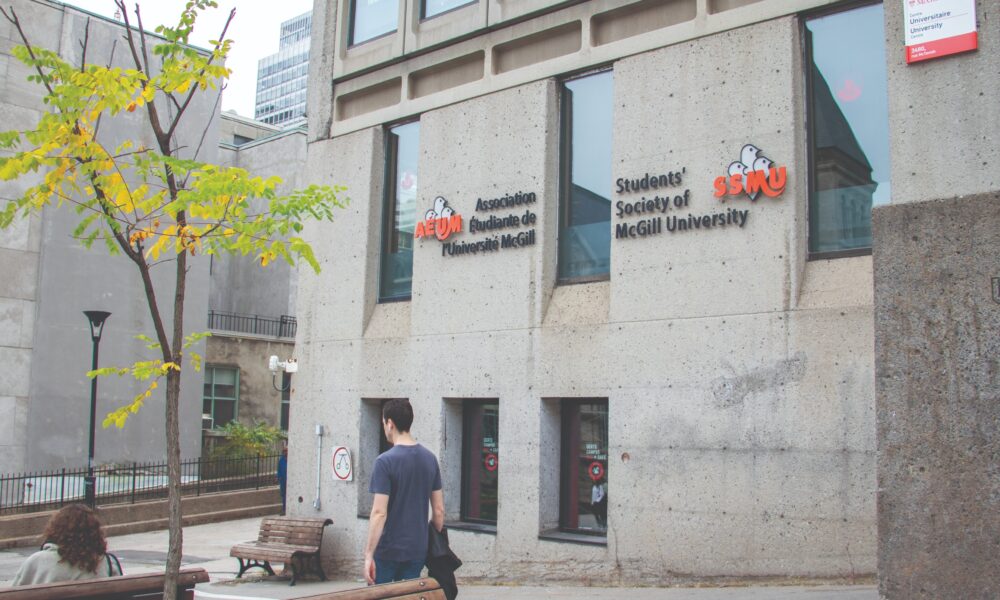
The Students’ Society of McGill University (SSMU) called to order its second Legislative Council meeting of the academic year on Sept. 28. Most discussion items fell into one of two categories: Beginning-of-fall housekeeping and nominations to the Legislative Council’s various committees

The meeting commenced with Summer Reports from McGill’s Science Undergraduate Society (SUS) and Arts Undergraduate Society, followed by individual Summer Reports from each SSMU Executive. Vice President (VP) University Affairs Lalia Katchelewa discussed various Indigenous-support initiatives that she has been collaborating on with VP External Affairs Liam Gaither and Indigenous Affairs Commissioner Jocelyne Couture, particularly in light of McGill’s controversial New Vic Project. These include advocacy on behalf of the Mohawk Mothers to the McGill Administration and the “Critical Campus Tour,” which took place on Sept. 29 as part of the 5th annual Skátne Entewathahíta/We Will Walk Together Event.

“[It is] a tour of stories of McGill that have not been told in the past […] on Indigenous affairs or what was happening at McGill before McGill was there, on the land that belongs to the University,” Katchelewa explained.

After a brief presentation from McGill’s Sustainability Projects Fund (SPF), the meeting launched into a Question Period dominated by debate on whether opinions in SSMU Statements should be attributed to “SSMU” or “SSMU Executives.” The discussion analyzed the Executive Committee’s recent declaration of support, which included the line, “The SSMU strongly supports the work of queer and trans activists [against the 1 Million March 4 Children].” SUS Representative Joshua Gerstvolf raised a concern that the wording implies that the sentence reflects the views of all SSMU members, not just the Executives.

“There’s a lot of misinterpretation [of the line] among the students—when they read ‘SSMU,’ they’re including all members of SSMU,” Gerstvolf argued.

VP Student Life Nadia Dakdouki countered that the phrase falls under SSMU’s Positions Book, which stresses SSMU representatives’ obligation to support “marginalized persons.” However, Dakdouki also acknowledged the potential confusion over authorship.

“We’ll make sure that there is an actual signature saying ‘The SSMU Executive Committee’ [at the end of Statements] […] we’ll take that feedback and make that clarification,” Dakdouki resolved.

After a brief recess, the Council returned for the meeting’s business proper. The old business—the readoption of the meeting’s rules for the oncoming year—passed with minimal edits. The two pieces of new business composed the meeting’s final hour. 

First was the allocation of committees to Councillors, who all must sit on at least one. While the process initially progressed quickly, with Councillors nominating themselves for seats and some even facing competition, it soon decelerated to a repeated process of calling on those who had not self-nominated and asking them to choose a committee or be chosen for one. Eventually, each Councillor possessed at least one committee seat, though many seats were left unfilled as not all Councillors took on additional allocations.

The second piece, the nomination of Councillors to the Board of Directors, proved slower going. All Councillors hesitated to nominate themselves, despite alternating attempts by the Executives to spotlight the importance of the role and remind the members of their responsibility to take it. At Dakdouki’s recommendation, Deputy Speaker Sierra Fallis called upon each Council member individually to explain their refusal; most pointed to a lack of time for the position. Half an hour into the debate, only one of the four spots had been filled, by Law Representative Jacob Shannon. Fallis adjourned the meeting after other Councillors successfully passed motions to approve the piece of business as-is and return to the issue at the next meeting. 

Moment of the Meeting:

SUS Representative Sofie Fournier’s question on the use of “SSMU supports” in the Statement sparked a deeper discussion of SSMU’s advocational positions and voice.

Soundbite:

“In terms of democracy and being able to run SSMU properly, we need representation on the Board of Directors, and last year, Council did do a lock-in […] until people had been nominated to the Board of Directors. And so that is also an option [for this meeting].” – Dakdouki, following reluctance from Councillors to nominate themselves

Baseball, Sports

Can the Toronto Blue Jays make a deep postseason run?

With 162 games in total, the Major League Baseball (MLB) season can seem draining to some fans. From May to September, the games can feel quite meaningless, with fans just waiting for October to roll around and for the playoffs to finally begin. 

For Toronto Blue Jays fans, this postseason brings an opportunity to avenge the failure of last year’s wildcard series against the Seattle Mariners. With the Jays claiming the third wildcard spot on Sept. 30, the team is poised to face off against the Minnesota Twins. However, with the team underperforming all season long, many fans are left asking: Do the Jays have the legs to make a deep postseason run? The Tribune explores arguments both for and against the possibility. 

For: A September surge

The Jays showed a glimmer of what they are capable of when they are at their best when outfielder George Springer slid head-first into home base to cap-off an inside-the-park home run on Sept. 24 against their American League (AL) East rival––the Tampa Bay Rays. The Jays’ Achilles heel this season has been a struggling offence and a lack of timely hitting, but September has shown some promise of overcoming their weakness that can hopefully carry into the postseason. Despite a flailing series against the New York Yankees, where they lost two out of three games, the Jays have scored 45 runs in their past six games against the Rays. A struggling Vladimir Guerrero Jr. boasts a .300/.407/1.047 slashline with five home runs and ten RBIs over the past two weeks.Moreover, contributions from Cavan Biggio, Daulton Varsho and a resurgence of power from Matt Chapman may give the Jays the much needed offensive boost they need in the postseason. 

Against: Bad record against teams in the AL East 

Playing in the hardest division in baseball is tough and the Jays have proven just that. Their measly record of 21–31 against AL East opponents makes it hard to see how the Jays would come out on top in a series against the Rays, let alone a fight for the division title against the division-leading Baltimore Orioles. Moreover, their record of 42–49 against teams with a record above .500 does not bode well for the sharper competition they will face come playoff time. 

Against: Bad baserunning

Baserunning may seem like a micro-issue, however, with the new rules leading stolen bases to jump from 2,486 in 2022 to over 3,000 in 2023, its value cannot be underestimated. Not only are the Jays tied for last in total stolen bases league-wide with 99, but poor baserunning decisions have been commonplace all season long. The Jays rank 29th in stolen base percentage (stolen bases plus caught stealing divided by stolen bases), and fifth in outs on base (when a runner is put out while making a baserunning play). All to say, the Jays baserunning is one of their greatest flaws, and will surely haunt them in the playoffs.  

For: Veteran presence

Vet presence often turns out to be one of the biggest x-factors in the MLB postseason, and if the Jays want any chance of a deep run, they will have to capitalize on this advantage.The Blue Jays have a handful of veterans that can lead the team to victory. Springer, a World Series champion and World Series Most Valuable Player in 2017, has played 65 playoff games with the Houston Astros. Brandon Belt, a bright spot on a struggling Jays team, played in 35 playoff games with the San Francisco Giants and won two World Series’ in 2012 and 2014. Hyun Jin Ryu has also appeared in nine playoff games. Safe to say, playoff experience is not an issue on this Jays roster. 

Bonus For: Pitching staff 

The Jays have one of the strongest pitching staffs in all of baseball. They have the fourth lowest team era (3.78), to complement a third overall era of 3.85 amongst their starting pitchers. The staff also boasts the third highest strikeouts per nine innings (9.47) and are in the top half of the league for almost every other pitching metric. 

McGill, News

‘I’ll be thinking about this all my life’: Students react to asbestos exposure at McGill

Students at McGill’s Macdonald campus cite feeling frightened, isolated, and frustrated following the release of a report detailing the events that led to the asbestos-related closures of three buildings on the Macdonald campus in Winter 2023. The Internal Audit Final Report, which was released on Sept. 18, shows that Quebec regulators intervened on the Macdonald campus three times between 2021 and 2023, deeming that McGill was not properly following asbestos protocols. 

For some, such as Hiba Kamel, a third-year Ph.D. student in the Faculty of Agricultural and Environmental Sciences, the administration has broken the trust between herself and the institution. 

“I don’t think they care,” Kamel said in an interview with The Tribune. “And I don’t trust that it won’t happen again.”

According to the Final Report, the Raymond Building Phytorium, which contains growth chambers used by multiple plant scientists, was a site of concern for asbestos. In October 2022, the Commission des normes, de l’équité, de la santé et de la sécurité au travail—the body Quebec has entrusted to oversee workplace health and safety—intervened specifically in that area. 

Kamel, a researcher in the Plant Science department, often used the growth chambers as a part of her research and recounted seeing and interacting with dust for months. Test results reported on March 14, 2023, revealed that 20 per cent of dust samples from the Raymond building tested positive for asbestos. 

As a mother, Kamel told The Tribune that she is scared she may have brought particles home on her clothing and exposed her young daughter. She fears that she may feel the effects of asbestos exposure in decades to come. 

Exposure to asbestos can lead to conditions like asbestosis, a chronic lung disease, and mesothelioma, a type of cancer. It can take anywhere from 10 to 40 years for the effects of asbestos exposure to surface. 

“When I realized that it was asbestos and I looked it up […] it was horrible. And it’s the kind of horrible that spoils your mood, and you can’t come out of it,” Kamel said. “And sometimes you’ll forget about it for a second. And then you have that horrible feeling in your chest. And you’re like, ‘Why is it that I’m having this feeling? Oh yeah, because I might get cancer in 30 years.’”

For others, the goal is to move on from the situation and focus on the positive—the return to in-person instruction following asbestos-related closures last year. 

“There was a little bit of nervousness in the air [when the report came out], knowing that you could have a repeat semester or a repeat year potentially [because] of what happened was kind of disheartening,” Annie Obnowlenny, U2 Science, told The Tribune. “But there’s no point in [expecting] the worst when you don’t even know if the worst will happen [….] A lot of my friends and I are just trying to get through the semester and have fun and do well.”

The Macdonald Campus Students’ Society has been working to provide students with support—including opening The Ceilidh as an additional study space and hosting town halls—since last winter’s closures. In a statement to The Tribune, Vice President (VP) Communications Blake Callan and VP University Affairs Vaishnavi Parey expressed that students on the Macdonald campus feel they should be compensated for the loss of class and lab time last winter.

“They did not try to move us to different classrooms, or give us any compensation for our loss of lab and lecture experience,” Callan and Parey wrote. “We are only here for a short amount of time and the false information about the duration of construction and health issues arising from being there is disappointing to say the least.”

McGill Media Relations Officer Frédérique Mazerolle told The Tribune that staff at the Student Wellness Hub and Keep.MeSAFE have been advised that students affected by asbestos may need support and are “ready to assist.”

In an email to The Tribune, Kamel expressed that she is unsure how many other people are concerned about exposure to asbestos, and feels isolated in her worries.

“I can’t for the life of me be the only one who feels that way. I can’t think that I’m the only person who’s actually scared for their life, and who’s gonna need significant support throughout,” Kamel said in an interview with The Tribune. “I’ll be thinking about this all my life.”

Science & Technology

Science in the city: ALL IN 2023 unveils future of AI in Montreal

On Sept. 27 and 28, Montreal hosted ALL IN 2023, a conference bringing together industry specialists and cutting-edge researchers in the field of artificial intelligence (AI) at the Palais des Congrès de Montréal. Experts gave speeches and participated in panels on a wide variety of topics, including AI’s impact on creative innovations and the workforce. To reflect Montreal’s bilingualism, the event was hosted in a combination of English and French with live translation provided via headset. 

Conference opening

The event kicked off at 8:30 a.m. on Sept. 27. After a brief opening by Hélène Desmarais, co-founder and chair of the Montreal-based AI company IVADO Labs, Montreal mayor Valérie Plante took the stage. She began with a land acknowledgement and then transitioned into welcoming attendees to Montreal, pitching the city as an international hub of AI innovation. 

“You’ve chosen the economic and cultural metropolis of Montreal as the perfect place to move the boundaries of your knowledge,” Plante said. 

She also emphasized the urgency of finding ethical ways to develop AI technologies, calling it “one of the biggest tests of our time.”

Pierre Fitzgibbon, the Minister of Economy, Innovation, and Energy for Quebec, spoke next, highlighting the investments that the provincial government has made into AI research. He underscored the Quebec strategy to support research and investment in innovation as well as the government’s funding of organizations like NextAI, which help finance and accelerate AI start-ups.

New McGill Graduate Programs

Carola Weil, Dean of Continuing Studies at McGill University, and John Gradek, a faculty lecturer in aviation management, announced two new graduate programs on the afternoon of the 27th. McGill will now offer graduate certificates in Dynamic Supply Networks and Integrated Supply Networks, both of which use AI to analyze modern supply management. 

These programs are not master’s degrees, but rather 15-credit certificates offered by the School of Continuing Studies with the intention of supporting professionals in developing skills working with AI in the private sector. They are part of the School’s ongoing push to offer modern and relevant certifications in a variety of areas, such as financial technology and data analysis.

How can AI help artists?

The conference continued with a panel of three experts who have each incorporated AI into their creative processes. The first was Julia Kastner, Chief Marketing and Business Development Officer at Hitlab, a company that uses machine learning to gauge how successful a given song will be in different music charts. While Hitlab does not use AI to generate music, the company does attempt to integrate it into the process of discovering and popularizing hit music. 

The next speaker was Céline Mornet, the Interactive Team Lead at the Montreal-based public art installation company Moment Factory. Moment Factory has created artwork displayed in Montreal and across the globe and is the team behind the nightly light display on the Jacques Cartier Bridge. Many of their exhibits incorporate interactive components and AI software, with the bridge, for example, using the traffic and weather patterns of the day to create a unique display each night. 

Sandra Rodriguez, an independent creative director and a faculty lecturer at MIT, presented her work on the Chom5ky vs. Chomsky project. An immersive virtual reality experience, the program allows users to speak with a simulated version of Noam Chomsky, renowned linguist and noted critic of AI models such as ChatGPT. 

What does the future of work look like?

Returning to the industry side of the conference, several speakers shared their perspectives on the role of AI in the changing employment landscape and the responsibilities that governments, corporations, and individuals have in these unfamiliar circumstances. 

Lucia Velasco, a Spanish economist at the European University Institute, emphasized that the lack of accurate information about ever-changing economies and workplaces constitutes a major issue that governments must grapple with. 

“We’re facing a significant gap in our understanding of what is happening,” Velasco said. “And by this, I mean that most countries lack a systematic approach within their official statistics and [way of] tracking how automation is impacting tasks and therefore jobs.”

Basheerhamad Shadrach, Director of the Commonwealth Educational Media Centre for Asia, added that even when governments are collecting accurate statistics, the data focuses on formal workers, especially those engaged in skilled or industrial labour. 

“There’s absolutely no sense of what’s happening in the informal sector, […] when it comes to landless labourers, to vegetable vendors, to street vendors, to people who actually live on subsistence income,” Shadrach said.

Overall, the speakers stressed that a certain degree of ‘AI literacy’ is critical for individuals as we face a future of work that will inevitably incorporate a large amount of AI support.

Julie Garneau, professor in the Department of Industrial Relations at the Université du Québec en Outaouais, highlighted the urgency of education in this area. 

“90 per cent of the world are users of AI. Somehow or another, we are impacted in our daily life by all these AI tools and technologies, and we should be aware,” Garneau said. “So we need to actually bring in that AI literacy component very early in our lives.”

What types of regulation do we need?

No conference about AI is complete without a thorough discussion of government regulation. One of the afternoon panels on Sept. 28 brought together a selection of experts to give their perspectives on what role the government can or should play in regulating AI models. 

Duncan Cass-Beggs, Global AI Risk Initiative’s executive director, noted that when it comes to AI, a truly far-reaching approach is needed and that effective regulation must work at the scale of international law. 

“You could imagine a scenario where a splinter group from a frontier lab says, ‘well, we don’t like your regulations. We’re going to go and relocate somewhere that’s got a lot of cheap energy and low regulations,’” Cass-Beggs said. “There needs to be a bit of an international principle that no state is allowed to harbor actors that are developing something that potentially could harm all of humanity.”

They also discussed the difficulties that arise when trying to regulate something that changes as quickly as AI.

“We [policy makers] are feeling overwhelmed because literally the things that we’re seeing announced this week are capabilities that would have seemed like science fiction six months ago,” said Cass-Beggs. 

Read the latest issue

Read the latest issue