


Latest News

McGill, News

OSVRSE hosts ninth annual #ConsentMcGill campaign

Content Warning: Mentions of sexual violence

McGill’s Office for Sexual Violence Response, Support and Education (OSVRSE) hosted the ninth annual #ConsentMcGill campaign—a week devoted to educating the McGill community about consent, healthy relationships, and sexual violence through various events and workshops—from Sept. 11 to Sept. 15. Created in 2016, OSVRSE works to provide resources to McGill community members, including crisis intervention, short-term counseling, group therapy, and informational workshops. 

After a temporary closure last fall, OSVRSE re-opened in January of this year and hired additional staff throughout the spring. Since June, the office has been operating with five permanent staff members—the largest staff size since its establishment. Associate Director of OSVRSE Émilie Marcotte explained in an interview with The Tribune that the office is currently focused on increasing visibility within the McGill community.

“Because we were closed last fall, and before that, there were all the COVID measures in place, there’s a big chunk of the student population who’ve never really gotten to participate in in-person events,” Marcotte said. “The main goal this year is to re-solidify our presence on campus, make sure people are aware of services and feel comfortable reaching out if […] they need.”

OSVRSE’s events centred on self-care for survivors, such as trauma-informed yoga. OSVRSE also led workshops including one titled “Becoming an Active Bystander” and another called “Peer Support and Self-Care Journaling.” The week ended with a comedy night, partnered with They Go Low, We Go Laugh—a variety show that showcases women of colour and queer comedians.

The comedy show featured seven comedians whose sets focused on varying topics, including sexual awakenings, womanhood, and queer identity. Sara Meleika, the producer of the troupe, told The Tribune that she hoped that the diverse lineup would help audience members feel less alone in their sexual identity.

“I tried to curate a lineup of people that I know who are both sexually free and also people who are like me when I was young, who were very sexually scared,” Meleika said. “So I hope that everybody in the audience finds one person that they feel seen by in their stories of trying to understand themselves and the experiences they’ve had.”

Aside from educational initiatives, one of OSVRSE’s central services is allowing community members to seek support for incidents of sexual violence without having to file a formal report. In an email to The Tribune, Arts Senator Sophia Garofalo explained how that can eliminate certain barriers to accessing support.

“I wish students knew that disclosing does not mean reporting,” Garofalo wrote. “Reporting can be a major barrier for survivors; after having a sense of control taken from you, the last thing you want to do is be forced to report or do anything outside of what feels comfortable to you.” 

During the office’s closure last fall, there was a reported lack of communication with students on the part of the administration. Garofalo said that she hopes to foster a stronger relationship between the administration and the student body to minimize confusion and ensure that survivors can access the support they need.

“I really would like to see an increased relationship with the student government,” Garofalo wrote. “OSVRSE is a great resource for us to be able to send students to, and to continue that relationship I’d like to see increased communication, especially from administration. When issues similar to what we experienced last fall unfold, it is crucial to allow the student body the chance to plan ahead of time, instead of constantly […] erring [on] the side of damage control.” 

Those in need of support for sexual violence can book a session with an OSVRSE staff member or email the office at [email protected]. Students can also reach out to the Sexual Assault Centre of the McGill Students’ Society by calling 438.943.4855 or the Office of the Dean of Students by emailing [email protected].

Campus Spotlight, Student Life

A symphony of sneezes and a chorus of coughs

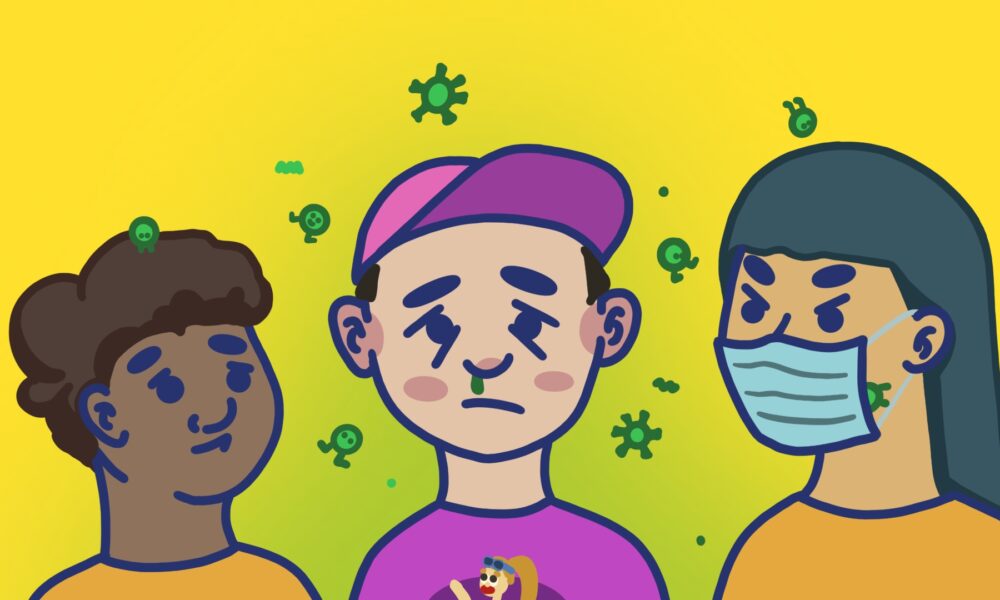
As summer comes to a close and courses, syllabi, and three-hour lectures slap us all in the face, McGill first years are hit with yet another challenge: The “Frosh flu.Frosh, four days of constant socializing, drinking, and partying, often leaves students mentally and physically burnt out. The Frosh flu presents the same symptoms as the common cold—coughs, sneezes, and congestion—coupled with a general aura of hangover. Here are some tips on how to navigate the pesky and hard-to-shake Frosh flu in your first year on campus.

Lean into the illness

Sit in your lecture hall and let the sounds of phlegm-filled coughing engulf you. Become one with the undercurrent of illness that lingers in the air. Let your body be transported into a state of feverish exhaustion and let the mysterious illness run its course. 

Did you know that COVID-19 is no longer a public health emergency? So, whenever someone coughs near you, you can actually sit a little closer to them. If you still haven’t gotten sick, shame on you; you clearly didn’t spend the first night of classes getting trampled at Muzique. If you still haven’t gotten sick, you clearly value your health over the ever-present FOMO… If you’re not hacking up a storm, are you even having a good time? If you aren’t fighting off a headache every day, can you even call yourself a McGill student? Like all good things, colds do come to an end at some point. 

In interviews with The Tribune, joyful and triumphant froshies shared their experiences overcoming the illness.

“I loved feeling like I was on the precipice of death,” Rachel Mattingly, U0 Arts, said. “Personally I think other people should have thanked me for being so open and vulnerable about my cold.” 

Mia Urban, U0 Arts, similarly expressed her thoughts on recent campus ailments. 

“Nothing warms my heart more than the sweet sounds of nose blowing,” Urban said. 

Go back in time and do Outdoor Frosh 

What better way to avoid getting sick is there than spending three days in the woods with an eclectic group of stoners, Europeans, and overly-intense backpackers? Take it from me—my Outdoor Frosh experience was everything I had hoped and dreamed of. Outdoor Frosh gives you the opportunity to get to know people on a more intimate level—and you do really get to know a group of people when you spend two nights sleeping like sardines, sharing campfire stories, telling jokes, and smelling each other’s farts. It may not be some people’s cup of tea, but to me and many other students, Outdoor Frosh presents a great opportunity for those less interested in a four-day bender. 

On the hike, we filed along the trail one after another, conversing with those in front and behind us. Be strategic about who you decide to walk behind on the hour-long hikes because you could get stuck talking about the prerequisites for mechanical engineering for three kilometres. Luckily, I navigated my way out of those conversations with my typical grace and charm. I eventually found my way to the front and had an invigorating conversation with two Vermonters about skiing and mountain biking. 

Outdoor Frosh was a breath of fresh air compared to the hustle and bustle of Montreal life. Even though we all got close during nights huddled by the fire, we thoroughly avoided the infamous Frosh flu. Unfortunately, we missed out on the opportunity to walk around the city drunk at 8 a.m. wearing matching t-shirts, but you win some, you lose some. 

Do everything you can to recover 

In all seriousness, getting sick is no fun, dampens the mood of pretty much everything, and can set you behind in school. Make sure to eat all of the dining hall oranges you can and stay hydrated. In your free time, maybe pick up a calming hobby like yoga or poetry. Stay sane and power through; you can do it! I am a credible source because I’m taking a class on the archaeology of health and disease next semester. I wish all froshies a speedy recovery and I will see you all in class. 

Research Briefs, Science & Technology

Is vitamin B12 supplementation always good for you?

The global vitamin B12 supplement market is poised for significant growth in the upcoming years. Although daily oral vitamin B12 supplements typically contain doses far exceeding the recommended amount, the impact of such high levels of vitamin B12 on gut health remains unclear. 

In a recent paper, Samantha Gruenheid, Chair of the Department of Microbiology and Immunology at McGill, and a team of scientists from across Canada unraveled the fascinating connections between vitamin B12 and the gut microbiome, illuminating the potential health consequences of over-supplementation. Over-supplementation, they proved, can perturb gut health.

Vitamin B12, also known as cobalamin, is crucial to the function of nerve cells and the formation of red blood cells and DNA. We most often consume it via supplements, animal food products, fortified plant-based foods, and fermented foods.

In the digestive system, the small intestine absorbs most of the B12 that you eat. The liver stores any excess after it has been excreted via bile. The remaining B12, unabsorbed by the liver, then enters the gut microbiota—a system of microorganisms, including bacteria, fungi, and viruses, in one’s gastrointestinal system.

The recommended daily vitamin B12 intake for those ages 14 and older is 2.4 micrograms. Although a high vitamin B12 intake is generally considered safe, Gruenheid’s findings suggest that it may disrupt the gut microbiota’s activities.

The researchers evaluated the effect of vitamin B12 on the gut microbiota of mice by providing a vitamin B12 supplementation proportionate to 25 milligrams in humans. 

“The reason we selected this amount was based on a mislabelled commercially available mouse diet,” Gruenheid said in an interview with The Tribune. “Fortunately, the dose was also a good estimation of the dose in some human supplements. Some supplements are approximately 1000 times the recommended daily intake, which is approximately what we achieved in this study.”

The researchers found that vitamin B12 supplementation increased susceptibility to infection with Citrobacter rodentium—a mouse-specific pathogen. 

“There are two things that are contributing to this. One factor is this inflammatory environment created by vitamin B12 over-supplementation,” Ben Willing, associate professor in the Department of Agricultural, Food, and Nutritional Science at the University of Alberta, said in an interview with The Tribune. “Another factor is the Citrobacter bacteria itself, which competes for vitamin B12. With large amounts of vitamin B12 available in the gut, it is easier for Citrobacter bacteria to get vitamin B12, meaning that they are better able to colonize and induce an infection.” 

Increased levels of inflammatory biomarkers, such as interleukin-12 and interleukin-17, indicate the inflammation caused by vitamin B12 over-supplementation.

“We believe that, even in the absence of the pathogen, vitamin B12 over-supplementation disrupts the ecosystem of the microbes because we have changed one of the things that microbes compete for and share,” Willing said. 

In other words, excessive amounts of vitamin B12 can disrupt the microbial community in the gut. 

“There is a potential for vitamin B12 supplements to change and even disrupt the competition dynamics in the gut microbiome,” Willing said. “On a larger scale, this study shows us an example of a health consequence when we add something to the diet.” 

Vitamin B12 does play an essential role in ensuring health, and it may be a good idea for older individuals and those who do not eat animal products to take a vitamin B12 supplement of approximately 2.4 micrograms to ward off vitamin B12 deficiency. However, as Gruenheid’s study has demonstrated, it is crucial to pay more attention to the amount of vitamin B12 in each supplement since an extremely high dose of vitamin B12 can engender unintended health consequences.

Commentary, Opinion

Walkable cities are not a culture war, but a necessity in the 21st century

When you think of a street, what do you visualize? You might imagine an arterial road like Sherbrooke or René-Lévesque, with two lanes for cars in both directions while pedestrians are relegated to small sidewalks. Or, you might think of something more like Mont-Royal and Prince-Arthur, streets with a balance between cars, cyclists, and pedestrians. Streets like these represent a legacy of what cities looked like for the first half of the 20th century––something many major cities are trying to recreate with 15-minute cities, an urban planning concept in which all of your daily needs can be met within 15 minutes by walking, cycling, or public transportation. However, these changes have opened a broader discussion about urbanism. For example, this has sparked  two new satirical anti-15-minute city clubs: McGill Students Against 15 Min Cities and McGill Suburbanism Club. Online, right-wing internet phenoms have purposefully spread disinformation about 15-minute cities to undermine the potential of this future for urban planning when in reality, 15-minute cities are vital to a sustainable and equitable future. 

The term was first popularized by Carlos Moreno, an urbanist and chief advisor to Paris’ Mayor Anne Hidalgo, who has radically embraced the 15-minute city in anticipation for the 2024 Paris Olympics.  Paris has added hundreds of kilometres of bike lanes and pedestrianized large swathes of the city in recent years, and aims to plant 170,000 trees by 2026. After initial hesitation to Hidalgo’s urbanism, Parisians liked the changes enough to re-elect her for another six year term in 2020.

Montreal has undergone similar widespread change under Valérie Plante’s leadership, aiming to de-incentivize driving and encourage cycling, walking and taking public transportation. Despite being healthier, cheaper and more sustainable, these modes of transportation have come under attack from local residents’ associations in Montreal. Despite cars continuing to dominate public space and the limited area allocated to pedestrians and cyclists in the city centre, drivers are still dissatisfied. To them, these changes to make Montreal more accessible have only added delays, taken away parking spots, and created inconsistent commute times.

What opponents of the 15-minute city fail to understand is that driving is only discouraged for short trips within the neighbourhood. Jordan Peterson, an infamous professor of psychology at the University of Toronto, has called the 15-minute city a World Economic Forum conspiracy that is led by “idiot tyrannical bureaucrats” who want to track everywhere you go and dictate where you are allowed to drive. Clearly, Peterson has never been in the suburbs without a car––a reality where you are actually trapped. Unfortunately for Peterson, he is unable to experience such a luxury as he lives in Seaton Village, a neighbourhood in Toronto that embodies the principles of the 15-minute city. 

The 15-minute city goes beyond promoting more sustainable modes of transportation. They encourage healthy and active lifestyles for all ages. Streets without cars are much safer for children, and ultimately promote a greater sense of freedom for all. Lower-income people are much less likely to own a car and walkable cities help create more equitable living circumstances by offering more universally accessible services and opportunities. 

Walkable cities are a win-win proposition. By ditching cars, people are more likely to spend money on local establishments—making pedestrianized areas consistently more financially productive than non-pedestrianized areas, which in turn provides significantly more tax income for cities. It is undeniable that being able to walk in your own neighborhood fosters a greater sense of community and improves mental well-being. Prioritizing this approach over gentrification creates a kind of health, community and individual, that supplements the democracy of our cities. 

It’s time we stop framing the 15-minute city as a war on the car, but rather as a way to rebalance the many modes of transportation we have to create healthier, sustainable and more equitable cities for all. 

McGill, News

Media Relations Office hosts press event with Associate Provost for Indigenous Initiatives

On Sept. 13, McGill’s Media Relations Office hosted a roundtable interview for student media with Celeste Pedri-Spade, the university’s first Associate Provost for Indigenous Initiatives and an Associate Professor of Anthropology

Pedri-Spade, who began her five-year appointment in September 2022, is an Anishinaabekwe (Ojibwe) and a member of the Lac des Mille Lacs First Nation in northwestern Ontario. During the roundtable, she spoke about the university’s progress in carrying out the 52 calls to action outlined in the 2017 final report of the Provost’s Taskforce on Indigenous Studies and Indigenous Education, the implementation of which she is responsible for supervising through the Office of Indigenous Initiatives (OII).

The OII serves as a “central administrative site” to oversee Indigenous initiatives at the university. The office’s role is to help aid in rendering the university community safe, welcoming, and inclusive for Indigenous people. She stressed that, despite the existence of the OII, all sectors of the university must actively work toward outreach and collaboration with Indigenous communities.

“I think everybody should be doing Indigenous community engagement, right? It’s not just the Office of Indigenous Initiatives. We can help, and we do [provide] support,” Pedri-Spade said.

As of the Fall 2022 census, 257 students—1.1 per cent of the total student population—self-identified as Indigenous. As of February 2022, there were 31 Indigenous faculty and staff members

Pedri-Spade emphasized the importance of hiring Indigenous people at the university and pointed to the success the OII has had in recruiting more Indigenous staff and faculty over the past few years. 

“I think one of the things that is really key […] is recruiting First Nations, Inuit, and Métis scholars, who then bring those perspectives,” Pedri-Spade said. “They not only speak from their nationhood, but they speak from their lived experience and positionality.”

She stated that 15 Indigenous faculty and staff joined McGill last year and that another 10 will be welcomed at a ceremony in October—all of whom are teaching Indigenous courses. 

When asked about McGill’s work on Indigenous issues, Students’ Society of McGill University (SSMU) vice-president of University Affairs Lalia Katchelewa expressed that progress on the 52 calls to action has sometimes felt slow. Despite this, she showed optimism about the OII’s future.

“I am looking forward to seeing the university’s progress on the 52 calls to action under this new administration,” Katchelewa wrote to The Tribune. “It seems there was a lack of momentum in the past few years on a few of these initiatives.”

Pedri-Spade also spoke to the financial and community support that the OII provides to decrease barriers to access and encourage more Indigenous individuals to come to the university. She touched on the importance of working closely with the Indigenous community at McGill to determine what needs exist and how they can be met.

“One of the things that we’re really excited about is that we’ve been working for a year doing a needs assessment with our Indigenous students,” Pedri-Spade said. “That has now culminated into a position that is about to be posted, where we have an actual dedicated, Indigenous students’ mental health counselor within the First Peoples’ House.”

Thomasina Phillips, current Associate Director of Indigenous Student Success and former First Peoples’ House manager, wrote about the importance of First Peoples’ House as a resource for McGill’s Indigenous community in a statement for The Tribune.

“Some of the initiatives coordinated by [First Peoples’ House] include orientation workshops and information sessions, cultural and arts-based group activities such as beading, moccasin-making and drumming,” Phillips wrote by email. “Through [First Peoples’ House], students have access to personal support with Elders on a bi-weekly basis and academic and practical supports like subsidized tutoring, writing support, free printing, study space, and free snacks.”

Leah Louttit-Bunker, who is co-chair of the Indigenous Student Alliance, stressed the key role that First Peoples’ House has played throughout her university experience in a statement to The Tribune.

“The First Peoples’ House was and still is my home away from home after studying at McGill for three years now, it is an incredibly supportive space where Indigenous students can make friends and connect with our cultures,” Louttit-Bunker wrote. 

Pedri-Spade and Louttit-Bunker both encouraged students to attend McGill’s 2023 Indigenous Awareness Weeks, which are put on by First Peoples’ House and the OII and take place from Sept. 18 to Sept. 30. 

Album Reviews, Arts & Entertainment

The latest in music: spilling your GUTS and getting Bewitched

Spilling my GUTS on Olivia Rodrigo’s new album

Sept. 8th marked the release of GUTS, Olivia Rodrigo’s highly anticipated sophomore album. Her first album, Sour, broke records for the longest-reigning debut album in the Billboard 200 Top 10 and hit the world with a wickedly ensnaring set of songs. Following such a powerful and evocative debut album, many fans were apprehensive to hear her new work. Now, more than two years later, GUTS has finally hit streaming platforms, shooting to the top of the charts. 

While I don’t personally gravitate towards pop music, and I must admit that I was unwillingly introduced to her new album through my roommate, this album stands out. Her lyrics resonate with any young woman growing up in today’s world. Rodrigo dives into a poignant critique of society’s patriarchal expectations of her as someone who broke into the music industry at a young age. In ‘Making the Bed,’ she sings “They love me like I’m some tourist attraction,” reminding listeners that under the shroud of fame, she is simply a young woman trying to figure out life like the rest of us. Aside from these fiery attacks, Rodrigo lets us reminisce about old romances and bad relationship choices in tracks like ‘Bad Idea, Right?’ and ‘Get Him Back!’ Conversely, if you want to feel pulled back to those awkward moments of growing up that we all sheepishly laugh about, queue up ‘Ballad of a Homeschool Girl.’ 


From heartfelt, to defiant, to comedic, the album’s got a song for every listener, and the streams reflect it: The album has been killing the Top 10 and garnered the most streams in the UK for the past week. In releasing the singles ‘Vampire’ and ‘Bad Idea, Right?’ over the summer, //GUTS// hooked its listeners, and gained frenzied traction for the album’s release. So let loose your previous music preferences and take time to listen to this new album. Or, if you only have time for one song, I recommend “All-American Bitch.” Perhaps it’s just the New Jersey in me talking, but it’s a personal favourite.

Laufey’s Bewitched: The perfect rom-com soundtrack where you’re the main character

On Sept. 8 2023, just as autumn’s touch began to grace the air, Laufey released her second album, Bewitched. Across the album’s fourteen tracks, the Icelandic-Chinese singer-songwriter focuses on themes of romance, unrequited love, and, through it all, coming of age. 

What differentiates Laufey (pronounced Lay-vay) from other popular artists is her roots in classical music and jazz. Growing up, Laufey’s family greatly influenced her varied music taste. She learned the piano after developing an interest in jazz, inherited from her father. On the other hand, her classical talents came from her maternal grandfather, who was a retired violin professor from the Central Conservatory of Music in Beijing, and her mother and twin sister who were both violinists. Laufey chose the cello instead.

The album’s opener, ‘Dreamer,’ starts off with an almost stubborn optimism about finding someone to love. The beginning vocals evoke a swing-era tune, while the lyrics send a kind of warning to listeners that the journey ahead isn’t an easy one. In ‘Promise,’ the chorus “It hurts to be something, it’s worse to be nothing with you” encapsulates the agony of falling for someone who, though unsuitable, holds an irreplaceable place in one’s heart. The album’s most listened-to song is a catchy, lighthearted, bossa nova track, ‘From the Start.’ The album interlude, ‘Nocturne,’ reminiscent of Frédéric Chopin who was famous for his 21 Nocturnes, brings her classical training to the forefront. In ‘Letter to My 13 Year Old Self,’ Laufey consoles her teenage self over anxieties such as having her first kiss later than other classmates, her foreign-sounding name, and being loved. In this ballad, the theme of love is redirected toward oneself, showing a young girl with high hopes and big dreams growing into an self-assured woman. Finally, the last song in the album, ‘Bewitched,’ portrays the strange sensation of falling for someone as flutes and harps sing arabesques, the mysterious and magical melody leaving the listener spellbound. 

As the weather cools down and sweaters and scarves slowly make their way back into our wardrobes, Bewitched offers an enchanting soundtrack for anyone who has found someone to share their time. Or, it can be a way to spend their time by themselves and ponder on that dream, if desired, coming true.  

Bewitched is available to listen on all streaming platforms.

Science & Technology

AI’s transformative impact on radiology: Insights from the Feindel Brain and Mind Lecture

Artificial intelligence (AI) has taken the world of healthcare by storm, revolutionizing the way physicians diagnose and treat medical conditions. The Feindel Brain and Mind Seminars featured radiology—an area that AI has impacted substantially—during its Sept. 13 event hosted at The Montreal Neurological Institute-Hospital. Saurabh Jha, Associate Professor of Radiology at the University of Pennsylvania, discussed the use of AI in the detection of abnormalities in head Computed Tomography (CT) scans.

Radiology uses medical imaging, which takes pictures of bodily organs, to assist in the diagnosis and treatment of diseases. AI algorithms can learn how to spot irregularities in these images, potentially automating tasks that have been traditionally carried out by radiologists.

In a paper that Jha reviewed, researchers trained an AI algorithm to identify abnormalities in head CT scans, such as hemorrhages, with remarkable accuracy. The scientists trained the algorithm on nearly 40,000 patient scans and then tested on another 10,000. A metric called the ‘area under the curve’ measured its performance, gauging whether it tended to overcall or undercall abnormalities.

“So what this algorithm did was reprioritize. There were studies that you thought weren’t important, but were brought to the top of the list [and that reprioritizing] translated [into] the time to diagnose [being] substantially reduced,” Jha said. “What stroke[s] [have] made us understand is there’s no point [in] waiting for the patient to get to you, you must try and get to the patient.” 

The innovative nature of AI extends beyond the confines of the hospital, as imaging equipment and AI can be embedded in ambulances that can reach the patient swiftly, improving patient outcomes significantly. 

“There is much greater effectiveness, effectiveness that comes from promptness of diagnosis and promptness of treatment. You can’t give treatment promptly, unless you’ve diagnosed promptly,” Jha said.

Although the question of whether AI will replace radiologists lingers, the answer, according to Jha, is coexistence. Radiologists and AI can work synergistically, with AI handling routine tasks while radiologists focus on complex cases. 

“So there is of course what I would call the replacement fallacy [with physicians in North America being] worried about AI replacing radiologists, [while] in most of the rest of the world, there aren’t any radiologists to replace,” Jha said.

For countries with a shortage of radiologists, AI could present a remarkable opportunity to improve healthcare without the concern of displacing existing human jobs. Jha expanded on this potential advantage by referring to a region in Northern India known for its high incidence of stroke and lack of physicians.

“There is no AI replacement, there is nothing else there. It’s AI or nothing. And often, AI does a very good job of giving something pretty good,” Jha explained.

Jha then acknowledged that the acceptance of AI in radiology varies between nurses, doctors, and administrators. AI vendors and hospital management may view it as a way to enhance efficiency and revenue, whereas neurologists may be more cautious and concerned about the effects of false positives or missed cases.

The trade-off between sensitivity and specificity is a crucial consideration in AI adoption. Vendors claim that a few false positives are worth the benefits of true positives. However, false positives can disrupt workflow and potentially impact other diagnoses, as well as deeply affect the lives of misdiagnosed patients. Indication drift in healthcare also poses an issue because the use of AI in certain diseases’ imaging may increase its usage in other conditions for which AI has not necessarily been validated.

“When you make something easier, you get more of it, that’s obvious, but what’s sometimes counterintuitive is that the net gain from that is a little lower than what it would have been had you maintained some barriers,” Jha said. 

In Jha’s view, a hybrid model where AI accompanies radiologists would be ideal. This approach would maximize the strengths of both, ensuring high-quality patient care while optimizing efficiency and reducing human error.

Science & Technology

“A Disease of the Past”: Our lacklustre response to Tuberculosis

Lena Faust, a Ph.D. student in epidemiology at McGill, first became interested in tuberculosis (TB) while learning about another disease: COVID-19. What caught her attention, however, were not the diseases themselves, but the difference in global response to each. 

“With COVID-19, we quickly developed lots of different vaccines that are highly effective,” Faust said in an interview with The Tribune. “[In contrast,] we have had one vaccine [for TB] that was rolled out one hundred years ago, and it’s not widely used or effective. COVID-19 has shown us that if we want to develop vaccines within a couple years, we can.” 

So what accounts for this stark difference in global response? In their study in The Lancet, “Improving measurement of tuberculosis care cascades to enhance people-centred care, Faust and her team hypothesized that one factor is the insufficient use of care cascades. These measure the number of patients reaching different milestones in care, such as getting tested and completing the first round of treatment for a disease. 


As Faust puts it, TB is often dismissed as a ‘disease of the past,’ even though it is currently the world’s deadliest infectious disease. In contrast, the emergence of the pandemic in 2020 highlighted COVID-19 as a new and frightening disease, leading to the development and approval of three different types of mRNA vaccines in less than a year. However, COVID-19 is not the only disease that has historically garnered a comparatively prompt response. 

“The HIV movement has been really exemplary in the way that it’s been able to galvanize support for a cause and resources. Advocacy in the TB world has not been quite as loud,” Faust explained. 

She hypothesizes that HIV’s novel appearance in the ‘70s and ‘80s and the ensuing epidemic created a sense of urgency, similar to COVID-19an urgency that is absent with TB. However, all three diseases call attention to disproportionate medical treatment—affecting, most notably, queer and trans people and Black, Indigenous, and Latinx people in the Americas. 

Analysis of care cascades has been a key factor in the global response against HIV. As advocacy tools, care cascades have greatly impacted public health beyond simply modelling data. Faust and her peers argue that the framework is also useful for TB treatment, primarily for identifying barriers in public health services. For instance, some patients live too far from the nearest treatment centres, while others cannot afford to take time off work or pay for childcare while seeking treatment. 

“TB treatment is a time-consuming and costly process,” Faust said. 

Care cascades, however, can provide guidance to mitigate some of these barriers. For instance, by examining the distribution of a population’s infected regions using care cascades, more funding can be allocated to the construction of health centres in underserved areas. However, while they are an extremely useful diagnostic tool, care cascades are only part of the solution. 

“One of the limitations of the cascades is even if you do identify [healthcare] gaps, you also need to understand from the patient perspective what is leading to those gaps,” Faust said. “Care cascades [therefore] need to be used to enhance people-centred care, […] that takes into account the challenges that people face when trying to access [health services].”

As with the global response to COVID-19 and HIV/AIDS, the treatment of TB is marked by drastic inequalities across countries and healthcare systems in terms of which patients receive care and which treatment methods are prioritized. While this is an ever-present issue in global health, Faust proposes that care cascades are one key tool to rectify treatment disparities. 

“TB elimination is really a health equity issue. One of the ways to get investment and political support, and also to guide that investment, is to emphasize the role of care cascades in identifying gaps in the care for TB,” Faust said. 

Above all, Faust wants the general population to realize that TB is not a ‘disease of the past,’ a way of thinking that can lead to even the deadliest of diseases being overlooked. 

Sports

Separating facts from fiction: Unmasking pseudoscience in the world of sports

On Sept. 13, as part of the annual Trottier Public Science Symposium hosted by the McGill Office for Science and Society (OSS), Nicholas B. Tiller, a researcher at the Harbour-UCLA Medical Center, spoke about the prevalence of pseudoscience in sports. 

Joe Schwarcz, the director of the OSS, opened the conference by highlighting the presence of non-scientific beliefs throughout history, especially concerning human performance. 

“[The Ancient Greeks] were already interested in enhancing their performances,” Schwarcz explained. “They knew about opium […], magic mushrooms, […] they ate the hearts of animals thinking that this would give them strength, and they also dosed themselves with the testicles of bulls. This was the original testosterone therapy.”

Is sports a breeding ground for pseudoscience ? 

Tiller began his talk by spotlighting a number of athletes that have publicly engaged in pseudoscientific practices, with some athletes going as far as to endorse these techniques. Tiller highlighted Michael Phelps’ influential use of  cupping in the 2016 Rio Olympic Games, Novak Djokovic’s ritual pilgrimage to a pyramid in Bosnia-Herzegovina, and Tom Brady’s promotion of a “cure-all” drink to individuals across the sporting community. He further expressed that many of the benefits seen by athletes who follow methods like these are brought on by a placebo effect rather than the practice itself.  

Tiller emphasized the often-dangerous outcome of following pseudoscience. While the idea of placebo practices might seem harmless, the promotion of Complementary and Alternative Medicine (CAM) often undermines the credibility of scientifically proven practices.

“When it comes to spreading the message of critical thinking, scientific scepticism, reason, rationality, scientists have brought a knife to a gunfight,” Tiller explained. “This isn’t just a case of a few high-profile athletes, a few bad eggs in the bunch that are disseminating bad advice. This seems to be a systemic problem.”

The talk also tackled the question of why athletes specifically seem to be more at risk of following pseudoscience practices.  

“The first thing to consider is this idea of marginal gains: The principle that no performance advantage is too small,” Tiller said.  “The idea that small improvements in various aspects of life are all cumulative to have a meaningful impact on the athlete’s performance.”

Tiller also thinks this is a byproduct of the competitive nature of elite sport.  

“You’ve got to think that the difference between gold and silver is sometimes infinitesimally small––it could be a fraction of a second in a short distance sprint,” Tiller furthered. “It’s all justified on the notion that every percentage point counts. It makes athletes and coaches much more experimental than they would otherwise be.”

This quest for anything that would give that competitive edge often renders athletes and coaches more vulnerable to pseudoscientific products. 

“In that respect, anybody who competes in sports […] is a walking prey to the 21st century snake-oil salesman,” Tiller summarized. 

Tiller focused much of his talk on the risks associated with the widespread promotion of pseudoscience. One major risk of consuming pseudoscientific products is the consumption of unregulated substances as over-the-counter dietary supplements can sometimes be contaminated with performance-enhancing drugs. 

“Whether it’s inadvertent doping by the athlete because they’ve taken something that’s contaminated or whether it’s deliberate doping, the outcome is the same, it’s a two-year competitive ban [in most sports],” Tiller warned. 

Based on his experience working with Olympians, Tiller emphasized that most athletes are offered limited resources and are often required to take on a job outside of training to support the financial cost. As such, devoting the limited monetary resources on practices that are not proven nor effective creates a financial risk for athletes who are inclined to do so.  

For amateur athletes, falling into the trap of pseudoscience is a danger that all must be wary of when deciding to partake in a new recovery practice or take a new supplement. Tiller stresses the importance of teaching scientific, legitimate, and proven practices and fostering critical thinking.

Science & Technology

McGill nutritionist shares sports nutrition tips at Trottier Symposium

McGill hosted the 2023 Trottier Public Science Symposium, “Ready, Set, Go! Use and Abuse of Science in Sport,” on Sept. 13-14 in Moyse Hall. The symposium featured talks by renowned experts who offered their perspectives on nutrition and the broader role of science in sports.

One of the talks was “Food for Thought: Tackling Nutrition Science for Sport Performance” by Elizabeth Mansfield, adjunct professor at McGill’s School of Human Nutrition, who specializes in sports nutrition. 

Are dietary nitrate supplements your friend?

Mansfield began the presentation by discussing a popular claim about the role of dietary nitrates in athletics. These compounds are often found in foods like beets, rhubarb, and spinach. 

“[Experts say that] dietary nitrates make muscles more efficient and improve sprint performance and reaction time,” Mansfield said.

Although Mansfield agreed with this finding, she expressed concern about the subsequent development of nitrate supplements, such as beet shots, which in turn affected people’s food choices. Instead of opting for minimally processed nitrate-rich foods, which generally contain a wide range of other beneficial nutrients, Mansfield argued that the sports nutrition industry has pushed athletes to choose supplements containing only nitrates. 

“As a food-first nutritionist, I would say you are probably going to be better off trying to eat it, chew it, and make it part of your regular plan,” Mansfield said. “Certainly, it’s not just beets; it’s probably a lot of different types of vegetables that you can benefit from eating.” 

The importance of staying hydrated

Mansfield then highlighted the importance of adequate hydration in sports performance. This was what she described as “the first thing” she looks at in terms of overall health and performance.

“For most of us, if we are working out decently hard for one to two hours, we would want to have two cups of water with a dash of salt and a bit of maple syrup before each workout,” Mansfield explained. “After the workout, we want to have some water, foods that contain salt, and some wet foods.” 

Despite water being the beverage of choice, coffee and tea count as well. Mansfield deconstructed ideas and misinformation about fluid balance, which ensures that the amount of fluids that someone intakes and excretes are the same. Coffee and tea, she explained, are not dehydrating fluids, contrary to popular belief. 

Refuelling the body after a workout

Mansfield also elaborated on the eating schedule that could optimize energy levels during a training session. She suggested eating and drinking three to four hours before training for best results.

“You might need to have a snack up to two hours before training. And you might even need a top-up 30 minutes before training, particularly if it’s going to be a long and hard training session,” Mansfield said. 

Refuelling the body after the workout is as important as fueling it before the workout. She outlined a schedule for ensuring the body has the nutrients it needs to perform well, including eating carbohydrates within half an hour of finishing a workout if you are planning to complete multiple workouts in a single day. 

The role of protein in staying energized

Protein also plays a key role in athletes’ diets, but Mansfield explained that it’s important to be strategic about protein intake. One important component of protein intake is leucine, an amino acid that stimulates muscle protein synthesis post-workout. 

“It’s like a light switch that turns the muscles on,” Mansfield explained. 

Mansfield recommended aiming for 30 grams of protein per meal and distributing protein-rich foods throughout the day. She also discussed caution around relying on protein shakes. 

“Protein shakes do not have a lot of carbohydrates in them,” Mansfield said. “You need three times the amount of carbohydrate-rich foods compared to protein-rich foods to actually get the refuelling process going.”

Overall, Mansfield’s talk dispelled common misconceptions and deepened the audience’s understanding of sports nutrition, helping to ensure health and performance for athletes and the public alike.

Read the latest issue

Read the latest issue