


Latest News

Out on the Town, Student Life

Soaking up the holiday season at Le Grand Marché de Noël de Montréal

Montreal’s first snowfall brought with it the spirit of Christmas, lighting up Dollarama stores in Christmas decor and my tongue in the green and red of Christmas candy (yes, already, and no, I would not like to watch my sugar intake, Aunt Karen). 

As someone who has never celebrated Christmas and never been in Montreal over the holidays, I decided that this was my year. I would sit at home, binge-watch horrible Christmas movies, bake gingerbread people, trip over wires while trying to decorate a Christmas tree, and freeze to death in outdoor Christmas markets. I began with the final item on the list and dragged my friends to Le Grand Marché de Noël de Montréal at Quartier des Spectacles.

Walking on Ste. Catherine between Balmoral and Clark, we saw stalls decorated in green and red lights and a huge sign indicating that this was, in fact, the great Christmas market.  Hundreds of people were swarming between stalls that displayed goods ranging from warm clothing accessories and unique delicacies to scented candles and handmade woodcrafts. There were also fire pits in the middle, hot drinks, and crepe stands on the side, and an extremely pricey restaurant at the very end.

At the first stall, the vendor was giving out free samples of different kinds of wines, all of which left a tingling maple aftertaste. Intrigued but having sworn off alcohol, I asked my friends to taste-test the Maple Wine for me, and they all endorsed its unique flavour, recommending it to all wine fanatics.  

Next, I stopped at a handmade stone and wood jewelry stall, which sold delicate rings, rustic necklaces, and minimalist earrings on display. Kira Confections, wo-manned by Kira herself, has had a stall at Christmas markets for two years running.

“Since the pandemic has slowed down, so has the business,” Kira told The McGill Tribune

Nevertheless, she still enjoys it and is continuing to sell her work through Etsy. 

I was then drawn to a woman selling the cutest sewn gnomes. As it turned out, Nina Ahrendt, the vendor, also works as a project administrator at McGill and took up this unique hobby to help enliven the Christmas spirit. 

“I have a hobby of creating and sewing gnomes in all shapes and sizes for Christmas, to make sure the Christmas spirit is present in every home,” Ahrendt said. “I’m Danish and we have a great tradition in Denmark to decorate for Christmas.” 

Ahrendt has been setting up stalls at Christmas markets for the last five years and claims that she actually got lucky with COVID-19. 

“People couldn’t spend anywhere else [during the pandemic] so they actually spent money at the Christmas markets, but I think there is less money available this year.”

I then spotted a man with the kindest-looking face advertising some interesting confections, and although I was quite tired of walking by now, I knew I had to chat with him. Elias Masmoudi was selling handmade Tunisian sweets, a venture begun by his grandmother in 1972 that has continued with their family name. 

“We hand-made sweets and sold them for weddings, and then it got bigger, and we now sell them during Christmas and even other holidays, such as Ramadan. We have stores in France, Saudi Arabia, Morocco and Tunisia now,” Masmoudi told the Tribune

Though this was his first time setting up a stall in a Christmas market, Masmoudi has been selling the goodies himself since 2017 and claims the pandemic had helped its success. 

“In 2017, we started online and the online business got better with COVID, it didn’t get worse. 2021 was a great year and 2022 is now alright,” Masmoudi said. 

I asked if I could purchase a $10 sweet box and, after finding out I was writing for a student newspaper, he said he would add in some extra sweets. By the time I got the box, it was filled to the brim with delicious delicacies, bringing a smile to my face. Masmoudi, along with all the other vendors lining the Ste. Catherine walkway, really are spreading the Christmas cheer.

McGill, News

McGill instructors report inequitable employment conditions and academic precarity

There have been mounting outcries over poor labour conditions at Canadian universities as instructors and organizations alike point to problems such as low pay, overwork, difficulty being promoted, and lacking job security, exacerbated by a rise in contract-based positions. McGill, according to some members of the university community, is not immune to this so-called ‘academic precarity.’ 

As of April 2022, 76.3 per cent of teaching staff at McGill were on contract—a category that includes course lecturers, faculty lecturers, and adjunct professors, among others—rather than being tenure-track. Further, salaries for non-unionized staff range widely depending on faculty, program, and appointment. Salaries for unionized staff also vary according to these factors, but less so because they are regulated by collective agreements.

McGill Association of University Teachers (MAUT) president Renee Sieber, an associate professor in both the Department of Geography and the Bieler School of Environment, believes that academia has become a “seller’s market” as more people attain PhDs and qualify for teaching positions. She finds that instructors, even tenure-track ones, are sensing rising instability in their positions.

“If they do feel [precarious], they have to be a lot more cautious, risk averse, just keep their heads down, and do their research and not speak up for say, issues of academic freedom […] or dissent in other ways,” Sieber said in an interview with The McGill Tribune. “Or [they may feel that they] can’t do more service, like serve on committees, because if [they are] not trying to pump out research, you know, 80 hours a week, then [they are] going to be shown the door.”

Alexandra Ketchum, a faculty lecturer at McGill’s Institute for Gender, Sexuality, and Feminist Studies (IGSF), explained in an interview with the Tribune that faculty lecturers find themselves in a difficult position.

“Faculty lecturers are eligible after their contract is renewed for more than six years for permanence, which provides some stability but it is not the same as tenure and does not come with sabbaticals and as much research support and so forth,” Ketchum said. “So, while there are some mechanisms for some forms of stability that don’t exist at other institutions, there is a gap and hierarchy in terms of how the institution treats employees, in terms of what kinds of financial and material support is offered.”

Ketchum brought up that women, racialized, and queer instructors often end up doing more ‘invisible’ work, such as servicing their department or advising students, which is critical but less valued than research by much of the academic community. When it comes time for pay raises or promotions, these individuals are often overlooked. 

“There’s also an issue of respect and culture, in which there’s a way that non-tenure-track employees […] are treated as less worthy of respect and are often treated as less legitimate scholars,” Ketchum said. “Academia is very hierarchical and very prestige based, and so there’s a culture that can undermine a lot of the contributions of non-tenure-track scholars.”

While some academic staff at McGill—including course lecturers, teaching assistants (TAs), and now professors in the Faculty of Law—are unionized and, thus, protected by collective agreements, the vast majority are not. Though organizations like MAUT exist to advocate for non-unionized teachers’ pay, benefits, and rights, they do not have the same negotiating powers as a union.

Emily Benoit, U2 Arts, thinks unionization would benefit not only staff, but students as well. She pointed out, however, that the university seems dedicated to keeping labour conditions as they are. 

“I know that [with] the law profs, McGill threw everything they had at them to prevent them from unionizing. And that’s the law professors—they know the most legal stuff,” Benoit told the Tribune. “It makes all the other profs and all the other faculties […] scared of unionizing because, you know, they can’t necessarily deal with that [….] It would be better for the students because [a union would bring] better working conditions for the profs. So happier profs, happier students.”

Private, Research Briefs, Science & Technology

Hold your breath, make a wish and count to 2.5

Air pollution from industrial processes, cars, and even forest fires means that the air we breathe contains numerous harmful particles and debris. Fine particulate matter, known as PM2.5, are tiny particles in the air released by both natural sources and human activities. Since The McGill Tribune last reported on this fine particulate matter, PM2.5 has only garnered more attention.  Their name is derived from their 2.5 micron width. For reference, a rain droplet is around 10 microns in diametre. PM2.5 is not made of one chemical, but rather a mixture of different pollutants such as pollen, ash, aerosols, and fumes. These particles can be directly emitted by combustion reactions, such as the burning of fossil fuels, or formed through the reactions of different gasses interacting. But no matter how these particles form, PM2.5 poses a serious risk to our health

The microscopic size of PM2.5 means that these particles penetrate deeper into our lungs than larger pollutants, which are typically deposited in the upper respiratory tract. PM2.5 deposition can lead to inflammation of lung tissue and subsequent tissue damage. Short-term exposure to PM2.5 has been found to cause respiratory ailments, such as acute and chronic bronchitis. Long-term PM2.5 exposure is linked to premature mortality, especially among children and people with chronic heart or lung conditions. While the connection between high concentrations of PM2.5 and increased mortality is well established, the safe level of exposure is still being determined. According to a recent McGill study published in Science Advances, a safe concentration of PM2.5 is much lower than previously thought. 

Canada, compared to other countries, has relatively low PM2.5 levels, with a current average annual concentration of 7.1 micrograms per cubic metre. The limited presence of PM2.5 is due to stringent regulations in place for industrial emissions and coal burning, resulting in cleaner air than in countries with more lax regulations. Due to having low PM2.5 concentrations, Canada is an ideal place to study the effects of low PM2.5 levels on health. To study mortality rates related to this type of air pollution, McGill researchers used mortality data and lifestyle data collected in the Canadian census. 

“Our national census […] has been linked to tax records (for residential location) and mortality data,” Scott Weichenthal, an associate professor in the Department of Epidemiology, Biostatistics, and Occupational Health at McGill and lead author of the study, wrote in an email to the Tribune. “This allows us to assign people’s exposures to outdoor air pollution based on where they live and then follow people over time to see if people living in higher exposure areas have higher rates of death/disease.”

After controlling for factors like diet, smoking, exercise, and alcohol consumption, the researchers found that mortality in places with a low concentration of PM2.5 was significantly higher than previously thought. They estimate that an additional 1.55 million deaths worldwide each year are caused by outdoor concentrations of PM2.5. 

“Essentially, what we did is update […] how the risk of death changes with increasing exposure,” Weichenthal wrote. “Previously, the lower end of this curve was left undefined because of insufficient evidence at low concentrations, but we addressed this knowledge gap using a large study we conducted in Canada where PM2.5 levels are low. Our results suggest that globally PM2.5 likely kills more people than previously appreciated.”

The World Health Organization recently changed their guidelines for safe average annual concentrations of PM2.5 to below five micrograms per cubic metre. If PM2.5 levels can be reduced to meet this guideline, millions of premature deaths caused by these fine particles could be prevented.

McGill, News, The Tribune Explains

Tribune Explains: Course Evaluations

As the semester wraps up, many students may have heard in-class pleas and received emails asking them to fill out course evaluations. The McGill Tribune looked into how these feedback forms work and how their results are used by the university.  

How do course evaluations work at McGill?

At the end of every semester, any course at McGill that has five or more students is evaluated through the Mercury online platform. Course evaluations allow students to provide anonymous feedback to their instructors. The evaluation form includes sections for ratings and supplementary statements about the course, its content, and the instructor’s teaching style. Completing a course evaluation can take about five to 10 minutes depending on how much detail a student wishes to provide.

When is the deadline for students to submit course evaluations?

For most departments at the university, students are given a six-week window each semester to complete course evaluations. With approval from the Dean, instructors can opt to close course evaluations prior to the formal examination period, though the default deadline is when formal exams end. Students can consult the Mercury website to find out whether their course evaluation forms close on Dec. 6 or on Dec. 21. 

How are course evaluations helpful for professors and students?

According to McGill media relations officer Frédérique Mazerolle, the university uses course evaluations to determine the effectiveness of an instructor’s teaching style and to improve the future delivery of courses. Course evaluation results may also be used as a component of an instructor’s teaching dossier, which is a portfolio of an academic’s major teaching accomplishments. Mazerolle stressed that administrators and faculty rely on course evaluations for decision making and urged students to participate in the surveys. 

“McGill University values quality in the courses it offers its students,” Mazerolle wrote in a statement to the Tribune. “The more students fill out course evaluations, the more seriously feedback is taken by instructors and administrators.”

According to Mazerolle, each year 5,000 courses and 2,500 instructors are evaluated, but only 50 per cent of students fill out course evaluations.

 How can professors and students see the results from course evaluations?

Course instructors have access to the evaluation results only after they have submitted student grades for the semester. Though course evaluations are entirely anonymous and not linked to student ID numbers, this rule ensures that professors cannot be swayed by course evaluation feedback when grading students.

Students have access to numerical course evaluation results on Mercury or under the Course Evaluation Results tab on Minerva, though written responses are only made available to the instructors.  

How are course evaluations different from Rate My Professors?

Rate My Professors, a website where anyone can post anonymous reviews about an instructor, is another tool students may use to share their experiences with teachers from universities around the globe. Each review rates a teacher from “awesome,” “great,” “good,” “OK,” and “awful,” and ranks difficulty and quality levels of their courses on an ascending scale of one to five. 

Though the posts on Rate My Professors are not moderated or fact-checked, many students rely on the platform instead of McGill’s Mercury system. Susan Aloudat, U0 Arts, did not know about McGill’s internal course evaluations and, instead, consulted Rate My Professors when choosing courses for her first semester at the university. Though she will use both resources when finalizing her schedule for next semester, Aloudat is conscious of the biases of both platforms.“For example, I had a teacher that was like ‘if we can get to 60 per cent [participation in the surveys], then we will help you guys on the final exam’ so I did that but I didn’t have anything exactly pressing to say,” Aloudat told the Tribune. “Mercury would be more for very neutral responses. But if you want an opinion, then you’ll find that on Rate My Professors.”

News, SSMU

Legislative Council approves motion for SSMU to oppose COP-15

The Students’ Society of McGill University (SSMU) held its fifth and final Legislative Council meeting of the Fall semester on Dec. 1. Members passed a motion for SSMU to take a position against COP-15, a motion to approve a renewed version of the expired Free Menstrual Hygiene Products Policy, and a motion to donate $4,000 of winter clothing to Resilience Montreal. Throughout the meeting, members also raised concerns about the Student Support progress report. 

Ajamu Attard, CEO of Student Support, a for-profit startup which provides students access to Calm, Grammarly, and Udemy through an opt-outable fee, reported that 36 per cent of students had paid the fee and were using Student Support’s services. The Student Support fee is currently in a testing period of one year before it will be up for renewal in Winter 2023 for a five-year term. Attard told the Council that most of the funds the company receives from student fees are used to provide the three services, with a small portion being allocated towards marketing. 

SSMU vice-president (VP) External Val Masny questioned whether the collected fees, which amounted to approximately $200,000 this semester according to Attard, was the best use of students’ money, suggesting it should alternatively be used to pay for psychologists. Attard argued that Calm offers a “different value” for students.

“I know for some students they start their journey with Calm, maybe they’re not comfortable going on the phone, or they just need to get something that they can instantly use to deal with whatever they’re going through,” Attard said. 

Near the end of the meeting, Masny presented a motion for SSMU to take a position against COP-15, the 15th World Conference on Biodiversity which will be held in Montreal from Dec. 7 to 19. The motion obliges SSMU to encourage its members to mobilize against the summit and provide financial and non-financial support, such as a teach-in, for those who do so. It argues that the summit’s objectives fail to challenge the role of states’ and corporations’ extractivism in the global decline in biodiversity and “the continued privatization of natural resources.” 

During the debate period, Councillor Benson Wan, Councillor Emily Thom, and Councillor Sedami-Habib Djossou expressed concern about one of the clauses in the motion that would require to SSMU to support the “Coalition anticapitaliste et écologiste contre la Cop 15” as an unaffiliated political campaign. Unlike affiliated political campaigns, unaffiliated campaigns have not received a mandate from either the Legislative Council, a Referendum, or a General Assembly. 

“I have a little bit of hesitancy with supporting this coalition outright in all their numbers without knowing exactly what they’re currently doing and what they will do, especially if they are a public coalition,” Wan said. 

“Perhaps the values are good, but […] [fucklacop15.org is]  quite a provocative name for an advocacy group,” Thom added. 

Wan motioned to remove this clause, and the amended motion passed with 12 councillors in favour. 

Moment of the Meeting: 

In response to councillors’ concerns about affiliating SSMU with the Coalition against COP-15, VP External Val Masny asserted that the coalition is a central base of organizing against COP-15, noting that various student associations in and outside Montreal have offered support. They explained that it would be difficult for SSMU to fully adopt a position against COP-15 if the union was unable to support students involved in the coalition. 

Soundbite: 

“[Education students at UQAM are] currently facing repression by the administration. The administration once marked their classes as withdrawals to discourage further strikes. This is unprecedented and very dangerous to student democracy. As such, we’re in the midst of writing a letter of support to students mobilizing against this repression.” 

— VP Student Life Hassanatou Koulibaly speaking on behalf of Masny about supporting education students at the University of Quebec in Montreal (UQAM) who went on strike for five weeks beginning in mid-October 


A previous version of this article stated that 36 per cent of the McGill student body has not opted out of the Student Support fee. In fact, 36 per cent of students had paid the fee and were using Student Support’s services. The Tribune regrets this error.

Commentary, Opinion

Systemic neglect continues as Montreal’s houselessness crisis worsens

More than 3,000 people remain without a home this winter despite years of tireless advocacy from community organizations around Montreal. Almost half of Montreal’s unhoused population is Inuit, reflecting Quebec’s ongoing settler-colonial project. 

The city’s attempts at resolving the crisis remain inadequate and ineffective. In 2021, the city provided 1,550 emergency beds, created 10 new warming stations in different boroughs, and launched a program giving housing access to 200 people. Despite these efforts, houseless people in Montreal continue to tragically freeze to death. The city’s solutions seem to be nothing more than a ‘one step forward, two steps back’ plan, as the 14 shelters opened during the pandemic were reduced to three in the past year, compounding the shortage of emergency measures when there are no long-term ones in place. Although the provincial government has launched a $280 million investment plan for the next five years, this is not nearly an urgent enough measure to resolve Montreal’s long-lasting houselessness problem and shows that the city does not prioritize remedying it. 

A deeper dive into Montreal’s fiscal policy indicates that houselessness is not the city’s top priority. Mayor Plante’s $125,000,000 investment to build “the biggest park in Canada” as part of her “green deal” is not nearly as pressing as the houselessness issue, and it would take less than a quarter of that amount to provide permanent housing for those on the streets. Beyond this, the major increase of the Montreal police department’s budget to a total $787 million for 2023 ($63 million more than in 2022) is an absurdly unnecessary and ignorant allocation of taxpayer money. These funds, reserved for hiring more police officers, represent roughly 14 times more than what is invested in the city’s five-year plan to fight houselessness.

The city still engages in the brutal practice of evictions, such as the one planned for Nov. 10 near the Ville-Marie Expressway. The eviction was eventually delayed after dozens of protestors marched in solidarity, but the project is still ongoing and will displace an entire camp with nowhere else to go, to supposedly offer them better alternatives.

Though there are initiatives that offer short-term essentials for people in need, they cannot provide solutions for long-term structural problems. Mobilizing For Milton-Parc, a student-run organization that provides essential food and supplies, and the “Leave a coat” project in the Rosemont borough, are both examples of positive community-based approaches. Although these are important initiatives, they work to address the consequences of houselessness but cannot address the root causes of housing insecurity. The municipal government is failing at long-term initiatives and instead relies on band-aid measures. Meanwhile, community-based shelters, such as Resilience Montreal, stand alone by offering unfaltering life-saving services without sufficient government support. 

To bring the crisis to an end, the city must implement long-term programs such as affordable or transitional housing and harm reduction which will keep people in precarious situations safe this winter. If the municipal government truly cared about people experiencing houselessness, then they would divert funding to the social programs necessary to combat the systems that leave the city’s most vulnerable behind.  

The provincial and municipal governments must stop making excuses and finally take thoughtful action for its unhoused population, instead of subjecting them to violence. The burden of solving this crisis cannot continue to fall on the shoulders of community organizers and rather should fall on those of a provincial government that has more than enough resources to execute viable solutions. Unhoused populations need effective long-term support from the provincial and municipal leadership because coats may keep people warm for now, but they won’t provide the structural change necessary to save lives.

McGill, News

McGill begins eighth annual participation in Hydro-Québec Peak Demand Management program

McGill Facilities Management and Ancillary Services (FMAS) has announced that the university is once again participating in Hydro-Québec’s Peak Demand Management (PDM) program—marking its eighth year of participation—this winter. The state-owned energy corporation experiences periods of peak demand on especially cold days from December to the end of March, mostly in the mornings and evenings when people are likely to spend time in their homes. During these hours, Hydro-Québec encourages consumers, including universities like McGill, to use less energy.

Sixteen McGill buildings have protocols in place for peak demand hours, such as reducing or turning off energy-intensive systems. According to Jerome Conraud, director of utilities and energy management at McGill, the university’s measures work to reduce demand on Hydro-Quebec’s grid, but do not necessarily reduce McGill’s overall energy consumption.

“Many buildings across McGill have back-up emergency generators [….] During PDM events, we transfer these loads to the generators so that they are no longer receiving power from the grid,” Conraud wrote in a statement to The McGill Tribune. “This allows us to significantly reduce demand on Hydro-Québec’s grid while minimizing impacts to operations within the building.” 

For residential consumers, Hydro-Québec advertises a dynamic pricing system that offers discounts to individuals who reduce their energy use during peak demand hours. Similarly, McGill receives money from Hydro-Québec for its participation in the PDM program, which are then used to cover operational costs such as staff wages. The money also goes towards improving energy systems on campus, with any remaining funds allocated towards other energy-saving initiatives like investing in energy-efficient infrastructure at McGill.

Donald Smith, a professor in the Faculty of Agricultural and Environmental Sciences (AES), believes that McGill’s incentive to participate in and advertise the PDM program is not purely environmental.

“There could be an economic incentive. There’s an overall environmental and social consideration around that, too, because if [energy usage] gets spread out […] an entity like Hydro-Québec doesn’t have to go off and dam more rivers,” Smith said. “I’m sure from McGill’s perspective, there’s a PR thing to it. I think they are generally trying to be conscientious about these things.”

While Hydro-Québec boasts 99 per cent renewable energy sources, McGill should still aim to reduce overall energy use according to professor and founding director of the Max Bell School of Public Policy Christopher Ragan.

“If we can […] use less energy, then, first of all, we can save money by spending less on even clean electricity,” Ragan said. “But it also means that society then has more clean energy available. Because whatever Hydro-Québec is producing, if we use less of it, then there’s more available for other uses, including to displace dirty energy.”

McGill also limits the number of running elevators and electric heating units in certain buildings during the PDM period. Smith added that there are important trade-offs to be considered when decreasing energy usage campus-wide. He explained that while energy efficiency is crucial, McGill would receive negative feedback if those energy efficiencies interfered with accessibility essentials—for instance, having reliable elevator service.

Conraud stressed in his statement that McGill has other initiatives in place that aim to reduce energy use on campus as part of the university’s Climate and Sustainability Strategy. 


“McGill has made major investments into reducing energy consumption,” Conraud said. “Since 2013 we have reduced our energy and carbon intensity by 15 per cent and 24 per cent, respectively, with many more projects ongoing and planned to further reduce energy consumption and carbon emissions.”

Off the Board, Opinion

When memories lie in Soviet apartment blocks

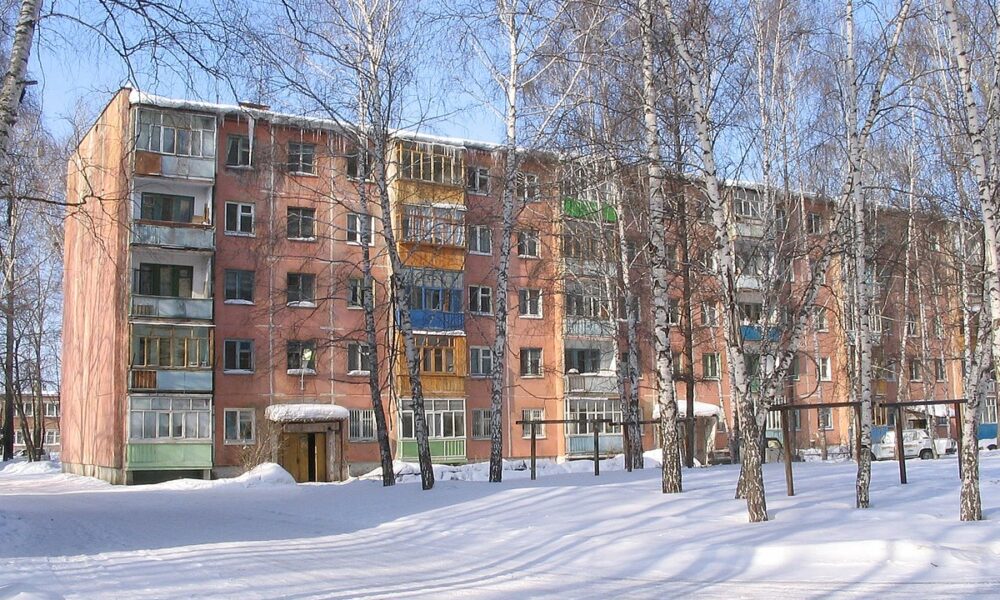
As a kid, I remember driving back from the Moscow airport with my family, preparing for another summer in Russia, and refamiliarizing myself with the city after being away for a year. Looking out the window, my childish, curious gaze was often confused by the differences between architectural styles across the city. While the fringes of Moscow were speckled by the same muted concrete apartment buildings, only distinguishable by the wear they’ve endured over the years, the city centre was marked by the grandeur of Stalinist buildings that competed for my attention. In my naivete, I always felt a sense of disdain for those grey apartments (even though I spent most of my summers around them) and questioned why more of Moscow hadn’t been granted what I thought was architectural beauty. 

By the time I was a teenager, I recognized that my attitude toward those concrete buildings as a kid was simplistic, and thankfully, I grew mature enough to understand and appreciate the history those buildings held. I learned that they were called Khrushchyovkas and were built as a cheap and fast solution to the 1960s housing crisis in the Soviet Union. Standing through the fall of the USSR and into the 21st century, those apartment buildings continued to exist as a place for me to grow as I fostered friendships in the playgrounds that many Khrushchyovkas were huddled around. The buildings would nudge me outside onto the playground when I felt lonely in my temporary home and allowed me to make friends who I’d spend the summer days with, year after year.

As the COVID-19 pandemic challenged international travel and college started taking over my time, my visits to Russia were put on pause, but Russia’s invasion of Ukraine this past February forced me to rethink my relationship with the country. In the early days of the war, every Skype call with my family was shadowed by what we could and couldn’t say, as we tried to discern the differences in information we were receiving across the world. Through these phone calls alone, I could feel the polarizing difference between Canada and Russia and how restricted life was over there. I now look back at myself as a kid, watching the Russian news if it ever caught my eye, completely unaware that it was state-controlled television, and feel so disconnected from the innocence I lived in back then. Amidst this internal turmoil, I found myself feeling nostalgic for those summer days on the playground near the Khrushchyovkas. 

With the war continuing to unfold, I was relieved to discover that some of my family were among the thousands of Russians leaving for Armenia. Their relocation was also an opportunity for me to visit them after so many years apart, but I had to remind myself that this visit would be nothing like my childhood summers. Nonetheless, when I arrived in Yerevan, I found glimpses of the architecture that I recognized from Moscow wedged into the cityscape. If I looked carefully, I could find the same Khrushchyovkas I remembered from my childhood, but this time, softened by the pink hue of the volcanic stone that is characteristic of the city. 

That soft tint that altered the Khrushchyovka-like buildings that were otherwise so familiar marked the distance that had arisen between my childhood self and who I am now. While the Yerevan landscape settles some of my nostalgia and permits my reminiscences, the pink hue distinguishes this place from my childhood. This difference, however, presents me with the space to grapple with the complexities of the world as I understand it now. I will never experience my quiet childhood summers again or see Russia the way I once did. But in exploring Armenia, I have located where comfort and growth can coincide.

Letters to the Editor, Opinion

Letter to the Editor: If you can’t start on time, then don’t do it in person 

In a Nov. 22 article by The McGill Tribune about the Post-Graduate Student Society (PGSS) Fall General Meeting, they highlighted the meeting’s enormous delay as the “Moment of the Meeting”. The meeting was scheduled to start at 7:15 p.m., but as reported by the Tribune, did not start until 8:06 p.m.—a delay of almost one hour! Indeed, I can attest that it was a moment. Thus, let me share my utmost disappointment with what happened. 

Before this meeting, PGSS sent out invitations to its constituencies to attend because, according to them, “your voice matters.”  They provided two options: To attend in person or via Zoom. My friend and I, both graduate students, decided to attend in person at Thomson House. We saw this as an opportunity to better understand what is happening within the PGSS and contribute to its decision-making process. We also wanted to show our solidarity with the PGSS and further empower the collectively beneficial outcomes that could arise from the meeting.

Optimistic as we were, we arrived at Thomson House at 6:45 p.m. We went up to the Ballroom Hall at 7:05 to get settled but were told that there was still an ongoing PGSS Council Meeting. We decided to return at 7:15 and were told that the council meeting had been extended for 15 more minutes. My friend and I thought this was okay, but when we went back 15 minutes later, we were again told that the council had just voted to extend their meeting by another 20 minutes, without assurance that the General Meeting would begin after. My friend and I decided to leave. 

When I found out through a Tribune News article that the meeting was delayed by almost an hour, I knew we had made the right decision not to stay. Maybe I wouldn’t have felt the same disdain if I had participated online and instead waited in a Zoom waiting room. But the PGSS making its invitees wait upwards of an hour is completely disrespectful, rude, and insensitive, especially to those who decided to come in person. When they asked us to come, we came. However, it felt like our voices did not matter. It felt like we were third-class PGSS members whose attendance is only needed to reach a quorum.

In my email to the PGSS—to which I have yet to receive a response—I asked them to reflect: Was there no other way that they could have started on time or at least minimized the time they asked for registrants to wait? Why was there no formal notice about the potential delays? Why invite in-person attendees just to ask them to wait around for an hour? 

It’s tempting to roll my eyes when learning from the Tribune that the meeting did not even reach a quorum, or one per cent of its membership. Cases like this, trivial as it may sound, damage my trust in the PGSS.

Maybe I should just sing out my disappointment at one of their Karaoke nights?

Elson Galang, Ph.D. Candidate

Editorial, Opinion

SSMU executive midterm reviews

President – Risann Wright (she/her)

Risann Wright (she/her)

Risann Wright campaigned on a platform of facilitating policy-driven and equity-focused institutional change at SSMU. Over the summer and Fall 2022, Wright has been actively  fulfilling these objectives. She created an Equity, Diversity and Inclusion (EDI) working group to develop an EDI plan that promotes equity across all areas of SSMU. Her portfolio is also drafting an inter-faculty relations policy and creating a social responsibility strategy in line with the United Nations’ Sustainable Development Goals. To fulfill her other campaign promise of ensuring more direct support for students, Wright launched the SSMU Pilot Grocery Program to aid those facing food insecurity due to financial constraints and inflation. Wright’s initiatives represent an impressive commitment to supporting students, but going forward, she should be more communicative about her portfolio with both the broader student body and campus media. 

Marco Pizarro (he/him)

VP Finance – Marco Pizarro (he/him)

Marco Pizarro has been a welcome presence at SSMU governance meetings and around SSMU’s executive offices. As a francophone, Pizarro has served as an unofficial translator for other executives at governance meetings, ultimately amplifying the voices of francophone students. Beyond this, Pizarro has managed to fulfill several of the tasks in the VP Finance’s mandate.  For example, Pizarro and the finance team have managed to implement a trial run of a Legal Protection Plan, streamlined clubs’ access to their finances, and adapted to the post-pandemic revival of student life. He has also focused on decentralizing the power SSMU holds, including his own. Pizarro has been navigating his role without the support of a General Manager, who is responsible for SSMU’s business and corporate obligations, along with the Society’s accounting. Though increased transparency would be appreciated in the form of additional emails or widely accessible finance reports, Pizarro has performed well in his role.

Kerry Yang (he/him)

VP University Affairs – Kerry Yang (he/him)

Kerry Yang’s priorities this semester included the expansion of the Menstrual Health Project and academic wellness projects. The Menstrual Health Project, which distributes period products free of charge and is funded by an SSMU fee, now has more locations on campus, offers disposable and reusable products, and has hosted two giveaways this semester. In addition, Yang successfully advocated for a revised exam deferral policy that prioritizes public health: Students who contract COVID-19 no longer need a medical note to defer their exams, even if it is not their first time deferring. Other academic wellness initiatives he is working on for next semester include note-sharing services, for-credit health and wellness courses, and more Open Educational Resources, such as syllabus repositories. In terms of equity and accountability, he is working on reforming the Involvement Restriction Policy (IRP), which processes and acts on complaints of discrimination and violence, and tightening SSMU’s Gender and Sexual Violence Policy. Overall, Yang has had a successful term. Going forward, he should continue advocating for accessibility on campus, ensuring the sustainability of his academic wellness initiatives, and pushing for the administration to decentralize harassment and discrimination complaint procedures

Hassanatou Koulibaly (she/her)

VP Student Life – Hassanatou Koulibaly (she/her)

Hassanatou Koulibaly has been very busy since becoming VP Student Life. Not only did she organize the first fully in-person Activities Night since the beginning of the COVID-19 pandemic, but she has also instituted honorariums for students who sit on SSMU’s mental health committees, soft-launched myWellness—a platform powered by Compass that lists mental health resources on and off campus—hosted a mental health awareness week, and more. Koulibaly has also tried to make herself more available to students by hosting coffee hours every other Thursday, and by making time for appointments most days, rather than during specific office hours. For the coming semester, Koulibaly is working on launching Gerts Cultural Nights—these evenings will focus on diversifying the crowd that attends Gerts Bar and Café. Overall, Koulibaly has fulfilled most, if not all, of the VP Student Life mandate and is on track to continue doing so next semester. 

Val Masny (they/them)

VP External – Val Masny (they/them)

Val Masny, whose office represents SSMU outside of McGill, focused their campaign on accessibility and stressed their goal of supporting mutual aid projects in Milton Parc and engaging more with the student body to prioritize transparency. This year, they organized the “Building an Activist Community” workshop and ran a housing rights workshop. Overall, Masny has been very active in fulfilling their office’s mandate. However, it is difficult to measure their portfolio’s progress since they did not respond to an interview request. Transparency should be a priority for the VP External, and going forward,  Masny should be more accessible to students seeking to learn about their work.

Cat Williams (she/they)

VP Internal – Cat Williams (she/they)

Cat Williams’ main priority throughout her campaign was increasing student involvement in campus life and SSMU events. In line with this goal, they organized an SSMU Halloween party that saw over 800 students flock to the University Centre. Williams also helped run an alternative non-alcoholic event during Frosh to ensure greater accessibility for non-drinkers. With a focus on accessible and equitable event planning, Williams looks forward to the upcoming Faculty Olympics and Graduation Frosh in the Winter semester. Despite these successes, a large part of Williams’ campaign centred around increasing SSMU’s transparency toward the student body, an important objective that has yet to be realized. Going forward, they would benefit from working more closely with their staff to fulfill this promise. 

Read the latest issue

Read the latest issue