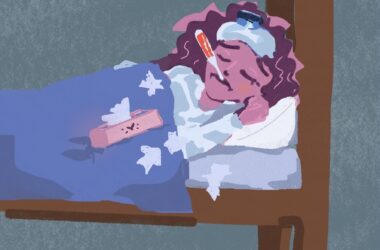
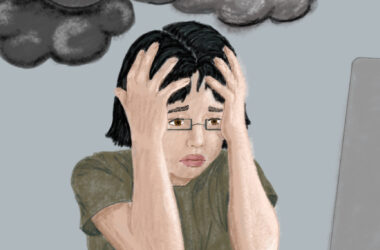
During exam season, I’m a mess. I stay in my apartment all day trying to work, I spend hours scrolling through social media with increasing levels of stress, and my mind is a tangle of negative thoughts. I hate this. Please help.
Freaking Out Over Finals (FOOF)
Before I even begin, FOOF, I’m sure that you’ve heard it a million times, but I’ll make it a million and one: It’s going to be okay. It really is. Finals season brings everyone to this intense, lonely, stressful, breaking point, so know that (no matter what it may feel like) you’re not alone. Being in such a high-stress state for a long period can also lead to burnout and, having battled it a couple of times myself, I know how ugly it can get. This is a how-to guide to studying during finals season, but it’s also a guide for how to do it in a way that centres self-care. This year, get the grades and your beauty sleep. Get the marks and the moments with friends. Make finals season a love letter to you.
1. Step Away
The first thing you’re going to want to do is step away. Close all of your tabs, swipe out of all the apps on your phone, and turn everything off. Take a breath, then another, and then another. To study to the best of your ability, you need a healthy perspective. Right now, that perspective is crowded with negative thoughts, stress, and anxiety, so set your phone’s timer for an hour and do something else. Have an ‘everything’ shower, go to the gym, or have a deep stretching session. It can be super beneficial to get your body moving but, if that’s not possible, at least get your brain moving. Give yourself a second to breathe, away from the work. Give yourself a second that isn’t riddled with stress, simply because you deserve it.
2. Make a Detailed List
Now we’re going to open that laptop back up, but not jump back into things just yet. You’re going to write down every single possible thing you have to do in order to get a particular task done. Get into detail and name all the steps between you and the finish line. Maybe the list is getting long and your freak-out-metre is starting to rev back up—but don’t stress. The list might be long, but it’s filled with tiny, manageable steps. You’ll fly through them and then be able to reward yourself with the satisfaction of checking things off your list!
3. Study in the Best Way for You
Sometimes the biggest roadblock to getting into your flow is studying in ways that are actually blocking your flow instead. Study in the way that most excites you, feels natural, and helps you understand the content best. Here are some ideas:
Creating collages/mood boards for different topics
Be sure to take regular breaks (have you tried the Pomodoro method?) and do at least one thing every day that is purely for fun, just for you.
4. Know That This is Only One Step
You’re doing great, and are well on your way to getting your studying done. Now, one final note, possibly the most important one, is to keep sight of the fact that this is only one step in your overall academic journey. Of course the assessment matters, and you should bring your best self to it, but it’s still just one hurdle. Just one exam. Just one lab. Just one essay. It doesn’t define you. Who you become in this journey is way more important than any single step of it.
When the time for course selection begins, students often turn to their most reliable platform: Rate My Professors. However, are these anonymous reviews really trustworthy, or just an expression of students’ frustrations? The McGill Tribune decided to find out.
Rate My Professors allows the user to search for professors that will be teaching the courses they are interested in and lets them read anonymous reviews from previous students. This site is especially helpful to first-year students, who have only recently set out on their McGill journey. Charlotte Livingston, U0 Science, reflected on how the site helped her choose her courses for the winter semester in an interview with the Tribune.
“Among STEM courses, there are multiple professors who will teach a class and have a certain reputation for being really good, so of course, I wanted to be in their class,” said Livingston.
Livingston believes this platform is effective and uses it as a guiding point to choosing her courses for the upcoming semester. Many students have been using this site in a similar manner for years because it allows them to learn about the aspects of a course that are not found in the course description, such as evaluations or structure.
Another way students have been making the most of this platform is by leaving reviews and ratings. Students are often motivated to leave reviews discussing the way a professor teaches, the difficulty of course content, or even the grading scheme.
However, Rate My Professors is unlikely to fade away any time soon. It can be useful for many students, but small reviews often do not represent what the entire class may experience.
Jessica Kay Flake, an assistant professor at McGill’s Department of Psychology, says that “There are two types of students who use Rate My Professors: Students who love their course or students who hate their course.”
Flake’s research involves improving measurement practices in psychology. She believes that Rate My Professors would be more helpful if more students used it because more reviews and ratings can bring validity to the platform. She does not think, however, that a small number of reviews for a professor that has taught hundreds or thousands of students would be accurate.
“If there aren’t many ratings, then that extreme information probably isn’t representative of the entire class,” said Flake.
As it turns out, many students do, in fact, leave reviews either due to their satisfaction or frustration with the course.
“I really enjoyed [a] professor’s class and found them really interesting, so I wanted other students to take his class and share the similar sentiments I have,” Mia Bhatia U1 Arts and Science, said in an interview with the Tribune.
Rate My Professors not only gives students an opportunity to share any opinions they have on a professor, but to evaluate the instructor’s abilities and provide them with tags such as “inspirational” and “caring,” or even “stodgy.”
University professors can also check the ratings and reviews that students have left for them. However, this does not necessarily impact the way a professor will choose to teach going forward.
Daniel Douek, faculty lecturer at McGill’s political science department, said that he prefers to focus more on course evaluations than Rate My Professors.
“I systematically avoid Rate My Professors,” Douek said. “The course evaluations, I pay a lot of attention to and I have adjusted my teaching based on feedback I received in various instances.”
The course evaluations that are available through McGill’s Mercury platform near the end of a semester give students an opportunity to share their thoughts about the course content and style of instruction. Douek believes this is a better alternative and allows professors to reflect on their teaching methods.
“Maybe it’s useful when taken together with other considerations,” Douek said. “I imagine it could be useful, but at the same time it would probably be a mistake to rely upon it exclusively.”
That’s it, I have had enough. I can no longer stand by and watch as students continue to criticize and bully François Legault. The truth has been staring us in the face this whole time, but we’ve been too distracted by violent video games and metal music to care. The charismatic Legault reminds me of another great man, one that came into my life all those years ago as a small child in Iran.
It was not until one fateful morning, spent with my only childhood friend, a battered copy of The Fountainhead (extended Marxist edition), that I stumbled upon a force beyond any comprehension. A life-size cutout of the 37th President of the United States, Richard Milhous Nixon, abandoned in a sea of blooming red tulips, unfettered by society’s malignant whims. Fate had brought him to me. Up until that point, at the ripe age of seven, my primary influences had been Lazy Town’s Robbie Rotten, Arthur’s Buster Baxter, and of course, Thomas Sowell. Oh, how foolish was I!
Like a fish to water, I quickly took to learning more about this intoxicating figure, trying to understand what made him tick. Where did he come from? What did he stand for? What was his stance on that damned gold standard? Waffles or pancakes? I wanted to breathe him in. All questions that I myself had wrestled with up until that very point.
Mainstream media is often quick to criticize great men. What lies behind their constant obsession with Nixon’s supposed crimes, rather than his tremendous victories, is political opportunism. This is the same corrupt coverage that haunts our precious premier Legault. The mainstream media isn’t sleeping, it is, as always, plotting, scheming, working, and fighting to sully his good name. For these reasons, I shall shine a spotlight on the radical, leftist media’s blatant lies for you today.
Richard Milhous Nixon, or Dick as I like to call him, possessed an uncanny grip on the pulsing heart of the most powerful nation on the planet, demonstrating great girth and vigour––this explains why his opponents could not help but call him a ‘knob.’ Sure, he did not have Reagan’s charisma or Kennedy’s looks, but he did have the Sisyphean persistence of an efficient bureaucrat.
Among his many accomplishments was establishing the Environmental Protection Agency, thawing two decades of frigid animosity with China, and enforcing the desegregation of Southern schools, to name a few. And let us not forget his initiative to abandon the notoriously volatile gold standard, single-handedly saving the American economy from relentless inflation. It would not be an exaggeration to say that, without Nixon’s tough choices, the U.S. would be in shambles today, with a shattered public image and rampant institutional racism to add. What an unforeseen nightmare that would be!
“When Alexander (The Great) saw the breadth of his domain he wept, for there were no more worlds to conquer.”
Hans Gruber, Die Hard
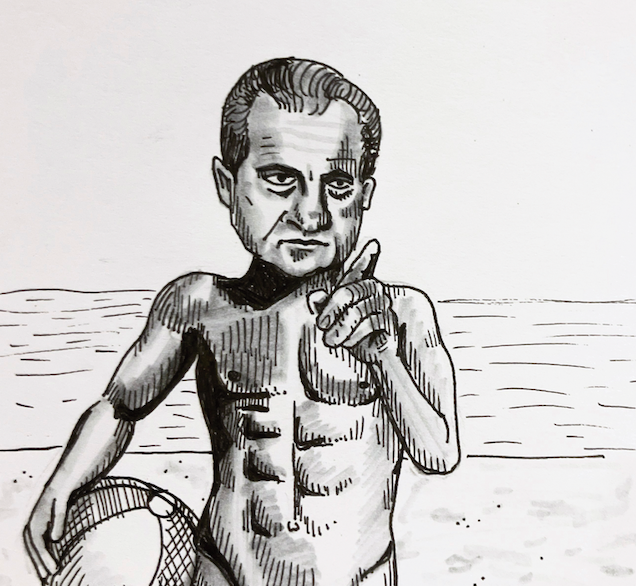
Nixon is the ideal politician, a stance I’ve reiterated ever since my primary school days. Back then, when my contemporaries doodled silly flowers and uninspired cubes during our boring math lessons, I etched magnificent portraits of a shirtless Nixon lying atop a bear-skin rug with a fireplace glowing behind him, fuelled by American democracy and freedom. My math teacher, Mrs. Banaei, told me to apply myself, but I didn’t know how to explain to her that I already had, to something much greater.
Whenever I have faced a tough choice in my life, when disaster seems all but inevitable, I repeat four letters to myself: W.W.N.D. What Would Nixon Do? Take, for example, when my ‘friend’ Amir Ali tried to ruthlessly steal my blue raspberry freezie in the second grade. I reacted proportionally by bombing his family home, and then mustard-gassing his neighbours just to cover all my bases. After all, if world governments are any reference, the Geneva Conventions are mostly suggestions.
Now, it would be irresponsible of me to leave some of Nixon’s more prominent critiques unaddressed. Let’s talk about the elephant in the room: The Watergate scandal, the Nixon administration’s break-in to the Democratic National Committee headquarters and the ensuing cover-up attempt. As I’ve explained to my therapist every week for the last six years, it was not his goddamn fault! Nixon was a notoriously trusting man (why else would he wiretap himself?), too pure for his time, really the Princess Diana of Washington. So why must he be blamed for the misdeeds of those beneath him?
Other critics might also reference his sabotage of peace negotiations for the Vietnam War in 1968, all so he could end the war himself once he won the presidential election (even though the conflict ended two years after he left office). Well, certainly, more traditionally-minded political theorists may view treason as a detractor. These are fools. If a leader is unwilling to spice things up, to plunge their country into further chaos and warfare, then do they really care? Treason is healthy for a democracy, and by poking holes in different institutional vulnerabilities, Nixon led the way for lawmakers to patch them up, in fact strengthening U.S. foreign policy.
It makes me nauseous to even mention it, but some historians have even stooped so low as to use this tantalizing juggernaut’s own words against him. Nixon is often indicted on one of his most famous quotes: “Well, when the President does it, that means that it is not illegal.” But people often forget that tone can completely change the meaning behind any message.
In order to better understand the sweeping temperament across McGill campus toward Nixon and to make some headway in repairing his image, I set out to interview different students on campus. Of the first six students I interviewed, none of them cared––four ran away, one called campus security, and one tripped and is currently in critical care. However, lucky number seven––a completely random McGill student, I must remind you––agreed to have his words published.
In an interview with The McGill Tribune, this completely random student, William Rantala, U2 Environment, commented, “Ari, are you still talking about Nixon? What’s wrong with you? I don’t understand how you’re still a student, I’ve never seen you go to class. You need to pay rent, you’re two months beh….” At this point Mr. Rantala became unintelligible, so I shall spare the readers from his horrid screeches.
Stemming from the campus’ mixed reactions, it became apparent to me that greater, even supernatural measures were sorely needed to correct students’ misconceptions. If my pleas for reason have proven unconvincing until now, dear readers, then the only logical next step is to contact the ghost of Richard Nixon himself. For this very reason, I reached out to almost a dozen psychics and spirit mediums from respectable online communities.
Among the many candidates, only one appeared to be of reasonable skill and mind, and also happened to message me back. This savant, who for the sake of this article wishes to remain anonymous (for national security purposes), taught me far more than I could have ever imagined.
———————————————————————————————————————
Interview Transcript with Medium #14
Just to clear any doubt, are you accredited by any institutions?
I think, what’s important to know, there are so-called institutions who try to legitimize people, but with this type of thing…you’re either born with it or not. Like, I never attended any school or anything, but you know my grandma had the gift and ever since… like I know, I know what I know. And I take it very seriously.
What is it that you know?
I can, and I don’t want to get all ‘sixth-sense’ with this, but I can speak to dead people. I have a spirit guide, and you can tell when someone’s a charlatan when they claim their spirit guide is, like, a famous person. Someone like Cleopatra, you know… but my spirit guide is a small child from Edwardian England who died when he was around nine years old. I’ve known him for as long as I’ve been alive. When I was younger, I thought he was my imaginary friend. I speak to him, and he speaks to the dead people for me. It’s a little bit like a game of telephone, but I trust him.
What’s the spirit medium’s name?
Edward.
Edward, the Edwardian child?
Yes, exactly. It was a common name.
So, this medium speaks to ghosts?
Well, I don’t like the term ghost. A ghost would be a member of the afterlife who lost his way back into our realm and, as a result, is accessible to us. And that’s not what we’re dealing with here. But in cases like this, we’re talking about someone who is on another plane. I prefer the term long-lost friend.
For a start, what was the president thinking in this image?
Sorry, it’s gonna take a minute. To me at least, from my psychic senses, he seems contemplative. I would say he seems a little lost. Obviously, he’s eating, and so he’s not hungry. But more than anything, he seems alone.
But is there not another person in the image?
Well alone… more spiritually.
In any case, what does President Nixon wish to say to all of his detractors?
The impression Edward is getting is that he knows he made a mistake. I think he’s definitely reflected in the afterlife. I think he has a lot of regrets. The way he thought about certain people and, like, groups of people, now that he’s in the afterlife, he and they have come to terms. Him and various communities.
Does the president regret ending the gold standard?
You know, I think in hindsight, no. It’s a part of his legacy he’s very proud of and… in fact he wished he went further. Edward seems to be saying NFTs a lot, so maybe that’s something.
To close it off on a high note, what advice would the president give to current world leaders?
That’s not really what I do here.
———————————————————————————————————————
Despite Nixon’s hesitancy to advise modern leaders, thanks to this enlightening interview, I hope that you, my dear readers, can finally see Nixon from my perspective. Nixon, and our very own Legault, are playing a very complex game of politics, a game for the greater good. For the sake of clarity, I will attempt to explain their thinking through a brand-new field of political theory.
My magnum opus, really the perfect political stratagem, will be simply known as new-pseudo-post-meta-Nixonism (NPPNM), or moral calculus for short. Moral calculus theory, which I invented during a 24-hour coke-fuelled Wolf of Wall Street marathon, can be summed up using the famous axiom ‘the end justifies the means.’
“Well, when the President does it, that means that it is not illegal.”
RIchard Nixon
To start off light and frisky, moral calculus begins with tapping into fear. It’s especially effective if the fear revolves around polarizing the dominant cohort of your population, because who else is going to vote for you? Nixon did this brilliantly by exploiting the deep-seated, racism-driven fear and anxiety in Southern white communities, and the Republican party has been in his debt ever since. Our own local Quebec government is just as wise, seeing as public policy and election cycles have been driven by the plight of the white, settler Quebecois identity. Fuck the 16-hour hospital wait times!
Where moral calculus truly shines is in its use of archaic good-faith laws. Remember, if certain legal protocols were inscribed decades ago, or maybe even centuries if you’re lucky, under completely different circumstances, then they’re ripe for exploitation. Nixon, using executive orders, sent secret bombing operations to Cambodia, completely decimating innocent populations while attempting to keep Congress in the dark. But anyways, it was smarter to keep those top-secret plans locked within the circle of a few trustworthy individuals in his cabinet, like Henry Kissinger. Now, the Quebec government is not as extreme or directly violent in their motives, but their methods are even more effective. Section 33, also known as the notwithstanding clause, means the Canadian Charter of Human Rights is nothing more than a stern shake of the head. If history has shown us anything, only brilliant free-thinkers dare go against such corruptible forces as the law.
“[Section 33] was inscribed in the Canadian constitution because Prime Minister Pierre Trudeau needed the support of the premiers,” said Éric Bélanger, a political science professor at McGill, in an interview with the Tribune. “Many of the premiers were reluctant of Trudeau’s charter because they feared that, with it, Canada could become a government by the judges. The provincial premiers wanted to make sure they retained control over policy decisions.”
To wrap moral calculus up, with a pretty bow on top, all you need to do is combine its first two components. After all, peanut butter and jelly are pretty great by themselves, but together they are oh-so magical. These archaic laws are perfect for targeting marginalized groups, from Ukrainian war refugees to disabled people, so your fearful base can finally celebrate their crushing dominance. Forget about Nixon, Coalition Avenir Québec (CAQ) are the naturals here: Bill 21 and 96 violate the human rights of religious minorities and anglophone residents alike. Not to worry, though, as François Legault just swept his way to re-election.
“Bill 21 addresses any kind of religious clothing, but the most visible ones are the ones from the Muslim religion,” Bélanger commented. “At its basis, it’s a fear of disappearance on the part of the French-descending population in Quebec.”
Now, you may be asking what moral calculus has to do with morality, or even calculus, and that’s where the beauty of the theory lies—nothing. Like a politician kissing a baby’s forehead, it’s but a masquerade for a semblance of legitimacy. And as long as their hidden intentions serve the desires of the larger demographics, whether it’s infringing on the rights of Indigenous groups by the U.S. in the 1970s or by Québec in recent years, moral calculus will be every politician’s best friend, especially Legault. If only Nixon could see us now!
“I love you,” “I’m proud of you,” “I forgive you,” “I’m grateful for you.” That’s what eternity is made of: invisible imperishable good stuff.”
The Quebec Public Interest Research Group at McGill (QPIRG-McGill) held its annual Culture Shock event series on “anti-racism, migrant justice, and Indigenous solidarity” from Nov. 21 to Nov. 25. Centred around the theme of “joy, pleasure, and celebration as a form of community building,” the week was filled with workshops, panels, and shows open to anyone. Contrary to last year, the majority of the week’s events were held in person—either on campus or around Montreal.
QPIRG-McGill is a student-funded and student-run non-profit organization founded in 1988. The organization is composed of a board of directors, staff members, volunteers, and working groups—such as the Community Cooks Collective (CCC)—who receive monetary and logistical support from QPIRG. McGill students who pay the Students’ Society of McGill University (SSMU) or Post-Graduate Students’ Society (PGSS) fee of $5 are automatically members of QPIRG-McGill. All students are welcome to attend events, volunteer, or apply for a position within the organization.
In an interview with The McGill Tribune, Ivory Tong, BA ‘19 and finance administration coordinator at QPIRG, explained that over the years, the organization has opened the doors for students—often new to Montreal—to participate in activism and engage with the broader Montreal community.
“Through socially engaged research, popular education, and advocacy, we are working towards social and environmental justice,” Tong said. “We aim to connect students interested in activism with the community. However, this week of events focuses specifically on anti-colonialism, anti-racism, and migrant justice.”
This year, organizers strongly encouraged community members to step forward with event proposals following the announcement of the week’s theme.
Tong told the Tribune that the theme of joy, pleasure, and celebration as a form of community building came easily, especially after all events were held online last year.
“We decided to go with this theme because so much of activism today is naturally focused on what is wrong and what is unjust in the world, but there is great joy in coming back together,” Tong said. “We especially wanted to try and create a space for queer, transgender, Black, Indigenous and people of colour to rest and allow ourselves pleasure and joy.”
Yara Coussa, U4 Arts and events coordinator at Queer McGill, was very fond of QPIRG’s choice of theme this year.
“The theme of joy and celebration is so important because it focuses on underserved populations, but does not portray us as damaged or broken, but rather celebrates us,” Coussa said in an interview with the Tribune. “Yes, we do face challenges and hardships, but it is always nice to celebrate our diversity and our uniqueness which I think this event series does very well.”
On Nov. 25, QPIRG held a QTBIPOC Comedy Night in collaboration with Queer McGill—a service run by queer students, for queer students.
“We are hosting They Go Low, We Go Laugh—a comedy group primarily composed of women of colour and friends. For this show, our prompt was queer, trans, Black, Indigenous, people of colour, and the lineup of eight comedians identify themselves as such,” Coussa said. “I fell in love with their whole theme of inclusivity and comedy without being problematic, and just highlighting voices that aren’t represented in comedy.”
Sandy El Bitar, one of the comedians, told the Tribune that her act focused on the use of humour as a form of therapy and healing. She was moved by the audience’s interaction and enthusiasm.
“I feel it’s great to offer brave spaces for marginalized people to come together and learn about each other’s life experiences,” El Bitar said.
Tong agrees with El Bitar and hopes that QPIRG-McGill can continue to be a space that allows for such community connection.
“I think that while we are talking about joy and pleasure, there has also been a lot of despair and sorrow,” Tong said. “I truly believe that one of the best ways to combat those feelings is to get involved in your local community, and if people are interested in doing so, they can come to QPIRG.”
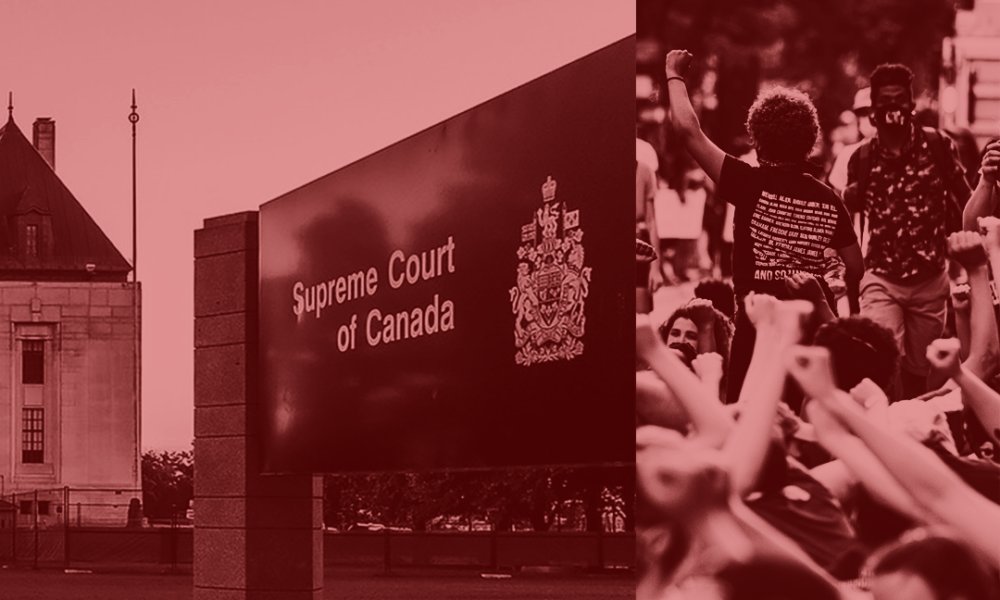
The parents of Jérémy Gabriel, a singer from Quebec with Treacher Collins syndrome, brought forth allegations of discrimination against Montreal comedian Mike Ward in 2012 after he delivered jokes mocking Gabriel. After a decade of litigation, the case was brought to the Supreme Court, which acquitted Ward of discrimination in a 5-4 split.
A recording of Ward’s controversial comedy routine was played for the audience in attendance before the talks kicked off.
Seven out of the eight panellists opposed the ruling, including two members of the Quebec Human Rights Commission (CDPDJ), the legal body that represented Quebec in court. Julius Grey, a constitutional lawyer who argued on Ward’s behalf in the Supreme Court, was the lone dissenter. After introductions, Grey began with a critique of the Commission’s stance.
“The importance of the right to express oneself and to say anything that might lead to change […] is essential in any society,” Grey said. “The dissenting judgment simply does not understand the importance of free speech in our society [….] If somebody’s hurt by what you say, and that’s good enough [to prosecute], then you will be effectively removing freedom of expression.”
During a Q&A session, Stéphanie Fournier, who represented CDPDJ in Ward, contested Grey’s responses to audience member questions, after which Grey himself made further rebuttals.
“Intent should […] never be part of the equation to determine whether or not there was discrimination in [a] case, in any case,” Fournier said during the Q&A session. “Free speech should be put aside to protect dignity, in full equality.”
The second panel examined the decision’s implications for racialized and marginalized communities, who are more often targeted by discriminatory speech. It consisted of Fo Niemi, former commissioner of the CDPDJ, Mohammed Hashin, the executive director of the Canadian Race Relations Foundation, and Pablo Gilabert, a philosophy professor at Concordia University.
Gilabert focused primarily on the word “dignity,” a foundational principle in the Canadian Charter of Rights and Freedoms and one which, he explained, gives “freedom of expression” its weight. Hashim and Niemi, on the other hand, analyzed how hate manifests in society and how the law might be able to curtail it. Hashim referenced the General Social Survey, which is conducted every five years across all provinces and gauges the overall well-being of Canadians.
“[Two-hundred and thirty thousand] people in the General Social Survey said that they have faced hate in some form, but only 3,000 of those people actually reported to the police,” Hashim explained. “We need to create funds from the federal and provincial levels so that social service agencies can create [support for] victims of hate […] because right now, just doing it alone seems so isolating and hard and challenging.”
Once all the panels had finished their presentations and a luncheon had been served, Marie-Claude Landry, the Chief Commissioner of the Canadian Human Rights Commission, gave a speech on what she saw as the ethos of Gabriel’s case—that Gabriel, now 25, was only a teenager when Mike Ward mocked him.
“[Children] trust us. They trust that we have their best interests at heart,” Landry said. “We must treat them with care, dignity, and respect.”
After the conference ended, Pearl Eliadis, the event’s host and a McGill law professor, explained the dangers of greenlighting hate speech in an interview with The McGill Tribune.
“[The allowance of hate] forces people to argue for their essential humanity, and erodes their trust in institutions,” Eliadis said. “If you don’t believe in your institutions to represent you, support you, protect you, then you have an entire portion of the electorate that’s disenfranchised.”
One particularly warm night this September, I found myself wide awake, sweating. Frustrated at my inability to sleep, I put on a podcast to take my mind off the heat. The show was an old favourite: This Is Actually Happening(TIAH). In high school, I listened to the show and found it riveting to learn about the firsthand experiences of guests. But upon my return to it that night, newfound concerns about the show’s ethics overshadowed any entertainment the podcast could offer.
TIAH began as an independent podcast based in Oakland, California in Sep. 2013. In October. 2020, it was bought by Amazon-owned podcasting company Wondery. Each episode features a guest who recounts and reflects on personal events “that have dramatically altered” their life. Many of these experiences include traumatic events such as abuse, death, and mental health struggles. The podcast’s production style is extremely personal: The guests recount their experiences in an unscripted, organic way, and any prompting from the host, Whit Missildine, is edited out to create an emotionally heavy monologue. The apparent lack of a moderator makes listening to the guest’s experiences particularly intimate—it feels like they’re speaking straight to the audience. The vulnerable, direct tone in which the experiences are recounted only heightens the painful aspects of the guests’ experiences.
But while it includes personal accounts of dark and traumatic subject matter, TIAH frames the guests’ struggles simply as content for listeners. This is reflected in the show’s marketing. For example, episodes are titled to pique listeners’ interest about the life-changing event, such as “What if you went missing?” and “What if your best friend was dying?” These labels reduce people’s complex experiences to one dramatic detail for shock factor. Similarly, the TIAH website groups episodes into categories such as the “assault collection” and the “mental breakdown collection.” Not only do these labels generalize guests’ experiences into a single eye-catching element, but they also use this feature to group stories solely based on their darkest moment. Through this insensitive classification, the podcast sensationalizes the trauma of personal stories without showing respect toward those who experienced them.
Dramatizing survivors’ experiences isn’t just inconsiderate to the individual. Making their experiences into entertainment distances audiences from their obligations to support survivors, respect their stories, and address systemic issues—such as inadequate mental health services in the U.S. and Canada that are often the source of trauma. By doing this, the podcast capitalizes on pain without addressing any root causes or helping survivors heal.
Based on information shared by individuals who appeared on the podcast in several threads on the TIAHsubreddit, it appears that storytellers aren’t even paid to speak on the show. According to these former guests, the interview process involves repeating their often traumatic experiences for upwards of four hours. There are many ways to interpret this: At best, TIAH allows survivors who willingly volunteer their time a chance to tell their story—perhaps because they think it will benefit others or help them heal. At worst, the show frames the trauma and free labour of others as an exciting story to garner more listeners and more advertising revenue. Either way, it’s Wondery who pockets the profit generated from this emotionally taxing labour, not survivors.
Despite these pitfalls, TIAH has a sizable fanbase. The private TIAH fan Facebook group has approximately 13,000 members, many of whom report that the show validates their own experiences and allows them to connect with other survivors. While TIAH may benefit some listeners in this way, it prioritizes commercialization over support for more accessible mental health resources beyond the TIAH fan community. As long as the show sensationalizes survivors’ trauma, any good it offers comes at the cost of disrespecting survivors and pocketing the change.
In middle school, I spent objectively too much time reading dystopian Young Adult fiction novels and watching rom-coms from the 1990s and 2000s, which have now left me with a questionable repertoire of references and an insatiable taste for casual insurgency. I’ve never considered my attempts at nonconformity as dangerous to others simply because the scale of my “anarchy” is what many would call pathetic.
Like many of my other personality traits, I could easily blame my weirdest qualities on my immediate family. To many of my friends, buying a pair of ripped jeans or eating a sandwich with white bread are simple, unweighted choices. For me, deliberately calculating the cost-benefit analysis of such choices is a crushing reminder of how I’m disappointing my mother. The idea of buying white bread—even when it’s on sale—sends a chill down my spine, lighting up my nervous system with my eight-year-old self’s fear of stepping out of line.
While I have no qualms about hiding my purchase of what my mother calls “overpriced pants that have already been broken” from her, I always feel a sense of anxiety when stepping into them, as if I have gained a power I have no control over. Even though I fully understand that the pants annoy my mother, it feels almost stupid to think that wearing pants with holes in them is a way to forge some kind of path forward for myself.
I wouldn’t necessarily describe myself as a rebellious person, but I am often compelled to do things that I had previously avoided at all costs, as long as there are hilariously low stakes. For the majority of my life, I actively avoided any and all scary movies. When I went to see //Titane// (2021)—a body horror drama film about a serial killer—I felt a glowing sense of pride as I left the theatre, even if I watched most of the movie’s gruesome first third through my fingers. It may not have been a traditional “scary” movie, but having previously avoided horror like the plague, it felt like a weird, powerful step towards overcoming my fears.
Sometimes I think that these casual acts are just a product of all my own insecurities—maybe a new angle at which I can attempt to not be myself. Because of my persistent inclination towards making self-deprecating jokes, I know that it’s easy for me to joke about the low-stakes nature of these challenges. But inadvertently, some of these new efforts have brought me genuinely closer to different parts of myself than I had previously thought possible.
I’ve spent a solid two decades complaining about sports: I got excited about the Super Bowl solely because of the buffalo wings and would constantly decry that I didn’t get sports—it was easy to hide my chagrin from not understanding them behind loud expressions of hostility. Yet, for all the times I’ve annoyed my family by complaining about the television constantly being tuned to the sports channel, my dislike has finally started to crack. While my brother bribing me with takeout to watch Mets games with him didn’t exactly spark joy, following the Rangers during the Stanley Cup playoffs last year with my family was an intense, yet jubilant experience. Watching every game was more than just a few hours of visual engagement; it was a true bonding experience. Becoming a hockey fan probably should have felt like a betrayal of my own opinions, but I found that picking up the game was more of a fun challenge—I don’t understand a good amount of the rules, but I still won’t quit.
I’m not immune to wishing I could take risks that are indubitably serious, or wanting to know more surely where that drive comes from. But for the most part, I’m pretty content with my low-pressure unrest—if the worst thing that can come from it is ribbing from my family, I can probably handle that. Regardless of how strange or mundane some risks may seem, if they bring me closer to myself and to my family, I see no good reason to stop.
Canada is one of the world’s most prominent players in the mining industry, and its presence has been swiftly growing since the 1990s. Nowhere is Canada’s dominance seen more clearly than in Latin America—where between 50 and 70 per cent of mining activity involves Canadian companies.
With its neocolonialist control over the mining industry, Canada holds immense influence over the political and environmental landscapes of Latin America. This control has proven to be devastating, with mining being responsible for the highest proportion of human rights violation complaints in Latin America. North American governments also create a trap of terrible conditions that workers in the mining industry cannot escape due to restrictive immigration policies in Canada and the U.S. Educational institutions that prepare students to enter the mining industry, including McGill, are complicit in the detrimental effects mining has on Latin American countries.With Canada’s oldest mining engineering program, McGill must re-orient its mining program towards sustainability and end its perpetuation of mining’s destructive status quo.
Canadian companies participate in extractivism, by which minerals are extracted from the Earth with virtually no regulation to maximize profit. The lack of enforceable guidelines leads to terrible working conditions and environmental destruction, such as pipeline failures that cause cyanide solution to enter waterways. Canada funds and directs most mining operations in Mexico, which are notorious for poor labour conditions such as exposure to explosives, or toxic gases that contribute to injury and death through workplace accidents, lung disease, and cancer. Although the extractive model of mining provides workers with jobs, the lack of regulation stifles workers’ rights in an industry where conditions are already brutal. Furthermore, this practice encourages an economic focus on resource extraction that weakens the economic self-determination of the resource-rich region.
Inequitable mining practices are directly contributing to the displacement and subsequent migration of Latin American peoples. Although illegal border crossings have seen a downward trend in the past 20 years, Canada and the U.S. have been arresting and detaining more people than ever over the past three years with the numbers still on the rise. Migrants resorting to illegal entry often come from Mexico, where smugglers profit off of locals needing to escape dangerous working conditions, poverty, and violence. Canada already has a history of displacing and exploiting racialized peoples to achieve its economic goals, as evidenced by the construction of pipelines on Indigenous lands.
McGill prides itself on the fact that its students and alumni have “shaped the face of mining” in Canada and around the world.With this pride should also come responsibility.The McGill Research Group Investigating Canadian Mining in Latin America (MICLA) is a research collective based at McGill that aims to fund public research and debate regarding Canadian mining in Latin America. Composed of students and faculty, MICLA is part of the university’s ongoing effort to link teaching with research and to connect these to the public interest. However, they have not released any public updates since 2013. McGill students working in mining research should be examining Canada’s neocolonial practices, and the MICLA’s mission should be revived to spur activism for those forced to work in these poor conditions.
To truly transition to sustainable mining, governments and corporations must acknowledge the horrific impacts of current mining conditions and bring forward laws and regulations that have undergone community consultation. The needs and concerns of those inhabiting the land must be prioritized in the development of a project to ensure the community is not harmed. Further, McGill must take the proper steps to change the devastating state of the mining industry by incorporating sustainable and ethical mining practices into its curricula.
It is crucial that the Canadian government be held accountable for its exploitative practices in Latin America. The unethical tactic of displacing workers and subsequent denial of safe and equitable migration cannot continue. McGill must pool its resources to prepare its students to promote positive change in the mining sector. Having the oldest mining program in Canada means nothing if it is not being continually updated to serve the needs of today. McGill must stop resting on its reputation of prestige, and work on sustainable changes.
Hemorrhages account for about two million potentially avoidable deaths around the world every year. With a 30 to 40 per cent rate of trauma mortality, the impact of hemorrhages worldwide cannot be understated. Yet, a group of researchers at McGill made a remarkable improvement in its treatment by developing bioadhesives derived from structures found in flatworms to efficiently handle pressurized blood flows in non-compressive hemorrhages.
Hemorrhages are caused by blood loss due to damaged blood vessels. The bleeding can be minor, resulting in a bruise, or significant, leading to fluctuations in vital signs and altered mental status. Hemorrhaging can occur outside the body, as a traumatic wound, or inside the body, as internal bleeding. Internal hemorrhages require clinical investigations that include physical examinations, laboratory tests, diagnostic imaging tests, and close monitoring of vital signs.
Various factors can lead to hemorrhaging, such as alcohol abuse, drug use, tobacco consumption, cancer, surgery, or damage to an internal organ. Uncontrolled hemorrhaging leads to decreased blood flow and oxygen supply to organs, which could ultimately result in organ failure, seizures, coma, and death. The treatment for a hemorrhage depends on its anatomical location, the extent of the blood loss, and the patient’s symptoms.
External bleeding can usually be treated by applying direct pressure and placing tourniquets near the wound. However, the treatment of non-compressible hemorrhages, when wound sites are inaccessible, remains challenging. Current treatments, including the use of hemostatic agents (thrombin and kaolin) and bioadhesive sealants, have major drawbacks: They can be insufficiently absorbent and are difficult to store.
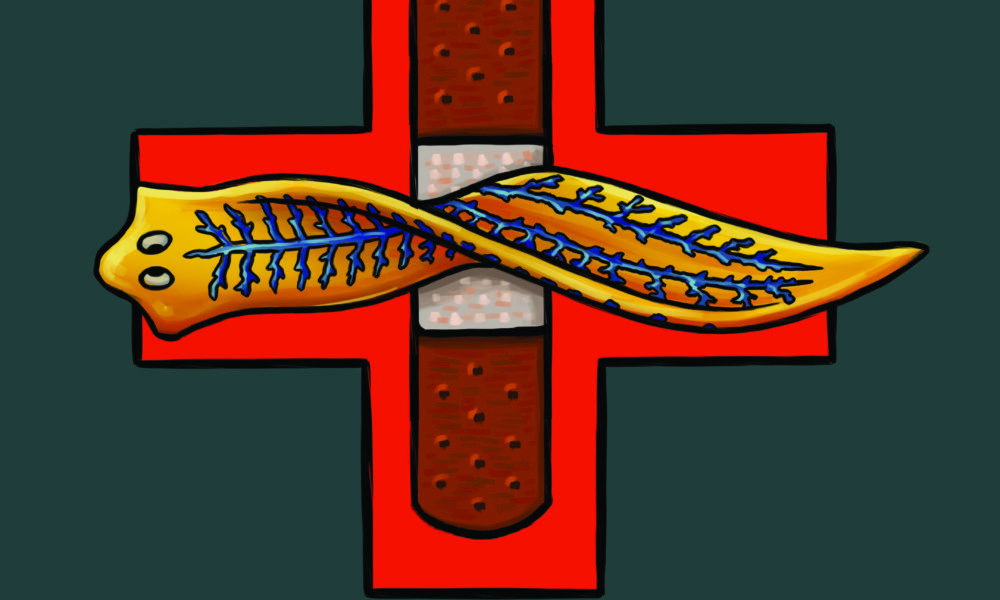
Researchers from McGill developed bioadhesives modelled after structures found in marine animals, such as mussels and flatworms, to remedy many of the problems presented by traditional adhesives.
In a new study published in Nature, Jianyu Li, a professor in McGill’s Department of Mechanical Engineering, and his team have proposed the use of liquid-infused microstructured bioadhesives (LIMBs) as an innovative strategy to treat non-compressible hemorrhages.
“These interesting microstructures provide us with a solution to handle heavy blood flows, which is mission-critical in the cases of non-compressive hemorrhages,” Li said in an interview with The McGill Tribune. “They act like a sponge, sucking in the blood at the source of [the] wound, can rapidly induce clotting, and can instantaneously form strong bioadhesion that seals bleeding sites. This new material is mechanically robust and tough to encounter pressurized blood flows and can be instantly removed after surgery.”
As their name suggests, the LIMBs are formed by infusing liquids into a bioadhesive gel called xerogel, which absorbs blood and promotes clotting at bleeding sites. Infused liquids facilitate interfacial bonding and sealing—sticking formed by the intermolecular forces in liquids. The synergy of xerogel and infused liquids allows the bioadhesives to form robust adhesions without having to apply pressure.
Unlike traditional wound closure methods like sutures, wires, and staples, bioadhesives are less invasive and promote wound healing through various mechanisms, such as the release of antibacterial and growth factors, induced host immune responses, and delivery of healthy cells. The bioadhesives possess antibacterial, anti-inflammatory, antioxidant, and self-healing properties, and can remain stable on the site of application due to their intrinsic adhesion property derived from flatworms. These bioadhesives also prevent leakages after surgery, which account for 30 per cent of complications that can easily result in pain, inflammation, infection, and death. LIMBs were validated through both in vitro and in vivo testing using pig models.
The application of LIMBs is quick and pressure-free, making them suitable for non-compressible hemorrhages. Additionally,e LIMBs minimize the risk of re-bleeding upon removal and can be left inside the body to be absorbed.
“Our material showed […] better-improved safety and bleeding control efficiency than other commercial products,” Li said. “Beyond bleeding control, our material could one day replace wound sutures or deliver drugs to provide therapeutic effects and would have important implications in various clinical settings and even the Canadian Armed Forces.”
As this fall semester comes to an end, I find myself looking back at my own first semester and reflecting on all the typical freshman experiences I had. Upon moving to Montreal, Frosh was my very first glimpse of what university life had to offer. As an ignorant international student, I had no idea what ‘Frosh’ actually meant. But one thing was certain: I didn’t want to be left out of it. Unfortunately, for me as well as for many others, Frosh turned out to be a huge letdown. Though some leave Frosh ready to do it all over again and become Frosh leaders, others, like myself, want nothing more than a refund for their money, time, and energy.
As an active Frosh hater, I pride myself on having pushed through the whole week and (almost) every single organized activity. This included painfully long movie nights and 9 a.m. bar crawls with the disrespectful 10 centilitre solo cups of lukewarm beer.
This brings me to my primary complaint about Frosh week, which is, like most things offered by McGill, the outrageously high cost. When I first agreed to pay the $170 fee for Arts Frosh, I surely didn’t expect having to additionally pay more than $30 every day for food and drinks, as barely any are included. Maybe it is too big of a grievance, but is it really unrealistic to expect a university to make its orientation week more financially accessible to students? Is it so unreasonable to think that an event with such an inescapable drinking culture would actually provide drinks?
Most people who attended Frosh will agree that the moments of bonding with your group rarely happen during the organized activities. Rather, it’s during the more intimate group dinners or parties at Frosh leaders’ apartments where actual friendships bloom. Unfortunately, none of these are an official part of Frosh and, thus, fall at a student’s own expense. If Frosh refuses to include more activities for the price paid, it seems like all those on a tighter budget will have to skip out on the unofficial but essential experiences of that week.
Yet, my complaints only stem from my personal experience with Faculty Frosh, and it is important to remember that other options, such as Rad Frosh, for outdoors amateurs, or Fish Frosh, for those who may not want to drink, are available. These alternatives gather smaller groups of like-minded students rather than throwing hundreds of first-years who barely have anything in common into the same sweaty pit. In that regard, non-faculty Froshes seem to allow more space for first-years to actually get to know each other and form close bonds—in a way that is certainly more meaningful than the awkward ice-breaking sessions at Jeanne Mance.
More than anything else, your Frosh experience heavily depends on your leaders and your fellow froshies. Here’s a warning: It doesn’t matter how many times you will promise each other to catch up and have a Frosh reunion, you will most likely forget about it and maybe vaguely nod at each other when your paths cross in the sinister atmosphere of the Royal Victoria College cafeteria.
I might be a professional Frosh hater, but I will recognize that maybe I was just unlucky in my experience. Frosh is not all that bad, as some movie-like miraculous friendships and meet-cutes emerge from it for the most fortunate among us. But to cap off my list of grievances, here’s what I will say: If Frosh was a little less sacralized as a must-do first-year experience and was more oriented toward connecting students with each other, then it might not be such a flop.