

Latest News

Arts & Entertainment

“INCIPIT – COVID-19” exhibition is a jarring reminder of the past

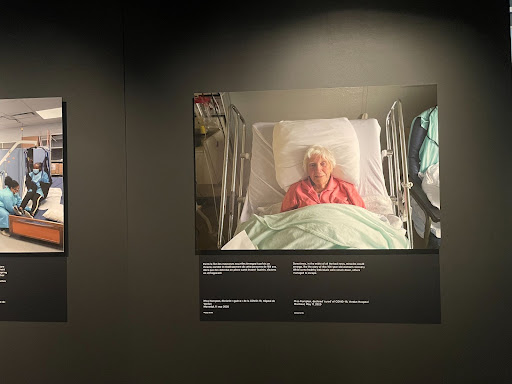
Photographer Michel Huneault’s latest exhibition, INCIPIT — COVID-19, was commissioned by the McCord Stewart Museum at the start of the COVID-19 pandemic. On Sept. 16, over two years later, the display finally opened to the public. The exhibition features 30 photographs and three projections of over 150 videos and photos that capture quotidian early-stage pandemic life. To create an eye-catching multimedia aspect, Huneault collected anonymously handwritten notes from the chain of subjects he photographed. Huneault used this word-of-mouth chain of subjects to evade isolation-induced creative myopia. INCIPIT is a beautifully raw collection of photographs showcasing diverse perspectives of the people impacted by the first wave of the pandemic. 

The exhibition does not stray from its core purpose: To showcase a series of photographs and videos captured during the beginning of the global pandemic. Though the content can feel predictable, Huneault’s hauntingly nostalgic snapshots of places, experiences, and people at this point in time do not disappoint. The exhibition’s name translates from Latin to “here begins,” reflecting the inception of the health crisis that globally changed lives. The photographs range from makeshift hospital rooms, to abandoned streets, to an upside-down cart, and to a delineated, socially-distanced Costco line-up (a personal favourite). They capture a reality that now—with society desperate to return to a pre-pandemic “normal”—seems a thing of the past, jarring and almost absurd.

Huneault was granted carte blanche by the McCord Stewart Museum and exclusive access to many healthcare facilities, which allowed him to pull back the curtain and reveal things that people might be aware of, but haven’t seen firsthand. These moments create an intimacy between the viewer and the photograph, mimicking the isolative mindset of the early pandemic. So similar to the period of desperation felt at the beginning of the pandemic, viewers of these photographs feel as if they are secret observers of often uncomfortably vivid perspectives. Many of the subjects make direct eye contact with the viewer, their gaze challenging one to face their own past.The most compelling part of the collection is the handwritten letters. Feeling himself slip into creative complacency, Huneault decided to do a series of portraits where his next subject was recommended to him by the previous one. He asked each of them a question: What’s on your mind? Twelve endearing scrawls of worries, fears, joys, and even drawings remind the viewer that the pandemic and the prevalence of quarantine resulted in fragmented perspectives where individualism reigned. Huneault pieces together each person’s experiences to delve into how different states of mind developed at the beginning of the pandemic. 

Though a myriad of struggles are portrayed, there is a somewhat confusing lack of adolescent representation. Only one photograph of the main 30 centrally features a child. As school shutdowns and province-wide restrictions affected the lives of every Montrealer, the viewer is left wanting more. Including photographs of younger people from the thousands of Huneault’s un-exhibited photographs would help shift the focus away from the adult experience.

Huneault’s exhibition focuses on the healthcare system and everyday life, and all of his photos are accompanied by commentary that straddles the line between satire and seriousness. A photo of a lone, masked biker on an empty road reminds viewers of the paranoia surrounding the lack of medical information given to the public. After having lived through it, we see some humour in hindsight, but Huneault does an excellent job of reminding us of the real fear that permeated throughout society.


The exhibition is open to the public on Sept. 16 and will run until Jan. 22, 2023. Tickets are available for purchase online. On the first Sunday of every month, admission is free for all Quebec residents.

Cross-Country / Track, Sports

Cross country teams open season with a bang at McGill Open

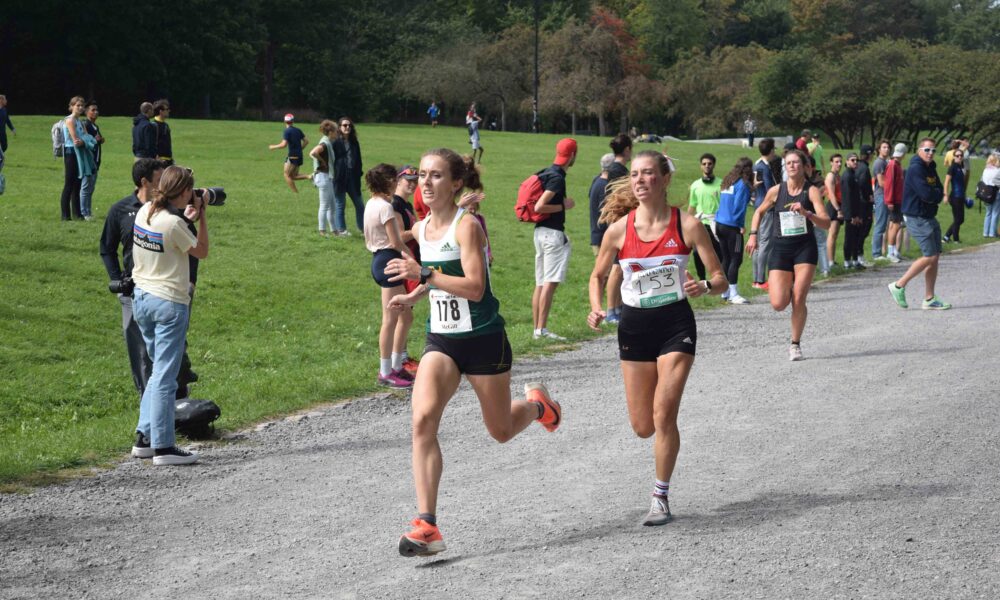
McGill’s cross-country squads opened their seasons on Sept. 17 at Parc Mont Royal. The weather was cool and sunny as the women started the day, with their race kicking off at 12 p.m. The six-kilometre race went into the mountain and included four repeats of a one-kilometre loop before spitting back out into the park and finishing right beside the starting line.

Third-year medical student Ann-Rebecca Drolet was the Martlets’ first finisher, edging out a Sherbrooke runner to come in 12th overall with a time of 23:11. Thirty seconds later, the Martlets’ second finisher, second-year Sophie Rashid-Cocker, crossed the line, finishing 21st overall. 

Rashid-Cocker felt a home-course advantage, despite the difficulty of the terrain.

“It was definitely nice for us because we practice on that loop a lot. It was a pretty hilly course, I guess that is expected when running on the mountain, but there were two sizable hills every loop, which definitely added up,” said Rashid-Cocker in an interview with The McGill Tribune.

Even after training on the mountain, Rashid-Cocker admitted that the first meet of the season was a gruelling feat.

“Personally, it was a little tough. I feel like 6k is always a shock to the system your first time going all out, so I definitely felt myself getting drained as the race went on,” said Rashid-Cocker. “But coming down the home stretch, everyone is super lively and I feel like I got my extra gear to get a strong finish.”

In 2021, the COVID-19 pandemic prevented the team from getting the correct permits to race the normal loop and forced them to run a course that just went straight up and down the mountain. This season also welcomed schools such as Queen’s University, and larger teams from Laval and Sherbrooke, which Rashid-Cocker appreciated as it felt like normalcy had returned.

At 12:50 p.m, the men set off up the mountain, with nine runners donning the Redbirds’ uniform. Last season’s rookie of the year, Matthew Beaudet, did not run in this year’s McGill Open, as his summer season only recently came to a close. PhD student Jack Stanley was the first finisher for McGill, coming in seventh with a time of 19:14. 

Stanley was content with his performance in the season opener and eager to improve.

“The first meet of the season is always super exciting and it is always good to do it at McGill because there is lots of hometown support,” said Stanley. “For me, I felt pretty good, I felt fit. I think my summer training paid off. I didn’t quite have a kick at the end but that’ll come as the season goes on.”

Other notable performances on the men’s side were the Redbirds’ second finisher, fourth-year Noah El Rimawi-Fine, who finished just three seconds and four places behind Stanley, and first-year Jerome Jacques, who finished in 13th place, two places behind El Rimawi-Fine to close out McGill’s top three.

While he didn’t compete in the race officially, fourth-year Henry Wellenstein completed the entire six-kilometre course while juggling three balls. Although his place was not recorded, he finished in the middle of the pack, a truly impressive feat. 

Looking ahead to the rest of the season, Stanley explained that a strong performance at the USports Championships is the ultimate goal. 

“I think we have a really solid team this year, so it’s good to practice with these guys. The goal as a team is definitely to finish as high as possible at USports, and I think we can do that this year.”

The men and women both race next on Oct. 2 in Ottawa. 

Science & Technology, Science Rewind

From humans on Mars to the expanding universe

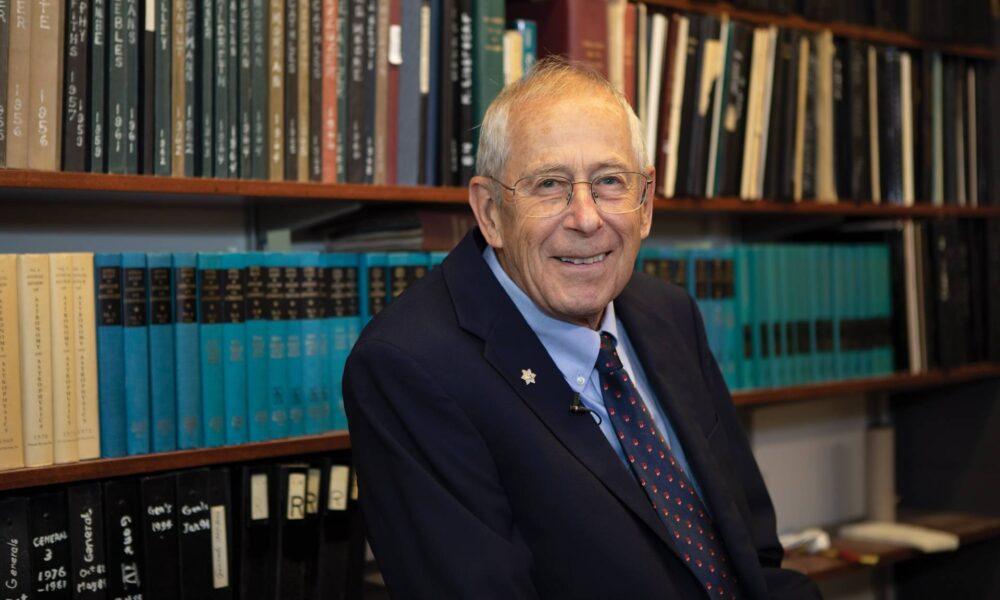
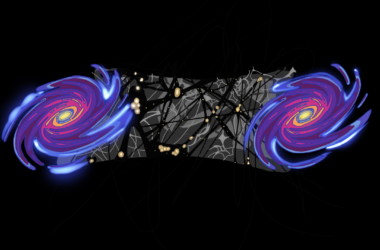
Staring at an image of the Milky Way, James Peebles, the 2019 Nobel Prize winner in Physics,  verbalized what his audience was thinking: “Isn’t that beautiful?”Just about everyone can agree that our galaxy is a remarkable sight. 

It was Sept. 16 and Peebles was visiting McGill to deliver the annual Anna McPherson Public Lecture. Peebles addressed what we know of the expanding universe, while acknowledging that the path to this now widely-accepted theory was not an easy one. 

The theory of the universe’s expansion began with Percival Lowell in the late 19th and early 20th centuries. An astronomer from a wealthy family, Lowell was convinced that an advanced civilization resided on Mars. He established an observatory in 1894 to look for what he claimed were man-made canals built on the planet’s surface. Though his theories of Martian civilization were seen as an embarrassment to the scientific community, Peebles believes that Lowell set a precedent for where observatories were placed and the way we use them. 

“Herman Weyl was one of the first to understand Einstein’s general theory of relativity, and one of the first to recognize the evidence that galaxies seem to be moving away from us, and the first to make a quasi theory of this expanding universe,” Peebles said. “But it wasn’t very good. Alexander Friedmann had the theory of the expanding universe, but unfortunately died before there was evidence.It was George Lemaître who, in 1925, put the two sides together—the theory and the observations.”

According to Peebles, Einstein had initially found this concept of a constantly expanding universe doubtful. He, and many other scientists of this period, believed that the universe was static and unchanging. But Einstein eventually changed his mind about the Big Bang Theory and abandoned his cosmological constant, a numerical value that made his equations work in a static universe. To the audience’s amusement, Peebles remarked on Einstein’s mistake, saying, “well, we’re all human beings.”

Peebles then moved on to a discussion of his own research. In the summer of 1964, more than 30 years after the Big Bang Theory was first proposed, Peebles and his colleague David Wilkinson were tasked with answering a complicated question: Is it possible to detect residual radiation from the early universe? Encouraged by Robert Dicke, a physicist who worked on developing radar technology during the Second World War, Peebles and Wilkinson built a radiometer, a device used to measure radiation intensity. 

Peebles told the gathered students that Dicke’s encouragement determined his career path. 

“David and I followed Bob’s instructions—and we’re still going!” said Peebles.

If radiation was detected, then it would serve as another form of evidence that the universe is expanding. Ultimately, Peebles and his colleague detected radiation, contributing to our understanding of the cosmic microwave background—the oldest electromagnetic radiation in the universe. Peebles later proposed a theory that not only explained the cosmic microwave background but also predicted the presence of dark matter—one of the many contributions that won him the Nobel Prize in Physics in 2019.

From the work of Peebles and his predecessors, it is clear that scientists have progressed tremendously—from first thinking there were people on Mars to creating a comprehensive explanation of the origins of our ever-expanding universe. 

At the end of his lecture, Peebles answered questions from the approximately 300 attendees. One audience member asked what his favourite moment of his career was. At 87 years old, Peebles did not hesitate to respond with “right now.” 

Off the Board, Opinion

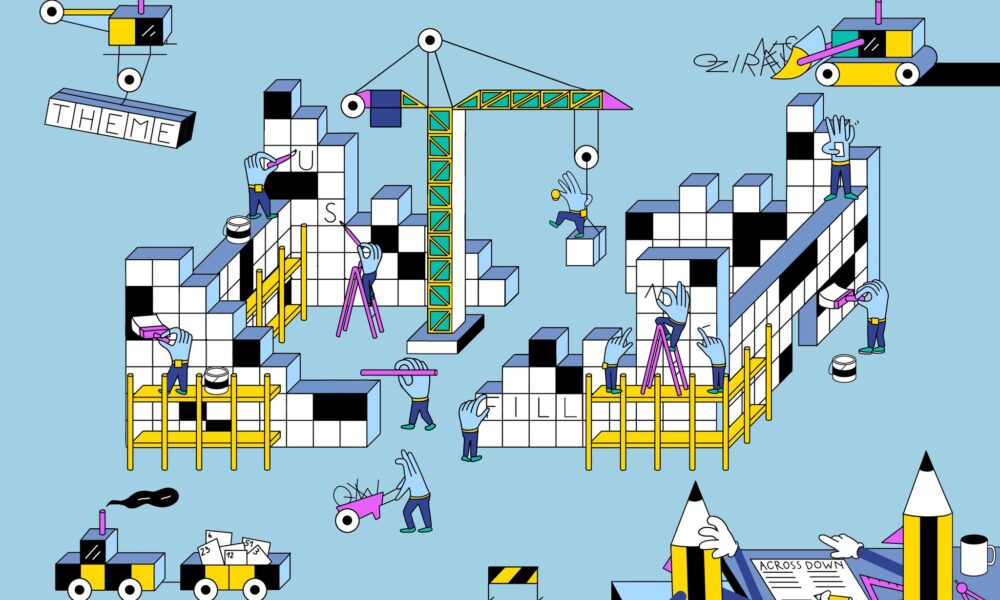
Crossword crannying? A morning ritual, say

I began doing the New York Times Mini Crossword during the pandemic, and after a year of practice, I could proudly complete it in under a minute almost every time. It was a solitary experience, a permanent fixture in my routine where I could compete with myself from the comfort of my couch. 

A year or so later, I began doing the crossword during breakfast at my girlfriend’s house. To my girlfriend and their roommates’ dismay, this meant I required full concentration, no interruptions, and an occasional pat on the back whenever my time shamefully surpassed 60 seconds. They ogled with contempt, insisting that my obsession was just another iteration of my strange habits. Slowly, however, they became more interested, asking questions here and there. My girlfriend started participating in the silent morning ritual, waiting for me to finish the Mini before even talking to me. Suddenly, when Wordle, the global sensation, was purchased by the New York Times, my friends succumbed to the temptation of the New York Times Games. Aha! I got them!

Eventually, we were all doing the crossword. Sometimes in silence in the kitchen, our coffee mugs full and getting colder, and sometimes on our own- but always reporting back to our group chat to display our scores: “46 seconds today!” “How do you do it?” “Guys…I’m sorry, this is so shameful. Two minutes.”

The Mini then evolved into the “long one.” The same routine ensued. Deep into our obsession, we discovered that the New York Times crossword has a rather particular way of functioning. Mondays are the easiest, and the crossword increases in difficulty as the week goes on. Saturday is the hardest and, contrary to popular belief, Sunday has the same level of difficulty as Wednesday, but it is longer, so it appears to be more difficult. Sometimes, the crossword was a collaborative effort, with all of us around the kitchen table shouting four-letter words that start with “f” and have an “e” in the middle. We also eventually caught on to the New York Timescruciverbalists’ favourite words: “edam”, “ire”, “LGA”, and “emote”. 

After a few weeks, it became obvious that the way we played and talked about our strategies reflected our personalities and sometimes even our values. For example, my friend Maddy refuses to do the crossword when it gets too difficult. She usually only does Monday’s and Tuesday’s, and stops when “it gets too upsetting.” As I came to learn, Maddy is terrific at taking care of herself and has boundaries that not even the New York Times can breach. My girlfriend Louise will painstakingly go through each clue and reflect on it until they find the correct word. They are thorough, clever, and have impeccable timing. Iza does not engage in our childish tomfoolery. She is a busy woman and has no time for that, except when we need her expertise in cocktail names and Hollywood stars. 

My strategy differs from those of my friends. I go quick, not wasting time on difficult clues and surfing through the easy words. I recognize patterns and remember old clues, using my experience completing the crossword to guide me through each new board. How I go about the crossword sums up how I go about life: Integrating what is new and what is familiar while trying my best to figure out what it all means when I put it together. 

Our friendship is complex and full of layers, but the crossword is a time where our personalities are so distilled that we can truly appreciate the wonders of each other’s brains. Although I still think my strategy is the best (no one has ever beat my 22-second record on the Mini), I love nothing more than hearing Maddy scream, “I actually know this one!” or seeing Louise rush to tell me that they actually beat me at the Mini this time—a rare occurrence, for the record. 

It turns out that a simple game and daily habit has the power to showcase and complement the strong personalities of four McGill students looking to make it through breakups, midterms, and frigid Montreal winters. This small group of cruciverbalists can now confidently name “Dern from Hollywood” and navigate the infinite complexities of young adulthood and friendship.

Science & Technology

Developing a multi-dimensional picture of the Saint-Lawrence River Valley

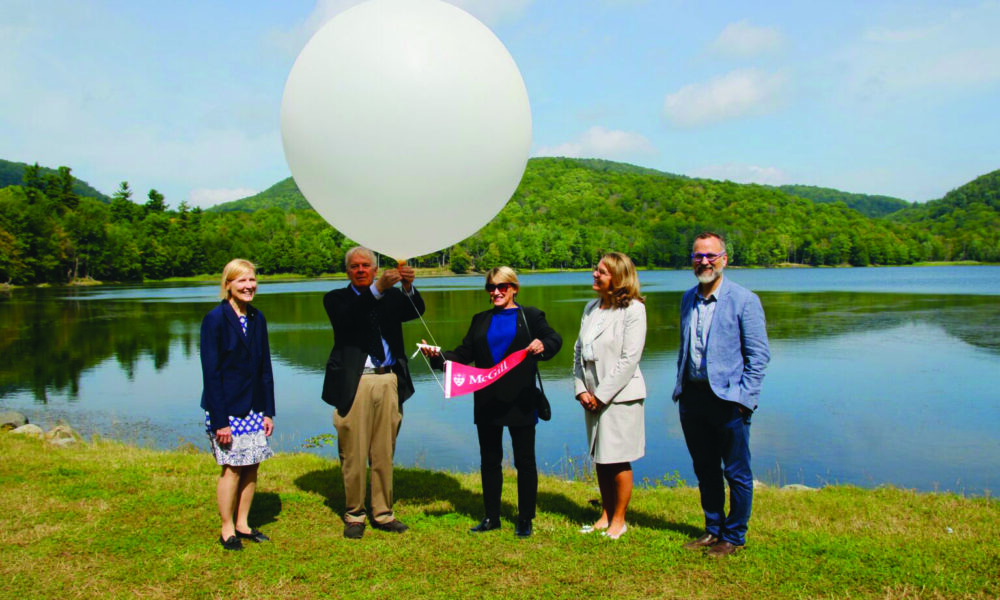
A few days before former McGill Principal and Vice-Chancellor Suzanne Fortier stepped down, she attended the inauguration of the Adaptable Earth Observation System (AEOS) facility at McGill’s Gault Nature Reserve. The new building, buried between the modest peaks of Mont-St-Hilaire, serves as a home to a biology lab and an atmospheric sciences lab dedicated to studying the ecology and atmosphere of the Saint Lawrence River Valley (SLRV). After its recent opening, John Gyakum, professor and chair of Atmospheric and Oceanic Sciences at McGill, told The McGill Tribune in an interview that the AEOS would serve as a hub for future studies of the SLRV and as a monitor for regional climate change. 

Thanks in part to funding from the Canada Foundation for Innovation, the Quebec government, McGill, and Université du Québec à Montréal (UQAM), researchers from across the province and abroad will be able to study meteorological phenomena unique to the region in addition to their ecological impacts. 

Gyakum is one of the lead researchers running several projects out of the AEOS facility. He explained that, while the main building itself has a biology lab and an antenna on the roof for meteorological balloon launches, an adjacent tower serves as the primary tool for meteorological research. 

“The meteorological tower […] has a lot of instrumentation—upward of about $250,000 to $350,000 worth of equipment—on one tower with measurements not only of wind and temperature and humidity, but also cloud amounts and radiative properties of the atmosphere and when it is precipitating,” Gyakum said. 

The tower at the Gault Nature Reserve is part of a larger network that collects atmospheric data—such as those mentioned by Gyakum—from the SLRV. The SLRV is of particular interest to atmospheric and climate scientists because of a rare weather phenomenon that occurs in the region—freezing rain.

Freezing rain forms when frozen precipitation falls through a layer of warm air in the atmosphere, causing the precipitation to revert to a liquid. The liquid, however, is immediately transformed into ice when it hits frozen ground. This phenomenon is very dangerous as it creates a layer of ice that can cause trouble for those journeying through the affected area. Anyone who has driven during a Montreal winter can attest to the headache of navigating Quebec roads after a bout of freezing rain. 

Gyakum explained that Montreal is susceptible to such weather events because it is located at the intersection of north-eastern and south-western winds, which creates the proper temperature layerings in the atmosphere to allow for freezing rain.

“There is an enormous horizontal temperature gradient,” Gyakum said. “That front represents a location […] for wintertime precipitation because the air […] coming in from the United States and ultimately from the tropics is forced to lift and condense out and produce a lot of precipitation.”

In the long run, the AEOS will also contribute to our understanding of the impacts of the climate crisis. Gyakum explained that by closely monitoring atmospheric changes in the SLRV over time, researchers will be able to create a comprehensive study of environmental changes in the region, hopefully informing future environmental policies. 

“What we can do is observe some of the details of the extreme weather events which are really well-linked to climate change, for example, droughts, heat waves […] and also extremely heavy rains and thunderstorms,” Gyakum added. “Those details represent an important data point in identifying some of the extremes that are occurring in the context of global warming.”

Moving forward, Gyakum hopes to prove the adaptability of the AEOS by using the transportable equipment at his disposal to collect data not only from the Gault Nature Reserve, but from locations all across the SLRV.

Arts & Entertainment, Music

Artist Profile: Still Insane is still rocking

Of the many cultural currents that underscored the late 90s and early 2000s, none have defined generations more than skater culture. Music genres such as skate punk charted worldwide, skater clothing brands like Vans dominated teenage aesthetics, and television programs such as Jackass  epitomized the “skater boy” as a staple identity. For many, skating is just a phase,  but for Still Insane, a punk-rock band from Quebec, it’s not “just a phase.”

Formed in 2006, this five-piece band’s skate-punk sound has been a key tenet of their discography, with metal influences coming in and out of the frame across albums. The title track off of their EP Black Sheep, in particular, features more melodic phrases and guitar solos to balance the characteristically fast skate-punk tempo. The first track, “Sleeping on the Floor,” features a classical canon-like intro which eases the listener into fast power chords that eventually crashes into a more relaxed outro, featuring James McGill—no, not THAT James McGill—reflecting on the definition of a Chicago Sunroof. Their music is upbeat, loud, and energetic, animated by a rebellious teenage spirit. After all, their sound is merely a reflection of the band members. They are proud skaters, all having started in their teenage years and continuing to do so into their forties.

When Still Insane isn’t at the skatepark, they tend to their family and work lives while making time to jam once a week. Most members have steady jobs––for example, in teaching and the automobile industry––yet Still Insane has remained a constant element of their lives. Through their music, they get to partake in Quebec’s vibrant punk rock scene, leading them to play with some of the biggest skate-punk bands like NOFX, Bad Religion, and Pennywise. Across festivals such as Pouzzafest and Envol et Macadam, they perform with the same bands that defined the video-game soundtracks of Tony Hawk’s Pro Skater series (1999-2015). Still Insane’s singer, Eric Dorval, recounted sharing stages with Bad Religion in an interview with The McGill Tribune.

“In 2014 we got a call from a friend asking us to bring over some gear to a Bad Religion concert,” said Dorval. “Next thing you know, we are sharing the stage with Bad Religion and our friends who were part of another punk rock troupe.”

Although the skate-punk formula remains unchanged, the people who play it have now matured, raised families, and grown to treasure their love of the genre. Dorval fondly remembers one of his first experiences meeting the lead guitarist of NOFX, Eric Melvin.

“I was with my partner who was pregnant at the time and we happened to run into him,” Dorval said. “We spent most of the time talking about perinatal matters, with Eric giving us advice on the pregnancy. He was so generous with his time and so caring. I was endeared by this experience, so much so that we ended up naming our child after him.” 

Despite all the great aspects of the scene, Dorval regrets the gatekeeping of punk rock. Here in Montreal, it is apparent to anyone passing through concert venues on Ste. Catherine in Le Quartier des Spectacles or in the Plateau that the punk scene is alive and well. Most punk shows, however, occur in bars instead of venues that allow for younger audiences. 

“Shows were open to minors which meant we grew up listening to sounds that are now constrained to adult audiences,” said Dorval, who was introduced to the punk scene as a teenager.

Through punk’s highs and lows, Still Insane is still going strong. “We released an EP during the pandemic, played during the genre’s decline in popularity, and we continue to write songs and jam,” Dorval explained. 

Whether punk is experiencing a revival, a decline, or the world is going through a pandemic, Still Insane continues to create music on its own terms. No matter the circumstances around them, they are a punk band for a reason.


Still Insane’s latest EP Black Sheep is available on Spotify and Youtube alongside their discography. You can also find them on Facebook where they update their page for news about shows and upcoming projects.

Editorial, Opinion

Show up to the polls—and for your community

On Oct. 3,  voters from across the province will head to the polls to elect the new members of the National Assembly of Quebec. After years of public health mismanagement, untenable costs of housing and food due to inflation, and the controversial passing of Bill 96 and Bill 21, the CAQ is fighting to maintain their majority. This period of political, economic, and social turmoil must serve as a powerful incentive for McGill students to meaningfully engage with local politics. Not only should eligible students cast their votes, but they should put their convictions into practice.

McGill students are notoriously insular when it comes to their involvement with the rest of Montreal and the province at large. With a significant international and out-of-province population, local politics are not often on students’ radars. But issues like healthcare, language bills, and housing rights affect students as soon as they settle in the province and should be enough to prompt participation. Simple pleas to vote, however, are insufficient in engaging a student population since a significant proportion of them are not eligible to vote in the province. The Quebec provincial election must then be an opportunity to reframe political participation and instill a culture of solidarity between international, out-of-province, Quebecois students, and residents of the province more broadly. 

Student apathy and young people’s low voter turnout are not new phenomena. The complex history of Quebec’s identity politics and the turbulent election campaign so far can be alienating. Many students, especially those not eligible to vote, may feel dissuaded from being politically outspoken for fear of overstepping—especially if they do not plan to make Quebec their long-term home. Furthermore, considering the high cost of tuition, many out-of-province students come to McGill in positions of financial privilege, with the means to access housing and food. Consequently, they are under the impression they can escape the harsh realities that engage so many people in politics. For many, this illusion is only shattered when an emergency arises and suddenly, they, too, experience the collapse of the healthcare system. Anyone living on stolen land is inevitably impacted by its history, bureaucracy, and politics. 

McGill is not an institution that exists in a vacuum. The university’s legacy is built upon enslavement, medical abuse, and the murder of Indigenous people, consistent with the histories of other Canadian institutions. As such, attending McGill is political in and of itself. It is a myth that democracy can only happen at the polls, and students are increasingly aware of that. The Solidarity for Palestinian Human Rights McGill (SPHR), the Black Students’ Network (BSN), and Divest McGill, are proof that McGill students can be politically engaged and have a sense of responsibility for the spaces they inhabit. 

Efforts to extend on-campus participation to the context of elections must focus on reminding students that the power structures of Quebec do affect them. Deficient healthcare systems, landlord abuse, and inflated food prices are all political issues that impact students’ daily lives. Framings of political engagement must then centre channels of solidarity beyond electoral participation. All students have the responsibility to get involved in grassroots organizing, resource redistribution, and mutual aid. 
Solidarity begins with an understanding of the land we occupy and the implications that our individual identities, for settlers especially, inflict on the places we live. It can be as simple as properly disposing of garbage and maintaining the streets of our neighbourhoods, but it should also involve supporting unhoused people and staying informed on housing rights. Local political involvement and grassroots mobilization recognizes alternative avenues of participation and acknowledges the inaccessibility and flaws of the electoral system. Democracy is at its best when showing up to the polls is accompanied by showing up for your community.

Out on the Town, Student Life

Falling for autumn gatherings

As the semester barrels closer to a cold case of the post-add-drop blues, many students should keep the restorative effects of outdoor gatherings in mind. With assignments creeping up and readings growing heavier by the second, students are faced with the prospect of staying indoors––hunched over a laptop or set of notes––under increasingly dark nights. But, despite the autumn breezes waving goodbye to the fleeting summer, these last days are ever more important to spend some moments outside. The McGill Tribune shares the keys to a successful and warm fall hangout, perfect for those last-minute and spontaneous get-togethers.

Winter (but, first fall) is coming

Having delusions about the changing weather––the oft-recited “it’s not that cold”––won’t prevent you from catching a chill. Come dressed for the weather: Pretend you’re jetsetting to Paris by wearing a cute and/or homemade scarf, find your heaviest, lumpiest sweaters and make them your friends, and don a jacket, especially one with a hood if your ears are delicate. If you’ve got a hearty tote bag, fill it with extra garments. You can share items like hats, gloves, and oversized hoodies with friends who underestimate their tolerance for bitter weather, and you can adjust your outfit with the layered look. And remember, it’s still a pandemic, so your masks will also provide warmth while operating at full protective capacity. Once the sun starts setting earlier and earlier, it’s the North Pole in Montreal––and don’t kid yourself: The street lights at Jeanne-Mance will not warm you up. 

Let’s say that you’re planning this event ahead of time. You have friends from classes, a few new acquaintances you’ve met from extra-curriculars, and maybe even a co-worker you’re hanging out with at Park Jarry or Square St. Louis. Dressing for the occasion sometimes just isn’t enough. A thermos and some prep in advance can cover you here. Switch out your icy water bottle for a well-steeped thermos chock-full of mint tea. If you want to cosplay as a detective staking out their suspect in the mysterious London pub of a mid-century British novel, consider making a hot toddy. All you need is whiskey, hot water, lemon, and honey. Even though it’s a classic beverage, don’t hesitate to swap out the whiskey for apple cider and spices—ginger, cloves, and cinnamon work wonders. 

Beyond beverages, there is an endless amount of hot meals you can bring along that are also fun to share. Take advantage of the harvest that comes with the new season and the farmer’s markets that signal the end of summer. Root vegetables, all kinds of greens, and pumpkins can make healthy and filling soups. And if your desired outdoor hangout spot––Parc La Fontaine––is close to where you live, bring the pot of soup or stew with you. Depending on where you live, you can pick up a nice, crusty loaf from Mamie Clafoutis or rich challah from Cheskie’s for the side on your way over to your group. Imagine the memories, and potential memes, you can make: You’re the host who doles out bowls in the park.

Transcend the typical

One thing to keep in mind while spending time outside is that, though the challenges of meeting in fall conditions seem exorbitant, there are benefits that you can easily embrace. The weather, for example, might make you pull out your fall wardrobe, but you won’t have to worry about leaving on the AC. Don’t romanticize the hot summers where leaving the house can be a tiresome, and far too sweaty, affair. Remember, you can take walks, strolls, and go for more challenging runs and hikes with friends where, even when bundled up, you won’t be doused in sweat. 


Make the most out of Montreal’s beautiful landscape––including Mont-Royal’s numerous trails––by going outside when you are not burdened by overwhelming heat and crowds. Keeping active will also keep you warm while you’re catching up between breaths, learning more about each other, and taking some much-needed time for yourself.

Research Briefs, Science & Technology

The surprising link between muscle mass and cognition

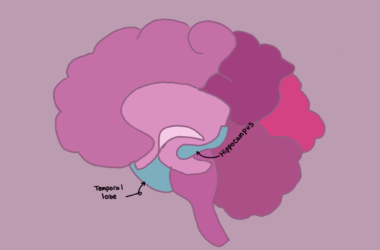
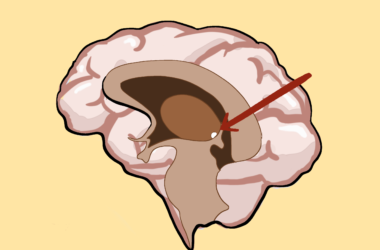
Most people are aware of the crucial role muscles play in keeping us alive and moving us around.What might be surprising to some, however, is that muscles also secrete hormones that affect the brain. The connection between these seemingly distinct organs led a team of researchers at the Research Institute of the McGill University Health Centre (RI-MUHC) to investigate the relationship between low muscle mass and cognitive decline in adults aged 65 years and older. 

While previous studies have shown a correlation between lower muscle strength and increased dementia risk, Stéphanie Chevalier, an associate professor at McGill’s School of Human Nutrition, and her team decided to focus on muscle mass independently from strength. They recently published a study analyzing data from the Canadian Longitudinal Study on Aging (CLSA) which had recorded comprehensive body composition and cognition data in 30,000 people between 2011 and 2013—and will continue to record this information every three years, for a total period of 20 years.

Using the data, the researchers examined whether low muscle mass was related to rapid cognitive decline. To assess cognition, they used three factors collected in the CLSA: Memory, executive functions—such as the ability to learn and adapt—and psychomotor speed, like reaction times. When testing for animal naming abilities, a commonly used activity to measure executive function, individuals with low muscle mass performed worse than their counterparts. There was, however, no significant relationship between decreased muscle mass and decreased memory function or psychomotor speed.

In an interview with The McGill Tribune, Chevalier discussed the importance of using special equipment to measure muscle mass in a clinical setting. 

“Muscle mass is […] another indicator of evaluating the risk for cognitive decline. So, I think it should be measured much more,” Chevalier told the Tribune. “We need to have access to the tools to be able to do that, [but] it’s difficult.”

In a clinical setting, a Dual Energy X-ray Absorptiometry (DEXA) scan is used to measure bone density, as well as appendicular lean mass (ALM)—a measure of the total lean tissue in the arms and legs. ALM allows researchers to calculate the approximate muscle mass of a person, but although many hospitals have DEXA machines, the high cost of usage makes them less accessible. 

In this study, the researchers used a DEXA scan as it is the most appropriate measurement for ALM. But there are more affordable options available to clinics and hospitals. For instance, certain gyms offer an alternative called bioelectrical impedance analysis, which estimates body composition. Another technique involves measuring the circumference of the lower leg. This method is less accurate than a DEXA scan, but as long as there is no water retention, it provides a reasonable estimate of muscle mass. By using these less precise but more accessible options, doctors could assess older individuals’ risks of developing dementia more easily. 

According to Chevalier’s findings, the measurable characteristics of muscle mass make it a promising biomarker that should be used during tests for cognitive decline. Though Chevalier’s study does not demonstrate a causal effect between decreased muscle mass and decreased cognitive functions, it shows there is a correlation. 

“I would want to repeat that same study in the CLSA that’s continuing now for 20 years altogether,” Chevalier said. “What we want to know now is those people who are able to maintain their muscle mass versus those who lose muscle mass with time, how does that impact cognitive decline?”

In addition to doing research, Chevalier is a nutritionist and emphasizes the importance of exercise and nutrition to maintain muscle while aging. 

Ask Ainsley, Student Life

Ask Ainsley: I forgot how to study for in-person classes!

Dear Ainsley,

I’m a second-year ArtSci student returning to campus after a full year of online classes. I feel like I’ve lost touch with the rhythms of in-person studies and I’m overwhelmed with these first couple of weeks on campus. When I began studying for my courses, I was hit with the realization that I have forgotten how to study without the help of online resources and 72-hour timeframes for exams. I’m worried that the strategies I used last year are not going to cut it anymore. With midterm season fast approaching, I feel like I’m going to start falling behind and pulling all-nighters very soon, without having much to show for it. I don’t want to be further overwhelmed and panic closer to an evaluation. What habits can I adopt right now to help me study productively and prepare myself for in-person exams?

Sincerely, 

Returning In-Person. (RIP)

Dear RIP, 

Thank you for reaching out and expressing what I’m sure many of your peers are feeling this year. It’s completely normal to be overwhelmed by the complete return of in-person learning as it brings back many experiences we had moved away from during the pandemic—waking up early, interacting with classmates, socializing on campus, writing exams, and more. With extra tasks added to your schedule, it’s more important than ever to employ effective time-management skills and build a routine for yourself. 

The first thing you should do is plan ahead by creating a general schedule for the year. The Google Calendar and Notion templates are both useful resources for this. Block out the times when you have lectures and any other meetings or in-person activities, then go through each of your syllabi and add in any assignments, exams, quizzes, or readings to the calendar on the date they are due. 

Now that you have a rough idea of what your semester is going to look like in terms of academic commitment, you can start by allocating daily blocks to studying. At the same time, remember that you also need to shower, cook, clean, run errands and take time for yourself, so don’t overschedule! I recommend dedicating no more than 4-5 hours to coursework each day to avoid burning out. 

The next step is to adopt practices that help you use your study time effectively. When studying,  it is crucial that you avoid distractions. Turn your phone off and put it in a drawer or locker until you have completed the work that you sat down to do. Set yourself a realistic number of tasks and create a to-do list to get through. For this, Notion’s agenda template and Microsoft Tasks are both useful, on top of physical agendas. I like to add smaller tasks I do throughout the day, such as cleaning my room, to the list as well because I find that seeing little tick boxes on my agenda motivates me further. 

Once you have set some targets for yourself, it is time to start working on completing those goals. The Pomodoro method is a scientifically-proven strategy for that. This technique encourages you to work in time bursts, where you commit to a task for 25 minutes, known as one Pomodoro, then take a five-minute break. After four Pomodoros, you take a longer 15 to 20-minute break. This helps with increasing your focus and pushing you to achieve the maximum amount of work you can in a shorter time. You can find a Pomodoro timer online to help you practice this technique. 

Although these are recommendations to help you get back into rhythm with the demands of in-person learning, each person is unique and has different needs. What is most important is that you understand your abilities and limits, do the best you can, and try to remain content with your efforts, no matter the result. It is not worth losing your sleep and mental peace over academic responsibilities.

Take care and stay healthy, 

Ainsley 

Read the latest issue

Read the latest issue