


Latest News

Science & Technology

McGill alumni create world’s first carbon-negative concrete

After water, concrete is the most commonly used resource in the world. From the buildings we live in to the roads we drive on, nearly everything in our built environment is made from concrete. Unfortunately, it’s also the most destructive material in the world, responsible for approximately eight per cent of global carbon emissions. But, what if there was a way for us to construct our world without killing it?

CarbiCrete, a start-up co-founded by McGill alumnus Dr. Mehrdad Mahoutian, PhD ‘14, and Chris Stern, BEng ‘94, has figured out a way to produce the world’s first commercially available, carbon-negative concrete. CarbiCrete’s concrete is made from steel slag, a waste material from the steel production process, and CO2 gas sourced from industrial vents. This means that their concrete takes more CO2 out of the atmosphere than it emits.

Mahoutian first developed the techniques used by CarbiCrete as a PhD student at McGill. During his studies, Mahoutian’s doctoral supervisor was toying with the idea of creating concrete using CO2, so Mahoutian built on this idea in his own research. He addressed the question of how to make concrete without cement, while also trapping CO2. After years of trial and error, Mahoutian and his team created a successful prototype.

Mahoutian’s process reduces greenhouse gases in two ways. First, steel slag is mixed with conventional minerals using typical concrete manufacturing machinery. In this first step, cement is not required, so CarbiCrete eliminates the environmentally destructive process of creating cement from its production line. Next, the mixture is poured into molds and cured for 24 hours in an absorption chamber. CO2 captured from industrial byproducts is then injected into the chamber where it reacts with the mixture, becoming calcium carbonate. The CO2 becomes trapped in the calcium carbonate and never makes it to the atmosphere.

McGill assisted Mahoutian and his team throughout the patent application process. Mark Weber, McGill’s Director of Innovation and Partnerships, connected Mahoutian with Chris Stern, a seasoned executive who had spent a large part of his career working with renewable energy companies.

“I knew the technology […] but [I did not have] lots of knowledge about how business works,” said Mahoutian in an interview with the The McGill Tribune. “On the other hand, [Stern] didn’t know anything about concrete or cement, but he was perfect and very experienced in business development.”

Working together, the two formally incorporated CarbiCrete in 2016. 

Rather than sell physical blocks of concrete, the CarbiCrete team licenses out its technology to concrete manufacturers. In addition to providing environmental benefits, CarbiCrete’s concrete blocks also allow companies to save money on carbon taxes, access the green materials market, and reduce costs of warehousing—CarbiCrete’s curing process only takes 24 hours as opposed to the 28 days required for common cement blocks.

“Concrete is the largest contributor to embodied carbon in the built environment,” said Yuri Mytko, CarbiCrete’s chief marketing officer, in an interview with the Tribune. “This presents a massive opportunity to permanently remove large amounts of CO2 [from the atmosphere].” 

In May 2022, CarbiCrete secured $23.5 million in Series A, or early stage, funding from mostly Canadian investors. This new cash flow, combined with the recent launch of a pilot manufacturing project, leaves the company well-positioned to begin commercial sales and expand access to its technology. On Sept. 19, CarbiCrete announced that Gary Belisle, former CEO of the Canadian concrete giant Permacon, will step in as its chief of operations.

CarbiCrete’s success is one of many examples of how science and creativity can work in tandem to solve the world’s most pressing problems—in this case, the climate crisis. And it all started at McGill.


Sports

Trent scrapes past Redbirds in homecoming lacrosse game

After a two-year hiatus, the McGill men’s lacrosse team returned to the Percival Molson Stadium on Sept. 10.The long-awaited homecoming was marked by cheerful support from team alumnus and former coach Tim Murdoch who retired at the end of the 2019-20 season. The Redbirds, who last played the Trent Excalibur on Oct. 26, 2019, were hopeful to start the 2022-23 CUFLA season with a win. 

Excitement soon turned into tension, however, with Trent catching the Redbirds’ defence off-guard, scoring their first goal just seconds into the first quarter. The Redbirds attack, led by fourth-year attacker Isaiah Cree, soon regrouped and punched a hole through the Trent back line with three goals in the next 10 minutes. The lead could not be sustained by the Redbirds, though, and the Trent attack caught up with two goals in the final minutes of the first quarter, ending at a 3-3 truce.  

The second quarter was nothing short of a roller coaster, with Trent dominating in possession and goals early on, only to be outmatched by the Redbirds in the latter half. Midfielder Louis-Antoine Habre inspired the Redbirds in the quarter through a phenomenal run and pass to first-year attacker Patrick Aber that was stifled by the opponent’s goaltender. A few minutes later, Redbirds forward Cameron McGinnis and midfielder Ethan Forgrave added their names to the scoresheet. A robust defence and organized forward line saw the Redbirds tie the game to 6-6 at the end of the first half.

It was the third quarter where the game slipped away from the Redbirds, with Trent scoring four consecutive goals. Although McGill goaltenders Steven Pelliccione and Joseph Boehm tried their best to save the Redbirds some grace, the Excalibur attack was too formidable to defend.

The Redbirds fought back and displayed a spirited performance in the final quarter. With nine minutes left until the final whistle, the Redbirds scored, giving hope to a tense crowd on home turf. Another goal by the Redbirds in the final two minutes pushed the Excalibur defence to its limit. A time-out requested by coach Nicolas Soubry with a minute and 18 seconds on the clock was too late for redemption, and the final score sat at 10-8, recording a Trent win.

Soubry praised the team for their dedicated performance, and acknowledged the need to work on finer details as they proceed in the 2022-23 season.  

“When we were down 10-6, [the question was] are they going to fight back,” said Soubry in an interview with The McGill Tribune. “Those moments when the team scored the first and second goal, you could see on the bench that they were ready to fight back.The things we need to work on are the details—the substitution, the fast restarts, man up and man down, [and] the last two minutes of the game.”

McGinnis, a fourth-year attacker from Scarborough, Ontario, is excited to lead the Redbirds this CUFLA season and to learn from the game against Trent.

“It’s good to take a loss early on in the season so that we can turn that to a win later on,” said McGinnis. “We are going […] hard in our practices throughout the week, and have a long way to go. One thing we need to work on is coming together as a team and staying consistent with our rate of play.”

The Redbirds’ next game is against the Nipissing Lakers on home turf on Sept. 17 where the team will look to record their first points in the Eastern division of the CUFLA.

Moment of the game: Trailing by four goals at the end of the third quarter, midfielder Rowan Birrell’s two goals in the final 10 minutes of the game inspired the Redbirds to a nail-biting finish.

Quotable: “The boys rallied together in the fourth quarter – we moved the ball well and put it in the back of the net a couple of times, unfortunately we ran out of time.”–Redbird’s forward Cameron McGinnis on the team’s performance in the final quarter.

Stat Corner: Midfielder Dylan James shines for the Redbirds, scoring two goals in the first quarter.

Arts & Entertainment, Pop Rhetoric

Spit-takes: Harry Styles vs. Chris Pine?

To spit or not to spit? That is the question. After months of alleged drama amongst the cast and crew of Olivia Wilde’s new film Don’t Worry Darling, it’s only fitting that press for the premiere centred around gossip rather than the mediocre-at-best movie. The moment in question happened just before the screening when, while taking his seat, Harry Styles may or may not have spit on his co-star Chris Pine.

Spitting for box office sales— Suzanna Graham

At this point, the Don’t Worry Darling set is just a breeding ground of chaos and cancel culture—#Spitgate was tweeted nearly as much as the Queen’s death. 

Harry Styles absolutely spat on Chris Pine. I don’t care if the projectile spittle was visible or not—it happened. Look at Styles’ pursed lips, perfectly in sync with Pine’s surprised face and subsequent smile at the honour. No questions here, friends. But, let’s entertain the conspiracy theorists: Why did Pine smile? Simple—he knows that his co-stars are just continuing the media circus surrounding the film. This stunt in particular adds to the drama surrounding Styles’ and Olivia Wilde’s on-set romance.

Styles and Wilde met and started dating while working on the film. Twitter initially believed they might have broken up Wilde’s nine-year relationship with Jason Sudeikis—but Wilde has nipped that theory in the bud. They might have already broken up, as Styles proved at the premiere when he’d rather kiss Nick Kroll than his “girlfriend.” While neither Styles nor Wilde have commented on the current status of their relationship, their cool body language seems highly telling. 

So why spit on her? Why spit on anyone? The only thing the internet agrees on about #Spitgate is that spit is difficult to see. So why do it at all? The chaotic cast has evidently taken the phrase “all press is good press” to heart. With the reviews for Don’t Worry Darling being shockingly subpar, Styles has clearly decided to poke the media bear even more. Without the spit, without the feuds, DWD would flop harder than Morbius did—twice. After the disputed moment, Styles looks at the camera—not like Jim in The Office, but in genuine confusion. Honestly? Give the man an Oscar because it’s the best acting he’s done to date. But sure, he didn’t spit. If you don’t believe me, believe Styles at his Madison Square Garden concert—#Spitgate is real. 

Harry would never – Adrienne Roy 

As a borderline criminally insane fan of Harry Styles, his return to acting was something I had been looking forward to since his small role in 2017’s Dunkirk. Without having seen Don’t Worry Darling (yet), it’s hard to fathom the movie being any more psychologically thrilling than its premiere. It was mad. It was baffling. It was everything I wanted it to be and more. Between Styles (eloquently) reassuring his audience that the movie does, in fact, “feel like a movie” and Olivia Wilde and Florence Pugh’s dissertation-worthy feud, it seemed like anything could happen, even spitting.

Despite the circumstances, the theory that Harry Styles spat on Chris Pine—who proved he was God’s strongest soldier in Venice—is absurd. If anything, Pine had more reason to spit on Styles, not the other way around. The DWD premiere had many internet-breaking moments—which made Spitgate perfectly conceivable—but this situation can definitely be chalked up to poor timing. Quite frankly, it would’ve been more on-brand for Styles to choke Pine with a seaview. And they were even by the ocean! Not to mention that we’re talking about the person who wrote a song called “Treat People With Kindness” and frequently waves pride flags at concerts. Styles wouldn’t have such a massive, sometimes terrifying, yet unconditionally supportive fanbase if he weren’t a loving and respectable person. Also, he’s a carefully media-trained Libra moon

Although Pine and Styles’ PR teams have confirmed that no spitting occurred between the co-stars, I think that having the saliva of the world’s most wanted man on your shoe—or in your mouth, if you’re Nick Kroll—is a privilege that anyone with eyes and a good head on their shoulders would accept with gratitude.

No contributors spit or were spat on in the writing of this debate.

Art, Arts & Entertainment

McGill Arts Collective champions collaboration in the campus art scene

With the Fall 2022 semester in full swing, students are once again faced with the barrage of decisions typical of a busy September. Selecting the most efficient route between classes, finding study spots to frequent, and picking clubs to join are just a few of the choices that are top-of-mind during those first few days after the add-drop period ends. 

While these decisions may take a student weeks of trial and error, the new McGill Arts Collective (MAC) hopes to make joining a club an easy decision for seasoned artists and enthusiastic beginners alike.

Founded by undergrads Brune Bettler, U2 Science, and Darren Li, U2 Science and Management, MAC is a new multimedia fine arts club dedicated to developing a diverse community where artists from all disciplines can connect and collaborate. At a university without a dedicated fine arts program, MAC aims to fill an oft-neglected niche by creating space for an interdisciplinary group of artists and art enthusiasts. 

“McGill does a really good job of providing students with academic services and clubs, but we found there wasn’t a lot of room for multimedia artistic opportunities,” Bettler said in an interview with The McGill Tribune.

As passionate artists that work across mediums themselves—Bettler is an avid photographer and creator of 2D-collages while Li enjoys painting and experimenting with mixed media—MAC’s co-presidents felt compelled to start the club after discussing their mutual desire for a space where McGill students could foster artistic conversations across mediums. 

“[MAC] can bring a community together of people who do all kinds of different arts […] they can meet each other, talk about their work, and get a multimedia perspective on what they make,” Li explained. 

Going forward, MAC will hold bi-weekly events that fuse different mediums through collaborative activities. The organization is membership-based, meaning students can attend all of the year’s events with the purchase of a $15 full-year membership, or they can opt to attend specific events for $5 each. These events will range from exhibitions where students can display their latest artworks to interactive challenges such as the upcoming poetry-inspired paint-off on Sept. 22. There, participants will work in teams to paint their own masterpieces inspired by lines from an original poem before discussing the finished pieces as a group at the end of the evening. 

To kick off the year, MAC held its “club-warming” event on Sept. 8, at Jeanne-Mance Park. With the bright beginnings of a harvest moon as the backdrop, the event saw a revolving group of interested students munch on delicious snacks while mingling with fellow art lovers.

Josie Brooks, a U2 Psychology student with a love for painting and music, was most enticed by the community aspect of MAC. “I’m excited about the prospect of connecting with other artists. I’ve already met some really cool people here,” she said. 

Bettler and Li hope to expand the club’s focus to include events and initiatives that will connect students with the larger Montreal arts scene. 

“We’re thinking we could set up a shop on our website that would allow McGill artists to sell their art and then also communicate with different museums and art institutions to get reduced prices for students,” Bettler said of the club’s future trajectory.

“Definitely!” Li agreed emphatically. “Connecting McGill students to what’s happening within the Montreal art world, I think that’s a great opportunity to give McGill students.”

While the co-presidents acknowledged the importance of focusing the MAC’s efforts on the McGill community before expanding their scope, it was clear from the club-warming event’s atmosphere and enthusiastic chatter that students were looking forward to bigger things to come.

Baseball, Sports

Redbirds baseball makes long-awaited return to varsity field with 4-4 record on season

After two long years, McGill’s men’s baseball is finally back. The highly-anticipated return of one of McGill’s most competitive teams kicked off with a series against the University of Toronto (UofT) (4–0) where the Redbirds did not disappoint. McGill cleaned out the Blues, sweeping the series and scoring 18 runs over the three games. 

The team then packed their bags for the Toronto Labour Day classic tournament. After dropping their first game to UofT, the Redbirds trounced the Humber College Hawks (0–4) in a dominating 15-6 win. Unfortunately, this would be their only win of the tournament as the team suffered back-to-back losses at the hands of the Laurier Golden Hawks (2–2), bringing their record to 4–3. 

On Sept. 6, the Redbirds (4–4) set out to bounce back after a losing weekend against the Concordia Stingers (2–0). On Tuesday night, right-handed pitcher and first-year Marcus De La Cruz got the ball for the Redbirds and quickly put away Concordia’s leadoff hitter, earning his first strikeout of the night. 

After a hit-by-pitch, an unlucky bloop single from Concordia’s Jarod Pita knocked in the first run of the game, giving the Stingers a 1-0 lead coming out of the first. 

Starting on the bump for Concordia was Benjamin Powell, who sent McGill back to the field with a quick 1-2-3 first. 

Still down 1-0, McGill’s offence began to warm up after catcher Chris Bodine gave the Redbirds their first hit of the game with a single in the bottom of the third. After two wild pitches, Bodine made his way to third, scoring on a balk and tying the game 1-1. 

But the Redbirds couldn’t hold on and the Stingers scored on back-to-back singles, giving Concordia a 2-1 lead. 

In the top of the fifth, Concordia’s offence opened up the game with an RBI double, giving the Stingers a 3-1 lead and ending De La Cruz’s night on the bump with a final line of 4.0IP, 6H, 4ER, and 3Ks. 

With Donovan Worrall now in to pitch for McGill, the Stingers cashed in on an RBI single from Pita and exited the fifth with a 4-1 lead.  

After continued silence from McGill’s offence in the bottom of the fifth, Concordia scored again in the top of the sixth and again in an error-filled top of the seventh to make it 6-1. 

Despite the team’s defensive struggles, head coach Casey Auerbach remained optimistic about the team’s prospects.

“It’s so early. We’ve been off for three years,” said Auerbach in an interview with The McGill Tribune. “We’re just kind of keeping our expectations realistic and we haven’t had a ton of time to practice. Obviously there was a bit of disappointment with the way we played defensively tonight.” 

Auerbach also noted the success of the team’s offence in previous games, and hopes it can bounce back for the team’s upcoming games. 

“I think we’ve been swinging the bat pretty well to start games, so I just kind of hope we come out with that same fire and hopefully we can keep it consistent for seven innings.” 

The crowd caught glimpses of the team’s offensive potential as they threatened a comeback in the bottom of the seventh. After back-to-back walks, infielder Milo Young stepped up with an RBI single on a line drive to left field, giving the Redbirds some life and making it 6-2.

With runners on first and second, outfielder Jonas Press grounded into a fielder’s choice and scored McGill’s last run of the game. Despite the disappointment of the 6-3 final score, Young feels hopeful about the team going forward. 

“It was a tough loss,” said Young. “Obviously, we hate losing to our rivals but I think there’s a lot of positives that we can take from it. We know what we have to do better to improve and we’ll come out and beat these guys [Concordia] next time we play them.”

Moment of the game: In the second inning, McGill’s defence struggled with a couple of errors, but a timely double-play turned by second-baseman Milo Young and first-baseman Brad Marelich held the inning intact. 

Stat Corner: Auguste Guern led the team in hits, going two for three with two singles. 

Quotable: “I always hunt fastballs, so I was just looking for a fastball to just drive in the gaps.” —Second-baseman Milo Young on his hitting approach 

Science & Technology

Time to BeReal: Could the newly popular app be addictive?

Many students across North American university campuses receive identical notifications on their smartphones every day: Time to BeReal. The alert is sent out to all those who have downloaded the popular social media app BeReal, which delivers a less-filtered online experience to those looking to avoid overly-polished content. The recent rise in the app’s popularity has sparked some buzz among Gen Z—most notably, university students—and has reignited interest in the psychological effects of apps designed to document our lives. 

BeReal sends users a daily notification at a randomized time of day, prompting them to simultaneously capture an image of themselves and their surroundings within two minutes of receiving the notification. Users’ photos are posted to their pages for their followers to enjoy. The app is meant to be all that Instagram and TikTok are not: Unfiltered, organic, and spontaneous. In other words, the BeReal app is an interface meant to offer its users the opportunity to connect with one another’s authentic and real-life content. Its popularity, however, may not be due to the kind of interactions it offers between users.

Many organizations, such as the Canadian Mental Health Association of Ontario, consider social media and excessive internet use to be an addiction. People addicted to social media experience many of the symptoms seen in other types of addictions, such as drug and alcohol dependencies, including mood changes, increased tolerance with use, and even withdrawal and relapse symptoms. 

According to several neuropsychology studies that examined the effects of long-term social media use on chemical interactions in the brain, the  neural pathways activated while scrolling through platforms like Facebook or Instagram are the same as those when using cocaine. Many of these pathways involve dopamine, a neurotransmitter and a hormone that generates the pleasurable reward feeling we get when we gamble or take an addictive substance. Big social media corporations are well aware of this and exploit the brain’s craving for larger doses of pleasure. They do all that they can to keep users consuming content, like incorporating a refresh feature to increase session times. The longer you spend on social media, the more addictive it becomes, and the more your happiness depends on it. 

In spite of BeReal’s claims that it provides a “realer” form of social media, users may find themselves trapped by the same addictive mechanisms used by Facebook and Instagram.

“Requiring people to post at a particular time really doesn’t solve any of the problems of online interaction, and it intensifies pressure on people to represent themselves,” wrote Jonathan Sterne, a professor in McGill’s Department of Art History and Communication Studies, in an email to The McGill Tribune

For some, BeReal’s spontaneous notification is indeed an added stress, but its promise of authenticity is a huge plus in many users’ eyes. It remains to be seen whether the app is less addictive because, unlike other forms of social media, the whole experience is very short-lived.  

“I like the idea and I think it’s fun but other than the one photo you take a day there’s really nothing much else to it,” wrote Kate Frost, U3 Biology, in an email to the Tribune. “It’s interesting for about five minutes a day at most.” 
For some McGillians, BeReal is new, exciting, and fun. For others, the hype is over. Social media giants like Meta and Twitter, however, are harder to escape. When new apps enter the zeitgeist, it’s important to be critical of the claims they make. Maybe BeReal’s nostalgic return to authentic social media is necessary. But, if our psychological tendency to use social media apps for comparison is any indication, that’s a big maybe.

McGill, News

Bill 96 raises concerns for prospective and current international McGill community members

The strict provisions of Quebec’s new French language law, Bill 96, have raised concerns among international students and faculty members at McGill about the impacts the legislation will have on their lives. With the law making it harder to access public services in English, some non-French-speaking community members are worried that Montreal will become a less desirable place to study and work. 

To fulfill the Coalition Avenir Québec’s (CAQ) mandate and to strengthen the French language charter, the National Assembly of Quebec passed Bill 96 on May 24. Since its introduction, Bill 96 has drawn criticism for the severity of some of its provisions, as well as its invocation of the notwithstanding clause, which allows the bill to override certain clauses of the Canadian Charter of Rights and Freedoms

While McGill is situated in Quebec—where the official language is French—it is an English-speaking institution where 49 per cent of students self-report being beginner or intermediate level French speakers. McGill also has a significant international population: 30 per cent are foreign students, though students from France comprise 16 per cent of this group. 

In an email to The McGill Tribune, Ratna Ghosh, a professor in McGill’s Department of Integrated Studies in Education, explained that she believes Bill 96 will act as a barrier for international students wanting to come to McGill.  

“What Bill 96 is doing is making things difficult for international students who come to Quebec and don’t know French,” Ghosh wrote. “A large share of international students come to McGill thinking they are coming to an English university but in Montreal […] they will not be able to access public services in English [….] This is not the way to attract international talent at a time of intense globalization.”

Ghosh added that Bill 101, a law conceived to make French the most commonly used language in Quebec, had already been successful in promoting French since it came into effect in 1977. 

Bill 96 affects the operations of businesses, schools, and immigration services by requiring most communication to take place solely in French and by making it easier for the Quebec Board of the French Language to conduct searches and seizures of entities that fail to comply. The new law also requires that new immigrants learn French within six months of their arrival, after which all public services must, by default, be provided in French. 

Onyeka Dike, a second-year English Literature master’s student at McGill and the External Affairs Officer of the Post-Graduate Students’ Society (PGSS), echoed Ghosh’s warning about Bill 96 in an email to the Tribune. Dike gave examples of certain struggles McGill community members may face due to Bill 96, such as an international student being forced to navigate Quebec rental tribunal proceedings in French, that may deter them from establishing roots in Montreal. 

“When all these factors are considered, it goes without saying McGill and other schools in the province will become unattractive to anglophone and allophone students across the world,” Dike wrote.* 

Despite the Bill’s potential impacts on students and faculty members, McGill media relations officer Frédérique Mazerolle said it will not affect the way McGill offers services to students. In an email to the  Tribune, Mazerolle assured that McGill’s language of instruction will remain English.

“Like all businesses and institutions operating in Quebec, McGill University must comply with the laws and provisions in force, including with respect to the Charter of the French Language,” Mazerolle wrote. “The University is currently examining Bill 96 and changes to the Charter that affect universities, businesses, government agencies, workers and consumers. As we adapt to these changes, it is important to stress that we will continue to offer teaching and services in English to students.”

*The views expressed by Onyeka Dike are his own and do not represent those of PGSS.

Science & Technology

400 days of cycling and recycling

On July 1, 62-year-old McGill mechanical engineering professor Larry Lessard set out on the journey of a lifetime. An avid cyclist and expert on recycling, Lessard plans to travel across three continents, 28 countries, and 20,000 kilometres in 400 days. Along the way, he’ll stop at universities and wind farms to share his research into recycling and push for a faster transition to a circular economy.

On the evening of his interview with The McGill Tribune, Lessard had just finished a 125-kilometre leg of the trip from Magdeburg to Liepzig, Germany. Nearing retirement and dealing with the early stages of arthritis, there was no time left to waste.

“I’ve been wanting to do this all my life,” Lessard said.“I had a career and all kinds of things that got in the way. And now I have a chance to do it.”

 Lessard’s route started in Paris and will conclude in Montreal. He will travel through most of Northern Europe and Scandinavia before moving south through Turkey, Georgia, Iran, and Azerbaijan. After a short stint flying through India, Pakistan, and Bangladesh, where roads are less friendly for bikers, he will resume his journey in Thailand, covering much of South East Asia and Japan. Finally, he will return to Canada for his final journey from Vancouver to Montreal. 

The Bike62 Project, as he calls it, is more than just a thrill-seeking adventure. In addition to spreading his knowledge about recycling, he plans to visit wind farms and speak with clean energy leaders about the need to recycle wind turbine blades, which each contain about eight tons of fibreglass—a material with high potential for reuse in recycling.

“[Wind farming] is an industry that prides itself on being green energy. But they have a big waste problem,” Lessard said. “We want to target these green people first because they have a vested interest in their green image […] and then we can expand into other sectors.”

Fibreglass, made from carbon fibre, is found in objects like bathtubs, boat bodies, and bicycles. Though notoriously difficult to recycle, its second-life potential is huge. Carbon fibre is stronger than steel and doesn’t corrode or rust, but takes 14 times as much energy to produce. Finding a way to reuse existing carbon fibre could enable mass production of longer-lasting buildings, machinery, and vehicles, while reducing the environmental impact of waste and unnecessary production of new fibreglass. 

Lessard is looking forward to the leg of his trip that will take him through countries with less robust recycling infrastructure, where citizens and governments are forced to think creatively about solutions to waste management and the climate crisis. He notes that initiatives like Canada’s public recycling pick-up program are not universal.

He plans to compile his findings into a documentary that he’s filming along the way with support from the Paragon Institute of Innovation. Each day, he films his travels on a Go-Pro that he attaches to his bike. He supplements the footage with interviews shot on a small movie camera, a drone, and an iPhone which he carries in a saddle bag. A crowdfunding campaign for the project is currently running on his GoFundMe.

Balancing the distance, the terrain, the equipment, and a busy schedule has not been easy. 

“I consider myself a naive person,” said Lessard, clearly in good spirits. “Even if it’s difficult, I can’t go back now.” 

You can follow Lessard’s trip and see a live route map at www.Bike62.com or on Instagram at @ridebike.saveplanet.

McGill, News

Library holdings to move off-island in 2023 ahead of proposed renovations

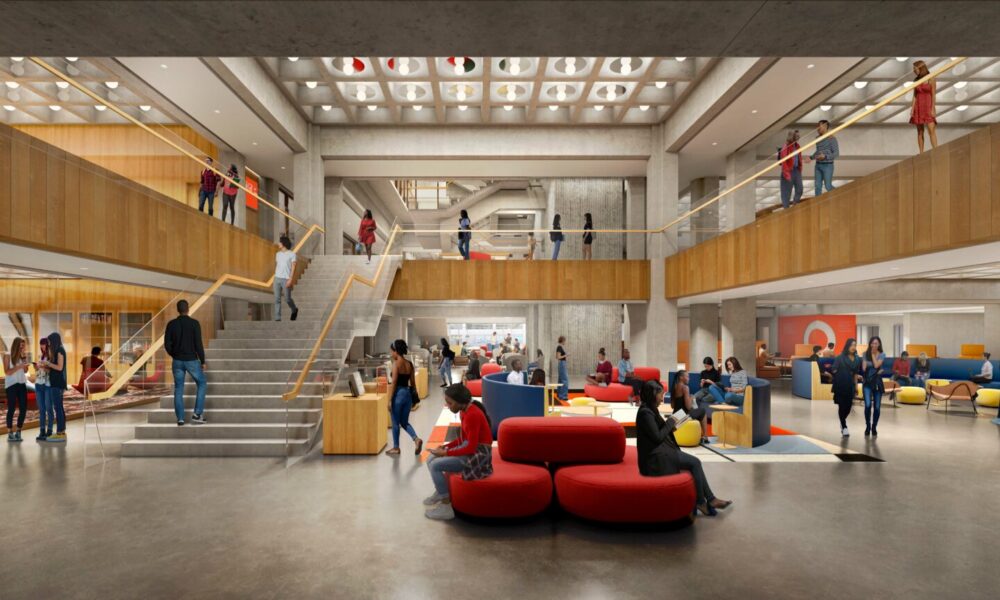
Two-point-three million items, including books and journals, will be transferred from McGill’s Humanities and Social Sciences Library to a new Collections Management Facility off the island of Montreal in mid-2023 to prepare for major renovations. The Fiat Lux project—a plan conceived in 2012 to renovate and modernize the McLennan-Redpath complex into a technologically-advanced facility with an open-concept layout—is moving ahead at full force. Construction on the complex is set to span from early-2024 to 2027. 

Physical texts currently occupy a significant amount of space in the McLennan-Redpath library complex. In a Sept. 7 press release, however, outgoing Trenholme Dean of Libraries Colleen Cook and incoming Dean Guylaine Beaudry noted it no longer makes sense to devote such a large footprint to this collection—almost half of the materials housed in the complex have not been checked out in over 30 years. As a result, many of the university’s hard-copy volumes will remain in the new Collections Management Facility, located in Salaberry-de-Valleyfield, even after construction concludes.


Though library materials will be accessible to the McGill community through the interlibrary loan system during construction, the Dean of Librarians is encouraging instructors to start borrowing the texts they will need for 2023-24. All texts will be temporarily unavailable for six to eight months while they are transported to the holding facility. Once the facility is set up, library materials kept in Salaberry-de-Valleyfield will be delivered to McGill’s downtown campus within 24 hours upon request. 

During the renovations, the McLennan-Redpath complex will be completely inaccessible to students. The administration is currently looking into installing temporary satellite spaces around campus to compensate for lost study space. 

In an interview with The McGill Tribune, Laura Baek, U2 Management, expressed dismay about the closure of the McLennan-Redpath complex. Baek pointed to the importance of the complex as a prime study spot for students, and noted that the three-year-long shutdown would be an inconvenience for many.  

“It doesn’t seem ideal,” Baek said. “The [McLennan-Redpath] library is the main place on campus other than classes that students go to meet with other students and study. Especially during finals, there’s high demand for study spaces. Not having a place to go would not be great.”

McGill media relations officer Frédérique Mazerolle explained in an email to the Tribune that the complete renovation of the McLennan-Redpath complex is needed to cater to the university’s increased student population and the workspace they require. 

“A lot has changed in the last 50 years, and what worked well to serve 14,000 students back in the day isn’t necessarily the best fit for more than 40,000 students today,” Mazerolle wrote. “Students now struggle to find daily study space, a challenge made even harder during exam crunch time.” 

With most of its collection stored in the Collections Management Facility, the renovated library complex is expected to provide 5,350 seats for students. In her email, Mazerolle also detailed the various spaces the Fiat Lux project intends to create to support different styles of learning, including new areas for events and a reading room.

“Together, [the two infrastructure projects] will nearly double the space for students and create a vibrant library environment space that is accessible, comfortable, safe, and sustainable,” Mazerolle wrote. 

Though construction is set to begin after his tenure, Kerry Yang, Students’ Society of McGill University (SSMU) vice-president University Affairs, said in an interview with the Tribune that ensuring the administration makes plans for alternative study spots ahead of the closure would be a point of advocacy for SSMU going forward. 

“Measures should be in place before renovations start to ensure students have spaces to study,” Yang said. “Students have concerns about this and the university has to do their best to alleviate them and be very clear on how they are going to create more spaces.”

Editorial, Opinion

Mourning the Queen celebrates a violent legacy

CW: Colonial violence

On Sept. 8, Queen Elizabeth II of the United Kingdom died following a series of health complications. As a member state of the Commonwealth, Canada has commenced a 10-day national mourning period. The House of Commons was convened on Thursday to pay tribute to Elizabeth and to proclaim the accession of King Charles III to the throne. Yet, the Queen’s death has sparked a global discussion about the monarchy’s problematic past and its relevance today. The Queen’s death presents an opportunity to reflect on her role in the violent history of the British Empire, critique the influence of the monarchy in Canada, and demand more than unquestioning reverence from our peers and institutions.

Today, the monarchy is mainly characterized by antiquated elitism, unaccountability, and scandal. Its sustained impact and legacy, however, have deeply sinister implications as the institution is predicated on exploitation, privilege, and white supremacy. Considering the long history of extractivism by the British Empire at the behest of the monarchy, many countries are still in the process of rebuilding economic systems that, in their colonial eras, existed primarily to sustain Europe’s development. With absolute impunity, the monarchy looted innumerable artifacts and treasures, monopolized trade through annexation and coercion, and caused a famine in South Asia that claimed millions of lives. The reverberations of colonial exploitation still underlie the U.K.’s relationships with many Commonwealth countries.

From the very beginning of her reign in 1952, the Queen actively participated in the colonial regime of her predecessors and brutally suppressed independence movements. The Mau Mau uprising in Kenya began the same year as Elizabeth’s accession, where British colonial troops forced hundreds of thousands of Kenyans into detention camps, subjecting them to monstrous and inhumane conditions. The history of the uprising is still obscenely misrepresented by public British institutions. In the years that followed, the Queen quashed independence movements and supported the torture of anti-colonization activists in Cyprus and in Yemen. Queen Elizabeth never once acknowledged the crimes that Britain and her family committed throughout its history as an invading force, and the majority of Britons maintain that the British Empire is something to be proud of. 

In Canada, those applying for citizenship must swear allegiance to the monarch, and the Crown’s authority is deeply embedded in the constitution. Functionally, the monarch serves as a merely symbolic rubber stamp and a relic of a bygone past. Yet, their presence as Canadian head of state continuously reaffirms their authority and perpetuates indifference towards the violent, systemic, and ongoing colonization of Indigenous peoples and their lands. 

Two particularly problematic arguments have surfaced since Elizabeth’s death. One: Despite her role in the British Empire’s imperial conquests, the Queen, as an individual, deserves our respect. Such perspectives insist that Elizabeth, the person, and Elizabeth, the violent colonizer, can and should be viewed as distinct entities. Two: Yes, she did those things, but the criticism should wait. Both positions deny the importance of the Queen’s imperial history in the context of her remembrance. 

The Queen, to much of the world, represents violence, oppression, and suffering. She orchestrated countless brutal responses to independence movements and refused to show remorse for, or even acknowledge, the crimes of her empire—normalizing an institution rooted in racism, invasion, and resource extractivism.

McGill lowered its flag to half-mast in commemoration of the Queen and the Crown’s “special relationship” with the university. The relationship in question consists of a then-Princess Elizabeth’s visit to the university, once, over 70 years ago. Aside from that, the Queen’s time in Quebec was most notable for the consistent presence of separatist protesters decrying the Crown’s influence over the French province. One could argue that McGill’s response was an insensitive and untimely attempt to flaunt its prestige and historical prominence. Yet, such actions seem wholly unsurprising in their distaste. They are consistent with the deeply problematic pasts and the shameless colonial apologetics of both the monarchy and the university.

McGill must acknowledge that its own conception is borne out of the same destructive ideology that the Queen perpetuated as an imperial tyrant. If it is serious about truth and reconciliation, Canada must use this opportunity to leave the Commonwealth. There is no better time than the present to address the wounds of Elizabeth’s role in a violent colonial regime by holding our institutions and governments to account.

Read the latest issue

Read the latest issue