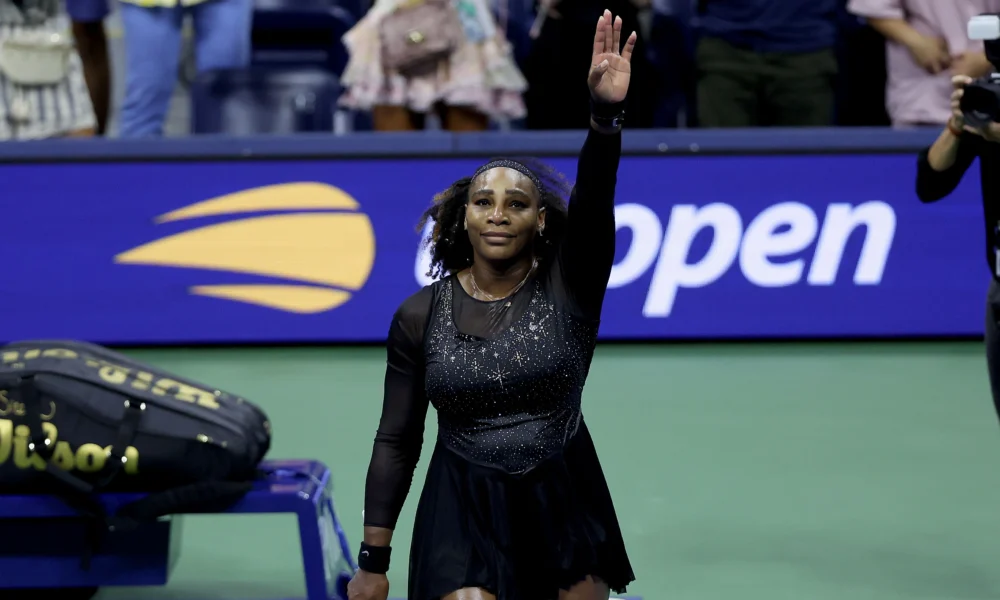
In a Vogue article published on Aug. 9, tennis legend Serena Williams announced that she would officially step away from the game after the 2022 U.S Open.
Serena’s admirers held their breath with tremendous emotion as her masterful career came to a close on Sept. 2 with a loss in the third round of the tournament.
Serena Williams leaves behind a legendary tennis legacy. Since winning her first Grand Slam title in 1999, Williams has won a total of 23 single Grand Slam titles in as many years. She has also won 14 doubles Grand Slam titles with her sister, Venus Williams. No tennis player, man or woman, has won more championships in the Open Era, when Grand Slam tournaments began allowing professional tennis players to participate.
Williams has revolutionized the face of tennis forever. She is regarded as the best player of all time. She is also widely recognized as the greatest female athlete of all time and, by many, the greatest athlete of all time, period.
Williams’ legacy as a tennis player extends far past her impressive athletic feats. In an world that expects women to play and celebrate quietly, Williams showed millions of female athletes that it is okay to be passionate.
Williams has experienced violent and sexist criticism at the hands of the media. Most notably, in 2018, when Williams argued with umpire Carlos Ramos during the U.S. Open over his controversial calls, Williams was heavily mocked and shamed by the media as she was accused of throwing a tantrum, being immature, and making tennis an ugly sport. In response, Williams honorably defended her reaction and explained that she was standing up for what was right, and hoped her actions would pave the way for other female athletes to stand up for themselves on the court.
Since Serena Williams’ debut in tennis at the U.S. Open, adorning iconic beaded braids, she has endured intense racism from the media, the tennis community, and the public. Serena and her sister Venus were accused of match-fixing in 2001 at Indian Wells, and faced racial slurs and explicit threats of bodily harm from the crowd. After Williams’ spirited discussion with Ramos at the 2018 U.S. Open, Williams was, again, a target for racist attacks from the media as Australia’s Herald Sun depicted Williams with an explicitly racist and derogatory caricature. In response, Williams rose above yet again, calling out the media for their role in demonizing her for actions white players are continually excused for.
Williams has refused to be shamed for her body, upsetting societal and tennis norms of what the female body “should” look like and do. Her catsuit at the French Open dominated news cycles for days following its reveal. Despite Williams explaining that it was to prevent blood clots following her pregnancy and traumatic childbirth, the catsuit was banned and Williams was, again, flooded with criticism. Williams has worn an array of iconic outfits on the court, including a denim miniskirt, a studded leather jacket, a Nike blazer, tutu skirts, and, of course, pieces from her collaboration with the late Virgil Abloh’s Off-White.
Serena Williams is looking to the next stage of her life as an evolution and is ready for the future—such as with her business Serena Ventures, a firm that mostly invests in start-ups created by women and people of colour. Williams explained that it is time to change the pattern of men supporting one another and only investing in each other.
We are not done hearing or talking about Serena Williams. How could we be? She has changed the face of sports and tennis forever. Williams defined a new era of athletic greatness and power. Her story, the story of a young Black girl from Compton with unprecedented discipline and determination, has inspired people worldwide. While the virtuosity of the greatest athletes of all time will be dearly missed on the court, her impact off the court will continue to grow.
I had a disagreement with a couple of friends recently. Don’t worry, there were no tears shed. It was just about how many friends we have at McGill who are proper “foodies”. You know, the sort who actually enjoy cooking and don’t rely on President’s Choice frozen pizza to suffice. Anna was unsure of how many, while Sean claimed to only have three. I stood back, and then said, “Well, I think everyone’s a foodie, deep down.” Don’t roll your eyes, hear me out.
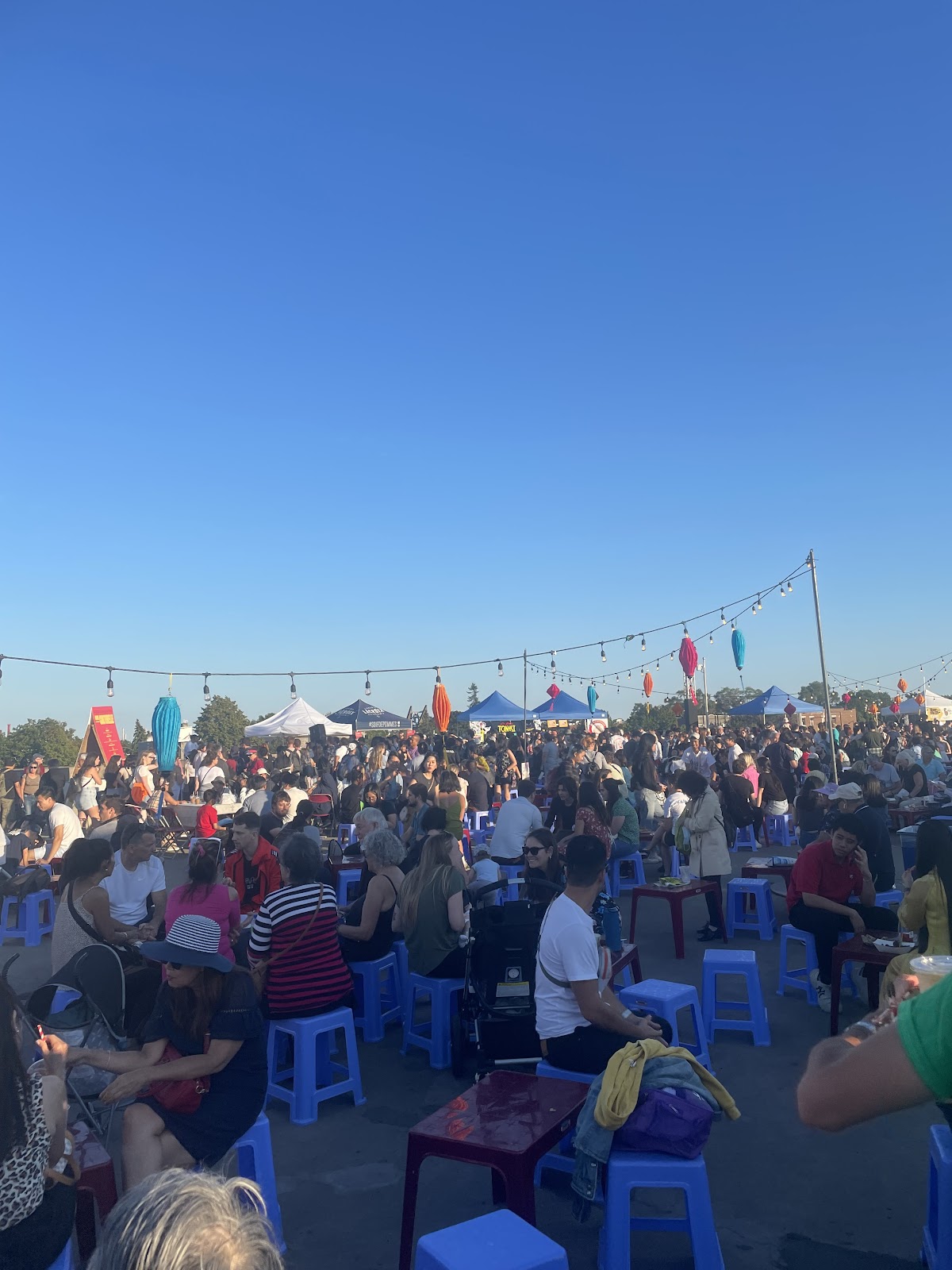
Last week, I went to Les Premiers Vendredis (First Fridays) at Montreal’s Olympic Park, the second-biggest food truck festival in Canada. With over 3,000 people and 50 food trucks, this wasn’t for the faint of heart. Women dressed in full Aritzia. Men in rugged t-shirts who judge other men by how well they grill steak. Families with kids who love to wander—away from their worried parents. Students in baggy pants, fuming at any price over $10. Everyone was here. Excited, hungry, and with one question: What are we going to eat? Now tell me people aren’t foodies deep down!
Festivals are the life of summers. And it doesn’t matter what type of festival it is—the first thing you do when you enter is establish an action plan. At this festival, it went like this: Go for a wander and decide what to eat afterwards. Great plan, said the other 3,000 people in unison. My friends and I followed suit.
There’s something odd about serving street food in an enormous, concrete Olympic park. But in a weird way, it made sense. It’s a grey, utilitarian construction built for the 1976 Olympic Games. And now, almost 50 years later, it’s still serving the community—just with more variety of food.
The theme this week was Vietnamese, so there were a large number of Vietnamese trucks offering soup, rice, sandwiches—you name it. They also had those quintessential, plastic street stools for seating. Aside from Vietnamese, most cuisines were covered—though I didn’t see any ramen.
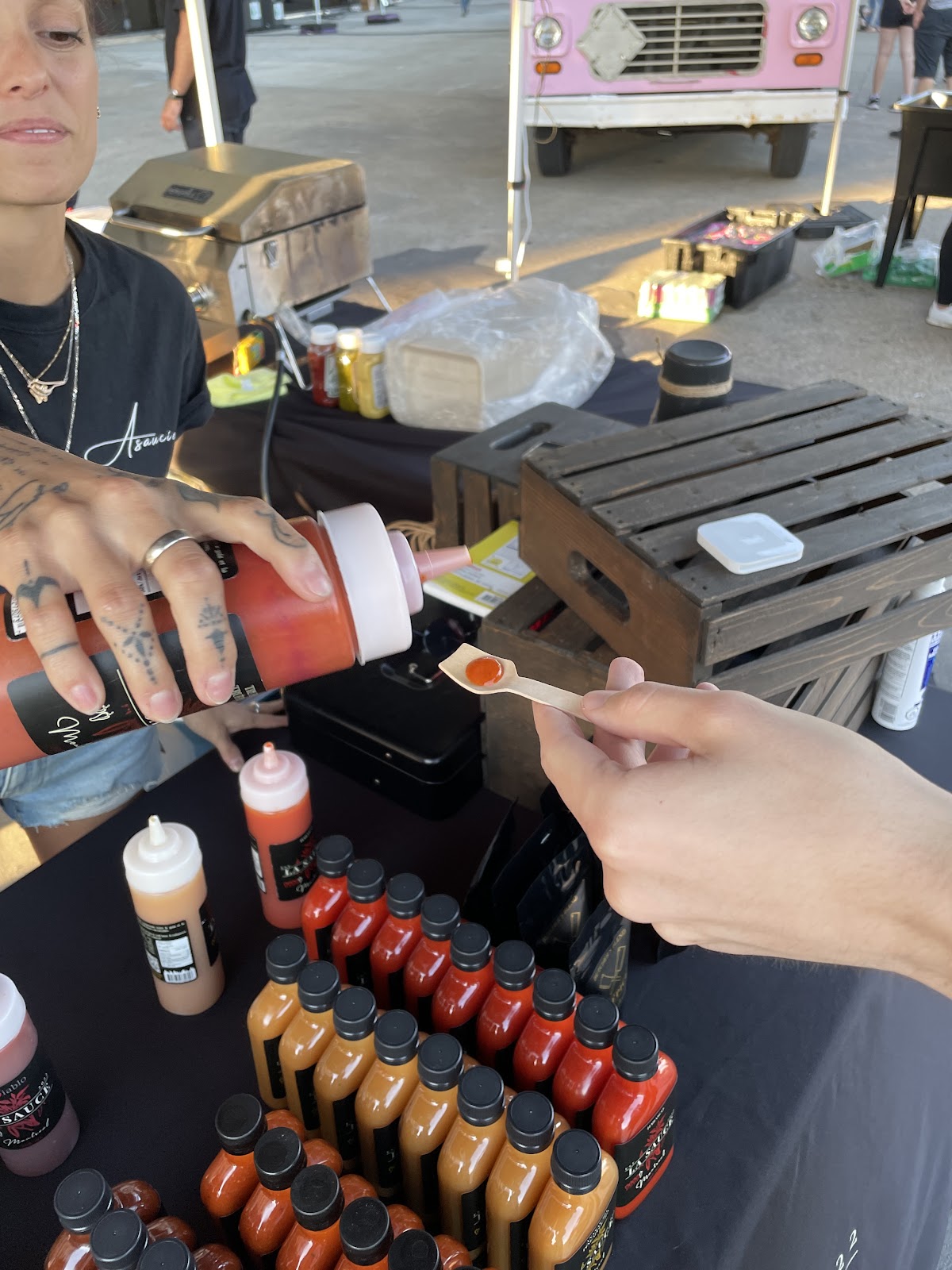
Walking around, we stopped by the La Sauce stand, which offered testers of its spicy sauces. Truth be told, the spiciest sauce was quite hot—who knew? Meanwhile, the distillery stand offered us free shots of their new fruity rum, which went down like water. There was also live music and even mini golf to keep you busy.
Bugger, is that shrimp I smell? I’m allergic to shrimp, you see. A warm salty smell like a mermaid’s armpit, and mixed with grilled BBQ chicken. It was coming from the paella stand and drew in perhaps the longest line of any truck. But tempting as it was, I decided not to flirt with death. Instead, I went to a Vietnamese truck, Saigon Montreal, which offered Wonton soup and fried rice.
The line was painfully long, too. Waiting in queues really is the epitome of aimless human frustration—that and the time between pressing the button in an elevator and the doors closing. Eventually, I got the fried rice with chicken for eight bucks, and wolfed it down. Portion sizes looked like they were meant for children, but I still thoroughly enjoyed it.
My friend got a portion of the jerk chicken from Boom J’s cuisine, a Jamaican jerk chicken truck. It was fantastic. Juicy, tender, soft, with a sauce that acted as a perfect sweet and salty coat. I also grabbed a hot pepper burger from the Dilallo burger truck. I’ve never tried a burger with a hot red pepper before and I can’t say I’ll be rushing back. The fries hit the spot though.
As I was waiting in line for the Saigon truck, I saw this young boy. He must have been about seven or eight years old. And unlike most people there, he navigated the crowd using a wheelchair with his guardian. They stopped next to me, frustrated as one drooling, BBQ-obsessed man didn’t see him. The boy looked down and took a bite of his taco, he then looked up at me and beamed a smile with the most unforgettably happy eyes. I smiled back.
For the first time since 2020, a semester has begun with nearly no pandemic restrictions in place at McGill. Mandatory masking and social distancing were dropped in May 2022 and campus activities, including all classes and Frosh, have resumed at full capacity. Those in residences, however, report feeling that COVID-19 protocols within dorms have not been clearly communicated.
Irina Zhang, U0 Management and Arts, shared a post on Reddit on Sept. 3 explaining that she had tested positive for COVID-19, but was unaware of the protocols she should follow considering she lives in a double room with a roommate. Zhang immediately panicked because she could not find any clear answers on how to proceed. She tried contacting the Dean of Students’ office in an attempt to move rooms, but as it was the weekend, members of the Dean’s team were out of office.
“I was only aware of the simple protocols La Citadelle emailed us at the beginning of the year, which just told us to stay in our rooms if we had COVID-19,” Zhang said in an interview with The McGill Tribune. “It seems that they only send [the full protocols] to students that need to quarantine.”
With little prior information from McGill staff, Zhang turned to other students in residences and online platforms such as Reddit with her questions. She explained that she did not think of contacting her floor fellow—both because she was overwhelmed and because she thought COVID-19 protocols fell outside of floor fellows’ purview.
After making the Reddit post, Zhang called La Citadelle’s 24/7 front desk staff, who answered most of her questions. She learned how to get food—go to the cafeteria but remain distanced from others—and received the official COVID-19 protocols for the residence.
She was told to remain in her double room, but to avoid contact with her roommate. The current residence protocols state that roommates are only separated in “extreme cases,” or when an individual is immunocompromised. Zhang was further advised to maintain social distance if she needed to leave her room and not to have any visitors. Despite McGill’s protocols, Zhang had friends bring her food and ultimately left her dorm to quarantine at her parents’ house.
Alex*, a floor fellow, believes the current protocols in place are “careless” and insufficient to adequately handle COVID-19 outbreaks in residences.
“There are far fewer self-isolation rooms available this year,” Alex wrote in an email to the Tribune. “In contrast, last year, there were floors dedicated to COVID-19 self-isolation in NRH (New Residence Hall). This has left students to ‘self-isolate’ in their own room, with their potentially COVID-free roommate.”
In addition to limited protocols for COVID-positive students, McGill has stopped distributing rapid tests and many lectures are no longer recorded. Alex believes that the lack of resources and accommodations offered by the university increases the chances of sick students missing classes and tests, causing them to fall behind academically. Alex also noticed that a large number of students were sick after Frosh. He worries that many assumed it was “Frosh Flu,” and did not test for COVID-19.
“Though fewer and fewer people are affected by the virus as time goes on, it is vital to note that we are not at a place where we can completely ignore it,” Alex wrote. “The reality is that there are students still living in residence with COVID-19, and McGill needs to acknowledge this by accommodating those individuals.”
McGill media relations officer Frédérique Mazerolle affirmed the university’s commitment to the safety of those in residences in an email to the Tribune.
“The health and wellbeing of the community will remain our top priority and all necessary health and safety measures as recommended by government and public health authorities will continue to be implemented in the residences to ensure residences remain safe spaces this academic year,” Mazerolle wrote.
*Alex’s name has been changed to preserve their anonymity.
McGill’s campus is looking very different this semester as students return to fully in-person learning for the first time in over two years. COVID-19 restrictions have been relaxed, Zoom lectures are becoming a thing of the past, and campus life seems to be coming back strong. For many new and returning McGillians alike, this fall may feel exciting, daunting, and unfamiliar. The McGill Tribune talked to some students about this semester’s return to classes.
“It’s my first real year because last year all of my classes were online. I prefer in-person––I feel like at home I was less motivated, but it was maybe easier to follow the class because you could just rewatch the lectures. But even if it is harder now, I feel like I am more motivated. To see all the people and interact with them––I prefer that.”
– Alexis Shank, U2 Arts
“I’ve been much happier with in-person classes. I felt very isolated at home––I was in a little cave inside all day. Now, I have to get out. I had one in-person class last year, and now all my classes are in-person. It feels much nicer, seeing and meeting new people. While the greater social contact is great, now I’m in my classes and I hear this symphony of coughing. I might wear a mask just for my own peace of mind.”
– Johnny Carter, U2 Education
“Last year, I didn’t have any fully online classes. I always had the option to go and I liked the assurance that, if I got sick, I would be able to watch recorded lectures, but now some profs are not recording lectures. And it’s frustrating because now you go to class and hear a lot of coughing because people feel pressured to go to class. Generally, I do prefer in-person, but it was good to know if you got sick, you wouldn’t fall behind. I also wish individuals would be more responsible––at least if people could wear a mask. I don’t think it’s necessarily a bad thing that they lifted the mask mandate, but I think more insistence on responsibility would be good.”
– Mia Szabo, U1 Arts
“[The lack of COVID-19 restrictions] is weird. My roommate had COVID-19. People want to be in this post-COVID world, but we’re not quite there yet. But it does seem like when people do get COVID-19, it’s a regular occurrence. It’s manageable, but it’s also scary; it’s your first week living away from home and you get COVID-19.”
– Lucinda Silverman, U0 Arts and Science
“Last year was a bit different––I did one year of dental school, so a lot of it was online. Professors obviously had to adjust because they were healthcare professionals, which I think was responsible of them. But, at the end of the day, not everyone is going to be happy. A lot of our labs got cancelled and things had to be adjusted. But I think it was the right move because we were surrounded by healthcare people. This year, I like being in person––it feels like we’re back to normal. It’s weird to see Frosh starting again and people being more social than the past two years.”
– Kenneth Tan, M1 Medicine
“When class was online, I found it difficult to find opportunities for social interaction. Additionally, since I was starting my first year of university, the overall transition was a lot more difficult than if school was fully back in-person. The transition to going back in-person has been overall very smooth because it’s something that I’ve been wanting for a long time. Once I heard that school was going to be back […] I went in with the mentality of wanting things to return to normal as soon as possible.
[With COVID-19], I always think that it’s better to be safe than sorry because, while restrictions have been lifted, COVID-19 is still a thing, and catching it can still put a roadblock on your life. I’ve never minded masks, but I’m glad that large groups of people can gather and socialize again.”
On May 26, TSN’s Rick Westhead broke the news that a sexual assault lawsuit against Hockey Canada, the Canadian Hockey League (CHL), and eight unnamed CHL players had been settled. Filed on April 20, the lawsuit alleges that a young woman was sexually assaulted in a hotel room in June 2018 by those eight CHL players, including members of the 2018 Men’s National Junior Hockey Team.
To close out an evening of celebration at the star-studded 2018 Hockey Canada Foundation Golf and Gala event in London, Ontario, many of the players in attendance stepped out for a night on the town. Praise rang through the ears of the young Canadian players, fresh off a gold-medal win, and the feeling as though the city was theirs began to settle in.
After meeting one of the players at Jack’s—a staple of the university town—the young woman says the player gave her copious amounts of alcohol, isolated her from her friends, and lured her back to the player’s hotel room where the two engaged in sexual acts. Without the knowledge or consent of the young woman, the first player then invited seven others.
According to the lawsuit, the eight players sexually assaulted the young woman for hours. When she attempted to leave the room, the group directed, manipulated, and intimidated her into remaining. The number of men in the room, some of whom had brought golf clubs with them, threatened physical harm and further coerced her into staying.
The young woman says that, after the sexual assaults, the players forced her to shower and state on video that she was not fearful, intimidated, or intoxicated prior to the incident. The players’ lawyers later shared the recording with The Globe and Mail in an attempt to exonerate them from any wrongdoing.
Like the domino effect outcome of the #MeToo movement where the surfacing of one story prompted the exposure of many others, this 2018 case of sexual assault was not an isolated incident. On July 22, after receiving a report on the incident, Halifax police opened a criminal investigation into a group sexual assault that was said to have occurred in 2003 involving members of Canada’s 2003 Men’s National Junior Hockey Team. The allegations state that more than a half dozen players from the team were recorded during the tournament raping an unresponsive woman.
For young hockey players everywhere, the news came as a shock. What happens when the people you look up to, those who represent your country, use their collective power to exploit? Caiden Daley, a Western Hockey League (WHL) alumnus and member of the McGill men’s hockey team, struggled to digest the events of 2018.
“Hockey being a sport that I’ve loved for my whole life and hearing that news, opened up my eyes to what can happen,” Daley shared with the Tribune. “[Sexual assault] shouldn’t be in any culture, it’s not acceptable anywhere, and I just hope that players hear that news and take a step back and think to themselves about what hockey is about.”
The McGill Tribune / Mika Drygas
The players knew what they were doing that night was criminal. They knew that a lack of physical evidence and a video stating the assault was consensual would blur the case in a court of law. They also knew that the structures designed to hold them accountable would fail to do so—just as they had failed so many times before.
And so, while those two players went off free, traded across the country to pursue their professional hockey dreams, the young woman underwent several years of counselling and multiple attempted suicides.
Echoes of the violence inflicted by the Swift Current case have continued to ring ever since. The Saskatoon Blades in 1995. The Windsor Spitfires in 1995. The Barrie Colts in 2000. The Soo Greyhounds in 2012. The Gatineau Olympiques in 2014. The same story on repeat. Just different towns, different teams, and different players. The CHL—Canada’s major junior hockey league that represents the Ontario Hockey League (OHL), Western Hockey League (WHL), and Quebec Major Junior Hockey League (QMJHL)—has produced generations of local hockey “heroes” whose destructive actions face no repercussions.
As journalist Laura Robinson lays out in her 1998 book Crossing the Line: Violence and Sexual Assault in Canada’s National Sport, patterns of sexual abuse often stem from players’ confrontations with a litany of hypersexualized hazing rituals and sexually abusive coaches. “They are also very angry and frustrated with the powerlessness they feel, especially when they have been abused by men they looked up to and trusted,” Robinson writes. “One of the ways they believe they will get rid of these bad feelings is to transfer them to someone else.” In 1994, for instance, 135 sex crime charges were laid against the senior players, owners, coaches, and trainers of the Ontarian team, Tilbury Hawks. The case uncovered initiation “games” that centered on the boys’ rectums, penises, or mouths—rituals that are not uncharacteristic of other junior hockey teams throughout Canada.
University hockey teams cannot be sidelined in discussions of the sport’s pervasive culture of sexual violence. Misogynistic environments and assault allegations are commonplace within university sports teams, such as Boston University, the University of Michigan, and Carleton University, to name a few. In 2014, the University of Ottawa men’s hockey team was suspended in response to allegations of group sexual assault in Thunder Bay.
When asked if the recent Hockey Canada scandal had prompted any changes to education and training programs received by the McGill men’s hockey team, executive director of McGill Athletics Geoffrey Phillips told the Tribune by email, “[t]he safety and well-being of our student-athletes is always the number one priority of McGill Athletics. The messaging and support offerings to student-athletes is ever-evolving based on current social issues and how best to address them.”
Currently, in addition to completing It Takes All of Us, the mandatory online sexual violence education program for the entire McGill community, student-athletes are also mandated to complete an annual anti-hazing education course. According to Phillips, coaches hold “team building exercises throughout the year to harness a strong, inclusive environment.”
The Tribune reached out to McGill’s men’s hockey coach David Urquhart regarding the issue of toxic masculinity in hockey culture, but he respectfully declined the interview request.
Although the responses from McGill hockey representatives indicate that there are some structures in place to educate players, the normalization of sexual violence and the silencing of survivors is deeply entrenched in hockey’s too-often permissive culture. These values cannot be erased by the “It Takes All of Us” program, inclusive “team building,” and an anti-hazing education course. These surface-level initiatives are sorely inadequate, failing to acknowledge the depths of the problem endemic to male hockey culture—a problem decades in the making.
Recent parliamentary hearings targeting Hockey Canada’s cover-up of the 2018 case have expanded to investigate deeper-seated issues within the organization. Notably, the hearings revealed the existence of a multi-million dollar fund that is supported by registration fees from youth players across the country and used to pay out settlements in cases of alleged sexual assault. Hockey Canada has deployed the fund to write checks at their own discretion, allowing the organization to avoid the participation of their insurers on issues that are deemed uninsurable, such as sexual assault. Until recently, parents and players have been unaware of the fact that their registration fees are being used to cover up cases of alleged sexual assault; the fund had remained a well-kept secret for decades and is not listed in the organization’s handbook.
An investigation by The Globe and Mail revealed that the reserve fund exceeded $15 million in recent years. Hockey Canada CEO Scott Smith and chief financial advisor Brian Cairo both defended the existence of the fund because of the uninsurable nature of the settlements. Senior executives testified that Hockey Canada handles many sexual assault cases every year and has paid $8.9 million to settle multiple cases of alleged assault since 1989.
While the 2018 sexual assault case was not the first assault involving National Junior Hockey Team members, it was the first time that Hockey Canada was unable to conceal their players’ egregious actions from those outside the tightly-bound organization. It was the first case to reveal that this fund had been dedicated to settling sexual assault claims behind closed doors. It was the first to prompt the Canadian government to put an unprecedented freeze on the $7.8 million of federal funding allocated to Hockey Canada each year.
Courtney Szto, an assistant professor at Queen’s University whose work specializes in sports, physical cultures, and intersectional justice, ties these mass cover-ups to the lack of impartial third parties within sports establishments with which athletes can openly communicate their experiences.
“The lack of accountability [….] is similar when any sports organization likes to deal with issues in-house and participants are not provided with any external oversight,” Szto wrote.
“If you have an issue with a coach, who do you go to? Who can you trust? Historically, those people you would raise an issue with are also the people who determine your playing time, your salaries, and/or any other potential opportunities you might receive; hence, people learn to stay quiet because they don’t know who to trust.”
This culture of silence is not exclusive to Hockey Canada. As a country, Canada muzzles its history and past injustices—its settler colonialism, its enslavement, its misogyny—the consequences of which run through the very fabric of the nation. Despite learning about the 2018 sexual assault allegations against the CHL players that very year, the federal government did not follow up on the complaint until the news became public, failing to hold the players or organization accountable, like so many others.
The thunderous silence from current and former NHL players and coaches is disheartening as well. There was no whistleblower in 2018. Nor in 2003. The code of silence implicates all players, as it enables the dangers of hockey culture to remain unchallenged behind closed doors.
“Even if you don’t think you’re affected, you are,” Daley said. “We’d all like to change— it doesn’t just take one person, it’s a whole community. Things need to be changed and need to be taken care of and put into the right direction. And hopefully, hockey culture can keep moving forward[s] instead of backwards.”
In response to the pressures inside and out of the hockey world, Hockey Canada continues to show that they truly do not care to change. The only action taken has been the resignation of Michael Brind’Amour, former president of Hockey Quebec and the organization’s board chair. CEO Scott Smith has also continually refused to step down—a decision Szto believes obstructs any tangible change from occurring within the organization.
“Personally, I think you need to clean house at Hockey Canada for the sake of rebuilding trust,” Szto said. “I know not everyone was complicit or involved in the recent incidents that have received news attention, but, without a clean slate, there will always be questions about who knew what and when. I don’t think in this instance you can make meaningful changes with so many of the same pieces still in play.”
Despite calls from the majority of Canadians for his resignation, the Hockey Canada board has made clear that they will continue to support Smith’s reign. He was even asked to hand out medals and trophies at several tournaments this past August. This passivity on behalf of the organization illuminates their unwillingness to reform leadership and take accountability for their utter failure to protect any person or player from the dark current of hockey culture.
The NHL’s investigation into the 2018 sexual assault case is still ongoing. As the names of the assaulters have been speculated upon but not made public, there is hope that they will be met with harsh discipline.
But any hope that the hockey establishment will work to implement true change is tempered by the broken promises, closed-door cover-ups, and hockey’s code of silence. It’s a hope stifled by hockey’s continual lack of reform—a hope no one has the heart to truly believe in.
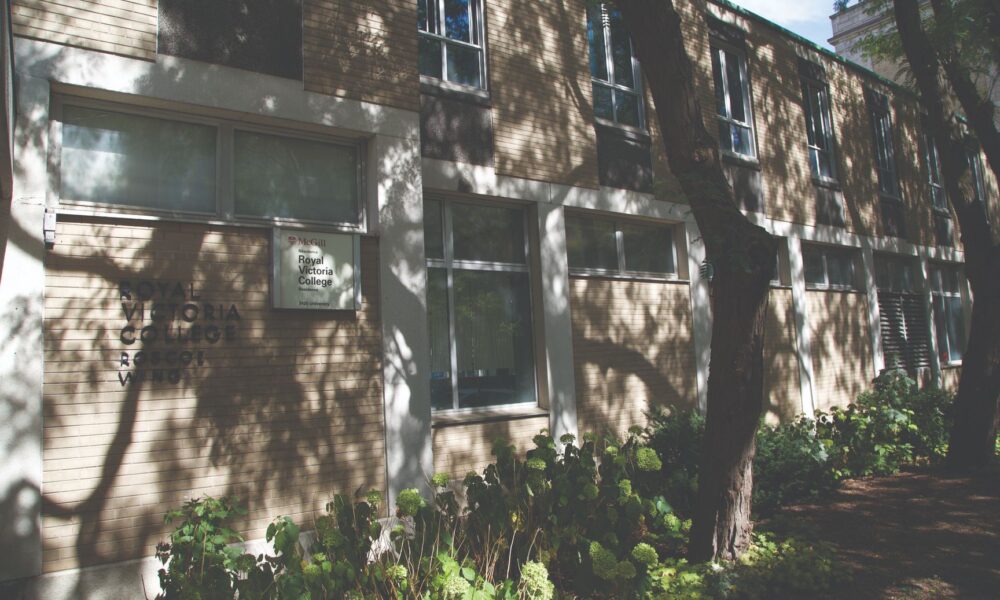
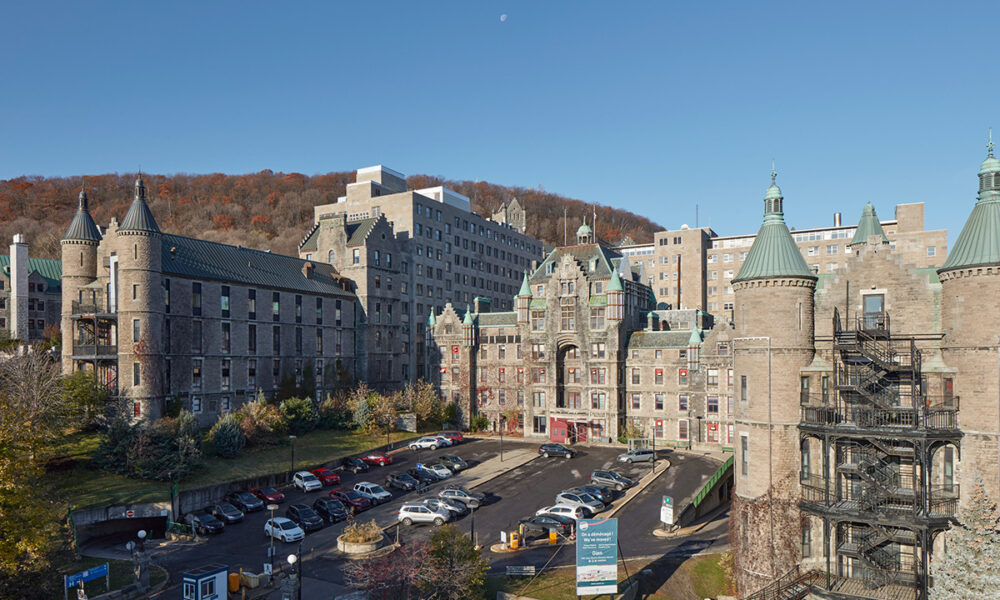
In 2016, McGill contracted private archaeology firm Arkéos to survey the Royal Victoria Hospital site—a necessary step in planning construction at the New Vic. The New Vic is a part of McGill’s Master Plan, an ambitious project to renovate certain buildings in the Royal Victoria Hospital complex. The McGill administration wanted Arkéos to establish whether construction at the site would destroy any cultural artifacts. Neither Arkéos nor McGill, however, sought the permission of or collaborated with, territorial custodians, the Kanien’kehà:ka, for this survey. This failure deteriorated an already tense relationship between the Kanien’kehà:ka and McGill, highlighting how the university remains actively anti-Indigenous. Proceeding with the survey and construction without consent is profoundly unethical and disregards Kanien’kehà:ka sovereignty and right to self-determination.
On Aug. 26, the Kanien’kehà:ka Kahnistensera filed an injunction in Quebec’s courts to prevent construction at the New Vic which is set to begin in early October. Despite the lawsuit against McGill (which has since been dropped), construction plans have not been altered. The area to be excavated, between the Hersey Pavilion and Avenue Des Pins Ouest, was deemed archaeologically important by Arkéos, requiring further investigation into its significance. The Kanien’kehà:ka Kahnistensera assert that this site contains unmarked graves of Indigenous children, forensic evidence of MK-Ultra, and cultural artifacts.
For centuries, settler archaeologists freely conducted fieldwork on Indigenous lands. Often, they removed Indigenous ancestors and their belongings from their resting places without consent, gaining a reputation as grave robbers. Archaeologists rejected Indigenous sovereignty by declaring that they themselves were the stewards of Indigenous pasts. Indigenous peoples were reduced to scientific objects and painted as primitive and inferior to European settlers. These attitudes persist and continue to influence how settlers see and interact with Indigenous peoples today.
In recent years, it has become increasingly common for archaeologists in Canada to work for or in collaboration with Indigenous nations. In 2015, The Truth and Reconciliation Commission stated the importance of collaborative archaeology in their 94 Calls to Action. Both the Canadian Archaeological Association’s Principles of Ethical Conduct and l’Association des archéologues du Québec’s Code of Ethics affirm the necessity of working ethically with Indigenous peoples. Ethical collaboration entails consultation, partnerships, and Indigenous leadership.
The Arkéos survey, however, is not an example of collaborative archaeology. Nowhere in the report is it stated that Indigenous peoples were involved. Maps of the site, environmental data, and a historical account written by failed colonizer Jacques Cartier are the only sources used to pinpoint which parts of the Royal Vic may contain cultural remains. Arkéos did not consider Indigenous oral histories, implying that only European perspectives count as valid evidence. Additionally, the report confines Indigenous presence to ancient “Paleoindian” periods, ignoring post-Contact Indigenous inhabitants and descendants. The archaeologists acknowledge burials, but only in a prehistoric context. This means that concerns raised by the Kanien’kehà:ka Kahnistensera, who firmly assert the presence of modern unmarked graves at the Royal Vic, remain unaddressed.
McGill is disrespecting the authority of the Kanien’kehà:ka Kahnistensera as clan mothers. The Kanien’kehà:ka Kahnistensera are responsible for protecting the land and the ancestors. Instead of seeking consent for this archaeological survey, collaboration was an afterthought for the McGill administration, who only started consulting Indigenous peoples, notably the Mohawk Council of Kahnawake (MCK), about the New Vic project in late 2021. The MCK, however, answers to Indigenous and Northern Affairs and the Prime Minister of Canada, so they lack the authority that the Kanien’kehà:ka Kahnistensera have over this land.
Construction must stop until the presence of unmarked graves at the Royal Vic is investigated to the satisfaction of the Kanien’kehà:ka Kahnistensera. The McGill administration must agree to meet on the Kahnistensera’s terms and apologize for the harm they caused. Beyond hollow words and vague action points, the university needs to acknowledge that it occupies unceded Indigenous territory, of which the Kanien’kehà:ka Kahnistensera are rightful custodians.
Over one third of Pakistan is underwater after devastating floods have killed over a thousand people and left millions displaced. The flooding is projected to worsen in the coming days and over 33 million people left unhoused are in dire need of humanitarian aid. But the McGill administration and student leadership have remained largely silent amidst this environmental and humanitarian crisis, and McGill has yet to divest from fossil fuel companies that are directly contributing to the climate crisis.
Climate change has increased the severity of natural disasters overall, but continues to disproportionately affect lower and middle-income countries. And in Pakistan, this is unfolding in real time. The McGill community’s inaction reveals the hypocrisy of its treatment of racialized peoples and reflects a broader issue of a university apathetic to their needs.
Despite Pakistan seeing its worst monsoon rains in a decade, the McGill administration has still not released a statement or offered any services to support students from Pakistan who may be affected. In comparison, a week after the war in Ukraine began, former President and Vice-Chancellor Suzanne Fortier released a statement expressing solidarity with Ukraine and offering support for Ukrainian and Russian students. The lack of similar measures for Pakistani students is especially notable because they make up more than twice the student population of Russian and Ukrainian students combined. The Students’ Society of McGill University (SSMU) has also failed to release a statement or mobilize in support of their Pakistani constituency. It is hard for students from Pakistan to receive what they need from the university when the student body representing them chooses to remain silent.
To make matters worse, McGill has refused to divest from fossil fuel companies for decades despite extensive campaigns from student activists. Here we see the inequality of the climate crisis on full display: Higher-income nations and their institutions are responsible for the bulk of carbon dioxide emissions globally, but lower-income nations like Pakistan bear the brunt of increasingly deadly natural disasters. As a colonial institution, McGill is continuing its legacy by making Pakistan, a formerly colonized country, suffer the consequences of Western greed at the expense of human lives.
The university’s silence towards Pakistani students is cold and dehumanizing. How should students be expected to write exams or papers when their families are displaced, or their homes and cities have been destroyed? It is especially appalling considering that McGill fulfilled their duty of offering support and solidarity to students affected by the war in Ukraine. McGill prioritizing one group, white Europeans, over another, South Asians, reaffirms that the university places racialized students at the bottom of its hierarchy of suffering and does not view their pain as equally important.
Considering their treatment of other racialized groups, McGill’s treatment of Pakistani students is unfortunately unsurprising. Within the past year, McGill has engaged in a legal battle with the Kanien’kehá:ka Kahnistensera (Mohawk Mothers); has resisted calls to change its name to stop memorializing an enslaver of Indigenous and Black people; and threatened to terminate SSMU’s Memorandum of Agreement with the university if they adopted the democratically-passed Palestine Solidarity Policy. These actions taken by McGill, and their inaction regarding Pakistan, reveal a pattern of active apathy towards racialized students on campus.
McGill’s disregard is embarrassing when compared to positive actions taken by other universities. The University of Toronto announced plans to divest from fossil fuel companies, and Toronto Metropolitan University adopted a new name after repeated calls from students. McGill has become a pariah in its disrespect, and its response to the situation in Pakistan is yet another egregious example.
The McGill administration and student unions must take action in response to the urgent crisis in Pakistan and release a long overdue statement offering solidarity and support—including mental health resources and exam accommodations—to students, faculty, and staff who are affected by the crisis. Students should also become more involved by educating themselves and emailing members of student government to advocate for affected students. McGill must end its immoral investments that perpetuate neo-colonialism and inflict harm on lower-income countries. Finally, McGill must stop acting like a corporation and, instead, act like the institution of higher learning they say they are and listen to the student voices they take pride in developing.
An earlier version of this article incorrectly referred to students from Pakistan as “South-East Asians”. In reality, Pakistan is found in South Asia.The Tribune regrets this error.
When I looked down the barrel of the microscope, I could see everything.
I saw exploding galaxies of green fluorescence, and a network of nebulas dotting a dark, surrounding infinity. I saw the edge of a coastline studded with city lights, and islands surrounded by swirling oceans, like I was peering down from the stratosphere.
What I was really looking at were the dopamine terminals of neurons, stained with a green fluorescent antibody. Truth was, I was just at work, having a spiritual experience in a dark, stuffy room in Stewart Biology. I was lucky enough to be looking at a slice of bird brain, helping out on a research project about how zebra finches perceive mate calls.
Moments like this are rare in scientific research, but their thrill is unparalleled. Most lab work, whether it’s data entry or making solutions, feels tedious or very, very complicated. And nothing ever goes the way you expect it will. It’s hard to see how the daily grind fits into the grander scheme of discovery.
Scientific research has inherent value beyond professional merit and academic citations. Getting to do research is a privilege that should be presented as an opportunity to learn something new about the world around us, not just as the next rung up the ladder of a science education.
But the world of academic publishing is a cutthroat community. The dogma of “publish or perish” haunts academics at every step of their careers, from getting into grad school to securing tenure as a seasoned principal investigator (PI). At a research-oriented, highly competitive university such as McGill, undergraduates are often susceptible to approaching science as a game they want to win. And too often, the beauty of discovery is left behind as a pretty fantasy, a child’s eureka.
But what might be lost when the new generation of scientists are trained through tests and checkpoints? Science education erects barriers of interest to weed students out starting as early as grade school, where evaluation styles are primarily timed and memorization-based. For kids that don’t perform well under these conditions, they are made to feel like math and science aren’t “for them”, and any curiosity is replaced by anxious aversion. Those that choose to pursue it are conditioned to enter a system that rewards quantity over quality.
The relentless approach of prioritizing publications over all else creates problems that marr even the most sacred of scientific disciplines. A recent exposé published in Science News casts doubt on findings from a seminal research paper on Alzheimer’s. Allegedly, image tampering had been used to inform an entire field and to fund it, too. What would lead a researcher, in a field that deals so intimately with people’s integrity, to fabricate data?
The answer is a Darwinian system, where funding agencies, the government, and universities are the ones creating the selective pressure. And the less funding a lab has, the more difficult it is to produce quality research, to publish good papers, and to earn a living. The laws of supply and demand dictate just how merciless the competition becomes—the more research labs applying for grants, the less funding to go around. All of this squeezes the energy out of scientists, thus reinforcing institutional barriers that keep low-income and racialized researchers out of the game. People who have to work multiple jobs and juggle childcare responsibilities can’t be expected to maintain the same productivity level, and their careers suffer for it.
An obvious fix would be to inject more money into basic research. Another option would be to reexamine how faculties set up tenure applications, which are inordinately based on citation number, and instead consider how a professor inspires the next generation of students to love what they are studying.
When I decided not to pursue research in graduate school, I asked myself why I was continuing to work at a lab. Other than perks like friendships and good management, there is joy in science for science’s sake. And there is comfort in knowing that, should I publish, my paper would assume its rightful place as a drop in the ocean of discovery.
With the return of campus life and in-person learning, you may be wondering how to get back into the swing of school. But don’t fret, dear reader—the stars are here to plot out the perfect start to the fall semester for you.
Aries (March 21- April 19): It’s back to the basics for you this fall, Aries. Outfitted with your McGill hoodie and Tim Horton’s coffee in your hand, you’ll have plenty of study sessions in the Burnside basement. But luckily, these study days will pay off—you’ll pass your first evaluation with flying colours.
Taurus (April 20- May 20): With the sun setting earlier, you will have difficulties with your regular routine. It may feel tedious and uninspiring, making you question your choices. Luckily, you will meet a mentor figure who will guide you toward a new passion.
Gemini (May 21-June 21): This back-to-school season, get ready to bring your A-game, Gemini. An elective will be more difficult than anticipated—you should have gone for Natty D’s or Chem of Food. A new friendship will blossom in Leacock 132. Will it turn into something more? Only time will tell.
Cancer (June 22- July 22): Sometimes it feels like the world moves on without you, Cancer. It might seem like your friends are making new connections while you are stuck in last year’s old routines. But never fear, in-person classes will bring tons of opportunities for you to make connections. Get ready for a busy social life!
Leo (July 23- August 22): Watch out, Leo. Your fire and extraversion may land you into hot water with a professor or TA this fall. Don’t forget that it’s better to say nothing at all than to say something that you regret. On the homefront, you will quickly adjust to life in Montreal, making you wonder why you even left for the summer.
Virgo (August 23- September 22): With Venus in your sign, there is no better time to socialize, Virgo. Though school is in session, don’t forget that you deserve to have a life of your own. So, this weekend, go for lunch with an old friend, call a family member, or go to Café Campus with your roommates. You’ve got plenty of time for those readings during the week.
Libra (September 23- October 23): This month brings Mercury retrograde to your sign, Libra, and, with it, comes confusion and communication issues. You will find yourself in a conflict with a close friend or family member that may be difficult to get past. Luckily for you, your love life will take a turn for the better after you are reintroduced to a familiar face.
Scorpio (October 24- November 21): You are in for a rough patch at the beginning of the month. Conflicts with roommates may bring you down, but don’t forget that living with others often means compromising. Fortunately, the end of September will bring new surprises and professional opportunities. Go get ‘em, Scorpio!
Sagittarius (November 22- December 21): Your social life is on fire this fall, Sagittarius. You’ll need a planner to keep track of all of your nights out on the town and brunches with your friends. Don’t forget that it isn’t summer anymore—those classes will keep moving with or without you.
Capricorn (December 22- January 19): You’re in for a great month, Capricorn! Your innately meticulous and analytical approach to life will come in handy as classes begin. You have surely constructed the perfect schedule, with classes that’ll challenge you both academically and personally. Just don’t forget to take some time for self-care—you don’t want to burn out.
Aquarius (January 20- February 18): With the moon entering your sign this September, you are searching for a sense of belonging. How you go about this is up to you, Aquarius. You may find yourself joining on-campus organizations to fill the void.
Pisces (February 19- March 20): Love is on the horizon for you this fall, Pisces. You’re like the one empty seat by the window on the sixth floor of McLennan—everyone’s eyes are on you. Don’t let this distract you from your academic work, though. Your midterms are coming up sooner than you think they are.
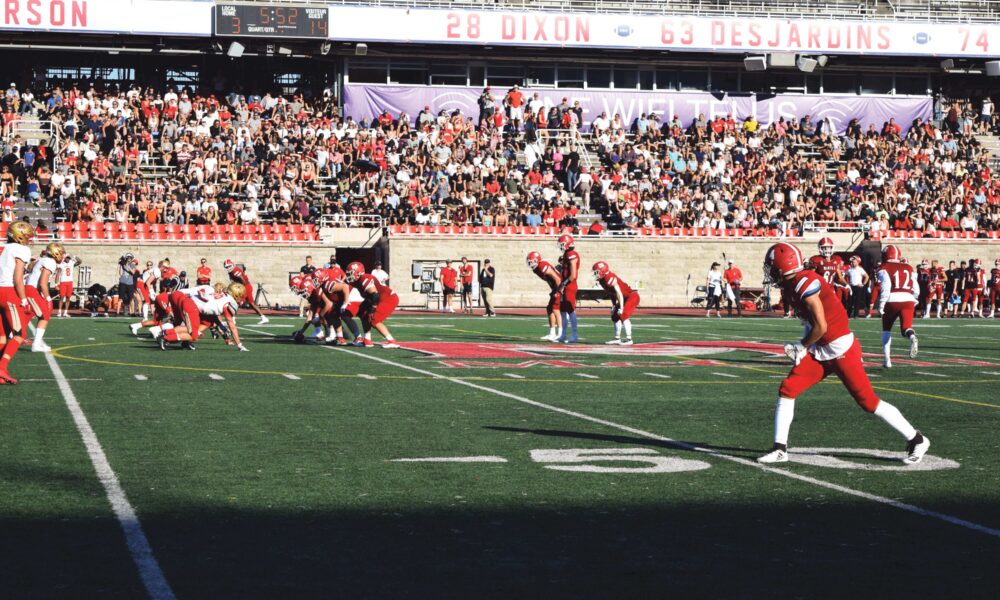
McGill Redbirds Football (0–1) fell 37-20 in their home opener against the Laval Rouge et Or (2–0) on Sept. 3 in front of a rowdy crowd of over 2,300 fans.
Laval came out strong with a quick touchdown less than three minutes into the game, sending McGill back on their heels and setting the pace for the matchup. Despite the Redbirds earning themselves a field goal just a few minutes later, Laval widened their lead with another touchdown, closing out the quarter 11 points ahead.
Kicking off the second quarter, McGill struck first with a touchdown from third-year running back, Zacharie Magnan. But Laval answered in kind just over a minute later. Only two minutes after that, Laval struck again to end the second quarter up 28-10.
After the half, the Redbirds came out to battle, scoring the only touchdown of the quarter. A spectacular dive from second-year running back, Benjamin Bergeron-Spenard, off a pass from first-year quarterback Éloa Latendresse-Regimbald, put the momentum back on McGill’s side. Latendresse-Regimbald, one of Canada’s top football recruits, showcased his skills throughout the game: The 6”4 education major dominated with 132 rushing yards—the next best being 34 from Laval’s Kalenga Muganda—and led in passing yards with a whopping 381.
“I see a lot of potential,” said Latendresse-Regimbald in an interview with The McGill Tribune. “I know the guys are counting on me so I can count on them and we have each other’s backs, like we did today, and we are just going to improve as we go on.”
Laval’s Kevin Mital closed out the game with his fourth touchdown along with a team safety leaving the Rouge et Or with 37 points. McGill’s Antoine Couture kicked his second field goal of the game to give McGill three more points for a final score of 37-20.
While Latendresse-Regimbald was acutely aware of the costly mistakes his team made during the game, he believes the team’s dynamic will only get stronger with time.
“I mean, for sure, we had some mistakes on defence and on offence, myself I threw two picks,” Latendresse-Regimbald said. “I think the only way for the upcoming season is up. I think that is the lowest of our capabilities. I think it’s just starting, the whole team is changing, we are changing the whole mentality of the McGill Redbirds and I think it’s a good start.”
Coach Ronald Hilaire echoed Latendresse-Regimbald’s sentiments.
“We are not a finished product yet, but we showcased that we can be a very good team when we are disciplined and limit mistakes,” said Hilaire in an interview with the Tribune. “I think almost 700 yards of offence is amazing but defensively we let them down a little bit with some big plays.”
For now, the team looks poised for their first win this weekend at Sherbrooke, hoping not to repeat last year’s record of 1–7. Head coach Ronald Hilaire remains hopeful about the quality and potential of his players.
“[We need to] improve every week. The reality is, if we do that, we stay on that beat, we will be pretty dangerous come playoffs.”
McGill comes home again on Sept. 24 to face the currently undefeated University of Montreal.
Stat Corner: McGill’s William Langlais, a fourth-year tight-end, led the game in receiving yards with 152.
Moment of the game: After being down by 18 to start the second quarter, quarterback Éloa Latendresse-Regimbald fed running back Benjamin Bergeron-Spenard the ball for a thrilling touchdown dive that reignited the fans and players alike.
Quotable: “We will fix it up and the reality of the season is that it is not a story of one chapter, it is one of many chapters, so I think we will keep growing as the season goes on.” —Head Coach Ronald Hilaire on the potential of his team.