Latest News

Student Life

Making the most of your final semester

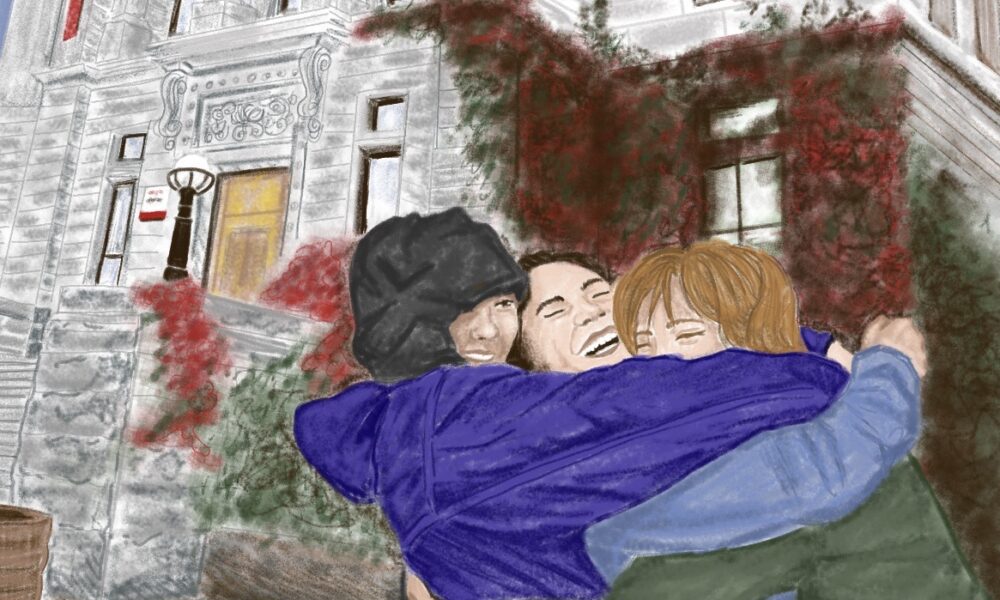
Your final semester is a liminal space: A mere 13 weeks in which past, present, and future warp relentlessly into one another. The library that sheltered you in your darkest hour no longer feels like home, but it is not yet a memory either. You half-listen to a lecture by your favourite professor, mentally rehearsing post-grad plans. Swept in the undercurrents of fear and excitement, it can feel that you’re already half elsewhere. But your last semester will draw to a close, whether you savour it or not: As a tenant of this tenuous time, you can choose whether to let it pass unremarkably or allow it to shape a deliberate, meaningful goodbye. 

Be present

The impending end of student life may usher in a host of forward-thinking concerns. Amidst the chaos of inevitable LinkedIn rabbit holes and polarizing grad school Reddit threads, do not get lost in the future while your present moment escapes you. For some, this might mean refraining from filling out applications while sitting in class. For others, mindfulness may constitute taking mental notes of the way the afternoon light filters through a library window or allowing yourself to linger in the small, unremarkable moments of campus life that once felt permanent and now feel transient. Before the deadlines, decisions, and titles trickle in, making constant attempts to define your adult life, there is value in remembering who you were when your primary obligation was to learn—and in recognizing that this version of yourself deserves your full attention, if only for a little while longer.

Make time for friends

At a time when plans are postponed in favour of productivity and conversations are cut short by the pressures of what comes next, try to use these final months to exist alongside those who have shaped and supported you at this stage in your life. Make time for shared meals, late-night talks, and the long way home. Be honest, caring, and kind. The assignments will be submitted and the emails will be answered, but the moments shared among friends are the ones you will reach for when campus life becomes something you speak about in the past tense.

Visit the places you love

McGill students come from over 150 countries, and many will leave Montreal after graduating. Take the time to visit the places that have made this city home. Whether it’s the cafe that witnessed your first nervous midterm season, the park where conversations stretched long after the sun set, or the slushy streets that sent you off to class, these spaces have held versions of you that will not return in quite the same way. A complete goodbye bids adieu to places too.

Express gratitude

Allow the constant stream of reflection to make way for gratitude. As you take stock of the moments that have shaped you, turn your attention to the people who made them possible. Thank the mentor who made you a better leader, the friend who always listened, and the professor whose encouragement made all the difference. Gratitude does not need to be elaborate or performative; you can channel it into a brief message, a simple acknowledgment, or a conversation you have been meaning to initiate. These expressions may seem small, but they have weight for both you and the recipient. In recognizing the support you received, you affirm that no chapter of your life is written alone—and that this one, too, was shaped by more than just your own efforts.

Know Your Athlete, Sports

Know Your Athlete: Luca Nicoletti

McGill Athletics announced on Nov. 20 that it would cut the Track and Field program. Just nine days later, Luca Nicoletti, U3 Engineering, shattered the team’s longest-standing record by breaking the 300-meter dash mark that had stood since 1986. Nicoletti clocked a 34.11-second finish—three milliseconds faster than Earl Haughton’s 34.14-second record—at the Martlets Open Meet on Nov. 29, the team’s first competition of the season. In an interview with The Tribune, Nicoletti reflected on his emotions before and after the race.

“Going into the meet alone was insane because our team was getting cancelled. I had ‘SAVE MCGILL TRACK’ written all over my arms. I wanted to show the school that our team is still competitive,” Nicoletti said. “After the race and seeing the time was exciting. I’m like, at least [McGill Athletics] gets to know what they are missing out on.”

Nicoletti’s expectations were high going into this meet. After showing consistent progress over the summer, he wanted to break 34 seconds, putting him closer to the Tomlinson Fieldhouse record of 32.94 seconds set by Shane Niemi from York University in 2014. He also hopes to get a spot on the podium at the U SPORTS Track & Field Championships in March.

“I think [breaking 34 seconds] will come this season, but this was a mini-achievement and a mini-milestone on the way to U SPORTS, which was super exciting.”

Nicoletti started his track career at École secondaire catholique Paul-Desmarais in Ottawa, where he represented his high school team. However, he began training outside of school at the Ottawa Lions Club in 2019 at his friend’s insistence. Nicoletti competed in the Ontario Federation of School Athletic Associations Championship youth category that year, placing first and second in the 100-metre hurdles and 300-metre hurdles, respectively. 

“I was like a big success off of very little training, so it solidified it as a sport for me there,” Nicoletti said. 

Despite both his early promise and recent success, Nicoletti endured a serious hamstring injury during his first year on the McGill team. During his recovery, he prioritized regaining his speed, which ultimately led him to transition to short-distance events. Having moved away from his family a few months earlier, Nicoletti found it especially difficult to cope with the setback. 

“I was losing two things I was comfortable with. I was away from my family, and I would have had the familiarity of track, but I lost that as well,” Nicoletti said. “Watching others get better wasn’t the worst part of it, but it was more just not getting to do the things I love doing.”

His injury, however, led him to appreciate the sport even more. 

“On my recovery journey, every workout was painful, but I was just smiling. I remember the first summer back, my friend and I threw up after training. He was like, ‘Man, this sucks.’ I was like, ‘I’m just happy I can do this.’”

Nicoletti also attributed the success of his recovery journey to his coach, Tyrone Edge, and his teammates.

“Coach Edge is really good with competitive athletes, and he helped me get back into fashion after my injury,” Nicoletti said. “I think you have to have the self-discipline to train on your own, but you need your teammates to make the pain throughout the season worth it.”

Entering his third season with the team, Nicoletti approached training with far greater intention, restructuring nearly every aspect of his life around track. He began taking his diet more seriously, closely monitoring his protein intake and incorporating supplements that support recovery. 

While his dedication paid off, the news of the track team’s cut casts a lingering shadow over the moment, complicating what should have been a purely celebratory milestone.

“It’s bittersweet because what if my record is the last one that gets recorded? People are coming up to me and saying how you might have it forever, but I want the rookies under me to be able to challenge it and break it.”

Commentary, Opinion

Mayor Soraya Martinez Ferrada is not serious about fighting homelessness

This past week, Montreal’s new mayor, Soraya Martinez Ferrada, announced her first budget, in which she plans to triple spending on homelessness initiatives. Her new Tactical Intervention Group on Homelessness (GITI) commits $29.9 million CAD to policing infrastructure, surveillance in public places, and social workers. 

Despite the increase in allocated resources to fighting homelessness, Martinez Ferrada’s government has missed the big picture: The only way to solve the homelessness crisis is to put people in homes. However, Martinez Ferrada’s government has scrapped the 20-20-20 bylaw that required developers to allot 20 per cent of their units to social housing, 20 per cent to affordable units, and 20 per cent to family-sized units. 

By scrapping the bylaw, Martinez Ferrada’s pledge to address the unhoused crisis in Montreal will persist unfulfilled. Instead of connecting more people with affordable housing, this approach will force more people onto the street.

There are two major types of homelessness: Visible homelessness which refers to people who are sleeping on the street, and hidden homelessness, referring to people who have no fixed address, bounce between friends’ couches, sleep in their cars, or live in shelters. In the fight against visible homelessness, the THRT could be quite useful. Martinez Ferrada’s emphasis on locating where many unhoused people are and providing them with the resources to get into some kind of shelter directly tackles the crisis. 

However, the GITI—and Martinez Ferrada’s budget plan in general—does nothing to combat hidden homelessness. The social workers hired for work under the GITI cannot help a person if they do not already know the person is looking for help. It is impractical to design support systems for unhoused people in which police are expected to go up to everyone on the street and ask if they need help looking for an apartment. Hidden homelessness can only be wholly addressed by creating permanent, affordable housing options something which the 20-20-20 bylaw aimed to achieve. 

According to the Institut de la statistique du Québec (ISQ), about seven per cent of Quebecers aged 15 or older have experienced hidden homelessness in their lives, while 0.9 per cent of Quebecers experienced visible homelessness. The primary identified cause of hidden homelessness is eviction followed by individuals not being able to find a new, affordable place.

With more affordable housing, individuals experiencing homelessness will have an easier time finding another place after being evicted. Shelters are another solution, as might be the GITI—but these are not mutually exclusive of affordable housing. 

Martinez Ferrada’s repealing of the 20-20-20 bylaw reduces the number of affordable units available for people experiencing homelessness or financial insecurity. When announcing her decision to repeal the bylaw, Martinez Ferrada claimed that the regulation’s requirements actually prevented new development in Montreal by discouraging developers from building more housing. Instead, the Martinez Ferrada administration chose to implement a set of incentives, including tax breaks, for developers to build more within the city. However, the evidence that the bylaw stemmed housing growth is not definitive.

Martinez Ferrada’s incentives offer no provisions for social and affordable housing, meaning there is no guarantee of any new affordable units for unhoused individuals experiencing hidden homelessness. While the 20-20-20 bylaw was not a guarantee of increased affordable housing, it at least ensured that something would be built. Mayor Martinez Ferrada’s new plan fails to do that. 

If the Martinez Ferrada administration wants to get serious about combatting homelessness, it needs to get serious about building affordable housing. With the repealing of the 20-20-20 bylaw, it is not off to a good start.

Arts & Entertainment, Theatre

‘Cutlass’: A story of fleeting and forgotten queer love

Jan. 15 marked the opening night for Cutlass’s debut workshop performance at Tuesday Night Café Theatre, directed by Ruby Isaacs and written by Elise Holbrook. The show follows pirates Anne Bonny (Elise Holbrook, U2 Music Composition) and Mary Read (Abby Wyland, U3 Art History Honours), who sailed the Caribbean in the summer of 1720. Both Anne and Mary disguised themselves as men on their excursion to ensure their safety, but the moment they discovered their mutual secret, their relationship ignited. 

The show features a live band of cello, violin, and piano, which elevates the drama in each scene. The score spans a wide range of emotions, with the cello evoking a dark moodiness while the piano uplifts the score, conveying excitement. The dialogue also drives the emotional rollercoaster: You’ll laugh at the absurd jokes made by the comedic-relief pirates, then cry as Anne and Mary’s relationship faces its tragic fate. 

Anne is a complex character whose story completely enraptures the audience. She is eccentric and angry, yet her chaotic humour makes her lovable. Among the crew of pirates, she stands out as the life of the party and excites the other crew members with her stories. Mary, on the other hand, is awkward, making her passionate love for Anne result in tears for the audience. The physicality between the two pirates emphasizes their chemistry. Specifically, the staging of their duets highlighted their relationship dynamic. Starting from opposite ends of the stage, they would get closer with each note, illustrating their attempted restraint overpowered by the strength of their feelings for each other. 

Their love story is particularly important because, throughout history, queer romance has been criminalized and erased from literary narratives. The love between these two women was written off as “a close friendship,” concealing the truth. Learning about sapphics from the 1700s is critical in modern times because it emphasizes the fact that queer people have always existed. Queer people have made history—and will continue to make history—just as these two women have. Seeing this musical offers both a learning experience and a chance for audience members to connect with both the story and queer historical figures. 

The music in the show is ethereal. Anne and Mary have several duets throughout the musical, with many moments of mystical harmonization, capturing their intense feelings. Their siren-like voices blend together beautifully, with Anne’s soprano voice balancing well with Mary’s longing alto voice. 

“If you burn, I burn with you.” This powerful line spoken just before a kiss illustrates their willingness to face the danger that their love brings. They accept the risk of punishment for their queerness, choosing to endure it together forever.

The costumes and set are also astonishing. These are the types of outfits you can imagine a pirate from the 1700s wearing; the details of each outfit both convey the time period and reflect each character’s personality. The small, intimate theatre invites the audience onto the ship. 

The end of the show took my breath away. The pirate ship gets seized, the crewmates are hanged, and the two women are imprisoned. The final scene was brought to life by Golbrook’s heartbreaking scream upon realizing that Mary is dead. This devastating ending highlights the impermanence of love, reminding us to appreciate those we love, even if it means rejecting social boundaries. 


25 per cent of Cutlass ticket sale proceeds went to Watermelon Sisters, an organization based in Chicago that provides humanitarian aid in Gaza.

Montreal, News

Activist groups across Montreal unite against U.S. military invasion of Venezuela

On Jan. 11, 10 activist groups in Montreal joined together for a demonstration against the military invasion of Venezuela. The protest began at 2:00 p.m. at 1134 rue St.-Catherine Ouest, with members of each group holding signs representing their organizations and condemning the United States’ recent actions in Venezuela.

The United States Army’s Delta Force unit conducted ‘Operation Absolute Resolve’ on Jan. 3. The military mission captured and transported the president of Venezuela Nicolás Maduro and First Lady Cilia Flores to Manhattan for prosecution on charges of conspiracy to possess and the possession of machine guns and destructive devices, as well as conspiracy to import cocaine. Maduro has also been charged with narco-terrorism.

Operation Absolute Resolve follows escalating U.S. military interventions in Venezuela, with the intention to curb drug trafficking from South America into the U.S. On Sept. 2, U.S. President Donald Trump carried out the first military strike on a water vessel connected to the drug trade. All 11 people on board were killed in what Democratic senators have likened to execution without trial. 34 additional strikes were conducted between then and Jan. 3, killing at least 115 people. The United Nations has described it as a violation of international human rights law. 

Following Maduro’s capture, there have been mixed reactions among Venezuelans. While some citizens have expressed gratitude for the United States’ interference given Maduro’s history of corruption, others have expressed deep concern for Trump’s plans for the U.S. to run Venezuela in Maduro’s absence.

In Montreal, protesters focused on how U.S. interference could harm the already shaky democratic system in Venezuela, allowing the U.S. to take advantage of the power vacuum for its own economic gain.

The Revolutionary Communist Party (RCI) held a table on the corner of rue St.-Catherine and rue Stanley, where the demonstration was set to begin. They offered informative pamphlets on their mission as well as reading materials on capitalism and imperialism across the globe. 

In an interview with The Tribune, a representative from the RCI, who wished to remain anonymous, explained that the United States’ intervention in Venezuela is directly tied to capitalistic motives, claiming that Trump was not seeking to free those in Venezuela from dictatorship, but to instead gain access to the largest oil reserves in the world. 

“We know that there are people in Venezuela who are partying right now because Maduro is gone, but I believe that this positive energy will soon go away because the conditions there will not get better,” the representative said. “If you kidnap some politician, or you kill them, it’s not gonna make a change.”

At around 2:30 p.m., an event organizer made a speech to launch the march. The organizer explained that while demonstrations such as this one are effective at rallying the public, they often go unnoticed by government officials who can take meaningful legal action. 

“I thank you for your camaraderie, for coming out, but we need to think about what comes next,” the organizer said. “We don’t want to just keep doing the same thing and going through the motions and sending petitions to a government that, quite frankly, doesn’t give a single fuck about us.”

The event organizer also emphasized the need for Canadians to take a more vocal stance against imperialism in their daily lives, calling for citizens to observe and criticize the country’s own colonial history alongside that of the United States.

“I wanted to speak to our position here in the imperial core, or at least in the embarrassing appendage to the imperial court that is the USA,” they said. “We have no moral high ground to take, […] especially if you are a settler here, accepting comfort at the expense of Indigenous Peoples or any peoples throughout the world.”

The crowd of protesters began to march down rue St.-Catherine, periodically pausing to light American flags on fire. At the corner of rue St.-Catherine and av. Union, the march came into contact with a separate protest for Palestine. The two joined together as one voice, both crowds chanting, “Free, free Palestine.” One protester brought an Israeli flag to be burned alongside the American one. The march continued on, with the pro-Palestinian crowd moving in a separate direction.

A demonstration organizer from Socialist Unity who wished to remain anonymous shared with The Tribune that this meeting was coincidental, and that the solidarity between the two groups is a naturally occurring outcome of similar fights against imperialism across the globe.   

“There is a role for every person on Canadian soil to play, to stand in solidarity with the Venezuelan people, to defend the achievements of the Bolivarian revolution, and to resist imperial aggression,” they said. “Everybody who’s here needs to be talking to the people in their lives […] to come up with the strategies that are going to make a difference beyond just protesting in the streets [….] It’s good to bring people together, but if we keep only protesting, then we’re not going to make any significant difference.”

The march concluded at Complexe Guy-Favreau, where protesters gathered to hear speeches from each activist group before departing.

Jela de la Peña, a representative of Anakbayan Montreal, a Filipino youth organization dedicated to fighting for social democracy with a socialist perspective, told the crowd that working-class people bear the hardest consequences of imperialist action. She further stated that exploitation through conquest, such as that of the United States’ intervention in Venezuela, is a tactic often used by imperialist forces.

“Filipinos and Venezuela are bound by the same imperialist fists. The same system that drove bombs on Mindoro, Philippines, is the same system that has bombed, sanctioned, and strangled Venezuela for decades,” de la Peña said. “This is about silence. Venezuelans know this pattern well, just like we are told Venezuela is a narco state, that its leaders are criminals. These are old lies. These are recycled propaganda […] used to justify invasion, sanctions, coup and plunder.” 

De la Peña continued, echoing the sentiments of several other activist groups present.

“Why Venezuela? Because it holds the largest proven oil reserves in the world […] The U.S. monopoly capitalists do not care about Venezuela. It does not care about people. It only cares about profit, about control, about domination. This is why […] Filipino and Venezuelan struggles are inseparable. Our shared enemy is U.S. imperialism,” de la Peña said. “Together, we say our lives are not collateral, our lands are not for sale, and together, across borders, we refuse to be silenced.”

Commentary, Opinion

The Big O could be more than a costly relic

This year marks the fiftieth anniversary of the 1976 Montreal Olympics. To this day, the Olympic Stadium, also known as the Big O, remains one of Montreal’s biggest architectural and cultural landmarks. Featuring the world’s tallest deliberately leaning tower and over 50,000 seats, the stadium is impractical to maintain from an engineering perspective. Due to its hefty maintenance costs, Quebecers frustrated by the continued use of their tax dollars have dubbed the stadium the “Big Owe,” as the facility remains unequipped to host large events, including the upcoming FIFA World Cup

Despite calls for demolition, Quebec committed long-term to renovating the Olympic stadium. If taxpayers are funding this renovation, the stadium must stop functioning as a historical monument and instead operate as an active, publicly accessible venue that generates global attention through its events, creates quality jobs, and yields measurable economic returns for Montrealers.

The impacts of large government investments in sports stadiums have long been studied to determine the extent of their benefits to the surrounding communities. Academics largely agree that publicly funded stadiums rarely deliver strong measurable economic returns, often mostly profiting the few wealthy team owners and executives. Large stadiums rarely generate  meaningful economic output such as higher local property values, tax revenue, or employment. The Big O’s inability to regularly host large events since the Expo’s 2004 departure shows that these indicators are even lower compared to other cities with fully functioning stadiums of similar capacities. These findings rightfully fuel public skepticism toward continued spending on the Olympic Stadium.

Recently, the Quebec tourist minister unveiled an $870 million CAD plan to rebuild the stadium’s roof, which was damaged in over 20,000 areas in 2024. This significant expense is compounded by other costs, such as $28.6 million CAD for the electric system and $20 million CAD for sound equipment. The new roof is anticipated to last only 50 years after the project is finished in 2028. 

The other option for the stadium’s fate—demolition—also carries a hefty $2 billion CAD price tag, meaning the stadium will remain whether Quebecers like it or not. So if public money is what’s keeping the stadium alive, the public must be able to access it. To ensure that the investments made in the stadium’s recovery have the best chance at providing economic benefits to all Quebecers, this plan cannot repeat the unwise choices of other cities with large stadiums that have not delivered such benefits. 

Meaningful efforts must move beyond renovation and include enforceable commitments regarding how the stadium is used. Investments should guarantee that the stadium hosts and supports community events, youth sports, and cultural programming for Montrealers. If these commitments are made properly with insight and collaboration from local residents, the surrounding neighbourhoods, the city, and the province as a whole would see tangible returns. The Olympic Stadium should function as a shared civic space, not a sealed monument maintained for hypothetical use in the ever-distant future.

Quebec’s hesitancy to develop an investment plan until 2024 led to countless missed opportunities for Montreal to host global events. Perhaps one of the biggest losses was the 2026 FIFA World Cup, where Montreal declined hosting due to financial concerns. Montreal was also unequipped to host Taylor Swift’s record-breaking Eras Tour, which would have brought millions into the city’s economy as it did in other Canadian cities such as Toronto and Vancouver. Missing out on these events caused Montreal to forgo tourism spending, employment opportunities, and international visibility that could have directly supported the city’s small businesses and surrounding communities.

Cities are not recognized globally for simply maintaining their world-famous infrastructure, but for using it to bring people together. Since the Olympic Stadium is here to stay, Quebec has the opportunity to have Montreal recognized on the world stage and make meaningful contributions to its local economies. The public funding for this project should be tied to protocols, including event-hosting benchmarks, community access guarantees, and transparency about its use and impacts. The true cost of the Olympic Stadium is not how much Quebec spends on it, but whether that spending is managed in a way that allows all Quebecers to reap its benefits.

Commentary, Opinion

Keeping Montreal alive means letting shops stay open late

It’s 7 p.m. on a Saturday night, and you have nothing to wear. Rushing out the door, you take to St. Laurent in search of the perfect, innovative solution to a closet lacking inspiration: Another black top. Yet, no matter where you look, every store is closed: La Caravane, CUL-DE-SAC, even Throwback Vault—they’re all lit by the neon luminescence of a sign reading “fermé.”

Your shopping misfortune isn’t new. It dates back to June 22, 1990, when the Quebec government passed the ‘Act Respecting Hours and Days of Admission to Commercial Establishments,’ or Bill H-2.1. Originally framed as a way to promote time with family and protect small businesses from burnout, Bill H-2.1 requires that all businesses close at 9 p.m. on weekdays and 5 p.m. on weekends.

The bill makes exceptions for establishments serving food and drink, cultural centres, businesses operating in airports, and pharmacies, but most major retailers are forced to close well before the feeling of an impending wardrobe malfunction sets in.

However, on Dec. 8, the Quebec government announced a major revision to Bill H-2.1, allowing retailers to remain open until 9 p.m. on weekends, effectively standardizing weekday hours across the entire week. 

In a city like Montreal, defined by spontaneity and a vibrant nightlife, the regulations that exist under Bill H-2.1 undermine the very local establishments they claim to protect, pushing consumers online instead. 

Samuel Poulin, Quebec’s Minister for the Economy and Small and Medium Enterprises, explained that the shift in hours became necessary as local and small businesses were increasingly forced to compete with major online sellers, including ultra-fast fashion retailers like Shein and Temu. In fact, nearly 60 per cent of businesses in Quebec have reported drops in sales due to competition with foreign e-retailers.

When small businesses lose foot-traffic because shoppers aren’t able to make purchases in person, they do not merely lose profit. They are replaced by massive online fulfillment warehouses. An outdated relic of Quebec’s past, Bill H-2.1 incentivizes consumers to seek less environmentally conscious—and less ethically-produced—options when in-person stores are closed at inconvenient hours. 

With textiles being the fifth-largest category of plastic waste sent to landfills in Canada, and the fashion industry representing 10 per cent of Canadian greenhouse gas emissions, it is critical that in-person shopping experiences are protected to ensure accessibility. Without them, shoppers default to online fast-fashion, with its familiar waste-generating refrains: “This doesn’t fit,” “this doesn’t look like the picture,” or “this isn’t comfortable to wear.” When customers are able to shop in person, avoidable problems relating to garment quality and fit no longer lead to the discarding of usable fashion items. Instead, these unfavourable items are merely returned to the rack. 

Even the original motivation behind Bill H-2.1 of “promoting family time” no longer reflects the needs of individuals working in Quebec. Many Montrealers—from students, to part-time workers, to those with irregular working schedules—are forced to adapt their lives around arbitrary, outdated closing times instead of relishing the flexibility to shop ethically and conveniently. What was once framed as protection for the working class has evolved to impose constraints on both consumers and small businesses, limiting economic opportunity and Montreal’s social and cultural dynamism.

Montreal’s streets—lovingly pedestrianized during the summer months, and in some cases, all year round—lose their charm as sites of cultural events, social interaction, and, of course, window-shopping. Bill H-2.1’s provisions encourage the city’s social nature to come to a stiff halt at 5 p.m.—far before a ‘move’ for the night even emerges.

Poulin’s plan, a welcome revision to existing business hours standards, realigns the accessibility of retail shopping with Montreal’s social fabric. This amended policy allows late-night foot traffic, spontaneous window-shopping, and engagement with local neighbourhoods to strengthen and sustain the economic survival of small businesses.

Behind the Bench, Sports

Parity rules the postseason as the NFL Playoffs open the door to a new champion in Super Bowl LX

Disclaimer: This piece was written before the Divisional Round games which took place Jan. 17 and Jan. 18. 

As the National Football League (NFL) Playoffs move into the Divisional Round, one thing is increasingly clear: This postseason is defined less by dominance and more by high-pressure execution. With both teams from last year’s Super Bowl eliminated before January’s second weekend, the league has entered a rare moment of competitive balance. 

Wild Card Weekend reflected what the regular season suggested: Small edges matter. The Buffalo Bills (12–5) survived a tight 27-24 win over the Jacksonville Jaguars behind late-game efficiency and field position discipline. Buffalo finished the season with a top-five total offence (401.5 yards per game) and a top-10 scoring defence, a balance that has kept them competitive even when games tighten.

The Houston Texans (12–5) delivered the most decisive Wild Card performance, dismantling the Pittsburgh Steelers 30-6. Houston allowed just 17.4 points per game across the regular season—the second-fewest in the NFL—and converted that defensive consistency into playoff control.

In the National Football Conference (NFC), the Los Angeles Rams (10–7) edged the Carolina Panthers 34-31, leaning on red-zone efficiency rather than volume. The Chicago Bears (9–8) upset the Green Bay Packers 31-27, continuing a late-season surge.

The New England Patriots’ (14–3) dominant 16-3 win over the Los Angeles Chargers stood out not for explosiveness, but for control. They forced three turnovers and allowed fewer than 300 total yards, which is a formula that has defined their season.

The Bills travel to face the Denver Broncos (14–3), whose defence ranked top-seven in points allowed (311) and thrived in low-possession games. Denver’s 8–1 home record adds another layer to what is likely the American Football Conference (AFC)’s most volatile matchup. Denver enters as the top seed. The Bills finished the regular season among the league’s most productive offences and have shown the ability to score in bursts, which is a critical trait against a defence designed to compress games. If Buffalo avoids early turnovers, it may increase its chances against an opposition that is set to take the victory. 

Houston’s trip to Foxborough pits pace against patience. The Patriots finished the season with the conference’s best point differential at +170 and went 8–0 away from home. Houston’s speed and offensive balance have powered one of the league’s most impressive turnarounds, but New England has succeeded in neutralizing teams that play with rhythm. The Patriots force opponents to sustain long drives and win situational downs: third-and-long, red zone, and late halves. If the game slows as expected, New England’s control becomes more pronounced. 

In the NFC, San Francisco faces Seattle, and Seattle’s advantage here is not explosiveness but resilience. While San Francisco remains talented, their late-season inconsistency and attrition have left them vulnerable in close games. Seattle, by contrast, has been comfortable playing through contact and capitalizing on short fields. In a matchup that figures to stay close into the fourth quarter, the Seahawks’ balance and physicality give them the upper hand. 

Finally, the Rams meet the Bears. Chicago’s late-season surge has been one of the NFC’s best stories, but the Rams bring a level of postseason experience that matters at this stage. Los Angeles has been efficient in the red zone and opportunistic defensively. While the Bears’ momentum is real, the Rams’ ability to adjust mid-game, particularly offensively, makes them the safer bet to advance. 

This season has also accelerated a league-wide shift: Rookies are contributing immediately and meaningfully. Houston’s rise has been inseparable from C.J. Stroud, who finished the regular season with over 4,000 passing yards and one of the lowest interception rates among playoff quarterbacks. In Chicago, Caleb Williams delivered his most efficient performance of the year in the Bears’ Wild Card win.

Overall, looking to Super Bowl LX, the Patriots remain one of the most structurally sound teams left, but they are not insulated from pressure. Houston’s speed, Buffalo’s volatility, and Denver’s defensive discipline all present legitimate obstacles, and none would qualify as an upset. This postseason does not belong to a dynasty or a breakout star. It belongs to teams capable of adapting in real time and in a bracket defined by equality, where grit may matter more than anything else. 

Off the Board, Opinion

The bittersweet reality of homesickness

You just arrived at the airport. It’s snowing white everywhere. Security agents shout at you to go to the right line, and police officers coldly ask your reasons for entering the country. An eternity passes before you are reunited with your suitcases. You just made it back to Montreal. And that feeling, the strange mix of loneliness, emptiness, and nostalgia, serves as a reminder that you can belong to more than one place at the same time. 

For those who had the chance to go home for the winter break, going back can feel like a blessing. All of a sudden, the weight of having to survive on your own dissolves—it’s like a trip back to childhood. You just sit, and the world rearranges itself around you. No more worrying about buying groceries; the kitchen smells like things you forgot you loved; someone asks if you have eaten.

Your bed waits for you, exactly the way you left it. Your room is full of outdated decorations you swore you would change one day but never did. Posters, old books, dusty souvenirs, all proof that time passed while you weren’t looking.

Then you see your friends, walk to the same bar. The city has not changed, but somehow everything has. You all order the same drinks, and just like that, the conversations pick up exactly where they left off.

You catch up on the local drama: Who still hasn’t left town, who finally got a job, who got married, who broke up, who no one has heard from in years. For a while, you forget that you left. In that way, coming back also feels like a curse. Just when you get used to it, you have to leave again. The goodbye only grows heavier, like a quiet reminder of how far apart we really are from the ones we love and the ones that love us. 

Distance stops being a Speed x Time calculation and starts becoming something tangible. It lives in your chest, in your heart, in the way your throat tightens at airport gates.

So you try to prepare yourself. You avoid the rituals of arrival. You skip class during Add/Drop period, let your suitcase—still not yet unpacked—gather dust in the corner of your room. You repeat to yourself that you’re just passing through, that this is temporary.

But the truth is, it always gets to you.

You settle in without meaning to. You learn the streets again, you find your way back into your classes. You reconnect with your friends, your roommates. Days become longer and brighter. You start planning for Igloofest and going on study dates at McLennan. You return to bar crawling on Saint-Laurent or Crescent. You stop checking the time difference. You stop calling home every day.

For reading week, you hesitate between renting a cabin in the woods, finally visiting New York, or actually reading? Visiting your family can wait, you tell yourself. And that’s when you realize you belong. You’re busy now; you have a life here, so much so that when summer break approaches, the ache returns.

You pack your life into a suitcase again. You start counting goodbyes like a ritual: Last class, last metro ride, last late night, last hug. It stings, but only because you have settled in so fully, because the streets, the friends, the routines have become yours again.

So if, coming back from break, nostalgia weighs on you, if your chest feels too full, know this: It’s not permanent. You’re not failing at being away. You’re just learning how to live in more than one place.

Homesickness hurts because it shows how deeply we belong. For international students, this feeling becomes a paradox: We don’t want to leave the home where we grew up, yet we also don’t want to leave the city where we have become someone new, where we have grown in ways we never imagined. 

The ache of leaving is both a reminder and a gift; it proves that we have the capacity to carry multiple homes in our hearts, wherever we go.

Features

Lost within the looking glass

“I almost wish I hadn’t gone down that rabbit-hole—and yet—and yet—it’s rather curious, you know, this sort of life!” 

The sage words of the lovely Alice on her way to Wonderland capture the way social media has wheedled its way into our lives. Too often do we find ourselves wondering how the afternoon became evening in a flurry of incessant texts, new posts, and Italian brainrot

Tumbling down this rabbit hole is a daily occurrence for many of us, and one that has become a conventional part of life. But as Alice says, “It’s rather curious […] this sort of life.” It is undeniably remarkable to have the entire world at your fingertips. You can communicate with anyone, anywhere, and never have to show your face. It connects billions of users in milliseconds, cultivating social networks that emerge on an unimaginable scale. It follows that we should all feel loved, supported, and connected in this virtual community, right? This wealth of connections and its ease of accessibility should augment our ability to find people with whom we relate, and spaces within which we can feel supported and thrive.  

But, does it? Researchers Bonsaksen et al. examined the association between social media use and loneliness following COVID-19 and found that more time spent on social media correlated with user loneliness. They hypothesized that individuals using social media with the intention of maintaining relationships feel lonelier than those who spend the same amount of time on social media for other reasons. 

A complementary study, conducted at Connecticut College, investigated the relationship between technological communication usage and the level of social skills among college students. They found that those who preferred technological communication to face-to-face interactions had inferior social skills. They also found that a greater restriction of technology in youth correlated with better social skills. 

Social media restrictions became of national interest in recent years when Australia banned under-16s from using major social media services, including TikTok, Instagram, and X, in December 2025. This legislation is intended to insulate youth from harmful, distracting, and addictive content. A commissioned study by the Australian government found that the majority of social media users between the ages of 10 and 15 encountered content with psychologically harmful messaging, emphasizing the need for this measure.

It appears that the very medium which purports to bridge the gap between us not only cuts us off from one another, but actively facilitates harm. Social media can only create online //connection//, not physical //community//. It can introduce one individual to another, but lacks the organic spark: The messy, tangible, social aspect of relationships that make us human. This particularly targets students—young, bright individuals taking their first foray into a broad social climate. Social media provides us with an illusion of community that seemingly satisfies the connection we crave, but falls short in capturing the intrinsic //humanness// of in-person interaction. 

The (im)perfect bubble  

Human interaction, the very basis of community, has always been imperfect. It is messy and organic, yet full of life. A first date is beautiful //because// you accidentally brushed against one another’s hands in the popcorn bucket, laughed so hard you spit out your soda, and both got shushed during the movie. In icy contrast, social media is a series of bubbles, each user distorted by the translucent walls which smooth out any imperfections: Pauses, awkwardness, and blemishes. 

In an interview with //The Tribune//, Kennedy O’Neil, U2 Arts, expressed her frustration with this phenomenon. 

“[Social media] allows you to be pressured to feel intolerant of the natural bumps in a conversation. We have this thing against awkwardness–but awkwardness is so natural, it’s a part of human existence,” she said.

O’Neil explained that she always tries to laugh and move on from an embarrassing moment, but that there’s no avenue online to practice that maneuver. If each text is perfectly curated at all times, with autocorrect backseat-driving, when do we get any exercise in navigating the inconsistency of the everyday? There is pressure that comes with being able to control every aspect of how you communicate, from the emojis you place between your words to the identity you begin to curate for yourself. 

Kathleen Casey, U2 Education, described the anxiety this can create in an interview with //The Tribune//. 

“[Social media] gave you the freedom of choosing how others perceived you, but for me at least, it brought so much anxiety. It was not only exhausting to think about how my peers saw me, but it was even more so exhausting to keep up with others all the time,” she said.

Casey opted to remove herself from social platforms once it got too overwhelming.

 “Deleting social media gave [me] the opportunity to create more genuine friendships with people in my social circles that I connected with on a deeper level,” she explained.  

Social media has created a space of customization, where every social choice is one that you can alter. You can smooth out every pore on your nose, colour code every post in a fruitless attempt to imitate the automatons we call influencers. Not only does this demand an enormous cognitive load, but it also bleeds into how we operate in our day-to-day lives, leading us to avoid opportunities for community. So why can’t we simply remove it from our lives?

The psychological road to addiction

The addictive properties of social media have been both endlessly alluded to and joked about sarcastically online. However, addictions are most harmful when the individual is unaware of their consumption and the sheer amount of time they are losing. 

In an interview with //The Tribune//, U3 Economics student Delaney Cahill echoed falling into this trap.

“When you look at your screen time and realize that you only have a certain many hours in the day—anything else with that much time spent would be beyond an addiction.” 

A poll of 286 students on //The Tribune//’s Instagram found that 46 per cent of respondents spent 3-4 hours daily on social media, and 13 per cent spent over five hours. 

Stanford University psychiatrist and world-leading expert on addiction, Anna Lembke, describes the smartphone as the “modern-day hypodermic needle” that we turn to for quick hits of attention, validation, and distraction. These pleasures that naturally occur in our organic community are supplied online at a much faster and concentrated rate: Around 16,000 TikTok videos are uploaded every minute. The endless fountains of fun right at our fingertips result in global depression rates and reduce our ability to find enjoyment in our in-person society

When we are primed with so much stimulation, the pleasure we would typically get from a positive conversation or a smile from a stranger pales in comparison to the perfectly curated algorithm designed to stimulate dopamine. In the same way an alcoholic builds up tolerance that demands more and more drinks for the same effect, we are building up tolerance that requires a surplus of time in order to quench our pleasure signals. 

The obsession with instant gratification reinforces the brain’s limbic system, which governs emotion and reward. This imbalance jeopardizes the work of the prefrontal cortex, affecting our decision-making, rational thinking, and even our personality and sense of self. This threat is even more pronounced for students, as their prefrontal cortices are still in development

The key issue is that the internet does not exist in a vacuum, in which we can escape from the “real world.” It seeps into the way we process reality, altering our behaviour. Due to our strengthened limbic system, when we’re confronted with a complex problem, we turn to digital satiation, opting for the curated world that lacks imperfection. This stiff online ecosystem creates echo chambers of thought, missing the flexibility that allows us to connect. 

O’Neil expressed how this rigidity impairs our ability to socialize with others, 

“I think social media is creating an intolerance for any […] difference in opinion and views. As our feeds are feeding us these similar words, terms, phrases, songs, video styles, you become less tolerant of seeing anything else, and I think that translates in person.” 

With our limbic brain satiated by being fed exactly what it already believes, we make no effort to connect in person with someone who might not be aligned in such a way. 

Our inability to isolate our digital world from our physical one is what makes social media addiction just as overwhelming as that of a tangible substance like alcohol or drugs. The fast-paced, hedonistic caricature of social media becomes a competitor to our imperfect everyday lives. Reality cannot begin to match up, to bring the same pleasure, or satisfaction, and so what efforts are there to be made? 

Where do we go now?

Are we resigned to being isolated individuals, simply skirting past one another through a masquerade of communication? The change begins with a sense of compassion for one another and understanding that no individual is entirely at fault. 

“I think our generation has done the best with what we’ve been given,” Casey said. “It is not our fault that society is more individualistic than it’s probably ever been, but we’ve still had to endure it throughout our formative years.”

Overturning this demands active steps towards change. As students, we must make an effort to seek out opportunities for connection beyond the comfort of our //‘Wonderland bubble.’// We cannot remain passive by waiting for a community to come to us; We each play a role in building it. It can be scary to strike up a conversation in a coffee line, ask a new friend to hang out, or take out your earbuds before a lecture to socialize with others, but each of these steps has an impact on everyone around you, inspiring them to reacquaint themselves with others in the real world. 

Student societies and clubs also ought to recognize the various ways in which students consume information. Student clubs should diversify their communication platforms and work towards not only passively accommodating student community-building but actively inspiring it. This can include sharing information in the form of posters in common spaces around campus, promoting their events at the start of classes in the form of announcements, and being more proactive on school resources like Outlook rather than mainly relying on social media platforms such as Instagram. 

Nevertheless, these steps cannot rest on the shoulders of students alone. Once students have identified the issue and begin reclaiming their agency from the digital world, it is up to institutions to support them as their social climate shifts. As it currently exists, there are significant gaps in community building in universities. And although this may seem like a secondary duty of the administration, students feel its lack. 

In an interview with //The Tribune//, Rachel Hilb, U2 Education, spoke about a friend who did not use social media, explaining that this choice often left her in the dark about campus happenings. 

“She was so […] unaware of these things [events] on campus because so many people find out about these things through social media platforms.” 

Universities such as McGill share the weight of this responsibility. Creating physical spaces, interactive workshops, and consistent program-specific events will give students an easier step into engaging with their peers.

Casey also suggested implementing more third spaces. 

“Creating more third spaces within different buildings for students to hang out is important. Spaces that are designed specifically for students to hang out between/after classes. Not just desks to work at, but comfortable seating that encourages and allows for conversation and relaxation.”

This goes beyond the lounge spaces that currently exist, as few are specifically designed to facilitate peer-to-peer interaction. Those that do are often associated with a specific faculty or association, rather than aligning with the student body as a whole. 

Intentionality when creating these spaces will provide a more tangible avenue designed to build community, helping guide students into taking those first shaky steps. Queen’s University in Kingston, Ontario, has a variety of these spaces designed not only for general student wellness but also for diverse recognition and representation. Their Fireplace Lounge features comfortable seating by a cozy fireplace, with Indigenous art displayed along its walls. The University of British Columbia houses multiple lounge-style relaxation spaces (Collegia), which are staffed by senior students and offer kitchen facilities, various study spaces, comfortable seating, and social facilitators like board games and television. 

With this infrastructure provided, students would be more incentivized to try and actively put themselves in social situations that may be uncomfortable, dissatisfying, and seemingly unfruitful. Like any physical feat, skills need to be trained, which means that practice is the easiest way to actively rebuild your community.

Omitting social media entirely will not solve a fundamentally social problem. Awareness and active effort are the first steps towards building a more synergistic future. Be patient with yourself through your awkwardness, and be patient with others who are trying to reach for that connection.

Read the latest issue

Read the latest issue