

Latest News

Montreal, News

Quebec’s proposed public prayer ban could decrease inclusivity at McGill

The Coalition Avenir Québec announced in late August that it plans to propose a law this fall banning public prayer. Introduced by Quebec’s Secularism Minister, Jean-Francois Roberge, the measure is intended to reinforce the province’s existing secularism laws, including Bill 21, which the government implemented in 2019. The newly proposed regulation would expand on such policies by prohibiting religious practice in public spaces. 

At McGill, where the student population represents a wide variety of religious and cultural backgrounds, community members have raised concerns over the law’s potential effects on practicing religious students. 

In a written statement to The Tribune, Hamza AlFarrash, president of the Muslim Students’Association of McGill University (MSA), expressed concerns over the proposed law’s impact on Muslims at McGill. Although McGill’s campus is not technically a public space, AlFarrash explained that the bill’s broader message would threaten students’ ability to practice their faith in a safe and welcoming environment, especially for those who belong to minority faith communities.

“[The law] risks creating a climate where Muslim students feel singled out, stigmatized, and pressured to hide their prayers—even in semi-public spaces like libraries, cafeterias, or student lounges,” AlFarrash wrote. “Such laws do not just regulate space; they shape perception. By suggesting that prayer is something inappropriate or unacceptable in public, the ban opens the door to confusion, harassment, and discrimination.”

Quebec has pursued a strict agenda of secularism (laïcité) since the Quiet Revolution of the 1960s, when the province initiated efforts to distance public institutions such as schools and hospitals from the Catholic Church. In 2019, the government passed Bill 21, banning public servants, including teachers, judges, and police officers, from wearing religious symbols at work. 

AlFarrash explained that this new bill would severely affect MSA members, who rely on public spaces to carry out their mandatory daily prayers. 

“This proposed law would disproportionately impact Muslim students because of the central role that daily prayer plays in our faith,” AlFarrash wrote. “Unlike many other religious groups whose rituals may be weekly or occasional, Muslim students pray five times a day, often during class hours, which requires accessible and reliable prayer spaces on campus.”

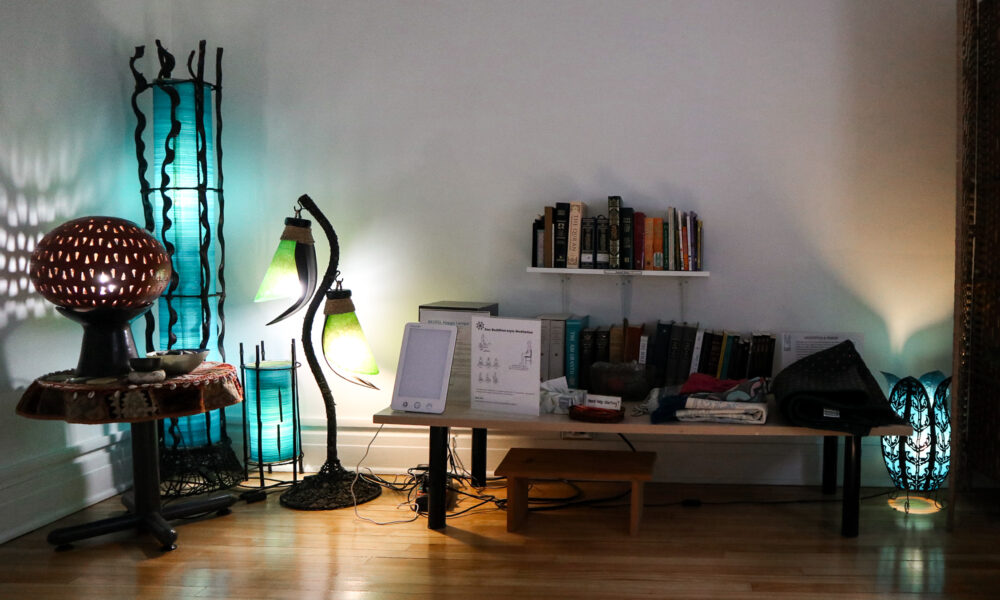
AlFarrash noted that McGill already lacks adequate prayer spaces for its population of over 4,000 Muslim students. There is one designated space in the University Centre, which has a 30-person capacity, while another small space under a stairwell accommodates two. Beyond these, most “designated” areas are multipurpose quiet rooms rather than proper prayer spaces, according to AlFarrash.

For other McGill students, the proposed ban points to broader issues regarding inclusivity and equity in Quebec. In an interview with The Tribune, Kaya Scrivens, U1 Arts, expressed concern that Bill 21 unfairly targets certain religious communities. 

“When you look at how Bill 21 affects people, […] the people who have public religious symbols that are a core part of their religion are mostly Muslim women,” Scrivens said. 

Scrivens added that the Quebec government’s propagation of secularist policies may dissuade prospective students from choosing to attend McGill.

“When deciding what school to go to, [religious freedoms] can be something to consider […] that would affect where you’re going for school and whether or not you’re choosing to come to Quebec,” Scrivens said. “It could be a very big decision that would, for me, make me not want to come.” 

The McGill Media Relations Office (MRO) stated they are aware of the proposed law in a written statement to The Tribune.

“McGill has taken note of the tabling of the report by the Comité d’étude sur le respect des principes de la Loi sur la laïcité de l’État et sur les influences religieuses and is reviewing its contents,” the MRO wrote.

It remains unclear what, if any, response the university will adopt should the law pass in the fall.

The Canadian Charter of Rights and Freedoms guarantees freedom of religion and equality for everyone in Canada. Based on the Charter, a ban on public prayer could face constitutional challenges from civil liberties groups, religious organizations, or directly affected individuals. However, Quebec has historically invoked the Charter’s notwithstanding clause—which allows provincial governments to override certain Charter rights for renewable five-year periods—to protect its secularist laws. Quebec could therefore shield the new public prayer ban from legal challenges if its government decides to reinvoke the clause.

McGill student groups like the MSA are currently calling for the university to stand behind the tenets of equity and civil rights.

“We expect McGill’s leadership to ensure that religious freedom is actively protected as a core element of inclusion and student well-being,” AlFarrash wrote. “This isn’t just about Muslims; it’s also about protecting religious freedom and dignity for everyone on campus.” 

AlFarrash also emphasized how necessary it is for McGill’s community to speak out against Quebec’s proposed public prayer ban.

“We’re calling on all students and staff, regardless of background, to stand with us in defending the principle that everyone should feel safe to live their identity openly,” AlFarrash wrote. “This is not just a ‘Muslim issue.’ If public prayer can be restricted today, then tomorrow it could be another form of peaceful expression.”


Album Reviews, Arts & Entertainment

Point-Counterpoint: Sabrina Carpenter and the thin line between submission and control

On Aug. 29, Sabrina Carpenter released her album Man’s Best Friend. But the real conversation began months earlier—on June 11—when she unveiled the provocative cover art on Instagram. It features Carpenter on all fours, in a black mini-dress and high heels, as an anonymous man grips her by the hair. A second promotional image shows a dog with the album’s name on its collar, an idiom for unquestionable loyalty to one’s owner.

Critics slammed the cover as “deeply irresponsible,” “regressive,” and “insanely misogynistic,” with some saying it “set women back like 100 years.” However, such outrage misses the point. Carpenter is not glamorizing subservience but rather confronting it.

Listeners should understand the album as a self-aware journey. In “Tears,” Carpenter confesses that she gets turned on by the bare minimum: A man who does the dishes, communicates well, and listens. She is not celebrating low standards, but mocking how women are conditioned to reward basic decency. Her irony is clear—she knows it’s absurd, and still, she finds sexual pleasure in it. Digging deeper in “My Man on Willpower,” she watches a former partner prioritize his personal growth so much that he loses devotion to her. Despite her numerous attempts at seduction, he drifts. The song exposes her desperation for male attention, likening her own loyalty to that of a dog. However, the closing track, “Goodbye,” is different. Channeling ABBA’s “Voulez-Vous” and “Take a Chance on Me,” she ends on an empowered note. Her ex wants her back, but she refuses, reminding him that it was he who said goodbye. She finally chooses herself.

Both the album and its cover cynically reflect the idea that accepting the bare minimum is akin to being man’s best friend.She ridicules her own submission to the male gaze through cheeky lines while reclaiming agency. The message isn’t inspirational, but it’s honest: Even when her standards disappoint, she maintains control over her sexuality. 

Girl’s worst nightmare: Where was the puppy love?
Jamie Xie, Staff Writer

In Short n’ Sweet, Carpenter reinvents herself, pivoting from vulnerable Emails I Can’t Send confessional pop to popstar parody. In Man’s Best Friend, she promises one whole hour of all things sex in 4/4 metre as her winking Mae West persona. It comes across as if Carpenter is a little too comfortable in her endeavours to subvert expectations and create a post-ironic, sexually-liberated, feminist image—perhaps at the expense of subtlety and substantive commentary. While her irony represents a refreshing take on the pop genre, her work lacks the intentionality needed to challenge existing patriarchal power structures. Carpenter’s album does very little to engage thoughtfully with criticism of commodified sexuality, falling victim to a lack of creative direction.

The album’s only lead single, “Manchild,”  delivers a performance that comes across not only as formulaic but also derivative of her previous works. Echoing “Busy Woman” musical motifs but falling upon himbo cliches established in “Sharpest Tool.”“House Tour,” and “Sugar Talking,” display the album’s core through retro 80s Nu-disco synths—a safer genre direction than she seemed to be promising with the country elements used in “Slim Pickins” and “Manchild.”

Her strongest songs—“Go Go Juice,” “We Almost Broke Up Last Night,” and “My Man on Willpower”—barely tease this idea of developing Carpenter’s persona by making light of herself. What if Carpenter didn’t have all the answers? Could it be possible that she might not have as much control over her relationships as she would lead us to believe? On “Go Go Juice,” Carpenter is at her apex with her lyricism, creating a vignette of a messy but sympathetic woman running on boozy brunch and pure hope, all in a tight three-minute timeframe. 

Worse than being regressive, Man’s Best Friend suffers from the true crime of a distinct lack of imagination in the audience’s taste—symptoms of a desire to shock and please. Underlying the album are notes of insecurity that Carpenter is aware that the public’s adoration is difficult to hold. The current pop fixation on her may possibly be as short as it was once sweet.

Martlets, Soccer, Sports

Martlets home opener reminds McGill why its Women in Sports program is here to stay

McGill’s Women in Sports (WiS) program kicked off the fall semester at the Sept. 7 Martlets soccer home opener. Hosted twice a year, WiS Days like these are social events that welcome McGill Athletics’ women’s players to attend the home game of a fellow Martlet team. The fall WiS Day event brought these Martlets into the stands of Percival Molson Stadium to watch the soccer team snag a win against Université Laval’s Rouge et Or. Here, the athletes were offered McGill-branded clappers to help cheer on their peers throughout the afternoon, and were encouraged to mingle with other onlooking teams during a halftime corn boil and pizza party. 

The WiS program operates through McGill Athletics and began in 2018 with a $3.5 million CAD donation from McGill varsity hockey alumni Sheryl and David Kerr. The program received a second $1.25 million CAD donation in June 2025 from Monica Leitham and Mark Hantho dedicated to women’s athletics at McGill in collaboration with the Faculty of Education—of which Leitham is a graduate. 

One of the only programs of its kind in Canada, WiS looks to support women varsity athletes at McGill by improving women’s representation at the varsity leadership level and offering stronger support services to Martlets. For instance, WiS aims to increase the number of women coaches at the university, with McGill more than doubling its proportion of women athletics staff to 38.1 per cent in the first five years of the program. WiS also provides some of its members with mental performance services, nutritional advice, and career preparation.

2025 marks the sixth year of WiS days. Roxanne Carrière, manager of the WiS program, explained how the recurrence of these events are important to the stream’s continued growth in an interview with The Tribune.

“It’s just promoting the advancement of women in sport, and so [in] bringing women together to support one another, […] we’re really looking forward to increasing the visibility of our program and increasing engagement,” Carrière said. “And if there’s good followership, it makes our job a lot easier, because it becomes self-sustaining.”

For Martlets basketball guard Emma-Jane Scotten, the WiS Day event was a great way to socialize with other Martlets and helped motivate her and her team to attend more Martlet sporting events.

“I think it’s good exposure for the program [and] just shows us the community that we do have here with other athletes,” she said, in an interview with The Tribune. “I think [Martlets basketball tries to] make more of an effort to go support the other women’s teams, and I think a lot of that has been through the program.”

This fall’s WiS Day was planned and carried out through collaboration between WiS staff like Carrière, McGill Athletics, and the 10-person WiS student-athlete council. This council was initiated by Carrière in 2024, and is being brought back to action for the 2025-2026 sporting season. The committee is composed of Martlets student-athlete leaders like Scotten, who expressed that the council’s first meeting back this September was a positive opportunity for its student-athletes to provide input on the WiS event’s structure. Centre for Martlets basketball, Kristy Awikeh, affirmed in an interview with //The Tribune// that the WiS council—of which she is also a member—has helped her connect more with other women athletes at McGill. 

While the Martlets in the stands were cheering, eating, and socializing, the Martlets on the field were fighting to improve their season record to 2–1, after their loss to Université de Montréal’s Carabins on Sept. 5. The WiS home opener saw strong passing plays from the McGill women’s soccer team from the outset of the game. The Martlets kept the ball in the Rouge et Or’s defensive zone, with forward Alexandra Hughes-Goyette even ‘scoring’ by the game’s third minute—though the goal was declared a hand ball and thus disallowed. 

But this no-goal call only galvanized the Martlets, who continued powerfully pushing on offence to force corner kicks for their team. Amidst the cheers of the robust WiS contingent and the couple hundred viewers in the regular crowd, forward Arianne Lavoie fired a header into Laval’s net in the game’s fourteenth minute, off of a commanding corner kick from midfielder Chloe Renaud. This dynamic play once again reminded the crowd why Renaud is frequently recognized by the Réseau du sport étudiant du Québec and McGill Athletics for her offensive talents.

Laval’s quick plays and attacking press throughout the game’s second half forced the Martlets to take a defensive stance to protect their lead, resulting in some choppy back-and-forth play that kept the ball largely out of both teams’ goal areas. The rest of the match saw McGill defend their advantage, with Martlets goalkeeper Ann Stephanie Fortin shutting out every shot Laval hoped to land: Including a series of tense free kicks for Laval in the last five minutes of the game. 

Though the Martlets struggled with multiple offside calls, and rough, physical play that led to Renaud and Martlets forward/midfielder Poppy Honeybone needing to substitute out for injuries, McGill managed to keep the game’s final score at 1-0. The win was a testament to the Martlets’ resilience in protecting their net even as the Rouge Et Or outshot them, reflecting the momentum from the three consecutive wins Laval was riding into the match.

Martlets Head Coach Jose-Luis Valdes emphasized in an interview with The Tribune the high level of vigilance his players had to assume to keep the Rouge et Or from taking command of the pitch.

“Laval is a very good team, and […] they can control the game when it’s fit,” he shared. “We had to readjust and change what we were doing to make sure we were defending and keeping it clean in the back.”

While the WiS Day cheering section may have initially surprised the Martlets soccer bench when it first appeared at one of their home games three years ago, Valdes explains that today, his team is thankful for the support. 

“Having all the varsity on the women’s side, present together, is great,” Valdes said. 

Situated off of the endline, the WiS crowd also left a mark on Martlets rookie midfielder Georgia Baldwin, who told The Tribune in a post-match interview that she enjoyed seeing her fellow Martlets behind the goal.

“[Percival Molson is] a really big stadium, and sometimes it can feel pretty empty, but having all that cheering and stuff in the stands and behind the net, […] it meant a lot to look up and see all that,” Baldwin described. “And, yeah, I feel like it really shows that we’re all here for each other. And I want to go to those other sports games and cheer for them.”

Carrière shared that the next WiS Day is planned to take place in January at a Martlets basketball game, providing an exciting opportunity for McGill’s women athletes to come together once again and celebrate the winter season. Scotten and Awikeh report looking forward to this event as a great chance to keep engaging with the WiS program.

The Martlets next play on Sept. 12 at Percival Molson Stadium, where they will face off against the Université du Québec à Montréal’s Citadins, whose last game against Bishop’s University’s Gaiters ended in a tie.

Student Life

A retrospective guide to Open Air Pub

From a distance, the Open Air Pub (OAP) might look both dull and overwhelming: Endless lines snaking up the Y, hordes of students yearning for cans of cold-ish beer, and fencing that adds to the never-ending construction on lower campus. Inside, you’ll find hundreds of students moshing—rain or shine—to student bands and DJs. What makes such a chaotic scene the “best place on earth?” As a seasoned OAP veteran, here’s what I’ve learned—and my top tips for navigating this quintessential McGill event.

Lines upon lines

Mirroring the busiest days of Montreal’s Osheaga and Piknik Electronik, lines on a sunny day at OAP can be overwhelming, often filing all the way up to the Arts Building. You might find yourself wistfully admiring OAP from a distance for multiple hours before you get to join in on the fun yourself. However, time in the line passes much quicker with a group of friends. Small talk eventually blossoms into a catch-up on adventures and mishaps from the summer. If you’re looking for a surefire way to pass the time, you might consider a cheeky game of “I Spy”: Someone’s ex-situationship talking to a new guy, your fratty frosh leader who’s had a bit too much to drink, or even your early morning tutorial crush. If the sights and smells of the OAP grills make you hungry in line, you can always satisfy your hunger by picking up a classic smokie from the hot dog man. Gather all your friends’ orders and have them save your spot in line!

Dress to impress

There is no doubt that Montreal is the most fashionable city in Canada, and this is further evidenced by the head-turning outfits at OAP. Outfits at OAP span a wide spectrum from perfectly on trend to unapologetically unique. It is common to see vintage lingerie reworked into flowy sundresses, tacky yet stylish Hawaiian button-ups, hand-painted denim jackets, McGill bucket hats, flowy satin skirts, and old band tees featuring artists from your parents’ generation. Anything goes at OAP. However, do keep in mind that the dance floor can get muddy. Although the best place on earth allows for the best looks on earth, your best bet for shoes might be a pair of old sneakers that you don’t mind dirtying, or—for the definitive OAP look—a pair of good ol’ cowboy boots.

At the bar

What is your go-to drink at OAP? Is it the cost-alcohol-efficient Pabst Blue Ribbon? Are you a fiend for cider? Or do you go for the age-old classic—a tall can of Guinness? Whatever your drink of choice is, if you sense a horde of froshies about to flood the drink lines, make sure you double fist your drinks—that is, grab two drinks in one visit to the bar. While your Sapporo might warm up before you get to it, it is certainly more time-efficient to have a drink or two on hand, rather than waiting in the crowded lines again. Want to try something new? Try this McGill student classic: Order a Sleeman and a Smirnoff Pink Lemonade, pour half of each into your reusable mug, and you have yourself a summery Radler. 

McGill, News, SSMU

McGill and SSMU restore ties through revised Memorandum of Agreement

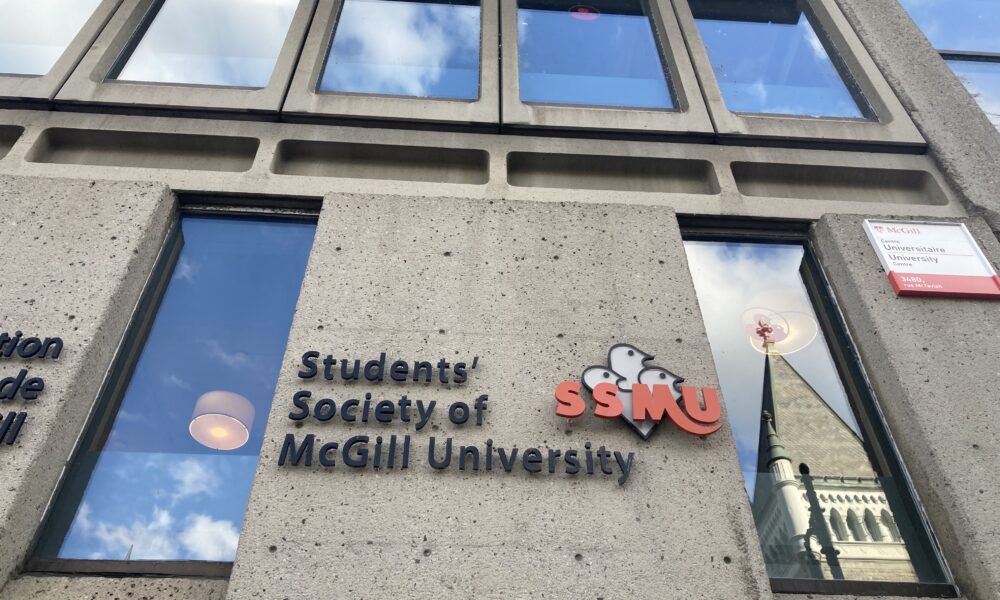
Students’ Society of McGill University (SSMU) President Dymetri Taylor and McGill’s Interim Deputy Provost (Student Life and Learning) Angela Campbell announced on Sept. 4, via joint email statement, that SSMU and McGill have negotiated a new Memorandum of Agreement (MoA) after a summer of mediation.

The mediation process followed Campbell’s April 2025 email announcement that McGill intended to terminate its existing MoA with SSMU. In this email, Campbell denounced the student union’s strike for Palestine from April 2-4, 2025—specifically, strike demonstrations that successfully cancelled dozens of classes. 

The Sept. 4 update confirmed that McGill and SSMU’s MoA remains in effect after the parties made revisions during mediation “to reach an agreement that puts students first.” Taylor and Campbell outlined that the University Centre will now host McGill as well as SSMU initiatives; if McGill had terminated the MoA, SSMU would have lost access to the Centre, leading to the closure of many student gathering spaces. Furthermore, the email affirmed that SSMU-funded student organizations will continue to operate.

Additionally, Taylor and Campbell rebuked specific forms of protest, while declaring SSMU and McGill’s shared commitment to “expression and peaceful assembly.” The statement also reported that McGill has removed some, but not all, MoA sections that dictate which students can run for SSMU elections.

In a written statement to The Tribune, Taylor explained how the union may aim to address future SSMU-McGill MoA disputes to best honour SSMU’s constituents.

“One of the plans for this year is to institute a process so that things of this nature, when there is a major disagreement, don’t simply result in a notice of termination of the MoA,” Taylor wrote. “A better method of termination is necessary for the agreement to ensure that when there are disagreements of a political nature, the rights of the students and the Society are protected.”

Taylor also expressed the mutual advantages of upholding the SSMU-McGill MoA.

“[Under the MoA], SSMU receives substantial benefits, chief amongst them being the [University Centre],” Taylor wrote. “However, it would be foolish to think that McGill does not benefit from this agreement, as without it, the University would suffer significant reputational harm.”

McGill’s Media Relations Office did not respond to The Tribune’s request for comment.

Editorial, Opinion

McGill, prestige won’t protect students from inequitable healthcare education

The McGill administration has dissolved its Faculty of Medicine and Health Sciences’ Social Accountability and Community Engagement (SACE) office—the medical school’s main equity, diversity, and inclusion (EDI) body. Consequently, the university fired three major SACE leaders, all members of racialized groups with extensive research backgrounds in healthcare equity. In their place, McGill hired a singular white Vice-Dean of Community Engagement, Dr. Beth-Ann Cummings, whose qualifications do not seem to parallel those of her predecessors. This move comes after Canadian medical school accreditation authorities placed the Faculty of Medicine on probation for a second time in February 2025, citing failures to meet 25 out of 96 standards, particularly its lack of adherence to anti-discrimination and diversity policies. 

When McGill was first placed under probation in 2015, it established the SACE office to address equity concerns outlined by accreditors. Yet, despite the Faculty of Medicine’s continued probationary status today, McGill dismantled the very office it introduced to address EDI concerns. This reflects a profound institutional disregard for the role of EDI in medicine, which functions both as a means of improving diversity within the profession and of fighting racist biases in healthcare. 

While in operation, the SACE office issued strategic plans to confront discrimination and underrepresentation of minorities at McGill, including an Action Plan to Address Anti-Black Racism and a Task Force on Indigenous Studies and Indigenous Education. Without this infrastructure, McGill risks exacerbating the already strikingly low proportional representation of Black and Indigenous applicants. This downward trend incites a self-perpetuating cycle of exclusion: Less student body diversity produces a less diverse medical workforce, leaving fewer mentors for potential applicants of minority backgrounds. 

Students trained in demographically diverse environments are better equipped to treat patients from minority backgrounds. Interactions between doctors and patients of the same background tend to last longer and lead to improved health outcomes for minority patients, including openness to preventative care, greater life expectancies, and lower infant mortality. Conversely, where EDI training is absent, curricular diversity and comprehensibility plummet and biases persist. A 2016 study revealed medical trainees incorrectly believed Black patients had a higher pain tolerance, a misconception which dates back to the era of slavery and has been weaponized against Black communities to justify violence. Educational facilities lacking EDI programs and equity-driven curricula leave discriminatory preconceptions unaddressed, resulting in future doctors with less capacity to deliver proper care to minority groups.

Replacing SACE with a group under the authority of the Faculty Dean will undermine institutional accountability, as McGill’s EDI programming will no longer function as an unbiased, independent interlocutor distinct from McGill’s Faculty of Medicine. SACE once offered students an opportunity to submit incident reports and file complaints; now, the EDI structure falls under the very agents the office was meant to monitor, removing accountability mechanisms for discriminatory practices by administrative officials. 

McGill’s dissolution of SACE mirrors broader anti-diversity backlash in the United States, where the Trump administration’s attacks on EDI in higher education have emboldened universities to neglect their responsibility of equity. The anti-EDI movement has been similarly influential throughout Canada: The Conservative and Bloc Québécois parties have both pledged to defund EDI in the federal public service, with Conservative Party Leader Pierre Poilievre deeming diversity strategies a product of “woke ideologies.”

McGill’s willingness to follow the lead of North American institutions reflects a flagrant disregard for the wellbeing of racially diverse students, doctors, and patients, and echoes the university’s own long history of institutional racism. In the 1930s, Black medical students at McGill were frequently barred from completing their clinical work in Montreal, forced instead to train in segregated institutions. Beyond the Faculty of Medicine, the university was founded on—and continues to be guided by—discriminatory, colonialist principles. For instance, James McGill’s enslavement of Black and Indigenous peoples, ongoing development projects on unceded Tiohtià:ke land, and longstanding failures to consistently offer gender-affirming care for 2SLGBTQIA+ individuals, all demonstrate the deplorable foundations upon which McGill continues to build its practices. 


Still, McGill remains willing to cut programming designed to dismantle systemic racism. Although facing severe financial insecurity, the university must not place EDI programming on the chopping block. The administration cannot continue to take shelter behind the Faculty of Medicine’s top ranking to conceal its failures in equity and accreditation. Prestige will not protect future patients from medical practitioners with untreated biases and culturally insensitive training.

Science & Technology

Boosting medical students’ surgical confidence through non-dominant hand training

While all of the clinical rotations in which medical students participate are challenging, one of the most intimidating rotations is general surgery. This is not surprising given what is at stake in an operating room (OR). 

“First of all, you have to understand sterility and how not to contaminate the table,” Dr. Mirko Gilardino, plastic surgeon and professor of surgery at the McGill University Health Centre, said in an interview with The Tribune. “And then there’s this old adage that surgeons are grumpy […] [although] that’s not necessarily true, of course [….] But still, it’s scary and overwhelming, nevermind the fact that there’s a body that’s being operated on.” 

Despite how stressful it may be, spending time in the OR as a medical student is an incredible opportunity to practice and apply one’s basic surgical skills, such as the skill of suturing—stitching a patient’s wound or incision closed. Therefore, learning to suture with confidence before getting to the OR is a huge asset. 

In a recent study published in the Journal of Surgical Education, Gilardino, along with Dr. Hassan ElHawary—the paper’s primary author—and their collaborators examined how training medical students to suture with their non-dominant hand affected both their skill acquisition and their confidence. 

They assessed the medical students’ aptness for suturing on practice material using both their dominant and non-dominant hands, before and after training. One group of students completed the suturing training with their dominant hand, while the other trained with their non-dominant hand. Afterwards, the researchers administered a questionnaire to assess any changes in the students’ confidence in their skills, how well they could use them in the OR, and how they perceived the ambidextrous training. 

The authors found that both groups of students improved their one-handed suturing skills to the same degree. Furthermore, they discovered that those who had trained to suture with their non-dominant hand actually improved their dominant-handed suturing as well. Both groups of students generally reported increased levels of confidence in their surgical skills and in their ability to use them in the OR. Finally, many of the students expressed that ambidextrous training should become standard practice in surgical education.

Rather than being driven by an interest in ambidexterity alone—although this was a key focus—this study was born out of a more general desire to improve how surgical skills are taught, and to do so in a way that makes students more comfortable with the idea of surgery.

“Hassan was really interested in what he called ‘surgical workshops,’” Gilardino said. “So what he felt was that students didn’t enter or didn’t even seek out careers in surgery, unless somehow they were exposed and had a positive experience.”

After seeing how successfully the workshops were running, ElHawary realized the research opportunity sitting in front of him. 

“Hassan thought about it, and he was like, ‘Wow, you know, people are liking surgery more. I wonder if we can even do it better by training them on their non-dominant hand,’” Gilardino recalled. “It was more like a curiosity. And since you already had the whole structure in place and his courses, it wasn’t that complicated for him to dive into this.”

There are many benefits to being a surgeon who is adept with their non-dominant hand. For example, some operations are better suited for right-handed maneuvers, and others are better suited for left-handed maneuvers. It is useful to be able to tackle a problem from both sides. Surgical ambidexterity has also been shown to improve both the efficiency and the outcome of an operation.

Overall, this study underscores the need for surgical education that not only encourages training with one’s non-dominant hand but that builds a sense of confidence in medical students at the same time. 

McGill, News, The Tribune Explains

The Tribune Explains: Access to Student Accessibility & Achievement

McGill’s Student Accessibility & Achievement (SAA) program is responsible for supporting students with mental or chronic health conditions and disabilities, aiming to provide them with resources that remove barriers to their academic success. Following the Quebec government’s $510 million CAD budget cuts to educational support staff across the province, The Tribune has provided an outline of McGill’s SAA program, as well as how the budget cuts may affect it.

What resources are available for students seeking accommodations?

Students with mobility needs can sign up for on-campus parking authorization to make commutes to classes more accessible, or use the adapted transportation van, which picks up and drops off students between buildings on McGill’s downtown campus. 

For those seeking accommodations for intellectual disabilities, registering with SAA can provide them with academic assistive technology aligned with their accommodation plans, including in the Exam Centre. For instance, advisors can assist students with finding alternate-format texts, such as braille or vocal recordings.

Without registration, SAA still offers six Self-Directed Learning Guides to help students improve skills like note-taking, time management, and memorization. There are also six directories of assistive technology tools and apps, available to all students, that list resources to support core academic activities such as reading and writing.

None of these services will be affected by provincial budget cuts.

How do I access these resources? 

Students must make an appointment with an SAA advisor, wherein they must provide an official medical note listing a disability or diagnosis. If approved, an advisor will help determine what accommodations could improve the student’s university experience. 

What are my options for exam support?

Students whose registered accommodation plans include exam support must log into Clockwork two weeks before their exam to review their requests for testing modifications, such as increased time. The program also assists with exam deferrals in instances where students, due to extended time accommodations, are scheduled for more than eight hours of exam writing in one day.

Does SAA offer peer support programs?

SAA offers peer-support initiatives intended to create inclusive and encouraging student spaces. Peer-Assisted Learning is a study program meant to help students practice self-reflection and engage in group discussions facilitated by peer leaders. For Fall 2025, this accommodation is only offered for six introductory courses. 

Additionally, the Peer Mentor Program (PMP) provides students opportunities to discuss their academic and career goals with a mentor who is also registered for SAA accommodations.

What have users reported about their experience with SAA?

Some students report that SAA can be inaccessible and unreliable. The program’s requirements for registration may create barriers for students still in the process of receiving a medical diagnosis from the Student Wellness Hub or an outside provider. This can make access to accommodations competitive among those who require them, with a long waitlist for the office.

SAA has also failed to provide its promised services to registered students multiple times, losing their exams instead of submitting them, and failing to ensure online testing software does not cause students technical difficulties. In these cases, students reported that staff members were inaccessible or slow to answer requests for help, causing further distress.

How will Quebec budget cuts affect the program going forward?

In a written statement to The Tribune, McGill’s Media Relations Office (MRO) stated that government budget cuts will not affect SAA and student access to accommodations, since the program’s funding comes from many different sources whose finances, as of now, have not been affected by the cuts. 

“Core services remain fully in place because they are essential for students and legally required,” the MRO wrote. “These services are still available and will continue to evolve based on student needs.”

Arts & Entertainment, Books

The search for the perfect summer read

Soft gusts of breeze billow through loose hair as the sun reflects off bleached book pages. There is a prodding sharpness of salty seas and a deep odour of oak groves. A blow of wheat and pollen caresses overgrown fields; wind fights the fluttering pages of a book.

The beginning of summer often marks a return to reading for joy, without the impending doom that seeps into the pages of my literature assignments. Easing back into the comfort of real life, I rekindled my love of reading. But a real tragedy befell me: Glancing at the piles of books that awaited my return home, I felt stunted, overwhelmed by the number of options that lay before me. 

The question of what books are perfectly suited to the airiness of summer’s lingering months plagues both the internet and my mind. To fill the long-winded days with narratives unlike my own would be the ideal outcome, but wherever I started seemed to be the wrong path. After searching for my perfect summer read in a drug and sex-ridden memoir of New York’s 70s punk scene, a historical fiction book about misogynistic witchcraft accusations, and whatever Miranda July considers the plot of her new novel, I finally found my answer in Ben Shattuck’s short fiction.

A book most suited for summer isn’t just something light—a work requiring no thought in the process of reading—but rather one that bathes in the quaint beauty of its seeming nothingness. Its atmosphere is earnest and reflective. These contemplative, character-driven books hold a mirror to the surrounding world, picking out its complexities and documenting the nuances of human experience. 

In the windy greenery of Vermont hills, I perched with Shattuck’s short story collection, The History of Sound, only glancing up at howling birds or the whispering of dirt roads. It is one of the finest collections of short stories that I have ever had the delight to read. Set amidst the backdrop of New England, the collection explores the interactions of people in the region throughout time. 

Thoughtful and intense, each anecdote flows in like a budding wave, crashing and easing into the shore, slowly drifting back out with a turn of the page. “The Auk” follows a man’s quest to comfort the idle days of his wife with Alzheimer’s, while “Edwin Chase of Nantucket” sees a meeting between old lovers—a painter and his first love, Laurel—told from the perspective of her young son. The eponymous story, the first of the collection, details two men’s budding romance en route to tape folk songs of the American Northeast, and the eventual fallout of their forbidden love in the early 19th century. Shattuck rounds out the collection with “Origin Stories,” a return to the men’s narrative almost fifty years later, wherein a woman discovers these recordings and seeks to return them to their rightful owner.

In these quiet reflections of temporal transience, Shattuck’s narrative demonstrates how history scars the present with evidence of its past. His stories come in pairs, as if rhyming couplets in a poem. Often shifting from past to present—or vice versa—in the complementary stories, these odes to humanity serve to remind us that although history feels distant, it remains alive in everything around us. 

Shattuck captures a moment in time as if a storied set of narrative paintings, waiting to be made sense of alongside its companions. Though we pass through each world only momentarily, we witness the charms and weaknesses of those encountered with breathtaking nuance. 

I left his work with a profound sense of gratitude, recognizing the menialities and quaintness of life through which we are all connected. We all have felt the anxiety of making new conversations, the internal ache of a love unrequited, the panging uncertainty of decision. We are all simply waves crashing against stone, combusting and receding, making way for waves soon to follow. It is ultimately in these quiet ruminations that summer is most suited.

Behind the Bench, Sports

Beyond the court: The Ostapenko-Townsend dispute

On Aug. 27, tennis players Jelena Ostapenko and Taylor Townsend got into a verbal altercation after the second round of the 2025 US Open. After an intense matchup where Townsend defeated the Latvian in straight sets 7-5, 6-1, Ostapenko initiated a heated conversation that ended in her saying that Townsend had “no class” and “no education.” Ostapenko’s remarks sparked major outrage online and amongst fans, with many claiming the comments had racist undertones and that Ostapenko should be penalized accordingly. 

Ostapenko has apologized since the incident, saying that English is not her first language and that she did not have malicious intentions and meant no harm. With a history of racism within the sport of tennis, many wonder what the truth is behind this incident, and whether Ostapenko should be held accountable for her actions. 

Tennis has long been shaped by exclusionary practices, making any discussion of potentially racist remarks amongst athletes reflective of the sport’s history. For decades, professional tennis was dominated by wealthy, predominantly white individuals, with clubs and major tournaments often banning and excluding Black athletes. Althea Gibson broke barriers in 1956 as the first Black player to win a Grand Slam title, but her success did not shield her from discrimination and prejudice both on and off the court. 

In the 21st century, Venus and Serena Williams have endured similar treatment, facing racist behaviour from crowds and accusations that their competitive fire is “angry” and “unladylike.” These stereotypes speak to a broader pattern in tennis, in which Black women have been portrayed as lacking composure or “class.” With this deep-rooted history of racism, Ostapenko’s words—even if they were born of frustration rather than racism—resonate with a long history of discrimination that has targeted Black women in tennis specifically.

While Ostapenko apologized, her comments cannot be separated from this history. Her words “no class” and “no education” parallel language traditionally used to demean and dehumanize Black women, which explains why many saw them as racially charged. Even if Ostapenko’s remarks were less about race and more about venting frustration after a difficult loss, the fact that Townsend, a Black American player, was the target means the impact was different than if Ostapenko had directed her words at someone else. Athletes like Ostapenko must consider the effects of their actions and see how their comments risk reinforcing harmful stereotypes that have persisted in tennis for decades. The situation as a whole highlights how racism in sport is not always explicit and overt, but can also emerge through language that carries different meanings depending on history, context, and audience.

Ostapenko’s remarks towards Townsend were more than a heated post-match dispute: They serve as a reminder of how deeply history shapes the present in tennis and in society. Acknowledging this context does not mean automatically condemning Ostapenko as malicious, but it does highlight the need for awareness and accountability in tennis. 

The next steps for the United States Tennis Association (USTA) should be not just responding thoughtfully to address this single incident, but committing to education and policies for their athletes that prevent racist behaviour before it occurs. Tennis has progressed toward inclusivity, yet moments like this show there is still work to be done. Ensuring that every player, regardless of race or background, competes in an environment free from discrimination is not just the USTA’s responsibility—it is essential to the sport as a whole.

Read the latest issue

Read the latest issue