Latest News

Behind the Bench, Sports

Protecting trans children’s right to sport is everyone’s responsibility

Since the start of Trump’s second term, the U.S. has seen a slew of executive orders, policies, and lawsuits attacking a fundamental right for transgender youth—the ability to play sports. Last week alone, the U.S. Department of Agriculture froze funds to educational programs in Maine due to the state’s support of trans athletes, the Nevada Interscholastic Activates Association ruled it would no longer allow trans girls to play on women’s high school sports teams, and a similar proposed ban in Washington gained support from Congressman Dan Newhouse

Prejudiced policy directed toward trans youth is not just an American issue though; in 2024, Alberta Premier Danielle Smith announced a series of policy resolutions which included banning or severely limiting trans women and girls’ access to sports and even prohibiting puberty blockers for trans youth. Amid this onslaught, it is crucial that the rights of trans children to play sports be taken seriously by all.

The Olympic Charter outlines access to play sports as a human right. For children, sports provide numerous physical, emotional, and social advantages that such policies aim to strip away. For trans kids—many of whom face harm from others for their gender identity—participation in sports can be invaluable in terms of self-esteem and academic performance. A study from the Human Rights Campaign Foundation and the University of Connecticut found that trans high schoolers who played sports experienced lower levels of depression and earned higher grades. Forcing them out of one of the most prominent public spaces is not just a cruel erasure—it is deeply dangerous.

Arguments in favour of banning trans kids from sports often insist on the right to fair play for cisgender girls—in the American context, this means the persistent invocation of Title IX, a federal civil rights law that prohibits sex-based discrimination in educational programs, including school sports. These arguments ignore that there is no compelling empirical evidence that trans girls have a biological advantage in sports. Further, sports are otherwise unfair due to a plethora of biological or socioeconomic factors. An athlete can have a competitive advantage by being taller, having higher endurance, or being able to afford extra training, regardless of gender. 

The twisting of Title IX is a bad-faith argument, veiling bigotry with a self-righteous call for girls’ rights. If the self-proclaimed proponents of Title IX really cared about girls’ well-being, they would care about all girls. If it was really about girls’ safety, they would be talking about the factors that lead girls to drop out of sports, such as social stigma, ubiquitous misogyny, and the scrutiny of women’s bodies. This selective advocacy shows that it has never been about cisgender girls and women; it is about pushing an agenda of what they believe gender should look like. Trans peoples’ participation in sports is an easy target for conservatives because it attacks a small minority in one of the largest public arenas—an incredibly gendered one, no less.

Banning trans kids from sports opens the door to even more discriminatory policy, sidelining, and erasing any deviation from a strict gender binary. This should be seen not just as an attack on the trans community but also as an assault on all kinds of free gender expression.

When it comes to combatting these heinous measures, it must be all hands on deck. Of the roughly 300,000 trans kids aged 13 to 17, two-thirds live in states that have enacted laws restricting their access to play. The scale of these policies is enormous and expanding each week. Cisgender allies must recognize that these policies threaten the well-being of children. Protecting the next generation is the biggest responsibility of all.

McGill, News, SSMU

McGill announces intent to end contractual agreement with SSMU, taking parties to mediation

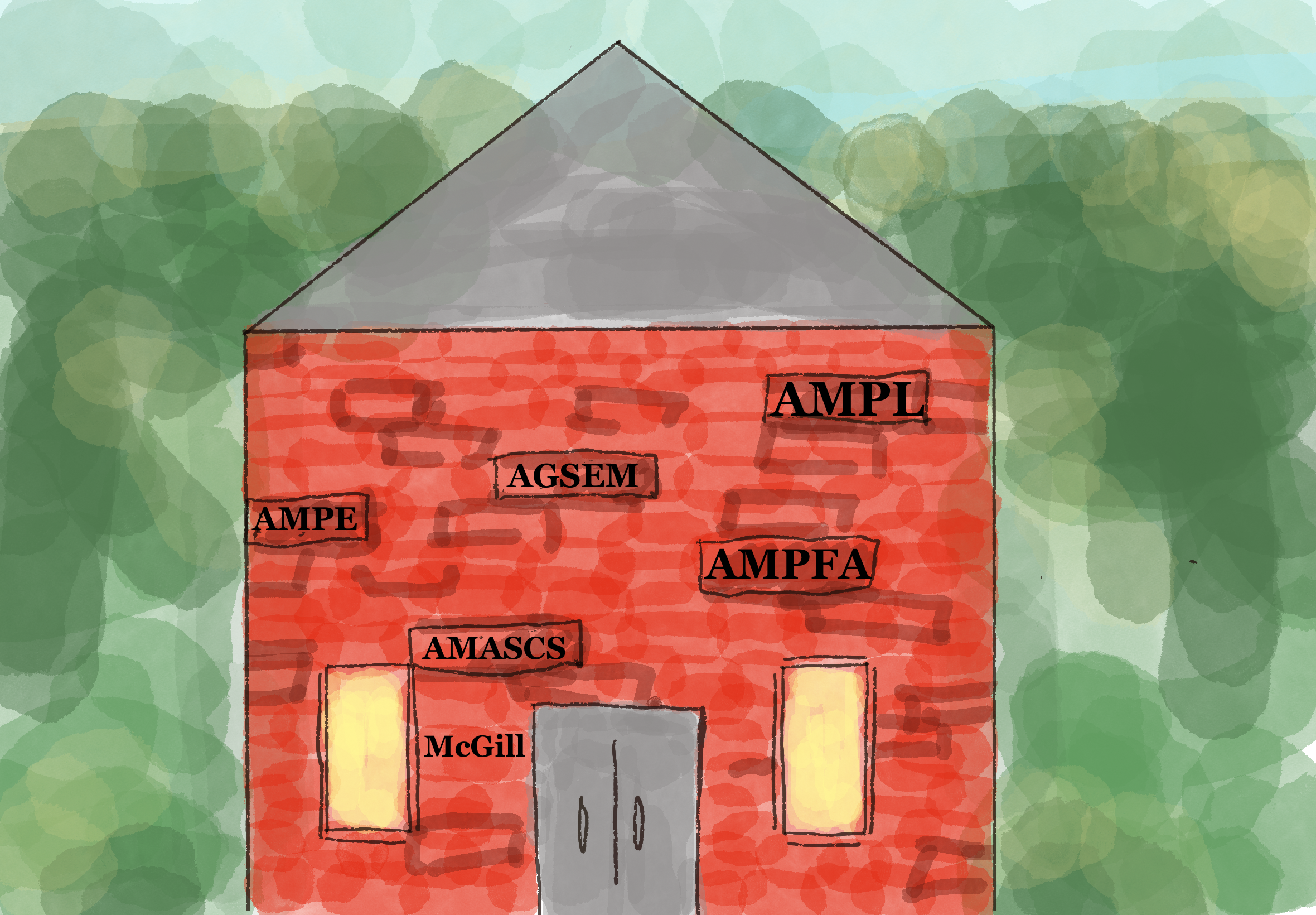
On the afternoon of April 7, the McGill community received an email on behalf of Interim Deputy Provost (Student Life and Learning) Angela Campbell with the subject line “Termination of the SSMU-McGill Memorandum of Agreement.” The email—which condemned the Students’ Society of McGill University’s (SSMU) student strike the week before—outlined that the University sought to end the Memorandum of Agreement (MoA) with SSMU, the document that governs the relationship between the parties. Per the MoA, this means that SSMU and McGill will enter a mediation process, during which the Agreement, and thus SSMU operations, will remain in effect. 

Following a SSMU Special General Assembly (SGA) on March 27, 2,731 students voted to ratify a strike for Palestine from April 2-4. Throughout the three days, organizers picketed classrooms, offered educational programming, and hosted a student rally on April 5. During the rally, a protestor smashed the window of Dean of Engineering Viviane Yargeau’s office with a fire extinguisher filled with paint. Campbell wrote that a staff member was hit. In addition, protestors successfully cancelled certain classes as a result of picketing. Campbell denounced these actions as a “[violation of] our collective values.”

“Last week, SSMU allowed and, at least tacitly, supported a three-day strike that further divided a campus community already deeply cleaved and hurting,” Campbell wrote in the email. “The SSMU can and should have ruled the motion that led to the strike referendum as out of order given SSMU’s governing documents, but opted against this. The result was a campus environment in which dozens of classes were blocked or interrupted.”

Students for Palestine’s Honour and Resistance (SPHR) at McGill, one of the groups involved in organizing programming, expressed what they believed to be the reason for McGill’s response in a statement to The Tribune

“McGill has once again attacked the Pro-Palestine student movement, threatening to crack down on our democratic channels,” SPHR wrote. “This newest threat is a reaction to pressure from zionist donors and our warmongering political class, who are desperate to regain control of a student body that stands with Palestine in its struggle for liberation. As always, repression sharpens the contours of the student movement. We call on our union to stand firmly with Palestine and our democratically enforced demand for divestment.”

Under section 16 of the MoA, McGill and SSMU must now enter mediation to attempt to reach a resolution. This process is estimated to last until June. If the parties do not reach an agreement, SSMU’s operations would not cease but would be severely impacted. Primarily, SSMU’s lease of the University Centre would be terminated meaning services, clubs, and independent student groups would lose access to those spaces, and Gerts Bar & Café would close. The student union and associated student groups would also no longer be able to operate using the McGill name. SSMU would still be able to receive student fees, however, allowing it to operate in an adjusted capacity.

This is not the first time in recent years that McGill has considered termination of the MoA due to SSMU’s activities. In 2022, the university made a similar announcement following a referendum vote that approved the Palestine Solidarity Policy with a 71 per cent majority of votes. In an interview with The Tribune, SSMU President Dymetri Taylor noted that McGill’s response was a culmination of what the administration perceived to be SSMU’s repeated violations of the MoA.

“It has to do with the strike, and it also doesn’t, because this is something that’s kind of been brewing for quite some time,” Taylor said.

Taylor affirmed that until mediation between the two parties is completed, all SSMU operations will continue to run.

“Everybody will more or less know when they come back in September, what’s actually been affected. Everything will be running as it originally was. There’s not going to be any changed operations. Employees […] are still very much employees. Insurance is still going on, bookings are still valid, nothing’s changed [….] everything is operating as usual,” Taylor said.
McGill denied The Tribune’s request for further comment.

Behind the Bench, Sports

Sports media’s duty to athletes and fans

Sports journalism is often seen as a “soft” area of the media, but it is a lot more complicated than it appears. In covering sports events and athletes, journalists must uphold key journalistic practices, ensuring they truthfully and fairly represent the stories they are telling. Oftentimes, however, journalists and media sources covering sports fail to do so, breaching ethical boundaries or contributing to harmful cycles in the process.  

Sports media should represent all stories

Sports are an incredibly diverse domain, with people of all ages, ethnicities, genders, and racial identities participating, making them unifying activities. Thus, it is the responsibility of sports journalists to make sure they are telling the stories of all kinds of athletes, as well as accurately representing them. The Paralympics deserve the same standard of coverage as the Olympics, the WNBA the same coverage as the NBA, and the African Cup of Nations the same coverage as the Euros

Equitable media representation spurs higher levels of sustained interest in underrepresented sports, or underrepresented groups within a sport. An area in which sports media severely lacks this equal representation has been in women’s sports, with a 2023 study finding they made up 15 per cent of sports media coverage. This is unjust to women athletes, who have worked tirelessly to get to their professional status, and also contributes to lowered interest in women’s sports, as higher levels of media coverage for a league are directly tied to increased interest. Swedish Television committed to increasing coverage of women’s sports so that it was equal to men’s sports coverage. They found that the league’s broadcast often became so popular that competitors sought to acquire their rights.

Technology must be used responsibly

Journalism is one of many fields that has been negatively impacted by an increasing reliance on AI, and sports journalism is not safe from this. Beyond the ethical and environmental implications of AI-generated content, responsible journalism requires a human perspective and human values. Emotionally charged writing is something a machine could never be taught. It is what separates a sports piece from being a droning recap of a game to something that readers can connect to. 

There is a disturbing rise in AI-generated content, even among reputable sports news sources. Sports Illustrated, for example, published articles written by AI in 2023, and She’s A Baller posted now-deleted AI-generated images on their social media. In both of these instances, an opportunity was taken away from a writer or an artist to produce work that offers a human perspective.

Sports journalists need to respect athletes

When working with athletes, journalists also have the responsibility of protecting their privacy and dignity. This includes avoiding invasive questions that are not relevant to the topic at hand or questions that have discriminatory undertones—like when Canadian tennis player Eugenie Bouchard, after winning an Australian Open match in 2015, was asked by a reporter to “give [him] a twirl” and tell him about her outfit, rather than about her performance.

Sports media often use biased or discriminatory language

Like any form of journalism, it is important in sports writing to avoid using language that stereotypes athletes, especially when the language pushes discriminatory ideology about underrepresented groups. For example, male athletes tend to be described as “men”, while female athletes tend to be described as “girls”. 
Athletes are also often stereotyped based on their racial identity; Black athletes or athletes of colour with darker skin are often described in relation to their height and perceived “natural” physicality, while white players’ physical moves are often attributed to intelligent decision-making. This kind of language reinforces harmful stereotypes, categorizing individuals based on race, gender identity, or other underrepresented traits. It is up to sports journalists to be vigilant about their word choices and consider whether any of their language is motivated by unconscious bias.

Local Stories, Student Life

When democracy is detained, Türkiye’s youth stand alone

Some mornings begin with coffee; others begin with the news that a friend from high school is in jail. As an international student, life abroad feels like a dream—until reality hits and helplessness kicks in. Students, journalists, and lawyers are behind bars—and so is Ekrem Imamoglu, Türkiye’s strongest opposition leader.

On March 19, police detained Imamoglu on corruption charges. The day before, Istanbul University abruptly annulled his university diploma—along with the degrees of countless others—disqualifying him from a presidential run. The decision came just days before he was expected to announce his candidacy. He is now being held in a high-security prison on the outskirts of Istanbul.

For many students of Turkish descent, watching the events unfold from abroad serves as a reminder of the ongoing reality of political suppression.

“In Turkey, nothing is just administrative or procedural anymore; everything is political, and it’s all controlled by the state,” Ipek Peya, U2 Arts, wrote in a statement to The Tribune. “I know some people avoid calling it political, but I think that’s exactly what it is. And it’s important to say it out loud.”

In response to the political crackdown on opposition figures, Türkiye is witnessing its largest wave of protests in over a decade, with tens of thousands flooding the streets. This uprising is not merely a reaction to a single arrest but a collective act of defiance against intimidation and authoritarian drift, and a demand for democracy.

“I don’t think these protests are [happening] because Imamoglu got arrested,” Emir Sahin, U3 Arts, said in an interview with The Tribune. “It’s just that the Turkish people want to make sure that there’s a rule of law that is objective to both sides.”

Recep Tayyip Erdogan, president of Türkiye, condemns the protests as “street terrorism” and “a movement of violence,” but it is the protestors who face violence. Citizens are routinely targeted with water cannons, tear gas, pepper spray, and plastic bullets—sometimes fired at close range at the face and upper body.

“It’s one thing to see these things on the news, but when it happens to someone even slightly connected to you, it hits completely differently,” Peya wrote. “It makes everything feel way more real—and honestly, way more frightening.”

A U2 Arts student who wished to remain anonymous described the current movement as a breaking point, saying the silence surrounding political repression can no longer continue.

“We have been silent about our rights being taken away in broad daylight,” she said. “And it’s time to say something about it—and do something.” 

Being physically removed from the crisis does not make it any less real. Safety from afar comes with a responsibility to stay aware and engaged, through following independent news, sharing information, and having conversations that keep the issue visible. 

“I don’t expect people to take these problems in Turkey and make them their own,” she said. “I just expect them to be aware of it and at least know of it because the more people know and the more people talk about it, the more they help us. And that’s such an easy thing to do.”  

Peya echoed this sense of isolation, noting that many within her McGill circles at McGill aren’t aware of the situation’s scale or its implications.

“There’s always this fear in the back of my mind: What if something happens and I can’t reach [my family]? What if I find out about it too late? It creates this constant anxiety,” she explained. “I’m here, in a place where I can speak freely and feel safe, but they’re not. And that disconnect is something I don’t think I’ll ever get used to.”This is not a battle between Erdogan and Imamoglu, nor about left or right-wing politics. It is about ongoing oppression, and a population fighting to be heard. At this crossroads between democracy and autocracy, citizens’ struggles are measured by their physical and mental endurance. However, solidarity travels, and as long as we resist, democracy still has a voice, and so will we. Now is the time for the Turkish diaspora, and for all who can speak freely, to carry that voice forward, making sure it echoes far beyond the borders that tried to silence it. 

Campus Spotlight, Student Life

Celebrating Sikh Heritage Month at McGill

April is officially recognized as Sikh Heritage Month in Canada. It is a time to reflect, acknowledge, and celebrate Sikh history, values, and contributions to Canadian society.

The McGill Sikh Students’ Association (MSSA) supports students through cultural, academic, social, and spiritual events. They welcome both Sikh and non-Sikh students, with diversity and meaningful dialogue at the core of the club’s values. 

Throughout April, MSSA holds a series of events, beginning with the Kirtan Samagan on April 2. It included devotional singing and a community meal, in collaboration with McGill’s Office of Religious and Spiritual Life (MORSL). On April 7, MSSA screened The Battle of Amritsar, a documentary that examines the 1984 Operation Blue Star, when the Indian Army launched a coordinated assault on the Golden Temple Amritsar, targeting Sikhs. 

Harsimran Singh Kapoor, President of MSSA, emphasized the importance of dedicated spaces that allow students from specific communities to celebrate their identities openly and proudly. These spaces are not limited to celebration, they are also about dismantling misconceptions and negative stereotypes.

“Representation gives students a voice and space to safely express their identity, values, and faith. It helps build awareness and challenge stereotypes, especially around visible articles of faith like the Dastaar (turban) and Kara (iron bracelet), which are often misunderstood,” Kapoor wrote to The Tribune. “Having a strong representation not only supports current students but also inspires future generations to lead, serve, and contribute to an inclusive and culturally aware campus.”

Kapoor also emphasized the responsibility students have in gathering and creating avenues to represent their community on campus in a written statement to The Tribune.

“Students do have a role in sharing their culture on campus. Universities are spaces of learning, diversity, and dialogue, and representation matters. When students share their heritage, it helps break stereotypes, builds understanding, and inclusivity. It also gives students a sense of belonging, making them feel seen and valued [….] Hosting celebrations, like Sikh Heritage Month, not only educates others but also allows students to connect with their own roots,” Kapoor wrote.

However, students should not be the only ones bearing the responsibility of raising awareness and educating their peers. Educational institutions such as McGill are key actors that play a crucial role in creating welcoming, safe, and inclusive spaces for students to thrive. 

“MSSA plays a key role in representing Sikh students at McGill, but we don’t see ourselves as their sole voice,” Kapoor wrote. “Our goal is to provide a platform where Sikh students feel seen, supported, and heard. However, true representation requires a collective effort, from students, faculty, and the university itself. The university can support us by recognizing and promoting cultural diversity and providing spaces and resources for our initiatives.”

Kapoor also highlighted McGill’s responsibility to increase inclusiveness on campus, especially considering Quebec’s expansion of Bill 21, which bans public employees from wearing visible religious symbols.

“Given the ongoing discussions on secularism and visible faith symbols in Quebec, it’s important that McGill continues to actively foster an environment that supports religious diversity, ensuring that students feel safe and respected in expressing their faith,” he added.

MSSA has many more events lined up—both during April and all year-round—creating continued opportunities for students to learn, engage, and reflect on Sikh heritage. A keynote speech titled “Wrapped in Faith: The Sikh Turban and the Fabric of Canada” is scheduled for April 10, with Senator Baltej Singh Dhillon—a community leader and lifelong advocate for diversity and inclusion—as the speaker. Weekly Simran sessions at MORSL are also on the agenda, providing students with an opportunity to take a break from academic stress and a space to connect spiritually.

MSSA’s events are informative, free, and accessible, underlining its commitment to creating a sense of community and belonging for Sikh students on campus. 

News, PGSS

Seven out of nine candidates withdrawn from PGSS election

The Post-Graduate Students’ Society’s (PGSS) Chief Returning Officer (CRO) Ali Ekber Cinar announced the withdrawal of seven out of nine of the election candidates for the upcoming PGSS executive election. The election, scheduled from March 24 to April 7, has still run with only two uncontested candidates on the ballot—Ansley Gnanapragasam for Financial Affairs Officer and Cindy Garcia for University Affairs Officer. 

In accordance with the Society Activities Manual (SAM), which governs the PGSS election process, candidates were withdrawn from the election due to SAM 9.11.6, which specifies that candidates must send a list of all campaign expenses to the CRO within 24 hours of polls opening. In a written statement to The Tribune, Cinar explained that candidates who did not submit their disclosure were required to withdraw. Cinar also explained that he was unable to grant an extension for candidates to submit their expenses as regulated by the SAM. 

“The [SAM] outlines, ‘If no submission of expenditures or declaration that spending did not exceed [$5 CAD] is received by the PGSS within [24] hours of the polls opening the candidate or referendum committee shall be required to withdraw from the election by the Chief Returning Officer,’” he wrote. “Candidates were informed about this requirement, and those who did not submit their disclosure were therefore required to withdraw in accordance with the Society Activities Manual.”

Sheheryar Ahmed, the sole candidate running for the 2025-26 Secretary General position, was one of the withdrawn candidates. In an interview with The Tribune, Ahmed explained that the mass withdrawal of candidates took him by surprise. 

“In this case, the decision taken by the [CRO] was quite shocking. It feels like an attempt to observe the rules to the letter rather than interpret their spirit,” Ahmed said. 

According to Ahmed, candidates were informed about SAM 9.11.3 on Feb. 24. However, based on his own research into the SAM’s guidelines, he believed that the clauses were not appropriately applied. The SAM 9.11.7 specifies that “Any candidate or Chairperson, or any person acting on their behalf or suasion, who willfully violates the provisions of this section shall be withdrawn from the election or referendums.”

Amina Bourai was among the candidates who were withdrawn after failing to submit their disclosure, despite not spending any money on her campaign. In an interview with The Tribune, Bourai expressed a similar concern about the CRO’s implementation of the SAM. 

“The first thing that caught my attention [SAM 9.11.7] is the part where it says ‘willfully,’” Bourai said. “I would have […] stopped and wondered, ‘Did seven people out of nine really go about and maliciously decide to hide that we haven’t spent any money?’” 

Cinar could not be reached in time for publication regarding SAM 9.11.7’s “willful intent” application. 

Bourai explained that she had promptly responded to the request for confirmation about her expenditure disclosure, yet she still faced withdrawal due to the strict 24-hour deadline. 

“He sent the email March 25 […] at 7:18,  and I sent him the email declaring that I had not spent any money at 7:27, so it was not even 10 minutes,” Bourai said.

For Ahmed, this PGSS election marked increased democratic participation within the graduate student body. The mass withdrawals have illustrated a slowdown in momentum and the potential dangers of vacant positions. 

Cinar has submitted a timeline proposal that aims to conclude the process for a by-election for the remaining executive positions before the current executive committee’s term ends on May 31, 2025, to ensure no vacancies. However, he explained that the final authority to approve the by-election process lies within the PGSS Council. 

Several candidates submitted contestations of the CRO’s decision for review. According to Ahmed, withdrawn candidates were told that the Elections Committee would meet on April 2 to discuss the contestations. However, the next day, they were informed that the Judicial Board, which currently hosts three out of three vacant seats, had to make this decision.

“We’re basically in hope that the appointment board will fill the Judicial Board by the [council] meeting on April 9,  so that the appointments can be ratified and the decision can be made in a timely manner,” Ahmed said. 

News, SSMU

SSMU LC repasses Policy Against Antisemitism in final moments of year’s last session

The Students’ Society of McGill University (SSMU)’s Legislative Council (LC) aimed to resolve unfinished business at its last meeting of the 2024-2025 academic year on April 3. The session saw the LC’s re-approval of the Policy Against Antisemitism, which faced legal opposition after it first passed in December 2024. 

The meeting commenced with Director of Clubs and Services Hamza Abu-Alkhair reading the Services Committee Report. Science Councillor Ishita Kumar asked for clarification on exactly how SSMU services are meant to operate. Abu-Alkhair responded that in Fall 2024, SSMU President Dymetri Taylor asked each service to submit a three-year roadmap of their operating plan to keep them on track.

“Because they have such a large budget, there has to be accountability when it comes to services,” Abu-Alkhair said. 

The discussion of services was tabled for later in the meeting.

Next, VP External Affairs Hugo-Victor Solomon brought forward a Motion asking SSMU to promote a letter requesting that Quebec’s government base tuition discounts on Francophone language status, rather than nationality. Solomon also introduced a Motion to formalize SSMU’s successful food pantry pilot project. The LC unanimously approved both motions.

Discussion of the Policy Against Antisemitism occupied most of the remaining meeting time. Solomon described this policy as the result of the “most extensive, sophisticated, and broad consultation [of] any [motion] this year,” with input from students dating back to September and oversight from SSMU’s legal counsel. He called on the LC to “embody the Jewish tradition of thoughtful and respectful disagreement” as they debated.

A member of the gallery proposed a motion to form a working group of 12 student organizations to reform the Policy. The motion failed to meet the two-thirds-in-favour requirement needed to add a motion from the floor. When dissenters requested the Dais read aloud an email describing their issues with the Policy, speaker Jonathan Dong declined, citing section 3.8.10 of the LC’s Standing Rules, which prevents the use of disrespectful language. 

The gallery continued to debate whether SSMU had upheld its regulatory obligations during consultations. Solomon asserted the union had, listing examples of feedback from groups such as Hillel McGill that he had incorporated into the Policy.

“The consultation process does not inherently guarantee that every recommendation or amendment proposed by stakeholders will be incorporated into the final decisions of the Legislative Council,” Solomon said.

Chavurah and floor member Lola Milder expressed frustration at the gallery’s back-and-forth over constitutional requirements, without amendments actively being made. Milder affirmed she had been consulted for the policy and supported it.

“I am exasperated to be here once again,” Milder stated. “I also want to highlight that many of the groups who were signatories on the letters that were put forward in the fall […] are not Jewish groups, but Israeli culture groups [….] Let’s not conflate [the two].”

Members from the floor then asked the LC to review amendments to the Policy they had sent to the Dais in advance. The Steering Committee recessed to review the amendments, ultimately finding that three were not in compliance with SSMU regulations. The LC moved to add one eligible proposed amendment to the policy, excluding two of its sections. 

“We will be physically kicked out of this room very shortly,” Solomon then stated. “I’m not saying that all of these amendments are universally rejected, but the Legislative Council does not have the resources to fully consider them.”

Taylor moved to adjust the agenda to accommodate time constraints, allowing the LC to conclude by approving motions relating to internal regulations and amendments to the SSMU Policy on Harmful Military Technology, and hearing various executive and committee reports.

Moment of the Meeting: Via anonymous online voting, the LC passed the Policy Against Antisemitism, with 14 in favour, five opposed, and one abstaining. 

Soundbite: “We are stronger as a community when we reject dehumanization and fascism in all its forms, and accept a plurality of legitimate expression, especially when we might not agree with it [….] There are multiple ways of being Jewish, of practicing tikkun olam, and upholding tzedek.”—Solomon on the debate over the Policy Against Antisemitism.

Campus Spotlight, Local Stories, Student Life

Fair Trade at McGill: Why your purchases matter

A variety of tabling events often take place on campus, each aimed at promoting and raising awareness for diverse causes. On March 27, The Tribune spoke with the Fair Trade tabling event organizers outside the McConnell Engineering Building. The information booth, identifiable by its red tent and “Spin the Wheel” game, offered chocolate and coffee to participants. 

The event was organized to educate students about McGill’s Fair Trade Campus designation and to raise awareness of the real-world implications of fair trade practices.

“We are trying to educate students on how fair trade helps farmers in developing countries fight climate change,” Goktug Bender, sustainability coordinator at McGill Student Housing and Hospitality Services, explained in an interview with The Tribune.  

Bender elaborated on how Fair Trade establishes a minimum price that every retailer or buyer must pay, in addition to a Fairtrade premium. This premium is paid to farmers above the minimum price and is designed to help communities invest in sustainable development for their local organizations.

“We basically invest in them by building infrastructures or having initiatives and investments in their communities and buildings,” Bender stated. 

Zach Suhl, associate director for McGill Food and Dining Services, delved into the challenges farmers face in the context of climate change. He pointed out how larger companies often fail to implement tangible initiatives to ensure producers get a fair value for their products. 

“For example, bananas have had the same price for many years compared to everything else,” Suhl explained. “Our consumption habits are generally always looking for something cheaper to the point that we need to ask ourselves: How is it possible that a banana from Costa Rica can come here and only cost 39 cents? You need to ask yourself who is getting paid to produce this and who is being paid to take care of this.” 

Suhl also emphasized the need for purchasers to be conscientious when buying goods, as price discrepancies reflect the underlying issues farmers face when making profits for their businesses.

“The minimum price established by Fair Trade helps farmers purchase more tools and technologies to fight climate change,” Bender added. 

This is increasingly important, as modern technology is a key implement for farmers to address new and unpredictable weather conditions in a changing climate.

In addition to Fair Trade, Suhl made suggestions for how McGill students can particularly contribute to this cause. His first recommendation is to be aware of these global trade dynamics, and be critical of low prices of goods. 

“I think that students should be very selective in their purchasing. If they are at a [shop] that is not selling fair trade products, it would be good to inquire as to why, what are the issues, why are they not able to carry out fair trade,” Suhl proposed.

Calling on students for more collective awareness, in turn, leads to their second objective, which is to make selective purchasing decisions. Suhl and Bender encouraged students to act on their knowledge of the Fair Trade impacts on farmers. 

“Yes, everyone has a limited amount of disposable income, but the best way to support these initiatives is through your own pocket,” Suhl said.

The Fair Trade tabling event reminded students that everyday choices—like questioning prices or choosing fair trade—can have a real impact, especially on small farmers who already face the obstacle of surviving against the competition of massive agricultural corporations. With greater awareness and intentional purchasing, students can support more just and sustainable systems, on campus and beyond.

Science & Technology

Patient perspectives on services provided by a deradicalization clinic

As social polarization increases around the globe, attitudes that justify the use of violence grow alongside it. Deradicalizing both potential and convicted offenders of violent extremism—violence motivated by ideological, political, or religious agendas—thereby continues to be important for preventing the perpetuation of hate.   

In a recent study, Cécile Rousseau, professor in McGill’s Division of Social and Transcultural Psychiatry, and her colleagues interviewed patients at the Polarization Clinic—a Montreal-based centre focused on deradicalizing individuals at risk or found guilty of committing acts of violent extremism. Through their conversations, Rousseau determined how patients perceived the services they were receiving. 

“One of the things we discovered in this study is how much [patients] had experienced hardship, failures, and hurt in not being heard, and feeling that socially, in their families and within their surroundings, they didn’t have a voice,” Rousseau said in an interview with The Tribune.

From the patients’ perspectives, there were three main outcomes from this program that helped them disengage from their violent ideations and ultimately integrate back into society. First, these services allowed patients to openly express their views to a clinician without feeling judged. Over time, this perceived lack of judgement helped foster trust in the clinician-patient relationship. Second, it helped them repair broken social connections, allowing them to mitigate interpersonal conflicts and ultimately reduce feelings of isolation. Finally, it helped patients regulate their emotions, particularly anger, enabling them to distance themselves from violent impulses.    

Despite the hateful ideologies that many of their patients subscribe to—with many holding far-right, white-supremecist, and religious-extremist beliefs—the clinic’s main goal is not to change the beliefs outright, but rather, to address the underlying emotional wounds that fuel such views in the first place.

“[The study’s participants] have undergone a lot and they’ve become bitter, and they’ve become desperate: Despair and rage go together and, in fact, hate protects from fear,” Rousseau said. “I do not, of course, endorse the hate, but we listen and we try to understand the fear under the hate. We try to reach a person beyond what we may condemn, and I think that’s what makes a difference.”

Many of the patients had experienced bullying and social rejection throughout their lifetime, which had ultimately led to social isolation. Some turned to online communities to soothe their distress; however, this merely furthers existing polarization rather than truly relieving this feeling of loneliness.   

“Online, you are rewarded because you meet people who think like you, who have the same grievances, and you can say, ‘I’m not alone. I’m with people who are just like me,’” Rousseau said. “You can construct an online narrative. But online, the relations are not like they are in person [….] The problem is that when you prefer your life online, it means you begin creating a distance with life, and there you have a link with the legitimization of violence.”

In future studies, Rousseau intends to explore how the families and significant others of patients in this clinic view the effectiveness of these deradicalization programs.

“Questioning our work and our perspective and triangulating perspectives, I think is important. So nobody has the whole truth—not our patient, nor their family, nor us. We have to cross gazes,” Rousseau said.

Rousseau noted, however, that our current healthcare system is not equipped for this model of clinical deradicalization. To further the impact of such clinics and research, we must change our perspective on this issue on a societal level, rather than simply an individual one. 

“Is it worth doing the work? We think, yes, you know, for just one attack or one mass killing that you can prevent, it’s worth doing the work. But as a society, we need to say, ‘This is important to do and we should address this form of fear in youth,’ and not just think of them as criminals, because punishing this fear is terribly dangerous,” Rousseau said.

All Things Academic, Student Life

How to support your friends (and yourself) during finals

March is the Trojan horse of the semester. While the end of midterms and the start of spring lull us into a false sense of security, final exams are lurking just out of sight. In April, when they do arrive, it’s crucial to put yourself first—but that doesn’t mean forgetting those around you. Fostering a sense of community can make this stressful time a little easier for everyone. As finals season approaches, The Tribune has put together a few simple ways to support your friends. After all, the whole student community thrives when we look out for each other.

Respect their study style

Not everyone works best in the same study environment. Some people need absolute silence, while others focus better in a lively café or with background noise. Before inviting a friend to a group study session or quizzing them on course material, check in on what works best for them. Even the best of friends may not be compatible study buddies—and that’s okay. It’s also important to recognize when someone needs space. If a friend declines your invitation to study together or prefers to work alone, don’t take it personally. Respecting everyone’s study preference shows real consideration and helps everyone stay productive.  

Encourage breaks

In a culture that valorizes productivity, many of us mistakenly try to maximize our work time by taking as few breaks as possible. Oftentimes, breaks can feel unnecessary or even counterproductive. However, regular study breaks can lower stress and even improve recall, helping you make the most out of your time in the long run. Encourage your friends to avoid burnout by stepping away from their desks for a while. Remind your friends (and yourself) that breaks don’t have to be long—it can take as little as five minutes to refresh the mind and body. Prompt them to get some fresh air, grab a snack, or relocate to a new study spot. 

Offer practical help

Support doesn’t have to come in grand gestures—sometimes, the smallest acts of kindness make the biggest difference. If a friend is drowning in assignments, offer to proofread an essay, help organize their notes, or create flashcards for key concepts. If they’re struggling to stay motivated, suggest studying together for accountability or remind them to set a few manageable goals for the day. Even simple gestures, like saving your friend a library seat during peak hours, grabbing an extra snack, or reminding them of an upcoming deadline, can lighten their load. By offering practical help, you can lessen their burden and show them they’re not alone.

Celebrate small wins

Finals season can feel like an endless grind, with one major task blurring into the next. That’s why celebrating small victories is so important—it helps break the cycle of stress and reminds us of all the progress we’ve made. Whether a friend submits a tough paper, powers through a challenging study session, or endures another taxing group project, acknowledging their effort can make a huge difference. Send a quick message of encouragement, treat them to a coffee, or plan a short study break to unwind together. Recognizing these wins, no matter how small, helps make finals feel a little less overwhelming.

Direct them to on-campus resources

Sometimes, the best way to support a friend is by connecting them with the right resources. At McGill, students can navigate exam season with a range of free academic assistance and mental health support. Student associations often host group study sessions, providing a collaborative learning environment, while the Student Wellness Hub offers stress-relief activities like animal therapy, Mount Royal walks, and Art Hive open studios. A quick reminder about these services can make all the difference in easing a friend’s stress.

Read the latest issue

Read the latest issue