


Latest News

Student Life

Farewell to The Tribune: The last words from our graduating editors

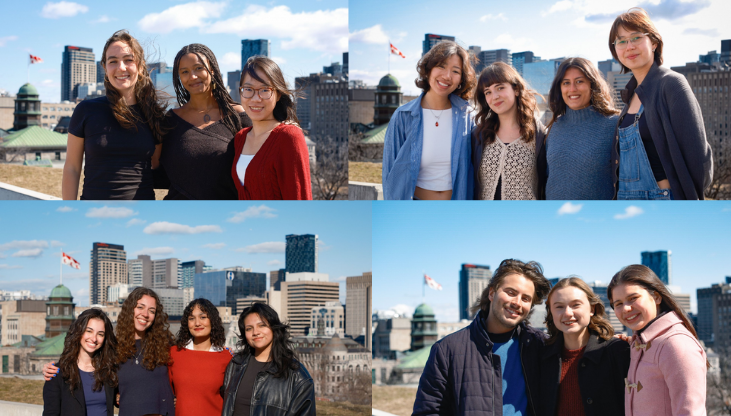
Drea Garcia Avila, Creative Director: During my first year of university in November 2021, my friend off-handedly mentioned that The McGill Tribune was looking for illustrators. What started as a creative outlet led to me becoming a Staff Creative for two weeks, Design Editor for the next three semesters, and, finally, the Creative Director. I watched the paper ground its roots in advocacy and activism, from dropping “McGill” from its name, to adopting an Anti-Oppressive Mandate, covering stories locally and beyond. Our creative community has flourished this year, and I’m incredibly proud and grateful for my years at the paper. While I’m immensely sad to leave, I cannot wait to see what our brilliant team does next year.

Shani Laskin, Managing Editor: Where to begin… My time at The Tribune fundamentally shaped my university experience. I came in as a Staff Writer for News at 18 years old—nervous and unsure of myself. I quickly fell in love with news coverage and journalism, feeling the thrill of chasing a story, listening to people’s experiences, and challenging my assumptions. To me, The Tribune has been an invaluable space for knowledge co-creation; at a university without a journalism program, we become our own teachers. The community at this paper has raised me, and, after nearly four years, I’m happy to know I’m leaving The Trib in incredibly capable hands.

Monique Kasonga, Opinion Editor: Joining the Opinion Section pitch meeting on Zoom in my first year, I never expected to stick around for so long. Four years later, I have learned more than I could have ever imagined. From the guidance of those who were editors before me to the growth I have witnessed in our amazing writers, being a part of this team has been an absolute pleasure. Watching the paper evolve into what it is today has been unforgettable, and I can only hope that the model and mandate The Tribune has established will serve as a reminder, for all publications, of the importance of responsible journalism in the face of injustice. 

Eliza Lee, News Editor: I’m so grateful to have spent the last three years covering campus life, news, and resistance for The Tribune. From Sports Staff Writer to News Editor, each of my roles at the paper has taught me how to better write, think, and care about this community. None of this would have been possible without the guidance and support of The Tribune team. To Editors, Board members, and writers, it has been a privilege to learn from and with you all. Of all the lessons I learned throughout my degree, “curiosity delivers” might be the most memorable. Wow, thanks!

Roberta Du, Web Editor: Since arriving at McGill, I’ve always admired The Tribune—first through my friend Shani, then as I became a weekly reader myself. Hearing about the community drew me in, but being part of it exceeded every expectation. As Web Editor, I didn’t just code and maintain pages and sites; I finally found the courage to write—something I’d always wanted to try but feared. This experience has been transformative. To anyone thinking about joining: Do it. You’ll find purpose, growth, and an incredible group of people. 

K. Coco Zhang, Science & Technology Editor: I couldn’t recall how I first stumbled on the Facebook page of The Tribune’s SciTech section, but it happened sometime in 2022, right around when I realized I needed to look beyond my endless cycle of nutrition textbooks. I was searching for something more fulfilling, something that would nourish my mind and my passion. The Tribune turned out to be exactly that. Looking back now, I couldn’t be more grateful to have become part of this community, where I’ve grown not just as an editor and journalist, but as a person.

Amalia Mairet, Features Editor: I joined The Tribune in my first year at McGill. My time at the newspaper started with a short roundup for the Arts and Entertainment (A&E) section. Since then, I’ve reviewed student plays and new albums, served on the Board of Directors, and, finally, spent a year in Features—the role I’ve been aiming for since the beginning. The Tribune  has let me bring my love of storytelling into student journalism. It’s been a privilege to be trusted with people’s stories and help bring them to life. To everyone who wrote a 2000-word epic with me this year: See? It all came together in the end.

Auxane Bussac, Student Life Editor: When I stumbled across The Trib at Activities Night three semesters ago, I had no idea it would bring such a long-awaited meaning to my university experience. From contributor to Staff Writer to Editor, learning and striving in Student Life was a privilege. My journey has been nothing short of amazing—our newsroom is full of inspiring people who have helped me grow both as a person and as a journalist. I will forever be grateful to this team for teaching me about myself, my peers, and what it means to be a university student who speaks truth to power. Maybe I’ll get a “curiosity delivers” tattoo.

Matt Adelberg, Copy Editor: As Copy Editor, my role is somewhat hidden from the rest of the paper—I’m just one editing pass among many on Production Day. However, for almost the past two years, I’ve had the privilege of reading and having some small part in every piece that’s come off the press. I’d like to give some gratitude from behind the scenes. Thank you to the writers for teaching me about all things McGill for so long; to my fellow editors for giving me a home and embracing my most anal-retentive nitpicks; and to the readers, for taking our earnest attempts at creation and running wild with them.

Kellie Elrick, Arts & Entertainment Editor: My first article at The Tribune was an investigative piece for News. I was terrified, thrilled, feverish, and fascinated. I later began writing for A&E, where I discovered that publishers would send The Tribune books—unpublished ones! That we could read and review! For free! I fell in love with the wonderful events and publications we cover and the lovely, curious community that flourishes at the paper. Though a late Easter means we will be denied the opportunity to publish a long-planned A&E piece on “Things on the rise other than Christ,” I am eternally grateful for my time here and will be eagerly reading The Tribune next year.

Charlotte Hayes, Arts & Entertainment Editor: The first time I attended an A&E pitch meeting, I was sitting in my dorm room, nervously joining a Zoom call with my camera off. Due to pandemic restrictions, I wouldn’t set foot in The Tribune office for almost a year, but even through the screen, I could tell I had stumbled into something special. Since then, the A&E section and The Trib as a whole have become some of the most meaningful parts of my degree. A long line of wildly talented A&E writers and editors have shaped me into the journalist (and person) I am today. I still have no idea how to thank them properly, so I guess this paragraph will have to do.

Anoushka Oke, Sports Editor: The Tribune has been part of my life since I came to McGill in 2021, and it has left a mark on my university experience. From my days as a News Staff Writer to the past couple of years as Sports Editor, this space has helped me grow as a writer and thinker. As somebody who came to McGill during the pandemic, The Tribune offered me a sense of community, and I have made so many friends here. It has been a privilege to witness the paper grow and work alongside so many intelligent and kind people. I will miss all of you dearly, and I can’t wait to see all the amazing things the next Editorial Board accomplishes!

Aliya Singh, Social Media Editor: Having a strong community when you’re miles away from home is a rare gift—and for me, that community has been The Tribune. From the moment I stepped into our office, I was welcomed by some of the brightest, kindest, and funniest people I’ve had the privilege of knowing. These are people who hold knowledge with humility and create space for growth, laughter, and care. As I say goodbye, I’m filled with gratitude—for the conversations, the chaos, and the quiet moments in between. Working on social media gave me a space to balance creativity and connection, and I leave knowing I was part of something deeply special. Thank you, Tribune.

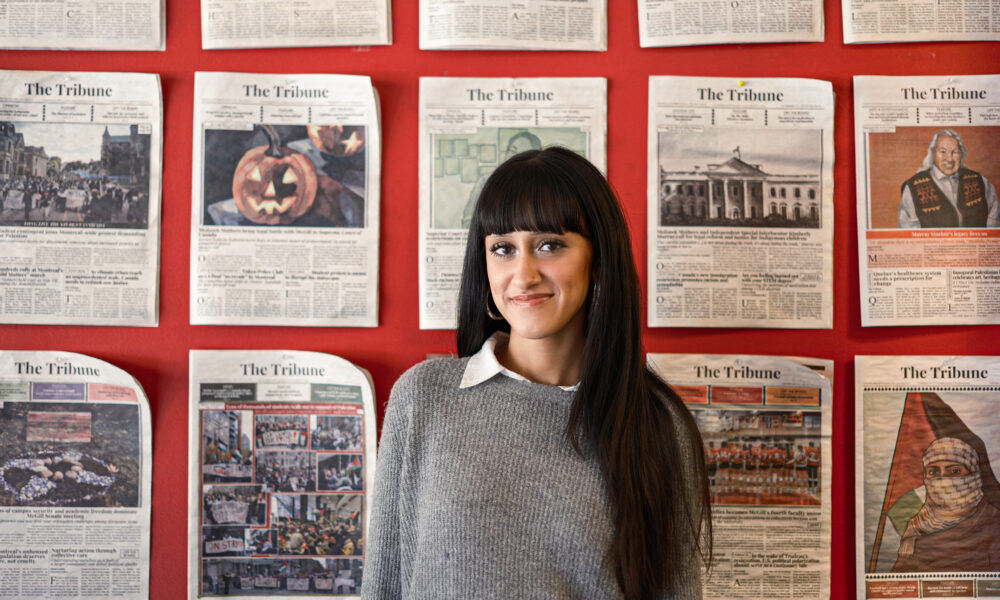
Hannah Nobile, Photo Editor: To every lovely writer and creative I had the pleasure of working with—thank you for welcoming me with open arms. It’s been such a privilege to witness the love, passion, and care poured into every piece that filled our pages. The Tribune has given me the hardest yet sweetest farewell to my time at McGill that I could have ever imagined. And while I’m heartbroken to have to say goodbye, I can’t help but feel immensely excited for every future student who walks through those office doors for the first time. What a journey it will be!


Science & Technology

Concealed identity: How social science research overlooks multiracial participants

For many multiracial individuals, answering a seemingly simple question—“What is your race?”—can be anything but straightforward. Demographic forms, surveys, and research questionnaires often present a narrow list of options. These limited categories, often shaped by researchers’ own biases, can lead to results that may not fully encompass one’s true racial identity. 

In a recent study published in the journal Race and Social Problems, N. Keita Christophe, assistant professor in McGill’s Department of Psychology, explored different ways of collecting demographic information on race in social science research, methods which ultimately inform researchers’ understanding and classifications of multiracial participants in their samples. 

Christophe and his colleagues also compared the participants’ self-reported racial identities to those of their biological parents and found that many multiracial folks identified differently than their parents. These discrepancies challenge widely held assumptions about how race is inherited, perceived, and recorded.

“One would assume that the races I select are a sum of what my biological mother is and my biological father is, right? But what we observed is that that really wasn’t holding true for a really big piece of the sample,” Christophe explained in an interview with The Tribune.

The study came about as a project of The Loving Study Collaborative—a team dedicated to capturing the experiences of multiracial college students. Despite being the quickest-growing populations in the U.S. and Canada, multiracial individuals are still frequently underrepresented—or misrepresented—in social science research. 

“[Multiracial individuals are] really absent from a lot of big-scale data. I think what a lot of people do, both at government levels but also in academic research, is they often might just group people into a specific minority group. So, if I check Black and white and Asian, someone might just put me in the Black category or put me in the Asian category,” Christophe said. “So in a lot of research settings, multiracial people just kind of get erased from science, or they’re in their own group of multiracial people, but that group might be small because of the way they ask the question, so they exclude them from the analyses.” 

Christophe encouraged other researchers to consider that the methods used to ask demographic questions can impose categorization bias on racialized persons, and that changing the wording of these questions can result in different-sized sample groups. 

“Identity is really complex, and there are decisions that go into how people choose to self-identify on forms, and there’s a reason that people aren’t selecting the same groups for themselves as they may select for their parents,” Christophe said. “Maybe they don’t identify with those groups very strongly. Maybe they have a phenotype or physical appearance that doesn’t really match some of the groups they check for their parents, so they’re not checking them themselves.”

Christophe emphasized that the ways in which multiracial folks identify are complicated and evolving. Some might choose to identify with one identity over others, some may identify as a blend of their parents’ races all the time, and some might change their identification based on context. He explained that social science research needs to do more work to accommodate these nuances in identity. 

“There’s not a lot of people doing this work, but I think it’s a population that needs a lot more research,” he said. “Studying risk, resilience, discrimination, health, and well-being in multiracial populations—it’s almost like it’s a very new area. Students and more junior people in the field can actually make big contributions [….] There’s definitely a lot of room to jump in and look at interesting questions and get your voice heard.” 

Science & Technology

Rethinking environmental risk assessment for Indigenous communities

Across Canada, Indigenous communities are grappling with a severe environmental crisis. Approximately 4,500 sites on reserve lands are listed as contaminated in the Canadian Federal Contaminated Sites Inventory, representing 29 per cent of all such sites nationwide. This disproportionate concentration of contaminated sites has resulted in significantly higher exposure to environmental contaminants for Indigenous populations compared to the general population. 

Despite the urgency of this issue, there remains a notable lack of research into holistic, culturally appropriate methods of assessing environmental contamination and its health impacts on Indigenous communities.

In response to this critical gap, Katie Chong, a PhD student in McGill’s Faculty of Agricultural and Environmental Sciences, conducted a study evaluating conventional risk assessment practices across Indigenous communities in Canada. 

Using an anonymous mixed-method survey, Chong gathered insights from 38 stakeholders—including representatives from Indigenous governments, environment and health offices, federal and provincial agencies, and academia—who are actively involved in risk assessment work in Indigenous contexts.

One of the study’s key findings pointed to risk communication—the process of sharing information about potential environmental hazards with stakeholders—as the most challenging aspect of the assessment process. Participants noted particular difficulties in navigating the balance between communicating the risks of consuming contaminated traditional foods and acknowledging these foods’ deep cultural, nutritional, and spiritual significance. 

Nearly all respondents identified time constraints, high costs, and limited resources as moderate to serious barriers in their work. Few respondents were familiar with innovative risk assessment methods, and around three-quarters agreed that current approaches require significant improvement.

Chong’s research also underscores how the disproportionate exposure of Indigenous communities to environmental contaminants is rooted in historical and ongoing environmental racism. 

“Environmental racism is basically a broad term that refers to marginalized and racialized communities being inequitably exposed to or affected by environmental issues, such as contamination or climate change,” Chong said in an interview with The Tribune. “It has been the root of pervasive environmental justice issues both within Canada and globally.”

Beyond health effects, environmental contamination threatens cultural continuity. Of particular concern are species such as the boreal caribou, which are significant to many Indigenous groups, not only as a source of food but as a central figure in ceremonies, stories, and community knowledge. When environmental contamination endangers such species, Indigenous communities risk losing generations of traditional knowledge and cultural identity.

While Canadian federal and provincial environmental policies regulate industrial activities and contaminated site remediation through frameworks like Human Health Risk Assessment (HHRA) and Ecological Risk Assessment (ERA), these conventional approaches often fall short.

“These two frameworks basically quantify how much of a chemical a person or species is exposed to and how toxic that chemical is. This allows us to calculate risk and [inform] decisions on a regulatory level,” Chong explained.

However, these conventional approaches often fail to address the complex and unique risk contexts that many Indigenous communities face. HHRAs, for instance, typically exclude critical exposure scenarios relevant to Indigenous practices, such as participation in ceremonial events or the harvesting and consumption of traditional foods.

The shortcomings of current assessment methods extend beyond their narrow scope. 

“These methods provide a [restricted] definition of health that’s based on contaminant exposure and toxicity, which often fails to [encompass] the much broader and more holistic [understanding] of health that many Indigenous communities hold,” Chong added. 

Moreover, these assessments are time-consuming and resource-intensive, posing a significant barrier given the vast number of contaminated sites and chemicals requiring evaluation.

Moving forward, Chong advocates for the development of more inclusive and culturally grounded assessment approaches. While acknowledging the study’s limitations, including its small scale and the diverse contexts of Indigenous communities across Canada, she emphasized its role as a foundation for future research.

“[This study] supports the need to develop new approaches to risk assessment that are designed for and by Indigenous communities specifically,” Chong noted, highlighting the importance of integrating diverse perspectives and improving cumulative risk assessment techniques.
According to study participants, modernizing risk assessment requires advancing cumulative risk evaluation, enhancing risk communication, and promoting Indigenous leadership and knowledge at every stage of the assessment process.

Science & Technology

Neurostructural correlates of obesity: Evidence for brain-body interactions

A recent study led by Filip Morys, a Research Associate at The Neuro in Montreal under the supervision of Dr. Alain Dagher, explores the bidirectional relationship between obesity and brain function. The findings reveal that weight gain can be both a cause and a consequence of changes in the brain.

“We have this bi-directional model of obesity and brain interactions where changes in the brain can be vulnerability factors for weight gain in younger adults, and in older adults, chronic obesity is actually leading to brain damage,” Morys explained in an interview with The Tribune

In other words, brain structure and function can shape a person’s susceptibility to obesity, while long-term obesity may, in turn, contribute to cognitive decline and other neurological impairments. One key factor in this complex relationship is inflammation. 

“Being obese essentially means that your body is in a constant state of low-grade inflammation because fat tissue produces substances that cause inflammation in the body,” Morys said.

While this chronic inflammatory state is known to contribute to insulin resistance and cardiovascular disease, it also appears to impact brain health. 

The study found that inflammation-related changes in brain structure and function may influence eating behaviour and self-regulation, potentially creating a feedback loop that makes weight management more difficult.

To investigate these brain-body interactions, Morys’ team used non-invasive imaging techniques, including diffusion-weighted imaging, which measures water movement in brain tissue. 

This allowed them to examine differences in brain structure and function among individuals with varying body mass indices (BMI), providing insights into microstructural changes linked to obesity.

“What we’re looking at is not necessarily direct inflammation,” Morys clarified. “We’re doing non-invasive brain imaging, which makes it difficult to definitively say the changes are neuroinflammation.” 

Despite this limitation, their findings suggest that obesity-related brain changes may be linked to inflammatory processes, which can alter cognitive function and decision-making related to food intake.

Individuals with higher BMI also tended to exhibit changes in the brain regions involved in impulse control and reward processing, areas that are critical for regulating eating behaviour. Disruptions in these networks may explain why some people struggle with overeating despite knowing the associated health risks. 

Moreover, decreased connectivity between key brain areas could impair a person’s capacity to manage cravings and choose healthier foods. These findings underscore the complexity of obesity and highlight the importance of addressing cognitive and emotional factors alongside conventional weight management approaches in treatment plans.

For many years, the neurological consequences of obesity were poorly understood; however, research efforts are ramping up. Strategies like cognitive training or anti-inflammatory treatments targeting brain function may help mitigate obesity risk. In older adults, reversing or mitigating brain damage caused by long-term obesity may help slow cognitive decline and improve quality of life.

Looking ahead, Morys hopes to conduct long-term studies to track how brain function and obesity interact over time.

“Ideally, we would love to observe these changes over the course of time, starting with children and following them throughout their entire lifetime to trace how brain changes relate to body mass index and obesity,” Morys said. 

Such research could yield critical insights into the lifelong relationship between brain health and body weight, paving the way for more personalized and effective treatments.

Ultimately, this study supports the idea that obesity is not simply a result of willpower or lifestyle choices, but a multifaceted condition encompassing biological, neurological, and environmental influences. By understanding how the brain influences appetite, behaviour, and metabolism, scientists can develop more holistic interventions that address the root causes of obesity, rather than focusing on its symptoms alone. 

Editorial, Opinion

McGill condemns everything but genocide 

After an academic year marked by Israel’s intensified genocide in Gaza and heightened campus dissent, McGill has not only failed in its responsibility to preserve student safety and educational democracy: It has intensified hostilities by vilifying the Palestinian liberation movement.   

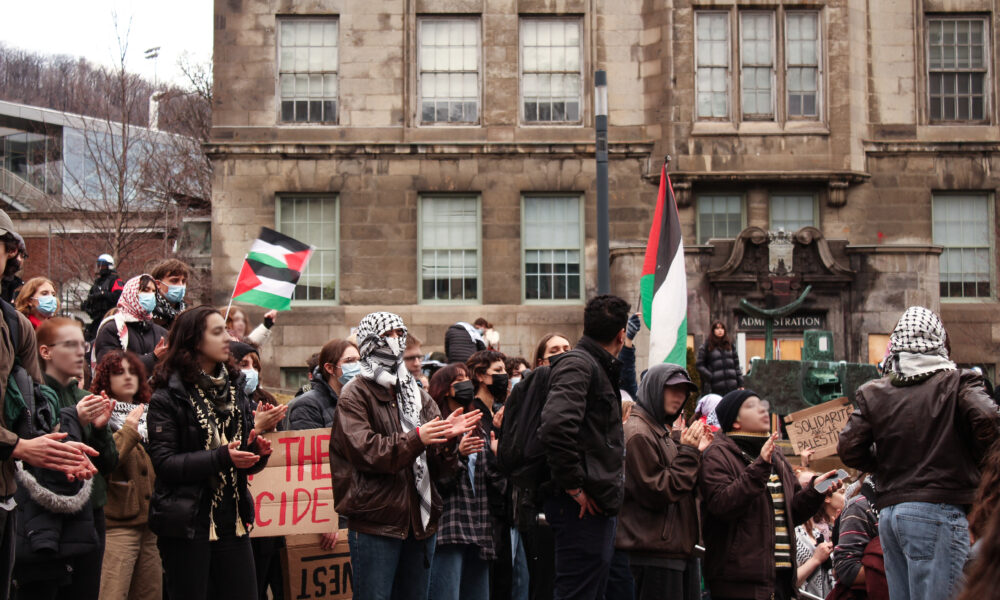
On March 27, a strike motion submitted by two McGill students passed through a Students’ Society of McGill University (SSMU) Special Strike General Assembly. The student body then ratified the motion, which led to a three-day student strike between April 2 and 4. The strike—which called for divestment from weapons manufacturers and Israel, as well as ending disciplinary cases against pro-Palestine student demonstrators—asked union members to avoid class and instead attend daily alternative educational programming, including workshops, teach-ins, film screenings and a rally on April 3. This was the first SSMU-sanctioned student strike since 2004. 

However, as seen since October 2023, the administration’s response to the strike has been repressive, targeted, and violent. This hostility is fueled and maintained by McGill’s increasing police presence on campus and employment of privately hired security forces. McGill does not train these private security officers on the Charter of Students’ Rights, nor does the institution offer students any official channel of complaint against them. The pervasive, unqualified nature of such a security force is enough to induce tension on a psychological level, where students feel that their university, which they pay to attend, considers them criminals or worthy of being treated as such. McGill has neglected its institutional responsibility to foster a safe and open environment; instead, the very security hired to protect students endangers them and results in increasing intimidation and censorship. 

Such unchecked power accommodates violence. While existing to allegedly “ensure a safe environment”, most McGill students do not feel any safer with the oversaturation of security presence on campus. By justifying increased police presence and violence against its students while simultaneously ignoring protestors’ Boycott, Divest, and Sanction demands, McGill demonstrates its negligence of students’ calls to action, democratic free speech, and institutional acknowledgement of its complicity in Israel’s genocide in Gaza.

The strike is a testament to McGill students’ continued mobilization for Palestine in the face of antagonism, repression, and violence from McGill. However, on April 7, McGill announced a Notice of Termination of their Memorandum of Agreement (MoA) with SSMU, due to some protestors who allegedly threatened and intimated students and instructors who still went to class, and injured a McGill staff member with a thrown fire hydrant. McGill can not use this distressing incident to discredit the entire Palestinian liberation movement. 

And the irony is evident. In December, campus security forcibly detained and violently physically assaulted a member of the Association of Graduate Students Employed at McGill (AGSEM) after the member took a picture of a security guard, and the member is yet to receive any response from the university administration regarding recourse. McGill can not condemn an entire movement, especially as it tries to engage in democratic assembly for its cause, due to one violent incident, while simultaneously refusing to condemn or rectify its security’s violence against students. 

The strike itself was motioned in a democratic manner, allowing every SSMU member to express their stance. SSMU encouraged all students to show up and offered a space for alternative opinions. Still, the motion to strike passed. McGill, to tell students that they should not have passed the strike motion in SSMU’s channels as it “further divided a campus community already deeply cleaved and hurting” is to say that students can not make their voice heard if the university thinks it’s too “controversial.” It is to say that students can not mobilize against a genocide, as it may counter the opinions of those who agree with the Israeli regime’s entirely immoral and inhumane apartheid. 

McGill is creating the hostile environment that it claims pro-Palestinian activism perpetuates. The university must uphold democratic avenues of protest. To say that the university’s “goal is not to silence dissent” is not enough—actions must speak louder. It is not lost on protestors that construction emerged on the Y-intersection on the first day of the strike. McGill must stop imposing strategic maneuvers and police violence against its own student body during times of protest.

McGill, open your eyes: Israel is committing genocide. At least have the courage to acknowledge it.

Off the Board, Opinion

The final edit

As you rifle through The Tribune’s final issue, I implore you to consider a heavy, urgent, and tender word: Responsibility. For the past academic year, student revolutionaries took on the responsibility to spearhead movements for Indigenous sovereignty and Palestinian liberation, fought against increasing conservatism and fascism across North America, and resisted rising capitalism and repression. At McGill, we faced a university administration that has increased surveillance, authoritarianism, and suppression of dissent.

Considering these constant revolutions, I ask that you consider your responsibility, and wear it as a badge of honour. Responsibility is your power, not your inconvenience. Responsibility emerges from compassion—a care for someone beyond yourself. It is an act of love to be held accountable for seeking justice for another. I ask that you take on the responsibility of harnessing knowledge of injustice and using it to grow in radicalism. Recall that resistance is a form of love, that knowledge is not neutral, and that silence can never equate to safety. Seek responsibility in protest, in print, in persistence. I ask that in every action you take, every story you digest, every word you speak, you remember your inherent responsibility: To speak truth to power. To resist an oppressive status quo. To fight against colonialism, patriarchy, and white supremacy. 

The Tribune changed my life. I began three years ago as a wide-eyed Staff Writer for the News section, becoming a News Editor the year after. This year, I had the responsibility of leading the largest McGill student paper as its 44th Editor-in-Chief. The weight of that title never sat lightly on my shoulders. The Tribune worked tirelessly to uplift Palestinian students, racialized students, queer students, disabled students, Indigenous students, for every voice the institution tried to erase. We sought to hold our student and university administrators accountable. We sought to teach rigorous and critical journalism as an act of kindness, as an act of education, a pedagogy of truth, and most importantly, as a responsibility. 

Student journalism can not function independently of you, our students. I thank you for your dedication to The Tribune’s goals of fostering trust and transparency. Thank you to our contributors and staff writers, photographers, and illustrators for filling our pages with life. Thank you to our Board of Directors for all your work in keeping our ship afloat, financially and administratively. Finally, thank you to all of our editors for bearing the immense responsibility of pouring your care into our day-to-day collaboration, creating exceptional issues from week to week. I am endlessly grateful. 

As I sit in The Tribune’s board room and construct this letter at midnight of our last production day, I recall the day I moved to Montreal three years ago. My dad drove me up from Toronto. The journey should’ve taken six hours; he made it 16. He never admitted it, but he was trying to prolong the final day he had with his daughter. Tonight, I feel like him. I take my sweet time chatting with my editors as I do not want the final production cycle to conclude. I pause between reading paragraphs and share a funny anecdote. I look up at our wall of past issues, and I don’t just see print. I see all we’ve learned and built together.

This is a space that taught me how to innovate, how to shed fear, and how to master patience. Most importantly, The Tribune taught me responsibility. To keep showing up. To choose justice, even when it’s hard. To know that my words, and silences, shape the world.

And with this, I leave The Tribune. My writers, photographers, illustrators, editors, and readers—I implore you to remember: Revolution should be your daily rhythm, and responsibility, your fundamental commitment. 

—Jasjot Kaur Grewal, Editor-in-Chief

McGill, News, SSMU

Students organize protest, programming, and pickets in historic three-day strike for Palestine

From April 2-4, the Students’ Society of McGill University (SSMU) engaged in a three-day student strike to pressure the university to cut financial and academic ties with the Israeli state. In addition to demands for McGill to divest from and cease partnerships with institutions complicit in Israel’s genocide of Palestinians, the strike called for disciplinary immunity for students advocating for Palestine. This marks the first time since 2004 that the student union has been on strike. 

Students first brought the motion to strike for Palestine to SSMU through a Special General Assembly on March 27. As 679 of the 692 students in attendance voted in its favour, the motion passed and was put to the student union membership for a ratification vote. Seventy-two per cent of voting students cast a “Yes” ballot to ratify the motion. 

Organizers encouraged students to participate in strike programming activities instead of attending classes, including educational activities such as film screenings, teach-ins, and workshops. 

Tuesday, April 1, 5:00 p.m.: McGill affirms that academic activities will continue during the strike

A day before the strike, Provost and Executive Vice-President (Academic) Christopher Manfredi released an email statement noting that the university would continue to hold scheduled academic activities such as classes and labs amid the strike. 

“Students who choose to participate in the strike will not be entitled to academic accommodations for missed coursework,” Manfredi wrote. “Instructors should refrain from using class time or university resources (e.g., myCourses) to promote strike-related activities.” 

Manfredi acknowledged students’ rights to assembly but affirmed that strikers could not obstruct university activities.

Tuesday, April 1, 2:00 p.m.: SPHR launches form to report non-cancelled classes

On April 1, Students for Palestine’s Honour and Resistance (SPHR) at McGill released a “Report Your Non-Compliant Prof” Google Form that allowed students to anonymously report the date, time, and location of any of their uncancelled classes. No field in the form requested professors’ names. The form’s header advised students to first reach out to their professors and ask that they cancel classes before turning to the form.

Wednesday, April 2, 3:00 p.m.: McGill and SSMU issue statements calling for peaceful and voluntary strike

In an email to staff and students on April 2, Angela Campbell, Interim Deputy Provost, Student Life and Learning, released a statement condemning SPHR’s online form. Campbell alleged the form violated McGill’s policies, including the Code of Student Conduct and Disciplinary Procedures. 

“Some instructors are concerned that if they are ‘reported’ their classes will be obstructed, and they and their students will be harassed, by protesters over the coming days,” Campbell wrote. “Such an intimidation tactic is totally unethical, unacceptable, and damaging to our community.”

SSMU echoed the McGill administration’s stance in a statement released on the afternoon of April 2 via their official Instagram page. They criticized “a petition circulating online which asks students to report on professors who choose to hold class during the strike,” likely referring to SPHR’s form. They condemned the petition as “promoting actions contrary to a peaceful strike” and called for non-confrontational, voluntary acts of protest.

When asked about SSMU’s statement, a representative from SPHR who wished to remain unnamed told The Tribune that the student union should represent the democratic will of the student body by calling on professors to comply with the strike.

“Since this is a strike that SSMU is upholding, […] SSMU should be demanding professors to accommodate students who are striking,” the representative said.

SSMU President Dymetri Taylor confirmed in an interview that the student union’s Instagram post did not go through the student union’s Legislative Council or Board of Directors, as is standard procedure. Taylor stated that the message was pushed out quickly to affirm SSMU’s adherence to its Constitution

“It was simply the SSMU following through with its messaging [….] That way, [SSMU] couldn’t be held responsible for the actions of other groups that don’t actually have association with the SSMU,” Taylor told The Tribune.

Taylor noted there is precedent for circumventing proper regulatory channels due to limited time to approve such messages.

“As an example, the statement on the first declaration of the strike motion didn’t go through any of those bodies, either,” said Taylor. 

SSMU Vice President of University Affairs Abe Berglas reported in a written statement to The Tribune that they did not have a chance to read or approve the message before it was released. 

“For a statement to be signed by SSMU executives/executive committee, every executive’s consent is needed.” Berglas wrote. “For a statement signed by [Legislative Council] or [Board of Directors], there needs to be a motion to that effect.”

Berglas affirmed they intend to advocate for and support students facing disciplinary action related to the strike, “regardless of how their form of protest conforms with the Code of Student Conduct.” 

Wednesday, April 2, 4:30 p.m.: SPHR and AGSEM host “Strike Lessons and Palestine” workshop

Organizers held 10 strike programming events on campus across the three days, including a student rally, national march, and fundraiser for Palestinian Liberation. The Association of Graduate Students Employed at McGill (AGSEM) and SPHR co-hosted “Strike Lessons and Palestine” on April 2, a workshop teaching attendees how to use different strike techniques to effectively negotiate and mobilize. The event speaker, who wished to remain anonymous, shared tactics AGSEM’s Unit 1 (which represents teaching assistants) employed during their three-week strike in 2024. 

Rama Al-Malah, a representative of SPHR and co-organizer of the workshop, stated that for the last two years, the student movement for Palestine has been growing, as evidenced by the strike vote passing with a majority. 

“We’ve never seen the student body this united and galvanized, but also agitated,” Al-Malah said. “We’ve seen students take up pickets against their own classes. We’ve seen professors cancel classes in solidarity. So, we’re seeing this strike pick up and reverberate across campus.” 

The AGSEM speaker first emphasized that trust in the union and one’s peers is key to a strike’s ongoing success. They highlighted picketing as a core method students can use to ensure others feel safe participating in a strike, as discouraging students from attending class provides those already striking protection from academic punishment. 

The speaker argued that union members must be eager to participate in a strike, otherwise, negotiations are more likely to stall. They outlined that events such as workshops, like the speaker’s own, should be organized by a striking union to remind its members that strikes are an effective method of mobilization. 

The speaker told The Tribune that the most important thing students can do during this strike is “know [their] rights, and don’t be afraid to stand up for what [they] believe in.”

Thursday, April 3, 2:00 p.m.: Student protestors smash window to Dean of Engineering’s Office, demand an end to academic ties to weapons manufacturing 

Around 150 students gathered outside of the University Centre for a rally as part of strike programming, chanting, “Disclose, divest, we will not stop, we will not rest.” After about 20 minutes, the rally moved inside the Macdonald Engineering Building. The group traveled upstairs to the office of the Dean of Engineering, Viviane Yargeau, where a protestor threw a fire extinguisher filled with red through the glass door of the Dean’s office. Reportedly, paint sprayed from out of the extinguisher, hitting one staff member inside the office. The rally then moved outside the James Administration Building, where speakers alleged that research from Engineering labs at McGill contribute to the manufacturing of missiles and bombs used in the genocide in Gaza. 

“The purpose of the rally is to reaffirm and reiterate the student demands for divestment and the strike for divestment. There won’t be any classes during genocide,” another SPHR representative, who wished to be unnamed, said at the demonstration. “The strike will set a precedent and is part of the long-term campaign for divestment.”

Around 3 p.m., the rally traveled down rue University and ended outside the Roddick Gates. A large police presence surrounded the rally for the entire duration of the event. 

“Based on the huge numbers of police, I think the main takeaway [from the rally] is that the administration is incredibly scared of the power of the students [….] You’ve probably got more cops than students at this rally,” one McGill student in attendance told The Tribune

Friday, April 4: McGill requires McGill IDs to enter buildings

On the evening of April 3, McGill announced via email that students would need to provide their university ID cards to access campus buildings on April 4. 

“Our goal is to protect the rights of our students who want unobstructed access to their classes, labs and study spaces,” McGill’s Media Relations Office (MRO) wrote in a statement to The Tribune. “We hope that a day of card access to our buildings will limit the ability of non-McGill protesters to disrupt the core academic activities, to which all of our university community members have a right.”

In a written statement, a representative of SPHR criticized McGill’s choice to increase security on campus as a surveillance tactic. However, the representative maintained that the final day of strike activities went as planned despite this increase in security.

“On Friday we saw programming for Palestine come to an end with a fundraising bazaar and classes being picketed, a […] strike strategy that campus has seen before with law faculty strikes and TA strikes,” tThe representative wrote. “The student movement will never be deterred by these tactics.”

McGill, News, SSMU

McGill announces intent to end contractual agreement with SSMU, taking parties to mediation

On the afternoon of April 7, the McGill community received an email on behalf of Interim Deputy Provost (Student Life and Learning) Angela Campbell with the subject line “Termination of the SSMU-McGill Memorandum of Agreement.” The email—which condemned the Students’ Society of McGill University’s (SSMU) student strike the week before—outlined that the University sought to end the Memorandum of Agreement (MoA) with SSMU, the document that governs the relationship between the parties. Per the MoA, this means that SSMU and McGill will enter a mediation process, during which the Agreement, and thus SSMU operations, will remain in effect. 

Following a SSMU Special General Assembly (SGA) on March 27, 2,731 students voted to ratify a strike for Palestine from April 2-4. Throughout the three days, organizers picketed classrooms, offered educational programming, and hosted a student rally on April 5. During the rally, a protestor smashed the window of Dean of Engineering Viviane Yargeau’s office with a fire extinguisher filled with paint. Campbell wrote that a staff member was hit. In addition, protestors successfully cancelled certain classes as a result of picketing. Campbell denounced these actions as a “[violation of] our collective values.”

“Last week, SSMU allowed and, at least tacitly, supported a three-day strike that further divided a campus community already deeply cleaved and hurting,” Campbell wrote in the email. “The SSMU can and should have ruled the motion that led to the strike referendum as out of order given SSMU’s governing documents, but opted against this. The result was a campus environment in which dozens of classes were blocked or interrupted.”

Students for Palestine’s Honour and Resistance (SPHR) at McGill, one of the groups involved in organizing programming, expressed what they believed to be the reason for McGill’s response in a statement to The Tribune

“McGill has once again attacked the Pro-Palestine student movement, threatening to crack down on our democratic channels,” SPHR wrote. “This newest threat is a reaction to pressure from zionist donors and our warmongering political class, who are desperate to regain control of a student body that stands with Palestine in its struggle for liberation. As always, repression sharpens the contours of the student movement. We call on our union to stand firmly with Palestine and our democratically enforced demand for divestment.”

Under section 16 of the MoA, McGill and SSMU must now enter mediation to attempt to reach a resolution. This process is estimated to last until June. If the parties do not reach an agreement, SSMU’s operations would not cease but would be severely impacted. Primarily, SSMU’s lease of the University Centre would be terminated meaning services, clubs, and independent student groups would lose access to those spaces, and Gerts Bar & Café would close. The student union and associated student groups would also no longer be able to operate using the McGill name. SSMU would still be able to receive student fees, however, allowing it to operate in an adjusted capacity.

This is not the first time in recent years that McGill has considered termination of the MoA due to SSMU’s activities. In 2022, the university made a similar announcement following a referendum vote that approved the Palestine Solidarity Policy with a 71 per cent majority of votes. In an interview with The Tribune, SSMU President Dymetri Taylor noted that McGill’s response was a culmination of what the administration perceived to be SSMU’s repeated violations of the MoA.

“It has to do with the strike, and it also doesn’t, because this is something that’s kind of been brewing for quite some time,” Taylor said.

Taylor affirmed that until mediation between the two parties is completed, all SSMU operations will continue to run.

“Everybody will more or less know when they come back in September, what’s actually been affected. Everything will be running as it originally was. There’s not going to be any changed operations. Employees […] are still very much employees. Insurance is still going on, bookings are still valid, nothing’s changed [….] everything is operating as usual,” Taylor said.
McGill denied The Tribune’s request for further comment.

Behind the Bench, Sports

Protecting trans children’s right to sport is everyone’s responsibility

Since the start of Trump’s second term, the U.S. has seen a slew of executive orders, policies, and lawsuits attacking a fundamental right for transgender youth—the ability to play sports. Last week alone, the U.S. Department of Agriculture froze funds to educational programs in Maine due to the state’s support of trans athletes, the Nevada Interscholastic Activates Association ruled it would no longer allow trans girls to play on women’s high school sports teams, and a similar proposed ban in Washington gained support from Congressman Dan Newhouse

Prejudiced policy directed toward trans youth is not just an American issue though; in 2024, Alberta Premier Danielle Smith announced a series of policy resolutions which included banning or severely limiting trans women and girls’ access to sports and even prohibiting puberty blockers for trans youth. Amid this onslaught, it is crucial that the rights of trans children to play sports be taken seriously by all.

The Olympic Charter outlines access to play sports as a human right. For children, sports provide numerous physical, emotional, and social advantages that such policies aim to strip away. For trans kids—many of whom face harm from others for their gender identity—participation in sports can be invaluable in terms of self-esteem and academic performance. A study from the Human Rights Campaign Foundation and the University of Connecticut found that trans high schoolers who played sports experienced lower levels of depression and earned higher grades. Forcing them out of one of the most prominent public spaces is not just a cruel erasure—it is deeply dangerous.

Arguments in favour of banning trans kids from sports often insist on the right to fair play for cisgender girls—in the American context, this means the persistent invocation of Title IX, a federal civil rights law that prohibits sex-based discrimination in educational programs, including school sports. These arguments ignore that there is no compelling empirical evidence that trans girls have a biological advantage in sports. Further, sports are otherwise unfair due to a plethora of biological or socioeconomic factors. An athlete can have a competitive advantage by being taller, having higher endurance, or being able to afford extra training, regardless of gender. 

The twisting of Title IX is a bad-faith argument, veiling bigotry with a self-righteous call for girls’ rights. If the self-proclaimed proponents of Title IX really cared about girls’ well-being, they would care about all girls. If it was really about girls’ safety, they would be talking about the factors that lead girls to drop out of sports, such as social stigma, ubiquitous misogyny, and the scrutiny of women’s bodies. This selective advocacy shows that it has never been about cisgender girls and women; it is about pushing an agenda of what they believe gender should look like. Trans peoples’ participation in sports is an easy target for conservatives because it attacks a small minority in one of the largest public arenas—an incredibly gendered one, no less.

Banning trans kids from sports opens the door to even more discriminatory policy, sidelining, and erasing any deviation from a strict gender binary. This should be seen not just as an attack on the trans community but also as an assault on all kinds of free gender expression.

When it comes to combatting these heinous measures, it must be all hands on deck. Of the roughly 300,000 trans kids aged 13 to 17, two-thirds live in states that have enacted laws restricting their access to play. The scale of these policies is enormous and expanding each week. Cisgender allies must recognize that these policies threaten the well-being of children. Protecting the next generation is the biggest responsibility of all.

Campus Spotlight, Student Life

Celebrating Sikh Heritage Month at McGill

April is officially recognized as Sikh Heritage Month in Canada. It is a time to reflect, acknowledge, and celebrate Sikh history, values, and contributions to Canadian society.

The McGill Sikh Students’ Association (MSSA) supports students through cultural, academic, social, and spiritual events. They welcome both Sikh and non-Sikh students, with diversity and meaningful dialogue at the core of the club’s values. 

Throughout April, MSSA holds a series of events, beginning with the Kirtan Samagan on April 2. It included devotional singing and a community meal, in collaboration with McGill’s Office of Religious and Spiritual Life (MORSL). On April 7, MSSA screened The Battle of Amritsar, a documentary that examines the 1984 Operation Blue Star, when the Indian Army launched a coordinated assault on the Golden Temple Amritsar, targeting Sikhs. 

Harsimran Singh Kapoor, President of MSSA, emphasized the importance of dedicated spaces that allow students from specific communities to celebrate their identities openly and proudly. These spaces are not limited to celebration, they are also about dismantling misconceptions and negative stereotypes.

“Representation gives students a voice and space to safely express their identity, values, and faith. It helps build awareness and challenge stereotypes, especially around visible articles of faith like the Dastaar (turban) and Kara (iron bracelet), which are often misunderstood,” Kapoor wrote to The Tribune. “Having a strong representation not only supports current students but also inspires future generations to lead, serve, and contribute to an inclusive and culturally aware campus.”

Kapoor also emphasized the responsibility students have in gathering and creating avenues to represent their community on campus in a written statement to The Tribune.

“Students do have a role in sharing their culture on campus. Universities are spaces of learning, diversity, and dialogue, and representation matters. When students share their heritage, it helps break stereotypes, builds understanding, and inclusivity. It also gives students a sense of belonging, making them feel seen and valued [….] Hosting celebrations, like Sikh Heritage Month, not only educates others but also allows students to connect with their own roots,” Kapoor wrote.

However, students should not be the only ones bearing the responsibility of raising awareness and educating their peers. Educational institutions such as McGill are key actors that play a crucial role in creating welcoming, safe, and inclusive spaces for students to thrive. 

“MSSA plays a key role in representing Sikh students at McGill, but we don’t see ourselves as their sole voice,” Kapoor wrote. “Our goal is to provide a platform where Sikh students feel seen, supported, and heard. However, true representation requires a collective effort, from students, faculty, and the university itself. The university can support us by recognizing and promoting cultural diversity and providing spaces and resources for our initiatives.”

Kapoor also highlighted McGill’s responsibility to increase inclusiveness on campus, especially considering Quebec’s expansion of Bill 21, which bans public employees from wearing visible religious symbols.

“Given the ongoing discussions on secularism and visible faith symbols in Quebec, it’s important that McGill continues to actively foster an environment that supports religious diversity, ensuring that students feel safe and respected in expressing their faith,” he added.

MSSA has many more events lined up—both during April and all year-round—creating continued opportunities for students to learn, engage, and reflect on Sikh heritage. A keynote speech titled “Wrapped in Faith: The Sikh Turban and the Fabric of Canada” is scheduled for April 10, with Senator Baltej Singh Dhillon—a community leader and lifelong advocate for diversity and inclusion—as the speaker. Weekly Simran sessions at MORSL are also on the agenda, providing students with an opportunity to take a break from academic stress and a space to connect spiritually.

MSSA’s events are informative, free, and accessible, underlining its commitment to creating a sense of community and belonging for Sikh students on campus. 

Read the latest issue

Read the latest issue