
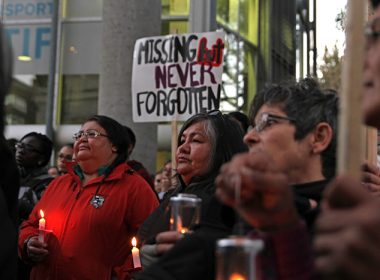
On Oct. 4, hundreds of Montrealers gathered to walk in solidarity at the 11th Annual March for Missing and Murdered Indigenous Women. The march was hosted by Montreal’s Centre for Gender Advocacy in conjunction with its Missing Justice Collective. A total distance of 1.7 kilometres was covered, starting from Place[Read More…]
Latest News

Bartender Kevin Demers offers high concept cocktails in a relaxed environment at the Cold Room
Down a twisting back alley on the corner of St-Amable and St-Vincent in the Old Port, there is an unmarked door. Above it hangs a blue ‘Sortie’ sign, and, next to it, a little doorbell. This is the entrance to the Cold Room bar, opened Sept. 24. Owner Kevin Demers[Read More…]
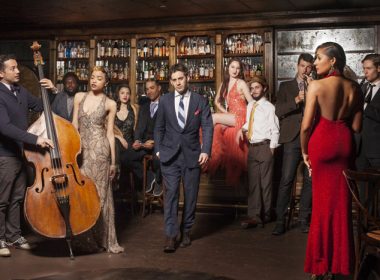
Modern made vintage: A conversation with Adam Kubota of Postmodern Jukebox
As described in a 2015 interview with the group’s founder Scott Bradlee, the New York-based musical collective Postmodern Jukebox “puts pop music in a time machine.” Led by Scott Bradlee and joined by a host of talented performers, Postmodern Jukebox has gained popularity over the past few years by releasing[Read More…]
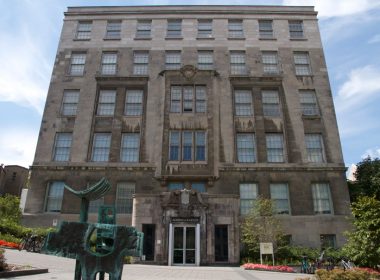
Board of Governors adjourns after interruption by Divest McGill
On Oct. 6, the McGill Board of Governors (BoG) held its monthly meeting, during which they heard an update from Principal Suzanne Fortier on her recent activities and a presentation from the Students’ Society of McGill University (SSMU) executives outlining information about their organization. The meeting was interrupted by members[Read More…]

From dank to dark: The power of the meme
The Second Presidential Debate on Oct. 9 came and passed, delivering the onslaught of ridiculousness that the world was expecting. Unexpected, though, was the individual who truly stole the show—Illinois voter Kenneth Bone. Within seconds of addressing the candidates with his question, Bone’s face and iconic red sweater had been[Read More…]
Ask Ainsley: How do I have an orgasm?
Dear Ainsley, I’m a cisgender, straight female and a first-year student at McGill. So far, I’m loving Rez, school, and all the friends I’m meeting, but there’s something that’s been bothering me. In high school, I briefly had a boyfriend, with whom I had sex. Since then, I’ve had a[Read More…]
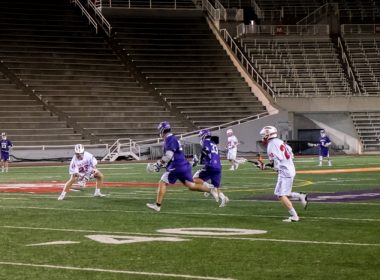
McGill Redmen Lacrosse clinches victory after three quarters of gridlock
A close, high-scoring match was to be expected on Thursday Sept. 6 as the McGill Redmen (7-1) once again took the field against the Bishop’s Gaiters (3-5). The fourth quarter of the match broke a three-quarter stalemate as the Redmen took the game 14-9 to improve their winning streak to five.[Read More…]

A walk through the The Gardens of Light Festival at Montreal’s Botanical Gardens
One of the best places in Montreal to be at dusk this month is the Botanical Gardens. Every evening as it gets dark, the gardens light up with hundreds of lanterns and colours, marking another year of the Gardens of Light Lantern Festival. Upon first step in the Gardens, apart[Read More…]

Album Review: Bon Iver – 22, A Million
Five years ago, Bon Iver released their self-titled EP to much critical acclaim. The album had stretched the boundaries of folk music, bringing an expansive tenor to a typically stripped down genre, and becoming a modern classic album in the process. Since then, Bon Iver’s[Read More…]

T.V. Review: Creator Donald Glover expertly navigates comedy and drama in Atlanta
In an era where there is more television available to us than we could ever consume, the medium of T.V. is undergoing a change—and hopefully one for the better. FX President John Landgraf stated last year that we are living in a period of “peak TV” in the West. Given[Read More…]