Latest News

Broad City
a, Arts & Entertainment, Film and TV

Pop Rhetoric: A love letter to Broad City

A new saying has been circulating among my friends after a failed night out or an especially quirky encounter with a stranger: Having a ‘Broad City moment.' This connotes a mantra, a lifestyle—a way to bask in the sheer ridiculousness that is everyday life as a young ‘adult.’  

The description is inspired by Comedy Central’s hit television show, Broad City, which returned for its third season this February. Created by Ilana Glazer and Abbi Jacobson, the show depicts them as heightened versions of themselves. Ilana is an open-minded pothead who is more concerned with sexually exploring every race, gender, and size, rather than her job as a sales agent for a company called Deals, Deals, Deals. Abbi is an awkward fine arts graduate, who works during the day as a cleaner at a luxury gym called Soulstice (pronounced Soul-steece), while also trying to make it as an illustrator. On paper it could seem as if the show is a classic comedy duo where Abbi is the ‘straight man’ who sets up jokes for the eccentric Ilana. In reality, both characters hold their own in terms of respective unique, weird, and funny attributes and habits. Abbi, for example, becomes ‘all caps Abbi’ during competitive games. In a recent episode, the show flashes to a childhood video of her beating and biting a fellow students during a friendly game of Red Rover.

The show has been praised by TV critics for many elements, but primarily for its depiction of a more accurate portrait of New York in comparison to shows like Friends or Girls. It features a multicultural, fast-paced, overwhelming, scary, exciting, and dirty city filled with characters like men who dress-up as trees and jump out at passersby, or aggressive pregnant women who run cult-like food co-ops. Similarly, critics have lavished the show with feminist praise for showing two women having good, bad, and weird sex without shame or regret, always laughing about it with each other, and finding comfort in each other’s mistakes and friendship. 

The show subtly draws the humour out of the absurdities of what is cool or trendy, such as posh and snobby fitness centres or stuck-up hipsters who wear purple lipstick and work at Beacon’s Closet. The show doesn’t make a fuss about its diverse cast, like Ilana’s ‘sex friend’ Lincoln, a nerdy black dentist, or Jaimé, a Venezuelan immigrant and Ilana’s sweet, gay, drug-dealing roommate. These characters aren’t put on display as statements about representation in entertainment, but are casually intertwined in the stories narratives; their unique characteristics are embraced in the same way as those of Ilana and Abbi. 

But there’s something more to the magic of Broad City than its humorous portrayal of two Jewish girls struggling in New York City with shitty apartments and shitty jobs—something beyond the corny motto that when life gets you down, your friends build you back up. In fact, it’s the reality that the two characters don’t let much get them down. 

Abbi and Ilana approach each day with an intoxicatingly blind optimism. Abbi is excited when her first art piece is shown in a ‘gallery,’ which later turns out to be a sandwich shop. For an episode, she becomes obsessed with a guy at a bar who calls her hot: “I’m cute, but you know, you get the point,” she says. After a worker at Beacon’s Closet brushes the two of them off, Ilana genuinely proclaims: “Well, we remember you, because your hair and lipstick looks cute.” When Abbi and Ilana walk into a trendy, snobby, rooftop party, Ilana unabashedly claims that the two of them “are the sexiest girls here, cause we have the fattest asses there, you know?” While you may laugh at their responses, you can't help but appreciate their unapologetic embrace of who they are and what they stand for.

The show approaches uncomfortable or rude moments with positivity and joy. It’s not just the fact that the duo does not look or act like other depictions of millennials on TV—they wear the only expensive outfit they own to any fancy event, and hang out in dirty, cramped apartments—but Broad City’s charm lies in an honest portrayal of  simply doing the best with what you’ve got, and having fun while doing so. In essence, that is what makes the show relatable and hilarious. 

For my friends and I, having a ‘Broad City moment’ is therefore a way to celebrate finding humour in the wake of moments of disappointment or awkwardness, and keeping this spirit alive as we navigate the ups and downs of young adult life—just as Abbi and Ilana would. 

Science & Technology, Student Research

What’s it like getting a chemistry PhD?

“I can’t sleep some nights if I’m thinking about a model,” Rob Harkness said, laughing.

Though easy to misinterpret, Harkness, a chemistry PhD student from the Mittermaier lab—who study biological systems primarily using calorimetry and NMR—is in fact talking about science. 

“I’ve woken up some nights to text my supervisor, ‘Is it this?’” he explained.

Evidently, those involved in a PhD program clearly exude a passion for science.

“You’ve gotta love it,” Yasser Gidi, a PhD student from the Cosa lab—whose focus is on chemical imaging—said. “[Otherwise,] you’re wasting your time.”

Although there is no shortage of talents outside of the lab—Gidi spent a single day last summer cycling around the island of Montreal, describing it modestly as “a challenge”—it’s clear that it’s science, more often than not, that gets them out of bed in the morning. 

Entering a program with neither a predictable outcome nor a guarantee of success can be daunting for graduates used to a largely textbook-based education. But learning to be okay with being wrong, and having the space to be wrong as many times as it takes offers a freedom that’s rare in academia. A PhD can be a refreshing change from the memorize, regurgitate, repeat mentality of an undergraduate degree.

“Doing a PhD is nice if you’re looking to solve problems,” Harkness said. “You constantly have to figure stuff out on your own. It’s about developing ways to get the information, not just about the information itself.” 

A PhD is like a puzzle. It’s as valuable to learn how best to slot pieces together as it is to achieve the final picture. One of the main attractions of a PhD, the students explained, was the independence offered; in particular, the opportunity to come across an avenue you want to pursue, to change direction, and pursue it. 

“My initial project is nothing like my current project,” Viktorija Glembockytė, a PhD student from the Cosa lab explained. “It’s a very dynamic process: You change your ideas a lot.” 

Viktorija Glembockytė is a student in the Cosa lab.  (Noah Sutton / McGill Tribune)
Viktorija Glembockytė is a student in the Cosa lab. (Noah Sutton / McGill Tribune)

This freedom is a heady thing. The lack of a nine-to-five structure, required classes, or general university attendance requires impressive self-discipline. Research involves a lot of trial and error—albeit educated trial and minimized error, Justin Di Trani, a PhD student from the Mittermaier lab explained—and it’s essential to be prepared for long nights and weeks of frustration. The love of science can only get you so far, however, without a combination of effort and sheer luck, it’s not always enough. 

“People do quit because stuff’s not working and they can’t see the end,” Harkness explained.

A big part of the PhD life is dictated by the number of hours one is willing to put in. Di Trani’s record for latest night in the lab is 3 a.m. And that doesn’t even guarantee results.

“There [are] days when you just do nothing and the experiments come out beautifully, and you’re like, What did I do right?” Di Trani explained. “You just don’t question it.” 

Each student speaks of the same thing: The devastation when nothing will go right, and the elation when, out of the blue, something finally does. But doing a PhD gives you skills useful outside as well as inside the lab. This includes things like patience, determination, and the capacity to see a failure not as the end of the road but as the starting point for 10 more.

“It takes months or years of doing that same experiment over and over to refine it down to the processes you see in textbooks,” Di Trani explained.

And to achieve that level, a student must have an incredible amount of self-control.

“It’s probably the first time in my life that I’ve had to learn what a healthy work-life balance is,” Glembockytė said.

Ninety per cent of the time, Gidi explained, the work can be frustrating. But the remaining 10 per cent? 

“It’s worth the struggle,” Gidi said. “The satisfaction is even greater.”

Yasser Gidi is a student in the Cosa lab. (Noah Sutton / McGill Tribune)

 For any skeptics, it’s clear that this isn’t just talk. Glembockytė’s work enables her to watch individual molecules using a microscope and a specialized camera. They look like tiny stars dotting a wide sky. The chance to actively participate in that level of science firsthand is only achievable when a person is studying for a PhD.

The divisions between different branches of science, so firmly established at high school and undergraduate level, gradually lessen as the level increases. The Cosa lab’s work, for example, draws from chemistry, physics and biology, although its students might only have had specific training in one or two of those fields prior to their PhD. Although a PhD isn’t a collaborative process, every finding could prove useful to someone else in the lab; the atmosphere can feel a little like a think tank, especially with a supervisor who encourages discussing projects and juggling ideas. And the competition isn’t as fierce as some would imagine.

“Everyone at this level’s pretty intelligent; so at this point, what makes you different is how much you work,” Harkness said. “I feel most of the [competitive pressure] from myself.”

As for life after PhD, most haven’t really thought about it. Nevertheless, all must ultimately deal with their defence—the culmination of a PhD, where the student’s thesis is interrogated by a panel of professors.

“I’ve never heard of anybody failing a defence,” Di Trani said. “I haven’t really thought about it. I’m just not going to think about it.” 

Looking back to their undergraduate days, there’s one, resounding piece of advice for aspiring PhD students: Work in a lab first. 

“That was when I realized, this is fun for me,” Harkness said. “I wanted to do something where I could actually figure stuff out.”

All of the students interviewed seemed inspired from their work. They all had a sentiment that could only come from discovery.

“When you discover something, and you know you’re the only person [who] knows that—that’s one of the most exciting parts about research,” Gidi said. 

This sentiment was echoed by Harkness. 

“Everyone at this level’s pretty intelligent; so at this point, what makes you different is how much you work,” Harkness said. “I feel most of the [competitive pressure] from myself.”

“You’re figuring out how the universe works, how it behaves,” he explained. “It’s cool.”

A perhaps unexpected perk of being a PhD student is holding expertise in such a narrow field.

“[It’s cool being] able to hold intellectual conversations on a very specific topic that maybe 10 people in the world care about,” Glembockytė said. 

Not only that, the impact is mutual; some of the experimental techniques developed by PhD students, if effective, will continue to be used by that lab in the future. 

“When I leave I’ll be able to say, My lab does this now because of the research that I did,” Harkness said. 

That alone seems like something to be proud of.

Rob Harkness and Justin Di Trani from the Mittermaier lab, study the thermodynamics and kinetics of biological systems using NMR, calorimetry, and physical chemical theory. Viktorija Glembockytė and Yasser Gidi from the Cosa lab study single molecule spectroscopy and visualisation with a view to the study and development of nanomaterials. 

a, Student Life

Easy-to-plan weekend getaways from Montreal

Considering Montreal’s annual post-winter thaw has come early this year, now is the right time to think about weekend getaways. With spring around the corner and temperatures creeping above 10 degrees, a warm March trip is sounding more and more like a good idea. Chances are, a travel-hungry, undergraduate student in the middle of second semester probably hasn’t saved up a huge trip budget. That being said, there are plenty of cost-effective options for exciting trips to take from Montreal that won’t break the bank. With low-budget transportation, cheap accommodation, and student-friendly activities, you can plan your own inexpensive weekend trip that will leave your friends commenting on your Instagrams that they have “FOMO.” For those not ‘vehicularly blessed,’ don’t fret—there are options.

Ottawa: 

Okay, before you skip to the next option, hear this one out. It can’t be claimed that the nation’s capital is the coolest city in Canada, or that Ottawa is a sprawling, cosmopolitan metropolis teeming with culture—but people who tell you that there’s nothing to see here are just plain wrong. 

First, go check out Parliament Hill. Even if you’re not into politics or Canadian history, you might be pleasantly surprised. Most importantly, tours are free. Next, check out the National Gallery or the War Museum (student discounts!) for your culture fix. Open-air activities, like a stroll along the Rideau Canal or a walk through ByWard Market, allow you to take in the sights while still enjoying the weather. Another recommendation for the culturally-inclined is House of TARG. This live music venue/arcade hall is a popular choice among university students and locals alike. For accommodation, go with Airbnb and stay in Sandy Hill, a big student area, or The Glebe, bustling shops, pubs and restaurants. Otherwise, decent hostels start at around $30 per night.

In terms of transportation, start with rideshares. Check out the McGill Carpooling/Rideshares group—it’s nice knowing that you’ll be traveling with fellow students. If there are no lifts there, try a larger, more targeted network of ridesharers with the Carpool Toronto-Ottawa-Montreal-Sherbrooke-Quebec-co-voiturage. If you’re not comfortable catching a ride with strangers, Ottawa is only two hours away by train. Via Escape fares start as low as $33 one way, or you can check its site on 'Discount Tuesdays' between 7 a.m. and midnight for deals. You can also go the bus route and take the Greyhound; one way is two and a half hours and costs about $20 if booked in advance. 

Quebec City: 

If you really want to get a sense of Quebec’s rich history, this is the place for you; think Montreal, but older and more charming. As one of Canada’s oldest cities, Quebec City has plenty of European colonial architecture. You can visit Old Quebec which has a similar aesthetic to Montreal’s Old Port, and marvel at centuries-old stone buildings. Go see the historic Plains of Abraham battleground, and Canada’s oldest cathedral, Cathedral-Basilica of Notre-Dame de Québec. The trendy Rue Saint-Jean is also a hotspot for students and a great place for a night out. For rideshares, try the aforementioned rideshare groups; Via Rail is also still an option (the cost is similar to Ottawa). Accommodation-wise, HI-Quebec-Auberge Internationale de Québec comes highly recommended on HostelWorld.com

Boston: 

Boston might require the most planning, but it’s worth it. Give yourself an extra day for this one because you’re looking at a five-hour drive. Ridesharing is definitely the way to go for Beantown. Check out the Boston-Montreal Rideshare group for rides as late as the day before (they usually cost $20-$30 USD one way). Greyhound is also an option, but the journey is a bit longer (around eight hours) and more expensive if you leave it to the last minute. 

Since you’re looking at a bigger city, consider Couchsurfing, a networking site that puts you in contact with locals who will host you for free. It might sound sketchy, but the profiling process is actually pretty transparent. 

There are plenty of things to do in Boston. Check out Faneuil Hall, a charming marketplace near the city’s Long Wharf that sells famous New England clam chowder. Do some boutique shopping on the posh Newbury Street in the Back Bay neighbourhood. The city’s central park, Boston Common, is also a pretty sanctuary in the middle of downtown. Harpoon Brewery offers tours and is a fun way to get acquainted with some local New England draught. It is also recommended to visit the town of Cambridge and take obligatory Harvard photos. Pro tip: Don’t forget your passport!

Kendrick Lamar, untitled unmastered
a, Arts & Entertainment

Album Review: untitled unmastered – Kendrick Lamar

Just as Beyoncé surprised her fans by releasing her self-titled album three years ago, earlier this month Kendrick Lamar treated his fans with a surprise mixtape: untitled unmastered. Although at eight tracks, it’s too short to be considered an album, untitled unmastered sounds like a compilation of songs that should have made it into Lamar’s widely acclaimed To Pimp a Butterfly but didn’t. Nonetheless,  it is a nice follow-up, as Lamar continues to infuse jazz with hip-hop while delivering forceful critiques of socio-political issues as well as taking an introspective look on his life prior to fame. 

Notable examples are tracks “untitled 03” and “untitled 05,” wherein Lamar discusses racial stereotypes while stressing the adverse effects of Corporate America on minorities. Furthermore, Lamar opens up about his personality and the internal struggle of being a Gemini (the zodiac sign known for its split persona). This is a recurring theme in songs like “untitled 02” and “untitled 06,” as he admits that the “duality personalities always conflict [him]” and that he “can’t pick a side, the Gemini.” Hence, the album not only highlights Lamar’s versatility and creativity, but it also suggests that Lamar is currently at the zenith of his musical career. 


Despite the many similarities between untitled unmastered and To Pimp a Butterfly, the former is mostly reminiscent of Lamar’s debut studio album Section 80., as it emulates the predominantly mellow-feely vibe which distinguished it from his later works. For instance, songs like “Hol’ Up” from Section 80. and “untitled 06” from untitled unmastered are similar in respect to the jazz-incorporated beats which compliment Lamar’s modulated voice. 

untitled unmastered is not only a follow-up album, but is also one which takes its inspiration from earlier projects. That being said, it appears that by releasing his new album, Lamar is hinting at what his next project might sound like. Rest assured, untitled unmastered is a friendly reminder that King Lamar still holds the reins in hip-hop and will not be dethroned any time soon.


a, Science & Technology

The HPV vaccine works for men, too

The human papillomavirus (HPV) is a multi-strain DNA virus from the papillomaviridae family, and is the most common sexually transmitted infection. While infection most often manifests as either asymptomatic, or in the form of treatable genital warts, certain strains have been identified to cause various life-threatening cancers. These include more than 1,300 cases of cervical cancer in women in Canada every year, as well as oral cancers and various anal and penile cancers in males. 

Numerous studies have shown that the HPV vaccine successfully prevents HPV transmission and reduces the rate of genital, anal, mouth, and throat cancers. Vaccines such as Gardasil and Gardasil-9 are administered to prevent transmission of the virus and therefore lower cancer incidence for both men and women. A recent article published in the journal Pediatrics studied the effectiveness of the vaccine between 2006 and 2012,  mostly in girls 11 to 12 years old. Researchers found that within six years of introducing the vaccine. which immunized recipients against four strains of HPV, the incidence of those strains went down by 64 per cent in the US. Despite this evident success, vaccination rates of young women against the virus remain at a meager 60 per cent across North America.

 The vaccine has also proven effective in young men, leading to a decrease in HPV prevalence by 65.5 per cent; however, vaccination rates amongst young men are even lower than they are for women. The Centers for Disease Control and Prevention (CDC) reports that only 41.7 per cent of young men between ages 14 and 17 received the vaccine in 2014.

 The CDC recommends that young men and women aged 11 and 12 be immunized, as the vaccination is most effective prior to sexual activity. McGill Cancer Epidemiology Professor Mariam El-Zein outlined the reasons behind why many individuals remain unvaccinated.

“[This phenomenom is often the result of] parental beliefs, safety concerns—although the vaccines are safe—and unwarranted fear of promiscuity following vaccination,” she explained.

The annual National Immunization Survey highlights that it is not hesitant parents, but rather doctors who are responsible for the low rates. Studies find that many doctors are hesitant to recommend the vaccination to young women due to its sexually transmitted nature, avoiding an uncomfortable conversation with the parents and their children.

 Other studies suggest, however, that low vaccination rates among young men are primarily due to the misconception that HPV only causes cancers in males after having sex with other males. Efforts to increase immunization rates in young men therefore focus on raising awareness of HPV’s prevalence in heterosexual males to remove this stigma and improve peer acceptance.

Since 2013, only P.E.I, Alberta, Nova Scotia, and British Columbia provide free vaccinations for boys.

 The vaccine is also less available to males. 

“The free vaccination program against HPV mostly targets girls,” El-Zein explained. “Not all provinces have a publicly funded vaccination program for boys.” 

Since 2013, only P.E.I, Alberta, Nova Scotia, and British Columbia provide free vaccinations for boys. Certain studies suggest that only immunizing girls will offer sufficient protection for boys, a notion called herd immunity; however, not all girls and young women are receiving the vaccine, and currently the vaccine is targeted at heterosexual individuals.

Despite the vaccine’s proven efficacy, low vaccination rates appear to be the product of a lack of communication. 

“[We must raise awareness through] consistent HPV vaccination messages to the public by experts and the media,” El-Zein said. “[We need to encourage] clinicians [and] health care providers [to] recommend the HPV vaccine, [raise] awareness at schools of the burden of HPV-related disease, and [reinforce] vaccine safety and efficacy.” 

a, Student Life

Expo Manger Santé et Vivre Vert promotes health and environment-conscious food companies

Despite the longstanding association between Montreal and artery clogging foods, such as poutine or tire d’érable, the Montreal “Expo Manger Santé et Vivre Vert” showcased the slightly more toned underbelly of Montreal food culture. 

The exposition took place at Place-des-Armes between March 11 and 13, and featured 250 companies, including Canadian staples such as Nature Valley, GO GO Quinoa, RISE Kombucha, and Rachel Berry Grocers. The massive conference room, filled to capacity with Montrealers of all ages, was a testament to the global growth in food consciousness, and the highly lucrative market for artisinal foods. 

The massive display of Montreal’s health companies together in one room drew attention to the way in which health food has become more available in recent years. It would be difficult to walk through the conference hall without noting brands sold at Bishop-Mountain Hall or McLennan library. These health food companies are slowly becoming integrated into mainstream campus food services. For example, SNAX now carries products from Aux Vivres,  a local vegan restaurant, and McGill’s cafeterias sell Crudessence’s raw salads and Kind’s gluten- and sugar-free granola bars. 

In her four years at McGill, U3 Political Science student, Carly Walter, remarked on the growing presence of healthy food alternatives on campus. 

“There has been a huge rise in avocado toast,” Walter said. “It’s everywhere I look now.” 

Walter noted this wasn’t the case until her second year at McGill. She drew attention to larger shifts on campus such as the replacement of Pizza Pizza and Tim Hortons in McLennan with Première Moisson Bakery, and the Dispatch coffee stand in the McConnell Engineering Building.

U3 Political Science student Kathleen Tully suggested that healthy eating is on the rise as people become more aware of what goes into their food. 

“[The] increase in healthy food options and kombucha availability is a good indicator of this trend,” Tully said.

Companies such as Première Moisson, however, which occupied a large corner of the Expo, raise an interesting question as to what companies are commonly considered to be ‘healthy.’ Although most McGill students recognize the local Montreal bakery for its macaroons and pastries, the company blended in at Expo Manger Santé among a sea of ‘artisanal’ health companies, offering samples of their gluten-free cakes. 

While the Expo Manger Santé et Vivre Vert’s mission is to “increase awareness about the importance of our eating habits and lifestyles in relation to our health and the environment,” there seemed to be a very vague notion of what constituted ‘health.’ There were a large number of vegan food companies, just as many gluten-free cakes and cookies, and more than a handful of organic chocolate stalls. Like Première Moisson, the majority of companies at the Expo seemed to associate themselves with ‘health’ by omitting certain ingredients like gluten, or convening to a certain standard of production such as ‘organic’ or ‘fair trade,’ rather than the wholesome, nutritional qualities of their products.  

Juliana Hayden, U2 Political Science, was skeptical that companies such as Première Moisson’s gluten-free options are actually healthy.

“I don’t equate gluten-free with health,” Hayden said. “You still have to actually look at the ingredients. The same goes with vegan food. Not all vegan and gluten-free products are actually all-natural.”

Hayden pointed to recent backlash against gluten-free products that often contain far more preservatives and chemicals than bread made with real flour. These gluten-free products are produced for the benefit of people who suffer from Celiac disease or gluten intolerance, and the idea that they are ‘healthier’ is often misconstrued. 

Marie-Lawrence, who attended the expo with her daughter and husband on Friday afternoon, said that although she, like Hayden, was skeptical about the marketing that goes into health food, she thought the availability of options would encourage people to adopt healthy diets. 

“I’m a vegan for health and environmental reasons, so I was really happy to see so many Montreal companies catering to a vegan diet,” Marie-Lawrence said. “I definitely wouldn’t constitute the amount of ‘fauxmage’ cheesecake I ate at the crudessence stand as healthy, but they help make a vegan diet sustainable for me.” 

Expo Manger Santé et Vivre Vert is a clear indicator that Montreal companies are trying to accommodate, but also profit from, a new wave of healthy eaters. What constitutes a ‘healthy’ diet, whether that be gluten-free, vegan, artisanal, or organic has yet to be defined.

a, Editorial, Opinion

Winter 2016 SSMU Referendum Endorsements

Motion Regarding Constitutional Amendments 

Part 1: "Yes"

The revised constitution proposed by the Students’ Society of McGill University (SSMU) includes general syntactical and grammatical changes, as well as clarifications and some vocabulary adjustments. This revision is a useful step towards making the constitution more accessible to students. The Tribune therefore endorses “Yes” to this question.

Part 2: "No"

The expansion of the Steering Committee’s role—which currently exists to ensure motions are properly formatted and to approve them to be brought to the General Assembly (GA)—directly contradicts the democratic purpose of the GA. The amendment would enable the Steering Committee to eliminate a motion from the GA if it is deemed “divisive or external” to SSMU. Not only is the Steering Committee comprised of individuals who are appointed rather than directly elected, but the provided definitions of the terms “external” and “divisive” are so vague as to encompass many motions brought forth to the GA. While any motion that is rejected by the Steering Committee may be overruled by a majority vote at the GA, the sentiment of this amendment leads the Tribune to endorse “No” to this part of the question. 

Students should be troubled by the idea of relinquishing the right of open discussion at a GA, that is meant to be open to all, to the opinions of an elected few.  That realization exists even after ignoring the extreme irony that comes with SSMU councillors sending this motion forward to the student body to vote on as a last act of democratic pretense. 

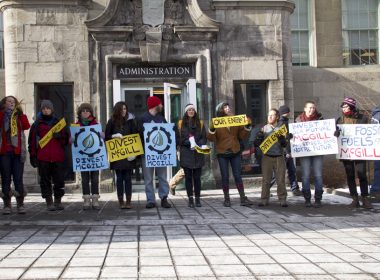
If it were to pass, the amendment would likely result in one of three unneccasry or divisive outcomes. In one scenario, the Steering Committee would allow all of the motions to go through, resulting in an added bureaucratic step that wastes students’ time. In another scenario, a “divisive” motion, such as the Motion to Support the Boycott, Divestment, and Sanctions Movement (BDS), is shot down, making a divisive motion even more controversial. In the final scenario, all motions are rejected as external or divisive, and the apathetic student body does nothing about it, leading to the death of the GA. In all scenarios, the Steering Committee acts as a bureaucratic inefficiency, either serving to delay or undermine the democratic process. None of this should be viewed as acceptable to the student body. 

The Motion Regarding the AVEQ Affiliation Referendum: "Yes" 

If SSMU votes to join the Association for the Voice of Education in Quebec (AVEQ), it will be the first time since 2006 that SSMU will be a fully affiliated member of a student federation. In April 15, the McGill Tribune called on SSMU to join a federation that would advance student interests at the provincial level. AVEQ is well-suited to represent McGill student interests. Unlike the Table de Concertation Étudiante du Québec (TaCÉQ), which SSMU disaffiliated from, or the Union étudiante du Québec (UÉQ), which SSMU chose not to bring to a vote for this referendum, AVEQ’s voting system is one-institution-one-vote, which would prevent large francophone student unions from ignoring or overruling McGill’s anglophone and international interests. By joining early, SSMU would help to legitimize AVEQ and ensure that McGill’s interests are represented at an early stage, which means that it is more likely that SSMU will stand to benefit from the federation in the long-term.  

Waiting longer before joining a student federation means SSMU will continue to lack the institutional strength needed to be a powerful lobbying force in the Quebec government. Moreover, being part of a federation will improve SSMU’s ability to lobby the provincial government on austerity measures and tuition deregulation—two issues that have a profound effect on the student body.  

The Motion Regarding the Creation of a Club Fee: "Yes"

Clubs currently receive essential support from SSMU. The recent failure of the SSMU base fee increase, however, means that funding for clubs will likely be cut in next year’s budget. The creation of the opt-outable Club Fee, which would cost students $2.75, will serve to counteract this problem by providing a consistent source of funding for student clubs on campus. The creation of this fee would address that need in a clear, traceable way, allowing students to directly benefit from the money they put into the system. Due to the fact that it is opt-outable, it also offers students who argue against having to pay SSMU for services they don’t use the chance not to participate. Even if 10 per cent or more of students opt out of the fee, it could still generate around $100,000 annually for clubs. That being said, SSMU should make the consequences of not paying into this fee clear.

The Motion Regarding the Creation of a Mental Health Fee: "Yes"

McGill University has been woefully inadequate in providing sufficient accessible mental health resources to students. SSMU’s push to create an opt-outable Mental Health Fee is meant to address that failure. While the nature of the fund encourages innovation on behalf of students in filling the gaps in mental health services at McGill, its implementation should not indicate a further allowance of the university to shirk on its responsibilities to its students. It is important that the review board proposed is properly implemented to ensure that the projects this fund supports are indeed feasible and accessible. SSMU should clarify the repercussions of opting out of this fee, and avoid the result being a restriction of access to those services, as students in crisis should not be penalized for opting out at the start of the semester.

The Motion Regarding the Increase of the SSMU Health Plan Fee for the Addition of Mental Health Coverage: "Yes"

Increasing the SSMU Health Plan Fee in order to include mental health coverage of up to $500 is an appropriate and necessary response to the currently overburdened mental health services at McGill. This increase of $25 will be part of the opt-outable SSMU Health Plan Fee, which means that if students opt out of the plan, they will also opt out of the mental health coverage. While $500 is far from an ideal cap—one session can cost upwards of $100, meaning that students will only be covered for 5 sessions a year—it will allow students who are unable to access mental health services in a timely fashion to receive help from private practitioners. 

The Motion Regarding the Renewal of the SSMU Access Bursary Fee: "Yes" 

SSMU’s Access Bursary was created in 1999 and provides financial support to more than 2,000 students annually, with every dollar put into the fee matched by McGill staff and alumni. The fee, which is opt-outable, is a crucial institution to address financial inequality and need, and should continue to be supported by the student body.

The Motion Regarding the Renewal of the SSMU Equity Fee: "Yes" with reservations

While the Editorial Board supports the ideals behind the SSMU Equity Fee, it is concerning that information regarding what the fund supports is not readily available. This fee should be held to the same standards as all others, and that includes clearly stating which groups have applied for and received funding, and how that funding has been utilized. To this end, the SSMU Equity Committee should make the release of its reports more transparent and detail. This way, the funding committee can be held accountable to students who pay into this fee.

The Motion Regarding the Renewal of the TVM: Student Television at McGill Fee

Part 1: "Yes"

As a student-run resource on campus, TVM: Student Television at McGill provides educational resources for students interested in video production, and produces content across the campus. As the only student-run video production outlet on campus, it is an integral component of the media landscape. We look forward to the organization’s continued presence on campus. 

Part 2: "No"

Although it might be well-intentioned, TVM’s call for a $0.75 fee increase is disconcerting because of the lack of transparency regarding its financial standing and why an increase is needed. Based on TVM’s budget, included as Appendix A to the question, it is unclear why an increase by this amount has been put forth. TVM’s membership has grown, it seeks to expand the size of its executive, and wants to put some money aside for future expenditures, but the motion lacks the adequate detail needed to justify an increase in student fees. It should approach the student body only once it can demonstrate that it truly needs a fee increase in order to improve its services.

A previous version of this article incorrectly stated that TVM receives funding from SSMU. The Tribune regrets this error.

a, Student Life

An optimistic outlook for the future of McGill student services

On March 11, a group of approximately 30 McGill students and staff gathered together for the Students’ Society of McGill University (SSMU)’s Mental Health Forum in the SSMU Ballroom. A panel of staff representatives, from the various service departments under the umbrella of mental health care, was present, including from Counselling Services, the Mental Health Office, and the Office for Students with Disabilities (OSD). After the panellists gave short introductions, the entire event consisted of an open-mic period. 

The first question was informational, inquiring how the massive increase in students seeking their services in the last few years has changed or affected the services themselves. 

“The positive piece is that [with] progressive destigmatization of mental health issues […] students feel more comfortable and more at ease asking for help,” Martha Chamodraka from McGill Counselling Services pointed out. 

Marianne Elmer, a former McGill student who graduated last year, commented on the long wait times that many students experiences with mental health services.

"I had to reach out to the counselling service to be able to withdraw from a course and I was appalled at how stressful and difficult it [was] to get a drop in appointment,” Elmer said. “[I rushed there to] there [to] queue up, only to see all the available slots be allocated within the first few mins of the day's intake."

A far greater demand on mental health services results in significant budgetary challenges, which forces the departments to develop creative solutions in order to maintain high levels of care provision.

OSD Director, Teri Phillips, pointed out that in order to accommodate the far greater numbers of students now registered for their services, they have initiated a model of flexibility in how they meet with students. 

“Students have options around meeting with an advisor in person, through a booked appointment, or we meet with students via Skype as well,” Phillips said. “Engaging with students through those multiple means has been well-received by the students who are accessing our services.”

Phillips also mentioned the OSD’s focus on promoting other student services when appropriate. This sort of focus was common among the representatives from all the other departments as well. 

Another interesting strain on resources that was brought up in the discussion was the university’s policy on the requirement of medical notes when a student is physically ill or their mental health issues have been triggered, preventing them from completing an assignment or writing an exam. It was suggested to be an institutional-level policy issue to address, but not one presenting any opportunities for imminent reform within the mental health offices. The general consensus of the student services representatives present at the forum was that health notes are a waste of valuable resources.

“When we look at a lot of the discussion today around policy and the stressors that are present in the university system, some of the policies that we have in place also act detrimentally on our ability to provide services,” Senior Director of Student Services, Robin Wiltshire, commented, “[…] If we can make the medical notes not required, that would serve the system very well.”

Phoebe Warren, U3 Arts, has used mental health servies to see a psychologist, and also raised concerns about the medical note policy.

“I was […] required to provide proof that I have been seen by a psychiatrist/psychologist in the past [in order to] use both services in my case,” Warren said. “For people who have not been officially diagnosed with learning disabilities or [who have] a history of mental health problems, I imagine this can be extremely frustrating.” 

One of the primary takeaways from the forum was an emphasis on the need to integrate and streamline the various mental health services on campus. During the discussion, Wiltshire noted that there was a need to restructure the entire system to establish a common triage process between services and more importantly, to include a step-care method in treatment. 

“New ideas around service delivery are very important to us to be able to meet the demand, and being more imaginative about the types of offerings that are made to students,” Wiltshire said. “More automation around appointment-making and better collaboration between the units are things we are working on improving.”

In terms of how concrete the plans for change were, Wiltshire said that there is a general deadline to launch the new integrated system for Fall 2016.

According to Jimmy Tan, U2 Neuroscience, the forum was a step forward in ameliorating McGill’s mental health services.

“If we want to transform the landscape of mental health at McGill, we need to start working together as a team,” Tan said. “It can no longer be a phenomenon where clinicians work in one office, students work in another, and faculty works in the other office down the street, and then we meet once every year to catch-up. It needs to be an ongoing collaborative process—and I think the forum was doing just that.”

Sun Astronauts performed at Thursdays (A)Live.
a, Arts & Entertainment, Music

From The Viewpoint: CKUT presents Thursdays (A)Live

It’s Thursday night, and Gerts is buzzing with the low, steady hum of chatter and laughter. It’s not packed with bar-goers, but the crowd that has congregated this evening is laid back and relaxed, made up of a dozen or so small groups of friends huddled over beers. As host to the last Thursdays (A)Live show of the school year—the monthly music showcase organized by McGill’s radio station CKUT—Gerts is the ideal setting for the night’s batch of musicians, all of whom are Montreal-based solo-artists.

The first act, Desert Bloom, is the solo project of Rachel Nam, the bassist of the band MagicPerm. As the first musician to kick off the night, nervousness was to be expected—but if she was nervou, it didn’t show. Her music was soft and pleasant, a tad unremarkable, and steeped in synthesizers. Impressively, she inspired some audience members sitting closer to the stage to stand up and sway along. At the end of the set, she received a chorus of cheers; clearly, she was among friends and fans.

Next up was Joy Scouts. Her voice, like her predecessor’s, was light and gentle and her performance was decidedly stripped down in comparison to some of her mixed tracks on SoundCloud, the likes of which feature sounds that seem lifted from an 8-bit video game. She kept it simple: Just a girl and a guitar. It was a choice that proved to be effective. Her dressed-down, slightly awkward stage persona was both disarming and endearing alongside her sharp, self-aware lyrics. At the moment, she only has two tracks on her SoundCloud, which is a shame. At this point in the evening, more bar patrons appeared to be warming up to the music, as three pulled up chairs to get closer.      

Third on the list was “bedroom pop” electro-folk act Lonely Boa, made up of fourth-year McGill student Parker Benley and, bizarrely, his “bandmate,” a decapitated mannequin head named Jess. Armed with a laptop, a microphone, and a bass guitar, he kept in the soft-core vein of both previous acts, using pulsing beats and electronic organs to undercut semi-melodic, somber crooning. All the while, Jess gazed out at the crowd atop a speaker, echoing Parker constructed nonchalance. Although his music lacked definitive shape and direction, it was undeniably creative, though upon leaving the stage he did momentarily forget Jess (so much for band camaraderie).

The final act of the evening was Sun Astronauts, a last-minute addition to the lineup, headed by Janice Ngiam (or “Janice Oglandia St Horsington the Third” on her SoundCloud). The history of Janice and Sun Astronauts goes back a few years, with the release of her three-song EP A Little Little in 2011. The titular single of that EP, as it would happen, was a hit in Hong Kong and since then, she has opened for Australian band The Jezabels and Spanish singer-songwriter Russian Red. More recently, she joined The Bollands on tour in China in 2014 and the US last year. With all that under her belt, it comes as no surprise that she was the most confident and self-assured performer, singing with a kind of roughness that translated into soulfulness. Janice used loops to mask the absence of a backup band, and it worked: She filled up the whole space with her sound, and by her last song, a handful of her more attentive listeners were full-on dancing unselfconsciously.

Indeed, Thursday was alive and well at Gerts. Unfortunately, the music will rest until next semester, when local artists will once again return to grace Gerts with their (much appreciated) presence. 

a, Opinion

Ontario must strengthen education systems to equalize opportunity

The Ontario government is launching a new initiative to make higher education accessible and affordable for all students. In its budget, the provincial government unveiled the Ontario Student Grant—a project aimed at giving all Ontarians equal opportunity to obtain a university degree. Beginning in 2017, students from low-income families (households that earn $50,000 or less per year) will be able to go to university for free. The government’s message here is clear: The right to education should be available to all, regardless of socioeconomic status.

Well, it’s about time. Undergraduate students in Ontario pay the highest average tuition fees in Canada—a whopping $8,691—that is nearly three times the average cost of tuition in Quebec. The financial stress on families can be so burdensome that students are dissuaded from attending university.

The Ontario Student Grant will undoubtedly improve the equality of educational opportunities. Yet the correlation between income and quality of education begins much sooner than post-secondary schooling. Studies have shown that underprivileged students are at an educational disadvantage from as early on as primary school. To truly impact the lives and potential of future students, the government must look to reduce inequalities in primary and secondary levels of education.

In Toronto, the epicentre of income inequality in Ontario, there is a relationship between wealth and test scores in schools.

Socioeconomic inequality impacts education from early childhood. Low-income students are at an inherent disadvantage, and lack many resources for learning. Students that comes from a family in Canada’s top 10 per cent (households with an annual income of $200,000 or more) are likely to have highly educated parents with the ability (and time) to support and encourage them academically. In contrast, a student in Canada’s bottom 10 per cent (households with an annual income of below $30,000) is more likely to have less educated parents that are either unemployed or making minimum wage ($11.25 per hour in Ontario). This student will not experience many of the privileges of the more affluent student.

In theory, under Ontario’s public school system, a wealthy child and a poor child should have equal opportunities to receive an education. Practically, this is not the case. As the income gap widens, neighbourhoods are increasingly defined in terms of socioeconomic status. In Toronto, the epicentre of income inequality in Ontario, there is a relationship between wealth and test scores in schools. High-scoring elementary schools are generally concentrated in wealthier areas, while in low-income neighbourhoods, a larger percentage of students struggle with reading, writing, and math. Sixty per cent of students in the gifted programme come from the three highest income deciles, while a mere 11 per cent come from the three lowest deciles.

Inequitable fundraising also plays a large role in perpetuating discrimination in the education system. In Ontario, public schools in the top 10 per cent fundraise as much money as those in the bottom 81 per cent combined. These schools are able to offer enriched experiences and learning materials, increasing the overall quality of education for students. Students reap the benefits of their parents’ affluence in the form of new iPads for the classroom or expensive overnight field trips, putting those who cannot afford these extra perks at a severe disadvantage. Due to the lack of adequate resources and support, a higher percentage of children in low-income schools take applied courses in high school, limiting their chances of admission into university. The inequality only grows over time.

Students that produce lower test scores or struggle in school as a result of this socioeconomic disadvantage may lack the self-confidence and drive necessary to achieve a university degree. The exceptional students that are able to retain a zest for learning will face limited potential for success. Whether or not tuition is subsidized, students that have not received appropriate teaching will be less likely to be admitted to a prestigious university programme, or have the skills to succeed there if they do get in. Subsidizing tuition provides a bandaid solution to the self-perpetuating issue of inequality that is deeply entrenched in the education system.

With the Ontario Student Grant, the government will uplift the futures of many students. Still, in order to truly equalize the playing field, the government must work to strengthen the education system from the bottom up by ensuring that educational quality is not dependent on the income of children’s parents.


Alexandra is a U1 student studying Political Science and International Development. She is a proud Torontonian, passionate traveler, and knows all the lyrics to "Bohemian Rhapsody."


Read the latest issue

Read the latest issue