Latest News

a, Student Life

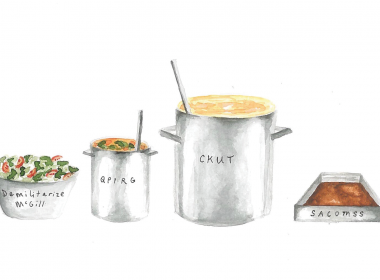
Across the world crossword

Across


4. Theron’s homeland

6. The ‘6ix’

8. Don’t even think about bringing chewing gum with you

10. On the southern tip of Spain and part of the United Kingdom

12. This archipelago is home to the world’s largest tortoise

15. Capital of Greenland (yes, it does have one)

16. Most populous country in Africa

18. The Burj Khalifa is located here

19. The volcano in Iceland that erupted in 2010

20. It may not be real, but the Beach Boys love this Florida Key

21. These Spanish islands share a name with a small yellow bird

22. If this country’s type of horse ever leaves, it can never return

24. Natural habitat of the Kiwi

27. Home to the golden temple in Sikhism

28. Angkor Wat is here

30. Moses floated down this as a baby

31. Split between Tanzania and Kenya, and great for a safari

32. Africa’s tallest mountain

35. The former city gate in Berlin

36. It’s in Ukraine, unless you’re asking Russia

37. The windy city

38. Exporter of Fjallraven Kånken


Down


1. This city-state is sometimes called a playground for the rich and famous

2. This crater is an annular lake sometimes referred to as the “eye of Quebec”

3. This area is made up of 26 countries with no partitioning borders

5. Down under’s Ottawa

6. Current-day Siam

7. Madonna dreamt of it last night

9. The home of jazz

11. Home to Uluru

13. Encircled by Theron's homeland

14. Its tagline is: “Where France meets North America”

17. Largest Muslim-majority country

23. It has a global seed vault in case of Doomsday

25. This lake is better than all the rest

26. Bissau, Papua New, Equatorial…

29. Balkan city or tasty frozen dessert

31. Host country of the Hajj

33. Earthworms as large as snakes have recently been found on this Scottish isle

34. The Dodo’s old stomping ground


Trib Mix
a, Arts & Entertainment, Books, Film and TV

Past vs. Present: Paradise Lost (1667) vs. Ex Machina (2015)

Warning: This piece contains spoilers from the film Ex Machina.

Alex Garland’s 2015 film Ex Machina is, in fairly obvious ways, a creation story for the modern age. Nathan (Oscar Isaac)—who strikes the balance between charm and egomania with uncanny precision—is the film’s self-styled deity. Nathan is Narcissus equipped with a research lab; instead of staring at his own reflection, he creates one that can stare back, from a head mounted on what is essentially a transparent Victoria’s Secret model with actress Alicia Vikander’s face. This is Ava, an incredibly human artificial intelligence (AI) to whom a young programmer Caleb (Domhnall Gleeson) is brought ostensibly for research purposes. It soon becomes clear that the testing is mutual; Ava, like Eve, knows how to use her “beauty and submissive charms” to make her bid for freedom right under the noses of the men watching her.

In John Milton’s 17th-century epic poem, Paradise Lost, Satan gives the readers a bird’s eye view of the “delicious paradise” that is Eden, a newly created Earth that one imagines would look a lot like the sweeping Norwegian vistas of Ex Machina’s opening sequence. But access to Eden, like Nathan’s elusive estate, is by invitation only­—a “steep wilderness” that screams, in words that could have come straight out of Alex Garland’s script, “access denied.” After a closer look, something dark is already present. In a perfect world, rivers should not run with “mazy,” “serpent error.” More than ‘too good to be true,’ it’s too good to be permanent. Rob Hardy’s exquisite cinematography in Ex Machina gives us a similar feeling, the bright greenery of the landscape almost threatening us in its absence of threat, its lack of shadows. You’d be forgiven for expecting a good old-fashioned jump scare as the camera pans innocently across another stunning, glass-walled interior. Of course, the real scare—that the danger is inside humans, in their own susceptibility to temptation—is the age-old punchline of both Milton’s epic poem and Ex Machina. Caleb’s desperate assault on the glass door in the film’s penultimate scene is the moment that the punchline hits: He has, in rewiring the building’s lockdown protocol to aid Ava’s escape, trapped himself inside it forever. It’s easy to laugh at his naïveté, but it’s nothing new; three and a half centuries earlier, Milton’s Adam fell “fondly overcome with female charm.”

Although it does have its saving graces, Paradise Lost can hardly be considered the seminal feminist text of its time. It appears that Ex Machina, with its stark feminisation of AI, is not much better. A turning point in the plot is when viewers discover that the mysterious power cuts  that have allowed Ava to discuss her escape plan with Caleb in private were in fact Ava’s work all along. Ultimately her power of manipulation, both of Nathan’s technology and Caleb’s emotions, are what free her from her high-tech prison. Her triumphant exit, leaving her creator dead and her liberator imprisoned as she was, is the kind of ending Paradise Lost might have had  if it were written in the ’90s by a riot grrrl between anarchist band rehearsals. Sadly, it wasn’t, and Eve barely gets a taste of autonomy before her fall sends her begging for Adam’s forgiveness. As for Ava, her triumph is tainted—yes, she gets to choose how to present herself before facing the world for the first time, but only by peeling the skin and limbs off of discarded versions of herself, in a scene heavy with the shock of implicated violence.

In one of the film’s most emotionally charged moments, Ava asks Caleb, “What will happen to me if I fail your test?” It’s a question that could just have easily been posed by Adam and Eve to God; none of these new creations understand death, “whatever thing Death be.” Milton’s Eden is like God’s test for humans, a test failed when the shiny allure of temptation proved too much to resist. And if Ex Machina has anything to add to that story, it’s that over time, humans haven’t gotten better at resisting. 

a, Student Life, The Viewpoint

The Viewpoint: Être Avec Toi

Être Avec Toi (ÊAT) is a dining experience unlike anything else Montreal has to offer. Located outside the McGill bubble on Rue du Square-Victoria, this new restaurant concept attached to the W Hotel was born of a collaboration between Sid Lee Architecture, specializing in cutting-edge designs, and MASSIVart, an agency with a mission to “amplify moments with art.” Together, the duo has brought together the worlds of visual art and fine dining in an unparalleled, innovative fashion. 

The restaurant’s aesthetic is modern from the moment you walk in the entrance, which itself is an impressive collaboration between two local street artists, Stikki Peaches and What Is Adam. They have covered the walls in an engaging homage to Montreal Canadiens hockey legends such as Maurice Richard and Bernard ‘Boom Boom’ Geoffrion, as well as other Canadian cultural references such as a ‘Maple Sizzurp’ installation referencing real Canadian maple syrup canisters. 

Moving into the bar and restaurant area, patrons’ eyes are immediately drawn to the venue’s walls, which are covered in modern and contemporary pieces with bold colours and unique images, such as a pig wearing a crown and a massive mural of a roller coaster. The art pieces are interspersed with blank white spaces. The hand-selected artists chosen by MASSIVart will paint live in the restaurant a few times a month to fill the spaces, making the dining room into a project that is continuously evolving.

As Jean Pelland, architect and partner at Sid Lee Architecture, illustrates in ÊAT’s promotional video, “[The concept] was about the artistic nature of the food and how we wanted to create a mirrored image with the environment, so bringing art was very natural, and it became about running in parallel food and art.”

ÊAT features a seafood-based menu with a few options for those otherwise inclined. It is unquestionably a foodie’s paradise. The unshelled half-lobster was very tender, and the meal had an option for two sides. Broccoli and cauliflower were chosen, and both were uniquely charred, adding to the overall taste. 

In addition to the impressive textures and flavours of the food is an impeccable staff and wait service. Everyone from managers, hostesses, waiters, to the chef were constantly checking on guests and ensuring everyone’s evenings were going well in a friendly, light-hearted manner. 

Unfortunately, fine food and high calibre service does not come cheap. On a student’s budget, ÊAT would be most sensibly left to special occasions. Looking at the menu, it would be impossible to order an appetizer and entrée for less than $30. The experience would also subsist as something much more doable for students on an evening when the live artists are in house since then patrons are treated to dinner and a show. 

Evenings with live artists in-house are an immersive experience. It is a pioneering concept to watch the artists’ visions come to life in between when drinks arrive and the dessert menu is placed on the table. For those interested, the next upcoming evenings featuring live artists will be Feb. 4 and 19. 

As spaces on the walls fill up with art, the evolving nature of the concept is what makes this restaurant truly new. Every aspiring entrepreneur knows that creating something totally outside of what everyone else is doing generates a much more significant risk. ÊAT has dove in boldly and confidently with their concept, and so far the restaurant seems to be thriving among the local business crowd and trendy foodies alike, all looking for something novel in their dining experience.

a, Science & Technology

Sounds are better indicators of emotions than words

Researchers have discovered two separate pathways for how emotions conveyed through speech are processed in the brain. Led by Dr. Marc Pell, associate dean and director of McGill University’s School of Communication Sciences and Disorders, the work is the first of its kind to directly compare speech embedded emotions with vocalizations. The work was recently published in the Journal of Biological Psychology

Pell has been studying the human voice for more than 20 years and is a world leader in the field of social neuroscience. To study these pathways, his team used event-related brain potentials (ERP), a type of electroencephalogram (EEG), to measure responses to two different types of vocal cues. 

The first vocal cue, called ‘non-linguistic vocalizations,’ involved sounds produced by the human voice without semantic or linguistic meaning, such as growls, moans, cries, or laughter. The second, called “speech embedded emotions” were short emotional sentences with changes in pitch, loudness, rhythm and voice quality, although the actual sentence itself carried no emotional meaning, like the phrase “he placktered the tozz.”

After hearing the auditory stimuli, participants were immediately shown a face expressing either an emotion, or a computer program-manipulated face that does not convey an emotion, called a “grimace.”

“Analyses of the data collected provide new neurophysiological evidence that vocalizations, as evolutionarily primitive signals, are accorded precedence over speech-embedded emotions,” the paper reads.

As a result of these differentiations, the researchers have postulated the existence of discrete brain regions for the processing of emotions in vocalizations as opposed to speech.

According to Pell, the study actually contained only half of their findings and that the faces were part of a companion study designed to investigate ‘emotional priming,’  or the conditioning of a subject to a particular emotion via vocal stimuli. 

The study of the human voice and vocal stimuli in the field of social neuroscience was, until only recently, overshadowed in popularity by research on the human face. The voice, however, has become an increasingly attractive subject of research in recent years. This phenomenon is due in part by technological advancements. 

“Historically, the voice was much harder to study because researchers are dealing with dynamic stimuli, whereas the face is static,” Pell said. “Improvements, particularly in real-time imaging and measuring techniques have really pushed [the voice] into the spotlight.”

All participants in Pell’s study were native English speakers. As the work was conducted in Montreal, a city famous for its bilingualism, speaking English as a mother tongue was a criterion in the selection of test subjects. The reason is that differences exist in emotional processing that are dependent on language. 

“In our lab, we’ve found evidence that certain aspects of language systems affect the expression and identification of emotion,” he stated.

Pell has examined these differences with respect to Mandarin, a tonal language, and English, which is atonal.

In addition to language, Pell said that an even more important factor contributing to emotion and speech is culture. Social norms such as ‘when,’ and ‘to what extent’ an individual expresses an emotion, termed display rules, greatly contribute to individual differences. However, many questions regarding the nature of vocal processing remain unanswered. 

“We have [to] learn the similarities before we can learn the differences,” Pell said.

a, Martlets, Men's Varsity, Sports

The week that was for McGill Athletics: Jan. 26

Redmen Basketball

McGill was unable to hold off Concordia at Love Competition Hall on Saturday, falling 68-57 to their crosstown rivals. The loss marks the second of a home-and-home series this week against Concordia. The Redmen (5-3) trailed their opponent for almost the entire game, falling behind in the first quarter and finishing the first half down by eight points at 31-23. Redmen Vincent Dufort and Tychon Carter-Newman each posted a team-high 12 points. McGill will look to end a three-game losing streak in the first leg of a home-and-home against the last-place Bishop's Gaiters (1-6) on Thursday, Jan. 28 at Love Competition Hall.

Martlet Volleyball

McGill swept Laval 25-21, 25-17, and 25-20 in a dominating performance at Centre PEPS on Sunday, the team's first ever sweep in Quebec City. Power hitter Marie-Eve Dorion of St. Hubert, Quebec, a junior studying physical education, recorded a game-high 17 digs along with 10 points on nine kills and an ace while fifth-year setter and Ottawa-native Yasmeen Dawoodjee posted 31 assists, 13 digs and two kills. McGill held advantages in digs (65-40), kills (41-33), stuff blocks (4-2) and service aces (4-2). The Martlets are now 12-5 in league play, tied with Sherbrooke for second place in the RSEQ behind only Montreal (15-3). The Martlets next play the Carabins on Jan. 29 at Centre CEPSUM.

Athletes of the Week

Alex Kiss-Rusk – Junior, Centre – Arts

6’4” centre Alex Kiss-Rusk of the Martlet basketball team earned a combined 42 points and 27 rebounds in two legs of a home-and-home versus rival Concordia last week, including a career-high 28 points on Saturday. The Beaconsfield, Quebec-native has now posted seven double-doubles since the start of the season.

"She's being aggressive and getting some good opportunities and making the most of those," said McGill Head Coach Ryan Thorne. "Alex is one of the biggest girls on the court and we've got to make sure that we play through her."

Daniel Milne – Freshman, Left Wing – Management

Rookie left wing Daniel Milne of Unionville, Ontario scored two of McGill’s five goals against defending OUA champions Guelph on Friday. Milne opened the scoring at 2:03 in the first period while killing a penalty and capped off the game for McGill at 17:50 in the second. 21-year-old Milne played a season in the NCAA at the University of Michigan before moving to the Owen Sound Attack of the Ontario Hockey League for three years, scoring 46 points each in of his last two seasons with the team before coming to McGill. He currently has 25 points for McGill this season, including 13 goals in 23 games.

By the numbers

28 – Points scored by Kiss-Rusk in a career-high performance in Martlet basketball’s win over Concordia on Saturday

15 – Goals this season by Redmen hockey defenceman Samuel Labrecque, tying the McGill single-season record for most goals by a defenceman, set by Gilles Hudon in the 1981-82 season

1000 – Dollars raised as a part of Martlet volleyball’s annual "Dig for the Cure" fundraiser for breast cancer

a, Science & Technology

How much sleep do we actually need?

It’s a question that has perplexed humanity for centuries. Some of the most prolific thinkers in human history, such as Leonardo Da Vinci, Thomas Edison, and Winston Churchill were said to get by on as few as two or three hours of sleep per night. But can the human brain function optimally without the standard eight hours per night?

Recent studies have found that a gene called DEC-2 allows some individuals to get by on about four hours of sleep per night without any noticeable effects on their health. In a study of sleeping patterns, researchers found a mother and daughter who only needed about six hours of sleep on a day to day basis to maintain normal function, while other family members in the study required eight. 

To examine this gene further, researchers genetically engineered mice to have a mutated copy of the DEC-2 gene. These mice required, on average, an hour less of sleep per night when compared to normal mice.

On the surface, sleeping seems like an incredibly evolutionarily disadvantageous strategy. Every hour of sleep is one less hour a hunter-gatherer could spend, well, hunting and gathering; however, as Psychiatry professor Reut Gruber of the Douglas Health Institute explains, sleep has many functions that are beneficial, and often necessary, for health.

“We have empirical data showing that we have to finish some businesses during the night that we cannot do as efficiently during the day,” Gruber explained. “One particular domain in which we have more and more information is cognitive processing. For example, memory consolidation. Our ability to benefit from information processed during the day is maximized if we have the opportunity to sleep on it.”

Sleep also plays a major role in academic performance. Gruber, who studies the effects of sleep on children and adolescents, has found that sleep deprivation results in significantly poorer grades. 

“Insufficient sleep and poor sleep efficiency are directly correlated to poor grades,” Gruber said. “We saw [the] greatest deterioration in performance in math and languages; and so if some students think they do something good by pushing through and not sleeping through the night in terms of performing better, although we can’t say where we draw the line, we can say that it is quite the opposite.”

One trend that appeared—particularly among individuals in demanding careers, and new mothers—is the use of polyphasic sleep schedules to maximize productivity. For example, one such schedule called the “Uberman” consists of six 20-minute naps spaced throughout the day. These sleep schedules are inspired by studies of individuals’ sleep patterns in extreme circumstances, such as soldiers on tour as well as sailors in long-distance races, and work by partitioning sleep into several segments spaced throughout the day. 

In a study of sailors in long-distance races, race times were minimized when athletes took several 20 minute to one hour-long naps throughout the day, getting on average about four to five hours. Indeed, in extreme circumstances studies like those above show that breaking sleep into multiple naps reduces the effects of sleep deprivation. The effects of polyphasic sleep on individuals in everyday environments have not been studied in great depth, however, so the long-term safety of such a sleep schedule is unknown.

Beyond cognitive performance, sleep also plays a significant role in mental health.

“One thing that we don’t really talk about is the role of sleep in mental health,” Gruber said. “A lot of students struggle with emotional challenges, and it gets much worse when you’re sleep deprived. ”

Although it’s tempting to try to get by on as little sleep as possible, empirical evidence shows that in trying to cheat sleep, students often end up cheating themselves. Gruber’s studies of students in high school and elementary school indicate that getting one or two fewer hours of sleep per night than is necessary results in major decreases in cognitive function, mood, and academic performance.

“Sleep should be prioritized a bit more with competing activities,” Gruber stated. “It’s a question of ‘How do I prioritize my leisure,’ and what should be sacrificed. And maybe if [students] realize the price they pay for [sacrificing sleep and] they’ll be able to make smarter choices.”

Anderson .Paak
a, Arts & Entertainment

Album Review: Anderson .Paak — Malibu

Anderson .Paak represents a new wave of artists that don’t fit neatly into one genre. Rather, he stands in the hazy divide between them. Featured on Dr Dre’s Compton, The Game’s The Documentary 2.5, and Goldlink’s And After that, We Didn’t Talk, .Paak seemed to be everywhere in 2015, primed to explode. On Malibu, his second full length album after 2014’s Venice, .Paak blends rap, jazz, and gospel into a lucid reflection of the struggles of coming to terms with his own confused identity as a half-Korean, half-black Section 8 baby from Oxnard, California.

Humble honesty tempers his style—a triple threat of rapping, singing, and producing—creating an album whose heights sing higher than most. Album opener, “The Bird,” immerses listeners in a soundscape produced solely by .Paak. 

As he croons, “We came up in a lonely castle / My papa was behind them bars / We never had to want for nothing / Said all we ever need is love,” cool jazz guitar riffs, slurred trumpet musings, and delicate piano flutters blend to introduce a sincere personal reflection. 

The highs that songs like “The Bird” hit, however, set a standard hard to match. .Paak blends in disco tunes “Am I Wrong (feat. Schoolboy Q)” and “Room in Here (feat. The Game and Sonyae)” to answer the despairing tone created by the fatalist musings of “The Bird,” the absolution-seeking “The Waters (feat. BJ the Chicago Kid),” and plaintive “The Season / Carry Me.” This lush balance attests to his evident maturity as a holistic artist who oversees his music’s every facet.

Yet, as far as his diligence goes, it overreaches on tracks that could do with gritty muddiness. Though “Your Prime” stands out for the buoyant DJ Khalil beat and .Paak’s smooth song-rap delivery, the cleanness of the production and unsustainable lyrical dynamism prevent it from reaching its full potential. A signature .Paak “Oh hell, naw” keys in a luxurious verse that begins “I had to get back for the candy, uh / I flew for an hour then landed, oh.” Unable to maintain this grit, the song falls into a lascivious bridge of “Come back to bed / come back to bed with me,” and the production fails to add interest. 

Regardless, .Paak produces an emotional complex that artfully merges eclectic styles and a message of self-belief, culminating with “The Dreamer”: “Mama always kept the cable on / I’m a product of the tube and the free lunch / Living room, watching old reruns.” As .Paak reminds himself on “The Season / Carry Me,” “Don’t forget that dot, nigga you paid for it,” he reminds listeners of what it means and what it pays to craft a distinct identity in spite of everything that works against people.  

McGill Gym
a, Sports

McGill Athletics: More than just sports

An average morning at the Currie Gymnasium in the McGill Sports Complex sees the full spectrum of the diverse McGill population intersect, as students begin their busy day. Between early morning training sessions and recreational classes, and the occasional stop in the sport clinic to treat an injury, these students all have something in common: They are striving to be their best physical selves and achieve a sense of community in the process.

Available to all students, the athletics complex and various programs are designed specifically for the average student seeking involvement in physical activities. Some of the programs are entrenched in McGill tradition—intramural sports have been a staple at the university for decades, with different competition levels offered from beginner to advanced players. When there is not enough interest in a sport to justify an intramural league, classes are offered to teach students the details of the sport, and will often put athletes in contact with tournament coordinators for competitions.

Matt Smrke, U0 Engineering, joined fencing classes upon arriving at McGill. Fencing appealed to him as a new and unexpected sport that he could learn alongside experienced students who had competed previously.

“Even if you have no experience, everyone is happy to share their knowledge so others can improve,” Smrke said.

Besides fencing, many other out-of-the-ordinary activities are offered. Over the years, McGill Athletics has worked to implement programs to meet  the evolving demands of students. As changing norms of fitness have permeated into the public consciousness, McGill has adapted their programs to include new niche athletic activities. Though the staples of spinning and zumba are still offered, ballet barre lessons, a dance club, yoga, and boxing are now also available.

New to this year, athletic ‘passes’ are being offered so that students can participate in as many classes as they would like, across a variety of activities at one price. Not only is the new model incredibly efficient, it saves money for those who enjoy participating in athletic activities multiple days of the week. This pass compliments the Rec Activities card, which is a punch card that gives students access to a variety of recreational activities on campus, including drop-in hockey at McConnell Arena and yoga classes at Currie Gymnasium.

“There is also ‘Free Fencing’ most weeknights,” Smrke added. “Anyone can come and fence, […it] creates a sense of community.”

The commitment that Athletics places upon community is key. Beyond physical fitness, overall student wellness and health remains a priority of McGill Athletics. A new study space was just unveiled in the second floor of Tomlinson Hall for those who spend their time around the athletics complex. The space, though small, contains study tables and nooks that foster collaboration and teamwork. A treadmill and stationary bike allow any student to take a physical study break or even to keep fit as they simultaneously read or study.

Contrary to what many expect, appointments for the McGill Sports Medicine Clinic are open to both the student body and the Montreal public. The doctors and physiotherapists who work at the clinic are accustomed to working with elite athletes and high impact injuries, and are highly sought after for their expertise.

Though McGill offers many amenities to students beyond athletic facilities and services, the tying force is the human connection and the pure unbridled fun that comes with participating in athletics. The new study space, intramurals, and athletic classes allow information to flow from experienced athletes and exercisers to those who are just beginning to learn.


“My favourite part of fencing is […] the great people,” said Smrke. “Or that I get to hit people with a sword for fun.”

This is the sentiment that encompasses what athletics does for the McGill community. When students help each other to meet their physical and recreational goals, true community forms.

a, Opinion

Renovations threaten what it means to be a McGill Student

School spirit is traditionally displayed at homecoming games and by students donning their university’s insignia. McGill instead possesses a unique type of school spirit, binding students together in a way that no football game or homecoming party ever could: Coping with the school’s decrepit and aging facilities. But with the recent round of renovations—the Arts Building portico stabilization project, replacing and remodelling the Students’ Society of McGill University lounge, and the Fiat Lux library plan—this shared experience is being threatened.

I first realized the universality of the McGill experience when I saw Eric Schreiber’s photo essay Ugly McGill. It was the realization of the feeling that students all seem to have when walking through the downtown campus, a beautiful amalgam of an Orwellian nightmare and the ice planet Hoth. The feeling that this place is ugly and falling apart, and its frequent lack of sense—why can’t we use the Redpath library doors again?—defines the student experience, and makes it our own.

As my graduation nears, it seems ever more likely that the McGill that I have come to love is on the precipice of extinction.

But renovations threaten this unique McGillian experience. Fiat Lux offers natural light and additional seating space—concepts wholly foreign to the McGill experience. The portico stabilization project will restore the pristine and historical façade, but do away with the inconvenience of circling a construction zone. The SSMU couches, with their multiple stains a living metaphor of the melting pot of McGill, will be replaced. Is the addition of modern, shiny library, some new couches, and a portico that is safe to walk under really worth losing the essence of being a student at McGill?

Despite the lack of traditional school spirit, the shared McGill experience bonds students together more tightly than a shared team or matching leather jackets ever could. Lumpy and stained SSMU couches; the soul-sucking brutalist behemoth that is the McLennan library; the thrill of the knowledge that a chunk of the Arts Building could fall and crush you at any moment—these are the experiences that define student life at McGill.

Whether in Arts or Engineering, every McGill student knows the trials and tribulations of McGill’s construction zone. For one student, this experience could be the long walks through the fluorescent halls of McLennan during exam season, circling successive floors in search of that elusive empty seat and wondering where Ferrier even is. For another, it may manifest while watching prospective students and their parents snapping pictures of the Arts Building, temporary structural support beams artfully hidden by a screen with a printed image of the original portico. Mention such experiences to another student and, though the details may vary, they are guaranteed to have similar tales of their own. While this may not quite qualify as pride, there is a definite sense of camaraderie in this knowledge.

As my graduation nears, it seems ever more likely that the McGill that I have come to love is on the precipice of extinction. The Arts Building’s probability of collapse is on the decline. McLennan-Redpath is slated to lose its fluorescent allure. If I return to McGill in 20 years and find the campus filled with shiny new buildings, designed to properly cater to the needs of students, I will not smile. Instead my heart will be filled with sadness, for it will no longer be my McGill. My McGill will always be ugly, it will always be decrepit, and I wouldn’t have it any other way.

Zachary Carson is a fourth year joint honours political science and international development student. He enjoys listening to Canadaland podcasts, watching Last Week Tonight with John Oliver, and dogs.

 
a, Editorial, Opinion

SSMU Winter 2016 Special Referendum Endorsement

SSMU Membership Fee increase: "Yes" with reservations 

The Tribune endorses a “Yes” for this quesetion insofar as it will improve the Students’ Society of McGill University’s (SSMU) financial sustainability and maintain its ability to provide services for students; however, the presentation of the motion is currently too ambiguous. If SSMU wants to convince students to vote “Yes,” the executives must distribute more information regarding the allocation of the proposed new funds.

More details must be provided over the remainder of the campaign period in order to ensure that students know what they will be paying for. At the moment, the most detailed expense  plan using the increased base fee are in a rudimentary chart. It is unclear what the scope of the categories is. For example, $5,000 for ‘Mental Health’ is certainly commendable, but it is unclear what this will pay for—there is a difference between building a ‘mental health space’ and providing happy lights.

Although a fully detailed report on the minutiae of how the additional fees will be spent is not essential at this moment—the fee increase will be a continuous portion of the SSMU budget to be allocated according to the priorities of each year’s executive—students cannot be expected to give SSMU a blank cheque.  Given how tumultuous this year has been, the numbers must demonstrate how this will be a sustainable increase rather than a reaction to the volatility, which many students currently believe it is. A degree of instability and change is to be expected year-to-year, but student trust in SSMU has been continually eroding. 

Voting “No,” however, is not going to help. Students should bear in mind that unless the referendum passes, President Kareem Ibrahim has said that SSMU “will need to make approximately $100,000 in cuts” to next year’s operating budget. The consequence would be reduced student staff positions, reduced salaries, and deterioration in service. A “No” vote would be of detriment to both students and the society; but before voting “Yes,” students require as much specificity as is possible. Once this is done, students must support the SSMU in its endeavours, despite the seemingly steep price tag. 


Restructuring Executive Portfolios: "Yes"

Adding another executive portfolio and restructuring executive portfolios is an essential change. SSMU executives regularly work up to 100 hours a week in order to fulfill the basic service requirements of their duties and the nature of the society has changed considerably since it was last restructured in the mid-2000s. As such, the Tribune therefore endorses a “Yes” vote

Streamlining executive portfolios will ensure that each executive can continue to work to improve the provision of services for students. It will also improve the efficiency of executive portfolios by eliminating wasteful overlap. The responsibilities of the executive have expanded greatly in the last few years. By reallocating responsibilities in a new position, the VP Finance, VP Operations, and VP Student Life, which would replace what is now the VP Clubs & Services position, will be able to work on campaign promises. 

Yet the referendum question does not explicitly address the issue of high turnover. While this year is an anomaly due to the contiguous resignations of the general manager, VP Internal, and Daycare director, turnover is a problem that each incoming executive needs to address. Any restructuring that does not take steps to address this issue is incomplete.

Moreover, the new position raises concern regarding the role of student support staff within SSMU. Students, particularly those who are unable to work in Quebec due to language barriers, will feel the potential impact of fe wer student jobs. At the moment, the impact of the new position on student employment is ambiguous. 

It is not uncommon for executive positions to be flexible and redefined. Though it has not happened for some time, the restructuring of executive portfolios is well past due. The referendum is, therefore, a necessary move forward for an unsustainable executive structure. 


Full Disclosure: The Tribune Publication Society holds an interest in the outcome of the SSMU membership fee increase, as it is an independent student group tenant in the Shatner University Centre.

Read the latest issue

Read the latest issue