Latest News

a, From the BrainSTEM, Science & Technology

From the BrainSTEM: The leaky pipe

Today, women make up less than 20 per cent of software engineers in the workforce (the precise numbers range depends on who is collecting the statistics and how the observer defines ‘software engineer’). Even in universities, where women outnumber men almost 3:2, only 12 per cent of computer science degrees are awarded to women. It’s up to industry leaders and academic institutions like McGill to recognize this and take action, or else risk missing out on capitalizing on the problem-solving power of half the world’s population.

“Out in Silicon Valley, companies are struggling to hire software engineers—even top companies like Google and Facebook,” Gayle Laakmann McDowell, author of Cracking the Coding Interview, explained in response to a question on Quora. “This is hurting the U.S.’s ability to grow [good tech] companies. If as many women went into engineering as men, this would be a huge win for the U.S. and for the world.”

McGill has not been immune to this trend. According to an analysis of the School of Computer Science enrolment data by U3 Computer Science student Pascale Gourdeau, women comprise less than 30 per cent of students enroled in computer science-related majors. In the honours stream, this number drops below 20 per cent.

The decline hasn’t been continuous, either. After steadily increasing from just over 10 per cent in the 1960s to 35 per cent in 1983, the percentage of female computer science majors in American universities dropped to below 20 per cent 10 years ago, and has flatlined since.

Researchers have proposed a number of reasons for women’s low enrolment rates in computer science. The emergence of the personal computer and its subsequent marketing as a toy for boys in the ’80s and ’90s is one suspect. Also frequently cited are a lack of female mentors, negative stereotypes, and toxic work environments in the tech industry that discourage women from pursuing careers in technology.

In spite of the grim statistics, there’s growing evidence from a number of universities that it’s not a lack of interest that’s keeping women from majoring in computer science. In fact, the evidence indicates quite the opposite: Stanford University recently revealed that Computer Science was the most popular major among female students. At Harvey Mudd College, 40 per cent of computer science majors are women. Their administration attributed this number to three major strategies: Practical, interesting introductory courses, research opportunities, and community-building activities, such as visiting the Grace Hopper Celebration of Women in Computing, a conference dedicated to recognizing women’s achievements in the field of computer science.

“The way people interacted [was] much more [exciting] than I’ve ever felt—you could just flag down anyone and not feel awkward about it,” explained Li Xue, a U2 Economics and Computer Science student who attended the event this year. “Even extremely important people like Satya Nadella [the CEO of Microsoft] were on the floor of the convention centre, so it was a very ‘flatly’ structured conference where everyone was approachable. I think because the attendees were self-selecting, you just get the most motivated, talented, and open-minded people.”

The demographics of the Grace Hopper Celebration are the reverse of those seen all too often at tech conferences. Women made up 96 per cent of attendees, representing all corners of industry and academia. 

What Grace Hopper, Harvey Mudd, and Stanford all show is that, when presented with the right environment, women engage and excel in computer science just as much as their male counterparts.

The dearth of women in computer science represents an immense resource of untapped intellectual potential, and as technological innovation becomes increasingly critical to solving the world’s problems, that needs to change.

a, Opinion

Justin Trudeau’s gender equal cabinet quota is not “real change”

“In Canada, better is always possible,” Prime Minister-designate Justin Trudeau boldly proclaimed to a room full of beaming supporters shortly after leading the Liberals to victory on Monday, Oct. 19, at the conclusion of one of the most predictable, ferocious, and drawn-out election campaigns in the country’s history. Trudeau pledges to instigate “real change,” and work towards a more progressive, dynamic, and united Canada. In a visible first step towards fulfilling said change, Trudeau announced that his cabinet, to be appointed on Nov. 4, will feature equal gender representation—a first in Canadian federal politics. While the possibility for women to have an equal voice in parliament evokes immense pride, these feelings are marred upon considering what the implementation of such a strict standard of equal gender representation will actually mean for Canada. Yes, women may be given the opportunity to have a more equal voice, but forcing it in terms of a quota cannot be the only way. Quotas have encouraged the criticism and questioning of the female voice in political bodies, thereby reducing gender equality to statistical rather than substantive progress.

A recent Status of Women Canada report ranks Canada 52nd in terms of female representation in parliament (for every female member of parliament, there are three who are male). According to the report, Canada is behind other parliamentary democracies, such as Australia and the United Kingdom, in terms of pay equity, support for childcare and parental leave, and strategies to prevent domestic violence. It is no coincidence that a lower representation of women in politics correlates with a lower level of support for women’s issues. The shortfall in these categories is felt by female politicians. Parliament must strive to reflect the authentic gender-makeup of society, in order for all concerns to be given the appropriate consideration and support. A gender quota in cabinet—Trudeau’s cabinet will be under 30 members—is not the most effective way to boost representation.


Numbers are worth striving for, but are not necessarily indicative of a true shift towards a new era of gender equality.

In politics, a quota refers to the enforcement of a minimum percentage for the representation of a certain group. Quotas are meant to help marginalized groups transcend the barriers that inhibit their involvement in the political sphere and in so doing entrench equal representation into political and cultural norms. In Canada, the 33 per cent female representation in the House of Commons look feeble in comparison to the fact that almost exactly 50 per cent of Canada’s population is female. Gender quotas can potentially inspire a new perception of the role of women in politics: By forcing higher female representation, there is the possibility to set a new norm.

Numbers are worth striving for, but are not necessarily indicative of a true shift towards a new era of gender equality. Canada’s intellectual, empowered, and dynamic women deserve a platform to exercise “real change” in parliament—a platform where achievements and qualifications will not be overshadowed by their sex. Trudeau’s promise of a gender-equal cabinet will provide ammunition to skeptics of females in politics, who will have the opportunity to attribute the women’s appointments to obligation. Criticism has already manifested in Canadian commentary, most notably with Andrew Coyne’s column that argued the “Liberals’ idea for gender quota leaves out the principle of merit.” Citizens may question Canada’s democratic system, and wonder whether the people sitting in some of the country’s most influential positions were selected based on their merit or their gender.

The Liberal caucus is filled with immensely qualified, powerful women, who all have the potential to provoke lasting and positive change; however, Chrystia Freeland’s impressive journalistic accomplishments, Karen McCrimmon’s commitment to the Canadian Forces, and Catherine McKenna’s work as a legal advisor for the United Nations, will all be unfairly overlooked. Reducing their experience in, for example, defense and justice, will come in second to their gender. Each female appointment will be seen as a contribution to Trudeau’s promised 50 per cent.

Trudeau has the right idea. “Real change” is a bold goal, and the promotion of higher female representation in parliament undoubtedly deserves to be on the top of his list towards attaining this goal. Although enforced gender representation is an effective way to begin shifting perceptions in favour of women in politics, Canada needs to eliminate gender discrimination and barriers—both social and physical—that prevent women from becoming involved in politics, such as limited childcare options. Women should be selected to fill influential cabinet positions because they deserve these roles, without any prior ‘announcement’ of equal representation, which only serves to further stigmatize women’s role in politics. The message that needs to be spread is one of equal ability and potential. Women deserve to be in office because of their unique skills and experiences as people, not just as women.


AUS McGill Lounge
a, McGill, News, SSMU

AUS considering change in appointment process of VP Finance

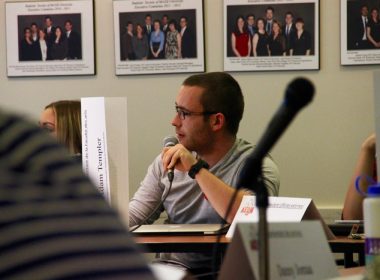
On Oct. 21, the Arts Undergraduate Society (AUS) Council discussed a motion to hold a referendum to change the appointment process for the Vice-President (VP) Finance position.

“[Option one: The] future AUS VP Finance will be appointed solely by [the] AUS Council,” read the motion. “[Option two:] Future AUS VP Finance candidates, before being allowed to run for election, will be screened by a screening committee which shall objectively determine […] whether each candidate has met pre-set criteria of accounting qualifications [….Option three:] Hire an external bookkeeper.” 

Jacob Greenspon, AUS president explained that the changes were proposed due to problems AUS has encountered in the past from delayed tax filing and audits.

“AUS did not file taxes from 2008 to 2012, resulting in the government freezing $120,000 from the AUS bank account,” said Greenspon. “AUS also [failed] to send McGill its audited financial statements in that time period [….] As a result, McGill withheld our student fees.”

According to Greenspon, the lack of financial expertise among VP Finances has resulted in incorrect assumptions about the AUS budget.

“When our current VP Finance started his term, the AUS operated under the assumption that 2014 Frosh had ran a $10,000 deficit, and that the AUS on a whole ran a healthy surplus,” Greenspon said. “The auditors and the VP Finance were able to spot these mistakes and uncover the actual […] situation from 2014-2015 [which was] a $30,000 Frosh deficit, and [a] $65,000 overall AUS deficit.”

Traditionally, the VP Finance was democratically elected in the AUS General Elections along with rest of the executive committee. As no one ran for the position this year, AUS Council appointed Mirza Ali Shakir to the position. He previously sat on the AUS Financial Management Committee, and served in the society’s Department of Internal Audit.

Greenspon believes that a VP Finance with accounting qualifications will effectively ensure the financial safety for AUS. The composition of the proposed screening committee is still undecided but will include a variety of members including those within AUS and outside of AUS.

 “The VP Finance position is unique […] in that there are many specific, technical skills required for the job,” Greenspon said. “These include a background in accounting, knowledge of tax-filing, and experience with auditing, to name just a few.”

Greenspon also had reservations about the third option—the hiring of a bookkeeper externally—being presented in the referendum.

“While accounting remains a technical job, the accountant’s understanding of the organization is crucial to their maintaining accurate accounting records, especially given the unique stature of an accredited student association,” Greenspon said.

As outlined by the motion, the hiring of an external bookkeeper would require an increase of around $3 in the student fee paid by each AUS member,  per semester. 

AUS will not be the first student society to implement a separate hiring process for the VP Finance position. The Engineering Undergraduate Society (EUS) President Mariam Hachem explained that the EUS’ VP Finance is not elected. Rather, the candidate is chosen by a selection committee, whose  decision is then ratified by the EUS Council. 

“The outgoing and incoming execs sit on this selection committee, [as well as a] number of members-at-large to the EUS, as deemed by the chair [of the selection committee],” Hachem explained.

The EUS additionally employs an external bookkeeper, who is responsible for bookkeeping and auditing.

“The bookkeeper has to be a certified accountant,” said Hachem. “[Candidates for VP Finance are] not required to have any accounting qualifications, […] but if they do, then it is obviously looked favourably upon.”

Tracey Cui, U3 East Asian Studies, believes that reform is needed in order to put an end to the long history of financial mismanagement in the AUS.

“I might [go with] option two – at least there will be some criteria set up by the screening committee that covers the basic skills candidates should have,” Cui said. “Or option three, [since] we can’t trust Arts students with accounting.” 

This article was corrected on Nov. 3. The Tribune regrets these errors.

a, Men's Varsity, Sports

Lacrosse Redmen roll past Gee Gees into CUFLA semifinals

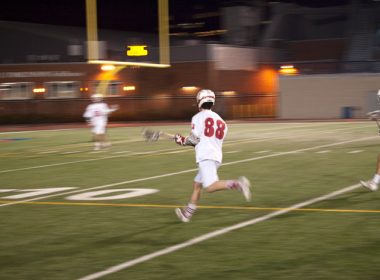
The goal for the Redmen lacrosse team this year is simple: Win the Baggataway Cup for the second time in program history. Following a dominant 16-5 victory over the Ottawa Gee Gees on Saturday in the divisional playoff, they are well on their way to achieving that goal.

The Redmen were the only team in the CUFLA to have an undefeated regular season this year, and it was clear why on Saturday night. The combination of slick passing, precise shooting, and a relentless wave of fresh legs wore the Gee Gees out over the course of the game. Junior attackman Spencer Bromley led the way with four goals and three assists, while seniors Anders Bjella and Jake Gutman both had hat tricks. Gutman came off the bench to score three goals on three shots in the fourth quarter. In total, McGill had 12 different players score a point, a testament to the team’s deep roster.

“Depth has been a real advantage [this year],” Redmen Head Coach Tim Murdoch said. “We recruit really well and we have one of the larger rosters in the league. We have a lot of confidence in all of our players up and down the roster.”

Despite the wide margin of victory, McGill was down 2-1 until the last few minutes of the first quarter. Then Bromley took over the game. He scored an unassisted goal to tie up the score. A minute later freshman Max Murdoch assisted Bromley on another goal. To cap off the quarter, Bromley found sophomore Goose Bolton who then sniped a shot past Ottawa goaltender Mike Webster. In the span of six minutes the momentum swung clearly in favour of the Redmen.

“We work as a team as an offensive unit and Spencer is our top finisher,” Murdoch said. “I think [his success] was more a symbol of the fact that our offense is clicking well when he was getting close to the net and he was doing his job.”

Next weekend McGill travels to Bishop’s University for the semifinals of the Baggataway Cup. They will play the winner of the quarter-final between the Brock Badgers and the Trent Excalibur on Saturday at 4 p.m. Look for the Redmen to keep on rolling, regardless of who their opponent is, as they attempt to bring home the Baggataway Cup.

“Just playing as we know we can,” Murdoch said. “Consistency, staying healthy this week, and most importantly staying positive through the weekend.”

Quotable

“We have a lot of respect for Trent, they’ve typically played us very close [….] They’re scrappy and they fight hard. Brock will be the favoured team […] so we’re concentrating most of our scouting efforts on [them] because we haven’t played them since 2012.” – Murdoch on potential semifinal opponents.

Moment of the game

Bromley’s unassisted goal with 5:50 left in the first quarter helped turn the tide for the Redmen.

Stat corner

McGill had a total of 18 penalty minutes, four more than Ottawa

a, Martlets, Men's Varsity, Sports

Fall team previews: Martlet and Redmen Basketball

MARTLET BASKETBALL

The Martlets finished their 2014-2015 campaign with a silver medal and a near perfect 15-1 RSEQ record. With nine of the team’s 14 players returning, an undefeated regular season and a CIS National Championship are certainly not out of the question. In their four pre-season CIS games this year, the Martlets are a perfect 4-0, outscoring their opponents by 18 points per game. While their defence and rebounding has remained stout so far this year, they’ve continued to struggle with turnovers, an issue that plagued the team last year. If Coach Ryan Thorne can tighten up the ball-handling and passing, the sky’s the limit for this team.

REDMEN BASKETBALL

Last season was a disappointment for the Redmen. After consecutive RSEQ Championships, the Redmen watched as the Bishop’s Gaiters hoisted the 2014-2015 title. This season, McGill looks poised to bounce back. The Redmen are 6-1 in their seven pre-season games this year, including a weekend victory in the nation’s capital over the No. 2 ranked Ottawa Gee-Gees.

“This weekend showed us that we’re among the best programs in the country,” junior forward Michael Peterkin said. “We have the ability do something very special this season.”

With their core remaining almost entirely intact for another season, the Redmen look poised to finally prove they’re not just a big fish in the RSEQ pond, but also a force to be reckoned with on the national stage. Certainly anything less than an RSEQ championship and a CIS playoff berth will be seen as a failure for McGill.

Netflix
a, Arts & Entertainment, Film and TV

What’s new on Netflix

The combination of Netflix’s vast selection and terrible search capability makes it easy to forget the titles that aren’t at the top of the page. To rectify, here are five titles that have been added recently, or will be soon.

With Bob and David (Premieres November 13th)

In many ways, HBO’s Mr. Show with Bob and David (1995-1998) created the modern world of sketch comedy. It introduced many now household names in comedy to the world (think David Cross, Bob Odenkirk, and Jack Black), and served as a surreal alternative to the more buttoned-down Saturday Night Live. Now, 20 years after it premiered, it’s back in a new form on Netflix, with the entire cast returning. It might be difficult for the show to recapture its manic energy and highly specific point of view, but the nostalgia factor alone makes it worth it.

John Mulaney: The Comeback Kid (Premieres November 13th)

John Mulaney is one of the best stand-up comedians working today, which is why it was a complete mystery that his sitcom, Mulaney was so terrible. Now that it’s been cancelled, Mulaney is once again able to focus on what he does best with a new hour of stand-up full of his unique blend of straightlaced observations and absurdist tangents. The title suggests that he’s aware of the creative failure of his past endeavour, and is willing to move past it. Hopefully he can.

Marvel’s Jessica Jones (Premieres November 20th)

After Marvel’s Daredevil premiered in the spring, this is the second Netflix-Marvel team-up to be released this year. Starring the always-great Krysten Ritter as the titular character, the show follows her, an ex-superhero and current private detective as she tries help citizens and evade her traumatizing past. If the source material is to be believed, expect a grittier, more morally ambiguous version of the traditional superhero story, that places a higher premium on pathos and character than special effects.

Tu Dors Nicole (Now streaming)

Harken back to the lazy days of summer with /Tu Dors Nicole/, a new French-Canadian film. Following Nicole, a recent university graduate delaying entering the ‘real world’ by house sitting for the summer in her hometown. The film is a triumph of tone, perfectly capturing the quietness and stillness of walking around a small town at night. There’s not much of a conventional narrative to speak of—instead the film deals in small anecdotes and snapshots to hint at the sadness and longing that live in the title character.

The End of the Tour (Now streaming)

The End of the Tour follows a few days in the life of landmark writer David Foster Wallace (Jason Segel), as he tours the midwest with David Lipsky (Jesse Eisenberg), an interviewer from Rolling Stone magazine. The pair spend nearly all of their time talking as they drive through the frozen countryside, alternately revealing their insecurities and intellectually sizing each other up. As Wallace, Segel gives a nuanced, human performance, turning a role that could have devolved into caricature into something special instead.

a, McGill, News

AUS forum on cultural appropriation discusses insensitive Halloween costumes

On Friday, Oct. 29, the Arts Undergraduate Society (AUS) held a forum in the Arts Lounge on the topic of cultural appropriation in Halloween costumes. Led by AUS Vice-President (VP) External Becky Goldberg, as well as Equity Commissioners Kelsa Ferguson and Nicole Kim, the forum aimed to shed light on many elements surrounding cultural appropriation, including why it happens, how it happens, and what those involved in it can do to try to understand and reduce it.

“The biggest issue has been the lack of cultural sensitivity people display at Halloween, and the tendency for people to act on predetermined assumptions and stereotypes of marginalized identities for the sake of celebration,” Kim said.

The event began with a discussion on the differences between cultural appropriation, cultural exchange, and cultural imposition.

“Cultural appropriation is defined as taking elements of a culture that is not your own, and using them without understanding or respect for their value in the original culture,” Kim explained.

According to Kim, the concept of cultural exchange is more difficult to define.

“For something to be [a] true cultural exchange, there has to be an element of mutual understanding, equality and respect,” she said.

Cultural imposition is defined as the tendency of a person or group to impose their values and behavious onto other persons.

The forum continued with a showing of a video by Amandla Stenberg, a 17-year-old actress best known for her portrayal of Rue in the Hunger Games films,  titled Don’t Cash Crop My Corn Rows: A Crash Discourse on Black Culture. Stenberg explains in the video the harm that can come from cultural appropriation, using the example of the corn row hairstyle.

“Hair has always been an essential component of black culture,” Stenberg said. “Corn rows are a really functional way of keeping black textured hair unknotted and neat [….] Braids and corn rows are not merely stylistic.”

Stenberg explained that celebrities like Kylie Jenner wearing corn rows is cultural appropriation because it disregards  their original purpose and treats them as something shallow.

The forum then moved onto a discussion of Halloween costumes, focusing significantly on costumes that misrepresent aboriginal cultures. The discussion revolved around topics like  how one would approach a six-year-old child wearing a Pocahontas costume to explain that it is offensive and damaging.

According to Alex Lavkulik, U4 Education, a lack of education surrounding cultural sensitivity is responsible for ppropriation in Halloween costumes.

“Maybe it’s not as clear or obvious to other people, but dressing up as a Native American trivializes their culture, and is equally offensive as dressing up as someone of another race,” Lavkulik said.

The discussion closed with an explanation of how to determine if a costume is culturally appropriative. AUS VP Social Christine Koppenaal,  outlined criteria that should be met to determine if a costume is culturally appropriative or not.

“Does your costume: A. Mock or condescend historically oppressed people and/or cultures; B. Include painting one’s face to match the skin colour of a specific person/people; C. Incorporate sanctified objects [or] clothing of others’ cultures, [or] D. Caricature oppressive, historical and/or current conditions of marginalized groups or persons in a way that may serve to trivialize them,” Koppenaal said.

If an individual answers “yes” to any of these questions, the AUS reccomends that the costume not be worn.

According to Kim, the forum reflected an increased awareness of cultural appropriation at McGill.

“Obviously, there is always more progress to be made, but McGill’s student body has been effective in holding each other accountable and reducing the relative ‘cool factor’ of dressing up in culturally appropriative ways,” Kim said.

 
American Man The Yawpers
a, Arts & Entertainment

Album Review: American Man – The Yawpers

In the spring of 2011, Bruce Springsteen released Wrecking Ball; an ode to Americana and a critique of the capitalistic society that America had become. “No cannonball did fly / No rifles cut us down / But just as sure as the hand of God / They brought death to my hometown,” he cried. Exactly what it means these days to be ‘American’ is an intriguing question; and it’s one that The Yawpers—a Colorado-based rock band—attempt to delve into on their new album.

Aptly titled American Man, this album is, in many ways, reflective of Springsteen’s aforementioned 2011 work, boasting lyrics that echo his sentiment—“The modern world has got me up on a wire / They call it living but I’m hardly livin’ at all.”

The album delves into the underlying human aspect of the flip side of the American dream, but it’s not a cry against capitalists. Instead, the Yawpers turn to the more philosophical and personal struggles of everyday American life: The expansion of cities, the contradictions of religion, and the social norms society revolves around.

The sound is undeniably American—the blues-rock influences are the most evident—but there’s also some tinges of Mumford & Sons folkyness in there too. The opening track, “Doing It Right,” boasts a guitar riff reminiscent of The Black Keys’ “Lonely Boy,” whilst third track, “Burdens,” tells tales of small-town struggles: “Life in this town isn’t as easy as it seems / It eats up your heart and spits away your dreams.”

The album begins to go south somewhere between the point at which “9 to 5” becomes “Walter,” which leads into the frequently-terrible “Kiss It.” And, to put it simply, the fifth song, “Deacon Brodie” is simply unlistenable with its haphazard arrangement and lyrics that verge on the ridiculous. Nevertheless, it’s impossible to deny the album’s concept, and it’s the stunning title track that proves to be the (all-too-early) highlight. This Sun Kil Moon-esque masterpiece encompasses in two lines what the album fails to convey in its entirety: “I’ve never been the type to go downtown / There’s too much colour and too much sound / If father could have seen this he would have burnt it all down.” It’s sad, and longing, reminiscing on a time that used to be. But it’s also knowingly contradictory: “Raise the flag / Oh isn’t she grand? / I salute her virtues / With blood on my hands,” brilliantly achieving the sense of confusion-tinged patriotism that the band only claws at throughout much of the other songs.

It seems the album’s aforementioned standout reflects the reality of the new American dream well: One bright light shining above a sea of dark, uninspired, and monotonous filler.

Sounds Like:

Knock-off Bruce Springsteen & The Black Keys

Best Lyrics:

“Life in this town isn’t as easy as it seems / It eats up your heart and spits away your dreams.”

a, McGill, News

SUS executives discuss upcoming events at General Council

On Oct. 28, executives from the Science Undergraduate Society (SUS) held a General Council (GC), which saw the presentation of executive reports on the progress of their portfolios.

SUS Vice-President (VP) Finance Sibat Anam gave a report on the Burnside Hall basement renovations in place of President Jeremy Goh, who was unable to attend the meeting. The proposed renovation aims to change the space of Burnside’s basement to be more student friendly, with improved lighting and study spaces. A crowdfunding page set up by the Faculty of Science and Interfaculty of Arts and Science has raised $2,280 thus far, 38 per cent of the $6, 000 goal.

“[Jeremy is] currently working on the Burnside [Hall] Renovation Committee, [but] they’re just working through a lot of hoops and it’s backed up [behind other construction projects on campus],” Anam said. “He met with McGill Spaces and Campus Planning to […] draft a proposal as soon as possible.”

VP Internal Charbel El-Kefraoui reported on the status of Hype Night ticket sales. The event, which is part of the Science Games, has seen the highest interest from students of recent years.

“We still have 50 tickets on sale, but I think we’re going to increase that number” El-Kefraoui said.

El-Kefraoui then briefly discussed the annual 5-on-5 soccer tournament that will take place on Saturday, Nov. 14 at Tomlinson Fieldhouse as part of the SUS’ Social SUStainability week.

“We have room for [teams from] eight departments, “ said El-Kefraoui. “The [top] three teams will get to donate money to a charity [of their choice].”

El-Kefraoui additionally announced that bonus points for Science Games, a three-day competition between science departments held in January, will be awarded to participants of the soccer tournament.

“This is basically going to be the biggest science games so far,” said El-Kefraoui.

VP External Mary Helmer-Smith announced that she recently secured Montreal nonprofit Share the Warmth to be the recipient of funds raised through SUStainability Week. Share the Warmth is a community group that works to fight hunger and poverty. According to Helmer-Smith, the week will consist of a series of fundraising events organized by SUS.

“The larger events that we have are a speaker event on Tuesday […] and then on the Thursday night we’re going to do a talent show,” said Helmer-Smith.

a, Martlets, Men's Varsity, Sports

The week that was for McGill Athletics: Nov. 2

In this week's edition of the week that was for McGill Athletics the McGill Tribune Sports team looks at Emilie Matte de Grasse and Spencer Bromley, our athletes-of-the-week;  Martlet hockey and Martlet volleyball; as well as our weekly edition of by the numbers.

Beyond the box score

Martlet Hockey

The Martlet hockey team (2-1-0) lost 2-0 against the Ottawa Gee-Gees in the nation’s capital on Friday. The Gee-Gees goaltender saved a stunning 37 shots and Ottawa took advantage of a penalty against McGill just two minutes into the game to score on their power play. McGill, despite fore-checking relentlessly and sending waves of pressure on the Ottawa goal, could not find the back of the net. McGill will need to tighten up their play as they face the No. 3 ranked Montreal Carabins and then the Concordia Stingers next week at McConnell Arena on Nov. 7 and 8 respectively.

Martlet Volleyball

The Martlet volleyball team (5-0) remained undefeated on the season with a convincing victory over UQÀM in three straight sets on Saturday. Sophomore power hitter Emilie Matte de Grasse led the way with 15 kills, and veteran setter Yasmeen Dawoodjee contributed 29 assists. After fighting off a furious rally to take the first set 25-23, McGill cruised in the second set (25-15) and were able to finish off the Citadins with ease. The Martlets will try to improve to 6-0 to start the season as they take on Laval next Friday.

Tribune Athletes-of-the-Week

Emilie Matte de Grasse

Power Hitter, Martlet Volleyball

Sophomore – Education

Emilie Matte de Grasse helped McGill continue their dominant start to the 2015-2016 regular season with a 17 point burst against UQAM in Love Competition Hall this weekend. McGill won 3-0 and are second in the RSEQ standings with an unbeaten 5-0 record—McGill still have a game in hand over first placed Montreal. The sophomore also had 15 kills, an ace, nine digs, and two assisted blocks in a truly all-round performance. The Martlet volleyball team are ranked fourth in the nation on the back of their dominant performances this season.

Spencer Bromley

Attackman, Redmen Lacrosse

Junior – Arts

Spencer Bromley was nigh on unstoppable for the McGill Redmen in their 16-5 victory over the Ottawa Gee-Gees in the CUFLA divisional playoff at Molson Stadium on Saturday. Bromley contributed to sevens points overall, scoring four goals and recording three assists. The third year attacker is the 23rd highest goal scorer in the nation and has been a consistent force on a rampant McGill offence for the entire season. McGill, who are unbeaten so far this year, have earned a bye in the first round of the Baggataway Cup tournament and will next play in the semifinals on Nov. 7.


By the numbers

Hover over the numbers to learn more. If you're on mobile all you have to do is click!

3

Consecutive seasons in which the Martlet volleyball team has started the season with five wins in a row. They have never opened a season 6-0.

47

Combined penalty minutes served by the Redmen and Thunderwolves in McGill’s 8-3 win on Saturday.

8

Fourth quarter deficit overcome by the Redmen basketball team in their win over Ottawa on Sunday.

(Photos courtesy of McGill Athletics)

Read the latest issue

Read the latest issue