

Latest News

McGill, News, The Tribune Explains

The Tribune Explains: McGill’s ongoing construction projects

In August 2024, McGill Vice-President (Administration and Finance) Fabrice Labeau and Provost and Executive Vice-President (Academic) Christopher Manfredi announced the provincial government’s changes in its funding mechanism for university construction and renovation projects. As a result of these changes, new projects and all calls for tender for construction have been halted at McGill.

At McGill’s second budget town hall of the academic year on Feb. 7, President and Vice-Chancellor Deep Saini highlighted additional financial pressures the university is facing. 

In light of the university’s projected financial deficit, The Tribune breaks down the funding processes behind current and future construction projects at McGill, and examines the timelines of these various projects.

What are some of the outstanding construction projects at McGill?

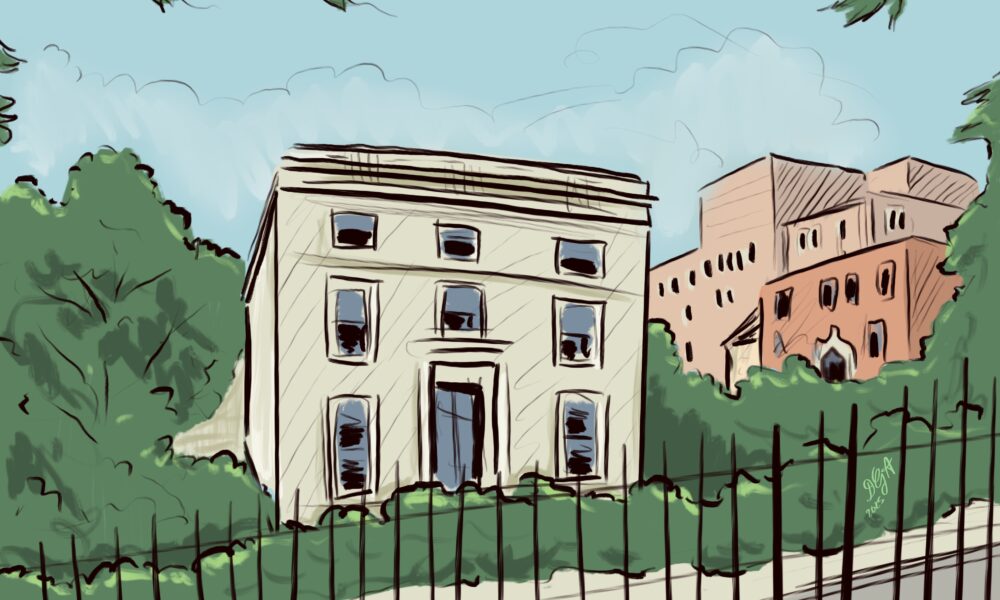
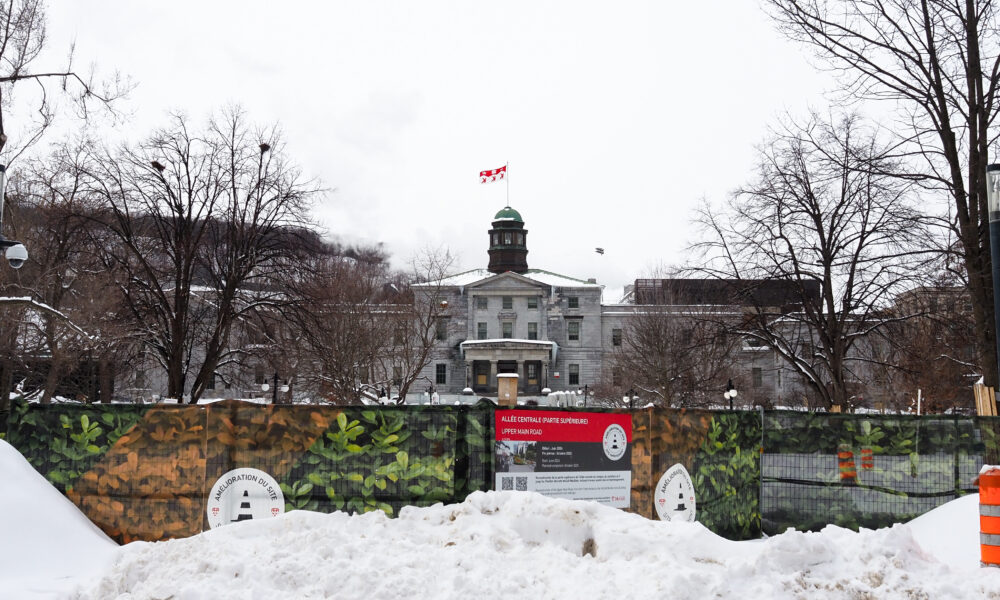
The McGill Downtown Campus’ Upper Main Road, otherwise known as the Y intersection, has been under construction for eight months. The project was outlined in McGill’s 2019 Master Plan, with construction beginning in June 2024. The Master Plan set out short-, medium-, and long-term plans to improve the built environments of McGill’s Downtown and Macdonald campuses. 

In a statement to The Tribune, the McGill Media Relations Office (MRO) wrote that although some construction projects may seem stalled, it can be due to the phasing of work and environmental factors.

“The Y intersection redesign is a project that involves ground infrastructure,” the MRO wrote. “Though some work can happen during frost periods, other phases must wait for warmer periods.”

The New Vic Project, which was first introduced in 2015, has been under construction since 2022. The project takes place in part on the grounds of the former Royal Victoria Hospital, whose Allen Memorial Institute was a site of the CIA’s MK-ULTRA mind control and chemical interrogation experiments. Since its inception, the Kanien’kehá:ka Kahnistensera (Mohawk Mothers) have contested the project, arguing the site may hold unmarked graves. Despite the Mothers’ calls to halt construction and undertake a comprehensive investigation of the site, McGill maintains that the New Vic will be completed and inaugurated in 2028.

Other ongoing construction and renovation projects include the Strathcona Music Building, the Raymond Building on the Macdonald Campus, the New Residence Hall, and the McConnell Arena. Currently, there are over 60 ongoing or planned construction projects at the downtown campus.

Pending or new construction projects, like the Fiat Lux library project, have been suspended until further assessment.

How will cuts to McGill’s financial budget affect current and future construction projects?

The McGill Media Relations Office (MRO) wrote to the The Tribune, clarifying that construction projects are not affected by McGill’s financial budget.

“Capital projects like construction are not part of the operational budget. They have their own envelope,” the MRO wrote. “Government rules require that these remain totally separate.”

What factors may affect the timeline of McGill’s construction projects?

McGill construction projects require governmental approval as they are heavily funded by the provincial government of Quebec. With Labeau and Manfredi’s announcement on the government’s yearly cap on provincial funding, the university has to suspend new construction projects. In turn, this may delay the completion date of various construction projects.

In addition, any construction or renovation project in the Golden Square Mile must be approved by the Ministre du Patrimoine Pascale St-Onge due to the neighbourhood’s historical significance. 

The Golden Square Mile, bordered by Avenue des Pins on the north, covers most of McGill’s Downtown Campus. Most construction projects on campus therefore require this second layer of approval, adding time to their completion.

For more information on McGill’s current construction projects, visit the McGill Interactive Accessible Network Map. For future construction projects, visit McGill’s Campus Planning and Development Team’s Master Plan.

Off the Board, Opinion

McGill’s “gatekeeper courses” are against the spirit of education

The first time I expressed my desire to attend McGill, my enthusiasm was met with a warning: “You might get in, but it’s difficult to stay in.” They meant that although the university does not have the traditionally single-digit acceptance rates of American Ivy Leagues, the difficulty and low averages of many McGill courses make passing classes almost as difficult as getting into the university itself.

Courses taken early in one’s degree, like BIOL 200 (B- average in Fall 2022 and Fall 2023), MATH 140 (B- average in Fall 2023 and C+ average in Winter 2024), and ECON 209 (B- average in Fall 2023 and Winter 2024, and C average in Summer 2024) have been notorious for their incredible difficulty, leaving a sense that the course is designed to “weed people out” of the program or school. This seems extremely counterintuitive, especially in a student’s first or second year when they are just starting to navigate university life and venture into new areas of study. 

University degrees are structured so that students must learn the foundations of their desired program before moving on to upper-level courses that will make use of those same concepts throughout the rest of their degree. The purpose of early-degree prerequisites should be to solidify students’ knowledge in preliminary concepts before they either specialize or proceed to upper-level courses, not to discourage those who don’t immediately excel. 

Yet, even for those who don’t get “weeded out”, the high-intensity nature of these foundational courses might weaken a student’s academic foundation. When a student spends a prerequisite course cramming and struggling to keep up rather than thoroughly absorbing the information—especially if they are taking several of these types of courses at once—they will enter future classes without a strong enough grasp on the foundational material to succeed. 

As such, these courses essentially “gatekeep” certain degree programs by demotivating students with intense and excessive requirements, leading them to transition to another program they might be less passionate about, or even to a different school entirely. Foundational courses at McGill seem to serve as a test instead of an opportunity to learn, be inspired, and build important skills that will be useful in upper-year courses. Such a system design fails to reward a desire to learn, meaning students end up neglecting courses that inspire them in favour of courses they know they will pass.

The feeling of working hard and still struggling academically has adverse mental health implications, especially for those with learning disabilities or for students who are struggling to adjust to university life. The first year of university requires coming to terms with newfound independence, residence life, unfamiliar social situations, and, for some, even a new country and culture. Unnecessary academic pressure makes this transition even more difficult.

It is true that McGill is a world-class educational institution and therefore needs to hold itself to certain academic standards, but the purpose of a university is to teach and uplift, not to hastily thin the crowd of first-years probing a newfound interest in economics or biology. If courses prioritized supporting students to retain information and less on trying to “weed people out,” then a more accurate sample of people who would not thrive in a program or at the school would self-select. This is a much better alternative than discouraging students with a passion for their desired program by subjecting them to intense preliminary courses and low-grade averages. Instructors can and should encourage learning and retention without compromising academic rigour, and course material should be appropriate for the level of the course. McGill as an institution should be uplifting the students it accepts, rather than using difficult early-year classes to prey on their downfall.

Science & Technology

Our universe through the James Webb Space Telescope

For some, seeing images of distant galaxies induces feelings of excitement and curiosity. For others, it sparks fear and a sense of insignificance. And who can blame them? It’s easy to feel small when living in a seemingly infinite universe.

The James Webb Space Telescope

On Feb. 14, at the sixth McGill Physics Society Colloquium of 2025, guest speaker Sarah Rugheimer—an astrobiologist and Associate Professor at York University—delivered a lecture on the James Webb Space Telescope, the most technologically advanced space observatory ever created. Known for its breathtaking images of distant galaxies and cosmic phenomena, Webb has opened new frontiers in our understanding of the universe.

Rugheimer began by explaining the remarkable technology behind Webb, focusing on its primary mirror, which is composed of 18 smaller, gold-plated mirrors that measure a combined 6.5 metres in diameter.  

“These 18 different [mirrors] are each getting their own image, and then they have to be brought together to sing as one choir, so to speak, so that they actually are functioning as a single telescope,” Rugheimer said in her lecture.

The mirrors work together to concentrate their light onto one smaller secondary mirror which reflects back to the telescope’s processing system, ultimately allowing Webb to capture extremely high-resolution images. To reflect their light onto such a small point, each mirror must be able to adjust its position within eight nanometres of precision, equivalent to one ten-thousandth of a human hair.

Webb & Hubble

Before Webb claimed the title of ‘most advanced telescope ever built,’ the Hubble Space Telescope was the reigning champion. Hubble, a reflecting telescope, captured the first images of deep space, revealing thousands of galaxies, each with hundreds of billions of stars. First launched in 1990 and still functioning today, it has fundamentally changed our understanding of the universe. 

While Hubble captures light in the ultraviolet and visible spectrum, Webb’s much larger mirror surface allows it to capture longer, infrared wavelengths of light. Because our universe is expanding, light waves from distant galaxies are subject to the Doppler effect, meaning they have been stretched by the time they reach us. These stretched wavelengths are redshifted into the infrared frequency range, making Webb an ideal candidate for capturing them.

“James Webb [Space Telescope] is needed in order to see those most distant galaxies because that light has really shifted to those infrared wavelengths. So Webb is able to just look back further than Hubble ever could,” Rugheimer explained. 

Infrared wavelengths also paint a clearer picture of our universe, since they travel right through clouds of gas and debris, revealing details that Hubble couldn’t capture.  

Together, these telescopes give us clues about the early stages of the universe’s formation. The light emitted from these distant galaxies has often been travelling for billions of years by the time it finally reaches the telescopes’ point of view.  

“Hubble can see back to about a billion years after the Big Bang, and Webb is able to go back to 0.3 billion years.” Rugheimer said. “Telescopes are time machines in a way, because of the constant speed of light. The further we look away, the earlier the parts of the universe we see.” 

From exoplanets to our own solar system

Webb’s scope isn’t limited to galaxies and supernovas: It is also helping scientists explore exoplanets—planets outside of our solar system. Rugheimer highlighted the TRAPPIST-1 system in particular, containing three Earth-sized exoplanets in the habitable zone, where conditions may be suitable for life.

Closer to home, Webb has also captured the clearest picture of Neptune’s rings in existence and imaged water plumes on one of Saturn’s moons that are larger than planet Earth.

Rugheimer shared a personal moment during Webb’s launch on Christmas Day, 2021, reflecting on the significance of Webb in our journey through the universe. 

“We were watching it on our cell phone, my husband and I, and I started to cry as this telescope launched: This is really the telescope of our generation.”

News, PGSS

PGSS councillors debate McGill’s proposed labour cuts and referendum question selection

The Post-Graduate Students’ Society (PGSS) of McGill University held its second council meeting of 2025 on Feb. 12. After approving the agenda, PGSS councillors moved on to discuss budget cuts, hiring freezes, and questions for the upcoming referendum

The first discussion item was the potential impact of staff cuts in the Faculty of Arts on Teaching Assistant (TA) positions. This follows Provost and Executive Vice-President (Academic) Christopher Manfredi’s announcement that the university will cut 250-500 positions in response to a $15 million CAD budget deficit for the upcoming fiscal year. 

Zoe Neubauer, a third-year PhD candidate in History, explained that an internal survey in the Graduate Department of History and Classical Studies found that proposed cuts to the teaching support budget would adversely impact graduate students’ education, scholarly research, and quality of life. They requested that the PGSS circulate the survey results to all Post-Graduate Student Associations (PGSAs) in the Faculty of Arts and formally condemn the university’s proposed labour cuts.

All new business items involved adding questions to the upcoming PGSS referendum taking place April 7-14. One of the motions sought to add a referendum question on PGSS lobbying the government to make labour rights applicable to graduate research. In other words, it sought to add a question to the referendum to get the PGSS to ask the Government of Quebec to classify graduate research as a job, not just part of academic coursework. 

This motion sparked a 27-minute debate among attendees. Opponents raised concerns that such a change could affect the tax status of grants and awards and put students’ education at risk if they failed to meet job requirements. 

“Making the argument to consider grad students—Master’s and PhD students—completely as employees will completely […] disregard the fact that [they] are still students,” PGSS External Affairs Officer Naga Thovinakere said.

Supporters argued that the broader PGSS membership should decide these debates through a referendum vote and with campaigning from ‘Vote Yes’ or ‘Vote No’ committees rather than just the 60 voting members present. 

“The debates that we’re having right now and the nitty-gritty can be further dealt with [in the future],” Sheheryar Ahmed, External Affairs and PGSS representative from Graduate Islamic Studies, said. “Right now, we should focus on whether or not this should be a question that the general student body should have an opinion on.”

With 14 votes in favour and 18 against, the motion did not pass.

The council voted in favour of adding a question to the referendum on approving a new provider for online primary and mental health care for members. This referendum question stands to switch PGSS’s telemedical services from current provider Dialogue, for which members pay $45 CAD per year, to Digital Doctor, a service hosted by Maple, for $25 CAD per year, maintaining the current opt-out option. 

In addition to Digital Doctor primary care, councillors also passed a motion to add a question to the referendum regarding mental health care under the service. This would be an additional $30 CAD per year fee that members could add to their Digital Doctor primary care subscription, allowing access to online mental health care; this motion also passed with an overwhelming majority. 

Moment of the Meeting:

In its final motion of the night, the council voted to include a referendum question proposing a significant reduction to the PGSS Special Projects fee. If approved, the fee would drop from $4.60 CAD to $1.50 CAD, citing severe underuse. According to the motion, the fund has primarily served as a contingency for potential legal fees and website maintenance rather than supporting new projects in recent years.

Sound bite: 

“It’s useful [and] important to have access to some kind of virtual healthcare platform. [It is] just too bad that this requires us giving money to privatized healthcare, and it’s unfortunate that the state of our public healthcare system means that [private virtual healthcare] is something we want to do, which I and my members are opposed to [….] But I’m not opposed because we’re not going to fix the public healthcare system at PGSS [council].” — School of Urban Planning PGSA representative Brenagh Rapoport, discussing the switch to Digital Doctor. 

A previous version of this article did not list Zoe Neubauer’s name. The Tribune regrets this error.

Science & Technology

Confronting anti-Black racism in Canada’s healthcare system

With a national identity built upon the idea of being a cultural “melting pot,” racism often gets swept under the rug in Canada. Despite curating this idealized image of inclusivity, racism is ingrained in the nation’s history and institutions, including the Canadian medical system

Khandideh Williams, a PhD Candidate in McGill’s Department of Family Medicine, shed light on inequities in healthcare through her recent publication in BMC Public Health, which explores how Black individuals perceive and experience anti-Black racism in Canadian healthcare.

“I started my work in 2020, which as we know, a lot was happening in 2020, including the murder of George Floyd. His murder brought about widespread conversations about anti-Black racism both at McGill and within my department,” Williams said in an interview with The Tribune. “It was through engaging in those discussions and learning more about anti-Black racism myself on my own time that I realized that that’s something I would like to focus on.” 

Williams interviewed 32 Black volunteers in Montreal who represented 20 different ethnicities and whose ages ranged from young adults to seniors. The diversity of the participants was reflected in their experiences of racism, supporting William’s hypothesis.

“The Black community, especially [in] Montreal, is extremely diverse. Whether we’re talking about place of birth, mother tongue, or ethnicity, we’re an extremely diverse group with diverse worldviews, ideas, and ways in which we approach different situations,” Williams said. “So for my project, I approached it with this logic that if the Black community itself is diverse, then it follows that experiences of racism are diverse.”

Williams’ research focused on two central questions: Did participants perceive racism during their healthcare interactions, and how did their unique identities and social positions influence their experiences and perceptions of racism?

For participants, the perceived racism was most often subtle and covert, manifesting itself through microaggressions and harmful stereotypes. 

“One common stereotype was that of the strong Black woman: ‘Black women don’t feel pain, so they don’t need anesthesia. They don’t need pain medication because they’re strong; their skin is stronger.’ Or that ‘Black men are drug dealers; they’re delinquents. So, we’re also not going to give them drugs because they’re going to abuse it,’” Williams said. 

The study also revealed that Black immigrants’ perceptions of anti-Black racism in Canada varied depending on their country of origin. For example, participants who had come from the UK and the U.S. found racism to be more openly discussed and overtly expressed in those countries than it was in Canada. They noted that the socially taboo nature of race discussions in Canada often made it harder to identify racism in their everyday lives. 

Contrastingly, immigrants from African countries may not have had prior experiences with anti-Black racism before coming to Canada.

“In Nigeria, in many African countries, Black people are the dominant group [….] Blackness or race is not necessarily what people use to classify people in such societies,” Williams explained. “So when [a participant from Nigeria] came here, he knew that there was this thing called Blackness, but he didn’t really understand its implications until he and his mother experienced it.” 

Williams’ research also highlights the impact of intersectionality on racism. Experiences and perceptions of racism are informed by more factors than just race, including gender and age. Williams is now focusing on a second phase of her project—a quantitative analysis with data from Quebec, Ontario, and British Columbia—to determine if these intersectional trends are consistent across Canada.

Ultimately, Williams’ work highlights the urgent need for open conversations about race and racism in Canada. We can’t make our communities and institutions equitable until we acknowledge that they are fundamentally unjust.

“I think our country is still battling with their comfort in even tackling the issue. To tackle an issue means to first acknowledge that it exists,” Williams said. “But I think many people are not yet ready to do that.”

Martlets, Men's Varsity, Sports

The faces of McGill’s athletic legacy

For the majority of university athletes, recognition comes in the form of trophies, accolades, and team victories. A special way McGill honours its varsity athletes is by wrapping doors in the Athletic Complex with their images, featuring team members from a range of sports from artistic swimming to rugby. The doors were recently rewrapped to feature current student-athletes. 

Martlets Soccer midfielder Elisabeth Pronovost, U3 Science, reflected on the experience, sharing that it feels surreal to see her photograph every time she goes to the gym and even joking that she sometimes hides her face when using her door so McGill students don’t make the connection. 

“I feel really at home at McGill, and knowing that I represent the team on that door just makes me feel like it’s both ways,” she shared. “It’s not just me enjoying McGill, but also I’m really a part of it.”

Beyond showcasing the athletes themselves, the photographs represent team memories and unique journeys that have brought these athletes to McGill. For artistic swimmer Sonia Dunn, U1 Science, that journey began at five years old. 

“One of my elementary school friends, her older sister did artistic swimming, and she invited me to her year-end show as a playdate because she found the sport really boring,” Dunn recalled. “She even brought toys so we could go play somewhere else. But I didn’t want to leave—I was just captivated from the beginning.” 

That moment sparked her dedication to the sport, a passion that has now earned her a place memorialized in the athletic centre. For artistic swimming, the rewrapping of the doors celebrates more than Dunn’s athleticism; it provides recognition of an underappreciated sport.

“McGill is one of the only universities in Canada where artistic swimming is a varsity sport, while at a lot of other schools, it’s just a club,” Dunn explained. “So, to have the additional honour of being recognized in the sports complex is really special. Obviously, it’s kind of a niche sport, so any recognition we can get is definitely a positive.”

That sense of pride extends past the walls of the athletics complex. Whether it’s the roar of the home crowd at McGill’s annual November artistic swimming meet or the soccer team’s trip to Paraguay to promote women in sports, the connections formed through competition are unforgettable. 

Nicolas Vicente Louis, U3 Management, recalled a particular bonding moment with the rugby team. 

“We had a trip to Quebec planned two winters ago, and 30 of us guys split between five or six cars, we just went away for the weekend,” Vicente Louis recalled. “[We] had a blast. We rented a chalet and just had a good time and a half.”

For those whose faces now grace the athletic complex doors, the honour is both a personal milestone and an inspiration for future athletes. Vicente Louis spoke about growing up playing rugby with his younger brother, who is currently playing rugby in high school in London. 

“There’s only one guy out of the 45 who gets a door. It’s very special […] and even in a few years, when we come back for alumni games, if my picture’s still up there, it’ll be a cool souvenir,” Vicente Louis reflected. “An added benefit is that it’ll help incentivize my little brother to come and join the team.” 

More than just a photograph, the doors tell the stories of McGill’s athletes—stories of perseverance, community, and the deep passion that makes them more than just competitors. They are a lasting tribute to the spirit of McGill sports.

“I truly feel like the team is a family, and the coaching staff is also part of that family. Representing McGill, to me, means so much and it’s like a part of who I am—a part of my identity now,” Pronovost expressed.

Science & Technology

Breaking down silos: SUSAN’s global initiative to advance sustainability

From governance and policy to social sustainability and economics, solving global environmental issues demands collaboration across all fields. 

Juan C. Serpa, Associate Professor of Operations Management at McGill, has constructed a groundbreaking initiative designed to bridge the gap between different academic disciplines, fostering collaboration in the fight for sustainability. His project, the Sustainability Academic Network (SUSAN), has become a central hub for researchers, students, and organizations, connecting over 3,000 institutions and classifying sustainability efforts into 60 distinct themes with the help of generative AI.

“We’ve been working on this for two years and released it six weeks ago, and it suddenly became viral,” Serpa shared in an interview with The Tribune. “We’ve had 8,000 users sign up already.” 

The rapid success of SUSAN reflects the growing demand for a centralized space where sustainability-focused individuals can easily connect, share resources, and collaborate across various disciplines. 

“Universities have traditionally been organized in silos,” Serpa explained. “We think about engineering, business, medicine, and arts separately. But sustainability isn’t like that. It requires input from all these fields. To tackle challenges like solar power, we need engineers, policymakers, business leaders, and more—all working together.”

SUSAN is a platform designed to address this need, uniting researchers across disciplines and promoting collaboration on projects ranging from renewable energy solutions to social sustainability initiatives. 

Serpa believes that sustainability is a unique challenge in academia. 

“If I were going to create the law academic network or the medical academic network, they don’t need this. They talk with each other already. They have their own mechanisms,” Serpa said. “Sustainability crosses the boundaries, and that’s why we need a platform like this.”

For many students and academics, finding sustainability-related events, conferences, and networking opportunities is a time-consuming task, requiring them to visit multiple websites and sift through scattered resources. SUSAN solves this problem by consolidating all these resources in one place. Whether you are looking for conferences, networking opportunities, or simply to connect with others working on similar projects, the platform serves as a comprehensive hub for all things sustainability. 

As SUSAN continues to grow, it faces the challenges of sudden success. Serpa anticipated that within the next few months, the platform could reach 100,000 users, which may put stress on its current financial model. Despite this, he is committed to ensuring that the platform remains independent from corporate influence and stays true to its goal as an academic initiative. 

“It’s a good problem to have,” Serpa said. “But as we grow, we need to think about how we can ensure this platform remains focused on its mission: Helping sustainability initiatives thrive.” 

Serpa’s vision for SUSAN goes beyond academic connections. He hopes that the platform will serve as a community space for anyone interested in sustainability, from students launching their careers to grassroots organizations hosting local events. He envisions a global network where universities like McGill and institutions worldwide come together, share resources, and work collaboratively to build a sustainable future. 

“There are already sustainability events happening all over Montreal, and we want to create a central calendar for all of them,” Serpa said. “By connecting universities, communities, and organizations, we can maximize our collective impact.” 

With its potential to grow into a vital resource for sustainability efforts worldwide, Serpa is optimistic about the platform’s future. 

“I don’t want it to be my own platform. I want it to be something that is from the research community,” he said.

As the world grapples with urgent environmental challenges, initiatives like SUSAN showcase the power of collaboration—and how enthusiastic people are about collaborating across disciplines to solve today’s pressing issues. For students, researchers, or simply anyone passionate about sustainability, this platform could be the gateway to making a difference.

Science & Technology

Black History Month panel investigates representation in genetics research

On Feb. 12, McGill’s DNA to RNA (D2R) initiative hosted a webinar in honour of Black History Month. Led by Mariloue Daudier, Senior Advisor, Equity, Diversity and Inclusion for D2R, the session explored the opportunities and challenges faced by Black individuals in genetics research. The webinar featured three guest speakers who shared their insights on the importance of Black representation in RNA research and therapeutics.

Daudier began with an introduction to D2R—a McGill-led research initiative with the goal of developing an inclusive Canadian approach to genomic-based RNA therapeutics. She described a brief history of Black people in Canada, explaining that Black people continue to face equity and inclusion issues today, with particular barriers to representation in research.

However, she noted McGill’s commitment to addressing these issues and highlighted the university’s anti-Black racism action plan.

“Why this is so important to me is because by always putting Black people in the broad category of racialized individuals, we lose track of the actual representation and issues faced by the Black communities [specifically],” Daudier said. “I think [McGill’s action plan is] really a game changer to make life better for Black communities.”

The first speaker, Paul Wankah, an Assistant Professor in McGill’s Faculty of Dental Medicine and Oral Health Sciences, discussed the importance of Black representation in research, as well as issues of mistrust between Black communities and the medical field.

Wankah presented findings from various studies, examining the different ethnic groups represented within these findings. Notably, he presented a study that looked at racial and ethnic representation across several clinical trials of the COVID-19 vaccine, a prevalent RNA therapeutic. This study revealed that Black participants made up only five to seven per cent of the trial population, as compared to white participants, who made up 83 to 89 per cent.

“Here we have evidence that there is under-representation of Black people in genomic research and therapeutics,” Wankah said. “[The authors] argue that the dominance of European and American genomic research is related to advances in genomic technologies within these countries, and them having better funding opportunities, might be why [Caucasians] are much more represented in genomic research.”

Wankah then explained the origin of mistrust between Black communities and the field of medicine, referencing historical abuses in healthcare research that have led to hesitancy among Black people to participate in such studies. 

“We need more studies to understand and develop strategies to close this diversity gap,” Wankah concluded.

The second speaker, Momar Ndao, an Associate Professor in McGill’s Department of Medicine, addressed the issue of medical mistrust in Black communities abroad, focusing on his lived experience in Senegal. 

Ndao discussed gender roles as an important factor in vaccine decision-making, particularly in developing countries. He asserted that in these communities, the father makes the primary decision for their kids’ vaccination status. With limited access to information, they may be hesitant to trust the effectiveness of vaccines.

“We absolutely need to work together to make sure vaccines and technologies can be transferred [to developing countries],” Ndao said, emphasizing the importance of targeting rural areas in developing nations rather than just capital cities.

The final speaker, Loydie Jerome-Majewska, a Professor in the Department of Pediatrics, discussed the importance of Black inclusion in pediatrics. She began by discussing the prejudice faced by Black physicians, particularly when patients select a physician for their care.

She referenced a study that found Black babies had higher survival rates when cared for by Black physicians.

“We need researchers and participants that are Black in order to really understand the diseases that impact children and contribute to their low birth weight,” Jerome-Majewska said.

This powerful finding highlights the need for greater involvement of Black physicians in pediatric care and research. Jerome-Majewska concluded by reiterating the realities behind Black individuals’ mistrust of medical research, both as participants and as researchers themselves.

Hockey, Sports

Team USA dominates Finland 6-1 at the 4 Nations Face-Off

On Thursday, Feb. 13, Team USA defeated Finland in a 6-1 victory in the 4 Nations Face-Off at Montreal’s Bell Centre. The tournament—featuring top National Hockey League players from the U.S., Canada, Finland, and Sweden—is a showcase of elite international hockey. It also serves as a preview for next year’s Winter Olympics in Northern Italy, giving fans an exciting sneak peek of what’s to come.

In the first period, Finland set the pace early against the U.S., with defenseman Henri Jokiharju putting the first point on the board. This lead was cut short when left winger Brady Tkachuk struck next, tying the game for the Americans with a quick goal. Finland struggled to match the U.S.’s intensity, spending much of the remaining period defending their own zone. Goaltender Juuse Saros was under heavy pressure, making several key saves to keep Finland in the game. 

Finland controlled much of the second period, fending off Team USA’s shot attempts for the first nine minutes. Finland’s strong defence limited the U.S.’s offensive chances as the Americans looked to gain more puck possession. Despite Finland’s defensive skills, the U.S. began making more advances late in the period. Left winger Matt Boldy deflected a shot right past Saros, giving Team USA a 2-1 lead heading into the final period.

In the third period, Team USA closed down all competition with Finland in a quick turnover. Leading 2-1 at the start of the third period, the U.S. took advantage of a power play just 15 seconds in, as right wingman Matthew Tkachuk’s shot deflected off a defender’s stick and past the Finnish goalie. A mere 11 seconds later, left winger Jake Guentzel extended the lead to 4-1, finishing with a strong shot from the left circle. 

At this point in the game, there was a noticeable shift in the crowd’s energy. There was an outpour of booing and nagging from fans, solely directed at Team USA thus far in the game. A surprising number of fans were cheering for Finland, despite being so far from home. However, spectators’ loyalties switched as the Americans began to stack up goals. “USA” chants slowly rippled through the crowd as people inevitably jumped on the winning team bandwagon. 

At 3:00 into the third period, Brady Tkachuk scored his second goal of the game, just before his brother, Matthew Tkachuk, sealed the 6-1 victory with another power-play goal at 11:13. An unexpected four-goal outburst secured the win for Team USA, keeping them as a top contender in the 4 Nations Face-Off.  

The game had its share of scrappy moments and physicality, with players exchanging a few heated confrontations throughout the match. Both teams were aggressive, particularly in the second period, when tempers broke after some hard hits and close calls. A few minor scuffles broke out as players fought for possession in front of the net, but both teams kept their focus, and the game remained under control, with Team USA ultimately securing a significant victory.

Team USA’s 6-1 victory over Finland was a statement win in the 4 Nations Face-Off, solidifying the team’s elite hockey reputation. After a competitive first two periods, the U.S. pulled ahead in the third, proving their ability to dominate against such strong international competition. This victory put them in a strong spot moving forward, and inevitably helped them prepare for their matchup against Canada on Feb. 15, which they won 3-1. Meanwhile, Finland went on to restore their reputation after playing against Sweden on Feb. 15, winning 4-3 in overtime. 

Moment of the Game: Matthew Tkachuk took a shot from the point and scored by deflecting the puck off a defenceman’s stick and 11 seconds later, Jake Guentzel scored with a snapshot, all within the first 26 seconds of the third period. 

Stats Corner: Team USA took 32 total shots on net, while Finland took 21.

Art, Arts & Entertainment

Reclaiming space: Celebrating Indigenous artistry at McGill 

Art has always offered new ways of seeing, providing glimpses into diverse worldviews and creating futures that we can strive to inhabit. On the evening of Feb. 7, the University Centre Ballroom saw a group of artists, students, and educators interrogating these multiform possibilities, recognizing the potential for art to be a reclamation of space, a form of liberation, a medicine, and an education. Indigenization and Art, an event hosted by the Students’ Society of McGill University (SSMU) celebrated Indigenous artists and identities, casting the spotlight on Zoe Gesaset-Gloqowej Lee (Chinese-Mi’kmaq), Jenni Makahnouk (Anishinaabe), and Chelazon Leroux (Dene First Nation) to share their teachings and art with the McGill community. 

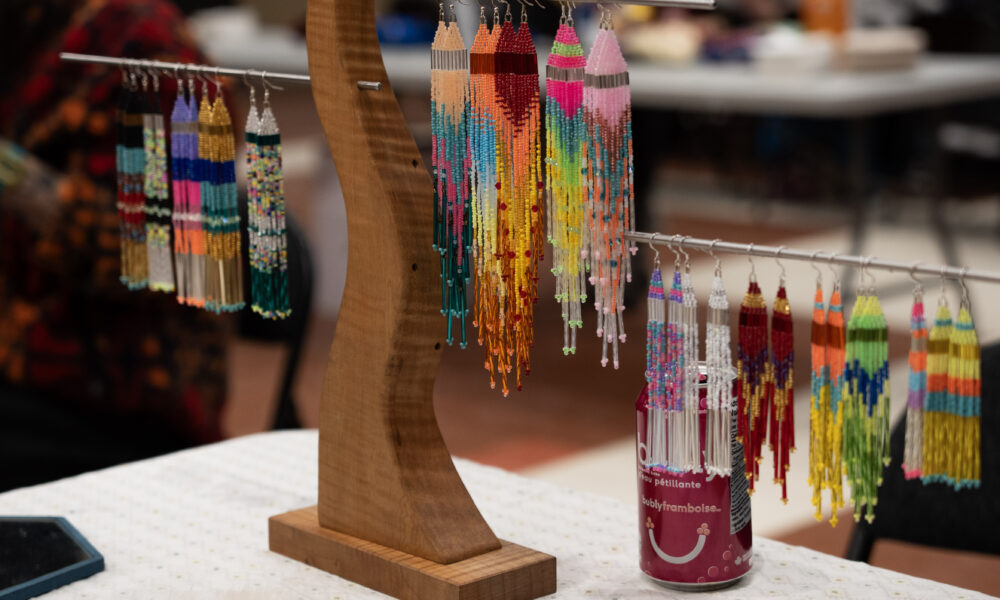
The room was gently abustle with students, milling amongst a host of local Indigenous art vendors. Monalisa Simon (Inuk), owner of Oddly Monalisa Creations, designs cute, concealable self-defence tools for women, responding to the crisis of Missing and Murdered Indigenous Women, Girls, and Two-Spirit People across Canada and the U.S.. While the crisis demands systemic change rather than placing responsibility on individuals to protect themselves, Simon responds with practical creativity, imbuing self-defence with elements of individuality and empowerment. A table nearby summoned a large crowd with their bucket of soapstone, encouraging guests to try carving. People sat on the floor, hands busy as they chatted amicably with representatives from Atelier Tlachiuak, a grassroots collective of Indigenous artists, the majority of whom are Inuit, in Tiohtià:ke. The collective provided space for unhoused artists and promoted “art’s power to heal, unite, and drive social change.” 

The night would not be complete without its speakers, interviewed by Raymond Jordan Johnson-Brown (Arts, U3)—a social media personality, and Gender, Sexuality, Feminist and Social Justice Studies (GSFS) student at McGill. Institutions “work for Indigenous communities but not often with them,” Johnson-Brown remarked. He saw this gathering as an opportunity for further dialogue and collaboration between Indigenous and settler folks, facilitated by art.

On McGill’s campus, where many of the night’s contributors do not see themselves or their communities reflected, art can operate as a potent method to reclaim space through visibility, serving as an assertion of presence, permanence, and continuity. For Lee, designer, muralist, and McGill undergraduate student, her artwork—in this case, a mural intended for the SSMU lobby—is a recognition of Indigenous presence within the McGill community. Lee’s practice investigates legacy and self-recognition, blending influences from the people she loves and the aesthetics which inspire her such as Pinterest art and risograph printing. The mural will depict “traditional medicines from across the country” such as sweetgrass, cedar, and Saskatoon berries. 

The second speaker was Jenni Makahnouk, an Anishinaabekwe beader and McGill’s first Anishinaabekwe valedictorian. Makahnouk critiqued the institution’s emphasis on French and English languages, stating she feels represented by neither. She seeks to uplift Ojibwe and other Algonquin languages, using beading as a methodology to explore the ties between language and craft. For Makahnouk, beading is both an artistic and educational practice—one that resists colonial linguistic structures while fostering cultural healing. She reminds the audience that “Indigenous art is still art,” deserving recognition as “luxury goods” rather than pigeonholed as simple handicrafts. 

The grand finale of the evening was carried out by the dazzling Chelazon Leroux: Drag artist, comedian, and educator. Leroux views drag as a means of storytelling, humour, and healing—integral practices for many Indigenous communities. Raised in Treaty 8 Territory, Fond Du Lac First Nation, they describe drag as a “superhero” persona that helped them navigate intergenerational trauma and explore their Two-Spirit identity, which they describe as being “the blessing of carrying both the feminine and masculine spirits.” When explaining that many Indigenous worldviews are defined by one’s role in supporting their community, Leroux said that being Two-Spirit is a responsibility to bridge the genders, providing a third way to serve the community. Leroux closed the night with a vivacious performance, their shimmering hair flashing as they danced to Doechii. The evening highlighted art’s power to reclaim space, challenge institutionalized erasure, and foster connection—affirming Indigenous presence and creativity as integral to the McGill community.

Zoe Gesaset-Gloqowej Lee is a Design Editor at The Tribune. Though quoted, she was not involved in the editing or publication of this article.

Read the latest issue

Read the latest issue