


Latest News

McGill, News

Self-proclaimed anarchists claim responsibility for smashing windows of five buildings across campus

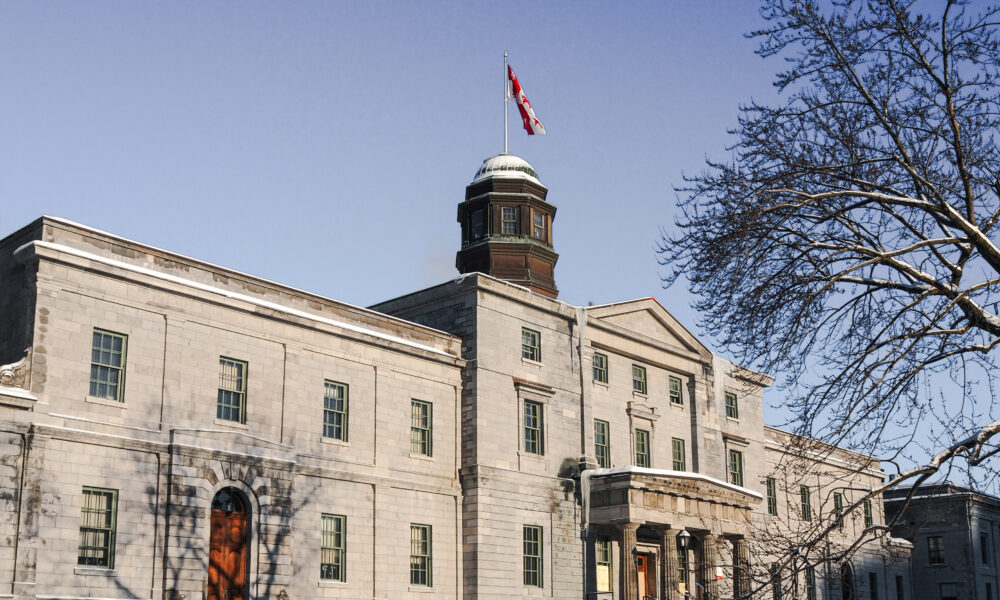
At 8:15 p.m. on Feb. 5, a group of approximately 40 people smashed over 30 windows and tagged the Leacock Building, the McCall MacBain Arts Building, and the James Administration Building. The self-described anarchists entered campus from Rue McTavish with a banner reading, “Colonial institutions will fall.” Despite being on campus for less than 15 minutes, their actions disrupted classes and exams, including a CHEM120 midterm in Leacock 132 that evening. 

Alex*, U0 Arts, was writing a midterm in Leacock when the group began smashing windows. A bystander informed teaching assistants about the windows being broken outside the lecture hall, and instructed students who had finished the midterm to leave through a different exit.

“We just heard this glass smashing and people talking. And then this girl comes in, and she starts talking to one of the TAs and then all these people start running towards the door, and they just start telling us, ‘You can’t, you can’t get out from that door,’” Alex told The Tribune

An anonymous group of anarchists claimed responsibility for the vandalism, posting a statement online the next day that clarified their intent to destabilize the university. 

“For us, McGill is nothing but a symbol of a colonial and capitalist system, of which we call for the complete destruction. We encourage our comrades to extend the struggle towards the destruction of all oppressions, and to continue escalating towards revolution,” the statement read.

The statement explicitly denounced McGill’s New Vic Project and its historical involvement with MK-ULTRA mind control experiments, the university’s choice not to divest from companies with ties to Israel in December 2024, and the university’s choice to uproot a white pine tree planted during a Haudenosaunee peace ceremony in November 2024.

Independent journalist Cheï Lévesque, who followed the vandals as they entered campus, confirmed with The Tribune that the group was affiliated with an unspecified anarchist movement.

“My guess as to their motive is as good as [anyone’s], but it seems to be pointing to a myriad of ‘intersectional’ causes,” Lévesque wrote to The Tribune. “There was mention of ‘genocide,’ ‘warmongering,’ ‘financing genocide’ etc. chanted so I feel it is very connected to the Uni’s financing and investments [….] They also chanted stuff about [All Cops are Bastards].”

McGill’s Media Relations Office (MRO) provided a written statement to The Tribune condemning the events, claiming they caused panic among students, faculty, and staff.

“These acts were intended to intimidate our campus community and bully us into changing the University’s decision regarding proposals from some to Boycott, Divest and Sanction (BDS) the State of Israel,” the MRO wrote. “The University’s position rejecting BDS remains clear and firm.”

The BDS movement is a coalition of over 170 Palestinian unions, refugee networks, and civic groups that aims to challenge international support of Israel, and its genocide in Palestine. Representatives of BDS have recently criticized McGill for hosting companies who contribute to Israel’s surveillance and manufacturing industries at their Engineering TechFair, and for refusing to divest from corporations connected to Israel through arms manufacturing.

In their statement, the anarchists responsible for the vandalism underscored what they believe to be their right to property destruction as a form of civil disobedience in response to McGill’s refusal to accept the BDS movement’s demands.

“In the face of [McGill’s] condescension and their attachment to continuing the genocide, we say: Those who make peaceful revolution impossible will make violent revolution inevitable!” the statement read.

At the moment, it is unclear what the cost of the vandalism will be for McGill, or what the timeline for repairs will look like. 

Leaving their exam in Leacock minutes after the anarchists smashed the building’s windows, Alex was thinking more about their midterm than about the motives behind the vandalism.

“I don’t know man,” Alex said. “It’s kind of crazy that that just had to happen while writing the midterm. I was just trying to get through that, and then you hear glass smashing. You get kind of paranoid. It’s kind of crazy.”

*Alex’s name was changed to preserve their identity.

Basketball, Sports

Slam-dunk Dončić-Davis trade triggers a tectonic shift in the NBA

In a move that sent shockwaves through the basketball world, the Los Angeles Lakers acquired Luka Dončić from the Dallas Mavericks in exchange for Anthony Davis on Feb. 1. The trade, which emerged seemingly out of nowhere, represents one of the most significant player movements in National Basketball Association (NBA) history and fundamentally alters the league’s power structure.

Behind the scenes, the trade was a masterclass in NBA deal-making. Mavericks General Manager Nico Harrison and Lakers General Manager Rob Pelinka orchestrated the deal with surgical precision and professionalism. Their ability to maintain complete secrecy until the trade’s completion—even keeping heavy hitters like LeBron James in the dark until the final moments—demonstrates how front-office relationships have transcended traditional market rivalries in modern sports franchises like the NBA.

Dallas’s pursuit of Davis indicates a clear prioritization of defensive excellence and organizational culture change. Davis is a five-time All-Defensive player, nine-time NBA All-Star, and two-time Olympic gold medallist. While Dončić’s offensive brilliance is indubitable—the five-time NBA All-Star ranks third in NBA history in career scoring average, behind only Michael Jordan and Wilt Chamberlain—the Mavericks’ concerns about his conditioning and long-term commitment to physical excellence ultimately drove this decision. It has been speculated that Mavericks brass was motivated to move on from Dončić because of ‘constant conditioning issues.

At the end of the day, the Lakers have secured a successful future, with this trade representing both immediate impacts and long-term planning. In Dončić, the team is acquiring a generational talent entering his prime who can shoulder the offensive load alongside LeBron James while eventually becoming the face of the franchise. The move ensures the Lakers remain relevant in the post-LeBron era, though it creates immediate questions about their defensive structure without Davis. 

Spectators should consider the media’s role in modern basketball, having analyzed the trade in awe. This trade exemplifies the rapidly evolving nature of NBA transactions, pioneered by the way sporting faculties are developing in the social media era. Although there is constant speculation about player movements, this Hollywood deal remained entirely secret from the media’s professionally invasive eye. This secrecy likely contributed to its successful completion, avoiding the public pressure and speculation that has derailed other high-profile trades such as Paul George and Russell Westbrook potentially moving to the Raptors in 2019.

The league-wide implications are glaring to both fans and pundits within the basketball world. The ripple effects of this trade will be felt throughout the NBA because it raises questions about team building in the modern game. Many have stopped to speculate about whether or not offensive brilliance alone is enough to build around, and how much personality and work ethic factor into player retention. The trade also highlights the growing influence of new ownership groups in reshaping traditional franchise dynamics, as evidenced by the Adelson family’s willingness to trade away the supposed cornerstone of Dallas’ franchise.

Looking ahead, as both teams adjust to their new realities, the success of this transaction will be judged not just by on-court performance, but by its impact on sustaining team culture long-term. The Mavericks are taking a gamble on the fact that Davis’ two-way excellence and professional approach will establish a new identity, while the Lakers are rolling the dice on Dončić’s otherworldly offensive talents maintaining their position among the NBA’s elite. The Lakers currently sit in fifth place in the Western Conference, while the Mavs sit in an underwhelming 11th. Both teams hope to reap the rewards of their shiny new toys as the hunt for NBA stardom continues for the rest of the season. 

McGill, News, Private

McGill expected to cut 250-500 positions as university faces dire financial circumstances

McGill’s top executives hosted a virtual town hall on Feb. 7 to discuss the university’s 2024-2025 budget, particularly their strategy to address its deficit. Co-hosts of the event, President and Vice-Chancellor Deep Saini, Provost and Executive Vice-President (Academic) Christopher Manfredi, and Vice-President (Administration and Finance) Fabrice Labeau, laid out their plan to restore McGill’s financial stability. This is the second budget town hall McGill has hosted this academic year, with the first on Nov. 19

Saini opened the town hall with a frank statement about the financial circumstances the university is facing.

“Our university, as we know, is facing serious financial pressures that originate from many different sources,” Saini said. “Ultimately, these pressures have significant implications for the delivery of McGill’s mission, and our identity as a world-class university [….] Unfortunately, the road ahead will remain extremely difficult for the foreseeable future.”

McGill is currently expected to run a $15 million CAD deficit for the 2024-2025 fiscal year. This deficit would have been closer to $50 million CAD, had the university not implemented a $35 million CAD correction to its budget this past fiscal year.

To balance the university’s budget and restore its long-term financial stability, Manfredi and Labeau announced they will lead a two-phase program called ‘Horizon McGill.’ Phase one involves immediate actions to balance the 2025-2026 budget, and phase two will restructure McGill in the long-run to increase the efficiency of its operations.

A balanced 2025-2026 budget will require a $45 million CAD budget correction which would counter the budget’s expected deficit. Manfredi informed the community that the majority of the budget-balancing will come from reducing salary mass, requiring both academic and administrative layoffs.

“We can delay the filling of [a] select number of vacancies, eliminate overtime, reduce working hours or reduce pay where the employee is willing and where circumstances allow, and also [use] attrition, by not replacing staff who leave the university,” Manfredi stated. “But […] that’s not likely to be enough. In some circumstances, positions will have to be abolished, resulting in the loss of employment. That’s unsettling news.”

The university has assigned individual academic and administrative units a share of the $45 million CAD correction and required them to report by early March on how they plan to implement related cuts. According to Manfredi, this will likely involve cancelling low-enrollment courses and reducing the university’s staff headcount by 250-500 people.

Manfredi identified a combination of causes for McGill’s financial struggles, including a cap on international student admissions, growing tensions between Canada and the United States, an aging population, and restrictions from the provincial government regarding the university’s use of capital funds.  

Labeau explained that the university is not considering selling university lands or properties outright to combat its deficit, since such a move would only provide short-term relief from financial hardships whose root causes can only be addressed through restructuring.

Over the next few years, the administrators explained that McGill will aim to improve operational efficiency, eliminate red tape, and join the UniForum program—a practice-sharing forum which will help McGill compare its operations to similar institutions around the world to help identify how the university can improve its financial situation through restructuring.

In a press conference following the town hall, Vice-President (Communications and Institutional Relations) Philippe Gervais told The Tribune that, though there is little students can do to add their input to the upcoming budget, they will be able to play more of a role in phase two of Horizon McGill.

“The longer project that’s going to go over two or three years, of how we’ll restructure, and where I think a lot of the fundamental decisions will be made, [will have] plenty of room for consultation,” Gervais said.

Though Saini stressed that the coming years will be difficult and result in a compression of the university, he expressed that cuts need to be viewed in the context of the university’s long-term objectives.

“Ultimately,” Saini said, “we want to emerge as a stronger McGill, a McGill that is more resilient, a McGill that’s more sustainable, and a McGill that, frankly, is more impactful on a global stage.”

Student Life, The Tribune Predicts

The Tribune Predicts: Valentine’s Day horoscopes

Unsure how your Valentine’s Day will unfold? Luckily for you, we do! Check out your horoscope to see if love is in the stars for you.

Aries (March 21 – April 19): Your fiery passion has you convinced you’re the one for someone special—but don’t let excitement turn into delusion. You might think they’re fashionably late when, in reality, you’ve been ghosted. Channel your energy into something productive—the gym is calling, and those chocolates don’t stand a chance!

Taurus (April 20 – May 20): Forget romance—this Valentine’s Day is all about the platonic relationships in your life! You may be a little disappointed at first, but when your friends surprise you with sweets, teddy bears, balloons, and a movie night, romance will be the last thing on your mind.

Gemini (May 21 – June 21): Why choose just one Valentine when the stars align for multiple? This Feb. 14, you’ll find yourself juggling more than one admirer, unable to turn down any offers. With breakfast, lunch, dinner, and even a late-night rendez-vous, you’ll make the most of your romantic prospects and, of course, enjoy plenty of free meals along the way.

Cancer (June 22 – July 22): Lucky Cancers, your Valentine will be completely smitten with your nurturing and caring personality. They’ll plan the entire day, choosing the perfect gifts, and making sure everything is just right as a way to express their admiration for you. This special someone isn’t a temporary fling, and this day could stand as a mark of your love if you play your cards wisely.

Leo (July 23 – Aug. 22): This Valentine’s Day, opt for a stress-free celebration and skip the pressure of planning the perfect date. Instead, treat yourself to the ultimate holiday package—candles, sweets, and plush gifts—all yours to enjoy. By spending some quality time with yourself, you’ll bask in the peaceful luxury of self-love and indulgence.

Virgo (Aug. 23 – Sept. 22):  Unlike Cancers, who expect their Valentine to plan the day, your perfectionist nature drives you to create the perfect celebration. From décor to details, your efforts will make the occasion truly special—so when your Valentine arrives, they’ll say the phrase you love to hear: “It’s perfect.”

Libra (Sept. 23 – Oct. 23): No date scheduled on the 14th? No problem! With your charm and charisma, you’ll woo someone on the spot and claim them as your Valentine. Perhaps a stroll down Saint-Laurent or a spontaneous night out at the bars is in the cards for you? 

Scorpio (Oct. 24 – Nov. 21): Flattered yet conflicted, you’ll be overwhelmed by a classic Valentine’s predicament: What to do when two people declare their undying love for you. It’s a tough decision to make. But at least, unlike Aries, you’re not the one getting your heart broken.

Sagittarius (Nov. 22 – Dec. 21): Your constant need for adventure will take you and your Valentine to the ice skating rink! After all, what’s more romantic than stumbling into each other’s arms? Just be careful! Red may be the colour of love, but let’s stick to roses and hearts, not stitches and an ambulance ride…

Capricorn (Dec. 22 – Jan. 19): You will spend this day helping friends find a date instead of securing one for yourself. How delightful of you, Capricorn, you make such a great friend. Hopefully, the satisfaction of a job well done is more than enough.

Aquarius (Jan. 20 – Feb. 18): You may be expecting to spend Valentine’s Day alone as the independent and busy person that you are. However, fate will intervene; perhaps a mysterious letter will invite you to a rooftop meeting. Wonder who it could be?
Pisces (Feb. 19 – March 20): Your emotions will run deep on Valentine’s Day, prompting a sip of Pinot Grigio with every happy couple in sight. As the glasses add up, so will your courage to call that ex you never quite got over. The Tribune recommends putting your phone on ‘Do Not Disturb,’ on the 14th but hey, love (or wine) works in mysterious ways. (P.S. avoid drinks and bars this Friday).

Science & Technology

Understanding the role of alcohol in severe allergic reactions

Anaphylaxis is a life-threatening allergic reaction that occurs when the immune system overreacts to a trigger, such as food, drugs, or insect stings. Symptoms can escalate quickly, leading to difficulty breathing, a drop in blood pressure, and swelling of the throat, requiring immediate medical intervention. For people with severe allergies, rapid access to treatment can mean the difference between life and death.

A recent study has shed light on a concerning factor that can worsen allergic reactions: Alcohol. A team of researchers at McGill and other Canadian universities found that people with nut allergies who consumed alcohol experienced more severe symptoms. Alcohol can act as a cofactor, meaning it enhances the body’s allergic response. 

Roy Khalaf, a fourth-year medical student at McGill, worked on this study under the mentorship of Dr. Moshe Ben-Shoshan at the Research Institute of the McGill University Health Centre’s Infectious Diseases and Immunity in Global Health Program. Khalaf analyzed over 1,100 adult cases of anaphylaxis across Canada to examine the severity of reactions triggered by different allergens.

Food-induced anaphylaxis was the most common trigger, responsible for over 50 per cent of emergency department visits related to severe allergic reactions. Among food-related cases, peanuts and tree nuts emerged as the most frequent culprits, with tree nuts linked to particularly severe symptoms. 

Tree nut-induced anaphylaxis stood out due to its high prevalence of throat tightness, a symptom that can quickly escalate into life-threatening airway obstruction. The study found that 75 per cent of tree nut allergy cases involved throat tightness.

Moreover, compared to other triggers of allergy symptoms, nut-induced anaphylaxis was among the most severe, with patients significantly more likely to require epinephrine administration in a hospital setting. Epinephrine—also known as adrenaline—is a life-saving treatment that can reverse anaphylaxis symptoms. 

One of the study’s most striking findings was the strong association between alcohol consumption and severe nut-triggered anaphylaxis, reinforcing the need for individuals with nut allergies to be cautious when consuming alcoholic beverages. Alcohol also lowers the threshold for severe reactions, making early intervention with epinephrine even more critical.

Alcohol may exacerbate allergic reactions by worsening hypotension—low blood pressure—a critical aspect of anaphylaxis that can lead to shock. Because alcohol itself can cause a drop in blood pressure, it can intensify the already dangerous effects of anaphylaxis, raising the risk of cardiovascular collapse

Additionally, some alcoholic drinks, particularly nut-flavoured liquors like Amaretto and Galliano, may contain traces of allergens—whether from natural ingredients or artificial flavourings—posing an additional risk to those with nut allergies.

“When you drink alcohol, just make sure you read what is labelled and what this alcohol drink has, because it could have some nut flavours, and you could have an anaphylactic reaction, and that is a life-threatening reaction,” Khalaf said in an interview with The Tribune, warning about the hidden dangers in some liquors.

Despite epinephrine being the first-line treatment for anaphylaxis, many patients fail to use it when needed. The study revealed that only 30 per cent of individuals experiencing tree nut-induced anaphylaxis used epinephrine before reaching the hospital, compared to over 50 per cent of peanut allergy sufferers.

This suggests that individuals with tree nut allergies may be less aware of the severity of their reactions or less likely to carry their auto-injectors. Increasing awareness and accessibility of epinephrine could be crucial in preventing fatalities.

“We need to make the EpiPen more accessible. We need to educate patients on the importance of using EpiPens and epinephrine if they experience an anaphylactic allergic reaction,” Khalaf emphasized.

With food allergies on the rise, proactive measures are necessary to reduce preventable deaths. Improved education, greater access to epinephrine, and stronger public regulations regarding food and beverage labelling can help improve outcomes for those living with severe allergies.

Soccer, Sports

Defender Naomi Girma is a million-pound trailblazer

Naomi Girma just made history—and her bank account is very, very happy. The 24-year-old U.S. Women’s National Team (USWNT) defender became the first million-pound player in women’s soccer, sealing the record-breaking €1.07 million transfer from San Diego Wave to Chelsea Women on Jan. 26. A seven-figure move in a sport where, until recently, teams were debating whether they could afford charter flights, is no small shift.

This achievement is not just a win for Girma, Chelsea, or women’s soccer bankrollers. In a sport that has historically struggled with diversity, the first player to smash this financial ceiling is a Black woman. Not only does this deal set a new financial benchmark, but it also holds profound cultural and social implications for the posterity of a white-dominated sport.

Especially in countries like the U.S. and England, women’s soccer has been predominantly white and upper-class in recent years. Factors such as the pay-to-play model in U.S. youth sports have often limited access for underrepresented communities, leading to an insistent white majority. In England, the shift of training facilities to suburban areas has made participation challenging for low-income girls, further contributing to the homogeneity of the player base. The phenomenon has also been noted in other league pairs, such as the National Basketball Association (NBA) and the Women’s National Basketball Association (WNBA). 

In contrast, men’s soccer hosts many more players from diverse backgrounds at all levels, from Emmanuel Boateng to Neymar. This is due in part to the charity and funding that flows into the sport regularly. The Fédération Internationale de Football Association (FIFA),  is one of the wealthiest sports organizations globally. As of the end of 2022, FIFA’s balance sheet totalled approximately $6.8 billion USD, with reserves reaching an unprecedented high of $3.97 billion USD. Nearly all of this revenue comes from and goes back into the men’s game, which allows for diverse developmental pathways and greater accessibility at a grassroots level.

In this context, Girma’s ascent to becoming the first million-pound player in women’s soccer is particularly significant. Her success challenges the existing norms, and her visibility at the highest levels of the sport may inspire young athletes to follow in her footsteps. This landmark deal not only underscores Girma’s exceptional talent but also signifies the growing investment and recognition in women’s soccer. 

Girma’s move to Chelsea should (and hopefully will) be a wake-up call for clubs around the world. Investing in women’s soccer is not just equitable—it’s good business. The level of play is rising, audiences are growing, and, as this transfer proves, top players are becoming assets—ones worth spending big on.

More importantly, this moment should push youth development systems to rethink how they nurture talent. No more forcing kids to pay thousands for elite academy access. No more structuring pathways that make it nearly impossible for working-class or non-white players to succeed. The game should belong to everyone.

Efforts to promote diversity in women’s soccer are gaining momentum. Initiatives like England Football’s “Discover My Talent” campaign seem to be doing more and more to provide opportunities for girls from all socioeconomic backgrounds. However, as always, challenges such as the costs, time commitments, and accessibility of training facilities persist—but trailblazers such as Girma illustrate that it’s possible to take down these barriers. 

It is important not to forget Chelsea in all this. Sonia Bompasto’s squad has bagged a world-class defender who will be crucial in their hunt for silverware. But even beyond her impressive story, Girma’s signing makes Chelsea part of history—a club being willing to break records for a defender is always progress worth celebrating.

Campus Spotlight, Student Life

Swab the World is saving lives

Swab the World is a non-profit organization that helps patients locate STEM cell donors easily and quickly. They provide a platform for individuals seeking matches to launch an effective recruitment campaign as well as a space for them to “connect, share, love, and grieve,” according to their website.

Co-President Matthew Homa, an MDCM Candidate at McGill, wrote to The Tribune to discuss the club’s activities. Homa explained how the chapter, which is under the Medical Students Society, was founded and why he joined the organization.

“Our founder, Mai Duong, was diagnosed with acute myeloid leukemia in 2013, and after beating it once and having it return, she learned that a stem cell transplant was the only treatment that could save her life,” Homa wrote. “However, recipients are more likely to match with someone of their ethnicity, and the lack of diversity in our current registry made it virtually impossible for her to find a match.”

He went on to write that Duong rallied the Montreal Vietnamese community to find her match. After she secured a donor, Duong made it her mission to raise awareness about the lack of diversity in donor pools, leading her to start Swab the World. In 2018, she co-founded the organization with Christiane Rochon, and in 2021, McGill’s chapter was launched by Chloe Gordon and Owen Luo

“At McGill, our passionate club of 40 Swab ambassadors continue [Duong’s] mission on the local level, helping raise awareness about the need for stem cell donors and the inequality in finding a donor while helping students sign up for the donor registry.”

Homa also touched on the challenges the chapter has faced, writing about the difficulty of reaching ethnically diverse students.

“One of the biggest growing pains has definitely been reaching out to the broadest audience possible,” he wrote. “It’s easy to fall into a niche, advertising in the same buildings on campus or collaborating with the same clubs because that’s familiar to us. However, we would then be actively disadvantaging all of the communities that need donors whom we’re not working with! So, we’re always trying new things, working with new clubs, and sharing our message with the broader community.”

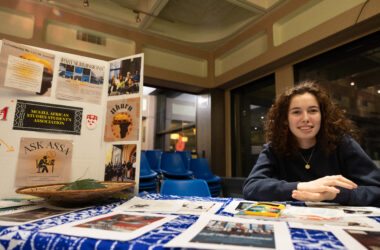
One way they do this is by collaborating with culture clubs to reach diverse students. On Jan. 31, the chapter hosted an intercultural food fair with the McGill Vietnamese Students Association and the McGill University Filipino Asian Students Association. The culture clubs sold treats—with 50 cents of each sale going to Swab the World, and the Swab ambassadors offered on-site swabbing kits. The chapter also frequently hosts swab booths that allow McGill students to submit their saliva samples for registration. These DNA samples, after being examined for particular characteristics, are used to match donors with patients.

The chapter has several events coming up that Homa wanted to bring attention to. First, on Feb. 14, they will have a swab booth at the Black Student Network’s Black Beauty Day. The next day, Feb. 15, they will host a swab booth at the DKE house before the frat’s party. Finally, on Feb. 22, they are tabling and hosting a swab booth at the Coda Foundation’s Coda Gala. Coda is a student-led non-profit raising money for hospital cancer care.

Looking ahead, Homa wrote that their chapter will have a booth at the Universities Allied for Essential Medicines’s North American conference from Mar. 21 to 23 to discuss the racial barriers to transplant access.

For anyone unavailable to attend events in person, it’s possible to swab from home.

“While we’d love to see you join our events and swab to join the registry, you can register from home! Just look up Swab the World, visit our website, and register to donate. A kit will get sent to your house, and you can swab your cheek at a time that works for you! Stem cell transplants are often the last treatment option for leukemia, lymphoma, and other patients with hematologic conditions, so your 5 minutes signing up could save a life,” Homa wrote.

Find Swab the World on Instagram @swabtheworld_mcgill.

McGill, News

For a second time, the Board of Governors CSSR does not recommend McGill divest from weapons manufacturing

The McGill Board of Governors (BoG) held its first meeting of the Winter 2025 semester on Feb. 6. The BoG—which has the final say over all academic, business, and financial affairs at the university—began after nearly two hours of private session, closed to the public and media. The meeting’s open session commenced with a report from McGill’s President and Vice-Chancellor Deep Saini.

Among Saini’s remarks was a reflection on the annual meeting of the World Economic Forum, which he attended in Davos, Switzerland in late January. According to Saini, the conference was dominated by conversations about AI. He noted that universities are globally seen as laggards in the AI sector. 

“While we are generators of a lot of the technology that drives AI, we are almost absent from that option,” Saini said. “McGill has the opportunity to actually leapfrog and show the way.”

Next, the meeting moved on to committee reports, starting with the Committee on Sustainability and Social Responsibility (CSSR). On June 25, 2024, community members submitted an Expression of Concern (EoC) to the committee, urging McGill to review divestment—which was resolved in December 2024, with the BoG ultimately deciding not to divest. In its report on the matter, the committee stated that “the concept of ‘social injury’ is not one which extends a ‘daisy chain’ of causation to an infinite number of parties through their mere association or presence in a territory.” 

Committee Chair Alan Desnoyers explained that during the same period, the BoG received a request from the McGill administration to explore divestment from “direct investments in companies that derive a dominant portion of their direct revenues from the production of military weapons, regardless of the country in which they operate.” The latter came from negotiations between the administration and the Palestine Solidarity Encampment which took place on Lower Field for 75 days in the spring and summer of 2024, until the university dismantled it. The report shared at the Feb. 6 meeting was in regard to the administration’s request for review.   

Ultimately, Desnoyers explained that the CSSR would again, not recommend divestment. 

“After careful consideration of the diverse opinions and expert insights, as well as the review of McGill’s investment practices, the committee is satisfied that the university’s overall investment approach is well-positioned to preserve the capital of the McGill investment pool within the social and ethical norms of the university,” Desnoyers said. 

Following Desnoyer’s presentation, Students’ Society of McGill University (SSMU) President Dymetri Taylor expressed that this decision may face backlash from students and community members and asked the Board if it would ever consider such divestment. 

“I don’t think you can ever say ‘Never.’ I think it’s very context-dependent, and at this stage, […] we felt it wasn’t necessary,” Chair of the Board, Maryse Bertrand responded. 

In a written statement to The Tribune, Students for Palestine’s Honour and Resistance (SPHR) wrote that this decision will not deter their action. 

“Last Thursday was a reminder to the BoG that we will not be quiet and there will be no business as usual until divestment,” SPHR wrote. 

The Board then moved to hear a report from the Audit and Risk Committee. Committee Chair Maarika Paul outlined the group’s updates, including that all of the recommendations outlined in the Internal Audit Final Report of the Macdonald Campus Asbestos Investigation have been completed. This report was submitted to the Board in September 2023 in response to multiple incidents of asbestos exposure on the satellite campus that year. 

The Board then heard a presentation from Dean Viviane Yargeau on the Faculty of Engineering. Yargeau emphasized her focus on expanding experiential learning, citing the faculty’s newly-introduced Internships and Co-ops Office. The Dean also touched on gender diversity in the faculty, stating that with 36 per cent of its engineering students identifying as women, McGill has one of the highest proportions in the country.

Finally, Taylor presented on SSMU, outlining the union’s management structure, funding mechanisms, what student groups SSMU supports, and current challenges the body is facing. These challenges included polarization of the student body, a lack of engagement, and the overpowering authority of SSMU’s Board of Directors over its Legislative Council.  

Moment of the meeting:

As the BoG met inside the James Administration Building, protestors splattered red paint on the outside walls of the building, materializing their discontent with McGill’s response to calls for divestment. 

Soundbite:

“That’s certainly more information about the SSMU than I’ve ever had in all my years here.” — Bertrand on Taylor’s SSMU presentation.

Campus Spotlight, Student Life

Dinner with a Stranger seeks to set students up for social success

When you picture modern match-making services, you might be inclined to imagine social apps that run algorithms at lightning speed to assess the compatibility of two candidates, offering a suitable pairing in just a few seconds.

Dinner with a Stranger McGill takes a different approach to pairing people up: Interested students fill out the club’s monthly questionnaire of personality-based questions. A small team then scrolls through a Google spreadsheet filled with people’s responses, making matches by hand based on students’ similarities and connecting the pair over email. 

“It’s very time-consuming,” Stephanie Sartori, U2 Science and Dinner with a Stranger co-president, told The Tribune

“But once you get in the flow of matching people, I feel like you can get it done pretty quickly,” Erika Kan, U2 Arts & Science and the club’s other co-president, added. “It’s fun because when you find people that are a perfect match, it’s like a rush of adrenaline.”

Sartori and Kan are the co-founders of Dinner with a Stranger McGill: A group dedicated to pairing interested students in the hopes of building lasting friendships. Although some students use the club as a dating service, the co-presidents emphasized that the focus of the club is on fostering community rather than setting up romantic relationships. In addition to match-making, the club also aims to host social events open to all students—such as their upcoming Galentine’s karaoke night on Feb. 15.

Sartori and Kan explained that the concept behind the club came from Sartori’s sister, who launched a group bearing the same name at the University of Glasgow. Sartori and Kan started their own version of the club in the summer of 2024 after recognizing the difficulties they faced in meeting new people once they were no longer first-years. As international student Buddy Program mentors, hearing from many other students about the challenges of making friends also inspired them to start the club.

“I feel like I’ve made all of my friends during frosh, and since then, I’m still friends with them, or I’m friends with people who I’ve met through connections,” Kan said. “I haven’t really met new people organically.”

“The lecture room is not an inviting place to talk to random people,” Sartori added.

For Sartori, the cold weather poses an added challenge to socializing, particularly because it means students can no longer meet up outside on campus. 

“With winter and the cold and dark vibe of Montreal, […] I feel like you can feel that there’s a disconnect, that people aren’t as tight-knit as they are during the fall semester,” Sartori said. 

In addition to individual pairings, Dinner with a Stranger offers the option of friend group matches, where multiple people can be matched with another group. 

“It’s a pretty popular option. I think it’s a little intimidating to sign up as an individual to just meet a bunch of random people,” Kan said. “A lot of people feel more comfortable signing up with their friends to meet another group of friends.”

Taimaa Bachi, U1 Engineering, and Oksana Pustova, U1 Science, are among the students who have tried the group matching option. They explained that Bachi completed a Dinner with a Stranger questionnaire on behalf of their friend group for a chance to expand their social circle. 

“At first it was a little awkward because, like, we didn’t even know what they looked like and we just decided on some random restaurant [to meet up],” Pustova said. “Once we got to talking […] five minutes in, I’d say that was very chill.”

Bachi and Pustova also echoed the value of the club as a way to make friends, noting that they hoped to try Dinner with a Stranger again in the future. 

“This is the one time where we’re surrounded with so many people our age, and it’s still so hard to reach out to people,” Bachi said. “You know [your matches] also want to make friends, and you know they’re there because they want to talk to someone else. So I think it’s a really cool opportunity.”

Commentary, Opinion

Bilingualism is not killing French — French is killing itself

The intersection of language and politics has long been a source of contention in Quebec, with the call to “protect the French language” often presented as a sort of political imperative. In spite of the steady growth of Quebec’s total francophone population, concerns of French’s supposed decline have intensified in recent years. In a province where French is so highly revered as a core aspect of its identity,  the measures taken to preserve French walk a fine line between preservation and division—a line the government recently crossed after spending nearly a quarter of a million dollars to monitor French in Quebec’s businesses and shops.

In 2022, the Quebec government hired a private research firm to make sure businesses were greeting customers in French. To test this, the firm conducted an eight-month long study that involved sending members into businesses to impersonate customers and receive typical service. The pseudo-customer would then take notes on the greeting received—in terms of the language used and proficiency of language—and record their observations via. electronic questionnaire, submitting the data to the Office québécois de la langue française (OQLF). This process was repeated in over 3,000 businesses in Montreal, setting the OQLF back approximately $224,000 CAD.

The results of this study found that 71 per cent of greetings were exclusively in French, while 97.4 per cent of businesses had French services available. While these percentages seem like clear evidence of a thriving French language, the OQLF  felt the opposite, claiming that it proved French was on the decline. All because, despite the overwhelming availability of French, the percentage of French-only greetings had gone down by less than four per cent. 

Jean-Francois Roberge, the Minister responsible for the OQLF, issued a statement on the study, remarking that the decrease in French-exclusive greetings indicates that French is becoming less prevalent in Quebec’s public sphere.

This approach is both antagonistic and counterfactual to the strong pervasiveness of French in Quebec. We should be celebrating the fact that French is alive and well in Montreal instead of framing the study as a sign of linguistic erosion.  As a matter of fact, there’s been a steady increase in the availability of services in French since 2010. The strange interpretation of these results raises the question of what political motivations might underlie such a negative analysis of a seemingly positive result. 

Cherry-picking the one ‘bad’ result and ignoring the positive findings of the study is an inherently dishonest practice, using research for political aims at the detriment of harmony between Quebec’s anglophone and francophone communities. The OQLF’s budget should be used to promote French constructively rather than as a tool for political messaging. 

Language discourse aside, the matter of spying on businesses without their informed consent is a further argument for the inappropriate implementation of this study. Not only is it invasive (and rather unsettling), but it walks a fine moral line in terms of basic research ethics. Undercover agents disguised as customers to wander into predetermined addresses and secretly record conversations pushes the boundaries of the American  Sociological Association’s  Code of Ethics in sociological research. Not to mention, discovering that your government is collecting data on you without your knowledge undermines public trust in such institutions and creates an atmosphere of opposition instead of solidarity. No one likes the idea of being watched, especially not covertly by their own government using public funds. If the publication of this study does end up leading to an increase in French greetings, it would be through Orwellian-adjacent surveillance tactics. This is not to say the French language should not be protected.

French is a core aspect of Quebec’s history and provincial identity. With that being said, studies like these do little to incentivize the long-term protection of the language. Perhaps more anglophones will greet customers with Bonjour if they think they’re being watched, but this shift would likely be confined to the business setting, and not something socially internalized through effective promotion and a sense of provincial identity. Why would you want to dedicate months of study to a language being forcibly shoved down your throat through coercive measures? The so-called “promotion” of French creates an environment less conducive to long-term social acceptance of French and instead establishes a hostile relationship between the Quebec government and the people whose language habits it is trying too hard to control.

Read the latest issue

Read the latest issue