
Latest News

a, McGill, News

Proposing the future of the Royal Victoria Hospital site

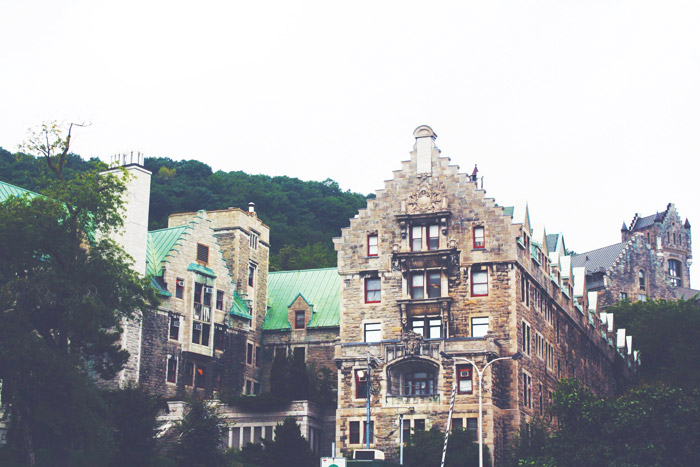
This past week, the Students’ Society of McGill University (SSMU) passed a motion supporting the use of the Royal Victoria Hospital (RVH) site for the establishment of an Indigenous Leadership Academy.

Of McGill’s undergraduate population of approximately 23,000 students, 170 identify as indigenous, with even fewer indigenous faculty and staff members. A 2014 study conducted at McGill reported that Indigenous students regularly face racial microagressions, cited as often the unintentional result of ignorance. Improved indigenous representation was recently celebrated with the new Indigenous Studies minor in Winter 2015. Now, the indigenous community may become further involved through one of many new proposals for the Royal Victoria Hospital (RVH) site.

The motion states that it’s goal is to increase the accessibility and inclusiveness of McGill, and outlines the broad scope of the project.

“The Indigenous Leadership Academy would serve as a hub for Indigenous students and their advancement at McGill,” the motion reads. “SSMU is confident that the mission, vision and values of the Indigenous Leadership Academy not only align perfectly with those of our University, but also that we would be creating something truly innovative and forward-thinking.”

Promising to ensure communication between students and McGill, as well as to provide human capital, the motion states that SSMU will work with several other organizations are to develop this proposal.

“In brief, it is a collaboration between the Office of the Dean of Students, SSMU, First Peoples’ House and Student Life and Learning,” SSMU President Kareem Ibrahim said. “The hope is for it to be a great space for increased support for and recruitment of Indigenous students, in addition to providing experiential learning opportunities for Indigenous students.” 

Aboriginal Outreach Administrator of First Peoples’ House Kakwiranó:ron Cook acknowledged the collaborative efforts of the Student Life and Learning (SLL) unit in drafting proposals, and outlined his perspective as a representative of McGill’s Indigenous community.

“The Indigenous Affairs Work Group discussed this, which also includes members who are not within the SLL unit,” Cook said. “The academy is just one aspect of the proposal. The overall goal is to position an Office of Indigenous Affairs there and build out our presence on campus.”

The various SLL proposals were due on Jan. 29 to Deputy Provost Ollivier Dyens, who in turn will submit a single proposal representing the collective interests by Feb. 12. Director of McGill Communications and External Relations Doug Sweet emphasized the large quantity of proposals to be considered.

“We are a long way from any decision on if or how the RVH might be used,” Sweet said. “At the moment, there are a number of studies under way to see if it would be feasible for the University to even take on the RVH. While the idea of an Indigenous leadership academy is an interesting one, according to Deputy Provost (Student Life and Learning) Ollivier Dyens, it is still far too early to talk about the proposal in detail or what the implications might be.”

In a statement to McGill’s Media Relations Office, Robert Poëti, Minister of Transport and Minister responsible for Montreal, attested to the importance for general improvements to be made to the RVH site.

“This is good news for Montrealers, especially in light of the value of this landmark building in terms of heritage, architecture and identity in the heart of the city,” Poëti said.

This proposal intends to foster the inclusion of a strong Indigenous presence, for both McGill and the wider Montreal community.
a, Features

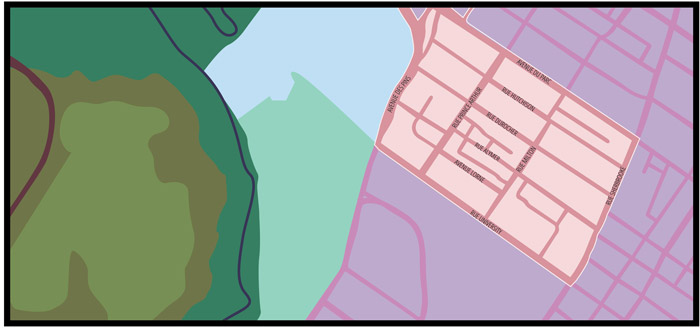
The streets of Milton-Parc

The Milton-Parc neighbourhood, colloquially known as the McGill ghetto, is home to many McGill students. It’s an area with a rich history: In the late 19th and early 20th centuries, it was the east end of the Golden Square Mile, an upscale residential community that was primarily home to Montreal’s anglophone elite. By the end of the Second World War, these houses had stood for almost a century, and families started moving out of the neighbourhood in pursuit of more modern accommodations. 

Martin Croteau, manager of le Syndicat de la Copropriété (a union of Montreal building owners), and a resident of the Milton-Parc neighbourhood, spoke to the post-war history of the area.

“In the ’60’s, promoters bought a lot of buildings in the Milton-Parc [area] for Project Concordia, the towers on [Avenue du Parc],” Croteau said. “The citizens mobilized for a fight against this project.”

The most prominent of these property developers was a company known as Concordia Estates Ltd.,  who sought to rebuild the neighbourhood by constructing several high-rise apartment and commercial buildings. The residents of Milton-Parc—now a lower-middle class neighbourhood consisting of students and families—banded together to prevent the destruction of the historic buildings in the area. 

Over the next few decades the activism of Milton-Parc Citizen’s committee and Quebec’s political climate—the [PQ] were a part of the provincial fabric—led to the property developers’ withdrawal.

“[After] the election of the [PQ] in ’76, the English financers feared the independence of Quebec and wouldn’t put [in the] money for building a big project,” Croteau said.

Today, the streets of Milton-Parc are mostly home to McGill students and working professionals. In fact, Croteau lives in the neighbourhood with his family.

“It’s a marvelous neighbourhood,” he said. “My girls go to school at [Fine Arts Core Education School] FACE, on University, and I work on Parc Avenue [….] We can walk every day—we choose [not to] have a car. My wife is a teacher [at a] CEGEP; she takes the metro and the bus. In the neighbourhood, we have the mountain, the Parc Jeanne-Mance, two supermarkets, which both close at midnight each day […] restaurants, [and] Place des Arts.”

a, Science & Technology

Vert Montreal: Creating a greener future for Montreal

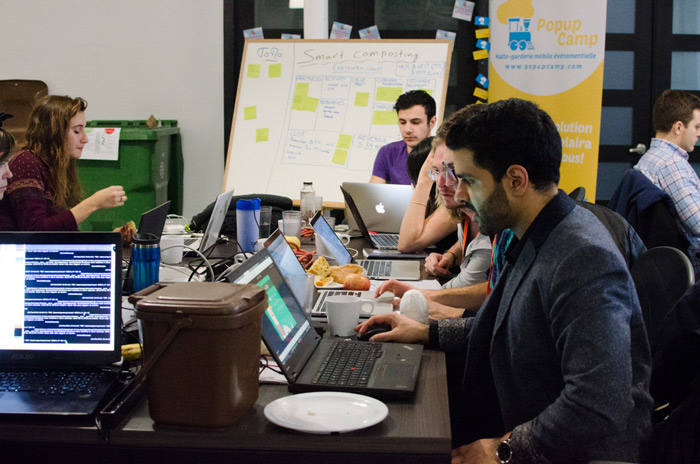
On Jan. 29, 120 developers, designers, entrepreneurs, and experts gathered in downtown Montreal to look for sustainable solutions to address Montreal’s energy problems. The event, Start-Up Weekend: Sustainable Cities, was part of a creative marathon set up by the city of Montreal to tackle the city’s fossil fuel dependency. Sparked by citizen efforts to raise awareness about fossil fuel consumption, the city has pledged to reduce fossil fuel consumption to pre-1990s levels.

Compared to traditional startup competitions and hackathons, the participants came from a wide range of backgrounds, and diversity was encouraged in team formation.

“It’s definitely a different model,” Diana Cheptene, one of the event’s head organizers, said. “The goal is to bring groups that never get together, and see what kind of innovation comes out of it.”

In the past, Cheptene has helped organize two other similar startup weekends. The appeal of startups is generally oriented towards individuals, like Cheptene, who look towards grassroot initiatives and social businesses to meet certain needs. It was this creative atmosphere that drew community members like Laura Vurpillot, a McGill master’s student with ties to Montreal’s startup ecosystem.

“I think it’s a great chance to meet really interesting people,” Vurpillot said. “We have great mentors to help us build our project, and I’m really into innovative ideas. I think it’s really cool to work in a team, like we have two days to build a project, and show it in front of a jury at the end. It’s a very stimulating environment.”

The event’s organisers took the theme of sustainability to heart, hoping to create long-lasting effects. One of the biggest sources of waste at events like startup weekends, explained Monika Potocki, one of the organizers, comes from disposable plates and other unsustainable catering practices. The event aimed to be zero-waste, a lofty goal considering the quantity of food and beverages required to sustain 120 people over a weekend.

“It’s very challenging because when you want to grasp sustainability you can scratch the surface or really delve down deep into where you’re getting the food from, where your suppliers are getting their food,” Potocki said. “It takes a lot of research, and sometimes due to budget we have to compromise on some sides. Definitely a challenge but worth it. And since the advertisement was ‘zero waste’ we wanted to keep our word.”

A startup weekend, she explained, is an opportunity to encourage people to think about sustainability in their daily lives, and not just in the fifty four hours of the competition.

“It’s important because just the context of startup weekend, people come for different reasons but this is an opportunity to change people’s behaviours,” Potocki explained. “It’s an opportunity to change people’s behaviour after this event. But we get the chance for the 54 hours to enforce a different way of approaching sustainability.”

Beyond just encouraging participants to lead more sustainable lives after the competition, the event has other long-reaching effects—about 12 per cent of participants usually go on to lead more sustainable lives.

“We’ve got some pretty cool success stories out there,” Potocki said. “But most people come to these event for the experience. For the people they meet, or learning a new skill, or practicing, or having time with the mentors.”

The event has 15 mentors who are experts in their field to guide the participants. Their skills usually range from business and development to sustainability. The ideas at the competition tackled problems in vastly different areas. One project, which featured McGill Urban Studies student Jordan Bowden as a team member, focused on helping the visually impaired way find in unfamiliar locations. To do this, the team created tactile maps that allows users to ‘feel’ their way around.

“We’re making use of 3-D printing to produce a map that an individual can feel,” Bowden stated. “We’re also making use of an iPad, which will enable the user to get audio feedback as well as tactile feedback. This is really needed, there’s a lot of research showing that tactile maps can create really good outcomes for people.”

[metaslider id=43174]

The team’s project helps those with any kind of vision loss in a number of ways.

“People with visual impairments can feel a lot of social isolation,” Bowden said. “This project really aims to reduce that by enabling people to feel more comfortable in the world and wayfind through spaces they may not be familiar with.”

Vurpillot’s team, on the other hand, worked on developing sustainability-themed education programs.

“I’m working on a project called ecosphere, and it’s basically to encourage people to be more aware of sustainable development and adapt their way of life to be more sustainable,” Vurpillot explained.

One of the participants, Stephanie Pataracchia worked with two other McGill alumni to develop a strategy to incentivize reducing energy consumption. The project ended up winning the first place prize for the competition.

“We’re working on an application that integrates with people’s smart meters, and we want to incentivize them as a community to reduce their energy consumption and reward them with perks,” Pataracchia said.

The ideas that come out of startup weekend are just some of many in Vert Montreal’s creative marathon. Other events include ProtoHack, a walkathon/prototyping, and an ideathon, along with a hackathon to end the month-long series of events.

Where the creative marathon differs from other start-up and idea-generating events is in both its accessibility to those of non-technical backgrounds, and also its connectedness with the big-picture problem of reducing fossil-fuel dependencies. Although having a technical background helps, it’s by no means a prerequisite.

“Just do it,” Cheptene said. “I think startup weekends are the best place to start. it’s really beginner friendly. We walk you through the process. People are very open, you see people with lots of different backgrounds, and [it’s] happening all over the world”

a, Science & Technology

Bob McDonald’s big ideas at SUS Academia Week

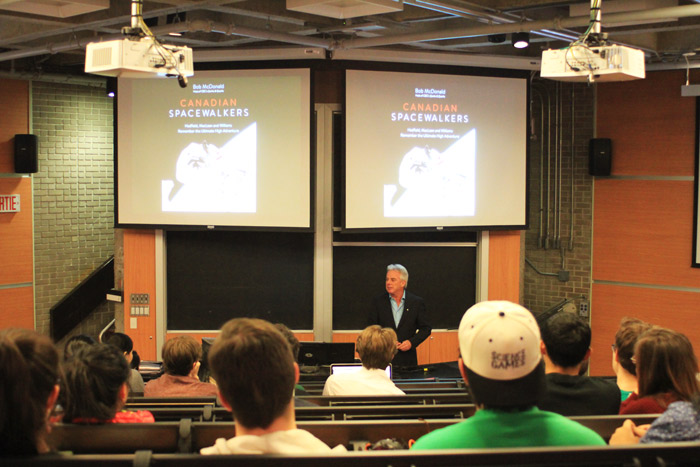
Bob McDonald, host of CBC’s weekly podcast Quirks and Quarks, kicked off the Science Undergraduate Society’s (SUS) Academia week with a special presentation about Canadian spacewalkers.

Growing up at the height of the space age, McDonald’s fascination with space exploration was clearly apparent. He’s chronicled the lives of three Canadian astronauts in his book, Canadian Spacewalkers, and at the presentation, spoke about space with infectious enthusiasm.

“We need flexibility [in space suits] because there’s good skiing on Mars,” McDonald explained. “Both the North and South poles of Mars are covered in snow. It’s dry ice snow, made from carbon dioxide, so when you fall and get covered in it you don’t get wet. It just evaporates away.”

McDonald, a skilled storyteller, makes science relatable and entertaining. He can easily be described as one of the preeminent Canadian science journalists. After all, more than 500,000 listeners tune into Quirks and Quarks, where he has been the host for nearly 25 years. Though he has experienced great success in his career, McDonald explains that it hasn’t always been a smooth ride.

“I actually failed second year university,” he said. “I worked construction and drove a truck and I thought that was going to be my future.”

McDonald’s bracing authenticity is an important characteristic of his likable persona. More than once, he explained that the key to success is finding and taking advantage of opportunities. As a young adult, working at the Ontario Science Centre, McDonald talked his way into getting a media pass so that he could watch the Mars rover land at Mission Control in California. 

“It’s been my exquisite pleasure to be a journalist during the time that we did go up there,” McDonald explained. “I took it upon myself to be [in California] when we went to the planets.”

Upon his return, Canada AM, CTV’s morning television news show asked him to come speak about his experiences watching the Mars landing firsthand in Mission Control.

“That’s the story of my life,” McDonald revealed. “Opportunities have come along and I took advantage of them and that’s why I’m here now.”

Despite McDonald’s unplanned career trajectory, there is considerable planning before every Quirks and Quarks show. While nearly all of his questions may have been prepared ahead of time, he maintains an organic and conversational tone in his interviews.

“We need good stories and good storytellers,” McDonald said. “We do a lot of massaging, so there’s work ahead of time in preparation for me to absolutely understand the story before I begin and then afterwards in the editing to make sure that it’s just really clear, [that] all of the information is there and you can understand it when you listen to it.”

McDonald also recruits scientists to Quirks and Quarks with the help of his three producers. As notoriously bad communicators, scientists are first screened and filtered by the team to make sure that they are able to effectively convey their research. In order to best represent the scientists’ story, McDonald needs to know all of the background information.

“By the time I get to the interview, I actually know all of the answers to the questions I’m asking,” he explained. “So my job is to listen, and make sure that I’m hearing the story that I already know.”

This formula, refined by McDonald and his producers, helps explain the award-winning success of Quirks and Quarks. Without visual aid from pictures, McDonald is able to conjure clear story arcs thanks to his, and his team’s, thorough preparation.

“There are no sharp corners,” McDonald stated. “You want to make the transition from one idea to the next as smooth as you possiblly can and bring the audience along with you and that’s what we do.”

Clarity is a concept that comes up often when talking to McDonald. His unlikely, and seemingly, contradictory coupling of enthusiasm and clarity have become his winning trademark. He offers some advice for future science journalists.

“If you want to host the show, you’ll have to crawl over my dead body,” he joked. “However, having said that, one of the things that I’ve found out in my work is that ideas are everything. Figure it out and get it done, it really works.”

Hail, Caesar!
a, Arts & Entertainment, Film and TV

Religiosity of a new ilk: The Coen brothers praise 1950s Hollywood in Hail, Caesar!

It makes sense for directors to pay homage to their industry as a whole. An entertaining romp through the Hollywood of the 1950s, Hail, Caesar! is the Coen brothers’ latest triumph, an in depth study of a single man, Eddie Mannix (Josh Brolin), a studio fixer, who works tirelessly to keep the massive machinery of Capitol Productions in motion. 

Though it is clear that Mannix’s life is anything but calm, the plot is  truly set in motion when studio star Baird Whitlock (George Clooney) is kidnapped by a group that elusively calls itself ‘The Future.’ The film accompanies Mannix as he attempts to fulfill the requirements of Whitlock’s ransom, determine whether to take an offer at a more lucrative and ordinary job, and quit smoking for the sake of his wife, Mrs. Mannix (Alison Pill). 

The film is a testament to the Hollywood of the past, but works quite differently than a film like Hugo (2011). It highlights the artistic aspects of Hollywood, but is based more on the business side of showbiz. Although the 1950s was a period of uncertainty for the film industry, owing to the rise of television, in Hail, Caesar! many of the tropes of glamorous old Hollywood appear to be intact. Gossip columnists lie in wait for the newest scandal, and stars push against their public images.

At the beginning of the film, Mr. Mannix assembles various religious men to discuss the script for the film-within-a-film Hail, Ceasar!, starring Whitlock, a vice-driven and innocuous Hollywood superstar. In this meeting the Coen brothers display their penchant for awkward humour as men of different faiths debate the importance of Jesus. This scene lays the essential foundation for the film’s thematic focus on religion. It also serves to lull the audience into believing that ‘religion’ will be understood in the most traditional sense of the word; however, as the parallel experiences of film weave together, it is clear that the real ‘religion’ is not Mannix’s Catholicism, but the unifying experience of movies themselves. 

The conflict between cramped and epic spaces reflects Mannix’s experience of his faith(s). In his rapid, sure-footed movement between the cramped quarters of a confessional, the coziness of a Chinese restaurant, to the grandeur of Capitol studios, he transitions between his own inner conflicts. Rather than being consumed by the largeness of Hollywood, Mannix’s presence expands to fill this space. In contrast to Mannix’s constant race against time, the Coen Brothers are leisurely in their pace. The flow from one location to the next is marked by seamless camera movement from intimate close-ups to wide displays of the inner-workings of the studios themselves. In such a way, the direction takes the time to savour the various aspects of 1950s Hollywood in ways that Mannix rarely pauses to do so himself.  

The effect of the almost laborious attention to setting the scene,  however, is to diminish the sense of urgency for the fate of Whitlock. The various ambitions of the film—an spoof of/homage to old Hollywood, a comment on one man, his faith, and free will, an ode to the power of cinema—at times feels forced and so reduces the storytelling strength of the film. In the various themes that are addressed, the plot is at risk of becoming secondary to the stories within the story. 

Perhaps in a gesture to their own role in creating the film, the most interesting characters are the directors. While DeeAnna Moran (Scarlett Johansson) and Hobie Doyle (Alden Ehrenreich)—two of the stars under Mannix’s charge—are respectively glamourous and humble, they seem more interested in enjoying their time off screen than on it. By contrast, Laurence Laurentz (Ralph Fiennes), an English director, claims that his film, Merrily We Dance, will be the next piece in his great legacy. Garbed in an ascot and three-piece suit, he comes not only from another country (he is above all else English) but from another period. 

The audience is reminded of their own role in watching the film. The multiplicity of screens, from Mr. Mannix’s private viewing room to the debut of major motion pictures, brings the screen itself into focus. The curtains are drawn, the opening credits roll, and the enthrallment begins. Though one is never entirely drawn into the films-within-the-film, as the scenes often cut to the reactions of Mr. Mannix and his secretary, Natalie (Heather Goldenhersh), it is clear that the art lies not in the film itself but in the experience it elicits.

a, McGill, News

i-Week celebrates campus cultural diversity

From Feb. 3 to 7, McGill’s International Student Leadership Program’s (ISLP) annual i-Week celebrated cultural diversity and pluralism.  According to the International Student Development and Communication Manager of the International Student Society (ISS) and ISLP Coordinator, Caroline Guay, the design of the project was designed to provide an opportunity for students to explore diverse forms of cultural expression on campus and to broaden their intercultural awareness and understanding.  

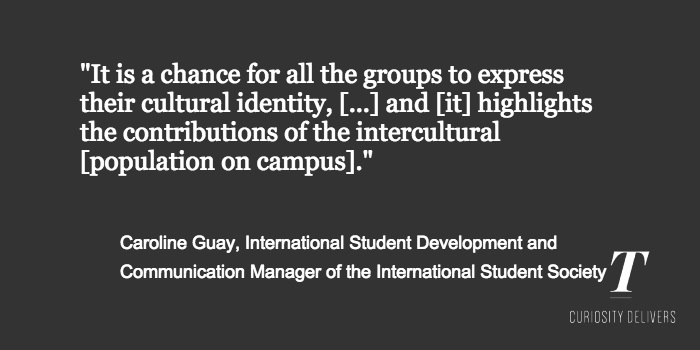
“The ‘i’ [in i-Week] is for intercultural, international, identity, initiative,” Guay said. “It is a chance for all the groups to express their cultural identity, […] and [it] highlights the contributions of the intercultural [population on campus].”

The events took place in the Students’ Society of McGill University (SSMU) Building last Wednesday, Feb. 3. On the second floor of the SSMU Building, Muslim Students’ Association presented “The World of Islam.” This featured a corner for prayer, a table for Henna tattoos and calligraphy, a majlis, or place of sitting, for people to relax and enjoy traditional tea and refreshments. The student association also showcased Islamic art, literature, tradition, and history. 

One door down, the McGill Brazilian Students’ Association was preparing for its own “Brazilian Atelier,” featuring dance tutorials, live performances, and a feast of cakes and chocolates. Representatives from the General Consulate of Brazil to Montreal were present. 

“There are lots of misconceptions about Brazil,” said Guilherme Franzmann, a PhD student and founding member of the Brazilian Students’ Association. “This way, you […] highlight cultural features of Brazil, and people will be more knowledgeable about Brazilian culture, music, food, and dance.” 

As well as being a celebration of cultural representation on campus, i-Week served a broader educational purpose. 

“There are still stereotypes and misperceptions that exist,” Guay said. “McGill is known as an academically rigorous university.  We have the highest percentage of international students of any of the large research-intensive universities in Canada [….] The reason why we thought this [event] was important was so students [have a] chance to step outside of the academic realm and invite people into their more personal, socio-cultural realm.”

Stefan Kammerlander, a member of ISLP and a coordinator for i-Week, explained that the aim of the event series was to provide a platform for students to share their cultural backgrounds with the entire university.

“There are 18 [International Student Leaders (ISLs)] who were divided into different committees to help clubs with the process of organizing the event,” Kammerlander said. “They show what they want to show.”

With 30 clubs and associations represented, i-Week showcased the diversity of McGill’s student population. According to Guay, the series underscored how students with international backgrounds have shaped the community.

“There is a larger sense of understanding someone’s context more,” Guay said. “It breeds more interest, willingness to engage and appreciate when you understand where your classmates are coming from, what motivates them, [and] how the way they are is informed by their cultural background.”

a, Opinion

Lighting up the path to a smoke-free campus

Between the congregation of smokers found in front of Leacock and the countless cigarette butts littered near Roddick Gates, it is not difficult to spot nicotine use at McGill. In a way, smoking is accepted as a regular part of campus life.

The Students’ Society of McGill University (SSMU), however, recently released a motion concerning the pursuit of a smoke-free campus at McGill, with a question set to be posed in the March referendum period regarding the student body’s support for the idea. Currently, the proposal includes providing cessation resources, developing outdoor smoking shelters, and other changes to achieve the ultimate goal of transitioning the university into a smoke-free campus in the next three to five years. There are 12 other smoke-free institutions in Canada.

Stepping out of McLennan for my hourly cigarette break, I mulled over SSMU’s proposal. It’s my personal choice to be a smoker, and despite the constant bombardment of health warnings and cessation ads, I am more or less ok with my habit. Yet, reading over the preliminary survey results, I realized that in the context of smoking on campus, my choice is not entirely personal; it has an impact on the entire McGill community—the majority of which are non-smokers. Despite my own addiction, I believe SSMU must do all it can to ensure that a smoke-free campus becomes a reality in a way that benefits smokers and nonsmokers alike.

Despite the results of a preliminary survey, which showed that many students favour a smoke-free campus and felt that secondhand smoke was a problem on campus, the motion was not met with a favourable response from everyone, with some students pointing out the unfeasible and unfair nature of the suggestions.


The university has a responsibility to protect their students from the harmful health effects of smoking.

The university has a responsibility to protect their students from the harmful health effects of smoking. Just because smokers willingly choose to subject themselves to harm, it should not stop non-smokers, particularly those with health concerns such as asthma, from being protected from secondhand smoke on campus.

Furthermore, the influence of smoking goes beyond the physical effect of secondhand smoke. High rates of nicotine use on campus facilitate a culture in which smoking is deemed acceptable, which can ultimately lead non-smokers to pick up the habit as well. This issue is underlined by the concept of ‘social smoking,’ which for many is the stepping stone to becoming a full-time smoker. Obviously, the social effects of cigarette use depend on the individual; however, the school should curb its presence on campus for those that may be influenced by it. In fact, Canada as a whole has made great strides in the 2000s by limiting the rate of nicotine users in the country by introducing various bans on smoking in public areas, such as in restaurants and bars.

Through Rez Project, server training, Mental Health Awareness week, and various other programs, McGill has given me many opportunities to evaluate my own life choices regarding my well-being and to think critically about how it affects the people around me. If the university, with the student body’s support, wishes to extend that influence to make an impact on my smoking habits while also making the campus experience better for everyone, I welcome the changes.

With SSMU’s current proposal, no one would be forced to quit—these programs would simply exist to aid those who are looking to do so. This is fair, as the vast majority of smokers are attempting to quit, which is no easy task. With new resources, as well as the change in the culture on campus, many smokers wishing to quit will have the means and the community support necessary to pursue the goal more effectively. On top of making the campus smoke-free, individual smokers would have the opportunity to make a change in their own lives as well.

The purpose of a post-secondary education is to provide a productive, safe environment for students to apply their knowledge in bettering their lives. Nicotine addiction is a complex issue with various implications on one’s stress and mental health in general. While smoking is already prohibited in most areas on campus, if the university wishes to enforce these rules more uniformly, they will need the student body’s input to avoid any policies that are too oppressive for smokers. To this end, SSMU, in tandem with the student body, should pursue a smoke-free campus.


Albert Park is a U2 student in Microbiology and Immunology. He is passionate about world issues and has been a volunteer with the Canadian Red Cross for 5 years.


a, McGill, News

Race education workshop added to Rez Project

In January 2016, a new workshop for students in McGill Residences was held for the first time, titled Rez Project: Race and Colonialism. Referred to as Race Project, the workshop was the second part of the Rez Project series,  including a segment on gender, sexuality, and consent.

Interim Resident Life Coordinator Emily Yee Clare was instrumental in the creation of the new race-based component to Rez Project.

“Although, [Rez Project] has evolved significantly since its creation 10 years ago, it was limited in scope,” Clare said. “Thus, I approached Ria Rombough in 2013 with the general idea of increasing anti-oppression programming in the Residences. After multiple conversations, the position was created through community needs assessment, proposal drafting, and by securing over $90,000 in funding from various grant sources, most notably the McGill Office of Sustainability and the Sustainability Projects Fund.”

Rez Project Coordinator Kelly Schieder, stated that the motivation behind Race Project was to start a conversation about issues surrounding race and to provide students with a vocabulary to continue this conversation.

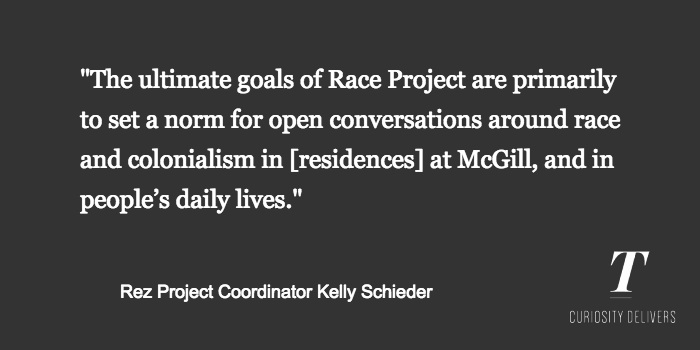
“I think that the ultimate goals of Race Project are primarily to set a norm for open conversations around race and colonialism in [residences] at McGill, and in people’s daily lives,” Schieder said. “[Also] to provide some basic vocabulary and groundwork for taking an anti-racist approach to these issues […] to validate what indigenous students and students of colour may have experienced since arriving at McGill, and to offer some vocabulary with which to talk about their experiences; as well as to promote changes in attitudes and/or behaviour—both on an individual level, and more generally within the culture of McGill residences.”

Race Project was developed following popular demand by students and was tested in selected residences last year before being introduced to all residences in Winter 2016.  According to Schieder, it expands upon some of the lessons from the initial Rez Project. 

“We continue to expand the discussion of what the One Rule of Respect entails, and how to provide residents with the tools to foster a respectful living environment for each other,” Schieder said. “We hope that these conversations will continue beyond the workshop space.”

According to Bradley Miller, U3 Cognitive Science student and a floor fellow, Race Project provided an important opportunity for first year students to adjust to a city that may be more diverse than their previous home.

“Coming out of high schools with relatively homogeneous populations into an international urban centre like Montreal, it is crucial that first years take some time to reflect on the implicit assumptions made by their communities at home,” Miller said. “This is a momentous opportunity for students to form honest opinions and think critically about issues that their parents might not mention at the dinner table.”

Miller expressed that although the curriculum of Race Project is useful for first-year students, it is harder to set definite boundaries when talking about race and colonialism, making the execution of the workshop somewhat difficult.

“For Race and Colonialism, there are fewer instances of definite rule breaking that are addressed by the workshop,” Miller said. “Culturally appropriative costumes come to mind as a phenomenon we try to avoid in Rez, but there is a spectrum of offensiveness [….] This subtlety may have gotten a bit lost in the workshop when complex issues were boiled down to ‘racist’ or ‘not racist’ verdicts in the interest of time. I think my students may have been a bit put off by this.”

Despite this, Miller stated that the workshop was received well by the students on his floor.

“Students who identify as people of colour had a definite sparkle in their eye as they were able to speak honestly about their experience navigating public space,” Miller said. “White-identifying students who were listening were able to open their eyes a bit, if they didn’t shy away from the discomfort of talking about it.”

For Schieder, Race Project was seen as a success and that the workshop will continue to be implemented in residences in the coming years.

“As is the case with Rez Project: Gender, Sexuality & Consent, these workshops were received in varying ways, often related to students’ personal relationships to the topics,” she said. “Overall, we were delighted with how well the workshops were received, with many students expressing gratitude that these under-discussed but highly relevant issues were being prioritized in residences [….] We have high hopes for how this workshop will continue to evolve in years to come.”

Clare echoed Schieder’s sentiments.

“Race Project is really an evolving workshop that should and will be adapted from year to year in response to community needs,” Clare said, “Ultimately, we wanted to create a space for students to develop a common language on how to navigate complicated conversations relating to race and colonialism.

a, McGill, News, SSMU

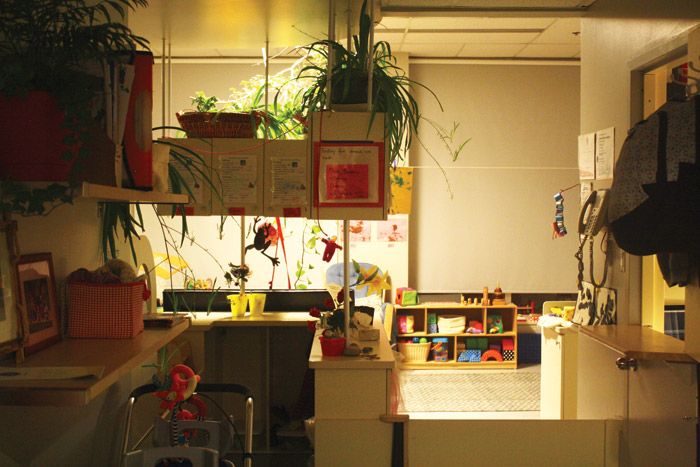
A new direction for daycare at SSMU

Following several months of searching, the Students’ Society of McGill University (SSMU) has hired a new Daycare director. Zineb Mouhtam has been selected to fill the position, which has been vacant since May 2015, following the resignation of the previous director, Aline Karagioules.

The responsibilities of Daycare director have been allocated to SSMU executives, namely to President Kareem Ibrahim, posing certain difficulties. 

 “It’s not easy, there has been a lot of stuff that has built up, we’ve been getting penalties for various regulations that we haven’t been adhering to because no one is in the role to fulfill those responsibilities,” Ibrahim said. “But we are confident that we are in a better place than we have been.” 

According to Ibrahim, finding the right candidate to take over the role of director was a  challenging process.

“We spent all summer interviewing quite urgently because without [a] person in the role [of director], it was pretty bad news for the Daycare,” Ibrahim said. “We were pretty unsuccessful for a while because the position profile had changed. Previously all of the accounting for the Daycare was done by the SSMU, so our controller did it and the previous Daycare Director Aline, who was in the role for about a year, thought that it would be better to absorb those responsibilities and do it herself. Those responsibilities were never transferred back to SSMU so the role became much more difficult to attract candidates for.”

Despite these additions to the director’s profile, Mouhtam expressed her enthusiasm for taking over the role. 

“The nature of my job is diverse, [including] overall coordination and administration of the two child care licenses, management of financial and material resources: budget planning, financial statement analysis with the auditor, [and] human resources management,” Mouhtam wrote in an email to the Tribune. “With a certificate in Management of Care, and experience of over 18 years, I can tell you that early childhood represents for me a true vocation.” 

Mouhtam outlined her plans for the future of the Daycare in the coming months.

“My plans [are to] establish a quality educational program in a friendly and stimulating environment that enables children to acquire skills that will position them for success in school, working with my team to ensure quality of services for children at all levels, [and to] involve parents in the nursery,” she wrote.

Alexina Hicks, a student-parent and user of the SSMU Daycare service, commended the steps that Mouhtam has already taken to give greater recognition to the needs of the Parent Committee.

“She has made the effort to personally meet the Parent Committee and she has voiced her concern regarding the lack of parent meetings in the past due to no direction,” Hicks wrote in an email to the Tribune. “She’s open to integrating a cloth diaper service to the nursery and respects the educators’ various approaches. Ideally, when things settle down she aims to have a weekly newsletter emailed to all, to keep us in touch with happenings.” 

Vice-President (VP) of the Parent Committee Manuel Balàn explained that this academic year in particular has posed more problems for the Daycare than is typical.  

“The Daycare has a structure like no other daycare I have seen, in the sense that it is run by the SSMU, which changes president every year,” Balàn wrote in an email to the Tribune. “In normal times—when there is a person in SSMU in charge of the daycare and, most importantly, when there is a Daycare director in place—this doesn’t affect the normal running of the Daycare. Unfortunately this has not been the case the last year. 

The SSMU Daycare has seen high turnover in the position of director over the past year.  Karagioules left in May, 2015, with an interim director filling the role since then, until Ibrahim’s recent takeover of the director’s responsibilities.  Balàn noted that this has caused concern for some parents. 

“In the unstable context of the last year […] many parents have taken their kids out of the Daycare or are seriously considering doing so.”

According to Hicks, the future of the Daycare is likely to change as a result of Mouhram’s organized and progressive methodology. 

 “She does not seem to have a conservative approach to the way things can be run in the Daycare, but is also focused on the priorities established by the government—security, up-to-date paperwork,” Hicks wrote.

a, Arts & Entertainment, Film and TV

Pop Rhetoric: Respectability politics in “Fresh Off the Boat”

A year in, Fresh Off the Boat (FOTB) is still much of the same: An occasionally poignant portrayal of the immigrant experience tempered by whitewashed sinophilia. Take last week’s episode for example. Right before Chinese New Year, FOTB aired the first depiction of Mandarin Chinese New Year on American primetime TV. For mainland Mandarin viewers, hearing xin nian kuai le instead of Cantonese (and slightly colonial) gung hey fat choy strikes indelibly sensitive notes—a reminder that Mandarin speakers do exist in the media. Yet for all the sentiment a phrase like this stirs, matriarch Jessica Huang’s (Constance Wu) instructive explanations of Chinese New Year makes it anticlimactic. She says that the Chinese abstain from post-New Year haircuts for fear of “getting rid of any good luck [they] just received.” The translation of traditional Chinese practices into a feigned Taiwanese accent comes off as parodic and cheap fortune cookie advice. Yet, problems like these contribute to the show’s ultimate importance in the discourse on race: The question of respectability.

There is nothing exceptional about the content of FOTB for a Chinese American. The show instead thrives on factual portrayals of Chinese life. But, factual isn’t necessarily sincere, or earnest. In this distinction, FOTB elicits a contrast between an acknowledged Chinese-ness and unmitigated Chinese-ness. In the first season’s finale, Eddie (Hudson Yang), the main character, showed a moment of Chinese patriotism when another student mocked China. Yet, Eddie never appears on screen trying to better acquaint himself with what it means to be Chinese. Instead, he actively runs away from it, worshipping Shaq or lusting over his neighbour’s mother. And while it’s unfair to expect an eleven-year old to pore over Zhu Xi or Lu Xun, it is reasonable to ask viewers what Chinese-ness really is. 

The show does, however, boast an extensive list of accurate Chinese portrayals to the point where Vulture’s recaps have an “Authenticity Index.” Several watershed instances stick out: Grandma Huang (Lucille Soong) is the only exclusively-mandarin speaker on American television; Jessica tells a Jin dynasty ghost story; the Huang family eats zongzi (Chinese tamales). Though FOTB explicitly shows that Chinese Americans have a culture distinct from America, it simply lists these disconnected images. These scenes and allusions are itemized. They’re glimpses of Chinese culture, but so drowned out by school dances or Christmas that they feel as if the show has them to remind people that the Huangs are, in fact, Chinese.

Here, FOTB’s shortcomings challenge viewers to reconsider their own creation of identity. Is it okay to expect someone different to be the same? How can “same” and “different” be reconciled? With trope characterization, FOTB ultimately fails to answer these questions. Eddie is a young Chinese-American who objectifies a white girl and listens to gangster rap. His brown-nosing brothers kiss up to teachers and parents. His mother is a first generation immigrant who has the bite of a Chinese matriarch, but lacks insight on the actual issue of culture, resorting to the cryptic “Because I said so” to scare her boys. His father Louis (Randall Park) strives to become a fun-loving American steakhouse owner. They do look different and sound different, but they’re the same archetypes seen on all sitcoms. 

No one expects FOTB to provide critical revelations on race and identity. But hopefully, the show is the first step towards new media representations of East Asians on television. As a family-friendly show aimed at middle America, FOTB does raise questions, intentional or not, regarding the identity and respectability of Asian-American identity crafting. The lack of foundation in Chinese culture, the white Chinese-ness of the characters, the willful and giddy assimilation, mix and ask the viewer where exactly non-white characters and people fit. 

Were FOTB a more complex and well-written show that critically examined and deconstructed the concept of otherness, it would be hollow—it wouldn’t as much start a debate as read like a textbook. As it stands, FOTB’s faults lead to a reappraisal of the culture it intends to portray. And when viewers question its representation of culture, the show achieves its purpose.

Read the latest issue

Read the latest issue