


Latest News

a, Sports

Fall team previews (Part III)

Martlet field hockey

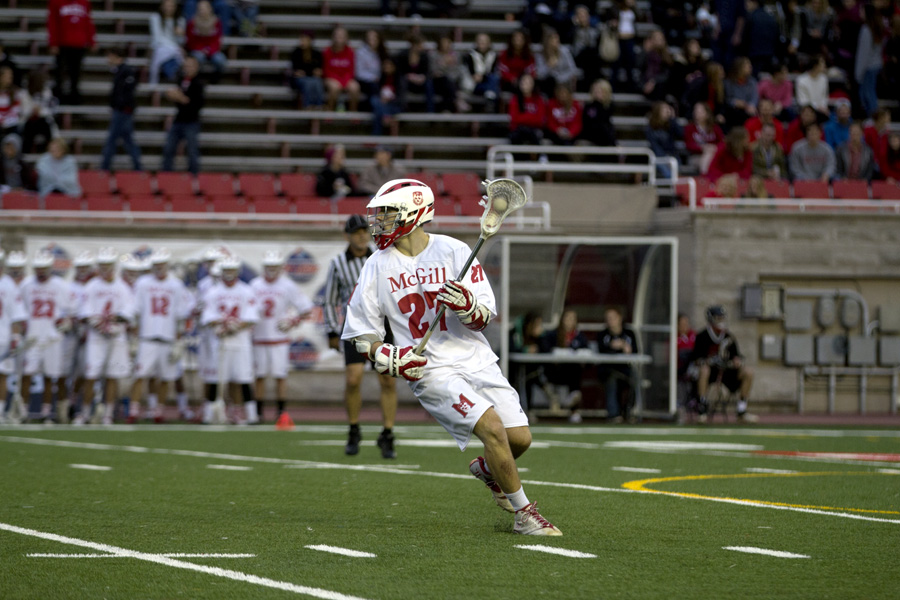
After a winless 2012 season in which the team was shut out in half of its 12 outings, the Martlets have their work cut out for them this year as they continue to face extremely stiff competition within the Ontario University Athletics league (OUA).

Their journey out of the cellar will not be made any easier by the fact that Helen Thompson and Emma Whitehall, the team’s two leading scorers, will not be returning. Despite their departure and a large number of new arrivals, there are still familiar faces on the squad’s roster that should provide a solid core. The Martlets have already had a year to grow together as a team, which serves to strengthen their chances. Key returnees include veteran Sarah Main and returning goalkeeper Marianne Emler.

Coaching duties will be split this year, as former assistant coach Vimal Patel joins John-Pierre Turpain behind the bench. Turpain, a fixture of the program and 2008 OUA Coach of the Year, will need to bring back the magic touch from that season as he looks to right the ship this season.

Early results have been cause for cautious optimism, as McGill won all three of its pre-season matches against Queen’s and UPEI. However, the Martlets proceeded to stumble its first two regular season games over the weekend against Western, 0-2 and Waterloo, 1-4.

The story of this season could either be one of redemption, or one of further disappointment for the Martlets. Their next stop is Varsity Stadium in Toronto, where they will take on the Guelph Griffons on Sept. 21.


Cross-country

(Luke Orlando / McGill Tribune)

The McGill cross-country program looks to bounce back from a disappointing finish at Nationals last season with high hopes surrounding the young Martlet and Redmen squads.

The Martlets started last season in dominant fashion, winning five of their first six meets. This period included multiple podium sweeps, as well as a triumph at the RSEQ Championship. However, they could not transfer their earlier success to Nationals, finishing in seventh place.

The Martlets should once again be a contender for the RSEQ Championship. They are spearheaded by returning Conference Runner-of the Year, third year nursing major Jessica Porfilio. Other standouts include sophomore Caroline Pfister, who has previously represented Canada at international age-class competitions. Head Coach Dennis Barrett also believes that the young roster has the potential to improve upon last year’s final standings.

The men’s cross-country team faced a similar fate as their female counterparts. A strong regular season highlighted by second-place finishes at the McGill Open, the Laval Open and the Conference Championships was undone by a 16th place finish at the CIS Championships. Søophomore Benjamin Raymond was crucial in last season’s efforts en route to winning the Quebec Rookie-of-the Year accolades.

The Redmen have a promising young core beyond Raymond that includes sophomore Charles Litwin and junior Michael Abramson. The team has also added numerous freshmen to the roster, hoping to create a youthful dynamic.

If early season results are any indication, both the Martlets and Redmen will need to make big improvements should they hope to contend at a national level. While the Martlets are in a good position to repeat as RSEQ champions, the Redmen face a tall task against powerhouse intra-province squads Laval and Sherbrooke.

a, Sports

Martlets build momentum after statement weekend

The McGill Martlets (1-2) bounced back from a disappointing first weekend of RSEQ action with a victory over the Université du Québec à Trois-Rivières Patriotes (0-3) on Friday night. The Martlets swept the Patriotes in season play last year, and will play them once more on Oct. 20.

The Martlets frontline was sharp for the entire first half, with passes that made it behind flat-footed Patriotes defenders. The key to their offensive attacks came from persistence in pushing the ball up the sideline. By doing so, the Martlets were able to spread out the visitors over the entire width of the field. The hosts took advantage of their opponents with a patient playing style which led to accurate passes.

Consequently, the Martlets managed to keep the Patriotes entrenched in the visitors’ own defensive end. Despite enjoying ball possession for most of the game, McGill was confronted by a resilient UQTR squad led by their star defender, Pascale Lapointe, who was able to deny Martlet attacks on multiple occasions. The Patriotes’ defensive game-plan was clear: impose their physicality on the hosts. However, their aggressive disposition resulted in a yellow card at the 33rd minute to UQTR defender Marie-Gaelle Grenier.

McGill goalkeeper Victoria Muccilli tallied four saves en route to a shutout, and was vital to the Martlet defence as both a stopper and a release valve.  Muccilli was called upon frequently to rotate the ball and lead attacks from the back as McGill attempted to maintain possession.

Martlet Head Coach Jose-Luis Valdes was frustrated with his team’s sluggish performance at the start of the game. “[The] first half was difficult, and we made it difficult on ourselves,” he said.

Both teams came out of the half-time huddle with a greater sense of urgency.  As the clock ticked away, the Martlets began to find more and more cracks in the Patriotes’ defensive scheme. However, the problem in the second stanza was an inability to hit the target. McGill had nine shots in the second half but six of those failed to be directed on goal.

Junior attacker Meaghan Borque was finally able to break through as she converted on a corner kick by fellow defender Kelsey Wilson. In nerve-wracking fashion that mirrored the rest of the game, the Martlets were forced to hold their breath as the shot redirected off of a Patriotes player and made it past UQTR keeper Garbrielle Lamer in the 77th minute.

The victory was a clear sigh of relief for the McGill players as they clinched their first win of the season. Although the team’s performance was above average, they did just enough to secure the three points.

“[The] second half was better,” said Valdes. “The tempo of the game was better. We got into a flow.  We played quicker and faster. It was a win.”

McGill followed up its first victory with a dominant showing against the Concordia Stingers this past Sunday. The Martlets exploded for three consecutive goals in the second half, en route to a 3-1 victory.

Valdes has now acquired his first two wins as Head Coach of the Martlets, and hopes to build momentum from this match to set the tone for the season. Meanwhile, McGill will continue on its journey to reach the RSEQ playoffs. They play the Bishop’s Gaiters (2-2) in Lennoxville on Sept. 20 in what will be a critical match for both teams.

a, Behind the Bench, Sports

Third man in

Last month, the NFL reached a $765 million settlement with retired players over concussion-related brain injuries. The settlement will be used to compensate retired players and their families who have suffered from serious diseases such as Amyotrophic lateral sclerosis, Parkinson’s, Alzheimer’s, dementia, Chronic Traumatic Encephelopathy, depression, and other cognitive diseases.

Despite reaching a settlement, one of the principal terms in the agreement addresses the issue of blame for the post-retirement fallout..

“The agreement cannot be considered an admission by the NFL of liability, or an admission that plaintiffs’ injuries were caused by football,” stated the NFL.

The league has taken a firm stance; they want players to take their money and move on, essentially attempting to sweep the entire issue under the rug. The NFL will be content as long as nothing changes the game that generated over $9 billion in revenue last year.

Commissioner Roger Goodell has set a precedent with this landmark ruling to a problem that isn’t isolated within just the NFL. The NHL and the NCAA both face similar issues about player safety.

While the NFL may seem like the villain, it is unfair to place all the blame on the league. Football will always be a dangerous game due to the violent nature of the sport. If all body contact was removed, the sport would effectively be a shell of its former self, and its entertainment value would plummet. Such a scenario would almost certainly cause the league to fold.

However, NFL should take responsibility of its players. Neurological research should be at the top of the agenda to ensure that franchises are equipped with the knowledge to diagnose and treat concussions, thus  preventing them.

The NFL must also decree a mandate to teams that any behavior risking the safety of athletes will not be tolerated. There have been admissions from front offices that organizations have repeatedly ignored advice from team physicians to rest players.

Going forward, the onus falls almost entirely on the players. The NFLPA has evidence that the physicality of the game puts athletes at an extremely elevated risk of suffering from cognitive impairment. It is thus up to the players to decide whether playing football—and the money and the fame that can come with it—are worth the risk.

For most players, the decision to continue playing will be a ‘no brainer.’ Many professional football players come from less fortunate backgrounds. For them, the chance to line up on Sundays affords them the opportunity to make sure their families are provided for, and that the vicious cycle of poverty can be broken. Others may choose to ontinue playing the sport that they love or use it as a gateway to living a lavish lifestyle.

Elite student-athletes in college and in high school face the most difficult decision of all. These players have invested time and effort toward their craft, oftentimes at the expense of academics. For most of them, school is just an opportunity to play football. Their choice is whether to take the dream job with a high risk of injury, or to abandon that plan for the rest of their life.

Parents of young children also are confronted with an increasingly grim dilemma. Should they allow their children to play football? The United States’ most powerful parent, President Barack Obama, said that if he had a son, he would be wary of allowing him to play football, given the detrimental impact the game has been proven to have.

Simply put, the players will keep on playing. By putting a price tag on the health and well-being of its employees, the NFL is trying to solve a problem that will never truly go away.

a, Student Life

Burger Royal

If you need a new go-to-destination for your next burger bonanza, consider the delectable Burger Royal. Located on St. Laurent between Roy and St. Cuthbert, this lesser-known joint serves up succulent burgers with imaginative toppings. Since their opening in December 2012, the owners have vowed to produce quality products using only in-season Quebec-grown ingredients and freshly ground meat.

At Burger Royal, no small detail is overlooked. The restaurant has a casual atmosphere with hand-painted, silly, burger-themed graffiti covering the walls. The servers are friendly, inviting, and eager to accommodate requests and answer any questions. The owners strive to maintain a mom-and-pop feeling, encouraging others to enjoy their delicious food.

There is a burger for everyone on this menu—including beef, chicken, and vegetarian options, which you then customize from an extensive selection of toppings. These include traditional toppings like lettuce, tomato, onion, and pickle, but also more intriguing options such as spicy mayo, guacamole, jalapeños, peanut butter, and cheese curds.

Burger Royal has also created specialty burgers that regulars rave about. The Mac Attack Burger is topped with mac and cheese, bacon, and ketchup. For poutine lovers, there is a Royal Poutine Burger. For those looking for even more decadence, there is a Foie Gras Burger—a burger stuffed with goose-liver pâté, and served with melted Swiss cheese, caramelized onions, and Dr. Pepper BBQ house sauce. Finally, there is an off-menu meat-lover’s burger loaded with hot dogs, chili, foie gras, and bacon—a secret furtively divulged to me by my waiter.

(Michael Paolucci / McGill Tribune)

My personal choice was the relatively simple Classic Royal Burger with sharp cheddar cheese, spicy mayonnaise, and ketchup. The burger consists of a well-toasted sesame seed bun with one beef burger stacked below a large, ripe tomato slice, crisp lettuce leaves, and red onions. It is the perfect amount of bread so as not to overwhelm the burger flavour. Just from the appearance of my burger I expected a delicious first bite; when I did dive in, I wasn’t disappointed. Juices began to run down my hands and wrists—a sure sign of a respectable burger. I also ordered French fries, which were thinly cut and fried to a perfect level of crispiness. You can choose to accompany the fries with homemade dipping sauces, such as honey mustard and mayonnaise.

It is important to note that, aside from burgers, there are many other tempting items on the menu at Burger Royal. There is chili packed with red kidney beans to which you can add extra toppings like the house-made cheese sauce. Additionally, the creative genius of this burger joint has turned out various playful milkshakes made with milk flavoured by favourite childhood breakfast cereals including Captain Crunch, Cinnamon Toast Crunch, or Fruit Loops; many people come in just for these shakes.

Burger Royal is far from the traditional burger place, offering unbeatable fresh meat, wildly creative toppings, and an overall enticingly delicious meal. This hidden gem offers a tempting burger at a reasonable price, and, fortunately for students, they deliver too. Their own slogan sums up the experience perfectly: Natural. Simple. Delicious.


a, Arts & Entertainment, Music

Album Review: The Weeknd – Kiss Land

“This the s**t that I live for, with the people I’d die for.”

This catch phase is sung with as much excitement as the melancholic Abel Tesfaye can muster. It’s the hook in “Live For,” the single off of last week’s Kiss Land—Tesfaye’s first major label debut released under his better-known alias The Weeknd. Featuring Drake, the hook reaffirms Drake’s ‘You Only Live Once’ (better known as ‘YOLO’) empire, of which fellow Torontonian The Weeknd is a member. It’s easy to imagine teenagers hearing echoes of it on the radio, quoting the line on Instagram along with pictures of their friends.

Despite the title of his album and its seemingly cute “XO” emblem, The Weeknd is anything but friendly on Kiss Land. The album is moody and dark, and any offers of hugs or kisses are strictly passive- aggressive. The Weeknd’s smooth R&B vocals are the common denominator when vocalizing both his problems and pleasures, softening edgier tracks and sharpening gentle serenades. “Belong to the World,” another single off the album, exemplifies this. It’s a love song about a prostitute—a modern “Roxanne” with a lifted Portishead sample of aggressive “Machine Gun” drums.

The best songs of Kiss Land come across like a futuristic Michael Jackson, with funky production and heartfelt vocals. Other moments are duller: otherwise clever, self-conscious sappiness occasionally drips into cheesy territory, with lines like “I’ll admit, baby/ I’m a little camera shy/ but exceptions can be made baby/ ’cause you’re too damn fly.” Kiss Land, as a foray into the mainstream spotlight, is a smooth and assured debut, but unfortunately lacks the rawness and hunger of Tesfaye’s earlier mixtapes.

a, News, SSMU

SSMU to contribute up to $10,000 towards court case

Table de concertation étudiante du Québec (TaCEQ, or the Quebec Student Roundtable)

TaCEQ Secretary-General Paul-Antoine Cardin spoke to Council about TaCEQ’s participation in an ongoing case in the Quebec Superior Court, as well as the delay of a congress intended to address TaCEQ reform. A student lobbying group, TaCEQ is composed of four student member associations, including the Students’ Society of McGill University (SSMU).

Two Quebec university students, Laurent Proulx and Miguel Bergeron, filed the case in an attempt to challenge the Quebec Act of Respecting the Accreditation and Financing of Students’ Associations, which states that every student in Quebec must be part of a student association. Proulx and Bergeron argue that the act infringes upon students’ right to free association.

TaCEQ will act as a third party in the case, and will present a counter-argument that supports the existing legislation. SSMU Vice-President Samuel Harris explained the reasoning behind SSMU’s support for this initiative.

“[The law] would, in effect, make SSMU and all student associations opt-outable,” he said. “It truly is an existential matter for us. SSMU is so strong and does so much for its members because we are 22,000 strong together.”

The Fédération étudiante universitaire du Québec (FEUQ), and Fédération des enseignantes et enseignants de CEGEP (FEC-CSQ), are also arguing against Proulx and Bergeron in the case, as well as the other three associations in TaCEQ—Université Laval’s undergraduate society, Laval’s graduate society, and Université de Sherbooke’s graduate society.

Harris said SSMU has agreed to contribute up to $10,000 to the case.

“SSMU has a legal professional fees line item on our budget, I believe it’s about $80,000,” Harris said. “TaCEQ as a whole has agreed to spend just under $30,000 together. This is something we all agree on, so […] we’d be spending less money on [it] than if [SSMU] wanted to be interveners ourselves [outside of TaCEQ].”

At Council, Cardin also announced changes concerning an upcoming congress on TaCEQ reform, which was original scheduled for October, but was cancelled because the Sherbroooke graduate student association felt that the original date did not give them enough preparation time. Cardin said that another congress will be planned in the near future.

“The associations will meet on Sept. 21 in Quebec City to decide on a time frame and an agenda to continue the discussions,” Cardin said. “For now, the discussions will be held by each association’s representatives around the table.”

Harris emphasized the need for TaCEQ to seek improved transparency and make an effort to increase bilingualism within the organization.

“[SSMU wants] the TaCEQ constitution and the TaCEQ website to have a translated version so that it’s accessible to SSMU members,” Harris said. “We’ve created a TaCEQ budget which will be going public soon, which outlines specifically where the money is going.”


General Assembly (GA)

To address challenges meeting quorum at previous SSMU GAs, SSMU President Katie Larson announced a new marketing program focused on advertising the event. According to Larson, a new secretarial position was created over the summer to lead the marketing program, although the position has not yet been filled. The Fall GA is set to take place on Oct. 15.


Motion regarding an ad-hoc Mental Health Committee

Council also passed a motion to create an ad-hoc Mental Health Committee. According to VP University Affairs Joey Shea, the goal of the committee is to draft a policy on mental health by the end of the 2013-2014 academic year. Shea stressed the importance of creating a university-wide policy as opposed to having individual faculty policies.

“One in five people will experience a mental illness over the course of their lifetime—mental illness is not a faculty-specific problem, it affects all students,”  Shea said. “We need an integrated policy to promote awareness about these issues, and to support all groups pursuing similar ends.”

Shea also stated that the members of the committee have not yet been chosen, but will include herself, SSMU councillors, and mental health advisory board representatives, among others.

a, Science & Technology

Citizen journalism raises concerns to ‘wisdom of the crowd’

Every minute, there are 3,600 more photos on Instagram to like—and that’s not even including images posted on Facebook. Inspired by the volume and speed of information generated online, the browser Qmee, in collaboration with Social Media Agency mycleveragency, pulled together a detailed infographic to illustrate what transpires in the minute you spend turned away from your screen.

The vast amount of digital information available online is growing more rapidly each year. This growth places us in a unique position; for the first time in history, the rate at which news travels around the world has exceeded that of the traditional media. Websites like Facebook or Twitter play off of humanity’s documentary instinct, allowing individuals to quickly share their experiences with members of the Internet community all over the globe.

However, with this culture of citizen journalism comes the question of credibility. If everyone can be a ‘journalist’ online, how much of the information posted can we trust as entirely true?

When an earthquake of magnitude 7.6 hit Costa Rica on Sept. 5 2012, the shock waves took about 60 seconds to reach the capital of Nicaragua, Managua. Within the next 30 seconds, the first tweet reading “tremor” appeared online.

In the case of recent events in Tahrir Square, where former Egyptian President Hosni Mubarak announced his resignation, Twitter exploded with tweets documenting the event. This form of social media played an important role as a means of communication within a volatile environment, as journalists were forced to leave the area due to safety concerns.

Journalists paid particular attention to following certain ‘Tweeple’ (Twitter people), designating them as ground-level sources for the events unraveling moment by moment. Knowing which of those profiles were credible was quite a task—there were tens of thousands of tweets floating around as the situation transpired.

To address this issue, programs were used to track social media and verify its credibility. Andre Pannison, a network scientist at the University of Turin, created a visualization of all the tweets with the hashtag #jan25, the suspected date of Mubarak’s resignation. Each tweet is represented as a node and ‘re-tweets’ are mapped as lines between these nodes through the use of a program known as a Gephi Graph Streaming plugin.

By analyzing the image, the credibility of the source could be inferred from the number of lines emerging from each node, proving an amazing tool in the hands of journalists striving to paint an accurate portrait of the situation as events progressed at Tahrir Square.

Evidently, there is an interesting shift in the dynamics of content-generation and consumption. With the widespread capacity of sharing thoughts online, there is an abundance of information in times of crisis. The role of the journalist has expanded to not only covering events through one’s own eyes, but also acting as filters and synthesizers of news from relevant and credible social media sources.

We, as students and consumers of web-based social media, are responsible for contributing to and receiving a large portion of social media—and often credibility—questionable. One method of addressing this issue is looking for alternate sources confirming the information or reporting a similar story.

This summer, when a sinkhole developed on Ste. Catherine while construction was in progress, social sites were abuzz with a particular photograph of the incident that seemed to have originated from the camera of a passer-by. It was shared by Virgin Radio’s Facebook page and then by McGill students. Over and over again similar photos were posted online, all showing different angles of the same sinkhole shared on Virgin Radio’s page. In this case, the consistency and volume of evidence established the credibility of the incident.

In contrast, last year McGill was abuzz with people claiming they had spotted Tom Hanks on a private tour of the campus in relation to enroling one of his children at McGill. This time around, not only was there no photographic evidence, but also a lack of consistency with respect to reports of his clothing and tour group; this diminished the story’s credibility.

As consumers of social media, we are responsible for critically assessing the credibility of information posted online. Even then, the facts remain blurry, and we must tread a little more carefully before accepting any information online as the truth.

a, Opinion

A lament for the Laptop Lending Program

At the beginning of the semester, my roommate found herself without access to a personal computer for seven days. She managed to juggle switching classes and registering for conferences by running to the library between lectures or borrowing a laptop from a friend for a few hours. If this had happened last year, she could have avoided this hassle by participating in the library’s Laptop Lending Program (LLP).

However, recent budget cuts have forced McGill to make substantial reductions to library services. These include the end of 24-hour access to libraries, the move of the Life Sciences Library, and the cancellation of the LLP. The LLP has since been replaced with a bursary fund that can be accessed via the Minerva financial aid menu. While the first two cuts doubtlessly affect more students than the latter,  surprisingly few people are discussing the repercussions of losing the LLP.

The bursary fund, though more cost-effective to the university than the LLP, is nowhere near as accessible. The fund is unable to help students whose laptops have been stolen or broken just before an important due date. It also adds another hurdle for students who do not have the means to purchase a laptop on their own. The financial aid process is already filled with lengthy applications that take up a great deal of time to complete.

The single greatest divide in education today is social class. Students from wealthier families have been shown more likely to succeed academically than their poorer classmates who lack the resources needed for academic assistance. McGill, consistently ranked as one of the top 25 universities in the world, certainly is wildly cheaper than its American counterparts—but for many students, the costs of tuition, books, rent, and living are exorbitant.

The financial burden placed upon students can be offset by loans and scholarships, but these simply cannot cover everything. Students still find themselves unable to afford an apartment close to campus or a summer-long unpaid internship. The LLP managed to offset the costs of a computer without the paperwork or hassle of applying for funding. Under the new Bursury fund, students with financial difficulties will be forced to spend late nights at the library, using slow computers instead of working at home while they wait for approval.

McGill students seem to have little trouble rallying themselves around a cause; our campus has witnessed countless protests and demonstrations over the past few years. McGill students are also in the midst of a massive campaign for equity and inclusivity. While ethnicity, sexual orientation, religion, and values are all acknowledged, we seem to gloss over the practical challenges of socio-economic differences.

In this respect, the playing field can never be truly equal, but the loss of programs such as the LPP only widen the ever growing gap of inequality amongst students. For a community so focused on action, equity, and inclusivity, it’s unclear why McGill students are more focused on minute matters such as the installation of bike gates than they are the loss of such a beneficial program for their community.

a, Editorial

Forging a better future for frosh

Over the past several weeks, revelations of chants involving rape and sex with minors at St. Mary’s University in Nova Scotia, and the University of British Columbia, have shone another critical light on university ‘frosh’ events—often understood as an opportunity for students to indulge in a multi-day bacchanal before classes begin.

Here at McGill, frosh has  been a controversial topic; criticisms of a lack of inclusivity and promotion of rape culture have persisted over the years. While there have been  gradual changes to the event over the years—increased restrictions on the availability of alcohol, and more attempts to include underage students at various events—the question remains: what do we as a community need to do to fix frosh?

In the view of this editorial board, there are some good reasons for a frosh to exist on campus. Ideally, such a week would give direction to incoming students, dropped as they are into a completely unfamiliar city with few to no friends. It also would provide a safe—in all senses of the word—space for new students to blow off steam in the weeks before classes actually begin.

However, even in its purportedly improved form, frosh as we know it today falls far short of this ideal. The continued emphasis on heavy drinking substantially reduces the number of meaningful friendships that come out of the festivities, and the week often presents an experience not just unreflective of the rest of life at McGill, but in many ways wholly divorced from the reality of it. Many students have described frosh as a sort of multi-day blur, with participants often feeling like cattle in a herd—de-individualized and acting out of a desire to fit in.

Often, one of the main contributors to this problem is the behaviour of frosh leaders. Too often the position of frosh leadership attracts a certain kind of student—someone who had a good time during their own frosh in their first year, who wants to relive that experience with their friends. The problem with this is that frosh leaders with these motivations are often unconcerned—or, at least, not sufficiently concerned—with the needs of the young adults they are supposed to be leading. Some leaders will not take the time to ensure that all the students in their group are adjusting well and interacting with others; they don’t provide a proper framework for the participants to drink responsibly, and make no or minimal effort to accommodate underage students, or students who would prefer not to drink. As in the cases of the offensive chants brought to light at the two universities, responsibility for the offensive behaviour exhibited during frosh weeks is as much—if not more—the fault of frosh leaders as of participants.

“Options for students leery of the excesses of the standard frosh experience are often well under the radar.”

Furthermore, options for students who seek a welcoming orientation but are leery of the excesses of the standard frosh experience are often well under the radar of even current students—let alone newly arrived first-years who are just settling into residence or an apartment. Froshes not coordinated by the SSMU or faculty associations are generally under-publicized—leaving first-years with the impression that  it is either standard frosh, or nothing.

There are some paths to improvement; the development and ongoing culture of frosh, year after year, is a self-replicating process—those who enjoyed the event when they participated are the ones who themselves made the conscious choice  to join the bodies that help shape it in future years, making reform a longer process than it otherwise should be. Those who didn’t enjoy frosh can provide a more critical perspective, and suggest the sorts of improvements that would make the event more inclusive.

In addition, this editorial board feels that SSMU, along with other student groups, need to do a better job of not simply publicizing, but normalizing what we currently consider to be the “alternative” frosh options, so that all incoming students, regardless of their personal beliefs or disposition, will find a diverse environment that is not only inclusive, but more generally conducive to a positive university experience for everybody.

a, Sports

McGill runners climb to respectable finish on Mt. Royal

The McGill Martlets ran their first meet this past weekend, taking to Mount Royal to begin the 2013-2014 cross-country season. Third-year runner Jessica Porfilio topped the leaderboard for the Martlets, coming in 11th place with a final time of 14:57. McGill finished in third place overall among 21 teams.

The Martlets are welcoming a number of fresh faces to the team to round off a roster that is still fairly young. Head Coach Dennis Barrett, in his 29th season leading McGill’s cross-country team, has high hopes for the women’s roster.

“We have a couple [of] top recruits[…Emma Norman[…]competed for the University of North Carolina. She’s now at McGill. She ran, but she’s coming off a big injury,” he said.

McGill did well at the Mount Royal meet, with five women finishing in the top 30. Rounding out the score-sheet after Porfilio was Georgia Hamilton (16th), Jullien Flynn (22nd), Norman (26th), and Evelyn Anderson (27th). The Martlets proved to be the strongest group in the province as they finished first among their RSEQ rivals, beating out fourth-placed Laval by a margin of 35 points.

Barrett was satisfied with McGill’s finish despite not having a complete squad.

“We were not at full strength. We had a lot of people that couldn’t be around[….] From what we had, and where we were coming from, it was not a bad outing,” Barrett said.

After finishing a strong 2012-2013 season that included multiple podium sweeps and an RSEQ Championship, the women’s cross country team aims to build upon that success this year. Their hopes on repeating as champions rest upon the shoulders of 2012 RSEQ Runner of the Year, Porfilio. However, for the team to secure the title, the influx of freshmen need to likewise perform at a high level.

On the men’s side, the Redmen cross-country team finished sixth of 23 teams this Saturday at Mount Royal. History major, fourth-year Alexander Ray led the way for McGill, coming in 12th place out of 298 runners. Ray finished the six-kilometer race in 19:27, 34 seconds behind first-place runner Dany Racine from Laval.

Freshman Benjamin Forestell (20:05), and sophomore runner Vincent Parent-Pichette (20:11), rounded out the Redmen top three in 28th and 29th place, respectively.

McGill placed behind their top conference rivals for this season, the second-placed Laval Rouge et Or, and the Sherbrooke Vert et Or, who placed fourth overall. Both teams will pose a challenge for the Redmen at the RSEQ and national levels.

Barrett is unsure of whether his squad will have the legs to beat the powerhouse team from Quebec City, but is confident in the team’s ability to challenge Sherbrooke for the runner up spot.

“[Laval was] second or third last year at the National Championships, so they will probably go back and be in the top three again this year[….] We will battle with Sherbrooke, maybe, but I expect Laval to be number one.”

With the slew of new faces that are now running for the Redmen, Barrett believes that the team has enough strength to improve upon their 16th place finish at last year’s CIS Championships.

“We had one of our worst races last year at Nationals, and [with the team] we have this year, we can definitely do better and improve upon that,” he said.

Furthermore, Ray is set to make a big leap this season after a rigorous off-season in which he sought to improve upon his skills as a runner.

“Alex from last year to this year has improved greatly. We need our athletes to train and compete over the summertime, and he did,” Barrett said.

The Martlets and Redmen are set to compete once more on Oct. 5 at the Rouge-et-Or Invitational in their second of five meets this season.

Read the latest issue

Read the latest issue