


Latest News

Benoit et Suzanne (2012). (Mika Goodfriend / Courtesy of the artist)
a, Arts & Entertainment

Snowbirds in the wild

Last week, the one question that inevitably dominated casual conversations among McGill students was where everyone spent their reading weeks. A lucky few had the opportunity to travel south and enjoy warmer weather, staying in the West Indies or even Florida, a traditional destination for March break. While we’re all back at school now, the sun-soaked retirees for which Florida is perhaps even more known remain on extended vacation, and they’re the subject of Concordia photography graduate Mika Goodfriend’s exhibit Snowbirds.

Goodfriend’s photographs are on display in the exterior of Concordia’s FOFA Gallery, behind glass that adds to the voyeuristic nature of the shots of the elderly and their vacation homes. Ninety-eight per cent of the residents are from Quebec, and together they form the community of Breezy Hill RV Resort in Pompano Beach. Their heritage is an integral part of Goodfriend’s project, and he claims his Anglophone identity prevented him from becoming fully immersed in this community, despite his own upbringing in Quebec. Consequently, the series appears to be taken from an outsider’s perspective; an anthropological study of a lost culture. The photographs focus on the imported knick-knacks and tanned faces that create the Breezy Hill residents’ home away from home, a fabrication of which they certainly seem proud in their portraits.

The series and its motivations appear, however, to be at odds with each other—why travel to Florida to study Quebec culture? At first glance, Goodfriend’s stated goal of an introspective identity search seems suspicious. Florida has always been the subject of jokes about its elderly residents, and it is easy to interpret the humour in these photographs as condescending.

When I asked Goodfriend about what made his photos funny, he brought up this possibility himself, saying, “I’m not trying to make fun of them in any way. People, I suppose, could read into it as they like, but clearly through my artist statement and my whole raison d’être … I have a deep respect for snowbirds, and for these people who I became friends with.”

While his images are carefully arranged, Goodfriend’s explanation of his project is candid, and lends credence to its sincerity, even if the images themselves don’t communicate it transparently. In preparation for his portraits, he spent a little over a month building relationships with the community in order to gain their trust, and despite the kitsch that surrounds them, the expressions of Breezy Hill’s snowbirds are both natural and acute. Their portraits reveal a certain kind of wisdom, the result of a simple happiness that has found its way into a community that leaves its worries behind by migrating to the Sunshine State.

Success seems to have taken Goodfriend by surprise. His exhibit won the national prize of the Bank of Montreal student contest “1st Art!” last August, a competition he entered on the suggestion of one of his photography professors. During my interview, friends approached him to congratulate him on his gallery opening, and he sheepishly excused himself to speak to “the media.” Snowbirds is certainly an indication of promise for Goodfriend’s career now that he’s graduated with a second bachelor’s degree, and hopefully the $10,000 BMO award will encourage him to keep traveling.

Snowbirds is on display at Concordia’s FOFA gallery until Apr. 4. Free admission.

Trust is currently working on the follow-up to his hit debut. (Huffington Post)
a, Arts & Entertainment

In synth we Trust: interview with Robert Alfons

‘Winnipeg’ and ‘vampiric slouchy dance-pop’ might not normally be used in the same sentence, but they describe Robert Alfons, the man behind Trust, one of Canada’s recent breakthrough indie acts.

Alfons has been on the road almost continuously since the release of 2012’s TRST, his band’s debut full-length album.

Working on the album was a “very stressful” experience, “because you’re living out of a suitcase,” says Alfons. “Even though you’re surrounded by people all the time, it’s still very isolating.”

Trust has also recently gone through a noticeable lineup change—perhaps adding to the tour’s loneliness—since Maya Postepski, who also plays in the band Austra, has been conspicuously absent from the tour. In response to this, and very keenly avoiding any clear confirmation of the split, Alfons says that Trust is “just [his] project” and “definitely very separate from Austra.”

“I have no connection to that band,” he reiterates.

TRST is a dark record, but that doesn’t mean that all of its creator’s influences are dark. Alfons cites himself as a big fan of Ace of Base’s first album The Sign, having been introduced to the band as a child by his sister.

“It’s still to this day a very solid record,” says Alfons. “It was one of the first albums that I remember loving from start to finish, and it’s … really good dance music.”

In fact, his fondness for ’80s and ’90s music has been monumental in shaping his sound.

“There is a nostalgia to the music I make, which is not a bad thing,” says Alfons. “Sometimes it just feels like you’ve known these sounds for a long time.”

Interestingly, Alfons also admits to preferring the experience of recording to performing for a live audience.

“The creating of music and the studio stuff is where most of my love lies,” he says. “But the touring thing has … been really enjoyable. It’s a nice companion to making music.”

Recently, he’s been combining the two by working on his follow up to TRST while touring, and cites “the energy at shows” as an inspiration for influencing his writing and creating.

“There’s new people around all the time, and there’s a party every night, essentially, and that’s very different from a solemn, solitude [way of working] where you can make music every day,” says Alfons.

When the ‘sophomore slump’ comes up, he replies, “I just feel lucky to be able to put out a record…. I think there’s pressure there if I want to dig into it but I don’t generally feel like there is…. I’m fine if people hate it.”

Although hesitant to disclose too much about the new album’s sound, Alfons reveals that “It’s going to be different because it has to be, but I’m sure similar in a lot of ways…. After this tour I’m going to have more time to sit down and work on it.”

In the meantime, TRST has been nominated for Electronic Album of the Year at the 2013 Junos, alongside breakthrough acts Crystal Castles, Grimes, and Purity Ring.

The recognition is something Alfons appreciates: “It’s definitely an honour; it’s really exciting to be in a group with those artists. That’s a really amazing group to be looking at that’s just from Canada.”

Trust performs Mar. 22 at S.A.T. (1201 St. Laurent). Advanced tickets $17.50; $20 door.

Stoker dazzles with a “heady mixture of lust and bloodlust.” Here, Mia Wasikowska as India Stoker. (www.iri.ie)
a, Arts & Entertainment

Fanning the flames of violence

I loathed Django Unchained—Tarantino’s masturbatory exercise in self-aggrandizement. Yet even I can admire the beauty of one particular shot from the film, when a rich ruby blood spurt  sprays across a field of snow-white cotton. Not only did this visual reinforce the horrific human toll of commodification—it also looked downright gorgeous.

The last shot of Stoker, directed by Park Chan-wook (Oldboy), is very similar and equally sublime to the one described above. Even though the film has a fraction of the on-screen violence that Django vainly brandishes, Stoker is decidedly more engrossing, more tense, and more enjoyable. Tarantino should take a page from Park’s playbook. The aesthetics of morbidity come not from quantity, but quality.

A director renowned in Korea and among cinephiles, Park’s latest is his first English-language film. The story follows India (Mia Wasikowska) as she mourns the unexpected death of her father, while dealing with the equally sudden appearance of an estranged relative. Stoker’s script drapes itself in Hitchcockian pastiche, and runs the gauntlet of seemingly usual tropes: a creepy Gothic mansion (replete with blood red walls), the introverted daughter, the handsome yet eerie uncle (Matthew Goode), and the mother that’s oblivious to it all (Nicole Kidman).

The film’s most problematic aspects can be traced to this rather cookiecutter screenplay. Written by Prison Break star Wentworth Miller, a good three-fourths of the story is characterized by a sagging plotline and sonorous dialogue. The devilish ending, while exciting, doesn’t make up for the rather boring and bland material before it.

Consequently, the acting in Stoker is far from revelatory. Between Kidman’s stilted delivery, Goode’s uneven performance, and Jacki Weaver’s all-too-brief appearance as the saviour aunt, only Wasikowska manages to leave a positive impression. Playing a young girl in way over her head is nothing new for Wasikowska, who is best known for her roles in Alice in Wonderland and Jane Eyre. But India offers an opportunity to showcase a raw, unadulterated form of adolescence, and Wasikowska seizes these moments with dazzling efficacy.

That such moments arrive at all for Wasikowska is no doubt thanks to Park. In fact, what makes Stoker rise above its script is Park’s indelible style as auteur, an aromatic and hypnotizing mix of eroticism and violence. A shower scene that one expects to be an homage to Hitchcock’s Psycho instead takes a turn towards territory more reminiscent of Lynch, Cronenberg, or von Trier. This heady mixture of lust and bloodlust is Stoker’s greatest strength. Though the film never reaches the stomach-churning viscerality of Oldboy, the direction nevertheless belies an assured aesthetic sensibility of which lesser directors can only dream.

It’s always nice to see a film escape the event horizon of a mediocre script. That Stoker does so is due to clever sound mixing, adventurous cinematography, and most of all, to Park’s masterful artistry and guidance.

 Stoker is playing at Cinema du Parc (3575 Avenue du Parc) and the Cineplex Forum (2313 Ste-Catherine Ouest).

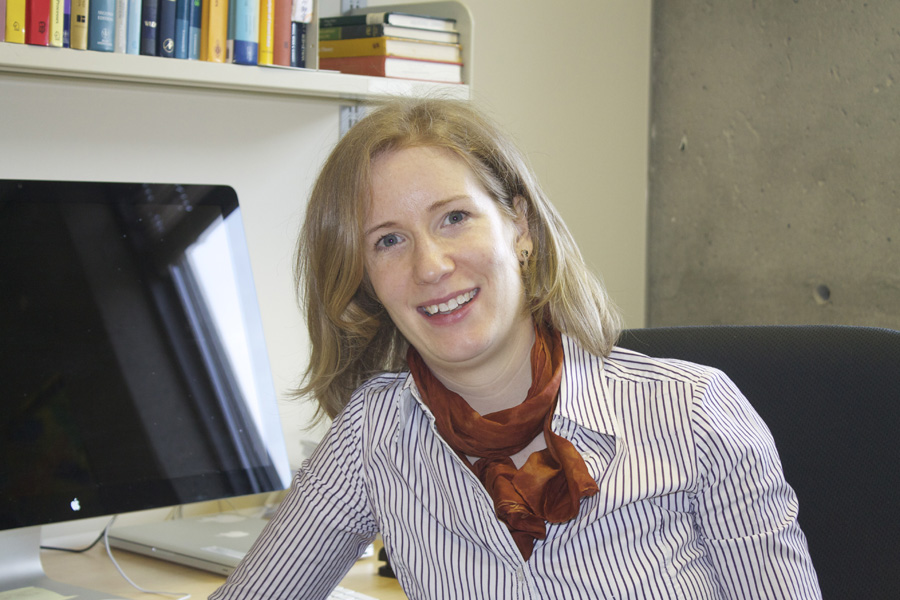
Nešlehová was skeptical about working as a mathematician, but various role models throughout her education have helped spark her interest in the field. (Remi Lu / McGill Tribune)
a, Science & Technology

Demystifying the Mathematician

In honour of “Women’s Month.” Each week, in March, the Tribune is profiling different female researchers at McGill, and the story behind their work.

 For most of us, the idea of working as a mathematician seems too far-fetched. Dr. Johanna Nešlehová, associate professor in the department of mathematics and statistics at McGill, certainly felt that way throughout primary school. This all changed in high school when an inspiring teacher sparked Nešlehová’s interest in mathematics, and motivated her to pursue the subject at university.

“We were on the same wavelength, everything just clicked,” Nešlehová recalled.

Guidance from various mentors have played a major role in Nešlehová’s career development. Throughout her studies in the Czech Republic and Germany, she met many influential female statisticians who eventually became her role models. Other than the occasional odd comment from elderly professors, she says that her experience as a female in mathematics has been very positive.

“You meet people that are so accomplished and inspiring, yet are completely human and have lives,” Nešlehová joked.

As for encouraging her own students, she feels that McGill could benefit from a mentorship program, where students can receive practical training and guidance to prepare them for careers outside of academia. Nešlehová thinks that outreach can also be done at the high school level, where advanced mathematicians could have the opportunity to demystify preconceptions about working in math and statistics earlier on.

The development of these types of programs is important, as statisticians are in high demand. Sectors such as healthcare, finance, and public policy are in need of experts to help them manage and understand mass amounts of information. As advances in technology have increased data collection, there is an increasing need for new strategies to properly handle and draw accurate conclusions from such large datasets.

“There are all sorts of applications in statistics, in all sort of sciences,” explained Nešlehová.

This diversity in career options is even showcased in her own careerpath. Since finishing her PhD at the University of Oldenburg, Nešlehová has completed a fellowship at the University of Hamburg, consulted for financial institutions internationally, and conducted postdoctoral research on neuroscience at Harvard Medical School.

Her current research focuses on extreme value theory (trying to predict the occurrence of very rare events), and copulas. Copulas are mathematical functions used to describe how random quantities relate and interact with one another. Her work aims to devise new methods to calculate such functions, and apply them to medical and environmental research.

The 2008 financial crisis is thought to be partly attributable to copulas; traders allegedly misused a formula that models complex risks in the financial market, and, as a result, they made riskier decisions than intended. This example further highlights the gap between academia and industry, and the need to emphasize practical training (application and communication of theories) throughout undergraduate and graduate studies.

For students still hesitant to enter the field of mathematics, Nešlehová offers a last bit of reassurance: “If you study math, there’s nothing to lose. You’re going to train your brain, and learn how to think.”

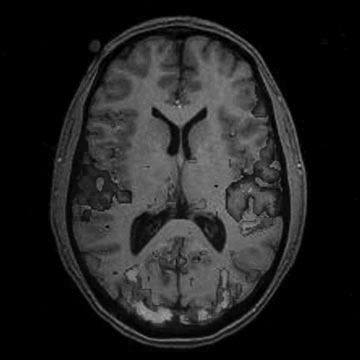
Cornell researchers used fMRIs to observe brain activity. (Image Source: scientopia.org)
a, Science & Technology

Neuroimaging allows scientists to see thoughts

Scientists are getting closer to something mothers have been doing for years: knowing what we’re thinking. The development of neuroimaging technology—various techniques used to directly and indirectly image the brain—has shifted our understanding of how the brain works. Recently, two studies utilized technology to visualize brain activity associated with the brain’s perception of the external and social worlds.

For many years, the brain was a mystery. It could only be studied through invasive procedures, and usually, only when a patient was dead. Now, using neuroimaging technology to observe brain activity, scientists can see how multiple parts of the brain work together to process and store sensory information.

A team of cognitive neuroscientists at Cornell University is making use of functional magnetic resonance imagery (fMRI) to understand the physical mechanisms that allow humans to interpret their social sphere. This technology has allowed scientists to see who a person is thinking of for the first time in history.

Participants in the Cornell study were given the personality traits of four individuals, and then asked to imagine how each would behave in a set of scenarios. The researchers were able to predict who the participants were thinking of based on activity patterns in the brain’s medial prefrontal cortex. This region of the brain stores and analyzes personality traits.

The brain combines personality traits to represent individuals in “personality models,” which are what the brain uses to predict behaviour. As you learn more about a person, the brain continues to combine their personality traits to create accurate and complete models. It is for this reason that parents may be able to predict their child’s behaviour.

Social cognition disorders, like autism, are also linked to the anterior medial prefrontal cortex. Research from Cornell suggests that these disorders are due to a person’s inability to accurately develop these personality models.

Just as fascinating is a study conducted by scientists from Japan’s National Institute of Genetics in Shizuoka Prefecture, which took advantage of the larval zebrafish’s translucent head, and the brightness of the green flourescent protein (GFP) to track how the fish take in their environment.

When neurons are activated, calcium concentration increases in nerve cells, which illuminates the GFP. Through the illumination of this protein, researchers could observe brain activity during predation by creating transgenic fish (fish with a GFP gene) that express GFP in their optic tetum (the centre of visual processing in the brain).

Researchers first recorded the fish’s response to a moving dot on a screen and next to paramecium, a common prey of the fish. The stimuli caused neurons to flash across the brain, which corresponded to the directional movement of the dot and paramecium. Using real-time video, scientists observed the zebrafish’s brain activity, as it responded to its environment.

In the future, these techniques will be used to observe and map the neural activities implicated in other forms of thinking and learning, taking scientists one step closer to understanding the mysteries of the human brain. However, as far as someone being able to see my thoughts, I’d prefer to keep those to myself, thank you.

Image Source: www.att.com
a, Science & Technology

App Reviews

With finals less than a month away, the Tribune has reviewed three productivity apps to help keep you on top of your work.

 Stay Focused

This app is a go-to for studying before any midterm or final. StayFocusd increases your productivity by limiting the amount of time that you can spend on “time-wasting” websites. Developed by Transfusion Media, this free extension to the Google Chrome web browser blocks URLs with a twist. Unlike the popular app Self Control, StayFocusd allows you to block websites like Facebook or YouTube, but still visit them for a limited amount of time. What this means is that if you decide to spend 60 minutes watching YouTube videos, updating your Facebook status, or playing online poker, you will be unable to access all the content that you have blocked for the rest of the day. So if you find yourself wishing there was some way to stop yourself from watching random people “do the Harlem Shake,” install this app and embrace productivity.

Bump

Bump simplifies sharing. As a cross-platform app—meaning it works for a variety of smartphone typesit aids in transferring data between two devices that both possess the application. What makes this app stand out is the sheer ease with which it accomplishes this task—just bump together the phones between which you want to make the transfer and voilà! Smartphone users can transfer contact information, photos, and files to each other over the internet through this method. The developers have now added the additional functionality of bumping your phone with your computer to seamlessly make transfers. Available for both iPhone and Android devices, it’s a steal for the price—free!

Dunno

Dubbed the “Research-it-later” app, this technology helps you keep track of your train of thought. Contrary to note-taking apps or to-do lists, the main function of Dunno is to perform research for you while you’re away from the web. Essentially, Dunno helps you to record any thought that comes to your mind, and then it automatically performs background research on the recorded item. Though the results are not too in-depth—you don’t want to use Dunno for a research paper—the app succeeds in googling things for you to look at later. So, if someone mentions a musician you haven’t heard of, but you don’t have the time to look the artist up on Wikipedia, put it in Dunno. The app will consolidate information about that artist and notify you when it is ready to be read. Available for the Mac and iOS, never again will you catch yourself regretting not having instantly looked something up because you didn’t have the time.

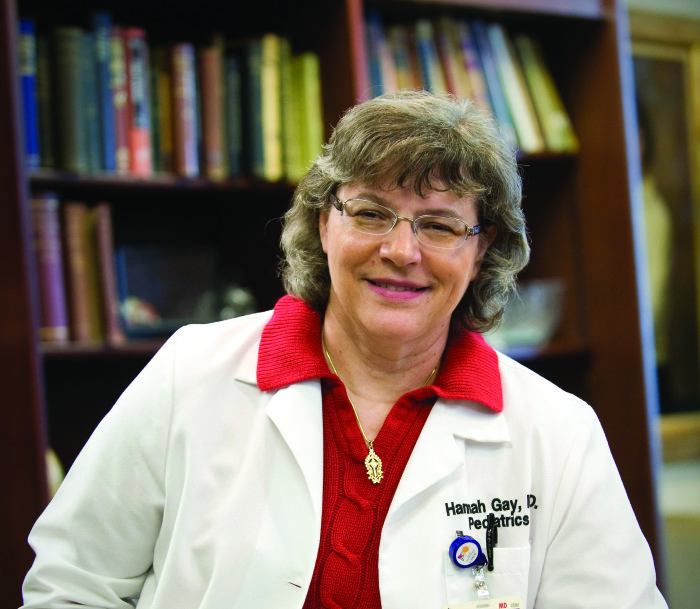
Dr. Hannah Gay made the decision to treat the baby with drugs even before her infection was confirmed. (Image Source: lancasteronline.com)
a, Science & Technology

Exceptions to the epidemic?

Over the last 30 years, science has seen many breakthroughs with respect to AIDS caused by the human immunodeficiency virus (HIV). Affecting over 34 million people worldwide, billions of dollars have been donated to finding a cure for this disease. However, as of 2013, there is still no cure for AIDS or HIV infection. Antiretroviral treatments available on the market only suppress HIV symptoms. Currently, the disease can be delayed, but not completely cured.

Along with tuberculosis and malaria, HIV is one of the three most widely spread infectious diseases, responsible for many deaths on an annual basis. The virus replicates by inserting its genetic code into human cells, and particularly, a type of T cell known as CD4 cells. T cells are key players in the immune system. As T cells are depleted, afflicted patients eventually reach a point where they cannot battle infectious diseases or cancers.

As more and more T cells are infected with HIV, the virus levels rise in the blood. At this point, the immune system attempts to fight off the virus, causing side effects that include aches, pains, and fever. However, although the levels of the virus decrease, it is not entirely eliminated from the body. The problem with HIV is that it remains in the blood in low levels as a provirus, its dormant form, which the immune system is unable to recognize. Since T cells are long lived, they will continue to replicate their genomes, along with the virus. After years without symptoms of the infection, the levels of the virus can rise, causing in AIDS.

Although scientists are still searching for a cure, many cases suggest we aren’t far away from discovering a permanent treatment. In 1985, researchers discovered a group of female prostitutes in Nairobi, Kenya, who seemed immune to AIDS. Their bodies produced an army of killer T cells to protect the immune system from cells infected with HIV. Usually, people do not maintain high levels of T cells for long periods of time, once the initial infection is fought off, an individual’s T cell count drops. Yet, in the case of these women, their killer T cell levels remained high, and they continuously drove back the infection whenever it recurred. Researchers have not found any aspect that is fully consistent amongst the women’s immune systems, suggesting the protection could come from multiple overlapping genetic factors.

In 2007, Timothy Brown, the “Berlin patient,” became widely known as the only person cured of HIV after he received bone marrow transplants to treat leukemia. His doctor, Gero Hütter, found a donor who was both a genetic match and had a rare mutation, known as CCR4-delta32, which makes the CD4 cells resistant to infection by HIV. While some scientists were skeptical of whether or not he was actually ‘cured’ of AIDS, tests showed that Brown’s CD4 T cell counts remained fairly stable and HIV genetic material was found only at a level that was barely detectable in the most sensitive tests. All of these results led to the conclusion that through Brown’s treatment, progress was made towards permanently curing the infection.

The most recent discovery in the battle against AIDS occurred this March in Mississippi: a baby girl, born with HIV was cured very early in life after treatment with a standard drug therapy. Unlike the “Berlin patient,” whose HIV infection was completely eradicated with an elaborate treatment for leukemia in 2007, the baby was given an inexpensive treatment of a cocktail composed of three widely available drugs, already used to treat HIV infection in infants. Researchers believe that it was this early use of antiviral treatment that cured the infant, as it kept the virus from forming hard-to-treat viral reservoirs—the proviruses. Her doctor, Hannah Gay, a pediatric HIV specialist at the University of Mississippi Medical Center in Jackson, was surprised to discover that after 28 months, tests for HIV-specific antibodies—the standard clinical indicator of HIV infection—were negative.

Although much progress has been made towards HIV/AIDS treatment in the past, few discoveries have received such media attention as this most recent finding. Perhaps it is because this Mississippi case is the first time an infant has received a functional cure. This is a rare event, in which a person achieves remission without the need for drugs, and standard blood tests show no signs that the virus is making copies of itself.

More testing needs to be done to see if the treatment would have the same effect on similarly infected children. Nonetheless, these results could change the way high-risk babies are treated for HIV. Though we still do not have a universal treatment for HIV/AIDS, we are now one step closer to finding a permanent cure.

a, News

Education Summit

On Feb. 25 and 26, the Parti Québécois (PQ) hosted 61 organizations and groups at its long-anticipated Summit on Higher Education. Over the course of two days, the now-familiar sound of student protests continued in the streets of downtown Montreal, as thousands publicly expressed their disappointment with the actions of the provincial government and the results of the Summit. 

The Summit

In September, shortly after it was elected into power, the PQ announced that it would hold an Education Summit. The government initially proposed the Summit as a follow-up to the protests against the former Liberal government’s proposed tuition increases of $325 a year for five years, which occurred during the spring and summer of 2012. 

At the end of the first day of the Summit, the government announced that it would enact a three per cent annual increase on tuition, which would begin next September, and is supposed to correspond to the predicted indexation rate of Quebec families’ disposable income. This would mean a $70 increase on tuition for Quebec students. Out-of-province and international students will also pay three per cent more on their tuition.

According to The Gazette, Martine Desjardins, president of the Fédération étudiante universitaire de Québec (FEUQ), responded immediately to the government’s decision at the Summit.

“We are extremely disappointed,” she told those in attendance. “We hoped the government would do their homework, and not make decisions based on polls.”

Prior to the Summit, the FEUQ told its constituents that it was strongly opposed to any type of tuition indexation.

A co-leader of the Québec Solidaire party, Françoise David also spoke out against tuition indexation at the Summit, according to The Gazette. He called indexation “inadmissible.”

Québec Solidaire was founded in 2006. It currently holds two seats in the National Assembly.

Robin Reid-Fraser, vice-president external of the Students’ Society of McGill University (SSMU), attended the Summit as a representative of the Table de concertation étudiante du Québec (TaCEQ), of which SSMU is a member association. She was also disappointed by what transpired over the course of the two days.

“I suppose I knew going into it with the information I had, and having participated in the themed meetings, that it wouldn’t be nearly what I’d like it to be, but my idealistic nature was still let down,” she said.

Reid-Fraser noted that she was most disappointed by the small amount of time student groups were given to prepare for the government’s proposals during the Summit itself.

“We only actually saw what the PQ was proposing as we entered the meal or break session before that particular period of discussion – giving us about 30-90 minutes to actually put together a response,” she said.

According to The Gazette, Quebec Premier Pauline Marois said during the Summit that she believes tuition indexation to be the fairest option, and that the amount of the increase is reasonable, considering the current value of a university degree.

Olivier Marcil, McGill vice-principal (external relations), stated that he and Principal Heather Munroe-Blum were pleased with the conversations around university governance but not the $19.1 million budget cuts that the PQ has recently imposed on Quebec universities. While Munroe-Blum attended thesummit, Marcil watched it on the live feed provided by the government.

“On governance, we were pleased to see a less aggressive tone and fewer allegations of mismanagement at Quebec’s universities, and we agree with the government in its call for streamlined strategic accountability reports,” Marcil said.

“Unfortunately, the government did not consider its program of severe cuts to universities, despite evidence that these cuts will be harmful, and will inflict damage on our communities from which it will take years to recover,” he continued.

Marcil concluded that the government pre-determined the results of the Summit.

The protests

Demonstrators held protests on both days of the Summit, and demonstrations have continued for many nights since. The protests that took place on Feb. 25 and 26 were each declared illegal, and were dispersed by the Montreal Police (SPVM). 

While roughly 1,500 people participated in the Feb. 25 demonstration against the Summit, about 10,000 people slowly gathered in Victoria Square on Feb. 26, and took to the streets in a protest organized by L’Association pour une solidarité syndicale étudiante (ASSÉ).

ASSÉ is the only student group to officially boycott the Summit, because the PQ announced in advance that it would not consider the topic of free education at the two-day event. ASSÉ holds free education as its main goal.

During the Feb. 26 protest, there were people present in the crowd with red vests that read “ASSÉ.” Those wearing vests declined to comment on what they were doing, saying only that they were “security.”

Approximately two hours after the protest left Victoria Square, the police declared it illegal. The SPVM then proceeded to pepper-spray, kettle, and arrest 13 students.

A handful of McGill students attended the protest, many of whom are members of the Art History and Communication Studies Graduate Students’ Association (AHCS-GSA), which is the only student association at McGill to have joined ASSÉ to date.

AHCS-GSA voted to join ASSÉ at a General Assembly (GA) on Feb. 12. On Feb. 19, they voted to go on strike for the duration of the Summit.

Gretchen King, a communication studies councillor on AHCS-GSA who brought forth the motion to join ASSÉ at the GA, attended the protest and held a sign that read “McGill on strike” as the protest passed McGill on Sherbrooke. Following the protest, King said that she was not surprised by the Summit’s results.

“The Summit was a public relations stunt that failed in the eyes of students,” she said. “No genuine dialogue on education was held, as the outcomes were predetermined and free tuition was barred from even being discussed. This is not why Quebec students sustained a six-month long student strike last year.”

Many of the other people in attendance also held Québec Solidaire posters to show support for the party they now believe represents student interests.

Jacques Chamberland, a teacher of philosophy at the Collège de Maisonneuve, and a McGill alumnus, marched with other teachers and professors on Feb. 26, in support of the movement for free education. He, too, was unsurprised by the Summit’s outcomes.

“From a militant point of view, I am disappointed because I [support] free education,” he said. “But on the political level, their strategy was pretty good. We have to acknowledge that.”

Protests continued into the following week, while McGill students were away on reading break. 

Photos by Anna Katycheva.

a, News

Suzanne Fortier appointed as McGill’s next Principal

On Mar. 5, Stuart H. (Kip) Cobbett, chair of McGill’s Board of Governors (BoG), announced that Dr. Suzanne Fortier had been appointed as McGill’s 17th principal. She will begin her five-year term in September, at which point she will officially replace McGill’s first female principal, Heather Munroe-Blum.

The BoG appointed Fortier after receiving a recommendation from the Board’s Advisory Committee for Nomination of the Principal, which began meeting in the spring of 2012.

The Committee was comprised of two representatives respectively, from the student body, the faculty, support staff, Senate, and the BoG. The Committee was chaired by Cobbett, who noted that the Committee began its search by first holding 30 consulting sessions with the McGill community in April and May of last year.

“Once we got a sense from the community as to what [it] saw as the challenges facing McGill over the next five to 10 years, we then went back to the drawing board and worked up what we call a ‘candidate profile’ or a ‘position profile,’” Cobbett told the Tribune.

The Committee then drafted a list comprised of 85 people who had expressed interest in the position. This list included both Canadian and international applicants, and was gradually narrowed down to approximately 25 candidates, then, seven.

Finally, the seven candidates on the list were interviewed in November and December 2012, after which, the Committee chose Fortier.

“It’s always a difficult decision when you are choosing somebody for a position of this significance and this profile, and … we had a number of very, very good candidates,” Cobbett said. “We were fortunate that the search brought forward a lot of very, very impressive individuals. But ultimately, we decided that Dr. Fortier is the best for McGill at this time.”

Cobbett emphasized that Fortier’s experience made her stand out among the rest.

Fortier has served in a number of senior administrative positions at Queen’s University, including associate dean of graduate studies and research, vice-principal (research), and vice-principal (academic). Currently, she is the President of the Natural Sciences and Engineering Research Council of Canada (NSERC), a position she has held for seven years, and will have to leave in order to join McGill.

“At NSERC … she was running one of the principal granting agencies – and not only running it, she restructured it, re-organized it, so she has whole a lot of proven administrative and managerial skills in addition, of course, to being a top-flight academic, and a very empathetic person, somebody who appears to have a collegial management style,” Cobbett said.

The Students’ Society of McGill University (SSMU) President Josh Redel, who also sits on the BoG, expressed that he is very pleased with Fortier’s appointment.

“I think she is an excellent choice, and her passion for McGill will go a long way,” he said. “In addition, her unwavering commitment to become the next principal despite the incredible challenges that McGill is facing, or is about to face, will do this school well.”

Fortier will be joining McGill at a time when the tuition debate has reignited, and the university’s budget is facing major cutbacks from the provincial government.

“The principal has to be somebody who understands the importance of public policy, and understands the importance of relationships with the government, both provincial and federal because they are our principle funding sources,” Cobbett said. “You need somebody, obviously, who is very sensitive to both financial requirements and limitations, and Dr. Fortier has all of that.”

Fortier said she believes she is up for the job, despite these impending challenges.

“I have certainly, both when I was at Queen’s and in my current job … had to deal with cuts in budgets, and the exercise that one must engage in defining … the values, the principles, and the goals that will drive the exercise, [while] making sure that you protect the core, the essential part of your organization,” she said.

Jonathan Mooney, secretary-general of the Post-Graduate Students’ Society (PGSS) and a BoG member, hopes that Fortier will strengthen the relationship between Quebec society and McGill, something he said was very important to the BoG in the selection of the new principal.

“McGill is often perceived as an enclave that is really distinct from the rest of the Quebec,” he said.  “Madame Fortier will serve as an embodiment of the link between McGill and Quebec in her role, and will also bring a vision for how McGill and Quebec society have a lot to gain from each other.”

Fortier is a McGill graduate, having received both her Bachelor’s of Science and PhD at the university. She is also a Quebec native, and attended school in Saint-Timothée, a small rural village in the province. She expressed excitement about returning to her home province and to McGill.

“There is a real sense for me of a strong link with McGill, with Montreal, with Quebec,” she told The Tribune. “It’s a place that has given me so many opportunities [and has been] a launching pad in my career, so I am profoundly attached to these places.”

SSMU Vice-President University Affairs Haley Dinel, who was a student representative on the Advisory Committee for Nomination of the Principal, pointed to Fortier’s personable attitude towards students as something which stood out in her candidacy.

“Dr. Fortier is a very approachable person,” Dinel said. “Whether it’s students or student leaders, she has a willingness to understand and communicate with us.”

Mooney agreed, calling Fortier’s references impressive.

“The references and stories presented to the [BoG] indicated that Madame Fortier frequently spent time with students at Queen’s and was at ease with them,” Mooney said. “She also seems [to] value the importance of student leadership.”

Munroe-Blum will end her term as principal on June 30, 2013. An acting principal will fill the post in July and August, and Fortier will begin her duties in September.

a, News

Philosophy students seek independence from AUS

The Philosophy Student’s Association (PSA) will vote for accreditation—which would grant the association organizational independence from the Arts Undergraduate Society (AUS)—between Mar. 11 and 15. Although both the PSA and AUS want to maintain a strong relationship, it is unclear as to what this relationship will look like in the event of accreditation.

PSA President Jonathan Wald explained that the primary motivation for seeking accreditation is financial. Currently, the PSA does not have autonomy over its finances, which is what it hopes to achieve with accreditation.

“[We want] to make sure that we have the freedom to continue to perform our activities, and run our activities at a maximum efficiency,” Wald said. “We see accreditation and incorporation as one of the ways to cut red tape, maximize transparency of the PSA, and grant us maximum autonomy, while being financially responsible.”

The PSA has been working towards incorporation and accreditation since the start of the Fall 2012 semester. On Feb. 19, the PSA became the first academic department association at McGill to be incorporated under the Régie des Entreprises, which gained the association status as a non-profit organization.

The accreditation process is being carried out solely between the PSA and the government of Quebec, who has assigned an accreditation agent to the PSA. This agent will have the final say on the decision following the PSA’s vote. Neither McGill, nor the AUS, nor the Students’ Society of McGill University (SSMU) are involved in the accreditation process.

Wald said that the PSA wants to continue to maintain a relationship with the AUS. In the event of accreditation, he predicts that the PSA’s current practices with the AUS and SSMU would be written into agreements with both organizations.

“We’d like to remain involved in [the] AUS, and I think it’s in the interest of the AUS to keep us involved [in AUS Council],” Wald said.

According to AUS Vice-President Internal Justin Fletcher, the AUS has a similar vision, but has yet to make a final decision about its cooperation with the PSA in the event of PSA accreditation.

“[The relationship between the AUS and the PSA] will be determined based on the results on the vote,” Fletcher said.

Fletcher also added that it was important to remember that all philosophy students are still considered arts students.

“There is a multi-track system in the Faculty of Arts where you need to be in at least two different academic programs, meaning that all philosophy students will still be members of the AUS,” he said.

He did not specify what may happen with students in the Faculty of Arts and Sciences, who may study philosophy as their arts component.

In order to attain approval from the government for accreditation, the PSA must secure 25 per cent support from undergraduate philosophy students. Wald believes that gaining ‘yes’ votes from philosophy students will not be an issue.

“The only people who have been critical were people [who] were confused about what accreditation meant,” Wald said. “When I cleared it up, they were actually supportive of it. So as long as people are informed about this, I think our main challenge will be getting people to vote, not getting people to vote ‘yes.’”

Eliyahu Freedman, U3 philosophy, said that he and many of his peers are supportive of the PSA’s move, claiming that the association should disassociate itself from the AUS.

“A lot of people spite the AUS – fairly or unfairly – for its mismanagement of funds, and poor handling of the student strike last year,” Freedman said. “Accreditation will enable the PSA to set its own policies—from financial policies to strike policies.”

While the PSA’s pursuit of accreditation and recent incorporation has received support from many of the department’s constituents thus far, Fletcher and Wald do not believe that  departments smaller than PSA will follow in their footsteps.

“It is a lot of work,” Wald said. “[And] for the smaller student associations, it doesn’t make much sense … [it] isn’t necessarily worth it.”


Read the latest issue

Read the latest issue