


Latest News

Conflicting studies on health benefits of eggs agree that they should be avoided with high cholesterol levels. (hautelife.ca)
a, Science & Technology

A healthy breakfast or worse than smoking?

The question of whether eggs are a healthy protein source or a deadly cholesterol bomb is among the most disputed topics in dietary sciences. An online query into the subject proves more confusing than helpful—many studies give contradicting results. Some say that eating eggs is worse than smoking, while others maintain the meal is an athlete’s best friend. However, by sorting through professional opinions, the truth about what’s inside the little white shells becomes evident.

The first step I took towards solving the dietary conundrum of eggs was speaking with Dr. Karine Auclair, associate professor of chemistry and biochemistry at McGill University.

“A lot of times, the media blows these things out of proportion, kind of starting a fear campaign,” said Auclair in response to a set of articles on a study that suggested egg consumption was nearly as harmful smoking. She suggests consulting only well-trusted sources, such as Health Canada,  for these issues.

Looking into Health Canada’s pages—although no articles explicitly discuss eggs—many papers, such as “Foods with less sodium” and “Cooking and meal planning tips” directly recommend including eggs in one’s diet.

Further, the Mayo Clinic’s information on “High Cholesterol: Risk Factors and Causes” do not include eggs on the list of cholesterol risks, which include red meat, smoking, and saturated/trans fats. It seems that eggs may not be as high-cholesterol as they are made out to be.

However, some research suggests otherwise. Dr. John David Spence, professor of neurology and clinical pharmacology at the University of Western Ontario, published a study that The Vancouver Sun covered in an article entitled, “Egg Yolks Almost as Bad as Smoking, Researcher Says.” In the study, patients at vascular prevention clinics at Western University hospital filled out a questionnaire about their diet and smoking habits. Each questionnaire was then compared to the corresponding patients’ cardiovascular health portfolio. Surprisingly, results suggested that heavy egg eaters and smokers had almost equal exponential growth of carotid plaque area (the part of the arteries that are clogged).

Further supporting Spence’s study, the Heart & Stroke Foundation, among many other organizations, recommends those with high cholesterol levels to “limit [their consumption of] whole eggs to no more than two per week.”

There seems to be steadfast evidence on both sides of the spectrum: the most trusted sources have called eggs beneficial, deadly, and harmless for one’s health. However, subtle observations show that all of these studies taken together are actually aligned with the same point of view.

Although the effects of eggs and smoking on carotid health have a very strong correlation (p <0.0001), no experiment has been published on the relationship between diet and carotid plaque area, the topic of Spence’s study. So while the study shows a relationship between egg consumption and plaque, any factor related to cholesterol increases could have confounded his result.

For example, what if the subjects’ three strips of bacon they always ate with their three eggs was not accounted for in this study? It is therefore reasonable to take Spence’s study as a suggestion that a relationship exists, but likely at a lesser extent than suggested in his findings.

The idea that both the anti- and pro-egg organizations and researchers share is the key phrase, “unhealthy if you already have high cholesterol levels.”

The Info-Santé phone line, 8-1-1, answered my egg question by directing me to the University of Montreal’s website extenso.org. Here, too, the phrase, “if you already have high cholesterol levels” came up.

Research shows that although eggs are high in dietary cholesterol, most of it will not be absorbed by the bloodstream. The 8-1-1 line even went so far to say that a five-egg-per-day diet is unlikely to cause any issues, unless you already have hypercholesterolemia, or high cholesterol levels.

The bulk of trusted sources seems to agree that eggs in moderation are a perfectly healthy breakfast, unless you have high cholesterol.  Even those with genetic hypercholesterolemia disease are not restricted to avoid eggs altogether. Alhough there are always some limits and restrictions, eggs are a long way from being as detrimental as cigarettes or high levels of saturated and trans fats.


a, Science & Technology

How much is too much caffeine?

Coffee is often a welcomed friend during the semester. According to folklore, the bean’s energizing properties were first discovered by an Ethiopian goat herdsman, who found his flock frolicking after eating coffee berries from nearby bushes. It’s not just goats that enjoy the effects of caffeine, however. According to the Food and Drug Administration (FDA), at least 80 per cent of adults in the U.S. consume various forms of the stimulant every day. But the caffeine addiction does not stop there—some proclaim their love of the chemical by displaying its structure on T-shirts, mugs, and laptop cases.

However, the five deaths linked to Monster Energy drinks and 13 linked to 5-Hour Energy shots in the U.S. last year,  according to FDA records and an interview with an agency official, suggest caffeine might not be such a nice friend. Bertil B. Fredholm, emeritus professor of pharmacology at the Karolinksa Institute in Sweden told Chemical & Engineering News (C&EN) that caffeine is a popular stimulant that triggers alertness in the body at low doses. Once absorbed by the bloodstream, the compound is metabolized in the liver, where it is transformed into three different primary metabolites (molecules produced during metabolism): paraxanthine, theophylline, and theobromine. Subsequently, these metabolites bind to two adenosine receptors, A1 and A2a, which are located throughout the body. These are proteins that regulate different physiological functions when activated by the neurochemical adenosine.

In normal circumstances, adenosine is produced by neurons—brain cells—throughout the day. The adenosine receptors are responsible for regulating nerve cell activity, and the release of neurotransmitters—brain chemicals that communicate information between the brain and body—such as dopamine. The interaction of the adenosine molecule with its receptors also promotes drowsiness. As adenosine binds to its  receptors to activate them, it slows down nerve cell activity, causing sleep.

However, when caffeine enters the bloodstream, the interaction of adenosine with its corresponding receptors is interrupted. Caffeine and its metabolites look like adenosine to nerve cells, but do not cause resulting response in receptors. Therefore, these metabolites bind instead to the adenosine receptors and prevent adenosine from doing its job. Consequently, dopamine and other neurotransmitter levels increase, resulting in a surge of nerve activity in the brain and on the heart. Furthermore, although caffeine looks like adenosine, it is not a neurochemical. Therefore, instead of slowing down the nerve cell’s activity, it speeds it up, causing you to feel more awake.

These effects might all seem harmless, but when taken in excessive quantities, caffeine can cause anxiety, irritation, and general mental discomfort. Importantly, caffeine can also have many negative physiological effects on the body, including increased blood pressure, rapid heart rate—and  in extreme cases, death.

Chances are, one cup of coffee is not going to kill you. The toxic level of caffeine in humans, about 10 g, is roughly equivalent to guzzling 75 cups of brewed coffee (in eight ounce mugs), or 120 cans of Red Bull over a few hours. However, this lethal limit is hardly a guideline. The tolerable amount of caffeine varies widely from person to person. Factors such as genetics, smoking, and age, all have an influence, although scientists are still unsure what exactly causes death by caffeine before the lethal limit.

Due to the variability in caffeine sensitivity among people, the FDA does not recommend a consumption limit for the entire population. However, the agency states on its website that 600 mg (four to seven cups of coffee) of caffeine is too much. While it is difficult to regulate the caffeine content of food and drink—since beverage manufacturers claim the compound is a necessary flavour enhancer for their products—the FDA puts a limit of 0.02 per cent (6 mg per oz) on the amount of the chemical allowed in cola-type beverages.

Unfortunately, beverage limitations do not apply to energy drinks, which are sold as dietary supplements. Drinks like 5-Hour Energy Shots may contain caffeine levels that exceed 6 mg per oz. Furthermore, beverage manufacturers often include caffeine as part of the “energy blend,” on the label. These contain multiple ingredients, none of which are broken down individually by milligrams. As a result, it is unclear how much of a contribution to the “energy blend” is made by energy-boosting compounds.

Despite the dangers of a caffeine overdose, it seems a caffeine craze has caught on in the marketing industry. Cracker Jack has switched out its caramel corn for Cracker Jack’d—two ounce packages of “power bites” jammed with 70mg of caffeine. It will join a market of many other caffeine-infused products, such as Water Joe—a bottle of water with the same amount of caffeine as a cup of coffee—caffeinated pancakes, and marshmallows.

While the marketing industry makes it easy to get caught up in the hype surrounding caffeinated food and beverages, everyone’s body metabolizes this chemical differently. While it is unlikely that a morning cup of coffee will do you any harm, it serves as an important reminder that there is no fixed threshold for the amount of caffeine your body can tolerate. With finals looming in the future, it might make more sense to swap out that 5-Hour Energy Shot for some sleep.

(Sam Reynolds / McGill Tribune)
a, Student Life

Local spa provides rest and relaxation for McGillians

Sylvie-Chantale Duquette couldn’t stand much higher than five feet tall, but every inch of those five feet is bursting with energy. Her friendly greeting to every customer entering her spa is something McGill students have come to associate with the intimate atmosphere of SCC Spa Urbain. Despite catering to patrons from all walks of life, Duquette maintains that students are the core of her business.

A native Quebecer, Duquette always wanted to help people:

“I’ve always been in retail, so for me, opening up a spa was a huge change in my life. I knew that after 50 I would want to make a change, and really care for people. When I was younger, I used to always tell my mother that I wanted to go to Africa and help kids; and I think if I’d won [the lottery] that’s what I would have done. I didn’t win, so then I told myself, ‘What could I do that would mean I’m caring for people, but also [has] a bit of beauty and health in it?’ and I decided to open the spa.”

From there, things took off quickly. After a meeting with experienced friends in the beauty industry, Duquette resigned from her job, and set about renovating the space SCC Spa urbain currently occupies. The space, on 385 Sherbrooke, opened in Dec. 2011.

“We wanted to introduce ourselves to the area, and make sure that we were going to [cater specifically] to the customers around here, and a lot of them are students.” Duquette explains. “So we’ve been very mindful of not only choosing products for them, but making sure that this place is [somewhere] you feel comfortable.”

Duquette even gives some of her clients relationship advice.

“[Some of the girls] come in and they bring pictures [of guys] on their iPhones; and I get a vibe, and I tell them, ‘This guy only wants you for this,’ or ‘No, this guy is no good for you,’ and so far, I think I’ve made some good decisions for them.”

Besides offering match-making services, Duquette’s spa features daily student-oriented discounts. The week’s specials are updated on the spa’s Facebook page.

“Every Sunday night, I post promotions for the entire week; [but] at the end of the day I think it’s word-of-mouth,” Duquette says about the spa’s success. “[If] people come, enjoy it, and feel comfortable, they’ll come back; they’ll talk to a friend [about it]. I’ve noticed that since we’ve been doing that, more people have been coming.”

Another concern is ensuring the products SCC Spa urbain carries are environmentally friendly and affordable for students. Every product offered by the spa is either organic or free of animal by-products; such as its Jane Iredale makeup and skin care line, which is endorsed by David Suzuki. Aside from being green, Duquette maintains that they always work.

“I’m so at ease with [the products] we’ve chosen, that I tell people “Take it home. [If] you’re not happy, bring it back and [you’ll get your] money back.” And I do that with everyone, and no one has ever come back. But if that day should come, [I’ll] stand by my word.”

The atmosphere at SCC Spa Urbain is cozy, as the space consists of a reception/manicure area, and two private rooms. With increased business, the vibe can get a little hectic, but Duquette manages to keep up consistent individual attention with her customers.

“We have a lot of international students who just come and cry when they’re lonely, [and] some of them are calling me their mom away from home,” Duquette laughs. “Unfortunately, I wasn’t able to have children, so for me, a lot of the students are really the children that I wish I had had. I do care, you know? I want this place to be authentic; it’s not just about beauty, it’s about a healthy lifestyle. So if I can help promote that, and be a good mentor, well great. All of our staff is chosen for the same reason: because they care about people.”

Duquette works with McGill students on other private or charitable projects to help publicize the spa. One student, an aspiring artist, held an exhibit of her work at 385 Sherbrooke, and managed to sell 34 out of 37 pieces to a full house of 50 people.

“Also,” Duquette adds, “during the month of February, every time someone would book an appointment, we’d give a dollar to Borderless World Volunteers. Diana [Famintsyna], who’s on the [executive team], is a customer of ours….so I said ‘Whatever we can do at the spa, you let me know.’”

SCC Spa Urbain offers standard spa services, and caters to both men and women. With a welcoming environment, warm and professional staff, and affordable discounts, Duquette has developed something of a hidden gem in downtown Montreal. At the end of our interview, Duqeutte left me with this:

“I finished my bachelor’s so many years ago, but since I’ve opened this place I’ve learned so much from young people. I feel privileged that they share their stories with me. Every day I feel so excited to go to work, like ‘What am I going to learn today?’”

For more information, including hours of operation, visit www.sccspaurbain.com/ and like their Facebook page for weekly deals on products and services.

a, Science & Technology

Structural study unravels mystery of how IFIT protein binds to RNA

Infectious diseases have been a terrible killer in the past, and still are today. With the development of vaccines, the discovery of antibiotics and drastic changes in public health, the human life span has increased over the past century. Yet, the threat of infectious diseases still haunts us. As an HIV epidemic attacks Africa and South East Asia, and a global avian influenza pandemic looms, there is an urgent need to understand, and help the immune system in its battle against pathogens. A study conduced at McGill offers more insight on just that.

One of the most important features of the immune system is its ability to differentiate between self (i.e., one’s own cells) and non-self (i.e., a pathogen). When a virus enters a cell in our body, a host of immune proteins (such as MDA5, RIG-I) recognize patterns that are common to pathogens, but not present in us—double stranded RNA, for example, which is different from humans’ double stranded DNA. When these patterns are detected, cellular signaling pathways are initiated, resulting in the secretion of a key cytokine—a molecule involved in cell communication in the immune system—called interferon. Interferon, in turn, activates numerous genes to produce defence proteins, including the IFIT family of proteins in the infected and surrounding cells, creating an anti-viral environment. Identifying these proteins and the roles they play have been an area of intense research.

The IFIT family of proteins consists of four members (IFIT1, IFIT2, IFIT3 and IFIT5), which are dramatically increased in cells upon viral infection or the addition of interferon, suggesting an anti-viral role. “[The IFIT family of proteins] have been discovered for quite a bit of time, but the functional analysis started maybe 10-15 years ago,” says Dr. Bhushan Nagar, associate professor in the department of biochemistry at McGill, and in whose lab this work was done. IFIT proteins have long been known to mediate an anti-viral effect by disrupting the production of new proteins in an infected cell.

In 2011, Dr. Giulio Superti-Furga’s lab at the Austrian Academy of Sciences used a proteomics approach, which involved fishing in a soup of laboratory cell extract with triphosphorylated RNA as a bait. To their surprise, they captured the IFIT proteins. Nagar refers to this work as “the seminal finding.” Superti-Fagar contacted Nagar, whom he had met during the latter’s post-doctoral study. This started the collaboration that led to the team’s current work, a structural description of the IFIT5 protein and its interaction with triphosphorylated RNA, which was published earlier this month in Nature.

“The structural biology—technique-wise—is routine,” said Nagar. “We made the protein in bacteria, where serendipitously some portion of the protein was bound to bacterial triphosphorylated RNA.”

They initially had some difficulty studying this protein, since it bound to RNA of various sizes (heterogenous RNA). To further study the protein’s interaction with RNA, they had to make RNA in the test tube. Nagar credits Yazan Abbas, a fourth year PhD student and lead author of the paper, for “doing an excellent job in following up on the literature on how to make [large amounts of less heterogenous] RNA and really figuring things out.”

Both Nagar and Abbas concur, that making the RNA was the hardest part of the project.

The ‘eureka’ moment, says Abbas, smiling, was “seeing the electron density maps which are used to build atomic models of protein.  We had this for IFIT5, but we were not sure of where the RNA goes. When we solved [the structure] with the RNA, when we had the electron density map with the triphosphate RNA—we got it. According to my boss, he just said ‘we’re in.’”

“The definite proof [of function] is when you have a crystal structure”, says Nagar. “Six months before our work, the structure of RIG-I interacting with RNA was published. Just today, the MDA5 structure was published; this is a very hot area of research,” he adds.

The IFIT family of proteins consists of a tetratricopeptide repeat domain (TPR domain) that, due to Nagar’s work in determining the structure of these proteins, is now known to interact with both triphosphorylated RNA and proteins. What this means in the context of anti-viral immunity is still unknown, and is where the project is headed. The next stages of this project will look at “drugs or inhibitors based on these RNA molecules, for when the immune response is too strong,” concludes Nagar. Other future directions involve understanding the role of this protein in viral infections, such as influenza.

“The virus is attacking, these proteins are defending, what you normally get when you see the flu virus is a balance between the two. If we did not have this defence, we’d have much worse symptoms than what we get.”

Abbas concludes, “I’ve been told that the option to graduate is open, but I agree with my boss. There’s just so much more to explore in the field.”


See the full contest here!
a, Student of the Week

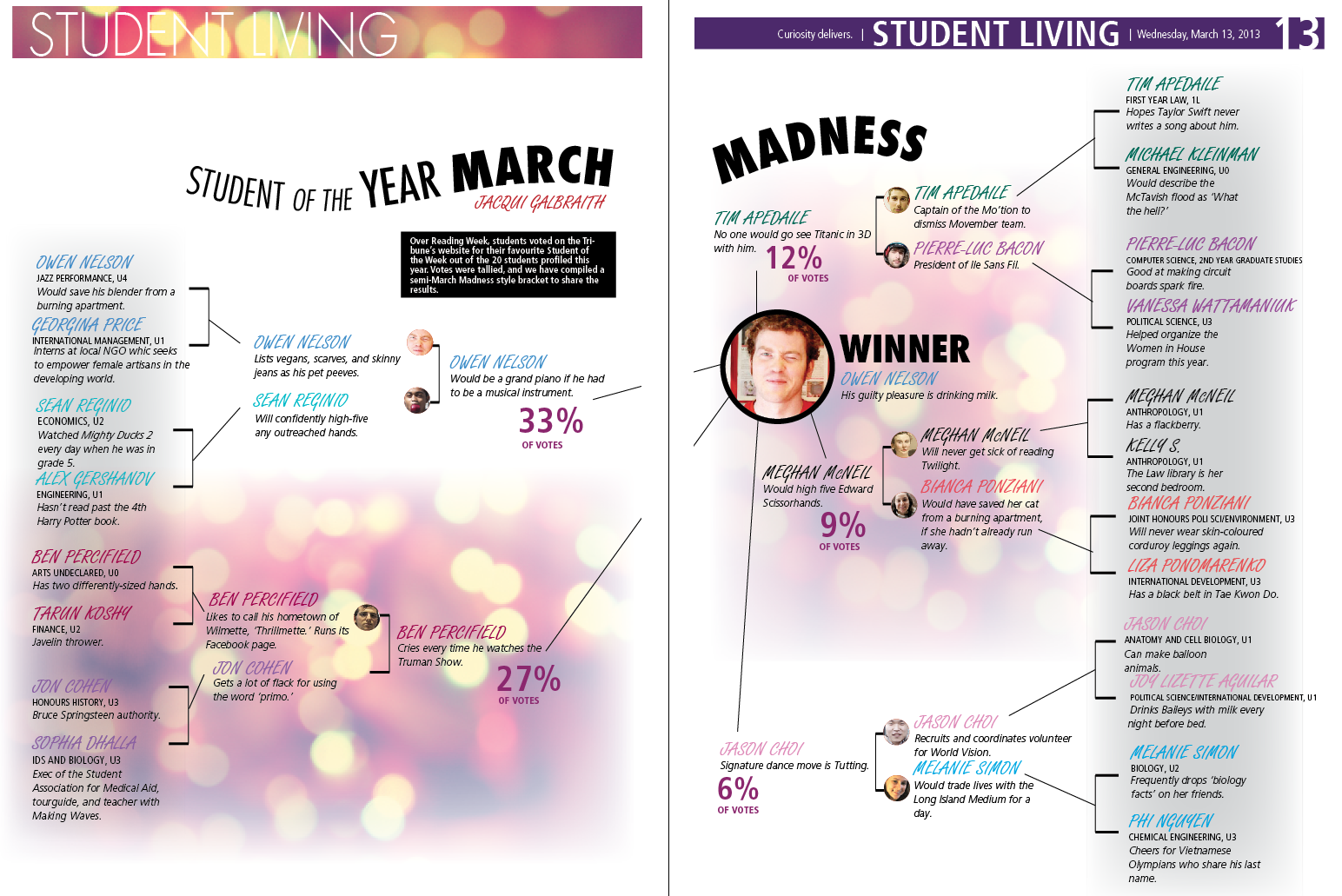
Student of the Year March

Over Reading Week, students voted on the Tribune’s website for their favourite Student of the Week out of the 20 students profiled this year. Votes were tallied, and we have compiled a semi-March Madness style bracket to share the results. 

a, Student Life

Ask Tribby

This week the Tribune is introducing a new advice column answering questions submitted by McGill students. Got problems? E-mail us at [email protected].

Dear Tribby,

I’m in my third year at McGill, going into my last year of undergrad next year, and I absolutely despise my major. I’ve considered switching before, but don’t want to feel like I’ve wasted two years, let alone three. That being said, I am absolutely sure that I don’t want to go into psychology. Well, pretty sure. Should I just bite the bullet, finish out my degree, and try to figure out a different career path after graduation, or should I switch my major and just stay for another year—or more?

—Sick of Psych

[divide]

Dear Sick of Psych,

Don’t worry, you are not alone! Many have experienced doubt; about their major or program. My advice for you is to figure out the opportunities you have for your future if you do stay with this major. Try visiting McGill CaPS (Career Planning Service) online, or in the Brown Student Service Building; they provide services from revising your CV to helping you plan your career after graduation. Also see what else you can find out online, and talk it over with your family. There may be more opportunities with your degree than what you have imagined! 

That said, if you can’t stand your major and want to switch, make sure you think it through again before you make this choice. Talk to more advisors, family, and friends about your decision. If you want more information about a specific major or path, don’t hesitate to talk it through with a professor in that department. They can give you first-hand information, and advice on possible career paths with a degree in that particular program. After all, chances are, they went through the same four-year undergraduate degree that you are in right now.

Also do some research on your own before switching programs. In addition to checking out the possible careers associated with a new degree, look at the required courses. Are the courses offered interesting to you in any way? After all, you don’t want to go through the same problem a year into the degree. And as you mentioned, there’s nothing bad about staying at McGill for an extra year, as long as it’s feasible for you financially. Looking back 20 years from now, you will probably find that staying an extra year in university to figure out what you really wanted was worth it. My best advice to you is to think through your options before you make a decision, talk to more people, and decide what’s best for you—not for grad schools, future employers, or your peers. Trust yourself, and best of luck to you!

Yours truly,

Tribby

The same look viewers may have while watching the film. (www.fanpop.com)
a, Arts & Entertainment

Lacklustre return to the Emerald City

Disney is once again whisking movie-goers away to the Land of Oz, but this time the journey is anything but magical.

The opening credits—a topsy-turvy Victorian circus—promise creativity: a quirky take on a bygone era, drama, suspense, and great visuals. But the best is over before the film begins, and none of the potential is realized in what follows. Oz: The Great and Powerful provides a similar experience to Tim Burton’s recent Alice in Wonderland (2010): another Disney sequel to a classic that is high on budget but low on the pathos, imagination, and majesty of the original.

Apart from a moving and whimsical score by Danny Elfman, creative costumes, and the odd moment of wit, little else shines in this adaptation. The plot is tired and predictable, the screenplay deadened by two-dimensional characters and dialogue that ranges from wooden to saccharine.

Oz: The Great and Powerful is a prequel to The Wizard of Oz—one might call it the story of the origins for the Wicked Witch, and the wizard himself. The hero, Oz (James Franco), is a small-time magician, a womanizer, and a con man, working crowds at a shabby circus. He ends up in the Land of Oz after a mishap with a hot-air balloon and a tornado.

In this fantastic realm, Oz meets witches Theodora (Mila Kunis) and Evanora (Rachel Weisz), who expect him to live out a prophecy and save this world from its tyrannical ruler.

Of course, the ‘wizard’ has no magic, only parlour tricks. But in order to claim a kingship and a lion’s share of treasure, he decides to kill the Wicked Witch. Oz sets off on a small string of adventures. His companions—a flying monkey and an unnamed china doll—can’t match the vibrancy of the Cowardly Lion, Scarecrow, and Tin Man. The climax is a bit of fun, featuring the use of smoke and mirrors to combat real magic; but it is too little, too late.

There is no reason to mince words—the acting is downright bad. James Franco has no charm. Rachel Weisz is over the top. Michelle Williams as Glinda has a few sweet moments, but spends more time doe-eyed, and mugging for the camera. The worst offender is Mila Kunis, who cries and screeches, but fails to convincingly portray either good or evil. By the climax, subtlety is somewhere back in Kansas, and it seems that director Sam Raimi went with a philosophy of ‘the more acting, the better.’

One might hope that the visual spectacle might provide some magic, or at least a distraction from this fiasco, but the imagery is uninspired. Frames are full of bright colours—flora of impossible scale, and the odd CGI fantasy creature—but nothing that resounds as memorable or original.

Beyond this, what is inescapable is an overwhelming feeling of emptiness. In some shots, one is hyper-aware that the actors are walking in front of a blue screen. Most other scenes lack a mid-ground of props, landscape features, or background characters to convince the audience of any depth. Without memorable plot, characters, or dialogue, the rest of the film feels shallow as well.

Any film that wants to take on the legacy of the 1939 classic—and L. Frank Baum’s book—has big, sparkly shoes to fill.  But very little succeeds in Oz: The Great and Powerful. Both its high and low points leave the audience aching for the original.

You’re welcome to take this modern-day trip down the yellow brick road, but before long you’ll be wishing for your own pair of ruby slippers to send you home.

Benoit Aquin—Carnaval VIII (Jacmel, Haiti, 2011). (Courtesy of McCord Museum)
a, Arts & Entertainment

Spotlight on Haiti emphasizes hope over despair

The streets of Port-au-Prince are just around the corner from McGill—or at least as much of them as anyone can expect to see without traveling to Haiti.

They are put on display in Haiti: Chaos and Daily Life, an exhibition by Montreal photographer Benoit Aquin now showing at the McCord Museum. Featuring 40 large colour photographs, the exhibit offers a glimpse into the day-to-day lives of Haitians over the past three years, and explores how they continue to cope with the aftershock of a devastating earthquake.

Aquin has always been particularly interested in the impact of natural disasters on the environment, and the ways in which communities cope with them. He has travelled all over the world to capture these scenes with his camera, from the dustbowl in China (his exploration earned him the prestigious Prix Pictet award in 2008) to the Nile River. But Aquin has forged a special connection with Haiti, an island he first visited when he was four years old. Haiti: Chaos and Daily Life is laid out not chronologically but rather somewhat thematically, from devastation on the streets, to an exploration of the hurricane’s impact on buildings and their interiors, and ultimately to colourful images of a wild carnival in Port-au-Prince.

Excerpts from The World is Moving Around Me, the 2010 memoir of  Haitian-born Montreal novelist Dany Laferriere accompany the artwork, and shed some light on Aquin’s intentions. One quotation reads, “During the last two weeks of January 2010, Haiti was seen more often than during the previous two centuries. And it wasn’t because of a coup or one of those bloody stories mixing voodoo and cannibalism—it was because of an earthquake,  an event over which no one has any control. For once, our misfortune wasn’t exotic. What happened to us could have happened anywhere.”

Many Canadians may find images of women bathing in mud or splattered with blood in a series of photographs titled “Ceremony” to be ‘exotic.’ But such generic titles stress the globally transcendent rather than locally specific nature of these rituals.

Aquin has a penchant for capturing motion, especially people in motion. These sights are often hopeful: relief workers helping the injured and excavating rubble, a man jumping up ‘in flight.’ But amidst these images, there is the occasional photograph that stops you in your tracks with its eerie stillness—like the photograph of a dead man sprawled on the street, ironically situated next to a cardboard box with the slogan, “Nice Walk.”

But such images are the exception. Overall, the exhibit does not stress despair, but rather, celebrates resilience. Perhaps such an optimistic portrayal of Haiti’s recovery has the potential to create a dangerous sense of false comfort. After all, Haiti is still struggling to get back on its feet—one could argue that more gruesome documentation of the event would garner more donations and political action. Aquin’s exhibit shouldn’t be considered as an all-encompassing rendering of events.  It isn’t a call for action, but for precisely this reason, it is also very much a work of art.

Haiti: Chaos and Daily Life is on display until May 12 at the McCord Museum (690 Sherbrooke West). Student admission $8, free Wednesdays.

A sharp script and a sharper performance means Cornered is very much light on its feet. (Courtesy of Rabbit in a Hat)
a, Arts & Entertainment

The corner man packs a power punch

Cornered, a play by Jim Burke,  carefully confines its characters, Vinne (Christopher Moore) and Rex (Howard Rosenstein), within a boxing ring. Despite their restricted space, Moore and Rosenstein keep their witty back-and-forth fresh and captivating.

Vinne and Rex encounter challenges beyond the difficulty of working within a small square box throughout. The duo, along with the characters Doxy and Little T, reveal their world of boxing through quick entertaining banter, which is nuanced by thick Manchester accents. Despite their intonation and the venue’s echoing acoustics, Rosenstein and Moore’s quips are crisp.

The plot is not elaborate. The boxers prepare for Little T’s fight, discuss dodgy Doxy and his schemes, and comment on the hierarchy of the tough men behind the boxing ring. Vinne and Rex remain on the edge of a high stakes boxing game where trust is key. Unfortunately, they both have their own agenda, which exposes their true loyalties and leaves both scrambling. The spark that fuels the play, however, is not the outcome of the plot, but the way Moore and Rosenstein execute the nuanced highs and lows in Burke’s fast moving dialogue.

Burke’s clever writing is carried by the chemistry between Moore and Rosenstein, who maintain brilliant comedic timing both vocally and physically. They establish the relationship between their characters early. Rex is the corner man who knows his way around the ropes, and is often frustrated by his apprentice Vinne, the young enthusiast. The director, Paul Van Dyck, choreographed the duo to perfection. He creates beautiful and varied stage pictures to illustrate the fluctuating dynamics between Vinne and Rex, never allowing them to appear static on stage.

The staging is particularly effective when Vinne mimics Rex’s pacing across the ring, their footwork adding to the rhythm of their speech layering the mounting tension. Moore’s erratic physicality, and the range and speed of his voice is incredibly entertaining. He struts exuberantly around the ring, jabbing the air, his fists as sharp as his words, until Rex tethers him. As Rex, Rosenstein limps around, chewing loudly on chocolates while he curtly spits out his lines, his weight slowing Vinne down.

Rex’s impatience with Vinne’s apparent lack of understanding creates moments of comedy because of its repetitive nature. Rosenstein harnesses his energy so that it is visibly simmering, ready to erupt when provoked by Vinne’s feigned ignorance. Rosenstein colours in various ways each time his character loses his temper with Vinne. He takes advantage of dramatic pauses, and has impeccable timing, leaving the audience hanging in anticipation of his next move.

While there is little to complain about Van Dyck’s superbly directed production, his use of sound to separate the play is distracting. He opens the play by blasting music, as though it is coming from Vinne’s headphones. This effectively grabs attention, but the use of the audio break to inform the audience of the boxing match during a blackout, along with the actors’ exit, lowers the energy significantly. Rosenstein and Moore are able to recapture the former intensity, but the time that it takes for the limping Rex to get back into the ring drags out the transition.

From the script to the risky staging in an unconventional space, this production is polished and highly compelling on all fronts. Foul-mouthed and funny, Cornered is a knockout performance.

Cornered is presented by Rabbit in a Hat Productions in collaboration with Infinithéâtre, running until March 17 at Bain St-Michel (5300 St-Dominique). Student tickets $20.

a, Music

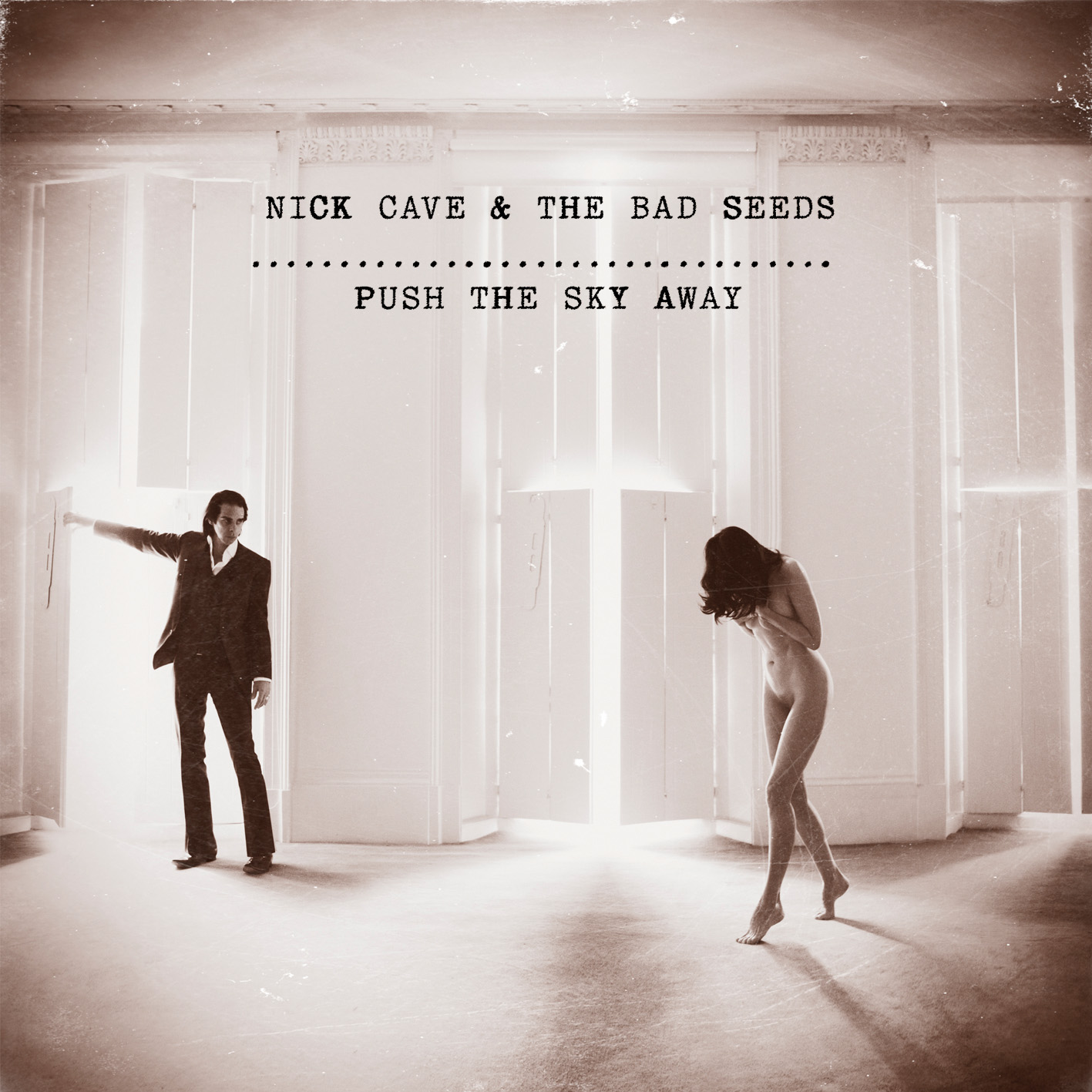
Nick Cave and the Bad Seeds: Push the Sky Away

Australian alternative rock band Nick Cave And The Bad Seeds have been a consistent musical force over the past 30 years. Their newest album, Push the Sky Away, proves that they’re still relevant, using haunting, minimalistic instrumentation to create an eerie atmosphere that holds steady over the album’s nine tracks.

Despite the restrained sound, Push the Sky Away is never dull. From the threatening chorus of album opener “We No Who U R” to the moody existential crisis of “Higgs Boson Blues,” Cave’s baritone voice commands but never overwhelms. Melodies ebb and flow well enough to keep the listener intrigued. Even with the reserved sound, the album still has some grandiose moments. “Jubilee Street” ends with a flurry of strings, mimicking the level of orchestral grandeur heard on Cave’s iconic cut “O Children” from 2004’s The Lyre of Orpheus.

Alongside Cave’s standard lyrical themes of nature, loneliness, and prostitution are mentions of Wikipedia and Hannah Montana. With song titles like “We No Who U R” and “We Real Cool,” one might think that 55-year-old Cave is trying to fit in with a younger demographic, but ultimately, this is his way of accepting that times have changed. Nevertheless, the rationale doesn’t make these elements any less jarring.

Push The Sky Away is a departure from the louder sound of The Lyre of Orpheus and 2008’s Dig, Lazarus, Dig!!!. The album proves that the band’s solid musicianship makes for a good—albeit unsettling—listen.


Read the latest issue

Read the latest issue