For a culture that is built on subverting the conventional, the skateboarding community must strive to create more diverse spaces. What is largely depicted in popular magazines and videos disregard the reality of the skate scene. While there are companies and magazines working to increase visibility, more recognition must be given to femme-identifying, queer, and non-white members of the community.
Although there is a need for structural changes through sponsorships, media, and financial support within the industry, there have been safer spaces emerging around the world to address this lack of representation and establish equal opportunities. Companies like The Skate Witches, Meow Skateboards, and Glue Skateboards, among others, have been founded out of this absence to improve representation without tokenizing skaters by simply fulfilling a quota. Instead, these groups aim to showcase skateboarding from a more realistic and inclusive perspective.
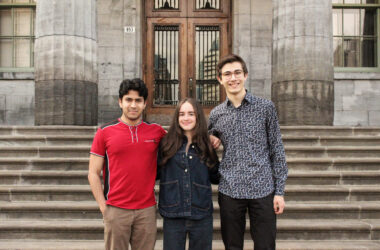
While these issues are universal, Montreal is lucky to have a more inclusive skate scene with individuals who are actively creating these spaces—especially for those who are new to skating, feel intimidated or unsafe at parks, or are looking for a community to share how special skateboarding is. These are some of the women who have greatly impacted my experience skateboarding in Montreal.
“I actually feel less comfortable skating on the street [than back home in Strasbourg]. I think because there’s such a big skate culture here there’s also the drawbacks of that [….] I’ve never heard anybody explicitly [say] ‘Oh that person is a poser’ or whatever but I feel a lot less comfortable cruising around here than I do back home. Whenever I’m just holding my board and not skating and walking, I get so anxious because I’m like ‘I know how to use it’ [….] It’s crazy because I have never once thought that [somebody is a poser] when I’ve seen someone carry a skateboard but for some reason, I feel like people would think that about me. That’s why I bike everywhere.”
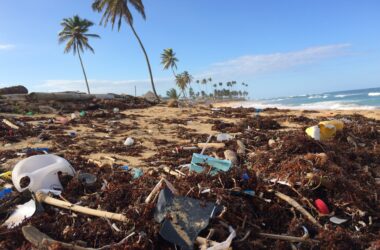
With every passing day, the Earth takes another step towards becoming a plastic planet. Plastic has infiltrated every habitat across the globe, from the high seas to the soil beneath cities. In an effort to address the gargantuan problem of plastic pollution, Prime Minister Justin Trudeau and the Liberal Party of Canada party have proposed a single-use plastic ban. By 2021 at the earliest, the Liberal Party intends to ban plastic bags, straws, and cutlery.
For environmental scientists and conservation biologists, this ban is a welcome intervention given the scale of plastic pollution, which has become one of themost pressing environmental issues worldwide. With production of plastic products accelerated after the Second World War, plastics have only become increasingly prominent in our daily lives, though the world’s ability to deal with plastic waste has fallen behind. Single-use plastics, which account for 40 per cent of plastic products produced every year, are a big part of this problem. Their convenience has led to a throw-away culture that is partly responsible for the world’s current inability to deal with plastic waste. Most of these single-use products are not recycled and many more are improperly discarded.
Dr. Audrey Moores, an associate professor in McGill’s Department of Chemistry, specializes in material chemistry and specifically green chemistry, the synthesis and catalysis of environmentally benign agents that can break down environmental pollutants and reduce their negative impacts.
“In Canada only nine [per cent] of all plastics produced are recycled,” Moores wrote in an email to The McGill Tribune. “The vast majority of Canadian plastic is land filled.”
The plastic products that are improperly disposed of often end up in river systems that then carry plastic waste towards the ocean.
“Canada alone is responsible for 46,000 million tons of plastics being released to the environment every year, which is a staggering number,” Moores wrote. “It is considered that eight million tonnes of plastics leak into the ocean on a yearly basis [worldwide], and the number keeps going up.”
Once at sea, ocean currents transport waste around the world. During this process, mechanical and chemical forces break down these plastics to form microplastics, tiny plastic pieces fewer than five millimetres in length.
“Microplastics are either manufactured as small plastic particles or they originate from the degradation of larger plastics—both single-use and recycled forms,” Dr. Anthony Ricciardi, a professor in McGill’s Department of Biology, wrote in an email to the Tribune. “Research over the past two decades has revealed a wide range of effects on animal reproduction, growth, and behaviour.”
These microplastics, which are often found in ouroceans and freshwater systems, are particularly harmful for wildlife. Studies on a number of fish species have demonstrated that exposure to microplastics stunts growth and alters behaviour patterns. Moreover, research shows that largequantities of plastics enter the bodies of fish through feeding and respiration.
“Plastic fibres, microbeads, and fragments are frequently found in the digestive tracts and tissues of freshwater and marine animals,” Ricciardi wrote.
Once they have entered an animal’s body, microplastics can cause serious damage. These fragments can block the digestive tract of some species, leading tostarvation. Microplastics can also leach chemicals that cause neurological damage into the bloodstream.
Given the scale of the plastic pollution problem and the harmful effects these products inflict on nature, a plastic ban is a prospect welcomed by many.
Checkout bags, straws, cutlery, and food packaging made from plastics that are difficult to recycle are only some of the items included in the ban. However, other single-use plastics such as milk bags, garbage bags, and snack food wrappers were not included. The government said the ban did not target these products because of the lack of affordable and readily available alternatives. Other items were left off Trudeau’s plastic blacklist because of a lack of evidence for their negative environmental impact or because they have been deemed too important to warrant a halt on manufacturing. Such items, like disposable masks, will continue to be allowed because they serve an essential purpose.
This crackdown on single-use plastics is part of a wider nationwide strategy to achievezero plastic waste by 2030.
Reactions to the Liberals’ proposed elimination of some plastic products were mixed. Some business groups voiced concerns over the financial impacts and the increased costs that small businesses could face when pivoting to more environmentally friendly options. While many environmental groups welcomed the news, others pushed for a more intensive ban. Other non-governmental organizations, such as Greenpeace Canada, called for the ban to be more encompassing, forcing pollution-emitting corporations to take more responsibility for the lifecycle of their products and the waste they produce.
A 2019 report found that 90 per cent of Canadians supported stronger regulations on plastics and 70 per cent were in favour of a single-use plastic ban. However, support has dwindled amidst the pandemic. Since the start of the pandemic, public endorsement for stronger regulations has fallen to 79 per cent and support for a ban has fallen to 58 per cent. The pandemic also set back progress by increasing plastic use and making price-conscious individuals and businesses more wary of expensive environmentally friendly packaging. Moreover, many respondents preferred personal protection equipment made withdisposable plastics over alternatives.
Concerns over the single-use plastic ban are to be expected, given its societal impacts. This ban will have extensive ramifications for business practices.
“The ban on single-use plastics will force consumers and companies alike to develop solutions for products that can be reused as opposed to disposed of after use,” Moores wrote.
Dr. Theo van de Ven, a professor in McGill’s Department of Chemistry, commented on the initially high expense of possible alternatives.
“Initially, [alternatives will have] a higher cost to the consumer, but as new materials are being developed, the cost will come down,” van de Ven wrote in an email to the Tribune.
Apart from changes in production, increased social awareness of the environmental repercussions of plastic waste is another impact of the ban. Even small bans of single products such as plastic straws have forced people to acknowledge the futility of single-use plastic products and encouraged individuals to re-evaluate their habits. Above all, they provide concrete paths for countries to strive for a sustainable future. A ban on plastic products of the magnitude proposed by the Liberal Party could magnify this phenomenon.
Despite reservations that the plastic ban does not go far enough, or that it circumvents humanity’s underlying pollution problem, the changes that it enforces are a necessary first step towards Canada’s greener future. Unfortunately, however, Moores does not believe it will address the larger issue of creating green alternatives to plastic products.
“[The ban] will not solve the bigger picture plastics question,” Moores wrote. “[…] We do not recycle enough plastics, and we [first] have to overcome technical challenges to be much better at that.”
The movement patterns of migratory birds, especially those that travel vast distances, are often hard to track. This makes these species difficult to locate in the wild and even harder to study. Biologging, which involves attaching tiny tracking instruments onto animals to observe their location and behaviour, has emerged at the forefront of wildlife research. The ability to study birds and mammals across oceans and in remote areas is essential to revealing how the ecosystem-level effects of climate change are impacting animal behaviour.
On Nov. 12, McGill’s Redpath Museum held a Cutting Edge Lecture given by Kyle Elliott, assistant professor in the Department of Natural Resource Sciences at McGill and Canada Research Chair in Arctic Ecology. The talk, hosted by Ingrid Birker, public program and education coordinator at the Redpath Museum, provided a glimpse into the rapidly expanding field of animal tracking.
Elliott first introduced the devices that are used to record information about an animal’s movement. Geolocators and GPS loggers are used to pinpoint the exact location of individual birds in their habitat. While some devices use light signals from the sun to determine the animal’s geographical coordinates, others communicate location through radio signals.
Location data gathered from these devices have helped scientists uncover previously unknown behaviours of many species. Researchers had previously assumed that Arctic falcons flew south to the tundra in winter; however, geolocator devices have shown that they are in fact seabirds, spending their winters on the northern sea ice.
Elliott emphasized that advances in commercial GPS technologies have had a large impact on the capabilities of ecologists to conduct field research.
“This consumer pressure [of microelectronics] is fundamentally changing how we can study wildlife,” Elliott said.
In fact, some devices used in biologging are accelerometers, which effectively track movement the same way most smartphones do. These devices measure acceleration on three different axes to create a three-dimensional representation of the organism’s movement, whether it is standing, running, or flying. Some advanced models can even provide data about heart rate, like a Fitbit, to measure how much energy an animal is exerting while hunting.
Despite the advances in research capabilities provided by biologging, there are drawbacks to equipping animals with these gadgets. Adding extra mass to an already small organism could compromise their ability to survive by increasing the energy required to fly or swim. To alleviate this risk, scientists are working to miniaturize these devices.
According to Elliott, monitoring seabirds is an innovative way of gaining insight into related species that we know less about, like the Arctic cod.
“We can track seabirds and use that [information] to track prey spatial distribution, which should be useful to create marine reserves and to understand marine pollution,” Elliott said.
When seabirds dive to feed on cod, tracking devices provide researchers with information about the location and clustering of the fish. This information can be used to locate hotspots and ensure these habitats are conserved.
“That’s an example of how we can use geolocators to figure out where [seabirds] go, what habitats they’re using, and where they may occur in the future,” Elliott said. “Now we are trying to see what behaviour can tell us about the ecosystem.”
In his current research, Elliott is studying the impact of climate warming on the health of Arctic ecosystems. The loss of Arctic sea ice combined with heat waves have forced seabirds to work harder for less nutritious food sources, impacting their fitness and that of their offspring.
Elliott concluded his talk by reiterating how biologging technologies are paving new opportunities for the study of wildlife in the field.
“We are living in this golden age of biologging,” Elliott said. “We can now track animals in almost real-time to find out where they’re moving, even with species we never thought would be possible.”
In early 2018, The New York Timesreported on a leak of close to 50 million Facebook users’ data—the most significant breach of data privacy at the company ever. According to a cache of documents, Facebook user data had been improperly disclosed to Cambridge Analytica, a political consulting corporation which used the information to aid political campaigns within the U.S. and Canada. As the scandal broke, legislators began to take notice. Congress summoned Facebook founder Mark Zuckerberg, and the Canadian federal privacy watchdog took legal action against the company. Two years later, they face another challenge related to the scandal, as two Canadian Facebook users are filing a class-action lawsuit against the company. In the context of these privacy violations, student organizations must try to limit use of the social media platform, as there is no ethical justification for risking the data of students or the organizations themselves.
The Canadian and U.S. cases are not the only examples of litigation against Facebook regarding the Cambridge Analytica scandal. But even in these high-profile cases following the scandal, little was done to remedy what led to the leak in the first place. In the American case, the Federal Trade Commission fined Facebook, but the offending company did not have to commit to any action, such as limiting its ability to share data. Even new digital policies currently being drafted in the European Union (EU) have a limited scope, aiming only to allow room forsmaller competitors to avoid a Facebook monopoly rather than attempting to strengthen the General Data Protection Regulation itself—the core of EU privacy legislation.
If institutions as significant as national governments refrain from heavily policing sites such as Facebook, then students can achieve little through protest against these megacorporations and their executives. A recent example of this is the Summit Learning platform, an online learning tool backed by Zuckerberg. Having pushed the system since 2014, student protests from within a school using it in 2019 had little success. That is not to say that calls for regulation are unnecessary or unimportant, but that simply calling for regulation does not provide an immediate solution for the data vulnerabilities exposed in recent years.
It is difficult, if not impossible, to avoid using Facebook as a student at McGill. Not only do most student organizations use it in some capacity, but many McGill faculties, departments, and services use the site as well, including Campus Life & Engagement. Going beyond that, many students use Facebook Messenger for personal or semi-formal communication—in fact, that is how I communicate with my editors at the Tribune. But the fact that so much common infrastructure relies on Facebook does not mean student leaders should use it out of habit.
While it may seem cumbersome to move to other platforms, it is a necessary step, and may not even be as hard as it seems. For some groups, email is a simple and easy solution that does not require much work. Even McGill cites listservs as a great promotional tool. From personal experience, it is often easier to read a well-formatted list of events than it is to dig through a Facebook page for information. To be fair, the vast majority of McGill clubs and organizations, including the Students’ Society of McGill University, use listservs already. But in that sense, they have already proven their utility—and moving to an already tried and tested platform as the primary form of messaging would reduce the chance for miscommunication.
In addition, for virtual gatherings and communication during the pandemic, various other platforms have been developed in recent years that could be of use. For example, the McGill Trivia Club and the McGill Debating Union use Discord. The transfer may be jarring, and students may not appreciate the changes in the moment. However, continuing with Facebook out of convenience shows a disregard for students’ personal data and reinforces reliance on the platform.
Students received an email on Nov. 20 from Deputy Provost (Student Life and Learning) Fabrice Labeau announcing that the start of the Winter 2021 semester will likely be delayed. Extending the holiday break, which would have only been 12 days for students whose finals end the last day of the exam period, will allow students and staff alike to recuperate after a strenuous, unprecedented online semester. Although the announcement has sparked optimism among students, the administration stalled on the issue for several weeks. From student petitions to swifter and similar decisions by other institutions, including the University of Toronto (UofT) and Concordia University, the urgency of extending winter break has long been obvious.
Although it is important to maintain university governance norms, the fact that a final decision will not be made until the Dec. 2 Senate meeting cannot simply be excused as a result of procedural convention. McGill’s apparent impotence is both symptomatic of persistent academic austerity and a direct result of bureaucratic blockage that continuously chokes progress at this supposedly trailblazing university.
McGill’s foot-dragging on the issue will inconvenience international students who choose to return home for the break. After all, many will need to quarantine for 14 days upon their return, and any who would now like to return home in light of an anticipated break extension will have to delay their plans for every day that McGill continues to postpone publicizing its new break timeline.
Practical considerations aside, by not prioritizing developing an extension plan sooner, McGill has disregarded student and staff wellbeing. The break period after the Fall 2020 semester was originally four days shorter, a significant oversight considering the seemingly glaring mental health concerns that would predictably arise from an online semester. Moreover, even in a normal year, burnout rates run high towards the end of the semester, and the mid-year break allows students, professors, and teaching assistants to reset and focus on personal, physical, and mental health. Now, the pandemic has exacerbated the anxieties that already dominate academic life, fomenting a mental health crisis so bad that the Quebec government has retroactively invested millions of dollars in services to assuage it.
Of course, extending the break period is not a simple logistical matter. Administrators have countered calls for an extension, arguing that they would need to make up for it by shortening the winter semester finals period, as international students and others who have leases that end in May could be forced to simultaneously juggle exams and changes in living arrangements. They have also expressed concerns that students from some departments would not be able to meet accreditation requirements. Even so, these arguments should not trump the health imperatives of recovering from the semester. Besides which, more preparation time would benefit professors and staff, who will need time to adjust the academic calendar and course schedules to McGill’s changing and inconsistent policies—especially considering that McGill has pledged to expand in-person instruction next semester.
It is also difficult to believe that administrators are seriously concerned about the impact on international students or accreditation problems when other universities with significant international student populations, such as UofT, have already lengthened the period by a week. Concordia made its decision even earlier, although its international population is admittedly smaller. It is not unreasonable to question why McGill cannot be equally flexible. Nor is it unfair to lament that McGill does not appear to value the welfare of its students and staff when its peer institutions clearly seem to appreciate them more—not least while McGill purports to be a leading university.
McGill students can use a break to prepare for another arduous semester. Although the fall term is nearing its end, remote course delivery was beset by McGill’s innumerable inconsistencies. Winter will be no different unless administrators enshrine transparency in their policies and expediency in their actions, to make McGill a refuge for student Martlets rather than leaving them to flounder in bewildering blizzards of miscommunication and indifferent inconsideration.
In August 2020, the Canadian Football League (CFL) cancelled the 2020 season due to financial difficulties caused by the COVID-19 pandemic. Many senior officials in the league attempted to prevent the cancellation and a committee worked in the weeks leading into September 2020 to possibly salvage the lost year with a shortened season held in Manitoba. However, the federal government did not grant the league any financial support, a decision that effectively ended any possibility of the CFL resuming play this calendar year.
Despite a significant loss of revenue with the formal cancellation, the league has maintained a positive vision for the future, striving to preserve the world’s second largest professional football league.
“We are absolutely committed to 2021, to the future of our league and the pursuit of our vision of a bigger, stronger, more global CFL,” league commissionerRandy Ambrosie said in a statementfollowing the government’s decision.
However, earlier in the year, Ambrosie had warned that a cancelled season could jeopardize the future of the CFL. This announcement left many involved with the league worried about the stability of its organizations moving forward, particularly those that have witnessed the importance of the league to football in Canada.
Nelkas Kwemo, raised in Montreal, is currently a linebacker for the Toronto Argonauts. Drafted 18th overall by the Argonauts in 2018, he has remained with the club ever since. Kwemo attended Queen’s University in Kingston, Ontario, where he had an impressive career as a Gael. He earned a spot on the 2018 first team U-Sports All-Canadian roster.
Kwemo described the difficulties that the cancelled 2020 season brought upon his own life and the lives of teammates, coaches, personnel, and staff who have shared a bond with the linebacker.
“The cancelled season was heartbreaking for so many people who depend on the league to provide a living for themselves and their families,” Kwemo said in an email to The McGill Tribune. “Many players, whose contracts are contingent on games being played, are forced to make ends meet with the amount provided through the Canadian Emergency Wage Subsidy or find other jobs.”
Thankfully for Kwemo and most of his fellow Canadian teammates, their university careers also led to undergraduate degrees, giving them opportunities to pursue jobs outside of the gridiron. The impact of their education has been strengthened by initiatives taken by the CFL Players’ Association to partner with Canadian universities and employers to further the education and work experience of student athletes. These initiatives include internships, work-study placements, and networking opportunities.
Kwemo has taken advantage of the temporary hiatus, working at Barometer Capital Management, a hedge fund in Toronto. He plans to further his career in investment banking at Scotiabank in January 2021.
“My personal goals are a mixture of business, finance and [media] upon retirement from football,” Kwemo wrote. “To meet these goals, I am putting myself in a position to have as many options as possible on the way out.”
When asked about the uncertainty of both his professional football career and the CFL moving forward, Kwemo was optimistic, although he understood that many issues remain unresolved.
“I am confident the current management team is doing all they can to secure the future of the CFL, but there [is] still lots to be decided,” Kwemo said. “A new Collective Bargaining Agreement is one of the top priorities in the future and multiple big questions still need to be answered. What are the circumstances which players will be asked to play in the coming years given the league’s financial position? What measures will be taken to prevent the spread of COVID amongst players, coaches and fans? All this still needs to be sorted out while we wait.”
The uncertainty of the league’s position moving forward has raised some concerns for ambitious Canadian football players who have seriously considered playing professional football in their future. Despite an unknown future, many remain motivated in their pursuit of a professional football career.
Rasheed Tucker is currently one of the top running backs in U SPORTS football and remains a key piece of the Queen’s University Gaels offence following his impressive second campaign during the 2019 season. Tucker was born in Ajax, Ontario, and played for two programs that have produced Canadian football talent at various levels: The Upper Canada College Blues in high school and the Durham Dolphins in the Ontario Provincial Football League.
“Playing professional football has been a dream of mine since I was about 10 years old,” Tucker wrote in an email to the Tribune. “I have definitely put thought towards spending some time in the CFL after my collegiate career. The financial viability of the league is a very complex situation, though after chatting with CFL players, I do not expect the league to go anywhere. I hope the league will recover from the challenges created due to COVID-19, and as such, I plan to remain optimistic and stay steady on my future athletic aspirations.”
Tucker’s football career in Canada has been positively impacted and influenced by engaging with players and coaches from the CFL. These experiences have led him to understand the league’s impacts on all levels of football in the country and its necessity in developing homegrown talent and NFL stars.
“In terms of [the] high school to university football transition, athletes coming from high school programs with coaches who had professional football experience were many steps above the average rookie when it came to schematic understanding,” Tucker wrote. “Personally, my high school coach Christian Heffernan was a former CFL and [U SPORTS wide receiver] and this made a world of difference. The recycling of knowledge with the next generation makes a huge impact and is critical to the advancement of Canadian football.”
Reflecting on a challenging and uncertain semester, Tucker understands the mindset many Canadian football players share moving forward.
“Everyone [who is] hungry to make their dream a reality knows [that] they must work harder than ever,” Tucker wrote. “Increased challenges just require increased efforts, and I believe that all the true competitors out there that really deserve a [CFL opportunity] will still find a way to earn it.”
Rasheed Tucker, star running back for the Queen’s University Gaels
At McGill, the effects of the league’s closure have been felt on campus. The Montreal Alouettes have historically hosted their home games at Percival Molson Stadium, with fans regularly gathering at Douglas Hall and Jeanne Mance Parc before kickoff. Sharing the same stadium has granted many unique opportunities for the McGill Redbirds football team.
“It is great to share our stadium with the Montreal Alouettes,” Dimitrios Sinodinos, starting quarterback for McGill wrote in an email to the Tribune. “Sometimes our head coach Ron Hilaire will have a CFL player visit us at practice and give a speech to the team. Every summer the Alouettes would host events for kids to come practice football for the day at Percival Molson.”
On a personal level, Sinodinos has taken advantage of McGill’s connection to the Alouettes.
“I have had the opportunity to really get close to the team last year when I was selected by the Alouettes for the QB internship program, which allowed me to participate in their rookie training camp as one of their quarterbacks,” Sinodinos wrote.
Dimitri Sinodinos exiting the tunnel at Percival Molson Stadium
Sinodinos, Tucker, and Kwemo all feel it is important to continue to persevere and work through the pandemic. Their outlook is a testament to the fact that Canadian football at all levels across the country will continue through the current difficult times.
On Nov. 13, the Journal de Montreal published a synopsis by journalist Marie-Lise Mormina about her investigation into the language customers were being greeted and served with in retail stores and restaurants. The full report, which was published the next day, brought Montreal’s ever-present language debate back to the forefront of the news cycle. Mormina concluded that francophones should be worried about the state of French in Quebec. However, this study’s only real contribution to the language debate is the reinforcement of alarmism surrounding the alleged extinction of French in the province.
All the stores Mormina investigated in Montreal were located in the downtown, Griffintown, and Old Port areas, which have large English populations because they are located within the financial district and feature other major tourist attractions. Also, some stores were selected because they had a predominantly English website or social media presence. Therefore, she cannot conclude that most employees choose to greet customers exclusively in English when she specifically sought out anglophone stores. This sampling method is biased; all stores should have been chosen randomly. She did this to exaggerate the problem of the extinction of French.
According to Statistics Canada’s Focus on Geography Series, 41 per cent of Montreal employees spoke only French at work in 2016 while seven per cent spoke only English. Mormina’s report, on the other hand, states that 19 per cent of employees could not speak French which is much higher than seven per cent, even if assuming that employees that spoke only English in StatsCan’s survey could not speak French.
Clearly, the French language is not nearly as threatened as Mormina contends. She details the “distressing” situation in Victoria’s Secret downtown Montreal location, where multiple employees greeted her exclusively in English, speculating that their employees are “afraid” of speaking French because they might be reprimanded. Despite the magnitude of this allegation, on which she fails to elaborate, it is clear that Mormina is fishing for any morsel of information that could be magnified to support her argument.
Nowhere in the synopsis does Mormina mention that all 24 businesses she visited on the north and south shores of Montreal greeted her exclusively in French. In fact, she does not highlight these businesses at all. She also omits the eight stores she visited in Griffintown. Instead, she only presents the results of the regions that only greeted her in English.
She framed the article to incite fear-mongering, and unfortunately, many fell for it, including Quebec Premier Francois Legault and Montreal Mayor Valerie Plante. Legault retweeted Quebec Minister of Justice Simon Jolin-Barette’s post, in which he says that it is unacceptable to be unable to receive service in French. Plante’s tweet about the report reflects this same sentiment.
Mormina’s report has also inspired responses from other journalists. Josée Legault, a journalist from the Journal de Montreal, used the report to lament the state of French in Quebec. She titled her article “I won’t speak French,” even though none of the employees Mormina confronted are known to have said this. One said that they do not know how to speak French, which is quite different and fundamentally changes the nature of Mormina’s claims against Montreal’s anglophone and bilingual communities. While the first is a refusal to accommodate the French language, the latter emphasizes an inability to do so. This phrasing reflects the victimization narrative that French Quebecers use to justify their militant pursuit of French dominance.
The purpose of articles like Mormina’s is to shock, not to inform. Yes, Quebec is one of the only French-speaking region in North America, but catastrophizing the disappearance of French, especially when such claims are unjustified by the data presented, is erroneous at best. Quebec should focus on fostering cooperation between Montreal’s anglophone and francophone communities by not attacking the true linguistic minorities within Quebec with xenophobic ideas and practices.
A previous version of this article stated that Quebec is the only French-speaking area in North America. In fact, Quebec is one of several French-speaking regions on the continent. The Tribune regrets this error.
No one wants to learn that they have cancer, but when I was 12 years old, that is exactly what my doctor told me. I was diagnosed with Basal Cell Carcinoma, a nonfatal chronic skin cancer. Although it is one of the most common types of skin cancers, it is exceedingly rare in children. For me, the cancer came in conjunction with Basal Cell Nevus Syndrome, which is a genetic condition characterized by jaw cysts. By the time I left high school, I had undergone three major jaw surgeries and five operations to remove cancerous tumors. At the time, I was so embarrassed about my scars that I told people at school that they were hockey injuries. I didn’t want people to know that I had “old-people” cancer—that seemed so lame. The average age of patients with my condition in the waiting room had to be over 80. And while cancer at any age is unfair, these patients had lived their lives spending too much time in the sun, and now they were paying the price for it. I did not understand why I had to as well.
Being told at 12 years old that you can’t spend any significant time in the sun was pretty much the worst thing the doctors could have told me. My parents were just glad that my life was not ending, but to me, my life was as good as over. I loved the outdoors and nature, and a life spent almost entirely indoors seemed like the exact definition of hell. However, with the help of my doctors, I would eventually discover that my life was far from finished. While I am supposed to avoid being outside when the UV index is high, with the help of a little SPF 50, I was able to do basically everything I had been doing before. I ran competitively and played soccer outside, and I still enjoy hiking and swimming in the Adirondacks. I learned to appreciate the nighttime, and I love bonfires and night walks. I just have to budget my time in the sun during the day like money—if I overspend, it will cost me.
As I grew up, I learned to not be ashamed of my syndrome. Unsurprisingly, no one wants to make fun of the girl with cancer, and being open about my situation has strengthened a lot of my connections with family and friends. Being the youngest patient at the office also had its benefits. The nurses loved having someone young to care for. When I first started going to doctor’s appointments, they would always compliment me for not complaining like their senior patients. Every time I go in for an appointment, I look forward to seeing my favourite nurse, Sue, and talking about hockey and travelling. The elderly patients are also always sweet to me. We are all there for the same reason, and it is unpleasant for everyone.
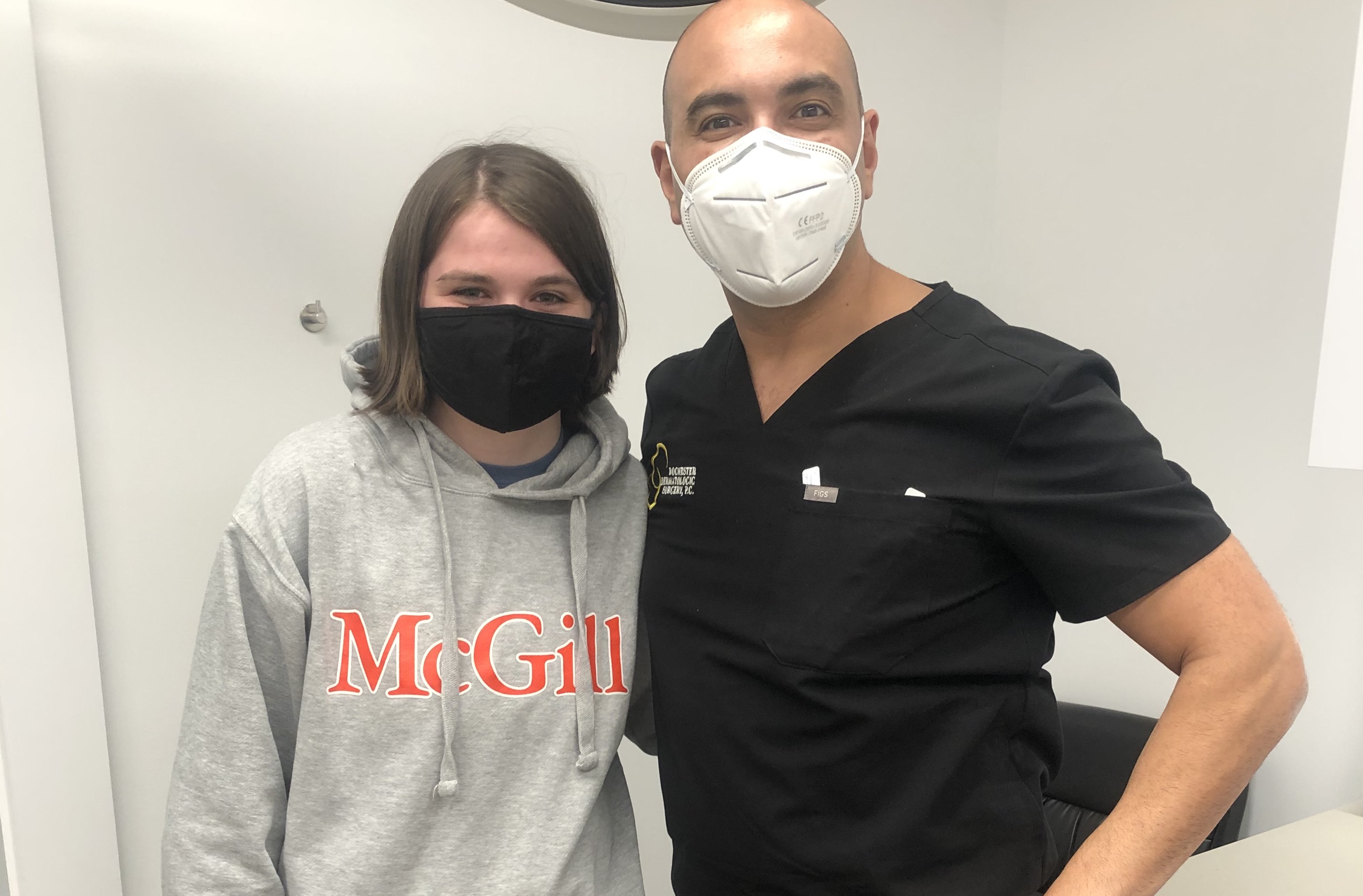
Another special thing about my syndrome is how much doctors and researchers are still learning. Because my condition is rare, with my permission, my doctor would take pictures of my skin to show his dermatology class. Although at first I felt a little like a guinea pig, I realize now that these photos could help advance the medical field. Before the pandemic, whenever I had an appointment, my doctor would always bring a medical student in to learn about my cancer. As someone interested in medicine myself, the idea that I could contribute to dermatological discoveries is exciting, to say the least.
I have always hated the idea of finding the good in everything because, with some things, there are just no good parts. And with many cancers, I stand by that statement. However, in my case, I find myself extremely lucky. Although surgeries and radiation are not fun, and avoiding the sun can be a hassle, I have a newfound appreciation for shade, for sunsets, and for seniors.
Before writing was used as a means for communication, ancient civilizations relied on pictorial representations of objects, which included visual representations of medical concepts. Medical illustrations date back to 15,000 BCE, and have continued to evolve over time. Over the course of many millennia, advancements in art and technology have accelerated the field of medical illustration.
Today, the industry represents a small yet diverse group of medical professionals who are trained in both medicine, specifically the study of anatomy, as well as media and visual communication.
Jean-Paul Acco, a former medical illustrator at the Montreal Neurological Institute and Hospital, spoke about his experience in the field over the last three decades.
“[My] role as a medical illustrator [was] to try to make things understood,” Acco said in an interview with The McGill Tribune. “Back in the ‘90s, [medical] students would explain their project to me and I would then make the illustration.”
Being a medical illustrator often demands working with other professionals like writers, photographers, and filmmakers toward the holistic communication of complex concepts. Medical illustrators work with photographers when documenting surgical procedures to detail or enhance the part of the body or procedural aspect they wish to portray in their illustrations.
Dr. Nancy Posel, director and co-founder of the Patient Education Office at the McGill University Health Centre (MUHC), believes medical illustrations are essential to improving patient care.
“For [many] patients, the issue is one of literacy,” Posel said in an interview with the Tribune. “[Medical] literacy levels in North America are very low. Therefore, if you are doing illustrations, […] do it from a pedagogical perspective and keep it very simple. [Patients] simply need to know how they can best take care of themselves.”
Numerous studies have shown that visual aids help patients better understand medical information that doctors otherwise provide verbally.
Posel recognizes that, depending on the audience, communication styles differ. Medical illustration targeted for patient understanding would look very different from diagrams geared toward educating doctors.
Acco spoke to the heightened importance of medical illustration for understanding symptoms and diagnoses in times of crisis, such as the ongoing COVID-19 pandemic.
Although most people are aware of public health guidelines concerning COVID-19, misinformation and disinformation can prevent individuals from attaining a complete understanding of how the virus affects their physical wellbeing. Unable to see the damage that the virus can do to their bodies, it can be difficult for patients to understand its potential complications.
Medical art and illustration have realized the potential of visual communication since they make the unseen visible. Illustration can also bridge language barriers by communicating vital information as well as dispelling fears for audiences who speak a different language than their physicians.
“Images are needed to expand one’s comprehension,” Posel said. “They need to understand what could happen.”
Acco spoke to how illustration can help to prevent miscommunication and lack of compliance with public health directives. In depicting COVID-19 and its effects on the body pictorially, many who look past mask ordinances may think again before doing so.
“This is why you need the mask,” Acco said, as if speaking directly to the viewers of his drawings. “This is why it helps you. You want everyone to understand one thing.”
The transmission of medical information through visual media remains an essential communication tool between medical professionals, their colleagues, and their patients, not unlike early practitioners of millenia past. With the growth of digital media and improvements in the tools available to artists, medical illustrators will continue to imagine new ways of visualizing the body and its many ailments.
On Nov. 19, esteemed Canadian poets Margaret Atwood and Lorna Crozier read from and discussed Atwood’s new poetry collection, Dearly: Poems, and Crozier’s autobiography, Through the Garden: A Love Story (with Cats). Broadcast over Zoom through Montreal-based bookstore Drawn & Quarterly, the two writers discussed cats, deceased husbands and poetry’s uncanny connection to flesh-eating zombies.
“I didn’t get going as a poet until the late ‘70s,” Crozier said. “I grew up as a poet reading the wonderful Margaret Atwood and I have to say that I was so privileged to [have been] able to read Canadian poetry and [discover] strong women writing poetry who came from my country.”
Both poets grew up in rural Canada. Atwood’s childhood involved spending time in Northern Quebec with her father, an entomologist, and Crozier’s was spent on a farm in Saskatchewan. They elaborated on their relationship with the natural world, and especially animals, and how these themes appear in their poetry.
“We lived on a farm for 10 years, and we had a lot of animals,” Atwood said. “[It was] up-close and down-dirty.”
Crozier described how her poetry uses cats as a motif to carry some of its emotional weight. In Through the Garden, Crozier reflects on her relationship with her late husband and Canadian poet, Patrick Lane, and how cats were important to their relationship. In 2019, Lane died of a heart attack at age 79. Crozier still has their cats, who comfort her after the loss of her husband.
“In our 40 years together, Patrick and I shared our lives to find cats,” Crozier said. “I believe that cats like to be named after poets, by the way. Although when I told Al Purdy that […] he just about threw me out because he didn’t like cats.”
Likewise, Atwood’s poetry features cats, such as the poem “Ghost Cat,” which Atwood read aloud during the event. The poem’s speaker is Atwood’s recently deceased cat who wanders through her house at night, blindly searching for a place to sleep.
Atwood and Crozier also found commonality in their humble book-making process. Pointing to a desk drawer in her office containing her poems, Atwood spoke about how she writes fragment poetry, which she then conjoins to create a larger work.
“What’s in there is a lot of holograph manuscripts because I write in longhand,” Atwood said. “But my handwriting is really bad, so I can’t always read what I’ve written. Part of the process is the Rosetta Stone interpretation of what it is that I might have possibly meant.”
Crozier and Atwood compared their similar methods of creating a poetry anthology, which involved piecing together individual poems into a larger work on their office floors.
“When I have a file that’s spilling out, I then say, ‘Maybe there’s a book here,’” Crozier said. “I lay the poems on the floor, and I crawl around on my hands and knees and say, ‘This poem would like to sit by this poem and this one by that one.’”
Responding to an audience member’s question on what she valued in poetry, Atwood delved into why she found it so important.
“It is the journey with the poet on a trail that’s made of feeling as well as meaning,” Atwood said. “A poem is not just an intellectual meaning. It’s not reducible to that.”