


Latest News

Basketball, Sports

NBA teams and players forced to adjust to early start

The National Basketball Players Association (NBPA) and NBA League officials reached an agreement on Nov. 4 for a 72-game season starting on Dec. 22, 2020. The implications of this decision are significant for players, franchises, and fans alike. The McGill Tribune examines the biggest consequences teams and players will face as a result of the early season start.

Title Contenders: Lakers, Heat, Nuggets, Celtics

With just 74 days between the end of the 2020 Finals and the start of the 2020-21 season, the Heat and Lakers will be facing the shortest offseason in American sports history. With less time to recuperate from their respective playoff runs, both teams gain advantages and disadvantages from the early start. Given the relatively weak free agent pool and both teams’ desire to save cap space for 2021, they will likely maintain the same rosters as seen in the 2020 Finals. The abbreviated training camp will thus have minimal impact on the play of both teams; the chemistry and rhythm built during those gruelling playoff runs should carry over to the first few months of the season. However, this short compressed off-season will surely fatigue both teams in the later stages of the season, particularly for an ageing Lakers roster. Fans can expect both teams to frequently load-manage their key players throughout the season. Other title contenders such as the Denver Nuggets and Boston Celtics will face similar durability issues from their deep runs in their respective conferences.

The 2020 Rookie Class

Rookies often have a tough time adjusting to the NBA style of play, as transitioning from a slower and less physically demanding game in college is challenging. As such, this year’s rookies will face the toughest introduction to the NBA in history. With a shortened training camp and the absence of a summer league, even star prospects such as Anthony Edwards and LaMelo Ball could struggle to adapt to the NBA.

Free Agents:

This year presents a difficult transition period for veteran free agents hoping to sign with new teams. With only a 12-day turnaround between the start of free agency and training camp, free agents not re-signing with their respective organizations will have little time to adjust to their new teams. Players will have to scramble to find new homes, and those with children will also have to arrange their schooling under short notice. To alleviate these difficulties, teams and players can come to an agreement well before the start of free agency. However, uncertainty regarding free agency and the risk associated with making multi-year commitments to new teams means that many veterans won’t be making decisions until the later stages of free agency.

Teams absent from the Bubble:

These teams will have had more than 200 days of rest as they were not invited to the 22-team Orlando Bubble in June. While the abbreviated training camp and transition period for new signings will hinder team cohesion, these teams will be the most rested coming into the season. The Golden State Warriors in particular will benefit the most from this early start. The team’s core of Curry, Thompson, and Green, who have played together since 2012, should have no trouble resuming play under Head Coach Steve Kerr’s system and re-establishing the Warriors as a clear contender. 

Teams making Major Adjustments: Rockets, 76ers, Pacers, Pelicans, Clippers, Thunder

With all of these teams planning major coaching and player changes, it will be difficult for new coaches to integrate new players into their systems during a shortened training camp before the early start. For the Rockets and Pacers, both of whom face uncertain futures and trade rumours with their star players, this early start will be particularly difficult as new coaches need time to establish which players to build their systems around. This season will truly test coaches’ ability to motivate their players to commit to their offensive and defensive schemes and ensure all players accept their team roles as quickly as possible without the intervention of unnecessary egos and tensions.


McGill, News

McGill students host a ‘Fight Night,’ violating red zone restrictions

Just after 8:00 p.m. Monday, Nov. 9, a group of students gathered on Forbes Field—the sports field behind McConnell Hall—to engage in planned, and spontaneous, wrestling matches. The event, which later moved to Parc Jeanne-Mance, drew first-year students from several of McGill’s residences, and even some non-McGill students.

Jordan*, who was present and who participated in the fighting, estimated that there were around eight fights and 30–40 people present throughout the night, while passersby accounts claimed they saw alcoholic beverages, and that there were 50–60 people. Another person who fought estimated that there were over 10 fights throughout the night. While punching was prohibited during the wrestling matches, Jordan alleged that one participant pulled their calf, but recovered quickly. Video evidence of the night that shows students circling and cheering on the fighters revealed that many attendees were not wearing masks, and not socially distanced. Jordan recalled the timeline of the night’s events.

“The police or the McGill security shut it down probably around 8:45 [p.m.] on Forbes Field and didn’t fine anyone,” Jordan wrote in a message to The McGill Tribune. “They stayed parked behind [Jeanne Mance] while people took the fight to [Jeanne Mance]. The police stayed, and I am almost 100 per cent sure [they] knew what was going on and seemed okay with it as they didn’t get out of their car and [instead] stayed between [Jeanne Mance] and Forbes field for the entire fight, which lasted [until] just before 10:00 [p.m.].”

In an email to the Tribune, Marisa Albanese, the Senior Director of Student Housing and Hospitality Services stated that the university’s administration was made aware of a possible gathering before Monday, but that they could not confirm the event took place.

“Security Services were dispatched on site, but did not witness any gathering,” Albanese wrote. “There were additional patrols that evening, and no incidents or gatherings were reported.”

Although the invitation graphic reads, “betting will be organized by [Royal Victoria College residences’] floor 11 casino,” multiple witnesses attest that no betting actually occurred at the night.

Awareness of the event was contained to small social circles in student residences before Monday, but after Instagram meme accounts picked up the story, the news spread quickly across social networks, reaching the McGill poll party group, Twitter, Reddit, the Students’ Society of McGill University, MTL Blog, CTV Montreal, and the Montreal Gazette. Jordan believes that the internet’s reaction to the fight night was misconstrued and overblown.

“This was not the infamous ‘fight club’ that major Montreal news sources are claiming it to be,” Jordan said. “This was a few guys wrestling in a park while people watched, and while it was [definitely] not the best call for Montreal’s red zones, the real story is, unfortunately, much more boring than the internet has made it out to be.”

While much of the coverage of the event has revolved around memes, tweets, and jokes, others, like Simon Kidd, U3 Arts, felt that the event was no laughing matter.

“The event demonstrated why some people were concerned when we learned that [residence] was going to reopen during COVID[-19],” Kidd said. “Even though the majority of students won’t participate in these sorts of events, 50 students did during [the red zone] [….] This is a global pandemic, and a lot of students are suffering socially by keeping themselves at home for the greater good of society.”

McGill’s COVID-19 tracker, which counts cases on campus and in residence, has reported zero cases since Nov. 1. Matthew Oughton, assistant professor in the Department of Medicine and attending physician in the Division of Infectious Diseases at the Jewish General Hospital, said that gatherings like the fight night pose a risk of COVID-19 transmission through prolonged and direct physical contact.

“If someone had heavily contaminated themselves and their clothes, and someone else is wrestling with them, then it’s conceivable [that] there’s some degree of risk through that direct physical contact,” Oughton said. “I would not recommend that this kind of activity continue, especially while [Montreal] is at this plateau [….] We are running almost one new case of COVID-19 every minute.”

*Jordan’s name has been changed to preserve their anonymity.

Creative, Video

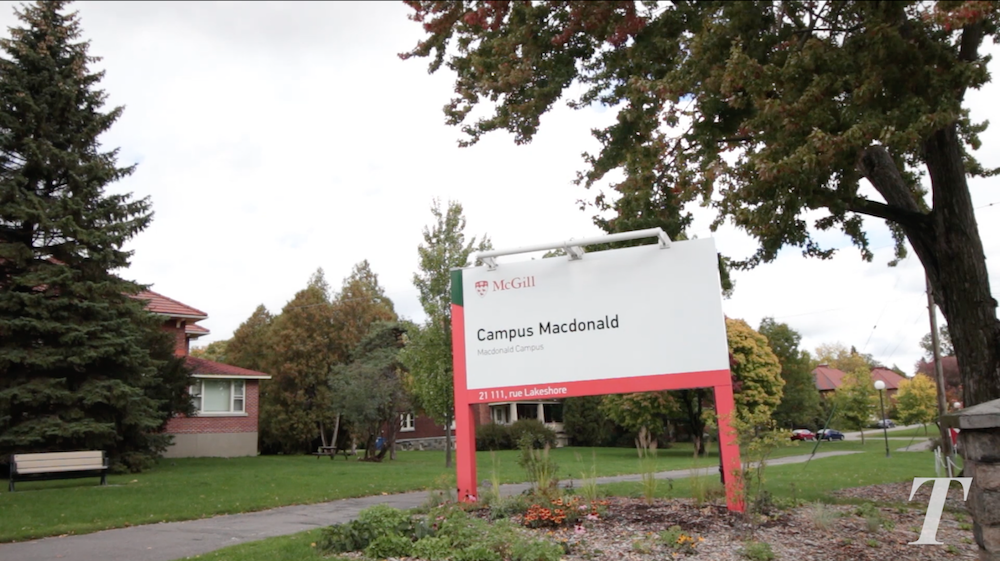
Exploring Mac Campus

Multimedia Editor Sarah Ford explores McGill’s Macdonald campus, and learns how it differs from McGill’s downtown campus in its location, departments, and atmosphere.

Edit: This video incorrectly states the degrees offered at McGill’s Macdonald campus. The five degrees offered are as follows: Nutritional Science, Food Science, Agricultural and Environmental Science, Bio-resource Engineering, and a concurrent Food Science and Nutritional Science degree. More information can be found at https://www.mcgill.ca/macdonald/prospective/degrees.

Features

Feeding ourselves, and our roots

Drinking cold sweet tea has always been my preferred way to pass a warm summer’s day. Growing up in Georgia, sweet tea was one of my favourite treats as a young child. While seemingly every Southern household had a pitcher of the sugary beverage in the fridge, ready to be enjoyed at any time, now that I live in Montreal, I have to brew sweet tea myself. As adults, it’s these specific foods and drinks that help us remember our families, even when we move far away from our hometowns. Having the dishes we grew up with not only reminds us of our childhood, but also keeps us connected to our roots. With limited options in Montreal to enjoy food from back home, however, finding these dishes can require a bit of effort.

Kayin Queeley, a case manager for the Office of the Dean of Students, grew up eating the national dish of Saint Kitts and Nevis: Saltfish and dumplings served with potatoes, breadfruit, and fried plantains. Now living in Longueuil, most of Queeley’s family remains in Saint Kitts and Nevis, making it all the more important for him to continue cooking Caribbean cuisine with his wife and daughter.

“In many ways, when I’m cooking something that my mom cooked, [that] I saw my aunt cook or my brother cook, it’s like sharing that experience, even though they’re not there,” Queeley said. “So really, it just means keeping my culture alive.”

Recreating the dishes made by loved ones is an integral means of staying connected to home, but there are limited options in Montreal. Restaurants might not serve regionally specific dishes, and attempting to make it yourself may require travelling out of the way to buy ingredients at specialty stores. Yet, this does not mean that finding echoes of familial dishes is entirely impossible.

Science & Technology

Data scientists seek the perfect picture of a whale

For most Quebec residents, whale watching is a special occasion. For Whale Seeker, a Montreal-based artificial intelligence (AI) developer, it’s everyday business. To meet the needs of ecological research, Whale Seeker uses cutting-edge AI technologies to detect marine mammals with imaging methods that can be delivered as quickly and as easily as possible. Fast and simple whale tracking is vital to helping governments and environmental organizations develop fishing quotas and manage shipping lanes.

Co-founded by biologists Emily Charry Tissier and Bertrand Charry and software designer Antoine Gagné-Turcotte, the very heart of Whale Seeker lies in the combination of biology and AI. Tissier and Charry had previously worked together in visually analyzing images of whales for the World Wildlife Fund. Usually done by hand, this process was tedious and time-consuming. Tisser and Charry were frustrated by the lack of widely available software to make their analysis easier. Tissier met the third future co-founder and software developer Gagné-Turcotte by chance, and the three founded the company. Whale Seeker has since added five more members, including specialists in unmanned aerial vehicles, remote sensing, and water quality. 

Software developed by Whale Seeker can automate the process of image filtration by searching through and identifying images that contain whales from aerial or satellite footage. Adding to this automatic image analysis and sorting, which on its own can cut weeks or months of work, Whale Seeker’s AI can also generate heat maps, along with plot data. These tools permit clients to observe patterns in whale movement, helping them create models that allow whales and humans to coexist better.

Despite these incredibly useful tools, ethics remain a major concern in AI, especially when it comes to marketing a company at the forefront of AI development. Whale Seeker maintains that their products are to be used for good.

Whale Seeker was created to provide cutting edge solutions for detecting marine mammals from imagery, delivered as fast and easy as possible,” the company wrote in a statement on their website. “We do not support our work being used for whaling, illegal fishing, skirting other environmental laws and regulations, and other activities we perceive as going against our core values.”

The blog section of Whale Seeker’s website also includes several articles on the ethics of AI, addressing both the issues of privacy violation and inequalities in the workplace, as well as the potential benefits that AI presents. Above all, they stress the need for regulation in the world of AI development. 

Whale Seeker has also made a commitment to the Sustainable Development Goals set forth by the United Nations. These include actively seeking to hire women in STEM to ensure gender equality and gender empowerment. 

To create a sustainable economy, Whale Seeker dedicates much of its research to environmentally-friendly solutions that not only can solve the short-term needs of their clients but also ensure an ongoing positive impact on the natural world. Actors such as oil companies are mandated to track whales in order to regulate their environmental impact, and more efficient analysis and data plotting will make that much more effective. In keeping with their commitment to combating climate change, Whale Seeker uses drones and satellites to capture footage. Unmanned aerial vehicles like drones use fewer fossil fuels than traditional methods of data collection. Not only do methods like motor boats have higher emission levels, they can also create disturbances underwater, potentially harming marine life. Studying marine biology and ecology is key to effective climate action, and human actions above the ocean’s surface have great impacts below it.

Whale Seeker’s impact stretches beyond the immediate world of whale watching and into the  larger ecosystem of marine biology and climate action in STEM research. Through custom-developed AI, Whale Seeker’s novel methods of data analysis aim to create a more equal and sustainable world.

Editorial, Opinion

Bill 21 is guilty as charged

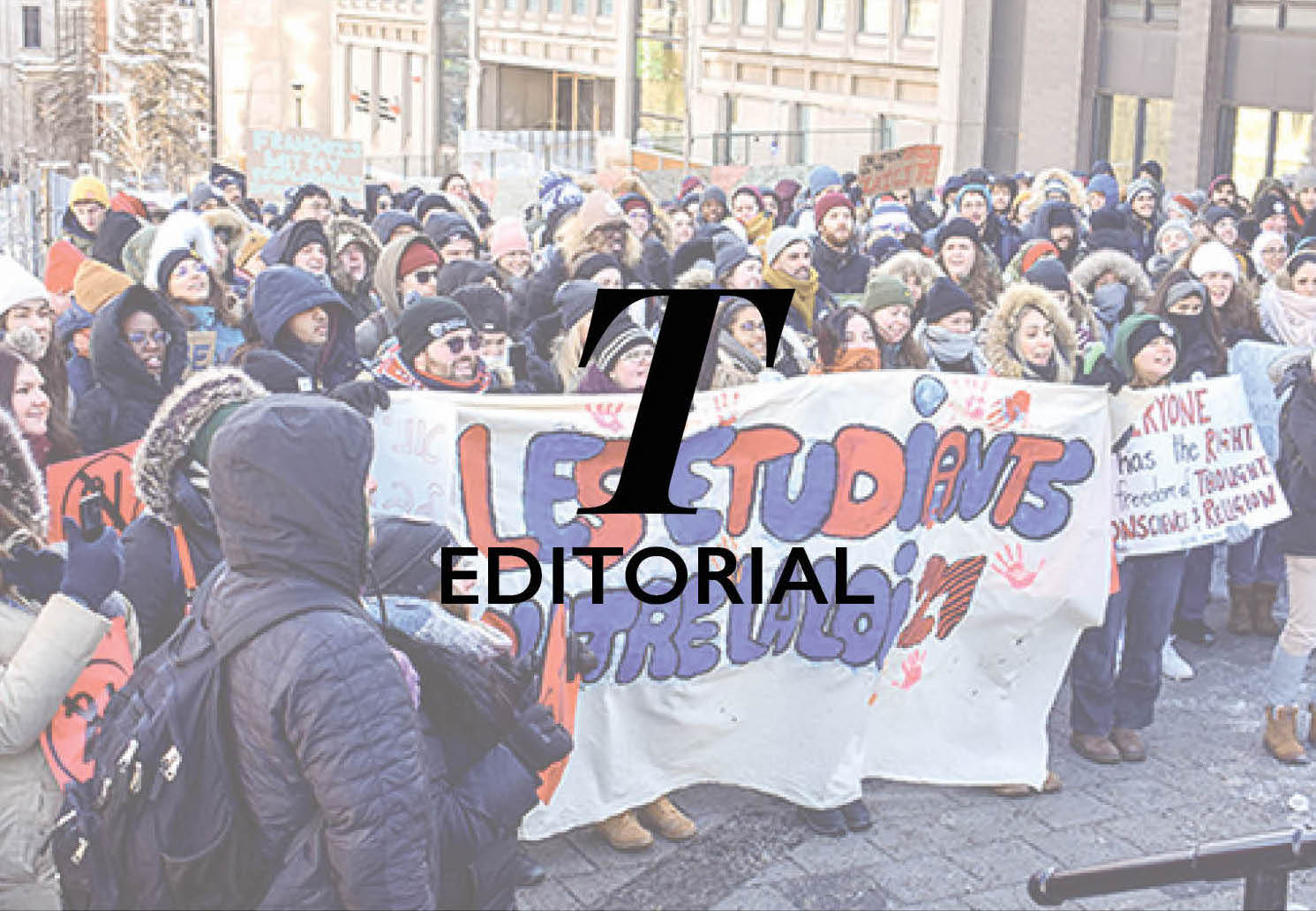
The Quebec Superior Court began hearing testimony on Nov. 2 in a civil case against Bill 21, a 2019 policy that prohibits certain public sector employees from wearing religious symbols in the workplace. Although the plaintiffs contend that the Bill violates certain fundamental rights protected under the Canadian Charter of Rights and Freedoms (CCRF), the Coalition Avenir Quebec (CAQ) has pointed to popular support for secularism and invoked the CCRF’s notwithstanding clause, arguing that religious freedoms fall under provincial jurisdiction. If the Court favours these arguments, many McGill students pursuing employment in the public sector will continue to be discriminated against. Moreover, considering the magnitude of the constitutional issues in question, the outcome of the proceedings could turn the Canadian legal system on its head. 

But respect for basic human dignity cannot become a casualty of limitless litigation and performative politics. On trial is not just the wording of the Constitution, but also the CAQ’s fervent xenophobic agenda. Canadians’ civil liberties must be upheld by the courts, notwithstanding the notwithstanding clause. Yet it is equally incumbent on McGill and other educational institutions to protest such legislation that undermines the livelihoods of their students.

If the law affected Quebecers equally, it would still be unconscionable because it insinuates that Quebec is a cultural monolith, whereas it is and always has been diverse. But its proscriptions are not equally distributed. Unlike Muslim women who wear hijabs, Sikhs who wear turbans, or Jews who wear kippahs, people of the Christian faith do not traditionally wear conspicuous garments. Although some may wear rosary necklaces or other religious adornments, these can easily be hidden under clothing, allowing them to more easily comply with the law. 

This double standard is morally bankrupt, and it should not become legally permissible. Secularism must be a ruse if it favours Christian religious expression over others, as its most passionate prosecutors paradoxically advance it under the shadow of the giant cross atop Mount Royal while touting other legacies of colonial French Catholicism. Even if Bill 21 is propped upon stilts of legal technicalities, it will nonetheless fail to differentiate between religious and public affairs because it was only intended to exclude some religions, not all. Instead, the law will triumph when the CAQ’s cultural intolerance expels thousands from public careers in a misdirected effort to preserve Quebec’s cultural idiosyncrasies. 

Still, Bill 21’s proponents claim that separating Church and State is especially necessary in the classroom. Nevertheless, by denying teachers’ right to religious expression, the law is preventing them from doing their jobs, pushing them out of schools, and hindering their chances of promotion. But the law does not only harm teachers, it also harms their students. Psychologists have shown that all students benefit from diversity, not just students from specific religious or cultural backgrounds—although it is important for these students to be able to relate to their teachers. 

The CAQ’s mission of exclusion threatens McGill as an institution. It is likely to discourage many Muslim, Jewish, Sikh, and students of other faiths from applying, as its implications not only suggest that their faith would hinder their economic mobility, but also that they are unwelcome in Quebec. Although McGill has released statements of “concern” and provided resources to assist current students who are affected by Bill 21, the university can do more to protect students. Many medical and education students, for instance, are required to complete professional experience components in classrooms and hospitals across the province. Administrators must facilitate these programs in a safe manner that ensures students’ right to religious expression. 

Above all, as sanctuaries of learning and critical discourse, universities have a responsibility to promote the moral integrity of the societies that produce them. Likewise, as reservoirs of capital, innovation, and national reputation, they possess tremendous political influence that their administrators often underestimate. Bill 21’s secularism belies Quebec’s multicultural reality, but universities are indeed a source of public wisdom and guidance. It behooves McGill to denounce bigotry and demand that Quebec’s courts dig channels of social equality rather than deep trenches of fortified ignorance.

Science & Technology

New research centre to usher in the era of digital democracy

In an age of increased globalization, social media makes it easy for people to voice their opinions online, discuss issues, organize around causes, and hold leaders accountable. However, media and technology have a tendency to amplify both positive and negative trends in contemporary discourse. In recent years, media technologies, and social media in particular, have progressed to a point where they have started to undermine democracy.

McGill’s Max Bell School of Public Policy recently launched the Centre for Media, Technology and Democracy to combat threats to democracy through research and public debate about how media and technology affect social systems and shape public policies. 

Threats to democracy include fake news, user privacy breaches, influence campaigns, “bots,” and the growth of information cocoons. These can lead to an increase in media fragmentation, political polarization, and, in the worst cases, extremism. Despite having access to huge amounts of knowledge at their fingertips, most people live in an information cocoon—interacting only with a limited number of people online who tend to share the same views. These social media “bubbles” can become ideological echo chambers reverberating with the same types of online content and opinions, regardless of their veracity, to the exclusion of a diversity of ideas. As such, those in power and with large online platforms can use media and technology to set agendas and spread hate and disinformation. 

“The kinds of democratic harms we see arising today—from mis- and disinformation to political polarization and election interference […] are not the result of ‘bad actors,’ they are baked into our tech infrastructure, and into our social investments and institutions,” Sonja Solomun, the Research Director of the Centre, wrote in an email to The McGill Tribune.  

The Centre is run by a team of researchers and journalists who are committed to changing how the public receives online media. They hope to bring about lasting structural change through the design of new technologies and economic models to foster accountable governance, and are thus attempting to rebuild and reimagine digital infrastructure in the public interest. 

“I joined [the Centre] because this is public-facing work that directly speaks to the communities and groups that are most affected by the kinds of harms we see arising,” Solomun wrote. “At the end of the day, I firmly believe in the power of the public to mobilize for a different future, and to hold governments and technology companies to account for that future.” 

The team is currently working on several projects. One of these is Tech-Informed Policy (TIP), an initiative to inform policy makers by explaining the implications of new technologies and their social consequences. They are also developing an essay series to examine how surveillance technologies deployed by public institutions and governments during the pandemic are disproportionately affecting historically surveilled populations, like low-wage workers and racialized groups.

The Centre is planning to hold events for students and the public. Aside from a monthly reading group, they are also hosting the Annual Beaverbrook Lecture, a two-part virtual event on abolishing surveillance capitalism

In the future, the Centre hopes to support and amplify other initiatives working on issues of democracy and technology. 

“A more democratic future for me is one where we value collective human life over property,” Solomun wrote. “That means thinking of technology––be it AI, data, or even things like privacy, as a possibility or as a relationship, rather than a commodity or as property. Once we depart from this premise, we can reimagine how we build, use, and govern these possibilities in ways that enrich collective life and public institutions.” 

If you are interested in learning more about the Centre for Media, Technology and Democracy, their research, future events, and other resources, visit their website and subscribe to their newsletter.

Off the Board, Opinion

Growing up with immigrant parents—kind of

Though I was not born in my family’s home country of Russia, having parents who were new to Canadian customs had many influences on me. Because I was born in Canada, my background did not provoke much of an identity crisis, but my parents still brought their traditions into our new suburban home. While it took many years to understand, I learned that these cultural quirks were harmless at worst and added to the fun personal narrative that is my life.

Those who keep a fairly balanced diet would know that eating three meals a day is the standard. But no, not I. From the moment I could consume solid food until the age of 14, I ate four proper meals a day. Breakfast, school lunch, home lunch, and dinner. This was how my mom fed me, so naturally, I assumed this was simply the way things were.

Imagine my surprise when I finally started going over to friends’ houses (albeit later than some), to learn that there was one, only one, meal after school.

After a talk with my mom about my daily meal plan, she explained that she thought it was silly to be awake so late and eat so little. She simply ignored the three-meals rule and continued emulating what her parents had done.

Eventually, I was no longer stifled with a 7:30 dinnertime, allowing me to pursue my dream of eating three balanced meals a day. In retrospect, my mother was right to ensure I was not spending six or more hours without eating. As I grew up, I started to learn that my parents were doing what they thought was best for my well-being for no other reason than previously successful traditions. 

While on the topic of food, I can’t leave out tea. Growing up, tea was the only beverage in the house. I seldom drank water, let alone soda or juice. 

At school, I was known as the “Tea Girl,” because every day for lunch, my mom would fill my reusable water bottle with piping-hot tea. As with mealtimes, developing a social life made me realize that tea is not the typical drink of 11-year-olds. However, I embraced the honorary title of Tea Girl. It was a harmless quirk, and frankly, my mom’s tea tasted great.

Growing up in a Russian-speaking household, living in an English-speaking city, and going to a French-speaking school meant some words were lost along the way. It is common for people to forget words in one language and remember them in another, and I sometimes went years before I learned the English translation for common words. Among the list are the words “comma” and “acetaminophen,” but my personal favourite was the word “buckwheat.”

In the Gorbounov household, a fan-favourite breakfast food was cooked buckwheat with milk and sugar, like a dense cereal. Called “grechnevaya kasha” in Russian, the term bears a striking resemblance to the Russian words “Greek oatmeal.” 

Until the comfortable age of 17, I casually told my friends about the Greek oatmeal I had for breakfast. Upon asking my mom, after a laughing fit that lasted four minutes, she introduced the word buckwheat to my vocabulary and explained that the word “grechnevaya” did not, in fact, even mean “Greek.” Telling this embarrassing story to my Russian roommate earned a similar explosion of laughter, but hearing the words “I thought so too!” reminded me that I was not alone in my language fumbles. More than anything, it was an entertaining connection I shared with my multilingual friends. 

Compared to some, my experiences with parents from another country are mild and entertaining. I was lucky enough to rarely deal with clashing cultural differences, and being a second-generation immigrant did not cloud my upbringing. Sometimes though, it is fun to share and enjoy the little things, and for that, I cannot thank my parents enough, even if it earned some confused looks from my peers as I sipped my lemon-infused orange pekoe.

Editorial, Opinion

SSMU Fall 2020 referendum endorsements


The McGill Tribune presents its endorsements for the Students’ Society of McGill University (SSMU)’s Fall 2020 Referendum.

Ambassador Fee Renewal: Yes 

The proposed renewal of the $2.00 opt-outable fee would continue to fund students’ participation in academic and extracurricular conferences, competitions, and other events until 2025. Although most activities covered by the fee are currently suspended or online due to the pandemic, renewing the fee will allow campus organizations to engage in them when in-person activities are possible again. Considering that demand for the Ambassador Fund in 2019 greatly exceeded the amount available, student groups evidently need the money to attend external events. These activities are incredibly valuable, as they enrich students’ experiences and give them the opportunity to represent McGill at functions beyond those offered on campus. Moreover, some of these events are financially inaccessible for many students, and the fee is instrumental in ensuring that all students who want to attend them can. The Tribune’s answer to this first question is a definite “yes.”

Daycare Fee Increase: Yes

The SSMU daycare, which was founded in 1999, provides childcare for 38 children aged 18 months to five years old of both graduate and undergraduate students at McGill. The proposed increase of the non-opt-outable fee from $2.72 to $3.00 is necessary for the maintenance and expansion of the daycare, which has been operating at a near deficit for the past several years. The daycare provides an integral service for student parents and offers important experience for students pursuing work in childcare. Because the daycare is currently unable to meet demand, the Tribune endorses a “yes” vote to ensure that the facility is able to best serve the student body.

Musician’s Collective Fee Renewal: Yes

The renewal of the $0.10 opt-outable fee from 2021-2025 for the McGill Musician’s Collective would allow the club to maintain operations at its current capacity. Founded in 2010, the Collective serves as a hub for the McGill music community and provides services that include teaching and performance opportunities, rehearsal spaces, affordable music lessons, and a supply of instruments available to all students. The club’s services make music accessible to students of all musical backgrounds, from total beginners to more experienced players. The Collective also fosters a sense of community and a unique outlet for creative expression during the isolation many are facing due to the COVID-19 pandemic. The Tribune endorses the renewal of the $0.10 opt-outable fee, as the Musician’s Collective is a valuable service for many students.

Interest in student transport initiative: Yes 

McGill Student Transport (MUSTBUS) is a student-run cooperative that seeks to provide students with a safe and affordable way to travel by bus from Montreal to major cities like Toronto, Boston, and New York City. MUSTBUS ran a pilot route to and from New York in February 2020, with each trip selling out. Priced at around $30 each way, the buses departed from Service Point on Friday and returned on Sunday, with no substantial delays reported. Once it is safe to travel again, MUSTBUS aims to expand its service to other cities and continue to make student travel more accessible. Although the cooperative plans to propose a small opt-outable fee next semester to keep the service affordable, there is no fee increase associated with this question. Therefore, the Tribune endorses a “yes” vote to support the continued development of this project. 

Science & Technology

Gliding, bat-winged dinosaurs surprise scientists

When most people picture flying dinosaurs, they picture beasts like pterodactyls and the pterosaurs. Although iconic to fossils of the Jurassic period, these flying reptiles were not dinosaurs at all, but instead a distant dinosaur cousin called archosaurs that flapped their forelimbs to achieve flight. However, scientists have recently found evidence of another type of flight that is unique to just two species of dinosaurs. One hundred and sixty million years ago, strange bat-like dinosaurs glided across the canopy of prehistoric forests: These creatures were Yi and Ambopteryx.

In a new study, an international team of researchers sought to determine whether gliding and powered flight were possible for these winged dinosaurs. The researchers scanned Yi and Ambopteryx fossils using laser-stimulated fluorescence imaging. This technique uses highly amplified light to identify soft tissue details of wing membranes that are invisible when conducting ultraviolet light analysis, the standard imaging practice in the field. 

Yi and Ambopteryx were scansoriopterygid theropods that lived 160 million years ago during the middle to late Jurassic period, in an area that is modern-day China. Scansoriopterygidae were a family of bizarre arboreal and semi-arboreal theropods with an enlarged fourth digit. Yi and Ambopteryx were not large, weighing only half a kilogram and living on a diet of insects, seeds, and plants. Their membranous wings, similar to those of bats, were formed from the webbed skin between their elongated fingers. 

From their imaging results, the team, which included Dr. Hans Larsson, Director of McGill’s Redpath Museum, used mathematical models to predict the dinosaurs’ flight and gliding capabilities. The predictions were based on the dinosaurs’ weight, wingspan, wing shape, and muscle placement. Researchers concluded that Yi and Ambopteryx were incapable of powered flight.

“The results are clear,” Larsson said in an interview with McGill Newsroom. “These animals were not able to fly like birds. They didn’t have adaptations to even get close to the physical thresholds for powered flight, but their weird membranous wings do give them enough of an aerofoil to have glided.” 

The study found that these creatures had severe deficiencies in flapping-based locomotion and limited gliding abilities, suggesting that they were, at best, only able to clumsily glide between trees. 

To achieve gliding, Yi and Ambopteryx would have had to first climb to an elevated position. As such, it is unlikely that their proto-flying abilities evolved to escape predators on the ground. 

“They are not comparable to living gliding squirrels or lizards, but seem to have come up with a really novel way of getting a large enough wing membrane,” Larsson said. 

Unable to compete with other arboreal archosaurs and early birds, both species are predicted to have become extinct after just a few million years. Despite being a relatively short-lived species, Yi and Ambopteryx’s gliding abilities have important implications for the evolution of flight. Indeed, they represent a unique, but failed, evolutionary experiment, suggesting that dynamic and complex evolutionary pressures were acting upon dinosaurs in the middle to late Jurassic period. Moreover, this failed mode of flight does not correspond to early models of flight evolution in birds: The wings of these species are structurally distinct from those of other flying dinosaurs, which indicates multiple independent origins of flight. 

“We used to think of birds evolving as a linear trend from their ground-dwelling dinosaur ancestry,” Larsson said. “We can now revise this textbook scenario to one that had an explosive diversity of experimentation, with dinosaurs evolving powered flight several times independently.”

The researchers’ discovery suggests that there is a lot more to learn about the evolution of flight, and that widely-held assumptions about evolution can be susceptible to change. According to Larsson, when it comes to figuring out the origins of flight, evolutionary scientists are still just scratching the surface.

Read the latest issue

Read the latest issue