
Latest News

Student Life

Tribune Explains: Accessing McGill’s remote mental health services

As students find their footing for the Fall semester, many may be wondering how to access mental health support through the university. If you read the emails sent out regularly by Fabrice Labeau, Deputy Provost (Student Life & Learning), you have no doubt heard of Keep.meSAFE, the digital therapy resource that the university recommends for those seeking counselling. Keep.meSAFE is but one of many remote resources available for students. The McGill Tribune breaks down how and where to access campus mental health resources this semester.

What are my options for mental healthcare outside Quebec?

Keep.meSAFE is a mental health counselling service offered to students in partnership with the Students’ Society of McGill University (SSMU) and the Post-Graduate Students’ Society (PGSS). The service provides 24/7 year-round access to licensed counsellors through telephone and mobile chat in over 60 languages. 

For students located out of the province, this may be the most accessible and affordable option for mental health care. 

How can I get non-clinical support?

The Peer Support Center (PSC), founded in fall 2013, is a service offered by and for McGill students. Serina Cole, the PSC’s Promotions and Outreach Coordinator, stressed the group’s commitment to inclusivity.

“[We strive] to be a confidential, non-judgemental support space for all McGill students,” Cole said. “Regardless of [students’] gender, sexuality, or race, we are here to listen.”

For the Fall 2020 semester, the PSC will be offering their services through Zoom. A peer supporter will be in a private room, wearing earphones at all times to ensure full discretion. During the 45-minute appointment, students are welcome to discuss anything and everything on their minds and trained students will be there to listen.

Cole stressed that the PSC’s goal this semester is to be as accessible as possible to McGill students, wherever they may be.

“Although we are known for our drop-in, in-person services, we have moved to an online format so [that] we can broaden our reach regardless of [students] are in the world,” Cole said. “Whether you want some help gathering resources, are feeling stressed out, or just need a listening ear, we are here for you.”

What about the McGill Wellness Hub?

The McGill Wellness Hub is touted as the university’s one-stop-shop for student health. The Wellness Hub offers services such as workshops, support groups, and resources. However, they are not accessible to all students.

In order to receive healthcare through the Wellness Hub, students must be located in the province of Quebec at the time of the appointment and consent to a telehealth appointment. For students currently located outside of the province, many professional services at the Hub are unavailable. 

Counsellors are booking both first-time and follow-up appointments, and psychiatrists are still available for appointments via video call if you are a pre-existing patient.

Local Wellness Advisors (LWAs) are now offering online booking, and Access Advisors are available to connect students with resources if they are unsure of what support they require. 

What other options are there?

If you or anyone you know is experiencing a crisis, you always have the option of calling local emergency services, or going to the nearest hospital. 

However, emergency care often isn’t enough. A key aspect of mental health care is preventative care: Providing consistent and long-term care for those with or without mental illnesses to reduce the amount of crisis care. 

For students studying from home, whether in Canada or abroad, familybe it chosen or biologicalcan be an incredibly valuable support. If you live alone and the isolation is impacting your mental health, go out of your way to connect in-person with your friends and loved ones, whenever and however it is safe to do so.
Science & Technology

Climate change takeaways from the 7th Annual Trottier Symposium

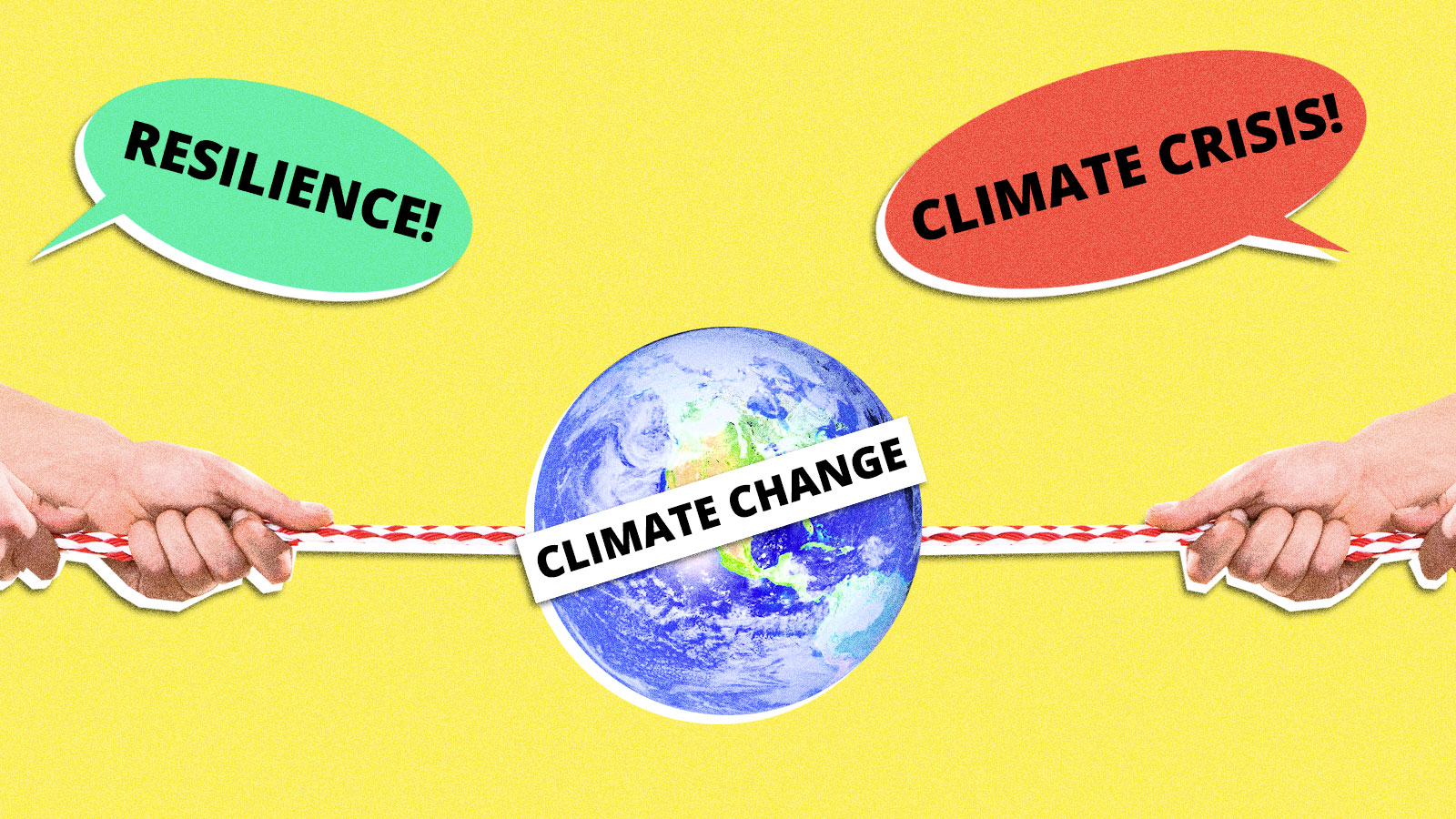
The COVID-19 pandemic has had an immense impact on people’s lives across the world. It has also, however, presented a learning opportunity for political leaders tackling global problems, namely climate change. These lessons were the theme of this year’s Trottier Symposium, hosted virtually on Sept. 16 by the Trottier Institute for Sustainability in Engineering and Design (TISED).

The symposium, entitled “Lessons from a Pandemic,” featured guest speakers Michael Mann, professor of atmospheric science at Pennsylvania State University, and Naomi Oreskes, professor of the history of science at Harvard University.

Oreskes opened the symposium with a lecture on why the general population should have faith in scientific findings. In her lecture, she outlined the evolution of scientific methodology and emphasized that while scientific findings are never absolutely certain, it is the best way of accessing the truth. Oreskes explained how science gains its credibility through repeated testing, the accumulation of evidence, and the consensus of groups of experts. 

“The relative risk of believing in science is far [lower] than not believing,” Oreskes said in reference to the United States’ poor response to COVID-19. “We should not trust scientists, but we should trust science.”

Scientific data has supported the theory of global warming since the 1950s, and there has been broad scientific consensus on the existence of anthropogenic climate change for more than three decades. Yet, special interest groups funded by fossil fuel companies, including ExxonMobil, and private citizens such as the Koch Brothers, still attempt to discredit climate science, usually to their own benefit

The tactics that climate change deniers use to resist activism range from dismissing the dangers of climate change to outright denial. These deflective and divisive maneuvers are a popular strategy of the fossil fuel industry, pushing the narrative that the responsibility of solving climate change rests on the shoulders of individuals, rather than governments or corporations.

Mann and Oreskes agreed that the challenge in reducing the impacts of climate change is not the absence of available technological solutions. 

“The technology that we need already exists,” Oreskes said. “We don’t need a miracle.”

Oreskes added that it was not enough for academics and policy experts to introduce innovative  solutions to solving the climate crisis. Politicians and the public also play an essential part in addressing climate-related issues. 

“If you don’t address the politics, it doesn’t matter how good the solution is,” Orekes said. 

Both Mann and Oreskes remain optimistic, despite the looming ten year deadline laid out by the United Nations Intergovernmental Panel on Climate Change (IPCC). The IPCC report stipulates that humans must limit global climate warming to 1.5 degrees celsius or else face the first stages of climate disaster. 

Mann commented that the “doomism” of some writers and environmentalists who believe it is too late to save the planet from warming is misleading. Around the world, renewable energy is becoming cheaper and carbon dioxide emissions are projected to plateau. Curbing the effects of climate change will require a twofold reduction in heat-trapping greenhouse gas emissions over the next 10 years—a target that Mann believes is still within reach.

Mann is also heartened by the success of grassroots activism, specifically in protesting the construction of natural gas pipelines across Canada and the U.S.

“We’re seeing investors unwilling to invest in pipelines because there’s so much opposition [and] because of the threat of litigation,” Mann said. 

Simply put, the challenge remaining for many climate activists is tabling climate policies in discussions with politicians.

“We don’t want it to be political, but it is,” Oreskes said.

Commentary, Opinion

Justice Ginsburg will continue to inspire women to study law

Studying law as a woman can be daunting. Despite that women are pursuing careers in law more now than ever before, we are still studying institutions created by powerful men, with the original purpose of serving those powerful men. Landmark Supreme Court of Canada decisions that promoted feminist ideals—such as R v Morgentaler, which legalized abortions—are not very far back in our rearview mirror.

Even today, sexism runs rampant in our courtrooms. For instance, Robin Camp, a former Federal Court judge, told a rape survivor in 2014 that she should have kept her “knees together.” Legal education itself often contributes to this cycle. In law classes, women are not always valued by their male peers. As a law student at McGill, there have been times in class discussion groups where I was the only woman, and I felt invisible at best and disregarded at worst. 

Although more women now have a seat at the table, much work remains to be done in order to secure gender equality in legal institutions. Contemplating this can be frustratingly sad. At other times, it inspires me to push forward and use my degree for good. Former U.S. Supreme Court Justice Ruth Bader Ginsburg, who passed away on Friday, Sept. 19, will live on in my memory as a motivation to pursue my legal education. 

When I accepted my McGill Law offer in 2018, I had aspirations for the education I was embarking on and my subsequent career. These ambitions came from women before me—lawyers and judges—that paved the way for women in law. Justice Ginsburg was the epitome of this. She fought relentlessly for gender equality and worked tirelessly to serve the American people until the day she died. As the second-ever female U.S. Supreme Court justice, RBG was a trailblazer. Strong women like her have inspired me to seek leadership positions and to advocate fearlessly for the issues in our community. 

Ginsburg is best known for her dissents. Diverging from the majority is often frowned upon within legal circles, given that we dislike confusion from the highest court. Yet, RBG spoke up when she disagreed, and did so with vigour. In this sense, Ginsburg inspires me to be, as she has been described, “tough as nails.” 

In the hours following the announcement of RBG’s passing, I felt sick to my stomach. Someone who I saw as a role model and as a champion for gender equality had become a political pawn within minutes of the announcement. It reminded me of a POLI 348: Gender and Canadian Politics reading from this semester—The Second Sex by Simone de Beauvoir. De Beauvoir argues that, through a process known as “othering,” the value of a woman is defined by her relationship to man. She becomes the “woman behind the man” instead of just being herself. In the context of Ginsburg’s passing, I found this to be especially true. Her personal achievements are being overshadowed by the effects her death has had on men, such as President Donald Trump and former Vice-President Joe Biden. Instead of being remembered for tenaciously working until the age of 87—at times battling bouts of cancer—to advance gender equality in the U.S., the media has focused on the implications her passing may have on the presidential election. Her legacy is being defined by her relationship to men and politics. 

This absolute disregard of an accomplished woman’s life disappoints me, but it is nothing new. 

Yet, Ginsburg made us feel like we deserve a seat at the table—because we do. In many ways, she actually gave us that seat. It is important to remember her for the profound effect she has had on women studying law and the progress she made for women in the U.S. In a world where women do not always get the praise that they deserve, let us not forget to give Ginsburg the applause that she merits. 

Student Life

Falling in love with Montreal’s parks

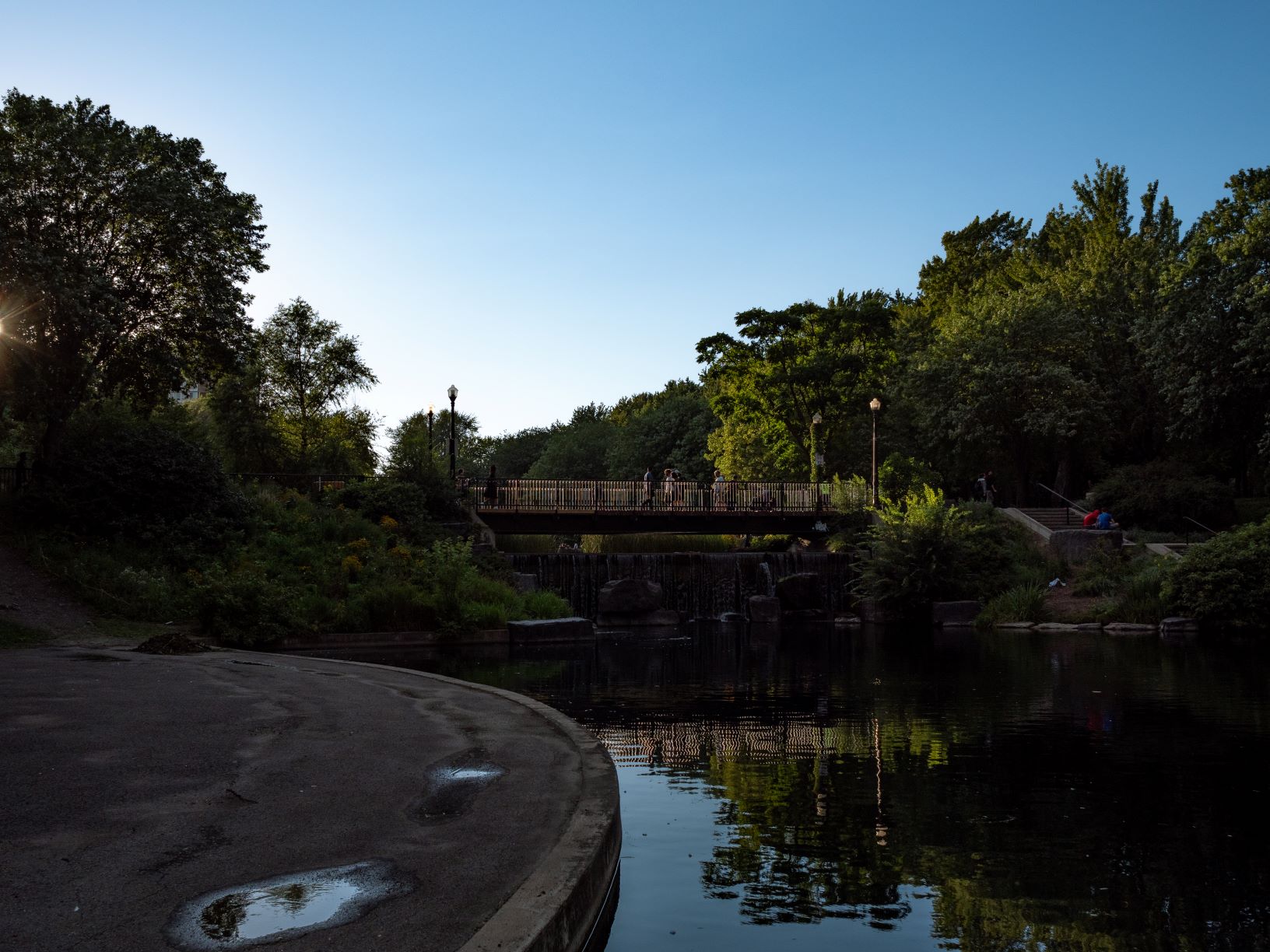
Many students are at a loss for places to catch-up with friends and maintain a social life while staying safe during the ongoing pandemic. Parks are the perfect place for students to ensure their safety and enjoy the fall in Montreal. While the sun is still shining and the leaves are beginning to change shades, the many beautiful parks throughout the city allow for easy social distancing, whether used for studying, resting, or simply mingling with friends. Here’s The McGill Tribune’s list of no-brainer spots to chill that are close to campus, along with a couple of hidden gems.

 1. Mont Royal Park

Although this might seem like an obvious first choice, this Montreal namesake is incomparable. Overlooking the city, Mont Royal has both beautiful vistas and sprawling green space. Mont Royal boasts many unique attractions, including Beaver Lake, a sculpture garden, the Montreal Cross, and an observation deck. The hike up the mountain is also a great way for students to exercise, with the added benefit of allowing people to socially distance themselves from their friends. A sunrise hike to the top of Mont Royal is a must before graduating from McGill. Other than the standard Kondiaronk Belvedere and Colline de la Croix lookouts, students can access the Camillien-Houde Boulevard lookout by car for a more accessible route with an equally beautiful view.

2. Parc La Fontaine  

For those looking to venture into the Plateau or for students who live nearby, Parc La Fontaine is a must-visit. Spanning 84 acres with two connected ponds and, as the name suggests, a fountain, this park is waiting to be explored. Perfect for socially distanced picnics, walks with friends through the gardens, or as an addition to a running route, Parc La Fontaine is teeming with weekend potential. While the onsite restaurant and chalet are closed due to current public health recommendations, there are still sport courts free to use throughout the park. 

3. Rutherford Park 

This park is ranked third solely on its spectacular view, available without the effort of hiking up a mountain. Located at the top of McTavish Street, this easily-walkable park looks over McGill, downtown Montreal, and if you look carefully enough, Old Port. Additionally, the park has a soccer field free of charge when the field is vacant. For availability, check out the McGill Athletics Calendar.

4. Parc du Portugal 

This park is small, but mighty. Located off of St. Dominique and St. Laurent Blvd, Parc du Portugal consists of a quaint gazebo surrounded by walkways and several tiled benches. Parc du Portugal was also one of Leonard Cohen’s favorite spots in Montreal. Right off the bustling St. Laurent Blvd, this safe escape is great for enjoying takeout meals with friends or relaxing after visiting the nearby stores and restaurants. While the park is lovely in and of itself, the street artwork that adorns the surrounding area is also worth the visit. 

5. The Playground at Old Port 

This park is located in Old Montreal, overlooking the St. Lawrence River and the Montreal Observation Wheel. While there are many lovely squares and parks throughout Old Montreal, The Playground at Old Port made the list due to its picturesque river view and its vacation-like feel. Located right on the water and often full of tourists, this park can help trick students into thinking they are on vacation for the day. With a playground and ample space to sit along the river, this beautiful location is perfect for socially-distanced gatherings. Additionally, the walk from McGill down to the river is a great escape from the monotony of student life.

6. Jeanne Mance Park 

While most students have probably either been to or passed by Jeanne Mance Park, this is nonetheless a beautiful spot to visit all year long. With scenic views of the sunset and trees ready for autumn’s glow, this park is a central meeting spot between the Milton Parc neighbourhood, the Plateau, Outremont, and the Mile End. Additionally, the park has many sports courts that the public can reserve

7. Dorchester Square 

This downtown park is a short walk off of St. Catherine Street, at the corner of Peel Street and René-Lévesque Boulevard West. Whether students are back-to-school shopping and need an outdoor break, or just looking for green space in downtown Montreal, Dorchester Square is the place. Flanked by renaissance style buildings, including the Mary, Queen of the World Cathedral, this spot is great for catching up with friends or simply enjoying the fresh air.

Formula 1, Sports

A love letter to Circuit Gilles-Villeneuve

Formula One weekend dominates Montreal in June, with groups of tourists wearing team-branded caps meandering around the city, and taking in the sights. This year, Formula One weekend was cancelled, along with all the events that surround it. Roaring engines, cheering crowds, and screeching tires have been replaced by the clicking of free-wheeling bikes and rustling trees near the race track. 

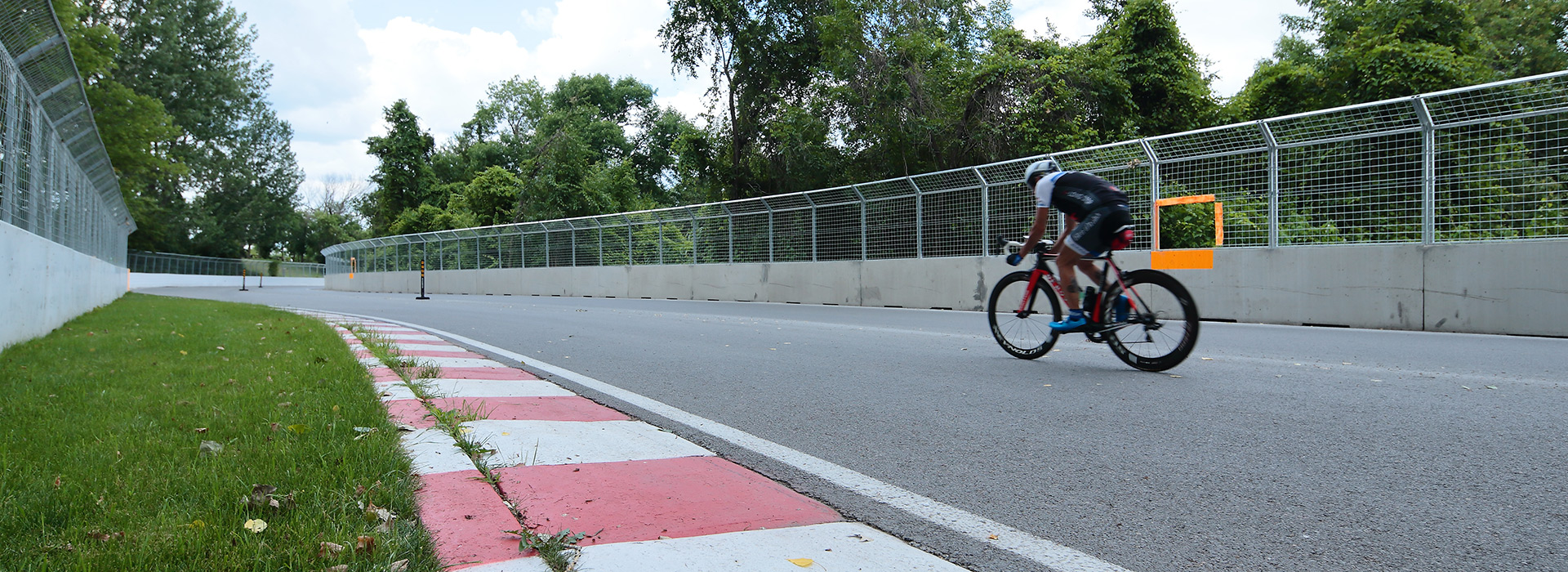
With Formula One weekend called off, one might expect Circuit Gilles-Villeneuve—the 4.3-kilometre-long track on Île Notre-Dame—to lay idle and gather dust. Anyone who frequents the island, however, knows that this is not the case. For decades, the race track has been converted to a closed cycling route when not in use. While most public gatherings have been shut down this summer due to COVID-19, the cycling community has thrived. 

Every day, Montrealers young and old don their colourful spandex cycling kits, clip in to their pedals, and bike over Pont Jacques-Cartier to the circuit where dozens of cyclists, putting in laps, are waiting for one more person to join their pack.

Circuit Gilles-Villeneuve was constructed in 1978 for the Canadian Grand Prix following growing safety concerns with the previous track, Ontario’s Mosport Park. Montreal’s track was built on roads constructed earlier for Expo 67, and was ideally located near the city. Since its construction, the track has become an adaptable and versatile venue for sports, the arts, music, and nature preservation. 

The Circuit offers a cycling experience that is truly like no other. The closed path is a space for pedestrians and cyclists only, providing a stress-free environment for anything from a promenade to a high-intensity tempo workout. The gently curving roads make for an exceptional riding experience, offering an escape from the city.

Since its inception, the track has developed a reputation for intense cycling competition and training. Teams from the national to the university levels, including Cycling Canada, and McGill Cycling, regularly hold training and racing sessions on the circuit. These teams take advantage of the ideal road conditions and high caliber of competitive riders that the circuit attracts. The widely used cycling app Strava has publically available Heatmaps, which visualize the frequency at which a route is used. Strava has made evident that this track is one of the most heavily-used cycling roads in Montreal.

President of McGill Cycling Nick Kleban shares this enthusiasm for the circuit.

“The Circuit-Giles Villeneuve is definitely one of the go-to riding spots in Montreal,” Kleban said in a message to The McGill Tribune. “It provides cyclists with an easily accessible location to ride and train away from the regular city traffic. It also acts as a hub to meet other local cycling enthusiasts [….] Riders flock there for everything from easy spins to fast group rides. Historically [it is] one of McGill Cycling’s staple rides, [and as such] the Team Points Race (TPR) was hosted every Tuesday morning on the track.”

Anyone looking to see the track at its busiest should head over on a Wednesday night. Cyclists from all around the city congregate at Cafe Le Club, drink espresso, and head across the bridge for a night of cycling. Pace lines form, grow, and kick their bikes into their highest gears, all in an attempt to break coveted speed records on Strava. 

So beloved is the circuit that in 2017, when the city attempted to cease bike access to the track, cyclists banded together to preserve their home. The closure came from the Société du Parc Jean-Drapeau, who had safety concerns regarding the construction of a 65,000-seat amphitheater nearby. A Facebook group with nearly 6,000 members banded together to voice their grievances. With the help of groups like Vélo Québec, a non-profit bike promoting group, they succeeded in keeping the track open. Since then, the circuit has remained open every summer.

The circuit has also provided a fantastic place to display outdoor art installations. In the surrounding park there are several sculpture gardens showcasing Indigenous art, modern sculpture, and outdoor photography exhibits. Many of the exhibitions feature the work of local artists. 

So whether you’re a serious cyclist, casual Bixi-er, or just looking for a nice walk, make the journey over to Parc Jean-Drapeau and take advantage of the open road, art installations, and city views before the snow sets in.

Commentary, Opinion

Study Hubs fail to reconcile safety and accessibility

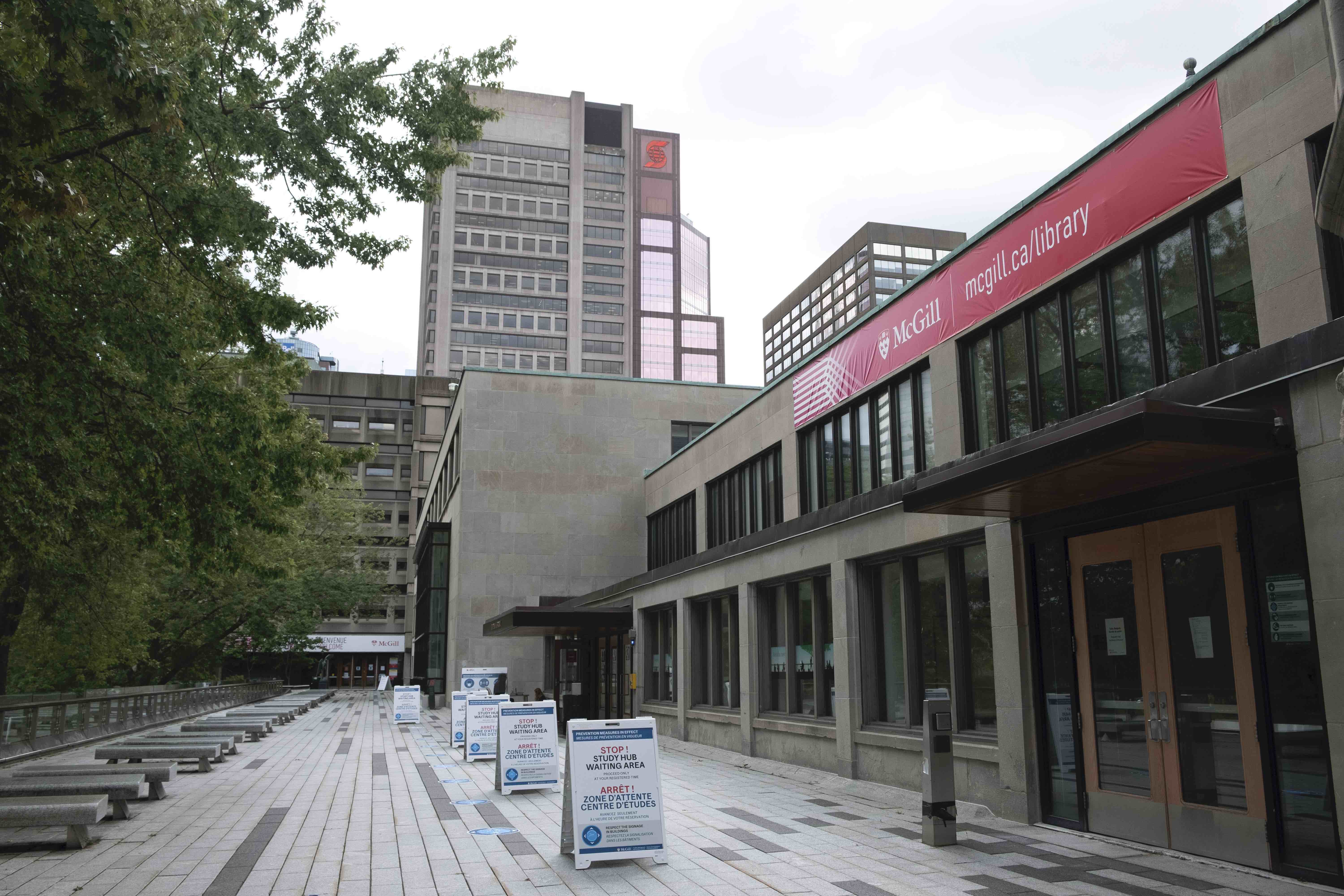
At first glance, McGill’s Study Hub initiative seemed like a good idea: Students would be able to access study spaces multiple times a week in three-hour slots. All spaces would be sanitized, and groups and food would be prohibited to guarantee everyone’s safety. The news gave me a sense of relief—I would not have to spend a whole semester looking at the same white wall in front of my desk. However, my first impression of the hubs was clouded by privilege. I decided that the hubs were useful and effective because they served my needs. But this does not cancel out the fact that McGill’s planning of the study hubs is exclusionary and ill-informed.

The first issue with the hubs is their lack of availability. The most recent from 2019 report indicates that there are 34,209 students at McGill. Because of the pandemic, many students will not start the Fall 2020 semester in Montreal—which, despite the bleak circumstances, is good news for the students planning to access the library as there may be less of a scramble for spots. However, it is unclear how many students will need to access the new study spaces. Furthermore, McGill failed to consult students as to how many will need to use on-campus study spaces, pointing to its lack of preparation. There are clearly not enough seats, and as midterms and finals approach, getting a spot will be even more difficult.

Furthermore, during the pandemic, demand for mental health services has risen among young people and minorities. Factors like mental illness, learning disabilities, and difficult situations at home can make studying nearly impossible. Mental health was already a problem at McGill before the pandemic. The combination of mental health difficulties and low accessibility to quiet study spaces can seriously affect students’ academic performances. McGill’s initiative should have prioritized the students who need it the most by giving those registered with the OSD first access to appointments for the Study Hubs, and by better researching the needs of its student body before the beginning of the Fall 2020 semester.

Moreover, even the available study spaces are exclusionary. Being able to go to the library for only three hours is a privilege directly linked to geographic location, which is in turn related to socio-economic status. Students who lost their jobs or whose families are financially burdened may have had to live with more roommates, move far away from campus, or work long shifts,  all of which can impair studying. Commuting for an hour and a half each way to study at Redpath is just not worth it.

Students need a stable study space to succeed. Yet, the study hubs mainly serve students living close to campus, who do not have other full-time responsibilities like parenting or a job, and who can mould their schedule around a three-hour study session. Finding the balance between safety and accessibility concerns should have been considered with accessibility in mind. Assuming public safety protocols remain the same in the coming months, McGill must make an effort to repurpose more of its space to safely accommodate more of its students, particularly those with disabilities and financial difficulties. Students should not be carrying the burden of McGill’s omissions. 

Commentary, Opinion

Online learning must prioritize accessibility

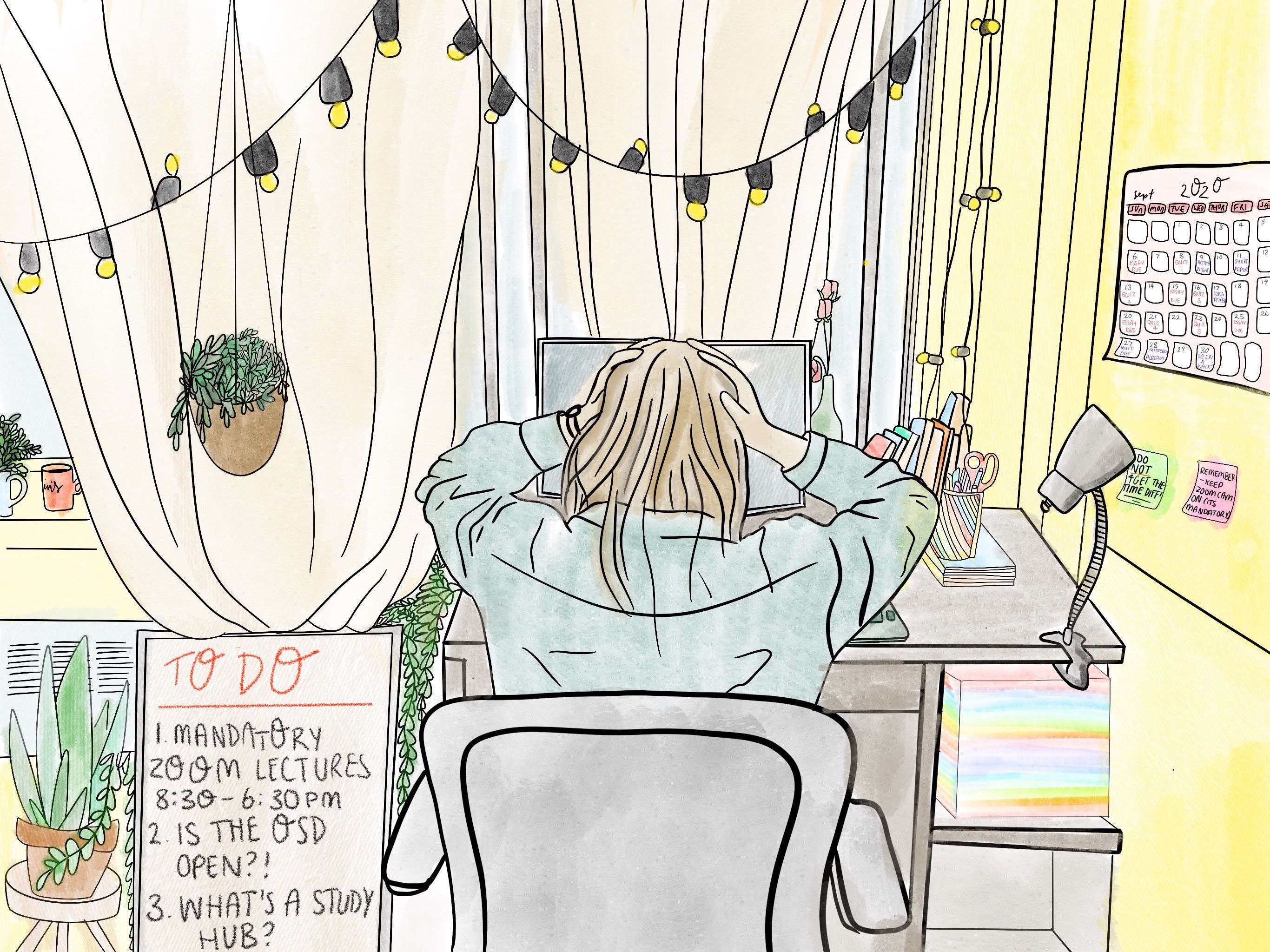
Like many students, I found myself returning home before the end of the Winter 2020 semester. Recognizing that these unique circumstances presented an opportunity, I decided to enroll in courses during the summer semester. This was both a wise idea and a horrible one. Having never been to my parents’ new home—a supposedly temporary apartment—I quickly discovered that my new bed was a couch, and my accommodation was the living room. Yet, I pressed on with the courses, wanting the credits, and discovered exactly what many are experiencing now; remote, online learning presents a unique set of accessibility barriers that McGill must help students adjust to.

For myself, these challenges included dogs barking in the background, taking final exams tucked away in the closet, and stressing as our erratic wifi turned off, and on, and then off again. Add to this mix ADHD, a small handful of physical illnesses, and bickering with my family, and it presented a potent cocktail of unfortunate circumstances, all of which came together to impact my learning experience. While the McGill student body may not be experiencing exactly what I did, accessibility issues are a broad enough category to affect many students, from financial issues to health.

Affordability remains a large barrier in the way of accessibility. For example, wireless capabilities and secure housing are necessary for a stable learning environment, but some lack the former at home, while the latter can be jeopardized by evictions and a lack of income that have resulted due to COVID-19. Even for students with a home, the size of their residence can influence their academics. I had to sit in a closet for any chance of peace and quiet while taking the final exams for both my winter and summer semester, and I could still hear the voices of my parents who were working from home. This profoundly affected my concentration. 

Similarly, American students attempting to return to Montreal also face barriers at the Canada-U.S. border, as often even those with housing arrangements are turned away. This forces parents and students to gamble on the decision to come to Montreal without assurance that they will be admitted, which many parents who post frequently on the McGill International Parent Community Facebook page have reported.

Disabilities and health complications also pose unique challenges to accessibility when it comes to remote learning. Automated speech recognition, such as closed captioning on lecture recordings, can be inaccurate, leaving deaf students who rely on such resources behind. Appointments at the Student Wellness Hub are solely for those residing in Montreal, leaving both international students and other Canadians without support. 

Finances and disabilities can often intersect. While the Office for Students with Disabilities (OSD) has compiled a large list of frequently asked questions, their efforts only go so far. For example, the OSD cannot pay for better internet access, but they can certainly attempt to assist with technical issues by contacting professors to request extra time for assignments. Students may not even be able to afford to get medical documentation that will allow them to register with the OSD, as fees may present too great a barrier. These issues are further compounded by the significant effects that the pandemic has had on the labour market, with roughly half of all Quebec businesses having had to lay off employees.

This pandemic has exposed deep flaws in McGill’s efforts to advance accessibility, and we must demand the administration to do better. Even simple changes such as better communication and funding note-takers and closed caption editors can do a world of good for many students who need support during this time.

Creative

McGill Explained: Philanthropy

In the first episode of McGill Explained, Multimedia Editor Alex Hinton dives into the reasons that cause people to make such large donations to universities, and highlights some of the stories behind the names of McGill buildings that have become part of everyday vocabulary.

Features

Super Marché Brito, the last dep on earth

In the summer before my third year of university, the nearest dépanneur to my apartment was Super Marché Brito. One summer’s day, my roommates and I approached the owner, Tim Maherpour, asking him if he was going to be open on Canada Day (in case we needed to get more beer and charcoal for our grill).

Research Briefs, Science & Technology

Detecting tiny cracks can reveal the potential of new technologies

The properties of materials, from the plastic in water bottles to the metal beams of skyscrapers, are determined by their microscopic structure. However, most substances are not perfectly uniform and rather contain a significant number of minuscule defects. These imperfections play a large role in determining the physical properties of the material, including its strength and durability.

These faults can be extremely difficult to discern, particularly with regards to optical technologies that function using light to observe nanoscopic surfaces. To retrieve relevant information on these interactions, it is necessary to visualize the microscopic structure of materials on the scale of femtoseconds and nanometers. A nanometer is a billionth of a meter, and a femtosecond is a millionth of a billionth of a second.

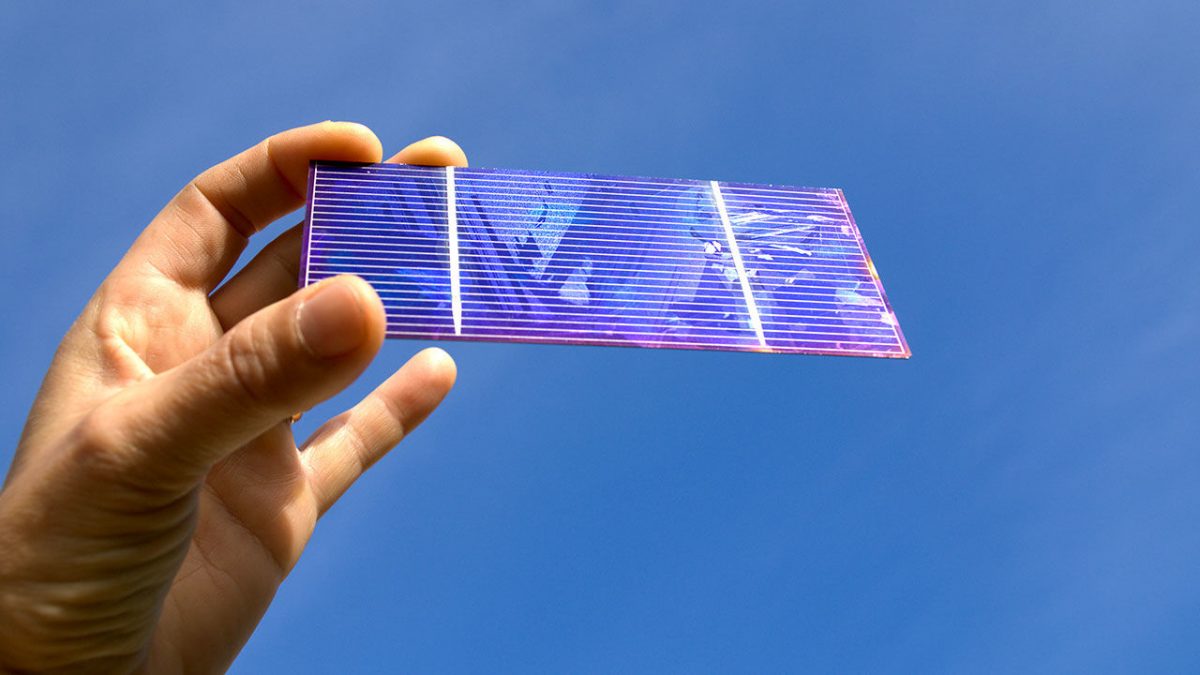
Peter Grutter, chair of the Department of Physics at McGill, directs the Grutter research group, which focusses on developing cutting-edge microscopes that harness the interaction of light and matter to visualize the nanoscopic surface of materials. Although observing physical defects is essential to ensuring the quality of a wide range of technologies, such as cameras and fibre optics, Grutter is particularly interested in its potential to improve solar cells

“It’s not only by using less energy that we’re going to have a more sustainable society, […] there is a need in society to generate energy.” Grutter said in an interview with The McGill Tribune.

One visualization method involves the combination of two different advanced technologies: Atomic force microscopy (AFM) and ultrafast light. Developed in collaboration with the Cooke THz lab at McGill, this technique allows more powerful visualization than other leading techniques. AFM is a form of extremely high resolution scanning that uses a physical probe to examine the microscopic surface of a material. The AFM tip, the “finger” of the microscope, scans a sample similarly to how one could use their actual finger to feel a rock for cracks. 

To achieve both the time and size accuracy required to detect these cracks, the group incorporated the use of ultrafast lasers. In this method, a laser pulse is directed toward the sample, which causes the electrons in the material to oscillate in what is known as optical stimulation. This generates an electric polarization, where the positive and negative charges of the material separate. These charge separations are then detected by the AFM tip without the need to make physical contact with the substance, ultimately allowing researchers to image its substructure.

Grutter’s current work focusses on nonlinear materials, those which polarize unevenly in response to high light intensities. The group’s most recent paper concerns the imaging of a specific material called lithium niobate, which is frequently used in cell phone components. In the future, the research group aims to expand the technology’s use to a wide range of common materials.

A major potential application of the new method is solar cell technology. Solar cells use organic compounds, molecules that contain bonds between carbon and hydrogen atoms, that can receive or donate an electron to generate electricity. Modern chemistry techniques can create synthetic organic molecules, which have a wide range of structures and properties. Unfortunately, theoretical modeling of such synthetic substances is still imperfect, and fully understanding their properties requires them to actually exist. Grutter aims to move past that need all together.

“If you understand, it essentially means you can actually predict stuff quantitatively [and] correctly,” Grutter said.

Grutter hopes that the ability to fully visualize the structure of existing organic molecules in all their imperfections will allow for models with enhanced predictive power. This would allow chemists to better understand a theoretical material’s properties without even having to create it, greatly accelerating the discovery of new substances. 

“I think there’s an ethical responsibility to somehow, in the long-term at least, have some sort of return on investment [on resources put into research],” Grutter said. “In the long-term, I think it’s actually important that we contribute to society.”

Read the latest issue

Read the latest issue